
Attached: The New Science of Adult Attachment
Amir Levine and Rachel S.F. Heller on adult attachment — the secure, anxious and avoidant styles, the protest behavior anxious partners fall into, the deactivating strategies avoidant ones use, and the communication that earns lasting security.
305 cards6 lessonsFree
Already have FlashFeed?Open this pack
Get this pack on your phone
Scan with your phone's camera.
flashfeedlearningapp.com/packs/attached
6 lessons.
Each lesson has a study guide to read and objectives you can test yourself on. Its cards and games show up in your feed. Try one of its cards right here. Play a few of its games here too.
-
 Pexels · MART PRODUCTION · Pexels License ↗01
Lesson 1: Foundations of Adult Attachment & The Dependency Paradox
1.1 Biological Hardwiring & The Evolutionary Attachment System · 1.2 The Dependency Paradox & The Secure Base
Lesson 1 · 10 cardsPexels · MART PRODUCTION · Pexels License ↗Hazan and Shaver's 1987 Study
In 1987, psychologists Cindy Hazan and Phillip Shaver published research arguing that adult romantic love is itself an attachment process, not a separate phenomenon. Their study proposed that adult partners display the same Secure, Anxious, and Avoidant styles first identified in infants. The paper is credited with founding the modern field of adult attachment research.
 Unsplash · Daria Nepriakhina 🇺🇦 · Unsplash License ↗
The Attachment System's Thermostat
The attachment system behaves like a thermostat, continuously monitoring one question: is my partner nearby, accessible, and attentive? Perceived threat, illness, or relational ambiguity flips it into an activated state, consuming thought with the single goal of restoring closeness. Once a partner responds with clear reassurance, the system downregulates and equilibrium returns.
 Unsplash · Rosie Sun · Unsplash License ↗
The Hyper-Independence Myth
Popular culture often praises total emotional self-sufficiency as a strength, but this runs against mammalian neurobiology. Human physiology evolved to regulate stress through trusted others, not in isolation. Treating that dependency as a defect produces chronic strain rather than resilience.
 Unsplash · Vitaly Gariev · Unsplash License ↗
Biological Coregulation Between Partners
Long-term partners don't just share a life — they share physiology. Cohabiting couples' heart rate, sleep timing, and stress hormones drift into synchrony, a process called coregulation. That is why a partner's distress can register in the body before it is ever discussed.
 Unsplash · Joe Yates · Unsplash License ↗
Touch Lowers Blood Pressure and Cortisol
Affectionate physical contact with a trusted partner measurably lowers blood pressure, steadies breathing, and suppresses cortisol production. It calms the nervous system rather than straining it. That is why couples in conflict are advised toward warm touch, not away from it.
 Pexels · cottonbro studio · Pexels License ↗
Attachment Styles Are Stable, Not Fixed
Longitudinal studies find that roughly 70% of adults keep the same attachment style they had as children. But stability is not destiny: therapeutic insight and a relationship with a secure partner can still shift someone toward earned security later in life.
 Pexels · Helena Jankovičová Kováčová · Pexels License ↗
The Three Attachment Archetypes
Adult attachment science groups behavior into three primary styles: Secure, Anxious, and Avoidant. Each describes a different strategy for seeking and responding to closeness with a romantic partner. These archetypes shape how people interpret a partner's signals, negotiate boundaries, and resolve conflict.
1 / 10Hazan and Shaver's 1987 study is credited with founding adult attachment research. What did it argue?
Hazan and Shaver established that adult romantic relationships are governed by the same neural proximity-seeking circuits that govern childhood security, revolutionizing modern relationship science.
Lesson 1 has 55 cards. Keep going in the free app.
Question -
 Unsplash · abdullah ali · Unsplash License ↗02
Lesson 2: Decoding Attachment Styles & Deciphering Partners
2.1 The Three Attachment Archetypes: Secure, Anxious, Avoidant · 2.2 Cracking the Relationship Code in Dating & Daily Life
Lesson 2 · 10 cardsUnsplash · abdullah ali · Unsplash License ↗The Avoidant Style
Roughly 25% of adults have an Avoidant attachment style. Avoidant individuals equate intimacy with a loss of freedom, and they maintain a strong defense of self-sufficiency, pulling away whenever a relationship becomes close or demands vulnerability.
 Unsplash · Oğuzhan Akdoğan · Unsplash License ↗
The Avoidant's Inner Defense
Avoidant adults rely on cognitive suppression, pushing attachment longings out of awareness to maintain an illusion of total self-reliance. To protect that illusion, many build an inner story in which needing no one is proof of unusual strength rather than a defense. The story shields them from noticing a need that early caregiving taught them was unsafe to have.
 Pexels · Andrea Piacquadio · Pexels License ↗
Secure Attachers Balance Closeness and Autonomy
Unlike avoidants, who fear engulfment, or anxious attachers, who fear abandonment, secure adults treat closeness and independence as complementary rather than competing. They seamlessly balance the two, recognizing that genuine independence actually flourishes within a dependable partnership.
 Unsplash · Milo Bauman · Unsplash License ↗
The Fearful-Avoidant Style
A rarer fourth pattern, Fearful-Avoidant (or Disorganized), affects an estimated 3-5% of adults. These individuals crave closeness and fear it at the same intensity, so approach and retreat alternate within a single relationship, and sometimes within a single conversation, making the style look contradictory from the outside.
 Unsplash · Daria Nepriakhina 🇺🇦 · Unsplash License ↗
Attachment Style as an Interpretive Filter
An attachment style works as a standing lens on ambiguous behavior. The very same unanswered text reads as ordinary to a secure adult, as evidence of abandonment to an anxious one, and as welcome space to an avoidant one. The style shapes the meaning before a person even reacts to it.
 Unsplash · Cathryn Lavery · Unsplash License ↗
Self-Awareness Is the Starting Point
Identifying your own attachment style is the foundational first step for choosing compatible partners and building a durable bond. Self-awareness lets a person honor their authentic intimacy needs instead of judging themselves or tolerating an emotionally unavailable partner.
1 / 10What share of adults are avoidant, and what defines the style?
Avoidant individuals maintain a strong defense mechanism of self-sufficiency, pulling away whenever a relationship becomes close or demands emotional vulnerability.
Lesson 2 has 50 cards. Keep going in the free app.
Question -
 Pexels · cottonbro studio · Pexels License ↗03
Lesson 3: The Anxious Attachment Style & Protest Behavior
3.1 The Hyperactive Attachment System & Sixth Sense · 3.2 Deconstructing Protest Behavior & Soothing Triggers
Lesson 3 · 10 cardsPexels · cottonbro studio · Pexels License ↗Accurate Radar, Catastrophic Conclusions
Anxious attachers detect subtle emotional shifts in a partner's face faster than secure or avoidant peers do — the perception itself is accurate. The trouble is what happens next: a neutral or ambiguous cue, like a delayed text, gets read as definitive proof of impending abandonment. Accurate data gets paired with a catastrophic story.
 Pexels · cottonbro studio · Pexels License ↗
Activating Strategies
Activating strategies are the conscious and unconscious maneuvers — rumination, catastrophizing, constant monitoring of a partner's whereabouts and digital activity — that anxious attachers use to force proximity and attention. Running them comes at a cost: an activated attachment system hijacks working memory and cognitive bandwidth, leaving obsessive preoccupation and mental exhaustion in its place.
 Pexels · Eduarda Freitas · Pexels License ↗
The Body's Alarm
Attachment activation can produce physical stress symptoms — a racing heart, stomach upset, tightness in the chest, trouble sleeping — as the sympathetic nervous system floods the body with adrenaline. The urge for contact during this panic registers as a survival matter because the underlying circuitry evolved when isolation genuinely was fatal for an infant mammal, which is why reasoning with it rarely works.
 Pexels · Kampus Production · Pexels License ↗
The Alarm Needs Relational Reassurance
An activated attachment system cannot be talked down by rational self-talk alone; because it is an instinctual survival circuit, it requires visceral relational reassurance to settle. Solo self-soothing practices help but cannot substitute for the coregulation a nervous system expects, which is why pairing with an unavailable, avoidant partner keeps the anxious alarm in a chronic, unresolved state instead of calming it.
 Pexels · Аlex Ugolkov · Pexels License ↗
Withdrawal as Paradoxical Protest
Withdrawing, giving the silent treatment, or turning off one's phone look like avoidant behavior, but from an anxious partner they are paradoxical protest — tactics designed to elicit partner panic and force contact. Turning off a phone so a partner will worry is not soothing; the aim is contact, not distance.
1 / 10Anxious perception is fast. Where does it go wrong?
Anxious attachers perceive accurate data (e.g. partner is stressed) but apply flawed cognitive meaning (e.g. 'they are falling out of love with me').
Lesson 3 has 43 cards. Keep going in the free app.
Question -
 Pexels · RDNE Stock project · Pexels License ↗04
Lesson 4: The Avoidant Attachment Style & Deactivating Strategies
4.1 The Myth of Self-Reliance & Defensive Distancing · 4.2 Deactivating Strategies, The Phantom Ex & The "One"
Lesson 4 · 10 cards Unsplash · Christian Erfurt · Unsplash License ↗
When Avoidant Defenses Break Down
Major milestones — moving in together, engagement, marriage — spike avoidant panic because they signal permanent dependency, triggering sudden emotional retreat. The defense system that holds this together is expensive to run, and it tends to fail precisely when demand is highest: bereavement, illness, or crisis can leave an avoidant person unexpectedly unprotected.
Pexels · RDNE Stock project · Pexels License ↗The Self-Reliance Myth: Origins and Denial
The myth of absolute self-reliance forms as protective armor in response to emotionally rejecting or intrusive childhood caregiving — when early bids for connection are ignored or penalized, a child learns the only safe person is themselves. Avoidant adults then continuously repress the resulting attachment desires, convincing themselves they have no need for closeness at all — even though skin-conductance studies show their bodies stay in autonomic distress during intimacy discussions despite them reporting complete calm.
 Pexels · Antoni Shkraba · Pexels License ↗
Avoidant Empathy Deficit
Avoidant adults often read a partner's tears or open sadness as manipulation rather than as distress calling for a response. Because vulnerability was unsafe in the caregiving that formed the style, its appearance in a partner registers as a demand rather than a signal to comfort.
 Pexels · Alena Darmel · Pexels License ↗
Stonewalling and Its Relational Cost
Stonewalling is the avoidant conflict reflex of shutting down and refusing to engage, walking out of the room, or ignoring communication entirely. It insulates the avoidant person while sending a partner's own attachment system into panic — sustained emotional withholding forces the other person into chronic insecurity, self-doubt, and anxiety.
1 / 10What effect do milestones such as moving in together have on an avoidant partner?
Milestones signal permanent dependency, causing the avoidant defense system to initiate aggressive distancing maneuvers.
Lesson 4 has 52 cards. Keep going in the free app.
Question -
 Pexels · George Pak · Pexels License ↗05
Lesson 5: The Anxious-Avoidant Trap & Relational Collision
5.1 The Anatomy of the Anxious-Avoidant Rollercoaster · 5.2 Breaking the Collision Cycle & Secure Buffering
Lesson 5 · 10 cardsPexels · George Pak · Pexels License ↗Intermittent Reinforcement: The Addictive Hook
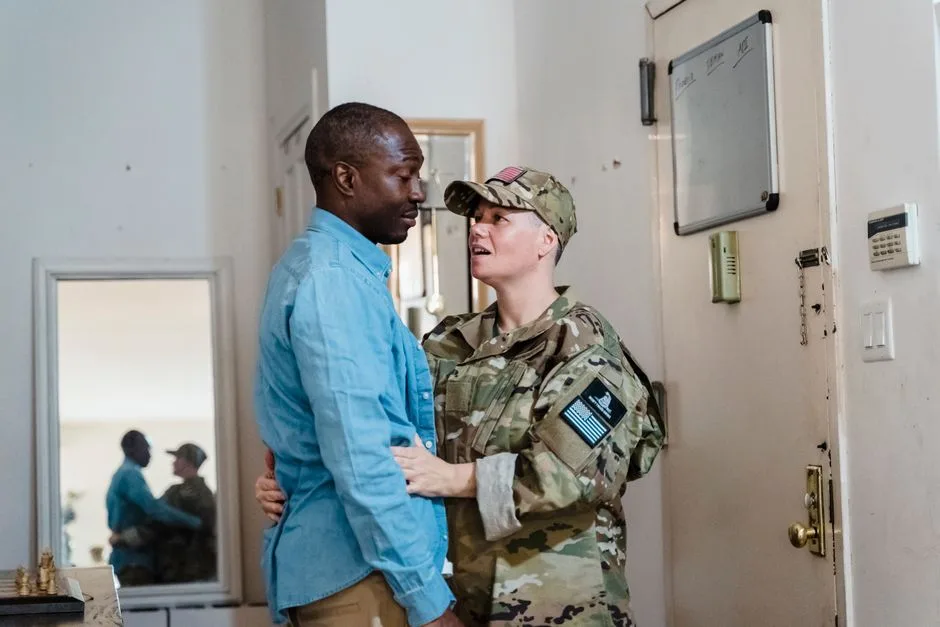
The brief reunion after a retreat-and-pursuit episode provides intense neurochemical relief to the anxious partner, creating an intermittent reinforcement loop that mimics substance addiction. Unpredictable rewards create the strongest behavioral conditioning in mammalian neurobiology, which is exactly what keeps partners hooked on the cycle rather than walking away from it.
 Pexels · George Pak · Pexels License ↗
Mistaking the Rollercoaster for Passion
Anxious attachers often mistake the intense emotional rollercoaster of anxiety and relief for authentic romantic passion. Levine and Heller describe this intermittent cycle of anxiety, rejection, and ecstatic reunion, where relational turbulence is mistaken for profound soulmate chemistry — in reality, it is the neurobiological symptom of chronic attachment dysregulation. Escaping the trap means learning to recalibrate: reading calm, steady affection as attraction, rather than as its absence.
 Pexels · Alex Green · Pexels License ↗
The Cost of the Cycle
In the anxious-avoidant trap, both partners spend their psychological energy managing a defense mechanism rather than building genuine intimacy, leaving little attention for the relationship itself. Over time this also erodes the anxious partner's self-esteem, as they tend to conclude the problem is their own neediness rather than the dynamic itself.
 Pexels · cottonbro studio · Pexels License ↗
The Principle of Least Interest
In an anxious-avoidant pairing, the avoidant partner holds structural power, not the anxious one — an example of what sociologists (since Willard Waller's 1938 work) call the principle of least interest. Asking more often is not the same as deciding: whoever can tolerate more distance decides how much distance there is, because the person who needs less closeness always dictates the relationship's emotional terms.
 Pexels · Alex Green · Pexels License ↗
The Avoidant's Self-Fulfilling Prophecy
Avoidant cynicism describes the belief that partners are inevitably suffocating and demanding — a prediction the avoidant's own withholding helps produce. By provoking frantic protest behavior through emotional withholding, avoidants create real-world evidence for the very belief that partners are dangerous to depend on.
 Pexels · Uday Ahir · Pexels License ↗
Why Matching Styles Rarely Last
Two avoidants rarely form long-term bonds, because neither one initiates the closeness the relationship needs. Two anxious individuals rarely last either, because their unchecked panics clash and escalate rapidly rather than resolving.
1 / 10Why is the brief reunion so hard for the anxious partner to give up?
Unpredictable rewards create the strongest behavioral conditioning in mammalian neurobiology, keeping partners hooked on the cycle.
Lesson 5 has 54 cards. Keep going in the free app.
Question -
 Pexels · SHVETS production · Pexels License ↗06
Lesson 6: Effective Communication, Conflict Resolution & Earned Security
6.1 The Blueprint for Effective Communication · 6.2 Five Principles for Conflict Resolution & Earned Security
Lesson 6 · 10 cardsPexels · SHVETS production · Pexels License ↗Directness Calms the Anxious Mind
Direct communication eliminates relational ambiguity, which is exactly what prevents an anxious mind from spinning catastrophic worst-case scenarios. Immediate clarity terminates obsessive rumination and restores cognitive equilibrium to an activated attachment system.
 Pexels · fauxels · Pexels License ↗
What Direct Communication Builds
Stating an attachment need plainly tends to produce a workable compromise, because a partner cannot negotiate with a need they were never told about — hints and tests just leave them guessing. Consistent, open dialogue like this builds a relationship culture of psychological safety: transparency, predictability, and room to be wrong.
 Pexels · Engin Akyurt · Pexels License ↗
Vulnerability Is Courage, Not Weakness
Expressing vulnerability to a partner is not a concession of position — secure adults do it early and readily because it is the move that invites reciprocal trust rather than surrendering standing. That includes translating protest into a plain statement of the need underneath it, and tolerating the discomfort of saying a need out loud in exchange for avoiding prolonged confusion later.
 Unsplash · Vitaly Gariev · Unsplash License ↗
The Five Principles of Effective Communication
Effective communication follows five principles: wear your heart on your sleeve by being genuine and emotionally brave about your feelings; focus on your own needs, using words like 'need,' 'feel,' and 'want' rather than pointing at a partner's shortcomings; be specific about exactly what's bothering you instead of speaking in generalities; don't blame — avoid making a partner feel selfish or inadequate, and raise things once you're calm; and be assertive and nonapologetic, because your relationship needs are valid on their own terms.
 Pexels · SHVETS production · Pexels License ↗
The Other Principles of Secure Conflict Resolution
The other four principles: show basic concern for your partner's well-being even mid-disagreement; refrain from generalizing the conflict with sweeping 'always' or 'never' statements; stay emotionally and physically engaged rather than stonewalling; and state emotional needs and proposed solutions with clear, constructive specificity.
 Pexels · Ketut Subiyanto · Pexels License ↗
Earned Security
Earned Security is the developmental process by which someone with an insecure background cultivates a secure attachment orientation in adulthood — security that is earned rather than inherited. Choosing a secure romantic partner is the most direct and powerful catalyst for developing it, because a secure partner's steadiness disconfirms the very assumptions the insecure pattern rests on.
1 / 10What does directness do for an anxious partner in particular?
Immediate clarity terminates obsessive rumination and restores cognitive equilibrium to the attachment system.
Lesson 6 has 51 cards. Keep going in the free app.
Question
What you'll be able to do 12 objectives, from the pack's lessons
- Explain Bowlby's proximity imperative, Ainsworth's Strange Situation, Hazan and Shaver's finding that adult love is attachment, and the thermostat metaphor.
- Explain what Coan's fMRI hand-holding experiments reveal about brain threat-response, marital quality, and partner-versus-stranger touch.
- Distinguish Levine and Heller's secure (about 50% of adults), anxious, and avoidant archetypes, including hyperactivation and deactivating strategies.
- Explain how secure, anxious, and avoidant attachment styles show up in early dating through clarity, pacing, and boundary-setting.
- Explain the anxious system's radar-like speed at reading emotional shifts, why its "sixth sense" misreads meaning, and how activation hijacks working memory.
- Identify protest behaviors (retaliatory delays, theatrical hostility, induced jealousy, withdrawal), their aim to force contact or punish, and why they fail.
- Explain why avoidants equate vulnerability with weakness, how self-reliance grows from unavailable or intrusive caregivers, and why they keep rigid boundaries.
- Identify avoidant deactivating strategies (fixating on flaws, the Phantom Ex, "The One", subtle distancing) and the counters: recognizing urges and gratitude.
- Trace the anxious-avoidant cycle from the anxious bid through retreat, pursuit, and reunion, and explain the Passion Trap and intermittent reinforcement.
- Break the anxious-avoidant cycle with Secure Buffering, agreed time-outs (space, a return time, honored without protest), and a shared-pattern reframe.
- Apply Levine and Heller's communication principles (be genuine, use I-statements, be specific, don't blame) and explain how directness removes ambiguity.
- State the five principles of secure conflict resolution, define Earned Security, and explain its coherent-narrative marker and its most direct catalyst.
Study guide.
The same study guide as in the app, one page for each lesson, with its key facts and a self-test.
- 01Lesson 1: Foundations of Adult Attachment & The Dependency Paradox
- 02Lesson 2: Decoding Attachment Styles & Deciphering Partners
- 03Lesson 3: The Anxious Attachment Style & Protest Behavior
- 04Lesson 4: The Avoidant Attachment Style & Deactivating Strategies
- 05Lesson 5: The Anxious-Avoidant Trap & Relational Collision
- 06Lesson 6: Effective Communication, Conflict Resolution & Earned Security
Built from 6 sources.
172 of its 305 cards cite a source. These are the sources it cites.
- Amir Levine, M.D. & Rachel Heller, M.A., Attached (2010) - Chapter 6: Keeping Love at Arm's Length ↗
- Dr. Sue Johnson, Hold Me Tight: Seven Conversations for a Lifetime of Love (EFT) ↗
- Amir Levine, M.D. & Rachel Heller, M.A., Attached (2010) - Chapter 6: Keeping Love at Arm's Length ↗
- Amir Levine, M.D. & Rachel Heller, M.A., Attached: The New Science of Adult Attachment ↗
- Hazan & Shaver, Romantic Love Conceptualized as an Attachment Process (Journal of Personality and Social Psychology, 1987) ↗
- Mary Ainsworth et al., Patterns of Attachment: A Psychological Study of the Strange Situation (1978) ↗
Hover over a photo, or tap its i, to see where it came from. All 7:
- Lesson 1: Pexels · MART PRODUCTION · Pexels License ↗
- Lesson 2: Unsplash · abdullah ali · Unsplash License ↗
- Lesson 3: Pexels · cottonbro studio · Pexels License ↗
- Lesson 4: Pexels · RDNE Stock project · Pexels License ↗
- Lesson 4: Unsplash · Christian Erfurt · Unsplash License ↗
- Lesson 5: Pexels · George Pak · Pexels License ↗
- Lesson 6: Pexels · SHVETS production · Pexels License ↗
- Attached by Amir Levine, Rachel Heller · on Amazon ↗
These are affiliate links: if you buy a book through one, FlashFeed may earn a small commission at no extra cost to you. The commission helps pay for FlashFeed's servers.
As an Amazon Associate we earn from qualifying purchases.
Independent study notes, not affiliated with the author or publisher.
- Cards
- 305
- Lessons
- 6
- Version
- 1.0.17
- Language
- English
The whole pack is one file. Read the pack file ↗
FlashFeed is on the App Store and Google Play.
FlashFeed is free on iPhone and Android, and needs no account.