
The 7 Habits of Highly Effective People
Stephen Covey's principle-centered framework for effectiveness — the Character Ethic, the private victory of proactivity and purpose, the public victory of Win/Win and empathic listening, and the renewal habit that sustains all the others.
283 cards6 lessons12 video lessonsFree
Already have FlashFeed?Open this pack
Get this pack on your phone
Scan with your phone's camera.
flashfeedlearningapp.com/packs/seven-habits
Part of the Habits & Mindset collection.
6 lessons.
Each lesson has a study guide to read and objectives you can test yourself on. Its cards and games show up in your feed. Try one of its cards right here. Play a few of its games here too. Every lesson has a short video.
-
 Pexels · Suzy Hazelwood · Pexels License ↗01
Foundations: Paradigms, Character Ethic, and the P/PC Balance
Paradigms, Character Ethic, and Inside-Out Thinking · The P/PC Balance and the Emotional Bank Account
Lesson 1 · 10 cards Pexels · Ave Calvar Martinez ↗
Lighthouse Principle
The lighthouse story illustrates that natural law principles are immovable realities to which human behavior must adjust.
Pexels · Suzy Hazelwood · Pexels License ↗The Personality Ethic
After World War I, Covey argues, American success writing pivoted away from character toward what he calls the Personality Ethic — public image, social technique, and Positive Mental Attitude. It split into two streams: human-relations skills (charm, packaging, influence tactics) and PMA psychologies promising success through affirmation. This replaced 150 years of writing built on the Character Ethic — integrity, humility, fidelity, and courage. Without character beneath them, Covey argues, charm and positivity are hollow and eventually erode trust.
 Pexels · Atahan Demir · Pexels License ↗
Inside-Out, Not Outside-In
Covey's Inside-Out Approach starts change with the self — one's own paradigms, character, and motives — rather than waiting for other people or circumstances to change first. Private victories, mastering oneself, must precede public victories, working well with others. The mirror image, outside-in thinking, tries to alter circumstances or other people before altering yourself; Covey calls it a flawed quick fix that produces blame and victimhood, because no technique for handling people survives a character that contradicts it.
 Pexels · cottonbro studio · Pexels License ↗
What Is a Paradigm?
A paradigm is the mental map a person uses to interpret reality — not reality itself. Covey compares it to navigating Chicago with an inaccurate map of Detroit: no amount of positive attitude or effort fixes the real problem, which is the map. Because paradigms are conditioned rather than consciously chosen, two people can look at identical facts and read them in completely different ways. When someone describes "what they see," Covey argues, they are really describing their own perceptions and conditioning.
 Pexels · C.T. PHAT · Pexels License ↗
A Paradigm Shift
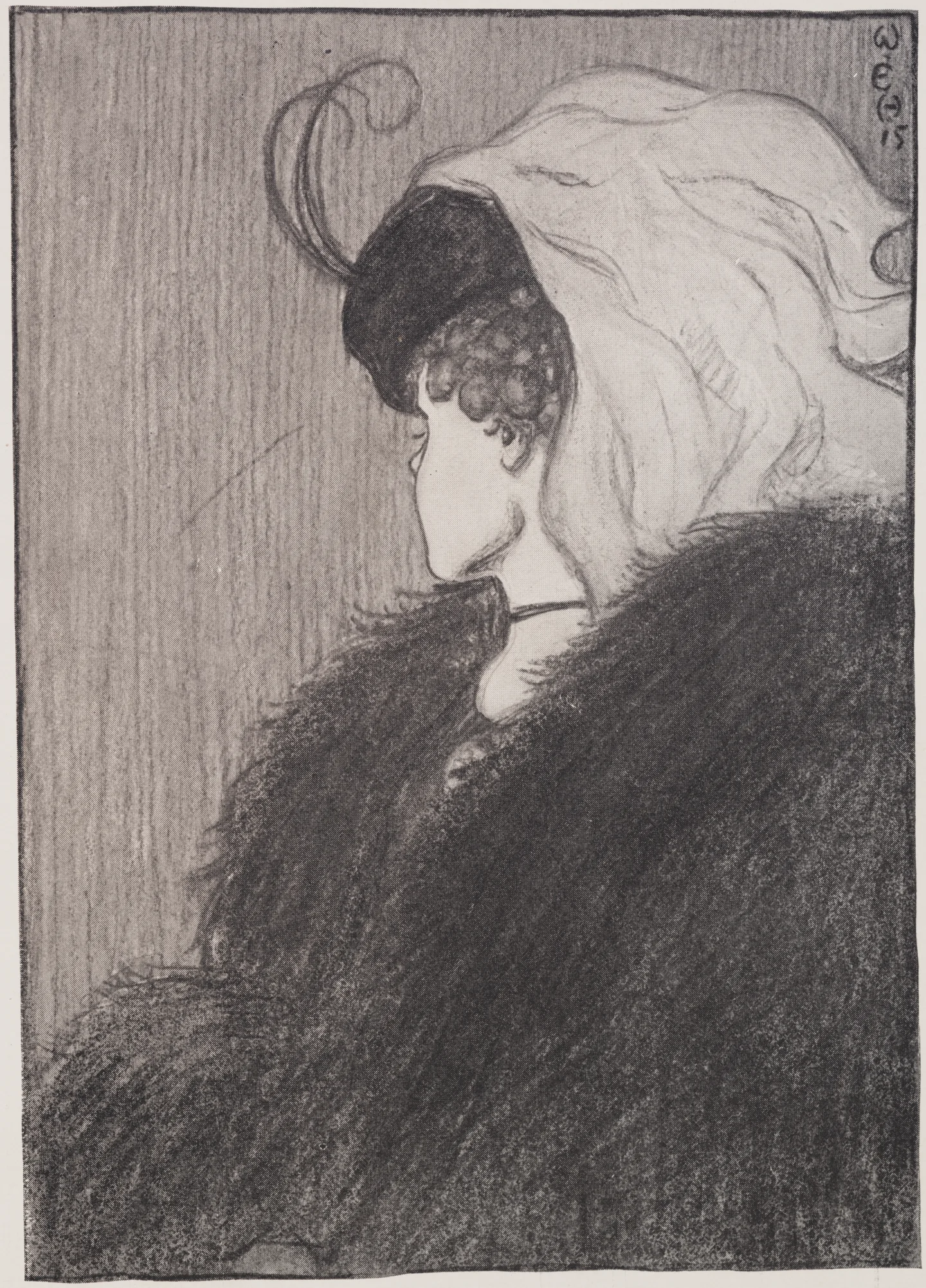
A paradigm shift happens when a person breaks out of an old frame of reference and sees a familiar situation in a genuinely new way — not because new facts piled up inside the old frame, but because the frame itself changed. Covey illustrates this with a classroom demonstration: half the room is primed to see a young woman, the other half an old woman, and neither group can see the other's figure until they trace the lines together and the old frame finally breaks.
 Pexels · Ylanite Koppens · Pexels License ↗
Principles vs. Values
Covey draws a sharp line between values and principles: values are the internal maps a person chooses for how things should be, but principles are the territory — how reality actually works, regardless of what anyone believes. Fairness, integrity, and human dignity operate whether or not a person values them, the same way gravity operates whether or not anyone believes in it. Values can be revised on a whim; principles can only be discovered and aligned with.
 Wikimedia Commons · Joseph-Siffred Duplessis · Public domain ↗
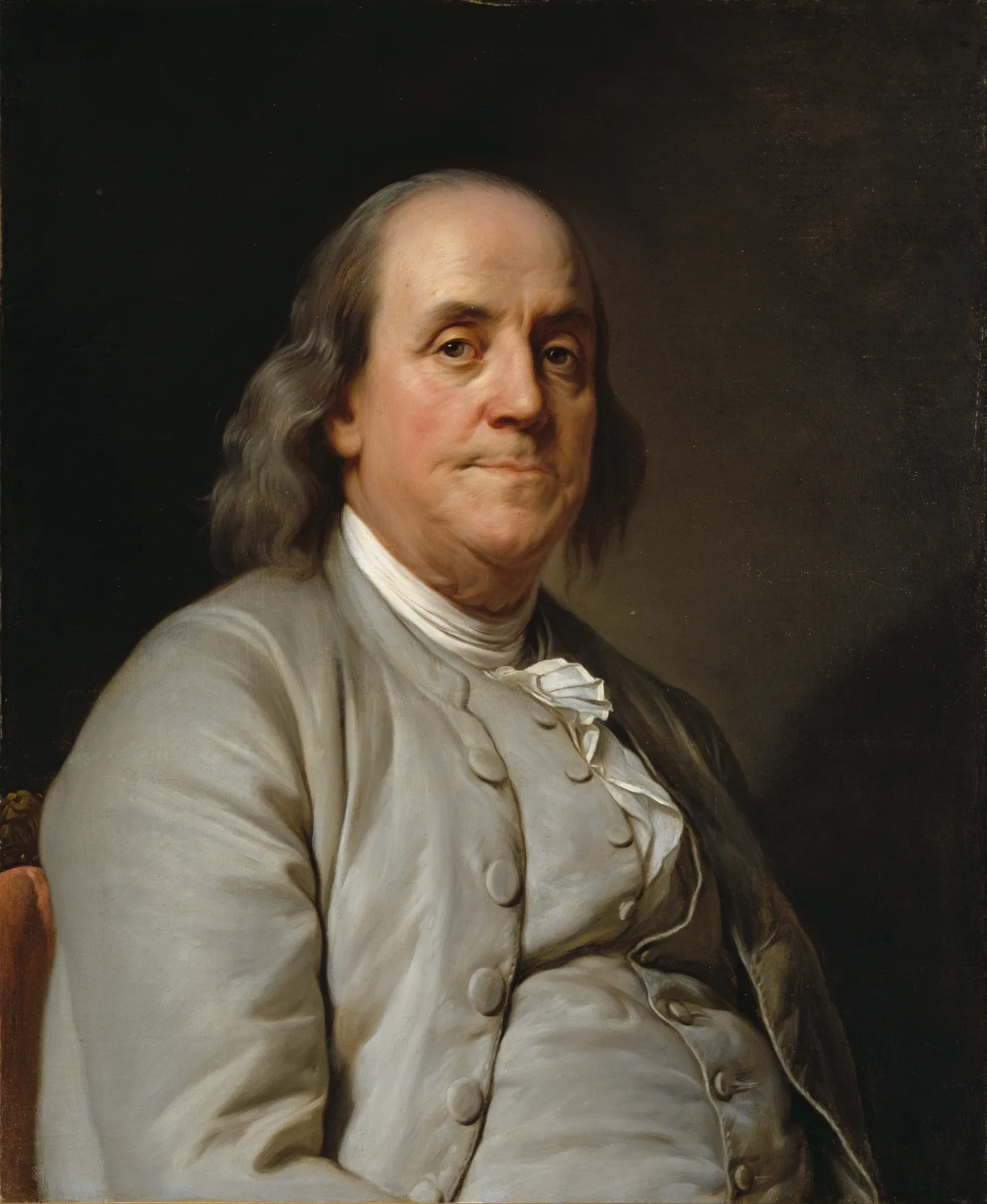
Franklin's Thirteen Virtues
Covey's example of deliberate character-building is Benjamin Franklin, who tracked thirteen virtues daily in his autobiography — among them temperance, silence, order, resolution, frugality, industry, sincerity, justice, moderation, cleanliness, tranquility, chastity, and humility. Franklin believed real influence flows from internal discipline, not outward polish, so he kept a running account of his own conduct against this list rather than simply resolving to "be better." Covey holds the practice up as the Character Ethic in action.
 Wikimedia Commons · W. E. Hill · Public domain ↗
Seeing Your Own Conditioning
In Covey's classroom demonstration, half a room is shown a picture of a young woman, the other half an old woman; when a composite image is then projected, each group insists on seeing only the figure they were primed for, and arguments break out until students trace the lines together. The lesson: perceptual conditioning runs so deep that people mistake their own conditioned interpretation for objective reality. Whenever someone describes "what they see," Covey argues, they are actually describing their own paradigm.
 David Jones (Openverse) · by 2.0 ↗
Secondary Greatness
Covey distinguishes primary greatness — character integrity — from secondary greatness: social status, awards, recognition, and technical communication skill. Secondary greatness is not worthless, but on its own it is hollow, because charm and credentials cannot substitute for a trustworthy character. A polished communicator without integrity is eventually found out; the techniques that once impressed people instead read as manipulation. Genuine effectiveness, Covey argues, requires primary greatness first.
1 / 10Benjamin Franklin's daily tracking of thirteen virtues illustrates which concept?
Franklin's virtue-tracking exemplifies the Character Ethic's claim that effectiveness rests on integrity and other foundational virtues, not on image or technique.
Lesson 1 has 53 cards. Keep going in the free app.
Question
The Wrong Map 
The Emotional Bank Account Transcripts
The Wrong Map
You're lost in Chicago. You try harder. You stay positive. But your map is of Detroit.
Effort and attitude aren't the problem. The map is wrong. Covey calls the map in your mind a paradigm.
Covey argues we rarely see the world as it is. We see it as we are.
His answer: start inside-out, with your own map. Change it, and you see the world in a new way. That's a paradigm shift.
The Emotional Bank Account
With one friend, small misunderstandings are easily forgiven. With another, every word is weighed. Why?
Covey's answer is the Emotional Bank Account. It's his metaphor for the trust built up in a relationship.
Like a bank account, it grows with deposits and shrinks with withdrawals. When the balance runs low, talk turns guarded.
Covey lists 6 major deposits. Keeping a promise is one of the largest. Breaking a promise is a huge withdrawal.
-
 Pexels · Han-Chieh Lee ↗02
Private Victory: Habit 1 (Be Proactive) and Habit 2 (Begin with the End in Mind)
Habit 1: Proactivity and the Circle of Influence · Habit 2: Personal Leadership and Mission Statements
Lesson 2 · 10 cardsPexels · Han-Chieh Lee ↗Freedom to Choose
Between stimulus and response, human beings possess the fundamental freedom to choose their reaction based on values.
 Pexels · M1nh Art · Pexels License ↗
The Gateway Choice
Of everything in the book, Covey treats one shift as the gateway to all the others: choosing to be proactive rather than reactive. It's the move from seeing yourself as a victim of circumstance to acting as an agent of change — not because circumstances stop mattering, but because the response to them becomes something chosen rather than something that simply happens to you. Every later habit presumes this first shift already happened, which is why Covey opens the seven habits with it.
 Prof. Dr. Franz Vesely · CC BY-SA 3.0 de ↗
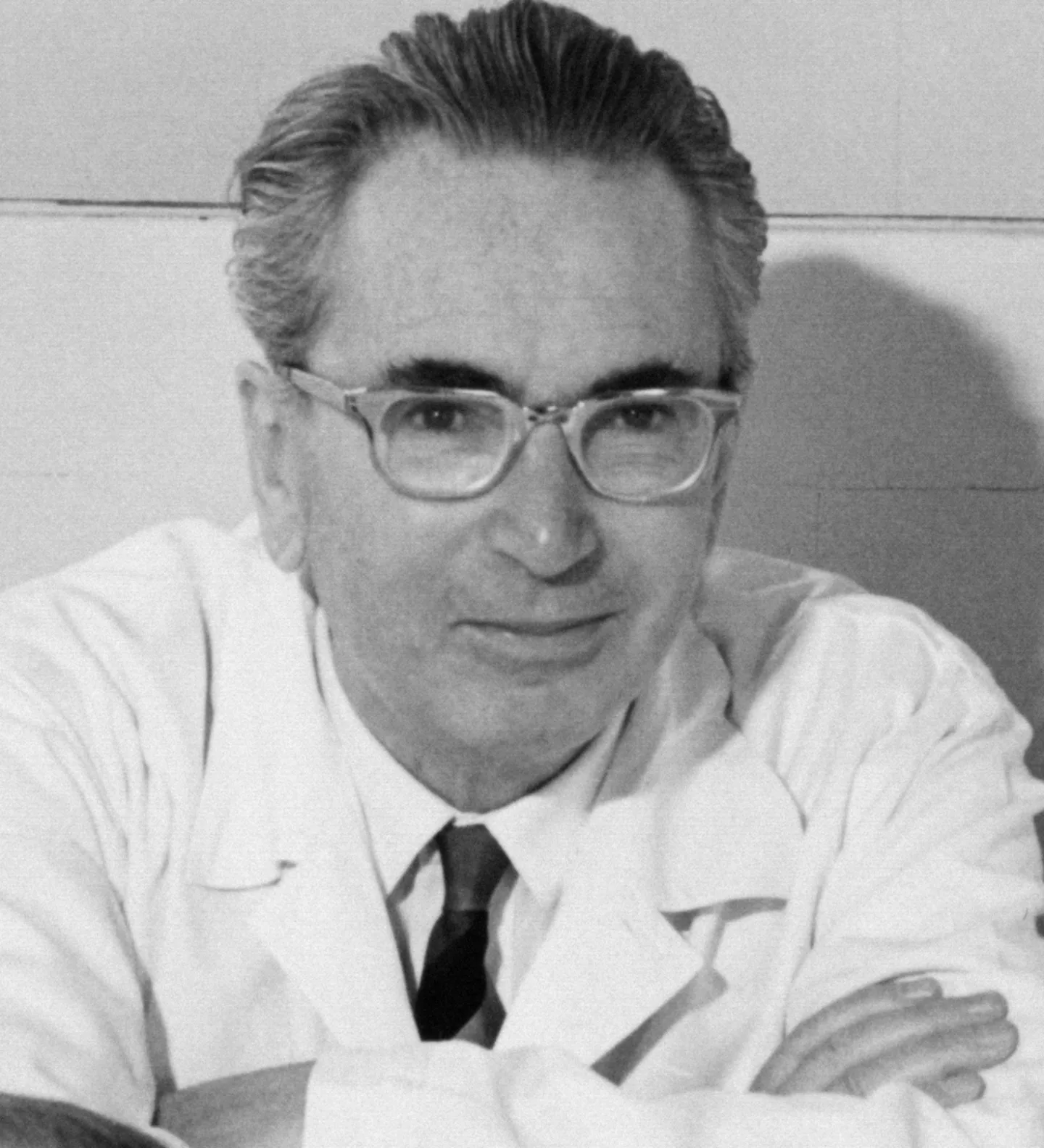
Viktor Frankl's Last Freedom
Covey's account of ultimate human freedom comes from Viktor Frankl, an Austrian psychiatrist who survived Nazi concentration camps including Auschwitz and Dachau. Stripped of his family, his possessions, and control over his own body, Frankl discovered that his captors could not touch one thing: his freedom to choose his own inner response to what was happening to him. He called it "the last of the human freedoms." Covey uses Frankl's discovery to ground his central claim about the space between stimulus and response.
 Pexels · Ruslan Sikunov · Pexels License ↗
Four Human Endowments
Covey names four unique human endowments that create the space between stimulus and response: self-awareness (standing apart to examine your own thinking), conscience (an inner moral compass sensing alignment with principle), creative imagination (picturing a future beyond present experience), and independent will (the power to act on your values rather than your conditioning). No animal has these; together they make it possible to notice an inherited habit and choose to rewrite it.
 Pexels · Ivan S · Pexels License ↗
Reactive Language
Phrases like "there's nothing I can do," "that's just how I am," and "he makes me so mad" are what Covey calls reactive language — and he insists it isn't harmless phrasing. The words are a paradigm made audible: each one hands responsibility for your response to somebody or something else, and repeating that story turns it into a self-fulfilling prophecy. Proactive language replaces it with ownership — "I can choose a different approach," "I control my own feelings."
 Pexels · MART PRODUCTION · Pexels License ↗
Three Kinds of Problems
Covey sorts every problem into three types, each solved a different way. Direct control problems involve our own behavior, and yield to new personal habits. Indirect control problems involve other people's behavior, and yield to better methods of influence — empathy, Win/Win. No control problems involve fixed realities, like the past or the weather, and yield to nothing but genuine, unresentful acceptance. Misapplying the fix is where most frustration comes from.
 Pexels · RDNE Stock project · Pexels License ↗
The Thirty-Day Test
Covey proposes a thirty-day proactivity test: for one month, work strictly within your Circle of Influence, make small promises and keep every one, stop complaining and stop judging, and try to be part of the solution rather than the problem. The calendar length isn't the point — it's long enough for the effect to accumulate and become visible. Influence, Covey argues, grows the same way a muscle does: through consistent use, not a single decision.
 Pexels · Akshay Nair · Pexels License ↗
Carry Your Own Weather
Covey says proactive people "carry their own weather" — their sense of purpose and emotional stability doesn't rise and fall with what's happening around them. A reactive person's mood tracks the social or physical climate: good when things go well, sour when they don't. A proactive person still feels things, but their stability comes from values they've chosen, not conditions they can't control — which is why the same hardship can break one person and barely register with another.
1 / 10In Covey's jungle parable, what does the leader alone do that the managers do not?
The leader climbs the tallest tree, surveys the landscape, and shouts 'Wrong jungle!' while managers only refine cutting technique and procedures — efficiency without checking direction.
Lesson 2 has 53 cards. Keep going in the free app.
Question
Circle of Influence 
Created Twice Transcripts
Circle of Influence
The weather. The economy. Other people's faults. Covey puts them all in your Circle of Concern.
The Circle of Influence sits inside it. It holds the things you can do something about, like your habits and your health.
Reactive people focus on the outer circle. Covey argues their Circle of Influence shrinks.
Proactive people work inside the smaller circle. Over time, it grows. That's Habit 1: Be Proactive.
Created Twice
Every house gets built twice. First as a blueprint. Then with hammers and nails.
Covey argues that all things are created twice. That's the idea behind Habit 2: Begin with the End in Mind.
If you don't draw your own blueprint, you live out scripts from family, peers and society.
Habit 2's best tool is a personal mission statement: what you want to be, what you want to do, and the principles behind both.
-
 Pexels · Jakub Zerdzicki ↗03
Private Victory: Habit 3 (Put First Things First)
The Time Management Matrix and Quadrant II Focus · Stewardship Delegation and Weekly Organizing
Lesson 3 · 10 cardsPexels · Jakub Zerdzicki ↗Habit 3 Physical Execution
Habit 3 represents the practical fulfillment of Habits 1 and 2, translating personal vision and leadership into daily execution.
 Unsplash · Vitaly Gariev · Unsplash License ↗
The Common Denominator of Success
Covey quotes Albert E. N. Gray's essay on what successful people actually share: "the habit of doing the things failures don't like to do." The twist is that successful people don't necessarily enjoy those things any more than anyone else does — they subordinate the feeling to a purpose they've decided matters more. This is Covey's bridge from Habit 2 (deciding what matters) to Habit 3 (doing it anyway): a clear purpose makes an unpleasant task worth doing on the days motivation doesn't show up.
 Unsplash · Orkun Azap · Unsplash License ↗
Urgent vs. Important
Covey's Time Management Matrix sorts every activity along two independent axes, not one. Urgent means it demands immediate attention — it acts on you, like a ringing phone. Important means it actually matters to your results and long-term values. The two are easy to confuse, but a task can be urgent and trivial (a two-minute interruption) or important and never urgent (an hour of planning), which is why Covey needs a two-by-two grid rather than a single priority scale.
 Pexels · RDNE Stock project · Pexels License ↗
Quadrant I: Crises
Quadrant I of Covey's matrix holds what's both urgent and important — crises, pressing problems, deadline-driven projects. It's real work that genuinely can't wait, which is exactly what makes it so easy to live in permanently. Covey's point isn't that Quadrant I is avoidable; some of it always exists. The trap is a life spent entirely there, because a schedule with no room for anything but emergencies has no way to prevent the next one.
 Unsplash · Cathryn Lavery · Unsplash License ↗
Quadrant II: The Real Leverage
Quadrant II — important but not urgent — is where Covey locates real effectiveness: prevention, relationship-building, planning, exercise, and writing a personal mission statement. Nothing here ever announces itself with a deadline, so this time has to be taken deliberately rather than discovered lying around. Covey calls it the heart of personal management because it's the one quadrant that shrinks all the others: time invested here reduces the crises and busywork that would otherwise fill the week.
 Pexels · SHVETS production ↗
Quadrant IV (Waste)
Quadrant IV contains activities that are neither Urgent nor Important, such as trivia, busywork, and time wasters.
 Pexels · Yan Krukau · Pexels License ↗
The Quadrant I Trap
A working life spent entirely in Quadrant I produces chronic stress, burnout, and constant emergency firefighting — and Covey's sharper point is that it doesn't even solve the underlying problem. Quadrant I only shrinks when Quadrant II grows: prevention and planning are what stop the next crisis from forming in the first place. Living exclusively in crisis mode, however fast and capable the response, tends to produce more crises rather than fewer.
 Pexels · Leeloo The First · Pexels License ↗
Four Generations of Time Management
Covey traces time management through four generations: notes and checklists (first), calendars (second), prioritized daily planning (third) — efficient but rigid, and stressful the moment a human interruption arrives — and a fourth generation that shifts the whole goal from managing time to managing yourself, organizing around roles and relationships rather than a fixed task list. The fourth generation deliberately gives up on scheduling every hour in favor of protecting what actually produces results.
 Unsplash · Ibrahim Rifath · Unsplash License ↗
The Pareto Principle
The Pareto Principle — a small share of activities produces most of the results — is what makes Quadrant II worth the fight to protect. Covey cites it in time-management terms: 80 percent of the results flow out of 20 percent of the activities. Choosing high-leverage activities such as prevention and planning, rather than firefighting, is what compounds into outsized effectiveness rather than outsized busyness.
1 / 10Which of these is NOT one of the five elements of a stewardship delegation agreement?
Guidelines, resources, and consequences are three of the five elements; stewardship delegation deliberately leaves the method to the performer instead of specifying it.
Lesson 3 has 47 cards. Keep going in the free app.
Question
Urgent vs Important 
Green and Clean Transcripts
Urgent vs Important
A ringing phone. A looming deadline. They demand attention now. Covey calls that urgent.
Important is different. It serves your long-term goals. Sort tasks by both, and you get 4 quadrants: the Time Management Matrix.
Quadrant II is important but not urgent: planning, prevention, exercise. Covey calls it the heart of effective personal management.
Nothing there ever rings. So you have to schedule it, and say no to other things.
Green and Clean
Covey put his 7-year-old son in charge of the yard. There were just two goals: green and clean.
The method was the boy's choice. They walked the yard together to check on it. After a slow start, the boy took total ownership.
Covey calls this stewardship delegation: results, not methods. Gofer delegation is the opposite. It dictates every step.
Covey's lesson: trust is the highest form of human motivation.
-
 Pexels · Mikhail Nilov ↗04
Public Victory: Interdependence and Habit 4 (Think Win/Win)
Interpersonal Paradigms and the Win/Win Mindset · The Five Dimensions of Win/Win Agreements
Lesson 4 · 10 cardsPexels · Mikhail Nilov ↗Think Win/Win
Habit 4 (Think Win/Win) is a philosophy of interpersonal leadership that seeks mutual benefit in all human interactions.
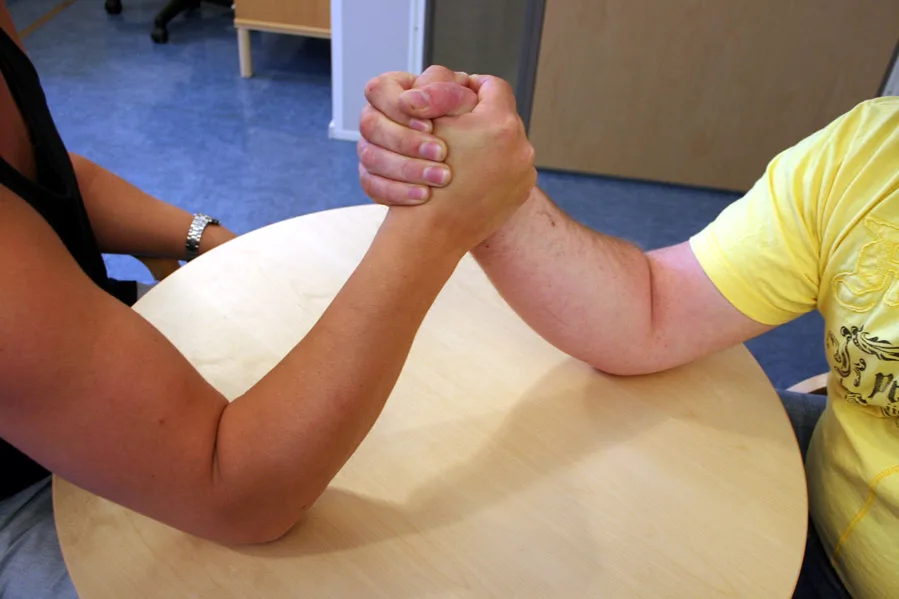 No machine-readable author provided. Bombadil77 assumed (based on copyright clai · CC BY 2.5 ↗
Win/Lose, Lose/Win, and Lose/Lose
Beyond Win/Win, Covey names four other patterns of human interaction. Win/Lose is the authoritarian posture — using power or position to get your way at someone else's expense. Lose/Win is its appeasing opposite — burying your own wishes to be liked, which stores up resentment rather than resolving anything. Lose/Lose happens when two stubborn Win/Lose people collide and both choose mutual destruction over backing down. Plain Win simply ignores whether the other side wins or loses at all.
 Unsplash · Vitaly Gariev · Unsplash License ↗
Abundance vs. Scarcity Mentality
An Abundance Mentality is the belief that there's plenty of success, recognition, and opportunity to go around — which is what makes it possible to be genuinely glad when a colleague succeeds. A Scarcity Mentality sees a fixed pie instead: every slice someone else gets is a slice you didn't. Covey treats scarcity thinking as the root of workplace envy and hoarded credit, since if success really were finite, celebrating a rival's win would be irrational.
 Unsplash · Etactics Inc · Unsplash License ↗
A Win Over a Colleague Is a Loss
In a genuinely interdependent workplace, Covey argues, beating a colleague isn't really a win at all — any competitive Win/Lose victory eventually becomes Lose/Lose, because it poisons the trust and cooperation both people will need again tomorrow. A team that runs on internal competition may produce an occasional individual winner, but the organization as a whole loses the collaboration real interdependence requires. What looks like victory in the moment is corrosive once you have to work with the person you just defeated.
 Unsplash · lilartsy · Unsplash License ↗
Integrity, the Base of Win/Win
Of the three character traits Covey puts under Win/Win — integrity, maturity, and an abundance mentality — integrity sits at the very base. He defines it as the value you place on yourself and your own commitments: keeping the promises you make, including the ones only you would ever know about. Without that foundation, maturity and abundance thinking have nothing solid to stand on, because a person whose word can't be trusted can only act mature until it costs them something.
 Pexels · MART PRODUCTION · Pexels License ↗
Courage and Consideration
Covey defines maturity as the balance between two traits: the courage to state your own needs and convictions, and consideration for the needs and feelings of the other person. High courage paired with low consideration produces Win/Lose — getting your way regardless of the cost to others. Low courage paired with high consideration produces the opposite failure, Lose/Win. Only holding both at once, Covey argues, can sustain a genuine Win/Win agreement.
 Unsplash · Ana Lucia Videira · Unsplash License ↗
Systems Must Reward Win/Win
Covey's Supportive Systems dimension says an organization can't talk Win/Win while its structures reward Win/Lose. Once agreements replace supervision, a manager's own role shifts from a boss auditing results to a partner clearing obstacles out of the performer's way.
 kansasphoto (Openverse) · by 2.0 ↗
The President's Race to Bermuda
Covey describes a company president who kept a chart behind a curtain showing his managers' faces on racehorses racing toward a travel poster of Bermuda. Each week he told the group to cooperate, then pulled back the curtain and asked who would win the trip — competing against the very colleagues he'd just asked them to help. Covey's lesson: an organization cannot preach Win/Win while its reward system quietly pays out Win/Lose.
1 / 10How does Covey define a Scarcity Mentality?
Scarcity Mentality treats success as a fixed pie, so a colleague's gain feels like your loss, the opposite of the Abundance Mentality's belief in plenty for everyone.
Lesson 4 has 44 cards. Keep going in the free app.
Question
Win/Win or No Deal 
The Race to Bermuda Transcripts
Win/Win or No Deal
A deal is on the table. It works for you. It doesn't work for the other side.
If you push it through, you win at their expense. That's Win/Lose.
Covey argues for Win/Win: a deal that benefits both sides. And if the two sides can't find one, they agree to disagree agreeably.
He calls this Win/Win or No Deal. Walking away keeps the relationship. It also prevents resentment later.
The Race to Bermuda
Covey tells of a company president. Every week, he urged his managers to cooperate. Then he pulled back a curtain.
Behind it was a chart: his managers' faces on racehorses, racing toward a travel poster of Bermuda.
He asked who would win. He preached teamwork and pitted them against each other in the same breath.
Covey's point: you cannot talk Win/Win while rewarding Win/Lose. So rewards must support Win/Win. He calls this supportive systems.
-
 Pexels · cottonbro studio ↗05
Public Victory: Habit 5 (Seek First to Understand) and Habit 6 (Synergize)
Habit 5: Empathic Listening and Psychological Air · Habit 6: Synergy and Valuing Differences
Lesson 5 · 10 cardsPexels · cottonbro studio ↗Diagnose Before Prescribing
Habit 5 states that effective communication requires diagnosing before prescribing, seeking first to understand then to be understood.
 U.S. Air Force photo by Senior Airman Kasey Close · Public domain ↗
The Optometrist's Mistake
Covey pictures an optometrist who takes off his own glasses and hands them to a patient, telling him they've worked well for ten years and he should just try wearing them. It's an absurd way to practice medicine, because the doctor never examined the patient's actual eyes. Yet Covey argues people do exactly this in ordinary conversation constantly — offering advice, judgments, and solutions built from their own experience before they've understood the other person's situation. His rule: diagnose before you prescribe.
 Pexels · Kelvin Valerio · Pexels License ↗
Psychological Air
Covey argues that next to physical survival, a person's greatest need is psychological survival — to be understood, affirmed, validated, appreciated. He calls this "psychological air." Someone who feels unheard runs out of it and moves into a defensive, fight-or-flight posture, unable to engage rationally until the need is met. Give a person genuine empathic listening, and that defensiveness tends to drop — not because the disagreement was resolved, but because they finally have air.
 Wikimedia Commons · Shimer College · CC BY 2.0 ↗
The Five Levels of Listening
Covey ranks listening in five ascending levels: ignoring, pretending ("uh-huh," "right"), selective listening (only the parts that interest you), attentive listening (real attention to the words), and empathic listening — the only one organized around the speaker, entering their frame of reference rather than your own. Empathic listening isn't agreement; you can fully understand someone's position and still disagree with it.
 Pexels · August de Richelieu · Pexels License ↗
Building Empathic Listening
Covey lays out four developmental stages for building real empathic-listening skill. Mimic content — repeating words back, the least effective, almost parroting. Rephrase content — putting the speaker's meaning into your own words. Reflect feeling — naming the emotion underneath the words. Rephrase content and reflect feeling together — the full skill, addressing both what was said and what was felt at once.
 Pexels · Kampus Production · Pexels License ↗
Ethos, Then Pathos, Then Logos
Drawing on classical rhetoric, Covey names three elements of persuasion — ethos (personal credibility and character), pathos (empathic, emotional alignment), and logos (the logic of the argument) — and insists on a strict order. Most failed communication, he argues, tries to lead with logos before the audience trusts the speaker or feels understood by them. Effective communicators earn ethos first, connect through pathos second, and only then bring in the logic.
 Pexels · Defrino Maasy ↗
Synergy
Synergy is the principle that the whole is greater than the sum of its parts, where the relationship among parts creates emergent value.
 Pexels · Vitaly Gariev · Pexels License ↗
Valuing Differences
The essence of synergy, Covey argues, is to value mental, emotional, and psychological differences rather than smooth them away — as he puts it, "If two people have the same opinion, one is unnecessary." When someone sees a situation differently, the proactive response isn't to argue or judge but to say, "Good! You see it differently! Help me see what you see." Treating disagreement as information you don't have yet requires emotional security anchored in your own principles.
1 / 10Which professional analogy does Covey use to illustrate prescribing before diagnosing?
Covey's example is an optometrist who hands a patient his own glasses, saying they've worked for him for years, without ever examining the patient's eyes.
Lesson 5 has 42 cards. Keep going in the free app.
Question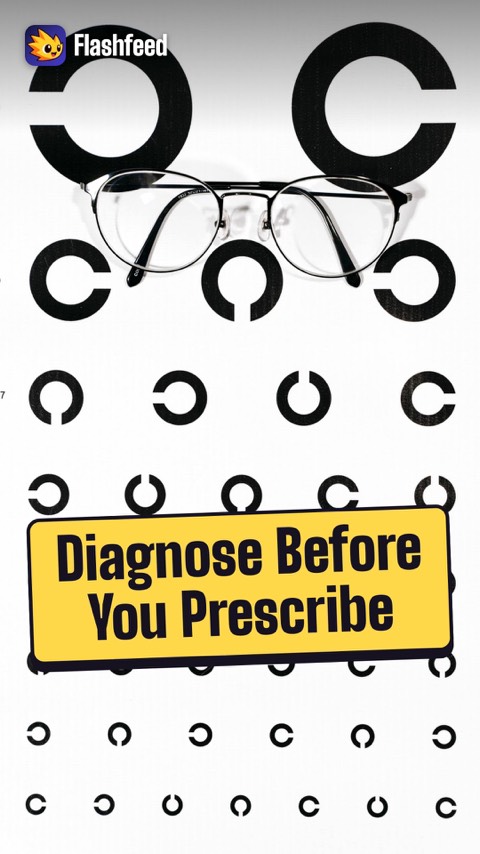
Diagnose Before You Prescribe 
The Third Alternative Transcripts
Diagnose Before You Prescribe
You visit an optometrist. He takes off his own glasses and hands them to you. They've worked well for 10 years, he says. Just try them.
The optometrist breaks a medical rule: diagnose before you prescribe.
Yet in conversation, we prescribe all the time. Covey argues that most people don't listen to understand. They listen to reply.
That's Habit 5: seek first to understand. Being understood comes second.
The Third Alternative
Covey argues that if two people have the same opinion, one of them is unnecessary. He calls valuing differences the essence of synergy.
In a compromise, each side gives something up. 1 + 1 = 1.5.
High trust lets two people find a Third Alternative. 1 + 1 may equal 8, 16, or even 1,600.
When views differ, Covey's answer: Good! You see it differently! Help me see what you see.
-
 Pexels · Carel Voorhorst ↗06
Renewal and Continuous Growth: Habit 7 (Sharpen the Saw)
The Four Dimensions of Balanced Renewal · The Upward Spiral and Lifelong Effectiveness
Lesson 6 · 10 cardsPexels · Carel Voorhorst ↗Sharpen the Saw
Habit 7 (Sharpen the Saw) is the principle of balanced self-renewal, preserving and enhancing the greatest asset: yourself.
 Pexels · Mikhail Nilov · Pexels License ↗
Physical Renewal
The Physical Dimension of renewal has three components: endurance (cardiovascular fitness), flexibility, and strength. Covey recommends three to six hours a week, all of it genuinely Quadrant II — not urgent, easy to skip, but exactly the kind of investment that pays off across every other dimension. He treats exercise as more than fitness maintenance: pushing through resistance when the body would rather not is training for independent will, the endowment that carries through any value-driven choice.
 Pexels · Alexandr Marchenko · Pexels License ↗
Spiritual Renewal
Covey's Spiritual Dimension is the private work of reconnecting with your own core values — renewed through meditation, prayer, immersion in great literature or music, or time spent in nature. It's the one dimension that renews the personal mission statement itself, refreshing the "why" underneath everything else a person does, which is also what makes it the dimension most easily crowded out by whatever feels urgent that day.
 Pexels · George Milton · Pexels License ↗
Mental Renewal
Covey's Mental Dimension continues the work formal education leaves off — through disciplined reading, reflective writing, and systematic learning. Most people, he observes, let their minds atrophy the moment school ends, substituting passive television and trivial entertainment for anything that actually stretches them. The substitution is a real trade-off in his account: deep reading expands the mental paradigms a person can draw on, while passive consumption simply lets the mind go slack.
 Pexels · John Diez ↗
Social/Emotional Dimension Renewal
The Social/Emotional dimension is renewed in daily interpersonal interactions through service, empathic communication, and cooperative synergy.
 Pexels · Ron Lach · Pexels License ↗
The Daily Private Victory
Covey recommends committing at least one hour a day to renewing the physical, spiritual, and mental dimensions together — a practice he names the Daily Private Victory. An hour is a small fraction of a waking day, but Covey's argument is that the other fifteen-sixteenths depend on it: the hour builds the endurance, clarity, and values-alignment everything else gets drawn from. Skipping the hour to "save time" for other priorities actually starves the capability those priorities depend on.
 Pexels · Nathan Cowley · Pexels License ↗
Balanced, Not Sequential
Renewal doesn't work one dimension at a time, saving the rest for later — Covey insists the four dimensions are interdependent, so neglecting any one of them drags down the others regardless of how well the remaining three are maintained. Skipping spiritual renewal to focus purely on physical fitness leaves the "why" behind the effort thin, while neglecting mental growth leaves relationships without much depth to draw on. That's why Habit 7 is balanced renewal, not sequential renewal.
 Pexels · Anastasia Shuraeva · Pexels License ↗
Renewal Is Quadrant II
Habit 7 — Sharpen the Saw — is, in Covey's framework, the foundational Quadrant II activity: not urgent, easy to postpone, and exactly the kind of investment that protects and multiplies long-term Production Capability (PC). Skipping it never announces itself as a mistake the way missing a Quadrant I deadline does; the cost only shows up later, as burnout or a capability that quietly eroded while attention went elsewhere. The return compounds precisely because nothing forces you to make it.
1 / 10How is the first of the four dimensions of renewal fed?
The Physical dimension is the first of Covey's four dimensions of renewal, and it is fed through aerobic exercise, flexibility work, and consistent nutritional attention.
Lesson 6 has 44 cards. Keep going in the free app.
Question
Too Busy Sawing 
The Transition Person Transcripts
Too Busy Sawing
A man has been sawing a tree for hours. A passerby suggests a break to sharpen the saw. The work would go faster.
The man replies: I don't have time to sharpen the saw! I'm too busy sawing!
That's Habit 7: Sharpen the Saw. It means renewal in 4 dimensions: physical, spiritual, mental, and social/emotional.
For the first three, Covey recommends at least 1 hour a day. He calls it the Daily Private Victory.
The Transition Person
Parents can pass negative scripts to their children. Covey's example is abuse. People tend to live out such scripts.
But he says you don't have to. Because you are proactive, you can rewrite the script.
Covey borrows a term from his friend Terry Warner: a transition person. A transition person changes the script, and builds relationships along the way.
A tendency can run through a family for generations. It can stop with you.


What you'll be able to do 12 objectives, from the pack's lessons
- Distinguish the Character Ethic from the Personality Ethic and apply the Inside-Out Approach to lasting paradigm change.
- Apply the P/PC Balance, build trust with Emotional Bank Account deposits, and trace growth along Covey's Maturity Continuum.
- Apply Habit 1 (Be Proactive) by focusing on the Circle of Influence rather than the Circle of Concern.
- Apply Habit 2 (Begin with the End in Mind) by authoring a personal mission statement through principle-centered leadership.
- Organize time using the Time Management Matrix, prioritizing Quadrant II activities that are important but not urgent.
- Apply Stewardship Delegation over Gofer Delegation and organize weekly around key roles and Quadrant II goals.
- Distinguish Covey's interaction paradigms, including Win/Win or No Deal, and contrast scarcity with abundance mentality.
- Identify Covey's five dimensions of Win/Win and how relationships, agreements, systems and processes sustain it.
- Distinguish empathic listening from the four lower levels, define psychological air, and order persuasion as ethos, pathos, logos.
- Contrast synergy's Third Alternative with compromise, and explain valuing differences and Force Field Analysis.
- Name the four renewal dimensions, match physical, mental and social practices to them, and place sharpening the saw in Quadrant II.
- Explain the conscience-guided learn-commit-do spiral, the transition person's legacy, and the path to interdependence.
Study guide.
The same study guide as in the app, one page for each lesson, with its key facts and a self-test.
- 01Foundations: Paradigms, Character Ethic, and the P/PC Balance
- 02Private Victory: Habit 1 (Be Proactive) and Habit 2 (Begin with the End in Mind)
- 03Private Victory: Habit 3 (Put First Things First)
- 04Public Victory: Interdependence and Habit 4 (Think Win/Win)
- 05Public Victory: Habit 5 (Seek First to Understand) and Habit 6 (Synergize)
- 06Renewal and Continuous Growth: Habit 7 (Sharpen the Saw)
Its cards name 1 source.
283 of its 283 cards name their source. These are the sources named.
- The 7 Habits of Highly Effective People — Stephen R. Covey
Hover over a photo, or tap its i, to see where it came from. All 7:
- Lesson 1: Pexels · Suzy Hazelwood · Pexels License ↗
- Lesson 1: Pexels · Ave Calvar Martinez ↗
- Lesson 2: Pexels · Han-Chieh Lee ↗
- Lesson 3: Pexels · Jakub Zerdzicki ↗
- Lesson 4: Pexels · Mikhail Nilov ↗
- Lesson 5: Pexels · cottonbro studio ↗
- Lesson 6: Pexels · Carel Voorhorst ↗
- The 7 Habits of Highly Effective People by Stephen R. Covey · on Amazon ↗
These are affiliate links: if you buy a book through one, FlashFeed may earn a small commission at no extra cost to you. The commission helps pay for FlashFeed's servers.
As an Amazon Associate we earn from qualifying purchases.
Independent study notes, not affiliated with the author or publisher.
- Cards
- 283
- Lessons
- 6
- Version
- 1.0.19
- Language
- English
The whole pack is one file. Read the pack file ↗
FlashFeed is on the App Store and Google Play.
FlashFeed is free on iPhone and Android, and needs no account.