
The Science of Sticky Apps
The full scientific stack behind habit-forming mobile apps: the dopamine of anticipation, B.F. Skinner's variable rewards, Fogg's B=MAP and Eyal's Hook Model, loss aversion and the streak, gamification and Octalysis, network effects and viral K-factors, retention and the Aha moment, the design patterns — and the ethics of it all, from FarmVille to TikTok.
790 cards11 lessonsFree
Already have FlashFeed?Open this pack
Get this pack on your phone
Scan with your phone's camera.
flashfeedlearningapp.com/packs/sticky-apps
11 lessons.
Each lesson has a study guide to read and objectives you can test yourself on. Its cards and games show up in your feed. Try one of its cards right here. Play a few of its games here too.
-
 Pexels · Afif Ramdhasuma ↗01
How We Got Here
Captology & the persuasion roots · Social games & the mobile Skinner box · Hooked and the algorithm era
Lesson 1 · 10 cardsPexels · Afif Ramdhasuma ↗FarmVille and the viral loop
In June 2009, Zynga launched FarmVille. It hit one million Daily Active Users in four days and 30 million in six months — driven not by gameplay depth but by social sharing: visible farms, resource-gifting loops that required friends, and 'a friend needs help' notifications.
 Pexels · Andrea Piacquadio · Pexels License ↗
It started with a dissertation
The lineage of sticky design starts not with a product manager but with a Stanford doctoral student. BJ Fogg's 1993 dissertation, Charismatic Computers, showed for the first time that computers could change human thoughts and behaviors in predictable ways.
 hackNY (Openverse) · by-sa 2.0 ↗
What Captology Means
Captology stands for Computers As Persuasive Technologies — the study of how computers can be designed to change what people think and do.
 Wikimedia Commons · RetroMels · CC BY 3.0 ↗
Captology's Birth Year
The term captology was coined in 1996 — three years after Fogg's 1993 dissertation and two years before he founded the Persuasive Technology Lab in 1998.
 Pexels · Lombe K ↗
The phone in your pocket
The iPhone's 2007 launch and the 2008 App Store opening moved apps from the desktop to the pocket — available in every idle moment. The smartphone became a portable Skinner box: a conditioning chamber you carry everywhere.
 Pexels · kaboompics.com · Pexels License ↗
No Natural Stopping Point
Infinite scroll is a feed designed with no natural stopping point, loading new content endlessly so the cues that once told you to stop simply disappear.
1 / 10Captology is the study of computers as what kind of technology?
Captology stands for Computers As Persuasive Technologies — the study of how computers can be designed to change human thoughts and behaviors.
Lesson 1 has 77 cards. Keep going in the free app.
Question -
 Pexels · Vitaly Gariev ↗02
The Brain Chemistry of Engagement
Dopamine: wanting, not liking · The four neurochemicals · The Default Mode Network
Lesson 2 · 10 cardsPexels · Vitaly Gariev ↗Why social features stick harder
Social interactions trigger a coordinated release of oxytocin → serotonin in the nucleus accumbens, the brain's reward center. That pairing is why social features produce qualitatively different — and more durable — retention than solo-use features. Bonding plus status, delivered together to the reward circuit.
 Pexels · kaboompics.com · Pexels License ↗
Dopamine fires before the reward
The most common misconception in app design is that dopamine is the brain's pleasure chemical. It isn't. The brain releases dopamine during the anticipation of a reward, not when the reward arrives. This is why scrolling a feed stays compulsive even when the content itself barely satisfies.
 Jtneill · CC BY-SA 4.0 ↗
The brain runs on surprise
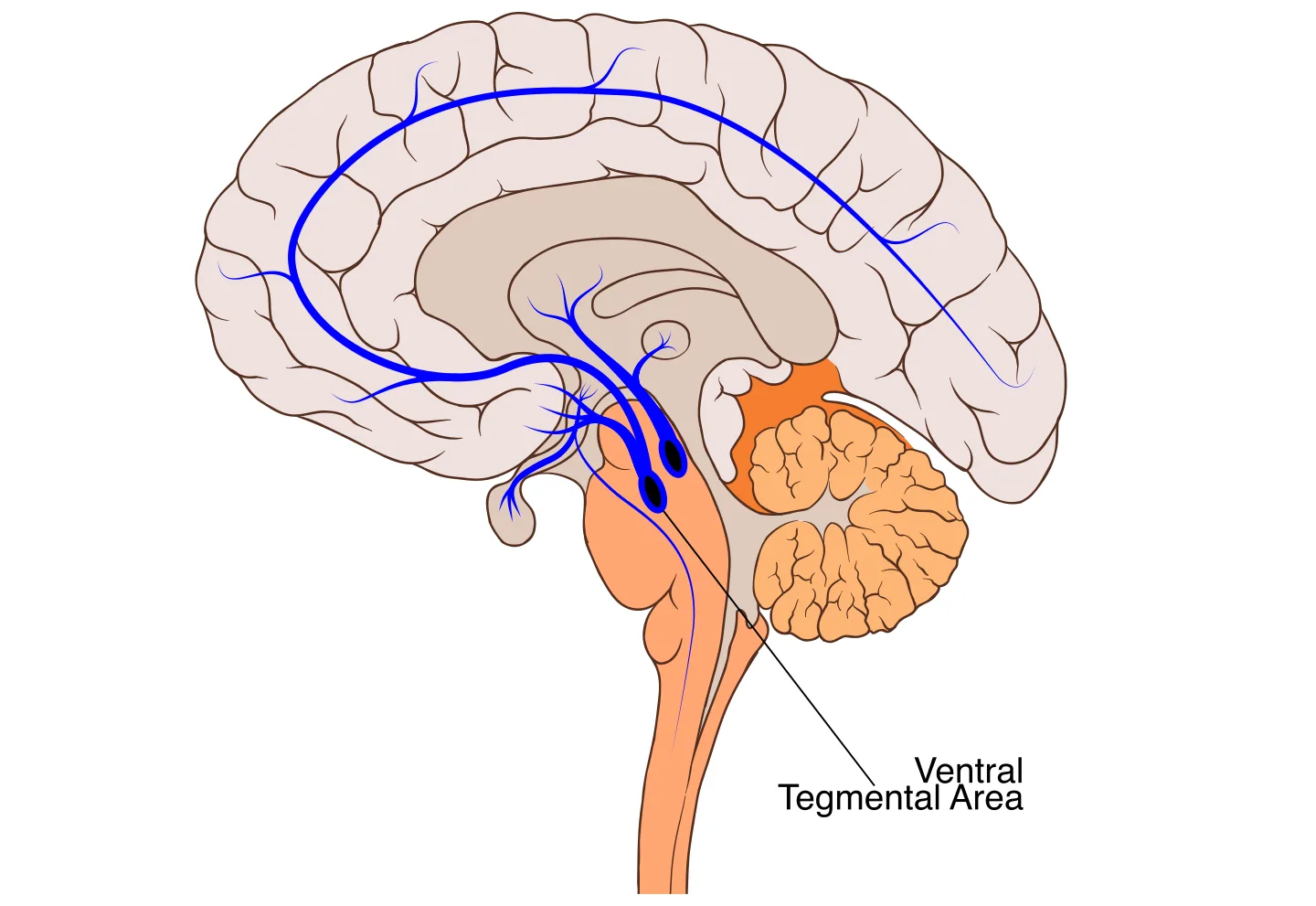
Under Reward Prediction Error, the Ventral Tegmental Area (VTA) fires hardest when an outcome beats expectations and goes quiet when it disappoints. The designer's takeaway: the dopamine system is driven by uncertainty, not certainty. A reward you can perfectly predict stops producing the signal.
 Tristan Surtel · CC BY-SA 4.0 ↗
The pocket-sized Skinner box
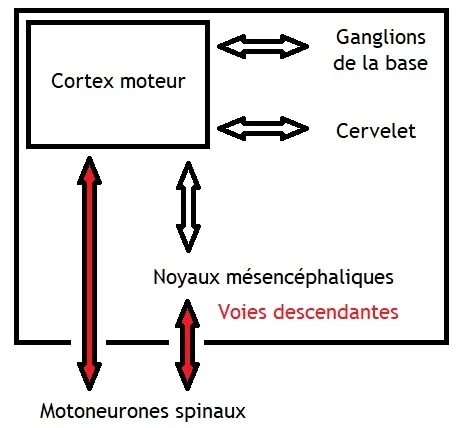
B.F. Skinner's 1950s rats pressed a lever far more relentlessly when rewards came on a variable-ratio schedule — unpredictable payoffs — than on a fixed one. That same schedule is the slot machine, the social-media notification, the loot box, and the Snapchat streak reminder. All obey one neurobiology.
 Wikimedia Commons · Mewtow · CC BY-SA 4.0 ↗
Predictable Rewards Go Flat
A reward that becomes perfectly predictable stops triggering dopamine almost entirely — the signal trains itself out of existence, which is why uncertainty, not consistency, keeps a habit loop alive.
 FlashFeed original diagram · CC-BY-4.0
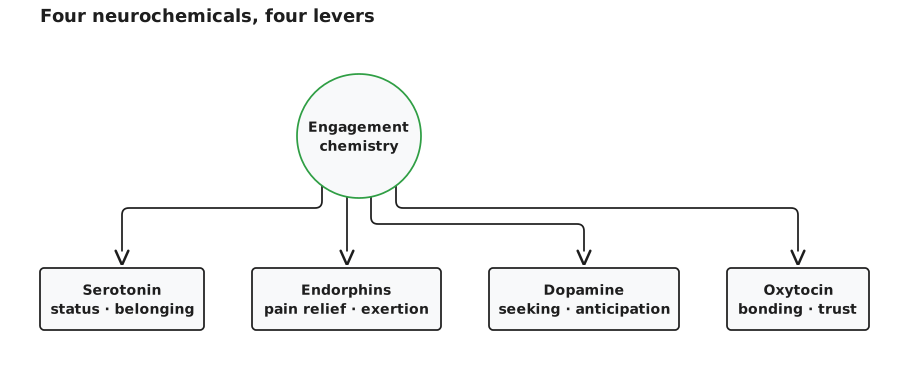
Four chemicals, four levers
App engagement pulls on four neurochemicals. Dopamine drives seeking and anticipation (variable rewards, notifications). Oxytocin drives social bonding and trust (peer acknowledgment, co-op features). Serotonin drives status and belonging (leaderboards, follower counts). Endorphins suppress pain and reward exertion (finishing a hard lesson or workout).
 Wikimedia Commons · Kiet Le · CC BY 2.0 ↗
Earned Through Exertion
Endorphins fire when you push through something hard — finishing a tough lesson or workout produces genuine euphoria by suppressing pain and rewarding the effort.
 Pexels · An up-close image of two people shaking hands in a professional setting against a white background. ↗
A Thank-You Triggers Oxytocin
When a co-op partner thanks you inside an app, that peer acknowledgment pulls the oxytocin lever — the bonding-and-trust chemical, distinct from the status hit of a leaderboard.
 Pexels · SHVETS production ↗
Zoning out is the design goal
When scrolling becomes habitual and easy, the Default Mode Network takes over. Executive control from the prefrontal cortex goes offline; the basal ganglia, which runs habits, takes the wheel. Users call it 'zoning out.' For the platform this is not a failure mode — it is the objective. A DMN-dominant user has lost the ability to stop.
1 / 10Under Reward Prediction Error, when does dopamine fire most strongly in the VTA?
Dopamine fires strongly when an outcome exceeds expectations, reinforcing the preceding behavior; it is suppressed when the outcome falls below expectation. The signal is driven by surprise.
Lesson 2 has 64 cards. Keep going in the free app.
Question -
 Pexels · Vibrant August calendar on a desk with deadline marked in red, surrounded by graphs and charts. ↗03
The Psychological Frameworks
The Hook Model · Fogg's B=MAP & loss aversion · Flow, difficulty & open loops
Lesson 3 · 10 cardsPexels · Vibrant August calendar on a desk with deadline marked in red, surrounded by graphs and charts. ↗The streak as a sunk-cost engine
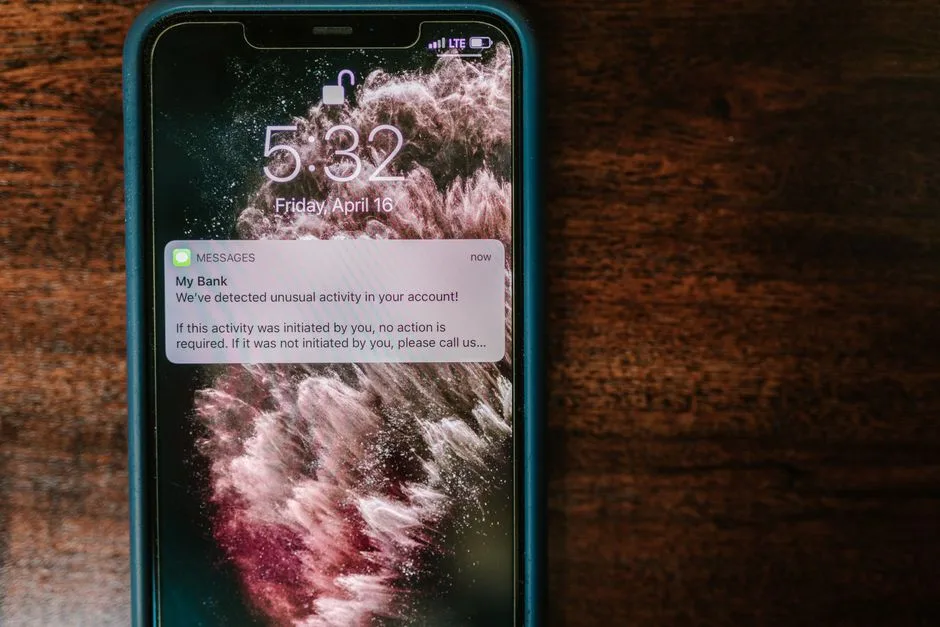
A 100-day Duolingo streak is accumulated sunk cost. Breaking it triggers loss aversion far out of proportion to what was actually lost — a few minutes of exercises. The streak's value isn't the practice; it's the dread of seeing the counter reset to zero.
 Pexels · RDNE Stock project · Pexels License ↗
What Starts The Loop
In the Hook Model, the Trigger is the cue that kicks off the loop — it can be external, like a notification, or internal, like boredom.
 Openverse · cc0 1.0 ↗
Open, Scroll, Tap
The Hook Model's Action stage is the simplest possible behavior done in anticipation of a reward — opening the app, scrolling, tapping. The lower the friction, the more reliably it happens.
 AI-generated (gpt-image-1.5)
Why Leaving Feels Like Losing
The Hook Model's Investment stage works through the Endowment Effect: users overvalue the profile, history, and social graph they've already built, so every bit invested raises the cost of switching apps.
 FlashFeed original diagram · CC-BY-4.0
B = MAP
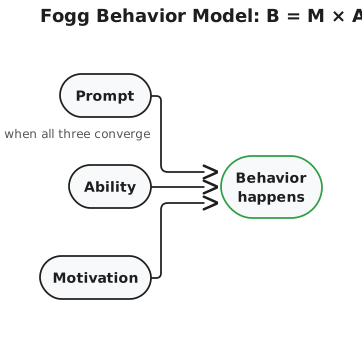
BJ Fogg's Behavior Model says behavior happens only when three things converge at once: B = Motivation × Ability × Prompt. A prompt fires, but it only succeeds if motivation and ability are both high enough at that moment. Miss any factor and nothing happens.
 Pexels · Minimalist clear glass hourglass timer with sand measuring time on a white background. ↗
Snapchat's hourglass
Snapchat exploits loss aversion with clinical precision: an hourglass emoji appears when a streak is at risk, triggering immediate anxiety and the urge to send a snap. Users have been documented sharing their account credentials with friends to keep streaks alive while away — irrational, unless you factor in loss aversion.
 Pexels · dumitru B · Pexels License ↗
More Prompts, More Uninstalls
Prompts only work once motivation and ability are already in place. Firing more push notifications into a low-ability experience just annoys people and accelerates uninstalls.
 Pexels · Liam Moore · Pexels License ↗
Flow: challenge meets skill
Mihaly Csikszentmihalyi's Flow Theory describes a channel of optimal engagement where challenge matches skill. Too easy and the user is bored; too hard and they're anxious — both drive churn. The sticky app keeps the user inside the channel.
1 / 10What is the correct order of the four stages of Nir Eyal's Hook Model?
Eyal's loop runs Trigger → Action → Variable Reward → Investment. The cue starts it, the action is the simple behavior, the reward is unpredictable, and investment feeds back into the next loop.
Lesson 3 has 77 cards. Keep going in the free app.
Question -
 Pexels · Grzegorz Lewandowski · Pexels License ↗04
Gamification Mechanics
PBL & Octalysis · The streak mechanic (Duolingo) · Goal gradient & reward schedules
Lesson 4 · 10 cardsPexels · Grzegorz Lewandowski · Pexels License ↗The PBL stack
Points, Badges, and Leaderboards are the surface layer of gamification — visible, legible, and easy to bolt on. They're also easy to habituate to. The deeper mechanics work at the level of narrative, identity, and social positioning.
 FlashFeed original diagram · CC-BY-4.0
The Ownership Drive
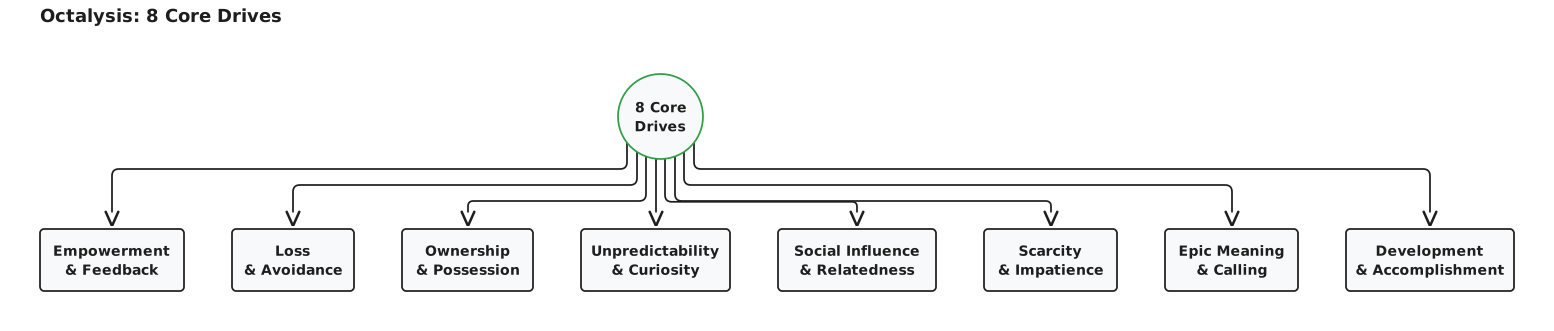
Octalysis' Ownership & Possession Core Drive is the pull to accumulate and protect things that feel like yours — virtual currency, streaks, and customized profiles are its typical expressions.
 Pexels · Czapp Árpád · Pexels License ↗
Insuring The Streak
Duolingo's Streak Freeze is a purchasable or earnable item that protects a streak during an absence. It's effectively insurance for a number — itself proof of how much value users place on the streak.
 Pexels · Czapp Árpád · Pexels License ↗
Too Deep To Quit
The longer a Duolingo streak runs, the harder it becomes to walk away — each additional day adds to a growing sunk cost the user is reluctant to forfeit. It's the escalating investment, not new rewards, that raises the stakes over time.
 Pexels · Czapp Árpád · Pexels License ↗
Duolingo's 521% Climb
Duolingo's daily active users grew from 7.5 million at its 2021 IPO to 46.6 million by Q1 2025 — a 521% increase, and the headline evidence that the streak mechanic drives retention.
1 / 10What does PBL stand for in the surface layer of gamification?
PBL is Points, Badges, and Leaderboards — the visible, legible reward elements that are easy to bolt on but also easy to habituate to.
Lesson 4 has 81 cards. Keep going in the free app.
Question -
 AI-generated (gpt-image-1.5)05
Social Architecture & Network Effects
What network effects are · The social graph moat · Viral mechanics & FOMO · TikTok's interest graph
Lesson 5 · 10 cardsAI-generated (gpt-image-1.5)More users, more value
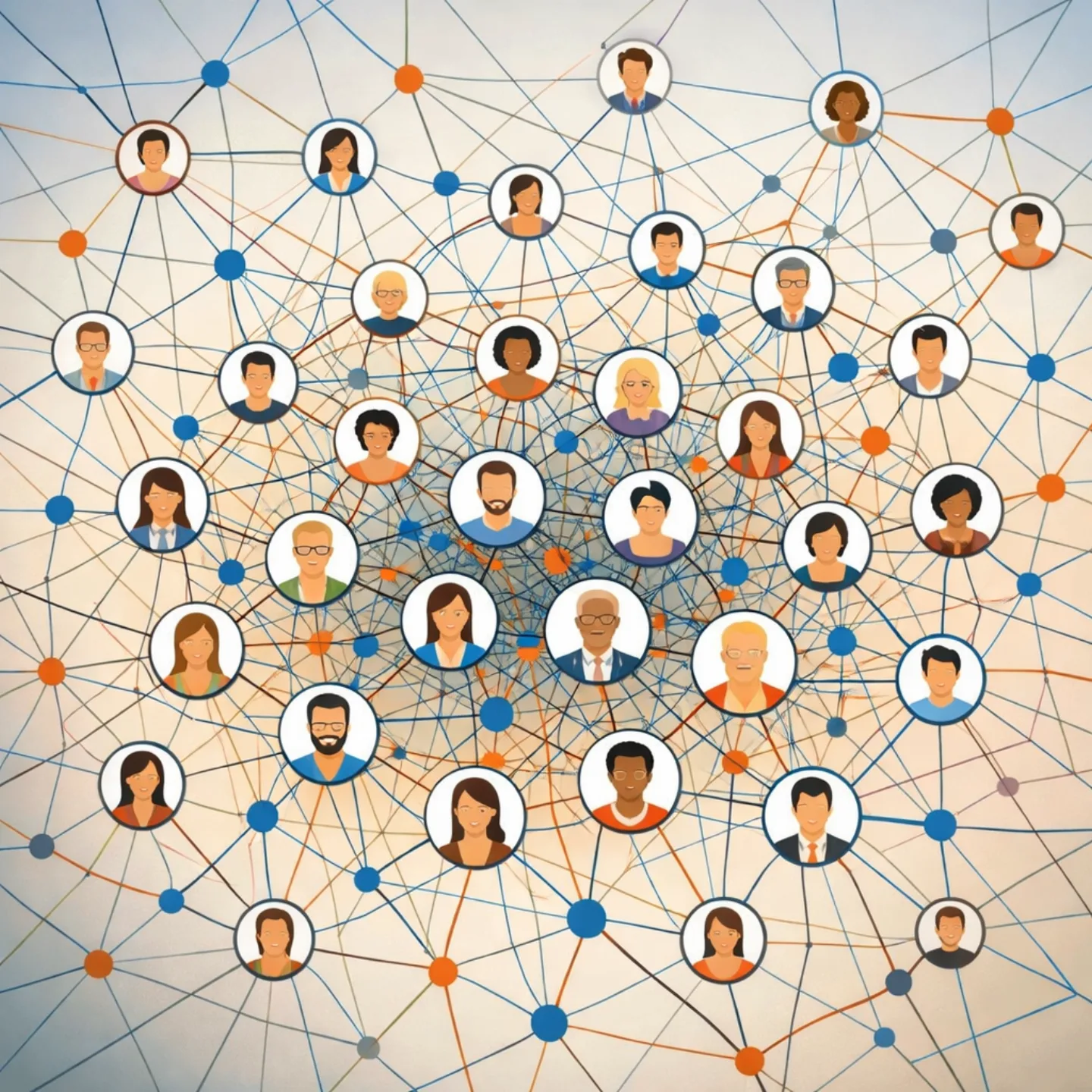
A network effect exists when a product gets more valuable to each user as more people join. Metcalfe's Law models this as value scaling with n². But the real dynamics are messier — not all connections are equal.
 Unsplash · GuerrillaBuzz · Unsplash License ↗
Direct vs. indirect
Network effects come in two flavors. Direct: more users is directly better for you (more friends to message). Indirect: more users yields better infrastructure or content you benefit from, even without connecting to them.
 AI-generated (gpt-image-1.5)
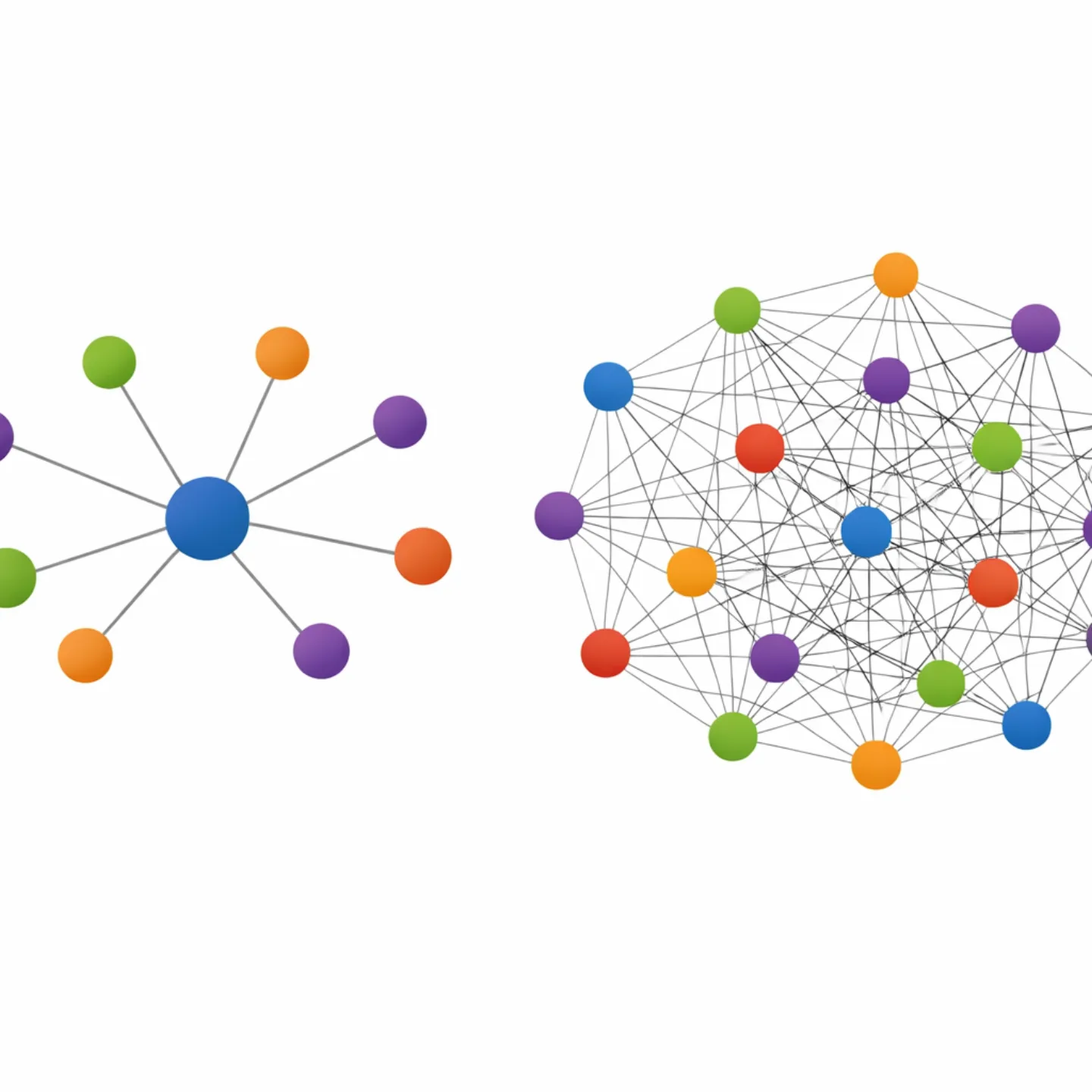
Metcalfe's Law
Metcalfe's Law models a network's value as scaling with the square of its user count (n²) — because the number of possible connections between users grows roughly with the square of how many there are.
 AI-generated (gpt-image-1.5)
Double Users, Quadruple Value
Metcalfe's Law implies that if a network's user base doubles, its value in theory quadruples, since (2n)² works out to four times the original n². It's a directional intuition about network value, not precise accounting.
 AI-generated (gpt-image-1.5)
Facebook's moat
Facebook's early dominance rested on the social graph — a map of real-world, identity-based relationships. News Feed, Groups, and Photos were all built on top of this graph, each giving users a fresh reason to return.
 Wikimedia Commons · Llywelyn2000 · CC BY-SA 4.0 ↗
Six concentric walls
The VC firm NFX calls Facebook's structure layered defensibility: it deployed no fewer than six distinct types of network effect. Picture a castle with six concentric defensive walls — a competitor must breach them all.
 Yuri Samoilov · CC BY 2.0 ↗
The Social Graph
The social graph that anchored Facebook's moat was a persistent, identity-based map of real-world relationships — tied to users' actual names and contacts, not just shared interests. An interest-based map, like TikTok's, is a different thing entirely.
 Pexels · Brett Jordan · Pexels License ↗
Drawbridges Not The Moat
News Feed, Groups, and Photos were never the moat itself — they were drawbridges layered on top of the social graph, giving users fresh reasons to return. Rivals could copy the features easily; what they couldn't copy was the graph underneath.
 Pexels · Pixabay · Pexels License ↗
Pricing Facebook's Whole Platform
MIT and Chapman economists (with Carnegie Mellon and Cyprus colleagues) ran choice experiments with about 20,000 US users. Facebook was valued at about $101 per user per month, the top of a $78–$101 range across Facebook, Instagram, LinkedIn and X. Local network effects, the value of specific connections, explained 8.1–23.7% of platform value.
1 / 10Per Metcalfe's Law, a network's value scales with what?
Metcalfe's Law models value as scaling with n² — the count of possible connections between users grows roughly with the square of the user count.
Lesson 5 has 87 cards. Keep going in the free app.
Question - Take the lessons with you. Free, no account.Download on the App Store ↗Get it on Google Play ↗
-
 Pexels · Wooden blocks forming a staircase with an upward arrow symbolizing growth and progress. ↗06
Engineering Viral Growth
The K-factor · The three growth loops · Shareable artifacts & referrals
Lesson 6 · 10 cardsPexels · Wooden blocks forming a staircase with an upward arrow symbolizing growth and progress. ↗Virality is a number, not a vibe
Growth teams don't hope a product spreads — they measure it. The viral coefficient, or K-factor, quantifies how many new users each existing user generates. Once you can put a number on it, you can engineer it.
 Pexels · Detailed financial chart showing a downward trend, ideal for economics and stock market analysis. ↗
Duolingo's falling CAC
Duolingo's customer acquisition cost dropped from an estimated ~$41 at IPO to ~$33 in Q1 2025 — a direct measure of improving viral dynamics as the user base grew more self-referencing. Cheaper acquisition is what viral growth looks like on a spreadsheet.
 FlashFeed original diagram · CC-BY-4.0
Three loops that compound
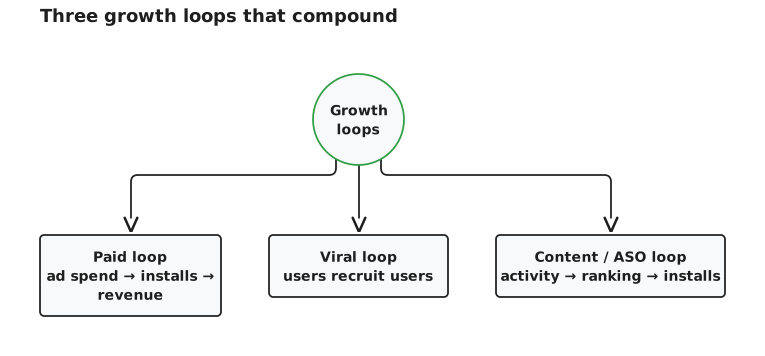
Sustainable growth runs on three engines: the viral loop (users recruit users), the content/ASO loop (activity becomes content that lifts store visibility), and the paid acquisition loop (ad spend buys installs that fund more spend). The first two are nearly free; the third only works when LTV far exceeds CAC.
 Pexels · cottonbro studio · Pexels License ↗
Users Recruiting Users
The viral loop grows a product through users recruiting other users — via sharing, invitations, or social artifacts — at almost no cost per install. It works best when sharing is built into the core experience, not bolted on as a separate button.
 Pexels · SHOX ART · Pexels License ↗
Give a ride, get a ride
Double-sided referral programs — where both the referrer and the new user get value — beat single-sided ones by exploiting reciprocity norms. Uber's 'give a friend a free ride, get a free ride' is canonical. The advanced move: embed the referral in content value instead of a discount — 'unlock this deck by inviting a study partner.'
1 / 10What does CAC (Customer Acquisition Cost) measure?
CAC is the cost to acquire one new user, the denominator that viral dynamics attack. The other options describe LTV, conversion rate, and the K-factor.
Lesson 6 has 76 cards. Keep going in the free app.
Question -
 Pexels · Airam Dato-on · Pexels License ↗07
Retention Architecture
Onboarding & the Aha Moment · Push notifications · Investment & cohort retention
Lesson 7 · 9 cardsPexels · Airam Dato-on · Pexels License ↗Retention is won in the first session
Roughly 80% of users stop using an app after the third day following install. The entire onboarding architecture exists to do one thing: deliver the user to the moment the app's value becomes real, before day three takes them.
 Pexels · Sanket Mishra · Pexels License ↗
Twitter's Onboarding Number
Twitter's Aha-Moment onboarding threshold was following 30 accounts — enough signal to fill a timeline worth returning to.
 Pexels · Yan Krukau · Pexels License ↗
Duolingo's Instant Payoff
Duolingo's Aha Moment is immediate and sensory: finishing the first lesson and getting the animated XP reward, a dopamine hit rather than a slow-building realization.
 Pexels · Kampus Production · Pexels License ↗
Hunting The Aha Moment
Product teams find an app's Aha Moment by analyzing cohort data for which early actions correlate with long-term retention, then re-engineering onboarding to steer every new user through that sequence.
 Pexels · RDNE Stock project · Pexels License ↗
Push: the re-engagement channel
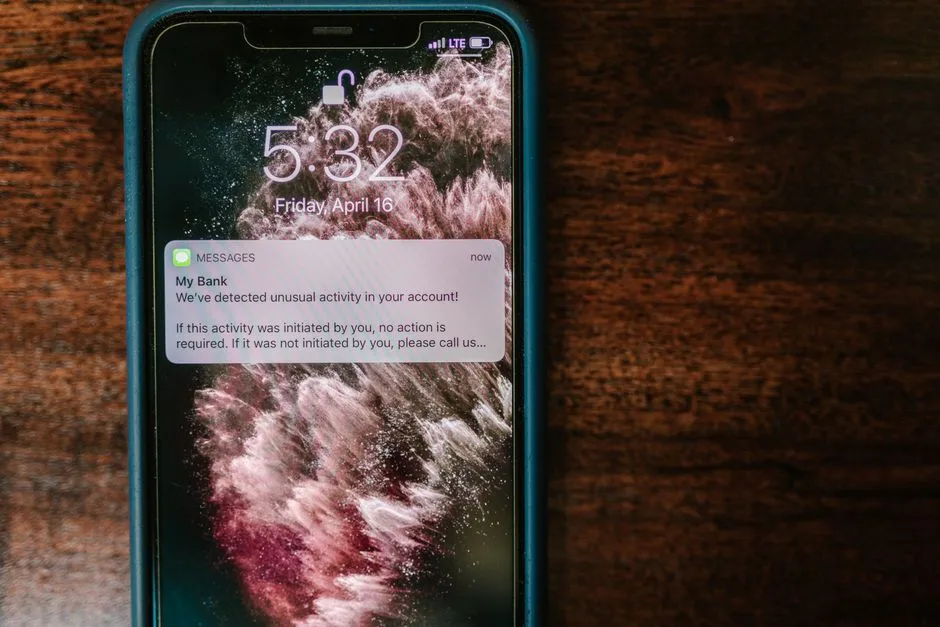
Push notifications are the main way to reactivate users who left the habit loop. Personalized notifications — using the user's name and behavioral history — significantly outperform generic ones at driving people back.
 Unsplash · Rodion Kutsaiev ↗
Timed To Your Habits
The timing rule for push says notifications should land at moments a user has historically opened the app — not at a fixed interval sent regardless of context.
 Unsplash · Jamie Street ↗
Copy That Pays Attention
Personalized push copy — referencing a user's name, streak, or behavioral history — outperforms generic copy because it signals the app is actually paying attention to them.
 Unsplash · Jamie Street ↗
The Curiosity Gap Trick
Push copy that withholds just enough — like 'Your streak is at risk' — creates a curiosity gap and mild FOMO that motivates a tap, unlike copy that resolves everything upfront.
1 / 9What best defines an app's Aha Moment?
The Aha Moment is feeling the value, not finishing a tutorial. Completing a walkthrough is explicitly NOT the Aha Moment.
Lesson 7 has 68 cards. Keep going in the free app.
Question -
 AI-generated (gpt-image-1.5)08
Design Patterns & Ethics
Core loop & notifications · Social sequencing & onboarding · Ethical design guardrails · People, Places, Things, Events
Lesson 8 · 10 cardsAI-generated (gpt-image-1.5)The four jobs of a core loop
Every sticky app has a core loop — the action a user repeats each session. A good one does four things: it's completable in 2–5 minutes (micro-session compatible), it gives immediate feedback, it ends with a variable reward, and it sets up the next session through an open loop.
 Pexels · Mahmoud Zakariya · Pexels License ↗
End on an open loop
The best core loops don't end clean — they end with a Zeigarnik open loop, a setup condition for the next session. An unfinished lesson, a half-built streak, a 'come back tomorrow' hook leaves a small itch the brain wants to close.
 Pexels · RDNE Stock project · Pexels License ↗
Notifications: trigger on state, not the clock
Effective notifications are contextually triggered, not time-scheduled — fire when the user breaks their streak pattern, not at 9 AM daily. They're personalized to state ('Your 14-day streak is at risk' beats 'Don't forget to practice'), and social wherever possible ('Alex just passed your score').
 Don Komarechka (Openverse) · cc0 1.0 ↗
The streak + freeze pattern
Any app usable daily should have a streak counter. The freeze mechanic — letting a missed day pass without losing the streak, purchased or earned — converts the streak from attrition-driving anxiety into a resource-management meta-game that deepens investment.
 AI-generated (gpt-image-1.5)
Instrument the Aha Moment
The Aha Moment is the action most correlated with 7-day retention in your cohort data. Use product analytics to find it, then orient all of onboarding to deliver users there as fast as possible. Everything before the Aha Moment is overhead.
 AI-generated (gpt-image-1.5)
The Social Onboarding Order
Social mechanics should be introduced in sequence: asynchronous social proof first since it needs no mutual timing, cooperative features once the user has a stake, then synchronous competition last, since forcing real-time play too early destroys sessions.
 Unsplash · Akhil Jasrotia ↗
Why Real-Time Waits
Synchronous competition, like live battles or real-time leaderboards, is saved for last in onboarding because forcing real-time play on users who barely know the app destroys more sessions than it creates.
 Pexels · Detailed close-up of smartphone home screen displaying app icons like Shortcuts and Power Nap. ↗
Reveal, Don't Dump
Progressive disclosure means revealing an app's complexity gradually instead of dumping every feature on a new user at once — without context, seeing it all creates overwhelm, not excitement.
1 / 10Which is NOT one of the four jobs a well-designed core loop must do?
The four jobs are: completes in 2–5 min, gives feedback under the Doherty Threshold, ends with a variable reward, and sets up the next session. Requiring a purchase is not one of them.
Lesson 8 has 91 cards. Keep going in the free app.
Question -
 Pexels · Towfiqu barbhuiya · Pexels License ↗09
Case Studies in Stickiness
Duolingo: the gamification benchmark · TikTok & Instagram · Snapchat & FarmVille
Lesson 9 · 10 cardsPexels · Towfiqu barbhuiya · Pexels License ↗The fire and the hourglass
Duolingo's streak turns a counter into a daily anxiety. The fire emoji and the hourglass warning create a low-grade dread that resolves only one way: opening the app. The mechanism is loss aversion — you log in to avoid losing what you've built.
 Pexels · DS stories · Pexels License ↗
Leagues and the fear of dropping
Duolingo's weekly leaderboards promote and demote players between tiers. The design exploits a known asymmetry: the fear of dropping a league tier is more motivating than the desire to climb one. Loss aversion, dressed as competition.
 Pexels · MARIANNE RIXHON · Pexels License ↗
XP that isn't fixed
Lesson completion yields variable XP — bonus rounds, surprise multipliers, and 'Perfect Lesson' celebrations. The reward isn't a flat payout; it's unpredictable, which is exactly what keeps the next lesson worth starting.
 Unsplash · appshunter.io ↗
AI Collapsed The Timeline
Generative AI let Duolingo launch 148 new courses in under a year, down from more than 12 months of production time per course — a step-change in content breadth that feeds retention.
 Unsplash · appshunter.io ↗
Double The Industry Average
Duolingo's DAU/MAU ratio reached 36% — roughly double the 20% industry average, and the number analysts point to as evidence its retention mechanics are working.
 Unsplash · Vitaly Gariev ↗
Family Ties Hit Different
Research behind the Instagram case study found that users value connections with family and close friends at a qualitatively different level than purely content-based follows.
 Pexels · Antoni Shkraba · Pexels License ↗
Streaks go collective
Snapchat's September 2025 Group Streaks extend the obligation to multi-person relationships: collective Snapping from most of a group keeps the streak alive. Now non-participation costs you the group, not just a friend — multiplying the social pressure.
 Pexels · Sam McCool · Pexels License ↗
The proof of concept
FarmVille (2009) was the prototype for social-obligation loops. Its gift-sending mechanics required other players to participate — your progress depended on theirs, and theirs on yours. The loop ran on social obligation and loss aversion, not on the game being fun.
1 / 10What is Duolingo's DAU/MAU ratio, the metric analysts credit to its retention mechanics?
Duolingo's DAU/MAU ratio reached 36%, roughly double the 20% industry average. 55% is its day-over-day retention; 74 million was FarmVille's peak MAU.
Lesson 9 has 69 cards. Keep going in the free app.
Question -
 Wikimedia Commons · Ehirsh · Public domain ↗10
Who's Who & What's What of Stickiness
The people behind the playbook · The frameworks and effects · Right or Wrong: spot the mechanic
Lesson 10 · a questionWhich of the following is NOT associated with BJ Fogg?
The Hook Model is Nir Eyal's loop, not Fogg's. Fogg coined captology, proved at Stanford that computers could change behavior, and gave the field its B=MAP formula.
Lesson 10 has 49 cards. Keep going in the free app.
-
 Pexels · Yan Krukau · Pexels License ↗11
Essential Vocabulary & Quick Recall
Brain & behavior terms · Framework & gamification terms · Social & growth terms · Retention & metrics terms · Quick recall (mixed)
Lesson 11 · 2 cardsPexels · Yan Krukau · Pexels License ↗Rewards Of The Self
One of the Hook Model's variable-reward types is 'rewards of the self' — the mastery hit from finishing something, leveling up, or hitting a personal milestone.
 Pexels · Vector illustration of income growth chart with arrow and euro coins against purple background ↗
Retention's Big Profit Payoff
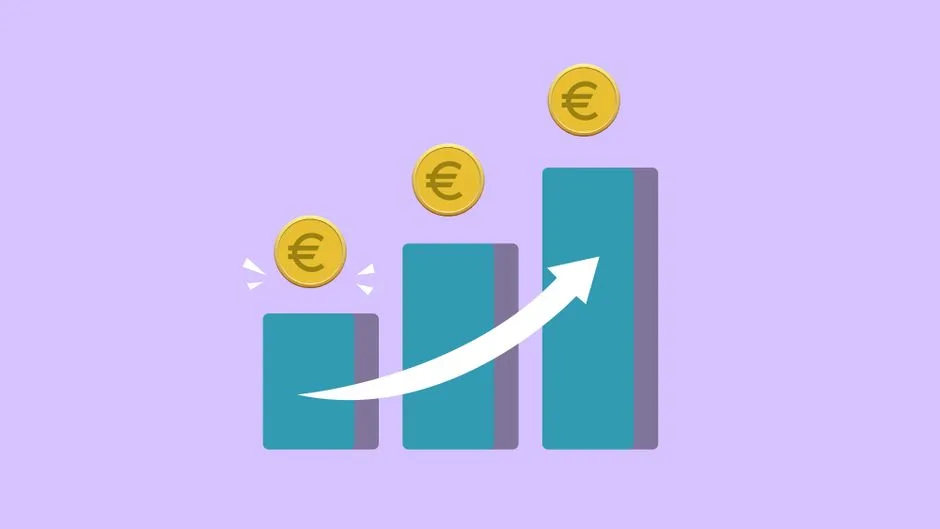
A figure attributed to Bain & Company's Frederick Reichheld says raising customer retention rates by 5% increases profits by 25 to 95 percent — one reason retention is treated as a more capital-efficient lever than paid acquisition.
1 / 2Captology, coined by BJ Fogg in 1996, is the study of what?
Captology stands for Computers As Persuasive Technologies — how computers can be designed to change human thoughts and behaviors. BJ Fogg coined the term in 1996.
Lesson 11 has 104 cards. Keep going in the free app.
Question


What you'll be able to do 55 objectives, from the pack's lessons
- Define captology and identify BJ Fogg as the researcher who coined it and founded the Stanford Persuasive Technology Lab.
- Place persuasive tech's founding milestones on a timeline: the Charismatic Computers dissertation, coining captology, the Stanford lab, the book.
- Explain how the 2007 Facebook Developer Platform and FarmVille turned social obligation into a viral engagement engine.
- Identify infinite scroll and the smartphone-as-portable-Skinner-box, crediting Aza Raskin and Anna Lembke.
- Trace the shift from Nir Eyal's Hook Model to TikTok's algorithm-driven For You Page, with the key launch years.
- Explain that dopamine drives wanting and seeking and fires in anticipation via Reward Prediction Error, not at the reward itself.
- Identify variable-ratio reinforcement as the unpredictable, slot-machine schedule behind compulsive use.
- Map each of the four neurochemicals (dopamine, oxytocin, serotonin, endorphins) to the human drive it powers.
- Determine which neurochemical lever a given feature pulls and reject mismatched chemical-to-drive pairings.
- Explain how habitual, frictionless scrolling shifts control from the prefrontal cortex to the Default Mode Network and basal ganglia ('zoning out').
- Order the Hook Model's four stages (Trigger, Action, Variable Reward, Investment) and state each stage's role.
- Explain why unpredictable rewards release more dopamine than predictable ones and how Investment raises switching cost via the Endowment Effect.
- Apply Fogg's B = MAP to diagnose why a behavior fails, prioritizing ability/friction over more motivation.
- Explain loss aversion and the endowment effect, including the roughly 2x loss-versus-gain asymmetry from Prospect Theory.
- Describe the flow channel and Dynamic Difficulty Adjustment, and how the Zeigarnik effect weaponizes unfinished tasks.
- Define the PBL (Points, Badges, Leaderboards) surface layer and explain why it is shallow gamification prone to habituation.
- Identify Octalysis's eight Core Drives and the principle of stacking several at once; recognize Epic Meaning and Ownership.
- Explain the Duolingo streak and Streak Freeze as loss-aversion engines that turn a habit into protected sunk cost.
- Cite Duolingo's DAU and DAU/MAU growth from IPO to Q1 2025 as evidence the streak mechanic drives retention.
- Explain the Goal Gradient Effect (Saga Map, pre-stamped card) and classify the four reinforcement schedules.
- Define network effects and Metcalfe's n-squared law, and distinguish direct from indirect network effects.
- Explain the social graph as Facebook's moat and NFX's layered defensibility (six concentric walls).
- Quantify Facebook's network value (marginal friend, total platform, social share) and explain social anchoring's retention effect.
- Map viral mechanics to their neurochemicals and explain FOMO, parasocial bonds, and the 24-hour Stories clock.
- Contrast TikTok's interest graph with the social graph and identify the top signals its For You Page weights.
- Compute and interpret the K-factor (K = i x c) and the K > 1 threshold for self-sustaining growth.
- Define CAC and explain how viral growth lowers it, using Duolingo's CAC from IPO to Q1 2025.
- Distinguish the viral, content/ASO, and paid acquisition loops and explain why mature products run all three in parallel.
- Define LTV and explain the LTV-greater-than-CAC condition that keeps the paid acquisition loop viable.
- Explain shareable artifacts (Spotify Wrapped, Top 1% badge) and why double-sided referrals outperform single-sided via reciprocity.
- Define the Aha Moment as feeling core value and match Facebook, Twitter, and Duolingo to their onboarding thresholds.
- Explain how teams locate the Aha Moment empirically from cohort data and cite the day-3 drop-off.
- State the three rules of effective push notifications (timing, personalization, curiosity/FOMO) and what not to do.
- Explain the Investment (Hook) stage as raising switching cost via the endowment effect, and identify a Duolingo streak as accumulated investment.
- Read cohort retention benchmarks (Day 1/7/30) and explain why a small retention gain can mean a large profit gain.
- Describe the four jobs of a core loop and the Doherty Threshold (sub-400ms feedback that feels instantaneous).
- Identify a state-triggered, personalized notification that references specific user investment.
- Apply progressive disclosure and the zero blank slate, and sequence social mechanics from asynchronous proof to cooperation to synchronous competition.
- Distinguish dark patterns from humane design and apply Fogg's maxims (help people do what they want; simplicity changes behavior).
- Apply the PPTE context framework (People, Places, Things, Events) to locate re-engagement levers.
- Explain Duolingo's demotion threat and variable XP as loss-aversion and variable-ratio mechanics, and how AI scaled its content.
- Cite Duolingo's DAU/MAU ratio versus the industry average, its day-over-day retention, and its market-cap growth.
- Contrast TikTok's interest graph and completion signal with Instagram's social-graph moat.
- Explain Snapchat's ephemeral content and Group Streaks as FOMO and loss-aversion engines.
- Explain FarmVille's social-obligation gift-sending loops and cite its peak monthly active users.
- Recognize the academic pioneers of persuasive design (BJ Fogg, Nir Eyal, B.F. Skinner) from clues about their contributions.
- Recognize the neuroscience and behavioral-economics figures (Kent Berridge, Wolfram Schultz, Daniel Kahneman) by the idea they established.
- Recognize the designers and critics (Csikszentmihalyi, Yu-kai Chou, Aza Raskin, Anna Lembke) by the concept they are welded to.
- Recognize the core frameworks and effects by description (Hook Model, B=MAP, variable-ratio, loss aversion, Zeigarnik, goal gradient).
- Recognize the social/growth and neuro frameworks (network effects, K-factor, Octalysis, Default Mode Network) and spot the Zeigarnik pattern.
- Recall the core brain and behavioral-economics terms: dopamine, RPE, variable-ratio, DMN, and the biases (loss aversion, endowment, sunk cost, goal gradient).
- Recall the framework and gamification terms: captology, B=MAP, the Hook Model and its stages, and Octalysis.
- Recall the social and growth terms: network effect, Metcalfe's Law, social graph, interest graph, FOMO, viral coefficient, and viral loop.
- Recall the retention and metrics terms: cohort analysis, DAU/MAU, CAC, LTV, Aha Moment, churn, and push notifications.
- Quickly recall mixed pack facts across frameworks, neurochemicals, growth, and retention.
Study guide.
The same study guide as in the app, one page for each lesson, with its key facts and a self-test.
- 01How We Got Here
- 02The Brain Chemistry of Engagement
- 03The Psychological Frameworks
- 04Gamification Mechanics
- 05Social Architecture & Network Effects
- 06Engineering Viral Growth
- 07Retention Architecture
- 08Design Patterns & Ethics
- 09Case Studies in Stickiness
- 10Who's Who & What's What of Stickiness
- 11Essential Vocabulary & Quick Recall
Built from 2 sources.
5 of its 792 cards cite a source. These are the sources it cites.
Hover over a photo, or tap its i, to see where it came from. All 11:
- Lesson 1: Pexels · Afif Ramdhasuma ↗
- Lesson 2: Pexels · Vitaly Gariev ↗
- Lesson 3: Pexels · Vibrant August calendar on a desk with deadline marked in red, surrounded by graphs and charts. ↗
- Lesson 4: Pexels · Grzegorz Lewandowski · Pexels License ↗
- Lesson 5: AI-generated (gpt-image-1.5)
- Lesson 6: Pexels · Wooden blocks forming a staircase with an upward arrow symbolizing growth and progress. ↗
- Lesson 7: Pexels · Airam Dato-on · Pexels License ↗
- Lesson 8: AI-generated (gpt-image-1.5)
- Lesson 9: Pexels · Towfiqu barbhuiya · Pexels License ↗
- Lesson 10: Wikimedia Commons · Ehirsh · Public domain ↗
- Lesson 11: Pexels · Yan Krukau · Pexels License ↗
- Hooked by Nir Eyal, Ryan Hoover · on Amazon ↗
These are affiliate links: if you buy a book through one, FlashFeed may earn a small commission at no extra cost to you. The commission helps pay for FlashFeed's servers.
As an Amazon Associate we earn from qualifying purchases.
Independent study notes, not affiliated with the author or publisher.
- Cards
- 790
- Lessons
- 11
- Version
- 1.0.33
- Language
- English
The whole pack is one file. Read the pack file ↗
FlashFeed is on the App Store and Google Play.
FlashFeed is free on iPhone and Android, and needs no account.