
Getting to yes
Roger Fisher, William Ury, and Bruce Patton's principled negotiation framework developed at the Harvard Negotiation Project — separating people from the problem, focusing on interests rather than positions, inventing options for mutual gain, insisting on objective criteria, and leveraging BATNA to achieve wise, durable agreements.
308 cards6 lessonsFree
Already have FlashFeed?Open this pack
Get this pack on your phone
Scan with your phone's camera.
flashfeedlearningapp.com/packs/getting-to-yes
 FlashFeed original diagram · CC-BY-4.0
 Pexels · Colorful display of fruits at an outdoor farmers market stall with people shopping. ↗
 Pexels · Edmond Dantès · Pexels License ↗
6 lessons.
Each lesson has a study guide to read and objectives you can test yourself on. Its cards and games show up in your feed. Try one of its cards right here. Play a few of its games here too.
-
Pexels · Colorful display of fruits at an outdoor farmers market stall with people shopping. ↗01
Beyond Positional Bargaining & The Principled Method
The Pitfalls of Positional Bargaining · The Four Pillars of Principled Negotiation
Lesson 1 · 10 cardsPexels · Colorful display of fruits at an outdoor farmers market stall with people shopping. ↗Standard Positional Bargaining
In positional bargaining, each participant stakes out a concrete position, defends it against attack, and makes reluctant concessions to reach an eventual compromise.
 Pexels · cottonbro studio · Pexels License ↗
Ego Identification Makes Positional Bargaining Produce Unwise Deals
The foremost problem with positional bargaining is that arguing over positions produces unwise agreements. When negotiators take positions, their egos become entangled with those positions, so the more they defend a stance, the more committed to it they become — and the standard script of opening with an extreme anchor and yielding only in grudging increments wastes the time and energy that could go toward the substance of the deal.
 Pexels · Kampus Production · Pexels License ↗
The Hard Bargainer's Playbook
The hard bargainer views the other side as an adversary and treats the negotiation as a battle of wills. They dig into an extreme opening position, distrust the counterpart, apply relentless pressure, issue threats, hide information, and demand unilateral concessions as the price of any relationship — insisting on total victory rather than a workable agreement.
 Pexels · Ketut Subiyanto · Pexels License ↗
Principled Negotiation: Hard on the Problem, Soft on the People
To escape the pitfalls of positional bargaining, principled negotiation resolves disputes on their merits — focusing on interests and objective criteria rather than positional gamesmanship. Its guiding motto is to be hard on the problem and soft on the people, pursuing mutual interests and fair standards instead of a contest of wills.
 Pexels · Mikhail Nilov · Pexels License ↗
Comparing approaches regarding Hard Bargainer Pressure Tactics:
Positional Bargaining — Negotiation Focus: Rigid stances, defense of ego, and grudging concessions; Standard of Outcome: Conceding to pressure, stubbornness, or artificial deadlines
Principled Negotiation — Negotiation Focus: Underlying interests, shared needs, and creative value creation; Standard Pexels · Protesters holding signs during a Writers Guild of America strike on an urban sidewalk. ↗
Hard-on-Hard Bargaining Deadlock
Conversely, when two hard bargainers meet, negotiations frequently collapse into costly strikes, litigation, or diplomatic rupture.
 Unsplash · Matthew TenBruggencate · Unsplash License ↗
Positional Bargaining Paralyzes Multi-Party Talks
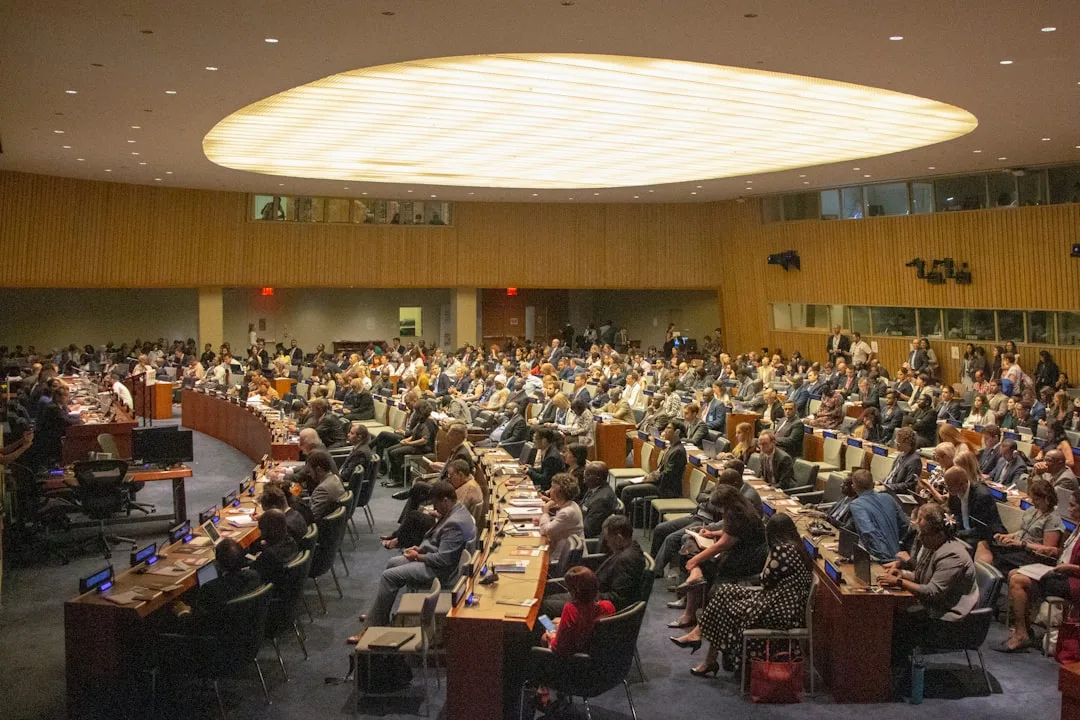
In negotiations among many nations, creditors, or factions, positional bargaining forces the formation of rigid coalitions. Once a coalition has hammered out an internal compromise position, the internal political cost of modifying it for outsiders becomes so high that the whole assembly freezes into institutional gridlock.
 Unsplash · For lease sign on commercial glass double doors ↗
Comparing approaches regarding Commercial Lease Value Trap:
Positional Bargaining — Negotiation Focus: Rigid stances, defense of ego, and grudging concessions; Standard of Outcome: Conceding to pressure, stubbornness, or artificial deadlines
Principled Negotiation — Negotiation Focus: Underlying interests, shared needs, and creative value creation; Standard1 / 10How does the 'soft bargainer' style typically behave at the negotiating table?
The soft bargainer prioritizes the relationship, opening early, revealing their limit, and conceding quickly to keep things friendly — a style hard bargainers can exploit.
Lesson 1 has 57 cards. Keep going in the free app.
Question -
 Pexels · Jopwell · Pexels License ↗02
Separate the People from the Problem
Perception, Framing, and Cognitive Empathy · Managing Emotion, Active Listening, and Clear Communication
Lesson 2 · 10 cardsPexels · Jopwell · Pexels License ↗Human Dimension Reality
A fundamental premise of Getting to Yes is that negotiators are not abstract institutional entities or computer algorithms; they are human beings with emotions, deeply held values, personal backgrounds, and unpredictable psychological responses.
 Pexels · Anna Tarazevich · Pexels License ↗
Substantive Interests, Relationship Interests, and Their Entanglement
Every negotiator carries two kinds of interests: substantive interests, such as price and delivery terms, and relationship interests, such as respect, trust, and reputation. A major failure of positional bargaining is that these get entangled — when a buyer says "your price is too high," the seller often hears a personal insult, and the conversation degenerates into defensive posturing instead of problem-solving.
 Unsplash · Hannes Egler · Unsplash License ↗
Do Not Deduce Their Intentions From Your Own Fears
A common cognitive distortion in conflict is assuming that whatever you fear is exactly what the other side intends. If a supplier misses a deadline, a buyer often assumes bad faith rather than a genuine supply-chain disruption — decoupling your fears from their actual intent prevents this premature paranoia.
 FlashFeed original diagram · CC-BY-4.0
Conflict Lives in Perception, Not in Objective Reality
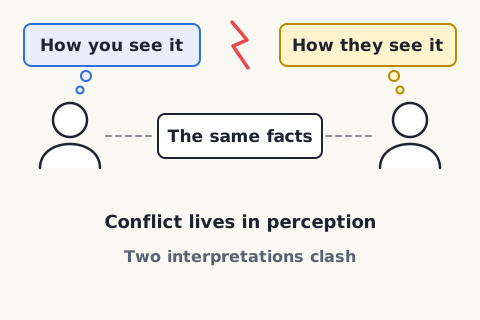
Conflict does not exist in objective physical reality; it exists in human perception. A dispute between two parties is almost always a clash between two differing interpretations of the same facts, which is why understanding how the other side sees the situation is central to resolving it.
 Pexels · MART PRODUCTION · Pexels License ↗
Understanding Their View Is Not the Same as Agreeing With It
Cognitive empathy means putting yourself in the other side's shoes to understand how the world looks to them — it is not an act of capitulation. Understanding their point of view lets you appreciate their real constraints and design proposals that appeal to their legitimate needs, without requiring you to agree with their position.
 Unsplash · Vitaly Gariev · Unsplash License ↗
Discuss Perceptions Openly, and Give Them Ownership
Bringing differing perceptions into the open without judgment lets both sides acknowledge discrepancies and address them directly, defusing hidden tension. And because people routinely reject proposals crafted in isolation, involving the other side directly in creating a solution gives them ownership of it — and ownership generates commitment to the outcome.
 Pexels · RDNE Stock project · Pexels License ↗
Inconsistent Action Reframing
If the counterpart expects you to be arrogant, aggressive, or dismissive, demonstrating humility, patience, and active listening shatters their negative preconceptions and reframes the dynamic.
 AI-generated (gpt-image-1.5)
The Elevator Outage: Cognitive Empathy in a Lease Dispute
A commercial tenant furious over recurring elevator outages demands a 30% rent reduction. Applying cognitive empathy, the landlord recognizes the tenant's real fear is client embarrassment and lost productivity during investor visits — and by involving the tenant in designing a maintenance schedule with dedicated technician access, the landlord resolves the substantive issue while preserving lease revenue and the tenant's professional dignity.
 Pexels · A couple engages in a heated argument at a wooden table in a modern indoor setting. ↗
Emotional Hijacking Risk
Emotions can hijack rational judgment in an instant, transforming minor misunderstandings into destructive conflict.
1 / 10Why does principled negotiation insist on involving the other side in drafting the solution?
People are far more likely to accept and stick with an agreement when they had a hand in shaping it, rather than being handed a finished proposal.
Lesson 2 has 49 cards. Keep going in the free app.
Question -
FlashFeed original diagram · CC-BY-4.003
Focus on Interests, Not Positions
Uncovering Underlying Interests & The Hierarchy of Human Needs · Communicating Interests and Anchoring on the Problem
Lesson 3 · 10 cardsFlashFeed original diagram · CC-BY-4.0One Interest, Many Possible Positions
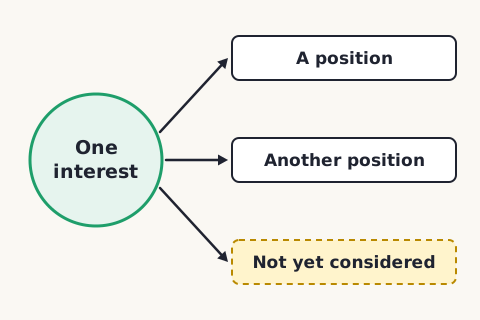
For every interest there usually exist multiple positions that could satisfy it. Reconciling interests works better than compromising positions partly because negotiators frequently discover their underlying interest can be met through an alternative position they had not previously considered.
 Unsplash · Barney Goodman · Unsplash License ↗
Interests Are Plural — and Often Shared
Behind opposed positions lie both conflicting and compatible interests: a shopkeeper and a property owner may disagree on rent but share a deep interest in building maintenance and a thriving commercial district. Every party also carries a complex web of internal interests at once, balancing financial targets against morale, reputation, and regulatory compliance.
 Pexels · Andrea Piacquadio · Pexels License ↗
Ask "Why" and "Why Not" to Surface Interests
To uncover the interest behind a rigid position, respectfully ask the other party why they want what they're asking for — seeking the functional need behind the demand. Just as usefully, analyze why they have not accepted your proposal, putting yourself in their shoes to see the risks or costs they fear.
 Pexels · Elegant view of a library interior seen through an oval window, showing reading tables and bookshelves. ↗
Comparing approaches regarding The Library Window Problem:
Positional Bargaining — Negotiation Focus: Rigid stances, defense of ego, and grudging concessions; Standard of Outcome: Conceding to pressure, stubbornness, or artificial deadlines
Principled Negotiation — Negotiation Focus: Underlying interests, shared needs, and creative value creation; Standard of Outcome: Agreements measured against fair, independent, objective criteria that both sides accept. Pexels · Vung Nguyen · Pexels License ↗
The Library Window: A Compromise That Pleases No One
Two patrons quarrel over whether a library window should be open or shut — one wants fresh air, the other wants to avoid a draft. A simple compromise of leaving the window halfway open pleases neither, since it still lets in some draft while providing only some fresh air.
 Pexels · Tima Miroshnichenko · Pexels License ↗
Librarian Adjacent Window Solution
The librarian enters and asks each person why they want what they want (their interests). Recognizing that one person wants fresh air and the other wants to avoid a draft blowing directly onto them, the librarian opens a window in the adjacent room.
1 / 10Why is focusing on interests more effective than positions?
The book gives two reasons interests beat positions: interests can usually be satisfied by several different positions, and opposed positions often hide shared interests underneath.
Lesson 3 has 56 cards. Keep going in the free app.
Question -
 Pexels · Polina Tankilevitch · Pexels License ↗04
Invent Options for Mutual Gain
Diagnosing Obstacles & The Circle Chart Framework · Brainstorming, Dovetailing Differences & Drafting Yesable Propositions
Lesson 4 · 10 cardsPexels · Polina Tankilevitch · Pexels License ↗Four Obstacles to Creative Options
In most negotiations there are four major obstacles that inhibit the inventing of an abundance of options: (1) premature judgment; (2) searching for the single answer; (3) the assumption of a fixed pie; and (4) thinking that 'solving their problem is their problem.'
 Unsplash · Sebastian Herrmann · Unsplash License ↗
Premature Judgment Suffocates New Ideas
The moment a new idea is suggested, the critical faculty tends to suffocate the creative faculty: participants immediately analyze its flaws and shoot it down before it can be explored or refined. Fear of appearing foolish or revealing vulnerability keeps people from voicing innovative proposals in the first place.
 FlashFeed original diagram · CC-BY-4.0
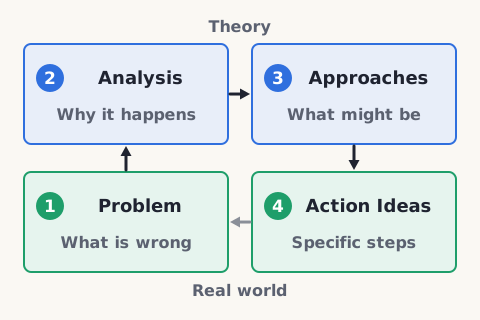
The Circle Chart's Four Quadrants
Roger Fisher, William Ury, and Bruce Patton designed the Circle Chart to guide negotiators through a systematic process of creative problem-solving. It organizes thinking across four quadrants, cycling between the concrete real world and conceptual theory to bridge symptoms with actionable solutions.
 Unsplash · sheri silver · Unsplash License ↗
The Fixed-Pie Assumption
Negotiators often view a negotiation through a zero-sum lens, assuming every dollar or benefit one side gains must come directly out of the other side's pocket. This cognitive trap blinds parties to opportunities for joint gains — such as when a negotiator wrongly assumes any gain for one side must be a loss for the other.
 Pexels · RDNE Stock project · Pexels License ↗
Comparing approaches regarding Circle Chart Quadrant 1 - Problem:
Positional Bargaining — Negotiation Focus: Rigid stances, defense of ego, and grudging concessions; Standard of Outcome: Conceding to pressure, stubbornness, or artificial deadlines
Principled Negotiation — Negotiation Focus: Underlying interests, shared needs, and creative value creation; Standard of Outcome: Agreements tested against fair, objective criteria rather than raw pressure or willpower. Pexels · Vlad Deep · Pexels License ↗
Circle Chart Quadrant 2: Analysis
The Circle Chart's second quadrant, Analysis, diagnoses the underlying systemic causes behind the symptoms identified in Quadrant 1. It classifies problems into categories and identifies missing incentives or structural bottlenecks — moving from what is observably wrong to why it is happening.
 Pexels · Yan Krukau · Pexels License ↗
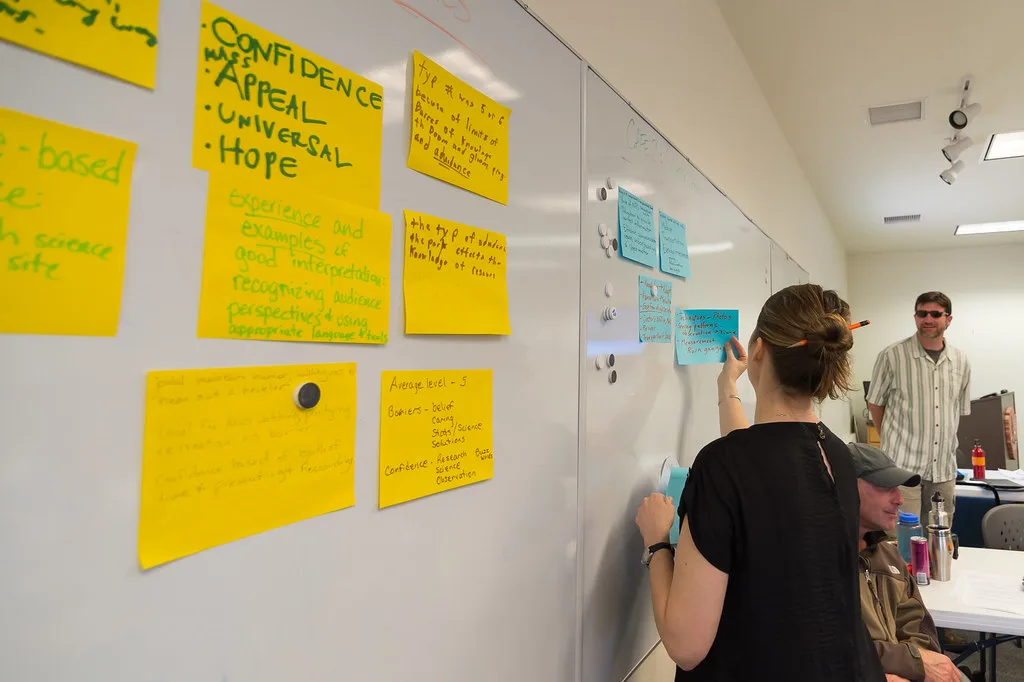
Circle Chart Quadrant 3 - Approaches
Step 3: Approaches (Theory / What Might Be): Brainstorm broad conceptual remedies and theoretical strategies. What principles, economic models, or policy frameworks could address the diagnosed causes?
 Joshua Tree National Park (Openverse) · pdm 1.0 ↗
Circle Chart Quadrant 4, and Cycling Through the Chart
The fourth quadrant, Action Ideas, translates theoretical approaches into specific, tangible steps negotiators can implement tomorrow. By cycling repeatedly between the concrete world and theoretical analysis across all four quadrants, negotiators unlock dozens of novel options that traditional bargaining never surfaces.
 Wikimedia Commons · Eric Jones · CC BY-SA 2.0 ↗
The Circle Chart in Action: Northern Ireland's History Textbooks
In a dispute over Northern Ireland's school curriculum, cycling through the Circle Chart turned the symptom that Catholic and Protestant students used entirely different history textbooks into concrete action ideas: producing a shared history textbook for both systems and creating a teacher exchange program between them — ideas neither side had proposed while arguing only about whose curriculum should prevail.
1 / 10Which brainstorming obstacle involves attacking a new idea the moment it's raised?
Premature judgment is the obstacle where the critical faculty suffocates the creative one: a new idea gets picked apart before it can be explored or refined.
Lesson 4 has 51 cards. Keep going in the free app.
Question -
 Pexels · Thirdman · Pexels License ↗05
Insist on Objective Criteria
Developing Fair Standards and Independent Procedures · Negotiating with Objective Principles & Resisting Coercion
Lesson 5 · 10 cardsPexels · Thirdman · Pexels License ↗Replacing Battles of Will with Merit
Principled negotiation resolves conflicts on their merits by insisting on objective criteria.
 Pexels · Thirdman · Pexels License ↗
Objective Criteria: Market Value and Professional Standards
Market value draws on prevailing commercial sales data, real estate comps, or transaction records to justify a figure. Professional standards — such as GAAP accounting principles or medical ethics codes — provide another independent benchmark that neither party invented for the occasion.
 Pexels · Artem Podrez · Pexels License ↗
Objective Criteria: Precedent and Scientific Judgment
Precedent draws on past organizational practices, previous contract terms, or historical settlement benchmarks. Scientific judgment draws on environmental impact studies, engineering load calculations, or clinical lab findings — both are external standards no one party controls.
 Pexels · Mikhail Nilov · Pexels License ↗
Comparing approaches regarding Efficiency and Audited Costs:
Efficiency and cost data — such as time-motion studies, fuel economy data, or audited production costs — is another objective criterion negotiators can anchor a proposal on, rather than an arbitrary company figure.
 Pexels · Mikhail Nilov · Pexels License ↗
Replacement Cost and Depreciated Book Value
Replacement cost and depreciated book value are standardized valuation formulas accepted by insurers and appraisers alike. Anchoring a settlement on such formulas — rather than an arbitrary company policy figure — grounds the number in a method neither side invented for the dispute.
 Pexels · Empty courtroom desk with microphones and nameplates in a Polish court setting. ↗
Judicial Rulings and Statutes
Court rulings: How an independent judge, arbitrator, or administrative panel would decide the case based on established statute.
 Pexels · Sora Shimazaki · Pexels License ↗
An Objective Criterion Must Be Independent and Legitimate
A valid objective criterion must be independent of both parties' subjective desires and legitimate in the eyes of all stakeholders. Grounding a proposal in a legitimate standard shields a negotiator from accusations of arbitrary greed and gives the other side a principled basis for agreeing that they can defend to their own peers.
 FlashFeed original diagram · CC-BY-4.0
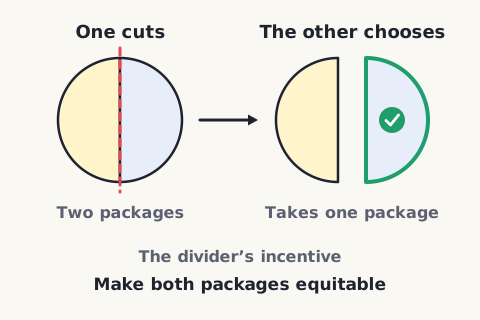
"One Cuts, the Other Chooses"
The classic procedure for dividing a resource — such as cutting a cake or dividing an estate — has one party split the assets into two packages while the other party chooses which package to take. This gives the divider an absolute incentive to make both packages as equitable as possible.
 Unsplash · Joshua Hoehne · Unsplash License ↗
Fair Procedures: Taking Turns, Drawing Lots, and Arbitration
When parties cannot agree on substantive criteria, they can turn to fair procedures instead: taking turns rotating priority, drawing lots or a coin toss for equally valued items, or binding third-party arbitration where an impartial expert's ruling is final. A majority vote is not one of these classic fair procedures for two-party disputes.
 Pexels · Front view of the historical Peace Palace in The Hague, Netherlands, featuring neo-Gothic architecture. ↗
Comparing approaches regarding Binding Impartial Arbitration:
Binding third-party arbitration means agreeing in advance to submit an unresolved dispute to an impartial expert whose ruling both sides accept as final.
1 / 10What does 'insist on objective criteria' mean in principled negotiation?
Insisting on objective criteria means grounding the outcome in a standard independent of either side's will, rather than in who is more stubborn or powerful.
Lesson 5 has 47 cards. Keep going in the free app.
Question -
Pexels · Edmond Dantès · Pexels License ↗06
Leverage, Jujitsu, & Countering Dirty Tricks
The Power of BATNA & Tripwires · Negotiation Jujitsu, The One-Text Procedure & Taming Dirty Tricks
Lesson 6 · 10 cardsPexels · Edmond Dantès · Pexels License ↗Power Disparities Reality
No negotiation technique can magically eliminate massive power disparities. However, principled negotiation prevents the weaker party from being coerced into an unfavorable agreement and optimizes whatever leverage they do possess.
 Pexels · Jamaal Hutchinson · Pexels License ↗
BATNA Is the Real Standard for a Good Deal
The reason you negotiate at all is to produce something better than what you could get without negotiating — that alternative is your BATNA, your Best Alternative to a Negotiated Agreement. Any negotiated outcome superior to your BATNA should be accepted; any offer inferior to it must be rejected.
 Pexels · Manuel Keusch · Pexels License ↗
Why a Fixed Bottom Line Is a Liability
A bottom line — such as "I will not accept less than $250,000" — is rigid and set before talks begin, so it cannot incorporate new information or creative options discovered during discussions, and it blocks multi-issue trade-offs where a concession in one area is compensated by a gain in another. It is also frequently set arbitrarily, either too high (walking away from a good deal) or too low (failing to protect real interests) — unlike a BATNA, which stays dynamic and realistic.
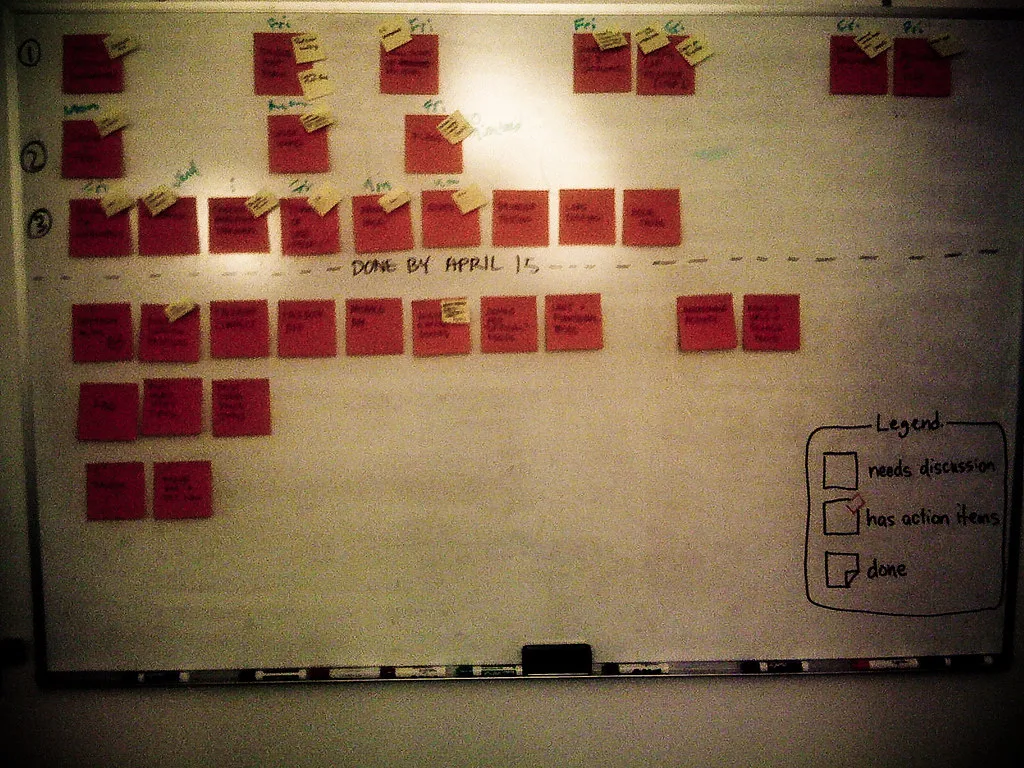 jm3 (Openverse) · by-sa 2.0 ↗
Building a BATNA: Invent, Then Improve
Developing an effective BATNA starts by inventing a list of actions you might take if no agreement is reached — sourcing another supplier, building the capability in-house, filing a lawsuit — and then improving the most promising ideas into practical, fully executable alternatives. Setting a bottom line before negotiating is not one of these three steps; selecting the single best option comes only after inventing and improving.
 Pexels · Alexander Suhorucov · Pexels License ↗
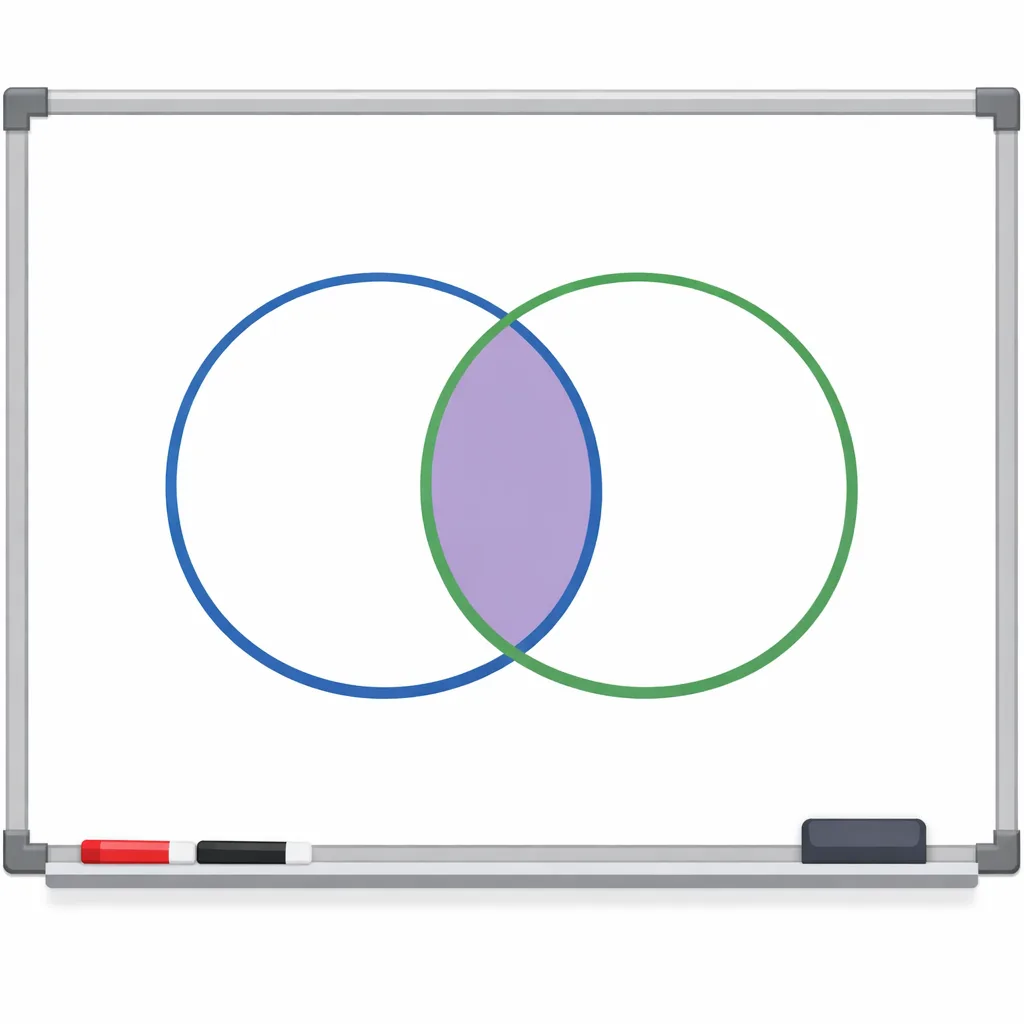
BATNA Step 3 - Selecting Best Alternative
Select tentatively the single best option from the improved alternatives.
 AI-generated (gpt-image-1.5)
Walk-Away Attractiveness Sets the Zone of Possible Agreement
The relative negotiating power of two parties depends primarily on how attractive walking away is to each side. Understanding what alternatives your counterpart has if talks collapse lets you map the Zone of Possible Agreement (ZOPA) accurately: if their alternatives are bleak, they will accept reasonable terms far more readily, and if their alternatives are strong, you must structure an offer that genuinely beats them.
 Pexels · ANTONI SHKRABA production · Pexels License ↗
Multiple Alternatives Multiply Your Leverage
Having two other lucrative job offers in hand makes your BATNA exceptionally strong, giving you immense confidence in a salary negotiation because walking away becomes both more attractive and more credible. Cultivating a diverse portfolio of alternatives, rather than relying on just one, liberates a negotiator from the fear of failure.
 Pexels · Athletes practicing a dynamic judo throw on a tatami mat indoors. ↗
Redirection Principle of Negotiation Jujitsu
Instead, principled negotiators use Negotiation Jujitsu. Borrowing from martial arts, you do not resist the opponent's force; you redirect it toward constructive problem-solving:
 Pexels · Plato Terentev · Pexels License ↗
Two More Jujitsu Moves: Look Behind Positions, Then Go Quiet
When the other side asserts an extreme position, don't attack or accept it — treat it as one possible option and probe for the underlying interest that generated it, asking how it would address the real problem. And because statements generate resistance while questions generate answers, an open-ended question followed by strategic silence forces the counterpart to reflect, elaborate, or retract an unsupportable claim.
 Pexels · RDNE Stock project · Pexels License ↗
Invite Criticism Instead of Defending Your Ideas
Rather than defending a proposal against attack, ask the counterpart what specific flaws or concerns they see in it, or what they would do if they were in your shoes. Inviting criticism and advice redirects the other side's energy toward improving the proposal instead of destroying it.
1 / 10According to Getting to Yes, what is the actual purpose of negotiating at all?
The book frames negotiating's purpose as producing an outcome better than your BATNA—what you'd get without a deal—not just reaching any agreement.
Lesson 6 has 48 cards. Keep going in the free app.
Question

What you'll be able to do 12 objectives, from the pack's lessons
- Explain why positional bargaining yields unwise agreements, how a soft bargainer loses to a hard one, and why coalition positions resist revision.
- Name principled negotiation's four pillars (people, interests, options, criteria) and the three universal benchmarks: wise agreement, efficiency, relationship.
- Explain why conflict lives in perception, and use cognitive empathy to understand the other side's view without deducing their intentions from your fears.
- Manage emotion by letting the other side vent and feel heard, speaking about yourself rather than blaming them, and using symbolic gestures.
- Explain why reconciling interests works better than compromising positions, uncover interests by asking 'Why?', and name the five basic human needs.
- Explain the problem and your interests before proposing a solution, look forward rather than back, and stay hard on the problem and soft on the people.
- Identify the four obstacles to inventing options, such as premature judgment and the fixed pie, and use the four-quadrant Circle Chart.
- Run a brainstorm of 5 to 8 people with zero criticism, dovetail differences such as risk tolerance, and draft a yesable proposition.
- Identify objective criteria (market value, precedent, professional standards) and fair procedures such as taking turns or one cuts, the other chooses.
- State the three guidelines for negotiating with objective criteria (joint search, reason and openness to reason, never yield to pressure).
- Define BATNA, develop one in three steps, explain why walk-away options set negotiating power, and contrast a dynamic BATNA with a rigid bottom line.
- Apply negotiation jujitsu and the One-Text Procedure used at Camp David, and sort dirty tricks into deception, psychological warfare, and positional pressure.
Study guide.
The same study guide as in the app, one page for each lesson, with its key facts and a self-test.
Its cards name 2 sources.
308 of its 308 cards name their source. These are the sources named.
- Getting to Yes — Roger Fisher, William Ury, and Bruce Patton
- Getting to yes
Hover over a photo, or tap its i, to see where it came from. All 6:
- Lesson 1: Pexels · Colorful display of fruits at an outdoor farmers market stall with people shopping. ↗
- Lesson 2: Pexels · Jopwell · Pexels License ↗
- Lesson 3: FlashFeed original diagram · CC-BY-4.0
- Lesson 4: Pexels · Polina Tankilevitch · Pexels License ↗
- Lesson 5: Pexels · Thirdman · Pexels License ↗
- Lesson 6: Pexels · Edmond Dantès · Pexels License ↗
- Getting to Yes by Roger Fisher, William Ury, Bruce Patton · on Amazon ↗
These are affiliate links: if you buy a book through one, FlashFeed may earn a small commission at no extra cost to you. The commission helps pay for FlashFeed's servers.
As an Amazon Associate we earn from qualifying purchases.
Independent study notes, not affiliated with the author or publisher.
- Cards
- 308
- Lessons
- 6
- Version
- 1.0.27
- Language
- English
The whole pack is one file. Read the pack file ↗
FlashFeed is on the App Store and Google Play.
FlashFeed is free on iPhone and Android, and needs no account.