
Rich Dad Poor Dad
Robert Kiyosaki contrasts his two father figures to define assets and liabilities by cash flow direction, explain why a primary residence often counts as a liability, and lay out building a business alongside a job for its corporate tax shield.
250 cards6 lessonsFree
Already have FlashFeed?Open this pack
Get this pack on your phone
Scan with your phone's camera.
flashfeedlearningapp.com/packs/rich-dad-poor-dad
Part of the Master Your Money collection.


6 lessons.
Each lesson has a study guide to read and objectives you can test yourself on. Its cards and games show up in your feed. Try one of its cards right here. Play a few of its games here too.
-
 Wikimedia Commons · Casey Konstantín · CC BY 2.0 ↗01
The Two Fathers & Working for Money vs. Assets
Contrasting Paradigms & The Hawaii Childhood · Fear, Greed, and Escaping the Rat Race
Lesson 1 · 10 cardsWikimedia Commons · Casey Konstantín · CC BY 2.0 ↗The Two Parental Paradigms
Growing up in Hawaii, Robert Kiyosaki was shaped by two contrasting father figures: an academic biological father (Poor Dad) and an entrepreneurial mentor (Rich Dad).
 Pexels · SHVETS production · Pexels License ↗
Poor Dad's Referral
Acknowledging his own limitations in commercial business, Poor Dad advised Robert to learn the mechanics of wealth creation directly from Mike's father.
 Pexels · cottonbro studio · Pexels License ↗
The Mindset Divide
The true division between the wealthy and the middle class begins in cognitive dialogue, habit formation, and willingness to manage calculated risk.
 Pexels · Tony Zohari · Pexels License ↗
The Ten-Cent Saturday Wage
Rich Dad hired nine-year-old Robert to work at his neighborhood convenience store on Saturday mornings for a nominal wage of ten cents per hour.
 Wikimedia Commons · Edgar Degas · Public domain ↗
The 45-Minute Waiting Crucible
Rich Dad made Robert wait in an uncomfortable anteroom for forty-five minutes before their meeting to demonstrate how life tests patience and resilience.
 Pexels · Annelies Brouw · Pexels License ↗
Life Pushes You Around
Life does not teach through lectures; life pushes people around. Those who succeed learn from the push, while others blame employers or surrender.
 Pexels · Erik Mclean · Pexels License ↗
The Salary Promotion Trap
A higher income or promotion cannot resolve financial struggle because it fails to address the underlying psychological drivers of fear and unexamined desire.
1 / 10Which of these universities did Poor Dad NOT hold an advanced degree from?
Poor Dad's graduate credentials were from Stanford, the University of Chicago, and Northwestern — not Harvard.
Lesson 1 has 40 cards. Keep going in the free app.
Question -
 Pexels · Robert So · Pexels License ↗02
Financial Literacy & Cash Flow Dynamics
The True Definition of Assets vs. Liabilities · Cash Flow Patterns & The Primary Residence Illusion
Lesson 2 · 10 cardsPexels · Robert So · Pexels License ↗The Accounting Convention Flaw
Traditional accounting often classifies personal possessions like cars and primary homes as assets, despite their continuous negative cash outflow.
 Pexels · Steve A Johnson · Pexels License ↗
Compare the accounting function of the Income Statement versus the Balance Sheet
Income Statement — Measures revenues received and expenses paid over a specific duration, detailing operating cash velocity.
Balance Sheet — Inventories total assets owned and liabilities owed at a specific point in time, detailing capital structure. Pexels · AlphaTradeZone · Pexels License ↗
The Poor's Cash Flow Pattern
The cash flow of the poor flows directly from wage income into immediate living expenses (food, shelter, transit), with zero assets and zero balance sheet leverage.
 Pexels · Ryan Stephens · Pexels License ↗
The Rich's Cash Flow Loop
Income is generated directly by the asset column (dividends, rental cash flow, notes) and exceeds living expenses, leaving surplus capital to buy more assets.
 Pexels · Pexels User · Pexels License ↗
The Balance Sheet Illusion
Acquiring debt-financed consumer goods labeled as assets creates an illusion of prosperity while draining the capital needed for true compounding.
 Pexels · Dirk Schuneman · Pexels License ↗
The Primary Home as a Liability
A personal house is an operational liability because it generates substantial monthly cash outflows for mortgage interest, property taxes, insurance, and maintenance.
 Pexels · Vlad Bagacian · Pexels License ↗
Real Estate Inflation Parity
Real residential home prices frequently match or lag inflation, and after 30 years of mortgage interest, property taxes and upkeep, a home may not build real equity through price rise alone.
 Pexels · Pavel Danilyuk · Pexels License ↗
The HELOC Debt Consolidation Trap
Homeowners frequently use home equity loans to pay off consumer debt, converting unsecured credit obligations into secured liens against their shelter.
 Pexels · cottonbro studio · Pexels License ↗
Compounding Velocity
Once passive income surpasses living expenses, surplus cash flow can be reinvested into acquiring additional assets, triggering exponential compounding.
 Pexels · DΛVΞ GΛRCIΛ · Pexels License ↗
Lean Early Operations
Maintaining low living expenses and minimal personal debt during early wealth-building stages maximizes the capital available for compounding asset purchases.
1 / 10What makes something an asset, per Kiyosaki's cash-flow definition?
Kiyosaki defines an asset purely by cash flow direction: it puts money in your pocket. Appreciation, labor, and tax treatment are irrelevant to the definition.
Lesson 2 has 40 cards. Keep going in the free app.
Question -
 Wikimedia Commons · Unknown author · Public domain ↗03
Mind Your Own Business & Building Asset Columns
Profession vs. Business & Asset Portfolio Classes · Asset Categories & Equity Growth
Lesson 3 · 10 cardsWikimedia Commons · Unknown author · Public domain ↗Ray Kroc's University Lecture
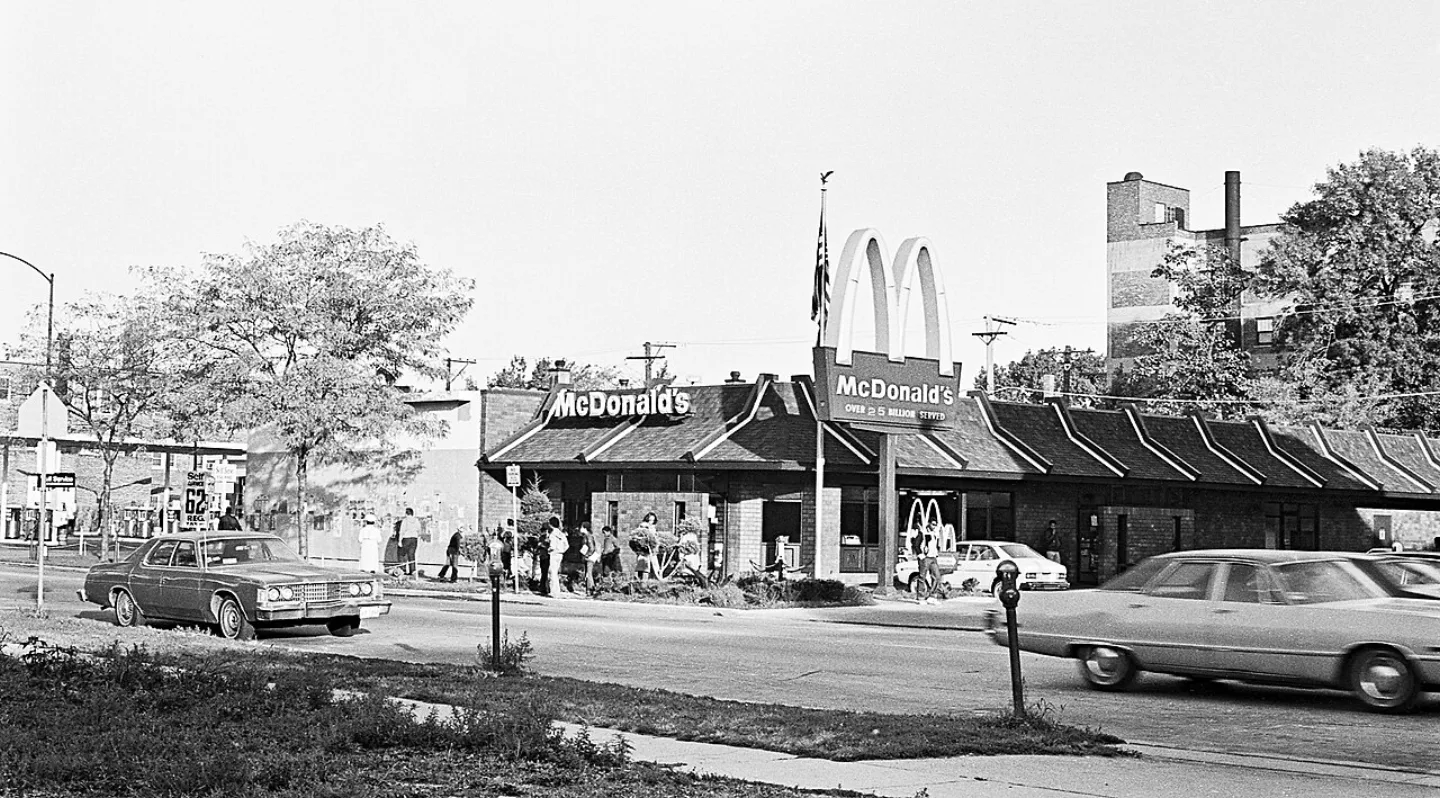
In 1974, McDonald's founder Ray Kroc asked a class of MBA students at the University of Texas at Austin what business they thought he was in.
 Downtowngal · CC BY-SA 4.0 ↗
Compare Ray Kroc's profession with his core business strategy.
Ray Kroc's Profession — Master franchisor selling restaurant systems, kitchen operations, and burgers.
Ray Kroc's Business — Strategic acquisition of prime commercial land under every franchise location. Pexels · Pixabay · Pexels License ↗
Minding Others' Business
Most employees spend their lives minding someone else's business: enriching company owners, paying government taxes, and servicing bank debt.
 Pexels · Olha Ruskykh · Pexels License ↗
The Professional Specialist Trap
Traditional education trains skilled professionals (physicians, engineers, accountants) but neglects training them on how to own and build an asset column.
 Pexels · Thirdman · Pexels License ↗
The Double Damage of Consumer Debt
Financing a luxury item with debt inflicts double damage: you incur ongoing interest charges and sacrifice the compound returns that capital could have generated.
 Pexels · Kampus Production · Pexels License ↗
The Asset-Funded Luxury Reward
When you require your assets to fund your luxuries, you acquire both the desired luxury and a permanent income-generating asset that continues paying you forever.
 Pexels · Gotta Be Worth It · Pexels License ↗
Separating Status from Asset Growth
Building a resilient asset column requires maintaining emotional separation between professional status symbols and balance-sheet asset ownership.
 Pexels · KATRIN BOLOVTSOVA · Pexels License ↗
Business vs. Self-Employed Job
If an owner must physically work inside an enterprise for it to operate, it is not a true business; it is a self-employed job that the owner created.
 Pexels · khezez | خزاز · Pexels License ↗
Tangible Intrinsic Assets
Asset Class 7 includes any tangible asset with intrinsic utility, scarcity, long-term appreciation potential, and a ready secondary market.
 Pexels · Enes Gundogdu · Pexels License ↗
The Passion and Competence Rule
Rich Dad stressed that an investor should only acquire assets that they personally love and understand, as genuine interest sustains thorough due diligence.
1 / 10What do you call what you do during work hours to generate active income, per Rich Dad?
Your profession is the active-income work you do daily; your business is the separate asset column you build with the surplus.
Lesson 3 has 40 cards. Keep going in the free app.
Question -
 Pexels · Nataliya Vaitkevich · Pexels License ↗04
Tax Strategy, Corporate Vehicles & Financial IQ
The History of Taxes and the Corporate Shield · The Four Pillars of Financial IQ
Lesson 4 · 10 cardsPexels · Nataliya Vaitkevich · Pexels License ↗Origins of Income Taxation
In England and the United States, income taxes were originally introduced as temporary fiscal measures to fund national defense and wartime expenditures.
 Carol M. Highsmith · Public domain ↗
Downward Tax Expansion
The Robin Hood promise proved illusory; as government spending grew, tax brackets expanded relentlessly downward to engulf the middle class and working poor.
 Pexels · Nikolai Ulltang · Pexels License ↗
The Wealthy's Legal Adaptation
The wealthy adapted to aggressive tax legislation by utilizing corporate entities, trusts, and legal structures to shelter income and protect accumulated wealth.
 Pexels · kaboompics.com · Pexels License ↗
The Limited Liability Shield
In addition to tax optimization, a corporation provides an essential legal shield, separating personal assets from business liabilities and lawsuits.
 Pexels · Tima Miroshnichenko · Pexels License ↗
The Danger of Direct Asset Titling
Holding valuable assets in your personal name in a litigious society exposes your accumulated wealth to aggressive creditor and tort lawsuit risks.
 Pexels · Gabriel Tovar · Pexels License ↗
Forensic Accounting Strength
Accounting literacy empowers an investor to identify financial distress, hidden liabilities, and authentic cash flow generation within any corporate report.
 Pexels · RDNE Stock project · Pexels License ↗
Strategic Deal Structuring
Combining investing acumen with corporate law enables entrepreneurs to structure joint ventures that maximize leverage while strictly limiting downside risk.
1 / 10In what year did the U.S. ratify the 16th Amendment, creating a permanent federal income tax?
The 16th Amendment, ratified in 1913, codified a permanent U.S. federal income tax.
Lesson 4 has 44 cards. Keep going in the free app.
Question -
 Pexels · levan simonshvili · Pexels License ↗05
Inventing Money & Developing Synergistic Skills
Financial Creativity, Asymmetric Deals & Risk Management · Working to Learn: Sales, Marketing & Systems
Lesson 5 · 10 cardsPexels · levan simonshvili · Pexels License ↗Compare wealth's primary driver in the Industrial Age versus the Information Age
Industrial Age Wealth — Driven by ownership of tangible physical factories, refineries, and heavy machinery.
Information Age Wealth — Driven by actionable ideas, specialized knowledge, and speed of digital execution. Pexels · Detailed macro shot of a United States one dollar bill showing various design elements. ↗
Money as a Mental Concept
Money is not a fixed physical reality; it is an agreed-upon mental concept that can be generated through intellectual innovation and legal agreement.
 Pexels · Vlada Karpovich · Pexels License ↗
Organizing Smarter Talent
Skill Three is organizing smart people, assembling and leading attorneys, accountants, and property managers who are significantly more technically knowledgeable than the investor.
 RudolfSimon · CC BY-SA 3.0 ↗
Asymmetric Risk-Reward Structuring
Investors who master transaction structuring and asymmetric risk-reward can generate profits in expanding bull markets and contracting bear markets.
 Pexels · Gustavo Fring · Pexels License ↗
Financial Creativity as an Edge
Cultivating financial creativity turns market obstacles into intellectual opportunities that yield outsized financial returns.
 Tyler Frew MD · CC BY-SA 4.0 ↗
The Specialization Trap
Highly educated professionals frequently become trapped by over-specialization, remaining 'one skill away from great wealth' due to lack of commercial abilities.
 Wikimedia Commons · Chensiyuan · CC BY-SA 4.0 ↗
The Singapore Journalist Encounter
Robert advised a brilliant journalist struggling financially to take courses in direct sales and advertising to commercialize her writing talent.
1 / 10In the historical ages of wealth, what drove wealth in the Industrial Age?
Industrial Age wealth belonged to owners of factories, refineries, and heavy machinery, unlike the land-based Agrarian Age or knowledge-based Information Age.
Lesson 5 has 46 cards. Keep going in the free app.
Question -
 Pexels · kaboompics.com · Pexels License ↗06
Overcoming Obstacles & Daily Action Steps
Five Traps: Fear, Cynicism, Laziness, Habits & Arrogance · The Ten Action Steps to Awaken Financial Genius
Lesson 6 · 10 cardsPexels · kaboompics.com · Pexels License ↗The Emotional Pain of Financial Loss
The primary psychological obstacle preventing financially educated people from accumulating wealth is the inability to tolerate the emotional pain of losing money.
 Pexels · Leeloo The First · Pexels License ↗
Cynics vs. Analytical Investors During Market Volatility
Cynics' Reaction — Criticize from the sidelines, predict doom, and paralyze themselves with unverified rumors.
Investors' Reaction — Analyze empirical market data, solve real problems, and profit from panic-driven mispricings. Pexels · Andrea Piacquadio · Pexels License ↗
Busy-Work as an Avoidance Mechanism
Individuals consume their time with frantic busy-work as an avoidance tactic to evade confronting critical financial decisions and long-term planning.
 Pexels · Ann H · Pexels License ↗
Activating the Brain with Questions
Saying 'I cannot afford it' provides a guilt-free excuse for mental indolence, while asking 'How can I afford it?' activates creative problem-solving.
 Pexels · Towfiqu barbhuiya · Pexels License ↗
Constructive Pressure from Paying Yourself First
Paying yourself first creates intense constructive psychological pressure, forcing an investor to generate new income sources to satisfy external bill collectors.
 Pexels · Berna · Pexels License ↗
Learning Velocity Over Static Knowledge
In an accelerating Information Economy, existing knowledge rapidly turns obsolete; the critical asset is how fast you can unlearn and absorb new financial models.
 Pexels · George Piskov · Pexels License ↗
The Primacy of Execution
Action always beats passive contemplation; reading books and attending seminars produces zero return until an investor executes real transactions in the open market.
1 / 10Kiyosaki nicknames which trap the 'Chicken Little Syndrome'?
Cynicism is the Chicken Little Syndrome: internal doubt plus doom-mongers who insist the sky is falling, unlike investors who check real data.
Lesson 6 has 40 cards. Keep going in the free app.
Question


What you'll be able to do 12 objectives, from the pack's lessons
- Contrast the mindset of the Poor Dad (working for money) with the Rich Dad (making money work for you through asset ownership).
- Explain how fear and greed trap people in the Rat Race, and how Rich Dad's zero-wage lesson taught escaping by creating assets instead of earning wages.
- Define assets and liabilities by cash-flow direction, and explain how buying assets — not wages — builds financial freedom.
- Explain why a primary residence is a liability rather than an asset, including the House Poor trap and the Wealth (in Days) formula.
- Distinguish a profession (active income) from a business via Kroc's real-estate insight, and explain why the rich fund luxuries from cash flow, not wages.
- Identify Kiyosaki's income-generating asset categories: real estate, royalties, businesses, equities, and bonds.
- Explain the history of income tax and how the corporate shield's pre-tax expenses and legal entities protect wealth.
- Name the four pillars of financial IQ (accounting, investing, understanding markets, the law) and explain how corporate tax law compounds capital faster.
- Explain how professional deal creators raise capital through syndicates, private equity, and seller financing, and structure asymmetric risk (capped downside).
- Explain why Kiyosaki says to work to learn rather than to earn, why sales and marketing matter most, and name the three critical management systems.
- Identify Kiyosaki's wealth obstacles: playing not to lose, Chicken Little cynicism, busy-laziness, and bad financial habits.
- Explain Kiyosaki's Ten Action Steps to financial genius, from finding your reason to the 'Indian Giver' investment principle.
Study guide.
The same study guide as in the app, one page for each lesson, with its key facts and a self-test.
Its cards name 14 sources.
250 of its 250 cards name their source. These are the eight named most.
- Rich Dad Poor Dad
- Robert T. Kiyosaki, Rich Dad Poor Dad, Chapter 10
- Robert T. Kiyosaki, Rich Dad Poor Dad, Chapter 9
- Robert T. Kiyosaki, Rich Dad Poor Dad, Chapter 3
- Robert T. Kiyosaki, Rich Dad Poor Dad, Chapter 8
- Robert T. Kiyosaki, Rich Dad Poor Dad, Chapter 6
- Robert T. Kiyosaki, Rich Dad Poor Dad, Chapter 7
- Robert T. Kiyosaki, Rich Dad Poor Dad, Chapter 1
See all 14 sources
- Rich Dad Poor Dad
- Robert T. Kiyosaki, Rich Dad Poor Dad, Chapter 10
- Robert T. Kiyosaki, Rich Dad Poor Dad, Chapter 9
- Robert T. Kiyosaki, Rich Dad Poor Dad, Chapter 3
- Robert T. Kiyosaki, Rich Dad Poor Dad, Chapter 8
- Robert T. Kiyosaki, Rich Dad Poor Dad, Chapter 6
- Robert T. Kiyosaki, Rich Dad Poor Dad, Chapter 7
- Robert T. Kiyosaki, Rich Dad Poor Dad, Chapter 1
- Robert T. Kiyosaki, Rich Dad Poor Dad, Chapter 2
- Robert T. Kiyosaki, Rich Dad Poor Dad, Chapter 4
- Robert T. Kiyosaki, Rich Dad Poor Dad, Chapter 5
- Robert T. Kiyosaki, Rich Dad Poor Dad, Lesson Four: The History of Taxes and the Power of Corporations
- Robert T. Kiyosaki, Rich Dad Poor Dad, Lesson Two: Why Teach Financial Literacy?
- Study guide, Lesson 2 (teaching shorthand based on the Fuller definition Kiyosaki adopts)
Hover over a photo, or tap its i, to see where it came from. All 6:
- Lesson 1: Wikimedia Commons · Casey Konstantín · CC BY 2.0 ↗
- Lesson 2: Pexels · Robert So · Pexels License ↗
- Lesson 3: Wikimedia Commons · Unknown author · Public domain ↗
- Lesson 4: Pexels · Nataliya Vaitkevich · Pexels License ↗
- Lesson 5: Pexels · levan simonshvili · Pexels License ↗
- Lesson 6: Pexels · kaboompics.com · Pexels License ↗
- Rich Dad Poor Dad by Robert T. Kiyosaki · on Amazon ↗
These are affiliate links: if you buy a book through one, FlashFeed may earn a small commission at no extra cost to you. The commission helps pay for FlashFeed's servers.
As an Amazon Associate we earn from qualifying purchases.
Independent study notes, not affiliated with the author or publisher.
- Cards
- 250
- Lessons
- 6
- Version
- 1.0.20
- Language
- English
The whole pack is one file. Read the pack file ↗
FlashFeed is on the App Store and Google Play.
FlashFeed is free on iPhone and Android, and needs no account.