
Buddhism: A Deep Study
From the Bodhi tree to secular mindfulness: the life of the Buddha, the core teachings, the three vehicles, key figures, sacred texts and places, parables, and the modern science of meditation. A religious-studies pack.
725 cards13 lessons2 video lessonsFree
Already have FlashFeed?Open this pack
Get this pack on your phone
Scan with your phone's camera.
flashfeedlearningapp.com/packs/buddhism
Part of the The Examined Life collection.
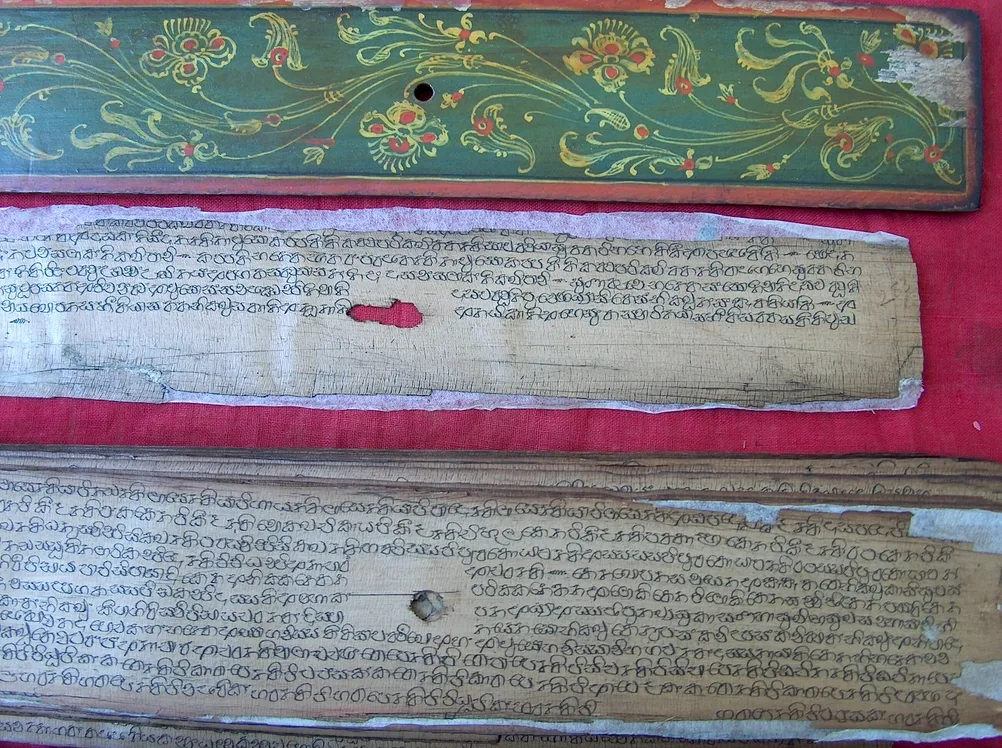 Wikimedia Commons · Bhikkhu Nyanatusita · Public domain ↗

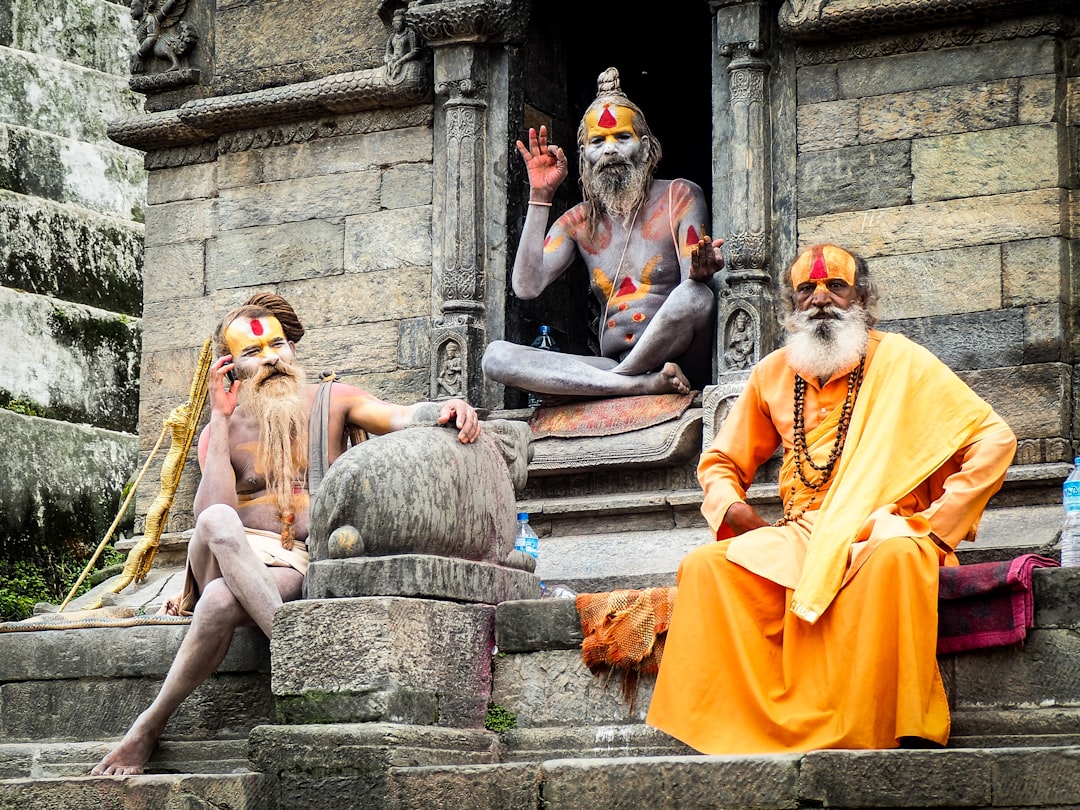 Unsplash · Fares Nimri ↗
 AI-generated (gpt-image-1.5)
13 lessons.
Each lesson has a study guide to read and objectives you can test yourself on. Its cards and games show up in your feed. Try one of its cards right here. Play a few of its games here too. 2 lessons have a short video.
-
Unsplash · Fares Nimri ↗01
The Life of the Buddha
Prince and the Four Sights · Awakening and Teaching · A Life in Numbers
Lesson 1 · 10 cardsUnsplash · Fares Nimri ↗The Four Sights
On chariot rides beyond the palace, Siddhartha saw four things that shattered his sheltered world: an old man (aging), a sick man (disease), a corpse (death), and finally a wandering ascetic who was serene amid all this misery. The fourth sight pointed toward a path: renunciation.
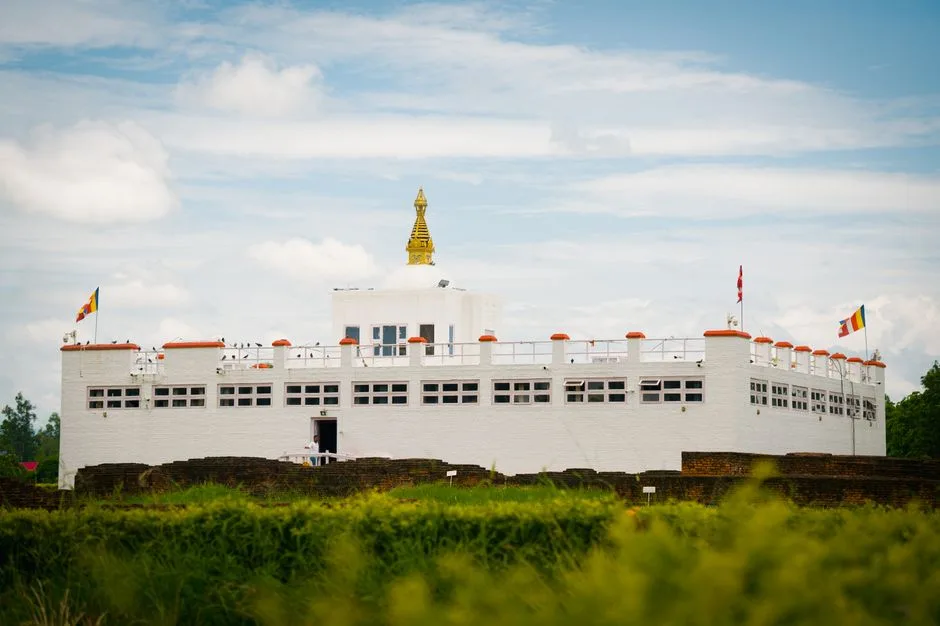 Pexels · A JR ↗
A Prince Is Born
Siddhartha Gautama was born around 563 BCE (some modern scholars argue as late as 480 BCE) in Lumbini, in present-day Nepal, into the Shakya clan — the source of his later title Shakyamuni, "Sage of the Shakyas." His mother, Maya, died shortly after his birth. A prophecy said he would become either a great king or a great spiritual teacher.
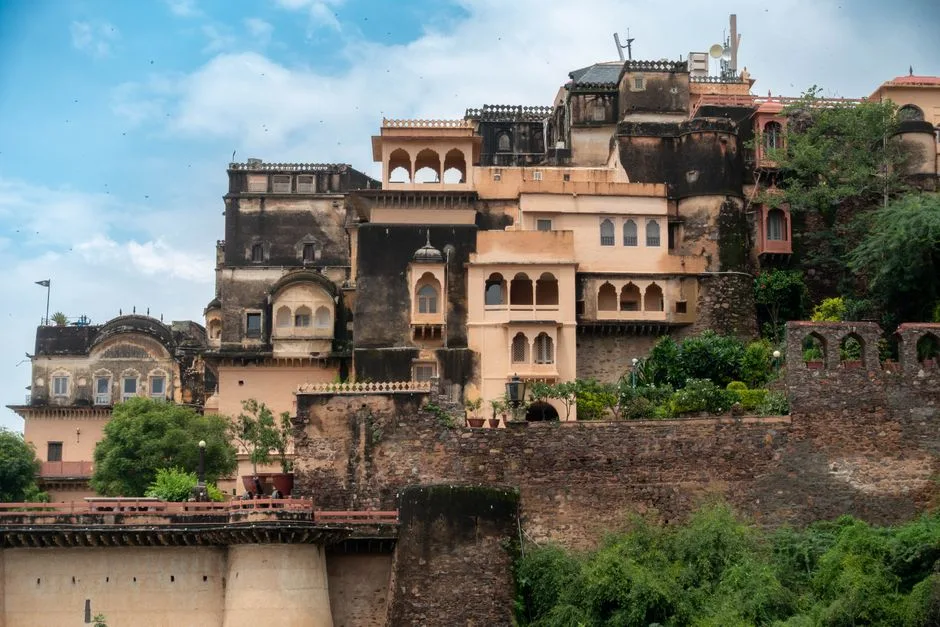 Pexels · Pramod Tiwari ↗
Sheltered from Suffering
Hoping his son would become a great king rather than renounce the world, Siddhartha's father, the chieftain Suddhodana, raised him in extraordinary luxury — deliberately insulating him from poverty, sickness, age, and death for 29 years behind the palace walls.
 Pexels · Ismael Abdal Naby studio ↗
Yasodhara and Rahula
At sixteen, Siddhartha married his cousin Yasodhara. They had a son named Rahula — a name meaning "fetter" or "bond," hinting at Siddhartha's growing sense that domestic life was a chain holding him back.
 Pexels · izzet çakallı ↗
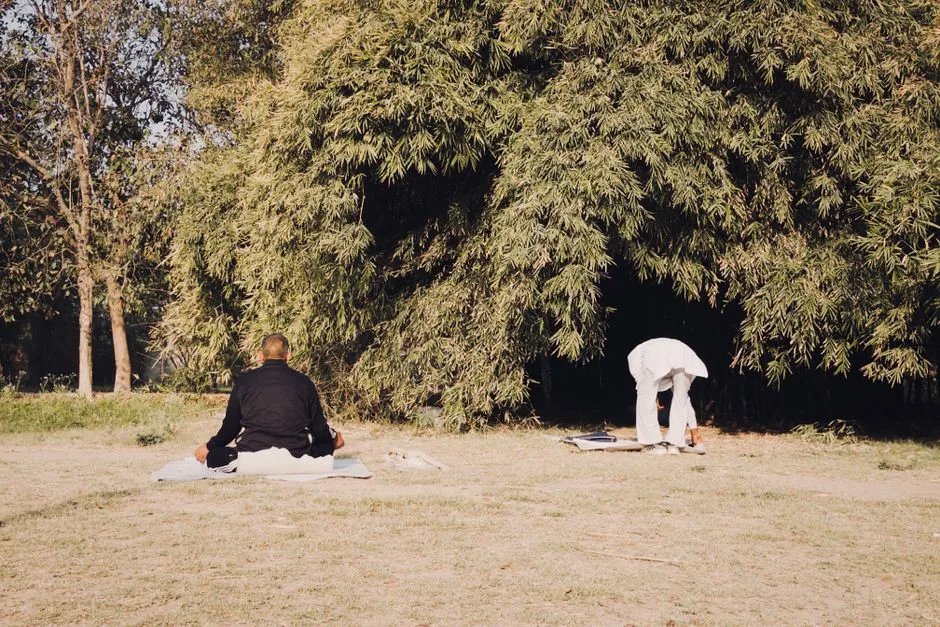
The Great Renunciation
On the night of his 29th birthday, Siddhartha slipped away while his wife and son slept. He crossed the river Anoma, shaved his head, and handed his princely garments to his charioteer Channa. This decisive break with his old life is called the Great Renunciation.
 Pexels · Anxiet ↗
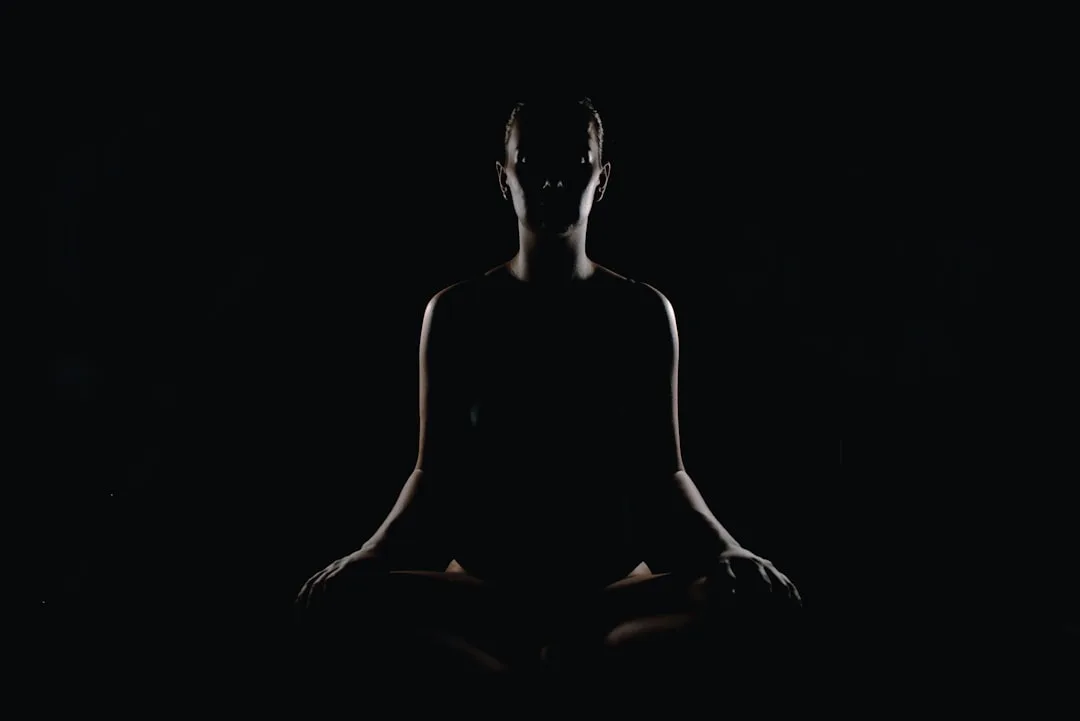
Two Meditation Masters
Siddhartha first studied under two renowned teachers: Alara Kalama, who taught the meditative state of "nothingness," and Uddaka Ramaputta, who taught "neither perception nor non-perception." He mastered both quickly — then realized neither one actually ended suffering.
 Unsplash · Max ↗
Six Years of Extremes
For roughly six years Siddhartha joined five fellow ascetics and pushed self-mortification to the brink — fasting nearly to death, holding his breath until he fainted. It brought him no closer to liberation, only closer to dying.
 FlashFeed original diagram · CC-BY-4.0
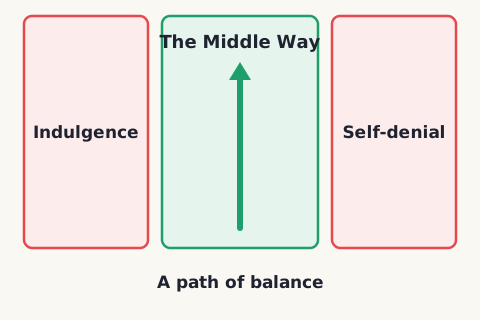
The Middle Way
Near death, Siddhartha accepted a bowl of rice milk from a village girl named Sujata. That act of self-care sparked his insight: the Middle Way (majjhima patipada) — a path of balance between indulgence and self-denial. Disgusted, his five companions abandoned him.
 wieland7 (Openverse) · by-sa 2.0 ↗
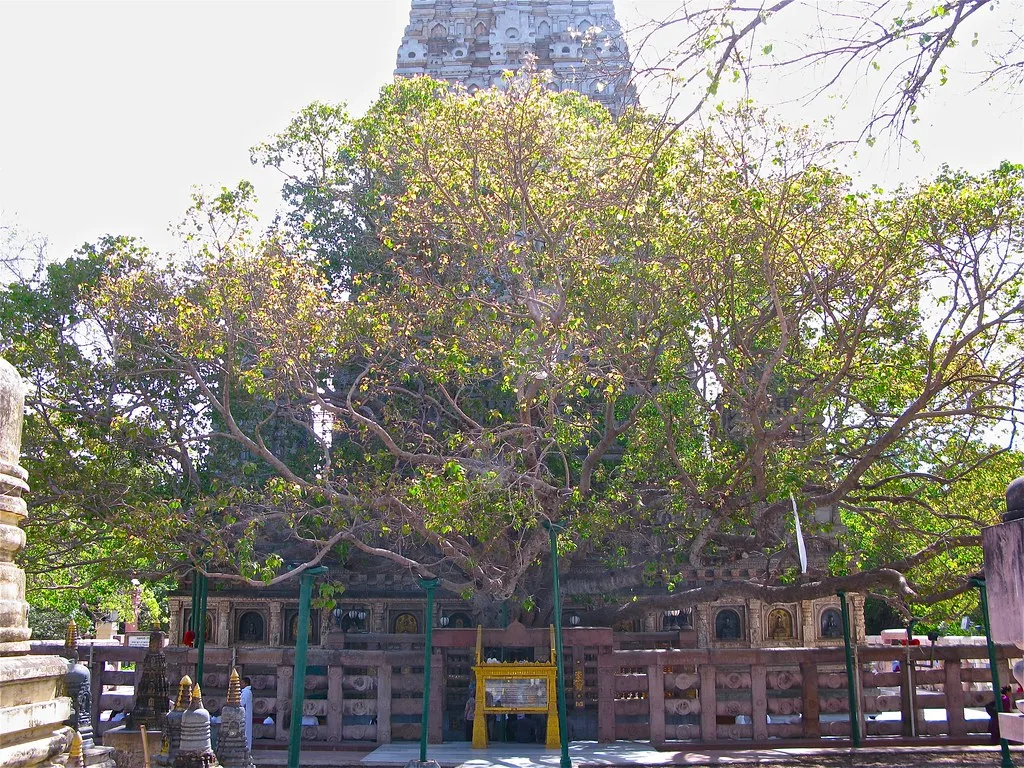
Under the Bodhi Tree
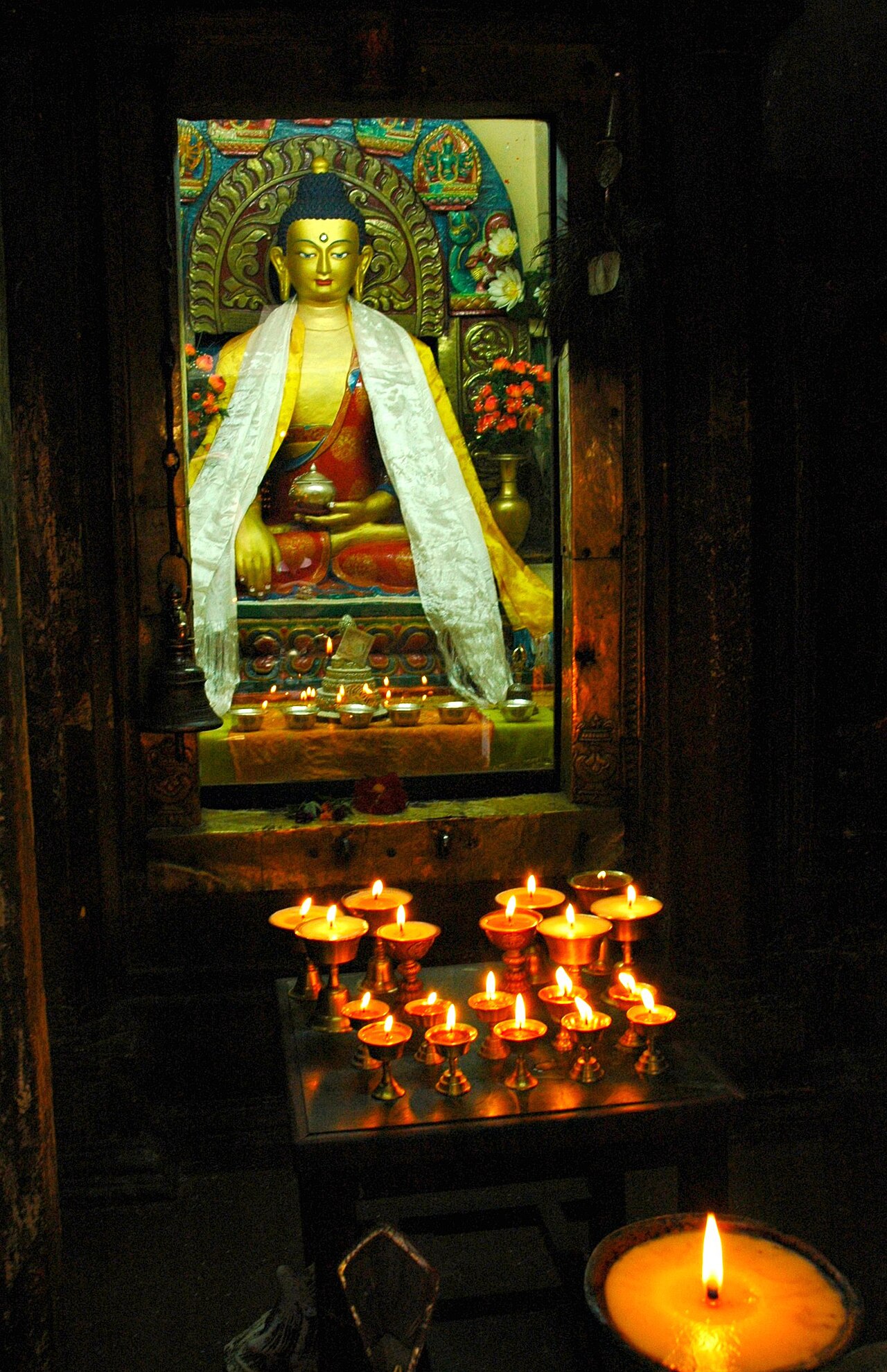
At Bodh Gaya in India, Siddhartha sat beneath a pipal tree (Ficus religiosa) and vowed not to rise until he was liberated. That tree is remembered as the Bodhi tree — the "tree of awakening."
 Wikimedia Commons · Wonderlane · CC BY 2.0 ↗
The Assault of Mara
As he meditated, the demon Mara — desire, death, and illusion — attacked three times: an army of terrors (fear), his daughters Craving, Aversion, and Passion (temptation), and a claim that the seat of enlightenment was his (pride). Siddhartha simply touched the earth, calling it to witness — the iconic earth-touching gesture (bhumisparsha mudra).
1 / 10Which of the Four Sights inspired Siddhartha to seek a spiritual path?
The first three sights revealed the universality of suffering; the fourth — a calm ascetic — showed a possible response to it.
Lesson 1 has 59 cards. Keep going in the free app.
Question
A Father Hid the World Transcript
In the traditional story, a father hid the world from his son for 29 years. Prince Siddhartha was shielded from poverty, sickness, age and death.
Siddhartha's son was named Rahula. It means 'fetter'. Siddhartha felt tied down.
Then came the Four Sights: aging, disease, death, and a wandering ascetic. The ascetic showed him another path.
At 29 he shaved his head and crossed the Anoma River. The Great Renunciation had begun.
-
 FlashFeed original diagram · CC-BY-4.002
The Four Noble Truths & the Eightfold Path
The Four Noble Truths · The Noble Eightfold Path
Lesson 2 · 10 cardsFlashFeed original diagram · CC-BY-4.0The Physician's Diagnosis
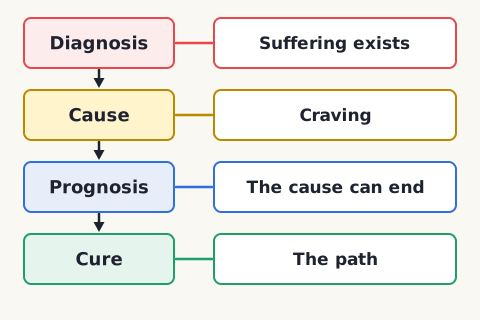
The Buddha's central framework — the Four Noble Truths (Cattari Ariya-Saccani) — is famously structured like a physician's process. There is a diagnosis (suffering exists), a cause (craving), a prognosis (the cause can end), and a cure (the path). This is not pessimism but clinical realism: you can't treat what you won't name.
 AI-generated (gpt-image-1.5)
First Truth: Dukkha
Dukkha is the truth of suffering — not only obvious pain, but a subtle unsatisfactoriness that underlies even pleasant experiences. The word literally evokes a wheel with an ill-fitting axle: things don't quite turn the way we want. It covers physical pain, losing what we love, enduring what we hate, and the anxiety of impermanence.
 AI-generated (gpt-image-1.5)
Second Truth: Samudaya
Samudaya is the truth of suffering's cause: tanha ("craving" or "thirst") — the relentless desire for sensory pleasure, for existence, and even for non-existence. Beneath craving the Buddha located avijja ("ignorance"): the fundamental misunderstanding that things, including "we," are permanent, independent, and solid.
 AI-generated (gpt-image-1.5)
Third Truth: Nirodha
Nirodha is the truth of cessation — the Buddha's "good news." Because suffering has a cause, it can end. The mind's obscurations are temporary, like clouds passing over an ever-present sun. The cessation of craving and ignorance leads to nirvana: liberation, peace, and freedom from the cycle of birth and death.
 AI-generated (gpt-image-1.5)
Fourth Truth: Magga
Magga is the truth of the path — the prescription that follows the diagnosis. The way to the cessation of suffering is the Noble Eightfold Path, organized into three training categories: wisdom, ethical conduct, and mental discipline. The first three truths describe the disease and its cure; the fourth tells you what to actually do.
 AI-generated (gpt-image-1.5)
Three Trainings, Eight Factors
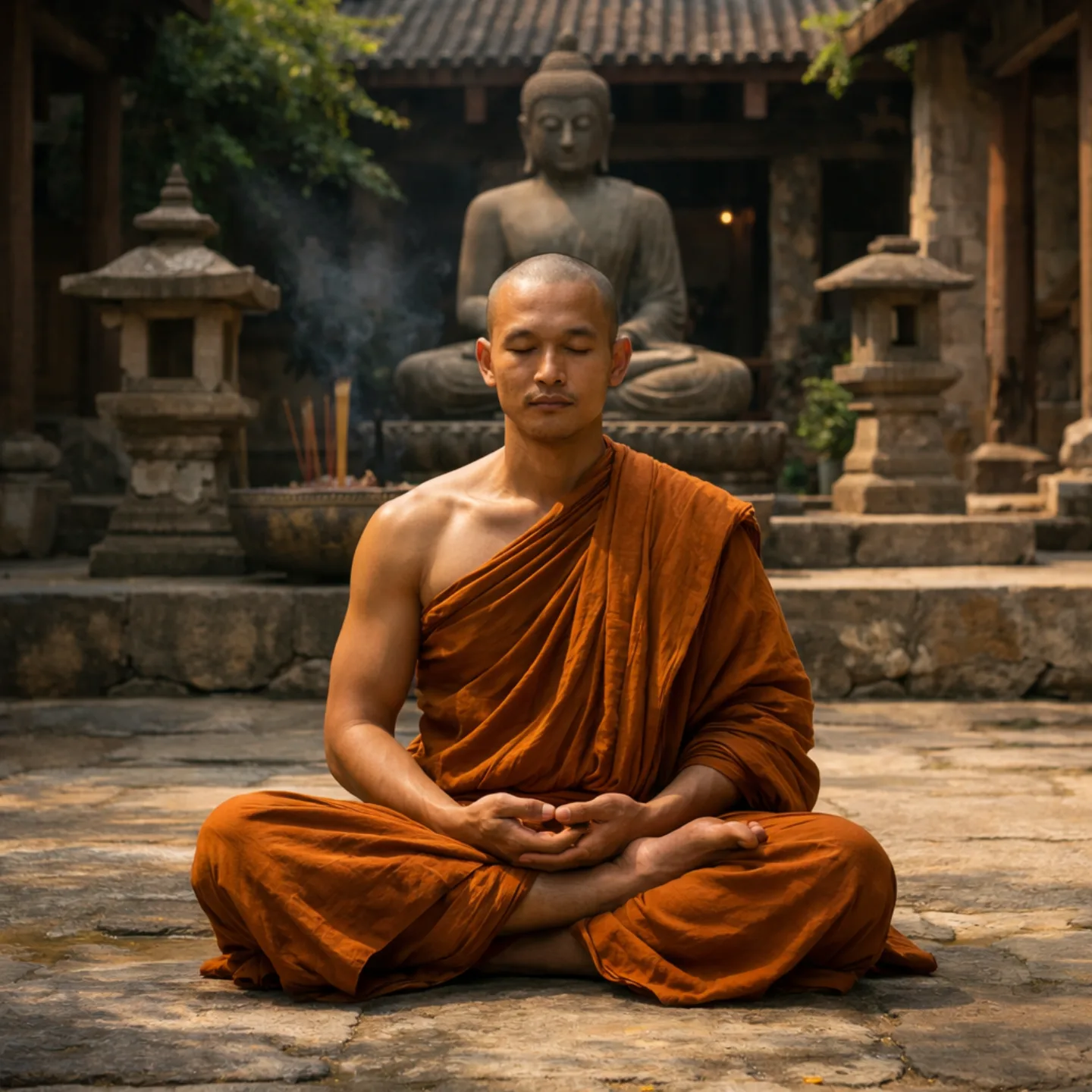
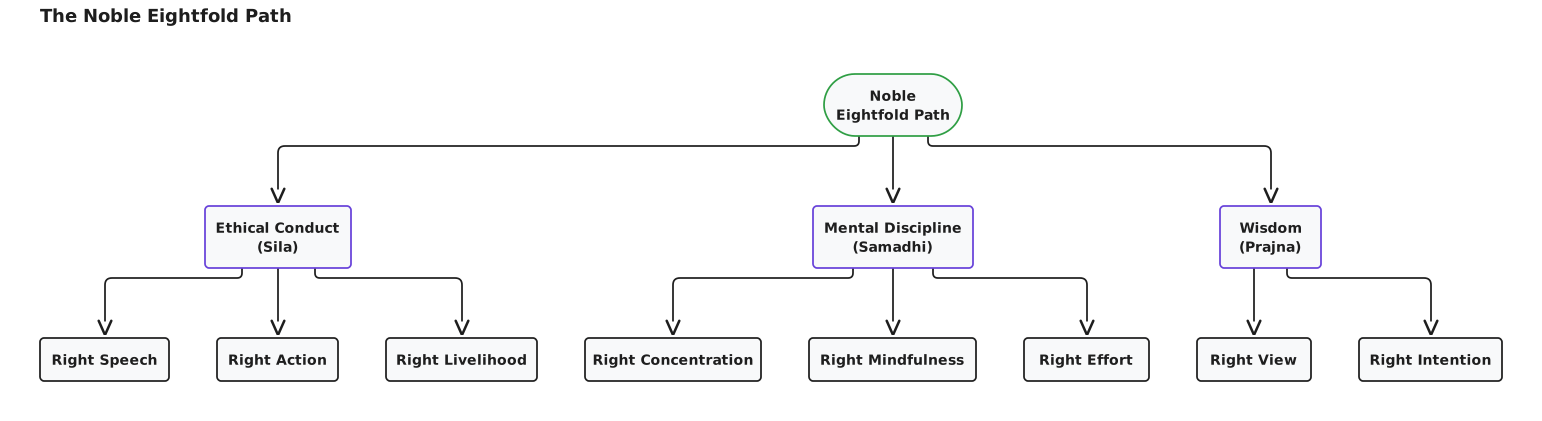
The eight factors of the path sort into three categories of training: Wisdom (Prajna) — Right View and Right Intention; Ethical Conduct (Sila) — Right Speech, Action, and Livelihood; and Mental Discipline (Samadhi) — Right Effort, Mindfulness, and Concentration. Each factor begins with samma, "right" or "complete."
 FlashFeed original diagram · CC-BY-4.0
Not a Staircase
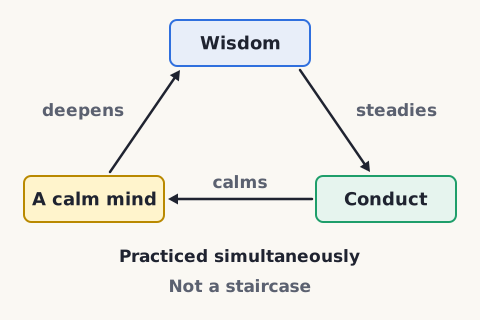
Despite the numbering, the path is not linear. The eight factors are practiced simultaneously, each supporting the others — wisdom steadies conduct, conduct calms the mind, a calm mind deepens wisdom. It is less a staircase climbed step by step than a single rope woven from eight strands.
 FlashFeed original diagram · CC-BY-4.0
The Eightfold Path, Mapped
The eight factors grouped into the three trainings — wisdom, ethical conduct, and mental discipline.
 Pexels · Ivan S ↗
One-pointed focus
Right Concentration, the eighth factor of the path, means training one-pointed focus that leads to deep meditative states known as jhanas.
 AI-generated (gpt-image-1.5)
The two factors of Wisdom
In the Eightfold Path, the Wisdom (Prajna) training is made up of just two factors: Right View and Right Intention.
1 / 10Which of the Four Noble Truths identifies craving (tanha) as the cause of suffering?
Samudaya names tanha (craving), rooted in avijja (ignorance), as the origin of suffering.
Lesson 2 has 69 cards. Keep going in the free app.
Question
A Doctor's Diagnosis Transcript
A doctor's diagnosis is not pessimism. It starts the cure. The Four Noble Truths work that way.
First, the diagnosis: dukkha, suffering and a wider unease, like a wheel that won't turn smoothly.
Second, the cause: tanha, craving, fed by ignorance.
Third, the prognosis: suffering has a cause, so it can cease.
Fourth, the cure: the Noble Eightfold Path, three trainings in wisdom, ethical conduct and mental discipline.
-
 AI-generated (gpt-image-1.5)03
Self, Causation & Liberation
The Three Marks and No-Self · Karma, Rebirth and Nirvana · Dependent Origination and Emptiness
Lesson 3 · 10 cardsAI-generated (gpt-image-1.5)The Three Marks of Existence
Buddhism views all phenomena through three characteristics (ti-lakkhana): anicca (impermanence — nothing lasts), dukkha (unsatisfactoriness — life carries an inherent friction), and anatta (non-self — there is no permanent, unchanging self). Seeing all three clearly is what the tradition calls "right understanding."
 FlashFeed original diagram · CC-BY-4.0
No-Self and the Five Aggregates
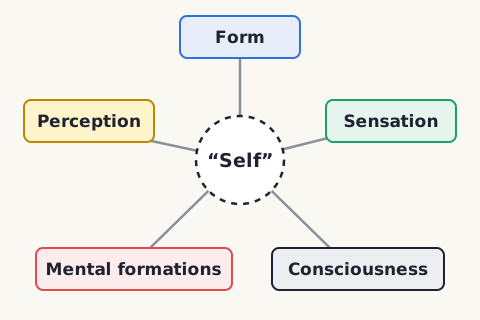
Anatta is one of Buddhism's most radical teachings — a direct departure from the Hindu atman, the permanent soul. What we call "self" is really a shifting composite of five aggregates (skandhas): rupa (form/body), vedana (sensation), sanna (perception), sankhara (mental formations), and vinnana (consciousness). No aggregate, alone or combined, is a fixed self.
 AI-generated (gpt-image-1.5)
The Modular Mind
In Why Buddhism Is True (2017), Robert Wright reframes no-self in evolutionary terms: the brain is a set of modular subsystems, each shaped by natural selection to chase a different goal. There is no single "CEO self" running the show — what feels like unified consciousness is really a committee of competing modules, and the sense of one unified self is a useful fiction assembled after the fact.
 AI-generated (gpt-image-1.5)
Denying an eternal soul
Buddhism's teaching of anatta, or non-self, directly rejects the Hindu concept of atman — an eternal, unchanging soul believed to pass unchanged from life to life.
 Pexels · Ansar Nazeer ↗
What Rupa really means
Of the five aggregates that make up the self, Rupa is form, the physical body. The others are vedana (sensation), sanna (perception), sankhara (mental formations), and vinnana (consciousness).
 FlashFeed original diagram · CC-BY-4.0
Karma Is Intention, Not Fate
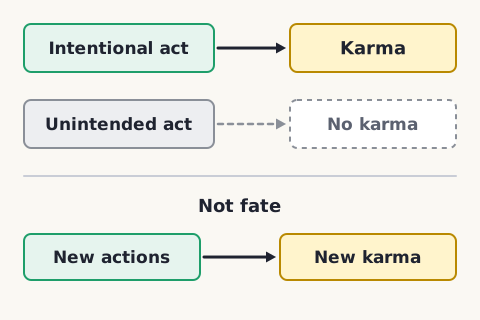
Karma literally means "action" — the law of cause and effect applied to intentional deeds. The key word is intention: an unintended harmful act generates no karma in the Buddhist sense. And karma is not fate or predestination — it is the accumulated weight of past intentional actions shaping the present. New actions create new karma, so no future is locked in.
 Unsplash · jyothi kumar ↗
Rebirth Without a Soul
Buddhist rebirth differs from Hindu reincarnation: there is no transmigrating soul, because there is no permanent self. Karma is likened instead to one billiard ball striking another — nothing physical passes across, yet the speed and direction of the second ball are caused entirely by the first. A candle lighting another candle works the same way: the flame continues, but no "thing" travels.
 Unsplash · David Tomaseti ↗
A Question the Buddha Wouldn't Answer
Nirvana means "extinguishing" — as one blows out a candle — the extinction of craving, hatred, and delusion, and freedom from samsara. The Buddha refused to be drawn on whether nirvana means personal continuation or annihilation, noting that the question itself springs from the very ego-illusion that nirvana dissolves.
 AI-generated (gpt-image-1.5)
Karma Literally Means Action
In Buddhism, the word karma literally means "action." It names the law of cause and effect arising from intentional deeds, not a mystical or external force.
 Pexels · Ron Lach ↗
Nirvana Means Extinguishing
The word nirvana (Pali: Nibbana) literally means "extinguishing" or "blowing out," as one might snuff a candle — describing the extinguishing of craving and suffering.
1 / 10Which of the three marks of existence means impermanence — that nothing lasts?
Anicca is the mark of impermanence: all phenomena arise and pass away. Dukkha is unsatisfactoriness and anatta is non-self.
Lesson 3 has 80 cards. Keep going in the free app.
Question -
 Wikimedia Commons · Karan · CC BY-SA 4.0 ↗04
The Three Vehicles
Theravada, Mahayana, Vajrayana · Schools of Mahayana
Lesson 4 · 10 cards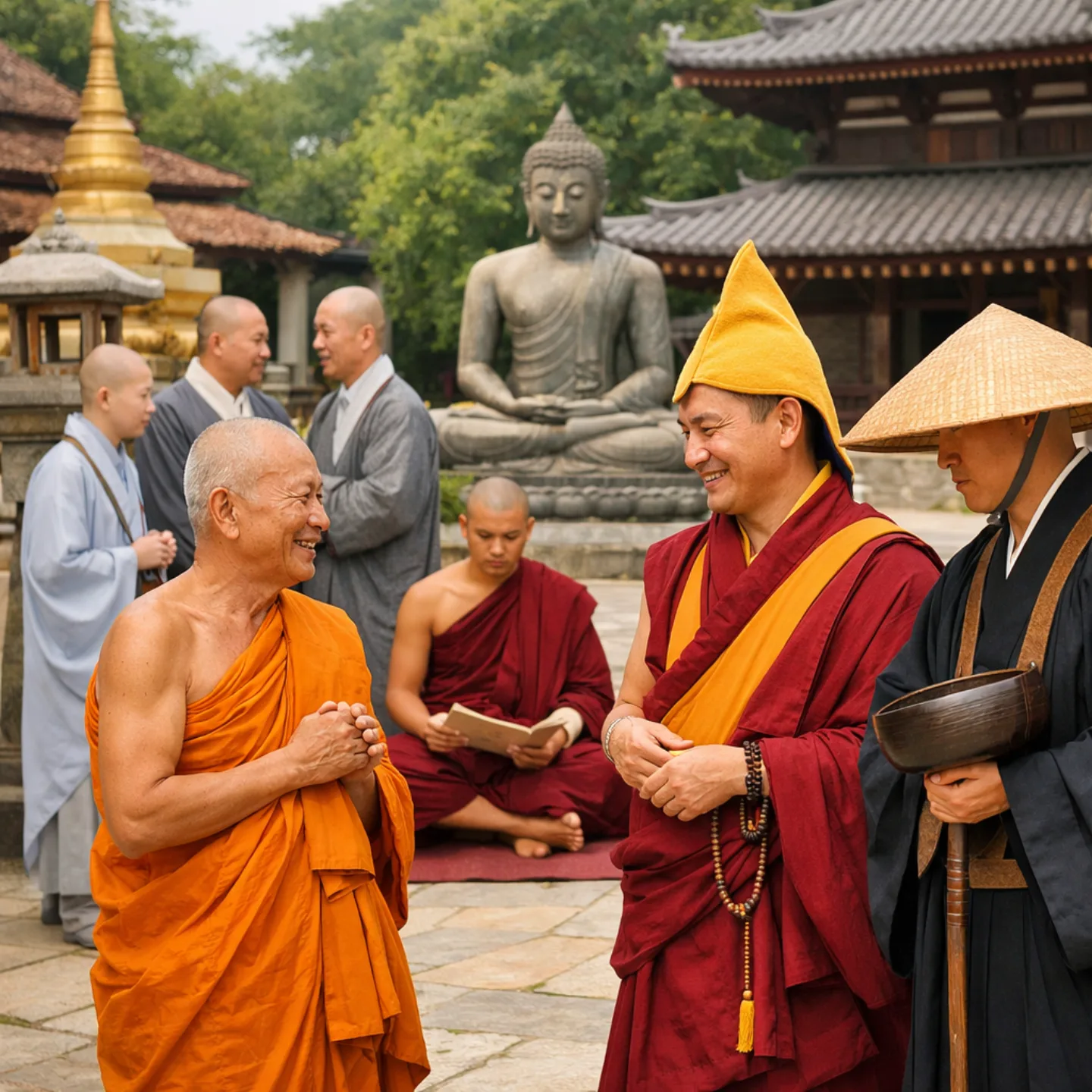 AI-generated (gpt-image-1.5)
The Three Vehicles
Buddhism is traditionally divided into three great "vehicles" (yana): Theravada, the "Way of the Elders"; Mahayana, the "Great Vehicle"; and Vajrayana, the "Diamond Vehicle." They are not rival religions so much as overlapping streams — Vajrayana, for instance, is built atop Mahayana — but each carries its own ideal, canon, and home territory.
 Pexels · AMOL NAKVE ↗
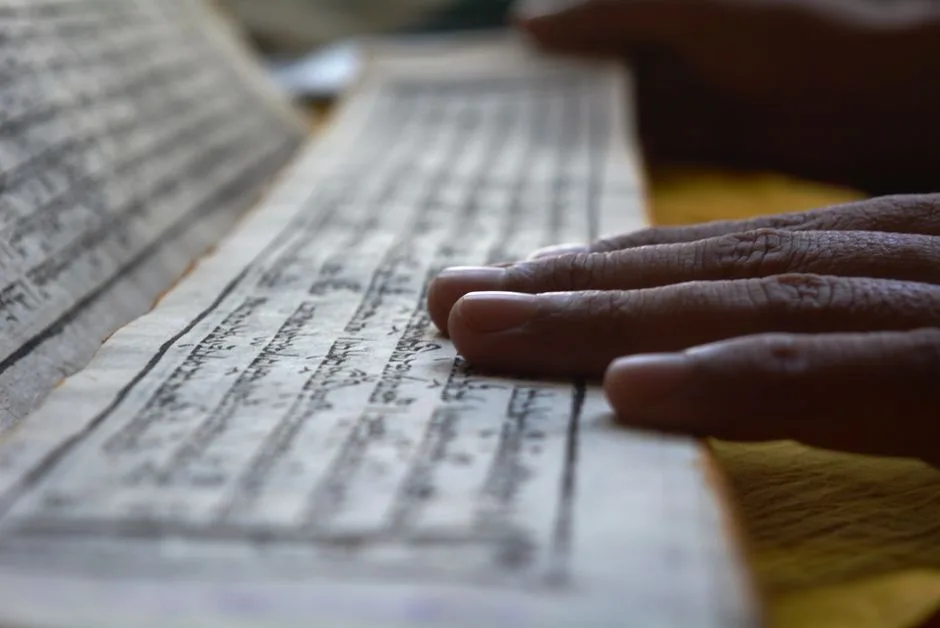
The Three Baskets
Theravada's foundational text is the Pali Canon (Tipitaka, "Three Baskets"), written down in Sri Lanka around 80 BCE after centuries of oral transmission. The three baskets are the Vinaya (monastic rules), the Sutta (the Buddha's discourses), and the Abhidhamma (philosophical and psychological analysis). Its central practice is Vipassana, or insight meditation.
Wikimedia Commons · Karan · CC BY-SA 4.0 ↗Mantras, Mandalas, and the Guru
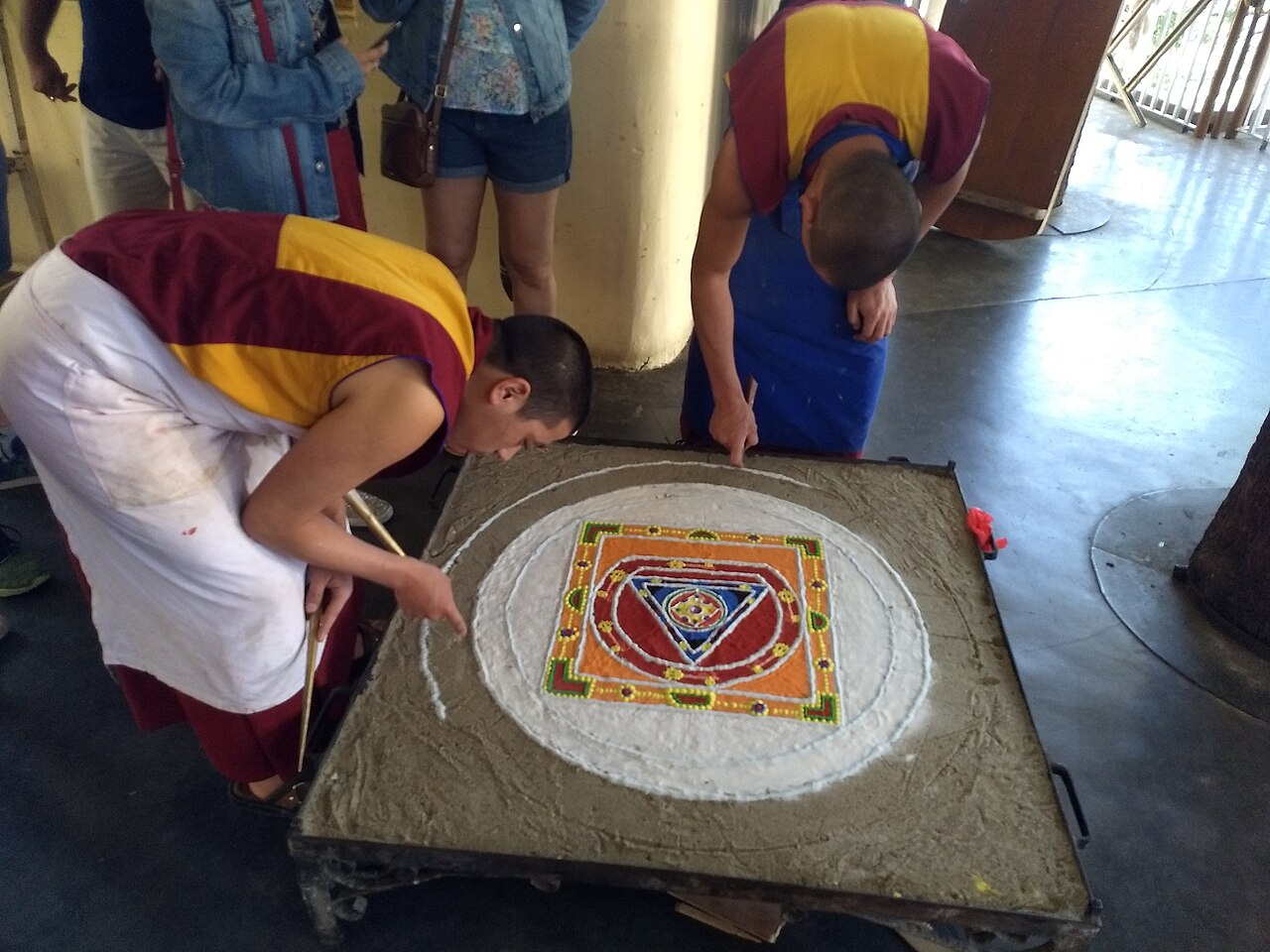
Vajrayana claims a "swift path" — awakening potentially in a single lifetime — through tantric ritual that transforms ordinary experience into awakened awareness. Its tools include mantras (sacred sound formulas such as Om Mani Padme Hum), mandalas (geometric cosmograms for visualization), mudras (sacred hand gestures), and guru yoga, in which empowerments from a qualified lama are essential. The Dalai Lama is its best-known living representative.
 Pexels · Pete Miller Portraits ↗
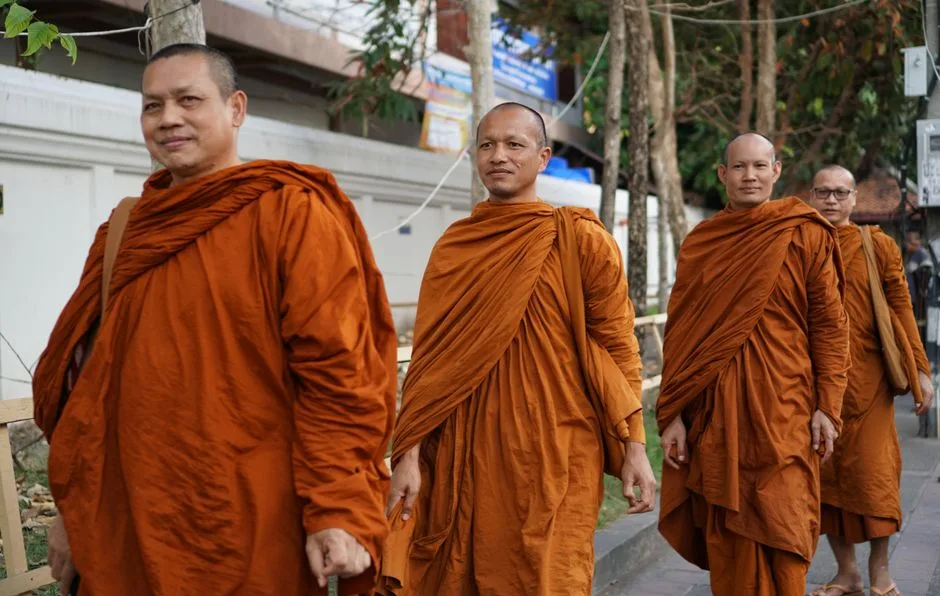
Theravada: Oldest Surviving School
Theravada, the "Way of the Elders," is the oldest surviving Buddhist school. It preserves the Buddha's earliest teachings in the Pali Canon.
 Pexels · Siamways Individualreisen ↗
The Arhat Ideal
In Theravada Buddhism, an arhat is the ideal of a "perfected person" — someone who has understood the Four Noble Truths, reached liberation, and will not be reborn.
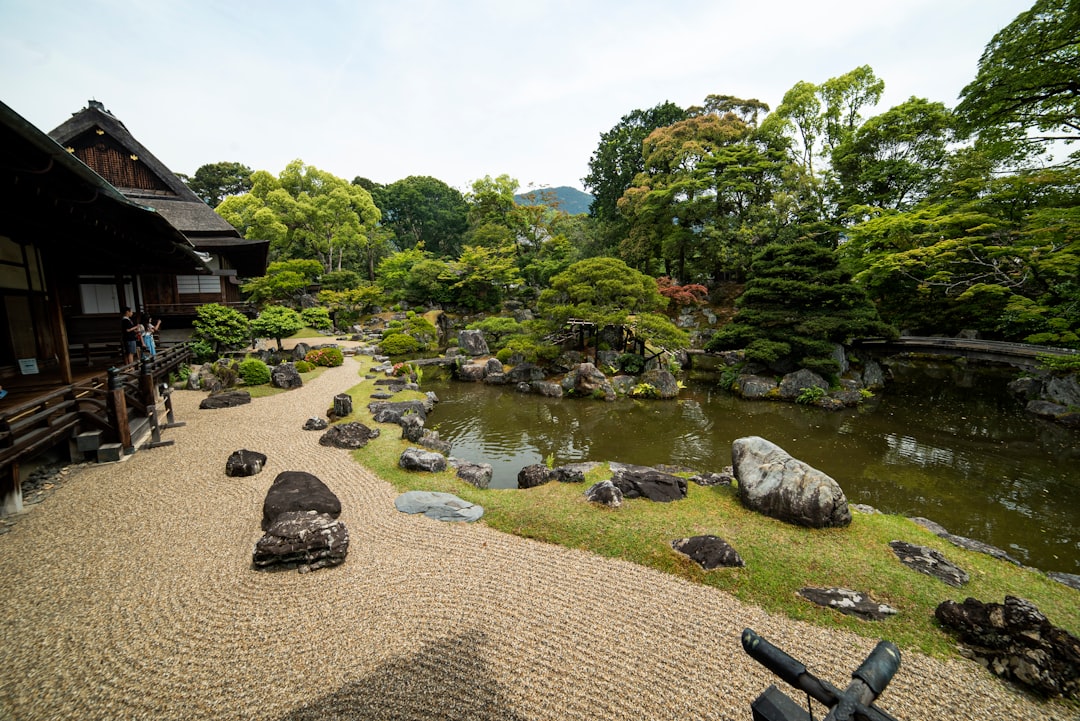 Unsplash · David Emrich ↗
Zen: Pointing Directly at the Mind
Zen began when the Indian monk Bodhidharma carried dhyana (meditation) practice to China around the 5th–6th century CE. Chan is the Chinese rendering of dhyana; Zen is the Japanese. Bodhidharma reportedly meditated facing a wall for nine years at the Shaolin Monastery. Zen prizes direct experience over scriptural study — "a special transmission outside the teachings... directly pointing to the human heart" — and uses koans, paradoxical riddles that short-circuit ordinary thinking.
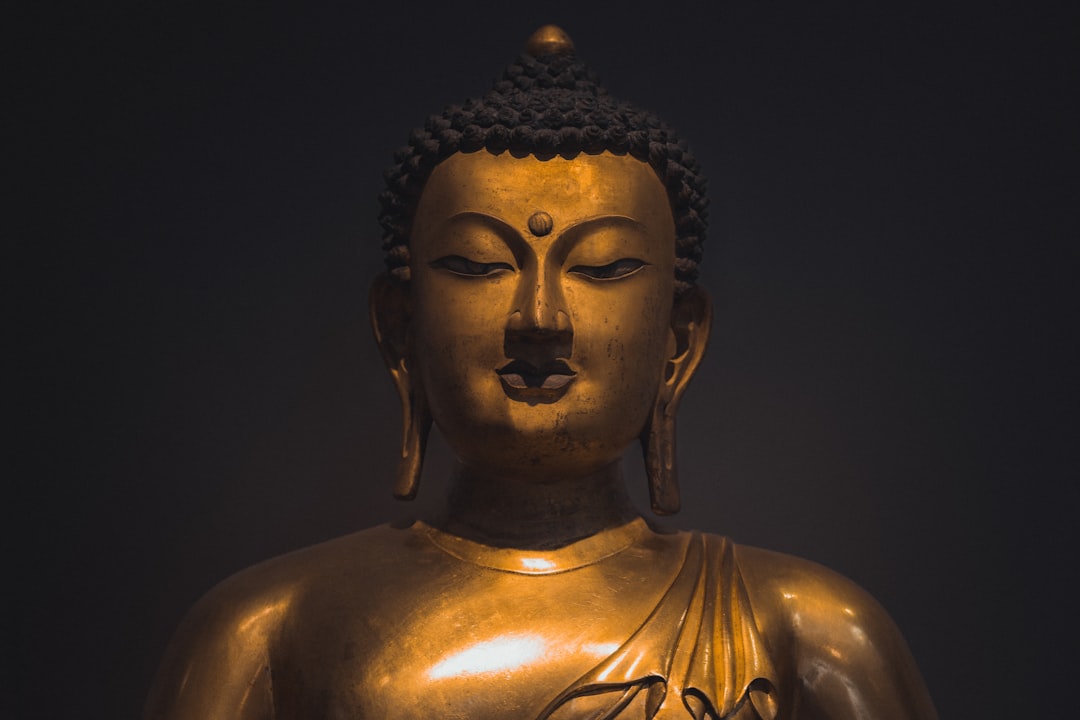 Unsplash · Andrea De Santis ↗
Pure Land: Calling the Name
Pure Land Buddhism centers on devotion to Amitabha Buddha ("Infinite Light"), who created a pure realm, Sukhavati, where those who call on his name with sincere faith are reborn and can easily attain enlightenment. The core practice is the nembutsu — reciting "Namu Amida Butsu" ("Homage to Amitabha Buddha"). Pure Land and Zen became the dominant schools across East Asia.
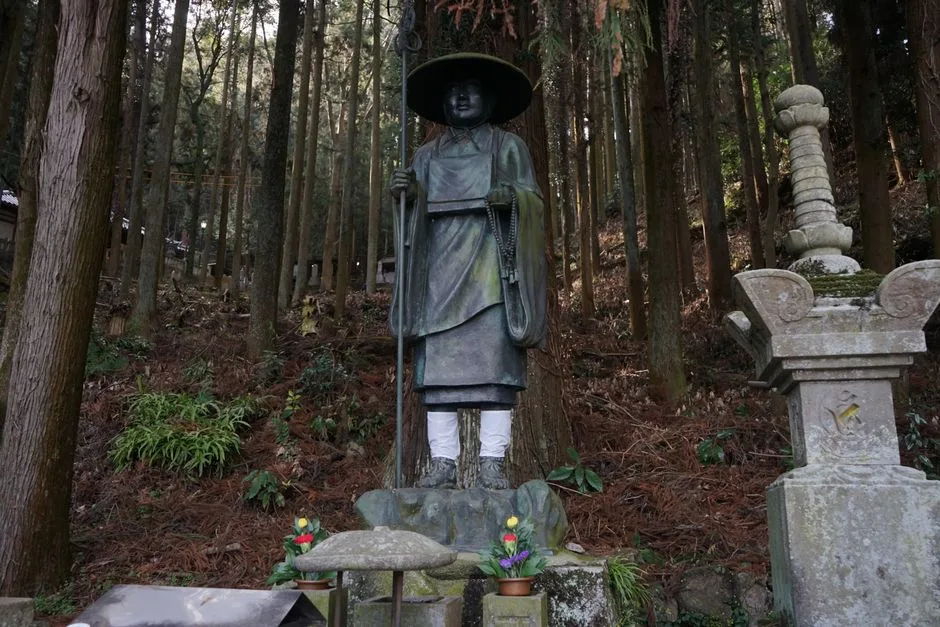 Pexels · Nishant Kumar ↗
Nichiren: One Sutra Above All
The 13th-century Japanese monk Nichiren (1222–1282) declared the Lotus Sutra the supreme teaching and reduced all practice to chanting "Nam Myoho Renge Kyo" ("Homage to the Lotus Sutra"). Famously combative, he attacked rival schools and the government alike. A modern branch, Soka Gakkai International, is now a vast global lay organization.
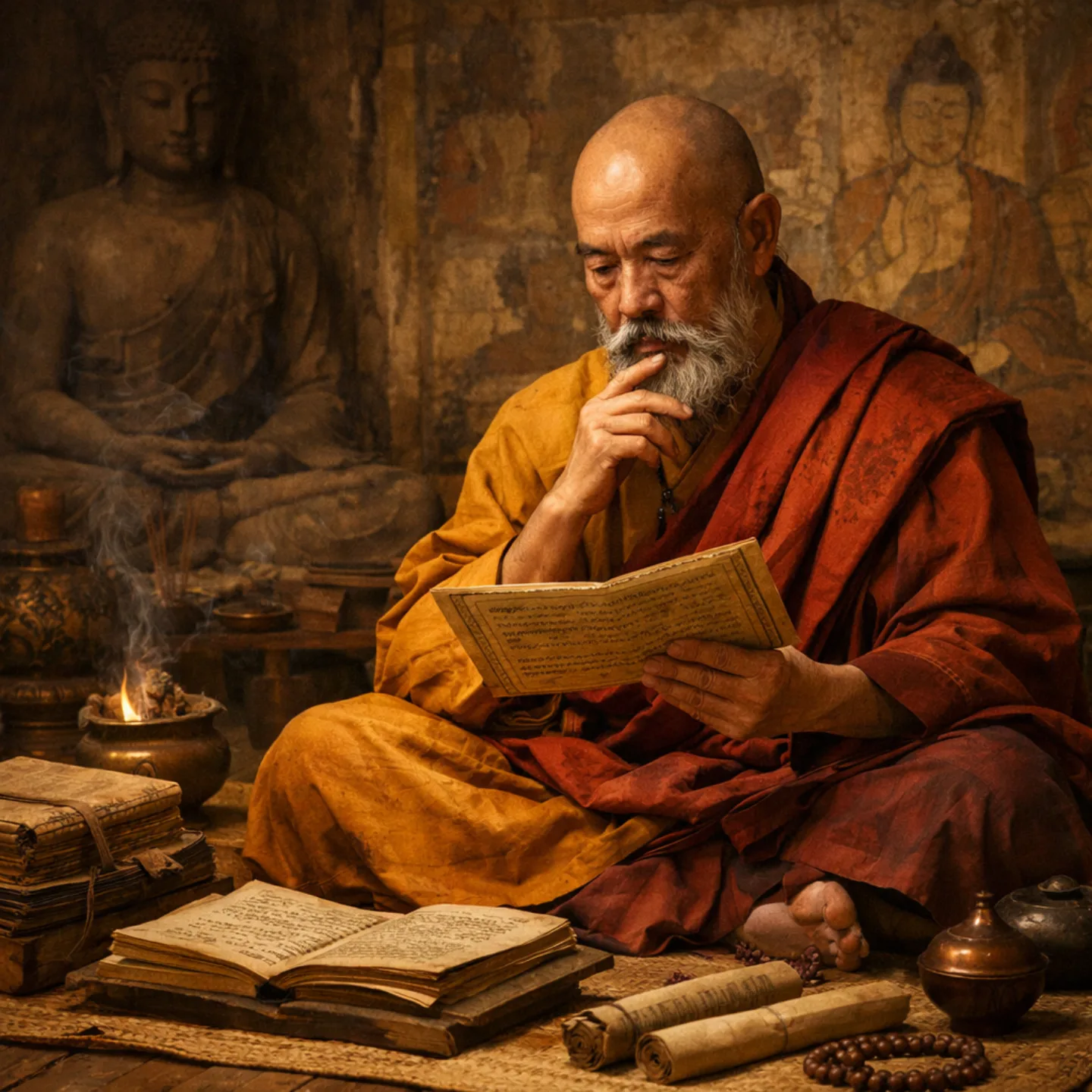 AI-generated (gpt-image-1.5)
Two Philosophies: Emptiness and Mind-Only
Mahayana produced two great philosophical schools. Madhyamaka ("Middle Way school"), founded by Nagarjuna (c. 150–250 CE), analyzes emptiness (sunyata) rigorously — arguing that nothing exists independently. Yogacara ("Mind-Only school"), developed by Vasubandhu and Asanga (4th–5th century CE), proposes that all phenomena are projections of consciousness — vijnapti-matrata, "representation-only."
 Pexels · Roman Saienko ↗
Bodhidharma Founded Zen
The semi-legendary Indian monk Bodhidharma, said to have gazed at a wall for nine years, is traditionally credited with bringing meditation practice to China and founding Chan, or Zen.
1 / 10Which vehicle is known for mantras, mandalas, and the guru relationship?
Mantras, mandalas, mudras, and the guru-disciple empowerment are the signature tools of Vajrayana, the "Diamond Vehicle."
Lesson 4 has 76 cards. Keep going in the free app.
Question -
 Unsplash · Zoshua Colah ↗05
Key Figures
The Figures · Who Is It? — Buddhist Figures
Lesson 5 · 7 cards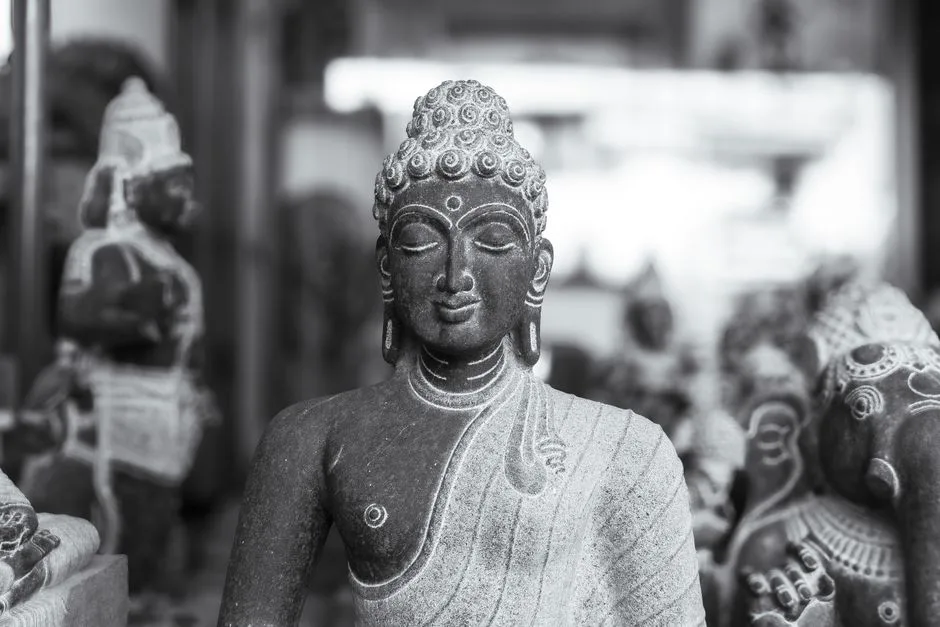 Pexels · ManojMk Brucelee ↗
Nagarjuna
Often called the greatest Buddhist philosopher after the Buddha. Nagarjuna (c. 150–250 CE) founded the Madhyamaka ("Middle Way") school of Mahayana philosophy. His masterwork, the Mulamadhyamakakarika, uses relentless reductio-ad-absurdum logic to deconstruct the independent existence of all things — making his philosophy of emptiness (sunyata) foundational for nearly all later Mahayana.
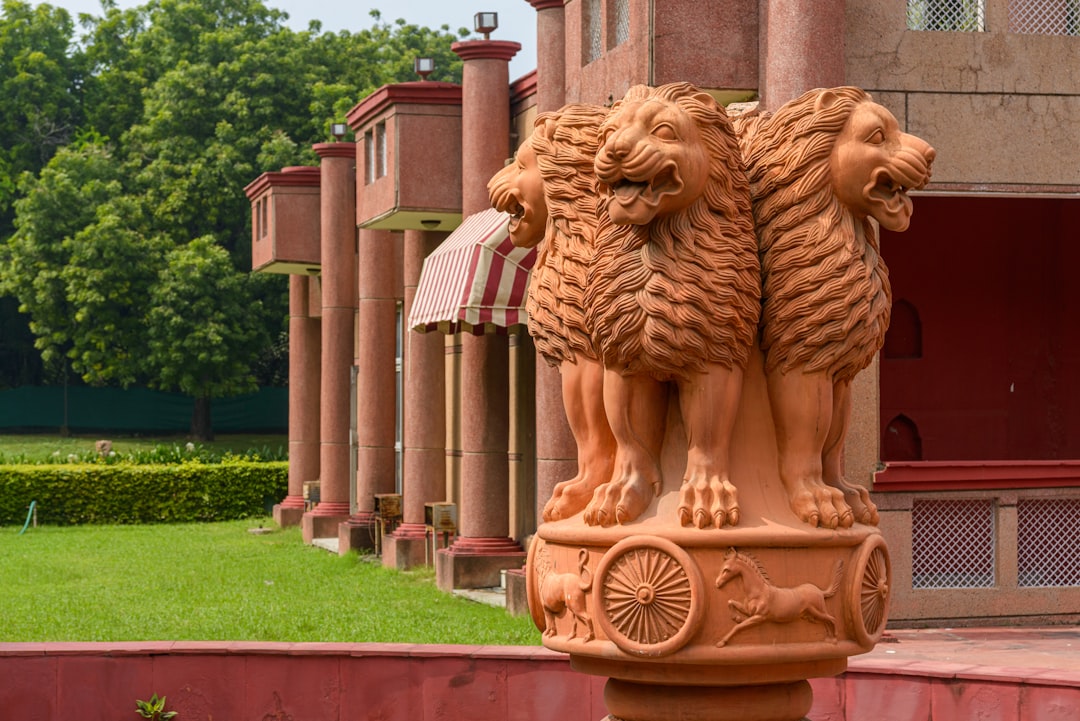
Unsplash · Zoshua Colah ↗King Ashoka
The most important political figure in Buddhist history. After the bloody Kalinga War (c. 261 BCE), the Mauryan emperor Ashoka (r. c. 268–232 BCE) converted to Buddhism and spent his reign spreading the Dharma — sending missionaries as far as Greece and Egypt and erecting inscribed pillars and edicts. He turned Buddhism from a regional school into a world religion; a lion capital from one of his pillars is now India's national emblem.
 Pexels · Andrea De Santis ↗
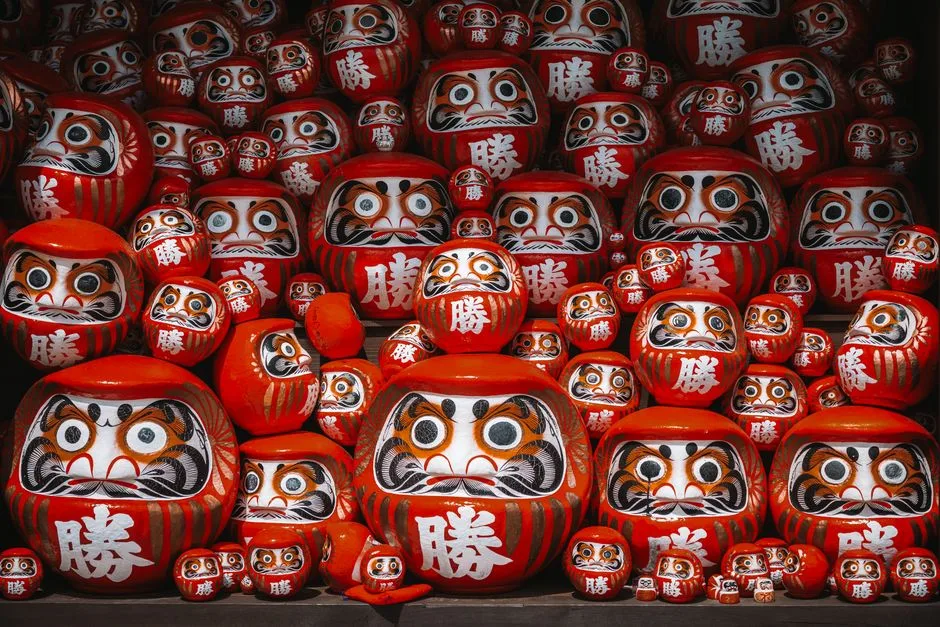
Bodhidharma
The semi-legendary Indian (or Central Asian) monk credited with bringing Chan — later Zen — to China around the 5th–6th century CE. Tradition says he meditated facing a wall for nine years. Asked by Emperor Wu what merit his temple-building had earned, Bodhidharma replied: "No merit whatsoever" — pointing past transactional piety to genuine practice.
 Pexels · Gbolahan Paul ↗
Huineng
The Sixth Patriarch of Chan (638–713 CE) — arguably the most influential Zen figure after Bodhidharma. By tradition an illiterate peasant, he is said to have awakened on hearing a single line of the Diamond Sutra, and won the patriarchate with a verse championing sudden over gradual enlightenment. His teachings survive in the Platform Sutra — the only Chinese text honored with the title "sutra."
 Unsplash · 和 平 ↗
Milarepa
Tibet's great yogi-saint and poet (c. 1052–1135 CE). As a young man he practiced black magic for revenge, causing many deaths; consumed by remorse, he sought the teacher Marpa the Translator, who put him through years of grueling ordeals before transmitting the Mahamudra teachings. He attained enlightenment in solitary retreat, and his Songs of Milarepa are masterpieces of Tibetan spiritual poetry.
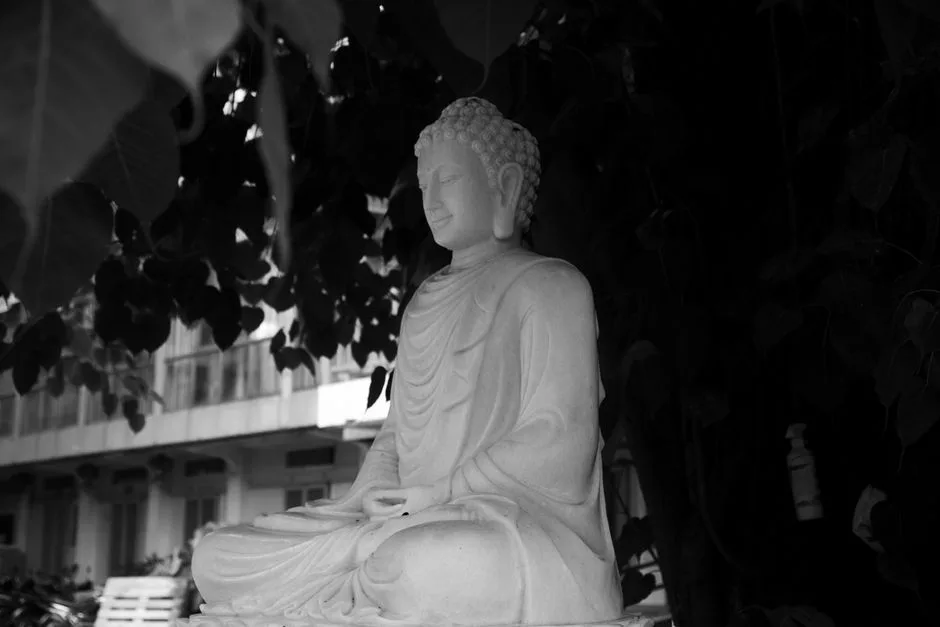 Pexels · The Old Path White Clouds ↗
Thich Nhat Hanh
Vietnamese Zen master, peace activist, and prolific author (1926–2022) who coined "Engaged Buddhism" — meditation joined to social action. Martin Luther King Jr. nominated him for the Nobel Peace Prize during the Vietnam War. He is famous for teaching "interbeing" — the deep interdependence of all things — and for The Heart of the Buddha's Teaching.
 Pexels · Jon Champaigne ↗
Jon Kabat-Zinn
A molecular biologist and meditator who in 1979 began a hospital program at UMass Medical School that became known as Mindfulness-Based Stress Reduction (MBSR) in the early 1990s. He stripped Buddhist mindfulness of religious content for secular clinical use, defining mindfulness as "moment-to-moment, nonjudgmental attention." MBSR is now used worldwide and helped bring Buddhist insight into mainstream medicine and psychology.
1 / 7Which war transformed King Ashoka from a conqueror into a promoter of the Dharma?
After the bloody Kalinga War (c. 261 BCE), Ashoka converted to Buddhism and spent his reign spreading the Dharma. The other battles are unrelated to his conversion.
Lesson 5 has 44 cards. Keep going in the free app.
Question - Take the lessons with you. Free, no account.Download on the App Store ↗Get it on Google Play ↗
-
Wikimedia Commons · Bhikkhu Nyanatusita · Public domain ↗06
Sacred Texts
The Canon and Key Texts · What Is It? — Sacred Texts
Lesson 6 · 5 cardsWikimedia Commons · Bhikkhu Nyanatusita · Public domain ↗The Tripitaka — Three Baskets
The foundational canon of Theravada Buddhism, preserved in Pali and written down in Sri Lanka around 80 BCE after centuries of oral transmission. Its name means "Three Baskets": the Vinaya Pitaka (monastic rules), the Sutta Pitaka (the Buddha's discourses, in five Nikayas), and the Abhidhamma Pitaka (systematic Buddhist psychology).
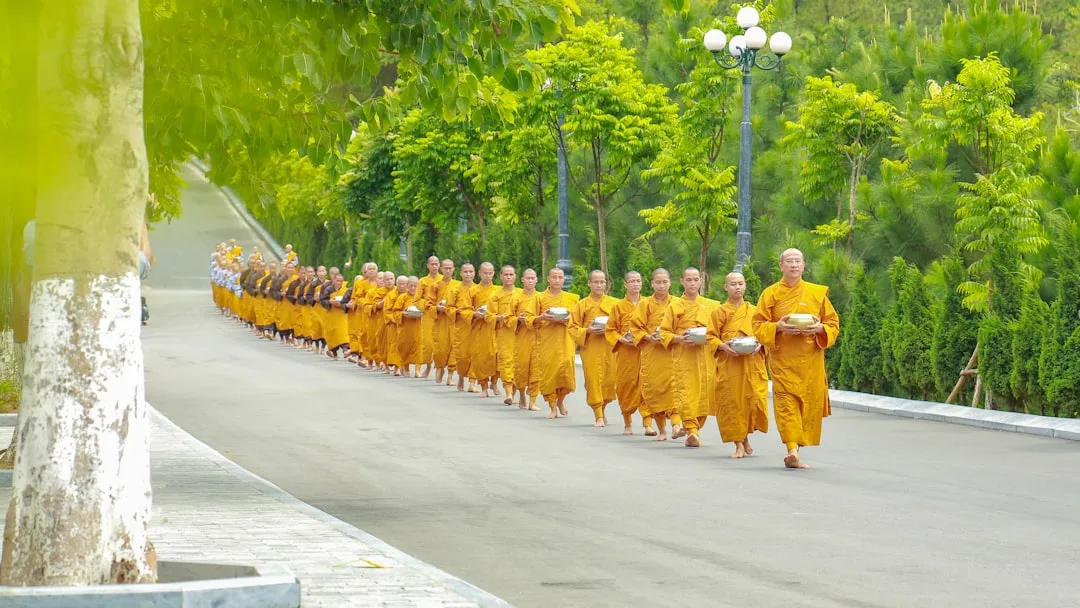 Unsplash · Hannah Vu ↗
"Thus Have I Heard"
Each discourse traditionally opens with "Evam me sutam" — "Thus have I heard" — signaling oral transmission from Ananda, the Buddha's attendant who was present for most of the teachings and recited them from memory at the First Council.
 Unsplash · Danika Perkinson ↗
The Dhammapada
Arguably the most beloved Theravada text: 423 verses in 26 chapters on ethics, the mind, the path, and liberation. Its famous opening: "Mind is the forerunner of all actions. All deeds are led by mind, created by mind. If one speaks or acts with a serene mind, happiness follows, as a shadow that never departs."
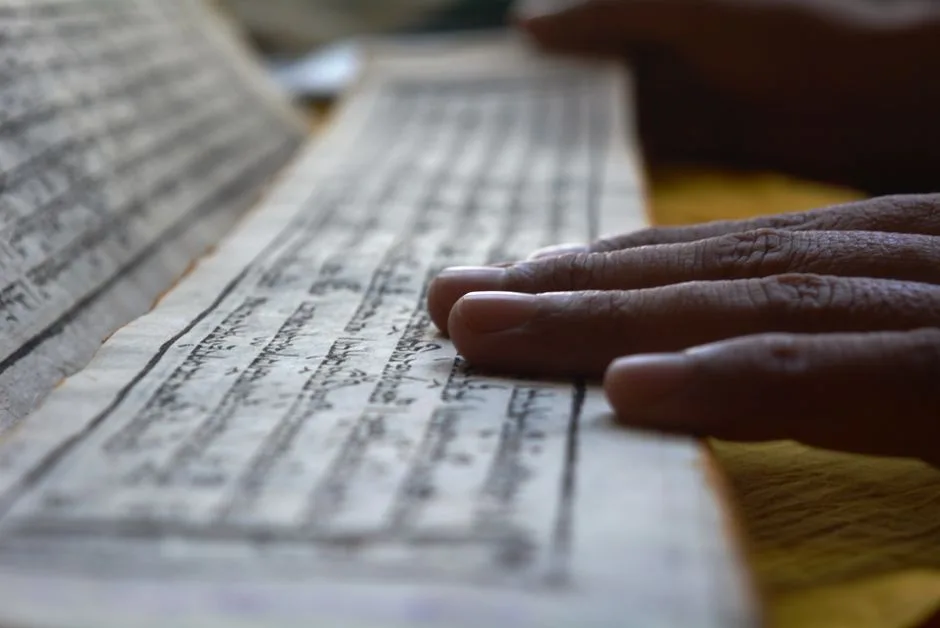 Pexels · AMOL NAKVE ↗
The Vinaya Pitaka
The Vinaya Pitaka, the "Basket of Discipline," is one of the Tripitaka's three baskets. It sets out the rules governing monastic life, including over 200 rules for monks.
 Pexels · Ezeguna_graphy Sulaiman muhammad ↗
The Abhidhamma Pitaka
The Abhidhamma Pitaka, the "Basket of Higher Teaching," offers a systematic analysis of the mind, cataloging mental states and the structure of experience.
1 / 5The Sutta Pitaka organizes the Buddha's discourses into five collections known as what?
The Sutta Pitaka is arranged into five Nikayas. 'Pitaka' means basket (the three divisions of the whole canon), not the subdivisions of the discourses.
Lesson 6 has 37 cards. Keep going in the free app.
Question -
 Wikimedia Commons · Jonathunder · CC BY-SA 3.0 ↗07
Parables & Their Morals
The Stories · The Morals
Lesson 7 · 7 cards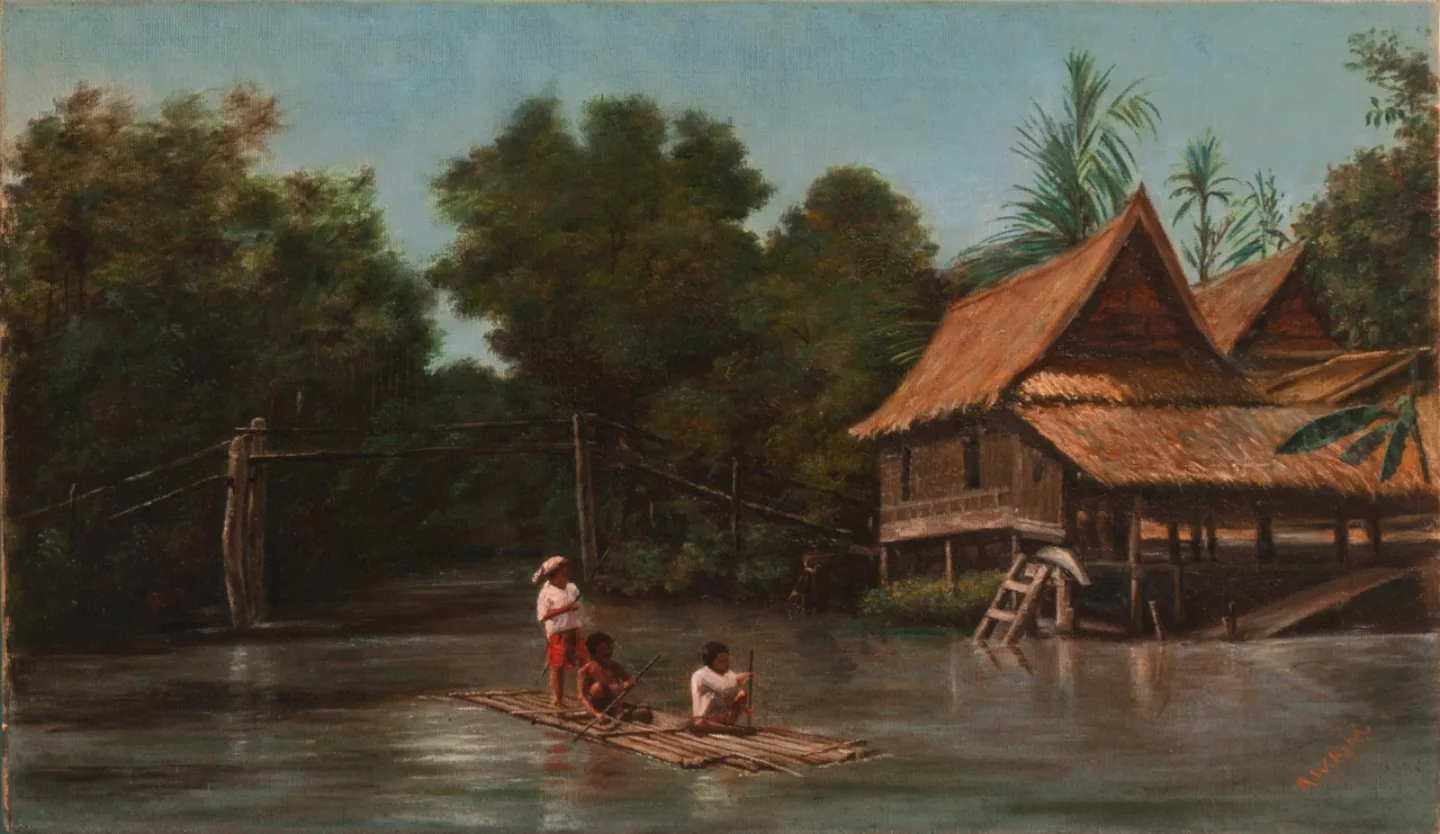 Signed lower right, 'A. W. Kerr' for Alexander Kerr (Australian, 1875-1950) · Public domain ↗
The Raft Parable
A traveler reaches a dangerous flood and lashes together a raft of sticks and leaves to cross. Safe on the far shore, he thinks, "This raft served me so well — I'll carry it on my head everywhere I go." The Buddha asked his monks whether that would be wise. It would not. "In the same way," he taught, "the Dhamma is like a raft: it is for crossing over, not for holding on."
Wikimedia Commons · Jonathunder · CC BY-SA 3.0 ↗Kisa Gotami and the Mustard Seed
Kisa Gotami, a young mother, refused to accept her only son's death and carried his body door to door begging for a cure. She was sent to the Buddha, who promised to help — if she first brought him a mustard seed from any household that had never known death. Every home had seeds to spare, but every home had also buried someone. "The living are few, but the dead are many," they told her. By nightfall she understood, laid her son to rest, and later became a nun.
 FlashFeed original diagram · CC-BY-4.0
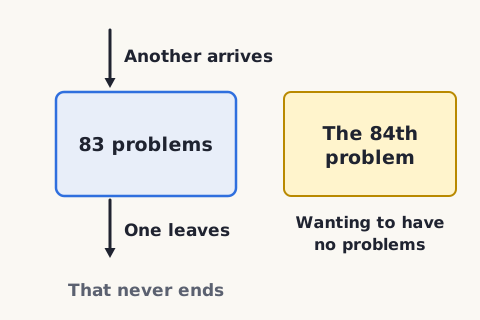
The 84th Problem
A man brought the Buddha a long list of troubles. To each, the Buddha said, "I cannot help you with that." Exasperated, the man asked what kind of Buddha couldn't fix anyone's problems. The Buddha replied that everyone always has about 83 problems — one leaves, another arrives, and that never ends. "Then what can you help me with?" the man asked. "I can help you with your 84th problem," said the Buddha: "that you want to have no problems at all."
 Unsplash · Nam Anh ↗
The Blind Men and the Elephant
Several blind men meet an elephant for the first time, each touching a different part. The one at the leg declares, "An elephant is like a tree trunk." The one holding the tail insists, "No — like a rope." The one at the broad side says, "You're both wrong; it's a wall." Each is certain, each is partly right, and each is wholly wrong. The story warns against mistaking a partial view for the complete truth.
 Unsplash · Balint Mendlik ↗
The Poisoned Arrow
The monk Malunkyaputta threatened to quit unless the Buddha settled grand questions: Is the universe eternal? Infinite? Does the self survive death? The Buddha answered with an image. A man struck by a poisoned arrow who refuses treatment until he knows the archer's name, caste, height, and bow — that man will die first. "Whether or not the cosmos is eternal, there is still birth, aging, death, and grief — and I teach the way to their ending."
 FlashFeed original diagram · CC-BY-4.0
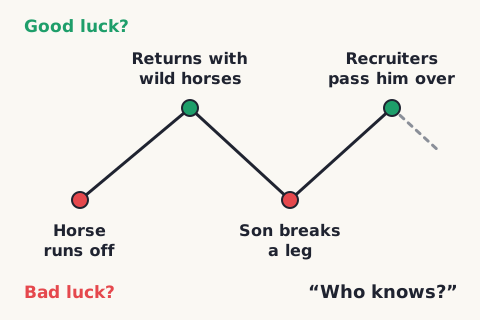
The Farmer and the Horse
A farmer's horse runs off. "What bad luck!" says his neighbor. "Who knows what is good or bad?" the farmer replies. The horse returns leading wild horses — "What good luck!" "Who knows." His son breaks a leg taming one — "What bad luck!" "Who knows." Then army recruiters pass over the injured son — "What good luck!" "Who knows." Each turn looks like fortune or disaster only until the next one arrives.
 Unsplash · Marek Szturc ↗
Angulimala
Angulimala ("Garland of Fingers") was a murderer who wore his victims' fingers around his neck, one killing short of a thousand. He chased the Buddha — who walked calmly yet could not be caught. "Stop, monk!" he shouted. "I have already stopped," the Buddha answered. "It is you who have not stopped — from harming living beings." Stunned by the reply and the lack of fear, Angulimala threw down his sword, became a monk, and eventually reached enlightenment.
1 / 7What does the Raft Parable warn against?
The raft is built to cross the flood, not to be carried afterward. The Dhamma is "for crossing over, not for holding on" — a guard against dogmatic attachment.
Lesson 7 has 48 cards. Keep going in the free app.
Question -
 Pexels · Nick Che ↗08
Metaphors & Analogies
Ancient Metaphors · Modern Metaphors
Lesson 8 · 10 cardsPexels · Nick Che ↗The Finger Pointing at the Moon
From the Lankavatara Sutra and the most quoted image in Zen: the teachings are a finger pointing at the moon of liberation. Follow where the finger points — don't mistake the finger (words, rituals, doctrines) for the moon (liberation itself). As the hermit Ryokan put it: "Moon and finger are neither the same nor different."
 Unsplash · David Docil ↗
The Raft
The raft is teaching as transport, not destination. You build a raft to cross a river — but once across, you don't hoist it onto your back and lug it overland. The Buddha's teachings (Dhamma) are a tool for crossing to the far shore of liberation, to be set down once they've done their work. Even the truth is a means, not a possession.
 Unsplash · fred tromp ↗
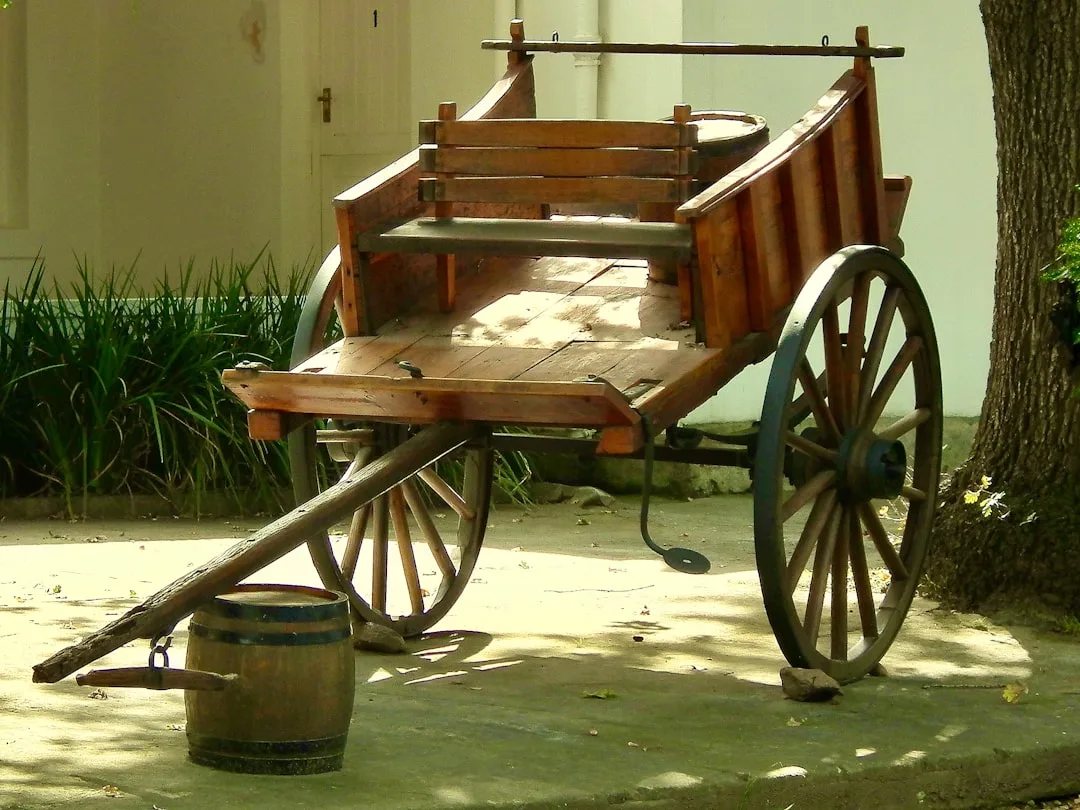
The Chariot
Nagarjuna and others used the chariot as a deconstruction device. A chariot is not its wheels, not its frame, not its axle, not the heap of all its parts, not its shape. It is a concept imposed on an arrangement of parts. So too the self: a convenient label laid over a bundle of interdependent phenomena, not an inherently real entity hiding inside.
 Pexels · Jan van der Wolf ↗
Indra's Net
From the Avatamsaka Sutra: a vast cosmic net with a jewel at every knot. Each jewel reflects all the others, and each reflection in turn reflects all the rest — infinitely. Indra's Net is the image of total interdependence: everything contains and mirrors everything else. Nothing exists on its own; pull one thread and the whole net shimmers.
 Unsplash · David Tomaseti ↗
The Candle Flame
How does karma carry across lives with no transmigrating soul (anatta)? A dying candle lights the wick of a new one. The new flame is neither the same as the old nor entirely different — there is continuity without a fixed thing being passed along. Rebirth, the tradition says, works like that: causation, not a soul on a journey.
 Unsplash · Elena Mozhvilo ↗
The Poison Tree
Plant a poisonous tree of harmful intentions and, over time, it bears poisonous fruit. The poison tree illustrates karma's inevitability — and why Buddhism aims at the roots (intention) rather than merely pruning the branches (behavior). Purify the motive and the harmful harvest never grows in the first place.
 Unsplash · Anirudh ↗
The Matrix and the Red Pill
The 1999 film The Matrix is the go-to modern analogy — Robert Wright opens Why Buddhism Is True with "Taking the Red Pill." The Matrix is maya, the illusion we take for real. Morpheus's "you have to see it for yourself" mirrors the Buddha's demand for direct experience over belief. The Agents are the kilesas (greed, hatred, delusion) that keep beings compliant. One caution: the red pill is closer to stream-entry — a first glimpse — than to full enlightenment. Much training remains.
 Unsplash · Sandra Tan ↗
The GPS
A secular metaphor from evolutionary psychology: your emotions are a GPS issuing directions. But natural selection calibrated those directions for genetic fitness, not for truth or happiness — and it tuned them for small savanna tribes, not the modern world. Meditation lets you hear the GPS without automatically obeying it, opening a gap between stimulus and response.
 Unsplash · Marius GIRE ↗
The Movie Screen
Picture awareness as a movie screen and your thoughts and emotions as the films playing on it. The screen is unchanging; the movies come and go. Most people are so absorbed in the story they forget the screen exists. Meditation is the practice of recognizing yourself as the screen rather than a character caught in the plot.
 Pexels · Kent Zhong ↗
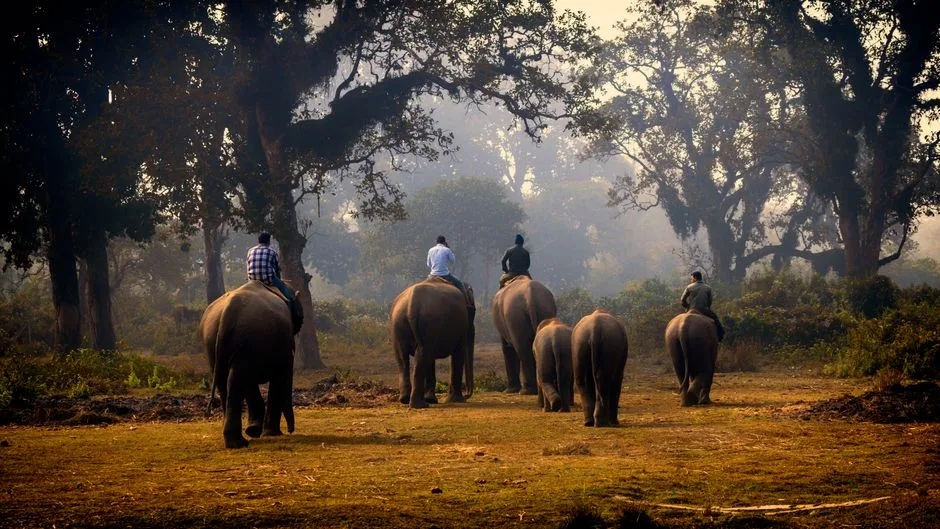
The Rider and the Elephant
From psychologist Jonathan Haidt: the conscious, rational mind is a rider perched on an elephant — the vast, unconscious, emotional system. The rider thinks it steers, but mostly it rationalizes wherever the elephant was already heading. This echoes the Buddhist view of the mind as modular and the controlling "self" as more spin doctor than CEO.
1 / 10What does Nagarjuna's chariot analogy primarily illustrate?
A chariot is none of its parts individually nor merely their heap — it's a concept imposed on an arrangement. Nagarjuna applies the same analysis to the self.
Lesson 8 has 52 cards. Keep going in the free app.
Question -
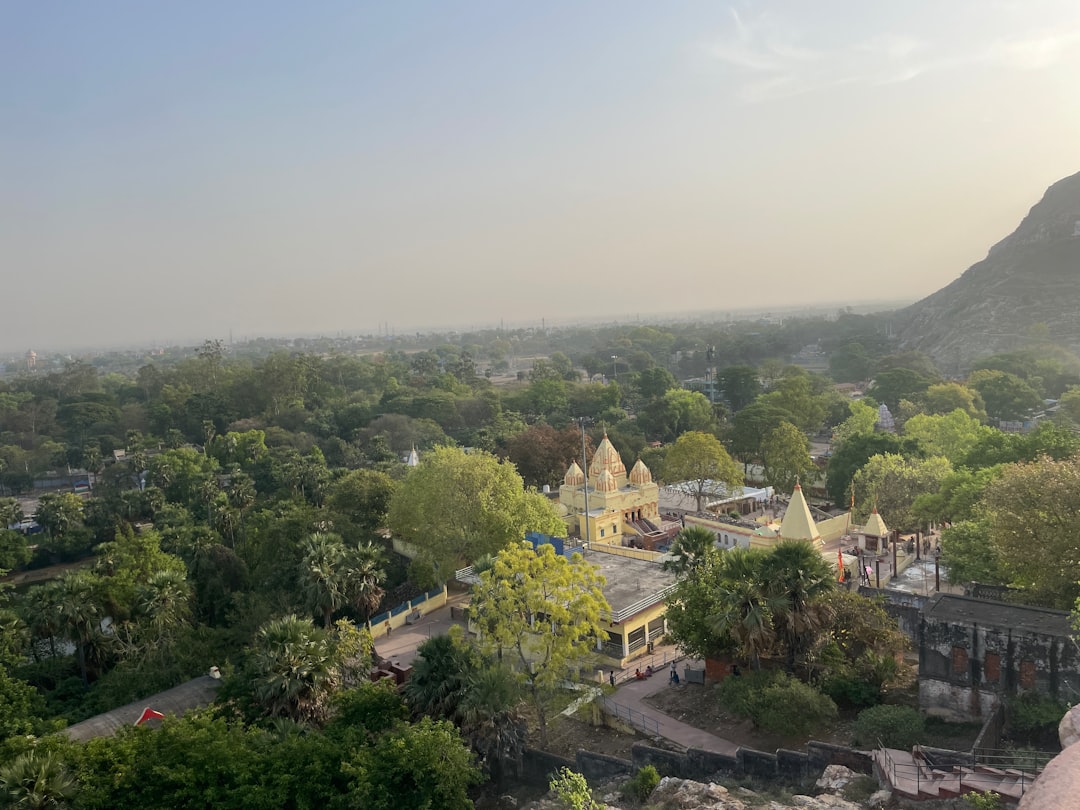 Unsplash · Loom Solar ↗09
Councils & the Great Schism
The Three Councils · Schism and the Rise of Mahayana · Councils by the Numbers
Lesson 9 · 10 cardsUnsplash · Loom Solar ↗The First Council: Saving the Words
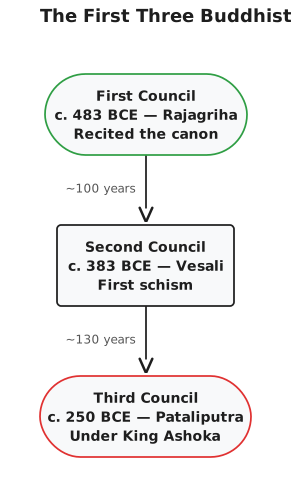
Soon after the Buddha's death, around c. 483 BCE, roughly 500 enlightened monks (arahants) gathered at Rajagriha (modern Rajgir, Bihar) under the senior monk Mahakassapa. With no written scriptures yet, the goal was urgent: pool everyone's memory and agree on a canonical record before recollections drifted apart.
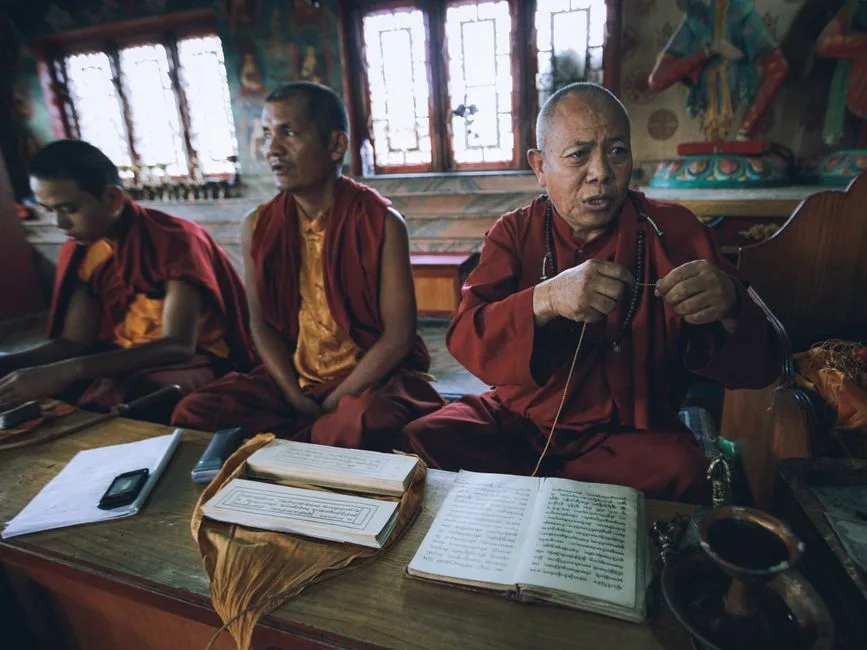 Pexels · Mehmet Turgut Kirkgoz ↗
Two Recitations
At the First Council the canon was reconstructed by recitation. Upali, the monk most expert in monastic discipline, recited the Vinaya — the rules for monks and nuns. Ananda, the Buddha's personal attendant and famed memorizer, recited the Suttas — the discourses. Their spoken texts became the seed of the Tripitaka.
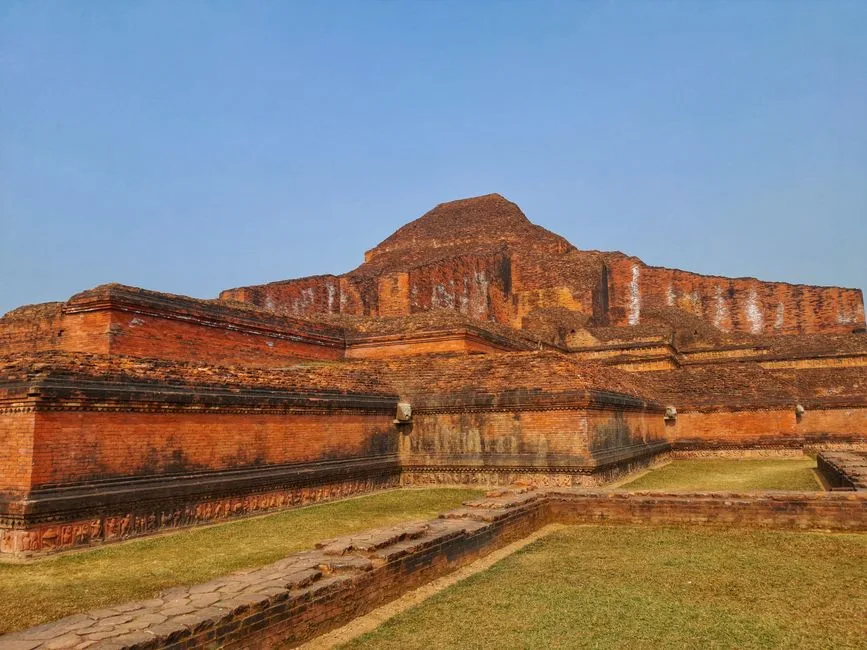 Pexels · Shayek Parvez ↗
The Second Council: A Dispute Over Rules
About a century later, around c. 383 BCE, monks met at Vesali to settle a quarrel over monastic discipline. A group of monks from the Vajjian region were practicing ten disputed points of Vinaya — most notoriously, accepting gold and silver from laypeople. Conservative elders condemned the relaxations; the dispute set the stage for Buddhism's first lasting split.
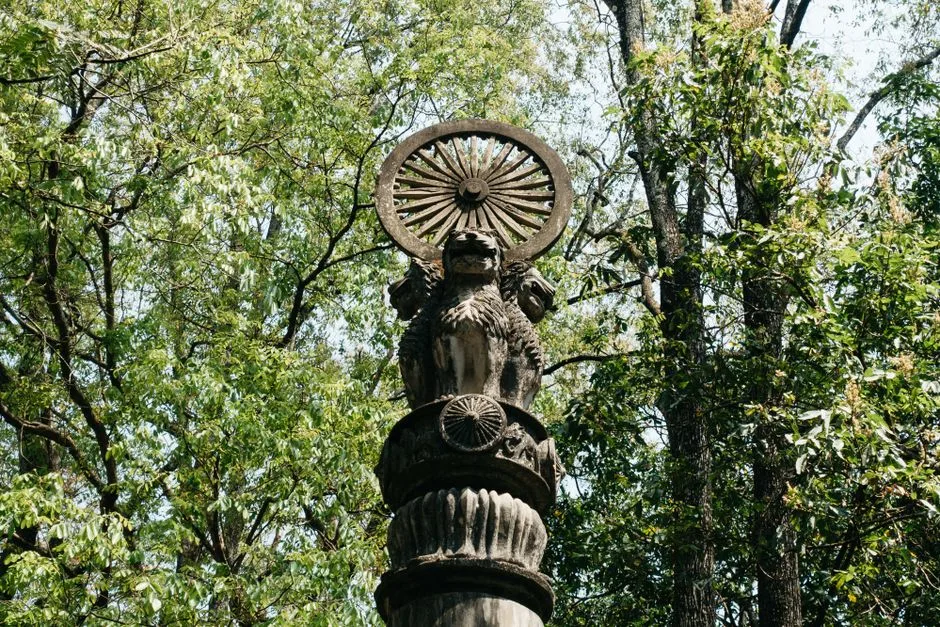 Pexels · Markus Winkler ↗
The Third Council Under Ashoka
Around c. 250 BCE, a council convened at Pataliputra under the patronage of King Ashoka, the emperor who had turned to Buddhism after the bloody Kalinga War. It sorted out doctrinal disputes among competing schools and is credited with finalizing the Pali Canon used by Theravada. Afterward Ashoka dispatched missionaries as far as Sri Lanka, Greece, and Egypt.
 FlashFeed original diagram · CC-BY-4.0
The First Three Councils
The early councils that fixed the canon and saw the first schism — across roughly two centuries.
 FlashFeed original diagram · CC-BY-4.0
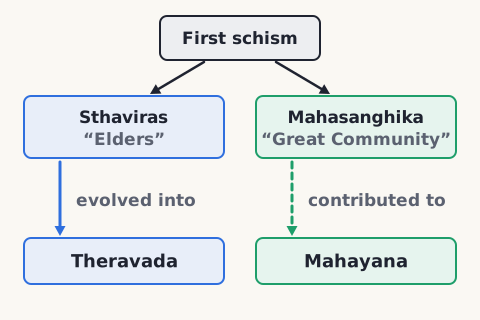
The First Schism
The fallout from the Second Council produced Buddhism's first schism. The conservative faction, the Sthaviras ("Elders"), insisted on the strict rules; the larger faction, the Mahasanghika ("Great Community"), refused to accept the elders' verdict. The Sthaviras eventually evolved into Theravada, while the Mahasanghika later contributed to the development of Mahayana.
 Pexels · AMOL NAKVE ↗
Mahayana: Not a Clean Break
Despite the tidy story of a single split, Mahayana ("Great Vehicle") was not one clean schism but a gradual development over centuries. From around the 1st century BCE, new sutras began circulating that claimed to preserve a higher teaching of the Buddha — one supposedly held back until students were ready for it. Its distinctive ideas, like the bodhisattva ideal and sunyata (emptiness), slowly set it apart from the older schools.
 Pexels · ManojMk Brucelee ↗
A Tradition Comes of Age
By the 4th century CE Mahayana had matured into a fully developed philosophical tradition. Nagarjuna systematized the philosophy of sunyata (emptiness) in his Madhyamaka school, while Asanga and Vasubandhu built the Yogacara ("mind-only") school. What began as scattered new scriptures had become a sophisticated intellectual movement.
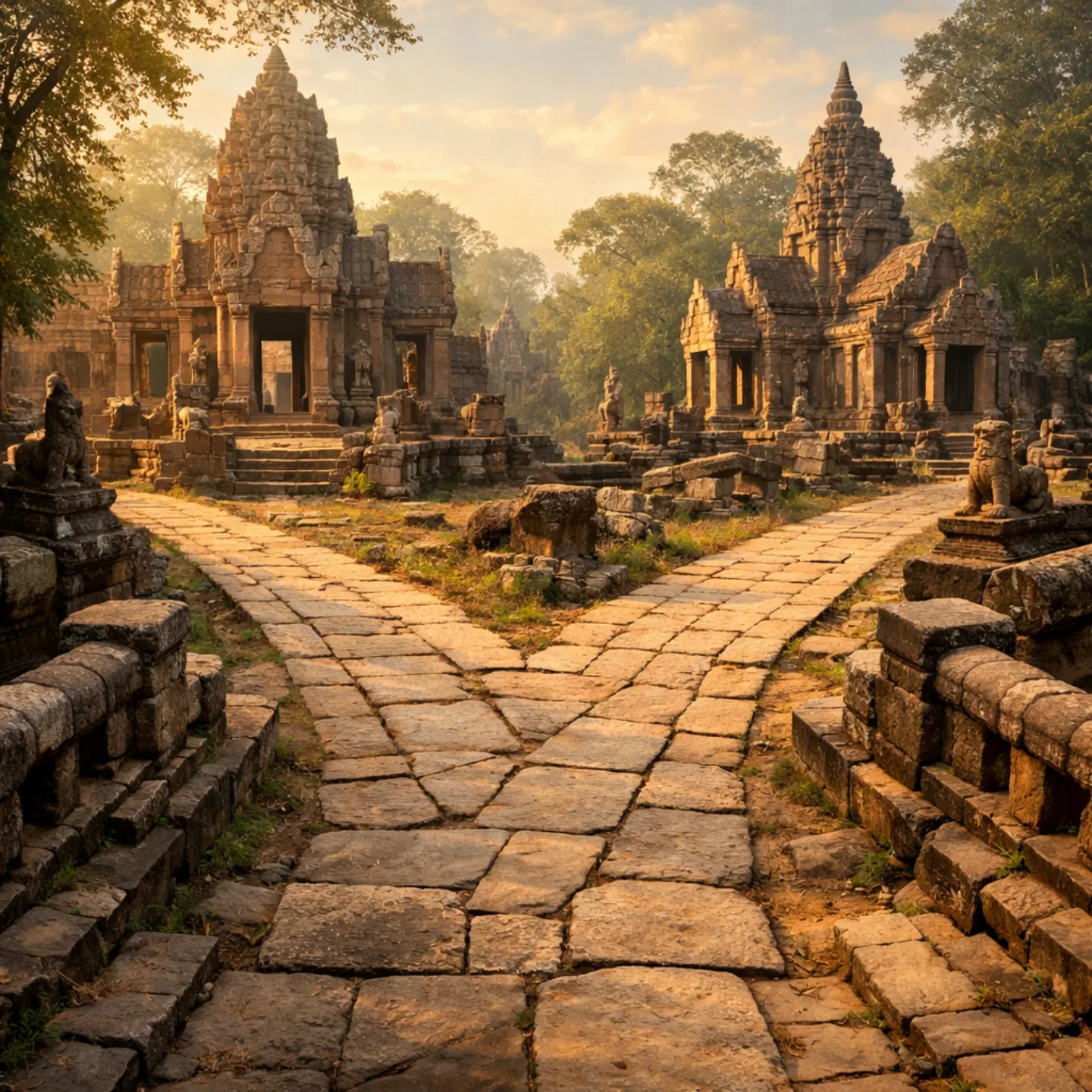 AI-generated (gpt-image-1.5)
Mahasanghika Roots Of Mahayana
The Mahasanghika, an early Buddhist faction, is traditionally seen as contributing to the later development of Mahayana, while the more conservative Sthaviras evolved into Theravada.
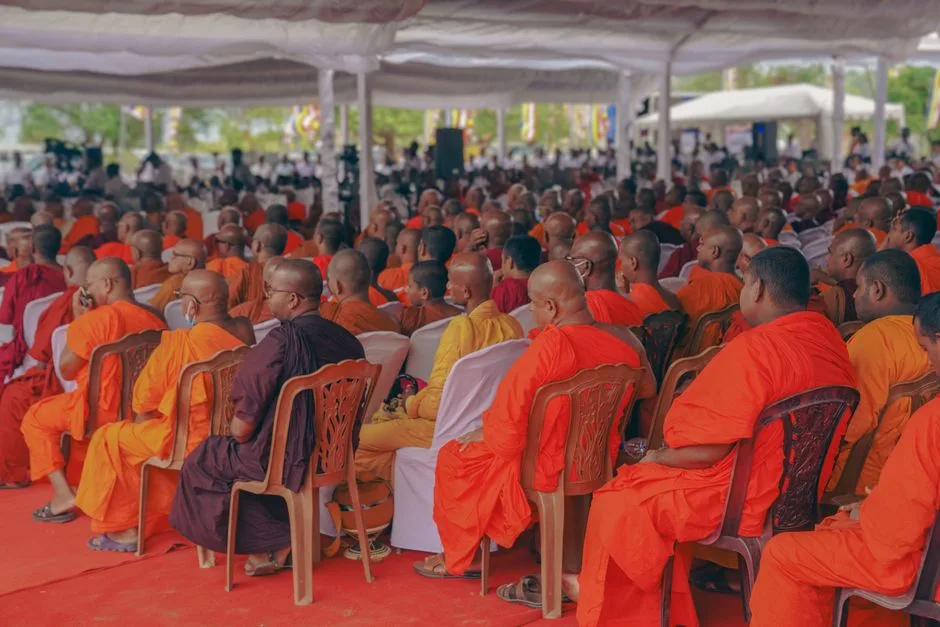 Pexels · Roshan Kumara ↗
Mahasanghika Means Great Community
The name of the early Buddhist faction Mahasanghika means "Great Community" — distinct from the Sthaviras, or "Elders," the rival faction at Buddhism's first schism.
1 / 10Where was the Second Buddhist Council held to settle the dispute over monastic discipline?
The Second Council met at Vesali about a century after the Buddha's death. Rajagriha hosted the First Council; Pataliputra the Third under Ashoka.
Lesson 9 has 51 cards. Keep going in the free app.
Question -
 Unsplash · srihari kapu ↗10
Sacred Places
Sites of the Dharma · Where Is It? — Sacred Sites
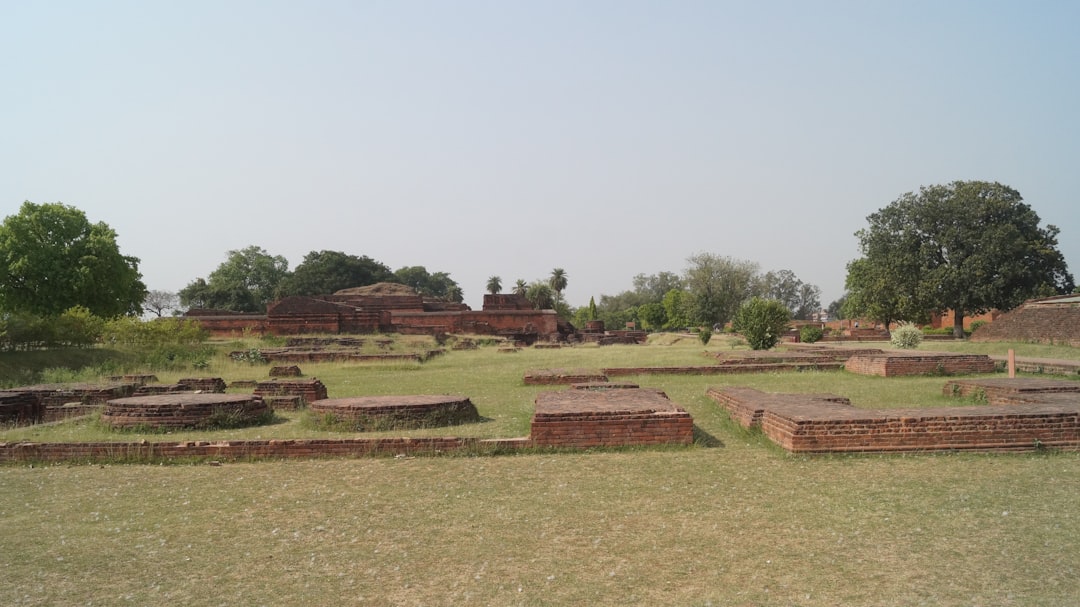
Lesson 10 · 5 cardsUnsplash · srihari kapu ↗Nalanda
In Bihar, India, Nalanda was the greatest Buddhist monastic university of the ancient world (5th–12th centuries CE), drawing thousands of scholars from across Asia. It was sacked and burned by Turkic invaders around 1193 CE — a blow from which Indian Buddhism never fully recovered.
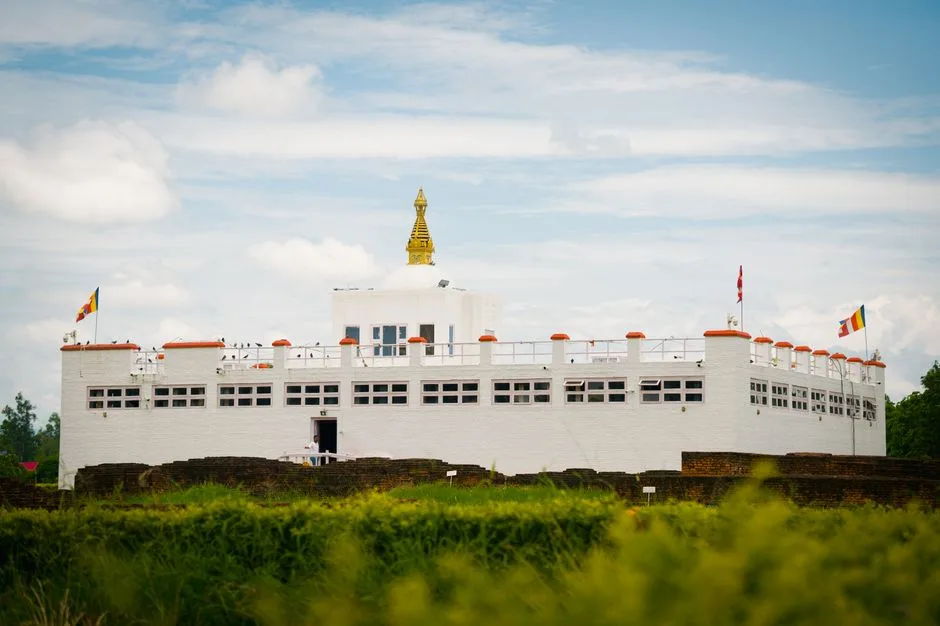 Pexels · A JR ↗
The Four Pilgrimage Sites
Four places trace the arc of the Buddha's life and form the great pilgrimage circuit: Lumbini (his birth), Bodh Gaya (his enlightenment), Sarnath (his first sermon), and Kushinagar (his death). Tradition holds the Buddha himself named these as the places his followers should visit.
 Unsplash · Setu Chhaya ↗
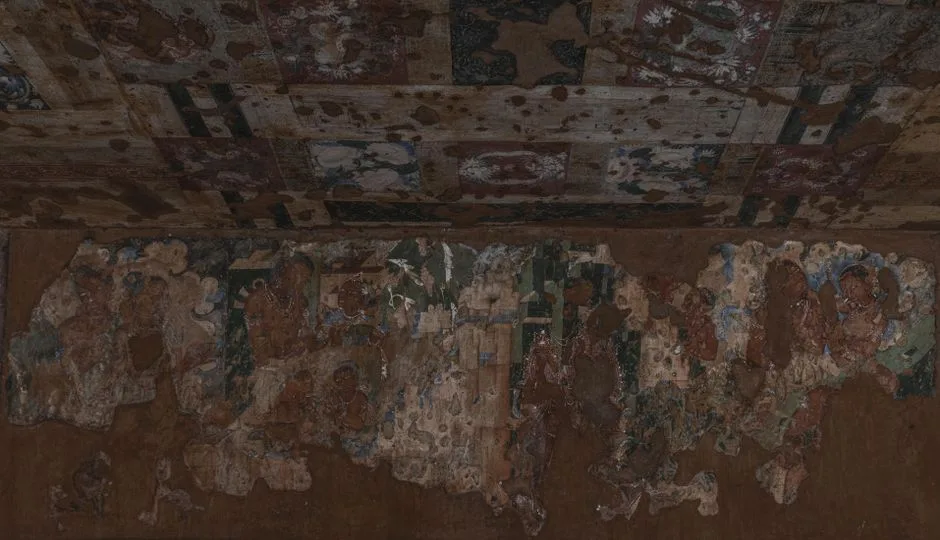
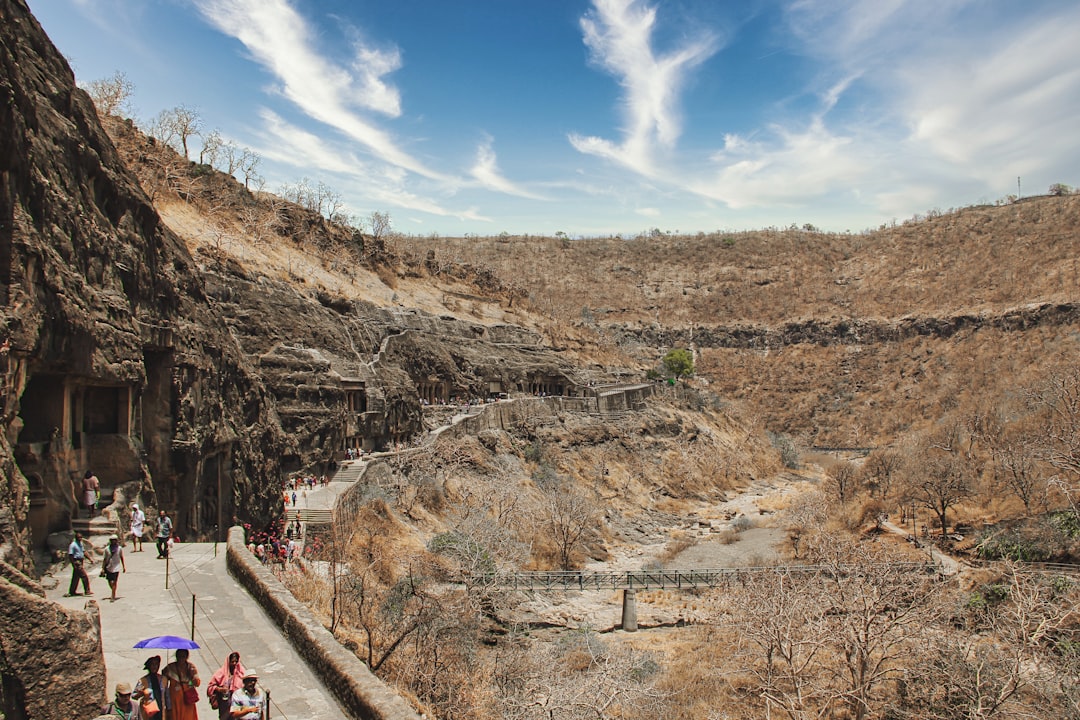
The Ajanta Caves
About 30 rock-cut cave temples and monasteries in Maharashtra, India, carved between roughly 200 BCE and 600 CE. They are famous for spectacular frescoes depicting the Buddha's life and the Jataka tales — among the finest surviving ancient Indian paintings.
 Pexels · Roshan Kumara ↗
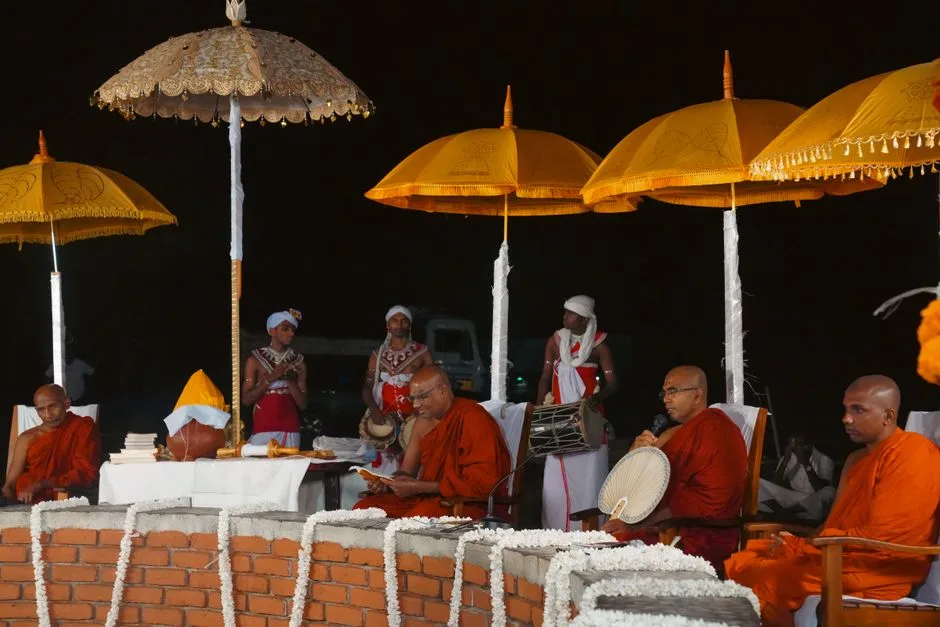
Anuradhapura
An ancient capital of Sri Lanka and a heartland of Theravada. It is home to the Mahavihara monastery and a sacred Bodhi tree that, according to tradition, grew from a cutting of the original at Bodh Gaya — brought to the island by Ashoka's daughter Sanghamitta. That tree is among the oldest documented planted trees on earth.
 Pexels · Nancy Yu ↗
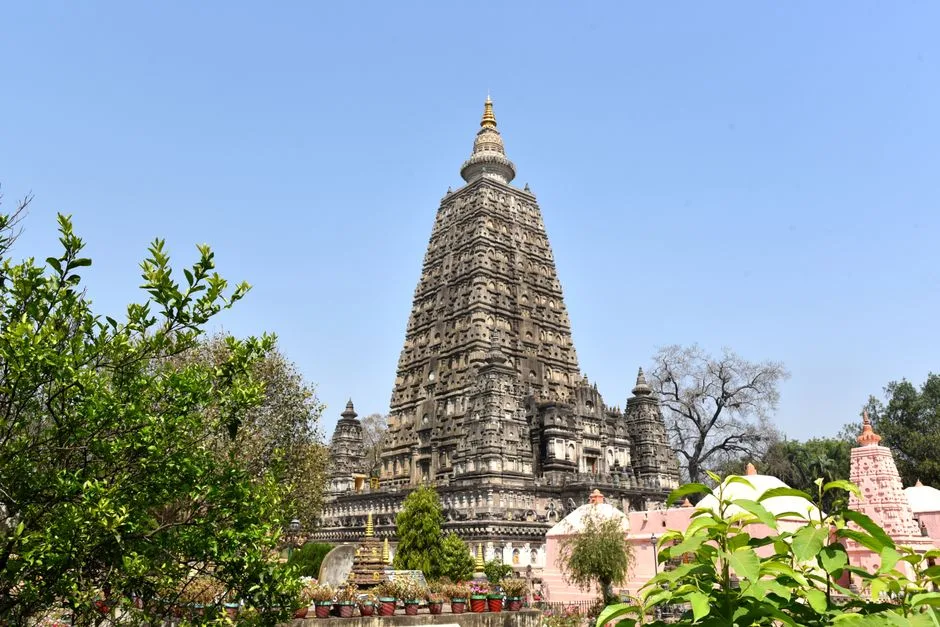
Bodh Gaya's Mahabodhi Temple
Bodh Gaya, in the Indian state of Bihar, is the site of the Mahabodhi Temple, built where the Buddha is said to have attained enlightenment under the Bodhi tree.
1 / 5Sarnath, near Varanasi, is revered as the place where the Buddha did what?
Sarnath marks the Buddha's first sermon and is the site of the Dhamek Stupa. Birth was at Lumbini, enlightenment at Bodh Gaya, and death at Kushinagar.
Lesson 10 has 40 cards. Keep going in the free app.
Question -
 Unsplash · Sage Friedman ↗11
Secular Buddhism & Modern Science
Evolution and the Mind · Meditation, the Brain, and MBSR · What Secular Buddhism Brackets
Lesson 11 · 10 cards AI-generated (gpt-image-1.5)
Why Buddhism Is True
Robert Wright's Why Buddhism Is True (2017) argues that Buddhism's psychological claims hold up — not because of faith, but because Buddhism was describing the same human mind that evolutionary psychology now studies. Wright brackets the metaphysics (rebirth, gods) and keeps the diagnosis of the mind, which he thinks the tradition got remarkably right.
 Pexels · Ken Mwaura ↗
Evolution Doesn't Care If You're Happy
Wright's first move: natural selection optimizes for gene propagation, not well-being. The brain was built to generate cravings, anxieties, and flattering distortions because those motivated survival and reproduction on the ancestral savanna — not because they make you content. Lasting satisfaction was never the design goal.
 AI-generated (gpt-image-1.5)
The Mind Has No CEO
Modern psychology increasingly describes the mind as a set of partially independent modules competing for control — with the felt sense of a single, unified "self in charge" being a post-hoc story the brain tells after the fact. There is no inner CEO. Wright notes this lines up with the Buddhist teaching of anatta (no-self).
 AI-generated (gpt-image-1.5)
Mindfulness Can Give Critical Distance
In interviews, Wright describes mindfulness as observing a feeling such as anxiety or pain instead of running from it. He says this can give "a kind of critical distance" from the feeling, almost a kind of detachment.
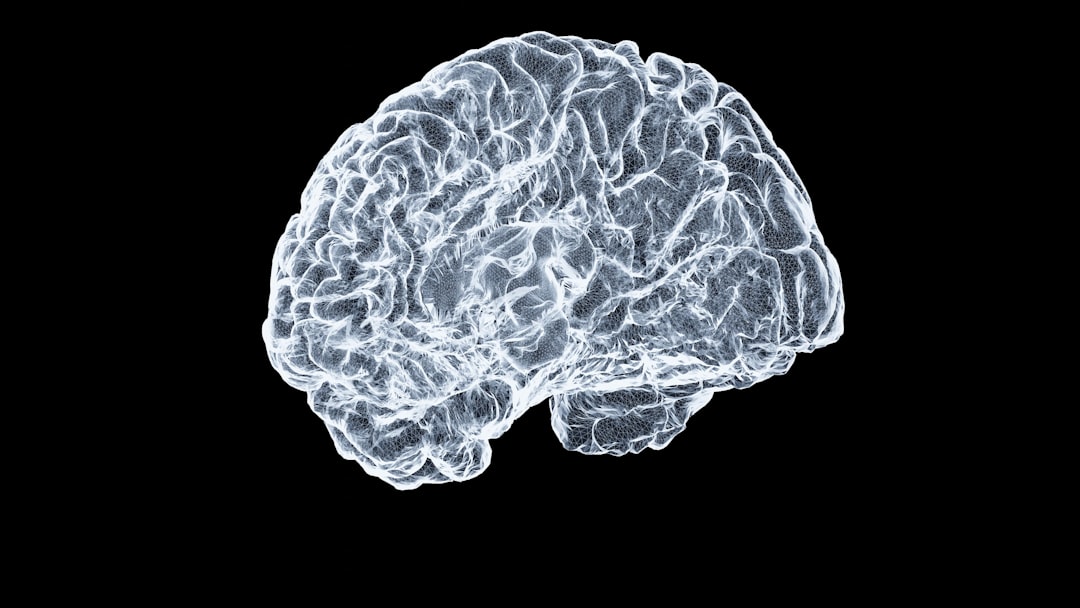
Unsplash · Sage Friedman ↗Does Meditation Reshape the Brain?
Some studies find thicker cortex in experienced meditators than in non-meditators, including in the prefrontal cortex (attention and executive control) and the insula (body awareness and empathy). But those studies compare groups at one point in time, so they can't show that meditation caused the difference. The largest randomized test (2022), in 218 adults new to meditation, found no structural brain change from 8 weeks of MBSR beyond what its control groups showed.
 Unsplash · Shawn Day ↗
The Alarm and the Narrator: What Scans Show
Two more findings are often cited, and both are narrower than the headlines. In a 2018 study, meditation training went with less reactivity in the amygdala, the brain's threat alarm, to positive pictures but not to negative ones. In a 2011 study of 12 experienced meditators, the Default Mode Network, active in mind-wandering and self-referential thought, was relatively less active than in non-meditators while they meditated; the authors called the sample moderately small and said the results warrant replication. Linking the network to anatta is an interpretation, not a finding.
 Pexels · MART PRODUCTION ↗
The Monk in the Scanner
The French-born monk Matthieu Ricard, a former molecular biologist, became a celebrated research subject — taking part in fMRI studies at the University of Wisconsin under neuroscientist Richard Davidson. Headlines dubbed him "the world's happiest man," though Ricard himself waved the label off as a media invention.
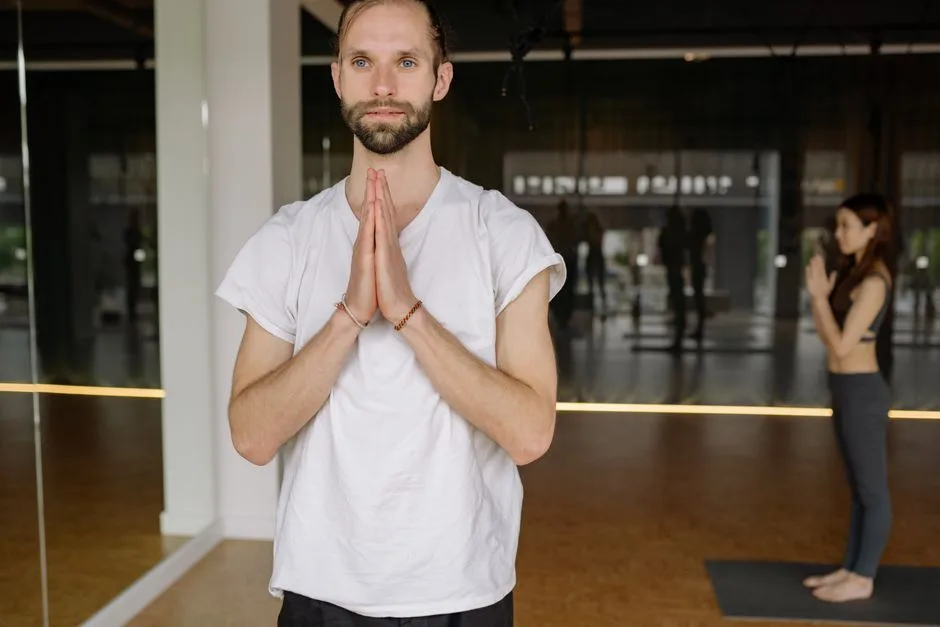 Pexels · Yan Krukau ↗
Mindfulness Goes to the Clinic
In 1979, Jon Kabat-Zinn began a program at the University of Massachusetts Medical School, first called the Stress Reduction and Relaxation Program. It became known as Mindfulness-Based Stress Reduction (MBSR) in the early 1990s. His move was to lift Buddhist mindfulness practice out of its religious frame and repackage it for secular clinical use — defining mindfulness as "moment-to-moment, nonjudgmental attention."
 Pexels · Yan Krukau ↗
What the Program Treats
The standardized eight-week MBSR program has been studied for anxiety and depression, chronic pain and stress-related disorders. A 2014 review of 47 trials of meditation programs rated the evidence for mindfulness programs as moderate for anxiety, depression and pain and low for stress, with no evidence that they beat active treatments. Its popularity helped spread the global "mindfulness movement" into healthcare, schools, corporations, and even military training.
1 / 10What does Wright say observing a feeling, rather than running from it, can give you?
In a 2017 NPR interview Wright said that observing a feeling such as anxiety or pain, rather than running from it, can give "a kind of critical distance" from it. In another interview he said the feeling does not go away, but it has less of a grip on you.
Lesson 11 has 57 cards. Keep going in the free app.
Question -
AI-generated (gpt-image-1.5)12
Vocabulary & Numbers
Essential Vocabulary · The Immeasurables and Meditation · Numbers to Know
Lesson 12 · 10 cardsAI-generated (gpt-image-1.5)The Four Immeasurables
Also called the Brahmaviharas ("divine abodes"), these four boundless attitudes are cultivated in meditation: metta (loving-kindness), karuna (compassion), mudita (sympathetic joy), and upekkha (equanimity). Together they are the emotional core of Buddhist ethics.
 Unsplash · National Cancer Institute ↗
Karuna: Buddhist Compassion
Karuna, one of the Four Immeasurables (Brahmaviharas) in Buddhism, is compassion — the heartfelt wish that all beings be free from suffering.
 Unsplash · Helena Lopes ↗
Mudita: Sympathetic Joy
Mudita, one of the Brahmaviharas, is sympathetic joy — taking delight in the happiness and good fortune of others, and a direct counter to envy.
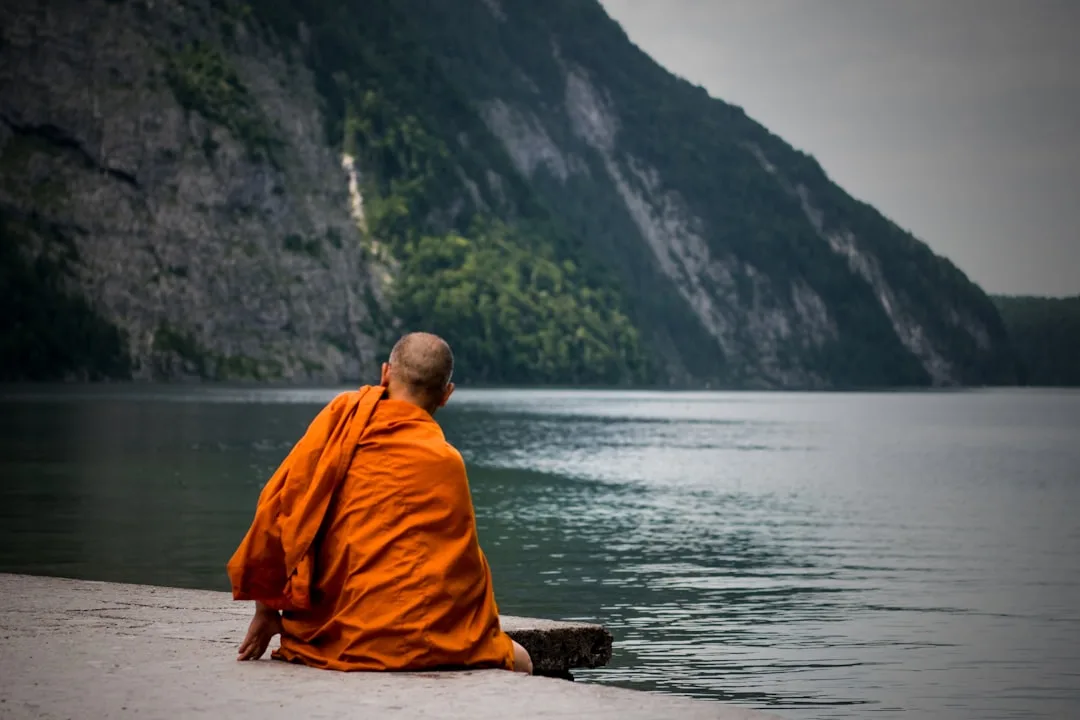 Unsplash · Nicolas Häns ↗
Jhana: Root Of Zen
Jhana (Sanskrit: dhyana) is the Buddhist term for deep meditative absorption. Its Sanskrit form is the linguistic root of the words "Chan" and "Zen."
 Unsplash · JD Mason ↗
Samadhi: One Of Three Trainings
Samadhi — meditative concentration, a calm and unified state of mind — is one of Buddhism's three trainings, alongside ethical conduct and wisdom.
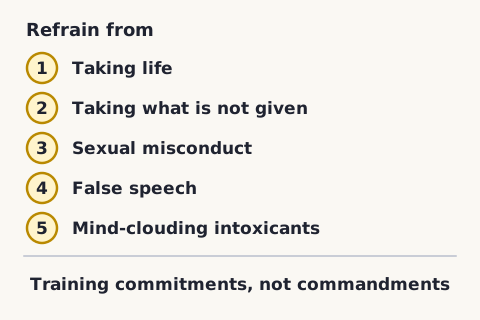 FlashFeed original diagram · CC-BY-4.0
The Five Precepts
The foundational ethics of lay Buddhists (Pancasila): refrain from (1) taking life, (2) taking what is not given, (3) sexual misconduct, (4) false speech, and (5) intoxicants that cloud the mind. They are training commitments, not commandments.
 AI-generated (gpt-image-1.5)
The Four Foundations of Mindfulness
The Satipatthana — the four foundations of mindfulness: the body (kaya), feelings (vedana), the mind (citta) and principles (dhamma, also rendered phenomena). In the Satipatthana Sutta (MN 10) the fourth is worked through five named sets: the hindrances, the aggregates, the sense fields, the awakening factors and the noble truths.
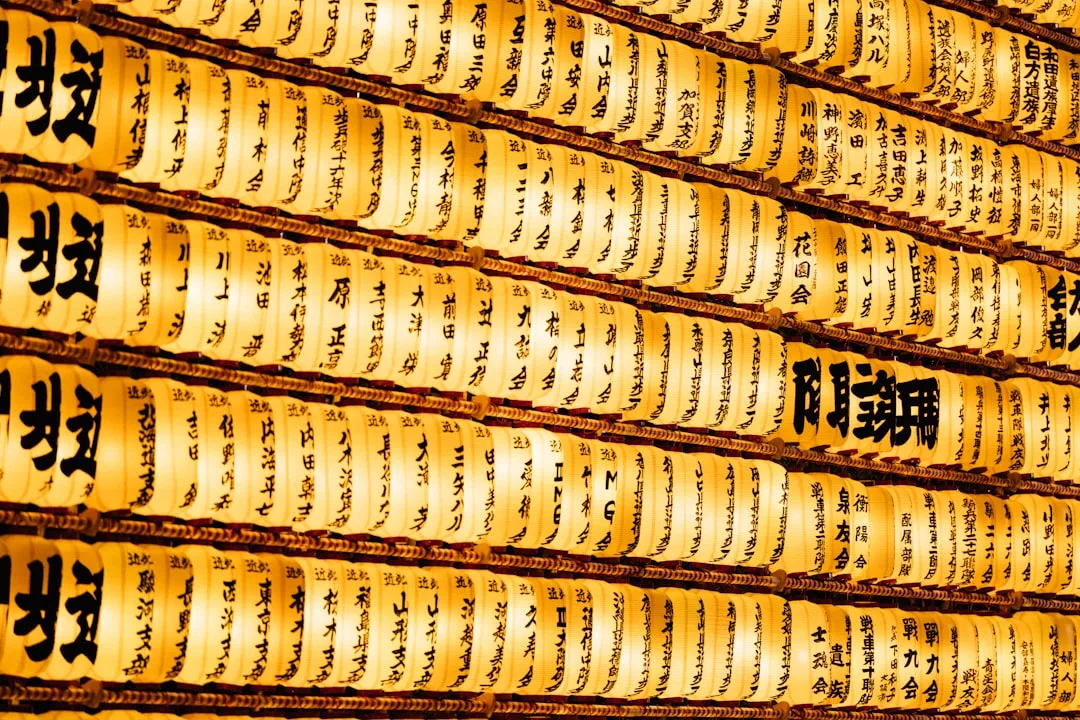 Unsplash · Tsuyoshi Kozu ↗
84,000 Teachings
Buddhist tradition counts a symbolic total of 84,000 teachings given by the Buddha, traditionally said to be one antidote for each of the 84,000 mental defilements.
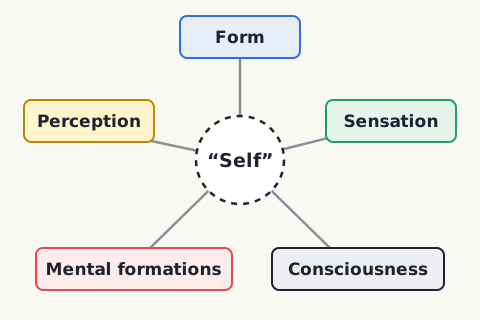 FlashFeed original diagram · CC-BY-4.0
The Five Aggregates
The Buddhist "self" is analyzed into five aggregates, or skandhas: form, sensation, perception, mental formations, and consciousness.
1 / 10The Three Jewels, in which Buddhists take refuge, are which three?
The Three Jewels are Buddha, Dharma, and Sangha; taking refuge in them is the formal Buddhist commitment. The others are the immeasurables, foundations of mindfulness, and some of the aggregates.
Lesson 12 has 69 cards. Keep going in the free app.
Question -
13
Key Concepts
Key People · Key Places · Key Things · Key Events
Lesson 13 · a questionThe Tripitaka's 'Three Baskets' include the Suttas and the Vinaya. Which is the third?
The Tripitaka comprises the Vinaya (monastic rules), Suttas (discourses), and Abhidhamma (systematic psychology and philosophy). The Dhammapada, Heart Sutra, and Platform Sutra are separate texts.
Lesson 13 has 61 cards. Keep going in the free app.


What you'll be able to do 60 objectives, from the pack's lessons
- Recall Siddhartha's birth in Lumbini into the prominent Shakya clan, the prophecy at his birth, and the early loss of his mother Maya.
- Identify the key members of Siddhartha's family: his mother Maya, father Suddhodana, wife Yasodhara, and son Rahula.
- Recognize the Four Sights (especially the wandering ascetic) and the Great Renunciation that launched Siddhartha's quest.
- Explain the Middle Way and the events leading to awakening: the two meditation teachers and the Bodhi tree at Bodh Gaya.
- Recall the key ages and durations of the Buddha's life, from marriage to death.
- Identify the Four Noble Truths (dukkha, samudaya, nirodha, magga) as the Buddha's diagnostic sequence for suffering.
- Explain dukkha (suffering) and its cause in craving (tanha) and ignorance (avijja).
- Define the Dharma as the body of teachings the Buddha set out, the second of the Three Jewels.
- Explain the Noble Eightfold Path as eight factors grouped under wisdom, ethical conduct, and mental discipline.
- Match each of the eight path factors (Right View through Right Concentration) to its meaning.
- Explain impermanence (anicca) and non-self (anatta) as marks of existence, contrasting anatta with the Hindu belief in an eternal atman.
- Identify the five aggregates (skandhas) that make up what we call the self.
- Explain karma as intention and samsara as the karma-driven cycle of rebirth.
- Distinguish nirvana from parinirvana as states of liberation.
- Explain dependent origination (pratityasamutpada) and emptiness (sunyata), including the bodhisattva ideal.
- Distinguish the three vehicles — Theravada, Mahayana, and Vajrayana — by their defining features.
- Contrast the Theravada arhat ideal with the Mahayana bodhisattva ideal, and recognize Vipassana and the Vinaya in Theravada practice.
- Match each vehicle to the regions where it predominates and recall when the Pali Canon was written down.
- Identify the major Mahayana schools (Zen, Pure Land, Nichiren, Madhyamaka, Yogacara) by their signature practice or philosophy.
- Explain Zen and the koan as tools for direct insight beyond scripture.
- Identify the classical figures who shaped Buddhism: Ashoka, Nagarjuna, Bodhidharma, and Huineng.
- Recognize Nagarjuna as founder of the Madhyamaka school and developer of emptiness.
- Identify Milarepa and Thich Nhat Hanh by their traditions and contributions, from Mahamudra to Engaged Buddhism and interbeing.
- Identify the modern figures Robert Wright and Jon Kabat-Zinn by their books, MBSR, and Kabat-Zinn's definition of mindfulness.
- Explain the title Tathagata as the Buddha's self-reference in the discourses.
- Identify the three baskets of the Tripitaka (Vinaya, Sutta, Abhidhamma) and their contents.
- Recognize the role of oral transmission and Ananda in preserving the Buddha's discourses.
- Recognize the Heart, Diamond, and Lotus Sutras as Mahayana texts outside the Tripitaka, linked to Nichiren and Huineng.
- Recognize the Dhammapada and the Platform Sutra and their significance.
- Identify the key parables (Kisa Gotami, the Raft, the Blind Men, the Poisoned Arrow, the Monk and the Tiger) by their narrative.
- Explain the moral of Kisa Gotami and the mustard seed — that death is universal and grief is shared.
- Explain the morals of the Raft and Poisoned Arrow parables: don't cling to teachings, and prioritize practical liberation over speculation.
- Match the 84th Problem, Blind Men, Farmer and Horse, Angulimala, and Monk and Tiger parables to their lessons.
- Match ancient metaphors (finger pointing at the moon, chariot, Indra's net, candle flame) to the teaching each conveys.
- Explain how Nagasena's chariot analogy illustrates the self as a label on a bundle of parts.
- Explain how the candle-flame metaphor models rebirth without a transmigrating soul.
- Interpret modern metaphors (the GPS, the rider and elephant, the movie screen, the Matrix) in Buddhist terms.
- Distinguish correct from incorrect metaphor-to-meaning matches across ancient and modern metaphors.
- Identify the First, Second, and Third Buddhist Councils and their purposes.
- Explain how the First Council preserved the canon through recitation (Mahakassapa leading, Upali reciting the Vinaya, Ananda the Suttas).
- Contrast the conservative Sthaviras with the Mahasanghika and their link to the later rise of Mahayana.
- Recall the approximate dates and figures of the three councils.
- Match the four great pilgrimage sites (Lumbini, Bodh Gaya, Sarnath, Kushinagar) to the events in the Buddha's life.
- Recognize that Lumbini, the Buddha's birthplace, lies in modern-day Nepal rather than India.
- Identify Nalanda, the Ajanta Caves, and Anuradhapura and their significance.
- Define a stupa as a dome-shaped monument enshrining relics of the Buddha or a revered teacher.
- Explain Wright's argument that feelings evolved as motivators and that craving (tanha) and no-self (anatta) align with evolutionary psychology.
- Identify the brain regions in meditation research — prefrontal cortex, insula, amygdala, default mode network — and how strong the evidence is.
- Explain MBSR: its founder Jon Kabat-Zinn, its 1979 start (named MBSR in the early 1990s), and its standard 8-week format.
- Explain what secular Buddhism brackets and Batchelor's agnostic, experimental approach.
- Match core Buddhist terms (Dharma, Sangha, Three Jewels, Bodhi, Skandha, Upaya, Maya) to their meanings.
- Identify the Four Immeasurables (metta, karuna, mudita, upekkha) collectively known as the Brahmaviharas.
- Distinguish key meditation terms — metta, samadhi, vipassana, samatha, and jhana.
- Recall the canonical Buddhist numbers (3 marks, 4 truths, 5 precepts, 5 aggregates, 8-fold path, 10 paramitas, 12 nidanas, 84,000 teachings).
- Explain the Five Precepts (Pancasila) as training commitments for lay Buddhists.
- Recognize the classical figures of Buddhist history — Ashoka, Nagarjuna, Bodhidharma, Huineng, Milarepa, and Dogen.
- Recognize the modern figures who carried Buddhism westward — Thich Nhat Hanh, Pema Chödrön, Robert Wright, and Jon Kabat-Zinn.
- Recognize the key places of the Buddhist world, from the four pilgrimage sites to Nalanda, Ajanta, and Anuradhapura.
- Recognize the key texts of Buddhism and match the Heart, Diamond, and Lotus Sutras to their themes.
- Recognize the key events in the Buddha's life, from the Great Renunciation and Six Years of Extremes to the Assault of Mara and the Awakening.
Study guide.
The same study guide as in the app, one page for each lesson, with its key facts and a self-test.
- 01The Life of the Buddha
- 02The Four Noble Truths & the Eightfold Path
- 03Self, Causation & Liberation
- 04The Three Vehicles
- 05Key Figures
- 06Sacred Texts
- 07Parables & Their Morals
- 08Metaphors & Analogies
- 09Councils & the Great Schism
- 10Sacred Places
- 11Secular Buddhism & Modern Science
- 12Vocabulary & Numbers
- 13Key Concepts
Built from 4 sources.
4 of its 727 cards cite a source. These are the sources it cites.
Hover over a photo, or tap its i, to see where it came from. All 16:
- Lesson 1: Unsplash · Fares Nimri ↗
- Lesson 2: FlashFeed original diagram · CC-BY-4.0
- Lesson 3: AI-generated (gpt-image-1.5)
- Lesson 4: Wikimedia Commons · Karan · CC BY-SA 4.0 ↗
- Lesson 4: AI-generated (gpt-image-1.5)
- Lesson 5: Unsplash · Zoshua Colah ↗
- Lesson 5: Pexels · ManojMk Brucelee ↗
- Lesson 6: Wikimedia Commons · Bhikkhu Nyanatusita · Public domain ↗
- Lesson 7: Wikimedia Commons · Jonathunder · CC BY-SA 3.0 ↗
- Lesson 7: Signed lower right, 'A. W. Kerr' for Alexander Kerr (Australian, 1875-1950) · Public domain ↗
- Lesson 8: Pexels · Nick Che ↗
- Lesson 9: Unsplash · Loom Solar ↗
- Lesson 10: Unsplash · srihari kapu ↗
- Lesson 11: Unsplash · Sage Friedman ↗
- Lesson 11: AI-generated (gpt-image-1.5)
- Lesson 12: AI-generated (gpt-image-1.5)
- Cards
- 725
- Lessons
- 13
- Version
- 1.0.25
- Language
- English
The whole pack is one file. Read the pack file ↗
FlashFeed is on the App Store and Google Play.
FlashFeed is free on iPhone and Android, and needs no account.