
Buddhism: A Deep Study study guide · Lesson 7 of 13
Parables & Their Morals
The Stories · The Morals
This is the lesson's study guide from the FlashFeed app, plus its key facts and a self-test.
What you'll be able to do
- Identify the key parables (Kisa Gotami, the Raft, the Blind Men, the Poisoned Arrow, the Monk and the Tiger) by their narrative.
- Explain the moral of Kisa Gotami and the mustard seed — that death is universal and grief is shared.
- Explain the morals of the Raft and Poisoned Arrow parables: don't cling to teachings, and prioritize practical liberation over speculation.
- Match the 84th Problem, Blind Men, Farmer and Horse, Angulimala, and Monk and Tiger parables to their lessons.
The Stories
This section explores several parables that convey profound moral lessons in Buddhism. Each story illustrates key teachings about life, suffering, and the nature of reality.
Kisa Gotami and the Mustard Seed
Kisa Gotami's story highlights the universal experience of grief and the inevitability of death. Her journey from despair to understanding teaches that suffering is a shared human condition. The quest for a mustard seed symbolizes the search for answers to life’s toughest questions. Ultimately, her realization that death touches every household leads her to acceptance and spiritual growth, demonstrating how confronting our mortality can foster compassion and wisdom.
The 84th Problem
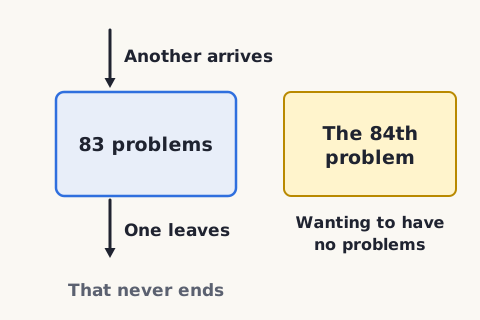
In this parable, the Buddha emphasizes the nature of human suffering. The man’s long list of troubles represents the endless cycle of problems that life presents. The Buddha's response illustrates a key teaching: rather than seeking to eliminate all problems, one should focus on the 84th problem—the desire for a life free of difficulties. This shift in perspective encourages acceptance and mindfulness, suggesting that true peace comes from understanding and managing our reactions to life’s challenges.
The Raft Parable
The raft serves as a powerful metaphor for the teachings of Buddhism, known as the Dhamma. Just as a raft is meant for crossing a river, the Dhamma is designed to help individuals navigate the challenges of life. Holding onto the raft after reaching the shore symbolizes clinging to teachings or beliefs beyond their intended purpose. The lesson here is to use spiritual tools for growth and understanding, but not to become attached to them, as they are not the ultimate goal.
The Blind Men and the Elephant
This parable illustrates the concept of partial views and the limitations of individual perspectives. Each blind man's description of the elephant is correct based on their experience, yet collectively, they fail to grasp the whole truth. This story serves as a reminder of the importance of humility and open-mindedness in our understanding of reality. It encourages us to seek a broader perspective and recognize that truth can be multifaceted.
The Poisoned Arrow
The story of Malunkyaputta reflects the futility of getting lost in existential questions while neglecting immediate suffering. The poisoned arrow metaphor highlights the urgency of addressing life's pains rather than becoming paralyzed by unanswerable questions. The Buddha's teaching underscores that regardless of philosophical inquiries, the path to ending suffering lies in practical action and understanding the nature of existence.
The Farmer and the Horse
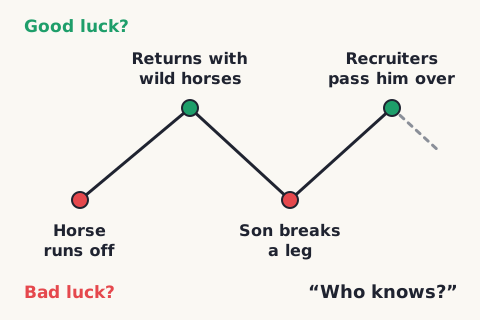
This parable teaches the principle of impermanence and the unpredictability of life. The farmer’s responses to his changing fortunes illustrate that events perceived as good or bad may not be so clear-cut. Each twist of fate serves to remind us that our judgments about experiences can shift, emphasizing the importance of maintaining equanimity and accepting life’s uncertainties.
Angulimala
Angulimala's transformation from a violent murderer to an enlightened monk exemplifies the power of compassion and understanding. The Buddha's calm response to his threat reveals a profound truth: true change comes from within. Angulimala’s journey illustrates the potential for redemption, emphasizing that no one is beyond the possibility of enlightenment, regardless of their past actions.
The Monk and the Tiger
In this vivid parable, the monk's precarious situation between two tigers symbolizes the challenges of life. The wild strawberry represents moments of joy and beauty that can be found even in dire circumstances. This story encourages mindfulness and appreciation of the present moment, suggesting that finding sweetness in life is possible, even amidst chaos and uncertainty.
Key concepts
Kisa Gotami and the Mustard Seed
- A grieving mother, sent on an errand by the Buddha, learns a hard truth about mortality.
- Told to gather a single grain from any household that death has never visited, she finds no such home exists.
- Her journey from despair to acceptance shows that loss touches every family, and confronting it breeds compassion and wisdom.
The Raft Parable
- A metaphor that compares the Buddha's teaching, the Dhamma, to a tool meant for a single crossing.
- After a traveler floats across a river, carrying the makeshift craft onward would be foolish.
- Its lesson: use spiritual teachings to get across life's river, but don't cling to them once they've done their job.
The Blind Men and the Elephant
- A parable about partial views and the limits of any single perspective.
- Several men who cannot see each grasp a different part of one large animal and describe it correctly — yet none knows the whole.
- It preaches humility and open-mindedness: truth is multifaceted, and no lone viewpoint captures all of it.
The Poisoned Arrow
- The story of the monk Malunkyaputta, on the futility of demanding answers to unanswerable questions.
- A wounded man refuses treatment until every irrelevant fact about his attacker is known — and dies still waiting.
- The Buddha's point: address the source of pain urgently now, rather than getting lost in metaphysical speculation.
The Monk and the Tiger
- A vivid parable about finding sweetness in the present moment even in the face of danger.
- Trapped between two fierce beasts with no way out, a person pauses to savor a single wild strawberry.
- Its lesson: mindful appreciation of the here and now is possible even amid chaos and peril.
Key facts
The 84th Problem
A man brought the Buddha a long list of troubles. To each, the Buddha said, "I cannot help you with that." Exasperated, the man asked what kind of Buddha couldn't fix anyone's problems. The Buddha replied that everyone always has about 83 problems — one leaves, another arrives, and that never ends. "Then what can you help me with?" the man asked. "I can help you with your 84th problem," said the Buddha: "that you want to have no problems at all."
The Raft Parable
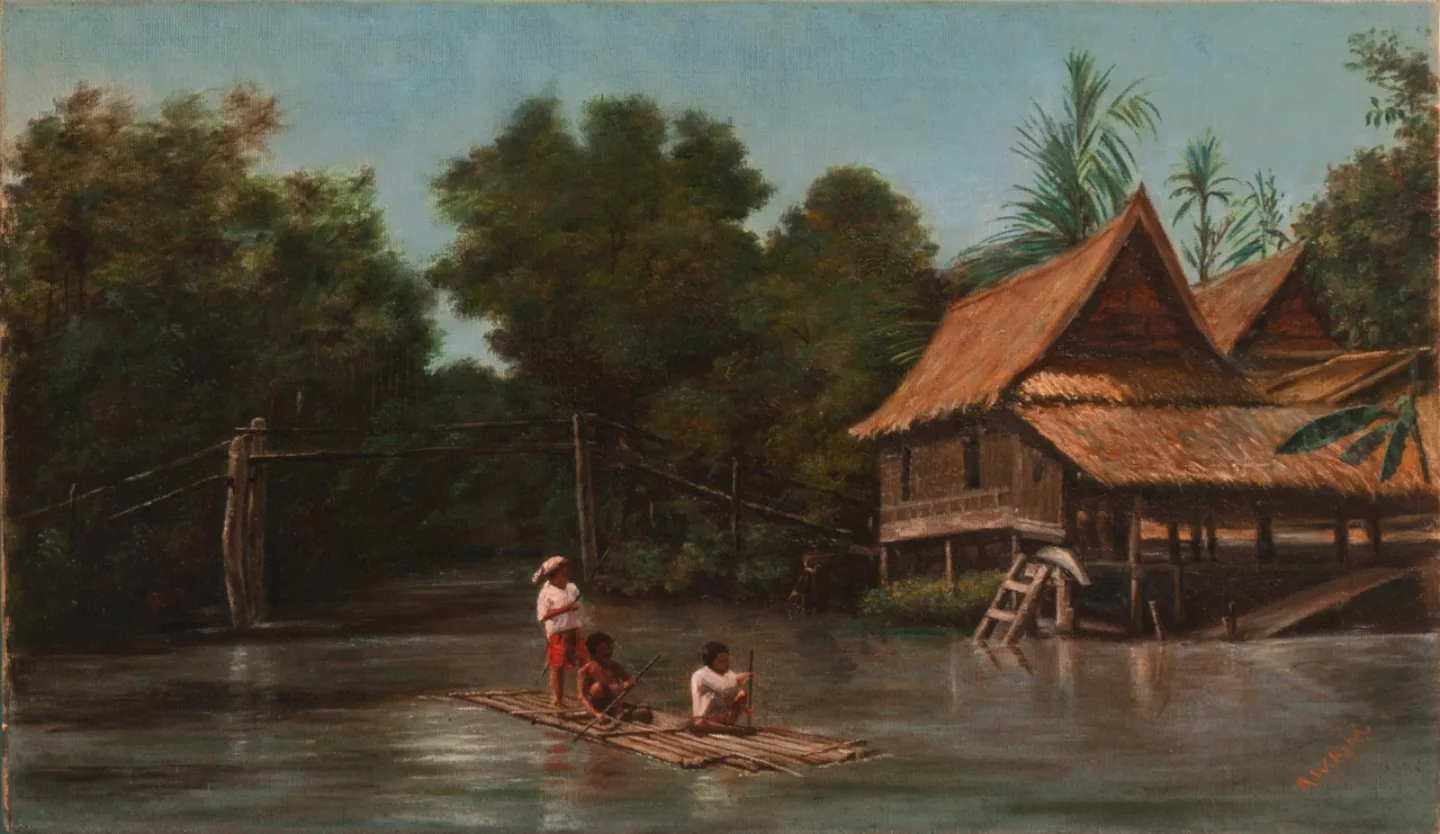
A traveler reaches a dangerous flood and lashes together a raft of sticks and leaves to cross. Safe on the far shore, he thinks, "This raft served me so well — I'll carry it on my head everywhere I go." The Buddha asked his monks whether that would be wise. It would not. "In the same way," he taught, "the Dhamma is like a raft: it is for crossing over, not for holding on."
The Blind Men and the Elephant
Several blind men meet an elephant for the first time, each touching a different part. The one at the leg declares, "An elephant is like a tree trunk." The one holding the tail insists, "No — like a rope." The one at the broad side says, "You're both wrong; it's a wall." Each is certain, each is partly right, and each is wholly wrong. The story warns against mistaking a partial view for the complete truth.
The Poisoned Arrow
The monk Malunkyaputta threatened to quit unless the Buddha settled grand questions: Is the universe eternal? Infinite? Does the self survive death? The Buddha answered with an image. A man struck by a poisoned arrow who refuses treatment until he knows the archer's name, caste, height, and bow — that man will die first. "Whether or not the cosmos is eternal, there is still birth, aging, death, and grief — and I teach the way to their ending."
The Farmer and the Horse
A farmer's horse runs off. "What bad luck!" says his neighbor. "Who knows what is good or bad?" the farmer replies. The horse returns leading wild horses — "What good luck!" "Who knows." His son breaks a leg taming one — "What bad luck!" "Who knows." Then army recruiters pass over the injured son — "What good luck!" "Who knows." Each turn looks like fortune or disaster only until the next one arrives.
The Monk and the Tiger
A monk fleeing a tiger tumbles over a cliff and catches a vine. Below him waits a second tiger; above, two mice begin gnawing through the vine. Trapped between death above and death below, the monk notices a wild strawberry growing from the cliff face. He plucks it and eats it. How sweet it tastes! It is one of Buddhism's most concise images of being fully present in the only moment there is.
Matched pairs
Each item on the left goes with the one on the right.
- Angulimala
- A murderer who became one of the Buddha's disciples
- Kisa Gotami
- Sent to find a mustard seed from a home that never knew death
- The raft in the Raft Parable
- Made for crossing over, not for holding on
- Kisa Gotami and the Mustard Seed
- Death is universal; grief is shared by all, and seeing that is the doorway to acceptance and wisdom.
- The 84th Problem
- Suffering is multiplied by our resistance to it; the deepest problem is the demand to have no problems.
- The Raft Parable
- Teachings are tools for crossing to liberation, not possessions to cling to; let go even of the Dhamma once it has served.
- The Blind Men and the Elephant
- A partial view mistakes itself for the whole truth; certainty about a fragment breeds needless conflict.
- The Poisoned Arrow
- Practical liberation from suffering matters more than answering unanswerable metaphysical questions.
- The Farmer and the Horse
- Events resist quick labels of good or bad; equanimity holds steady through shifting fortunes.
- Angulimala
- No one is beyond redemption; fearless compassion can transform even a killer.
- The Monk and the Tiger
- Even in the face of death, the present moment can be fully and sweetly tasted; this is mindfulness.
Self-test
Answer each question from memory, then check your work against the answer key.
1. Which parable centers on a grieving mother who carries her dead son from house to house begging for a cure?
- AThe Farmer and the Horse
- BAngulimala
- CKisa Gotami and the Mustard Seed
- DThe Monk and the Tiger
2. In which parable does a man build something to cross a dangerous flood, then decide to carry it on his head forever?
- AThe Blind Men and the Elephant
- BThe Raft Parable
- CThe 84th Problem
- DThe Poisoned Arrow
3. Which detail does NOT belong to the Poisoned Arrow parable?
- AA wounded man demands to know the archer's name and caste
- BThe monk Malunkyaputta pressed the Buddha with metaphysical questions
- CHe refuses treatment until his questions are answered
- DHe plucks a wild strawberry from a cliff face
4. A monk fleeing a tiger clings to a vine, sees a second tiger below and mice gnawing the vine, then eats a wild strawberry. Which parable is this?
- AThe Monk and the Tiger
- BThe Blind Men and the Elephant
- CKisa Gotami and the Mustard Seed
- DThe Farmer and the Horse
5. Which parable is about several people each touching a different part of the same animal and disagreeing about what it is?
- AAngulimala
- BThe Blind Men and the Elephant
- CThe Raft Parable
- DThe 84th Problem
6. What did Kisa Gotami learn by searching for the mustard seed?
- AThat the Buddha could revive the dead
- BThat her neighbors were too selfish to help
- CThat mustard seeds can cure grief
- DThat death visits every household — no one is spared
7. What does Kisa Gotami's quest for the mustard seed symbolize?
- AThe futility of all metaphysical inquiry
- BClinging to teachings past their purpose
- CThe search for answers to life's toughest questions
- DEquanimity amid shifting fortunes
8. Why did the Buddha set Kisa Gotami the impossible errand of finding a mustard seed from a home that never knew death?
- ASo she would realize for herself that death touches every household
- BBecause the seed truly could cure her son
- CTo prove her neighbors were too selfish to help
- DTo show he could revive the dead if she obeyed
9. Which of these is NOT a lesson of the Kisa Gotami parable?
- AConfronting our mortality can foster compassion and wisdom
- BLet go of teachings once they have served their purpose
- CDeath touches every household; no one is spared
- DGrief is a shared human condition
10. Kisa Gotami's realization that death touches every household leads her chiefly to…
- AFaith that mustard seeds cure grief
- BAnger at her selfish neighbors
- CBelief the Buddha could revive her son
- DAcceptance and spiritual growth
11. What does the Raft Parable warn against?
- AMeditating alone rather than in a community
- BCrossing rivers without proper equipment
- CClinging to teachings instead of using them to reach liberation
- DHelping strangers who cannot repay you
12. The Poisoned Arrow parable teaches that the Buddha's priority was…
- AEnding suffering now, not settling abstract metaphysical questions
- BIdentifying who causes our suffering
- CProving the universe is eternal
- DMastering archery as a discipline
13. In the Raft Parable, what does the raft itself represent?
- AThe human body
- BThe monastic community
- CThe Dhamma — the Buddha's teachings
- DThe cycle of rebirth
14. A monk refuses to practice until the Buddha explains whether the self survives death. Which parable's moral corrects him?
- AThe Farmer and the Horse
- BThe Blind Men and the Elephant
- CKisa Gotami and the Mustard Seed
- DThe Poisoned Arrow
15. Which lesson is NOT taught by either the Raft or the Poisoned Arrow parable?
- APrioritize ending suffering over abstract speculation
- BEvents resist quick labels of good or bad
- CTeachings are tools for crossing, not possessions to keep
- DDon't cling to teachings once they have served
16. In the parable of the blind men and the elephant, each man is 'partly right and wholly wrong.' What does the story chiefly warn against?
- AMistaking a partial, individual view for the complete truth
- BJudging fortune or misfortune in the moment, before the next turn arrives
- CClinging to spiritual teachings after they have served their purpose
- DChasing unanswerable questions instead of treating suffering directly
17. Which of these is NOT the moral of The 84th Problem?
- AThe demand to have no problems is itself the deepest problem
- BPeace comes from managing our reactions, not eliminating every trouble
- CNo one is beyond the possibility of redemption
- DSuffering is multiplied by our resistance to it
18. The Farmer and the Horse, with its refrain 'Who knows what is good or bad?', teaches…
- AThe present moment can be sweetly savored
- BNo one is beyond redemption
- CDeath is universal and grief is shared
- DEquanimity that holds steady through shifting fortunes
19. Angulimala's transformation from murderer to enlightened monk illustrates that…
- AThe wish to have no problems is the deepest problem
- BNo one is beyond redemption; fearless compassion can transform even a killer
- CA partial view mistakes itself for the whole truth
- DTeachings should be discarded once they have served
20. The monk savoring a wild strawberry while trapped between two tigers is an image of…
- AFull, mindful attention to the present moment
- BThe redemption of the wicked
- CThe universality of death
- DThe futility of metaphysical questions
Go deeper
Answer key
- 1. C Kisa Gotami and the Mustard SeedKisa Gotami refused to accept her son's death and carried his body door to door; the Buddha then sent her for a mustard seed from a deathless home.
- 2. B The Raft ParableThe traveler lashes a raft to cross the flood, then foolishly wants to carry it everywhere — the image of clinging to teachings past their use.
- 3. D He plucks a wild strawberry from a cliff faceThe wild strawberry belongs to The Monk and the Tiger. The Poisoned Arrow is about a wounded man who dies demanding details before treatment.
- 4. A The Monk and the TigerTrapped between two tigers with mice gnawing the vine, the monk savors a strawberry — the image of tasting the present moment even facing death.
- 5. B The Blind Men and the ElephantEach blind man touches a different part of the elephant — leg, tail, side — and each is partly right yet wholly wrong about the whole.
- 6. D That death visits every household — no one is sparedShe could not find a single home untouched by death. The Buddha let her discover impermanence herself rather than simply telling her.
- 7. C The search for answers to life's toughest questionsThe mustard-seed quest symbolizes the search for answers to life's toughest questions; the futility, clinging, and equanimity ideas belong to other parables.
- 8. A So she would realize for herself that death touches every householdNo home was untouched by death, so she discovered impermanence herself rather than simply being told — the doorway to acceptance and wisdom.
- 9. B Let go of teachings once they have served their purposeLetting go of teachings is the moral of the Raft. Kisa Gotami's story is about the universality of death and the shared nature of grief.
- 10. D Acceptance and spiritual growthSeeing that grief is shared moves her from despair to acceptance and wisdom, fostering compassion — the heart of the parable's moral.
- 11. C Clinging to teachings instead of using them to reach liberationThe raft is built to cross the flood, not to be carried afterward. The Dhamma is "for crossing over, not for holding on" — a guard against dogmatic attachment.
- 12. A Ending suffering now, not settling abstract metaphysical questionsThe wounded man who demands every detail about the archer dies before treatment. Liberation from birth, aging, and death does not wait on cosmology.
- 13. C The Dhamma — the Buddha's teachingsThe raft is a metaphor for the Dhamma: a tool built for crossing to liberation, not a possession to be carried and clung to afterward.
- 14. D The Poisoned ArrowThis is Malunkyaputta's demand; the Poisoned Arrow teaches that ending suffering matters more than settling unanswerable metaphysical questions.
- 15. B Events resist quick labels of good or badRefusing quick good/bad labels is the moral of The Farmer and the Horse. The other three are the morals of the Raft and Poisoned Arrow.
- 16. A Mistaking a partial, individual view for the complete truthEach blind man's account is correct for the part he touched, yet none grasps the whole. The parable warns against mistaking a partial, individual perspective for the complete truth. (The other options are the morals of the Farmer, Raft, and Poisoned Arrow parables.)
- 17. C No one is beyond the possibility of redemptionRedemption of even the wicked is the moral of Angulimala. The 84th Problem is about the endless cycle of troubles and the demand for a problem-free life.
- 18. D Equanimity that holds steady through shifting fortunesEach twist of fate resists a fixed good/bad label, so the farmer keeps equanimity — the parable's lesson about accepting life's uncertainties.
- 19. B No one is beyond redemption; fearless compassion can transform even a killerThe Buddha's calm 'I have already stopped' shows true change comes from within; Angulimala's redemption proves no one is beyond enlightenment.
- 20. A Full, mindful attention to the present momentEven between death above and below, the monk tastes the strawberry fully — the parable's picture of mindfulness and appreciating the present moment.
Sources
- Kisa Gotami — Wikipedia — en.wikipedia.org/wiki/Kisa_Gotami
- On the simile of the raft — SuttaCentral — discourse.suttacentral.net/t/on-the-simile-of-the-raft-and-letting-go-of-what-is-not-the-teachings/3873
Image credits
- The 84th Problem: FlashFeed original diagram · CC-BY-4.0
- The Raft Parable: Signed lower right, 'A. W. Kerr' for Alexander Kerr (Australian, 1875-1950) · Public domain — commons.wikimedia.org/wiki/File:Menam_River_Bangkok_Siam_Painting_by_A_Kerr_c1915.png
- The Farmer and the Horse: FlashFeed original diagram · CC-BY-4.0
