
AI for Small Business
A beginner's practical guide to choosing useful AI workflows, prompting with context, researching carefully, supporting customers, automating safely, protecting data, and running a measured 30-day pilot.
244 cards8 lessonsFree
Already have FlashFeed?Open this pack
Get this pack on your phone
Scan with your phone's camera.
flashfeedlearningapp.com/packs/ai-for-small-business
Part of the Learn AI collection.
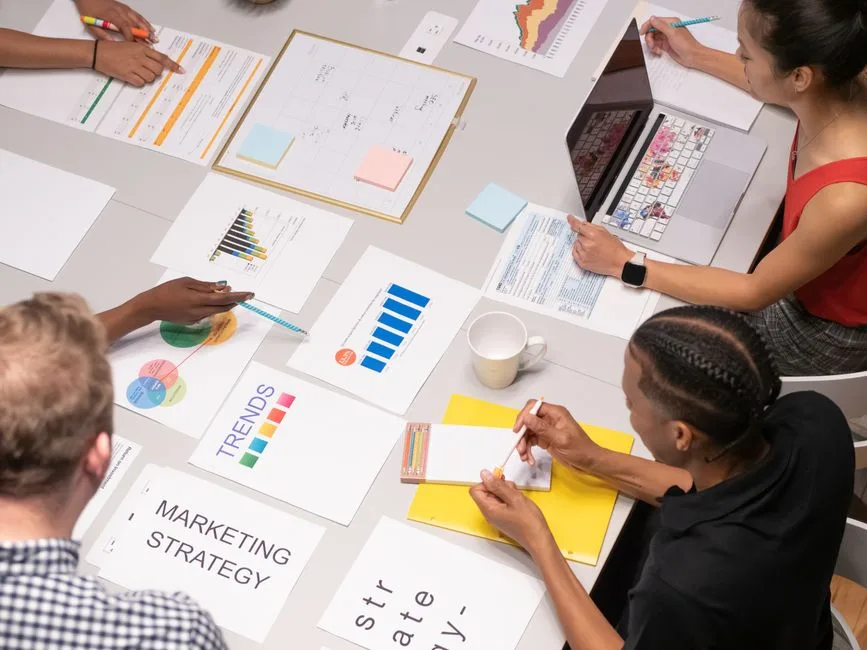 Pexels · Kindel Media · Pexels License ↗
 FlashFeed original diagram · CC-BY-4.0
 Unsplash · Chase Chappell · Unsplash License ↗
8 lessons.
Each lesson has a study guide to read and objectives you can test yourself on. Its cards and games show up in your feed. Try one of its cards right here. Play a few of its games here too.
-
FlashFeed original diagram · CC-BY-4.001
AI Foundations for an Owner
What AI Can and Cannot Do · Start with a Workflow, Not a Tool
Lesson 1 · 6 cardsFlashFeed original diagram · CC-BY-4.0A Pattern Machine, Not an Oracle
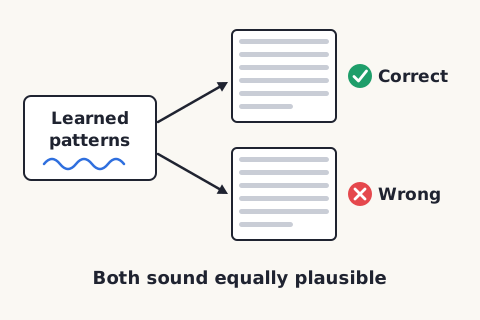
A language model generates plausible responses from learned patterns. It can be remarkably capable, but fluent wording is not proof that a claim is true.
 Pexels · Kampus Production ↗
You Supply the Local Truth
AI usually does not know your current prices, policies, customers, inventory, or judgment. Your business context is what turns a generic answer into useful work.
 Pexels · RDNE Stock project · Pexels License ↗
Workflow First
Start with a recurring business problem, then evaluate tools. Buying an AI subscription before naming the job often creates cost without adoption.
 Unsplash · Vitaly Gariev · Unsplash License ↗
Augment Before You Automate
Use AI alongside the existing process before allowing it to act alone. A parallel run exposes errors, exceptions, and missing instructions.
1 / 6A polished AI answer includes three statistics but no sources. What should you do first?
Fluency is not evidence. Verify material claims using reliable sources before using them.
Lesson 1 has 30 cards. Keep going in the free app.
Question -
 FlashFeed original diagram · CC-BY-4.002
Prompting as Business Communication
Give AI Context and a Clear Target · Iterate, Critique, and Reuse
Lesson 2 · 6 cardsFlashFeed original diagram · CC-BY-4.0Prompt Like a Brief
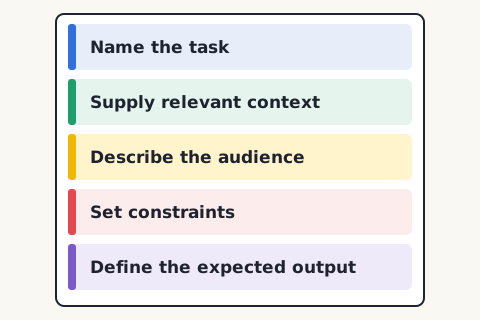
A useful request names the task, supplies relevant context, describes the audience, sets constraints, and defines the expected output.
 Pexels · Jakub Zerdzicki · Pexels License ↗
Define Done
Acceptance criteria make quality review faster. Specify required facts, length, format, tone, prohibited claims, and what the output must help someone do.
 Pexels · Thirdman · Pexels License ↗
Use a Working Conversation
Strong results usually emerge through questions, critique, and revision. Treat the first answer as material to improve, not a final deliverable.
 Pexels · Jakub Zerdzicki · Pexels License ↗
Save the Pattern, Not Just the Output
When a workflow succeeds, save the instructions, source documents, examples, and review checklist. That package is more reusable than one finished draft.
1 / 6A useful AI request usually contains which five ingredients?
A good prompt is a short business brief with the task, relevant context, the audience, constraints, and the expected output.
Lesson 2 has 31 cards. Keep going in the free app.
Question -
 FlashFeed original diagram · CC-BY-4.003
Research, Data, and Decisions
Research Current Markets and Competitors · Analyze Data and Make Better Decisions
Lesson 3 · 6 cardsFlashFeed original diagram · CC-BY-4.0Current Questions Need Current Sources
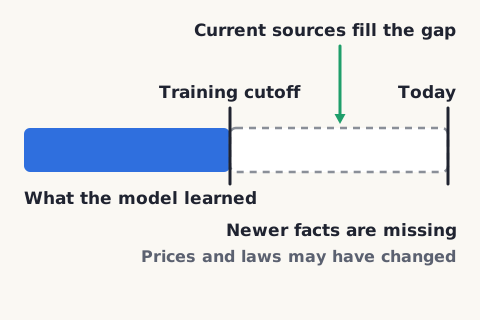
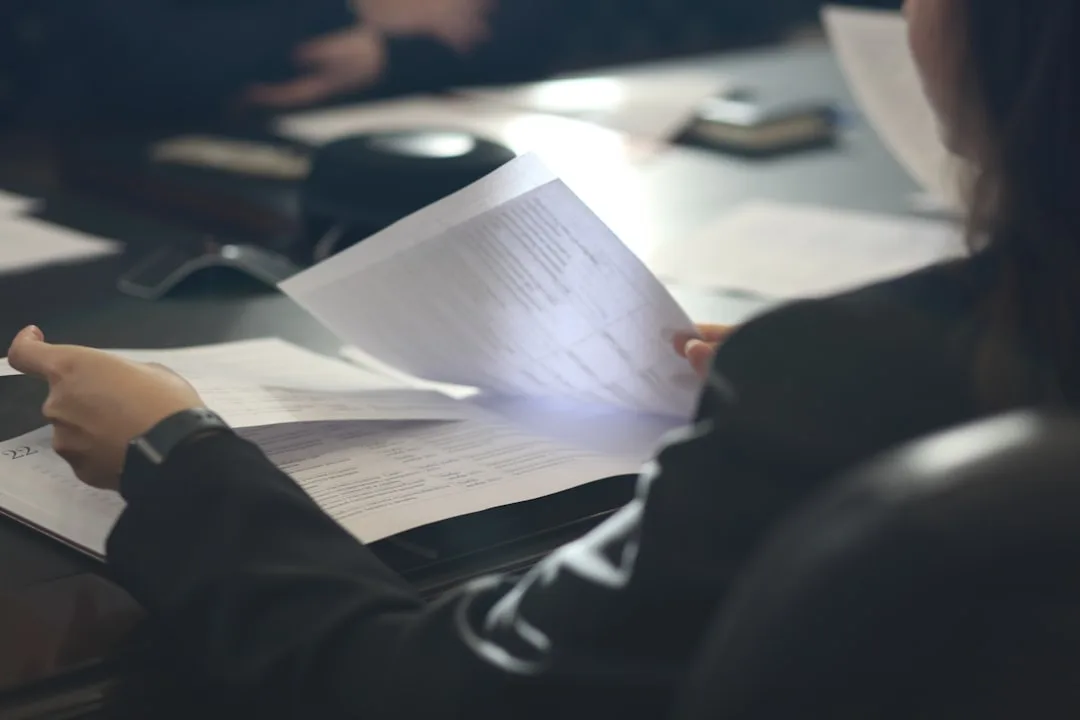
For prices, laws, competitors, products, and market conditions, use an AI mode that searches the web and provides citations. Model memory alone may be stale.
 Unsplash · Anastassia Anufrieva · Unsplash License ↗
Prefer Primary Sources
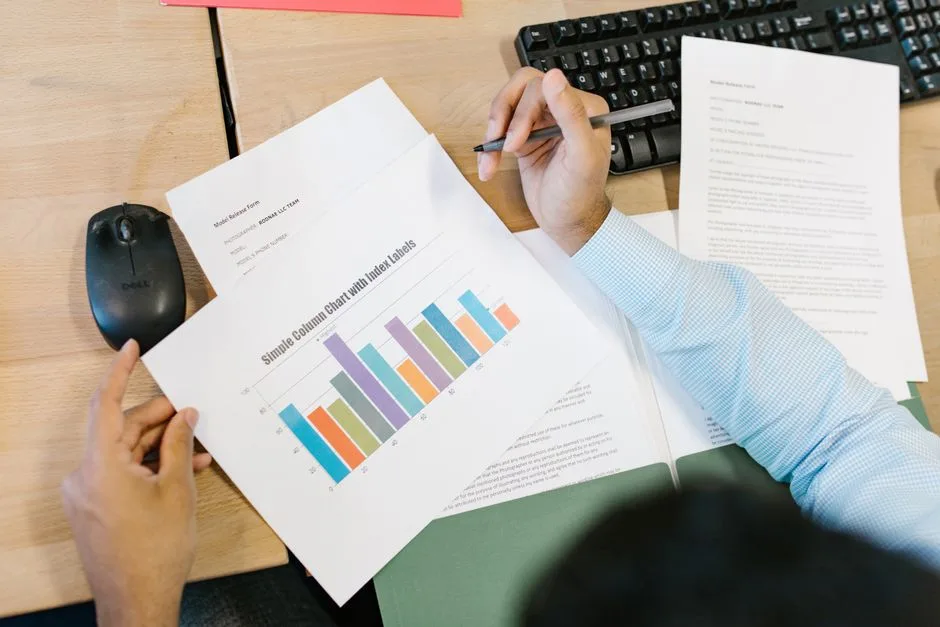
For material decisions, trace important claims to government data, original research, contracts, vendor documentation, or direct customer evidence.
 Pexels · RDNE Stock project · Pexels License ↗
Inspect Before You Analyze
Before asking for conclusions, identify missing values, duplicate rows, inconsistent dates, unclear units, and columns whose meaning is uncertain.
 Wikimedia Commons · Shixart1985 · CC BY 2.0 ↗
Use Scenarios, Not One Forecast
A base case, upside case, and downside case reveal which assumptions drive the decision and where a contingency plan is needed.
1 / 6Which is the strongest example of a primary source for a material business decision?
A primary source is original data or firsthand evidence. Your own survey is firsthand; blogs, news articles, and marketing pages are secondary summaries or positioning.
Lesson 3 has 30 cards. Keep going in the free app.
Question -
Pexels · Kindel Media · Pexels License ↗04
Marketing, Sales, and Customer Service
Create Marketing Without Losing Your Voice · Support Sales and Customer Service
Lesson 4 · 5 cardsPexels · Kindel Media · Pexels License ↗Give the Brand a Memory
A compact brand brief should define audience, promise, tone, proof points, prohibited claims, preferred terms, and examples of good work.
 Pexels · Tauseef Khaliq · Pexels License ↗
Human Authorship Still Matters
The U.S. Copyright Office says AI-assisted work can qualify for protection when humans contribute sufficient expressive authorship, but prompts alone generally do not make a purely AI-generated output copyrightable.
 Pexels · Kampus Production · Pexels License ↗
Ground Customer Answers
A customer assistant should answer from approved policies, product information, hours, pricing rules, and canonical answers—not from general model knowledge.
 Pexels · RDNE Stock project · Pexels License ↗
Personalize with Restraint
Useful personalization reflects relevant customer context. Creepy personalization reveals data the customer did not expect you to use.
1 / 5Which of the following is NOT typically part of a one-page brand brief?
A brand brief names the customer, promise, tone, proof points, preferred and prohibited terms, and examples. A revenue forecast is a financial projection, not part of the brief.
Lesson 4 has 31 cards. Keep going in the free app.
Question -
 Unsplash · 毛 祥 · Unsplash License ↗05
Operations, Automation, and Agents
Document Operations and Repetitive Work · Automate Carefully and Introduce Agents
Lesson 5 · 6 cardsUnsplash · 毛 祥 · Unsplash License ↗Capture the Real Process
The fastest way to draft a procedure is often to narrate the task while doing it, then have AI organize the transcript into steps, decisions, and exceptions.
 Pexels · Vitaly Gariev · Pexels License ↗
Exceptions Are Part of the Procedure
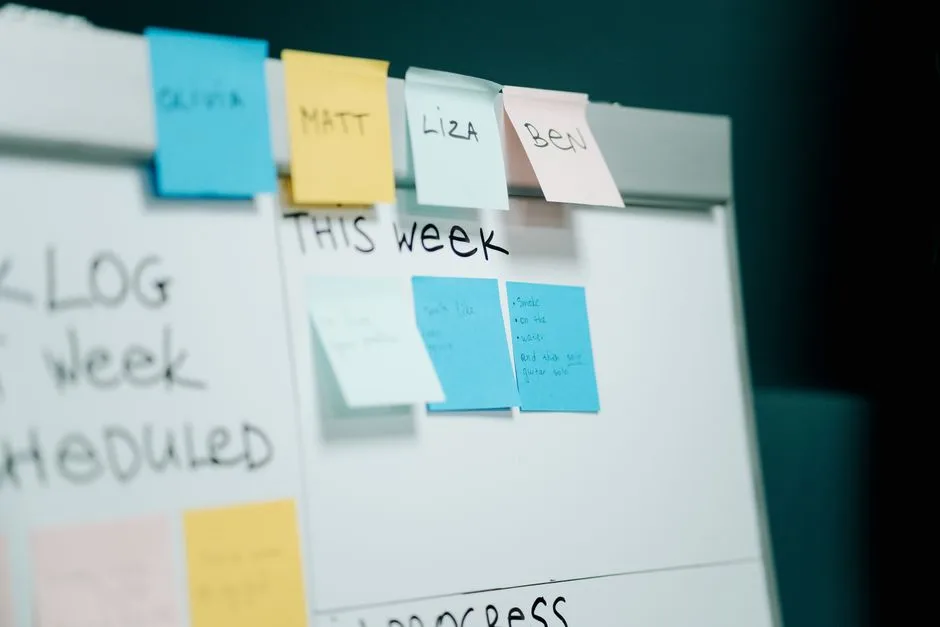
A clean happy-path checklist is incomplete. Good operating documentation explains what to do when information is missing, a customer objects, or a system fails.
 Pexels · cottonbro studio · Pexels License ↗
Meetings Need Owners and Deadlines
AI summaries become operationally useful when decisions, action items, owners, due dates, and unresolved questions are separated clearly.
 FlashFeed original diagram · CC-BY-4.0
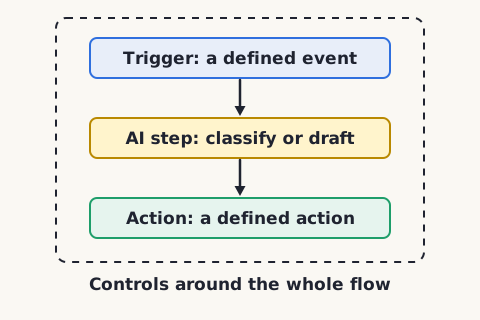
Automation Starts with a Trigger
A basic automation follows a rule: when a defined event occurs, perform a defined action. AI can classify or draft inside that flow, but the surrounding controls still matter.
 Pexels · RDNE Stock project · Pexels License ↗
Agents Need Boundaries
An agent may choose steps and use tools toward a goal. Limit what it can read, change, send, spend, or delete, and require approval for consequential actions.
 Unsplash · Vitaly Gariev · Unsplash License ↗
Keep an Audit Trail
Logs make it possible to see what ran, what information was used, what the AI proposed, what action occurred, and who approved it.
1 / 6What is the strongest source for a new procedure?
AI can organize knowledge, but the source should be the real process and people who understand it.
Lesson 5 has 28 cards. Keep going in the free app.
Question - Take the lessons with you. Free, no account.Download on the App Store ↗Get it on Google Play ↗
-
 Pexels · Pavel Danilyuk · Pexels License ↗06
High-Stakes Work: Money, Contracts, and People
Use AI Around Money, Contracts, and Taxes · Support Hiring and People Work Fairly
Lesson 6 · 6 cardsPexels · Pavel Danilyuk · Pexels License ↗First Pass, Not Final Authority
AI can summarize a contract, organize receipts, draft questions, or flag unusual terms. It should not be treated as the final authority on legal, accounting, lending, or tax decisions.
 Pexels · www.kaboompics.com · Pexels License ↗
Reconcile Against the Source
Financial summaries should be tied back to statements, invoices, payroll records, or the accounting system. A plausible total is not a reconciled total.
 Pexels · RDNE Stock project · Pexels License ↗
Use Professionals Where Judgment Matters
An attorney, CPA, bookkeeper, insurance professional, or lender can evaluate facts and obligations that a general AI assistant may miss.
 Pexels · Tima Miroshnichenko · Pexels License ↗
Existing Employment Law Still Applies
Using an algorithm does not remove an employer's obligations. AI-assisted recruiting or assessment can still create unlawful discrimination.
 Pexels · Marcus Aurelius · Pexels License ↗
Plan for Accommodation
The EEOC advises employers to consider whether algorithmic tools screen out people with disabilities and to provide a process for reasonable accommodation.
1 / 6AI flags an unusual indemnity clause in a commercial lease. What is the best next step?
AI can focus professional review, but the legal judgment and negotiation should come from a qualified person.
Lesson 6 has 30 cards. Keep going in the free app.
Question -
 AI-generated (gpt-image-1.5)07
Privacy, Security, and Responsible Use
Protect Customer and Business Data · Build Human Oversight and Quality Controls
Lesson 7 · 6 cardsAI-generated (gpt-image-1.5)Share the Minimum
Do not paste an entire customer file when the task only needs a product category and date. Data minimization reduces exposure and often improves focus.
 AI-generated (gpt-image-1.5)
Control by Consequence
The more an AI output can affect money, rights, safety, reputation, or sensitive data, the stronger the testing, approval, documentation, and monitoring should be.
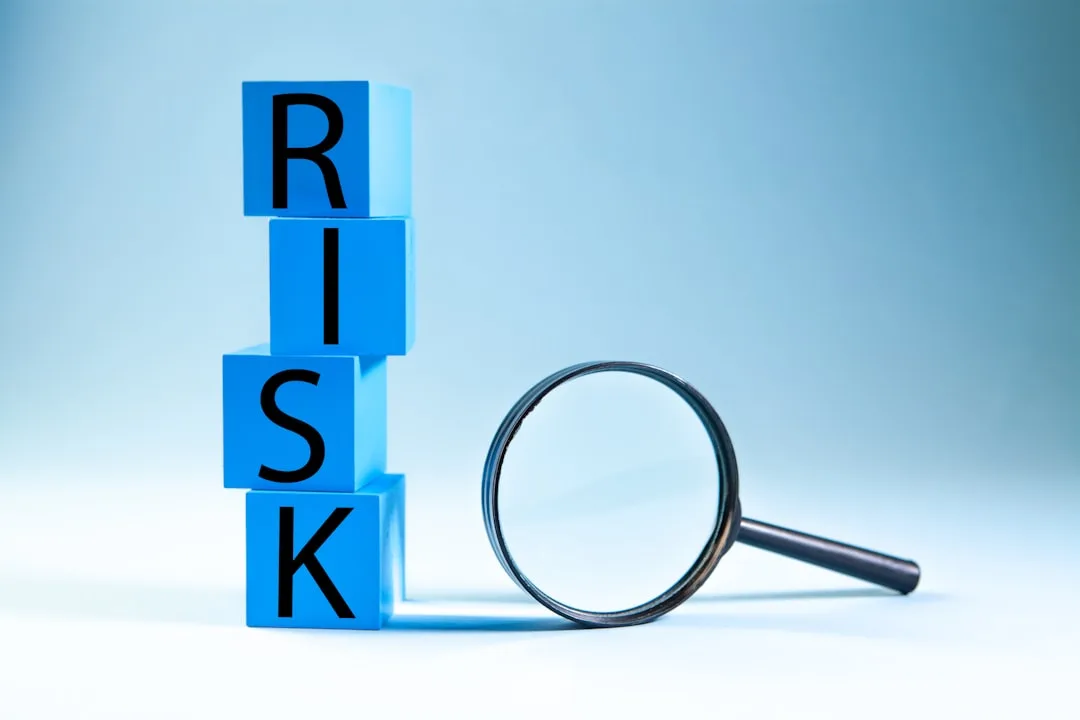 Unsplash · Sasun Bughdaryan · Unsplash License ↗
Govern, Map, Measure, Manage
NIST organizes AI risk work into four functions: establish governance, understand the context, assess risks and performance, and prioritize responses.
1 / 6What does practicing data minimization mean when using an AI service?
Data minimization means sharing only the fields needed for the task, which reduces exposure and often improves focus. Sharing everything raises risk.
Lesson 7 has 33 cards. Keep going in the free app.
Question -
Unsplash · Chase Chappell · Unsplash License ↗08
A 30-Day Implementation Playbook
The 30-Day Pilot · Your Small-Business AI Operating System
Lesson 8 · 6 cardsUnsplash · Chase Chappell · Unsplash License ↗One Pilot Beats Ten Trials
A focused 30-day pilot creates evidence. Tool hopping creates opinions without a stable process or baseline.
 Unsplash · Campaign Creators · Unsplash License ↗
Measure Before and After
Record current time, cost, error rate, turnaround, and customer impact before changing the workflow. Without a baseline, improvement becomes guesswork.
 Pexels · Ron Lach · Pexels License ↗
Track Usable Output
A useful pilot metric is the share of AI outputs accepted after review, along with the time and type of corrections required.
 AI-generated (gpt-image-1.5)
Keep the First Policy Short
A beginner AI policy can fit on one page: approved tools, prohibited data, review requirements, external-use rules, incident reporting, and an owner.
1 / 6When should a small business expand an AI pilot?
Expansion should follow evidence and control, not novelty or sunk cost.
Lesson 8 has 31 cards. Keep going in the free app.
Question

What you'll be able to do 16 objectives, from the pack's lessons
- Distinguish productive AI assistance from fluent but unsupported output, and verify material claims before acting.
- Choose a frequent, low-risk workflow for a first AI pilot instead of beginning with a tool or high-stakes decision.
- Write an AI brief with a clear task, relevant context, the audience, constraints, and the expected output.
- Improve weak output through critique, added examples, and reusable prompt-library assets rather than repeated one-shot prompting.
- Verify current market claims with primary sources and triangulation before using them in a business decision.
- Separate observations from inferences and check data quality before recommending an action.
- Use AI to adapt marketing content while preserving brand voice and substantiating claims.
- Design customer-facing assistance that uses approved knowledge and escalates unknown, sensitive, or exceptional cases.
- Capture an experienced worker's real process, including happy paths and exceptions, as a testable standard operating procedure.
- Distinguish rule-based automation from an AI agent and place human approval before consequential actions.
- Use AI for preparation around contracts while reserving material decisions for a qualified human.
- Use AI for hiring administration without delegating employment judgment or ignoring adverse-impact risk.
- Classify business information, minimize shared data, and check vendor retention and training controls before use.
- Match oversight to consequence using risk tiers and human review.
- Plan a measured 30-day pilot with a baseline, acceptance criteria, parallel run, and evidence-based expansion decision.
- Recognize the policies, approval gates, and audit logs that make AI use dependable.
Study guide.
The same study guide as in the app, one page for each lesson, with its key facts and a self-test.
Built from 1 source.
1 of its 244 cards cite a source. These are the sources it cites.
Hover over a photo, or tap its i, to see where it came from. All 8:
- Lesson 1: FlashFeed original diagram · CC-BY-4.0
- Lesson 2: FlashFeed original diagram · CC-BY-4.0
- Lesson 3: FlashFeed original diagram · CC-BY-4.0
- Lesson 4: Pexels · Kindel Media · Pexels License ↗
- Lesson 5: Unsplash · 毛 祥 · Unsplash License ↗
- Lesson 6: Pexels · Pavel Danilyuk · Pexels License ↗
- Lesson 7: AI-generated (gpt-image-1.5)
- Lesson 8: Unsplash · Chase Chappell · Unsplash License ↗
- Cards
- 244
- Lessons
- 8
- Version
- 0.1.18
- Language
- English
The whole pack is one file. Read the pack file ↗
FlashFeed is on the App Store and Google Play.
FlashFeed is free on iPhone and Android, and needs no account.