
Thinking, Fast and Slow
Daniel Kahneman's two systems of thought — the fast, automatic System 1 and the effortful System 2 — and the heuristics, biases and framing effects that follow from how the two divide the work between them.
262 cards5 lessonsFree
Already have FlashFeed?Open this pack
Get this pack on your phone
Scan with your phone's camera.
flashfeedlearningapp.com/packs/thinking-fast-and-slow
Part of the Habits & Mindset collection.
5 lessons.
Each lesson has a study guide to read and objectives you can test yourself on. Its cards and games show up in your feed. Try one of its cards right here. Play a few of its games here too.
-
 Pexels · Yan Krukau · Pexels License ↗01
Two Systems of the Mind: Fast Intuition vs. Slow Deliberation
System 1 and System 2: Characteristics and Cognitive Division of Labor · Cognitive Ease, Priming, and the Associative Machine
Lesson 1 · 10 cards Pexels · Sedanur Kunuk ↗
The Persistence of Cognitive Illusions
In the Müller-Lyer illusion, two horizontal lines of identical physical length appear starkly unequal due to arrow-fins. Even after measuring the lines and consciously knowing they are equal (a System 2 belief), System 1 continues to perceive the outward-finned line as longer.
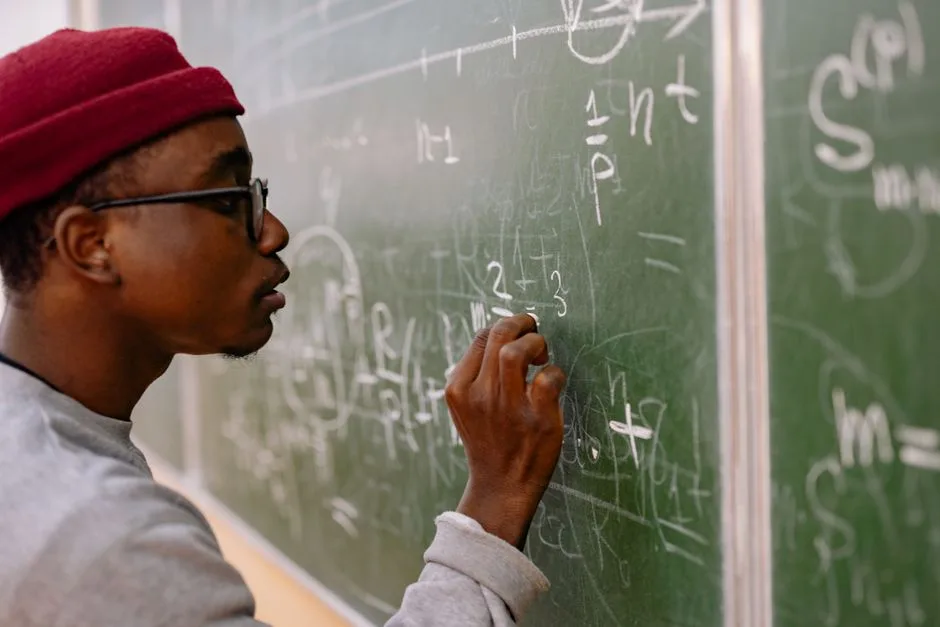
Pexels · Yan Krukau · Pexels License ↗System 1 and System 2
Kahneman borrows the System 1/System 2 labels from psychologists Keith Stanovich and Richard West. System 1 is fast, automatic, and effortless — it reads faces, drives familiar roads, and answers "2+2" without being asked twice. System 2 is slow, deliberate reasoning, the kind multiplying 17 by 24 requires. Because sustained attention is costly, System 2 follows the Law of Least Effort: a lazy controller that rubber-stamps System 1's impressions unless something surprising forces it to intervene.
 Nutschig at English Wikipedia · CC BY-SA 3.0 ↗
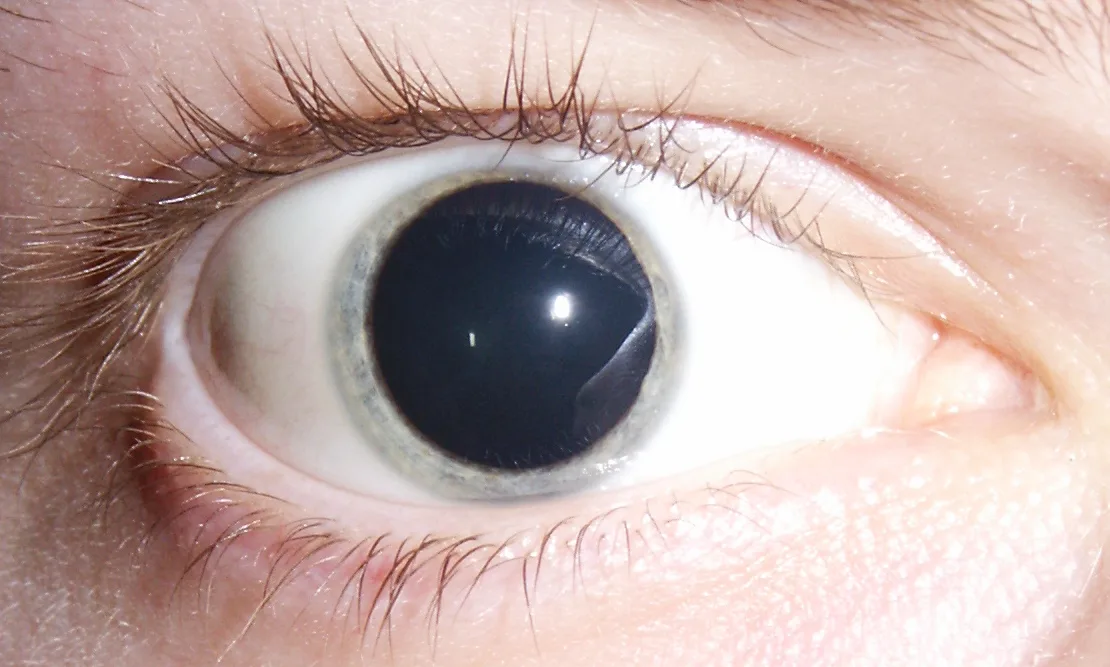
Pupil Dilation Tracks Mental Effort
Mental effort isn't just a feeling — it shows up in the body. In pupillometry experiments by Jackson Beatty and Daniel Kahneman, the pupil widened in exact proportion to how hard a subject was concentrating on a task like the Add-1 digit transformation, hitting its widest point at peak difficulty and snapping back the instant the answer arrived or the subject gave up. Pupil size, in other words, is a real-time gauge of System 2 at work.
 Patrick Feller (Openverse) · by 2.0 ↗
Ego Depletion
The book reports that self-control and effortful thinking draw on the same limited mental reserve — a state Roy Baumeister called ego depletion. Exhaust it, and willpower and judgment quality suffer. Kahneman cites a study of Israeli parole judges whose approval rates reportedly fell from roughly 65% right after a meal to near zero right before the next break, as depleted judges defaulted to the easiest choice: denial. Large-scale replications have since failed to reproduce ego depletion, and both findings are now considered contested rather than settled.
 Pexels · Geraldo Gáspere · Pexels License ↗
The Cognitive Reflection Test
Shane Frederick's Cognitive Reflection Test (CRT) measures a specific skill: catching your own wrong-but-plausible intuitions before you say them out loud. Its signature question: a bat and ball cost $1.10 together, and the bat costs $1.00 more than the ball — how much is the ball? System 1 blurts out "10 cents," but the correct answer is 5 cents (10 cents would make the total $1.20). Over half of elite university students fail to check the math, while high scorers also show more patience and less impulsive discounting in financial decisions.
 Wikimedia Commons · Kurt:S · CC BY 2.0 ↗
The Associative Machine
Kahneman pictures System 1 as an Associative Machine: encounter any word, image, or cue, and it triggers spreading activation — a cascade of related concepts, emotions, and memories firing at once, with no conscious effort. Hear the word "VOMIT" and ideas of nausea, illness, and disgust light up within milliseconds. The same machine enforces associative coherence, automatically stitching whatever scattered cues you notice into one tidy, causally-connected story — whether or not that story is actually true.
 Pexels · Fidan Nazim qizi · Pexels License ↗
The Florida Effect
The book reports a 1996 study by John Bargh and colleagues: young adults unscrambled sentences containing words like "Florida," "forgetful," and "wrinkle" — all associated with old age — then walked out of the lab measurably slower, with zero awareness of the connection. Kahneman used this ideomotor effect (primed ideas quietly steering physical behavior) as a flagship example of System 1's reach. Large replication attempts have since failed to reproduce the effect, and Kahneman has publicly acknowledged the underlying priming research was weaker than the book presented.
 Pexels · Rodolfo Clix · Pexels License ↗
The Facial-Feedback Study
The book reports a 1988 study by Strack, Martin, and Stepper: participants held a pencil sideways in their teeth, forcing the same muscles used in smiling, and rated cartoons as funnier than participants who held the pencil with pursed lips, which blocks a smile. The claim: physical expression feeds back into emotion, not just the other way around. A 17-laboratory Registered Replication Report in 2016 failed to reproduce the effect, so it's now treated as contested rather than established.
 Pexels · Jonas Thomann · Pexels License ↗
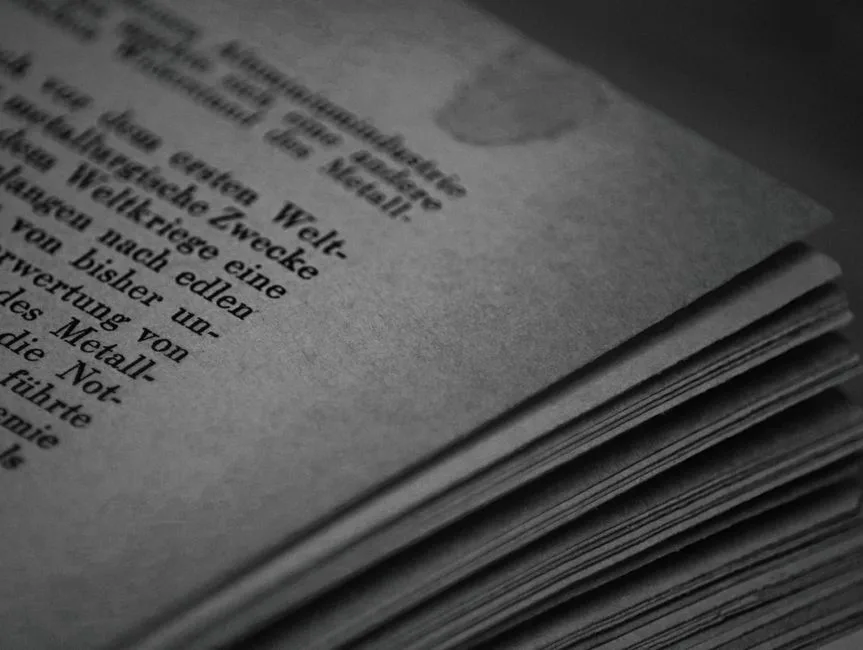
Cognitive Ease vs. Cognitive Strain
Cognitive ease shows up when something is clear, familiar, or in high-contrast type — it feels comfortable and true, but it also makes System 2 lazy and gullible. Cognitive strain — a faint font, an awkward sentence, an unexpected snag — puts System 2 on alert. Researchers reported that printing Cognitive Reflection Test questions in a faint, degraded font lowered error rates by forcing people to slow down and check. Large-scale replications have since failed to reproduce this disfluency effect, so it is contested rather than settled.
1 / 10What primary cognitive trait is measured by Shane Frederick's Cognitive Reflection Test (CRT)?
The CRT measures an individual's willingness to suppress an immediate, plausible-feeling intuitive answer in favor of deliberate mathematical verification.
Lesson 1 has 55 cards. Keep going in the free app.
Question -
 DanielPenfield · CC BY-SA 4.0 ↗02
Heuristics, Shortcuts, and Judgment Traps in Daily Life
Anchoring, Availability, and the WYSIATI Rule · Representativeness, Base Rates, and the Conjunction Fallacy
Lesson 2 · 10 cards Pexels · Stephan Müller ↗
The Power of Framing Effects
Framing effects demonstrate that presenting mathematically identical facts in different terms (e.g., '90% survival rate' vs '10% mortality rate') activates distinct emotional associations in System 1, leading patients and doctors to make wildly divergent medical decisions.
DanielPenfield · CC BY-SA 4.0 ↗The Anchoring Effect
See a number — any number, even an irrelevant one — right before estimating something, and your guess drifts toward it. That's the Anchoring Effect. In Kahneman and Tversky's classic demonstration, participants spun a rigged wheel that stopped at either 10 or 65, then guessed what percentage of United Nations members are African countries. Those who saw 10 guessed 25% on average; those who saw 65 guessed 45%. The wheel had nothing to do with Africa, yet it moved every answer.
 Pexels · ha ha · Pexels License ↗
Anchors Show Up Everywhere
Anchoring isn't just a lab trick. A supermarket sign reading "Limit 12 per customer" pushed shoppers to buy about 7 cans of soup on average — more than double the 3.3 cans bought with no limit posted. Professional real-estate agents shown a manipulated listing price let roughly 41% of that manipulation carry into their own valuations, while insisting the price hadn't swayed them. And German judges who rolled loaded dice landing on 9 sentenced a shoplifter to 8 months, versus just 5 months after rolling a 3.
 Pexels · Kampus Production · Pexels License ↗
How an Anchor Works
Anchoring pulls on the mind two different ways. Through deliberate adjustment, System 2 knows an anchor is extreme and tries to move away from it, but effortfully, and it usually stops short. Through associative suggestion, System 1 treats the anchor as a hint and quietly activates ideas that fit its magnitude, no conscious adjusting involved. Negotiators exploit the second route: opening with an aggressive first offer plants an anchor that frames the entire bargaining range in their favor.
 Pexels · levan simonshvili · Pexels License ↗
The Availability Cascade
A minor risk gets media coverage, which triggers public alarm, which drives more coverage, which drives more alarm — until a small, real danger has snowballed into a panic wildly out of proportion to the actual odds. Legal scholars Timur Kuran and Cass Sunstein coined the term Availability Cascade for this self-reinforcing spiral, and Kahneman uses it to describe exactly this pattern. It can end in disproportionate regulation or public spending, driven not by the size of the risk but by how loudly and how often it got talked about.
 Wikimedia Commons · AWeith · CC BY-SA 4.0 ↗
WYSIATI
WYSIATI — "What You See Is All There Is" — is Kahneman's name for System 1's biggest blind spot: it builds a confident, coherent story out of whatever information is currently in front of it, without pausing to ask what's missing. It's why a "90% survival rate" and a "10% mortality rate" for the same procedure produce different decisions — each frame simply activates a different, self-contained story. In learning, WYSIATI is why one introductory chapter can feel like mastery of an entire subject.
 Pexels · RDNE Stock project · Pexels License ↗
The Representativeness Heuristic
Does this person, or this event, "look like" a typical member of some category? System 1 answers that question and calls it a probability estimate — the Representativeness Heuristic. The trouble is that resemblance to a stereotype and actual statistical likelihood are two different things, and System 1 routinely swaps one for the other, ignoring how common or rare that category actually is in the first place.
 Wikimedia Commons · Brendenmrogers · CC BY-SA 4.0 ↗
The Linda Problem
Told that Linda is single, outspoken, and once marched in anti-nuclear demonstrations, 85–90% of people judge it more likely that "Linda is a bank teller active in the feminist movement" than plainly "Linda is a bank teller" — even though the first option requires the second to also be true, so it can never be more probable. This is the Conjunction Fallacy: adding vivid, plausible detail makes a story feel more real to System 1, even as it mathematically shrinks the odds.
 Bhullargraphic · CC BY-SA 4.0 ↗
The Law of Small Numbers
Small samples are noisy, but System 1 treats them as trustworthy miniatures of the whole population — the Law of Small Numbers. A real epidemiological puzzle: the counties with the lowest kidney cancer rates were mostly small and rural — and so were the counties with the highest rates. Small populations simply swing to extremes by chance in both directions. The same blind spot leads researchers to trust small, underpowered studies, producing flashy findings that later fail to replicate.
1 / 10What are the two distinct psychological mechanisms through which anchoring operates?
System 2 engages in effortful, insufficient deliberate adjustment, while System 1 experiences automatic associative suggestion and semantic priming.
Lesson 2 has 52 cards. Keep going in the free app.
Question -
 Pexels · Liezl Wilken · Pexels License ↗03
Overconfidence, Narrative Illusions, and the Expert Mindset
The Illusion of Validity, Hindsight Bias, and Narrative Fallacy · Intuition Conditions, Optimism Bias, and the Premortem Protocol
Lesson 3 · 10 cards Pexels · Anna Shvets ↗
Structured Trait Evaluation Protocol
To eliminate halo errors and noise in hiring and evaluation, Kahneman recommends selecting 5 to 6 distinct, non-overlapping performance traits, establishing explicit 1-to-5 behavioral scoring rubrics, and summing the scores before permitting global intuitive review.
Pexels · Liezl Wilken · Pexels License ↗The Narrative Fallacy
Coined by Nassim Nicholas Taleb and taken up by Kahneman, the Narrative Fallacy is the mind's compulsion to turn messy, random history into a tidy story of cause and effect — one that makes the outcome look inevitable in hindsight. It's why business books credit a company's rise entirely to a visionary founder, quietly writing survivorship bias and plain luck out of the story. The neater the story, the more it should raise suspicion about what got left out.
 Pexels · Max Grakov · Pexels License ↗
Hindsight Bias
The instant an outcome is known, memory quietly rewrites itself to make that outcome feel like it was obvious all along — the classic "I knew it all along." First documented by Baruch Fischhoff, Hindsight Bias works by warping recall of what you actually believed before you knew the result. The best defense is a written decision log kept at the time of choice, since it preserves the real uncertainty that memory will otherwise erase.
 Pexels · RDNE Stock project · Pexels License ↗
Outcome Bias
A doctor who takes a sound, low-risk gamble that ends badly gets blamed; a reckless manager whose long-shot bet pays off gets celebrated as a visionary. That's Outcome Bias — judging a decision by how it turned out rather than by how good the decision-making actually was, given what was known at the time. It punishes disciplined, evidence-based choices that happen to hit bad luck, and rewards reckless ones that get lucky, which teaches exactly the wrong lesson.
 Pexels · Pharaoh · Pexels License ↗
The Illusion of Validity
Confidence and accuracy are not the same thing. Kahneman calls this gap the Illusion of Validity: subjective certainty comes from how coherent a story feels to System 1, not from any track record of being right. Evaluating officer candidates in a leaderless group exercise for the Israeli Defense Forces, Kahneman's team felt sure they could spot natural leaders, but their ratings had almost zero predictive power — a confidence gap that shows up on Wall Street too, where fund managers' year-to-year stock-picking success correlates at just 0.01 with itself, indistinguishable from chance.
 Pexels · Jakub Zerdzicki · Pexels License ↗
Why Simple Formulas Beat Experts
Shown the exact same case file twice, human experts contradict their own earlier judgment up to 20% of the time — mood, fatigue, and the order cases arrive in all quietly shift the verdict. Robyn Dawes showed that even "improper" linear models — ones that just add up standardized scores with equal weight, no fancy tuning — routinely beat that noisy human judgment, because a formula, unlike a person, applies the same rule every single time.
 Pexels · Martin Frias · Pexels License ↗
When Is Expert Intuition Trustworthy?
Kahneman spent years arguing that intuition is mostly illusion; Gary Klein spent years studying firefighters and ICU nurses who trusted theirs and were right. Their joint 2009 paper, "A Failure to Disagree," found both were correct, under different conditions. Genuine expert intuition needs a high-validity environment (chess, firefighting, anesthesiology — stable, rule-governed domains) plus years of practice with fast, clear feedback. In low-validity domains like stock-picking or long-range forecasting, decades of experience just breed more confidence, not more accuracy.
 Pexels · RDNE Stock project · Pexels License ↗
The Planning Fallacy
Planners almost always assume the best case will happen — the Planning Fallacy. Kahneman lived it: writing a high-school psychology curriculum, his committee's own inside view guessed 1.5 to 2.5 years. Checking the outside view — how long similar committees actually took — should have warned them: 40% of such teams never finished at all, and the rest took 7 to 10 years. Kahneman's team ignored the base rate. It took them 8 years.
 Marek Ślusarczyk (Tupungato) Photo portfolio · CC BY 3.0 ↗
Reference Class Forecasting
To beat the planning fallacy, planner Bent Flyvbjerg formalized a fix called Reference Class Forecasting: find a reference class of genuinely comparable past projects, gather the real distribution of how long they took or how much they overran, use that distribution — not gut feeling — as your baseline estimate, and adjust it only modestly, and only for specific, verifiable advantages your case actually has. The same discipline applies to a personal goal, like a new degree: look up what actually happens to most beginners first.
1 / 10Who coined the term 'Narrative Fallacy'?
Taleb coined the Narrative Fallacy; Kahneman later took up and expanded the concept in his work on cognitive bias.
Lesson 3 has 52 cards. Keep going in the free app.
Question -
 Pexels · DS stories · Pexels License ↗04
Choices, Risk, and the Psychology of Losses
Prospect Theory, Loss Aversion, and the Endowment Effect · The Fourfold Pattern, Sunk Costs, and Mental Accounting
Lesson 4 · 10 cards Pexels · KATRIN BOLOVTSOVA · Pexels License ↗
The Endowment Effect
In a classic experiment, students handed a coffee mug demanded a median $7.12 to sell it back, while students without a mug would pay only a median $2.87 for one — same mug, wildly different price, depending purely on who currently owned it.
Pexels · DS stories · Pexels License ↗Prospect Theory
For over two centuries, economists assumed people weigh choices against total wealth (Daniel Bernoulli's 1738 Expected Utility Theory). In 1979, Daniel Kahneman and Amos Tversky overturned that with Prospect Theory: people actually judge outcomes as gains or losses relative to a psychological reference point — usually wherever they currently stand — not as absolute wealth. That single shift, called Reference Dependence, is why a coin flip framed as "keep $50" feels completely different from the same flip framed as "risk losing $50."
 PattayaPatrol · CC BY-SA 4.0 ↗
Loss Aversion
"Losses loom larger than gains," Kahneman writes — losing $100 hurts more than finding $100 delights, by a measured factor of roughly 1.5 to 2.5. That's Loss Aversion, and it shows up even among elite performers: PGA Tour golfers putt more accurately when putting for par, to avoid the "loss" of a bogey, than when putting for birdie, to capture the equivalent "gain." Avoiding pain, it turns out, motivates more precisely than chasing pleasure.
 Pexels · Markus Winkler · Pexels License ↗
Status Quo Bias
Loss aversion makes the default option disproportionately sticky — Status Quo Bias — because leaving it feels like a loss, even when the alternative is objectively better. A widely cited comparison of European organ donation (Johnson and Goldstein, 2003) found that opt-out countries had effective consent rates of roughly 86% to nearly 100%, while opt-in countries ranged from about 4% to 28% (several have since switched to opt-out). It is not a controlled experiment, but the gap is far too large for willingness alone — much of it comes down to which choice took zero effort.
 Pexels · Towfiqu barbhuiya ↗
Loss Aversion and Habit Stagnation
In self-improvement and learning, loss aversion often leads to defensive stagnation. Learners refuse to abandon obsolete methods or flawed study habits because discarding established routines feels like an immediate, tangible forfeiture of past effort, while future benefits remain abstract.
 Pexels · Erik Mclean · Pexels License ↗
Why Losses Hurt More
Loss aversion has a plausible evolutionary root: for most of human history, missing a threat was far more costly than missing an opportunity, so the amygdala and the body's threat-response system evolved to react more urgently to potential losses than to potential gains. That same asymmetry plays out in ordinary commerce — a price increase provokes noticeably sharper consumer backlash than the mild pleasure customers feel from an equivalent price cut.
 Pexels · Thirdman · Pexels License ↗
Reframing to Beat Loss Aversion
Loss aversion quietly traps learners who cling to a study method or routine that isn't working, because dropping it feels like forfeiting the effort already sunk into it, while the benefits of switching remain abstract and uncertain. The fix is to reframe the status quo itself as the loss: every day spent on a worse method is a day of progress that a better one would have delivered. Naming that opportunity cost turns "stay safe" into "stop losing."
 Pexels · Adem Erkoç · Pexels License ↗
The Fourfold Pattern
Prospect Theory produces four distinct risk personalities depending on the situation. With a likely gain, people go risk-averse, grabbing a safe sure thing (the Certainty Effect). With a likely loss, they flip to risk-seeking, gambling on long odds rather than accept a sure loss — the most dangerous quadrant, and why failing ventures double down. With an unlikely gain, they turn risk-seeking again (lottery tickets). With an unlikely loss, they turn risk-averse (buying insurance against disaster).
 Pexels · Towfiqu barbhuiya · Pexels License ↗
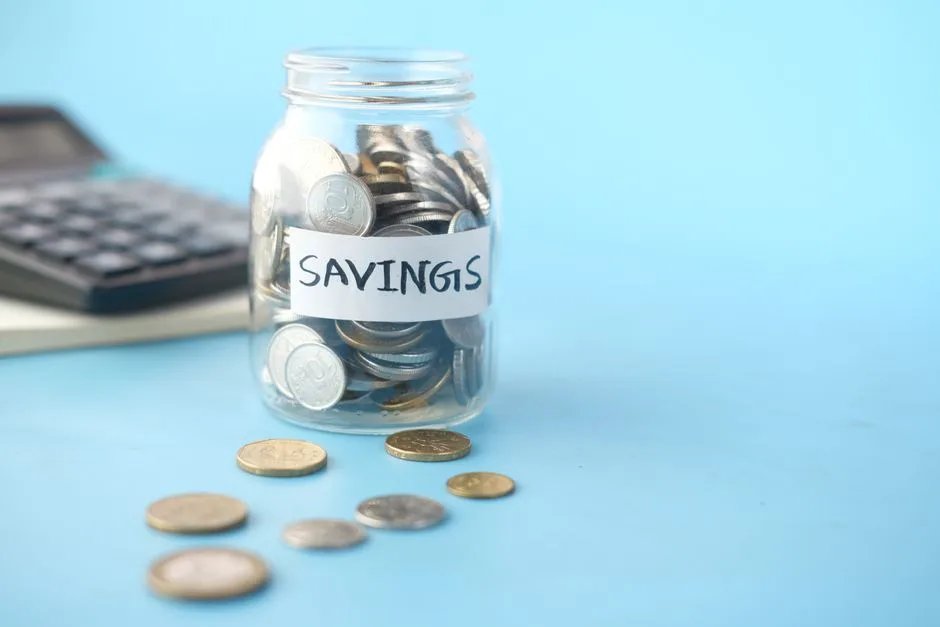
Mental Accounting
Richard Thaler coined Mental Accounting for a habit everyone has: treating money (and time) as if it lived in separate, walled-off buckets, even though a dollar is a dollar wherever it sits. Vacation savings get protected fiercely while high-interest credit-card debt piles up untouched in a different mental account. The same logic wrecks schedules: lose 30 minutes from a planned study block, and the all-or-nothing accounting in people's heads leads them to write off the entire day rather than simply using whatever time is still left.
 Pexels · Pixabay · Pexels License ↗
The Sunk Cost Fallacy
Money, time, or effort already spent is gone no matter what happens next — but the Sunk Cost Fallacy keeps people pouring more into a bad job, a failing project, or an unhappy relationship simply because they've already invested so much. In investing, the same instinct produces the Disposition Effect: selling winning stocks too early to lock in a gain, while clinging to losing stocks to avoid making a loss official. Rational choice ignores the past entirely and asks only what happens from here.
1 / 10In classic coffee mug experiments, what median selling price did mug owners demand compared to non-owners' median willingness to pay of $2.87?
Mug owners demanded a median $7.12 to part with their mug, more than double the median $2.87 that prospective buyers were willing to pay, illustrating the endowment effect.
Lesson 4 has 51 cards. Keep going in the free app.
Question -
 Pexels · Zehra Karadeniz · Pexels License ↗05
Two Selves, Well-Being, and Metacognitive Mastery
Experiencing Self vs. Remembering Self and the Peak-End Rule · Metacognitive Mastery: Applying Kahneman's Insights to Self-Help and Learning
Lesson 5 · 10 cards Pexels · RDNE Stock project ↗
Architecting Learning Memory via Peak-End Design
To build self-sustaining study habits, learners should intentionally manage the end of study blocks. Concluding a study session immediately after solving a difficult problem or mastering an insight leaves a positive peak-end memory stamp that fuels enthusiasm for future sessions.
Pexels · Zehra Karadeniz · Pexels License ↗The Experiencing vs. Remembering Self
Kahneman splits the self in two. The Experiencing Self lives entirely in the present, answering "how does this feel right now?" — its real-time pleasure and pain is called Experienced Utility. The Remembering Self is the storyteller that later asks "how was it, overall?", and it alone decides what gets repeated, because it alone has a voice in future choices — the Experiencing Self never gets a vote. Whatever weight the Remembering Self assigns a past outcome when choosing again is called Decision Utility.
 Pexels · Towfiqu barbhuiya · Pexels License ↗
The Peak-End Rule
Ask someone to rate an experience afterward, and they'll barely register how long it lasted — that's Duration Neglect. Instead, the Peak-End Rule says the whole episode gets judged by averaging just two moments: its most intense point and how it finished. "A story is about significant events... not about time passing," as the book puts it. None of this means the pain wasn't real in the moment — the Experiencing Self still feels every second — it's only the Remembering Self's later verdict that ignores duration.
 Wikimedia Commons · Chainwit · CC BY-SA 4.0 ↗
The Colonoscopy Studies
Donald Redelmeier and Daniel Kahneman tested the Peak-End Rule on real patients undergoing colonoscopies. Patients whose procedure ended with an extra stretch of milder discomfort, rather than stopping right at the sharpest pain, rated the whole experience as less unpleasant overall, even though it had objectively lasted longer. Since the Remembering Self ignores duration and weighs mainly the ending, a longer procedure with a gentler finish can be remembered more kindly than a shorter one that ends on its worst moment.
 PattayaPatrol · CC BY-SA 4.0 ↗
The Focusing Illusion
"Nothing in life is as important as you think it is, while you are thinking about it" — that's Kahneman's Focusing Illusion. Ask people whether Californians are happier than Midwesterners because of the climate, and both groups confidently say yes; measure actual day-to-day well-being, and there's no real difference. Dwelling on one salient factor — sunshine, a big raise, a new house — makes the mind wildly overweight its effect on lasting happiness, since ordinary daily life is what actually fills most of a day.
 Pexels · Antoni Shkraba · Pexels License ↗
The Day Reconstruction Method
To measure real well-being without asking people to rely on a possibly-biased memory, Kahneman developed the Day Reconstruction Method (DRM): instead of asking "are you happy?", it has people systematically walk back through yesterday episode by episode, noting what they were doing and how it actually felt at the time. That captures something closer to the Experiencing Self's real-time verdict, sidestepping the Remembering Self's peak-end shortcuts and its blindness to duration.
 US Air Force from USA · Public domain ↗
Checklists Over Willpower
Kahneman's practical answer to a brain full of biases isn't more willpower — System 2 is lazy and tires easily, so relying on self-discipline to catch every error is a losing bet. He points instead to external forcing functions that catch mistakes mechanically: structured checklists and simple decision rules, the logic pilots follow with pre-flight checklists however experienced they are. (He later expanded this into "decision hygiene" — adding tools like structured assessments, independent judgments and delaying intuition — in his 2021 book Noise, with Olivier Sibony and Cass Sunstein.)
 Pexels · Andrea Piacquadio · Pexels License ↗
Attribute Substitution
Ask a hard question — "is this study method actually effective?" — and System 1 quietly swaps in an easier one it can answer instantly: "does this feel familiar and comfortable?" Kahneman calls the swap Attribute Substitution, and the Affect Heuristic is its most common flavor, where liking something gets mistaken for it being safe or good. The catch is simple: pause before a big conclusion and ask, "what question did my intuitive mind actually just answer?"
 Pexels · cottonbro studio ↗
Adversarial Collaboration in Personal Growth
Kahneman championed 'adversarial collaboration'—working directly with intellectual opponents to design joint empirical tests. In personal learning, recruiting dissenting peers to audit reasoning breaks the epistemic trap of WYSIATI and replaces confirmation bias with collective verification.
1 / 10How can educators and trainers leverage duration neglect to improve student course evaluations?
Because duration is neglected, student memories and course ratings are dominated by the most stimulating peak demonstrations and the quality of final wrap-ups.
Lesson 5 has 52 cards. Keep going in the free app.
Question


What you'll be able to do 10 objectives, from the pack's lessons
- Distinguish the automatic, fast heuristics of System 1 from the effortful, deliberate computations of System 2.
- Explain how Cognitive Ease, Priming, and the Associative Machine let System 1 impressions feel true without System 2 scrutiny.
- Explain the Anchoring, Availability, and WYSIATI (What You See Is All There Is) heuristics and how they bias judgment.
- Explain how Representativeness, Base Rate Neglect, the Conjunction Fallacy, the Law of Small Numbers and Regression to the Mean distort probability.
- Evaluate the Illusion of Validity, Hindsight Bias, Outcome Bias and the Narrative Fallacy that inflate confidence in retrospective judgment.
- Explain when expert intuition is trustworthy, how optimism bias distorts planning, and how the outside view and premortem counter it.
- Explain Prospect Theory, loss aversion, and the endowment effect: why losses loom larger than equivalent gains.
- Explain the Fourfold Pattern of risk preferences, mental accounting, and the sunk cost fallacy.
- Distinguish the Experiencing Self from the Remembering Self, and explain the Peak-End Rule and duration neglect.
- Apply Kahneman's insights — checklists over willpower, the affect heuristic, and decoupling process from outcome — to real-world learning.
Study guide.
The same study guide as in the app, one page for each lesson, with its key facts and a self-test.
Its cards name 1 source.
262 of its 262 cards name their source. These are the sources named.
- Thinking, Fast and Slow — Daniel Kahneman
Hover over a photo, or tap its i, to see where it came from. All 10:
- Lesson 1: Pexels · Yan Krukau · Pexels License ↗
- Lesson 1: Pexels · Sedanur Kunuk ↗
- Lesson 2: DanielPenfield · CC BY-SA 4.0 ↗
- Lesson 2: Pexels · Stephan Müller ↗
- Lesson 3: Pexels · Liezl Wilken · Pexels License ↗
- Lesson 3: Pexels · Anna Shvets ↗
- Lesson 4: Pexels · DS stories · Pexels License ↗
- Lesson 4: Pexels · KATRIN BOLOVTSOVA · Pexels License ↗
- Lesson 5: Pexels · Zehra Karadeniz · Pexels License ↗
- Lesson 5: Pexels · RDNE Stock project ↗
- Thinking, Fast and Slow by Daniel Kahneman · on Amazon ↗
These are affiliate links: if you buy a book through one, FlashFeed may earn a small commission at no extra cost to you. The commission helps pay for FlashFeed's servers.
As an Amazon Associate we earn from qualifying purchases.
Independent study notes, not affiliated with the author or publisher.
- Cards
- 262
- Lessons
- 5
- Version
- 1.0.20
- Language
- English
The whole pack is one file. Read the pack file ↗
FlashFeed is on the App Store and Google Play.
FlashFeed is free on iPhone and Android, and needs no account.