
Thinking, Fast and Slow study guide · Lesson 1 of 5
Two Systems of the Mind: Fast Intuition vs. Slow Deliberation
System 1 and System 2: Characteristics and Cognitive Division of Labor · Cognitive Ease, Priming, and the Associative Machine
Unofficial study guide for Thinking, Fast and Slow by Daniel Kahneman. FlashFeed is not affiliated with the author or publisher.
This is the lesson's study guide from the FlashFeed app, plus its key facts and a self-test.
What you'll be able to do
- Distinguish the automatic, fast heuristics of System 1 from the effortful, deliberate computations of System 2.
- Explain how Cognitive Ease, Priming, and the Associative Machine let System 1 impressions feel true without System 2 scrutiny.
Lesson 1: Two Systems of the Mind: Fast Intuition vs. Slow Deliberation
System 1 and System 2: Characteristics and Cognitive Division of Labor
Human mental functioning is governed by a fundamental dual-process architecture whose System 1 and System 2 labels were coined by psychologists Keith Stanovich and Richard West and popularised by Daniel Kahneman. In this cognitive framework, our everyday conscious experience and underlying behavior are shaped by the continuous dynamic interaction of two distinct modes of information processing:
- System 1 (Fast, Automatic, Associative): Operates automatically, effortlessly, and rapidly, with little or no conscious voluntary control. It perceives spatial depth, decodes subtle facial expressions of anger or joy, recoils from sudden loud sounds, navigates well-worn driving routes, and instantly accesses deeply overlearned linguistic associations (such as completing the phrase "bread and butter" or answering "2 + 2 = ?"). It cannot be turned off at will and functions as an ever-active associative engine that generates continuous impressions, intuitions, and feelings about the environment.
- System 2 (Slow, Deliberate, High-Effort): Represents the conscious, reasoning self endowed with agency, subjective volition, and focused analytical attention. It executes complex mental computations (such as multiplying 17 by 24), follows formal logical rules, constructs hypothetical counterfactual scenarios, compares competing multidimensional choices, and suppresses impulsive emotional urges.
The foundational operational constraint governing this cognitive partnership is the Law of Least Effort. Because analytical computation and continuous attentional monitoring are metabolically expensive and draw on finite neural reserves, System 2 functions as a lazy controller. It naturally defaults to a state of minimal exertion, uncritically endorsing the impressions, intuitions, and shortcuts generated by System 1 unless a glaring contradiction, surprising anomaly, or explicit error alarm is triggered.
Cognitive effort is not merely a subjective psychological experience; it is a measurable physiological event. In pioneering psychophysiological experiments conducted by Jackson Beatty and Daniel Kahneman, researchers discovered that pupil dilation serves as a remarkably precise physical index of mental effort. When a subject performs demanding mental tasks (such as the Add-1 or Add-3 digit transformation tests), the pupil dilates as the difficulty of the computation rises, reaching maximum dilation at the peak of mental workload and constricting back toward baseline once the answer is reached or the task is abandoned.
Furthermore, deliberate analytical thought and conscious self-control draw from the exact same shared executive reservoir. As demonstrated by social psychologist Roy Baumeister, exerting sustained self-discipline, emotional regulation, or strenuous cognitive processing induces a state of ego depletion. In a depleted state, individuals exhibit significantly reduced willpower, greater impulsivity, and impaired decision quality. This was powerfully illustrated in an empirical study of Israeli parole judges by Shai Danziger, Jonathan Levav, and Liora Avnaim-Pesso: judges granted parole in approximately 65% of cases immediately following their morning and lunch meal breaks, but approval rates plummeted to nearly 0% right before the next scheduled break, a pattern the authors attributed to fatigue pushing judges toward the easiest, least risky option of denial (critics argue that case-ordering effects could explain much of it). Large-scale replications have since failed to reproduce ego depletion, and both this study and the broader ego-depletion effect are now considered contested rather than settled science.
The supervisory role of System 2 in suppressing automatic impulses is demonstrated by the classic Stroop Effect (first documented by J. Ridley Stroop in 1935). When participants are asked to name the physical ink color of words that spell conflicting color names (such as the word "GREEN" printed in red ink), the automatic System 1 reading routine conflicts with the intentional System 2 color-naming goal, requiring conscious inhibition and slowing response times. Similarly, cognitive illusions such as the Müller-Lyer illusion—where two equal horizontal lines appear unequal due to arrow-fins—prove that System 1 perceptual impressions persist even when System 2 possesses objective proof of physical equality.
The chronic reluctance of System 2 to intervene is captured by Shane Frederick's Cognitive Reflection Test (CRT). In the famous Bat-and-Ball Problem, when asked to calculate the price of a ball when a bat and ball cost 1.10 in total and the bat costs 1.00 more than the ball, System 1 effortlessly blurts out 10 cents. Over 50% of elite university students fail to check this intuition and write 10 cents, failing to recognize that if the ball costs 10 cents, the total would be $1.20 (the correct answer is 5 cents). High CRT scorers demonstrate lower temporal discounting (more patience in choosing larger, later rewards), as Frederick reported in 2005.
Cognitive Ease, Priming, and the Associative Machine
Underneath conscious awareness, System 1 operates as an intricate Associative Machine. When exposed to any word, image, or environmental cue, the mind initiates a cascade of Spreading Activation: neural nodes representing related semantic concepts, emotional valences, and motor memories are activated simultaneously without conscious intent. When you encounter a stimulus such as the word "VOMIT", concepts of nausea, illness, bad food, and physical disgust are primed across the mental landscape in milliseconds. This associative engine strictly enforces Associative Coherence, automatically weaving isolated pieces of sensory data into a mutually reinforcing, causally coherent interpretation of reality.
This automatic associative network bridges abstract thought and physical movement through the Ideomotor Effect. In the celebrated 1996 Florida Effect experiment led by psychologist John Bargh, young college students unscrambled sentence puzzles containing words associated with the elderly (such as "Florida," "forgetful," "gray," or "wrinkle"). Upon completing the task, participants unobtrusively walked down the hallway to the exit significantly slower than control participants, despite having zero conscious awareness of the aging theme. Large replication attempts have since failed to reproduce this effect, and Kahneman has publicly acknowledged that the underlying priming research was weaker than the book presented, so the finding is now treated as contested rather than settled. Reciprocally, physical motor movements were reported to prime mental states: holding a pencil horizontally between one's teeth forces the zygomaticus major smile muscles to contract, unconsciously enhancing feelings of amusement when rating cartoons, whereas furrowing the brow increases analytical skepticism. A 17-laboratory Registered Replication Report in 2016 failed to reproduce the pencil-smile finding, so it is now treated as contested rather than established.
A foundational distinction in Kahneman's cognitive psychology is the psychological spectrum between Cognitive Ease and Cognitive Strain:
- Cognitive Ease: Experienced when stimuli are presented clearly with crisp visual contrast, simple phrasing, or high familiarity. In cognitive ease, an individual feels comfortable, intuitive, and confident. However, cognitive ease causes System 2 to become complacent and lax, leading to uncritical acceptance of assumptions, reduced verification, and heightened susceptibility to cognitive illusions.
- Cognitive Strain: Triggered by visual disfluency, degraded or faint fonts, complex syntax, conflicting evidence, or unexpected task difficulty. Cognitive strain immediately mobilizes System 2, heightening vigilance, critical skepticism, and analytical verification.
In experimental tests of the Cognitive Reflection Test, when questions were printed in a faint, degraded font, participants' error rates were reported to drop dramatically because the visual difficulty forced System 2 into active engagement. Large-scale replication attempts have since failed to reproduce this disfluency effect, so it should be treated as a contested rather than settled finding. For learners and self-improvement practitioners, this reveals the dangerous Fluency Illusion: the sensation of easy, effortless reading during study is a false signal of mastery. Passive re-reading creates cognitive ease, which System 1 mistakes for deep comprehension. Long-term conceptual retention requires introducing "desirable difficulties" and deliberate cognitive strain through active recall, self-quizzing, and spaced retrieval practice.
Because System 1 treats processing ease as a reliable proxy for objective reality, repeated claims inevitably feel more truthful than novel statements. This is the Illusory Truth Effect: frequent repetition increases cognitive familiarity, which System 2 routinely mistakes for verified truth. Marketers, political campaigns, and organizational culture leverage this mechanism to establish beliefs without providing evidential justification.
Similarly, the Halo Effect represents the tendency of System 1 to generalize an initial positive or negative impression of a single salient trait across completely unrelated attributes of a person or institution. If an individual is physically attractive, charismatic, or confident, observers instinctively assume they are also intelligent, generous, and trustworthy. In educational grading, evaluating all essays written by a single student in sequence allows the grade of the first essay to contaminate subsequent evaluations. To defeat the halo effect, Daniel Kahneman instituted a debiasing protocol of grading all students' responses to Question 1 before moving to Question 2 while maintaining strict anonymization.
Finally, System 1 relies on a Positive Test Strategy and confirmation bias, instinctively searching for confirming evidence for an existing hypothesis rather than seeking out disconfirming counterexamples. Achieving true cognitive hygiene requires consciously deploying System 2 to search for refutations and alternative explanations before reaching definitive conclusions.
Key facts
System 1 and System 2
Kahneman borrows the System 1/System 2 labels from psychologists Keith Stanovich and Richard West. System 1 is fast, automatic, and effortless — it reads faces, drives familiar roads, and answers "2+2" without being asked twice. System 2 is slow, deliberate reasoning, the kind multiplying 17 by 24 requires. Because sustained attention is costly, System 2 follows the Law of Least Effort: a lazy controller that rubber-stamps System 1's impressions unless something surprising forces it to intervene.
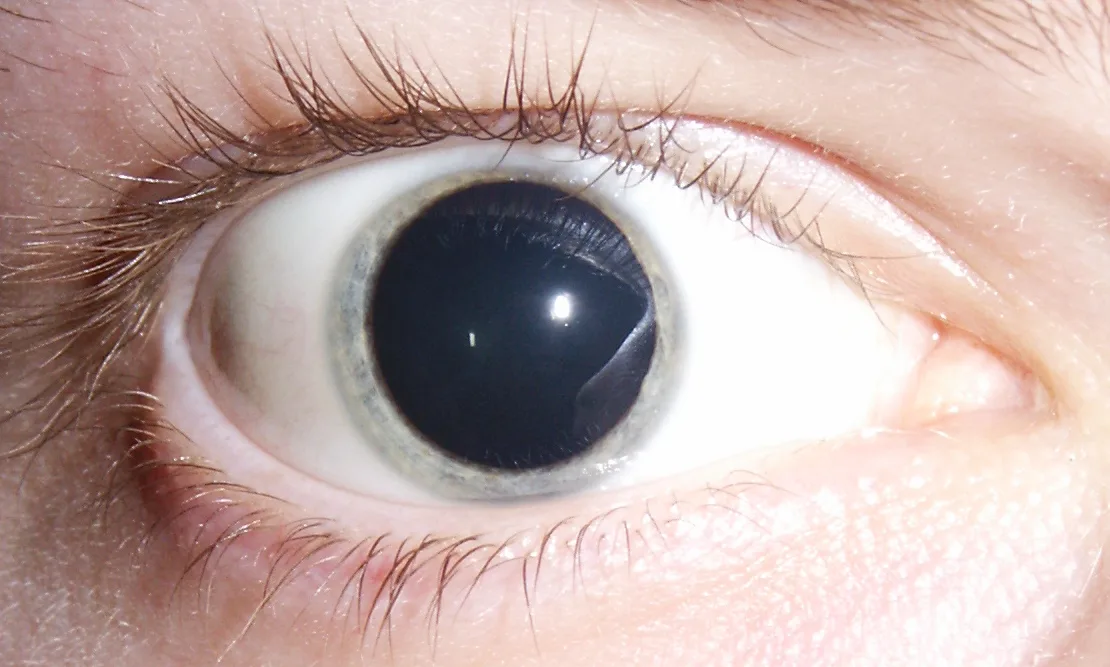
Pupil Dilation Tracks Mental Effort
Mental effort isn't just a feeling — it shows up in the body. In pupillometry experiments by Jackson Beatty and Daniel Kahneman, the pupil widened in exact proportion to how hard a subject was concentrating on a task like the Add-1 digit transformation, hitting its widest point at peak difficulty and snapping back the instant the answer arrived or the subject gave up. Pupil size, in other words, is a real-time gauge of System 2 at work.

Ego Depletion
The book reports that self-control and effortful thinking draw on the same limited mental reserve — a state Roy Baumeister called ego depletion. Exhaust it, and willpower and judgment quality suffer. Kahneman cites a study of Israeli parole judges whose approval rates reportedly fell from roughly 65% right after a meal to near zero right before the next break, as depleted judges defaulted to the easiest choice: denial. Large-scale replications have since failed to reproduce ego depletion, and both findings are now considered contested rather than settled.
The Stroop Effect
First documented by J. Ridley Stroop in 1935, the Stroop Effect shows System 2 fighting System 1 in real time. Ask someone to name the ink color of a word — easy, until the word itself names a different color, like the word "GREEN" printed in red ink. Reading is so overlearned that System 1 blurts out the word automatically, and naming the actual color requires System 2 to consciously suppress that impulse, which is why responses slow down.
The Persistence of Cognitive Illusions
In the Müller-Lyer illusion, two horizontal lines of identical physical length appear starkly unequal due to arrow-fins. Even after measuring the lines and consciously knowing they are equal (a System 2 belief), System 1 continues to perceive the outward-finned line as longer.
The Cognitive Reflection Test
Shane Frederick's Cognitive Reflection Test (CRT) measures a specific skill: catching your own wrong-but-plausible intuitions before you say them out loud. Its signature question: a bat and ball cost 1.10 together, and the bat costs 1.00 more than the ball — how much is the ball? System 1 blurts out "10 cents," but the correct answer is 5 cents (10 cents would make the total $1.20). Over half of elite university students fail to check the math, while high scorers also show more patience and less impulsive discounting in financial decisions.

The Associative Machine
Kahneman pictures System 1 as an Associative Machine: encounter any word, image, or cue, and it triggers spreading activation — a cascade of related concepts, emotions, and memories firing at once, with no conscious effort. Hear the word "VOMIT" and ideas of nausea, illness, and disgust light up within milliseconds. The same machine enforces associative coherence, automatically stitching whatever scattered cues you notice into one tidy, causally-connected story — whether or not that story is actually true.
The Florida Effect
The book reports a 1996 study by John Bargh and colleagues: young adults unscrambled sentences containing words like "Florida," "forgetful," and "wrinkle" — all associated with old age — then walked out of the lab measurably slower, with zero awareness of the connection. Kahneman used this ideomotor effect (primed ideas quietly steering physical behavior) as a flagship example of System 1's reach. Large replication attempts have since failed to reproduce the effect, and Kahneman has publicly acknowledged the underlying priming research was weaker than the book presented.
The Facial-Feedback Study
The book reports a 1988 study by Strack, Martin, and Stepper: participants held a pencil sideways in their teeth, forcing the same muscles used in smiling, and rated cartoons as funnier than participants who held the pencil with pursed lips, which blocks a smile. The claim: physical expression feeds back into emotion, not just the other way around. A 17-laboratory Registered Replication Report in 2016 failed to reproduce the effect, so it's now treated as contested rather than established.
Cognitive Ease vs. Cognitive Strain
Cognitive ease shows up when something is clear, familiar, or in high-contrast type — it feels comfortable and true, but it also makes System 2 lazy and gullible. Cognitive strain — a faint font, an awkward sentence, an unexpected snag — puts System 2 on alert. Researchers reported that printing Cognitive Reflection Test questions in a faint, degraded font lowered error rates by forcing people to slow down and check. Large-scale replications have since failed to reproduce this disfluency effect, so it is contested rather than settled.

The Illusory Truth Effect
Say something enough times and it starts to feel true, even if it isn't. The Illusory Truth Effect is System 1 mistaking familiarity for accuracy: repetition makes a claim easier to process, and that processing ease gets read as a signal of truth rather than what it actually is — mere exposure. Advertisers, political campaigns, and office rumors all exploit the same shortcut, building belief through repetition rather than evidence.
The Halo Effect
Meet someone charismatic or good-looking, and System 1 quietly assumes they must also be smart, generous, and trustworthy — traits that have nothing to do with charisma or looks. That's the Halo Effect: one salient impression bleeding into judgments about everything else. It's why a single strong first essay can inflate a grader's opinion of every essay that student writes afterward, unless the grader deliberately breaks the halo by evaluating one dimension at a time across all students before moving to the next.
Debiasing Grading Against the Halo Effect
To prevent the halo effect from distorting student evaluation, Kahneman established the protocol of grading all students' responses to Question 1 before moving to Question 2, while keeping student identities strictly anonymized.
The Positive Test Strategy
When testing a hunch, System 1 doesn't look for reasons it might be wrong — it goes looking for evidence that confirms it, and stops there. Kahneman calls this default habit the Positive Test Strategy, and it's the engine behind confirmation bias: a hypothesis feels validated the moment supporting evidence turns up, whether or not anyone bothered to search for the disconfirming case. Genuine cognitive hygiene means deliberately putting System 2 to work hunting for the counter-example instead.
The Fluency Illusion
Re-reading your notes feels productive, but that feeling can lie. Passive review creates cognitive ease — the words flow smoothly — and System 1 mistakes that smoothness for mastery. This is the Fluency Illusion, and it's dangerous precisely because it feels like learning. Real retention comes from desirable difficulty: closing the book and forcing recall, quizzing yourself, and spacing out practice — all of which feel harder in the moment but build memory that lasts.
Self-test
Answer each question from memory, then check your work against the answer key.
1. Which pair of psychologists originally coined the System 1 / System 2 labels Kahneman later popularized?
- AShai Danziger and Jonathan Levav
- BKeith Stanovich and Richard West
- CJackson Beatty and Daniel Kahneman
- DStrack, Martin, and Stepper
2. Which of these is a System 2 task rather than an automatic System 1 response?
- AReading someone's facial expression
- BRecoiling from a sudden loud noise
- CCompleting 'bread and butter'
- DMultiplying 17 by 24
3. In the Beatty and Kahneman pupillometry experiments, what happened to a subject's pupils at the peak of a demanding mental task?
- AThey reached maximum dilation
- BThey dilated only after the task ended
- CThey stayed the same size throughout
- DThey constricted to baseline size
4. In the Israeli parole judges study Kahneman cites, when were approval rates highest?
- AAt the very start of the workday before any cases
- BIn the middle of the night shift
- CImmediately after a meal break
- DRight before the next scheduled break
5. In the Cognitive Reflection Test's bat-and-ball problem (bat and ball cost $1.10 total; the bat costs $1.00 more than the ball), what is the correct price of the ball?
- A20 cents
- B15 cents
- C10 cents
- D5 cents
6. In the Stroop task (the word 'GREEN' printed in red ink), why does naming the ink color slow people down?
- AAutomatic reading clashes with deliberate color-naming
- BSystem 1 switches off while the ink color is named
- CColor perception needs slow System 2 computation
- DSystem 2 reads the word before System 1 can see the color
7. By default, what does the 'lazy' System 2 do with the impressions System 1 generates?
- AChecks each one carefully before any action
- BStores them for review at the end of the day
- CAccepts them unless an error alarm goes off
- DIgnores them and computes every answer anew
8. What term describes the cascade of related concepts, emotions, and memories that fire automatically when System 1 encounters a stimulus?
- AAssociative Coherence
- BSpreading Activation
- CIdeomotor Effect
- DCognitive Ease
9. In John Bargh's 1996 Florida Effect study, what did participants do after unscrambling sentences full of elderly-related words?
- AWalked out of the lab slower
- BBecame less patient financially
- CRated cartoons as funnier
- DNamed ink colors faster
10. Which condition makes System 2 complacent and lets System 1's impressions go unchecked?
- AEgo Depletion
- BCognitive Strain
- CCognitive Ease
- DAssociative Coherence
11. Which statement is NOT part of how the Illusory Truth Effect works?
- AFamiliarity gets read as verified truth
- BSystem 2 verifies the claim's original source
- CRepetition raises a claim's familiarity
- DAdvertisers exploit repetition to build belief
12. Kahneman's Positive Test Strategy describes System 1's default approach to testing a hunch as what?
- AWeighing rival competing theories
- BSeeking evidence that disproves it
- CSuspending judgment until evidence is in
- DSeeking only confirming evidence
Go deeper
- ReadThinking, Fast and Slow by Daniel Kahneman · on Amazon ↗
- StudyThinking, Fast and Slow in the FlashFeed app
These are affiliate links: if you buy a book through one, FlashFeed may earn a small commission at no extra cost to you. The commission helps pay for FlashFeed's servers.
As an Amazon Associate we earn from qualifying purchases.
Answer key
- 1. B Keith Stanovich and Richard WestStanovich and West coined the System 1/System 2 labels; Kahneman later popularized them. The other named pairs are tied to different studies.
- 2. D Multiplying 17 by 24Multiplying 17 by 24 requires slow, effortful System 2 computation. The other options are examples of overlearned, automatic System 1 responses.
- 3. A They reached maximum dilationPupils widen in proportion to task difficulty, peaking at maximum mental effort, then snapping back once the answer is reached or the task is abandoned.
- 4. C Immediately after a meal breakPer the book, parole approval hit ~65% right after a break, when judges' willpower was replenished, and fell to near zero right before the next break as ego depletion set in. Large-scale replications have since failed to reproduce this effect, so it is now treated as contested.
- 5. D 5 centsIf the ball costs 5 cents, the bat costs $1.05, totaling $1.10. Most people blurt out 10 cents without checking, which would total $1.20 instead.
- 6. A Automatic reading clashes with deliberate color-namingReading is an automatic System 1 routine, so it fires anyway and conflicts with the intentional System 2 goal of naming the ink color. Overriding it takes conscious inhibition, which slows responses.
- 7. C Accepts them unless an error alarm goes offUnder the Law of Least Effort, System 2 is a lazy controller: it defaults to minimal exertion and endorses System 1's impressions unless a contradiction, anomaly, or error alarm is triggered.
- 8. B Spreading ActivationSpreading activation is the automatic cascade itself. Associative Coherence, Cognitive Ease, and the Ideomotor Effect are related but distinct mechanisms.
- 9. A Walked out of the lab slowerPrimed participants walked out of the lab measurably slower with zero awareness of the aging theme. The other outcomes come from different studies.
- 10. C Cognitive EaseCognitive ease -- clear, familiar stimuli -- makes System 2 lax and uncritical. Cognitive strain does the opposite: it puts System 2 on alert.
- 11. B System 2 verifies the claim's original sourceThe Illusory Truth Effect runs on familiarity, not verification -- System 2 never actually checks the source; repetition just makes a claim feel true.
- 12. D Seeking only confirming evidenceThe Positive Test Strategy is System 1's habit of searching only for confirming evidence and stopping there -- the engine behind confirmation bias.
Sources
- Thinking, Fast and Slow — Daniel Kahneman
Image credits
- Pupil Dilation Tracks Mental Effort: Nutschig at English Wikipedia · CC BY-SA 3.0 — commons.wikimedia.org/wiki/File:Dilated_pupils_2006_(cropped_2).jpg
- Ego Depletion: Patrick Feller (Openverse) · by 2.0 — www.flickr.com/photos/32345848@N07/41773216575
- The Associative Machine: Wikimedia Commons · Kurt:S · CC BY 2.0 — commons.wikimedia.org/wiki/File:Dominoes_falling.jpg
- The Illusory Truth Effect: Sleeteye (Openverse) · by-sa 2.0 — www.flickr.com/photos/58437993@N05/5887997382

