
United States History
From colonial Chesapeake and Puritan New England to the Constitutional Convention, the Civil War, and Reconstruction: the Gilded Age's robber barons and strikes, the New Deal, World War II, and the Civil Rights Movement that reshaped modern America.
698 cards13 lessons39 video lessonsFree
Already have FlashFeed?Open this pack
Get this pack on your phone
Scan with your phone's camera.
flashfeedlearningapp.com/packs/us-history
Part of the History Trivia collection.


13 lessons.
Each lesson has a study guide to read and objectives you can test yourself on. Its cards and games show up in your feed. Try one of its cards right here. Play a few of its games here too. Every lesson has a short video.
-
 Internet Archive Book Images · No restrictions ↗01
Pre-Contact America, Encounter, and Colonial Foundations (Pre-1607–1754)
Indigenous Civilizations, Cahokia, and the Columbian Exchange · Chesapeake Tobacco, Puritan New England, and Colonial Governance · Indentured Labor, the Rise of Chattel Slavery, and Mercantilism
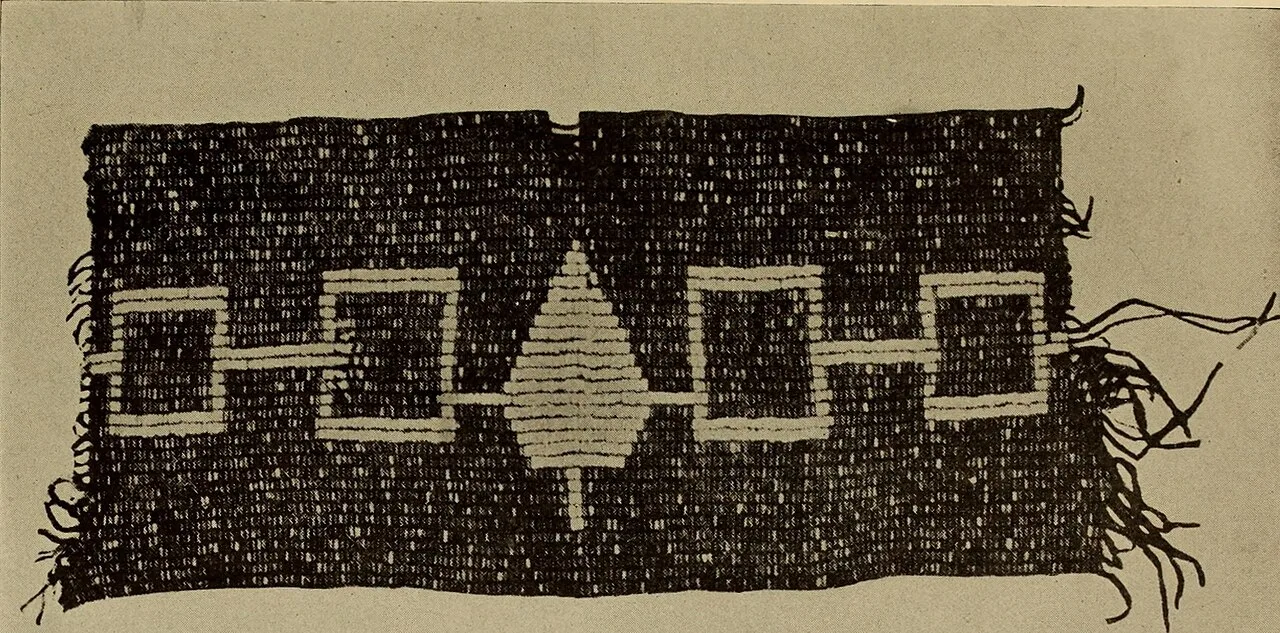
Lesson 1 · 10 cardsInternet Archive Book Images · No restrictions ↗Iroquois Great League of Peace
The Haudenosaunee formed the Iroquois League in upstate New York, establishing a representative governing council of fifty clan-appointed chiefs that suppressed inter-tribal warfare and coordinated regional diplomacy.
 Wikimedia Commons · Franz Eugen Köhler, Köhler's Medizinal-Pflanzen · Public domain ↗
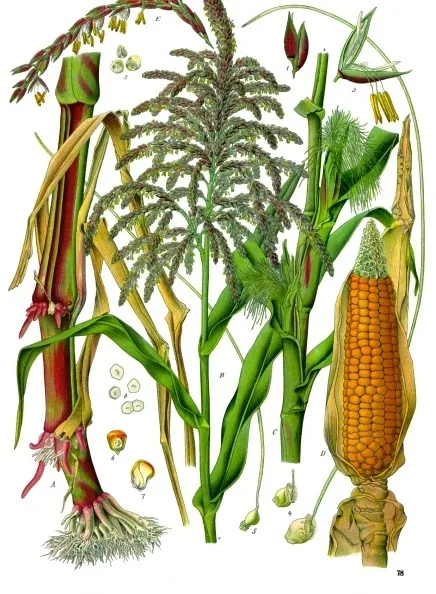
Agricultural Exchange Across Hemispheres
American domestic cultivars including maize, potatoes, and cassava enriched Eurasian and African diets after 1492, triggering substantial global population growth and transforming Old World agricultural systems.
 Mother of Ser Amantio di Nicolao at English Wikipedia · CC BY-SA 3.0 ↗
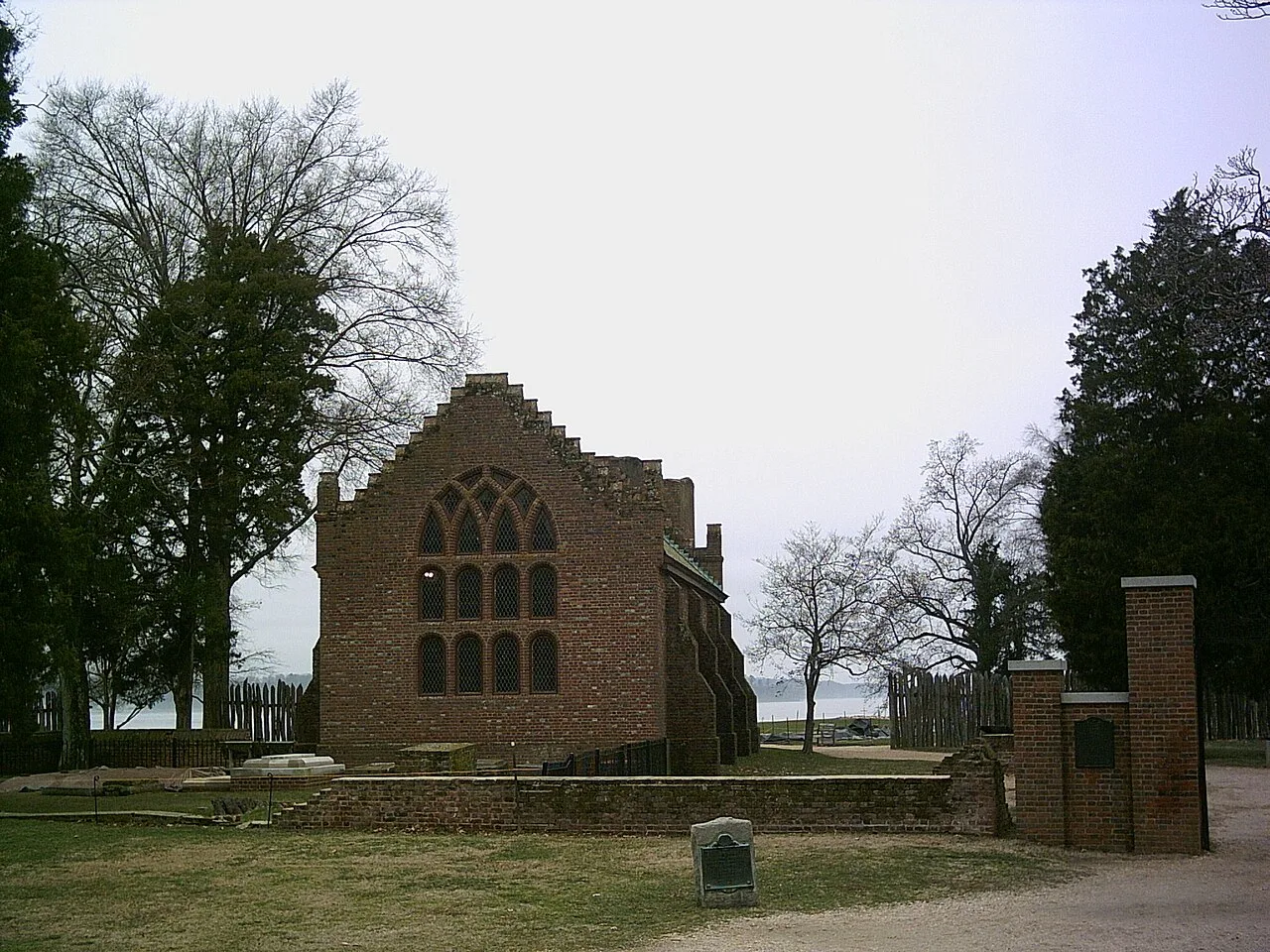
Jamestown and Tobacco Monoculture
Founded in 1607 by the Virginia Company as a joint-stock commercial venture, Jamestown achieved economic viability only after John Rolfe introduced high-yield West Indian tobacco seeds in 1612, establishing plantation cash-crop agriculture.
 Wikimedia Commons · Nilfanion · CC BY-SA 4.0 ↗
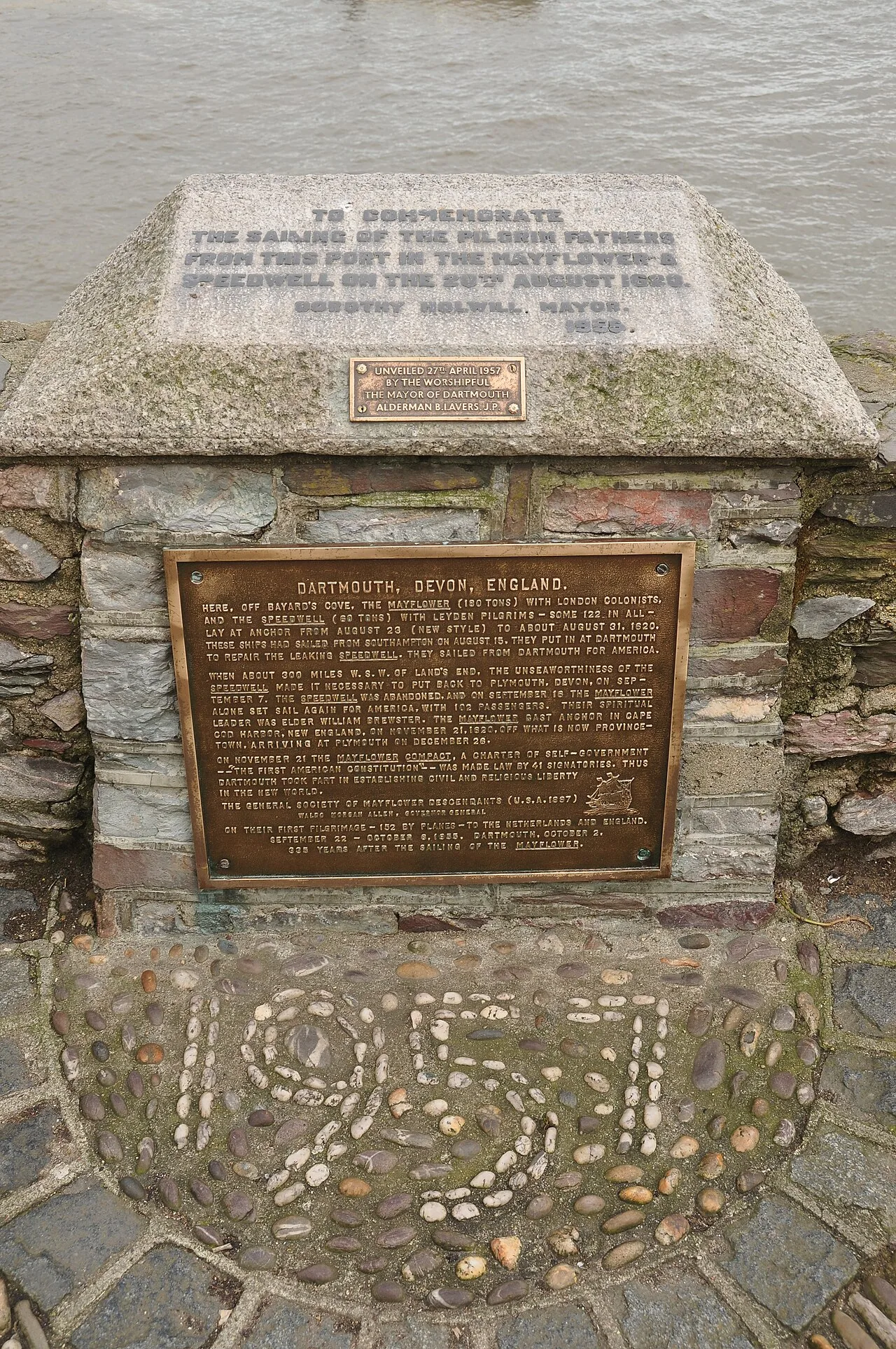
The Mayflower Compact and Self-Governance
Drafted in 1620 by Separatist Pilgrims aboard the Mayflower, the Mayflower Compact established a consensual civil government bound by majority rule, creating an enduring precedent for colonial constitutional self-determination.
 Wikimedia Commons · Unknown author · Public domain ↗
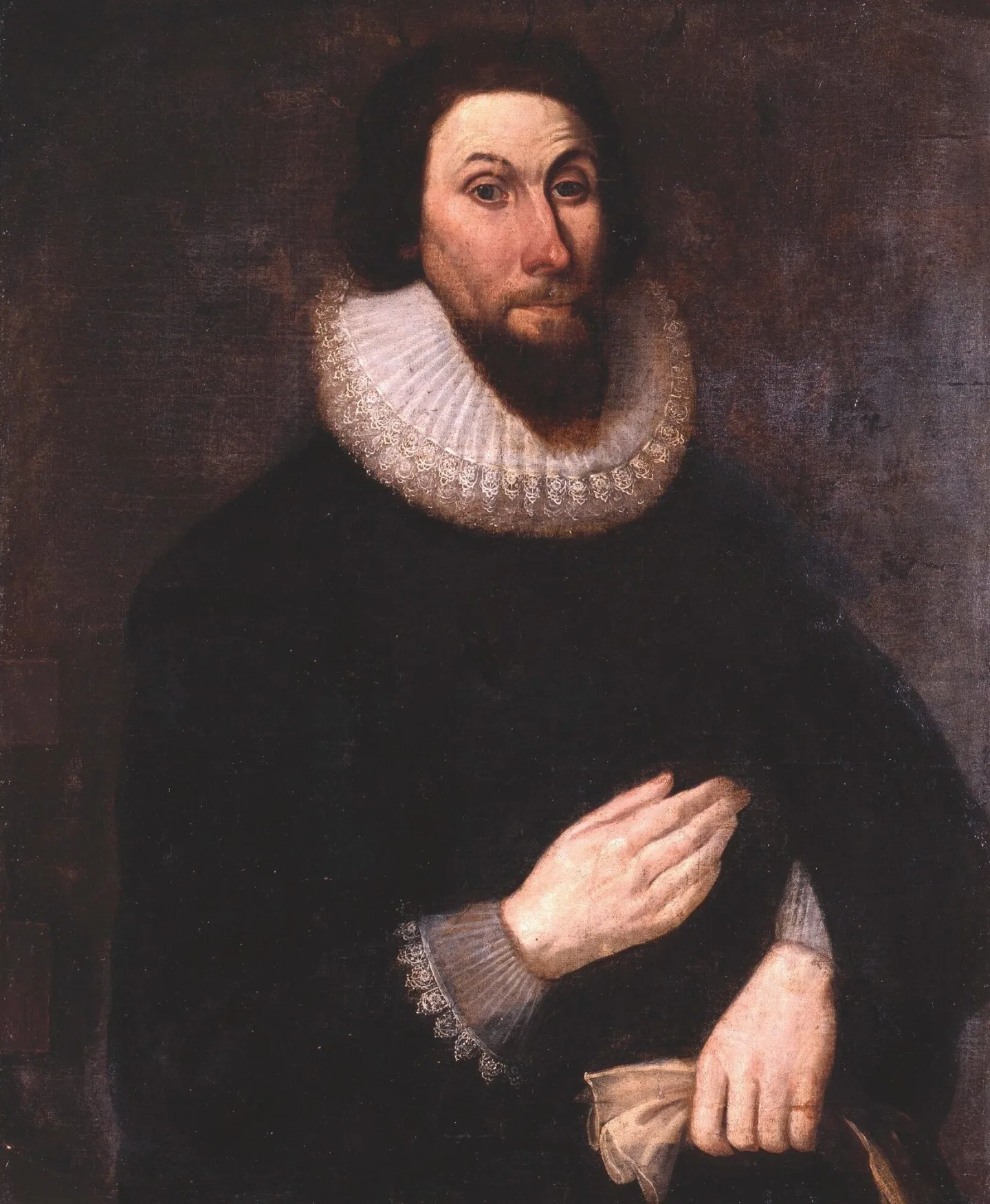
Winthrop's City upon a Hill
In his 1630 sermon 'A Model of Christian Charity', Governor John Winthrop told the Massachusetts Bay Puritans that they would be 'as a city upon a hill', with the eyes of all people upon them, so the colony had to keep its covenant with God and live as a united, charitable community.
 Wikimedia Commons · Peter F. Rothermel · Public domain ↗
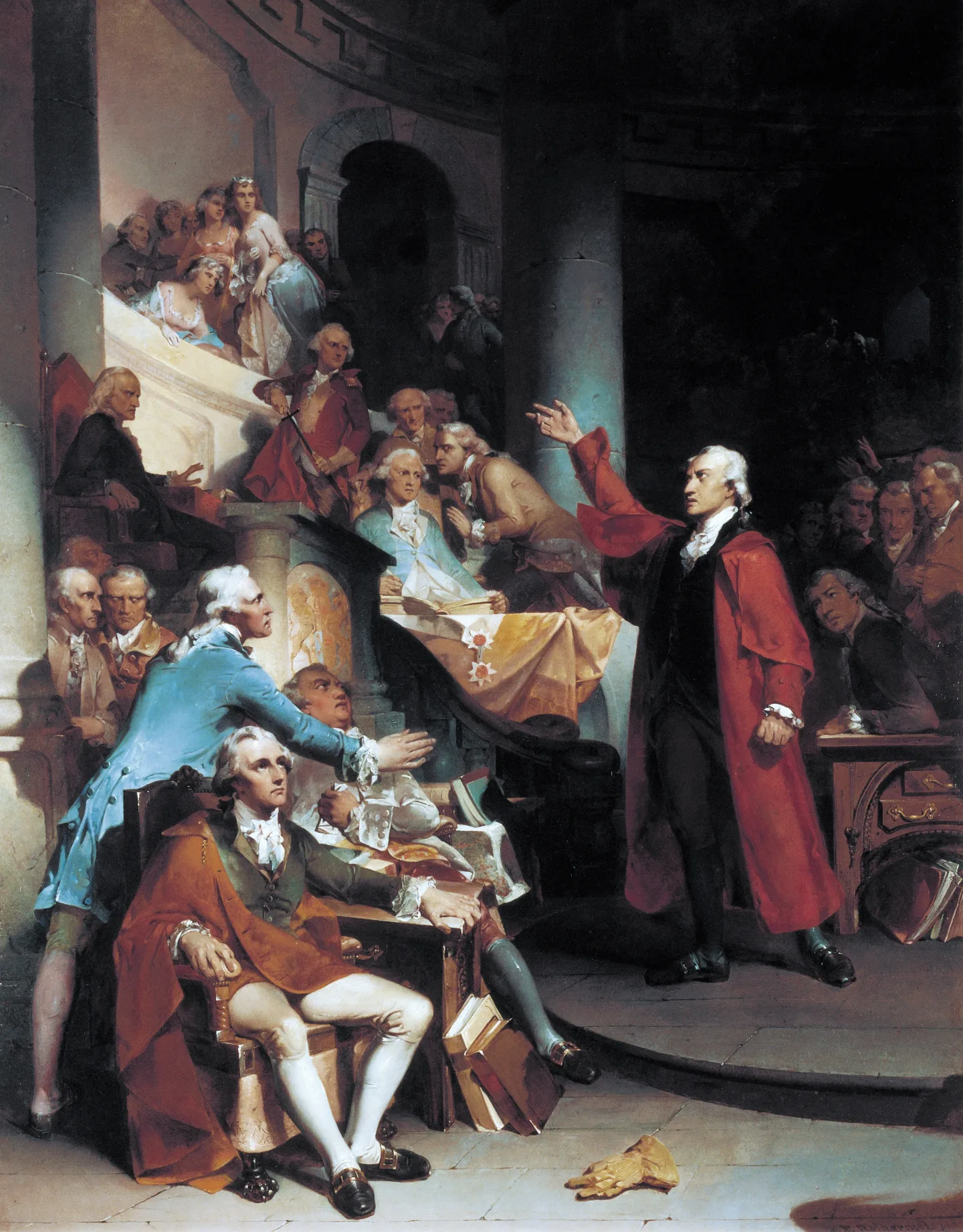
The Virginia House of Burgesses
Convening in July 1619, the Virginia House of Burgesses became the first elected representative legislative assembly in English America, establishing local elite self-governance and tax authorization within the English empire.
1 / 10What agricultural foundation enabled the Mississippian culture at Cahokia to sustain dense urban populations?
Cahokia's urban density was sustained by intensive floodplain cultivation of Mesoamerican maize, which provided predictable caloric surpluses.
Lesson 1 has 52 cards. Keep going in the free app.
Question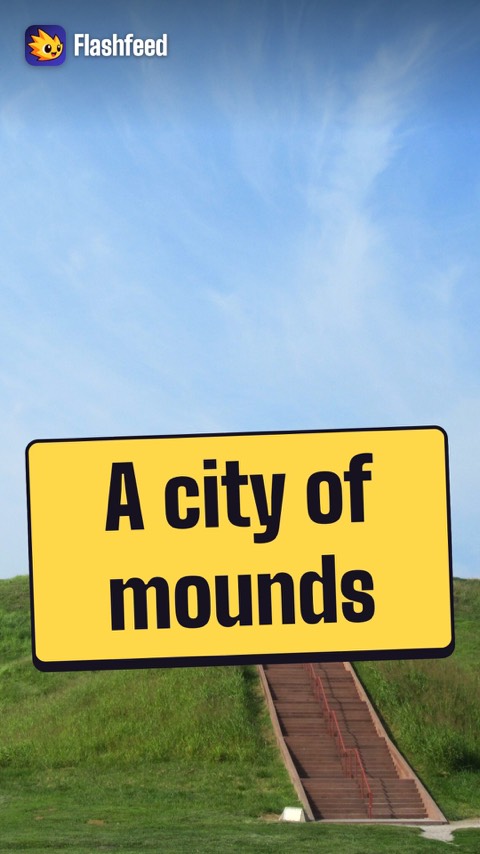
Cahokia, the City of Mounds 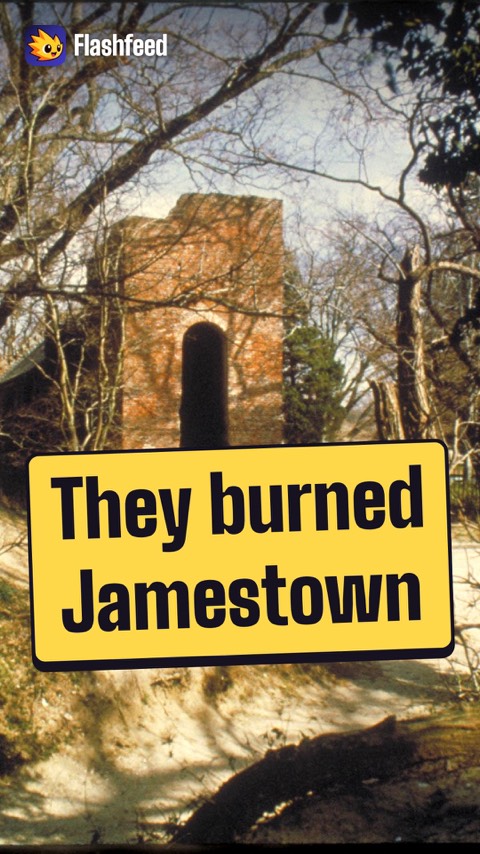
Bacon's Rebellion 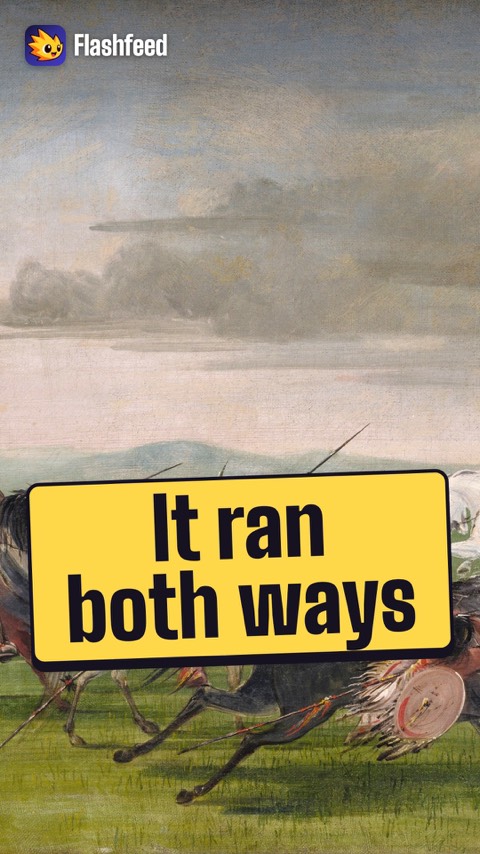
The Exchange Ran Both Ways All 9 clips on YouTube ↗Transcripts
Cahokia, the City of Mounds
Before Europeans arrived, a city of giant earthen mounds stood near modern St. Louis. Its name was Cahokia.
At its peak around 1100 CE, Cahokia held roughly 10,000 to 30,000 people. Estimates vary widely.
That was comparable to London at the time. Maize farming and regional tribute spread its power.
The Mississippian culture built Cahokia. Its peak came centuries before Columbus reached the Caribbean.
Bacon's Rebellion
Landless former servants, small farmers and enslaved Africans joined forces and burned Jamestown.
This was Bacon's Rebellion, in Virginia in 1676. It targeted the royal governor, William Berkeley.
The revolt collapsed after Bacon died. Planters now feared free, armed, landless white workers.
Many historians say planters then leaned more on lifelong, hereditary African slavery. By 1705, Virginia's slave codes made enslaved people property.
The Exchange Ran Both Ways
Plains hunters chased bison on horseback. Yet the horse came from Europe, in the Columbian Exchange after Columbus.
It ran both ways. Maize and potatoes enriched Old World diets. Populations grew in Europe, Africa and Asia.
Smallpox, measles and influenza hit Native peoples. Regional deaths are commonly estimated at 50 to 90 percent within about a century.
Estimates vary widely. That collapse weakened resistance to European conquest.
-
 Wikimedia Commons · Henry Marriott Paget · Public domain ↗02
Imperial Crisis, the American Revolution, and Independence (1754–1783)
The French and Indian War, Imperial Taxes, and the Ideology of Liberty · The Continental Congress, Common Sense, and the Declaration of Independence · Revolutionary War Military Strategy, French Alliance, and the Peace of Paris
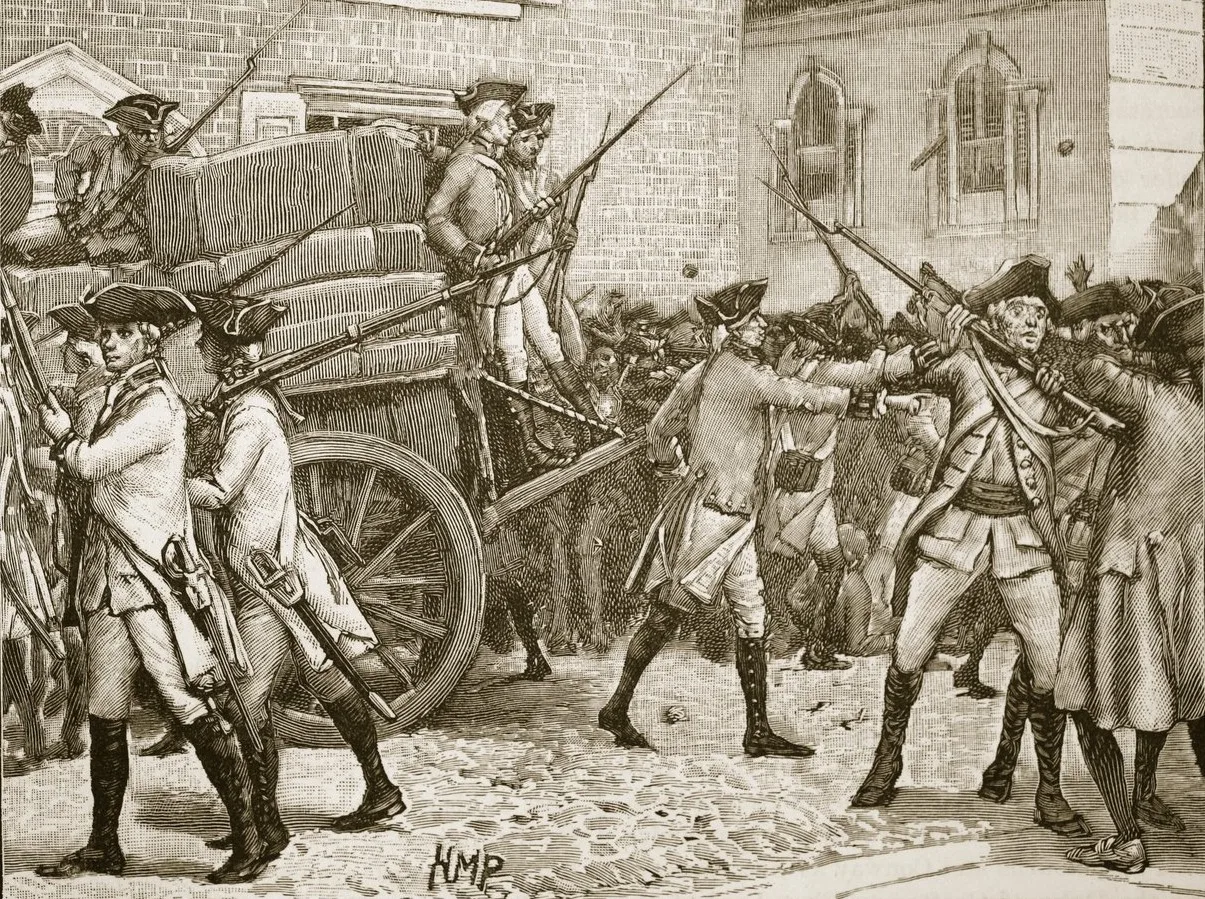
Lesson 2 · 10 cardsWikimedia Commons · Henry Marriott Paget · Public domain ↗The Stamp Act Crisis and Direct Taxation
Enacted by Parliament in 1765, the Stamp Act imposed the first direct internal tax on American legal documents, newspapers, and playing cards, sparking widespread riots, commercial boycotts, and the constitutional cry of 'no taxation without representation'.
 King George III · Public domain ↗
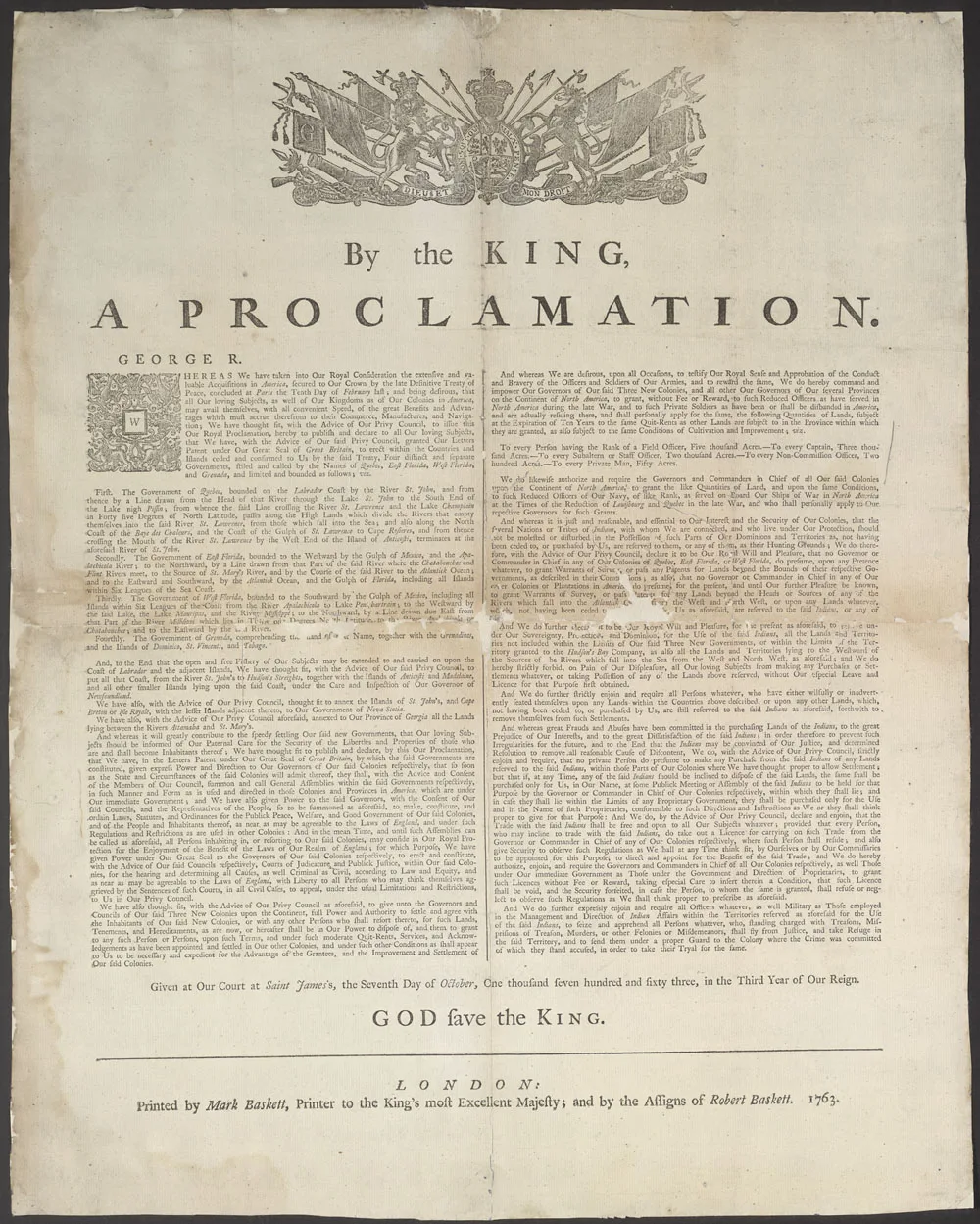
The Proclamation Line of 1763
During Pontiac's War, King George III issued the Royal Proclamation of 1763, forbidding Anglo-American settlement west of the Appalachian Mountains to prevent costly frontier warfare, enraging land speculators and colonists.
 Paul Revere · Public domain ↗
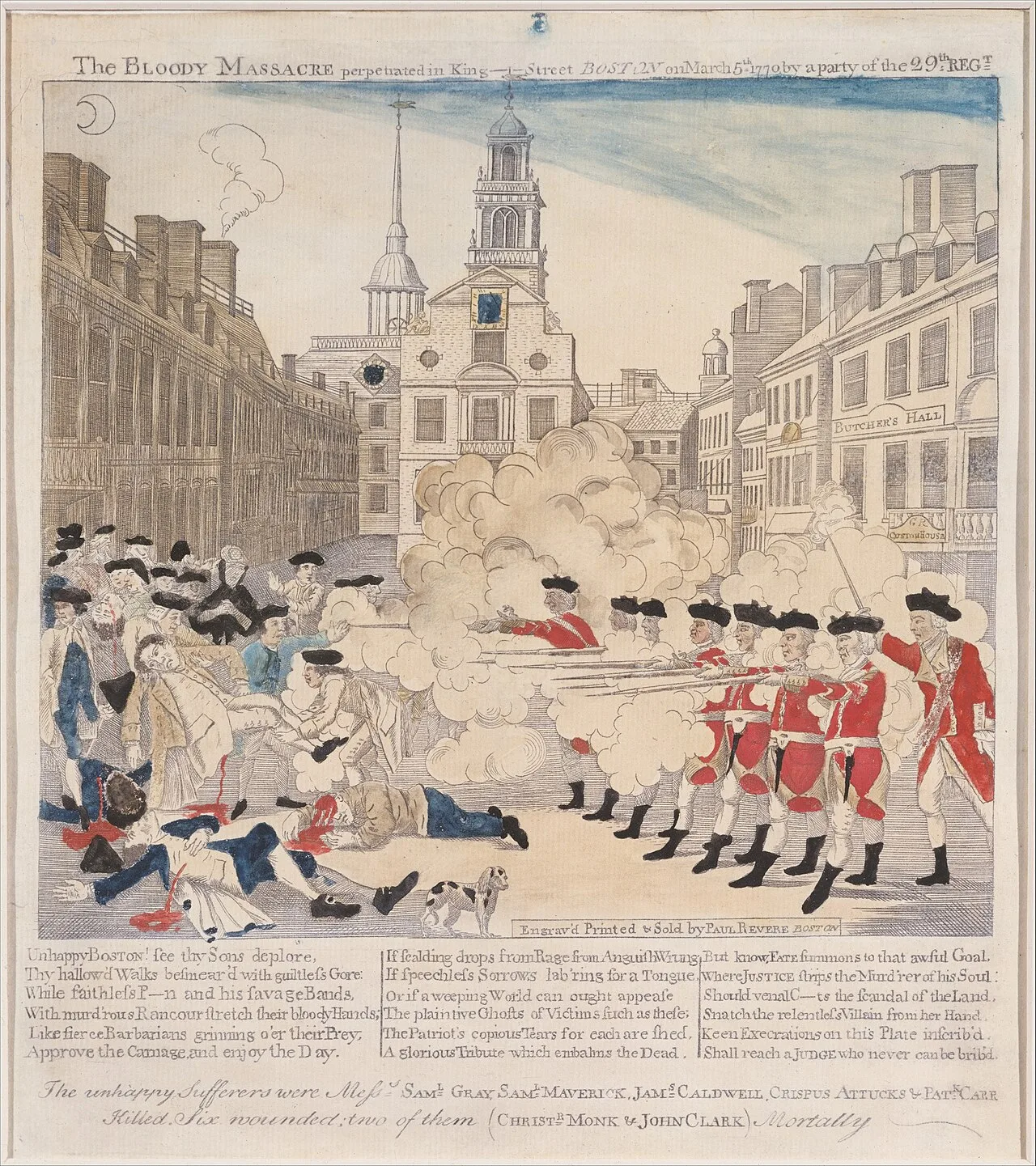
The Boston Massacre of 1770
On March 5, 1770, British troops occupying Boston fired into a crowd of colonists that had gathered around them and were taunting and pelting them with snow and ice, killing five colonists including Crispus Attucks, an event immortalized and publicized throughout the colonies by Paul Revere's propaganda engraving.
 Nathaniel Currier · Public domain ↗
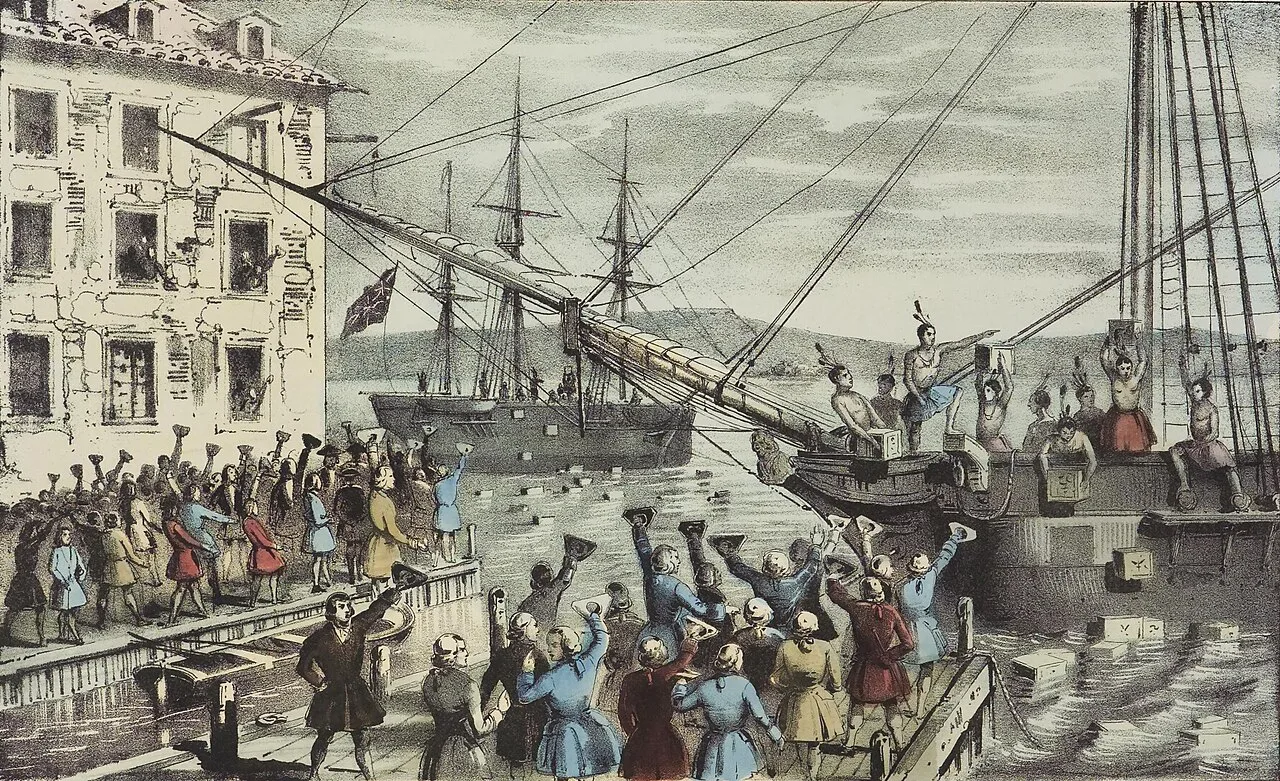
The Boston Tea Party
On December 16, 1773, the Sons of Liberty, some disguised as Mohawk warriors, boarded three ships carrying British East India Company tea in Boston Harbor and dumped 342 chests of tea into the water to protest the monopoly the Tea Act gave the Company.
 Pexels · Iconic Faneuil Hall showcasing classic architecture in the heart of Boston. ↗
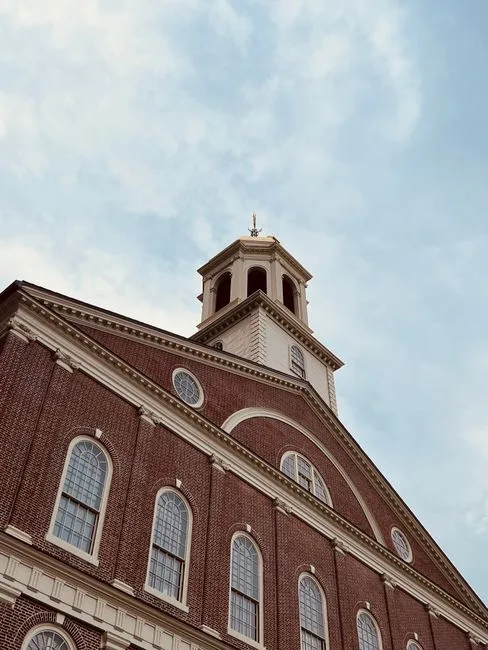
The Coercive Acts of 1774
In retaliation for the Boston Tea Party, Parliament passed the Coercive Acts (Intolerable Acts) of 1774, closing the Port of Boston, replacing Massachusetts's elected council with one appointed by the Crown, curbing town meetings, and allowing troops to be quartered in buildings such as barns and empty houses.
 Wikimedia Commons · Scanned by User:Themfromspace · Public domain ↗
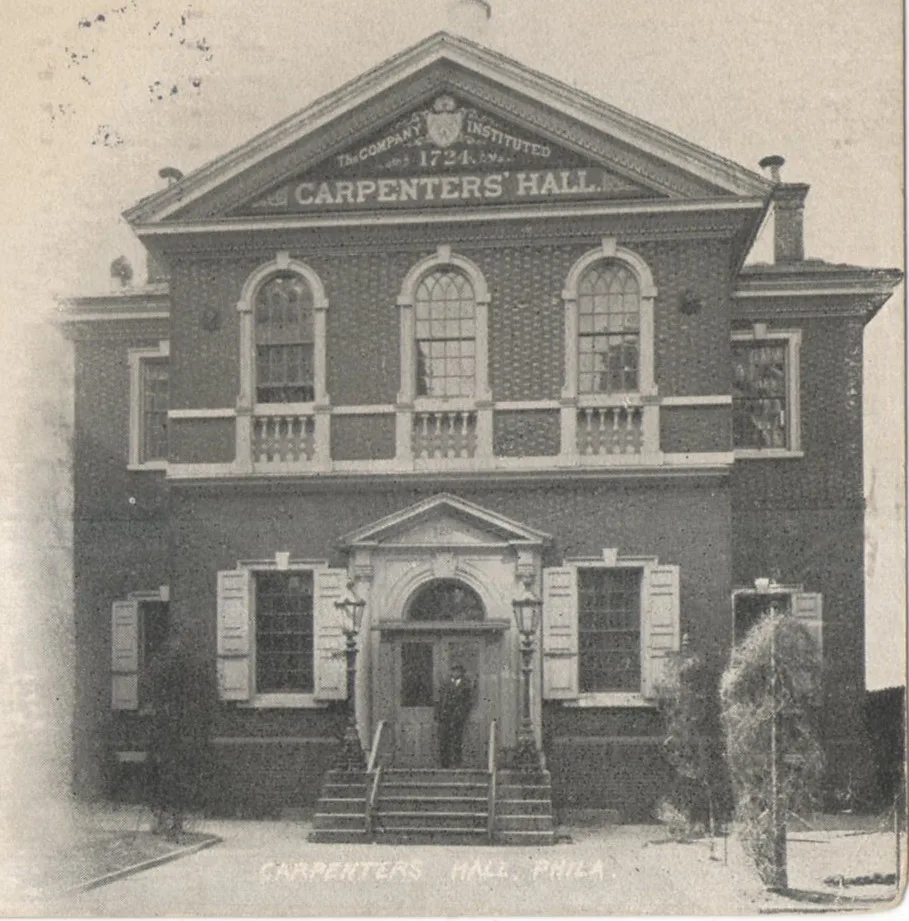
The Continental Association Boycott
Convening in Philadelphia in September 1774, the First Continental Congress created the Continental Association, a sweeping system of locally elected committees enforcing a total commercial boycott against British imports and exports.
 Scanned by uploader, originally by Thomas Paine. · Public domain ↗
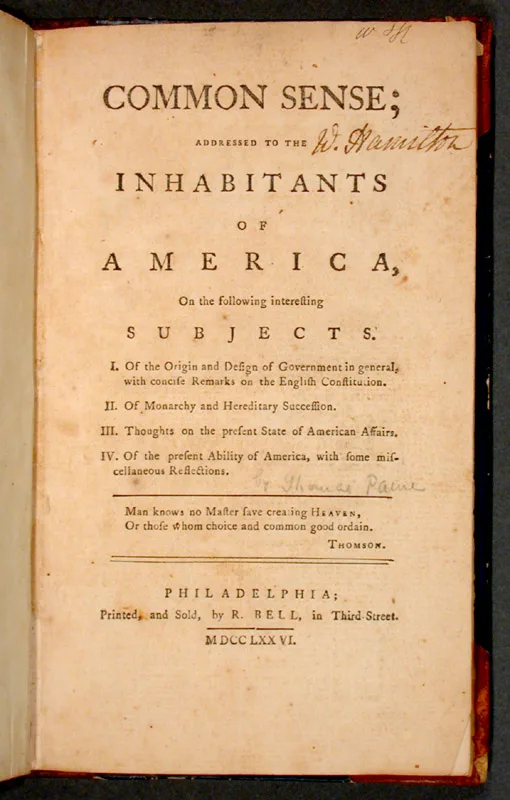
Thomas Paine's Common Sense
Published in January 1776, Thomas Paine's radical pamphlet Common Sense sold an estimated 120,000+ copies in its first months (contemporary estimates vary), dismantling monarchical legitimacy and persuading ordinary colonists that total republican independence was an urgent moral and practical necessity.
 Wikimedia Commons · Second Continental Congress; reproduction by William Stone · Public domain ↗
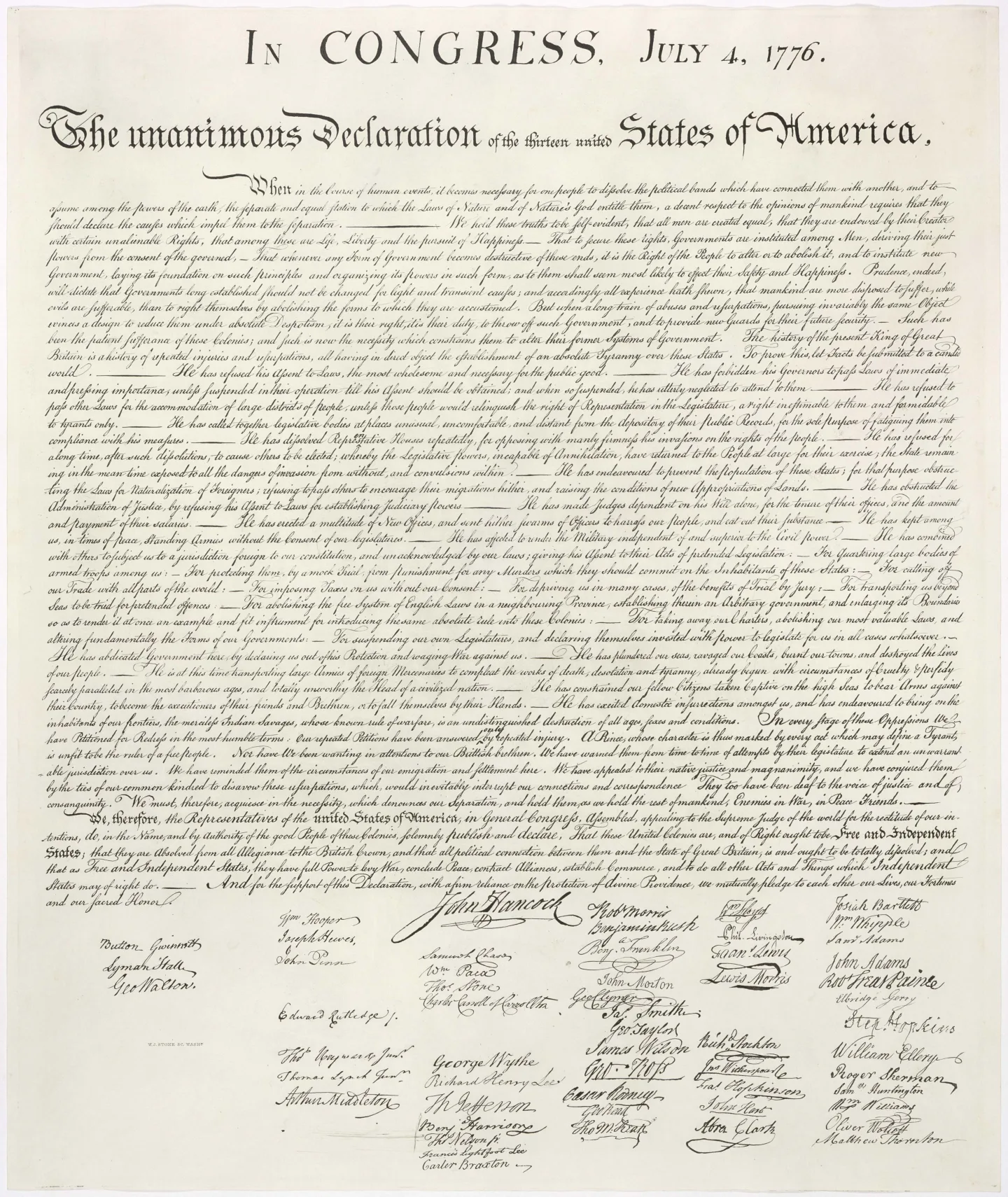
The Declaration of Independence
Adopted on July 4, 1776, by the Second Continental Congress, the Declaration of Independence—principally drafted by Thomas Jefferson—proclaimed universal natural rights to life, liberty, and the pursuit of happiness and declared the colonies free and independent states.
 Americasroof · CC BY-SA 2.5 ↗
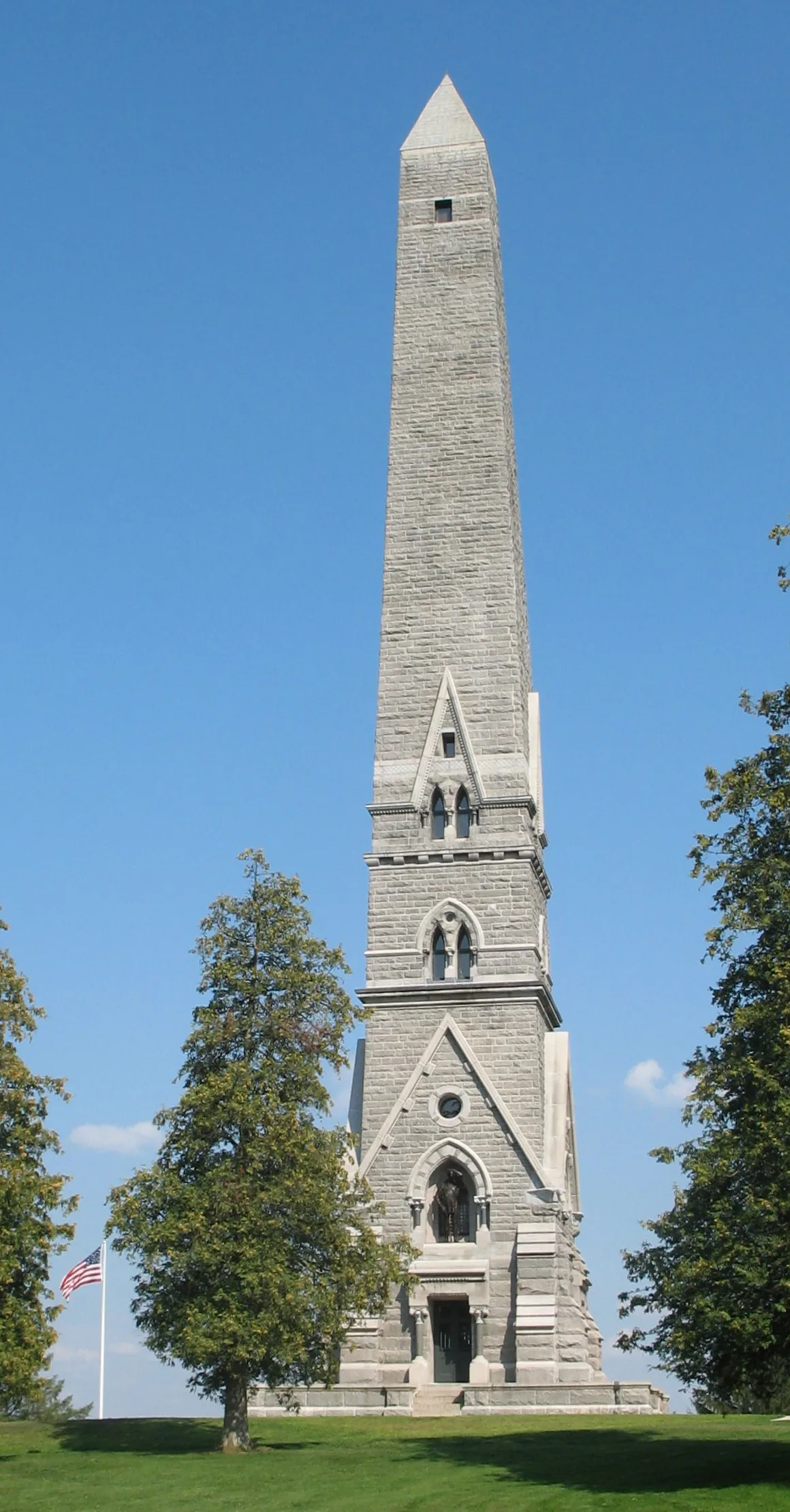
The Battle of Saratoga
In October 1777 at Saratoga, New York, American forces under General Horatio Gates captured General John Burgoyne's entire British army, securing the decisive military turning point that persuaded France to forge a formal military alliance with the United States.
 Ken Lund from Reno, Nevada, USA · CC BY-SA 2.0 ↗
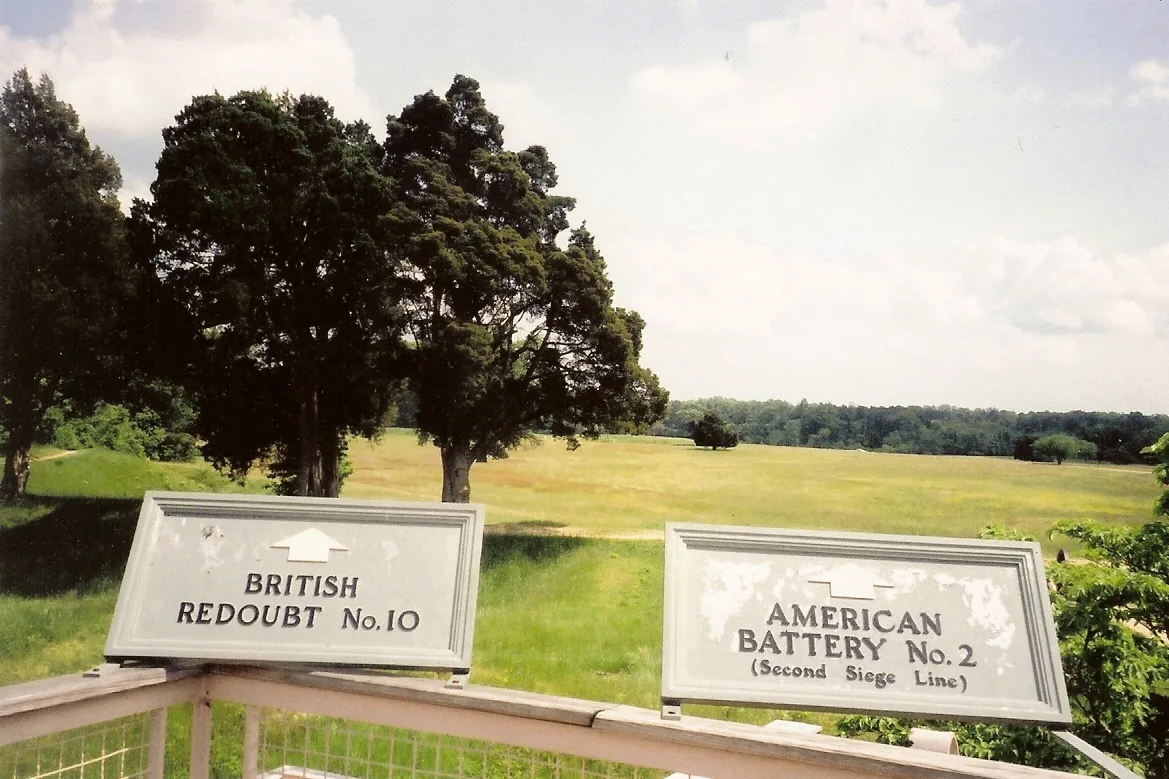
The Siege of Yorktown
In October 1781, combined American and French forces under George Washington and the Comte de Rochambeau trapped General Cornwallis at Yorktown, Virginia, while the French fleet blockaded the Chesapeake Bay, compelling the decisive British surrender of the war.
1 / 10Which of these imperial crisis events occurred earliest?
The Stamp Act (1765) predated the Townshend Acts (1767), Boston Massacre (1770), and Boston Tea Party (1773) in the escalating imperial crisis.
Lesson 2 has 53 cards. Keep going in the free app.
Question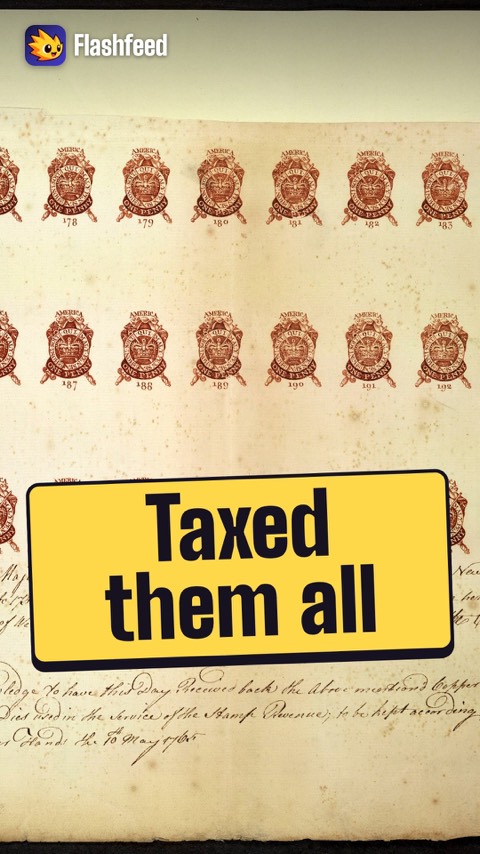
No Taxation Without Representation 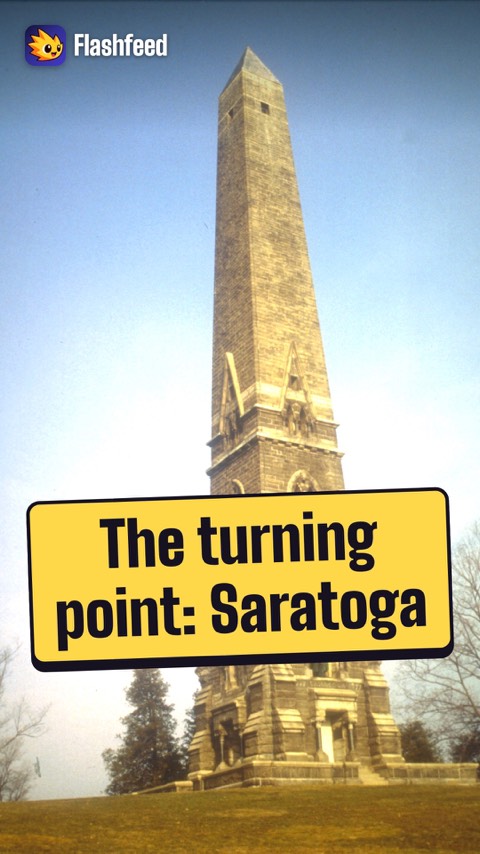
How the Revolution Was Won 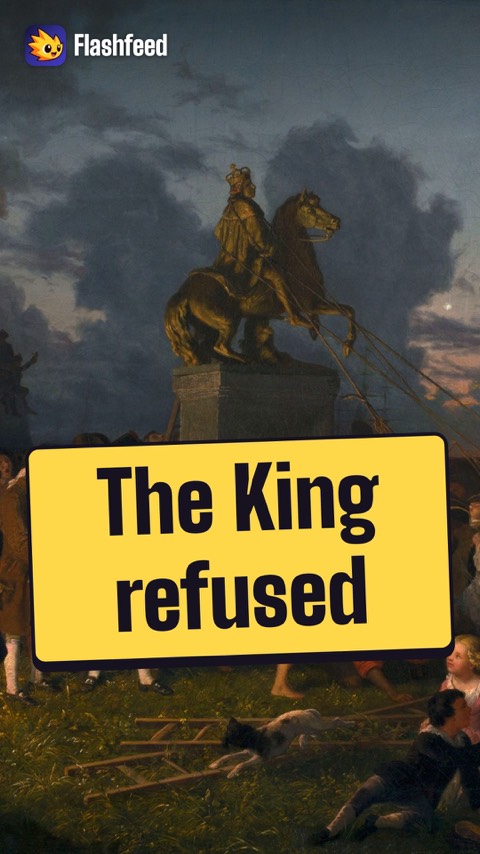
From Olive Branch to Independence All 9 clips on YouTube ↗Transcripts
No Taxation Without Representation
Newspapers, legal papers, even playing cards. In 1765, Britain's Stamp Act taxed them all.
The French and Indian War doubled Britain's debt. Parliament wanted colonists to help pay.
Colonists answered: no taxation without representation. They had no members in Parliament. Only their own assemblies could tax them.
Boycotts forced a repeal in 1766. But Parliament also claimed the right to bind the colonies in all cases whatsoever.
How the Revolution Was Won
Britain had the world's top navy. The Continental Army lacked food, pay and ammunition.
George Washington avoided big open battles. He kept his army together and struck where the British were weak.
The turning point was Saratoga, in 1777. That American victory convinced France to join the Revolutionary War.
In 1781, American and French armies surrounded Yorktown. A French fleet blocked escape by sea. The British surrendered.
From Olive Branch to Independence
After Lexington, Congress still professed loyalty to the King. That July, its Olive Branch Petition begged for a ceasefire.
The King refused and hired thousands of Hessian mercenaries.
Thomas Paine's Common Sense sold an estimated 120,000 copies or more within months. It argued that an island could not reasonably rule a continent.
On July 4th, 1776, Congress adopted the Declaration of Independence.
-
 Wikimedia Commons · Boucher, Jack E. · Public domain ↗03
Creating the Republic: Constitutional Design and the Federalists (1781–1800)
Articles of Confederation, Shays' Rebellion, and the 1787 Convention · Federalism, Separation of Powers, and the Great & Three-Fifths Compromises · Hamilton's Financial Plan, Emergence of Parties, and the Bill of Rights
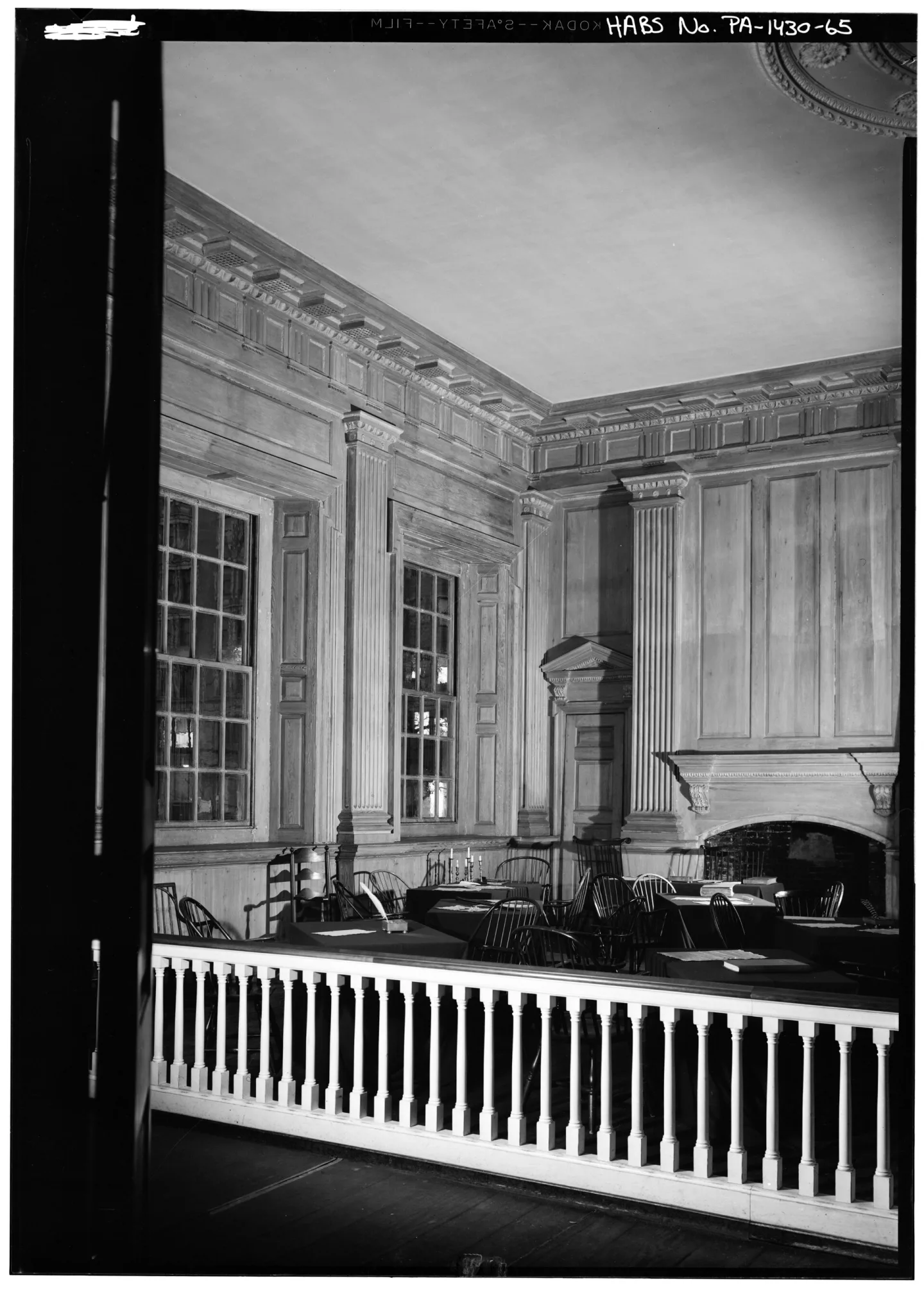
Lesson 3 · 10 cardsWikimedia Commons · Boucher, Jack E. · Public domain ↗The Constitutional Convention of 1787
Fifty-five delegates assembled in Philadelphia under the presidency of George Washington in May 1787, conducting secret deliberations that discarded the Articles of Confederation to draft an entirely new federal Constitution based on popular sovereignty.
 Wikimedia Commons · Continental Congress · Public domain ↗
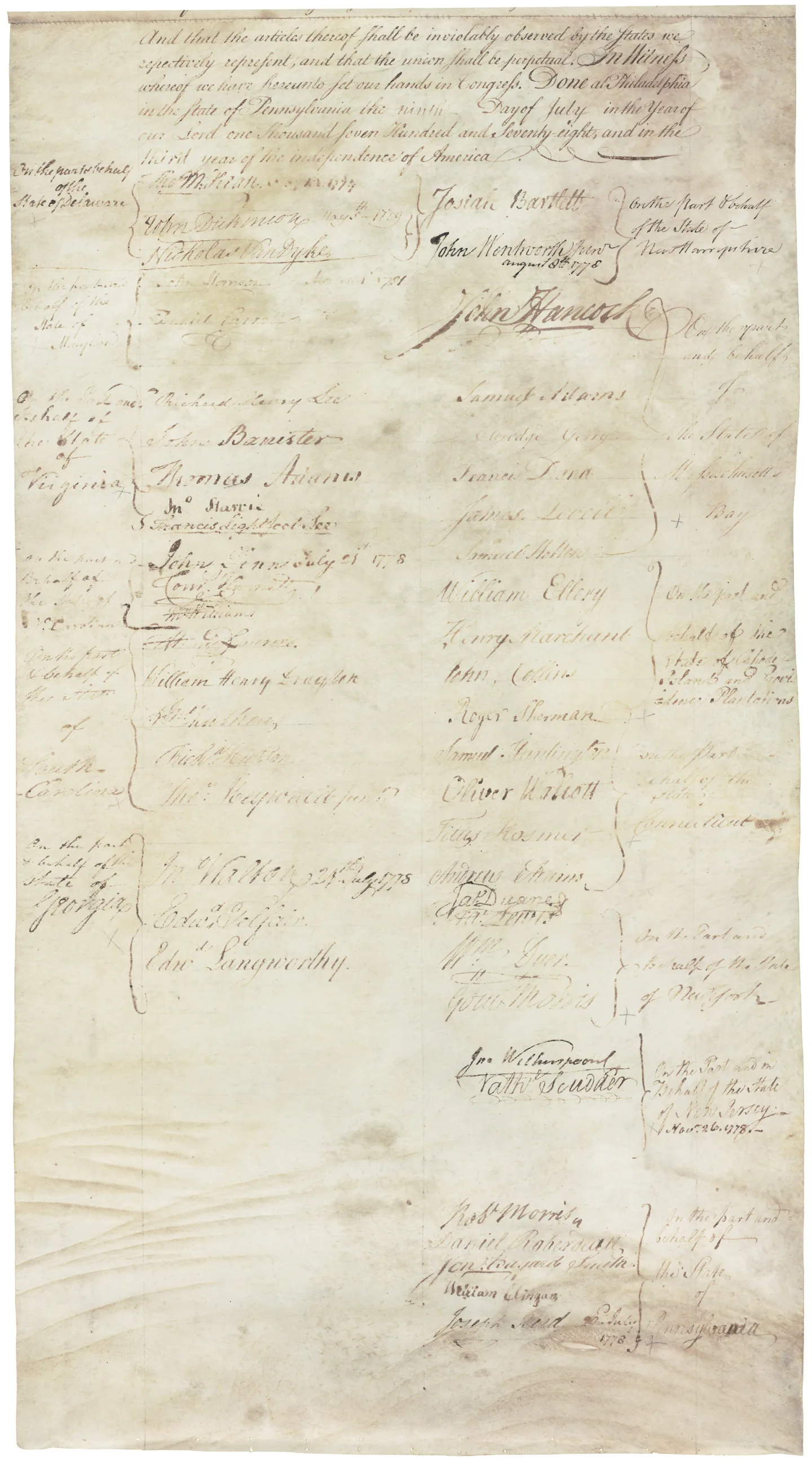
Weaknesses of the Articles of Confederation
Ratified in 1781, the Articles of Confederation established a decentralized national government that lacked the constitutional power to levy direct taxes, regulate interstate or foreign commerce, or enforce federal requisitions against sovereign states.
 Wikimedia Commons · Ralph Earl · Public domain ↗
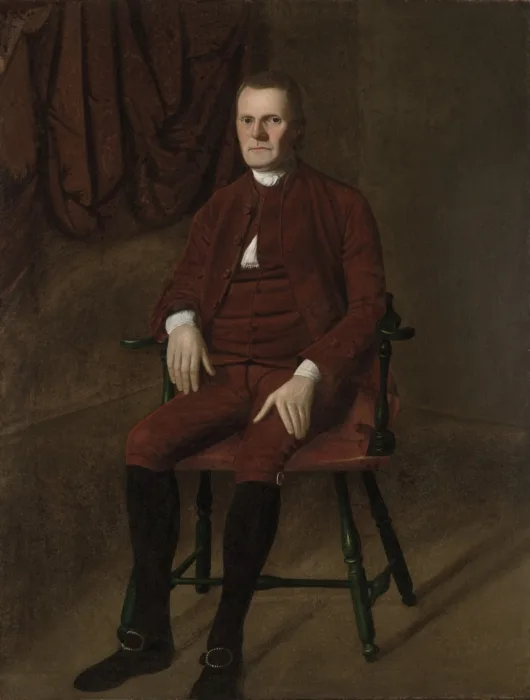
The Connecticut (Great) Compromise
Authored by Roger Sherman, the Great Compromise resolved the fierce convention debate between the Virginia and New Jersey Plans by creating a bicameral Congress: a House of Representatives apportioned by population and a Senate granting equal representation to each state.
 Wikimedia Commons · Constitutional Convention · Public domain ↗
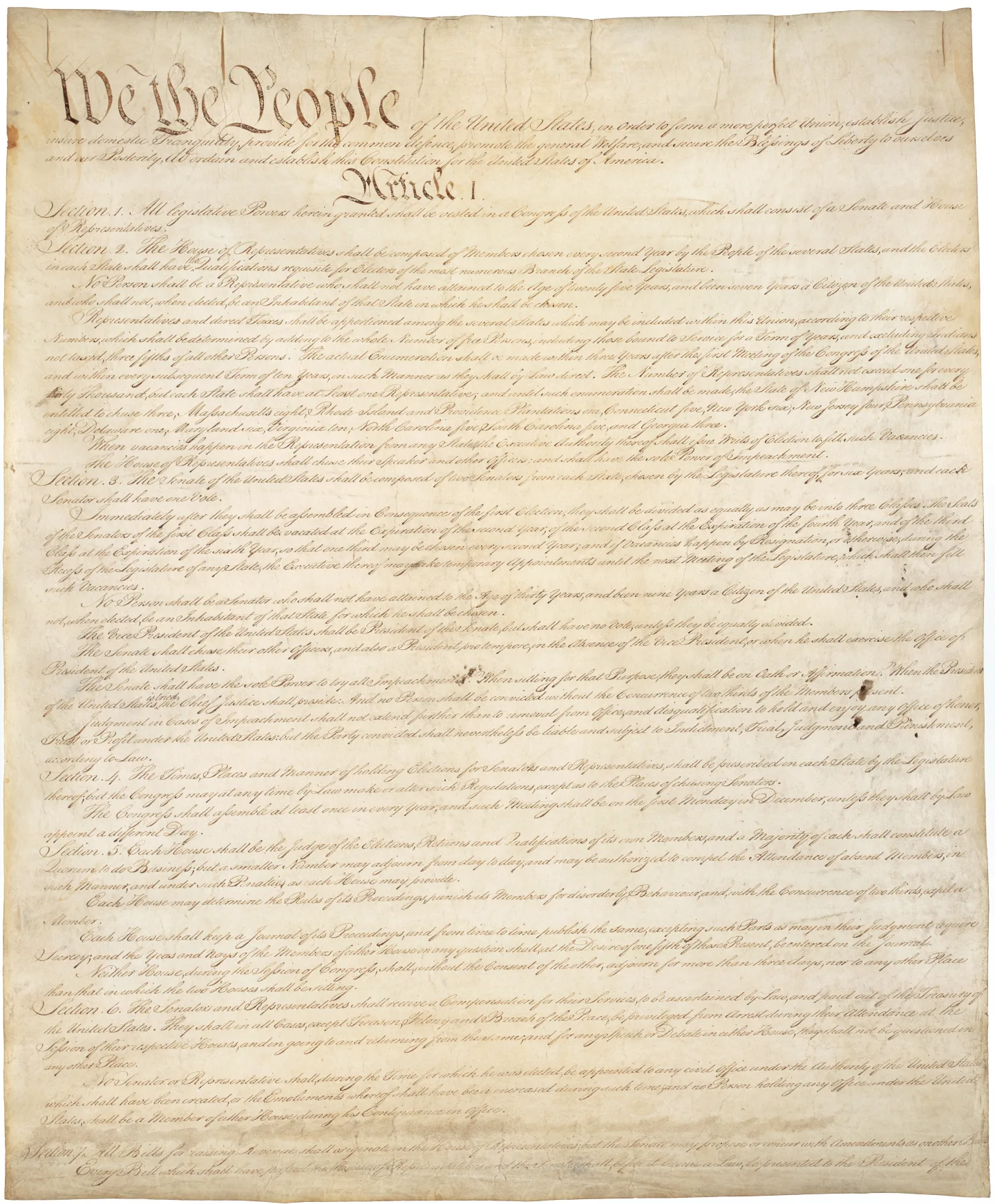
The Three-Fifths Compromise
Article I, Section 2 of the Constitution established the Three-Fifths Compromise, stipulating that three-fifths of the enslaved population would be counted for both congressional representation and direct federal taxation, granting Southern states disproportionate national political power.
 Wikimedia Commons · The original uploader was Anathema at German Wikipedia · Public domain ↗
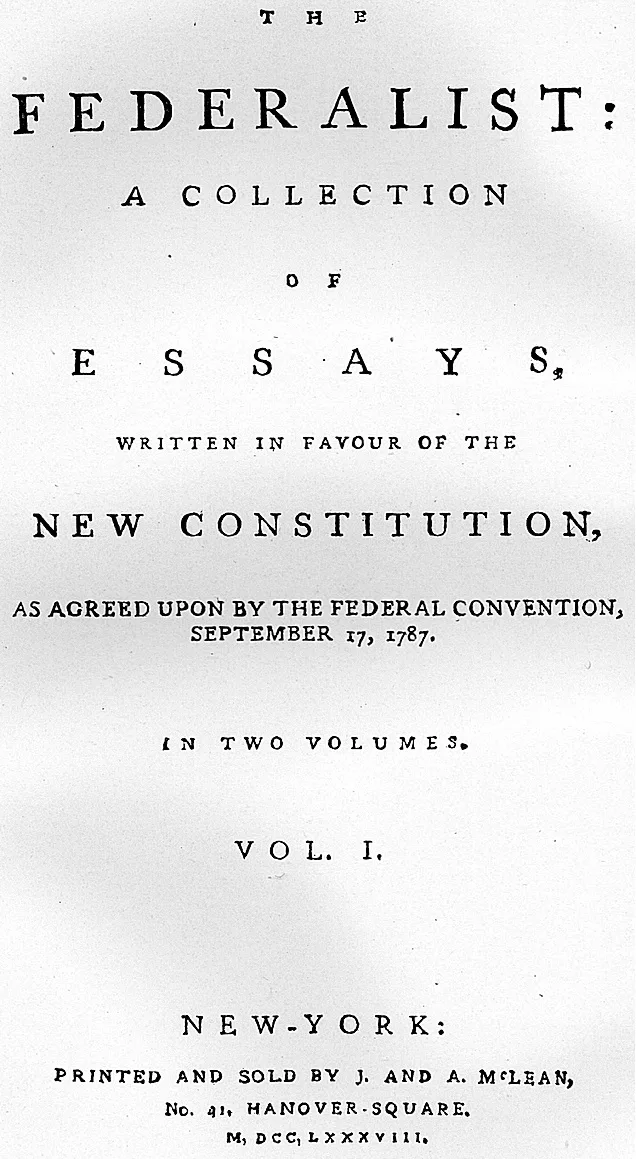
Madison's Theory of Factions in Federalist No. 10
In Federalist No. 10, James Madison argued that a large extended republic was superior to small direct democracies at controlling the dangerous effects of political factions, because a multiplicity of competing interests would prevent any single majority from oppressing the minority.
 Wikimedia Commons · U.S. National Archives · Public domain ↗
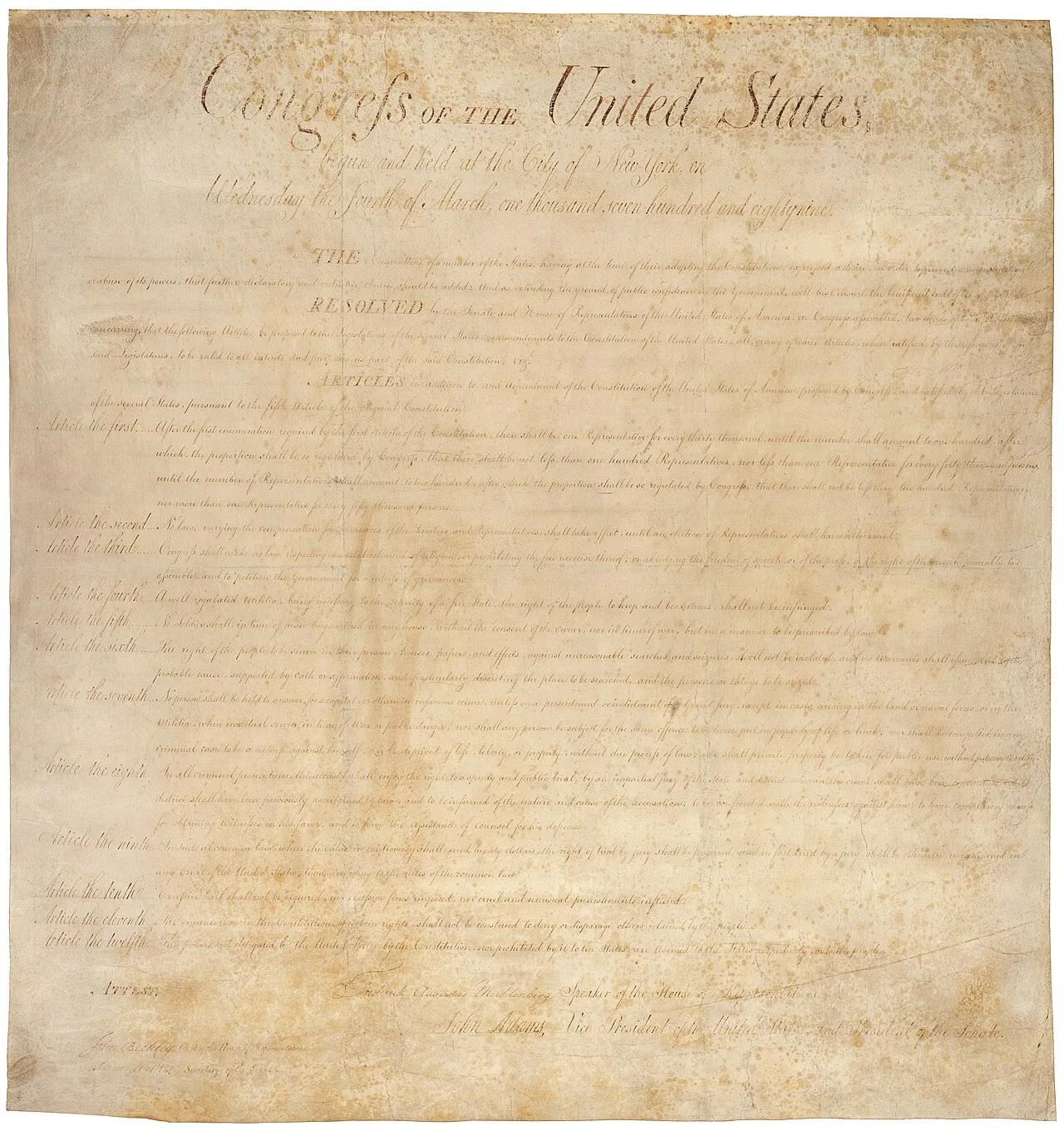
The Bill of Rights of 1791
Drafted primarily by James Madison to fulfill promises made to Anti-Federalists during state ratification debates, the Bill of Rights (the first ten amendments) was ratified in 1791, safeguarding fundamental freedoms of speech, press, religion, assembly, and trial by jury.
 Carol M. Highsmith · Public domain ↗
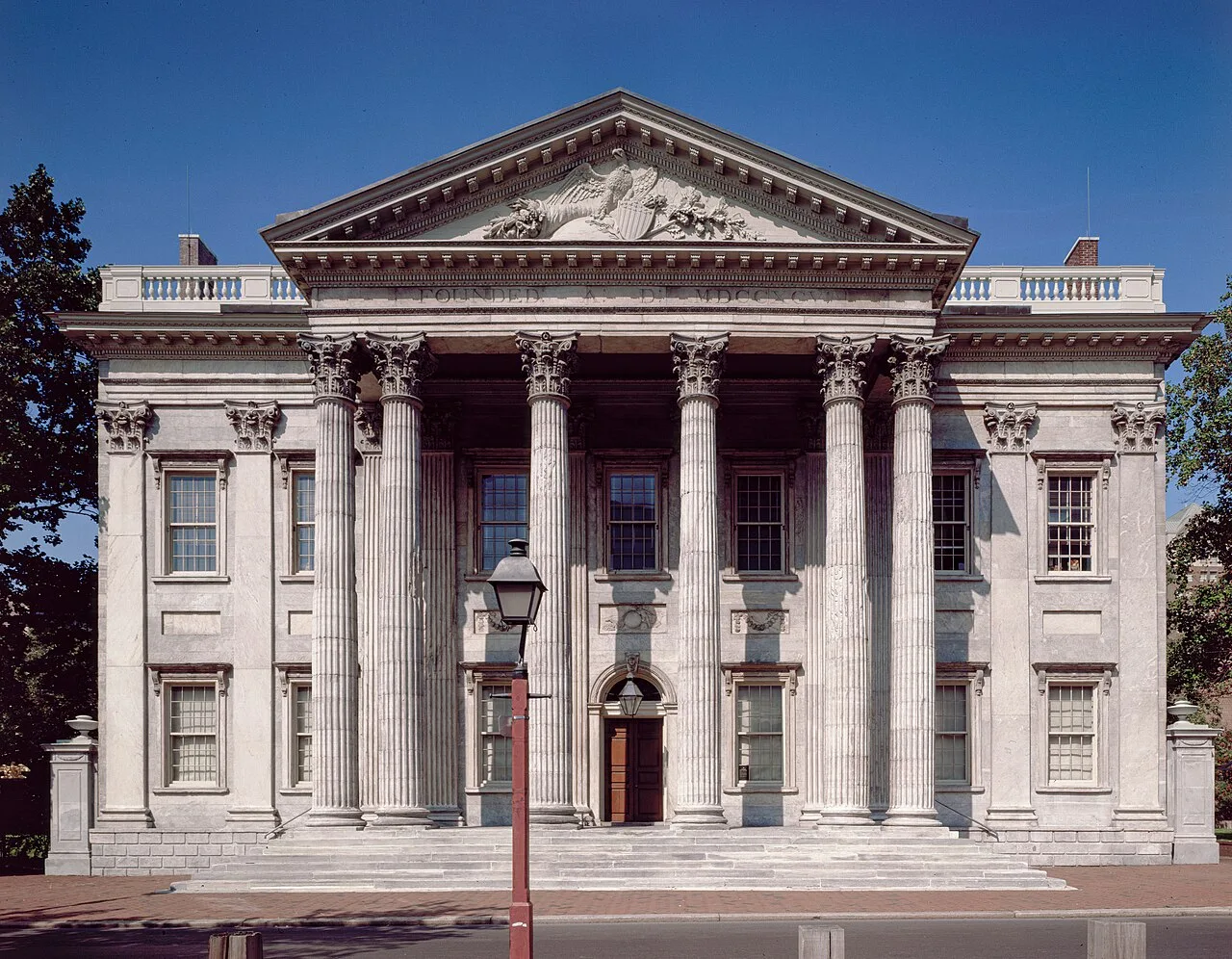
Hamilton's Creation of the National Bank
In 1791, Secretary of the Treasury Alexander Hamilton secured the creation of the First Bank of the United States, defending its constitutionality under the Necessary and Proper Clause ('implied powers') to manage government deposits, collect taxes, and issue a stable currency.
1 / 10What major legislative achievement was successfully enacted by the national government under the Articles of Confederation?
The Northwest Ordinance of 1787 created a democratic process for new states to enter the Union and prohibited slavery in the territory.
Lesson 3 has 53 cards. Keep going in the free app.
Question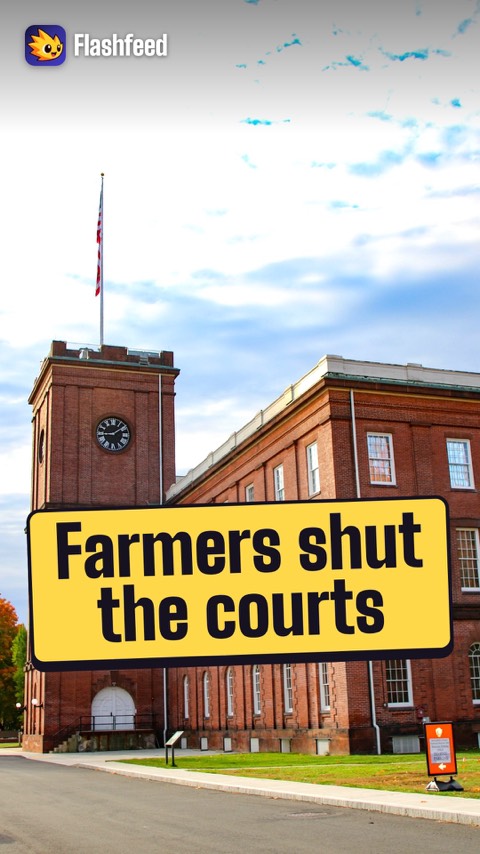
Shays' Rebellion 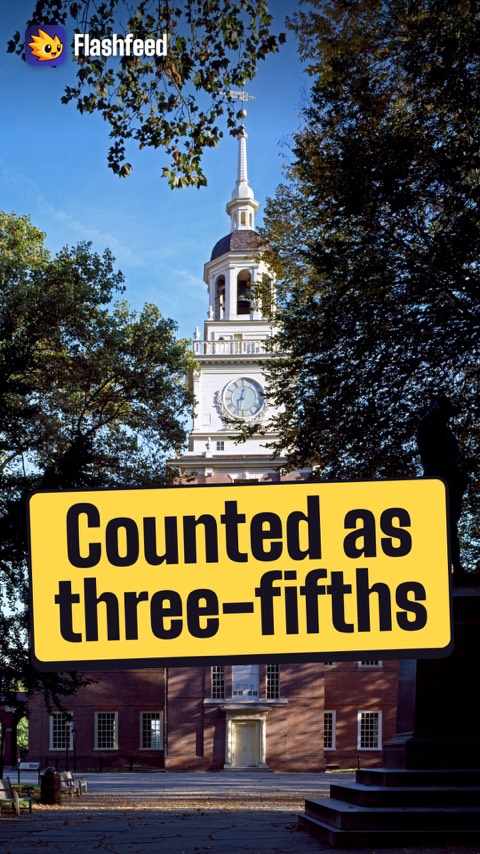
The Three-Fifths Compromise 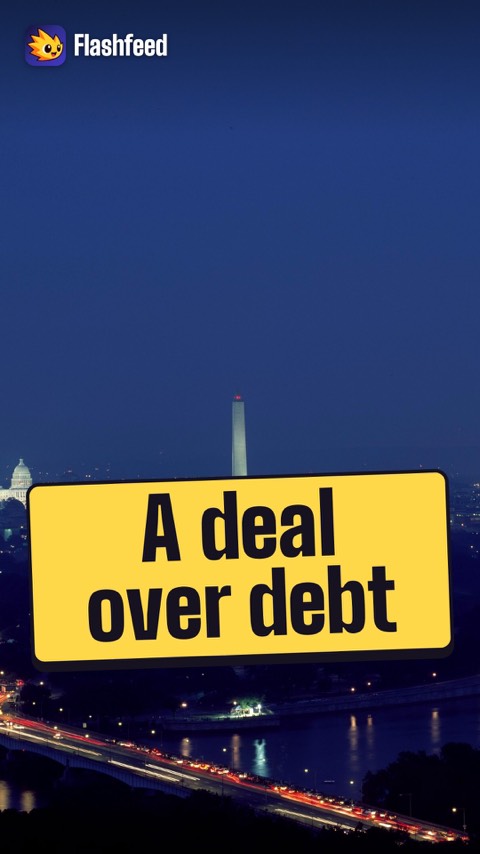
A Capital for a Debt All 9 clips on YouTube ↗Transcripts
Shays' Rebellion
Armed farmers shut down courthouses in western Massachusetts. They faced debtors' prison and losing their farms.
This was Shays' Rebellion, in 1786 and 1787. Congress could send no troops to stop it.
Under the Articles of Confederation, Congress had no power to tax directly. Fear of tyranny had kept it weak.
Washington and Hamilton pushed for change. In 1787, delegates met in Philadelphia and drafted a new constitution.
The Three-Fifths Compromise
Should enslaved people count toward a state's seats in Congress? Delegates in Philadelphia split over it.
The South wanted them counted for seats, but not for taxes. The North said property could not claim representation.
The Three-Fifths Compromise counted three-fifths of enslaved people, for both seats and direct taxes.
The Constitution also had a Fugitive Slave Clause. Congress could not ban the Atlantic slave trade until 1808.
A Capital for a Debt
The United States capital sits on the Potomac River because of a deal over debt.
Alexander Hamilton was the first Secretary of the Treasury. He wanted the federal government to take on the states' war debts.
The Compromise of 1790 sealed it. In return, the permanent national capital would sit on the Potomac.
Taking on those debts was part of his plan to establish national public credit.
-
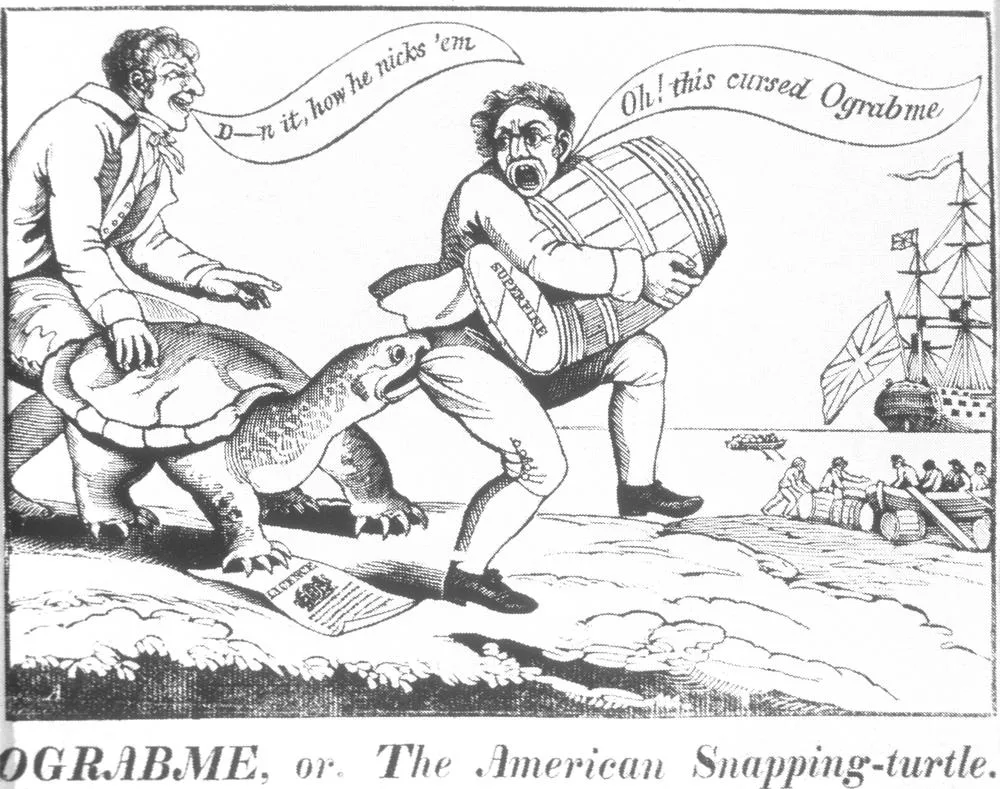 Wikimedia Commons · Alexander Anderson (attributed) · Public domain ↗04
The Early Republic, Jeffersonian Democracy, and the Marshall Court (1800–1824)
The Revolution of 1800, Louisiana Purchase, and Embargo Politics · Marbury v. Madison and the Marshall Court's Constitutional Jurisprudence · The War of 1812, the Monroe Doctrine, and the Missouri Compromise
Lesson 4 · 10 cardsWikimedia Commons · Alexander Anderson (attributed) · Public domain ↗The Embargo Act of 1807
In response to British naval impressment and French seizures of neutral American merchant ships, President Jefferson enacted the Embargo Act of 1807, cutting off all foreign commerce, which devastated American maritime trade and revitalized Federalist opposition.
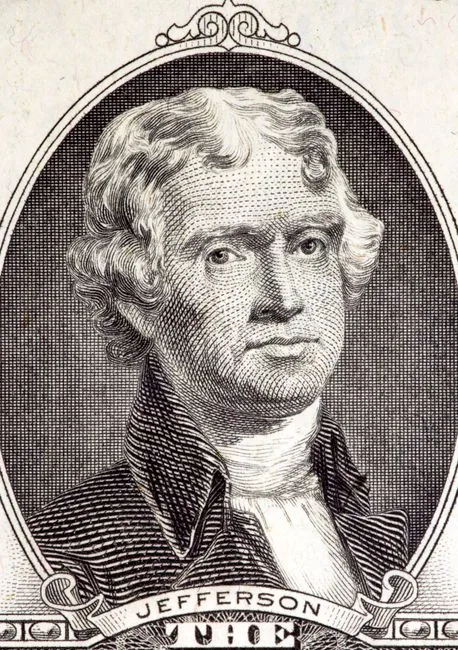 Pexels · Detailed engraving of Thomas Jefferson on U.S. currency, showcasing historical art. ↗
The Revolution of 1800
The presidential election of 1800 marked the first peaceful transfer of executive power between opposing political parties in American history, as John Adams's Federalists yielded control of the presidency to Thomas Jefferson's Democratic-Republicans.
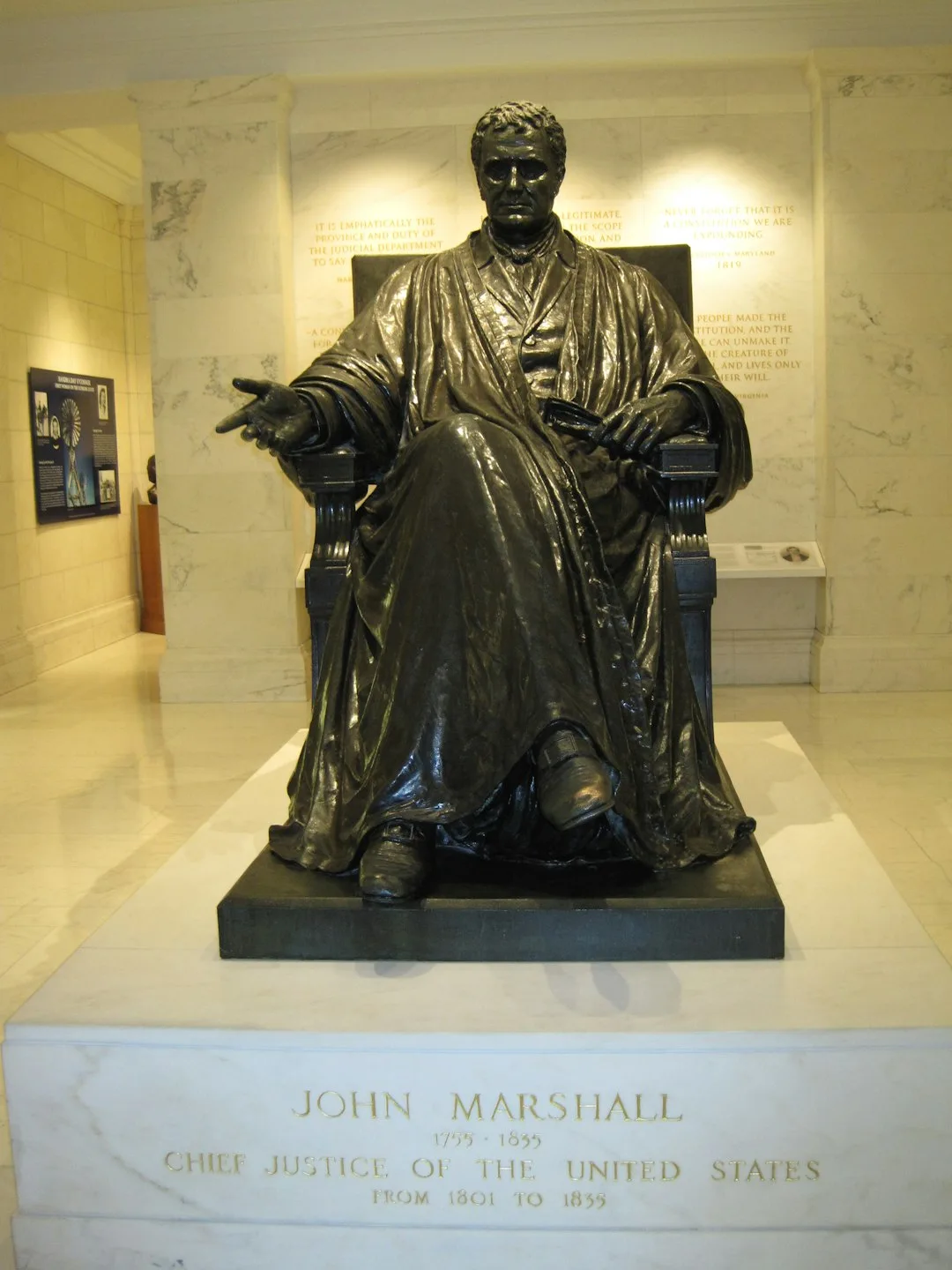 Unsplash · Statue of Chief Justice John Marshall, Supreme Court, March 26, 2013. ↗
Marbury v. Madison and Judicial Review
In the landmark 1803 ruling Marbury v. Madison, Chief Justice John Marshall established the principle of judicial review, declaring Section 13 of the Judiciary Act of 1789 unconstitutional and elevating the Supreme Court to a co-equal status with Congress and the President.
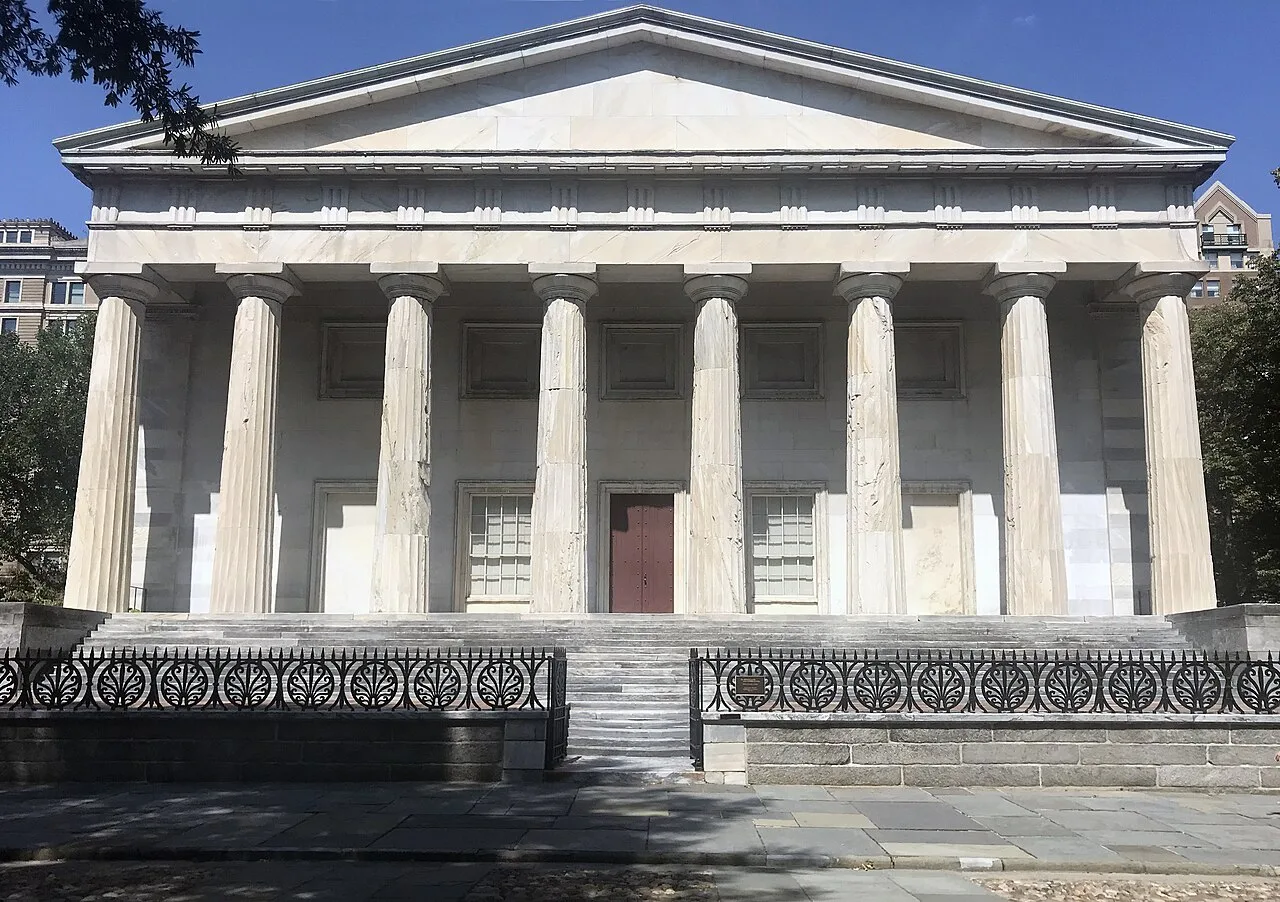 Myotus · CC BY-SA 4.0 ↗
McCulloch v. Maryland and Implied Powers
In McCulloch v. Maryland (1819), the Marshall Court upheld the constitutional validity of the Second Bank of the United States under the Necessary and Proper Clause, striking down a state tax on the bank by affirming that 'the power to tax involves the power to destroy'.
 Wikimedia Commons · Internet Archive Book Images · No restrictions ↗
Gibbons v. Ogden and Interstate Commerce
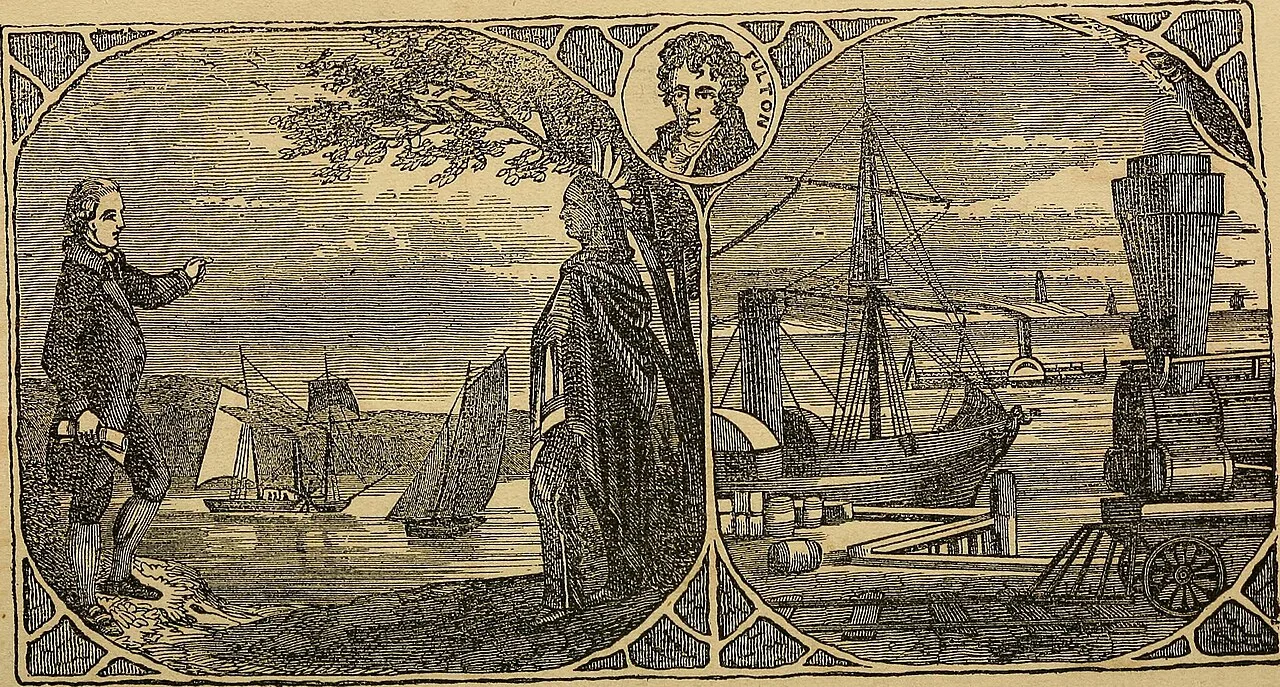
In Gibbons v. Ogden (1824), the Supreme Court struck down a New York state monopoly on steamboat navigation, establishing that the federal government possesses broad and exclusive authority to regulate interstate commerce under the Commerce Clause.
 Wikimedia Commons · U.S. Navy photo by Journalist Seaman Joe Burgess. · Public domain ↗
The War of 1812
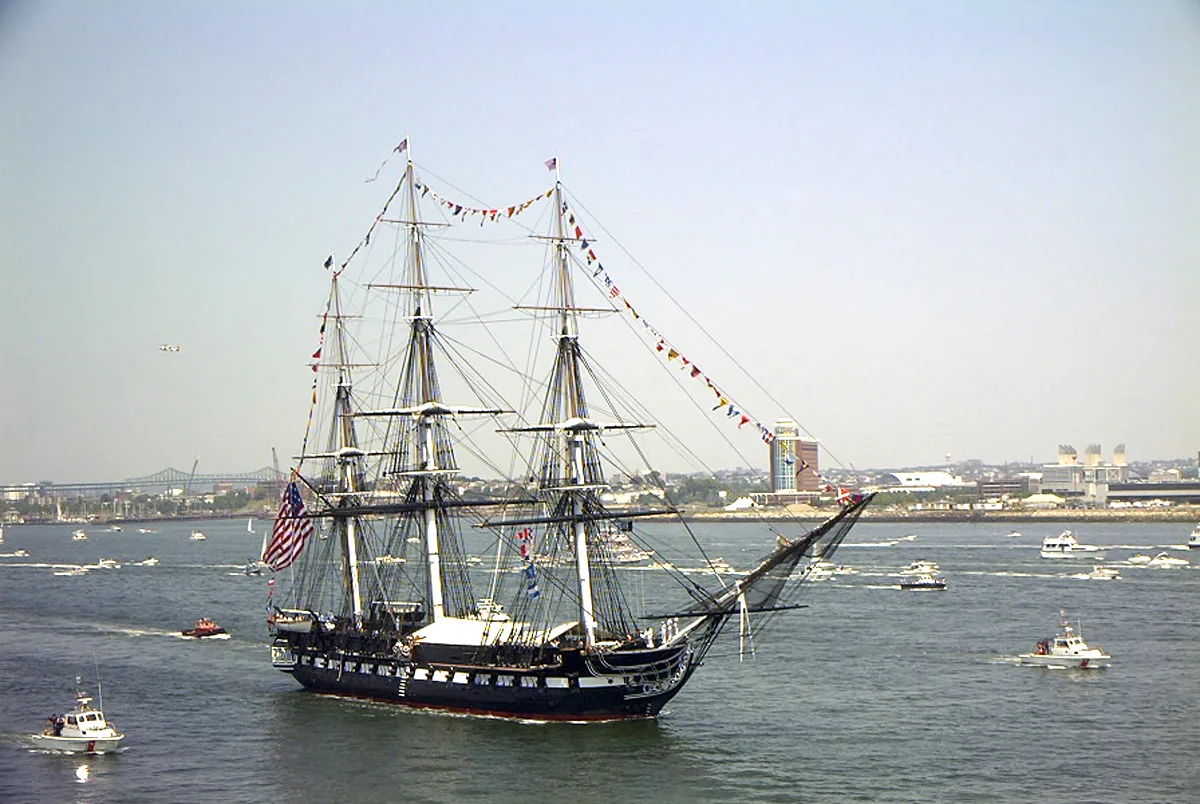
Fought against Great Britain over naval impressment, trade restrictions, and British support for Shawnee leader Tecumseh's frontier confederacy, the War of 1812 ended with the Treaty of Ghent, signed in December 1814 and ratified in February 1815, which restored prewar boundaries without settling the issues that caused the war.
 Wikimedia Commons · Gilbert Stuart · Public domain ↗
The Monroe Doctrine of 1823
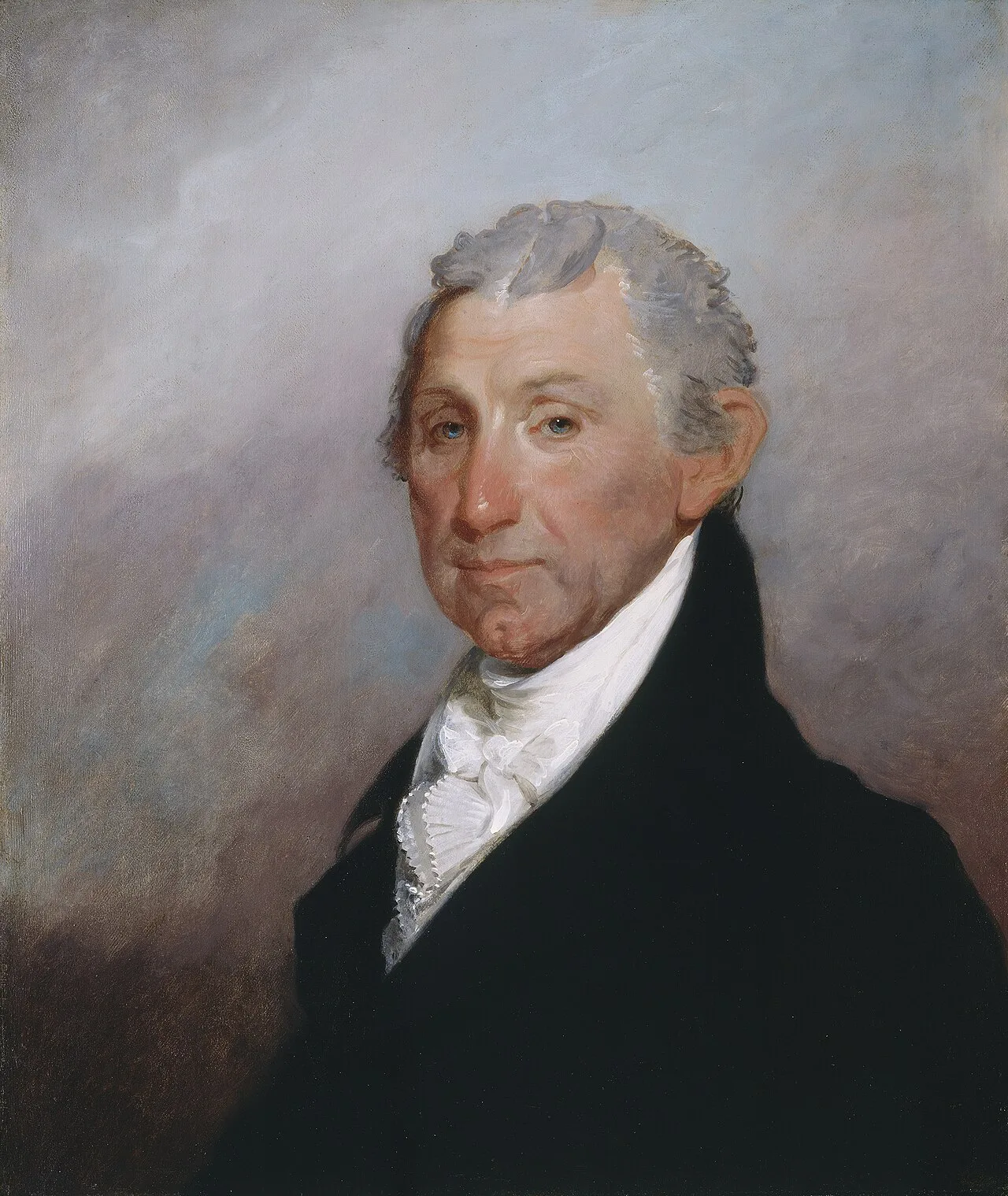
Drafted primarily by Secretary of State John Quincy Adams and announced by President James Monroe in 1823, the Monroe Doctrine declared the Western Hemisphere closed to future European colonization and warned that European intervention would be viewed as an act of hostility.
1 / 10Which constitutional amendment resulted from the 1800 electoral tie between Jefferson and Burr?
The tie exposed a flaw in the ballot system, so the Twelfth Amendment (1804) required separate electoral votes for president and vice president.
Lesson 4 has 53 cards. Keep going in the free app.
Question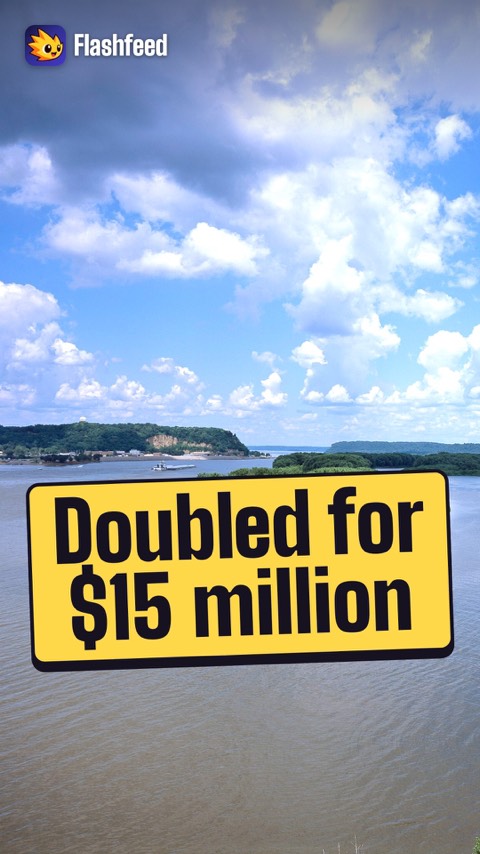
The Louisiana Purchase 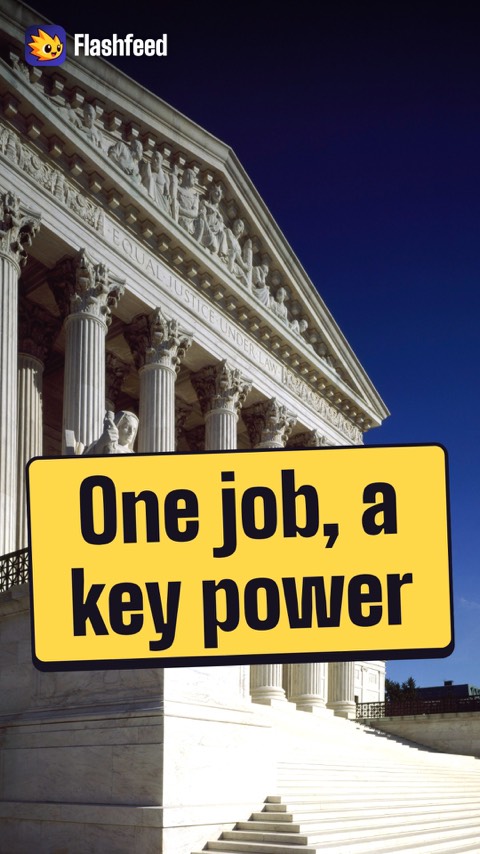
Marbury v. Madison 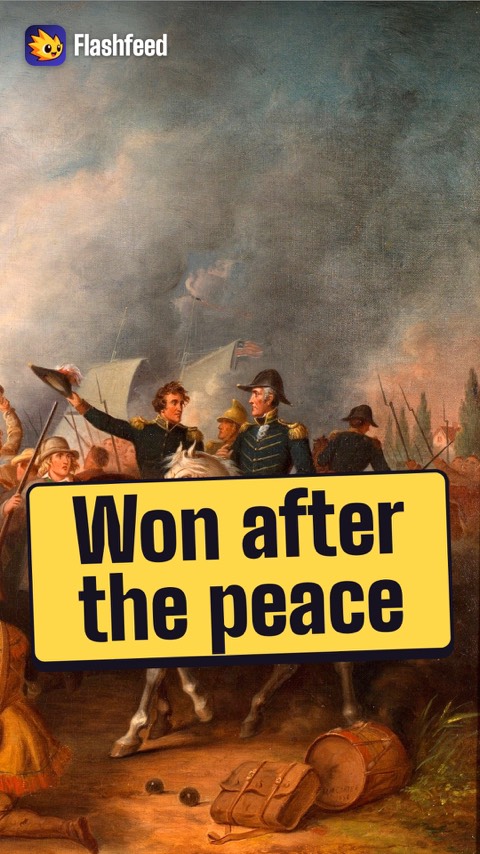
A Battle After the Peace All 9 clips on YouTube ↗Transcripts
The Louisiana Purchase
One deal doubled the size of the United States. The price was $15 million.
In 1803, Napoleon Bonaparte offered to sell all of French Louisiana.
Thomas Jefferson saw the gains. The Mississippi River would be secure for American boats, and farmers would have land for generations.
But Jefferson read the Constitution strictly. He had doubts about a president's power to make this treaty, and he set them aside.
Marbury v. Madison
A fight over one man's job gave the Supreme Court a key power. The case was Marbury versus Madison, in 1803.
Chief Justice John Marshall found William Marbury had a right to his job.
But a section of the Judiciary Act clashed with the Constitution. So Marshall declared it void.
This was judicial review: the Court's power to strike down acts of Congress. The courts stood equal with Congress and the President.
A Battle After the Peace
The Treaty of Ghent was signed two weeks before Andrew Jackson won at New Orleans in January 1815.
New England Federalists opposed the war. At the Hartford Convention, delegates discussed radical amendments, even secession.
News of Jackson's victory arrived at the same time. Federalists were branded unpatriotic traitors.
The Federalist Party never recovered. The one-party Era of Good Feelings began under James Monroe.
-
 George Caleb Bingham · Public domain ↗05
Jacksonian Democracy, Market Revolution, and Manifest Destiny (1824–1850)
Universal White Male Suffrage, Nullification Crisis, and the Bank War · The Market Revolution, Transportation, and Second Great Awakening Reforms · Indian Removal, Manifest Destiny, Texas Annexation, and the Mexican War
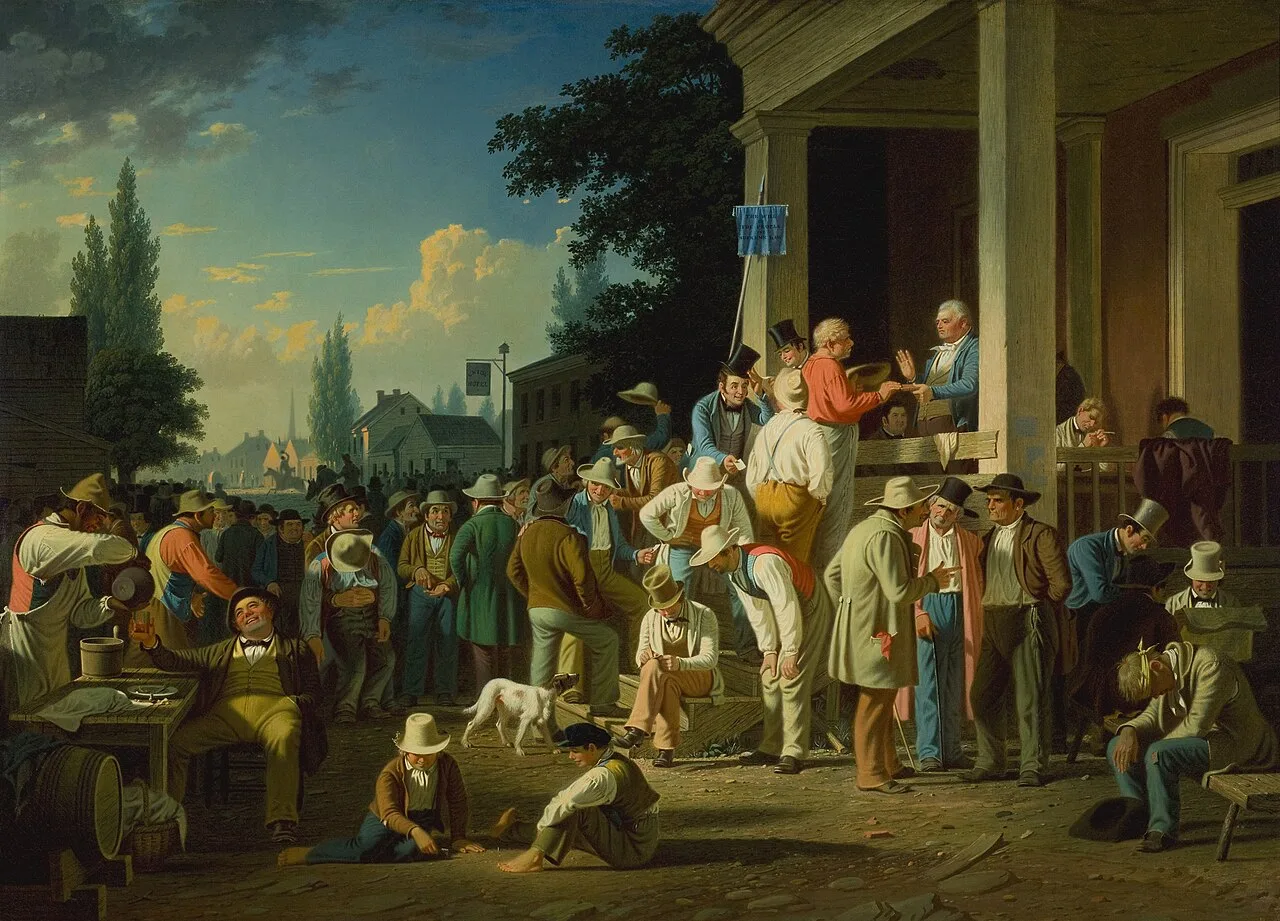
Lesson 5 · 10 cardsGeorge Caleb Bingham · Public domain ↗Expansion of Universal White Male Suffrage
During the 1820s and 1830s, state constitutional conventions dismantled property requirements for voting, ushering in the era of Jacksonian Democracy characterized by near-universal adult white male franchise and mass party participation.
 George Peter Alexander Healy · Public domain ↗
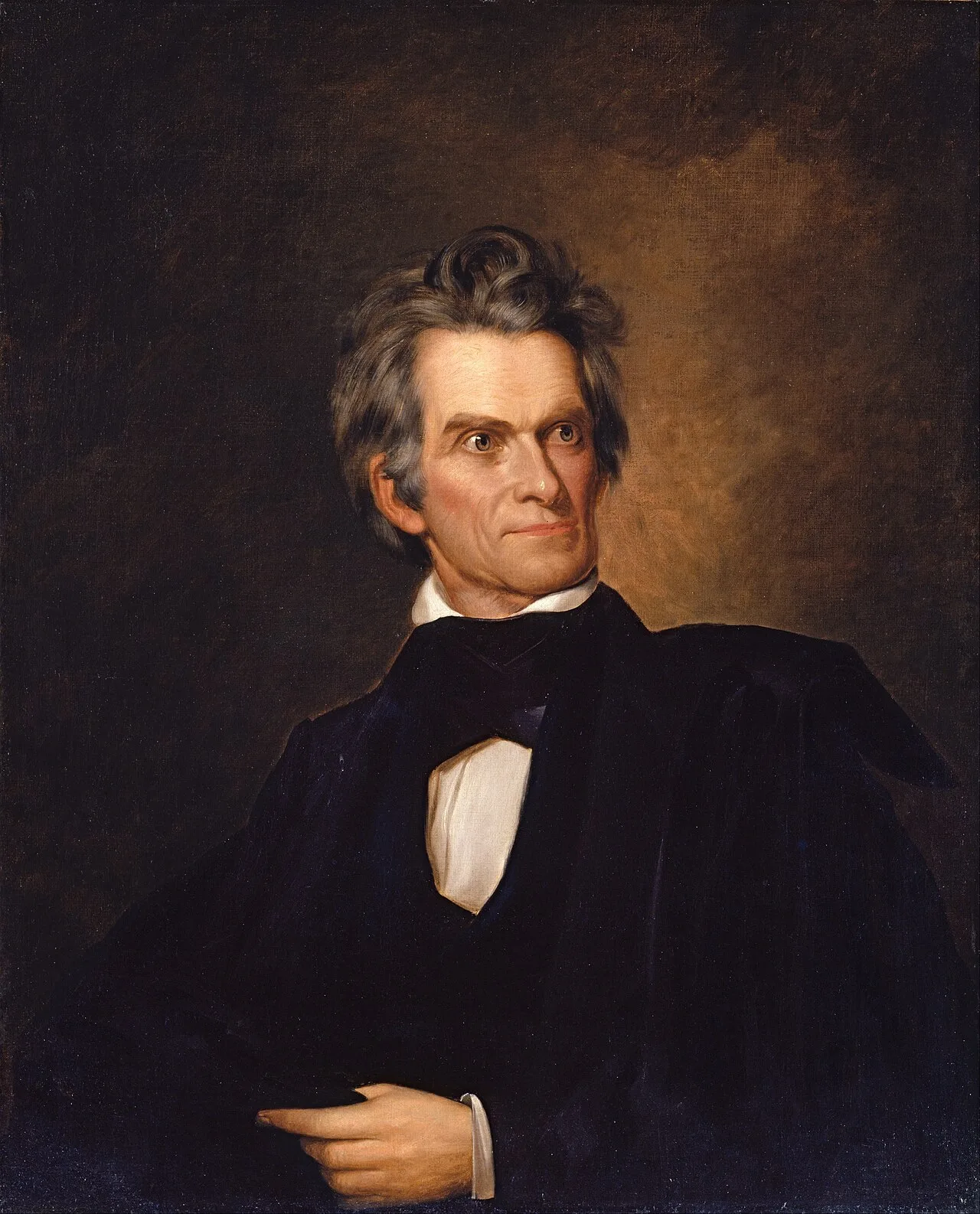
The Nullification Crisis of 1832–1833
Led by Vice President John C. Calhoun, South Carolina declared the federal protective tariffs of 1828 and 1832 null and void within its borders, prompting President Andrew Jackson to issue his Proclamation on Nullification and secure the Force Bill.
 Unknown author · Public domain ↗
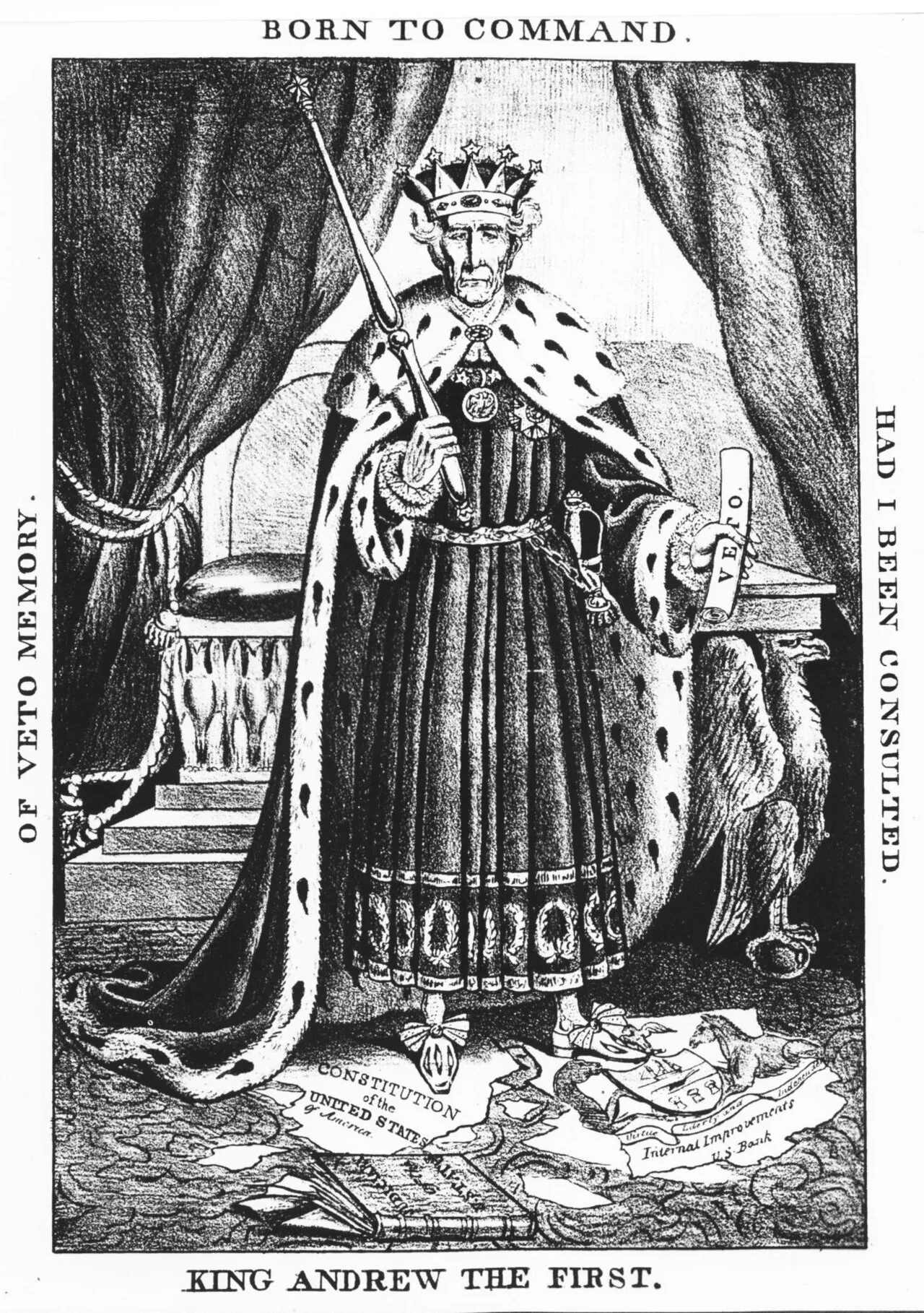
The Bank War and Veto of 1832
In 1832, President Andrew Jackson vetoed the bill to recharter the Second Bank of the United States, denouncing it as an unconstitutional monopoly that concentrated aristocratic power, before dismantling it by transferring federal funds into state pet banks.
 Henry Dacre (1820-?) · Public domain ↗
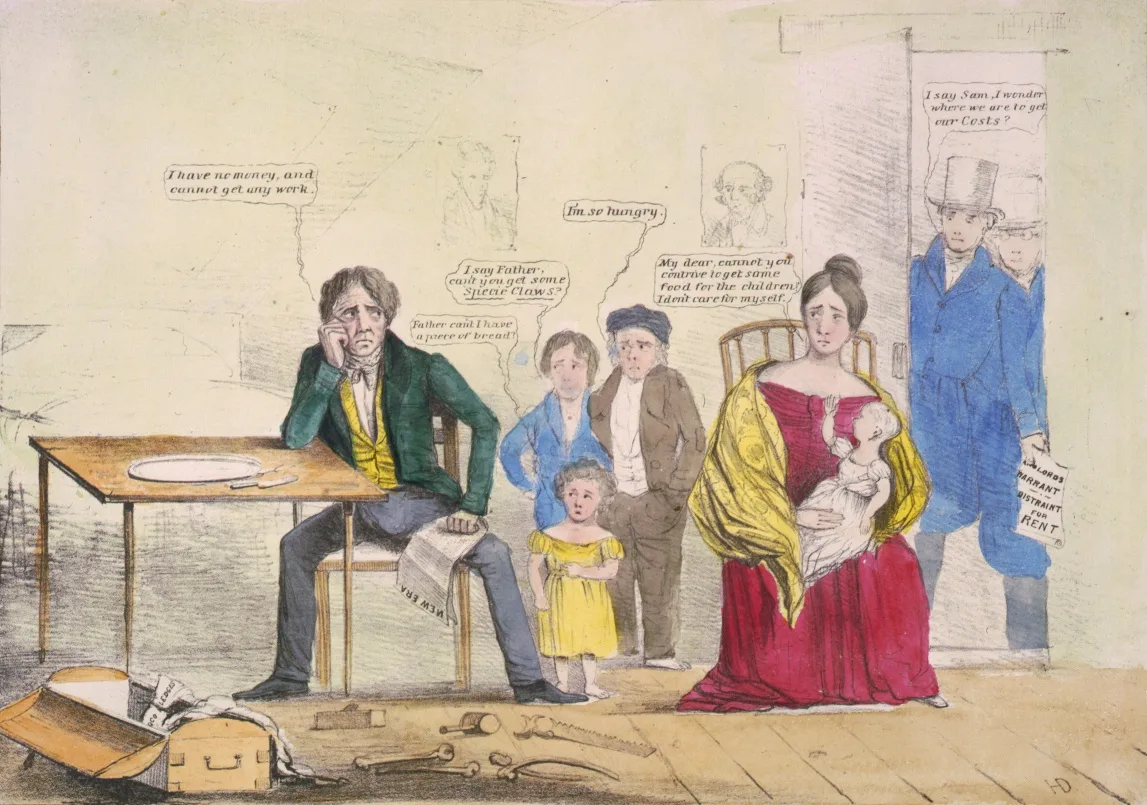
The Panic of 1837
Triggered by Jackson's Specie Circular of 1836 (mandating gold or silver for public land purchases), runaway credit from pet banks, and British financial contractions, the Panic of 1837 caused a catastrophic five-year economic depression with rampant bank failures.
 Wikimedia Commons · Andre Carrotflower · CC BY-SA 4.0 ↗
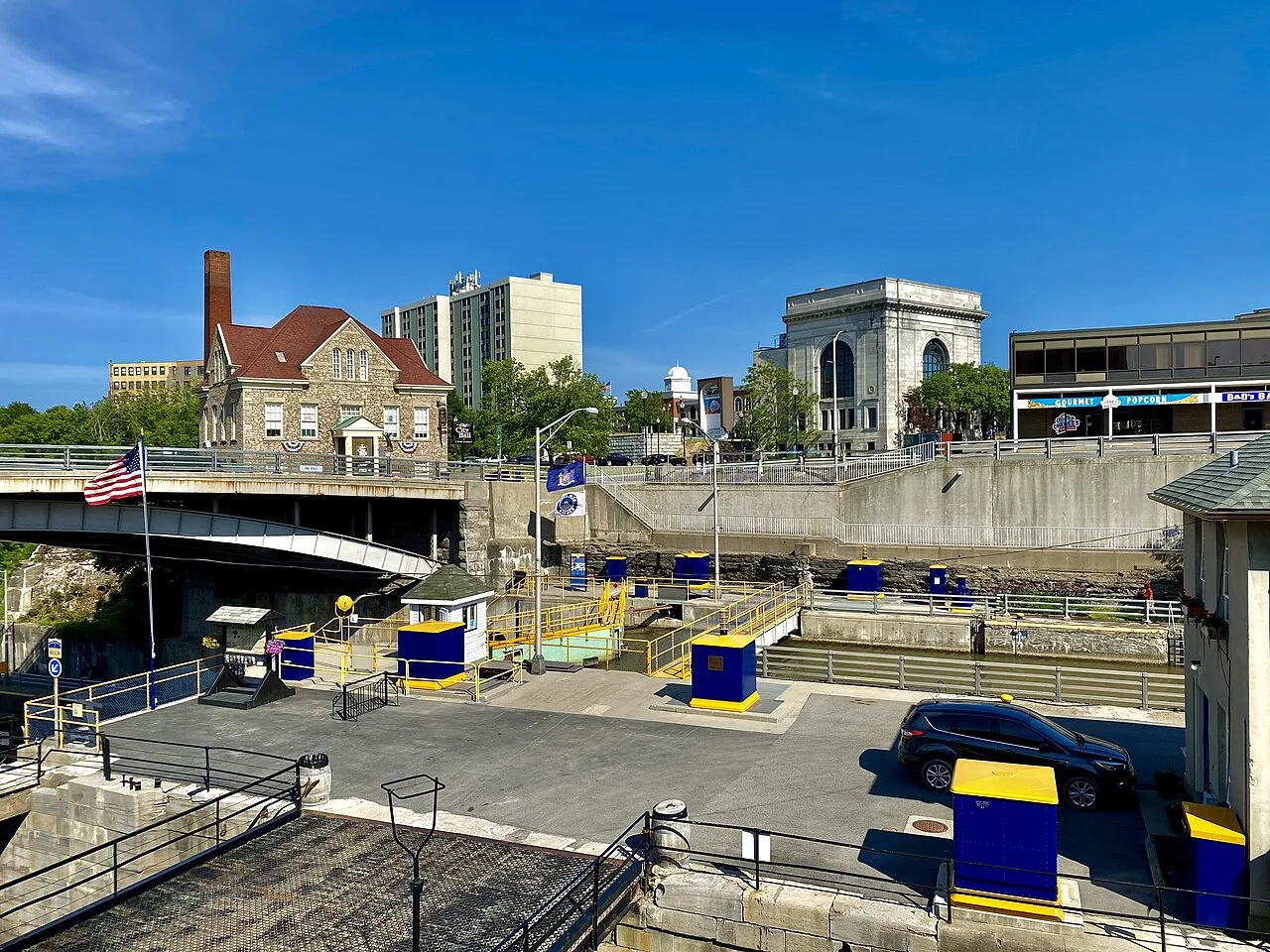
The Erie Canal and Transportation Revolution
Completed in 1825 across 363 miles of New York, the Erie Canal linked the Hudson River to Lake Erie, reducing freight transport costs by over 90 percent, transforming New York City into the nation's premier metropolis, and integrating western agriculture.
 Wikimedia Commons · Carol M. Highsmith · Public domain ↗
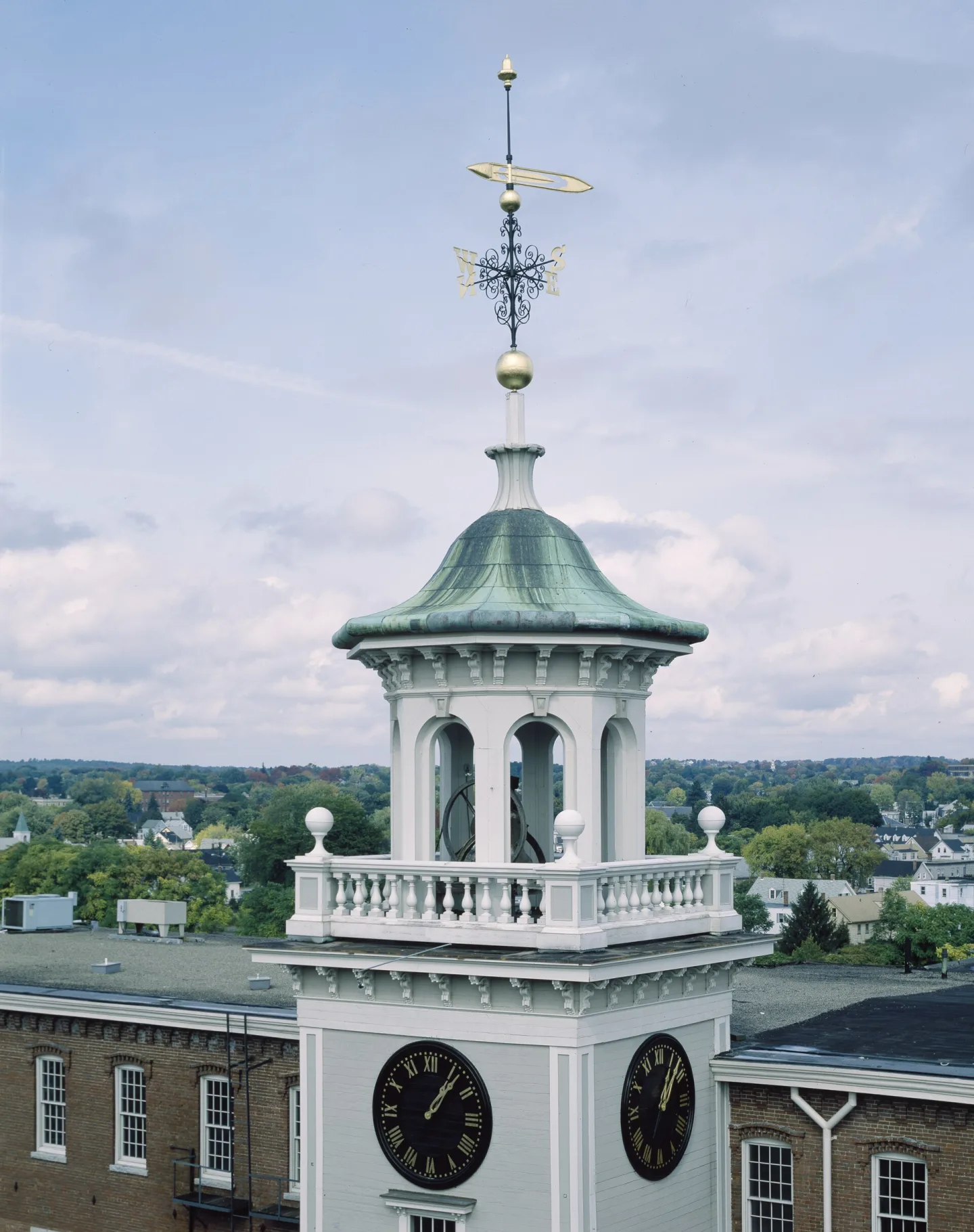
The Lowell Mill System
In Lowell, Massachusetts, the Boston Manufacturing Company established the Lowell system, integrating mechanized textile spinning and weaving in modern water-powered factories staffed predominantly by young, unmarried rural New England women.
 Dubourg, M., engraver Milbert, Jacques Gérard, 1766-1840 , artist · Public domain ↗
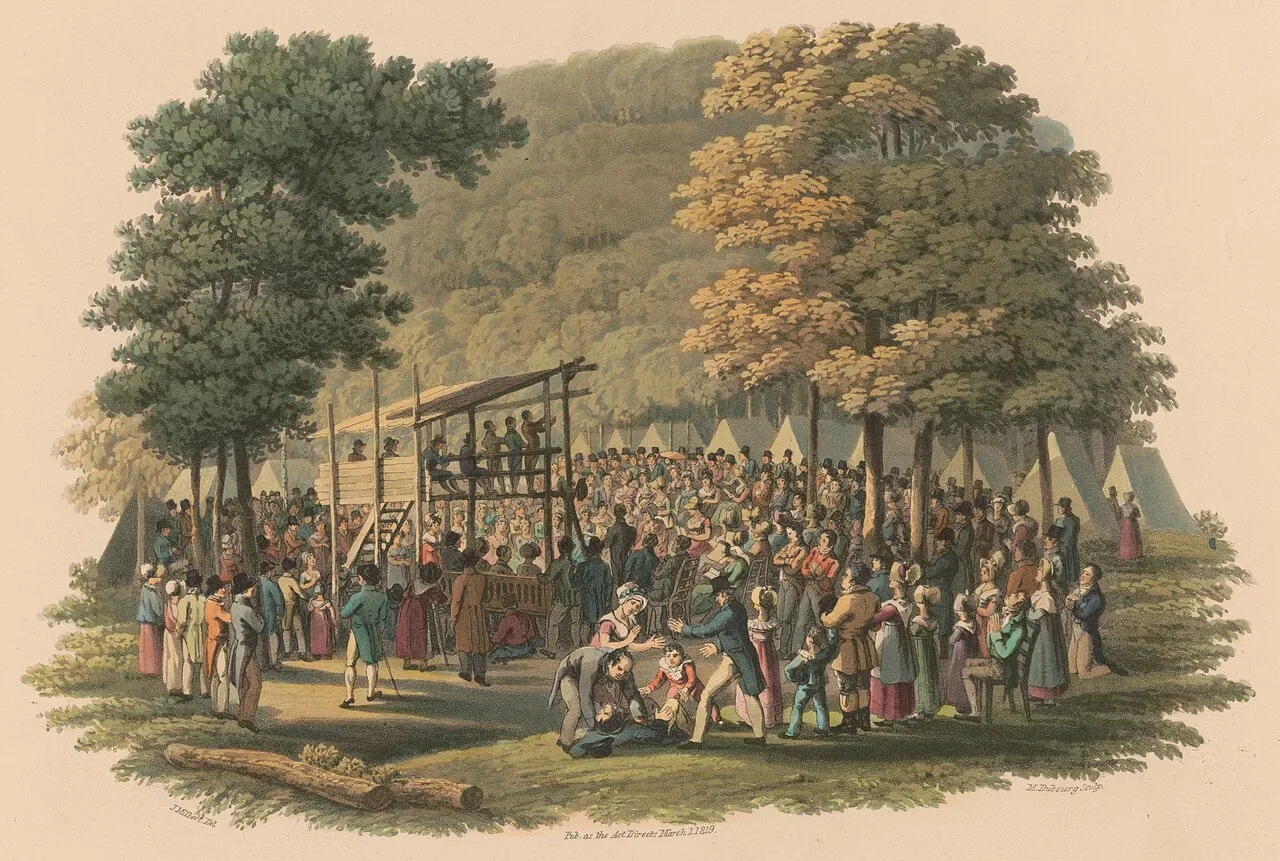
The Second Great Awakening
The Second Great Awakening swept across the nation in the 1820s and 1830s through evangelical revivals led by Charles Grandison Finney along New York's 'burned-over district', preaching human free will and moral perfectionism that catalyzed antebellum social reform movements.
 Wikimedia Commons · Kenneth C. Zirkel · CC BY-SA 3.0 ↗
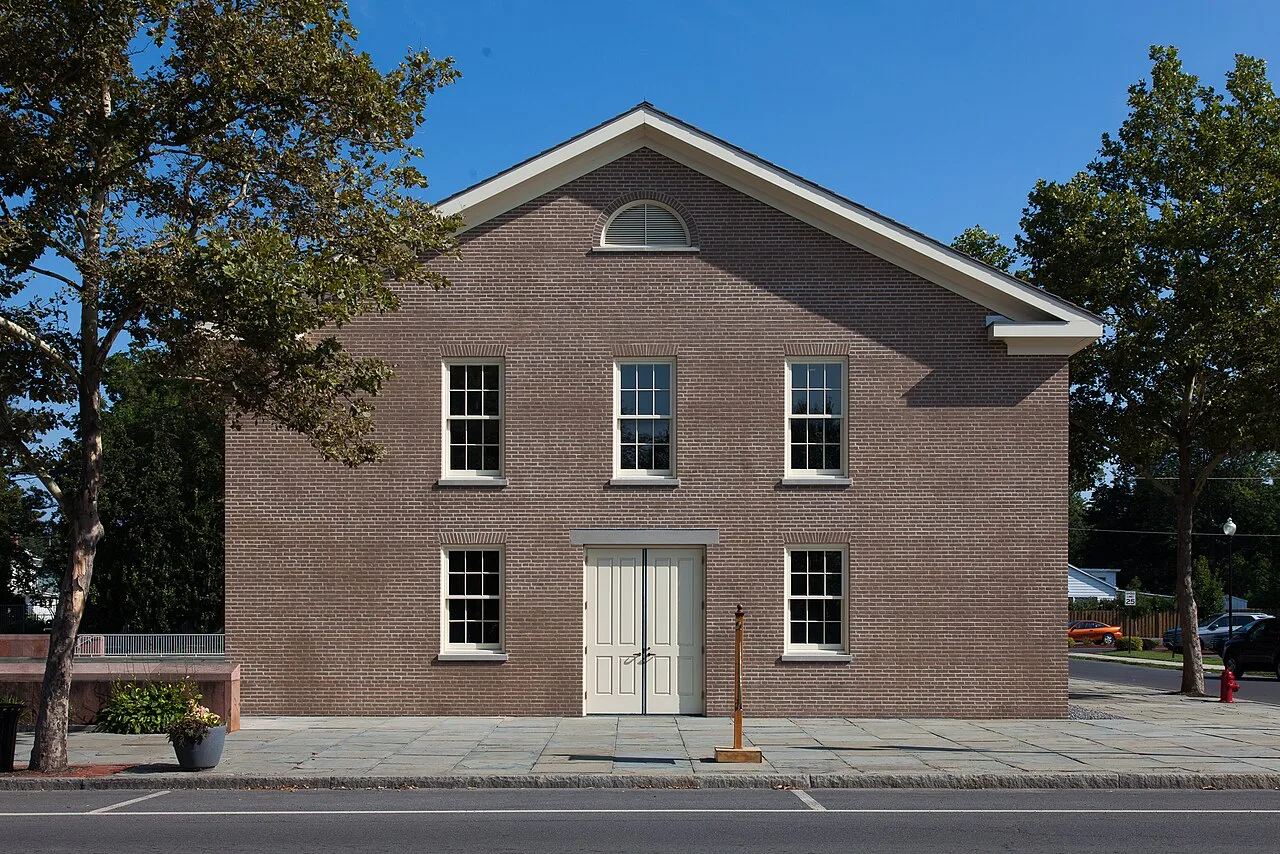
The Seneca Falls Convention of 1848
Organized in July 1848 by Elizabeth Cady Stanton and Lucretia Mott, the Seneca Falls Convention in New York issued the Declaration of Sentiments, modeling its grievances on the Declaration of Independence to demand full civil rights and women's suffrage.
 Pexels · View of Chapultepec Castle and Mexican flag in Mexico City against the skyline. ↗
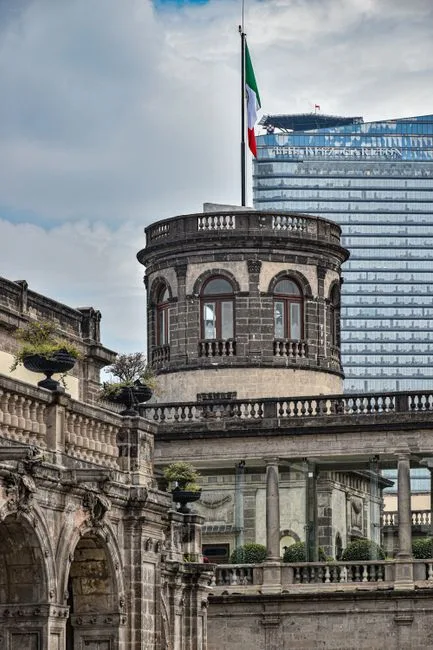
The Mexican-American War and Mexican Cession
Provoked by President James K. Polk over disputed Texas boundaries in 1846, the Mexican-American War concluded with the Treaty of Guadalupe Hidalgo (1848), which ceded over 500,000 square miles—including California and New Mexico—to the United States for $15 million.
1 / 10Which 1833 measure did Henry Clay engineer to defuse the Nullification Crisis?
Clay's Compromise Tariff gradually lowered rates to satisfy South Carolina, while the Force Bill was Jackson's separate measure authorizing military enforcement.
Lesson 5 has 52 cards. Keep going in the free app.
Question
The Canal That Built a Market 
The Trail of Tears 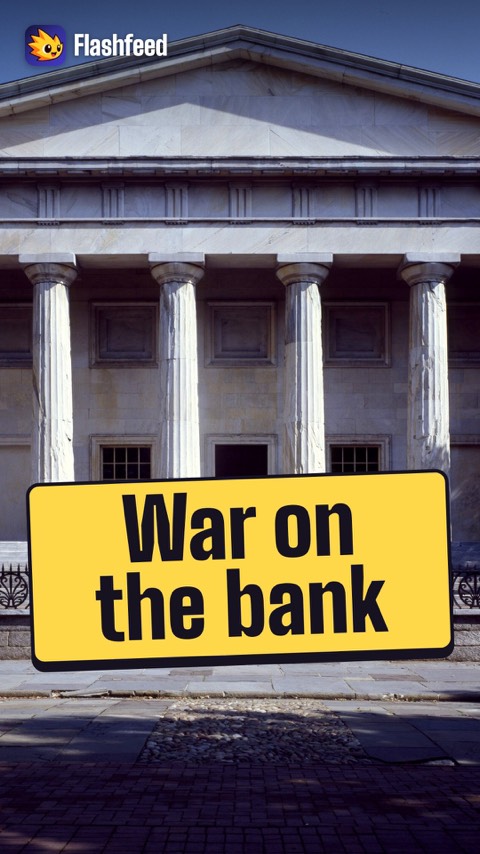
The Bank War All 9 clips on YouTube ↗Transcripts
The Canal That Built a Market
One canal made New York City the top trading city in the nation. The Erie Canal was finished in 1825.
It linked the Hudson River with Lake Erie. Midwest farms could now ship crops to Northeast markets.
Shipping got much cheaper and faster. Steamboats could now travel up the Mississippi, not only down.
Farm families once grew food mostly for themselves. Now they sold into one national market. This was the Market Revolution.
The Trail of Tears
The Supreme Court sided with the Cherokee Nation. In 1832, it ruled that Georgia's laws had no force over the Cherokee.
President Andrew Jackson ignored the ruling. His Indian Removal Act of 1830 was already pushing southeastern nations west of the Mississippi.
Starting in 1838, the army forced over 15,000 Cherokees to march west.
An estimated 4,000–8,000 died from exposure, hunger and disease. This was the Trail of Tears.
The Bank War
Andrew Jackson went to war with the nation's bank. He saw the Second Bank of the United States as a monopoly for wealthy elites.
In 1832, he vetoed its recharter. Then he moved federal deposits into state pet banks.
Land speculation ran rampant. In 1836, his Specie Circular required gold or silver for public land.
Credit then shrank. That fed the Panic of 1837 and a severe five-year depression.
- Take the lessons with you. Free, no account.Download on the App Store ↗Get it on Google Play ↗
-
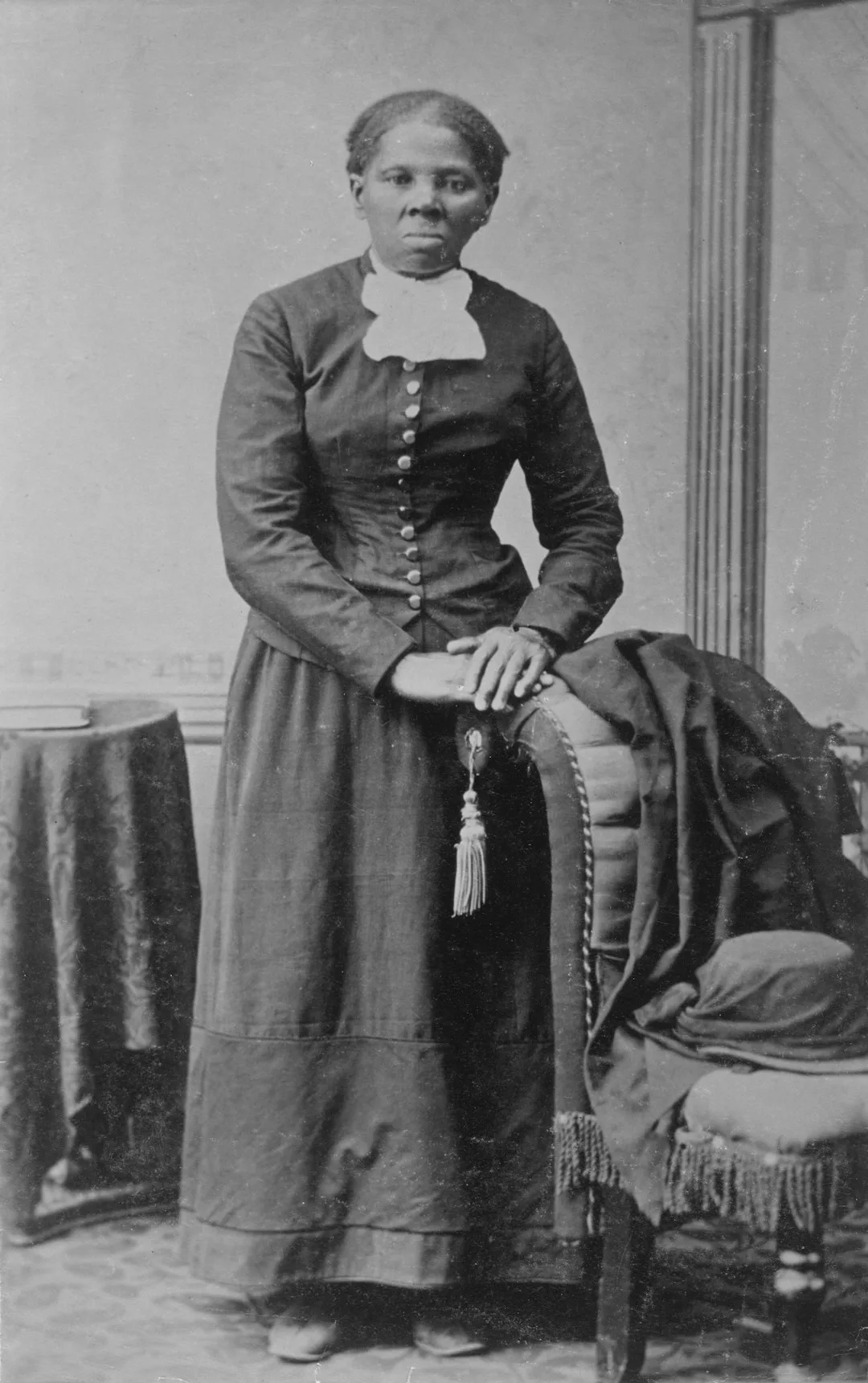 Unsplash · Portrait of Harriet Tubman. By photographer Harvey B. Lindsley, taken between 1871 and 1876?, printed between 1895 and 1910]. Photograph shows a f… ↗06
The Sectional Crisis, Economics of Slavery, and Road to Disunion (1850–1861)
King Cotton, Plantation Economics, and the Domestic Slave Trade · Abolitionism, the Fugitive Slave Act, and Bleeding Kansas · Dred Scott, Lincoln-Douglas Debates, Harpers Ferry, and 1860 Election
Lesson 6 · 10 cardsUnsplash · Portrait of Harriet Tubman. By photographer Harvey B. Lindsley, taken between 1871 and 1876?, printed between 1895 and 1910]. Photograph shows a f… ↗The Underground Railroad and Resistance
Enslaved people resisted bondage through everyday sabotage, cultural resilience, and flight along the Underground Railroad, a clandestine network of free Black and abolitionist safe houses guided by heroic conductors like Harriet Tubman.
 Wikimedia Commons · Mathew Benjamin Brady · Public domain ↗
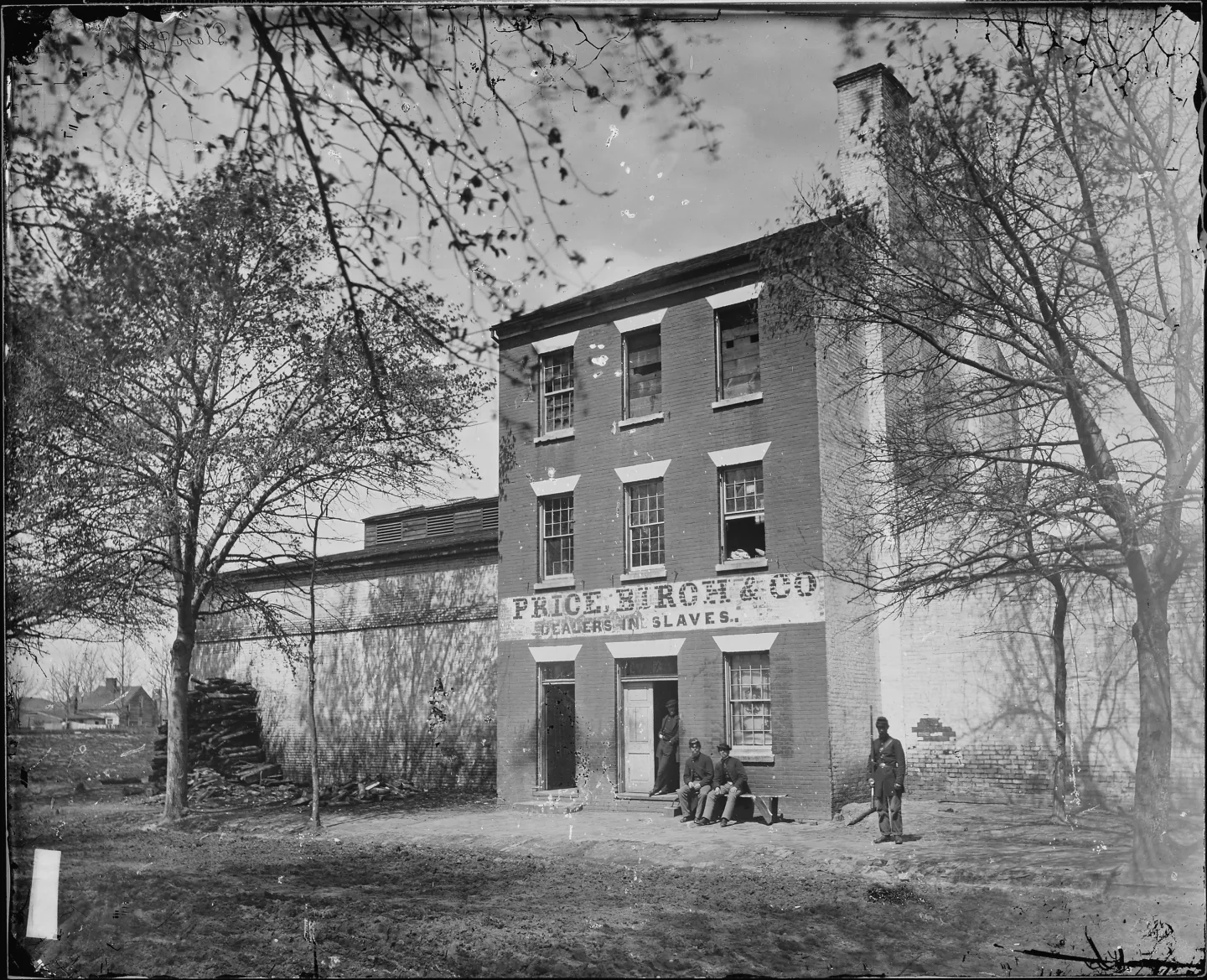
The Domestic Slave Trade
Following the 1808 federal ban on transatlantic slave importation, the domestic slave trade forcibly relocated over one million enslaved African Americans from the Upper South to the booming cotton frontiers of the Deep South, shattering families through commercial sales.
 Wikimedia Commons · George Peter Alexander Healy · Public domain ↗
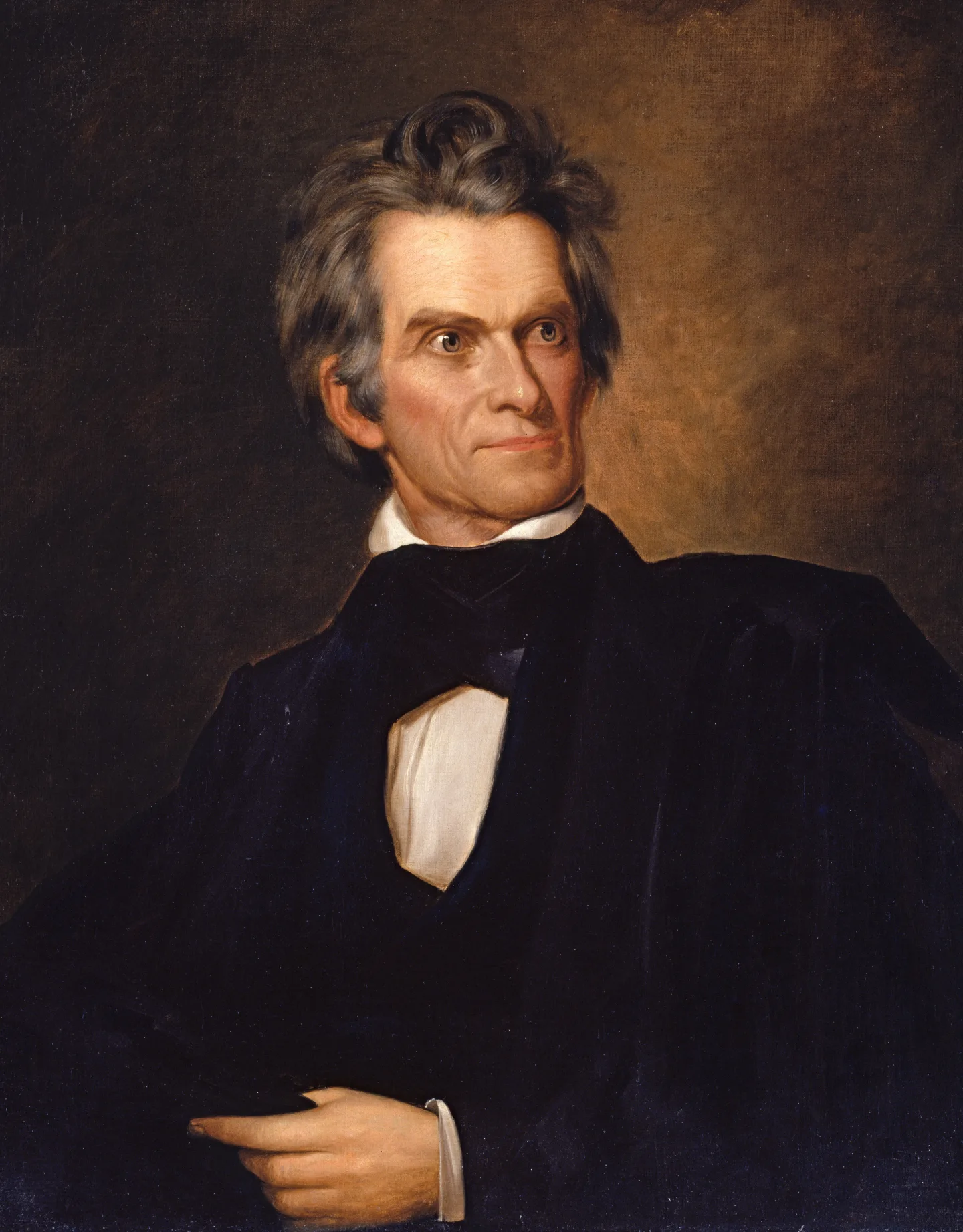
The Positive Good Ideology
In the 1830s and 1840s, Southern theorists like John C. Calhoun and George Fitzhugh abandoned the defense of slavery as a 'necessary evil', aggressively arguing it was a 'positive good' that provided paternalistic security superior to Northern wage labor.
 Drawn by Peter F. Rothermel / engraved by Robert Whitechurch (1814-ca. 1880) · Public domain ↗
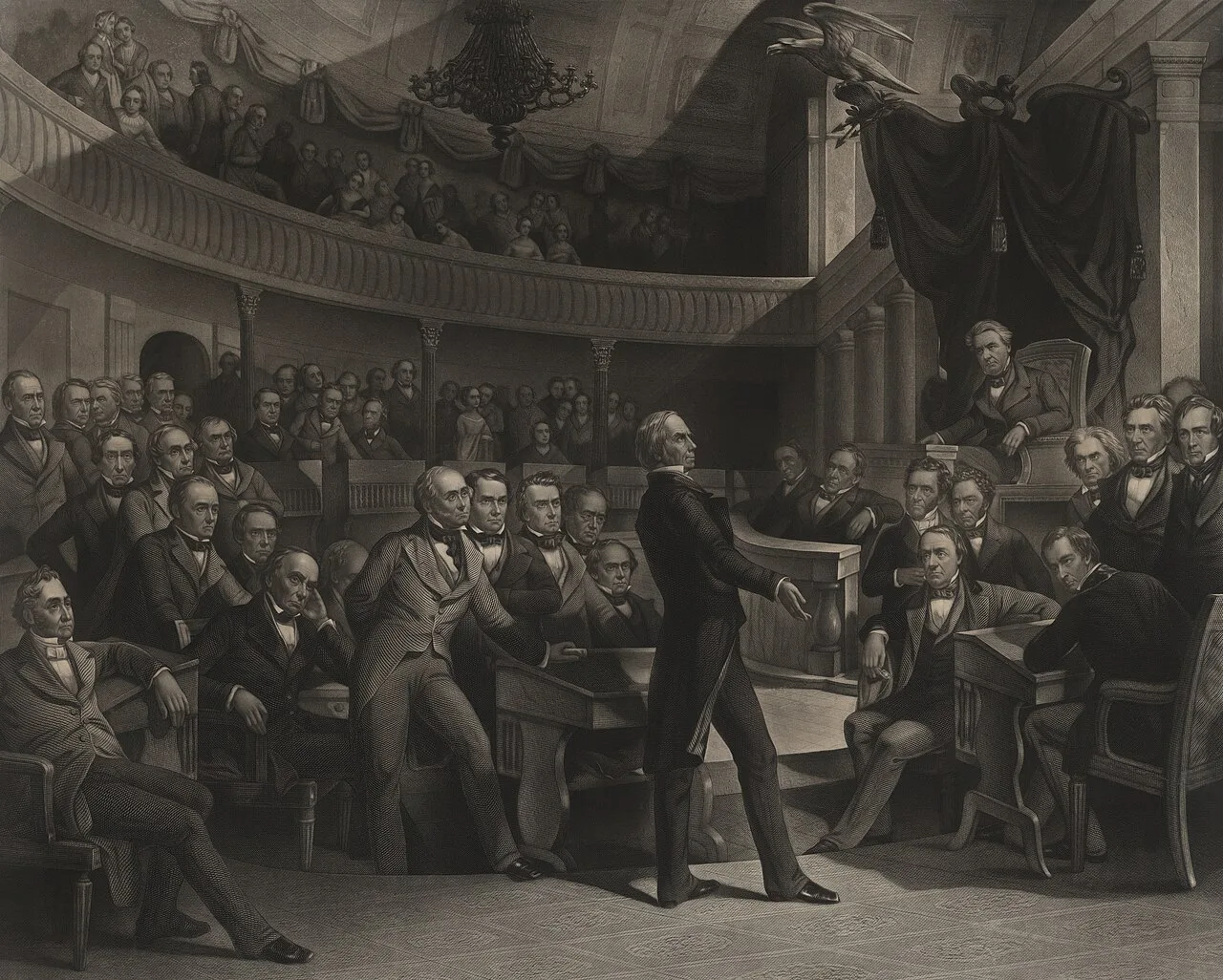
The Compromise of 1850
Brokered by Henry Clay and Stephen Douglas, the Compromise of 1850 admitted California as a free state, organized Utah and New Mexico under popular sovereignty, banned the slave trade in Washington D.C., and enacted a draconian new Fugitive Slave Act.
 Wikimedia Commons · Harriet Beecher Stowe · Public domain ↗
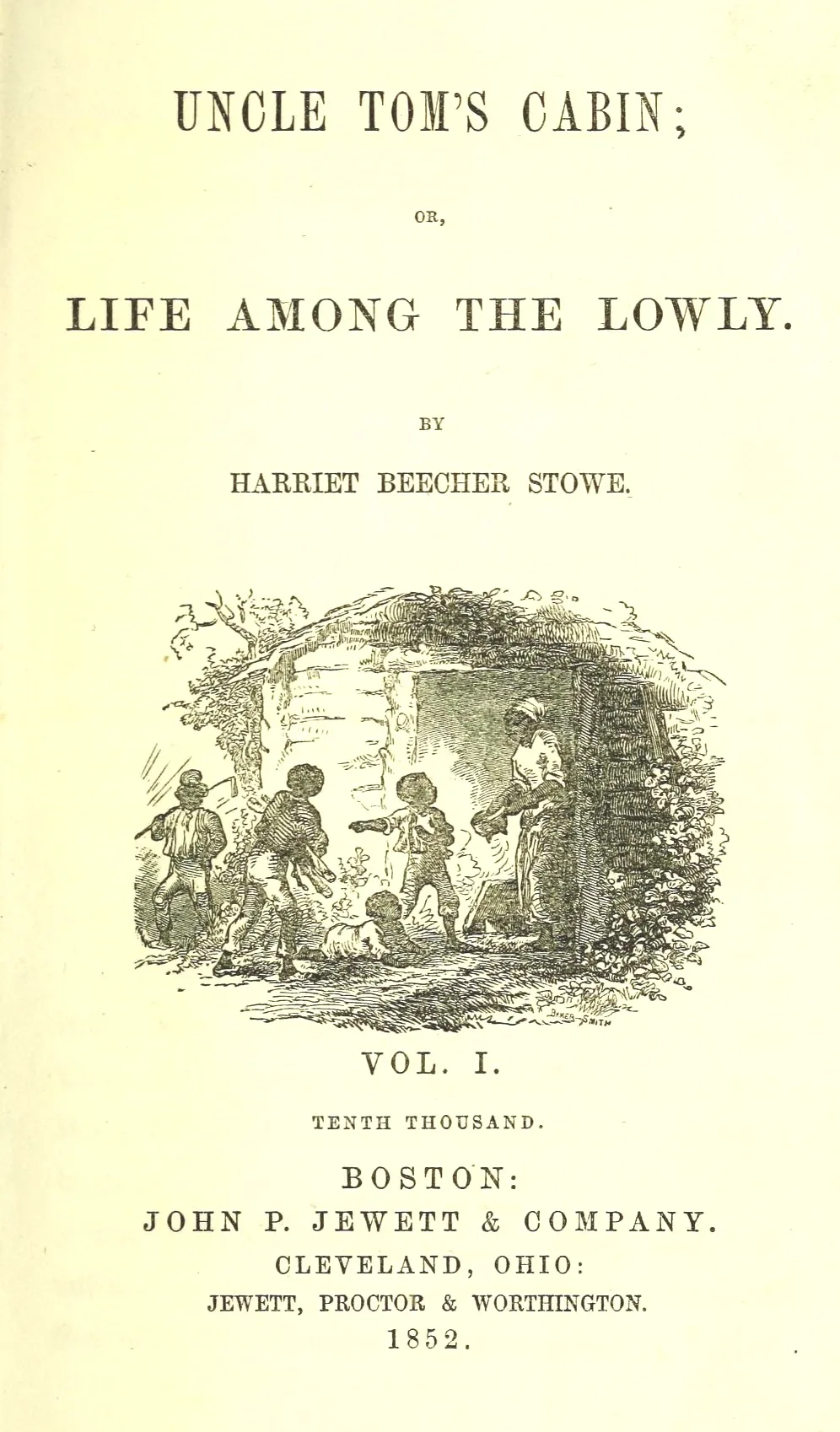
Harriet Beecher Stowe and Uncle Tom's Cabin
Published in 1852, Harriet Beecher Stowe's anti-slavery novel Uncle Tom's Cabin sold over 300,000 copies in its first year, emotionalizing the cruelty of chattel slavery and family separation, and profoundly shifting Northern public opinion against the institution.
 Wikimedia Commons · New York: Wm. C. Reynolds and J. C. Jones · Public domain ↗
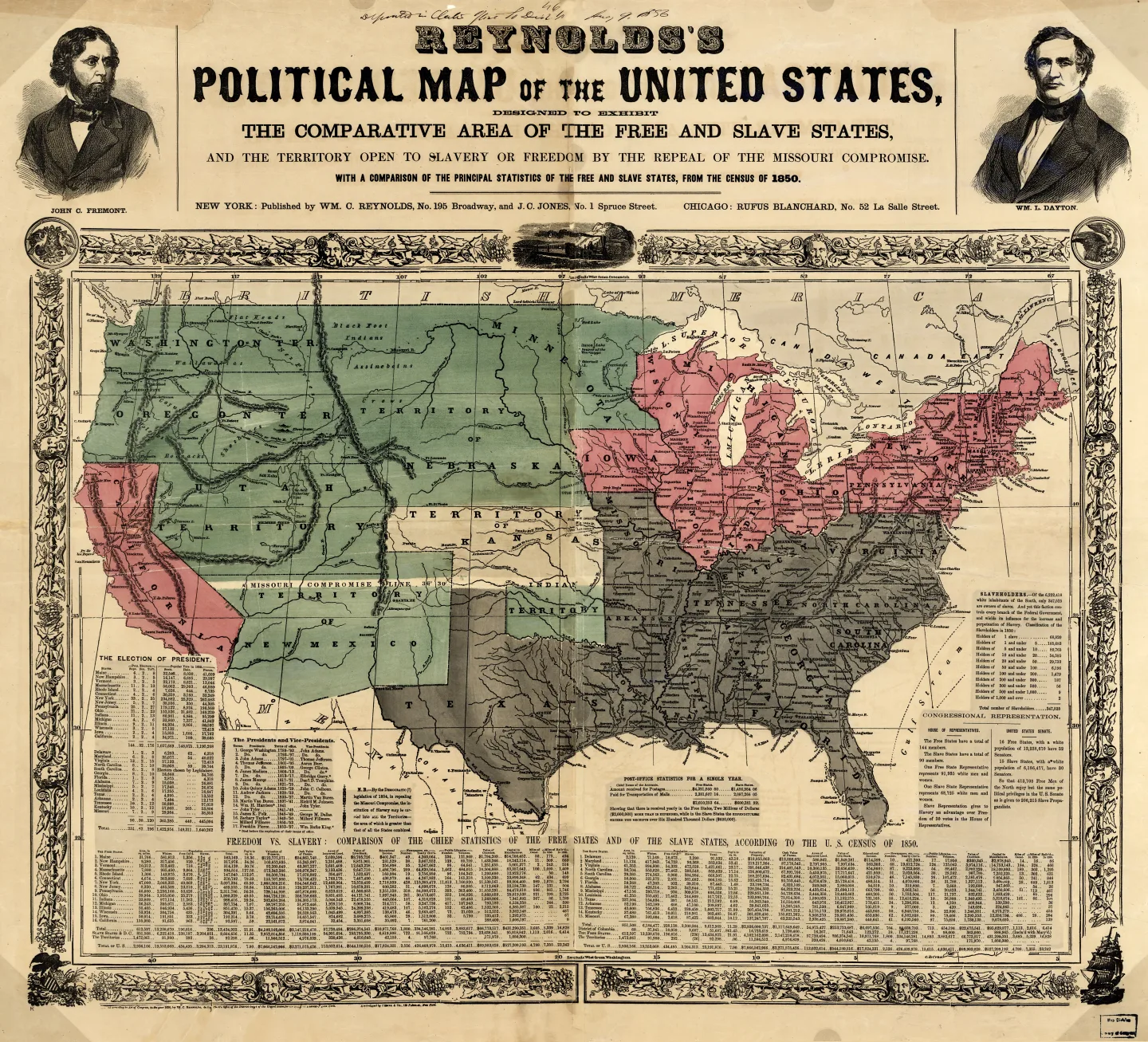
The Kansas-Nebraska Act and Bleeding Kansas
Introduced in 1854 by Stephen Douglas, the Kansas-Nebraska Act repealed the Missouri Compromise's 36°30' restriction on slavery to organize western territories under popular sovereignty, igniting a violent proxy civil war known as 'Bleeding Kansas'.
 Wikimedia Commons · Schultze, Louis · Public domain ↗
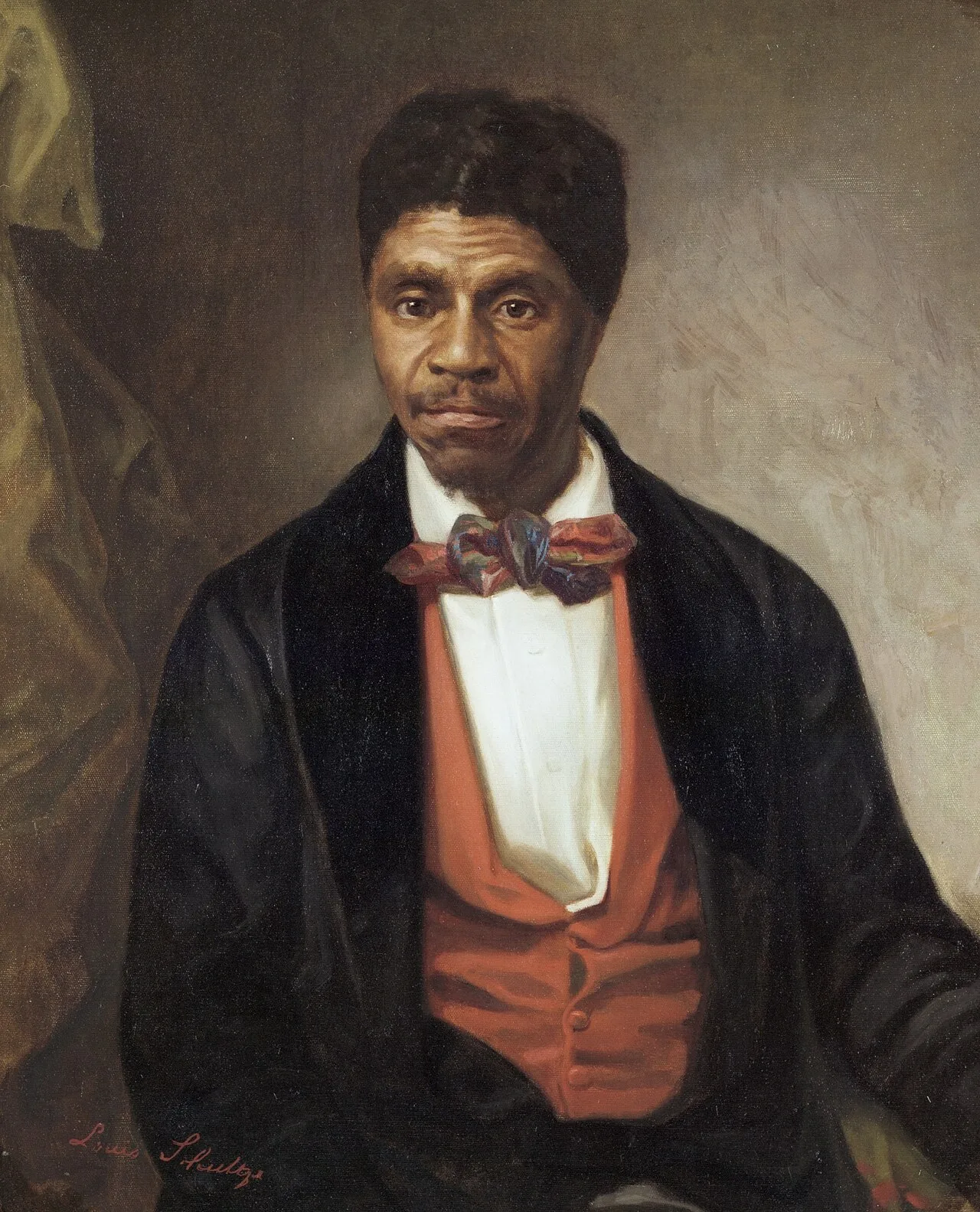
The Dred Scott Decision of 1857
In Dred Scott v. Sandford (1857), Chief Justice Roger Taney ruled that African Americans could not be citizens, had 'no rights which the white man was bound to respect', and declared that Congress possessed no constitutional power to ban slavery in federal territories.
 Wikimedia Commons · Acroterion · CC BY-SA 4.0 ↗
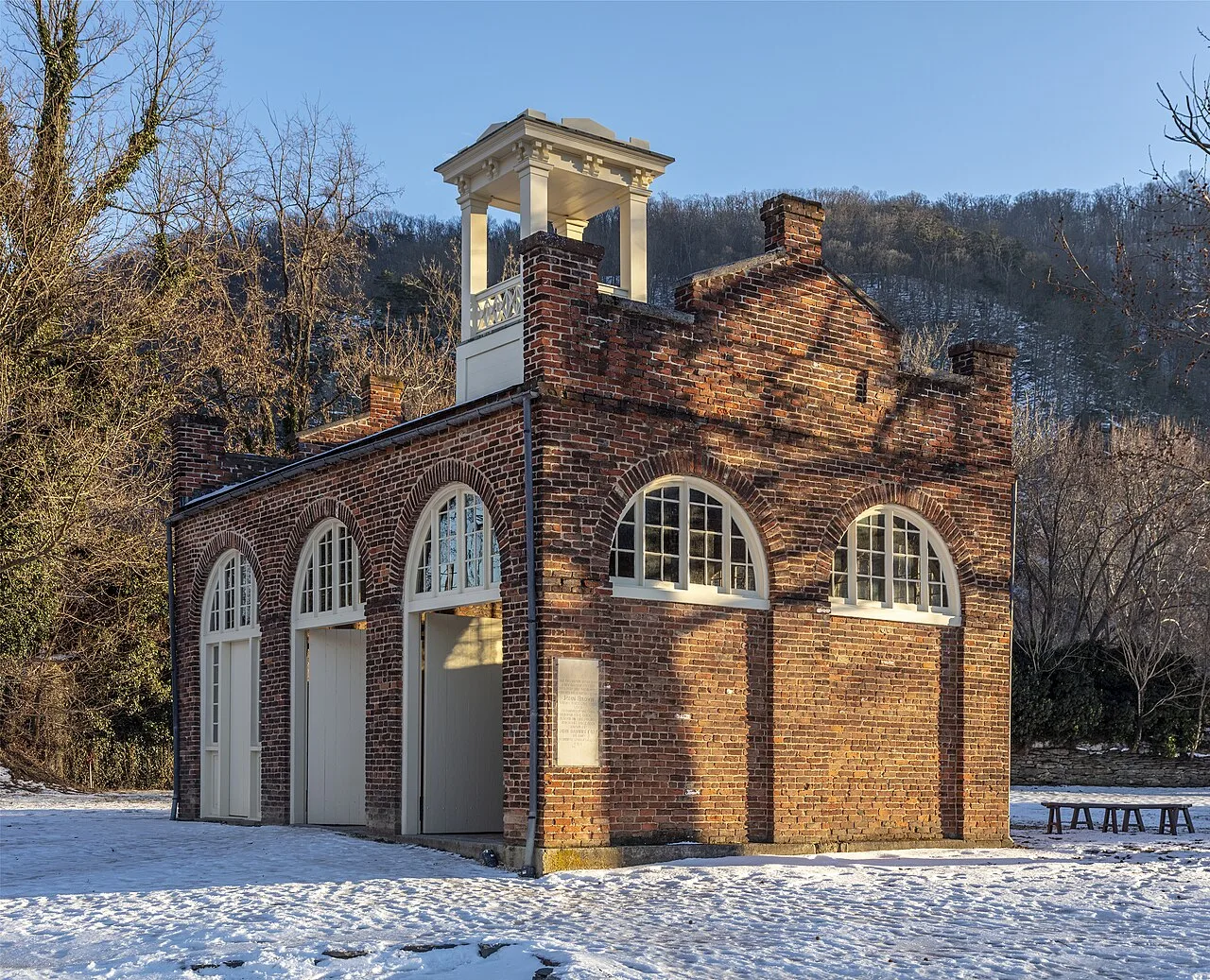
John Brown's Raid on Harpers Ferry
In October 1859, radical abolitionist John Brown led an armed raid on the federal arsenal at Harpers Ferry, Virginia, attempting to spark an Appalachian slave insurrection; his capture and execution made him a Northern martyr and stoked Southern fears of armed race war.
1 / 10Which federal action drove Southern planters to rely on the domestic slave trade after 1808?
The 1808 ban on importing enslaved people from Africa forced planters to meet labor demand through the internal 'Second Middle Passage' instead; the other measures did not cut off the supply of enslaved labor.
Lesson 6 has 60 cards. Keep going in the free app.
Question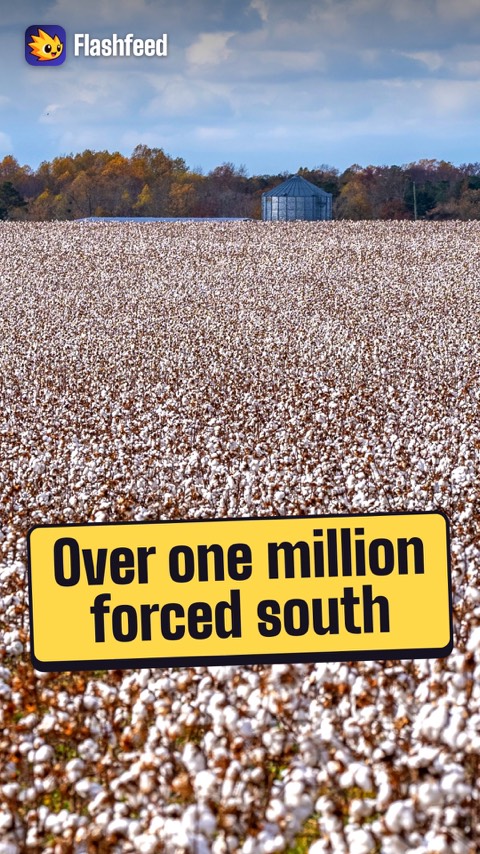
The Second Middle Passage 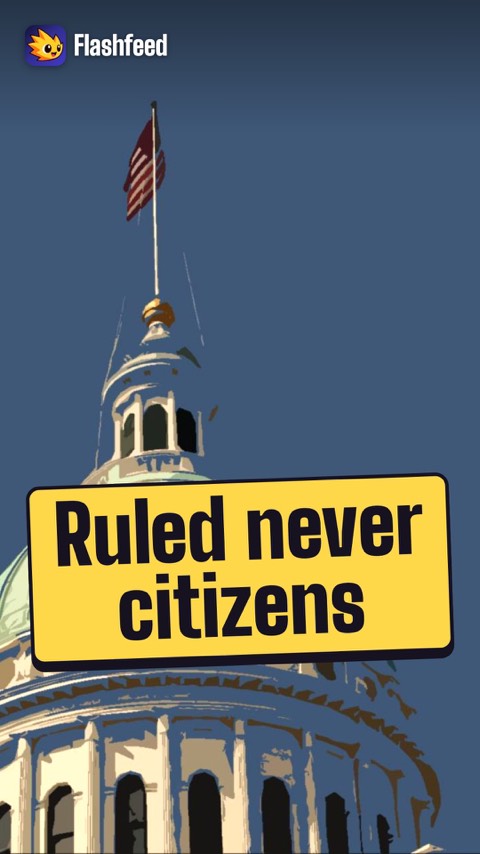
The Dred Scott Ruling 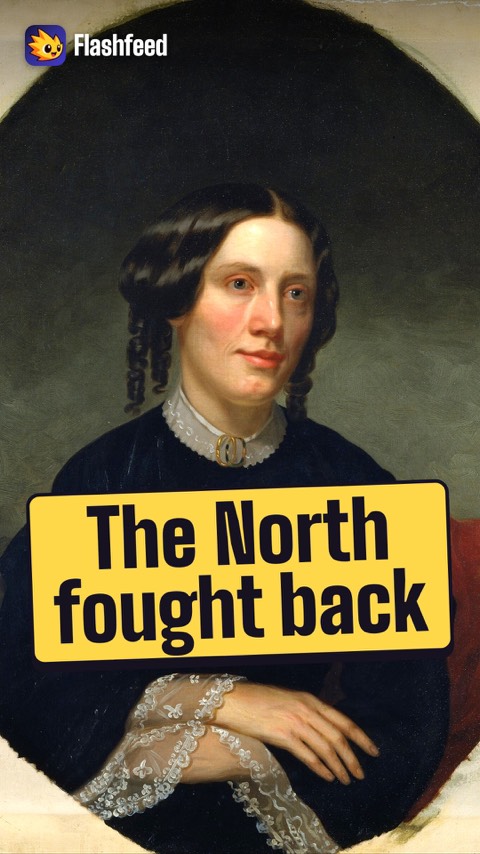
The Law That Reached North All 9 clips on YouTube ↗Transcripts
The Second Middle Passage
The United States banned the Atlantic slave trade in 1808. Yet slavery in the South kept growing.
The reason was cotton. Cotton made up roughly 60% of the value of American exports.
So planters bought people inside the country. Over 1 million enslaved people were forced from Virginia and Maryland to the Deep South.
This is called the Second Middle Passage. Enslaved people resisted bondage, from running away to armed revolt.
The Dred Scott Ruling
The Supreme Court ruled that no Black American could ever be a citizen. The case was Dred Scott versus Sandford, in 1857.
Chief Justice Roger Taney called enslaved people property. He ruled that Congress could not ban slavery in the territories.
Abraham Lincoln warned the Union could not last half slave and half free.
Lincoln won the presidency in 1860, with no Southern electoral votes. That December, South Carolina voted to secede.
The Law That Reached North
Northerners could be fined or jailed for not helping slave catchers. That was the Fugitive Slave Act of 1850.
Federal commissioners could capture alleged runaways without a jury trial.
It brought the violence of slavery into Northern communities. People fought back with rescue riots and personal liberty laws.
Outrage grew with Uncle Tom's Cabin, by Harriet Beecher Stowe. Over 300,000 copies sold in its first year.
-
 Wikimedia Commons · Unknown author · Public domain ↗07
The Civil War: Total War, Emancipation, and Union Victory (1861–1865)
Secession, Fort Sumter, and Military Strategies (Anaconda vs. King Cotton) · Emancipation Proclamation, Black Regiments, and Strategic Turning Points · Civil War Homefront Legislation, Total War, and Appomattox Surrender
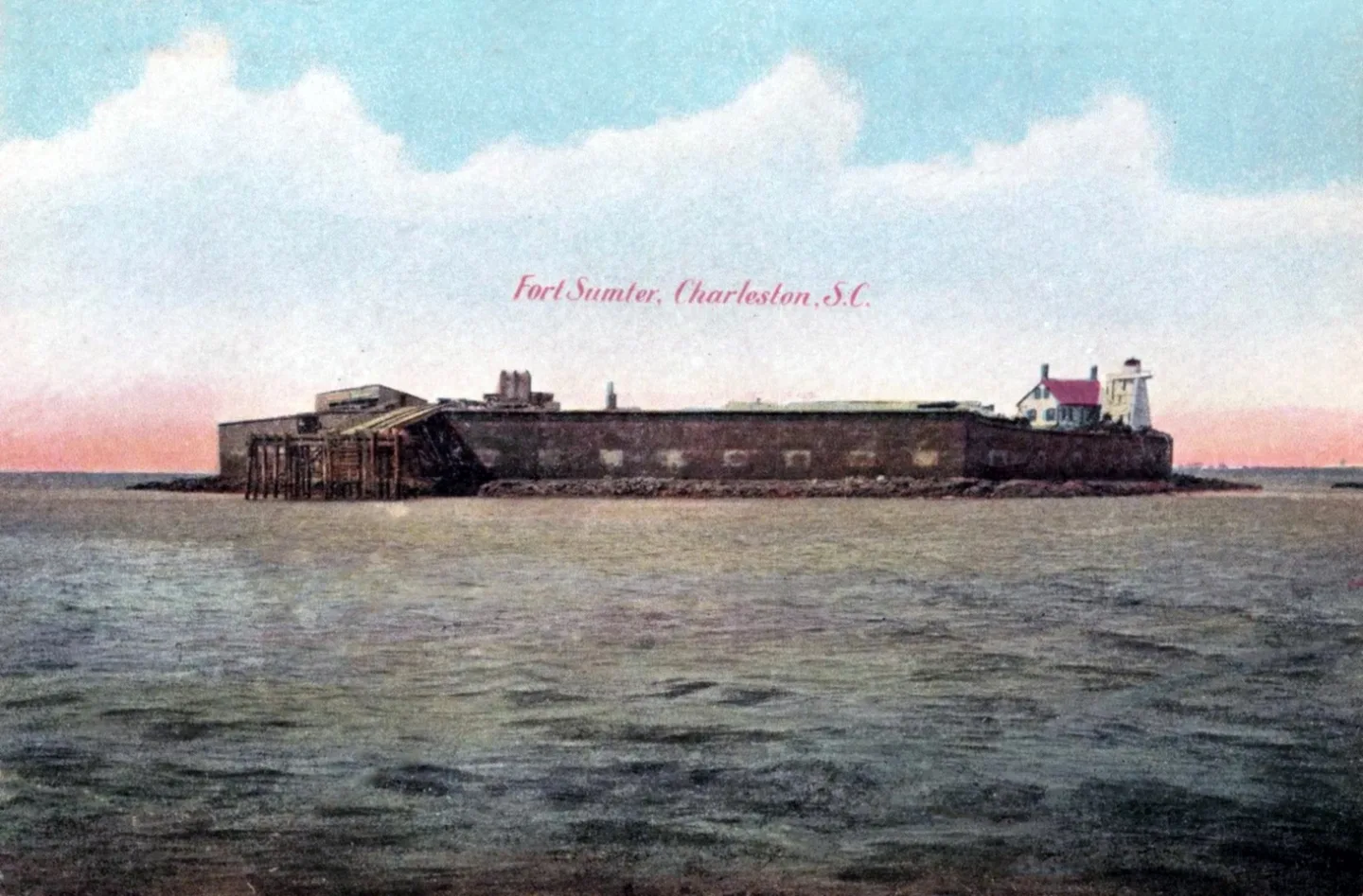
Lesson 7 · 10 cardsWikimedia Commons · Unknown author · Public domain ↗The Attack on Fort Sumter
On April 12, 1861, Confederate artillery under General P.G.T. Beauregard opened fire on the federal garrison at Fort Sumter in Charleston Harbor, South Carolina, initiating military hostilities in the American Civil War.
 Wikimedia Commons · U.S. National Archives · Public domain ↗
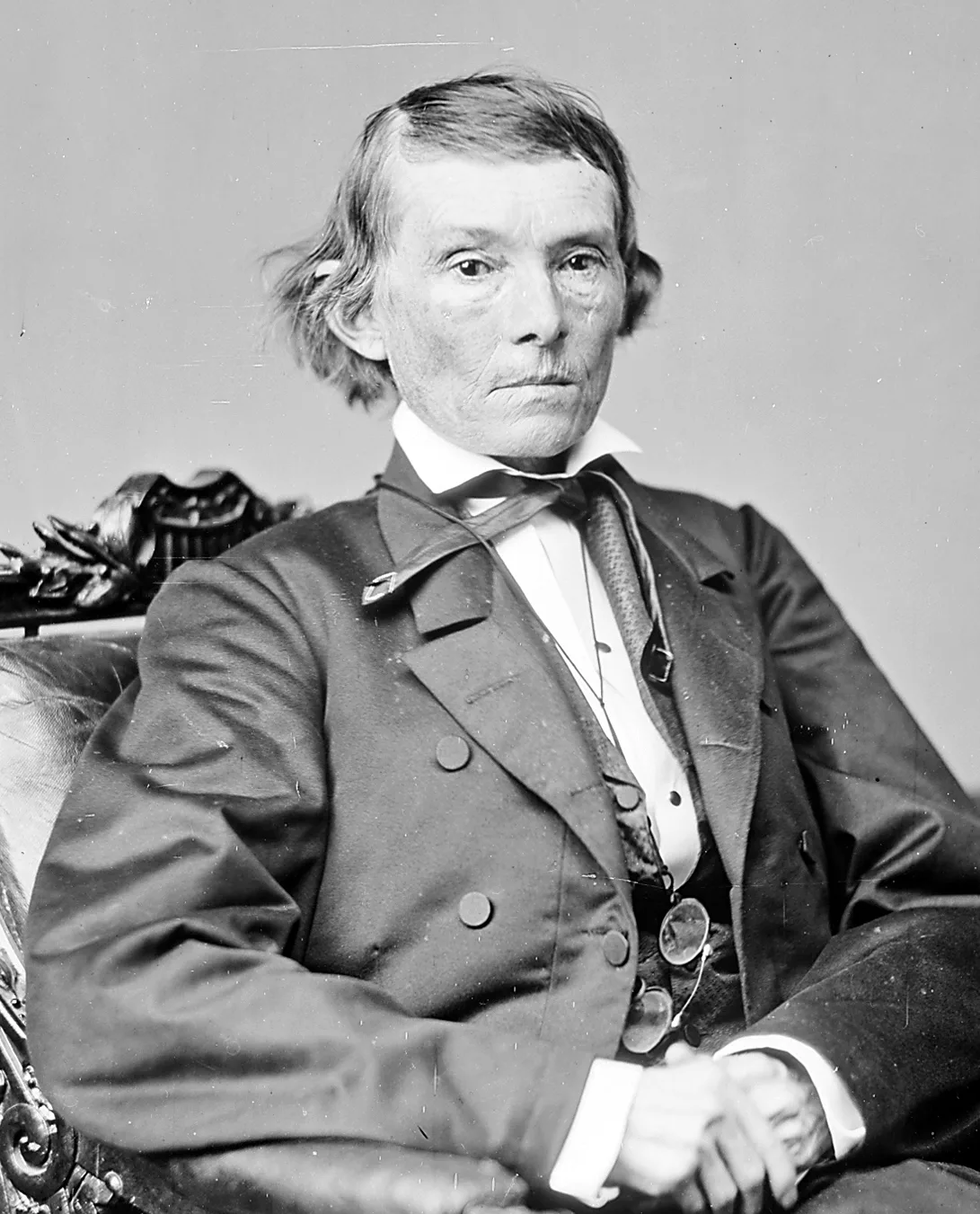
The Cornerstone Speech
In March 1861, Confederate Vice President Alexander Stephens delivered the Cornerstone Speech in Savannah, explicitly declaring that the Confederacy's foundations rested upon the great truth that the Negro is not equal to the white man and that racial slavery is his natural condition.
 Wellcome Collection · Public Domain Mark · pdm ↗
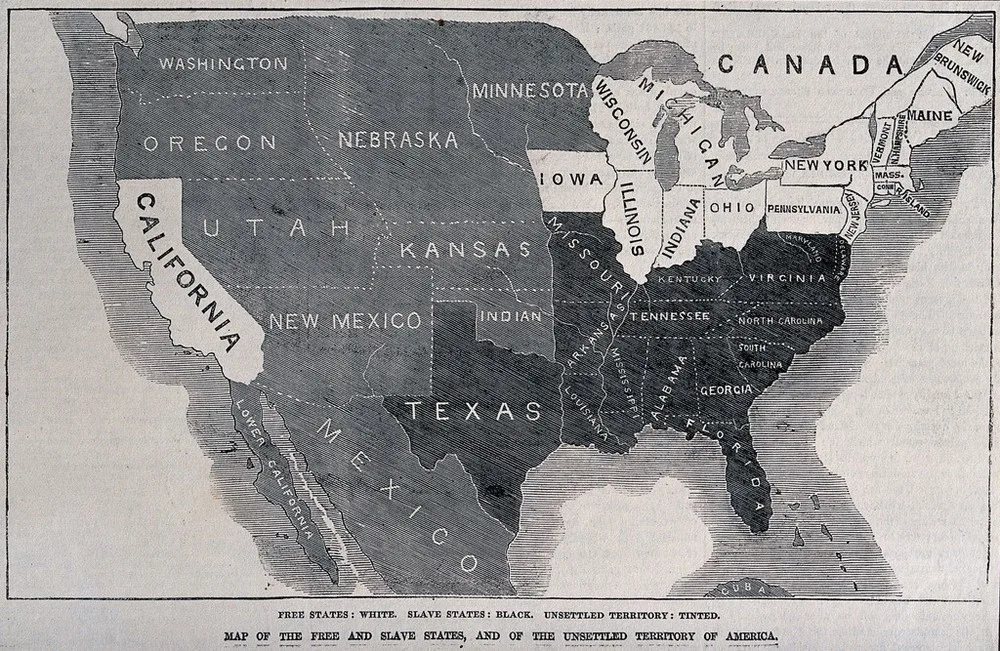
Strategic Importance of the Border States
President Lincoln prioritized securing the four slaveholding Border States—Maryland, Delaware, Kentucky, and Missouri—whose industrial capacity, railroad corridors, and population were vital to prevent the encirclement of Washington D.C. and preserve Union victory.
 Elliott, J. · Public domain ↗
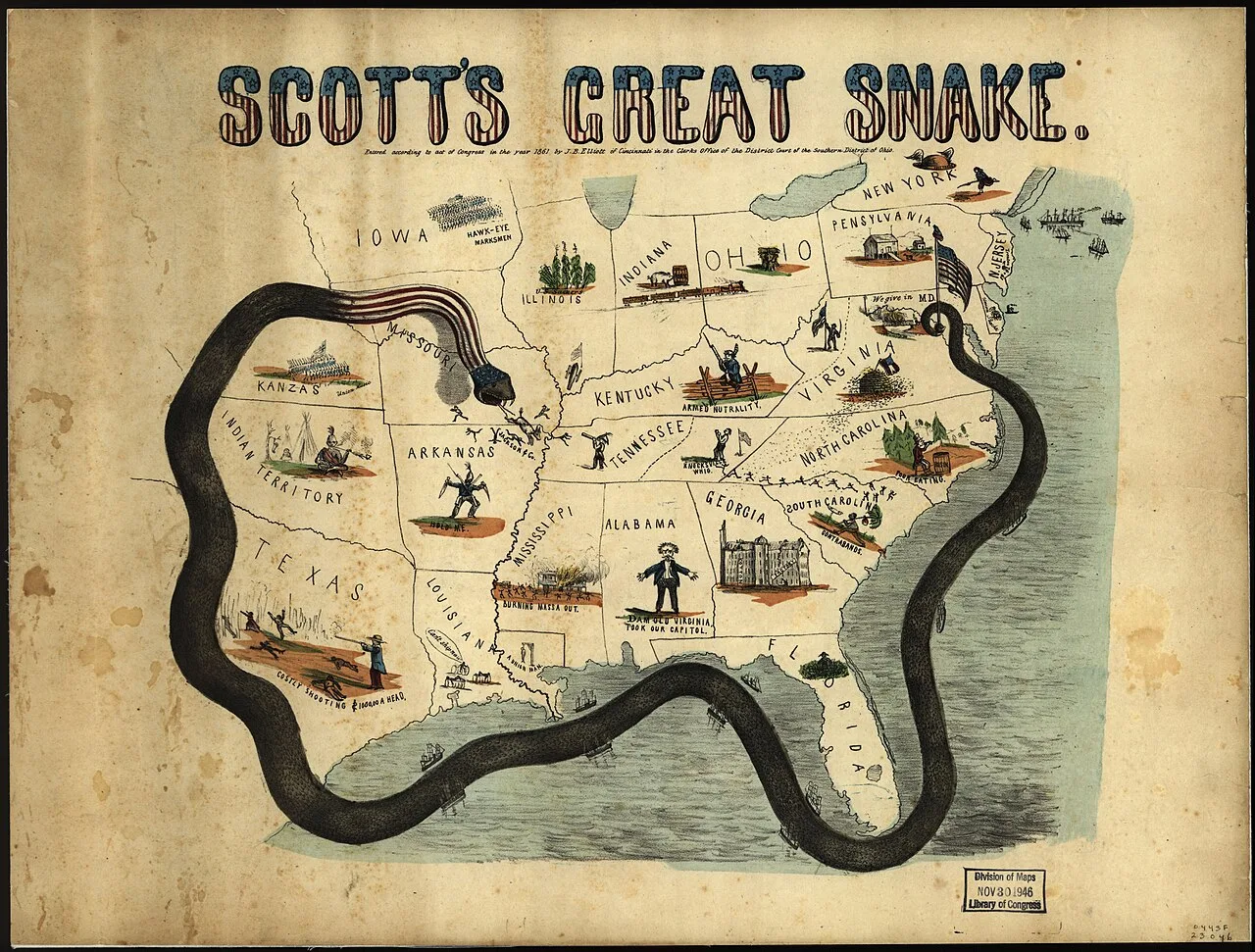
The Anaconda Plan
Devised by Union General-in-Chief Winfield Scott, the Anaconda Plan aimed to slowly strangle the Confederacy by blockading its Atlantic and Gulf ports and taking control of the Mississippi River to split the South in two, rather than launching a costly direct invasion of Richmond.
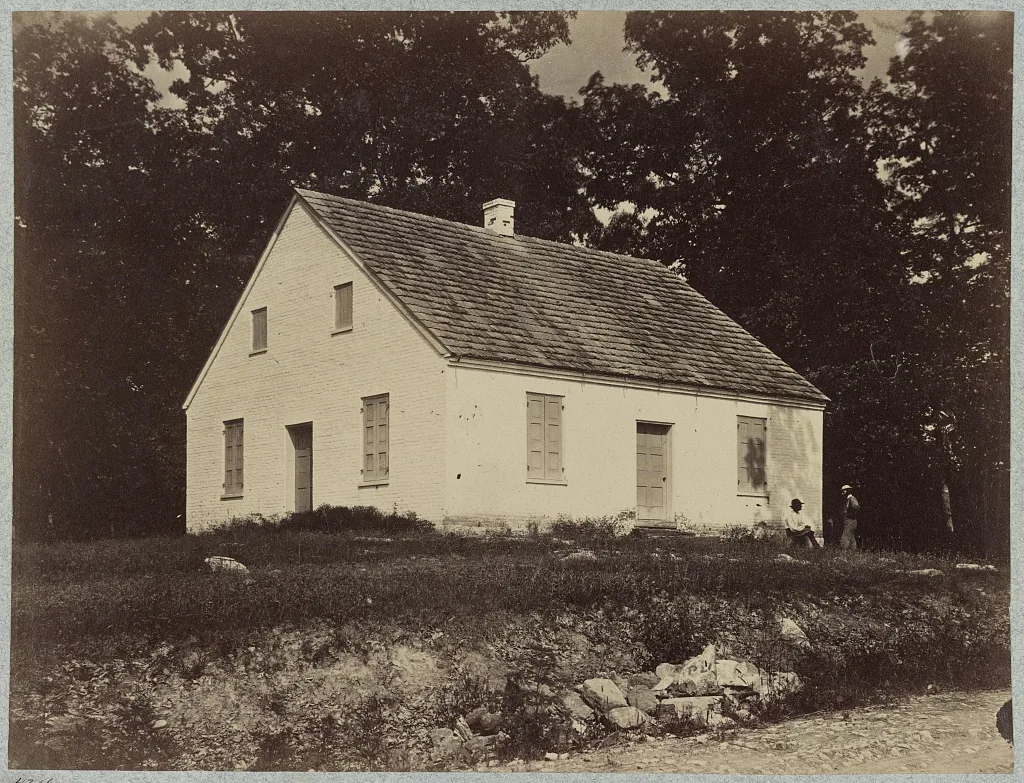 Library of Congress · Dunker Church, battlefield of Antietam · No known restrictions (verify at source) ↗
The Battle of Antietam and the Preliminary Proclamation
Fought on September 17, 1862, in Maryland, the Battle of Antietam halted General Robert E. Lee's first northern invasion in the bloodiest single day in American military history (over 22,000 casualties), providing Lincoln the victory needed to issue the preliminary Emancipation Proclamation.
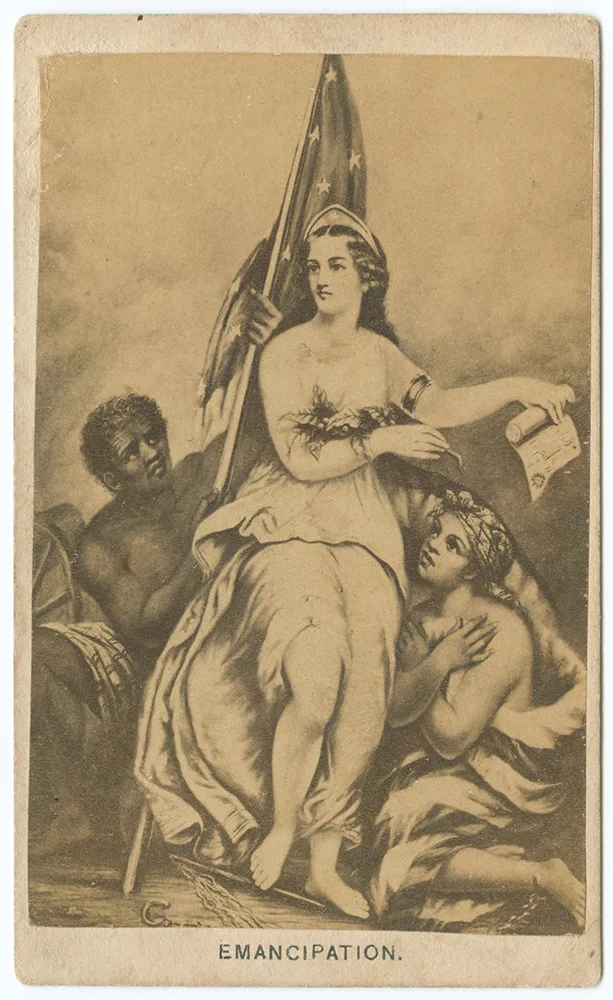 Wikimedia Commons · SMU Central University Libraries · No restrictions ↗
The Emancipation Proclamation of 1863
Taking effect on January 1, 1863, Lincoln's Emancipation Proclamation declared all enslaved people in Confederate-held territory 'thenceforward, and forever free', transformed the war into a crusade to abolish slavery, and authorized Black military enlistment.
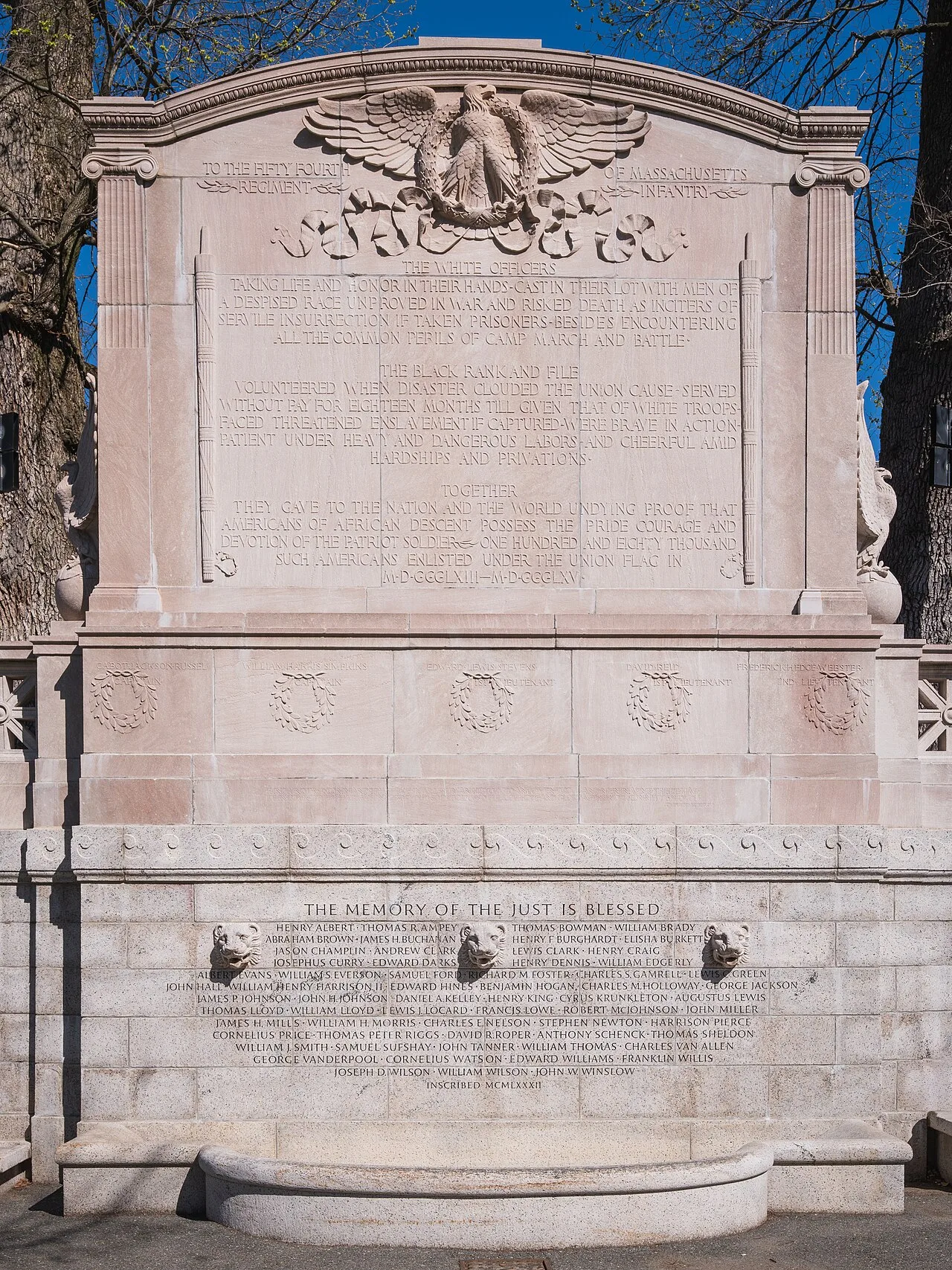 Wikimedia Commons · Christian David · CC BY-SA 4.0 ↗
United States Colored Troops and the 54th Massachusetts
About 180,000 Black men served in the Union Army, roughly 10 percent of its soldiers, most in the United States Colored Troops (USCT); the 54th Massachusetts Infantry, a state regiment, showed their courage in the July 1863 assault on Fort Wagner, helping erode Northern skepticism about Black soldiers.
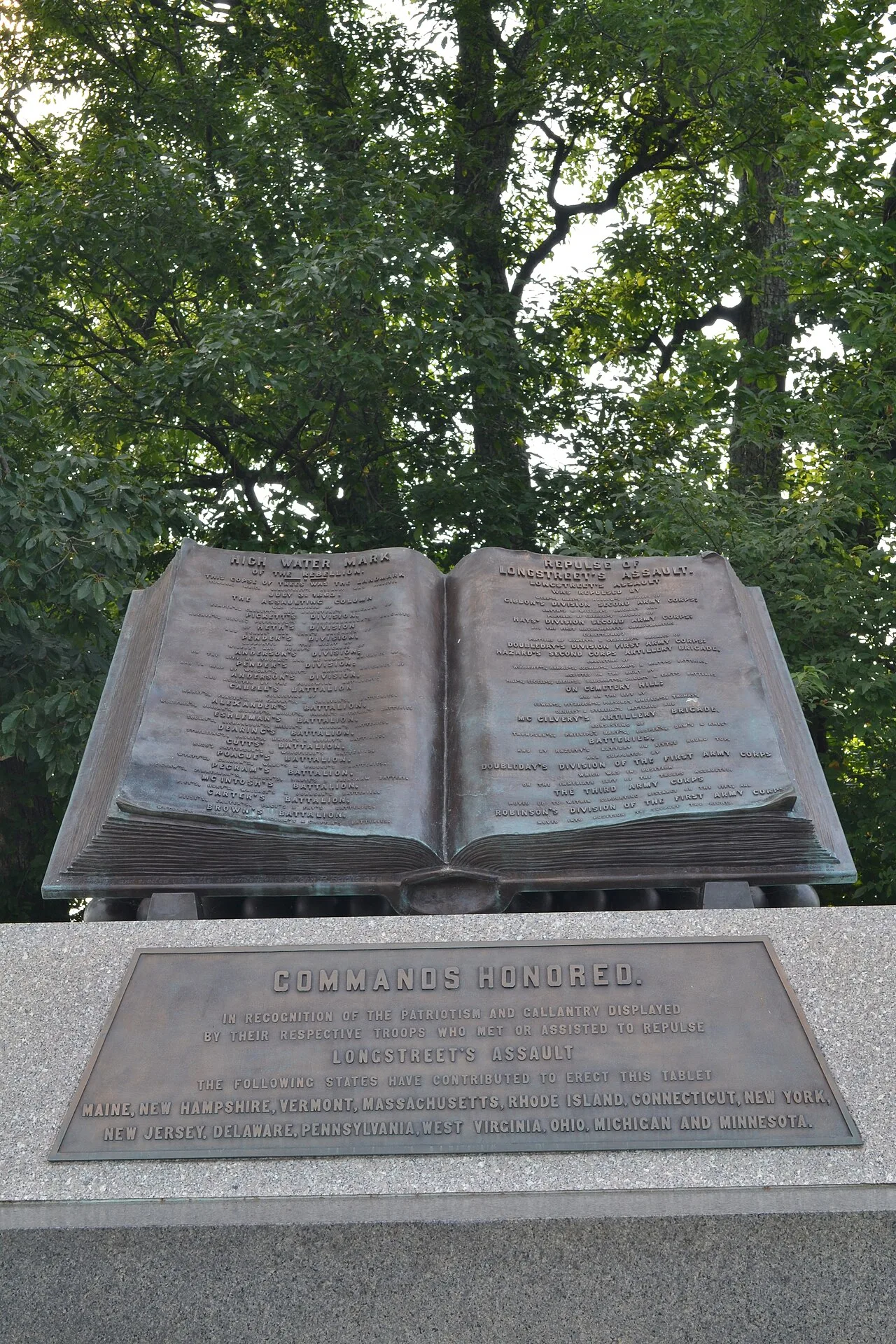 Wikimedia Commons · Veggies · Attribution ↗
The Twin Turning Points: Gettysburg and Vicksburg
In July 1863, the Union secured decisive twin victories: repelling Lee's invasion of Pennsylvania at Gettysburg (July 1–3) and capturing the Confederate fortress at Vicksburg (July 4) under Ulysses S. Grant, severing the Confederacy along the Mississippi River.
 Wikimedia Commons · Chitrapa · CC BY-SA 3.0 ↗
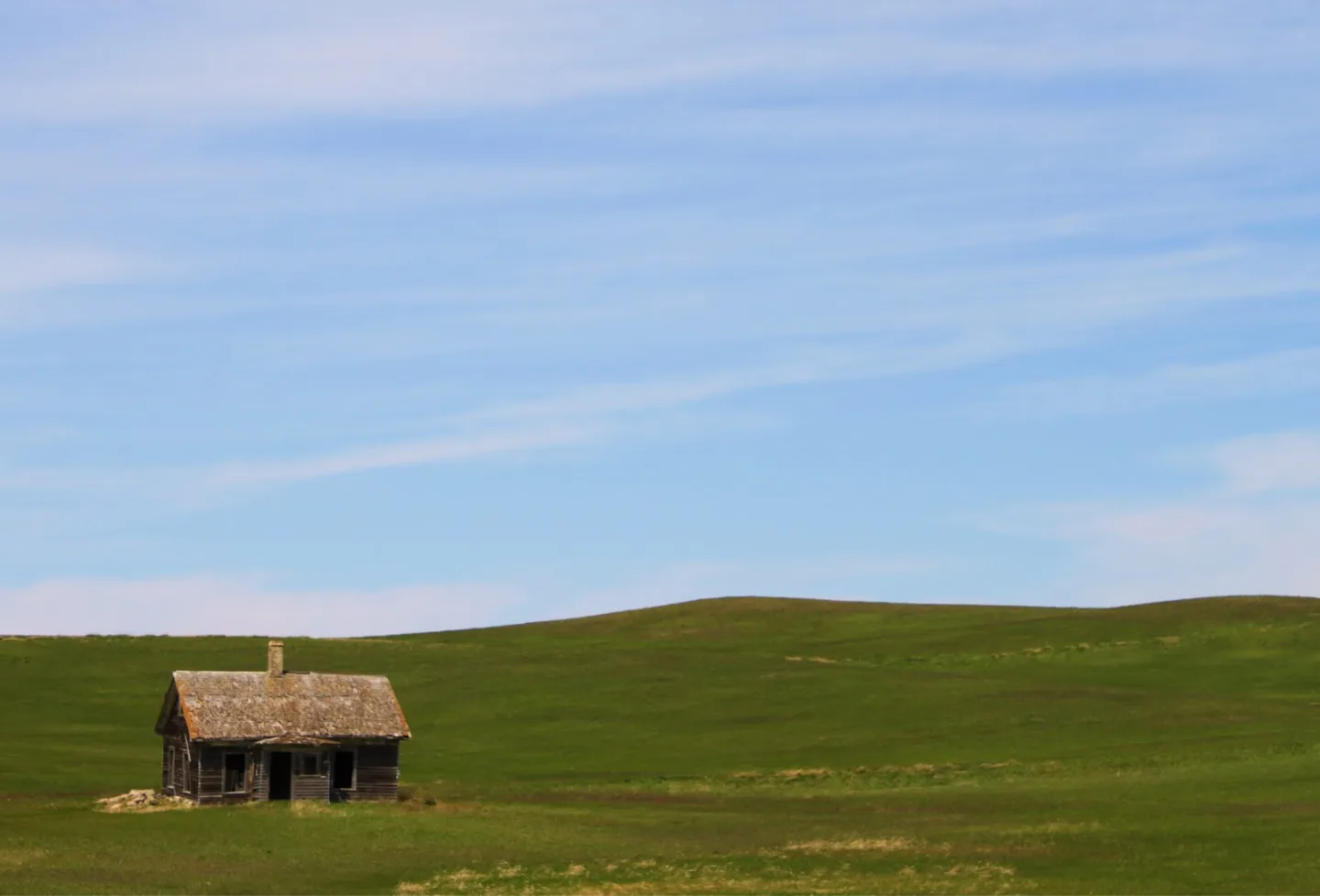
Republican Wartime Legislation of 1862
During the war, the Republican-led Congress enacted a transformative domestic economic program, passing the Homestead Act (160 acres of public land), the Morrill Land-Grant Act (funding state agricultural colleges), and the Pacific Railway Act (transcontinental railroad).
 Wikimedia Commons · F. O. C. Darley / Alexander Hay Ritchie / Adam Cuerden · Public domain ↗
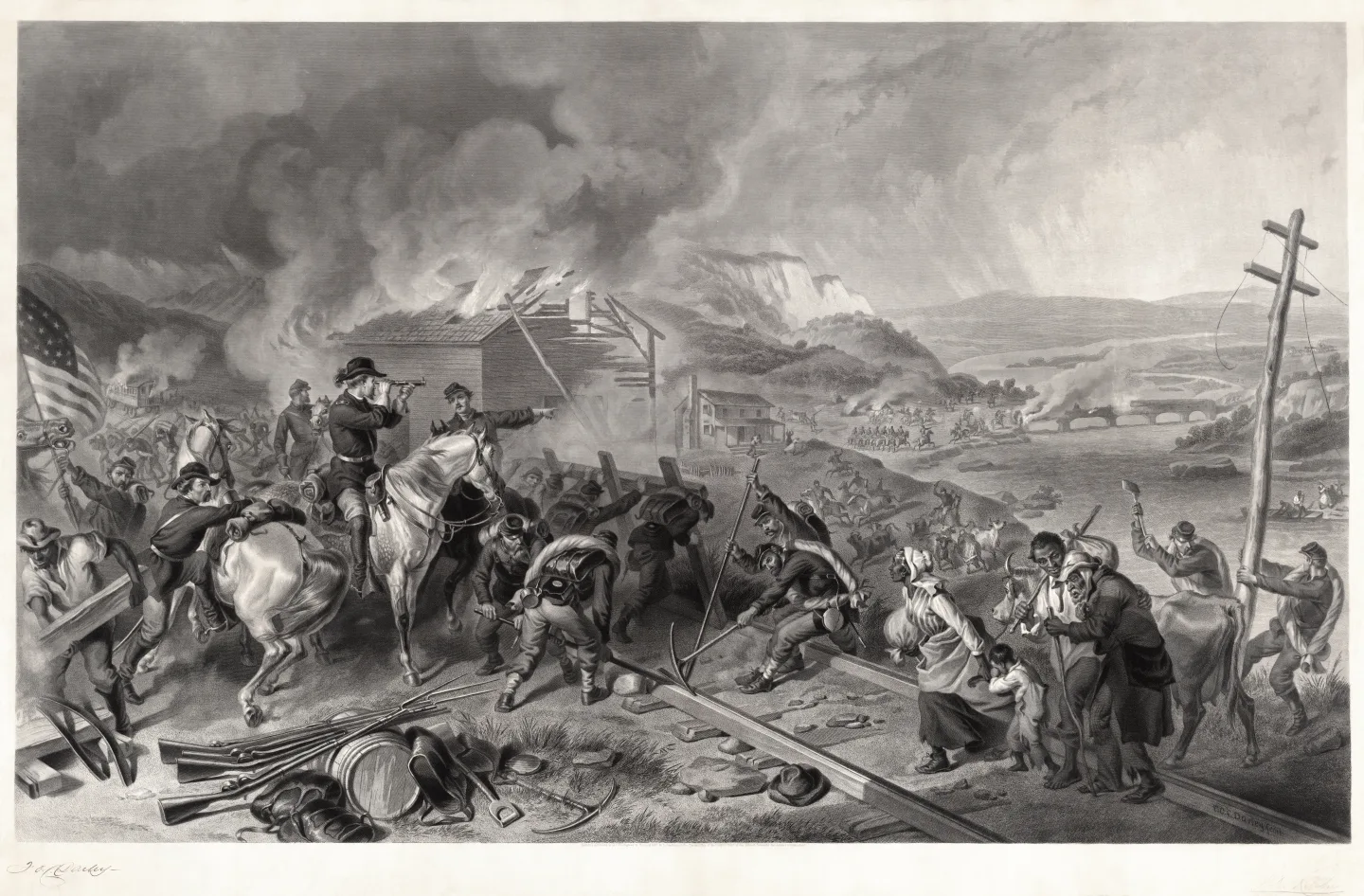
Sherman's March to the Sea and Total War
In late 1864, Union General William Tecumseh Sherman captured Atlanta and executed his devastating March to the Sea across Georgia, destroying railroads, bridges, and supply depots to crush the Confederacy's material infrastructure and psychological will to fight.
1 / 10What were the core components of General Winfield Scott's 'Anaconda Plan'?
The Anaconda Plan sought to suffocate the rebellion via a naval blockade and control of the Mississippi River (aimed at capturing New Orleans); Scott specifically opposed a costly direct invasion of Richmond, favoring economic strangulation instead.
Lesson 7 has 52 cards. Keep going in the free app.
Question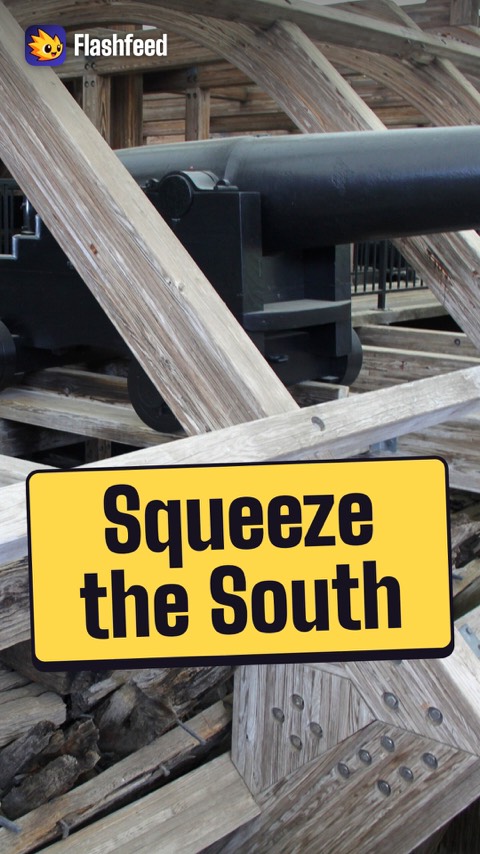
The Anaconda Plan 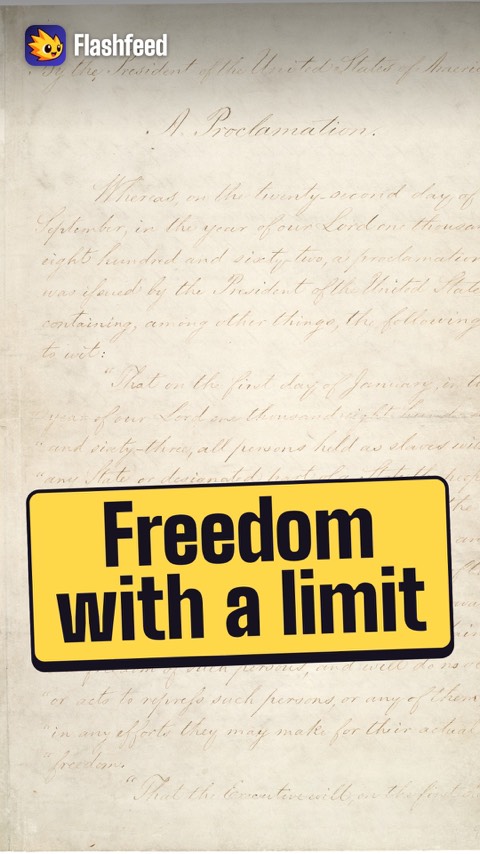
The Emancipation Proclamation 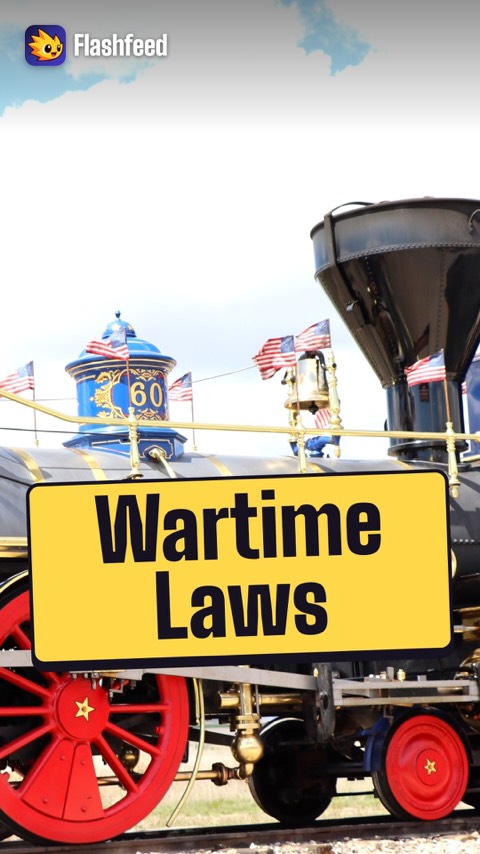
160 Acres in Wartime All 9 clips on YouTube ↗Transcripts
The Anaconda Plan
One Union war plan was named after a giant snake. General Winfield Scott designed the Anaconda Plan.
It would squeeze the South slowly, without a costly invasion of Richmond. Navy ships would blockade the Southern coasts.
The Union would also take the Mississippi River and New Orleans. That would split the Confederacy in two.
The North had the means. It held 71% of the people and 85% of the manufacturing.
The Emancipation Proclamation
The Emancipation Proclamation had a limit. It declared enslaved people free in areas in rebellion against the United States.
It took effect on January 1, 1863. Lincoln framed it as a war measure.
The war became a fight to destroy slavery. The Proclamation also kept European powers from stepping in.
It opened the Union Army to Black soldiers. Over 180,000 served, one in ten Union soldiers.
160 Acres in Wartime
Congress offered settlers 160 acres in the West, during the Civil War. The Homestead Act asked a nominal fee and 5 years of farming.
Southern Democrats were absent from Congress. Republicans passed a sweeping program.
The Morrill Act funded agricultural colleges. The Pacific Railway Act backed the first transcontinental railroad.
The Legal Tender Act created Greenbacks, paper money. The program transformed the economy.
-
 Mathew Brady studio (Library of Congress; restored copy) · public domain ↗08
Reconstruction and the Jim Crow Legal Settlement (1865–1896)
Presidential vs. Radical Reconstruction and the Reconstruction Amendments · Black Political Mobilization, Freedmen's Bureau, and White Reaction · The Compromise of 1877, Sharecropping, Disenfranchisement, and Plessy
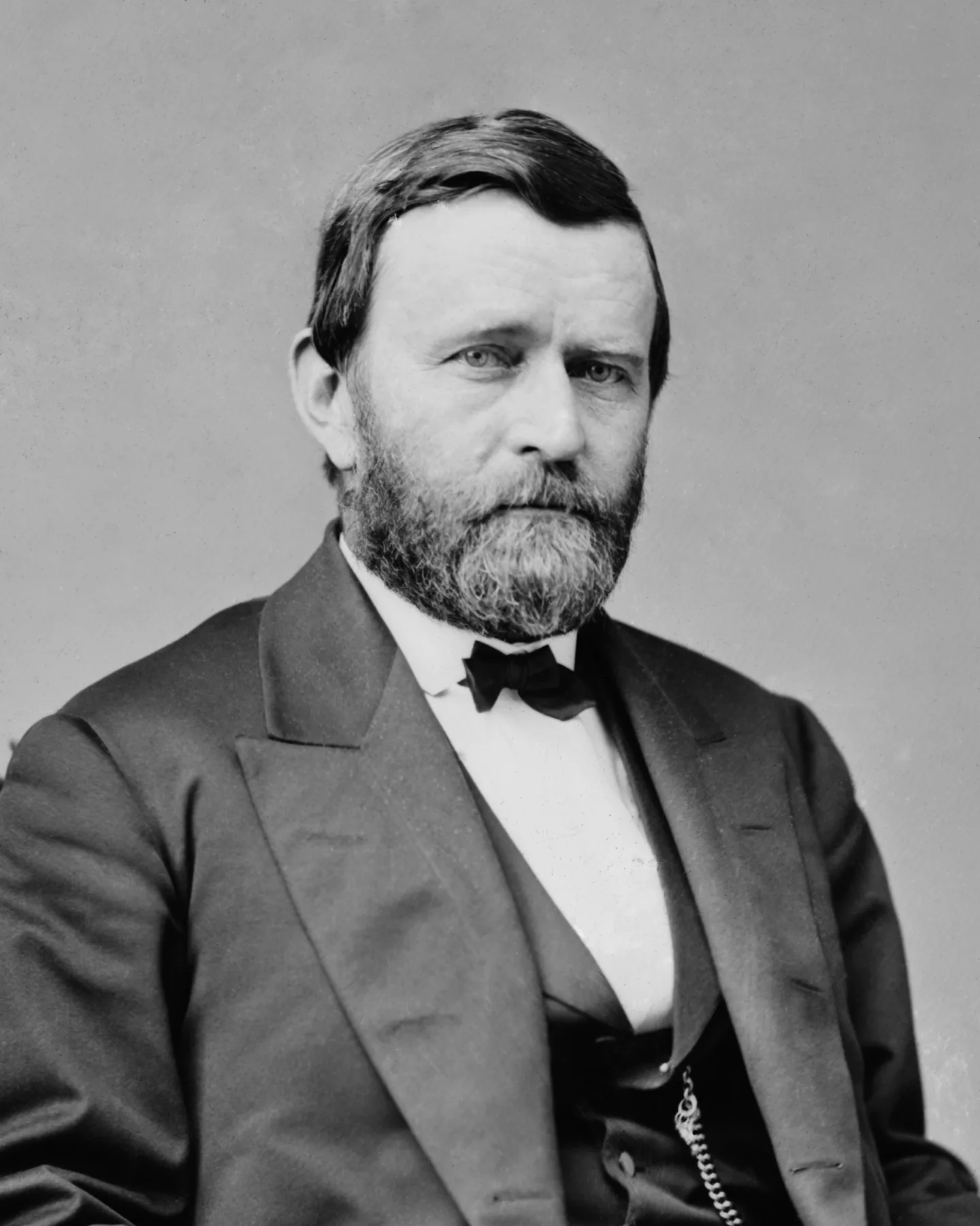
Lesson 8 · 10 cardsMathew Brady studio (Library of Congress; restored copy) · public domain ↗Grant and the Enforcement Acts
President Ulysses S. Grant acted decisively against white terror: under the Enforcement Acts of 1870–1871, including the Ku Klux Klan Act of 1871, he suspended habeas corpus in nine South Carolina counties in October 1871 and sent federal troops and prosecutors against the first Klan.
 Mathew Brady (Library of Congress) · public domain ↗
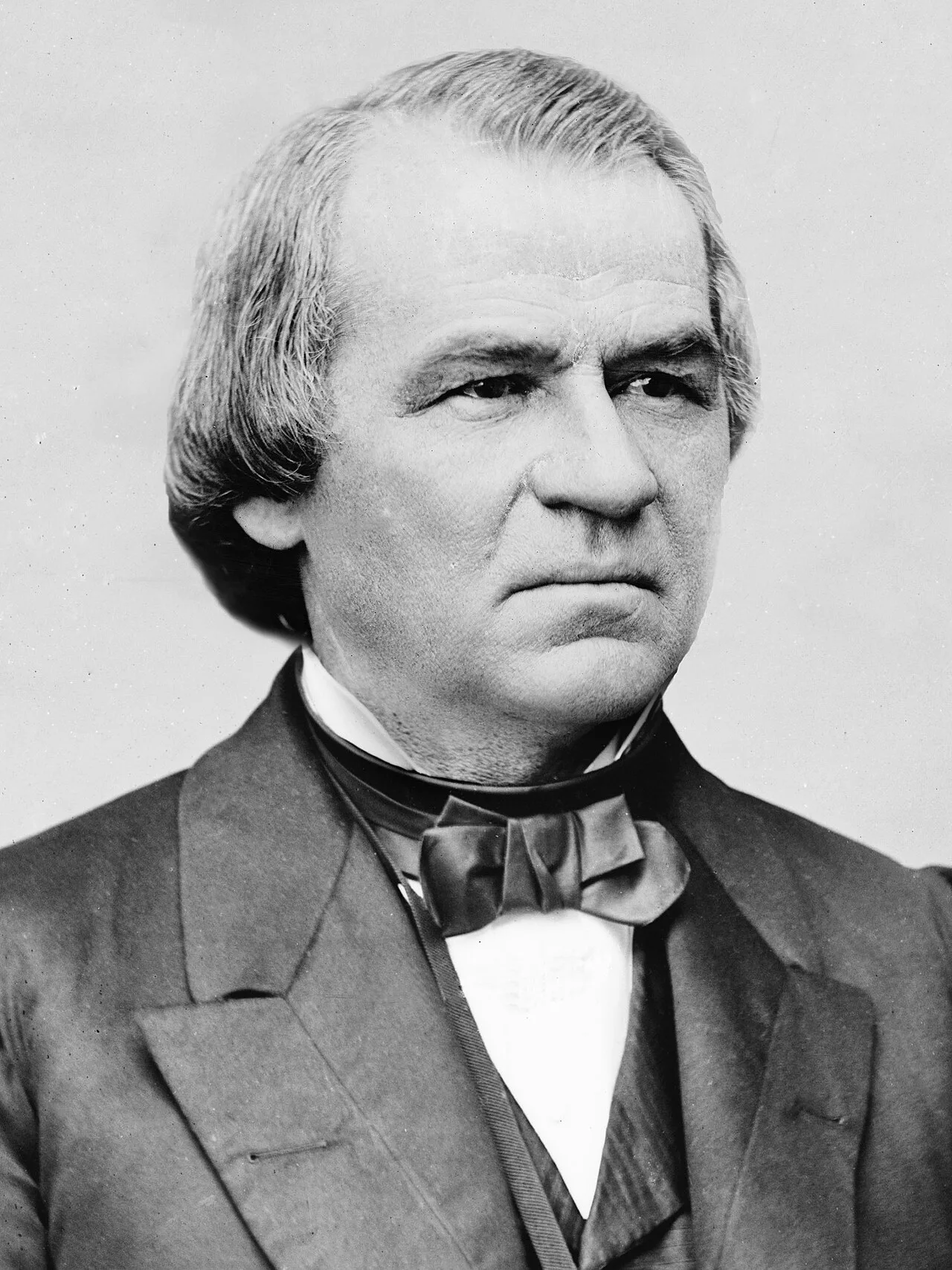
Presidential Reconstruction and the Black Codes
Under President Andrew Johnson's lenient Presidential Reconstruction (1865–1866), reconstructed Southern state legislatures enacted repressive Black Codes that restricted African Americans' freedom of movement, prohibited land purchases, and forced freedpeople into labor contracts.
 Mathew Brady (Library of Congress, Brady-Handy collection) · public domain ↗
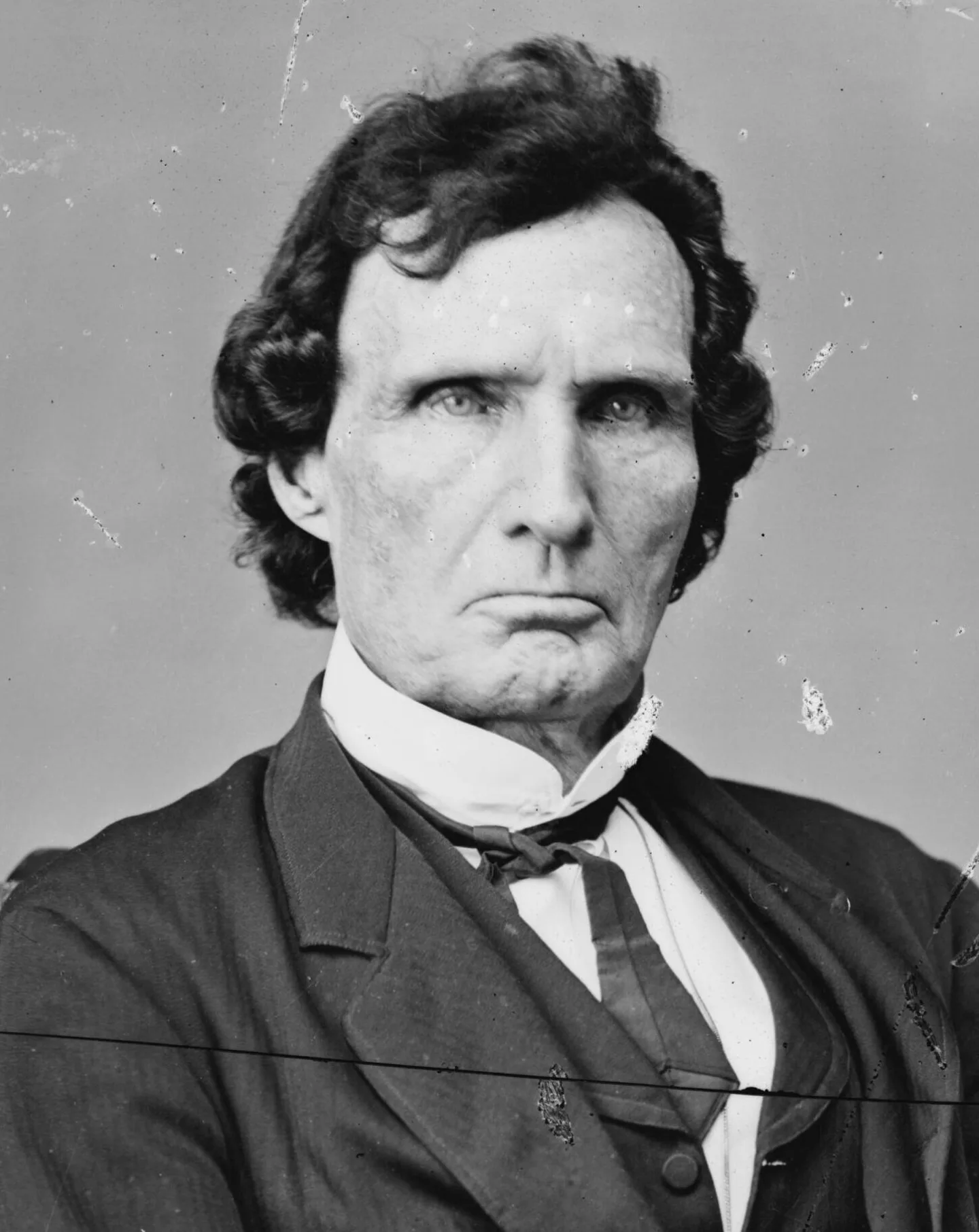
Radical Reconstruction and the Reconstruction Acts
Led by Thaddeus Stevens and Charles Sumner, Radical Republicans took control of Congress, overriding Johnson's vetoes to pass the Reconstruction Acts of 1867, which divided ten Southern states into five military districts governed by federal generals and mandated Black suffrage.
1 / 10What was the primary purpose of the Black Codes passed by Southern legislatures in 1865-1866?
Black Codes restricted freedpeople's movement and land ownership and arrested the unemployed for 'vagrancy' to force them into labor contracts.
Lesson 8 has 59 cards. Keep going in the free app.
Question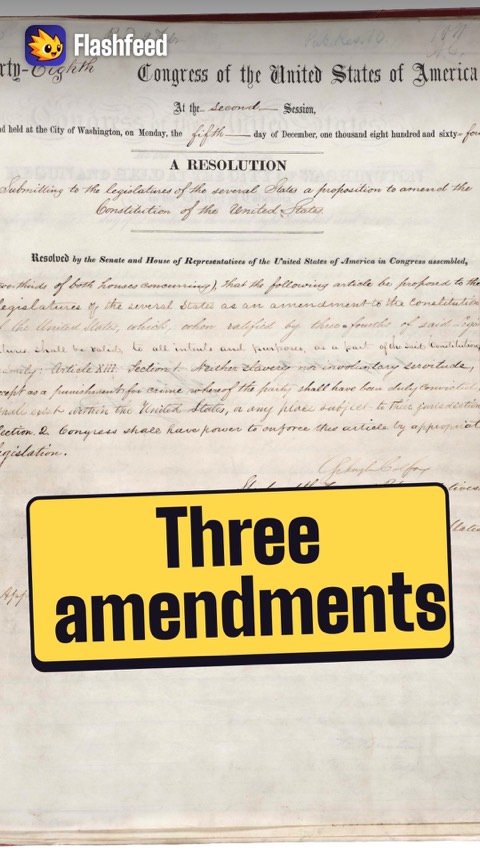
Three Amendments 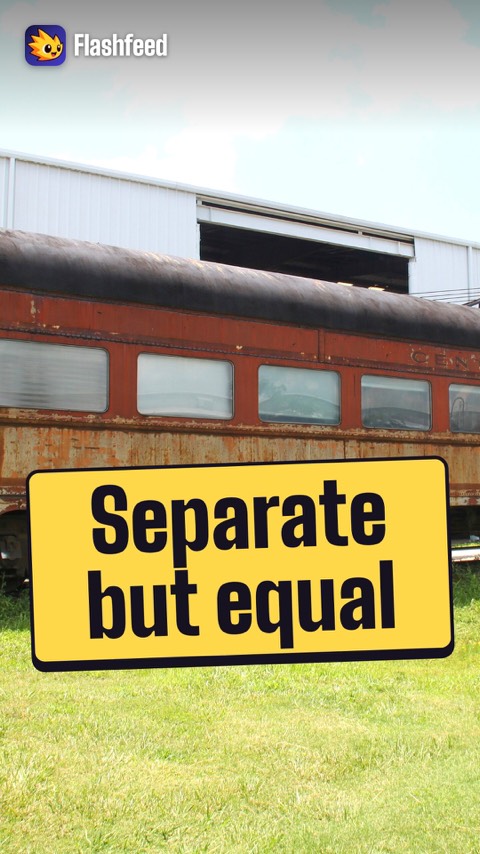
One Dissent 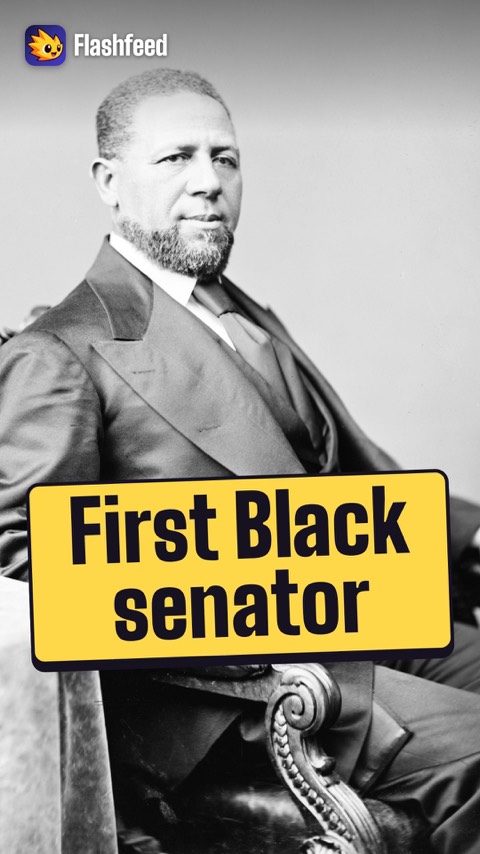
A Seat in the Senate All 9 clips on YouTube ↗Transcripts
Three Amendments
4 million people were no longer enslaved. But what did their freedom mean? Congress answered with three amendments.
The Thirteenth came in 1865. It ended slavery, except as punishment for a crime.
In 1868, the Fourteenth made citizenship a birthright. It promised every person equal protection of the laws.
In 1870, the Fifteenth protected the vote. No government could deny it because of race, color, or past slavery.
One Dissent
Justice John Marshall Harlan wrote, "Our Constitution is color-blind." He stood alone on the Supreme Court.
The case was Plessy versus Ferguson, in 1896. The Court upheld state laws that kept the races apart in public places.
Its rule was separate but equal. Segregation now had the Court's approval.
Other Jim Crow laws used poll taxes and literacy tests to stop Black voters. Those laws never had to mention race.
A Seat in the Senate
A Black minister from Mississippi took the Senate seat once held by Jefferson Davis. Davis had been president of the Confederacy.
In 1870, that minister became the first Black United States senator. His name was Hiram Revels.
He was not alone. About 2,000 African Americans held public office during Reconstruction.
In South Carolina, the lower house of the state legislature had a Black majority.
-
 Library of Congress · Leaders of the Knights of Labor · No known restrictions (verify at source) ↗09
The Gilded Age: Industrial Titans, Labor, and Western Transformation (1870–1900)
Railroads, Robber Barons, Corporate Trust Integration, and Monopoly Power · Industrial Labor, Great Strikes (Haymarket, Homestead, Pullman), and Populism · Plains Indian Wars, the Dawes Act, and the Closing of the Frontier
Lesson 9 · 10 cardsLibrary of Congress · Leaders of the Knights of Labor · No known restrictions (verify at source) ↗The Knights of Labor and Industrial Unionism
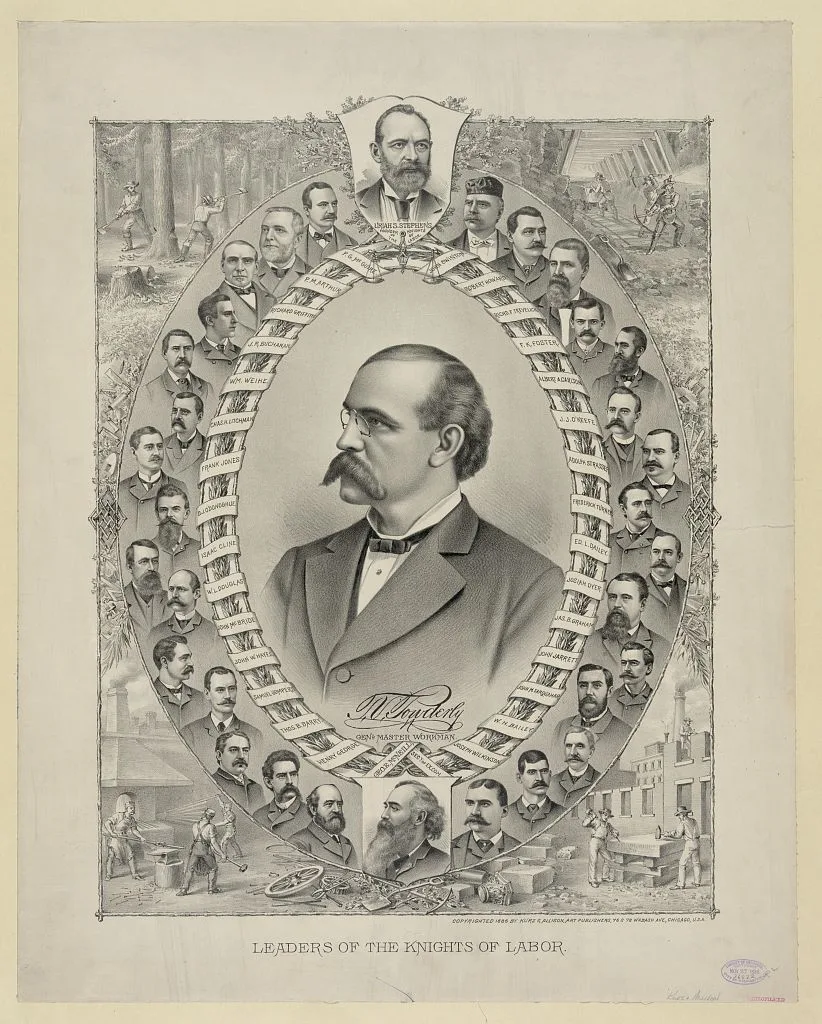
Led by Terence V. Powderly, the Knights of Labor peaked in the mid-1880s with over 700,000 members by organizing all workers regardless of skill, race, or gender (excluding Chinese immigrants), advocating an eight-hour workday and producer cooperatives.
 Wjenning (William E. Jennings) · CC BY-SA 3.0 ↗
The First Transcontinental Railroad
Completed at Promontory Summit, Utah, on May 10, 1869, the First Transcontinental Railroad connected the Union Pacific and Central Pacific lines, linking the nation's coasts, slashing cross-country travel time from months to six days, and creating an integrated national market.
 Wikimedia Commons · Walter Crane · Public domain ↗
The Haymarket Affair of 1886
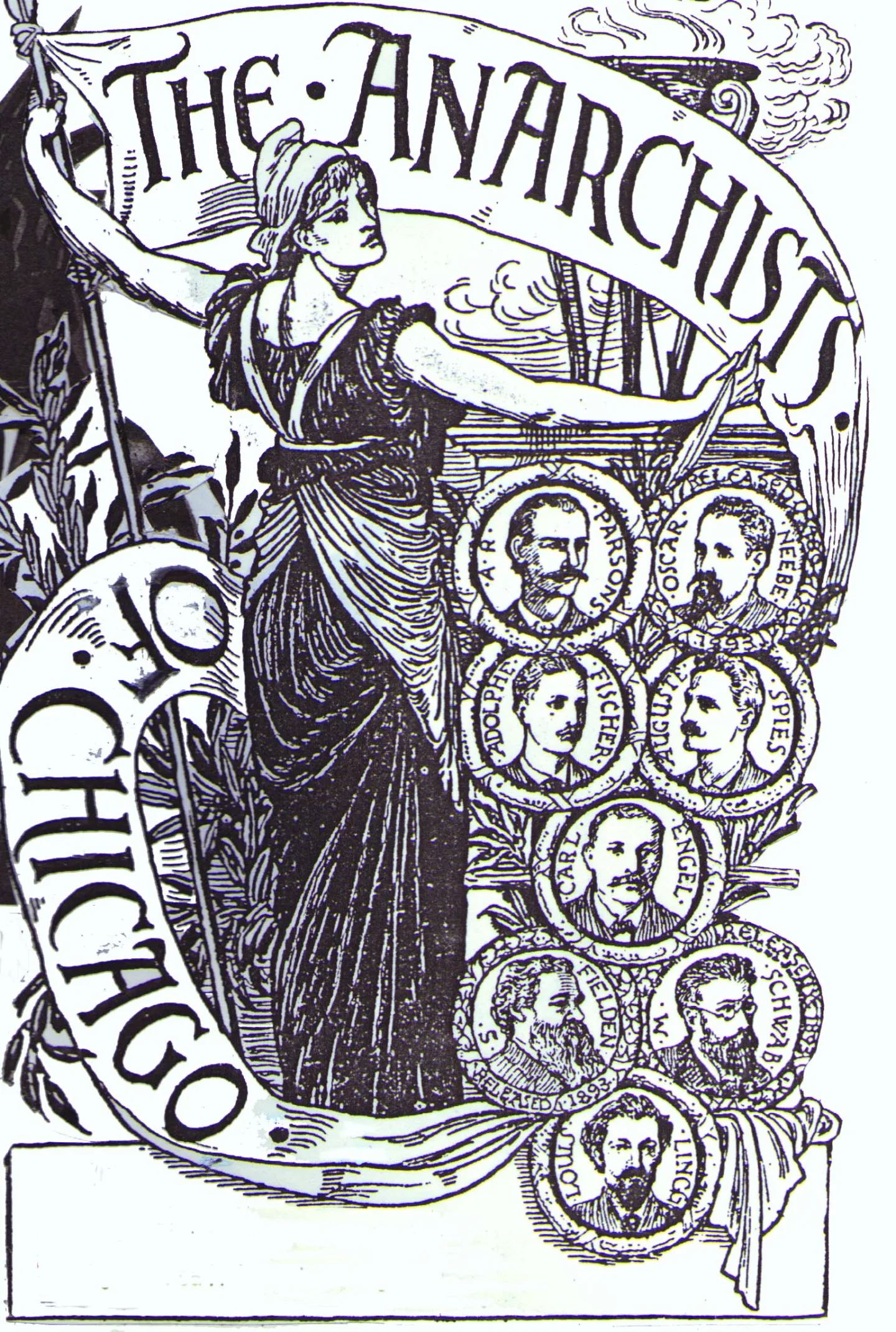
On May 4, 1886, a peaceful labor rally in Chicago's Haymarket Square turned deadly when an unknown assailant threw a dynamite bomb at advancing police; the blast and the gunfire that followed killed seven police officers and several civilians. Eight anarchist leaders were convicted without evidence linking them to the bomb-thrower, and the backlash shattered public support for the Knights of Labor.
1 / 10What did Carnegie's manager Frick do to break the 1892 Homestead Strike?
Frick hired armed Pinkerton detectives to break the steelworkers' lockout at Homestead; troops and injunctions were the tools used against the Pullman strikers instead.
Lesson 9 has 51 cards. Keep going in the free app.
Question
Two Ways to Grow 
Ninety Million Acres 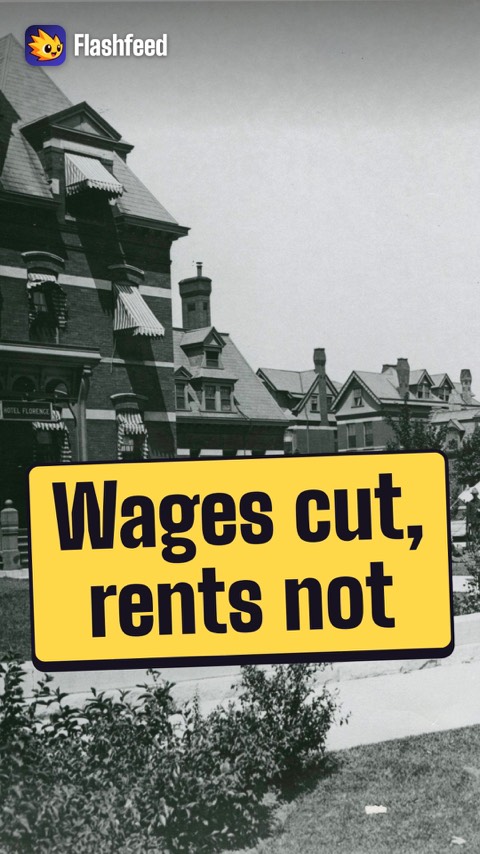
Pay Cut, No Rent Cut All 9 clips on YouTube ↗Transcripts
Two Ways to Grow
One company controlled over 90% of American oil refining. That was Standard Oil, by 1880.
John D. Rockefeller bought or crushed rival refineries. This is horizontal integration. One firm takes over its rivals.
Andrew Carnegie built steel another way. He controlled every stage, from iron ore and coal to rail transport and furnaces.
This is vertical integration. One firm controls the whole chain, and no middleman takes a profit.
Ninety Million Acres
Over 90 million acres. Native nations lost that much land in the years after one law.
The law was the Dawes Act of 1887. It broke up land that tribes held in common.
Each household head got 160 acres. The rest was called surplus, and it was sold to white settlers and railroads.
By 1934, two-thirds of the tribes' land base was gone.
Pay Cut, No Rent Cut
George Pullman slashed wages. But he refused to lower the rents in his company town.
In 1894, Eugene V. Debs led the nationwide Pullman Strike. His American Railway Union boycotted Pullman luxury sleeping cars.
The boycott paralyzed national rail traffic. Then President Grover Cleveland sent federal troops to break the strike.
Leading the strike sent Debs to prison under a federal injunction.
-
 James Montgomery Flagg · Public domain ↗10
Progressivism, Imperial Expansion, and World War I (1890–1920)
Muckrakers, Social Reform, and the Progressive Regulatory State · Mass Immigration, Urbanization, and the Settlement House Movement · Spanish-American War, Imperialism Debate, and WWI Mobilization
Lesson 10 · 10 cardsJames Montgomery Flagg · Public domain ↗World War I Mobilization and the Espionage Act
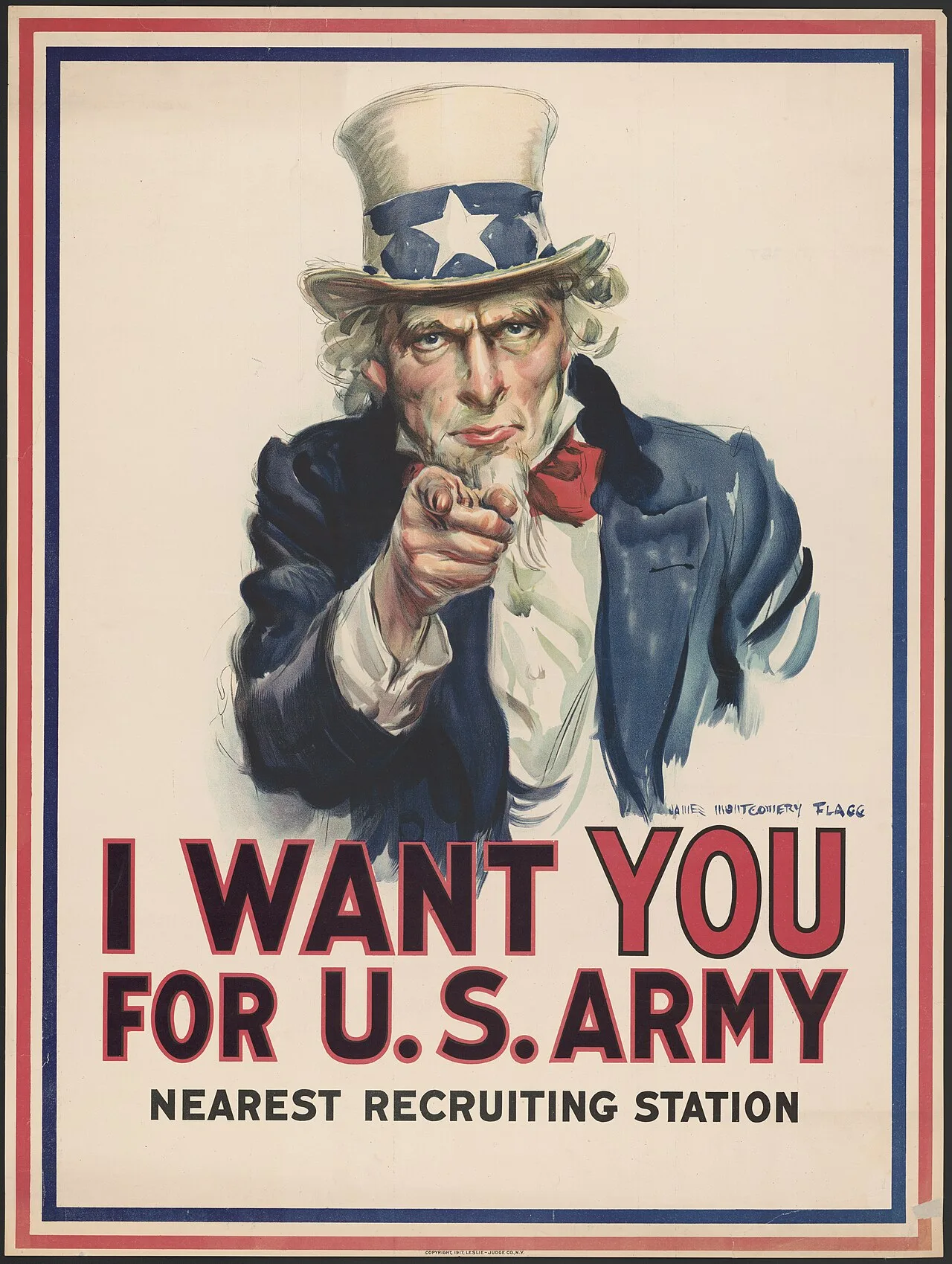
Following Germany's resumption of unrestricted submarine warfare and the Zimmermann Telegram in 1917, the U.S. entered World War I; on the homefront, the Espionage Act (1917) and Sedition Act (1918) criminalized anti-war dissent, and the Supreme Court upheld an Espionage Act conviction in Schenck v. United States (1919).
 Wikimedia Commons · Adam Cuerden · Public domain ↗
Theodore Roosevelt's Square Deal
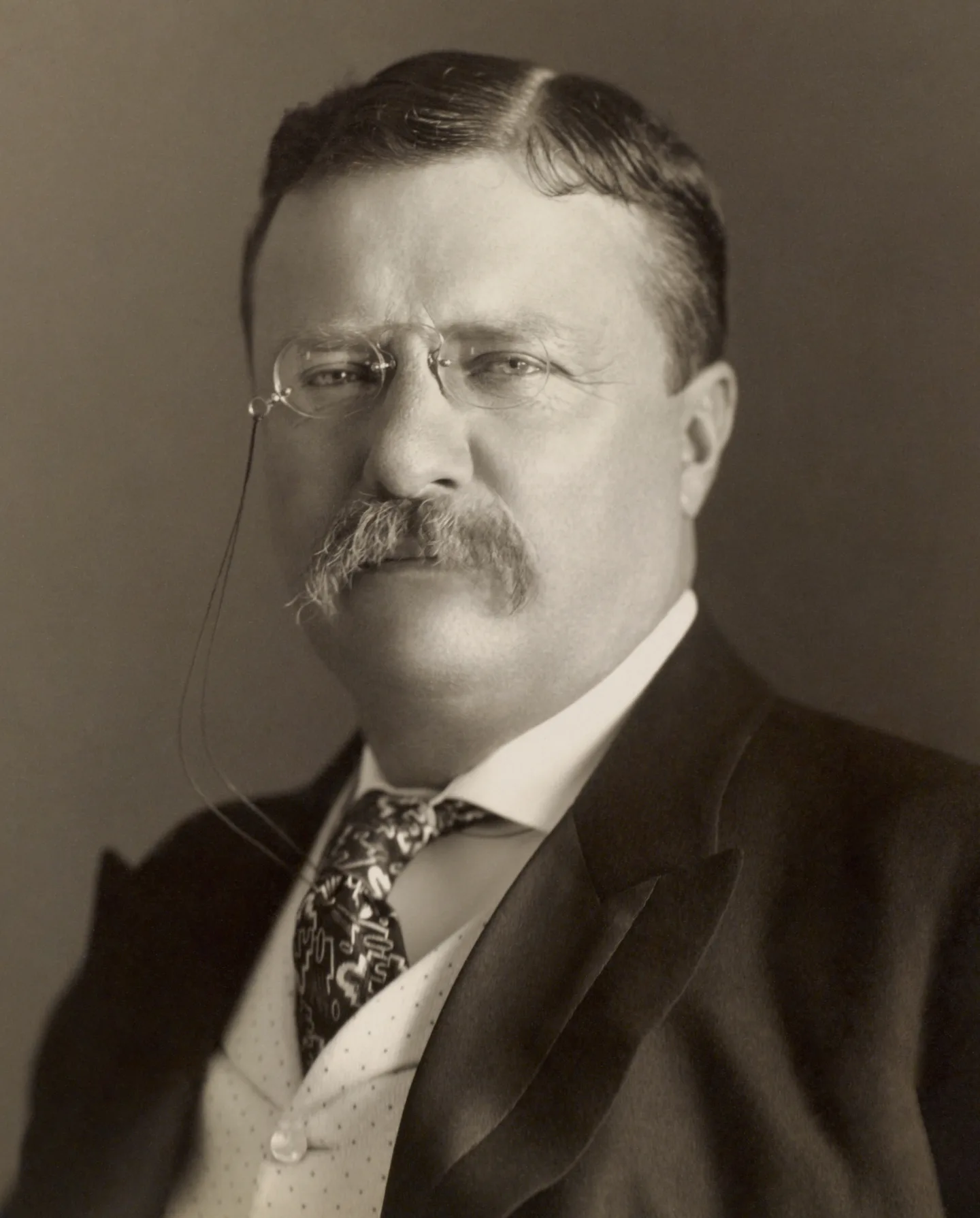
President Theodore Roosevelt used executive authority to advance his 'Square Deal', balancing consumer protection, natural resource conservation, and corporate regulation, famously directing the Justice Department to break up J.P. Morgan's railroad monopoly in Northern Securities (1904).
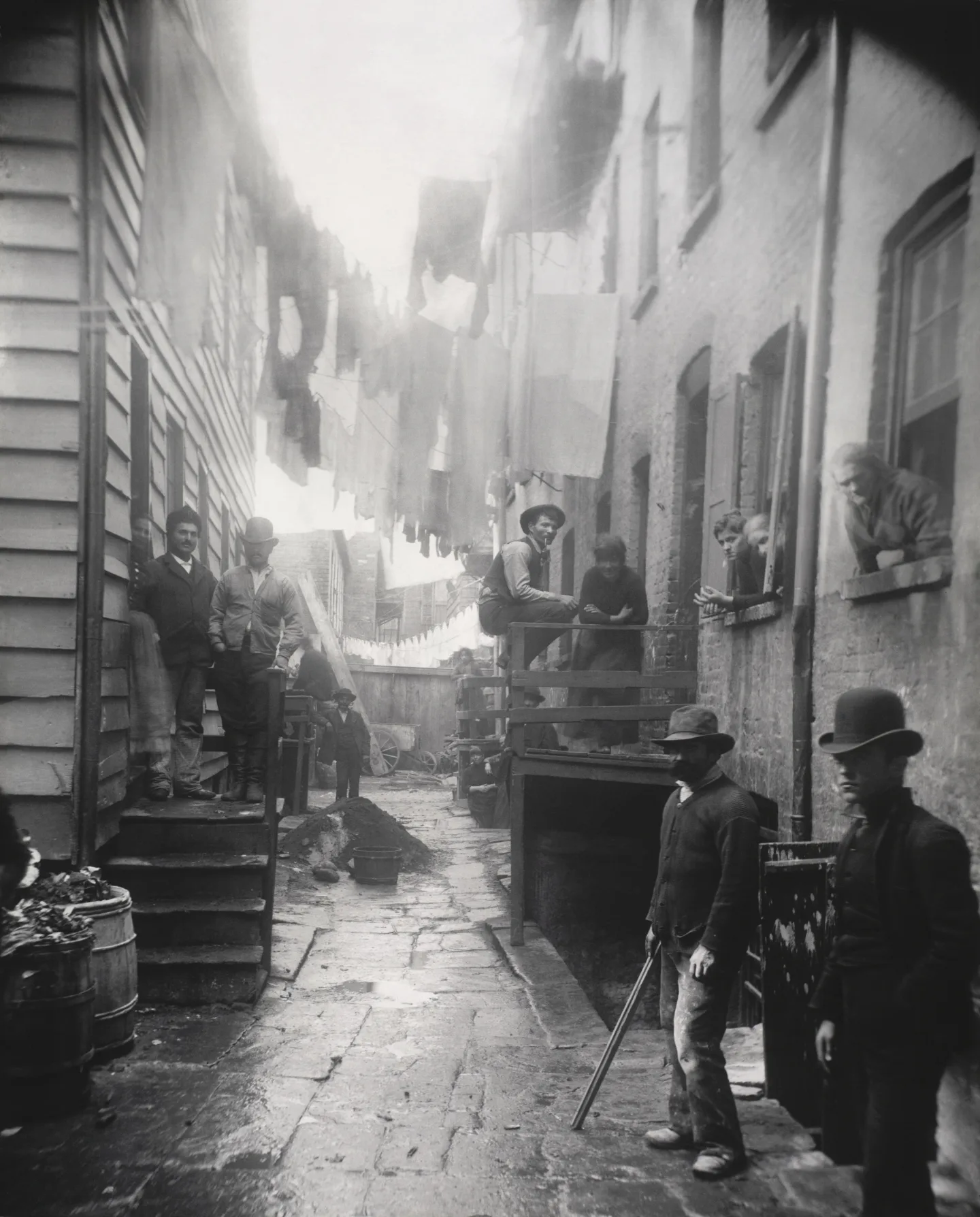 Jacob Riis (Museum of Modern Art print; restored by Adam Cuerden) · public domain ↗
Jacob Riis and Urban Tenement Reform
Pioneering photojournalist Jacob Riis published How the Other Half Lives in 1890, using early magnesium flash photography to expose squalid tenement living conditions, disease, and poverty in New York City's Lower East Side, prompting passage of the New York State Tenement House Act of 1901.
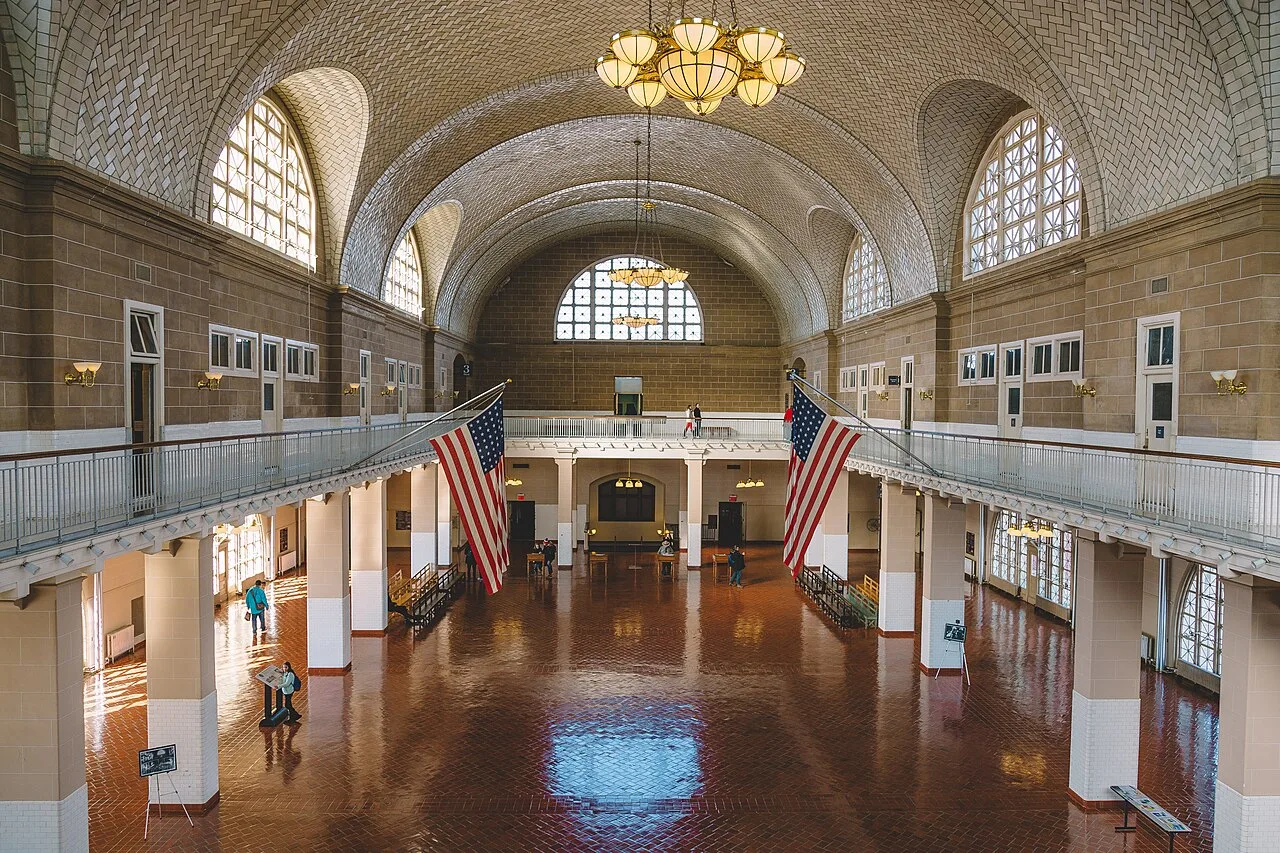 NPS Photo (National Park Service) · public domain ↗
Ellis Island and the New Immigration
Opening in 1892 in New York Harbor, the Ellis Island immigration station processed over twelve million immigrants before closing in 1954, many from Southern and Eastern Europe (Italy, Poland, Russia, Greece), and subjected arrivals to medical and legal inspections.
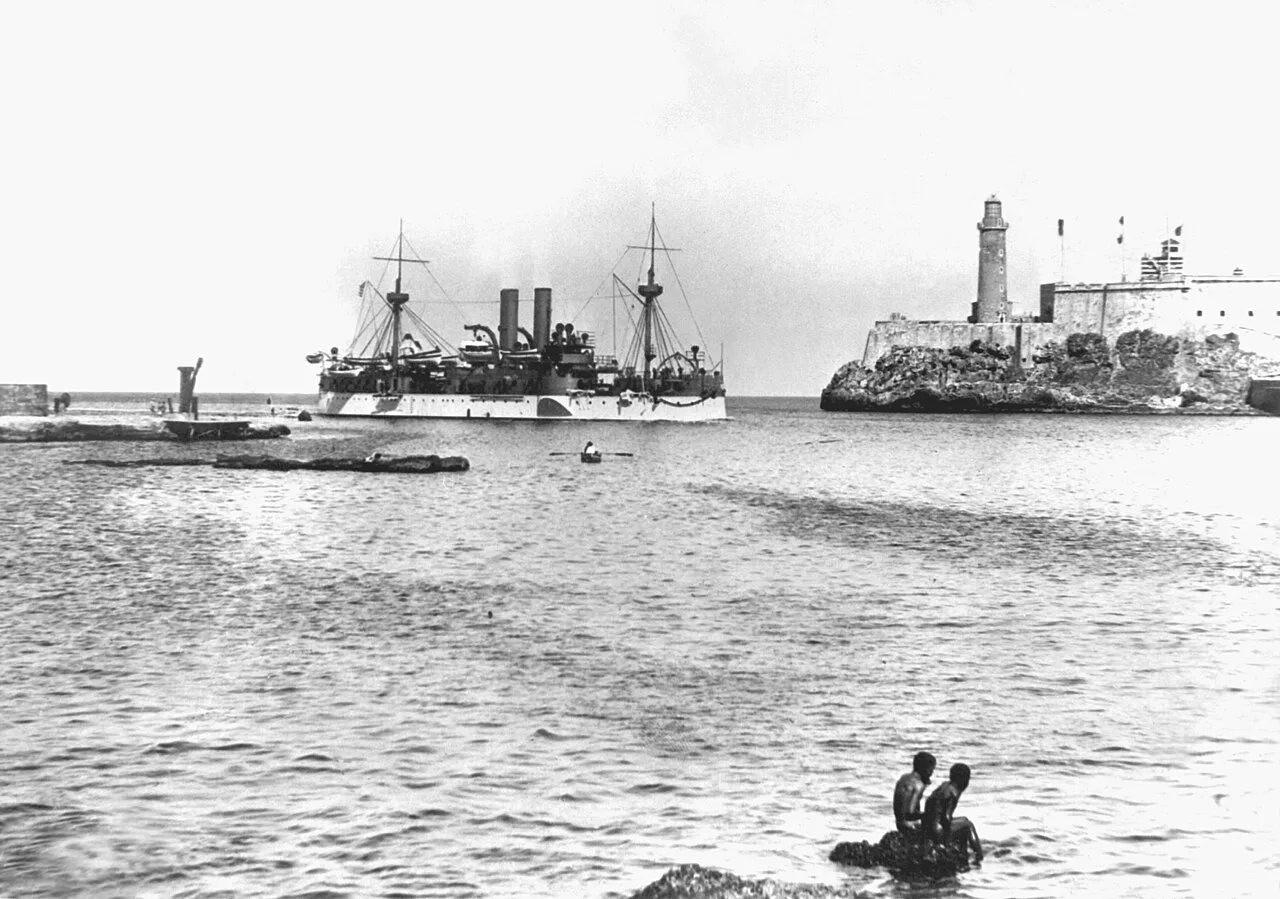 Unknown photographer (U.S. Department of Defense archive) · public domain ↗
The Spanish-American War of 1898
Triggered by the sinking of the battleship USS Maine in Havana and sensationalist 'yellow journalism', the Spanish-American War resulted in swift American victory, ending Spanish colonial rule and ceding Puerto Rico, Guam, and the Philippines to the United States.
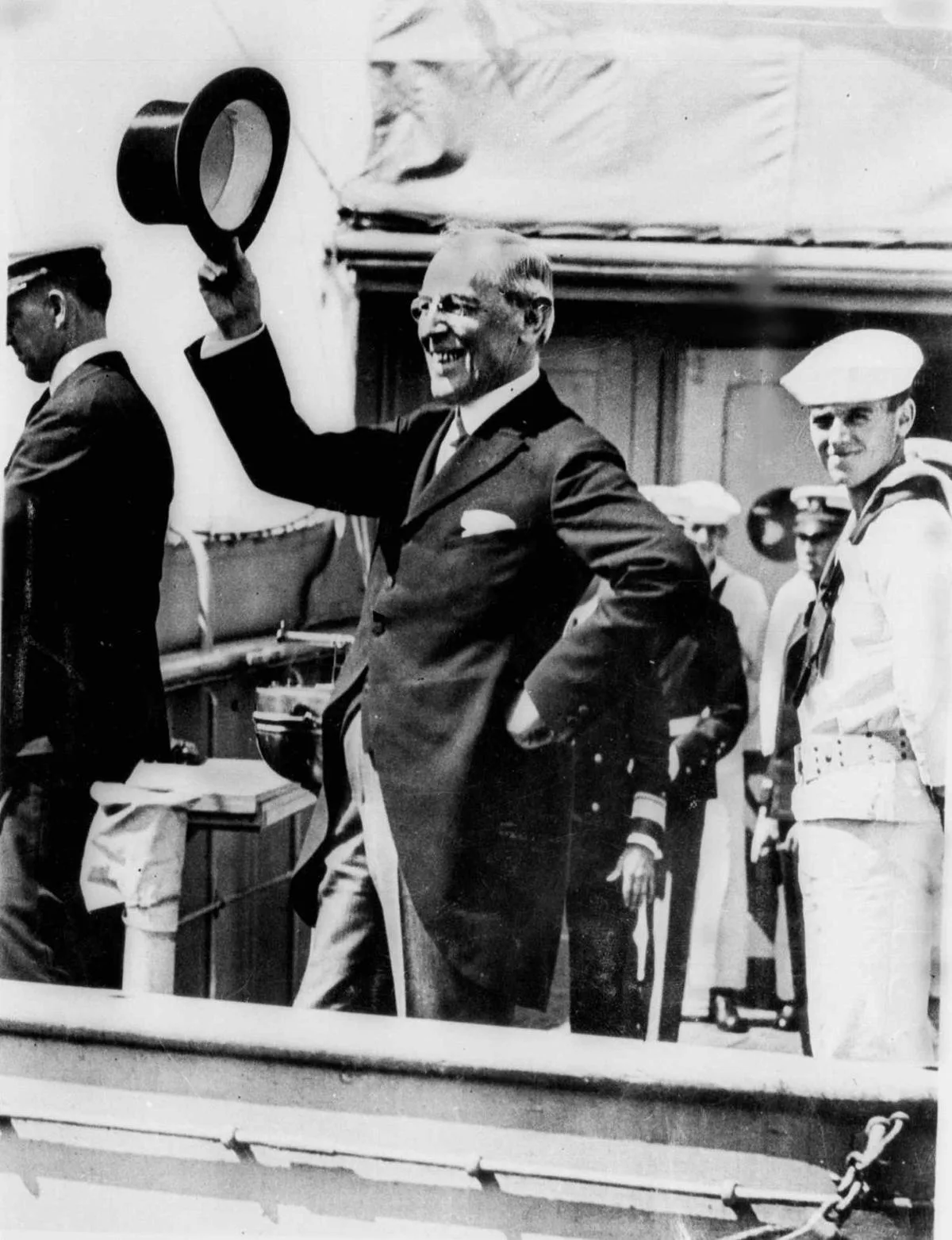 Wikimedia Commons · Associated Press · Public domain ↗
The League of Nations and Senate Rejection
President Woodrow Wilson championed the League of Nations in his Fourteen Points to guarantee international collective security, but the U.S. Senate, led by Republican reservationist Henry Cabot Lodge, twice rejected the Treaty of Versailles in 1919–1920.
1 / 10What major legislative outcome resulted from Upton Sinclair's 1906 novel The Jungle?
Sinclair's exposé of filthy meatpacking conditions prompted Theodore Roosevelt and Congress to pass consumer protection laws.
Lesson 10 has 51 cards. Keep going in the free app.
Question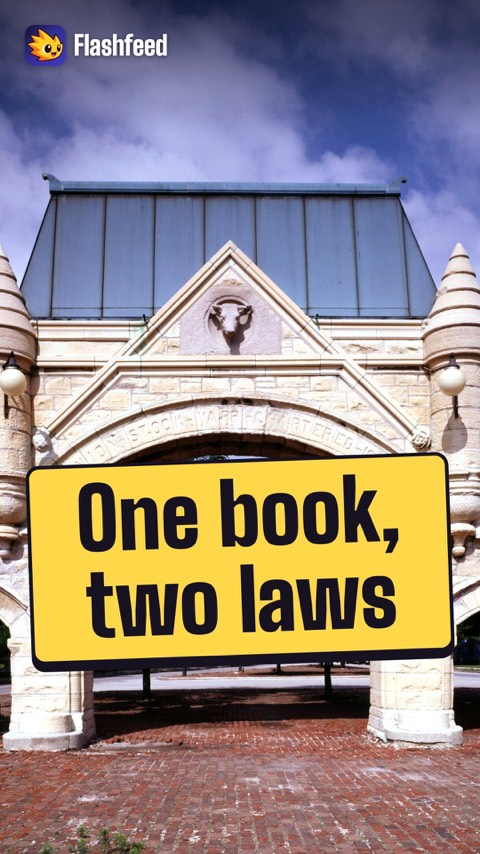
The Book and the Meat 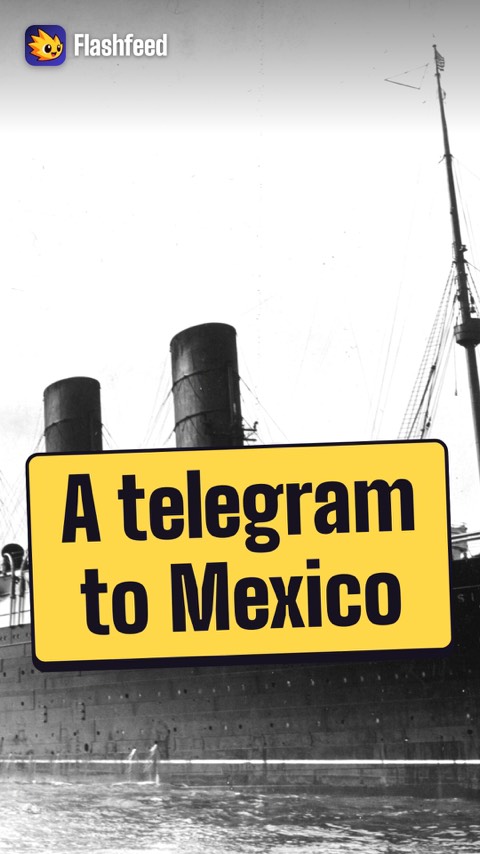
The Road to War 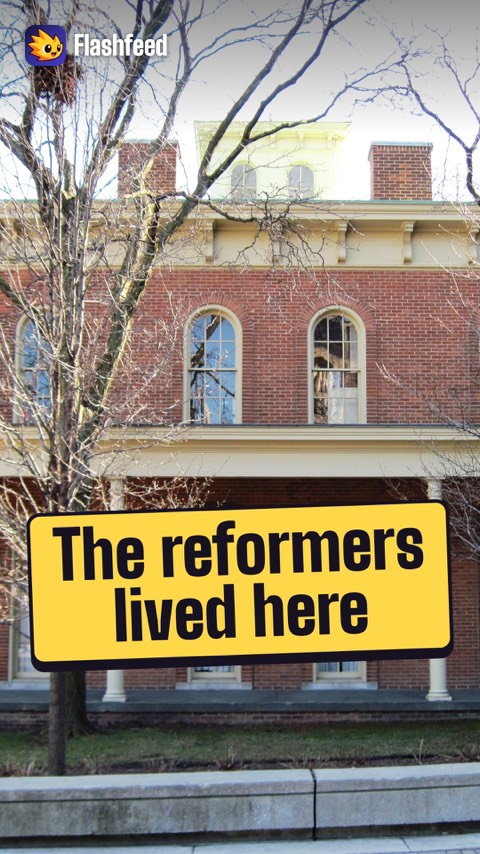
Reformers as Neighbors All 9 clips on YouTube ↗Transcripts
The Book and the Meat
One book about Chicago meatpacking plants led to two new federal laws.
Upton Sinclair published The Jungle in 1906. It exposed filthy conditions inside the plants.
The same year, Congress passed the Meat Inspection Act and the Pure Food and Drug Act.
Writers like Sinclair were called muckrakers. President Theodore Roosevelt gave them that name. They exposed abuse in business and politics.
The Road to War
The Zimmermann Telegram promised Mexico the return of the American Southwest. The price: an alliance against the United States.
World War One began in Europe in 1914. At first, President Wilson stayed neutral.
German submarines attacked without limits. In 1915, the Lusitania sinking killed 128 Americans.
Those attacks and the telegram moved Congress. In April 1917, it declared war on Germany.
Reformers as Neighbors
The reformers were also the neighbors. The middle-class women of Hull House lived in its immigrant neighborhood.
In 1889, Jane Addams and Ellen Gates Starr founded Hull House in Chicago.
Hull House offered its neighbors a kindergarten, English classes, job training, and public baths.
It also pushed for child labor laws and mandatory school attendance.
Reformers like these pioneered the settlement house movement.
-
 Wikimedia Commons · Anonymous Unknown author · Public domain ↗11
The Roaring Twenties, the Great Depression, and the New Deal (1920–1939)
Mass Consumerism, Prohibition, Harlem Renaissance, and Nativism · The 1929 Wall Street Crash, Systemic Banking Collapse, and the Depression · First & Second New Deals, the Social Security Act, and the Welfare State
Lesson 11 · 10 cardsWikimedia Commons · Anonymous Unknown author · Public domain ↗The Harlem Renaissance
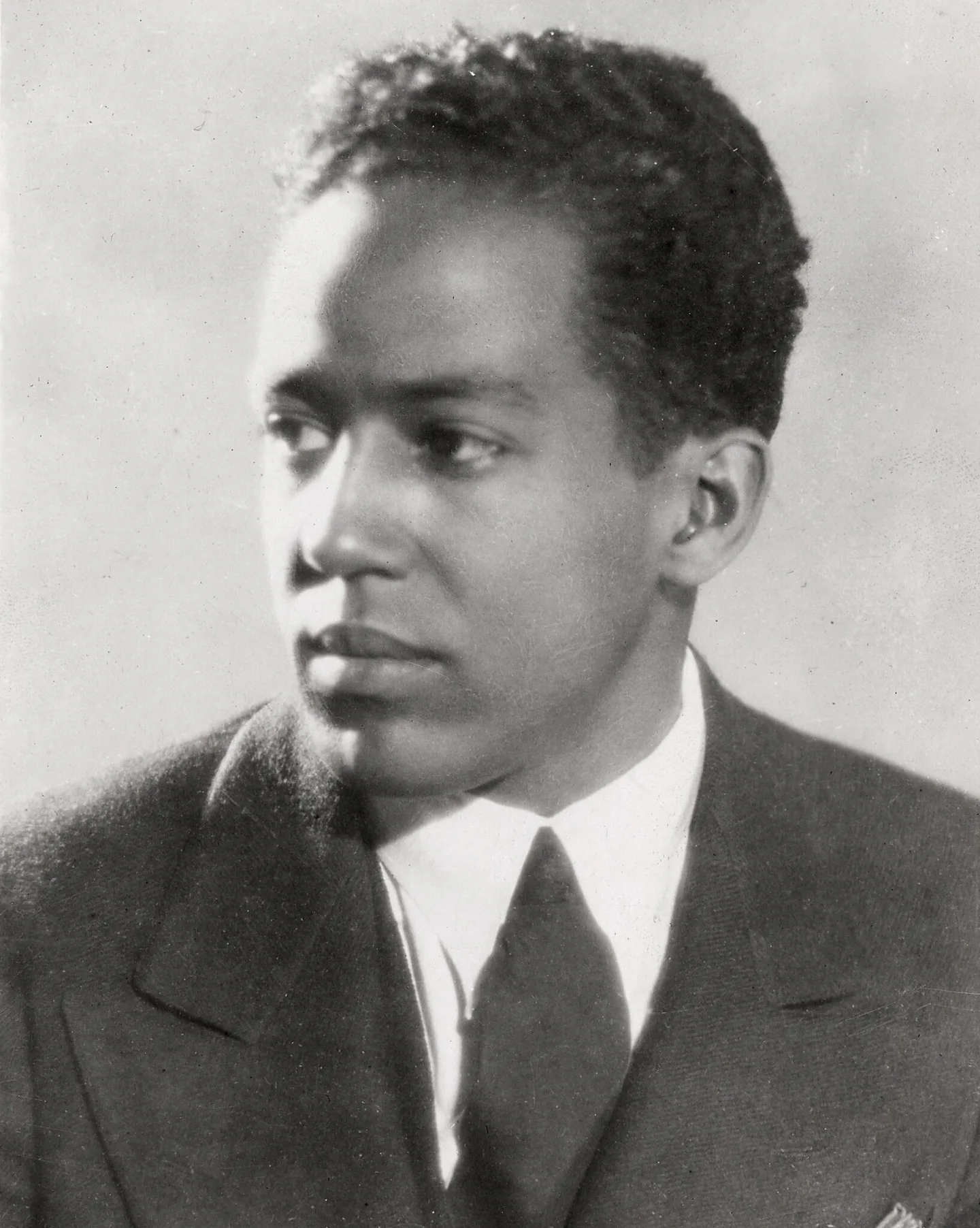
During the 1920s, Harlem, New York, became the epicenter of an extraordinary African American cultural, literary, and musical flourishing, championed by figures like Langston Hughes, Zora Neale Hurston, Duke Ellington, and Alain Locke's 'New Negro' movement.
 Wikimedia Commons · Unknown author · Public domain ↗
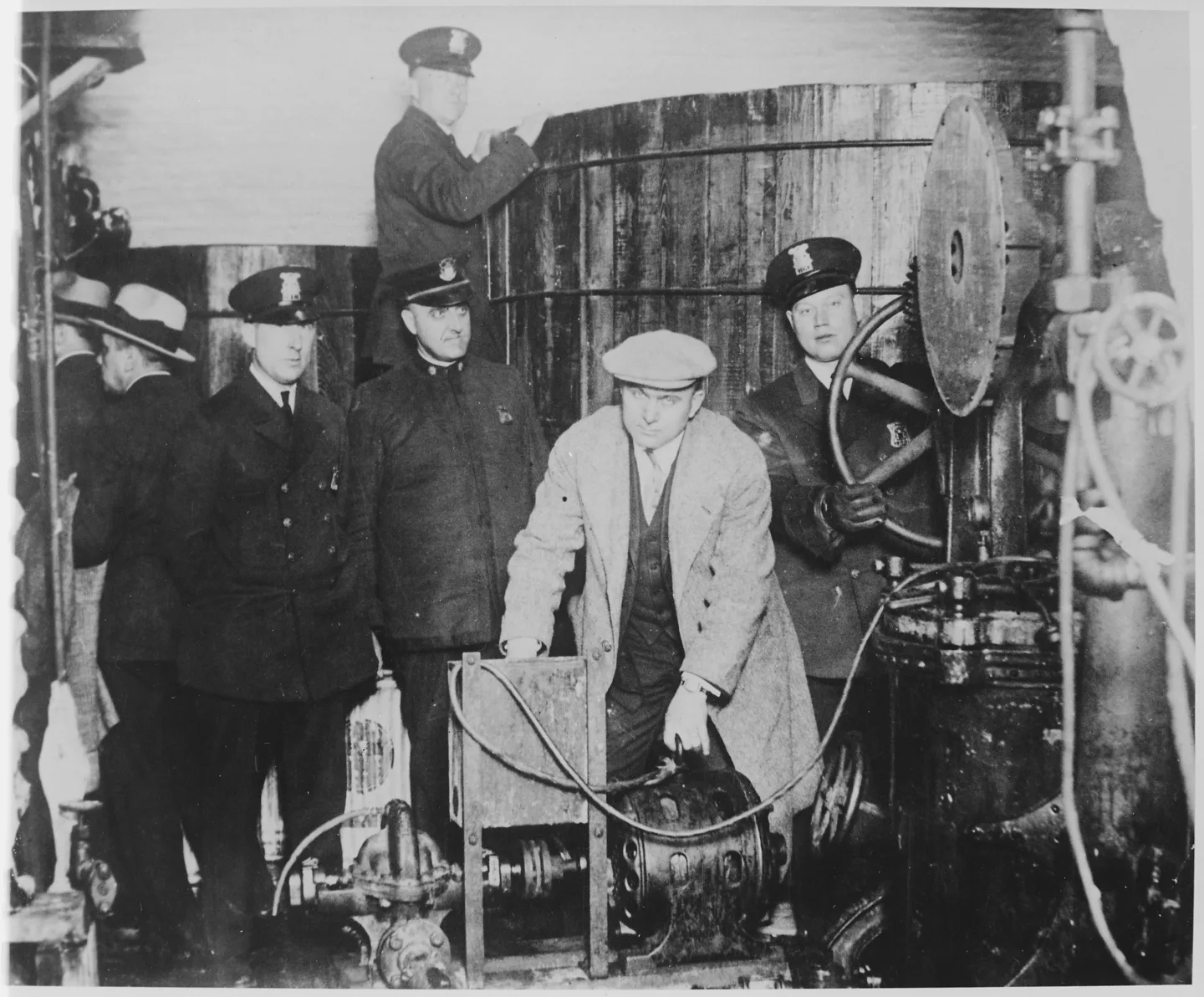
Prohibition and the Volstead Act
Ratified in 1919 and taking effect on January 17, 1920, the Eighteenth Amendment and the Volstead Act launched national Prohibition, outlawing the manufacture, sale, and transport of intoxicating liquors, inadvertently giving rise to speakeasies, rampant bootlegging, and violent organized crime syndicates.
 George E. Marsh (NOAA, U.S. Coast and Geodetic Survey) · public domain ↗
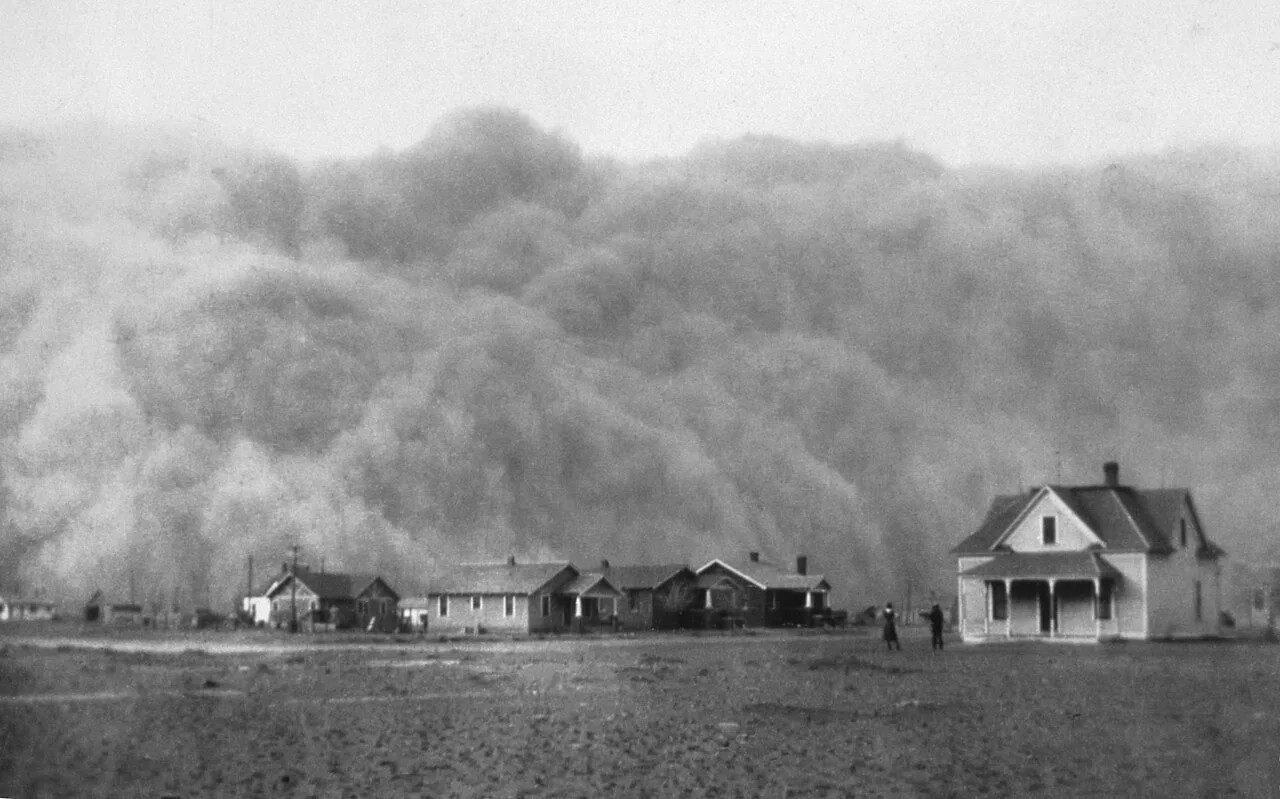
The Dust Bowl and Environmental Catastrophe
During the 1930s, severe drought combined with the aggressive over-plowing of native grassland triggered the Dust Bowl across the southern Great Plains, creating massive 'black blizzards' that destroyed topsoil and, with the wider Depression, helped push hundreds of thousands of 'Okie' migrants to California.
 Unknown photographer (U.S. Army Signal Corps record, National Archives) · public domain ↗
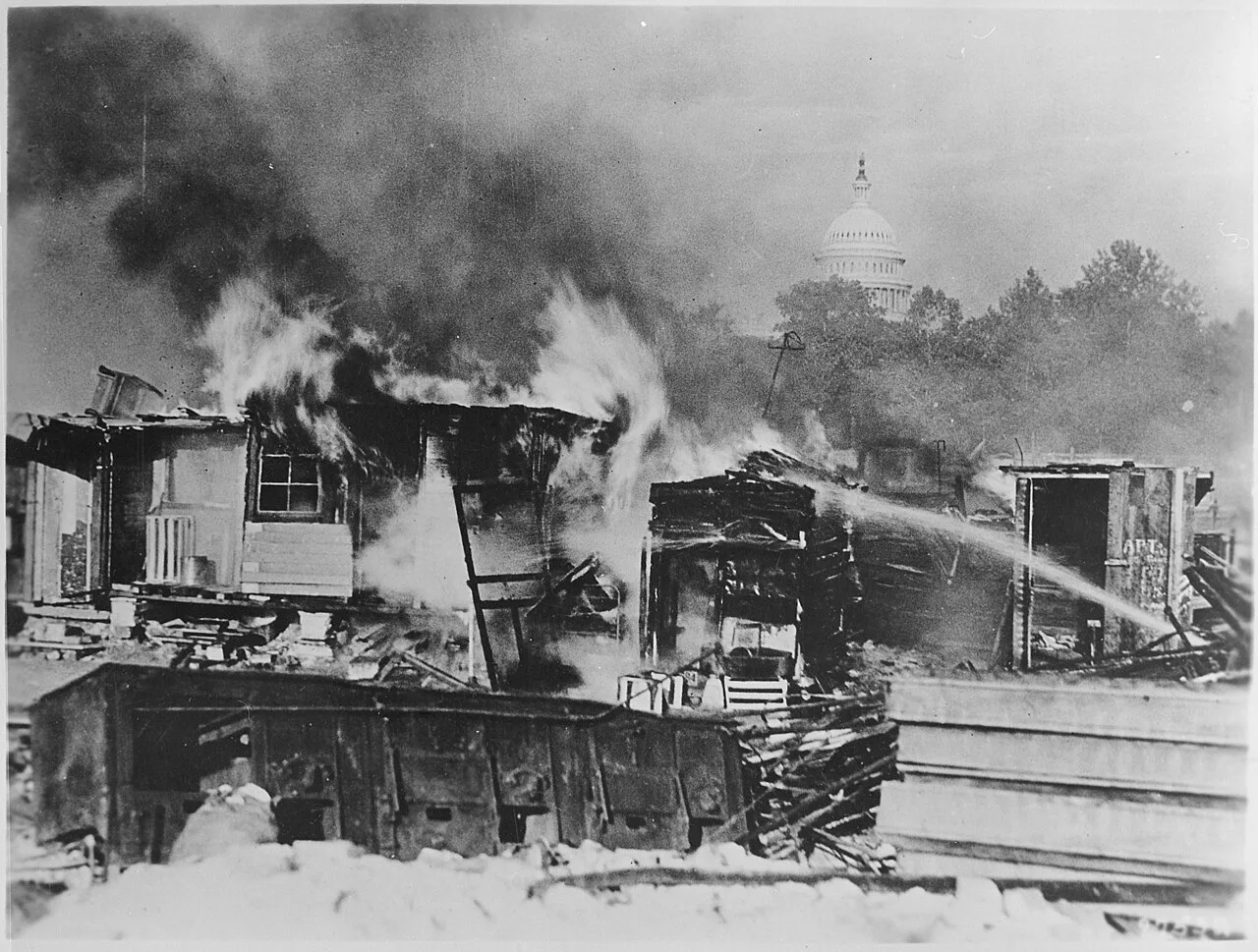
The Bonus Army March of 1932
In the summer of 1932, over 15,000 unemployed World War I veterans marched on Washington D.C. as the Bonus Expeditionary Force demanding early payment of service certificates, but were violently evicted by federal troops under General Douglas MacArthur using tanks and tear gas.
1 / 10How did Henry Ford's $5 workday introduced in 1914 transform industrial labor economics?
High wages stabilized Ford's workforce and created a consumer class with purchasing power for manufactured goods.
Lesson 11 has 52 cards. Keep going in the free app.
Question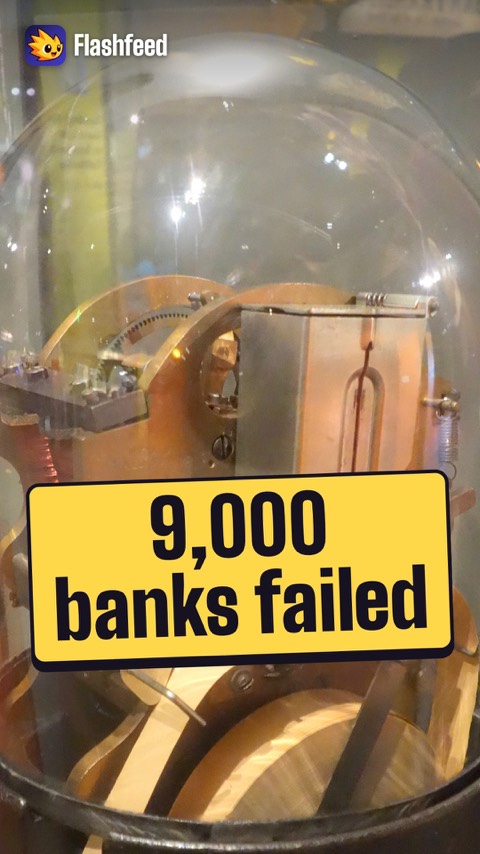
The Banks Fall 
Relief, Recovery, Reform 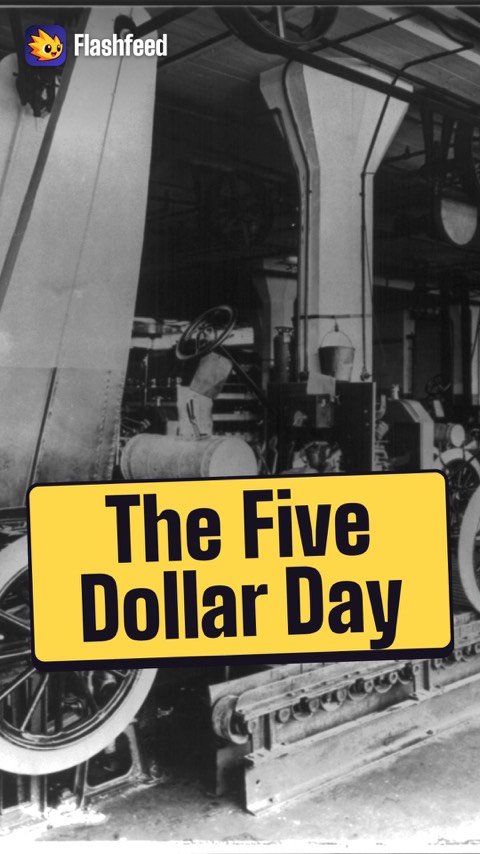
The Five-Dollar Day All 9 clips on YouTube ↗Transcripts
The Banks Fall
More than 9,000 American banks failed in four years. Millions of depositors lost their life savings.
Many people had bought stocks with borrowed money. On Black Tuesday, October 29, 1929, the market crashed.
Some banks had put their customers' money into stocks. When stocks fell, those banks fell too.
By 1933, one worker in four had no job. That was over 12 million people.
Relief, Recovery, Reform
To save the failing banks, Franklin Roosevelt closed them for four days. Then he won back public trust in a radio Fireside Chat.
His New Deal had three aims: relief, recovery and reform.
The new FDIC insured people's bank deposits. The Civilian Conservation Corps put millions of young men to work.
Social Security followed in 1935, with old-age pensions. It laid the base of the modern welfare state.
The Five-Dollar Day
Henry Ford's moving assembly line made cars affordable. But his own workers kept leaving.
Labor turnover hit 370%. The assembly-line work was that dull.
In 1914, Ford announced the $5 Day. It doubled daily pay for eligible workers, largely through a profit-sharing bonus.
The higher wage steadied the workforce. It also made his workers new customers for the Model T.
-
 Unknown photographer (U.S. National Archives) · public domain ↗12
World War II, the Cold War, and Global Hegemony (1939–1968)
Pearl Harbor, Total War Economy, and the Arsenal of Democracy · Containment Doctrine, Truman Doctrine, Marshall Plan, and Korean War · Postwar Affluence, McCarthyism, Cuban Missile Crisis, and Vietnam Escalation
Lesson 12 · 10 cardsUnknown photographer (U.S. National Archives) · public domain ↗The Attack on Pearl Harbor
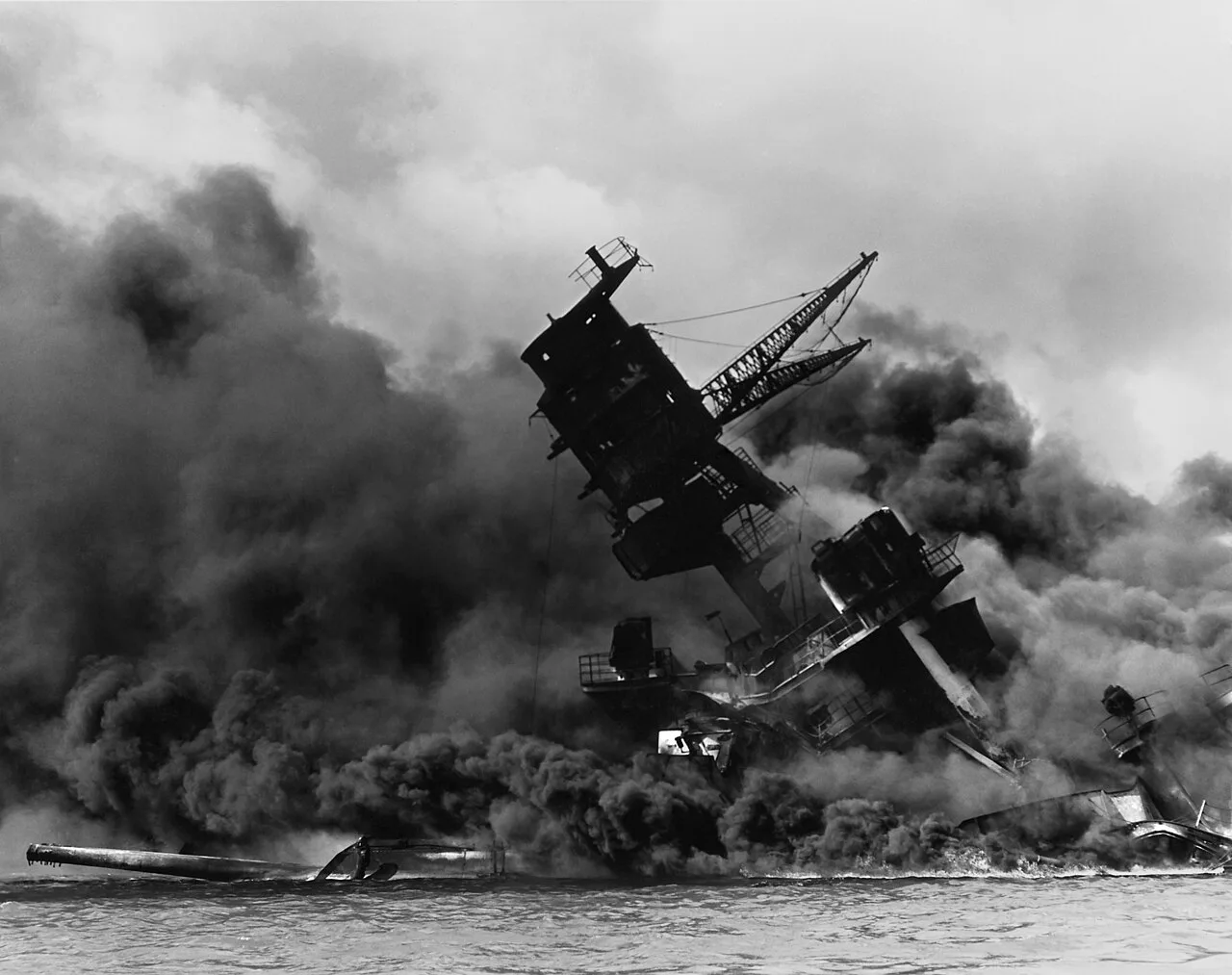
On December 7, 1941, the Imperial Japanese Navy launched a surprise carrier air strike on the U.S. naval base at Pearl Harbor, Hawaii, sinking or damaging eight battleships, killing 2,403 Americans, and prompting Congress to declare war the following day.
 Ansel Adams (Library of Congress) · no known restrictions on publication ↗
Executive Order 9066 and Japanese American Incarceration
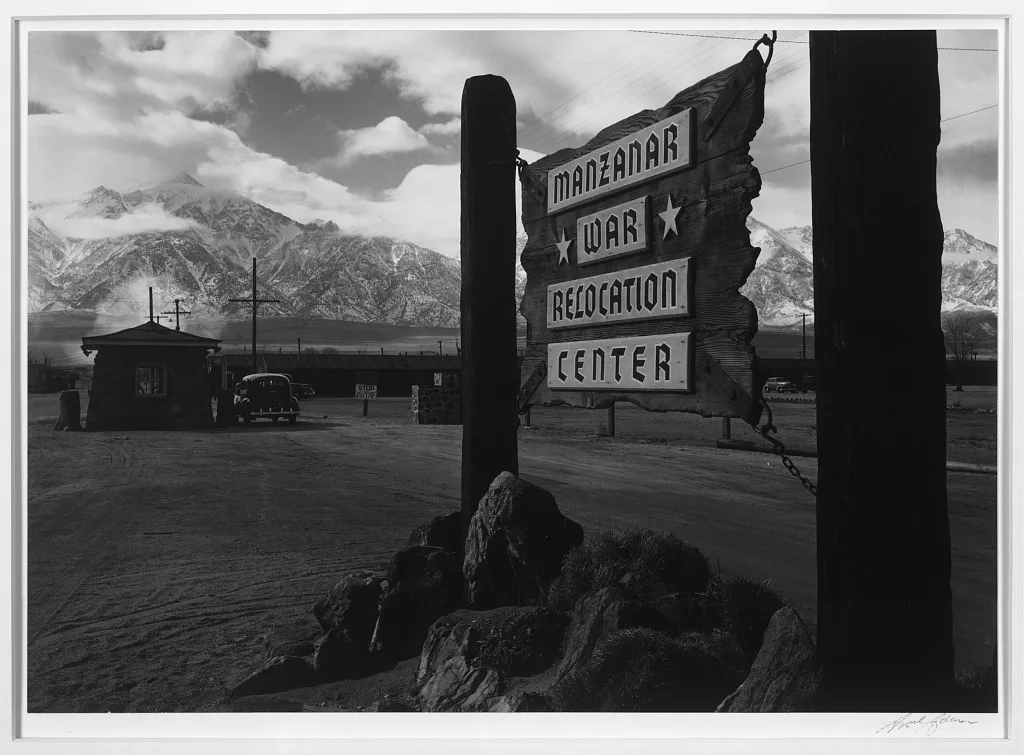
Signed by President Roosevelt in February 1942, Executive Order 9066 forcibly removed and incarcerated over 120,000 Japanese Americans—two-thirds of them native-born U.S. citizens—in remote interior concentration camps, a violation upheld in Korematsu v. United States (1944).
 Wikimedia Commons · Harpers Ferry Center - National Parks Gallery · Public domain ↗
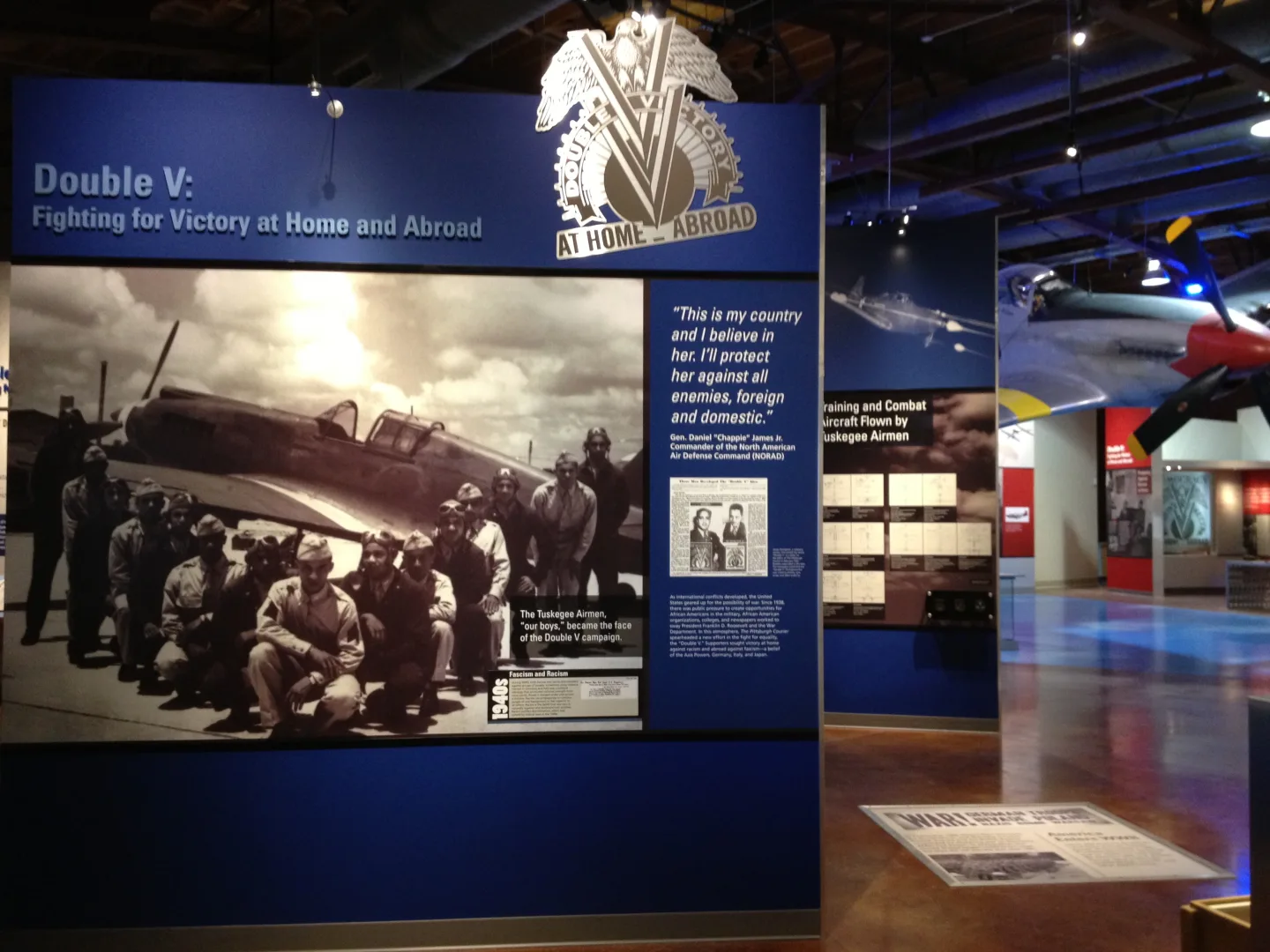
The Double V Campaign
Launched by the Pittsburgh Courier in 1942, the Double V Campaign rallied African Americans to fight for a double victory: victory over fascism abroad and victory over racial segregation and discrimination at home, laying crucial groundwork for the postwar Civil Rights Movement.
 Robert F. Sargent (U.S. Coast Guard, National Archives) · public domain ↗
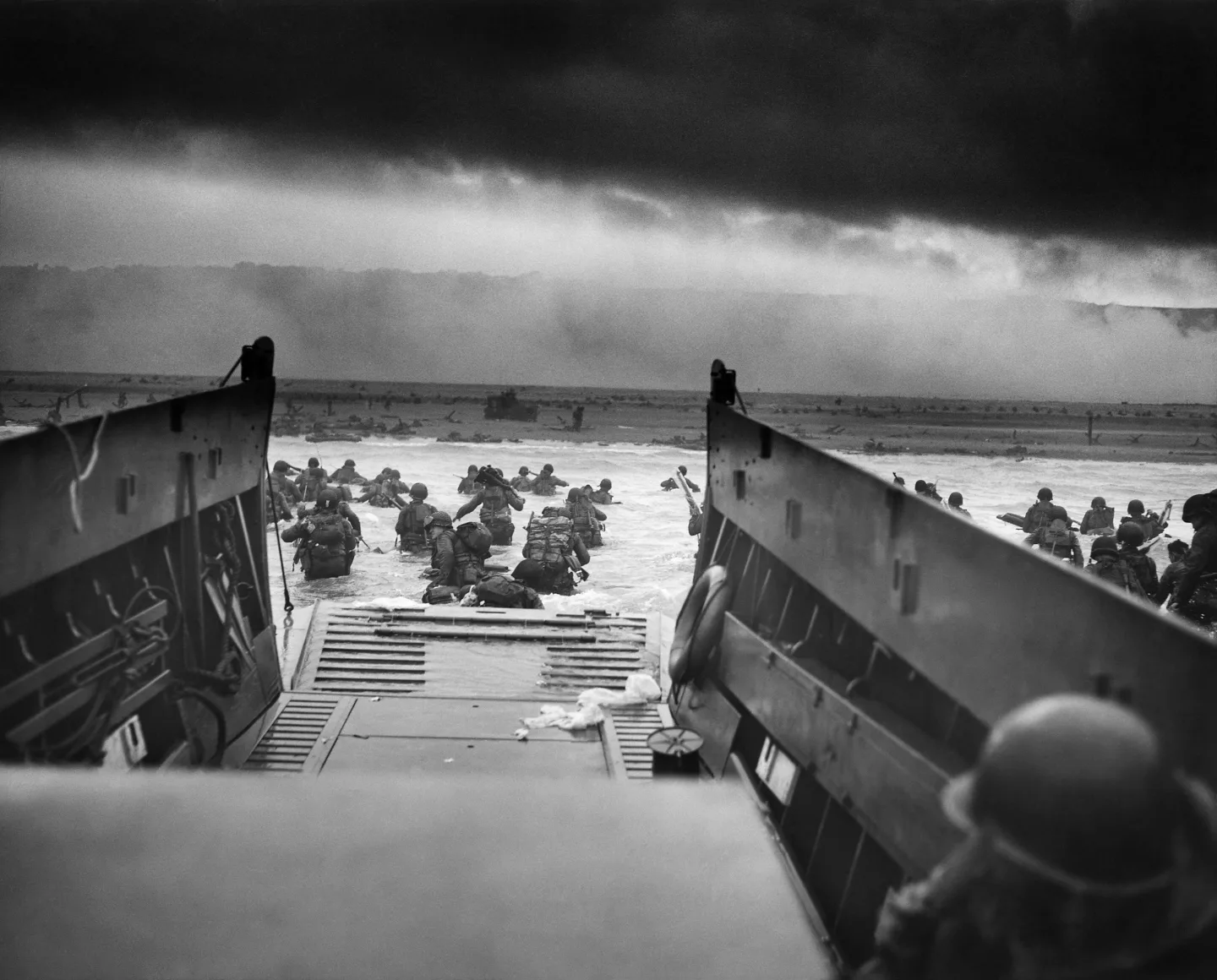
Operation Overlord and the D-Day Landings
On June 6, 1944 (D-Day), Allied forces commanded by General Dwight D. Eisenhower executed Operation Overlord, landing over 150,000 troops along the beaches of Normandy, France, in the largest amphibious invasion in history to liberate Western Europe from Nazi control.
 George R. Caron (U.S. Army Air Forces, National Archives) · public domain ↗
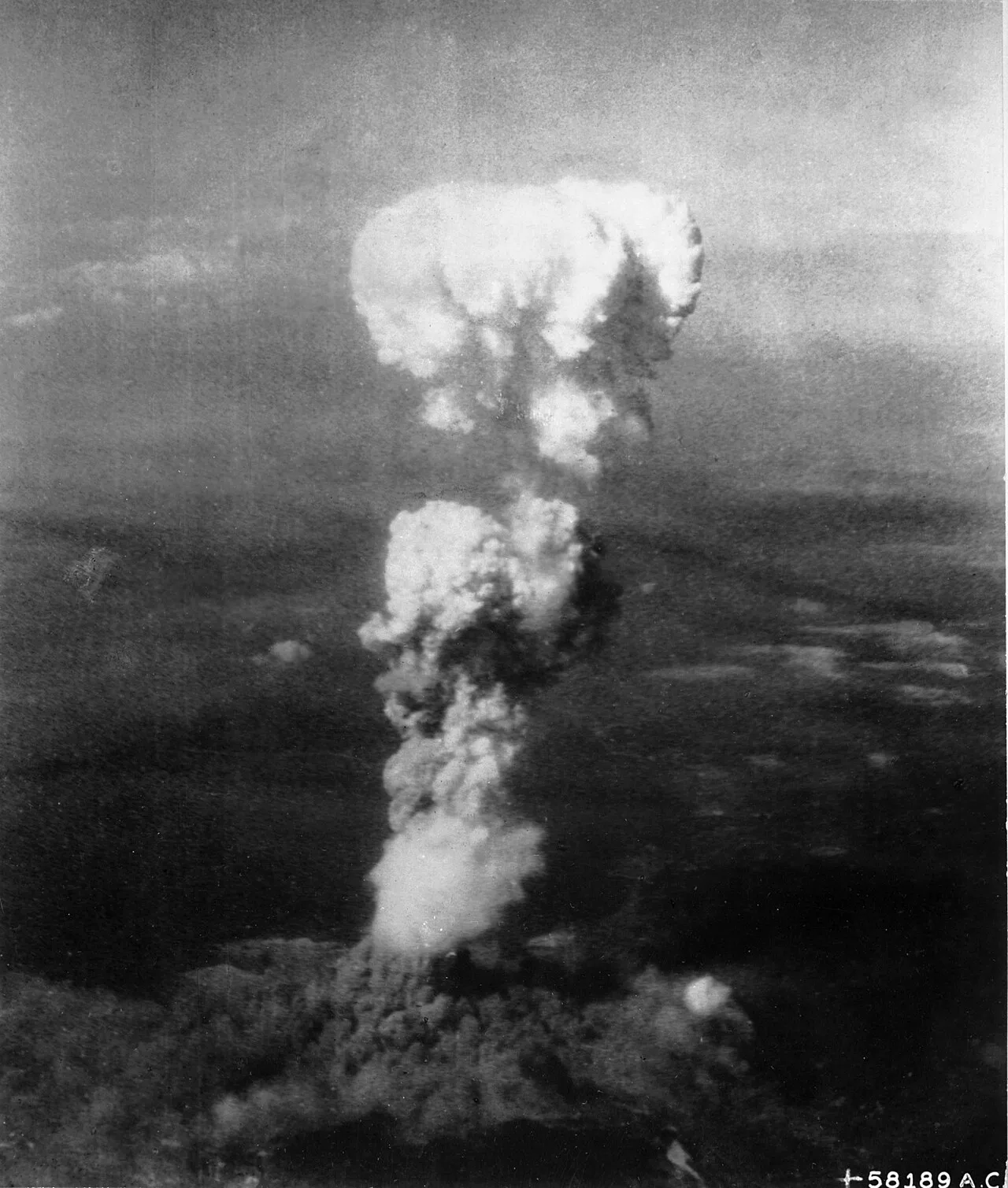
The Manhattan Project and Atomic Bombings
Directed by J. Robert Oppenheimer and General Leslie Groves, the top-secret Manhattan Project developed the first atomic weapons; in August 1945, President Harry S. Truman ordered atomic bombs dropped on Hiroshima (August 6) and Nagasaki (August 9), prompting Japan's unconditional surrender.
 FDR Presidential Library & Museum (Openverse) · by 2.0 ↗
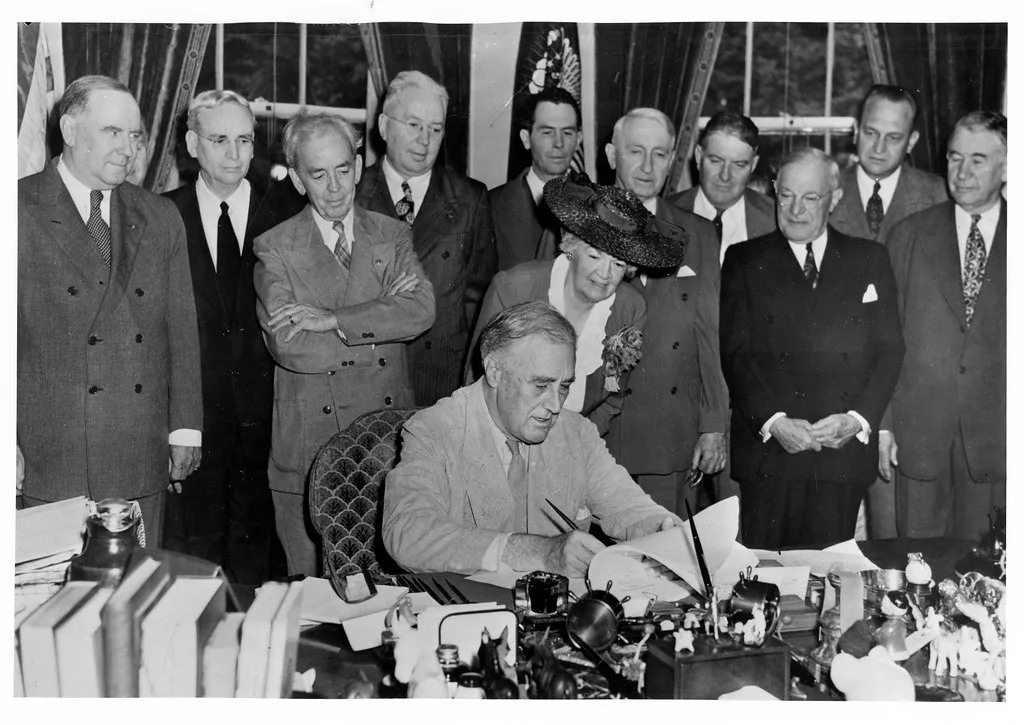
The G.I. Bill of Rights (1944)
Enacted in 1944, the Servicemen's Readjustment Act (G.I. Bill) provided returning veterans with free college tuition, vocational training, low-interest mortgage loans, and unemployment benefits, transforming higher education and propelling millions into the postwar middle class.
 Harry S. Truman Library & Museum · no known copyright restrictions ↗
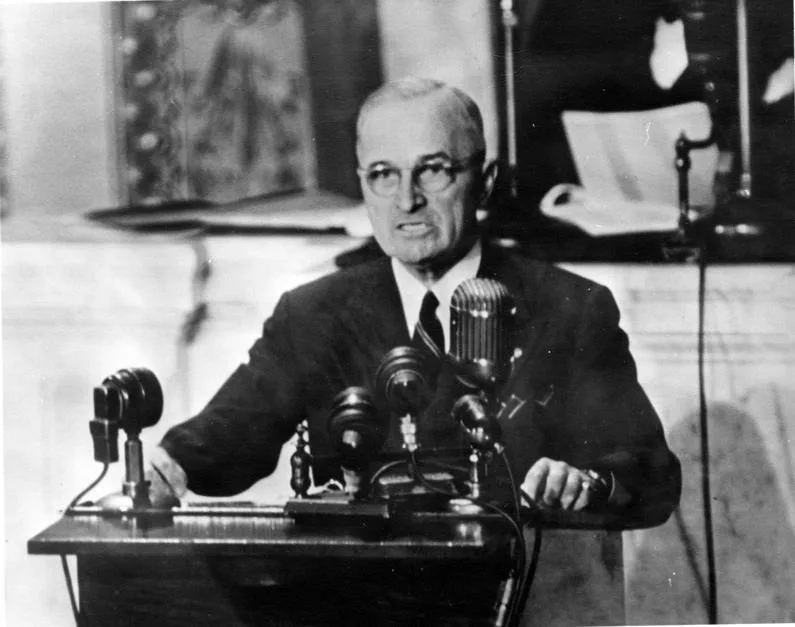
The Truman Doctrine and Containment
Articulated by President Harry S. Truman in March 1947, the Truman Doctrine pledged American financial and military assistance to free nations resisting communist subjugation, establishing 'containment'—formulated by diplomat George F. Kennan—as foundational Cold War doctrine.
1 / 10What was the purpose of the Marshall Plan (European Recovery Program) enacted in 1948?
The Marshall Plan aimed to rebuild Western Europe's economies and curb communism's appeal there; its aid helped stabilize democratic governments in the region.
Lesson 12 has 53 cards. Keep going in the free app.
Question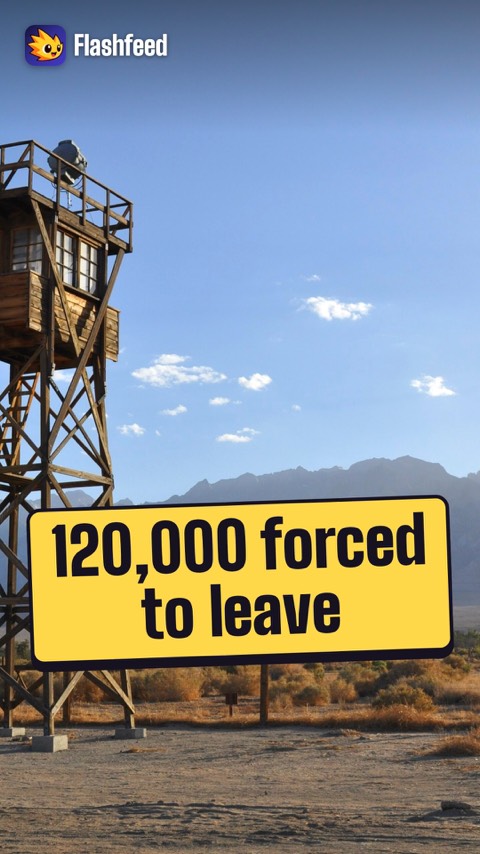
Order 9066 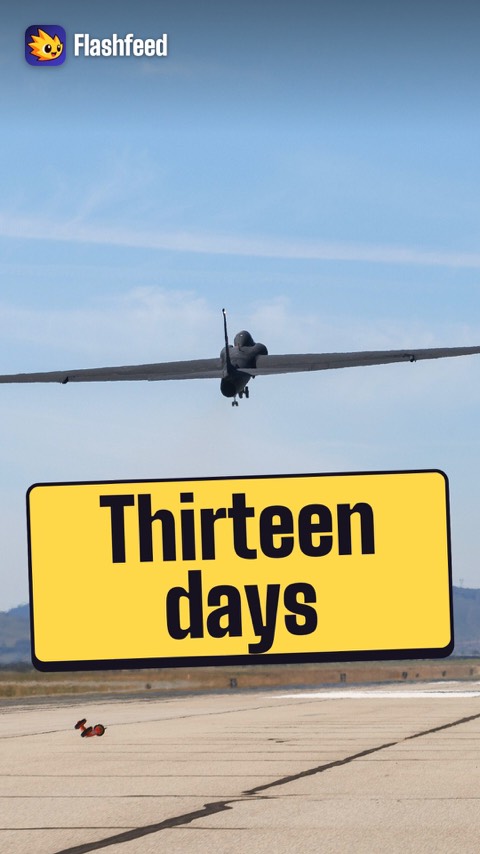
Thirteen Days 
Double V All 9 clips on YouTube ↗Transcripts
Order 9066
Over 120,000 Japanese Americans were forced to leave the West Coast. Two-thirds of them were United States citizens.
The order came in February 1942, during World War Two. President Franklin Roosevelt signed Executive Order 9066.
They were sent to remote camps far inland.
In 1944, the Supreme Court upheld the removal order in Korematsu versus United States. It cited military necessity.
Thirteen Days
For thirteen days, the world stood on the edge of nuclear war. American spy planes had found Soviet nuclear missiles in Cuba.
This was the Cuban Missile Crisis of October 1962.
President Kennedy answered with a naval quarantine around Cuba.
Soviet leader Nikita Khrushchev agreed to remove the missiles. The United States promised not to invade Cuba. In secret, it also agreed to remove its missiles from Turkey.
Double V
Over 1 million African Americans served in World War II. They served in segregated units, like the famous Tuskegee Airmen.
In 1942, the Pittsburgh Courier launched the Double V campaign. Black leaders championed it.
It rallied African Americans to fight for a double victory: over fascism abroad, and over racism at home.
The campaign laid crucial groundwork for the postwar Civil Rights Movement.
-
 Steve Snodgrass (Openverse) · by 2.0 ↗13
The Civil Rights Movement, Political Realignment, and Modern America (1954–Present)
The Black Freedom Movement: Legal Challenges, Direct Action, and Federal Acts · Great Society, Counterculture, Watergate, and the Conservative Ascendancy · Post-Cold War Global Order, 9/11, Digital Revolution, and Contemporary Politics
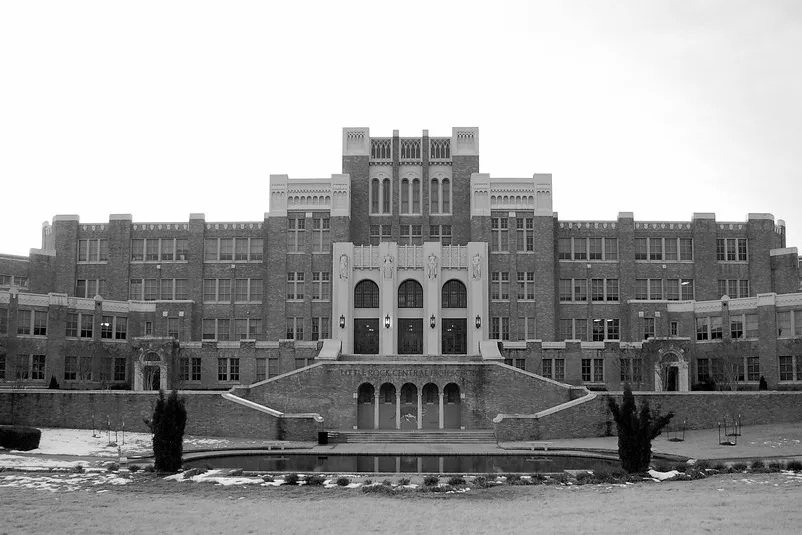
Lesson 13 · 10 cardsSteve Snodgrass (Openverse) · by 2.0 ↗The Little Rock Central High Crisis (1957)
In 1957, Arkansas Governor Orval Faubus deployed the National Guard to block nine African American students from integrating Little Rock Central High School; President Dwight D. Eisenhower federalized the Guard and sent the 101st Airborne Division to enforce federal court orders.
 Cecil Stoughton (White House Press Office) · public domain ↗
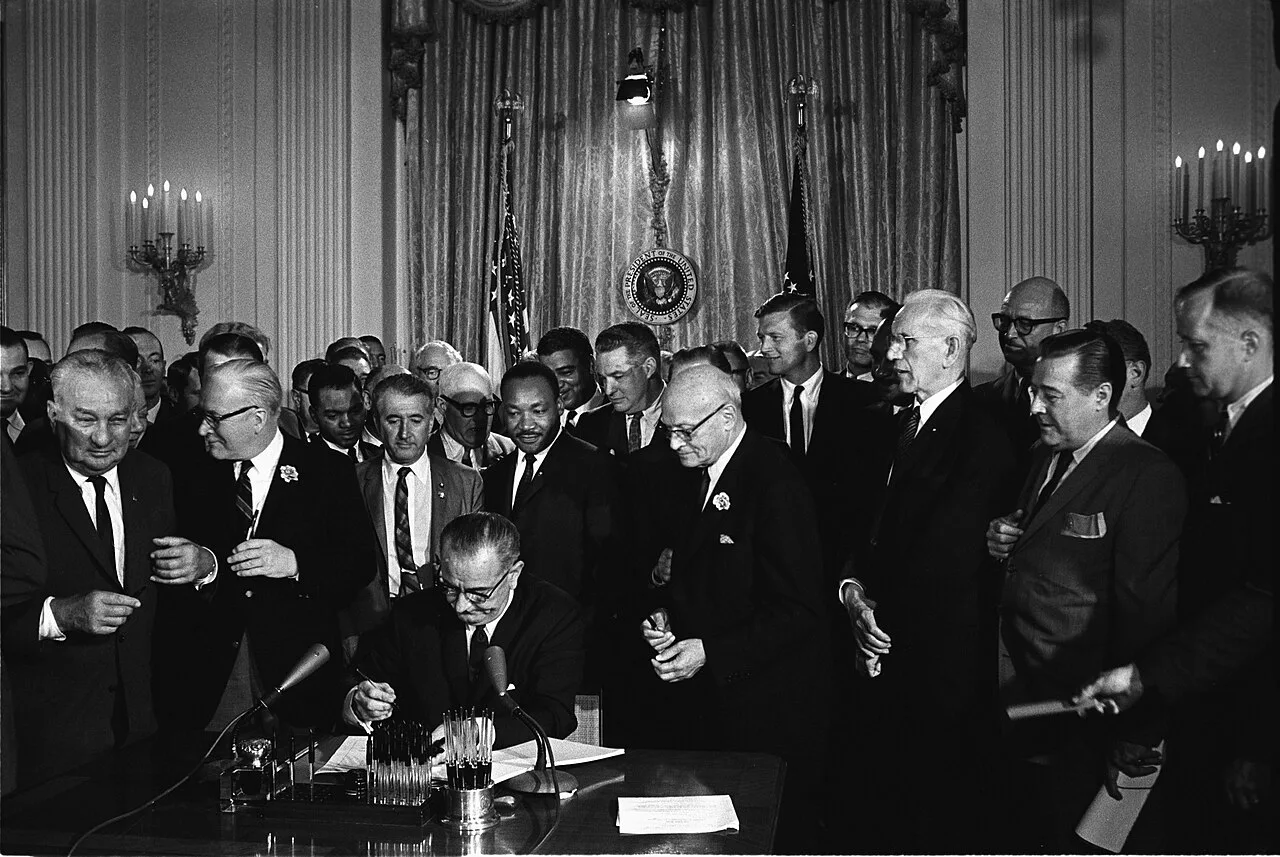
The Civil Rights Act of 1964
Signed by President Lyndon B. Johnson, the Civil Rights Act of 1964 banned racial discrimination in public accommodations, outlawed employment discrimination based on race, color, religion, sex, or national origin under Title VII, created the Equal Employment Opportunity Commission (EEOC), and authorized the federal government to withhold funds from segregated institutions.
 Wikimedia Commons · Arnold Newman · Public domain ↗
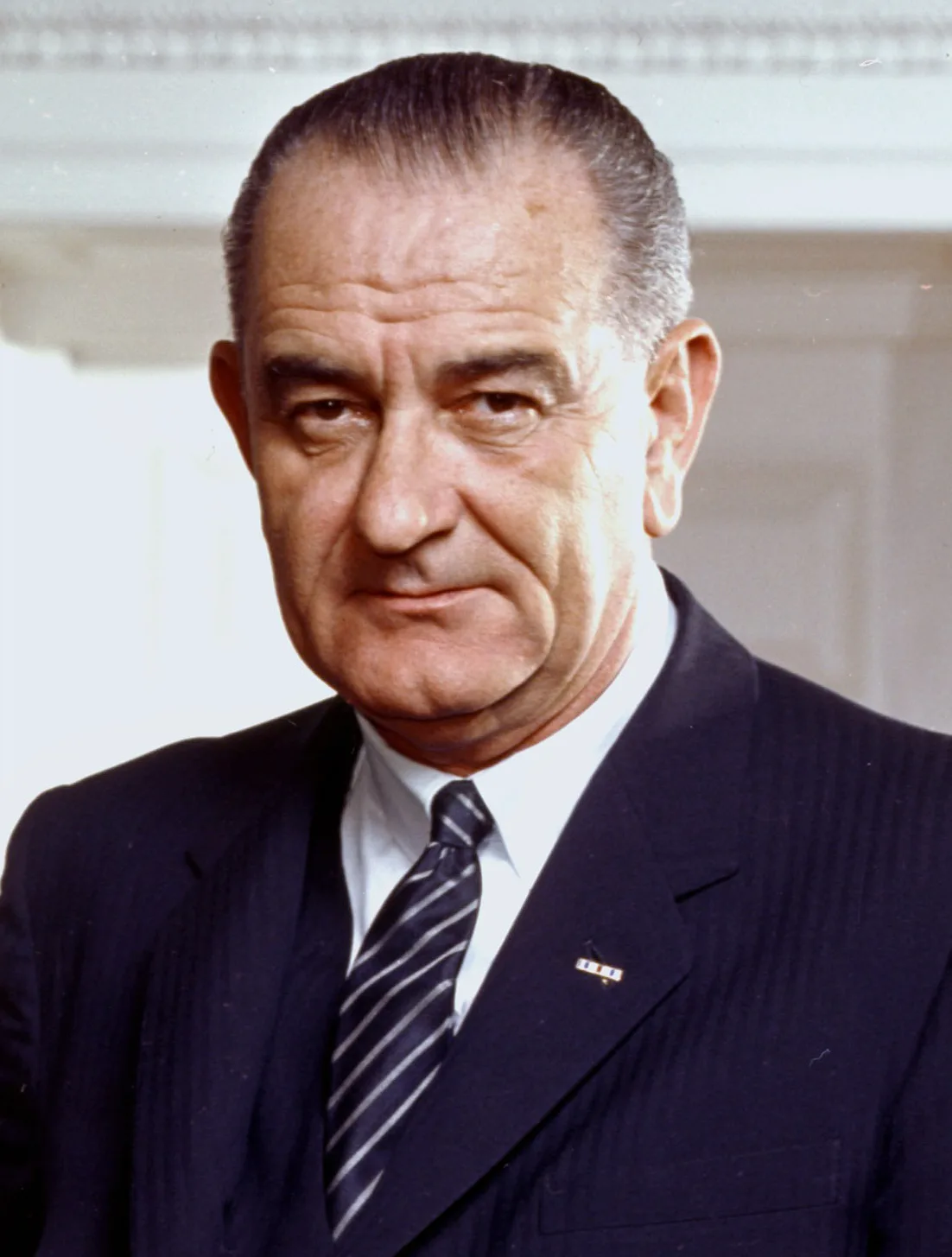
Lyndon B. Johnson's Great Society
President Lyndon B. Johnson enacted his ambitious 'Great Society' reform program, declaring a War on Poverty and creating Medicare (healthcare for elderly), Medicaid (healthcare for low-income families), Head Start, federal aid to public education, and the National Endowment for the Arts.
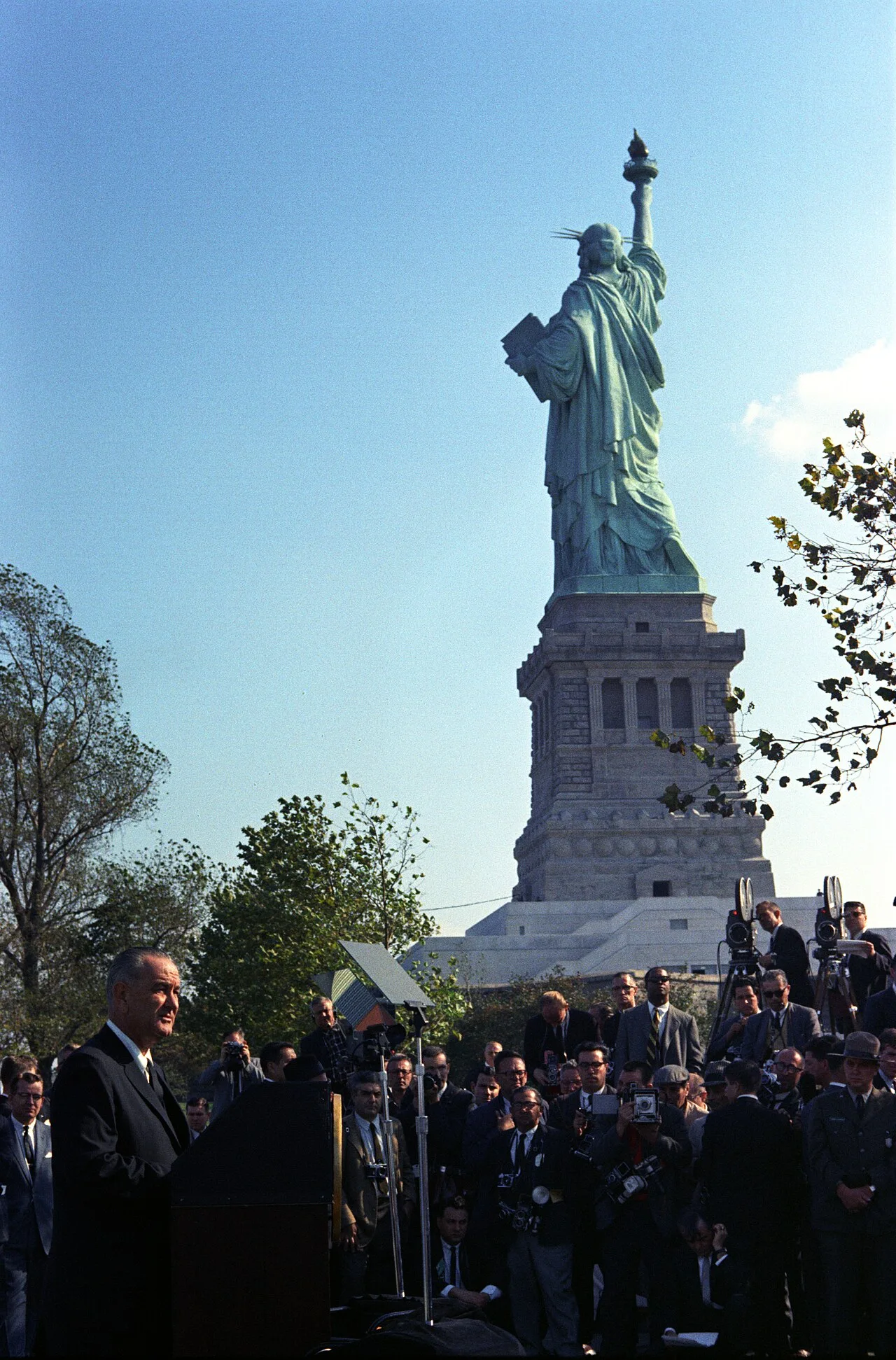 Yoichi Okamoto · Public domain ↗
The Immigration and Nationality Act of 1965 (Hart-Celler)
The Hart-Celler Act of 1965 abolished the discriminatory 1924 national origins quota system, establishing a new immigration policy prioritizing family reunification and skilled labor, which fundamentally transformed American demographics through major immigrant arrivals from Asia and Latin America.
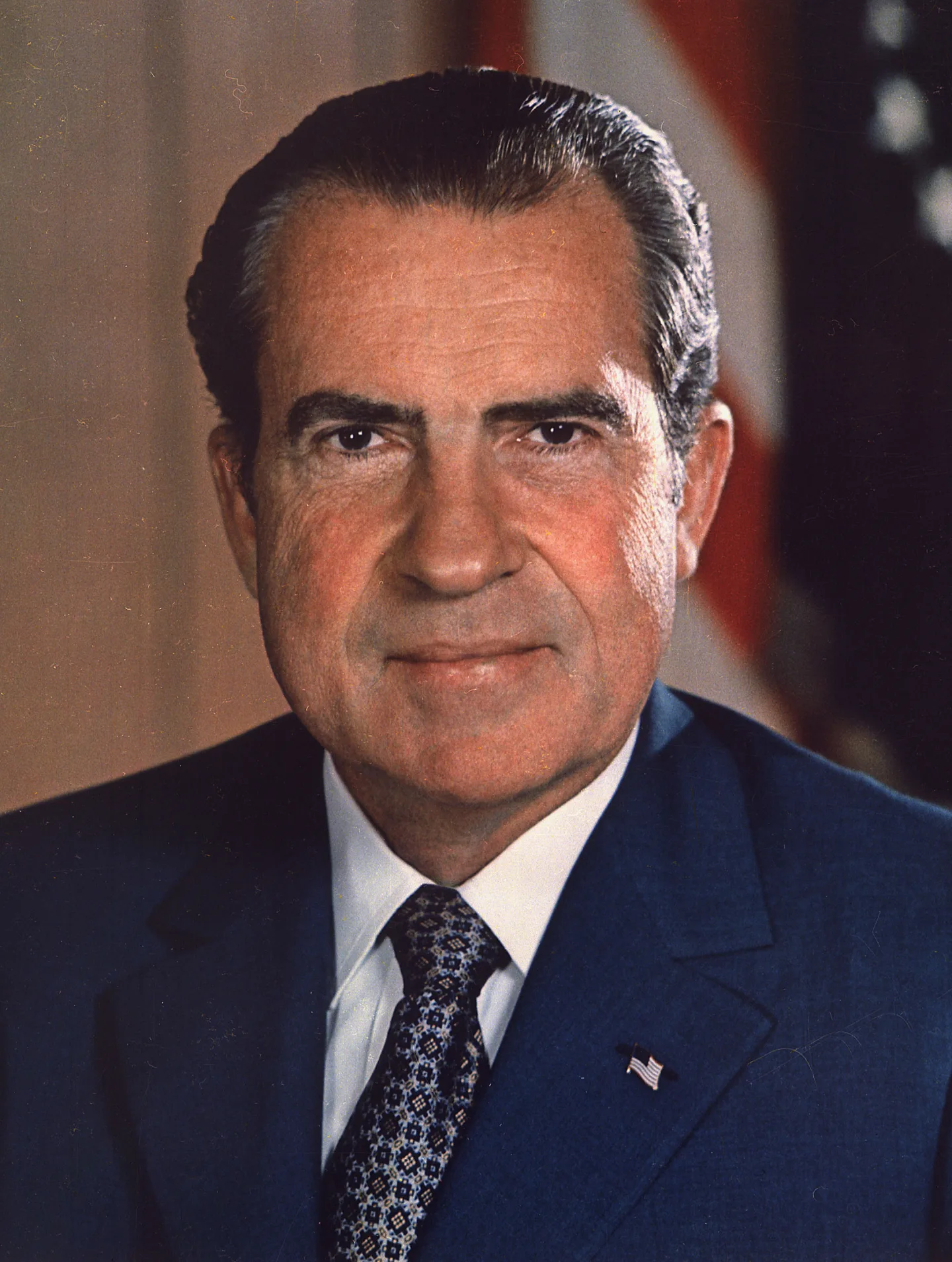 Wikimedia Commons · U.S. Army Audiovisual Center · Public domain ↗
The Watergate Scandal and Nixon's Resignation
Following the 1972 break-in at the Democratic National Committee headquarters and an elaborate White House cover-up, the Supreme Court ordered the release of the 'smoking gun' audio tapes in United States v. Nixon; Richard Nixon resigned the presidency on August 9, 1974.
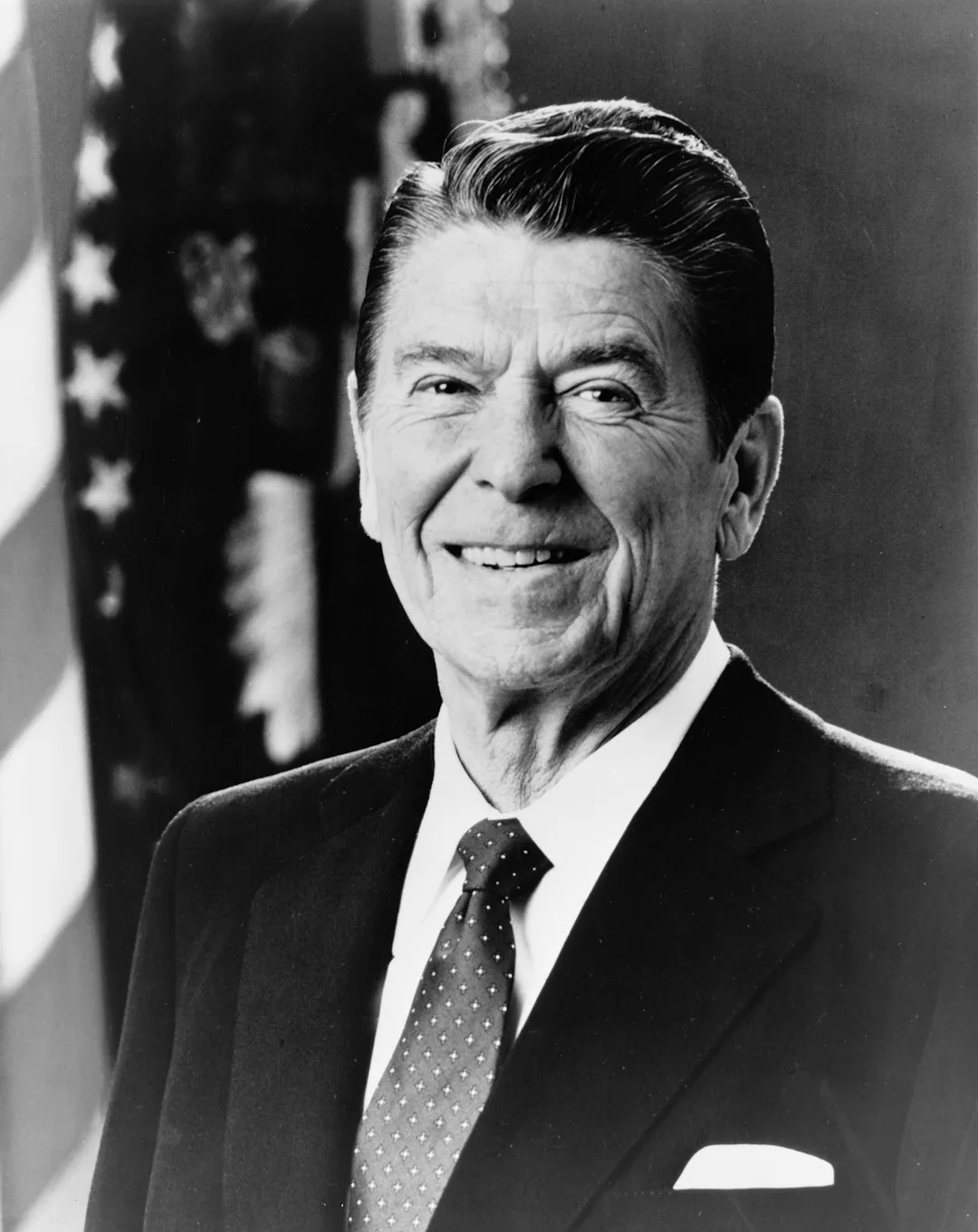 Unsplash · [Ronald Reagan, head-and-shoulders portrait, facing front]. Photograph from the Presidential File Collection, 1981. Library of Congress Prints & P… ↗
The Reagan Revolution and Supply-Side Economics
Elected in 1980, President Ronald Reagan ushered in the conservative ascendancy, cutting top federal marginal tax rates, deregulating financial and energy industries, scaling back domestic social spending, and massively expanding military expenditures to confront the Soviet Union.
1 / 10How did the Hart-Celler Act of 1965 change U.S. immigration policy?
Hart-Celler abolished the 1924 national-origins quota system and ended earlier restrictions, prioritizing family reunification and skilled labor instead.
Lesson 13 has 57 cards. Keep going in the free app.
Question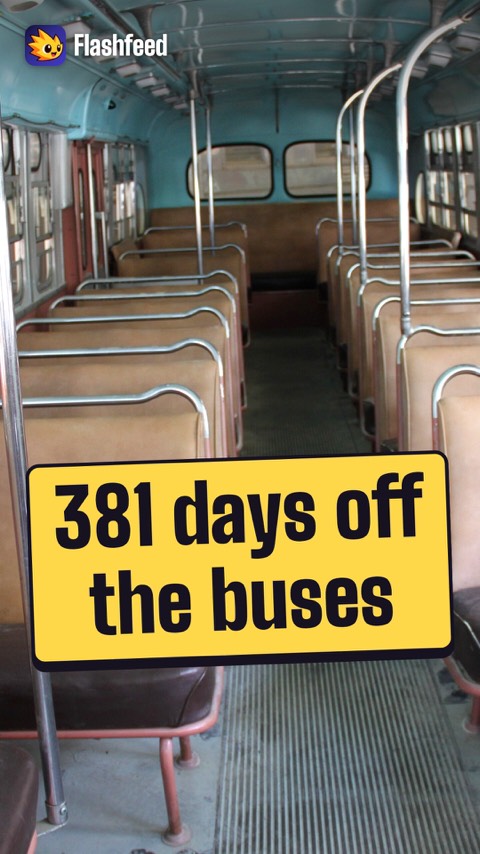
Off the Buses 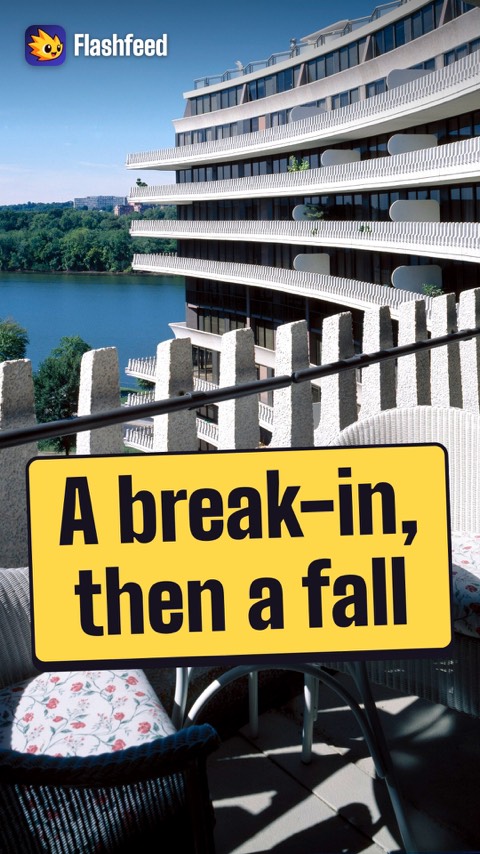
The Break-In 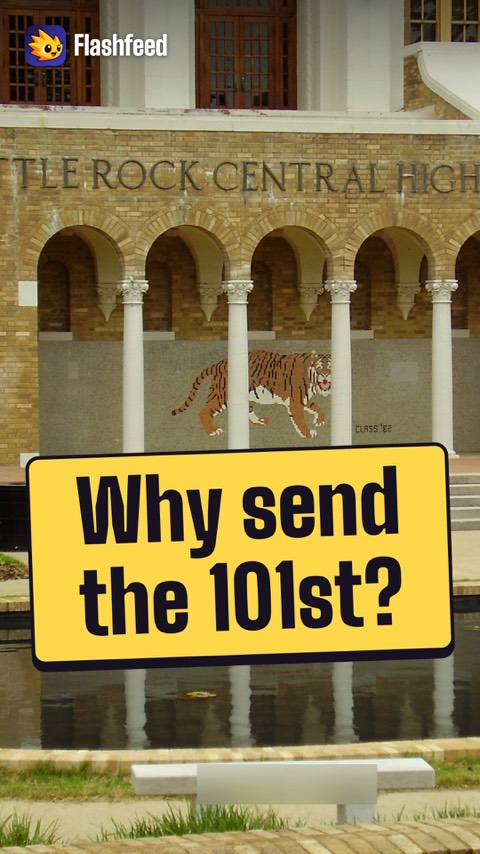
Sent to Central High All 9 clips on YouTube ↗Transcripts
Off the Buses
For 381 days, a community in Montgomery refused to ride the city buses.
It began in 1955. Rosa Parks would not give up her seat on a bus.
The boycott worked. Montgomery's buses were desegregated. The protest also made a 26-year-old Baptist minister a national leader.
His name was Martin Luther King Junior. He helped found the Southern Christian Leadership Conference.
The Break-In
A break-in started the fall of a president. It happened in June 1972, at the Democratic National Committee headquarters.
The White House then tried to cover it up. The whole affair became known as Watergate.
President Richard Nixon claimed executive privilege. In 1974, the Supreme Court ruled that this privilege is not absolute.
On August 9, 1974, Nixon resigned the presidency.
Sent to Central High
A president sent the 101st Airborne Division to a high school. Why?
Federal court orders required integration at Little Rock Central High School.
In 1957, Arkansas Governor Orval Faubus sent the National Guard to block nine African American students.
Then President Dwight D. Eisenhower put the Guard under federal control.
He sent the 101st Airborne to enforce the court orders.


What you'll be able to do 26 objectives, from the pack's lessons
- Describe Cahokia and other Indigenous societies, and explain how the Columbian Exchange and epidemic disease transformed the Americas.
- Describe the Chesapeake and New England colonies: tobacco and servant labor, Puritan towns and dissent, and early self-government.
- Trace how the French and Indian War's debts led to imperial taxes and the colonial case against taxation without representation.
- Trace the path to independence through the Continental Congresses, Paine's Common Sense, and the Declaration of Independence.
- Describe the weaknesses of the Articles of Confederation, the impact of Shays' Rebellion, and the work of the 1787 Convention.
- Explain federalism, separation of powers, checks and balances, and the Great and Three-Fifths Compromises.
- Analyze Jefferson's presidency: the election of 1800, the Louisiana Purchase, and the failed Embargo of 1807.
- Explain how Marbury v. Madison and later Marshall Court rulings built judicial review and federal supremacy.
- Analyze Jacksonian Democracy: expanded white male suffrage, the Nullification Crisis, and the Bank War.
- Describe how canals, factories, and the reform crusades of the Second Great Awakening reshaped antebellum society.
- Explain how cotton, the domestic slave trade, and the 'positive good' defense bound the South to slavery.
- Trace how abolitionism, the Fugitive Slave Act, and the Kansas-Nebraska Act deepened the sectional crisis.
- Describe secession, the outbreak of war at Fort Sumter, and the rival Anaconda and King Cotton strategies.
- Explain how emancipation, Black soldiers, and the 1863 victories at Gettysburg and Vicksburg turned the war.
- Compare Presidential and Radical Reconstruction and explain what the Fourteenth and Fifteenth Amendments did.
- Describe Black political gains during Reconstruction, the Freedmen's Bureau's work, and the violent white reaction.
- Explain how industrialists built monopolies through vertical and horizontal integration, and how they justified their wealth.
- Analyze Gilded Age labor unions, the great strikes, and the Populist revolt of the 1890s.
- Explain how muckrakers and Progressive presidents built a regulatory state and won four constitutional amendments.
- Describe the New Immigration and urban growth, and the reformers who responded, from Hull House to the NAACP.
- Analyze 1920s consumer culture and the decade's clashes over Prohibition, immigration, evolution, and race.
- Explain the 1929 crash, how the 1933 Bank Holiday answered the bank failures, and the deepening Depression, from Smoot-Hawley to the Dust Bowl.
- Describe the United States as the Arsenal of Democracy, the wartime clashes over civil liberties and race at home, and the D-Day invasion.
- Explain the strategy of containment and its tools: the Marshall Plan, the North Atlantic Treaty Organization (NATO), and the Korean War.
- Trace how litigation, nonviolent direct action, and federal law dismantled Jim Crow between 1954 and 1968.
- Analyze the Great Society, Watergate, and the conservative rise that brought Reagan to power.
Study guide.
The same study guide as in the app, one page for each lesson, with its key facts and a self-test.
- 01Pre-Contact America, Encounter, and Colonial Foundations (Pre-1607–1754)
- 02Imperial Crisis, the American Revolution, and Independence (1754–1783)
- 03Creating the Republic: Constitutional Design and the Federalists (1781–1800)
- 04The Early Republic, Jeffersonian Democracy, and the Marshall Court (1800–1824)
- 05Jacksonian Democracy, Market Revolution, and Manifest Destiny (1824–1850)
- 06The Sectional Crisis, Economics of Slavery, and Road to Disunion (1850–1861)
- 07The Civil War: Total War, Emancipation, and Union Victory (1861–1865)
- 08Reconstruction and the Jim Crow Legal Settlement (1865–1896)
- 09The Gilded Age: Industrial Titans, Labor, and Western Transformation (1870–1900)
- 10Progressivism, Imperial Expansion, and World War I (1890–1920)
- 11The Roaring Twenties, the Great Depression, and the New Deal (1920–1939)
- 12World War II, the Cold War, and Global Hegemony (1939–1968)
- 13The Civil Rights Movement, Political Realignment, and Modern America (1954–Present)
Built from 1 source.
1 of its 698 cards cite a source. These are the sources it cites.
Hover over a photo, or tap its i, to see where it came from. All 13:
- Lesson 1: Internet Archive Book Images · No restrictions ↗
- Lesson 2: Wikimedia Commons · Henry Marriott Paget · Public domain ↗
- Lesson 3: Wikimedia Commons · Boucher, Jack E. · Public domain ↗
- Lesson 4: Wikimedia Commons · Alexander Anderson (attributed) · Public domain ↗
- Lesson 5: George Caleb Bingham · Public domain ↗
- Lesson 6: Unsplash · Portrait of Harriet Tubman. By photographer Harvey B. Lindsley, taken between 1871 and 1876?, printed between 1895 and 1910]. Photograph shows a f… ↗
- Lesson 7: Wikimedia Commons · Unknown author · Public domain ↗
- Lesson 8: Mathew Brady studio (Library of Congress; restored copy) · public domain ↗
- Lesson 9: Library of Congress · Leaders of the Knights of Labor · No known restrictions (verify at source) ↗
- Lesson 10: James Montgomery Flagg · Public domain ↗
- Lesson 11: Wikimedia Commons · Anonymous Unknown author · Public domain ↗
- Lesson 12: Unknown photographer (U.S. National Archives) · public domain ↗
- Lesson 13: Steve Snodgrass (Openverse) · by 2.0 ↗
Books this pack draws on
- Battle Cry of Freedom by James M. McPherson · on Amazon ↗
- Freedom from Fear by David M. Kennedy · on Amazon ↗
- John Marshall and the Heroic Age of the Supreme Court by R. Kent Newmyer · on Amazon ↗
- Free Soil, Free Labor, Free Men by Eric Foner · on Amazon ↗
- Almost a Miracle by John Ferling · on Amazon ↗
These are affiliate links: if you buy a book through one, FlashFeed may earn a small commission at no extra cost to you. The commission helps pay for FlashFeed's servers.
As an Amazon Associate we earn from qualifying purchases.
Independent study notes, not affiliated with the author or publisher.
- Cards
- 698
- Lessons
- 13
- Version
- 1.0.46
- Language
- English
The whole pack is one file. Read the pack file ↗
FlashFeed is on the App Store and Google Play.
FlashFeed is free on iPhone and Android, and needs no account.