
United States History study guide · Lesson 13 of 13
The Civil Rights Movement, Political Realignment, and Modern America (1954–Present)
The Black Freedom Movement: Legal Challenges, Direct Action, and Federal Acts · Great Society, Counterculture, Watergate, and the Conservative Ascendancy · Post-Cold War Global Order, 9/11, Digital Revolution, and Contemporary Politics
This is the lesson's study guide from the FlashFeed app, plus its key facts and a self-test.
What you'll be able to do
- Trace how litigation, nonviolent direct action, and federal law dismantled Jim Crow between 1954 and 1968.
- Analyze the Great Society, Watergate, and the conservative rise that brought Reagan to power.
Lesson 13: The Civil Rights Movement, Political Realignment, and Modern America (1954–Present)
The Black Freedom Movement: Legal Challenges, Direct Action, and Federal Acts
The modern African American civil rights movement dismantled the Jim Crow legal apartheid system through a dual strategy of litigation and nonviolent mass civil disobedience. In Brown v. Board of Education of Topeka (1954), the Supreme Court, led by Chief Justice Earl Warren, unanimously overturned Plessy v. Ferguson, ruling that racially segregated public schools were "inherently unequal" and violated the Fourteenth Amendment's Equal Protection Clause, litigated by National Association for the Advancement of Colored People (NAACP) chief counsel Thurgood Marshall (who later became the first Black Supreme Court Justice in 1967).
Direct action campaigns catalyzed national awareness:
- Montgomery Bus Boycott (1955–1956): Sparked by Rosa Parks's refusal to surrender her bus seat, a 381-day community boycott desegregated city buses and elevated 26-year-old Baptist minister Dr. Martin Luther King Jr. to national leadership; in 1957, after the boycott, King co-founded the Southern Christian Leadership Conference (SCLC).
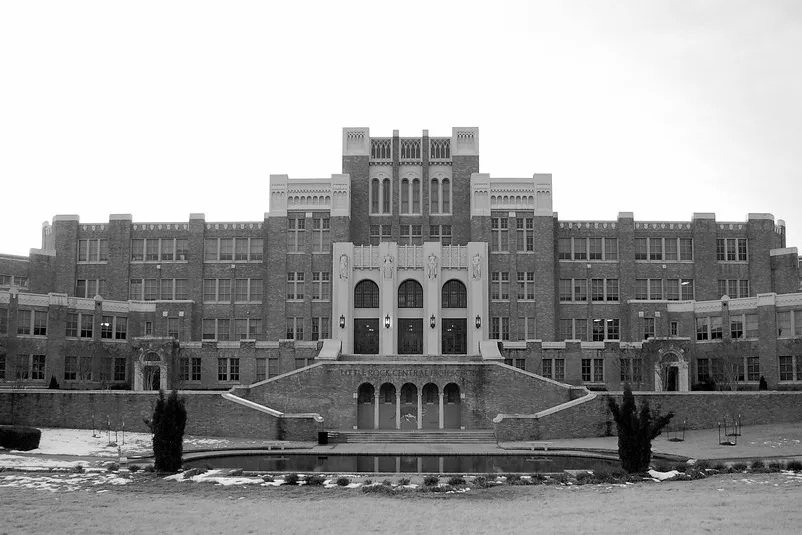
- Little Rock Nine (1957): President Eisenhower deployed the 101st Airborne Division to enforce federal court-ordered integration at Central High School in Arkansas against state resistance.
- Student Sit-Ins & Freedom Rides (1960–1961): Four Black college students in Greensboro, North Carolina, launched the sit-in movement, which led student activists to found the Student Nonviolent Coordinating Committee (SNCC). The Congress of Racial Equality (CORE) organized integrated Freedom Rides to challenge interstate bus terminal segregation.
- Birmingham Campaign & March on Washington (1963): SCLC organized protests in Birmingham, Alabama, facing police dogs and firehoses under Eugene "Bull" Connor. Imprisoned, King penned the famous "Letter from Birmingham Jail", articulating the moral imperative to disobey unjust laws. In August 1963, an estimated 200,000 to 300,000 demonstrators gathered at the Lincoln Memorial for the March on Washington, where King delivered his visionary "I Have a Dream" address.
Protests culminated in landmark federal legislation under President Lyndon B. Johnson:
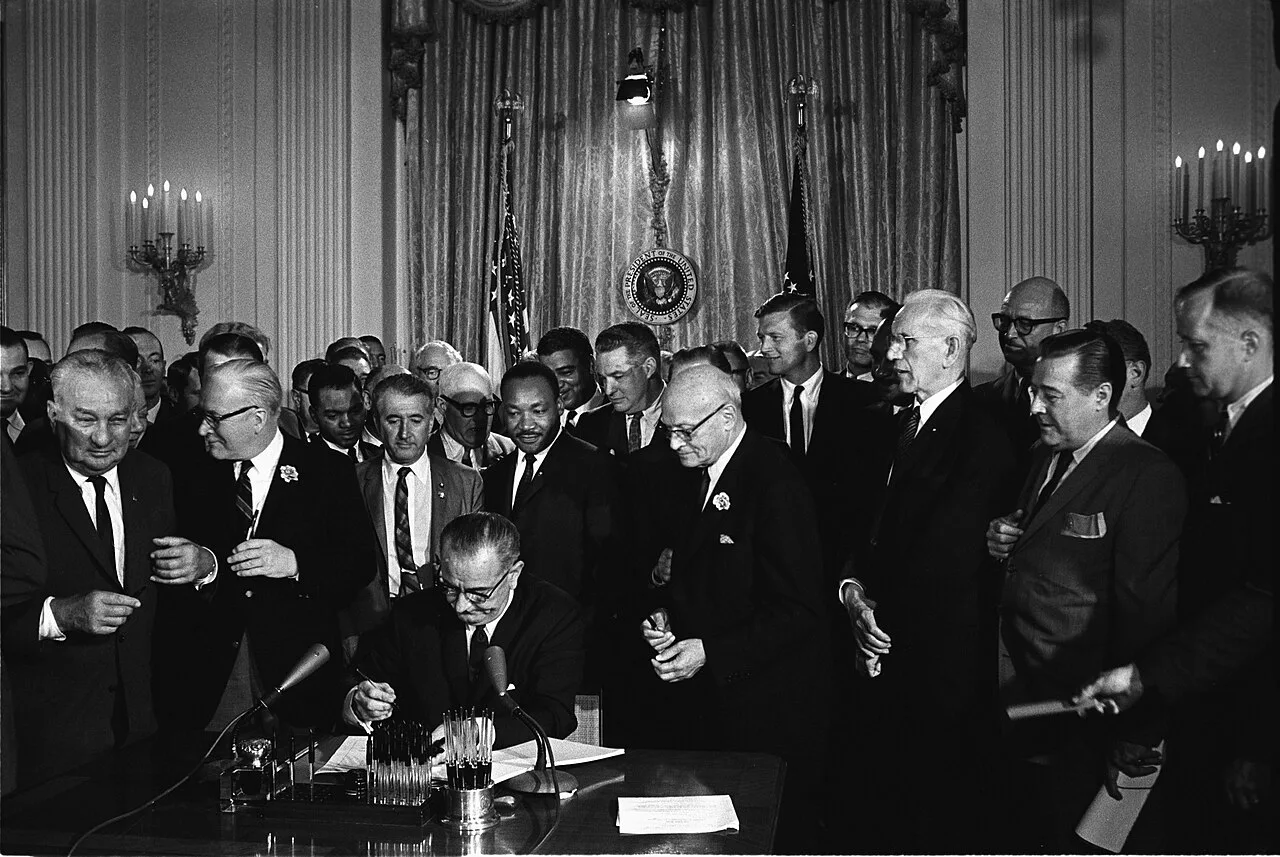
- Civil Rights Act of 1964: Title II outlawed discrimination in public accommodations, and Title VII outlawed employment discrimination based on race, color, religion, sex, or national origin, creating the Equal Employment Opportunity Commission (EEOC) to implement the law.
- Twenty-Fourth Amendment (1964): Abolished the poll tax in federal elections.
- Voting Rights Act of 1965: Enacted after the state-sponsored violence of "Bloody Sunday" during the Selma to Montgomery marches, this act banned literacy tests and established federal preclearance for voting changes in discriminatory jurisdictions.
- Fair Housing Act of 1968: Prohibited discrimination in housing sales and rentals, passed in the wake of Martin Luther King Jr.'s assassination in Memphis on April 4, 1968.
Building on ideas Malcolm X had articulated before his 1965 assassination, the Black Power movement emerged after 1966, championed by Stokely Carmichael and the Black Panther Party for Self-Defense (founded in Oakland by Huey Newton and Bobby Seale), emphasizing self-determination, racial pride, and economic empowerment.
Great Society, Counterculture, Watergate, and the Conservative Ascendancy
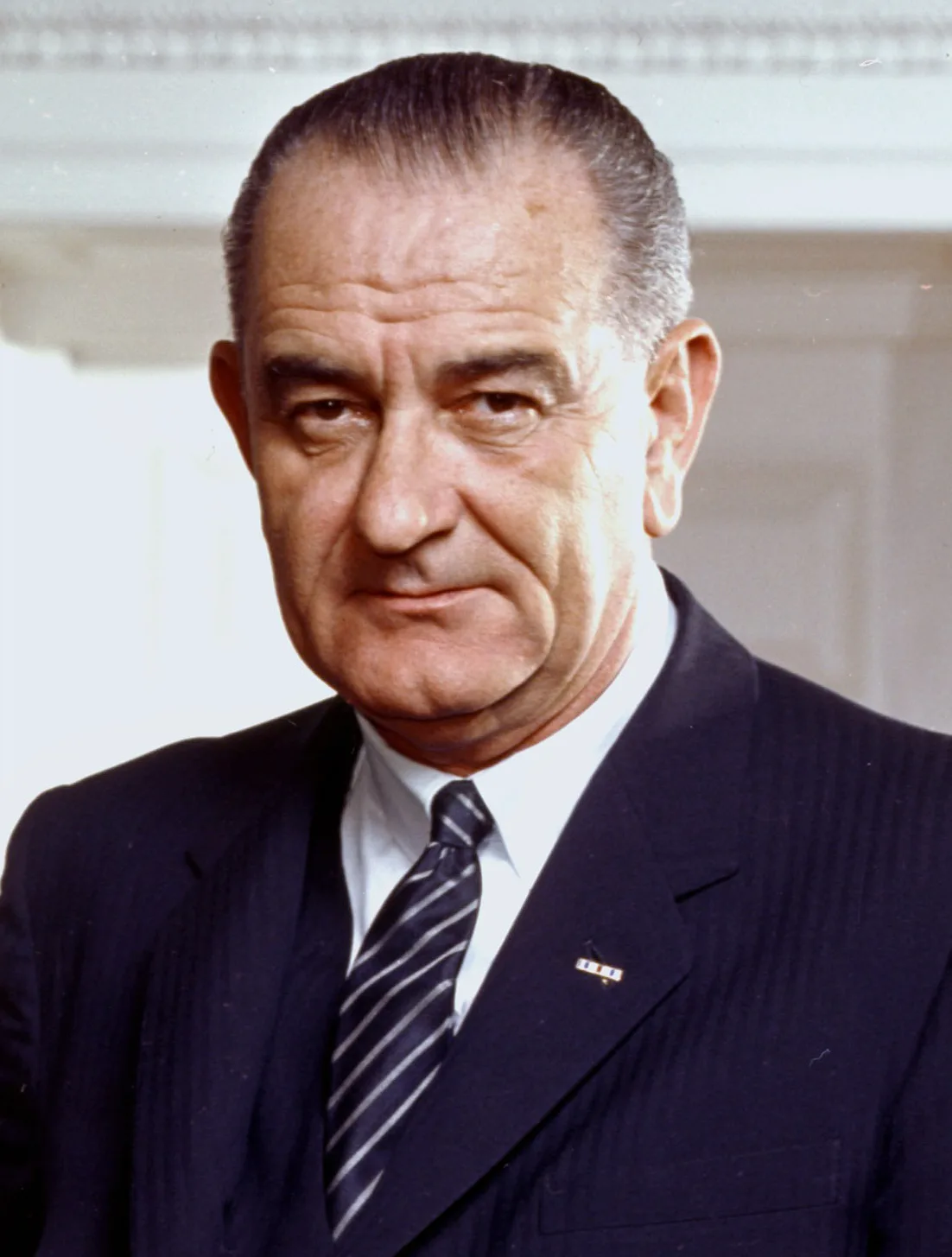
President Lyndon B. Johnson launched the "Great Society", the most expansive federal social welfare reform program since the New Deal, aiming to eradicate poverty and racial injustice:
- War on Poverty: Created the Office of Economic Opportunity, Job Corps, and Head Start, and the Food Stamp Act of 1964 made the food stamp program permanent.
- Healthcare: Created Medicare (health insurance for elderly Americans) and Medicaid (healthcare for low-income citizens) in 1965.
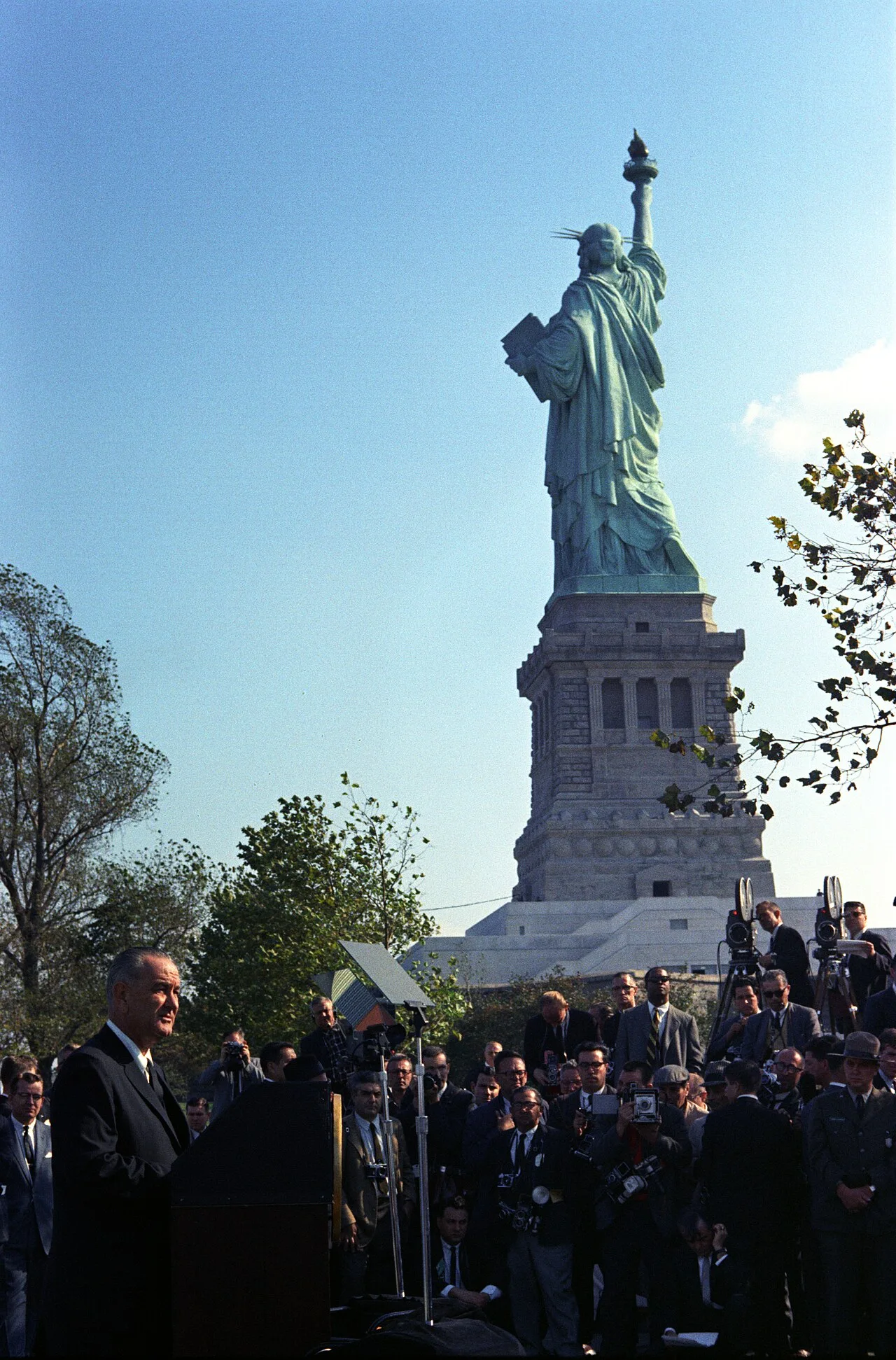
- Immigration Reform: The Immigration and Nationality Act of 1965 (Hart-Celler Act) abolished discriminatory national origins quotas, establishing preferences for family reunification and skilled labor, triggering vast immigration from Asia and Latin America.
Other major rights movements surged:
- Second-Wave Feminism: Catalyzed by Betty Friedan's The Feminine Mystique (1963) and the founding of the National Organization for Women (NOW), securing Title IX (1972) prohibiting sex discrimination in education, and Roe v. Wade (1973) legalizing abortion rights nationwide (overturned in 2022 by Dobbs v. Jackson Women's Health Organization, returning abortion regulation to the states), while conservative activist Phyllis Schlafly successfully organized the defeat of the Equal Rights Amendment (ERA).
- Latino Movement: Cesar Chavez and Dolores Huerta organized the United Farm Workers (UFW), utilizing grape boycotts to secure collective bargaining rights for migrant farmworkers.
- LGBTQ+ Rights: Sparked by the Stonewall Riots in New York City in June 1969, launching the modern gay liberation movement.
- Environmentalism: Spurred by Rachel Carson's Silent Spring (1962) and the first Earth Day (1970), leading to the creation of the Environmental Protection Agency (EPA) and the Clean Air Act under President Richard Nixon.
President Richard Nixon (1969–1974) pursued détente with the Soviet Union, including the first round of Strategic Arms Limitation Talks (SALT), and historic diplomatic opening to China in 1972. However, the Watergate scandal—the June 1972 break-in at Democratic National Committee headquarters and subsequent White House cover-up—led to the Supreme Court ruling in United States v. Nixon (1974) rejecting absolute executive privilege, forcing Nixon's historic resignation on August 9, 1974.
The late 1970s experienced stagflation (high inflation combined with stagnant economic growth), energy crises, and the Iran Hostage Crisis under President Jimmy Carter. This economic distress fueled the Conservative Ascendancy, culminating in the election of Ronald Reagan in 1980. Reagan enacted "Reaganomics" (supply-side economics), slashing top marginal income tax rates, deregulating financial and energy markets, and dramatically escalating defense spending. In foreign affairs, Reagan confronted the Soviet Union, dubbing it the "evil empire," before negotiating the historic Intermediate-Range Nuclear Forces (INF) Treaty (1987) with Soviet General Secretary Mikhail Gorbachev, paving the way for the collapse of communism in Eastern Europe and the fall of the Berlin Wall in 1989.
Post-Cold War Global Order, 9/11, Digital Revolution, and Contemporary Politics
The formal dissolution of the Soviet Union in December 1991 left the United States as the world's sole superpower. President George H.W. Bush forged a broad international coalition (estimates of participating nations range from roughly 30 to nearly 40) in the Gulf War (1991) (Operation Desert Storm), liberating Kuwait from Iraqi occupation in a decisive 100-hour ground campaign, proclaiming a "New World Order."
The presidency of Democrat Bill Clinton (1993–2001) coincided with the Digital Revolution and the commercial explosion of the Internet and personal computing. Clinton governed as a centrist "New Democrat," signing the North American Free Trade Agreement (NAFTA) and bipartisan welfare reform (1996), achieving the first federal budget surpluses in three decades. In 1998, Clinton became the second president impeached by the House following the Monica Lewinsky investigation, but was acquitted by the Senate.
The contested 2000 Presidential Election between George W. Bush and Al Gore was decided when the Supreme Court halted the Florida recount in Bush v. Gore (2000), granting Bush the presidency.
On September 11, 2001 (9/11), nineteen al-Qaeda terrorists hijacked four commercial airliners, destroying the World Trade Center towers in New York City and striking the Pentagon, killing nearly 3,000 people. President George W. Bush declared a global "War on Terror", enacting the USA PATRIOT Act (2001), creating the Department of Homeland Security, and launching military operations in Afghanistan (2001) and Iraq (2003) under the doctrine of preemptive war.
In 2008, the collapse of the subprime mortgage market triggered the Great Recession, the deepest financial crisis since 1929. In the midst of this crisis, the United States made history by electing its first African American president, Barack Obama. Obama enacted the American Recovery and Reinvestment Act of 2009 and the Affordable Care Act (ACA) ("Obamacare") in 2010, extending health insurance to tens of millions. The Supreme Court legalized same-sex marriage nationwide in Obergefell v. Hodges (2015).
The contemporary era has been shaped by deep political polarization, economic inequality, the COVID-19 pandemic, and intense debates over democratic norms, culminating in the contentious elections and political landscape of modern 21st-century America.
Key terms
- Civil Disobedience
- The active, professed refusal of a citizen to obey certain laws, demands, orders, or commands of a government using nonviolent tactics to highlight injustice.
- Preclearance
- The legal requirement under Section 5 of the Voting Rights Act of 1965 mandating that covered jurisdictions obtain federal approval before changing voting laws.
- Executive Privilege
- The constitutional principle that the President and executive branch officials can withhold certain confidential communications from the legislative and judicial branches.
- Supply-Side Economics
- A macroeconomic theory arguing that economic growth is most effectively stimulated by lowering taxes on businesses and investment and decreasing governmental regulation.
Key concepts
Brown v. Board of Education
- Unanimous 1954 Supreme Court decision authored by Chief Justice Earl Warren
- Held that state-mandated racial segregation in public schools violates the Equal Protection Clause
- Overruled the 1896 'separate but equal' doctrine of Plessy v. Ferguson
Martin Luther King Jr.
- Baptist minister who emerged as the primary moral and strategic leader of the Civil Rights Movement
- Led the Montgomery Bus Boycott, the Birmingham Campaign, and the 1963 March on Washington
- Awarded the Nobel Peace Prize in 1964 before being assassinated in Memphis in 1968
Civil Rights Act of 1964
- Comprehensive civil rights legislation signed by President Lyndon B. Johnson
- Outlawed segregation in public accommodations and created the Equal Employment Opportunity Commission
- Banned employment discrimination based on race, color, religion, sex, or national origin
Voting Rights Act of 1965
- Landmark voting legislation passed following the Selma to Montgomery marches
- Banned literacy tests and established federal preclearance for changes to state election laws
- Resulted in dramatic increases in African American voter registration and political representation
Great Society
- Broad domestic reform agenda launched by President Lyndon B. Johnson in 1964–1965
- Featured the War on Poverty, Medicare, Medicaid, and the Elementary and Secondary Education Act
- Represented the largest expansion of the federal social welfare state since the New Deal
Watergate Scandal
- Major political and constitutional scandal originating from the 1972 Democratic National Committee (DNC) break-in
- Involved White House cover-ups, hush money, abuse of power, and secret audio recordings
- Led to the historic resignation of President Richard Nixon on August 9, 1974
Reaganomics
- Supply-side economic policy platform championed by President Ronald Reagan in the 1980s
- Advocated broad tax cuts, industrial deregulation, reduced social spending, and higher military budgets
- Sought to stimulate private capital investment and reduce the economic role of government
Key facts
Brown v. Board of Education (1954)
In a unanimous landmark 1954 decision authored by Chief Justice Earl Warren, the Supreme Court declared that 'separate educational facilities are inherently unequal', overturning Plessy v. Ferguson and ordering the desegregation of public schools under the Fourteenth Amendment.
The Montgomery Bus Boycott
Sparked by Rosa Parks's arrest in December 1955, the Black community of Montgomery, Alabama, led by a young Dr. Martin Luther King Jr., sustained a 381-day nonviolent bus boycott, culminating in the Supreme Court ruling Browder v. Gayle striking down segregated municipal transit.
The Little Rock Central High Crisis (1957)
In 1957, Arkansas Governor Orval Faubus deployed the National Guard to block nine African American students from integrating Little Rock Central High School; President Dwight D. Eisenhower federalized the Guard and sent the 101st Airborne Division to enforce federal court orders.
The Birmingham Campaign and the March on Washington
In spring 1963, the Southern Christian Leadership Conference's (SCLC) nonviolent Birmingham Campaign confronted police brutality by Eugene 'Bull' Connor; televised images of police dogs and firehoses shocked the world, culminating in August 1963 with the March on Washington where Dr. King delivered his 'I Have a Dream' speech.
The Civil Rights Act of 1964
Signed by President Lyndon B. Johnson, the Civil Rights Act of 1964 banned racial discrimination in public accommodations, outlawed employment discrimination based on race, color, religion, sex, or national origin under Title VII, created the Equal Employment Opportunity Commission (EEOC), and authorized the federal government to withhold funds from segregated institutions.
The Voting Rights Act of 1965
Spurred by the televised state-trooper violence on 'Bloody Sunday' during the Selma to Montgomery marches, the Voting Rights Act of 1965 outlawed literacy tests and established federal preclearance for voting changes in discriminatory jurisdictions, transforming Southern politics.
Lyndon B. Johnson's Great Society
President Lyndon B. Johnson enacted his ambitious 'Great Society' reform program, declaring a War on Poverty and creating Medicare (healthcare for elderly), Medicaid (healthcare for low-income families), Head Start, federal aid to public education, and the National Endowment for the Arts.
The Immigration and Nationality Act of 1965 (Hart-Celler)
The Hart-Celler Act of 1965 abolished the discriminatory 1924 national origins quota system, establishing a new immigration policy prioritizing family reunification and skilled labor, which fundamentally transformed American demographics through major immigrant arrivals from Asia and Latin America.
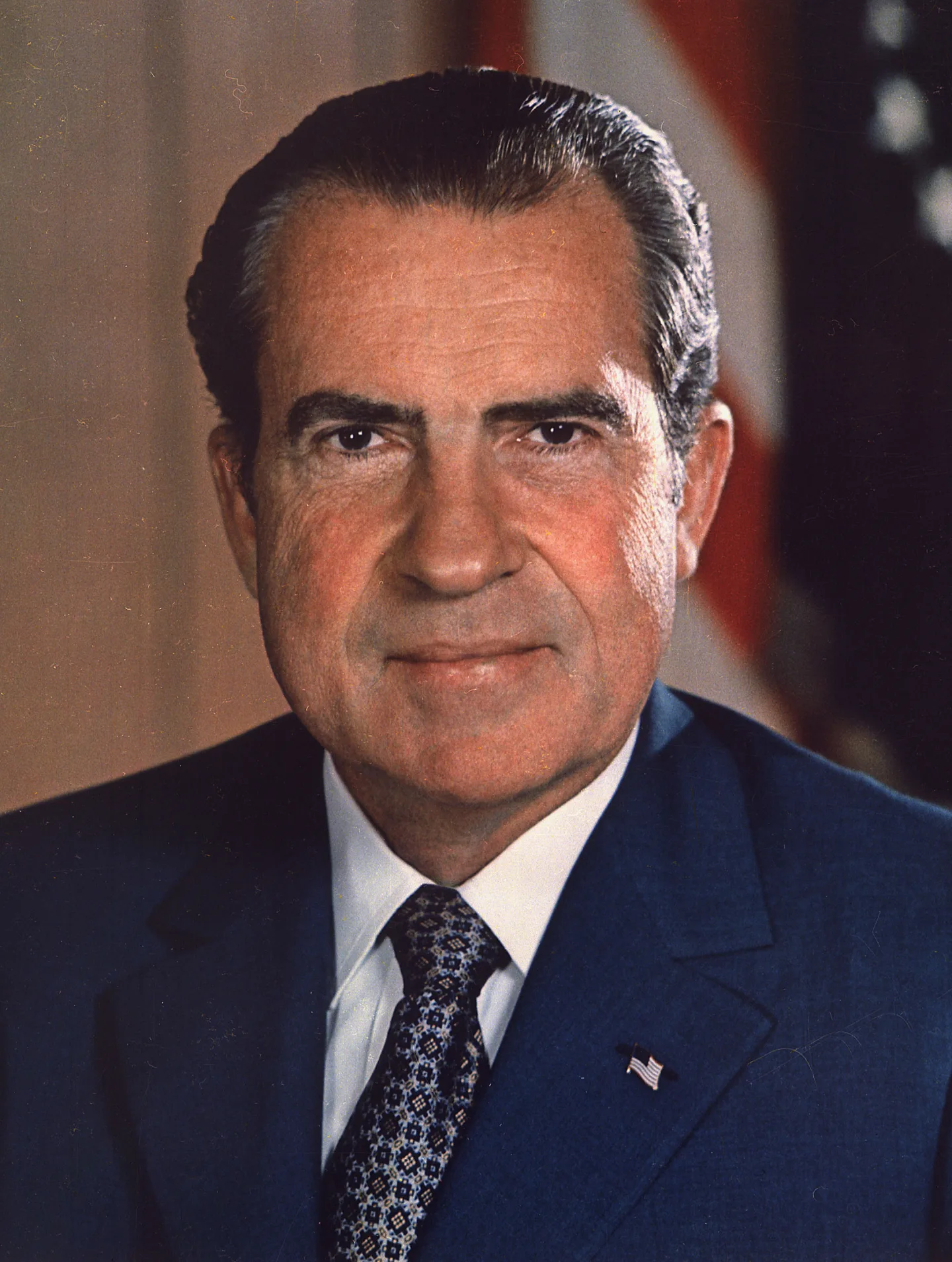
The Watergate Scandal and Nixon's Resignation
Following the 1972 break-in at the Democratic National Committee headquarters and an elaborate White House cover-up, the Supreme Court ordered the release of the 'smoking gun' audio tapes in United States v. Nixon; Richard Nixon resigned the presidency on August 9, 1974.
The Reagan Revolution and Supply-Side Economics
Elected in 1980, President Ronald Reagan ushered in the conservative ascendancy, cutting top federal marginal tax rates, deregulating financial and energy industries, scaling back domestic social spending, and massively expanding military expenditures to confront the Soviet Union.
September 11 and the Post-9/11 Era
On September 11, 2001, al-Qaeda terrorists hijacked four commercial airliners, destroying the World Trade Center towers and damaging the Pentagon; President George W. Bush launched the global War on Terror, invaded Afghanistan and Iraq, and created the Department of Homeland Security.
By the numbers
- In what calendar year did the Supreme Court issue the Brown v. Board of Education decision?
- 1954 year
- In what calendar year did Lyndon B. Johnson (LBJ) sign the Civil Rights Act that created Title VII and the Equal Employment Opportunity Commission (EEOC)?
- 1964 year
- In what calendar year did President Richard Nixon resign the presidency due to Watergate?
- 1974 year
- In what calendar year was Barack Obama elected as the 44th President of the United States?
- 2008 year
Matched pairs
Each item on the left goes with the one on the right.
- Southern Manifesto
- Declaration signed by Southern congressmen pledging resistance against school desegregation
- War on Poverty
- Initiative under Lyndon B. Johnson creating Head Start, Job Corps, and Community Action agencies
- Stagflation
- Economic dilemma of the 1970s combining stagnant growth with high inflation and unemployment
- Affordable Care Act
- Comprehensive healthcare statute establishing insurance marketplaces and expanding Medicaid
Self-test
Answer each question from memory, then check your work against the answer key.
1. What core legal principle did the Supreme Court establish in Brown v. Board of Education (1954)?
- ASegregated schools violate the 14th Amendment
- BSchool segregation is a state matter, not federal
- CSegregation is banned in public, not private, schools
- DSeparate but equal facilities are constitutional
2. How did President Eisenhower respond to Arkansas's defiance during the Little Rock Central High crisis (1957)?
- ALeft enforcement to Governor Faubus's Guard
- BAsked Congress to pass a new school desegregation statute
- CFederalized the Guard and sent in the 101st Airborne
- DReferred the dispute to the Supreme Court
3. What philosophy of resistance was championed by Dr. Martin Luther King Jr. and the SCLC?
- AComplete economic withdrawal into segregated all-Black agricultural colonies
- BNonviolent civil disobedience inspired by Christian theology and Mahatma Gandhi
- CUnconditional compliance with local municipal segregation ordinances
- DArmed revolutionary insurrection aimed at seizing municipal police stations
4. What did Title VII of the Civil Rights Act of 1964 specifically prohibit?
- ASegregation in public school enrollment
- BLiteracy tests for voter registration
- CDiscrimination in hotels and restaurants
- DEmployment discrimination based on race, color, religion, sex, or national origin
5. What specific enforcement mechanism did the Voting Rights Act of 1965 (VRA) create against discriminatory voting laws?
- AA nationwide voter ID mandate
- BA one-dollar cap on poll taxes
- CMandatory bilingual ballots in every U.S. county
- DFederal preclearance for voting-law changes
6. What healthcare programs were created under Lyndon B. Johnson's Great Society in 1965?
- AMedicare for elderly citizens and Medicaid for low-income families
- BThe Affordable Care Act exchanges and the individual mandate
- CThe Veterans Administration and the National Institutes of Health
- DThe Children's Health Insurance Program and Medicare Part D
7. How did the Hart-Celler Act of 1965 change U.S. immigration policy?
- AKept the ban on immigration from Asian countries
- BReplaced quotas with family and job-skill preferences
- CRequired immigrants to pass an English test
- DRestored the older national-origins quota limits of 1924
8. What did the Supreme Court hold in United States v. Nixon (1974) regarding executive privilege?
- APrivilege covers only national-security matters
- BCourts cannot review privilege claims at all
- CExecutive privilege yields to criminal evidence needs
- DThe President has absolute immunity from all subpoenas
9. What economic theory formed the core of President Ronald Reagan's 1981 economic program?
- ASupply-side economics—cutting marginal tax rates and deregulating industry to stimulate investment
- BMandating federal government wage and price controls on all consumer goods
- CStrict Marxist-Leninist state nationalization of all corporate industrial plants
- DDoubling federal import tariffs while outlawing private commercial banking
10. What foreign-policy breakthrough did President Nixon achieve with China in 1972?
- AA trade pact granting China permanent most-favored-nation status
- BA treaty establishing full diplomatic recognition at once
- CA mutual defense pact requiring US military intervention if China were attacked
- DA presidential visit to Beijing that began normalizing US-China relations
Go deeper
- WatchOff the Buses For 381 days, a community in Montgomery refused to ride the city buses.
- WatchThe Break-In A break-in started the fall of a president. It happened in June 1972, at the Democratic National Committee headquarters.
- WatchSent to Central High A president sent the 101st Airborne Division to a high school. Why?
- StudyUnited States History in the FlashFeed app
Answer key
- 1. A Segregated schools violate the 14th AmendmentChief Justice Warren's opinion held segregated schools 'inherently unequal,' violating the 14th Amendment's Equal Protection Clause and rejecting Plessy's 'separate but equal' standard.
- 2. C Federalized the Guard and sent in the 101st AirborneEisenhower federalized the Arkansas National Guard and deployed the 101st Airborne Division to protect the Little Rock Nine and enforce the federal desegregation order.
- 3. B Nonviolent civil disobedience inspired by Christian theology and Mahatma GandhiDr. King emphasized nonviolent direct action, sit-ins, and peaceful marches to expose the moral evil of racism.
- 4. D Employment discrimination based on race, color, religion, sex, or national originTitle VII banned employment discrimination and created the Equal Employment Opportunity Commission (EEOC); public accommodations were covered by Title II, and literacy tests were later banned by the 1965 Voting Rights Act.
- 5. D Federal preclearance for voting-law changesThe VRA's Section 5 required covered jurisdictions to get federal preclearance before changing voting laws; poll taxes in federal elections were separately banned by the 24th Amendment (1964).
- 6. A Medicare for elderly citizens and Medicaid for low-income familiesThe 1965 Social Security Amendments established Medicare (Title XVIII) and Medicaid (Title XIX) under Lyndon B. Johnson (LBJ).
- 7. B Replaced quotas with family and job-skill preferencesHart-Celler abolished the 1924 national-origins quota system and ended earlier restrictions, prioritizing family reunification and skilled labor instead.
- 8. C Executive privilege yields to criminal evidence needsThe unanimous Court rejected Nixon's claim of absolute immunity, ruling executive privilege must yield to the judiciary's need for evidence in a criminal trial.
- 9. A Supply-side economics—cutting marginal tax rates and deregulating industry to stimulate investmentReaganomics held that lowering taxes on businesses and high earners would increase savings, investment, and economic growth.
- 10. D A presidential visit to Beijing that began normalizing US-China relationsNixon's 1972 visit to China began a historic diplomatic opening and normalization process, part of his broader détente strategy alongside the first round of Strategic Arms Limitation Talks (SALT) with the Soviet Union.
Sources
- National Archives — Civil Rights Act (1964) — www.archives.gov/milestone-documents/civil-rights-act
- Klarman, From Jim Crow to Civil Rights, Ch. 6
- Branch, Parting the Waters, Ch. 5
- Beals, Warriors Don't Cry, Ch. 8
- Garrow, Bearing the Cross, Ch. 5
- Branch, Pillar of Fire, Ch. 22
- Garrow, Protest at Selma, Ch. 4
- Dallek, Flawed Giant, Ch. 7
- Ngai, Impossible Subjects, Ch. 7
- Kutler, The Wars of Watergate, Ch. 18
- Wilentz, The Age of Reagan, Ch. 5
- Wright, The Looming Tower, Ch. 20
- Klarman, From Jim Crow to Civil Rights
- Beals, Warriors Don't Cry
- Branch, Parting the Waters
- Branch, Pillar of Fire
- Garrow, Protest at Selma
- Dallek, Flawed Giant
- Ngai, Impossible Subjects
- Kutler, The Wars of Watergate
- Wilentz, The Age of Reagan
- Matlock, Reagan and Gorbachev: How the Cold War Ended
- Gaddis, The Cold War: A New History
- Graff, The Threat Matrix: The FBI at War in the Age of Global Terror
- Remnick, The Bridge: The Life and Rise of Barack Obama
- Brill, America's Bitter Pill
- Remnick, The Bridge
Image credits
- The Little Rock Central High Crisis (1957): Steve Snodgrass (Openverse) · by 2.0 — www.flickr.com/photos/10710442@N08/4384363187
- The Civil Rights Act of 1964: Cecil Stoughton (White House Press Office) · public domain — commons.wikimedia.org/wiki/File:Lyndon_Johnson_signing_Civil_Rights_Act,_July_2,_1964.jpg
- Lyndon B. Johnson's Great Society: Wikimedia Commons · Arnold Newman · Public domain — commons.wikimedia.org/wiki/File:Lyndon_B._Johnson,_photo_portrait,_color_(3x4_cropped)(2).jpg
- The Immigration and Nationality Act of 1965 (Hart-Celler): Yoichi Okamoto · Public domain — commons.wikimedia.org/wiki/File:Johnsonliberty.jpg
- The Watergate Scandal and Nixon's Resignation: Wikimedia Commons · U.S. Army Audiovisual Center · Public domain — commons.wikimedia.org/wiki/File:Richard_Nixon_presidential_portrait_(2).jpg


