
Atomic Habits
James Clear's system for getting 1% better every day. The habit loop, the Four Laws of Behavior Change — make it obvious, attractive, easy, satisfying — identity-based habits, habit stacking, the Two-Minute Rule, and how to break the habits you don't want.
262 cards6 lessons12 video lessons6 podcast episodesFree
Already have FlashFeed?Open this pack
Get this pack on your phone
Scan with your phone's camera.
flashfeedlearningapp.com/packs/atomic-habits
Part of the Habits & Mindset collection.
6 lessons.
Each lesson has a study guide to read and objectives you can test yourself on. Its cards and games show up in your feed. Try one of its cards right here. Play a few of its games here too. Every lesson has a short video. Every lesson has a podcast episode.
-
 Pexels · Ray Suarez ↗01
Fundamentals and Identity
Trauma and Marginal Gains · Systems, Latent Potential, and Identity
Lesson 1 · 8 cardsPexels · Ray Suarez ↗The Last Degree Melts the Ice
An ice cube sits unchanged as a room warms, then melts at thirty-two degrees Fahrenheit. The last degree was no different; it simply came after the others. Breakthroughs work the same way, and Clear calls the wait the Plateau of Latent Potential.
 Pexels · Erik Mclean ↗
Rebuilt at Denison, One Boring Routine at a Time
At Denison University, Clear could not wish his way back into form, so he rebuilt it out of unglamorous basics: a real bedtime, decent sleep, a meticulously organized room, structured workouts. Classmates stayed up late on video games. His small routines gave him back a sense of control, and by senior year they had compounded into the university's highest academic honor and a place on the ESPN Academic All-America Team.
 Pexels · Khaleel ↗
Brailsford Went Hunting for 1 Percent, Everywhere
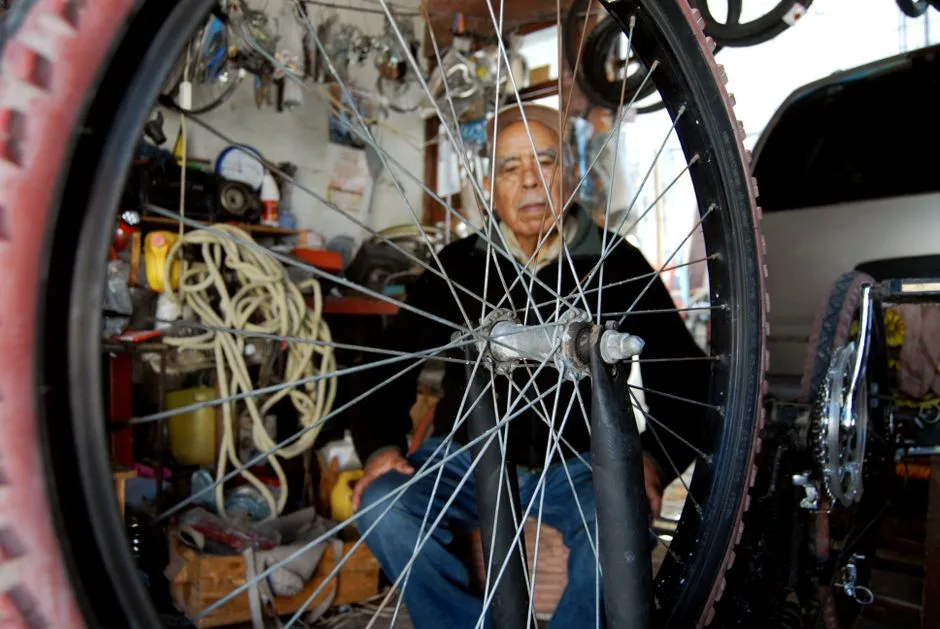
British professional cycling was mediocre for nearly a century: few major wins, and no British rider had ever won the Tour de France. In 2003 Dave Brailsford became British Cycling's performance director, and he applied what he called the aggregation of marginal gains: break every element of riding a bicycle into parts, then improve each part by 1 percent. Within five years British Cycling dominated road and track cycling at the Beijing Olympics, and British riders later took multiple Tour de France titles.
 Pexels · INOCENTE SANCHEZ GUADARRAMA ↗
Heated Shorts, White Truck Walls, a Handwashing Surgeon
Taken one at a time, British Cycling's marginal gains sound almost comic. Redesigned bike seats. Alcohol rubbed on tires for grip. Fabrics tested in a wind tunnel. Electrically heated overshorts to hold muscle temperature at the start line. A surgeon hired to teach riders how to wash their hands. The team truck painted white inside so dust that fouled bike tuning would show. Not one of them wins a race. Together they won a decade.
Pexels · Ray Suarez ↗The Ice Cube That Does Nothing, Until It Does
Picture an ice cube on a table in a room at twenty-five degrees Fahrenheit. The room warms — twenty-six, twenty-seven, twenty-eight, twenty-nine, thirty, thirty-one — and the cube sits there, unchanged. At thirty-two degrees it melts. The final degree was no different from the ones before it; it simply arrived after them. Breakthroughs work the same way, which is why Clear calls the waiting period the Plateau of Latent Potential.
 Pexels · MART PRODUCTION ↗
You Do Not Rise to the Level of Your Goals
You fall to the level of your systems. A goal is the result you want; a system is the process that produces it. A coach's goal is the championship, but the system is how the team practices, recruits and trains. Goals also share a fatal symmetry: every athlete at the Olympics wants the gold medal, so the ambition cannot be what separates the winners from everyone else.
 Pexels · Kindel Media ↗
Every Action Is a Vote for a Future Self
Identity is not issued at birth; it is assembled out of evidence. Each time you act, you cast a vote for the type of person you wish to become. One vote changes nothing — no single workout makes you an athlete. But votes accumulate, and eventually the evidence outweighs the doubt. That is why Clear's two-step strategy is: decide who you want to be, then prove it with small wins.
1 / 8British Cycling painted what surface white so that specks of dust would show?
Dust degraded bicycle tuning, so the interior of the team truck was painted white to make specks visible.
Lesson 1 has 42 cards. Keep going in the free app.
Question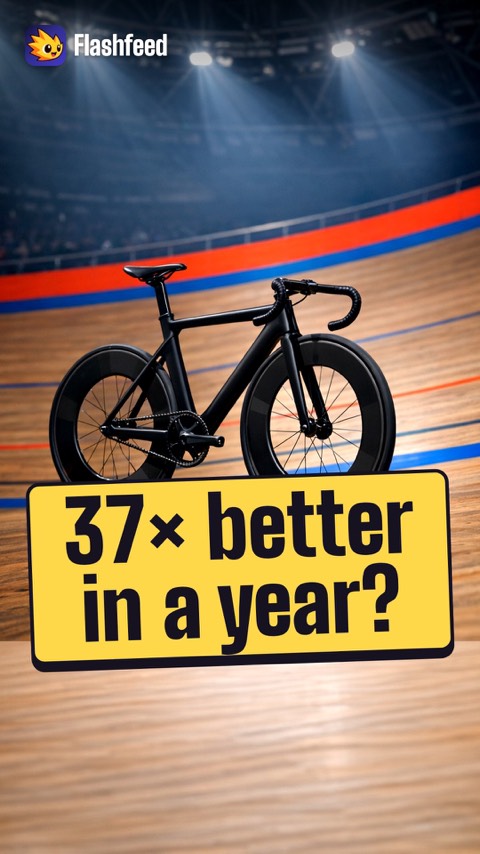
One Percent a Day 
The Ice Cube Moment All 10 clips on YouTube ↗Transcripts
One Percent a Day
Get 1% better every day for a year. You end up about 37× better.
Get 1% worse every day, and you sink almost to zero.
For nearly a century, British cycling won almost nothing. In 2003, the team hired Dave Brailsford. He hunted for a 1% gain in everything: seats, tires, pillows, even handwashing.
Within 5 years, the team won 60% of the cycling gold medals at the Beijing Olympics.
The Ice Cube Moment
Picture an ice cube in a cold room, at 26°F. The room warms one degree at a time.
27°. 28°. 29°. 30°. 31°. The ice cube doesn't change.
Then the room reaches 32°, and the ice begins to melt. One more degree unlocked the change.
New habits work the same way. James Clear calls it the Plateau of Latent Potential. Early effort isn't wasted. It's stored.
Episode 16:51
What does it mean to get 1% better every day, and why do systems beat goals?
-
 Pexels · Cup of Couple ↗02
The 1st Law: Make It Obvious
The Habit Loop and Cue Awareness · Habit Stacking and Environment Design
Lesson 2 · 6 cardsPexels · Cup of Couple ↗Score Your Day Before You Try to Change It
Most daily habits have run on autopilot for so long that you no longer notice them. The Habits Scorecard drags them back into view: write out every behavior of your day in chronological order, waking to sleeping, then mark each one positive, negative or neutral. The scoring standard is not health or productivity in the abstract — it is whether the behavior serves the identity you are trying to build.
 Pexels · Ron Lach ↗
Not a Motivation Problem — a Clarity Problem
"I am going to eat healthier." "I am going to write more." These sound like commitments, but they name no moment and no place, so whether they happen is left to chance. An implementation intention fixes that by writing the plan out in advance: I will [BEHAVIOR] at [TIME] in [LOCATION]. Time and location are the two most common cues for behavior, and the technique is backed by a large body of research.
 Pexels · Free Photos.cc ↗
Bolt the New Habit onto One You Already Have
Habit stacking, developed by professor BJ Fogg, skips the calendar entirely. Instead of pairing a new behavior with a time and place, you pair it with a routine already running on autopilot: After I pour my morning coffee, I will meditate for one minute. After I take off my work shoes, I will change into workout clothes. The anchor habit is already wired in, which makes you more likely to stick with the new one.
 Pexels · alleksana ↗
Environment Is the Invisible Hand
We often choose the product on the supermarket shelf not for what it is but for where it sits, at eye level. We often pick up the phone not because we decided to check anything but because it was lying face-up on the desk. Clear's conclusion is structural: stop arguing with your surroundings and rearrange them. Water bottles in plain sight. A book on the pillow. The guitar on a stand in the living room instead of in a closet.
1 / 6On a Habits Scorecard, what makes a behavior earn a plus?
The scorecard is scored against identity: a behavior earns a plus when it moves you toward the person you want to be.
Lesson 2 has 40 cards. Keep going in the free app.
Question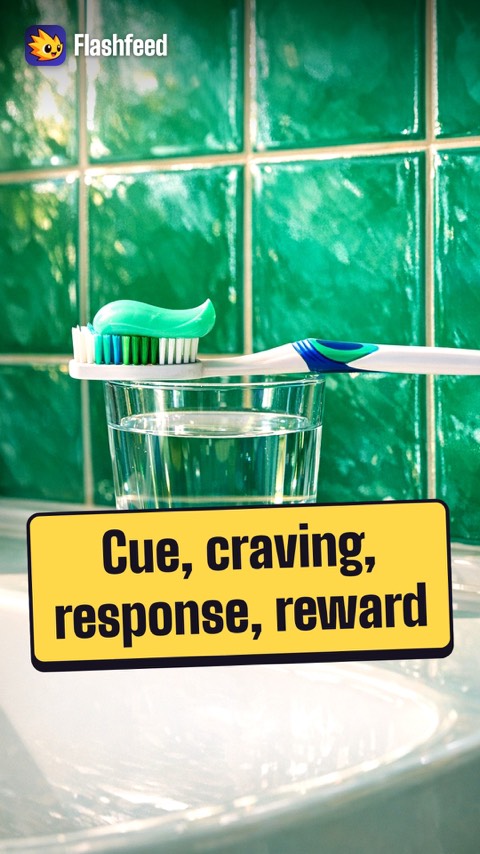
The Four-Step Habit Loop 
Stack It on Your Coffee All 10 clips on YouTube ↗Transcripts
The Four-Step Habit Loop
Every habit runs on a loop of 4 steps: cue, craving, response, reward.
You don't crave the habit itself. You crave the change it brings. Nobody craves brushing their teeth. They crave a clean, fresh mouth.
The reward teaches your brain what's worth repeating. Then the cue starts the loop again.
To change a habit, first notice it. List your day, from waking up to going to sleep. Mark each habit plus, minus or equal.
Stack It on Your Coffee
Many people don't lack motivation. They lack clarity. Saying “I'll eat healthier” leaves it to chance.
So name a time and a place. “I will meditate for one minute at 7 a.m. in my kitchen.”
Or stack it on a habit you already have. “After I pour my morning coffee, I will meditate for one minute.”
Then shape the room. To read more, put a book on your pillow. To snack less, take the junk food out of the pantry.
Episode 26:33
What is habit stacking, and how does every habit start with a cue?
-
 Pexels · Mateusz Feliksik ↗03
The 2nd Law: Make It Attractive
Dopamine Loops and Temptation Bundling · Social Influences and Mindset Shifts
Lesson 3 · 10 cardsPexels · Mateusz Feliksik ↗Engineered to Be Anticipated
A supernormal stimulus exaggerates something we evolved to want, like snack food engineered for crunch, salt and fat. It is no more nourishing, only more anticipatory. Since anticipation drives the loop, it grabs more attention than the real thing.
 Pexels · Eren Li ↗
Dopamine Fires Before the Reward Arrives
Most people assume dopamine is the chemistry of enjoyment, released once the payoff lands. The larger spike comes earlier — the moment the cue appears and the brain forecasts what is coming. Clear points to research in which animals unable to produce dopamine stop chasing food and water even with both within reach. Anticipation of a reward, not the receipt of it, is what gets a body to move.
Pexels · Mateusz Feliksik ↗Supernormal Stimuli Are Anticipation, Amplified
A supernormal stimulus is an exaggerated version of something we evolved to want: snack food engineered for crunch, salt and fat, or a feed engineered for endless novelty. These products are no more nourishing than what they imitate. They are simply more anticipatory — and since anticipation is what drives the loop, the amplified version captures attention in a way the natural one never could.
 Pexels · Andrea Piacquadio ↗
Three Groups Quietly Write Your Habits
Clear says we imitate the habits of three groups: the close (family and friends), the many (the wider tribe), and the powerful (those with status and prestige). Each pulls for a different reason: proximity, belonging, and aspiration. Much of that pull works without conscious choice. When you cannot explain why a behavior feels normal to you, one of these three is usually the answer.
Pexels · Andrea Piacquadio ↗Whose Habits We Copy
We imitate the habits of three groups: the close (family and friends), the many (the wider tribe), and the powerful (those with status and prestige). Each pulls through proximity, belonging, or aspiration, and much of that pull works without conscious choice.
 Pexels · Clarence Liu ↗
Join the Culture Where It's Already Normal
One of the highest-leverage social moves in the book is to join a group where your desired behavior is the normal behavior and where you already share something with the members. Belonging then works for you instead of against you: the habit becomes the price of membership rather than a private act of will. A reading habit is fragile alone and durable in a book club.
 Pexels · Blue Bird ↗
Trade "Have To" for "Get To"
Language sets the prediction your brain attaches to a behavior, and the prediction is where craving starts. Applied to running, a run you have to do becomes a chance to build endurance. Saving stops being money lost and becomes freedom bought. Even physiology can be relabeled: the racing pulse before a talk is nearly identical to excitement, and calling it excitement changes what you expect is about to happen.
1 / 10In the habit loop, which stage does the 2nd Law of Behavior Change work on?
Make it obvious targets the cue, make it easy targets the response, and make it satisfying targets the reward. The 2nd Law works on the craving between them.
Lesson 3 has 44 cards. Keep going in the free app.
Question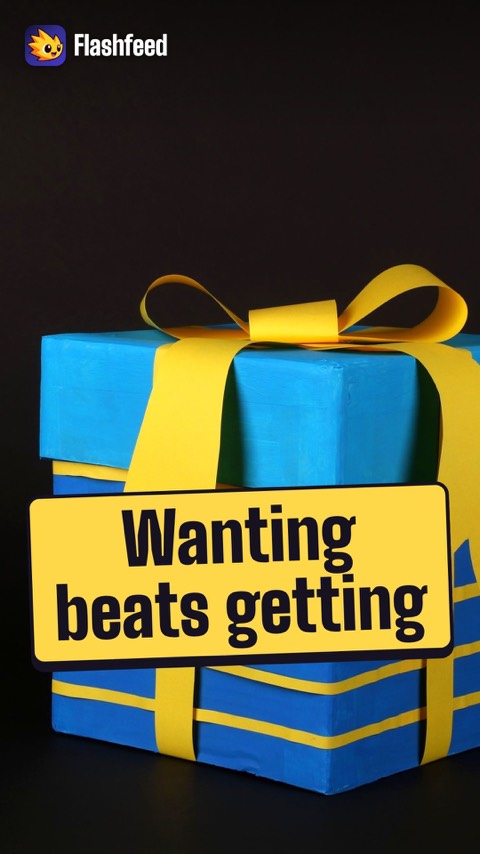
Wanting Beats Getting 
Have To, Get To All 10 clips on YouTube ↗Transcripts
Wanting Beats Getting
Dopamine isn't only the chemistry of enjoyment. James Clear cites research that shows it spikes early, when a cue predicts a reward.
In those studies, animals unable to make dopamine stopped pursuing food and water. Both were within reach.
Wanting, not getting, is what moves us to act.
So bundle a habit you need with one you want. Watch your show only while you pedal the exercise bike.
Have To, Get To
We copy the habits of 3 groups: the close, the many, and the powerful.
So join a group where your habit is already normal. A reading habit is fragile alone, and sturdy in a book club.
Words change cravings too. Swap “have to” for “get to”. “I have to run” becomes “I get to build endurance.”
Even nerves can be renamed. A racing pulse before a talk is nearly identical to excitement. Call it excitement.
Episode 37:05
How does dopamine create craving, and how do the people around you shape your habits?
-
 Pexels · kaboompics.com ↗04
The 3rd Law: Make It Easy
Law of Least Effort and Friction · The Two-Minute Rule and Commitment Devices
Lesson 4 · 9 cardsPexels · kaboompics.com ↗The Easier Option Usually Wins
Among competing options, the behavior that happens is the one that delivers the most value for the least work. The brain is built to conserve energy, so most of the time how hard a thing is matters more than how motivated you are.
Pexels · kaboompics.com ↗Effort Is the Hidden Variable in Every Choice
The Law of Least Effort holds that among competing options, the behavior that actually happens is the one delivering the most value for the least work. This is economics, not laziness: energy is finite and the brain is built to conserve it. Most of the time the deciding variable is not how motivated you are but how hard the thing is — which is why the closer gym gets used and the better one does not.
 Pexels · Tara Winstead ↗
Motion Feels Like Progress and Isn't
Motion is planning, researching, outlining, comparing apps and buying gear. Action is the behavior that produces the outcome. Motion is seductive because it feels productive while protecting you from ever risking failure at the real thing. Ten workout plans is motion; one set of squats is action. When you are stuck, the useful question is rarely what to do — it is which of the two you are currently doing.
 Pexels · Doğukan Melik Sevindik ↗
Repetitions Build Habits, Not Calendar Days
What automates a behavior is the number of times you have performed it, not how long ago you decided to. Each repetition strengthens the neural pathway behind the habit, so the more you have practiced it, the more readily it runs — until the behavior needs no thought at all.
 Pexels · Missael Balboa ↗
Shrink It Until Starting Isn't a Decision
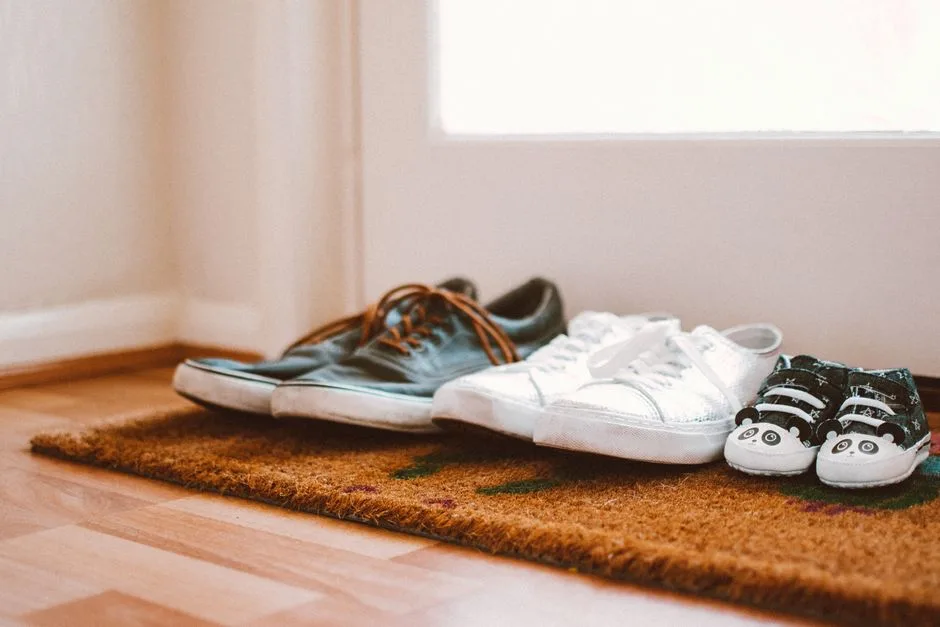
The Two-Minute Rule says a new habit should take less than two minutes to do. "Read before bed" becomes "read one page." "Thirty minutes of yoga" becomes "take out the mat." "Run three miles" becomes "put on my running shoes." The rule feels like it asks too little, and that is exactly the design: you are not training the routine yet, you are training the act of showing up.
Pexels · Missael Balboa ↗A Habit Under Two Minutes
The Two-Minute Rule says a new habit should take less than two minutes to do, so "read before bed" becomes "read one page." Asking this little is the point: at first you are training the act of showing up, not the full routine.
 Pexels · Lisa Fotios ↗
A Gateway Habit Points Down the Right Path
A gateway habit is the two-minute version that sits at the entrance to a larger routine, and crucially it faces the right direction. Shoes on leads naturally toward a run in a way that sitting down with your phone never will. That is what separates a real gateway from an arbitrary small task: it is not merely easy, it is the opening move of the thing you actually want to be doing.
1 / 9Which of these is action rather than motion?
Motion is preparation and action is the behavior that produces the outcome. Only the mile changes anything about your fitness.
Lesson 4 has 46 cards. Keep going in the free app.
Question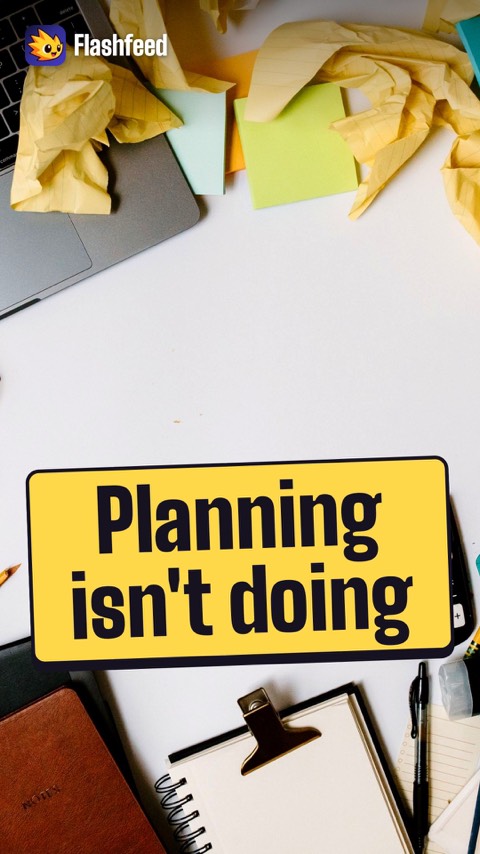
Motion Is Not Action 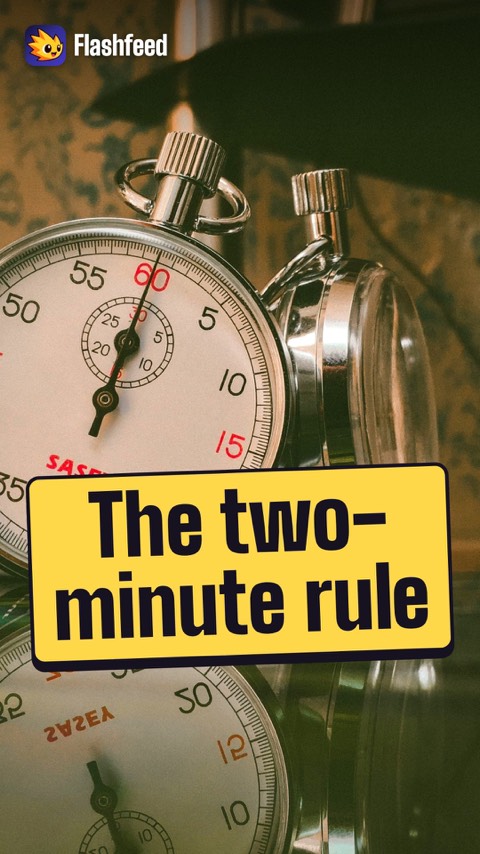
The Two-Minute Rule All 10 clips on YouTube ↗Transcripts
Motion Is Not Action
10 workout plans is motion. 1 set of squats is action. Motion feels productive. Only action produces the result.
Habits form through repetition, not time. What counts is how many times you've done it, not how many days have passed.
So cut the friction. Lay out your workout clothes the night before. Keep the guitar on a stand, not in its case.
For a bad habit, add friction. Leave your phone in another room while you work.
The Two-Minute Rule
When you start a new habit, make it take less than 2 minutes.
Read before bed becomes read one page. Run 3 miles becomes put on your running shoes.
A habit must exist before you can improve it. Master showing up first.
For a habit you want guaranteed, decide early. Victor Hugo was far behind on a book. He had his valet lock away his clothes, so he couldn't go out. He finished the book.
Episode 47:00
What is the two-minute rule, and how does cutting friction make good habits easier?
-
 Pexels · Mikhail Nilov ↗05
The 4th Law: Make It Satisfying
Immediate Rewards and Habit Tracking · Accountability Contracts and Inverting the 4th Law
Lesson 5 · 10 cardsPexels · Mikhail Nilov ↗A Commitment Others Enforce
A habit contract names the habit you commit to and the penalty for failing, signed by one or two accountability partners. It works through the penalty itself and the sting of people you respect watching you break your word.
 Pexels · Towfiqu barbhuiya ↗
Franklin's Booklet and the Unbroken Chain
A habit tracker is any simple measure of whether you did the thing: an X on a calendar, a checked box, a logged rep. Benjamin Franklin carried a pocket booklet in which he charted his thirteen personal virtues nightly. The modern version — don't break the chain — is popularly attributed to Jerry Seinfeld: mark each productive day on a wall calendar and your only job becomes protecting the streak. Tracking works on three laws at once. The chart is a visible cue, the streak makes progress attractive, and recording feels good the moment the work ends.
 Pexels · Yaroslav Shuraev ↗
Missing Once Is an Accident
Every streak eventually breaks, which is why Clear's maintenance rule is never miss twice. Missing once is an accident; missing twice is the start of a new habit. The first mistake is rarely what ruins you — the spiral of repeated mistakes that follows is. When a full session is impossible, do a scaled-down version instead of nothing, because the gap between zero and something is far larger than the gap between something and a perfect performance. Showing up badly still casts a vote for the identity you are building.
 Pexels · Ketut Subiyanto ↗
Someone Is Waiting, So You Show Up
An accountability partner is a friend, colleague, coach or spouse who knows what you committed to and checks whether you did it. It works because human beings are relentlessly attentive to social standing: we tolerate private failures that would mortify us if witnessed. Being observed converts a delayed consequence into an immediate one — the flicker of embarrassment when you report a missed day. It is why skipping a run is far harder when someone is standing at the track waiting for you.
Pexels · Mikhail Nilov ↗The Contract Two Other People Sign
A habit contract is a written or verbal agreement stating the habit you commit to and the punishment that follows if you fail. One or two accountability partners sign it, which turns a private intention into a public obligation with named enforcers. Clear describes entrepreneur Bryan Harris, whose contract with his wife and his personal trainer set penalties for skipping his daily behaviors, then raised both goals and penalties after he hit his first-quarter targets. The contract bites on two channels: the penalty itself, and the sting of two people you respect watching you break your word.
1 / 10Why does the 4th Law matter more than the first three for long-term change?
The first three laws raise the odds a behavior happens this time. A satisfying ending is what makes the brain run it again next time.
Lesson 5 has 44 cards. Keep going in the free app.
Question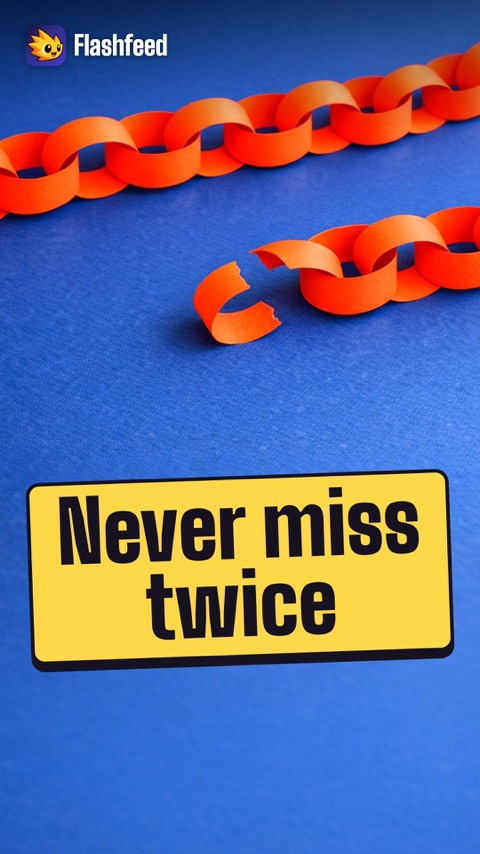
Never Miss Twice 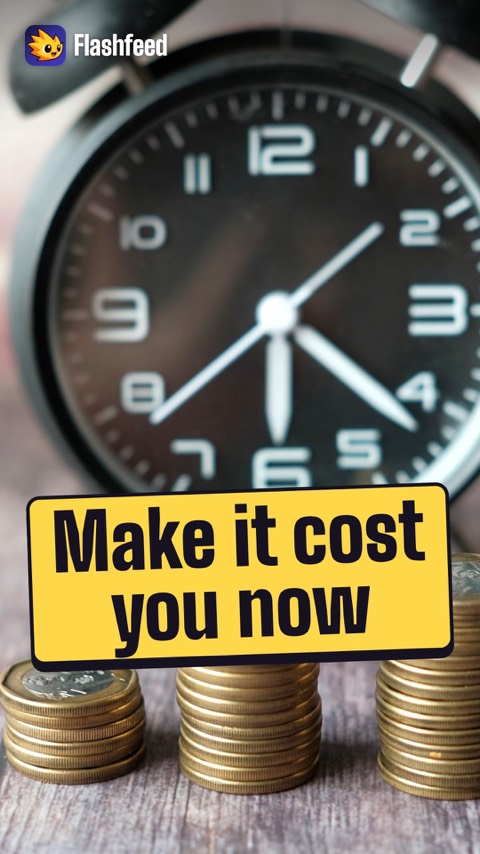
A Penalty You Can't Dodge All 10 clips on YouTube ↗Transcripts
Never Miss Twice
Your brain repeats what pays off right away. That's hard on good habits, because their rewards come later.
So add a fast reward: track it. An X on a calendar is a small win you can see today.
Benjamin Franklin did this. Each evening, he recorded his progress on 13 personal virtues.
When a streak breaks, don't miss twice. One miss is an accident. A second miss starts a new habit.
A Penalty You Can't Dodge
Pain teaches well, but only when it's fast. Lung damage in 20 years won't stop a smoker's hand today.
So make a bad habit cost you now. An accountability partner turns a missed day into an awkward report.
Or automate the cost. Thomas Frank wants to wake early, so he schedules a post offering cash to whoever replies first.
If he's up on time, he deletes it. If he sleeps in, it goes out, and he pays.
Episode 56:51
How do habit tracking and an accountability partner help a habit stick?
-
 Pexels · Tima Miroshnichenko ↗06
Advanced Tactics and Mastery
Genetics, Personality, and the Goldilocks Rule · Deliberate Practice and Overcoming Complacency
Lesson 6 · 7 cardsPexels · Tima Miroshnichenko ↗The Equation for Mastery
Habits + deliberate practice = mastery. Habits keep the basics running without conscious effort, while deliberate practice focuses effort on one weak area. Practice alone burns out, and habit alone plateaus.
 Pexels · Pixabay ↗
Two Champions, Two Different Skeletons
Michael Phelps and Hicham El Guerrouj were both Olympic champions in Athens in 2004, and no training program could have swapped them. Phelps carries a long torso and comparatively short legs — a frame shaped for the water. El Guerrouj, far shorter overall, has long legs and a short torso, the build of a middle-distance runner. Each dominated the arena that suited his body. Clear's conclusion is not fatalism but direction: genes do not determine your destiny, they determine your areas of opportunity.
 Pexels · Gustavo Fring ↗
Boredom, Not Failure, Ends Most Habits
Clear asked an elite coach what separated the best athletes from everyone else. The coach named the factors you might expect, talent among them, then added that at some point it comes down to who can handle the boredom of training every day, the same lifts over and over. Anyone can work hard while the work is still novel and motivation is high. Professionals stick to the schedule; amateurs let life get in the way. Elite performers are not immune to boredom: they simply refuse to treat it as a reason to stop.
 Pexels · cottonbro studio ↗
December's Reckoning, Summer's Audit
Unconscious behavior cannot audit itself, so Clear schedules two reviews a year. In December he writes an Annual Review, tallying the habits he actually kept and answering three questions: what went well, what didn't go well, and what he learned. Around mid-year he writes an Integrity Report, which examines conduct rather than output — what core values drive his life and work, how he is living up to them now, and how he can set a higher standard. The first measures performance; the second checks it is aimed at something worth reaching.
1 / 7What role do genes play in habit success?
Genes predispose without predetermining. They never remove the need for hard work — they clarify which work is worth doing.
Lesson 6 has 46 cards. Keep going in the free app.
Question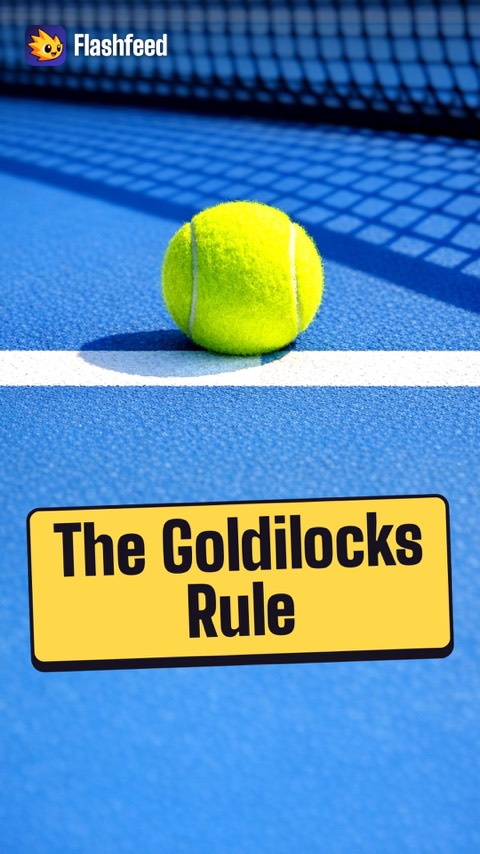
The Goldilocks Rule 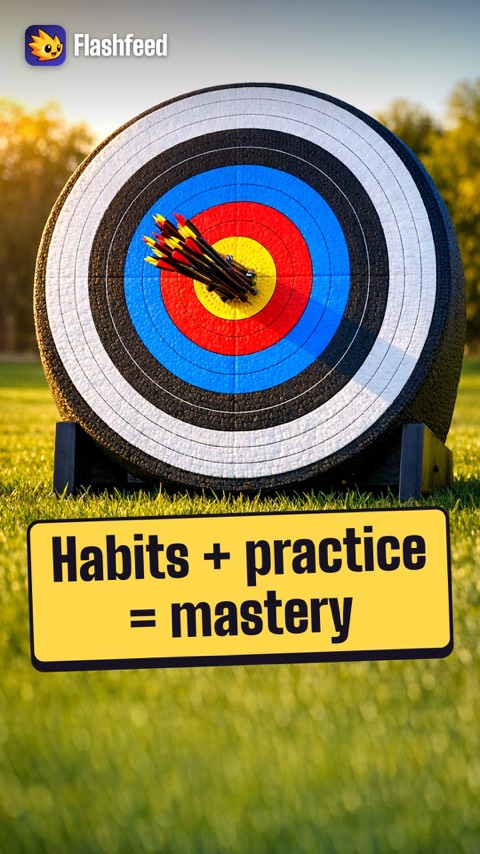
Habits Plus Practice All 10 clips on YouTube ↗Transcripts
The Goldilocks Rule
Play tennis against a 4-year-old, and you're bored in minutes. Play Serena Williams, and you're crushed just as fast.
Play someone at your level, and you lose track of the afternoon.
That's the Goldilocks Rule. Motivation peaks at the edge of your abilities. As your skill grows, raise the challenge too.
James Clear goes further. The greatest threat to success isn't failure. It's boredom.
Habits Plus Practice
Habits have a hidden cost. On autopilot, you stop noticing small mistakes.
A driver of 20 years isn't 20 years better than a driver of 5.
The fix is an equation: habits plus deliberate practice equals mastery. Automate one skill. Then build the next one on top of it.
And review. Each December, James Clear asks 3 questions. What went well? What didn't? What did I learn?
Episode 66:56
What is the Goldilocks rule, and how do you keep improving once a habit is automatic?
What you'll be able to do 12 objectives, from the pack's lessons
- Explain how repeated 1 percent improvements compound over time, using British Cycling's turnaround as the worked case.
- Choose systems over goals, and start habit change at the identity layer rather than the outcome you want.
- Trace the four stages of the habit loop and map each of the Four Laws of Behavior Change onto its stage.
- Make a cue obvious using implementation intentions, habit stacking, and deliberate environment design.
- Recognize that the dopamine spike at the cue, not the reward, drives craving, and spot a temptation bundle that puts it to work.
- Identify the three social groups that shape habits, and recognize the mindset reframe that makes a habit more attractive or less attractive.
- Apply the Law of Least Effort — cut friction for good habits, add it for bad — and tell motion apart from action.
- Scale a habit down to a two-minute entry point, shape it upward, and lock in behavior with commitment devices.
- Attach an immediate, identity-consistent reward to a habit, and track it without letting the measure become the goal.
- Make a lapse immediately costly with accountability partners and habit contracts, and invert the laws to break a habit.
- Pick habits that suit your personality and natural strengths, and hold difficulty just past the edge of comfort.
- Pair automatic habits with deliberate practice, and recognize what Clear's yearly review covers.
Study guide.
The same study guide as in the app, one page for each lesson, with its key facts and a self-test.
Its cards name 1 source.
260 of its 262 cards name their source. These are the sources named.
- Atomic Habits — James Clear
Hover over a photo, or tap its i, to see where it came from. All 6:
- Lesson 1: Pexels · Ray Suarez ↗
- Lesson 2: Pexels · Cup of Couple ↗
- Lesson 3: Pexels · Mateusz Feliksik ↗
- Lesson 4: Pexels · kaboompics.com ↗
- Lesson 5: Pexels · Mikhail Nilov ↗
- Lesson 6: Pexels · Tima Miroshnichenko ↗
- Atomic Habits by James Clear · on Amazon ↗
These are affiliate links: if you buy a book through one, FlashFeed may earn a small commission at no extra cost to you. The commission helps pay for FlashFeed's servers.
As an Amazon Associate we earn from qualifying purchases.
Independent study notes, not affiliated with the author or publisher.
- Cards
- 262
- Lessons
- 6
- Version
- 1.0.23
- Language
- English
The whole pack is one file. Read the pack file ↗
FlashFeed is on the App Store and Google Play.
FlashFeed is free on iPhone and Android, and needs no account.