
Atomic Habits study guide · Lesson 3 of 6
The 2nd Law: Make It Attractive
Dopamine Loops and Temptation Bundling · Social Influences and Mindset Shifts
Unofficial study guide for Atomic Habits: An Easy & Proven Way to Build Good Habits & Break Bad Ones by James Clear. FlashFeed is not affiliated with the author or publisher.
This is the lesson's study guide from the FlashFeed app, plus its key facts and a self-test.
What you'll be able to do
- Recognize that the dopamine spike at the cue, not the reward, drives craving, and spot a temptation bundle that puts it to work.
- Identify the three social groups that shape habits, and recognize the mindset reframe that makes a habit more attractive or less attractive.
Dopamine Loops and Temptation Bundling
The 2nd Law of Behavior Change — make it attractive — governs the craving stage of the habit loop. A cue only matters if it predicts something you want, and the craving is the motivational force that converts noticing into doing. Clear's claim is that the more attractive an opportunity is, the more habit-forming it becomes. The useful implication is that attractiveness is not a mood you wait for. It is a property of the situation, and a property you can engineer.
The engine underneath is dopamine, and most people misunderstand which half of the loop it powers. It is natural to assume dopamine is the chemistry of enjoyment, released once the reward finally arrives. What the research Clear draws on shows is that the spike comes earlier — at the moment the cue appears and the brain predicts what is coming. He points to studies in which animals unable to produce dopamine stop pursuing food and water even with both sitting within reach. Strip out the wanting and the liking is not enough to move a body. Anticipation of a reward, not the fulfillment of it, is what gets us to act.
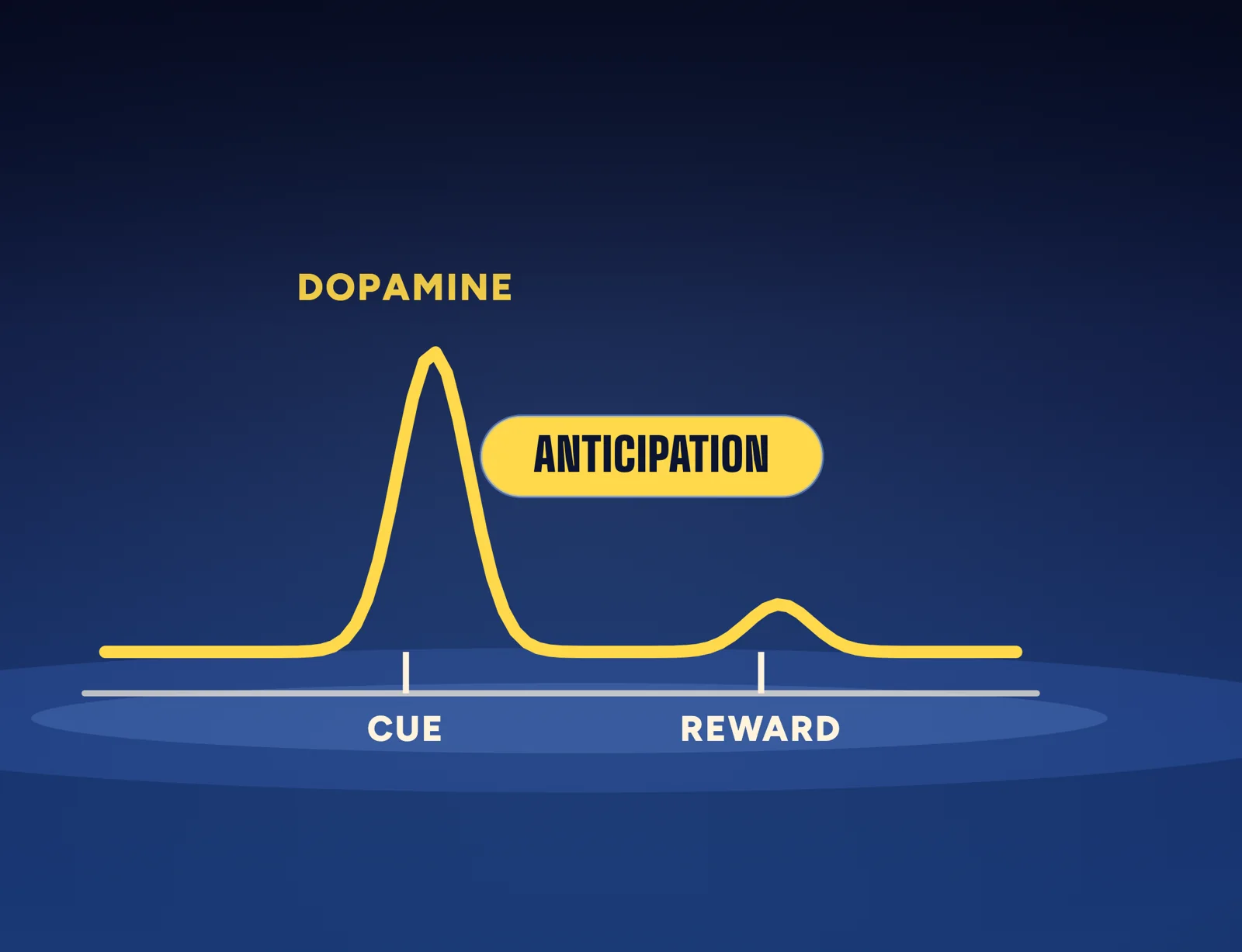
That gives you a working distinction. Wanting and liking run on different circuitry, and the wanting system is by far the larger of the two. This is why a habit keeps its grip long after it stopped being fun, why the second cookie never lands like the first, and why the pull of a notification beats the payoff of reading it. Desire is the gap between where you are and where you want to be, and the gap does the work.
Two consequences follow. First, you can manufacture a craving by changing the prediction rather than the payoff: if a cue reliably forecasts something good, the cue itself starts to feel good. Second, we now live surrounded by supernormal stimuli — engineered, exaggerated versions of the rewards our ancestors evolved to chase. Snack food tuned for crunch, salt and fat; feeds tuned for endless novelty. They are no more nourishing than what they imitate. They are simply more anticipatory, which is precisely what captures the loop.
If anticipation drives action, the lever is obvious: attach anticipation to the behaviors you want. Temptation bundling pairs an action you want to do with an action you need to do. Watch your show only while pedaling the exercise bike. Save the podcast you love for the walk with the dog. Get your favorite coffee only on the way to the gym. The technique rests on Premack's Principle, named for the psychologist David Premack, which holds that a more probable behavior will reinforce a less probable one. Access to the thing you would do anyway becomes the reward for the thing you would otherwise skip.
A bundle pulls hardest when the wanted behavior stays exclusive to it. If you also watch the show from the couch, the bundle loses some of its pull. Temptation bundling also composes cleanly with habit stacking, which yields a two-line formula. After [CURRENT HABIT], I will [HABIT I NEED]. After [HABIT I NEED], I will [HABIT I WANT]. Worked through: after I pour my morning coffee, I will make three sales calls; after I make three sales calls, I will check the scores. The current habit supplies the cue, the wanted habit supplies the craving, and the needed habit sits between them where momentum already exists.
Over enough repetitions, Clear hopes, something better than a bribe happens: you start to look forward to the needed behavior, because doing it means you get to do the thing you want. You start by making a habit attractive, with the aim of ending with a habit that is attractive.
Social Influences and Mindset Shifts
Attractiveness is not decided in private. Humans are social animals with a deep evolutionary interest in belonging, because for most of our history exclusion from the tribe was closer to a death sentence than an inconvenience. That inheritance is still running. We are constantly, and mostly unconsciously, scanning for what the people around us do and treating it as evidence about what is worth doing. Clear organizes this into three groups whose habits we imitate: the close, the many, and the powerful.
The close are family, friends and whoever we spend our hours beside. Proximity has an outsized effect because their behavior is both visible and normal to us, and because we absorb it without ever evaluating it. The practical instruction Clear draws from this is one of the highest-leverage moves in the book: join a culture where your desired behavior is already the normal behavior, and where you have something in common with the group. Nothing sustains motivation like belonging. A shared identity converts a personal habit into an admission ticket, so the behavior stops competing with your desire to fit in and starts riding on it. Your reading habit is fragile alone and durable in a book club.
The many are the tribe at large. Group norms have enough gravity to override an individual's own judgment — the classic conformity experiments show people endorsing an obviously wrong answer once everyone around them has given it. In habit terms, the normal behavior of the tribe usually overpowers the desired behavior of the individual. When a behavior wins approval and belonging, the behavior itself becomes attractive; when it costs you the group, willpower rarely closes the gap.
The powerful are those with status and prestige. We imitate people we envy, because copying the successful has long been a reasonable shortcut to becoming successful. This is why habits that signal competence or achievement feel magnetic.
Underneath all three sits a deeper mechanic. Every craving is a specific manifestation of an older underlying motive: to conserve energy, to obtain food and water, to find love and reproduce, to connect and bond with others, to win social acceptance and approval, to reduce uncertainty, to achieve status and prestige. Your habits are modern solutions to ancient desires. Nobody has an innate craving for a social feed; people have an innate craving for approval and belonging, and the feed is a fast-acting delivery mechanism. Seen this way, a habit is a prediction — the cue arrives, your brain forecasts a change in your internal state, and the craving is the feeling of wanting that change.
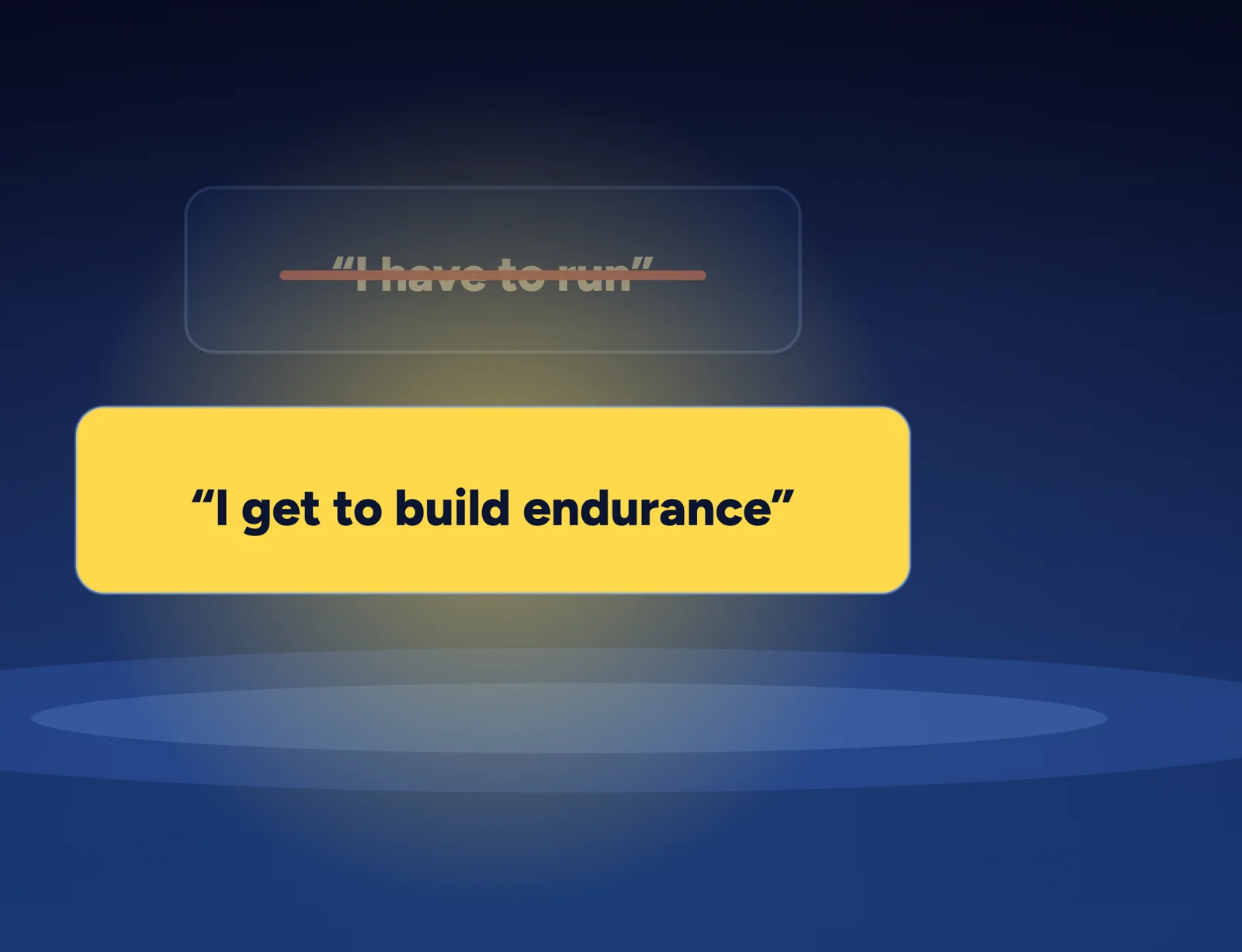
That gives you a lever for breaking habits, which is the inversion of the 2nd Law: make it unattractive. Reframe your mind-set and highlight the benefits of avoiding the habit, so that it starts to look unattractive. It also gives you a lever for building them, through reframing. Language shapes prediction, so shift "have to" into "get to". Applied to running, a run you have to do becomes a chance to build endurance. Saving money becomes buying freedom rather than losing spending. Even the body's signals can be relabeled: the racing pulse before a talk is nearly identical to excitement, and calling it excitement rather than nerves changes what you predict is about to happen.
Finally, you can install an attractive feeling deliberately with a motivation ritual — doing something you enjoy immediately before a difficult habit. The same playlist before every writing session, the same three breaths before every hard set. Repeated consistently, the ritual becomes a conditioned cue for the state you want, so you can summon focus on command rather than waiting for it to visit. The point is not that the ritual is magic. It is that you have given your brain a reliable prediction, and prediction is where craving begins.
Key terms
- Craving
- The motivational force in the habit loop: wanting the change of state a cue has predicted.
- Dopamine spike
- The surge that hits the moment a cue forecasts a reward, well before any reward arrives.
- Motivation ritual
- Doing something you enjoy immediately before a hard habit, until the opening move itself feels good.
- Underlying motive
- The ancient need — belonging, status, certainty — that a modern habit is really serving.
Key facts
The Craving Is Where the 2nd Law Bites
The habit loop runs cue, craving, response, reward — and the 2nd Law of Behavior Change works on the second link. A cue only matters if your brain predicts something worth having behind it. Make an opportunity more attractive and it becomes more habit-forming, which means attractiveness is a lever you can pull rather than a mood you have to wait for.
Dopamine Fires Before the Reward Arrives
Most people assume dopamine is the chemistry of enjoyment, released once the payoff lands. The larger spike comes earlier — the moment the cue appears and the brain forecasts what is coming. Clear points to research in which animals unable to produce dopamine stop chasing food and water even with both within reach. Anticipation of a reward, not the receipt of it, is what gets a body to move.
Wanting and Liking Are Separate Systems
The circuitry that makes you want something is not the circuitry that makes you enjoy it, and the wanting system is far the larger of the two. That mismatch explains a lot of ordinary experience: the habit that keeps its grip long after it stopped being fun, the second cookie that never lands like the first, the notification whose pull exceeds anything in the message. Desire is the gap between where you are and where you want to be.
Supernormal Stimuli Are Anticipation, Amplified
A supernormal stimulus is an exaggerated version of something we evolved to want: snack food engineered for crunch, salt and fat, or a feed engineered for endless novelty. These products are no more nourishing than what they imitate. They are simply more anticipatory — and since anticipation is what drives the loop, the amplified version captures attention in a way the natural one never could.
Three Groups Quietly Write Your Habits
Clear says we imitate the habits of three groups: the close (family and friends), the many (the wider tribe), and the powerful (those with status and prestige). Each pulls for a different reason: proximity, belonging, and aspiration. Much of that pull works without conscious choice. When you cannot explain why a behavior feels normal to you, one of these three is usually the answer.
Join the Culture Where It's Already Normal
One of the highest-leverage social moves in the book is to join a group where your desired behavior is the normal behavior and where you already share something with the members. Belonging then works for you instead of against you: the habit becomes the price of membership rather than a private act of will. A reading habit is fragile alone and durable in a book club.
Every Craving Points at an Older Motive
Underneath each specific craving sits an ancient motive: conserve energy, obtain food and water, find love and reproduce, connect and bond with others, win approval, reduce uncertainty, achieve status. Your habits are modern solutions to those old problems. Nobody is born wanting a social feed; people are born wanting approval and belonging, and the feed is simply a fast route to it.
Trade "Have To" for "Get To"
Language sets the prediction your brain attaches to a behavior, and the prediction is where craving starts. Applied to running, a run you have to do becomes a chance to build endurance. Saving stops being money lost and becomes freedom bought. Even physiology can be relabeled: the racing pulse before a talk is nearly identical to excitement, and calling it excitement changes what you expect is about to happen.
By the numbers
- How many social groups do we tend to imitate?
- 3 groups
Matched pairs
Each item on the left goes with the one on the right.
- Temptation bundling
- Pairing an action you want to do with one you need to do.
- Premack's Principle
- A more probable behavior reinforces a less probable one.
- Supernormal stimulus
- An exaggerated version of a reward we evolved to chase.
- The close
- Family and friends, whose habits we absorb through proximity.
- The many
- The wider tribe, whose norms usually beat personal resolve.
- The powerful
- People with status and prestige, whom we imitate to rise.
Step by step
Build a temptation bundle for a habit you keep skipping
- Name the habit you need to do but keep putting off.
- Name a guilty pleasure you already reach for most days.
- Anchor the pair to a cue you already hit every day.
- Do the needed habit first, then unlock the wanted one.
- Ration the treat so it happens only inside the bundle.
The last step is the one people skip, and it is the one that decides whether the bundle has any pull at all.
Self-test
Answer each question from memory, then check your work against the answer key.
1. In the habit loop, which stage does the 2nd Law of Behavior Change work on?
- AThe response you actually perform
- BThe reward you finally collect
- CThe craving that pulls you in
- DThe cue you happen to notice
2. What actually moves us to take action on a habit?
- AAnticipating the reward
- BRegretting a missed day
- CReceiving the reward
- DFeeling guilty about it
3. Which named principle explains why temptation bundling works?
- AMaslow's hierarchy
- BThorndike's Law of Effect
- CPavlovian conditioning
- DPremack's Principle
4. In the habit-stacking plus temptation-bundling formula, which habit supplies the craving that pulls you through?
- AThe habit you need
- BThe habit you want
- CThe current habit
- DThe first habit of the day
5. Which system is by far the larger one, driving action even without enjoyment?
- AThe liking system
- BThe willpower system
- CThe wanting system
- DThe habit-loop system
6. We tend to imitate the habits of which trio of groups?
- AThe kind, the bold, and the curious
- BThe young, the busy, and the famous
- CThe nearby, the wealthy, and the outspoken
- DThe close, the many, and the powerful
7. How do you invert the 2nd Law to break a bad habit?
- AMake the habit unattractive
- BMake the response much harder
- CMake the cue completely invisible
- DMake the reward feel hollow
8. A craving for a social feed is really a habit serving which older, deeper motive?
- AObtaining food and water
- BApproval and belonging
- CConserving energy
- DReducing uncertainty
9. Which of the three social groups exerts pull mainly through group norms and conformity?
- AThe close
- BThe rare
- CThe many
- DThe powerful
10. In the running example, 'I have to run' becomes which reframe?
- AI get to build endurance
- BI get to feel excited
- CI get to buy freedom
- DI get to relax more
Go deeper
- ListenLesson 3 episode
- WatchWanting Beats Getting Dopamine isn't only the chemistry of enjoyment. James Clear cites research that shows it spikes early, when a cue predicts a reward.
- WatchHave To, Get To We copy the habits of 3 groups: the close, the many, and the powerful.
- ReadAtomic Habits by James Clear · on Amazon ↗
- StudyAtomic Habits in the FlashFeed app
These are affiliate links: if you buy a book through one, FlashFeed may earn a small commission at no extra cost to you. The commission helps pay for FlashFeed's servers.
As an Amazon Associate we earn from qualifying purchases.
Answer key
- 1. C The craving that pulls you inMake it obvious targets the cue, make it easy targets the response, and make it satisfying targets the reward. The 2nd Law works on the craving between them.
- 2. A Anticipating the rewardThe dopamine spike arrives with the prediction, not the payoff. It is the anticipation of a reward, not the fulfillment of it, that gets us to act.
- 3. D Premack's PrinciplePremack's Principle holds that a more probable behavior reinforces a less probable one, which is why pairing a wanted habit with a needed one works.
- 4. B The habit you wantThe formula ends with the wanted habit, which supplies the craving; the current habit only supplies the cue, and the needed habit sits between them.
- 5. C The wanting systemWanting and liking run on separate circuitry, and the wanting system dominates, which is why habits persist long after they stop being fun.
- 6. D The close, the many, and the powerfulThe close pull through proximity, the many through group norms, and the powerful through status and aspiration.
- 7. A Make the habit unattractiveEach law inverts into its own opposite: invisible for the 1st, unattractive for the 2nd, difficult for the 3rd, unsatisfying for the 4th.
- 8. B Approval and belongingNobody is born craving a feed; the ancient motive is approval and belonging, and the feed is just a fast delivery mechanism for it.
- 9. C The manyThe many are the wider tribe; group norms have enough gravity to override individual judgment, as classic conformity experiments show.
- 10. A I get to build enduranceApplied to running, the 'get to' reframe turns a run into a chance to build endurance; two of the other 'get to' phrasings echo the saving-money and nerves-to-excitement examples, and the third is simply a plausible-sounding alternative.
Sources
- Atomic Habits — James Clear
Image credits
- Wanting Beats Getting: FlashFeed original diagram
- Have To, Get To: FlashFeed original diagram