
United States History study guide · Lesson 12 of 13
World War II, the Cold War, and Global Hegemony (1939–1968)
Pearl Harbor, Total War Economy, and the Arsenal of Democracy · Containment Doctrine, Truman Doctrine, Marshall Plan, and Korean War · Postwar Affluence, McCarthyism, Cuban Missile Crisis, and Vietnam Escalation
This is the lesson's study guide from the FlashFeed app, plus its key facts and a self-test.
What you'll be able to do
- Describe the United States as the Arsenal of Democracy, the wartime clashes over civil liberties and race at home, and the D-Day invasion.
- Explain the strategy of containment and its tools: the Marshall Plan, the North Atlantic Treaty Organization (NATO), and the Korean War.
Lesson 12: World War II, the Cold War, and Global Hegemony (1939–1968)
Pearl Harbor, Total War Economy, and the Arsenal of Democracy
During the 1930s, the United States maintained strict neutrality through the Neutrality Acts of 1935–1937. However, after war broke out in Europe in 1939 and as Nazi Germany overran Western Europe in 1940, President Franklin D. Roosevelt (FDR) maneuvered the nation toward support for the Allies, establishing the "Cash and Carry" policy (1939), the Destroyers for Bases agreement (1940), and the Lend-Lease Act of March 1941, transforming the United States into the "Arsenal of Democracy". In August 1941, Roosevelt and British Prime Minister Winston Churchill issued the Atlantic Charter, outlining postwar democratic goals.
The United States formally entered World War II following the devastating Japanese surprise attack on the U.S. Pacific Fleet at Pearl Harbor, Hawaii, on December 7, 1941 ("a date which will live in infamy"). Germany and Italy declared war on the United States four days later.
Total economic mobilization ended the Great Depression. The War Production Board (WPB) converted civilian factories into high-speed military output: automobile plants produced B-24 Liberator bombers and tanks, yielding roughly 300,000 aircraft and 86,000 tanks by 1945. Roughly six million women entered the paid workforce during the war, many of them in war industry, symbolized by "Rosie the Riveter". Over one million African Americans served in segregated armed units—exemplified by the famed Tuskegee Airmen—while Black leaders championed the "Double V" campaign (victory over fascism abroad and racism at home). To meet agricultural labor shortages, the U.S. and Mexico established the Bracero Program (1942).
The war also witnessed profound civil liberties violations. In February 1942, FDR signed Executive Order 9066, authorizing the forced removal and internment of over 120,000 Japanese Americans (two-thirds of whom were U.S. citizens) from the West Coast into remote inland concentration camps. In Korematsu v. United States (1944), the Supreme Court upheld the constitutionality of the exclusion order removing Japanese Americans from the West Coast, based on "military necessity."
Adopting a "Germany First" grand strategy, Allied forces drove Axis armies from North Africa (Operation Torch) and invaded Sicily and mainland Italy before launching the massive amphibious invasion of Normandy, France, on June 6, 1944 (D-Day / Operation Overlord) under Supreme Allied Commander General Dwight D. Eisenhower, liberating Paris and precipitating Germany's unconditional surrender on V-E Day (May 8, 1945).
In the Pacific Theater, the U.S. Navy under Admiral Chester Nimitz halted Japanese expansion at the Battle of Midway in June 1942, initiating an "island-hopping" campaign across Guadalcanal, Iwo Jima, and Okinawa. Under the top-secret Manhattan Project, directed by General Leslie Groves with J. Robert Oppenheimer leading the Los Alamos weapons laboratory, the U.S. developed the first atomic weapons. President Harry S. Truman ordered the atomic bombings of Hiroshima (August 6, 1945) and Nagasaki (August 9, 1945), prompting Japan's announcement of surrender on August 15, 1945 (August 14 in the United States), celebrated as V-J Day (Victory over Japan Day); the formal surrender was signed on September 2, 1945, which President Truman proclaimed the official V-J Day.
Containment Doctrine, Truman Doctrine, Marshall Plan, and Korean War
Postwar optimism—embodied in the creation of the United Nations (1945) and the Bretton Woods monetary system—quickly dissolved into the Cold War, a four-decade geopolitical and ideological confrontation between the democratic-capitalist United States and the authoritarian-communist Soviet Union.
The Bretton Woods Conference of July 1944, where delegates from 44 nations met in New Hampshire, created the International Monetary Fund (IMF) and the International Bank for Reconstruction and Development, commonly known as the World Bank. The IMF oversaw a system of fixed exchange rates centered on the U.S. dollar and gold.
In 1946, diplomat George F. Kennan authored the "Long Telegram" (and subsequent "X Article"), articulating the strategy of containment: preventing the territorial and ideological expansion of Soviet communism through patient, vigilant counter-force. In 1947, President Truman announced the Truman Doctrine, pledging American military and economic support to "free peoples who are resisting attempted subjugation by armed minorities or by outside pressures," securing $400 million in aid for Greece and Turkey.
In 1947, Secretary of State George Marshall announced the Marshall Plan (European Recovery Program), which Congress enacted in 1948, delivering over $13 billion in economic assistance to rebuild war-torn Western European economies, helping stabilize democratic governments there. When Soviet leader Joseph Stalin blockaded West Berlin in 1948, the U.S. and Britain executed the Berlin Airlift, flying in over two million tons of vital supplies; the Soviets lifted the blockade in May 1949, and the airlift ran on until September 1949.
In April 1949, the United States joined eleven other nations—Canada and ten Western European countries—to create the North Atlantic Treaty Organization (NATO), a mutual defense military alliance declaring that an attack on one member was an attack on all—marking the first peacetime military alliance the United States joined outside the Western Hemisphere.
Cold War tensions escalated rapidly in 1949 with the successful Soviet atomic bomb test and the victory of Mao Zedong's Communist forces in the Chinese Civil War. In 1950, the State Department's Policy Planning Staff, led by Paul Nitze, completed National Security Council Report 68 (NSC-68), which called for a massive buildup of conventional and nuclear arms and a substantial rise in military spending. In June 1950, Communist North Korea invaded South Korea. Truman committed U.S. military forces under a United Nations police action commanded by General Douglas MacArthur. After MacArthur landed at Incheon and pushed north, Chinese forces intervened, and by mid-1951 the war had settled into a bloody stalemate near the 38th parallel that lasted until an armistice in July 1953.
Postwar Affluence, McCarthyism, Cuban Missile Crisis, and Vietnam Escalation
The postwar era was characterized by unprecedented domestic economic prosperity. The Servicemen's Readjustment Act of 1944 (GI Bill of Rights) funded college educations, vocational training, and low-interest home mortgages for millions of returning veterans, propelling working-class families into the expanding middle class. The Baby Boom (1946–1964) fueled rapid suburbanization, pioneered by William Levitt's mass-produced Levittowns, supported by the Federal-Aid Highway Act of 1956, which authorized and funded the initial 41,000-mile interstate highway network.
Domestic anxieties triggered the Second Red Scare (McCarthyism). The House Un-American Activities Committee (HUAC) investigated Hollywood artists and federal employees. In 1950, Republican Senator Joseph McCarthy of Wisconsin launched four years of reckless smear campaigns, alleging extensive communist infiltration in the State Department and U.S. Army, until his censuring by the Senate in 1954.
President Dwight D. Eisenhower (1953–1961) and Secretary of State John Foster Dulles embraced "Massive Retaliation" and "brinkmanship", relying on nuclear deterrence rather than costly conventional armies. The Central Intelligence Agency (CIA) conducted covert coups to overthrow the nationalist government of Iran (1953) and the leftist government of Guatemala (1954). In his 1961 Farewell Address, Eisenhower delivered a prescient warning against the unwarranted influence of the "military-industrial complex."
President John F. Kennedy (1961–1963) adopted "Flexible Response" and faced intense Cold War crises:
- The disastrous CIA-sponsored Bay of Pigs invasion (1961) in Cuba.
- The construction of the Berlin Wall (1961).
- The Cuban Missile Crisis (October 1962): The world teetered on the brink of nuclear war for thirteen days after U.S. spy planes discovered Soviet nuclear missiles in Cuba. Kennedy imposed a naval "quarantine" around Cuba; Soviet Premier Nikita Khrushchev agreed to withdraw the missiles in exchange for a U.S. pledge not to invade Cuba and a secret agreement to remove U.S. Jupiter missiles from Turkey.
Following Kennedy's assassination in Dallas on November 22, 1963, President Lyndon B. Johnson escalated American involvement in the Vietnam War. Following the controversial Gulf of Tonkin Incident in August 1964, Congress passed the Gulf of Tonkin Resolution, granting the president virtually blank-check authority to conduct military operations in Southeast Asia without a formal declaration of war. By 1968, over 500,000 U.S. troops were deployed in Vietnam, facing brutal guerrilla warfare and a growing domestic anti-war movement. In January 1968, the Viet Cong and North Vietnamese launched the nationwide Tet Offensive, shattering administration claims of imminent victory, undermining public credibility, and leading Johnson to announce he would not seek re-election.
Key terms
- Arsenal of Democracy
- The slogan used by President Franklin D. Roosevelt describing the industrial collective capacity of the United States to supply weapons and munitions to Allied nations.
- G.I. Bill
- The Servicemen's Readjustment Act of 1944 providing federal grants for higher education, job training, unemployment benefits, and low-interest home loans to WWII veterans.
- Containment
- The overarching United States geopolitical strategy during the Cold War aimed at preventing the global expansion of communism through economic, diplomatic, and military pressure.
- McCarthyism
- The political practice of making unsubstantiated and reckless allegations of treason, subversion, or communist sympathy without proper evidence, prominent in the 1950s.
Key concepts
Lend-Lease Act
- Transformative wartime legislation enacted by Congress in March 1941
- Authorized the president to sell, transfer, or lease weapons to nations fighting Axis powers
- Effectively ended American diplomatic neutrality and provided over $50 billion in war materials
Pearl Harbor
- United States Pacific Fleet naval base located on the island of Oahu, Hawaii
- Target of a surprise devastating carrier air raid by the Imperial Japanese Navy on December 7, 1941
- Brought the United States into World War II following Franklin D. Roosevelt's Infamy Speech
D-Day
- Historic Allied amphibious landing in Normandy, France, launched on June 6, 1944
- Codename Operation Overlord under the supreme command of General Dwight D. Eisenhower
- Opened the decisive Western European second front leading to the defeat of Nazi Germany
Manhattan Project
- Top-secret scientific research initiative that developed the first operational atomic weapons
- Directed scientifically by J. Robert Oppenheimer at Los Alamos, New Mexico
- Culminated in the Trinity test and the atomic bombings of Hiroshima and Nagasaki in 1945
Containment
- Core United States Cold War geopolitical doctrine formulated by diplomat George F. Kennan
- Advocated patient, vigilant resistance to block the expansion of Soviet communist power
- Served as the strategic framework for the Truman Doctrine, Marshall Plan, and NATO
Marshall Plan
- Postwar aid program announced by the U.S. Secretary of State in a June 1947 Harvard speech
- Distributed over $13 billion in economic assistance to rebuild Western European industries
- Revitalized transatlantic trade and helped stabilize Western Europe's democratic governments
Cuban Missile Crisis
- Thirteen-day geopolitical showdown between the US and USSR in October 1962
- Triggered by Soviet construction of nuclear intermediate-range ballistic missile bases in Cuba
- Resolved when Kennedy imposed a naval quarantine and Khrushchev agreed to remove the missiles
Key facts
The Lend-Lease Act of 1941
Enacted in March 1941, the Lend-Lease Act ended official American neutrality by authorizing President Roosevelt to lend or lease arms, munitions, and raw materials to Great Britain, China, and the Soviet Union, establishing the U.S. as the 'Arsenal of Democracy'.
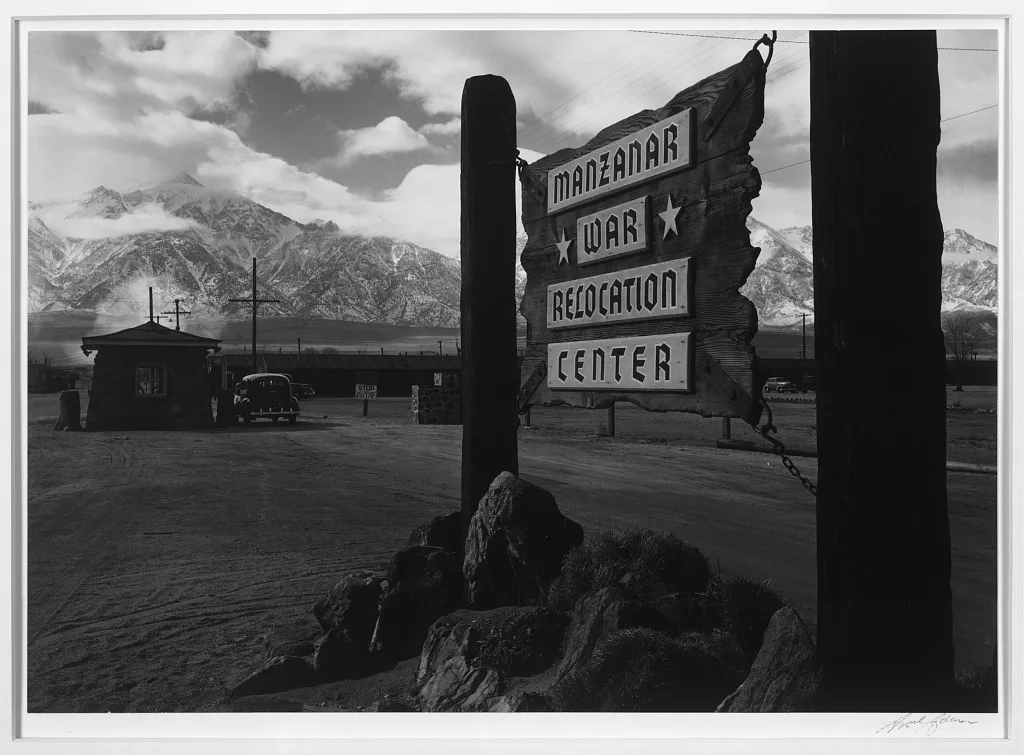
Executive Order 9066 and Japanese American Incarceration
Signed by President Roosevelt in February 1942, Executive Order 9066 forcibly removed and incarcerated over 120,000 Japanese Americans—two-thirds of them native-born U.S. citizens—in remote interior concentration camps, a violation upheld in Korematsu v. United States (1944).
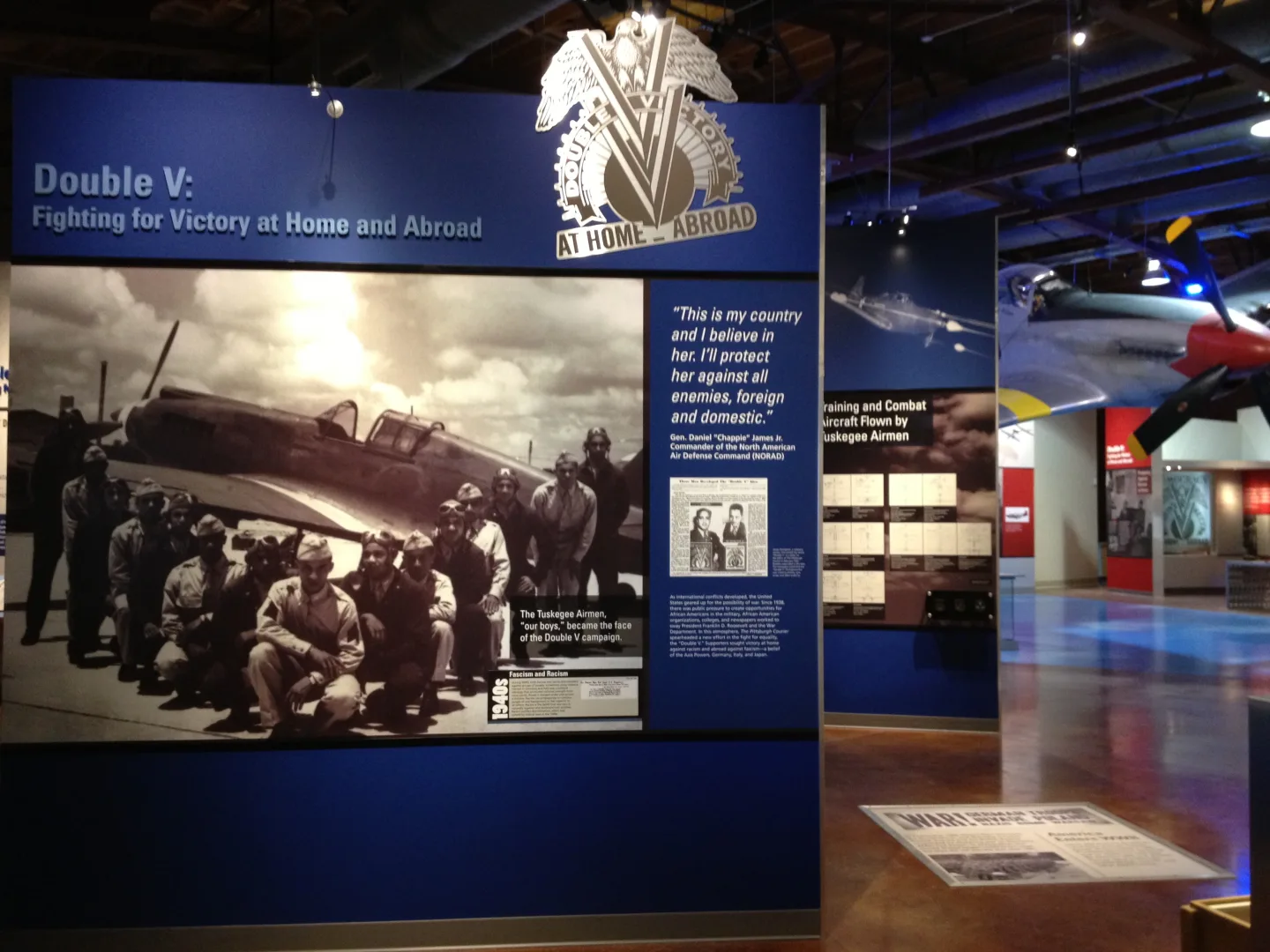
The Double V Campaign
Launched by the Pittsburgh Courier in 1942, the Double V Campaign rallied African Americans to fight for a double victory: victory over fascism abroad and victory over racial segregation and discrimination at home, laying crucial groundwork for the postwar Civil Rights Movement.
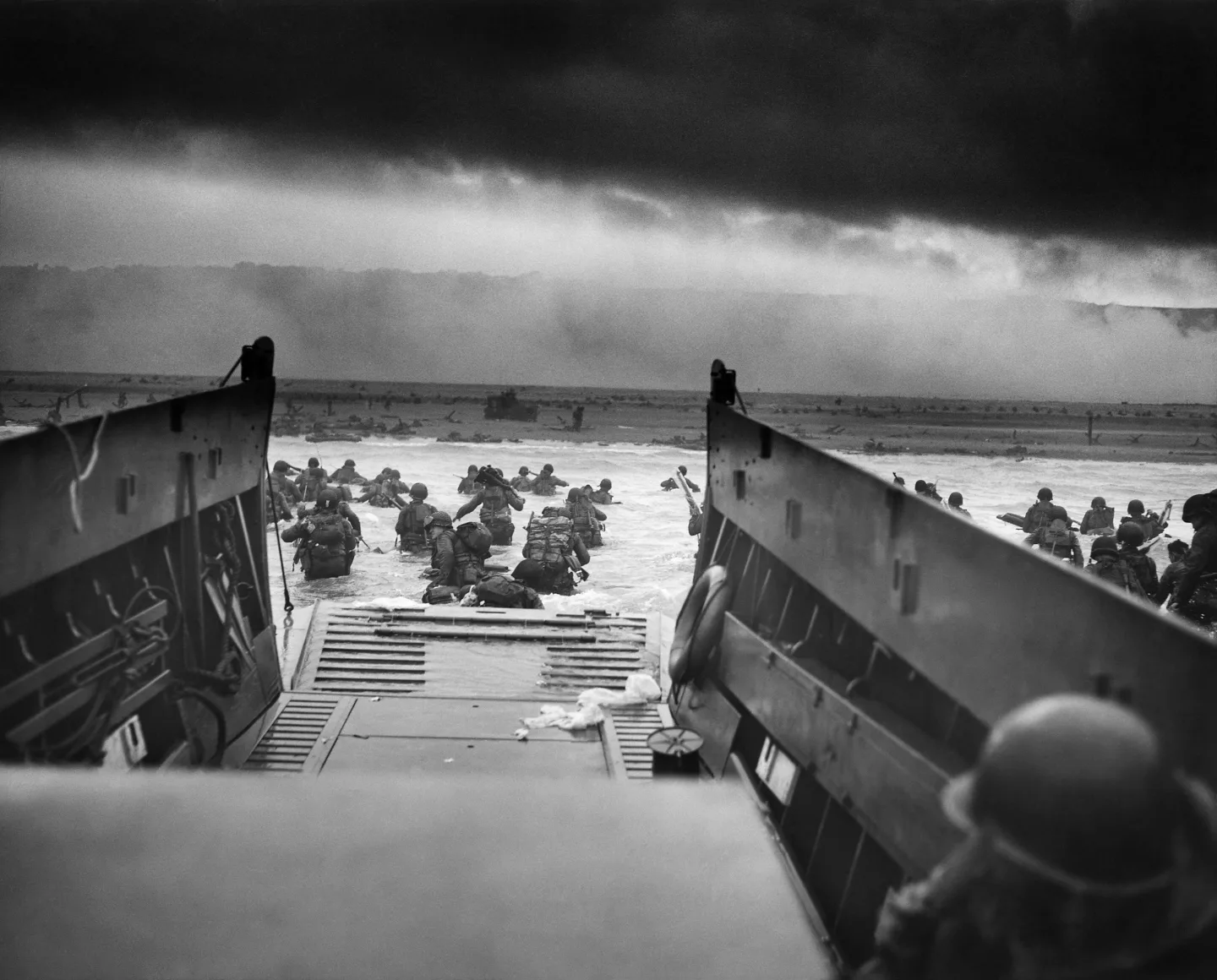
Operation Overlord and the D-Day Landings
On June 6, 1944 (D-Day), Allied forces commanded by General Dwight D. Eisenhower executed Operation Overlord, landing over 150,000 troops along the beaches of Normandy, France, in the largest amphibious invasion in history to liberate Western Europe from Nazi control.
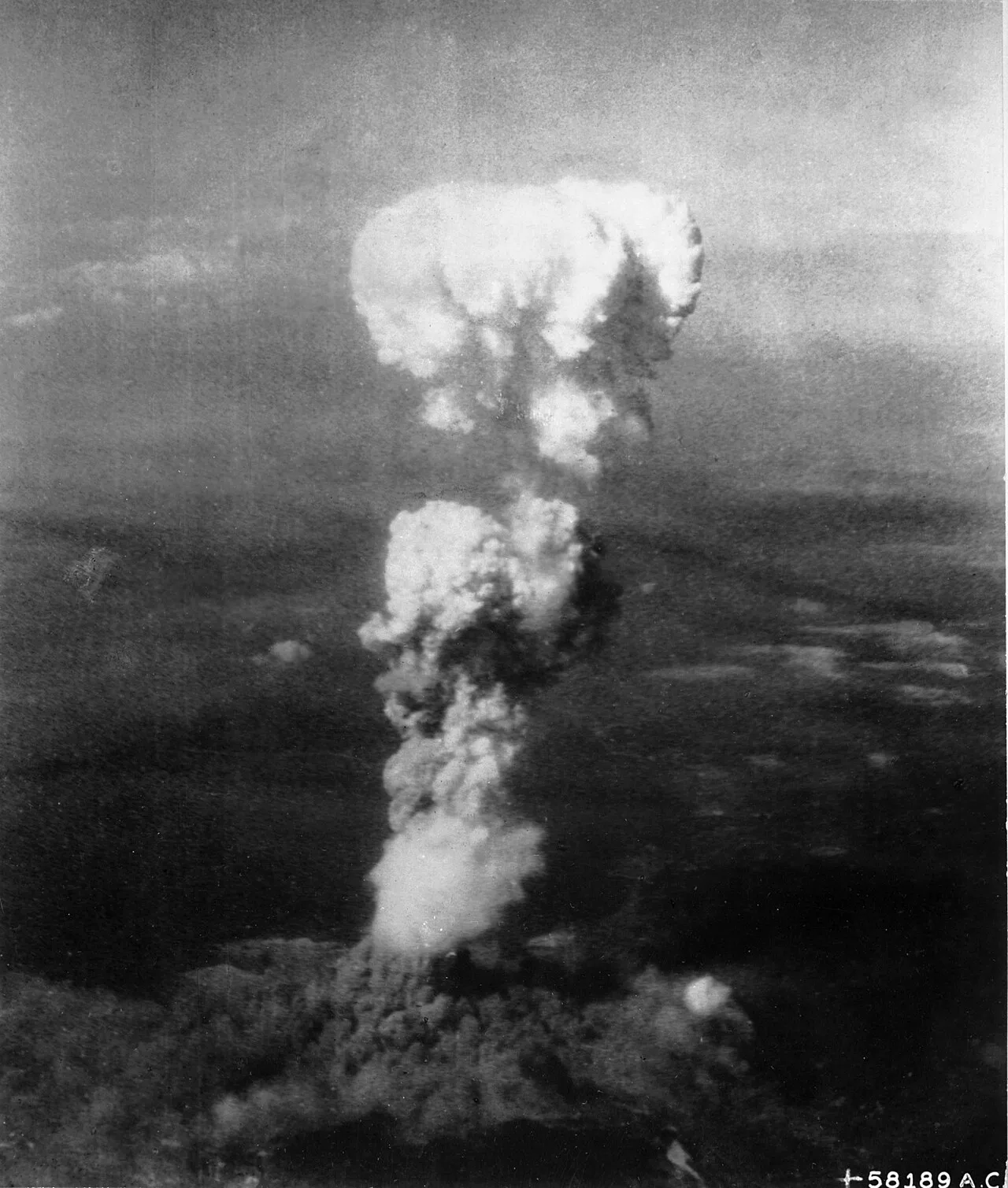
The Manhattan Project and Atomic Bombings
Directed by J. Robert Oppenheimer and General Leslie Groves, the top-secret Manhattan Project developed the first atomic weapons; in August 1945, President Harry S. Truman ordered atomic bombs dropped on Hiroshima (August 6) and Nagasaki (August 9), prompting Japan's unconditional surrender.
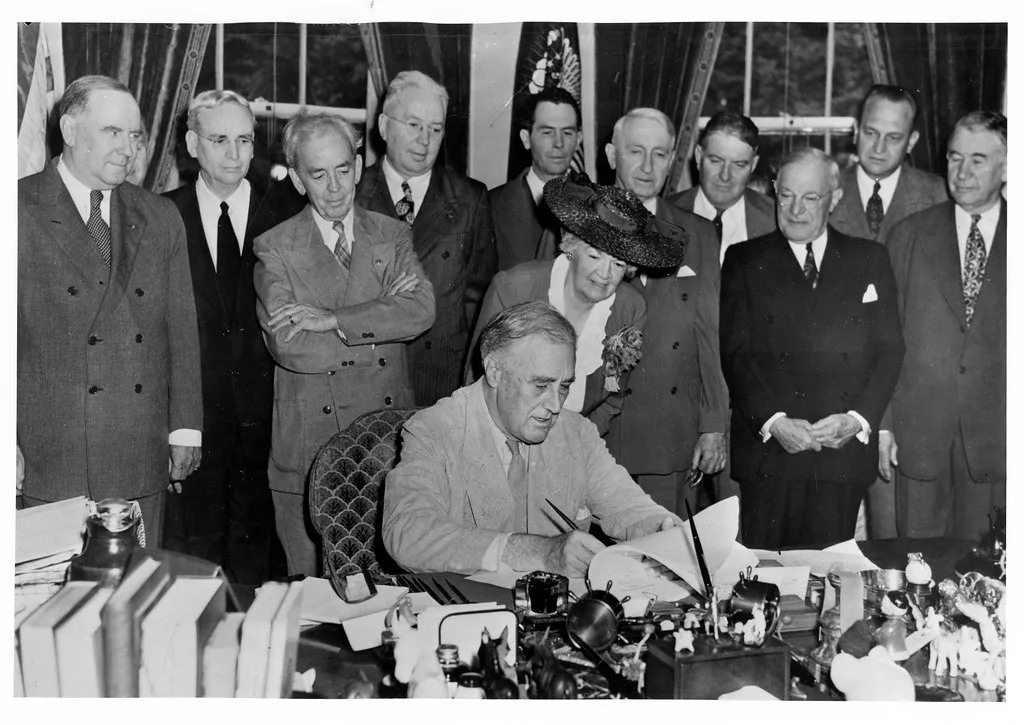
The G.I. Bill of Rights (1944)
Enacted in 1944, the Servicemen's Readjustment Act (G.I. Bill) provided returning veterans with free college tuition, vocational training, low-interest mortgage loans, and unemployment benefits, transforming higher education and propelling millions into the postwar middle class.
The Bretton Woods Conference and Global Institutions
Gathered in New Hampshire in 1944, Allied delegates created the Bretton Woods monetary system, pegging international currencies to the U.S. dollar backed by gold, and founding the International Monetary Fund (IMF) and World Bank to structure the postwar capitalist global economy.
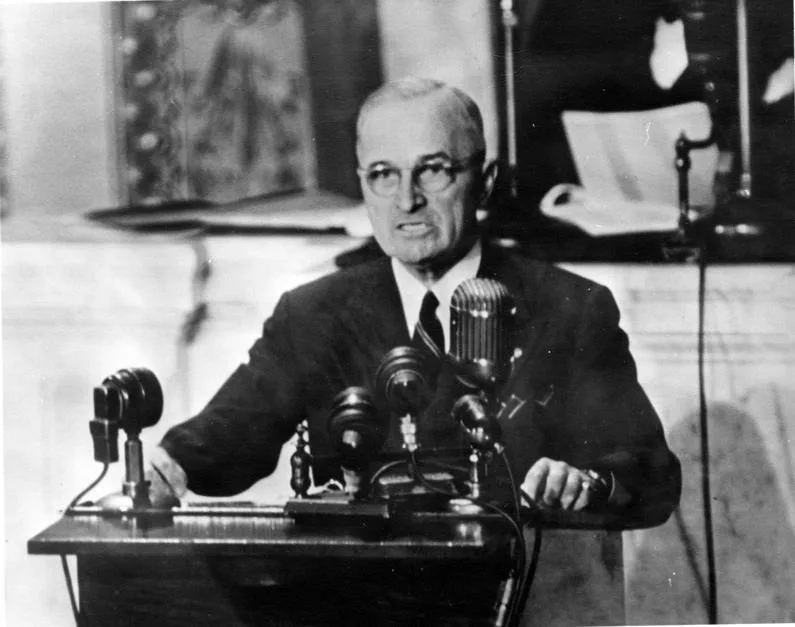
The Truman Doctrine and Containment
Articulated by President Harry S. Truman in March 1947, the Truman Doctrine pledged American financial and military assistance to free nations resisting communist subjugation, establishing 'containment'—formulated by diplomat George F. Kennan—as foundational Cold War doctrine.
The Marshall Plan and Postwar European Recovery
Announced by Secretary of State George C. Marshall in 1947, the European Recovery Program (Marshall Plan) delivered over $13 billion in economic aid to rebuild war-torn Western Europe, prevent communist electoral victories, and create robust export markets for American goods.
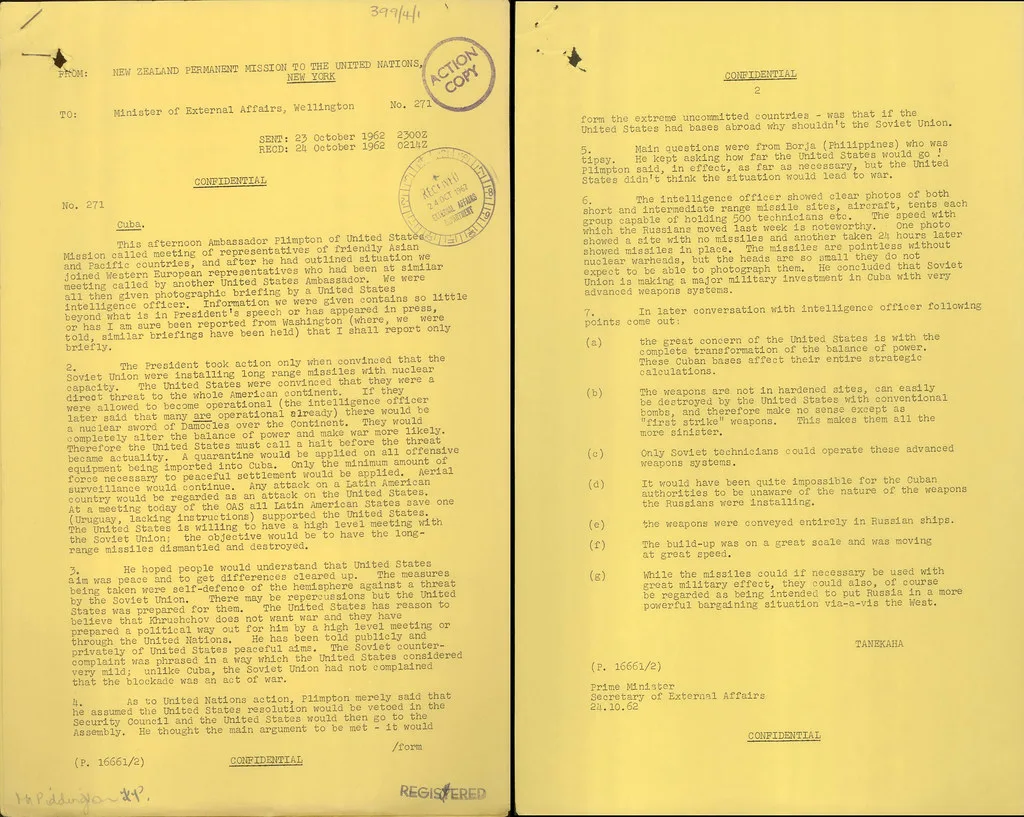
The Cuban Missile Crisis of 1962
In October 1962, U.S. aerial surveillance revealed Soviet nuclear ballistic missiles stationed in Cuba; President John F. Kennedy imposed a naval 'quarantine' around the island, bringing the superpowers to the brink of nuclear war before Premier Nikita Khrushchev agreed to dismantle the sites.
By the numbers
- In what calendar year did the Lend-Lease Act pass Congress, providing war supplies to Allies?
- 1941 year
- In what calendar year did Allied forces conduct the D-Day landings in Normandy, France?
- 1944 year
- In what calendar year was the North Atlantic Treaty Organization (NATO) formally founded?
- 1949 year
- In what calendar year did the Cuban Missile Crisis occur?
- 1962 year
Matched pairs
Each item on the left goes with the one on the right.
- War Production Board
- Federal wartime agency that converted civilian manufacturing factories into military munitions production
- Island Hopping
- Allied Pacific strategy of bypassing heavily fortified Japanese bases to capture strategic airfields
- Berlin Airlift
- Massive 1948–1949 Allied airborne operation delivering food and fuel to bypass a Soviet ground blockade
- Military-Industrial Complex
- The nexus between the nation's immense armed forces establishment and permanent defense contractors
Self-test
Answer each question from memory, then check your work against the answer key.
1. What did President Franklin D. Roosevelt mean by describing the United States as the 'Arsenal of Democracy' in 1940?
- ADeploying American army troops immediately to seize German industrial chemical factories
- BAbolishing the private manufacture of all commercial military aircraft and naval ships
- CMandating that all European nations adopt the United States Constitution without alterations
- DProviding massive military weapons and material production to democratic nations resisting Axis tyranny
2. What constitutional ruling did the Supreme Court issue in Korematsu v. United States (1944)?
- AIt upheld the wartime military exclusion of Japanese Americans from the West Coast as a military necessity
- BIt declared Executive Order 9066 unconstitutional and awarded immediate financial reparations
- CIt ruled that the Bill of Rights applies only during periods of formal peacetime diplomacy
- DIt ordered the immediate dissolution of the United States War Relocation Authority
3. What dual objectives were championed by the African American 'Double V Campaign' during World War II?
- AVictory for industrial workers' unions at home and victory for Allied armies abroad
- BVictory over Germany in Europe and victory over Japan in the Pacific
- CVictory against fascism abroad and victory against racial discrimination and Jim Crow at home
- DVictory in the war abroad and victory for Roosevelt in the 1944 election at home
4. What was the strategic objective of the Allied D-Day landings in Normandy, France, on June 6, 1944?
- ATo establish a permanent military base inside the Soviet borders of Ukraine
- BTo open a major western front to liberate Western Europe and crush Nazi German forces
- CTo evacuate British civilian populations to overseas settlements in Canada
- DTo capture Spanish naval ports along the Mediterranean coastline
5. Which of the following was NOT one of Franklin D. Roosevelt's (FDR) policies moving the U.S. toward the Allies before Pearl Harbor?
- ADestroyers for Bases agreement
- BCash and Carry policy
- CLend-Lease Act
- DNeutrality Acts of 1935-1937
6. What core foreign policy strategy did George F. Kennan articulate in the 'Long Telegram' (1946) and the later 'X Article' (1947)?
- ATotal isolationist withdrawal of all American armed forces from the European continent
- BContainment—patiently and firmly resisting Soviet geopolitical and ideological expansionism
- CImmediate nuclear preemptive warfare against all Soviet continental military bases
- DAccepting Soviet control of Eastern Europe in exchange for a permanent Soviet pledge not to expand further
7. What was the purpose of the Marshall Plan (European Recovery Program) enacted in 1948?
- AFlying supplies into West Berlin during the Soviet blockade
- BA mutual defense pact: an attack on one is an attack on all
- CAid to rebuild war-torn Western Europe and curb communism
- DFixing exchange rates through the Bretton Woods system
8. How did the Korean War (1950–1953) conclude militarily?
- AAn armistice establishing a demilitarized zone (DMZ) roughly along the 38th parallel without a formal peace treaty
- BThe total military conquest and unification of Korea under the Republic of Korea
- CA formal peace treaty signed at Panmunjom that reunified Korea under a neutral government
- DA decisive Chinese and North Korean victory that unified the peninsula under communist rule
9. Under the 1947 Truman Doctrine, which two countries received the initial $400 million in U.S. aid?
- AFrance and Italy
- BGreece and Turkey
- CBritain and the Netherlands
- DPoland and Czechoslovakia
10. Which of the following was NOT a U.S. Cold War containment initiative?
- ANATO
- BTruman Doctrine
- CMarshall Plan
- DWarsaw Pact
Go deeper
- WatchThirteen Days For thirteen days, the world stood on the edge of nuclear war. American spy planes had found Soviet nuclear missiles in Cuba.
- WatchOrder 9066 Over 120,000 Japanese Americans were forced to leave the West Coast. Two-thirds of them were United States citizens.
- WatchDouble V Over 1 million African Americans served in World War II. They served in segregated units, like the famous Tuskegee Airmen.
- StudyUnited States History in the FlashFeed app
Answer key
- 1. D Providing massive military weapons and material production to democratic nations resisting Axis tyrannyRoosevelt mobilized American industrial capacity to supply Allied nations with weapons through programs like Lend-Lease.
- 2. A It upheld the wartime military exclusion of Japanese Americans from the West Coast as a military necessityIn a 6–3 ruling, the Court upheld the exclusion of Japanese Americans from the West Coast on grounds of wartime military necessity; the decision has since been widely repudiated.
- 3. C Victory against fascism abroad and victory against racial discrimination and Jim Crow at homeThe Double V Campaign linked the international fight for democracy directly with the domestic struggle for Black civil rights.
- 4. B To open a major western front to liberate Western Europe and crush Nazi German forcesOperation Overlord established an Allied lodgment in France, enabling the liberation of Paris and the invasion of Germany.
- 5. D Neutrality Acts of 1935-1937The Neutrality Acts of 1935-1937 enforced U.S. isolationism. Cash and Carry, Lend-Lease, and Destroyers for Bases actively moved the U.S. toward aiding the Allies before Pearl Harbor.
- 6. B Containment—patiently and firmly resisting Soviet geopolitical and ideological expansionismKennan argued the USSR was inherently expansionist and advocated long-term, patient containment of Soviet influence.
- 7. C Aid to rebuild war-torn Western Europe and curb communismThe Marshall Plan aimed to rebuild Western Europe's economies and curb communism's appeal there; its aid helped stabilize democratic governments in the region.
- 8. A An armistice establishing a demilitarized zone (DMZ) roughly along the 38th parallel without a formal peace treatyThe war ended in a stalemate with an armistice in July 1953, leaving Korea divided near the original 38th parallel.
- 9. B Greece and TurkeyThe Truman Doctrine's first application committed $400 million to Greece and Turkey to resist communist-backed pressure, launching the containment policy.
- 10. D Warsaw PactNATO, the Marshall Plan, and the Truman Doctrine were U.S. tools to contain Soviet expansion; the Warsaw Pact was the Soviet Union's own rival alliance.
Sources
- Bretton Woods-GATT, 1941–1947 (U.S. Office of the Historian) — history.state.gov/milestones/1937-1945/bretton-woods
- Kimball, The Most Unsordid Act: Lend-Lease 1939-1941
- Prange, At Dawn We Slept (1981)
- Irons, Justice at War, Ch. 4
- Kryder, Divided Arsenal, Ch. 5
- Ambrose, D-Day: June 6, 1944, Ch. 14
- Rhodes, The Making of the Atomic Bomb, Ch. 19
- Mettler, Soldiers to Citizens, Ch. 3
- Steil, The Battle of Bretton Woods, Ch. 7
- Gaddis, Strategies of Containment, Ch. 2
- Hogan, The Marshall Plan, Ch. 1
- Fursenko & Naftali, One Hell of a Gamble, Ch. 14
- Kimball, The Most Unsordid Act
- Irons, Justice at War
- Kryder, Divided Arsenal
- Ambrose, D-Day
- Rhodes, The Making of the Atomic Bomb
- Mettler, Soldiers to Citizens
- Steil, The Battle of Bretton Woods
- Gaddis, Strategies of Containment
- Hogan, The Marshall Plan
- Gaddis, The Cold War: A New History
- Cumings, The Korean War
- Oshinsky, A Conspiracy So Immense
- Fursenko & Naftali, One Hell of a Gamble
- Prange, At Dawn We Slept
- Gaddis, The Cold War
- Kennedy, Freedom from Fear
- Spector, Eagle Against the Sun
Image credits
- Executive Order 9066 and Japanese American Incarceration: Ansel Adams (Library of Congress) · no known restrictions on publication — www.loc.gov/item/2002695960/
- The Double V Campaign: Wikimedia Commons · Harpers Ferry Center - National Parks Gallery · Public domain — commons.wikimedia.org/wiki/File:Double_V_Campaign_Exhibit.jpg
- Operation Overlord and the D-Day Landings: Robert F. Sargent (U.S. Coast Guard, National Archives) · public domain — commons.wikimedia.org/wiki/File:Into_the_Jaws_of_Death_23-0455M_edit.jpg
- The Manhattan Project and Atomic Bombings: George R. Caron (U.S. Army Air Forces, National Archives) · public domain — commons.wikimedia.org/wiki/File:Atomic_cloud_over_Hiroshima.jpg
- The G.I. Bill of Rights (1944): FDR Presidential Library & Museum (Openverse) · by 2.0 — www.flickr.com/photos/54078784@N08/54555144687
- The Truman Doctrine and Containment: Harry S. Truman Library & Museum · no known copyright restrictions — commons.wikimedia.org/wiki/File:Special_Message_to_Congress_on_Greece_and_Turkey_The_Truman_Doctrine.jpg
- The Cuban Missile Crisis of 1962: Archives New Zealand (Openverse) · by 2.0 — www.flickr.com/photos/35759981@N08/15332098127


