
United States History study guide · Lesson 10 of 13
Progressivism, Imperial Expansion, and World War I (1890–1920)
Muckrakers, Social Reform, and the Progressive Regulatory State · Mass Immigration, Urbanization, and the Settlement House Movement · Spanish-American War, Imperialism Debate, and WWI Mobilization
This is the lesson's study guide from the FlashFeed app, plus its key facts and a self-test.
What you'll be able to do
- Explain how muckrakers and Progressive presidents built a regulatory state and won four constitutional amendments.
- Describe the New Immigration and urban growth, and the reformers who responded, from Hull House to the NAACP.
Lesson 10: Progressivism, Imperial Expansion, and World War I (1890–1920)
Muckrakers, Social Reform, and the Progressive Regulatory State
The Progressive Era (1890–1920) arose as a broad, heterogeneous reform movement driven primarily by middle-class professionals seeking to address the economic inequities, political corruption, and social degradation wrought by rapid industrialization and urbanization. Like the agrarian Populists before them, Progressives rejected laissez-faire orthodoxy; drawing on an urban, middle-class base, they argued that modern democratic capitalism required an active, expert-led regulatory state.
Investigative journalists, labeled "muckrakers" by President Theodore Roosevelt, exposed systemic corporate and political abuse through mass-circulation magazines:
- Upton Sinclair: Published The Jungle (1906), exposing unsanitary horrors in Chicago meatpacking plants, directly spurring passage of the Meat Inspection Act of 1906 and the Pure Food and Drug Act of 1906.
- Ida Tarbell: Authored The History of the Standard Oil Company (1904), documenting John D. Rockefeller's ruthless monopolistic practices, facilitating the Supreme Court's 1911 breakup of Standard Oil.
- Lincoln Steffens: Published The Shame of the Cities (1904), exposing corrupt alliances between big business and urban political machines.
Progressives also sought direct democracy in the states. The initiative let voters enact legislation by petitioning to place a proposal on the ballot; South Dakota adopted it first in 1898, and twenty states had it by 1920. The referendum let voters affirm or reject an existing law at the ballot box, and the recall let citizens remove a public official through a petition and a vote.
At the federal level, Theodore Roosevelt (1901–1909) transformed the presidency with his "Square Deal", balancing the interests of capital, labor, and the public. Roosevelt earned the moniker "Trustbuster" by directing the Justice Department to dismantle J.P. Morgan's railroad monopoly in Northern Securities Co. v. United States (1904) and distinguished between "good trusts" that served public efficiency and "bad trusts" that abused market power. Roosevelt also established the United States Forest Service under Gifford Pinchot, setting aside over 230 million acres of public lands for environmental conservation.
Under President Woodrow Wilson (1913–1921), the Progressive regulatory framework expanded under the "New Freedom":
- Federal Reserve Act of 1913: Created the Federal Reserve System, establishing a decentralized national central banking network with 12 regional banks, capable of issuing Federal Reserve Notes and regulating credit and interest rates.
- Federal Trade Commission (FTC) (1914): Created an independent regulatory body to investigate unfair trade practices.
- Clayton Antitrust Act of 1914: Strengthened the Sherman Act by prohibiting price discrimination and interlocking directorates, while explicitly exempting labor unions from antitrust prosecution.
The era concluded with four transformative Progressive Constitutional Amendments:
- Sixteenth Amendment (1913): Authorized a direct federal graduated income tax.
- Seventeenth Amendment (1913): Mandated the direct popular election of U.S. Senators (replacing selection by state legislatures).
- Eighteenth Amendment (1919): Prohibited the manufacture, sale, and transportation of intoxicating liquors.
- Nineteenth Amendment (1920): Prohibited denial of voting rights on the basis of sex, culminating decades of activism by leaders like Susan B. Anthony, Carrie Chapman Catt, and Alice Paul.
Mass Immigration, Urbanization, and the Settlement House Movement
Between 1890 and 1920, roughly eighteen million immigrants, most of them "New Immigrants", arrived in the United States, originating primarily from Southern and Eastern Europe (Italy, Poland, Russia, Greece, Austria-Hungary), differing in language and culture, and in their largely Roman Catholic, Jewish, and Orthodox faiths, from earlier immigrants who came mostly from Northern and Western Europe. Arriving through federal processing centers like Ellis Island in New York Harbor (and Angel Island in San Francisco Bay for Asian immigrants), immigrants settled heavily in expanding industrial cities, forming vibrant ethnic enclaves.
Rapid urban growth outpaced municipal infrastructure, producing overcrowded tenement slums, high infant mortality, and political dominance by Tammany Hall machine bosses such as Richard Croker and Charles Francis Murphy, who exchanged municipal services and jobs for immigrant votes.
Progressive reformers pioneered private and municipal solutions:
- Jacob Riis: Documented squalid urban conditions in How the Other Half Lives (1890) using pioneering flash photography.
- Settlement House Movement: In 1889, Jane Addams and Ellen Gates Starr founded Hull House in Chicago. Staffed by educated, middle-class women who lived in the immigrant neighborhood, Hull House provided kindergarten daycare, English classes, vocational training, public baths, and cultural programs, while lobbying for child labor laws and mandatory school attendance.
- Civil Rights Movements: In 1905, W.E.B. Du Bois led Black intellectuals in founding the Niagara Movement, rejecting Booker T. Washington's accommodationist "Atlanta Compromise" and demanding immediate civil and political equality. In 1909, this evolved into the National Association for the Advancement of Colored People (NAACP), which launched a systematic legal campaign against lynching and disenfranchisement.
Spanish-American War, Imperialism Debate, and WWI Mobilization
In 1898, the United States emerged as a global imperial power through the Spanish-American War ("a splendid little war"). Fueled by sensationalist "yellow journalism" from William Randolph Hearst and Joseph Pulitzer, the mysterious explosion of the battleship USS Maine in Havana Harbor prompted President William McKinley to intervene in the Cuban War of Independence. Commodore George Dewey's naval victory at Manila Bay, the land assault on the San Juan Heights (where Theodore Roosevelt's Rough Riders charged Kettle Hill), and the destruction of Spain's Caribbean squadron off Santiago de Cuba led to Spanish capitulation.
The Treaty of Paris (1898) ceded Guam, Puerto Rico, and the Philippines (for $20 million) to the United States, while Cuba gained conditional independence subject to the Platt Amendment (1901), granting the U.S. unilateral intervention rights and a naval base at Guantanamo Bay. Annexation of the Philippines ignited the bloody Philippine-American War (1899–1902), where U.S. forces suppressed Emilio Aguinaldo's nationalist movement, sparking fierce domestic opposition from the Anti-Imperialist League (including Mark Twain and Andrew Carnegie).
Theodore Roosevelt expanded American hegemony through his "Big Stick" diplomacy, orchestrating Panamanian independence from Colombia in 1903 to build the Panama Canal, and issuing the Roosevelt Corollary (1904) to the Monroe Doctrine, claiming "international police power" in the Western Hemisphere to forestall European intervention over unpaid Latin American debts.
When World War I erupted in Europe in 1914, President Woodrow Wilson proclaimed strict American neutrality. However, German unrestricted submarine warfare—highlighted by the sinking of the British passenger liner RMS Lusitania in 1915 killing 128 Americans—and the interception of the Zimmermann Telegram (promising Mexico the return of the American Southwest in exchange for an anti-U.S. alliance) prompted Congress to declare war on Germany in April 1917, a war Wilson cast as a fight to make the world safe for democracy.
Mobilization transformed the domestic economy under the War Industries Board (Bernard Baruch) and the Food Administration (Herbert Hoover). Over four million Americans served in the armed forces, and about two million reached France as the American Expeditionary Forces (AEF) under General John J. Pershing, whose troops, arriving in large numbers by 1918, helped turn the tide on the Western Front. On the homefront, the federal government enacted the Espionage Act of 1917 and Sedition Act of 1918, criminalizing anti-war speech. In Schenck v. United States (1919), the Supreme Court upheld the conviction of socialist Charles Schenck, with Justice Oliver Wendell Holmes Jr. establishing the "clear and present danger" test for restricting free speech during wartime.
In January 1918, Wilson outlined his idealistic peace vision in the Fourteen Points, advocating freedom of the seas, free trade, national self-determination, and a general association of nations—the League of Nations. At the Paris Peace Conference (1919), European allies imposed punitive reparations and territorial losses on Germany in the Treaty of Versailles. Back home, Republican Senator Henry Cabot Lodge led the "Reservationists" in demanding reservations to the treaty, chief among them one limiting U.S. obligations under Article X of the League Covenant, to protect congressional war powers. Refusing to compromise, Wilson suffered a debilitating stroke; the Senate twice rejected the treaty, and the United States never joined the League of Nations, retreating into postwar isolationism.
Key terms
- Square Deal
- President Theodore Roosevelt's progressive domestic reform program aimed at balancing corporate regulation, consumer protection, and environmental conservation.
- Settlement House
- An urban community institution located in poor immigrant neighborhoods where middle-class reformers lived to provide social, educational, and medical services.
- Yellow Journalism
- A sensationalist style of newspaper reporting featuring exaggerated headlines and fabricated stories to inflame public opinion and drive mass circulation.
- Clear and Present Danger
- The free-speech test that Justice Oliver Wendell Holmes Jr. articulated in Schenck v. United States (1919), holding that speech creating an imminent danger could be restricted; the Supreme Court later replaced it with the stricter 'imminent lawless action' standard in Brandenburg v. Ohio (1969).
Key concepts
Muckrakers
- Investigative journalists and novelists who exposed corporate monopolies and municipal political corruption
- Coined by Theodore Roosevelt from John Bunyan's Pilgrim's Progress
- Included Ida Tarbell, Upton Sinclair, Lincoln Steffens, and Ray Stannard Baker
Federal Reserve System
- Central banking framework of the United States established by Congress in 1913
- Divided the nation into twelve regional districts governed by a presidential Federal Reserve Board
- Regulates interest rates, supervises commercial banks, and issues Federal Reserve Notes
Jane Addams
- Pioneering social worker and activist who co-founded Hull House in Chicago in 1889
- Led national campaigns for child labor laws, protective women's labor legislation, and world peace
- Became the first American woman to be awarded the Nobel Peace Prize in 1931
Ellis Island
- Federal immigration processing station located in New York Harbor from 1892 to 1954
- Processed over twelve million immigrant arrivals, many from Southern and Eastern Europe
- Subjected arriving passengers to medical inspections and legal registry examinations
Spanish-American War
- Brief 1898 conflict fought between the United States and Spain in the Caribbean and Pacific
- Sparked by sensationalist yellow journalism and the explosion of the battleship USS Maine
- Resulted in the American acquisition of Puerto Rico, Guam, and the Philippines
Fourteen Points
- Idealistic post-WWI peace blueprint outlined by Woodrow Wilson to Congress in January 1918
- Advocated freedom of the seas, free trade, arms reductions, and national self-determination
- Proposed a general association of nations—the League of Nations—to ensure collective security
League of Nations
- International diplomatic organization created at the 1919 Paris Peace Conference
- Featured Article X, committing member nations to defend each other's territorial integrity
- Rejected by the United States Senate following a fierce constitutional battle with Henry Cabot Lodge
Key facts
Upton Sinclair and The Jungle
Published in 1906, Upton Sinclair's muckraking novel The Jungle exposed nauseating unsanitary conditions and worker exploitation in Chicago's meatpacking stockyards, directly compelling Congress to pass the Meat Inspection Act and the Pure Food and Drug Act.
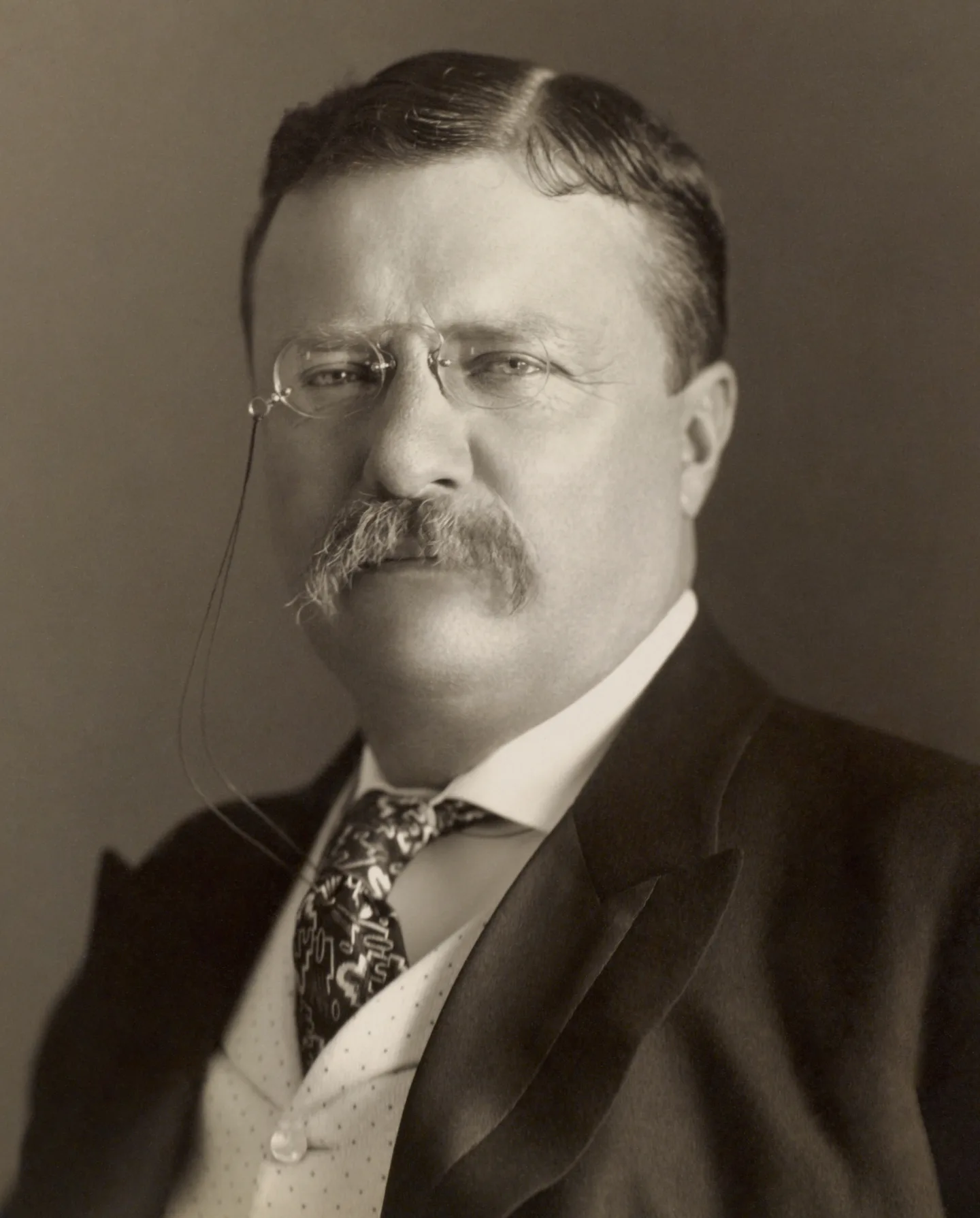
Theodore Roosevelt's Square Deal
President Theodore Roosevelt used executive authority to advance his 'Square Deal', balancing consumer protection, natural resource conservation, and corporate regulation, famously directing the Justice Department to break up J.P. Morgan's railroad monopoly in Northern Securities (1904).
The Federal Reserve Act of 1913
Enacted under President Woodrow Wilson in 1913, the Federal Reserve Act created a decentralized national central banking network with twelve regional Federal Reserve Banks, granting public control over the national money supply and interest rates.
The Nineteenth Amendment and Women's Suffrage
Ratified in August 1920 following decades of grassroots organizing by Carrie Chapman Catt's National American Woman Suffrage Association (NAWSA) and Alice Paul's militant National Woman's Party, the Nineteenth Amendment prohibited federal and state denial of voting rights on the basis of sex.
The Settlement House Movement and Hull House
Founded in Chicago in 1889 by Jane Addams and Ellen Gates Starr, Hull House pioneered the settlement house movement, offering educational classes, day care, and vocational training in immigrant working-class neighborhoods while lobbying for child labor legislation.
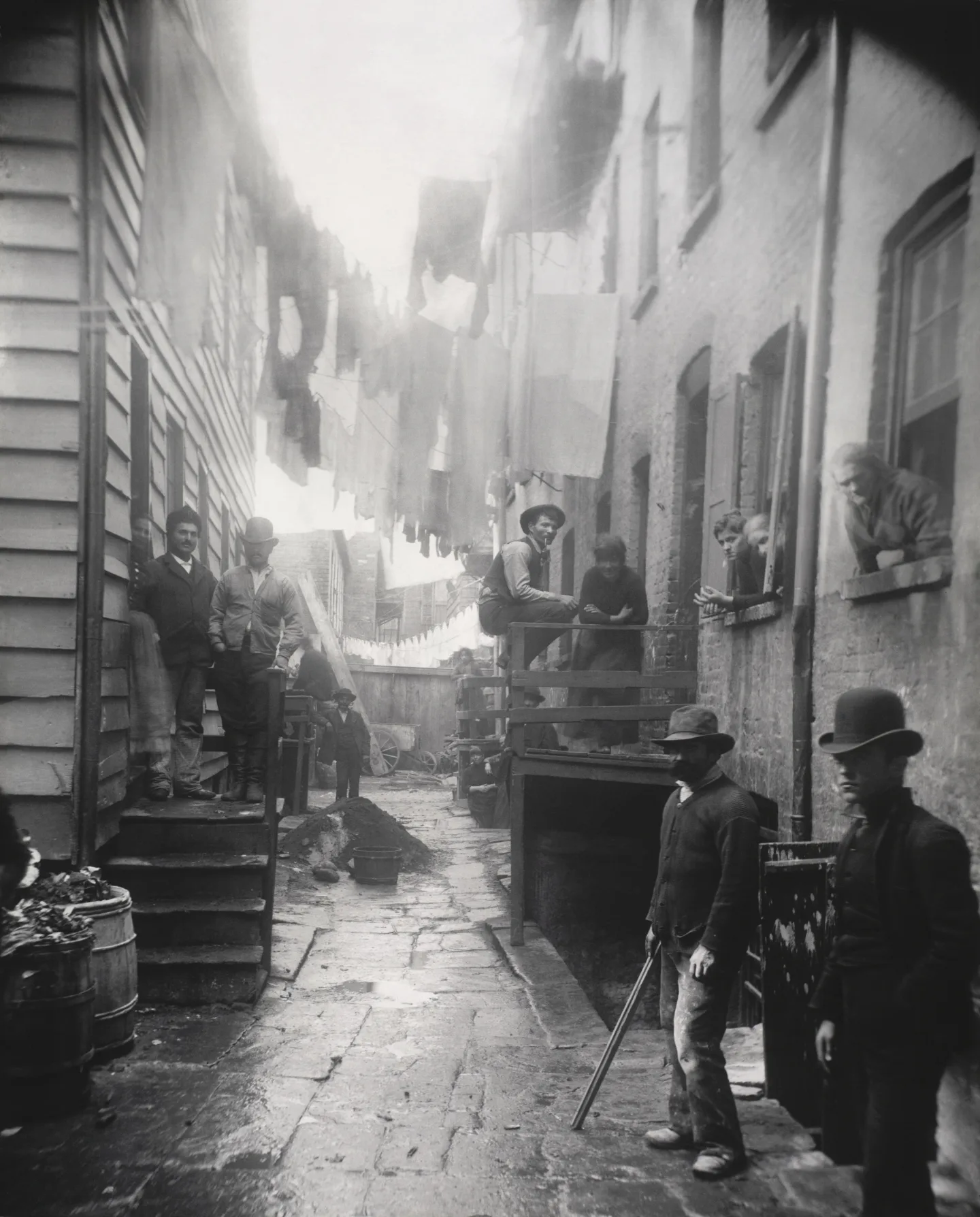
Jacob Riis and Urban Tenement Reform
Pioneering photojournalist Jacob Riis published How the Other Half Lives in 1890, using early magnesium flash photography to expose squalid tenement living conditions, disease, and poverty in New York City's Lower East Side, prompting passage of the New York State Tenement House Act of 1901.
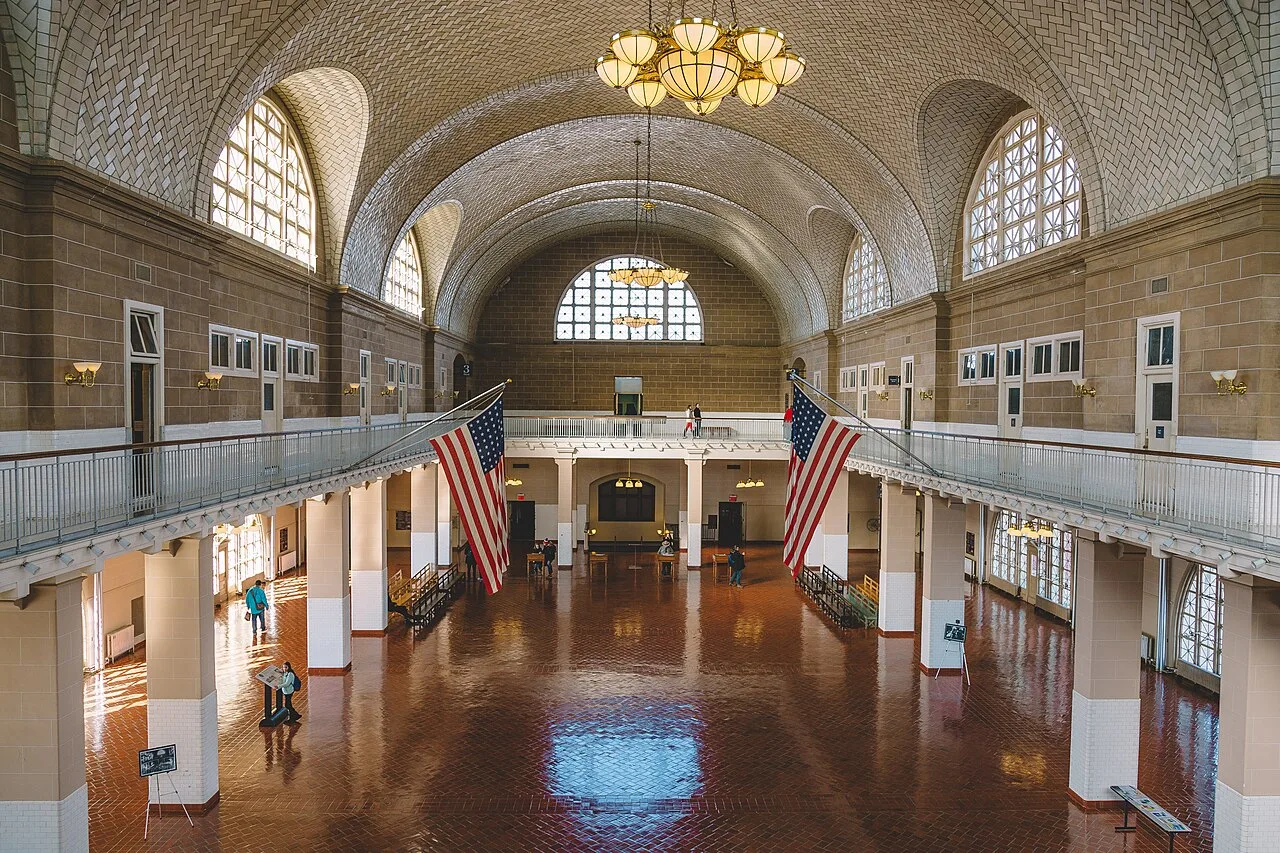
Ellis Island and the New Immigration
Opening in 1892 in New York Harbor, the Ellis Island immigration station processed over twelve million immigrants before closing in 1954, many from Southern and Eastern Europe (Italy, Poland, Russia, Greece), and subjected arrivals to medical and legal inspections.
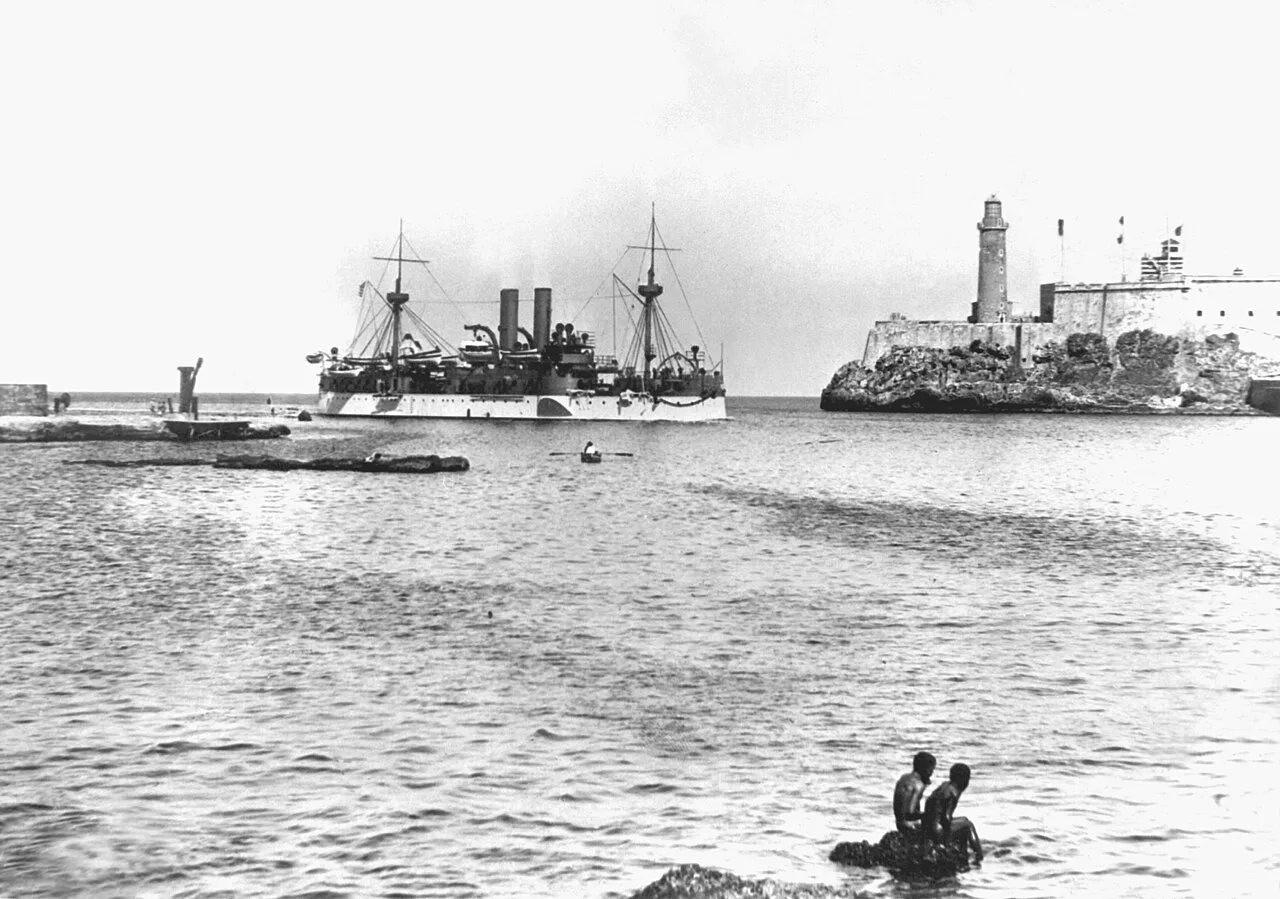
The Spanish-American War of 1898
Triggered by the sinking of the battleship USS Maine in Havana and sensationalist 'yellow journalism', the Spanish-American War resulted in swift American victory, ending Spanish colonial rule and ceding Puerto Rico, Guam, and the Philippines to the United States.
By the numbers
- In what calendar year was the Federal Reserve Act signed into law by Woodrow Wilson?
- 1913 year
- In what calendar year was the Nineteenth Amendment granting women's suffrage officially ratified?
- 1920 year
- In what calendar year did the Spanish-American War take place?
- 1898 year
- In what calendar year did the United States formally declare war on Germany in World War I?
- 1917 year
Matched pairs
Each item on the left goes with the one on the right.
- Sixteenth Amendment
- Constitutional reform authorizing the federal government to levy a direct graduated income tax
- Seventeenth Amendment
- Constitutional mandate establishing direct popular election of United States Senators
- Platt Amendment
- 1901 rider to the U.S. Army Appropriations Act (later written into Cuba's constitution and the 1903 Cuban-American treaty) granting the United States unilateral intervention rights in Cuban affairs
- Committee on Public Information
- Federal wartime agency directed by George Creel to distribute pro-war propaganda and mobilize opinion
Self-test
Answer each question from memory, then check your work against the answer key.
1. What major legislative outcome resulted from Upton Sinclair's 1906 novel The Jungle?
- APassage of the Meat Inspection Act and the Pure Food and Drug Act
- BRatification of the Sixteenth and Seventeenth Amendments
- CCreation of the United States Forest Service and the national forest system
- DPassage of the Clayton Antitrust Act and creation of the Federal Trade Commission
2. How did President Theodore Roosevelt approach corporate monopolies during his presidency?
- AOpposing antitrust enforcement as interference with free-market competition
- BBreaking up every large corporation regardless of how it treated consumers and competitors
- CLeaving all oversight of big business to state governments and avoiding federal lawsuits
- DDistinguishing between good trusts serving efficiency and bad trusts abusing monopoly power
3. What structural reform was established by the Federal Reserve Act of 1913 under Woodrow Wilson?
- AMandatory backing of all federal paper notes with fifty percent silver coin reserves
- BFree and unlimited coinage of silver at a fixed ratio to gold
- CA decentralized national central banking network with twelve regional Federal Reserve Banks
- DThe complete privatization of all national currency issuance into private corporate hands
4. What democratic right was secured nationwide by the Nineteenth Amendment in August 1920?
- AUniversal male voting rights for non-citizen immigrant residents in port cities
- BProhibiting federal and state governments from denying the right to vote on the basis of sex
- CDirect election of state supreme court justices by municipal popular plebiscite
- DMandatory annual referendums on all federal foreign treaty declarations
5. Which constitutional amendment was NOT one of the four ratified during the Progressive Era (1913-1920)?
- AFifteenth Amendment
- BEighteenth Amendment
- CSeventeenth Amendment
- DSixteenth Amendment
6. What was the operational philosophy of Jane Addams's settlement house movement at Hull House?
- AEmployers built company towns that housed immigrant workers beside their factories
- BReformers ran charities from distant offices, giving relief only to families judged morally deserving
- CEducated middle-class reformers lived directly within working-class immigrant communities to provide aid
- DPolitical bosses exchanged jobs and municipal services for immigrants' votes
7. How did Jacob Riis stimulate urban housing reform in New York City with How the Other Half Lives (1890)?
- ABy drafting state legislation requiring all immigrants to live in rural farming communes
- BThrough pioneering flash photojournalism exposing squalid, disease-ridden tenement living conditions
- CBy funding the construction of fifty private luxury apartment towers on Manhattan Island
- DBy lobbying to demolish all municipal harbor wharves in favor of botanical parks
8. How did 'New Immigrants' arriving between 1890 and 1920 differ from earlier European immigrant waves?
- AThey originated predominantly from Northern and Western Europe, practicing Protestant faiths
- BThey originated predominantly from East Asia, arriving through Angel Island, practicing Buddhist and Confucian faiths
- CThey originated predominantly from Latin America, practicing Catholic faith and crossing the southern border
- DThey originated predominantly from Southern and Eastern Europe, practicing Catholic, Jewish, and Orthodox faiths
9. What core philosophical difference separated W.E.B. Du Bois from Booker T. Washington?
- ADu Bois demanded immediate civil and political equality, rejecting Washington's economic accommodationism
- BWashington demanded immediate civil and political equality, rejecting Du Bois's economic accommodationism
- CDu Bois urged Black Americans to emigrate to Africa, while Washington urged them to stay in the South
- DWashington refused all contact with white philanthropists and politicians, while Du Bois courted them
10. Which country was NOT among the primary origins of the 'New Immigrants' arriving in the U.S. between 1890 and 1920?
- APoland
- BIreland
- CItaly
- DAustria-Hungary
Go deeper
- WatchThe Book and the Meat One book about Chicago meatpacking plants led to two new federal laws.
- WatchThe Road to War The Zimmermann Telegram promised Mexico the return of the American Southwest. The price: an alliance against the United States.
- WatchReformers as Neighbors The reformers were also the neighbors. The middle-class women of Hull House lived in its immigrant neighborhood.
- StudyUnited States History in the FlashFeed app
Answer key
- 1. A Passage of the Meat Inspection Act and the Pure Food and Drug ActSinclair's exposé of filthy meatpacking conditions prompted Theodore Roosevelt and Congress to pass consumer protection laws.
- 2. D Distinguishing between good trusts serving efficiency and bad trusts abusing monopoly powerRoosevelt used antitrust lawsuits against predatory monopolies like Northern Securities while regulating beneficial large firms.
- 3. C A decentralized national central banking network with twelve regional Federal Reserve BanksThe Federal Reserve created an elastic national currency, regulated credit, and established regional federal reserve banks.
- 4. B Prohibiting federal and state governments from denying the right to vote on the basis of sexThe Nineteenth Amendment enfranchised women across the United States, concluding a 72-year movement begun at Seneca Falls.
- 5. A Fifteenth AmendmentThe Fifteenth Amendment (1870) secured voting rights regardless of race during Reconstruction, decades before the Progressive Era. The four Progressive Era amendments were the Sixteenth, Seventeenth, Eighteenth, and Nineteenth (1913-1920).
- 6. C Educated middle-class reformers lived directly within working-class immigrant communities to provide aidSettlement house workers lived in poor neighborhoods, providing childcare, English classes, clinics, and advocating for labor reform.
- 7. B Through pioneering flash photojournalism exposing squalid, disease-ridden tenement living conditionsRiis's vivid photographs of crowded tenements shocked the public, prompting passage of New York's Tenement House Law of 1901.
- 8. D They originated predominantly from Southern and Eastern Europe, practicing Catholic, Jewish, and Orthodox faithsNew Immigrants from Italy, Poland, Russia, and the Balkans faced nativist discrimination due to religious and linguistic differences.
- 9. A Du Bois demanded immediate civil and political equality, rejecting Washington's economic accommodationismDu Bois rejected Washington's 'Atlanta Compromise', insisting that Black Americans must demand full constitutional rights immediately.
- 10. B IrelandNew Immigrants came mainly from Southern and Eastern Europe: Italy, Poland, Russia, Greece, and Austria-Hungary. Irish immigration peaked earlier, in the mid-nineteenth century, and belonged to the older wave the lesson contrasts with the New Immigrants.
Sources
- Progressivism at the Grassroots Level (OpenStax U.S. History, via Lumen Learning) — courses.lumenlearning.com/wm-ushistory2/chapter/progressivism-at-the-grassroots-level/
- Sinclair, The Jungle (1906)
- Morris, Theodore Rex, Ch. 15
- Link, Woodrow Wilson and the Progressive Era
- DuBois, Suffrage: Women's Long Battle for the Vote
- Addams, Twenty Years at Hull-House
- Riis, How the Other Half Lives (1890)
- Daniels, Coming to America, Ch. 8
- Trask, The War with Spain in 1898, Ch. 20
- Kennedy, Over Here: The First World War and American Society
- Cooper, Breaking the Heart of the World, Ch. 9
- Sinclair, The Jungle
- Morris, Theodore Rex
- DuBois, Suffrage
- Riis, How the Other Half Lives
- Daniels, Coming to America
- Lewis, W.E.B. Du Bois
- Trask, The War with Spain in 1898
- Kennedy, Over Here
- Cooper, Breaking the Heart of the World
- Hofstadter, The Age of Reform
Image credits
- Theodore Roosevelt's Square Deal: Wikimedia Commons · Adam Cuerden · Public domain — commons.wikimedia.org/wiki/File:Theodore_Roosevelt_by_the_Pach_Bros_(4x5_cropped)_(3).jpg
- Jacob Riis and Urban Tenement Reform: Jacob Riis (Museum of Modern Art print; restored by Adam Cuerden) · public domain — commons.wikimedia.org/wiki/File:Bandits_Roost,_59_and_a_half_Mulberry_Street.jpg
- Ellis Island and the New Immigration: NPS Photo (National Park Service) · public domain — commons.wikimedia.org/wiki/File:The_Registry_Room,_Ellis_Island%27s_Great_Hall_(32dd2c98-1dd8-b71b-0baa-d21a283d8f42).jpg
- The Spanish-American War of 1898: Unknown photographer (U.S. Department of Defense archive) · public domain — commons.wikimedia.org/wiki/File:USS_Maine_entering_Havana_harbor_HD-SN-99-01929.JPEG


