
United States History study guide · Lesson 3 of 13
Creating the Republic: Constitutional Design and the Federalists (1781–1800)
Articles of Confederation, Shays' Rebellion, and the 1787 Convention · Federalism, Separation of Powers, and the Great & Three-Fifths Compromises · Hamilton's Financial Plan, Emergence of Parties, and the Bill of Rights
This is the lesson's study guide from the FlashFeed app, plus its key facts and a self-test.
What you'll be able to do
- Describe the weaknesses of the Articles of Confederation, the impact of Shays' Rebellion, and the work of the 1787 Convention.
- Explain federalism, separation of powers, checks and balances, and the Great and Three-Fifths Compromises.
Lesson 3: Creating the Republic: Constitutional Design and the Federalists (1781–1800)
Articles of Confederation, Shays' Rebellion, and the 1787 Convention
The first national constitution of the United States was the Articles of Confederation, drafted in 1777 and ratified in 1781. Reflecting intense revolutionary fears of centralized tyranny, the Articles established a weak "firm league of friendship" among thirteen sovereign states. The unicameral Confederation Congress possessed no power to levy taxes directly, regulate interstate or foreign commerce, or compel state compliance. It lacked an independent executive branch to enforce statutes and a national judiciary to resolve legal disputes. Furthermore, major legislation required the approval of nine of the thirteen states, while constitutional amendments required unanimous consent. Despite these structural limits, the Confederation Congress achieved lasting success through the Northwest Ordinance of 1787, which established an orderly mechanism for admitting new states on equal terms with original states, encouraged public education (building on the land-grant framework already set by the 1785 Land Ordinance), and permanently prohibited slavery in the Northwest Territory.
The Confederation's structural paralysis caused widespread economic instability and diplomatic weakness. In western Massachusetts, indebted rural farmers faced foreclosures and debtors' prison due to high state taxes payable only in hard specie. Led by Continental Army veteran Daniel Shays, armed farmers shut down county courthouses in 1786–1787 during Shays' Rebellion. When the national government proved powerless to dispatch federal troops to quell the insurrection, elite leaders like George Washington and Alexander Hamilton were galvanized to seek urgent constitutional revision.
In May 1787, fifty-five delegates assembled at the Pennsylvania State House in Philadelphia for the Constitutional Convention. Overturning their initial mandate to merely amend the Articles of Confederation, the delegates resolved to draft an entirely new framework of national government. Presided over by George Washington, the convention operated under strict secrecy to encourage candid debate and compromise.
Federalism, Separation of Powers, and the Great & Three-Fifths Compromises
The core architectural debate at Philadelphia centered on national representation and legislative power. James Madison drafted the Virginia Plan, which Edmund Randolph presented to the convention; it advocated a strong bicameral national legislature with proportional representation based on population, empowering populous states. In response, William Paterson presented the New Jersey Plan, calling for a unicameral legislature where each state received equal voting power, protecting small states. Roger Sherman resolved the deadlock through the Connecticut Compromise (or Great Compromise), creating a bicameral Congress: a House of Representatives apportioned by population and directly elected by the people, and a Senate granting equal representation (two senators per state), originally chosen by state legislatures.
The convention also grappled with the contentious issue of enslavement. Southern delegates demanded that enslaved persons be counted for congressional representation but excluded for direct tax assessments; Northern delegates objected that property could not claim political representation. The resulting Three-Fifths Compromise stipulated that three-fifths of all "other persons" (enslaved individuals) would be added to the free population count for both congressional apportionment and direct taxation. The Constitution also included the Fugitive Slave Clause (Article IV, Section 2) and prohibited Congress from banning the transatlantic slave trade until 1808.
The resulting Constitution established a system of federalism—the constitutional division of sovereign powers between the national government and state governments. To prevent tyranny, the Framers incorporated separation of powers across three distinct branches: legislative (Article I), executive (Article II), and judicial (Article III). Through checks and balances, each branch was granted mechanisms to restrain the others: the presidential veto over legislation, congressional power of the purse and impeachment, and Senate advice and consent for treaties and appointments.
Hamilton's Financial Plan, Emergence of Parties, and the Bill of Rights
Ratification of the Constitution required approval by nine of the thirteen state ratifying conventions. Supporters, calling themselves Federalists, campaigned aggressively for ratification. In New York, Alexander Hamilton, James Madison, and John Jay authored The Federalist Papers (85 essays). In Federalist No. 10, Madison famously argued that an extended republic would control the violence of factions better than a small democracy. Anti-Federalists, including Patrick Henry and George Mason, argued that the Constitution created a consolidated aristocratic tyranny and demanded a written Bill of Rights to protect individual liberties. To secure ratification in key states like Virginia and New York, Federalists pledged to add amendments immediately. Drafted primarily by Madison in the First Congress, the first ten amendments—the Bill of Rights—were ratified in 1791, safeguarding freedoms of speech, religion, the press, assembly, trial by jury, and reserving powers not delegated to the federal government to the states or the people (Tenth Amendment).
As the first Secretary of the Treasury under President George Washington, Alexander Hamilton enacted a bold financial program designed to establish national public credit and tie wealthy commercial elites to the federal government. Hamilton's plan contained four key components:
- Funding the national debt at par (full face value).
- Federal assumption of state Revolutionary War debts, secured in the Compromise of 1790 by agreeing to locate the permanent national capital on the Potomac River (Washington, D.C.).
- The creation of the Bank of the United States (BUS) (1791) to hold government funds and issue stable currency, defended by Hamilton under the "implied powers" of the Necessary and Proper Clause (loose construction).
- An excise tax on distilled whiskey, which provoked the Whiskey Rebellion in western Pennsylvania in 1794, crushed when Washington led a federal militia of 13,000 to assert national sovereignty.
Hamilton's commercial program and pro-British foreign policy clashed with the vision of Thomas Jefferson and James Madison, who favored an agrarian republic of independent yeoman farmers, strict constitutional construction, and sympathy with the French Revolution. This philosophical rift produced the First Party System: Hamilton's Federalist Party (pro-commerce, strong federal government, Anglophile) versus Jefferson's Democratic-Republican Party (pro-agrarian, states' rights, Francophile). In his Farewell Address (1796), Washington warned the young nation against the dangers of permanent foreign alliances and partisan factionalism. Tensions peaked during John Adams's presidency following the XYZ Affair and amid the undeclared naval Quasi-War with France (1798–1800), prompting the Federalists to pass the repressive Alien and Sedition Acts of 1798; the Sedition Act made it a crime to write or publish false, scandalous, and malicious statements against the government, Congress, or the president. Jefferson and Madison responded with the Virginia and Kentucky Resolutions (1798), introducing the compact theory of the Union and the radical doctrine of state nullification.
Key terms
- Federalism
- A constitutional system dividing sovereign political authority between a central national government and constituent regional state governments.
- Separation of Powers
- The constitutional division of governmental responsibilities into distinct legislative, executive, and judicial branches to prevent the concentration of tyrannical power.
- Implied Powers
- Constitutional powers of the federal government not explicitly enumerated in text but reasonably deduced from the Necessary and Proper Clause to execute delegated duties.
- Nullification
- A legal theory asserting that sovereign states possess the constitutional authority to declare void and refuse enforcement of unconstitutional federal statutes within their borders.
Key concepts
Northwest Ordinance of 1787
- Enacted by the Confederation Congress to govern territories north of the Ohio River
- Established a three-stage protocol for admitting new western territories as equal states
- Permanently prohibited the introduction of slavery in the Northwest Territory
Shays' Rebellion
- Armed uprising of indebted farmers in western Massachusetts during 1786–1787
- Led by Continental Army veteran Daniel Shays, shutting down county debtor courts
- Galvanized nationalist political leaders to convene the Constitutional Convention in Philadelphia
Great Compromise
- Constitutional agreement proposed by Roger Sherman of Connecticut in 1787
- Created a bicameral legislative branch balancing large and small state interests
- Apportioned House representation by population while granting each state two Senators
Federalist Papers
- Series of 85 political essays written in 1787–1788 to promote ratification in New York
- Authored collaboratively under the pseudonym 'Publius' by Hamilton, Madison, and Jay
- Articulated foundational arguments on the extended republic, factions, and checks and balances
Bill of Rights
- First ten amendments to the United States Constitution ratified in 1791
- Drafted primarily by James Madison to fulfill commitments made to Anti-Federalists
- Guaranteed fundamental liberties including speech, press, religion, assembly, and trial by jury
Alexander Hamilton
- First Secretary of the Treasury under George Washington who authored reports on public credit
- Created the Bank of the United States and defended loose constitutional construction
- Served as the intellectual leader and architect of the Federalist Party
Whiskey Rebellion
- Tax revolt in western Pennsylvania in 1794 protesting a federal excise tax on distilled spirits
- Saw grain farmers attack federal revenue collectors and threaten municipal garrisons
- Suppressed when President Washington personally led a 13,000-man federal militia army
Key facts
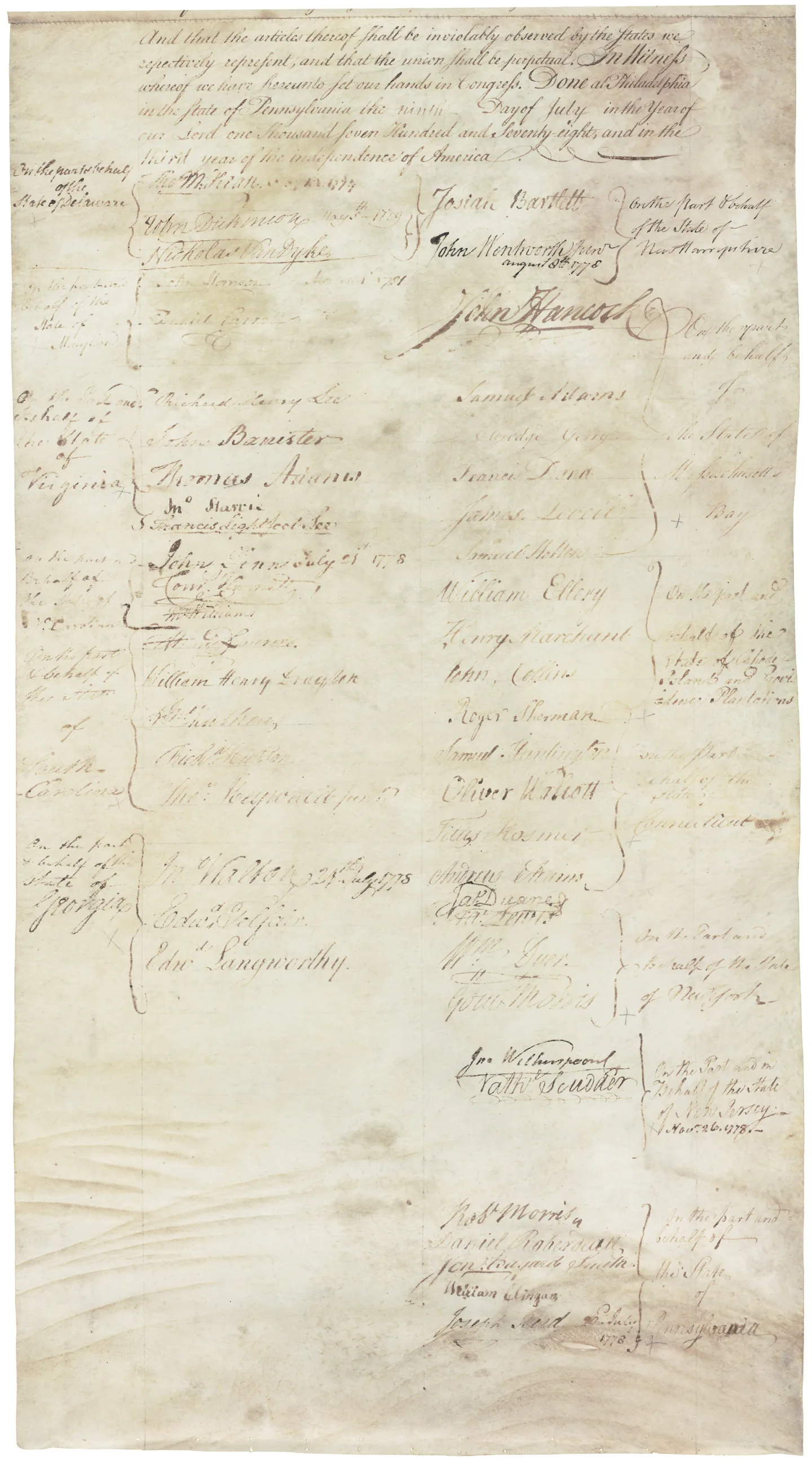
Weaknesses of the Articles of Confederation
Ratified in 1781, the Articles of Confederation established a decentralized national government that lacked the constitutional power to levy direct taxes, regulate interstate or foreign commerce, or enforce federal requisitions against sovereign states.
The Northwest Ordinance of 1787
The Confederation Congress enacted the Northwest Ordinance of 1787, establishing an orderly protocol for admitting new western territories as equal states, encouraging public education (building on the land-grant framework already set by the 1785 Land Ordinance), and permanently prohibiting slavery north of the Ohio River.
Shays' Rebellion in Massachusetts
In 1786–1787, Continental Army veteran Daniel Shays led an armed uprising of indebted Massachusetts farmers who shut down county debtor courts to prevent farm foreclosures, convincing nationalist elites of the urgent necessity for a stronger federal government.
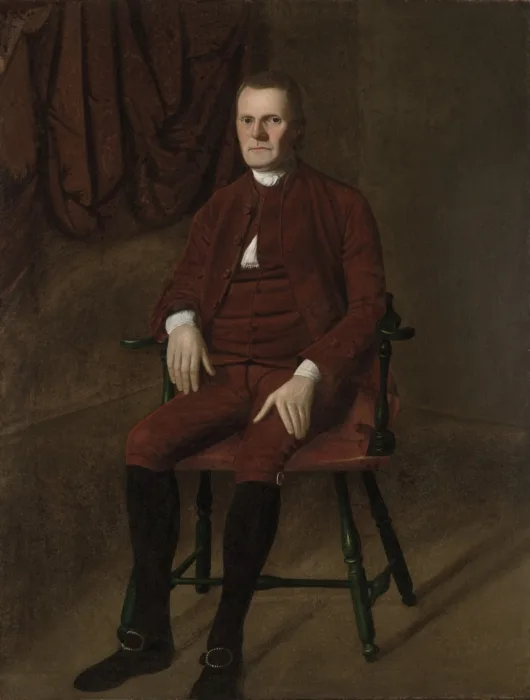
The Connecticut (Great) Compromise
Authored by Roger Sherman, the Great Compromise resolved the fierce convention debate between the Virginia and New Jersey Plans by creating a bicameral Congress: a House of Representatives apportioned by population and a Senate granting equal representation to each state.
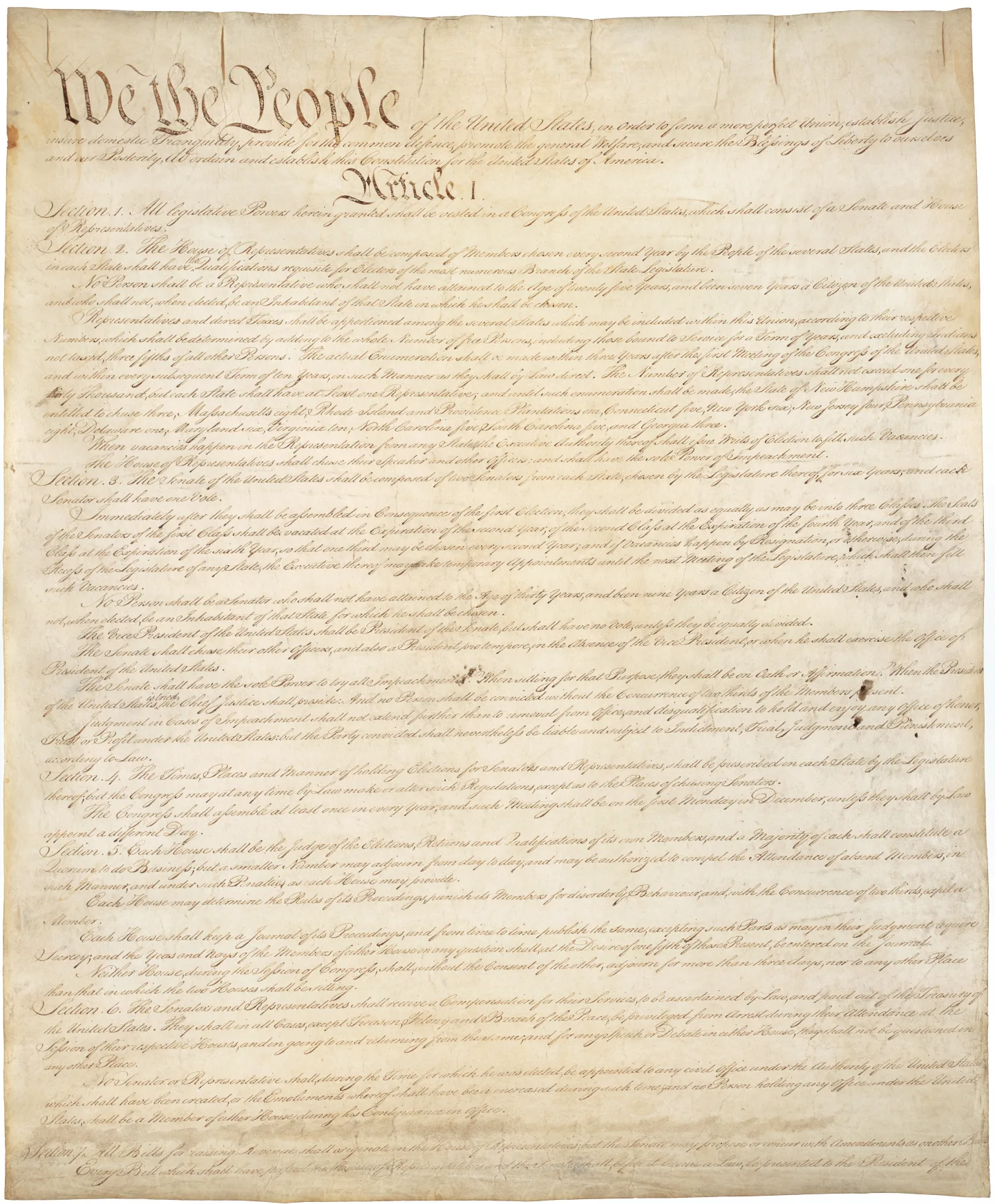
The Three-Fifths Compromise
Article I, Section 2 of the Constitution established the Three-Fifths Compromise, stipulating that three-fifths of the enslaved population would be counted for both congressional representation and direct federal taxation, granting Southern states disproportionate national political power.
Separation of Powers and Checks and Balances
The Framers embedded Montesquieu's doctrine of separation of powers across three co-equal branches (legislative, executive, and judicial), equipping each branch with constitutional checks—such as the presidential veto and congressional impeachment—to prevent tyranny.
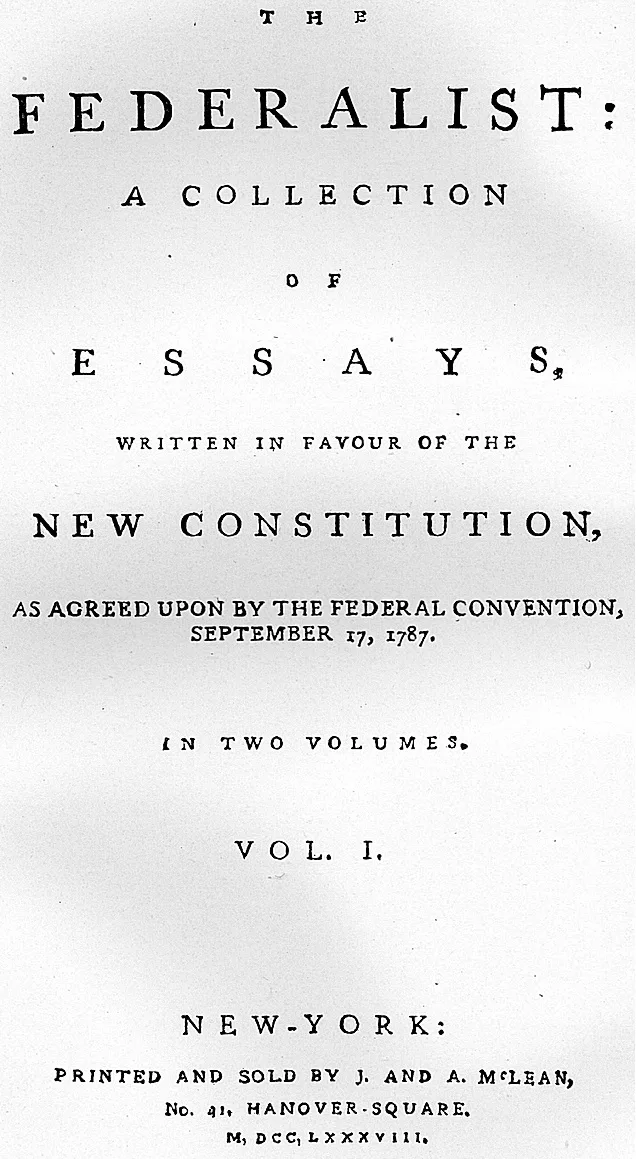
Madison's Theory of Factions in Federalist No. 10
In Federalist No. 10, James Madison argued that a large extended republic was superior to small direct democracies at controlling the dangerous effects of political factions, because a multiplicity of competing interests would prevent any single majority from oppressing the minority.
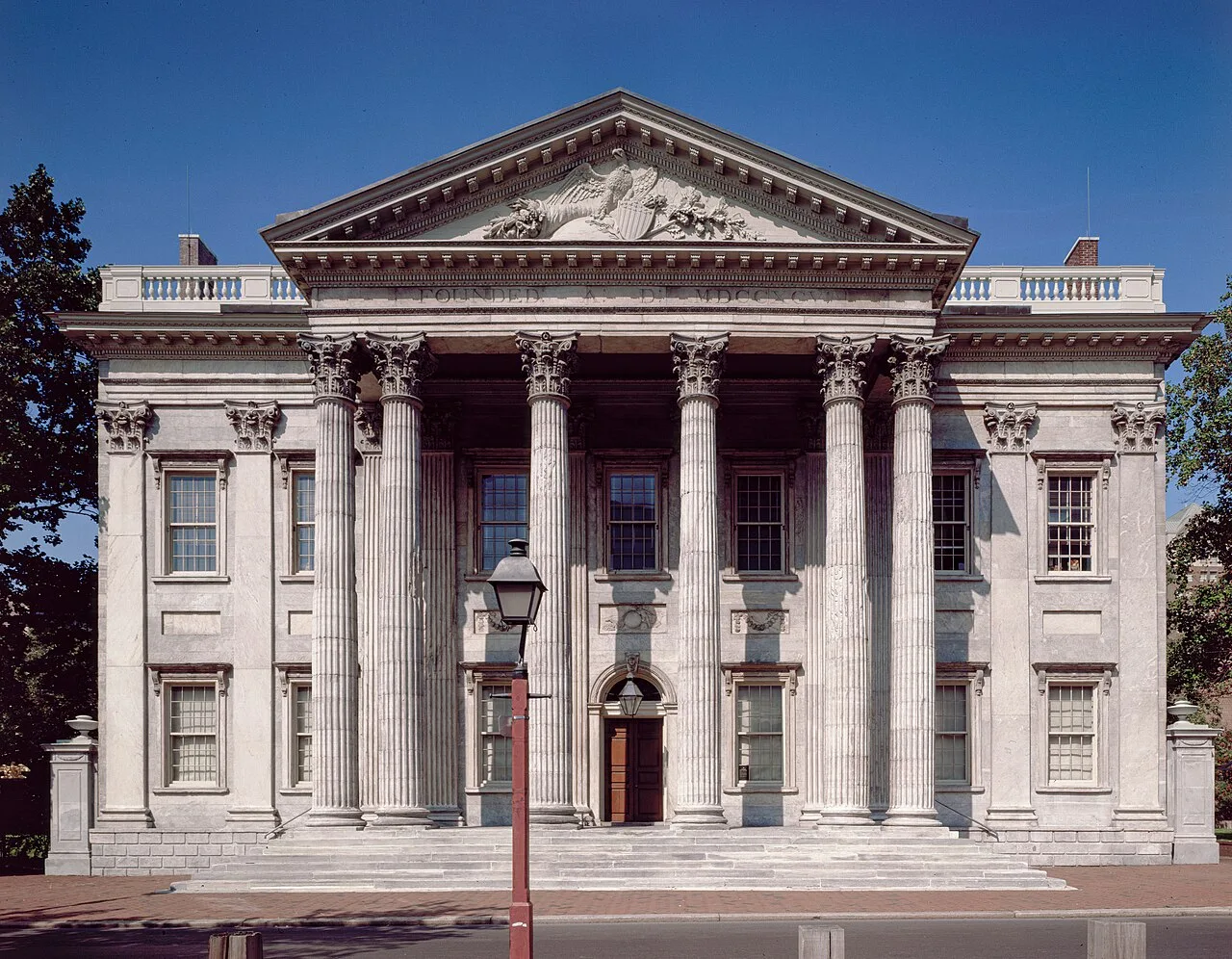
Hamilton's Creation of the National Bank
In 1791, Secretary of the Treasury Alexander Hamilton secured the creation of the First Bank of the United States, defending its constitutionality under the Necessary and Proper Clause ('implied powers') to manage government deposits, collect taxes, and issue a stable currency.

The Virginia and Kentucky Resolutions
Drafted secretly by Thomas Jefferson and James Madison in 1798 to protest the Federalist Alien and Sedition Acts, the Kentucky and Virginia Resolutions introduced the compact theory of the Constitution, arguing that states had the right to nullify unconstitutional federal laws.
By the numbers
- How many state delegates attended the 1787 Constitutional Convention in Philadelphia?
- 55 delegates
- How many total essays were published in The Federalist Papers defending the Constitution?
- 85 essays
- How many constitutional amendments were ratified together in 1791 as the Bill of Rights?
- 10 amendments
- In what calendar year did President George Washington lead federal militia to quell the Whiskey Rebellion?
- 1794 year
Matched pairs
Each item on the left goes with the one on the right.
- Virginia Plan
- Proposal for a strong bicameral legislature apportioned purely by population
- New Jersey Plan
- Proposal for a unicameral legislature granting each sovereign state one equal vote
- Tenth Amendment
- Constitutional clause reserving all non-delegated sovereign powers to states or people
- Sedition Act of 1798
- Statute criminalizing false, scandalous, and malicious writing against the government
Self-test
Answer each question from memory, then check your work against the answer key.
1. What major legislative achievement was successfully enacted by the national government under the Articles of Confederation?
- AA comprehensive federal tariff statute funding a standing army of twenty thousand regulars
- BA national executive office with power to enforce the acts of Congress
- CA permanent federal court system with power to overturn state laws
- DThe Northwest Ordinance establishing procedures for statehood and banning slavery in the territory
2. How did Shays' Rebellion (1786–1787) influence elite political opinion across the United States?
- AIt convinced elite leaders that the Articles needed only minor repairs, not replacement
- BIt exposed the national government's weakness in suppressing civil unrest and protecting property
- CIt led Congress to raise a federal army that quickly crushed the rebels
- DIt persuaded Congress to cancel farm debts and end hard-money taxes
3. What structural conflict did the Connecticut (Great) Compromise resolve at the 1787 Constitutional Convention?
- AThe balance between large states favoring proportional representation and small states demanding equal representation
- BThe dispute over whether the president should be chosen by Congress or by direct popular vote
- CThe dispute over whether federal supreme court justices should be elected by direct popular ballot
- DThe debate over whether Congress could ban the transatlantic slave trade
4. How did the Three-Fifths Compromise shape the distribution of political power in the young republic?
- AIt fixed each state's Senate representation at two seats regardless of population
- BIt counted enslaved people toward direct taxes only, with no effect on House representation
- CIt gave Southern slave states bonus congressional seats and electoral votes based on enslaved populations
- DIt required Congress to end the transatlantic slave trade immediately after ratification
5. Under the Articles of Confederation, what vote share was required to pass major legislation in the Confederation Congress?
- ANine of the thirteen states
- BUnanimous consent of all states
- CA simple majority of delegates
- DTwo-thirds of the states
6. Why did Anti-Federalists like Patrick Henry and George Mason oppose ratification of the 1787 Constitution?
- AThey objected that the Constitution gave ordinary citizens too much direct power over the government
- BThey objected that neither house of Congress gave the small states an equal vote
- CThey wanted a far stronger central government with more power over the states
- DThey feared a consolidated central government would destroy state sovereignty and lacked a Bill of Rights
7. What core constitutional mechanism did the Framers implement to prevent any single branch from dominating government?
- AAnnual elections for every federal officeholder, including Supreme Court judges
- BChecks and balances granting each branch specific powers to restrain the actions of the others
- CA national veto held by the state legislatures over any act of Congress
- DA national executive council chosen by Congress to serve at its pleasure
8. How did the Tenth Amendment define the constitutional boundary between federal and state powers?
- AIt protected individual rights not listed in the Constitution from any government interference
- BIt gave Congress unlimited power to act on any matter affecting the general welfare
- CIt reserved to the states or the people all powers the Constitution did not delegate to the federal government
- DIt barred states from exercising any power that overlaps with a federal power
9. Which 1787 convention proposal called for a bicameral legislature with representation based purely on state population?
- AThree-Fifths Compromise
- BConnecticut Compromise
- CVirginia Plan
- DNew Jersey Plan
10. Under the Three-Fifths Compromise, enslaved persons were partially counted for which two purposes?
- AMilitia quotas and land grants
- BElections and court appointments
- CTreaties and tariff revenue
- DRepresentation and taxation
Go deeper
- WatchShays' Rebellion Armed farmers shut down courthouses in western Massachusetts. They faced debtors' prison and losing their farms.
- WatchThe Three-Fifths Compromise Should enslaved people count toward a state's seats in Congress? Delegates in Philadelphia split over it.
- WatchA Capital for a Debt The United States capital sits on the Potomac River because of a deal over debt.
- StudyUnited States History in the FlashFeed app
Answer key
- 1. D The Northwest Ordinance establishing procedures for statehood and banning slavery in the territoryThe Northwest Ordinance of 1787 created a democratic process for new states to enter the Union and prohibited slavery in the territory.
- 2. B It exposed the national government's weakness in suppressing civil unrest and protecting propertyShays' Rebellion demonstrated that the Confederation was powerless to quell domestic insurrection, accelerating calls for constitutional reform.
- 3. A The balance between large states favoring proportional representation and small states demanding equal representationThe Great Compromise established proportional representation in the House of Representatives and equal state representation in the Senate.
- 4. C It gave Southern slave states bonus congressional seats and electoral votes based on enslaved populationsBy counting three-fifths of enslaved people for apportionment, Southern states secured disproportionate representation in Congress and the Electoral College.
- 5. A Nine of the thirteen statesMajor legislation required approval from nine of the thirteen states, while amending the Articles required unanimous consent.
- 6. D They feared a consolidated central government would destroy state sovereignty and lacked a Bill of RightsAnti-Federalists argued that the Constitution created an overly centralized government that threatened states' rights and individual liberties.
- 7. B Checks and balances granting each branch specific powers to restrain the actions of the othersChecks and balances (such as presidential vetoes and congressional impeachment) divide and balance power across branches.
- 8. C It reserved to the states or the people all powers the Constitution did not delegate to the federal governmentThe Tenth Amendment established the principle of reserved powers, affirming that non-delegated powers remain with the states or the people.
- 9. C Virginia PlanJames Madison's Virginia Plan proposed representation by population; the New Jersey Plan favored equal state votes, reconciled by the Great Compromise.
- 10. D Representation and taxationArticle I, Section 2 counted three-fifths of the enslaved population toward both congressional representation and direct federal taxation.
Sources
- Wood, The Creation of the American Republic, Ch. 9
- Taylor, American Republics, Ch. 2
- Richards, Shays's Rebellion, Ch. 4
- Beeman, Plain Honest Men, Ch. 3
- Rakove, Original Meanings, Ch. 4
- Finkelman, Slavery and the Founders, Ch. 1
- Rakove, Original Meanings, Ch. 8
- Madison, Federalist No. 10 (1787)
- Amar, The Bill of Rights, Ch. 1
- Chernow, Alexander Hamilton, Ch. 18
- Elkins & McKitrick, The Age of Federalism, Ch. 15
- Finkelman, Slavery and the Founders
- Madison, Federalist No. 10
- Wood, The Creation of the American Republic
- Elkins & McKitrick, The Age of Federalism, Ch. 3
- Elkins & McKitrick, The Age of Federalism, Ch. 11
- Elkins & McKitrick, The Age of Federalism, Ch. 12
- Elkins & McKitrick, The Age of Federalism
- Amar, The Bill of Rights
- Taylor, American Republics
- Richards, Shays's Rebellion
- Rakove, Original Meanings
- Chernow, Alexander Hamilton
- Beeman, Plain Honest Men
Image credits
- Weaknesses of the Articles of Confederation: Wikimedia Commons · Continental Congress · Public domain — commons.wikimedia.org/wiki/File:Articles_of_Confederation_13.jpg
- The Connecticut (Great) Compromise: Wikimedia Commons · Ralph Earl · Public domain — commons.wikimedia.org/wiki/File:Roger_Sherman_1721-1793_by_Ralph_Earl.jpeg
- The Three-Fifths Compromise: Wikimedia Commons · Constitutional Convention · Public domain — commons.wikimedia.org/wiki/File:Constitution_of_the_United_States_-_DPLA_-_9ca804144bd5965e992ae3528bc3c6a3_(page_1).jpg
- Madison's Theory of Factions in Federalist No. 10: Wikimedia Commons · The original uploader was Anathema at German Wikipedia · Public domain — commons.wikimedia.org/wiki/File:Federalist-1788.jpg
- Hamilton's Creation of the National Bank: Carol M. Highsmith · Public domain — commons.wikimedia.org/wiki/File:First_Bank_of_the_United_States,_Philadelphia,_Pennsylvania_LCCN2011633532_(edited).jpg
- The Virginia and Kentucky Resolutions: Wikimedia Commons · Lautman, Robert C. · Public domain — commons.wikimedia.org/wiki/File:Detail,_west_(front),_main_entrance,_portico_deck_and_portico_stair,_view_looking_south_-_Montpelier,_13480_South_Montpelier_Road,_Montpelier_Station,_Orange_County,_VA_HABS_VA,69-MONTS.V,2-6.tif


