
United States History study guide · Lesson 6 of 13
The Sectional Crisis, Economics of Slavery, and Road to Disunion (1850–1861)
King Cotton, Plantation Economics, and the Domestic Slave Trade · Abolitionism, the Fugitive Slave Act, and Bleeding Kansas · Dred Scott, Lincoln-Douglas Debates, Harpers Ferry, and 1860 Election
This is the lesson's study guide from the FlashFeed app, plus its key facts and a self-test.
What you'll be able to do
- Explain how cotton, the domestic slave trade, and the 'positive good' defense bound the South to slavery.
- Trace how abolitionism, the Fugitive Slave Act, and the Kansas-Nebraska Act deepened the sectional crisis.
Lesson 6: The Sectional Crisis, Economics of Slavery, and Road to Disunion (1850–1861)
King Cotton, Plantation Economics, and the Domestic Slave Trade
By 1850, the Southern economy was entirely dominated by chattel slavery and the production of short-staple cotton. Following Eli Whitney's cotton gin (1793), the Southern cotton crop expanded exponentially, providing roughly 60 percent of total United States export value and supplying the textile mills of Great Britain and New England. Southern planters embraced the political concept of "King Cotton", believing that Britain's reliance on American cotton gave the South invincible economic leverage.
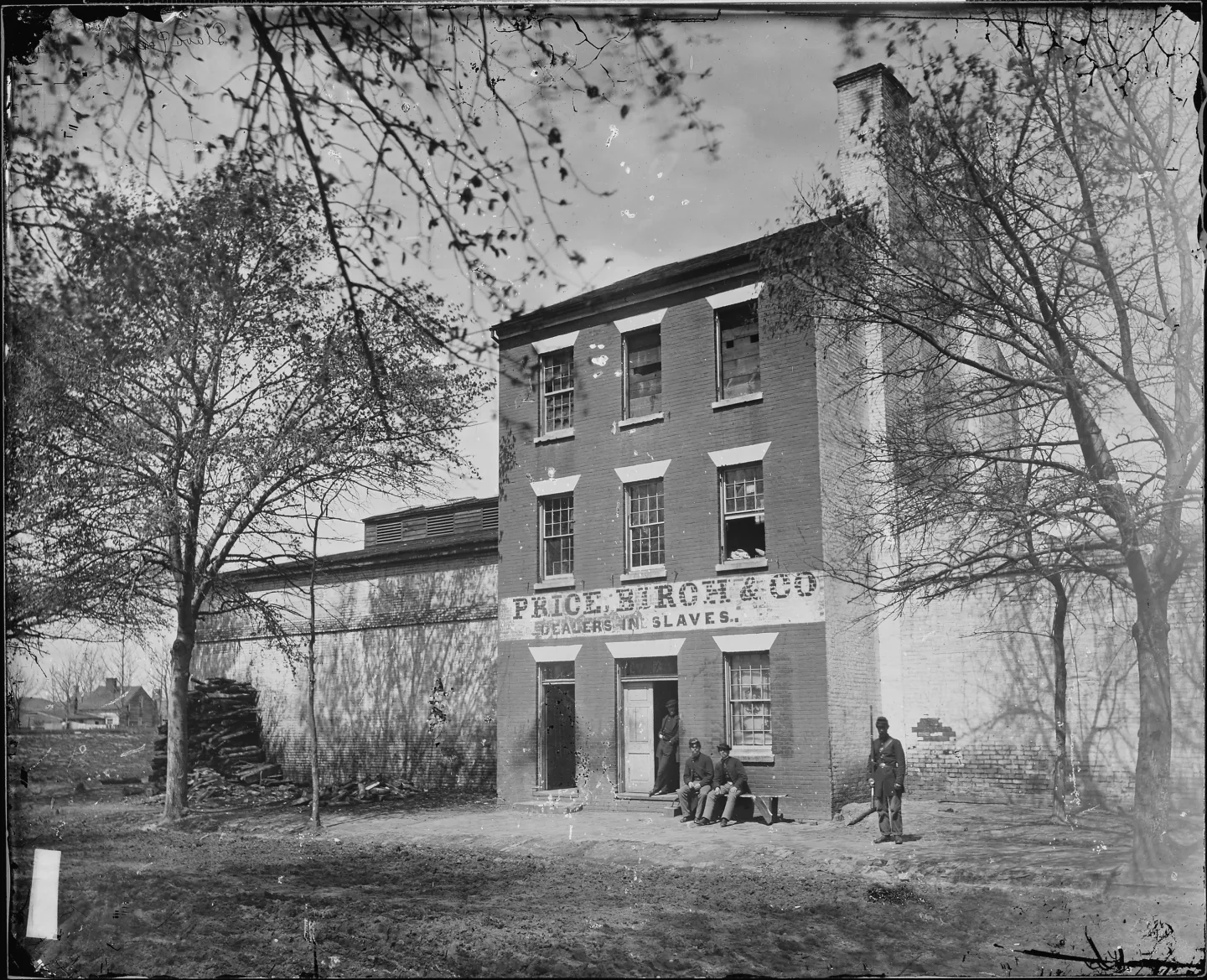
Because the federal government abolished the transatlantic slave trade in 1808, Southern planters met their insatiable demand for labor through the domestic slave trade (the "Second Middle Passage"). Over one million enslaved African Americans were forcibly relocated from the Upper South (Virginia, Maryland) to the booming plantations of the Deep South ("Black Belt" regions of Georgia, Alabama, Mississippi, Louisiana, and Texas). Enslaved people were capitalized assets; by some economic historians' estimates, the total monetary value of enslaved human beings exceeded the combined value of all American railroads, factories, and commercial banks, though the precise methodology behind such comparisons remains debated. Enslaved people resisted their bondage through daily sabotage, feigning illness, running away (sometimes aided by Underground Railroad conductors such as Harriet Tubman), and organizing armed uprisings like Nat Turner's Rebellion (1831) in Virginia, which prompted draconian restrictions across the South.
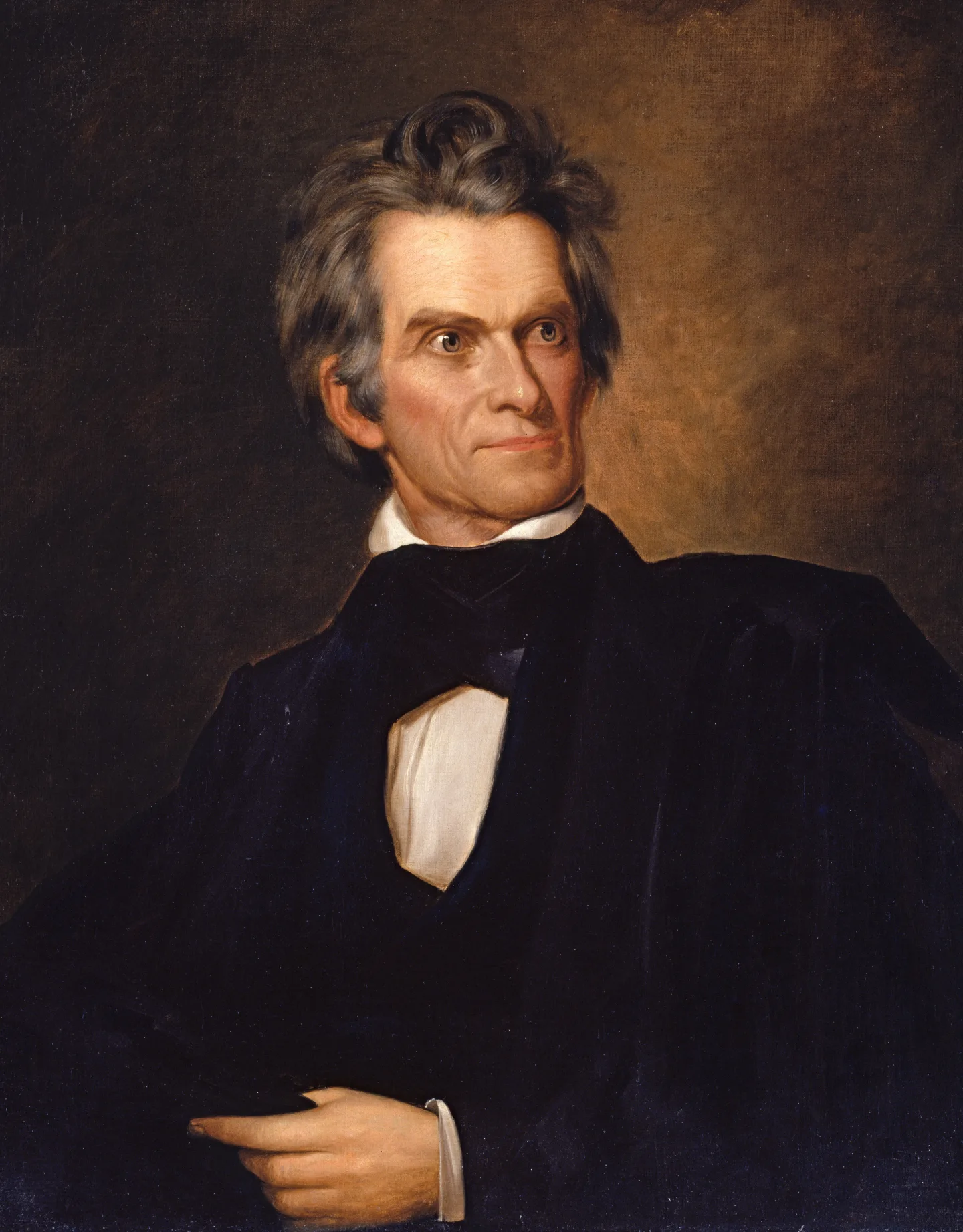
Southern intellectuals moved from defending slavery as a "necessary evil" to championing it as a "positive good". Ideologues like George Fitzhugh and John C. Calhoun argued that Southern chattel slavery was morally superior to Northern industrial "wage slavery", claiming it provided lifelong paternalistic security for laborers while insulating society from class warfare.
Abolitionism, the Fugitive Slave Act, and Bleeding Kansas
In the North, the radical abolitionist movement gained momentum. In 1831, William Lloyd Garrison founded The Liberator, demanding the immediate, uncompensated emancipation of all enslaved people; by the 1840s he was denouncing the Constitution as a "covenant with death." Escaped enslaved leaders like Frederick Douglass and Sojourner Truth provided firsthand eloquence on the brutality of the slave system.
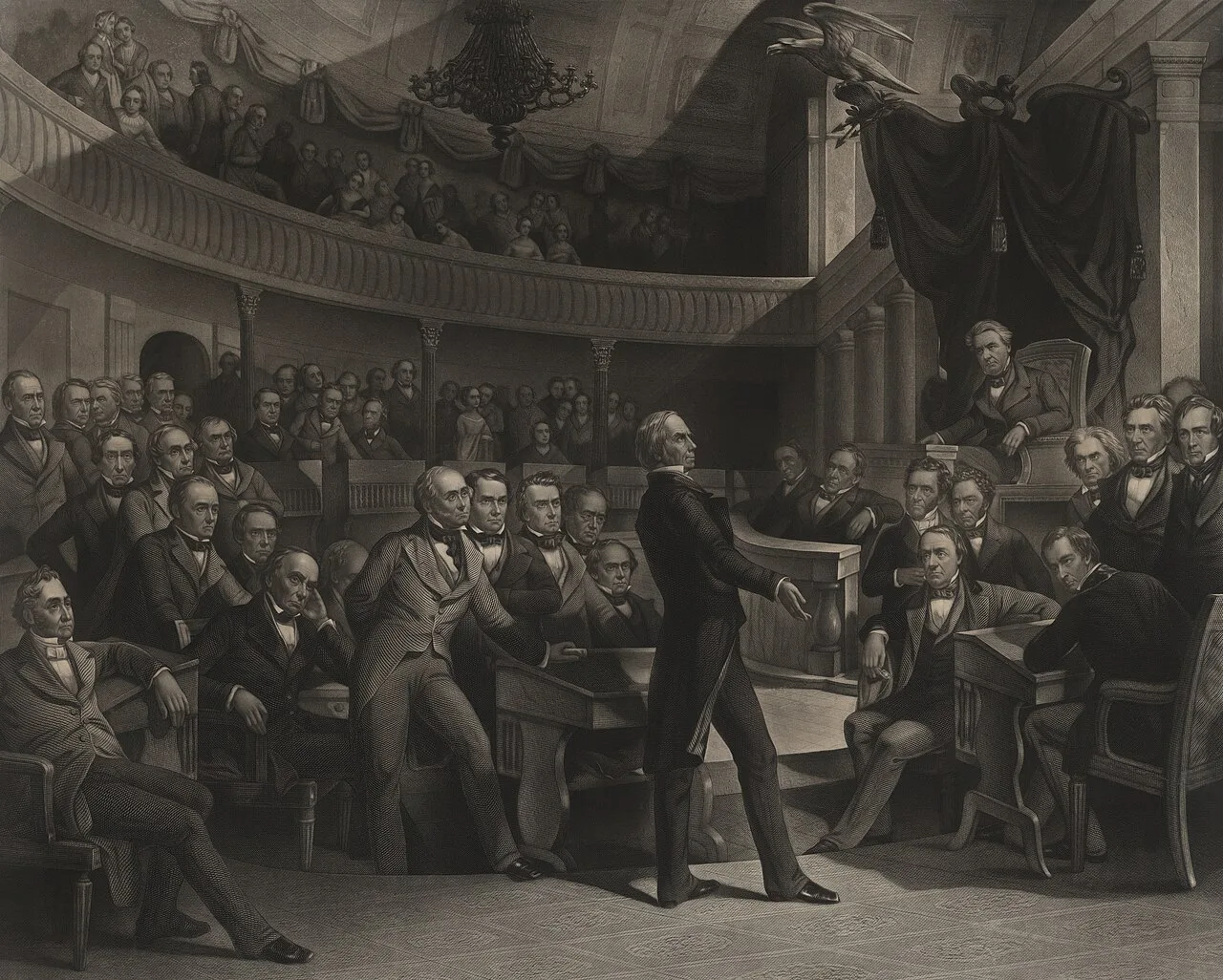
The admission of California as a free state following the 1848 Gold Rush threatened to permanently shatter the Senate sectional balance. Henry Clay and Stephen A. Douglas forged the Compromise of 1850:
- California was admitted as a free state.
- The territories of New Mexico and Utah were organized under popular sovereignty (territorial voters would decide slavery).
- The domestic slave trade (though not slavery itself) was abolished in Washington, D.C.
- A stringent new Fugitive Slave Act of 1850 was enacted, empowering federal commissioners to rule on alleged runaways without jury trials, obliging federal marshals to arrest them, commanding citizens to assist when summoned, and punishing anyone who hid a fugitive or obstructed an arrest with a fine of up to $1,000 and up to six months in jail.
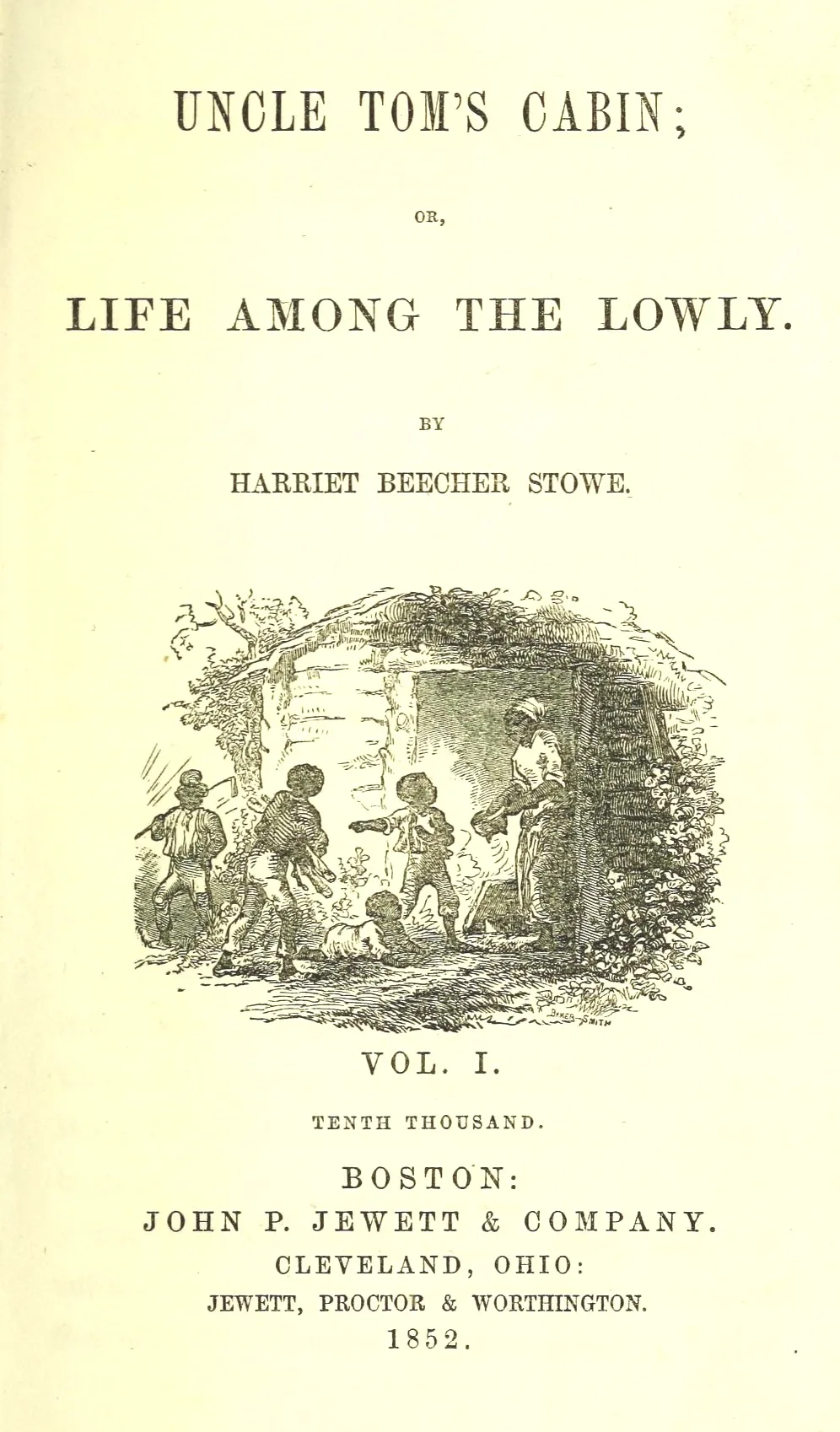
The Fugitive Slave Act brought the violence of slavery directly into Northern communities, sparking fierce resistance, rescue riots, and state personal liberty laws. Public outrage intensified with the 1852 publication of Harriet Beecher Stowe's novel, Uncle Tom's Cabin, which humanized enslaved people and personalized the moral cruelty of family separation.
In 1854, Illinois Senator Stephen A. Douglas introduced the Kansas-Nebraska Act to facilitate a transcontinental railroad route through Chicago. The act repealed the Missouri Compromise's 36°30' prohibition on slavery, opening Kansas and Nebraska territories to popular sovereignty. This legislative betrayal ignited "Bleeding Kansas", a localized civil war between pro-slavery "Border Ruffians" from Missouri and anti-slavery "Free-Soilers" armed by Northern abolitionists. In May 1856, radical abolitionist John Brown led the Pottawatomie Massacre, executing five pro-slavery settlers. Days earlier on the Senate floor, South Carolina Representative Preston Brooks brutally caned Massachusetts Senator Charles Sumner unconscious following Sumner's "Crime Against Kansas" speech.
Dred Scott, Lincoln-Douglas Debates, Harpers Ferry, and 1860 Election
The Kansas-Nebraska Act shattered the Whig Party, giving birth to the Republican Party (1854), a Northern coalition united around the "Free Soil" doctrine—preventing any further territorial expansion of slavery to preserve western lands for free white labor.
In March 1857, the Supreme Court delivered the catastrophic ruling in Dred Scott v. Sandford. Chief Justice Roger B. Taney declared:
- African Americans (free or enslaved) were not and could never be citizens under the Constitution and therefore had no standing to sue in federal courts.
- Enslaved persons were private property protected by the Fifth Amendment's Due Process Clause.
- Congress possessed no constitutional authority to prohibit slavery in federal territories, rendering the Missouri Compromise unconstitutional.
The ruling infuriated Northerners who perceived a vast "Slave Power" conspiracy to nationalize slavery. In 1858, the Illinois Senate campaign pitted Stephen Douglas against Republican Abraham Lincoln. Accepting the Republican nomination that June, Lincoln delivered his famous "House Divided" speech, predicting that the Union could not permanently endure half slave and half free. When Lincoln challenged Douglas to reconcile popular sovereignty with the Dred Scott decision, Douglas articulated the Freeport Doctrine, arguing that territories could exclude slavery by refusing to pass local protective police regulations. This alienated Southern Democrats, shattering the national Democratic Party.
In October 1859, John Brown led a raid on the federal arsenal at Harpers Ferry, Virginia, intending to arm an insurrectionary slave army in the Appalachian Mountains. Captured by Colonel Robert E. Lee and executed for treason, Brown became an abolitionist martyr in the North and confirmed Southern fears of Northern-sponsored race war.
The Presidential Election of 1860 marked the point of no return. The Democratic Party fractured: Northern Democrats nominated Stephen Douglas, while Southern Democrats nominated John C. Breckinridge on a federal slave code platform. Constitutional Unionists nominated John Bell. Abraham Lincoln won the presidency carrying every Northern free state except New Jersey, where he took four of seven electoral votes, without receiving a single electoral vote from the South. Viewing a Republican presidency as an existential threat to slavery, South Carolina unanimously voted to secede on December 20, 1860, followed by Mississippi, Florida, Alabama, Georgia, Louisiana, and Texas, establishing the Confederate States of America.
Key terms
- Positive Good Theory
- The pro-slavery ideology claiming that racial chattel slavery was a beneficial institution that civilized African laborers and maintained social stability superior to free labor capitalism.
- Popular Sovereignty
- The political doctrine that the resident electorate of a federal territory should determine by popular vote whether to permit or prohibit chattel slavery within their borders.
- Free Soil
- An anti-slavery political movement dedicated to halting the geographic expansion of slavery into western territories to preserve public lands for independent free white laborers.
- Secession
- The formal political act by which a sovereign state withdraws its membership from a federal union or nation, as executed by eleven Southern states in 1860–1861.
Key concepts
King Cotton
- Economic reality and political doctrine of the antebellum Southern plantation oligarchy
- Dominated American exports, providing over 60 percent of total national export value by 1850
- Led Southern leaders to believe Britain and France would intervene militarily in any civil war
Underground Railroad
- Clandestine network of safe houses, escape routes, and secret conductors in antebellum America
- Assisted thousands of enslaved African Americans in escaping to Northern free states and Canada
- Led by courageous conductors including Harriet Tubman, William Still, and Thomas Garrett
Fugitive Slave Act of 1850
- Highly contentious component of the Compromise of 1850 enacted by the federal government
- Denied accused fugitives jury trials and habeas corpus, relying on special federal commissioners
- Compelled Northern citizens to assist slave catchers under penalty of fine and imprisonment
Uncle Tom's Cabin
- Blockbuster anti-slavery novel published by Harriet Beecher Stowe in 1852
- Humanized enslaved families and exposed the emotional and physical brutality of chattel slavery
- Sold over 300,000 copies in its first year, mobilizing widespread Northern anti-slavery sentiment
Bleeding Kansas
- Violent localized civil conflict in Kansas Territory between 1854 and 1859
- Triggered by the Kansas-Nebraska Act's establishment of popular sovereignty over slavery
- Featured armed clashes between pro-slavery Border Ruffians and anti-slavery Free-Soilers like John Brown
Dred Scott v. Sandford
- Infamous 1857 Supreme Court decision authored by Chief Justice Roger B. Taney
- Ruled that Black people were not citizens and had no constitutional standing in federal courts
- Declared that Congress had no power to ban slavery in federal territories, voiding the Missouri Compromise
John Brown
- Radical Calvinist abolitionist who led the 1856 Pottawatomie Creek killings in Kansas
- Led an armed raid on the federal arsenal at Harpers Ferry, Virginia, in October 1859
- Executed for treason, becoming a martyr in the North and igniting Southern fears of slave revolt
Key facts
King Cotton and the Plantation Economy
By 1850, Southern short-staple cotton production accounted for over 60 percent of total United States export value, fueling the British textile industry and embedding Southern planter elites in global capitalist credit and commodity networks.
The Domestic Slave Trade
Following the 1808 federal ban on transatlantic slave importation, the domestic slave trade forcibly relocated over one million enslaved African Americans from the Upper South to the booming cotton frontiers of the Deep South, shattering families through commercial sales.
The Positive Good Ideology
In the 1830s and 1840s, Southern theorists like John C. Calhoun and George Fitzhugh abandoned the defense of slavery as a 'necessary evil', aggressively arguing it was a 'positive good' that provided paternalistic security superior to Northern wage labor.
The Compromise of 1850
Brokered by Henry Clay and Stephen Douglas, the Compromise of 1850 admitted California as a free state, organized Utah and New Mexico under popular sovereignty, banned the slave trade in Washington D.C., and enacted a draconian new Fugitive Slave Act.
The Fugitive Slave Act of 1850
The Fugitive Slave Act of 1850 let federal commissioners rule on alleged runaway slaves without jury trials, barred the accused from testifying, ordered citizens to help when summoned, and set fines and jail terms for anyone who hid a fugitive or blocked an arrest.
Harriet Beecher Stowe and Uncle Tom's Cabin
Published in 1852, Harriet Beecher Stowe's anti-slavery novel Uncle Tom's Cabin sold over 300,000 copies in its first year, emotionalizing the cruelty of chattel slavery and family separation, and profoundly shifting Northern public opinion against the institution.
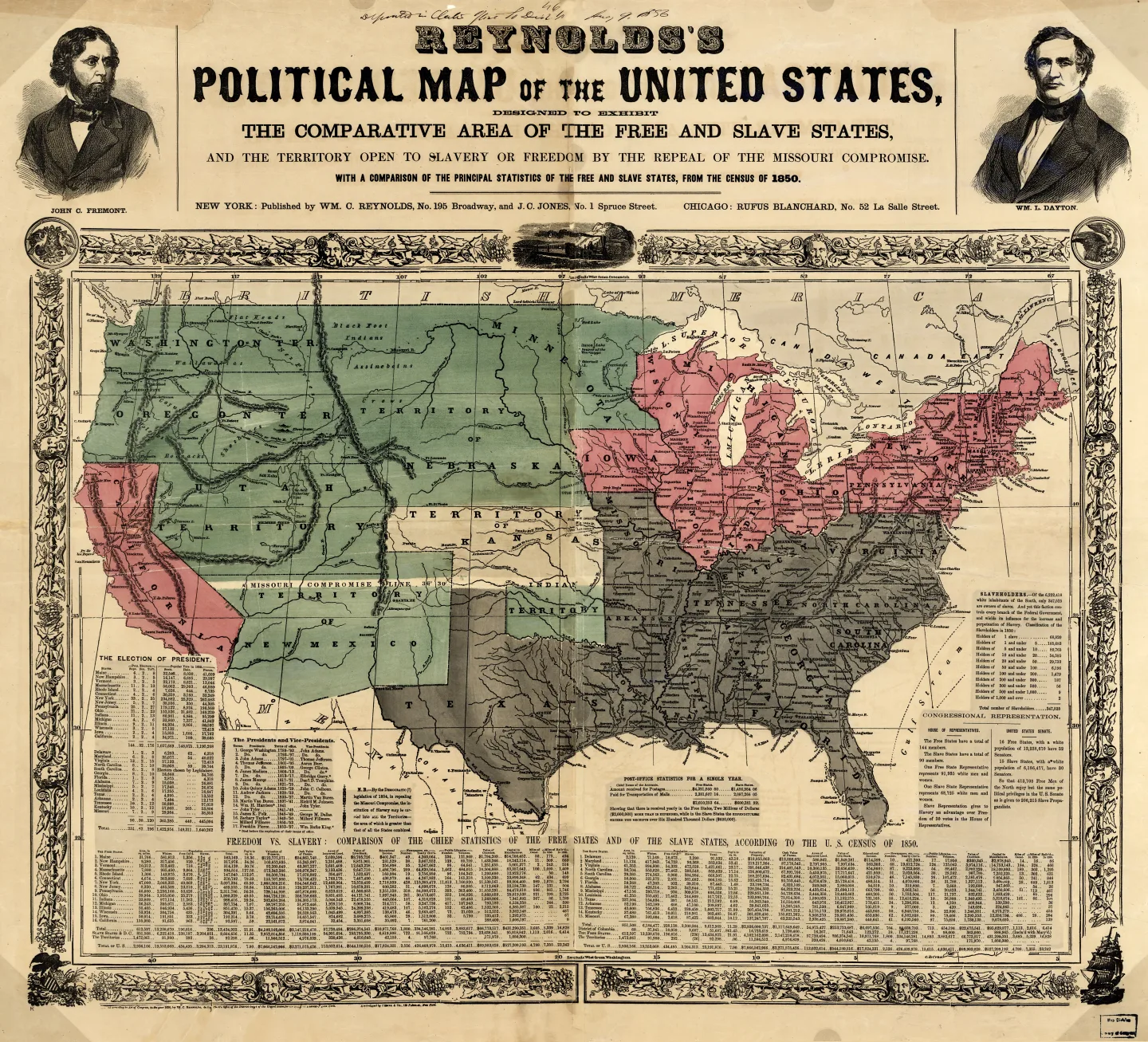
The Kansas-Nebraska Act and Bleeding Kansas
Introduced in 1854 by Stephen Douglas, the Kansas-Nebraska Act repealed the Missouri Compromise's 36°30' restriction on slavery to organize western territories under popular sovereignty, igniting a violent proxy civil war known as 'Bleeding Kansas'.

John Brown's Raid on Harpers Ferry
In October 1859, radical abolitionist John Brown led an armed raid on the federal arsenal at Harpers Ferry, Virginia, attempting to spark an Appalachian slave insurrection; his capture and execution made him a Northern martyr and stoked Southern fears of armed race war.
By the numbers
- In what calendar year did the constitutional ban on the international importation of slaves take effect?
- 1808 year
- In what calendar year did Congress enact the Kansas-Nebraska Act, repealing the Missouri Compromise line?
- 1854 year
- In what calendar year did the Supreme Court issue the Dred Scott v. Sandford ruling?
- 1857 year
- In what calendar year did Abraham Lincoln win the four-way presidential election on the Republican ticket?
- 1860 year
Matched pairs
Each item on the left goes with the one on the right.
- Second Middle Passage
- Internal forced migration of over one million enslaved people to the Deep South cotton belt
- Popular Sovereignty
- Territorial policy allowing local residents to vote on the legalization of slavery
- Free Soil
- Political platform prohibiting any further territorial expansion of chattel slavery
- House Divided Speech
- Famous 1858 address declaring that a nation cannot permanently endure half slave and half free
Self-test
Answer each question from memory, then check your work against the answer key.
1. Which federal action drove Southern planters to rely on the domestic slave trade after 1808?
- APassage of the Fugitive Slave Act
- BCongressional passage of the Compromise of 1850
- CAbolition of the transatlantic slave trade
- DEnactment of the Missouri Compromise
2. Why did Southern planters believe 'King Cotton' gave the South unbeatable leverage?
- ACotton plantations out-produced Northern factories
- BBritish textile mills depended on Southern cotton
- CThe U.S. Treasury backed currency with cotton reserves
- DCongress required Europe to buy cotton at fixed prices
3. Which of these was NOT a way enslaved people resisted bondage in the antebellum South?
- AEscaping north via the Underground Railroad
- BFeigning illness to slow plantation work
- COrganizing armed uprisings like Nat Turner's Rebellion
- DPetitioning Congress for compensated emancipation
4. How did pro-slavery ideologues like George Fitzhugh defend slavery by the 1850s?
- AA 'positive good' superior to wage labor
- BA 'necessary evil' to be phased out
- CA private matter beyond federal law
- DA moral sin requiring immediate emancipation
5. By 1850, roughly what share of total United States export value came from cotton?
- AOver 60 percent
- BOver 90 percent
- CAbout 40 percent
- DAbout 25 percent
6. What effect did Harriet Beecher Stowe's 1852 novel Uncle Tom's Cabin have in the North?
- ADirectly launched the Free Soil Party
- BPersuaded Congress to repeal the Fugitive Slave Act
- CConvinced planters to voluntarily free enslaved people
- DIntensified Northern opposition to slavery
7. Why did the Fugitive Slave Act of 1850 provoke such fierce Northern resistance?
- AGave slaveholders extra seats in the Senate
- BDenied accused runaways a jury trial
- CRequired Northern states to legalize slavery
- DBanned abolitionist newspapers
8. How did the Kansas-Nebraska Act of 1854 lead directly to 'Bleeding Kansas'?
- AReplaced popular sovereignty with a slave code
- BAdmitted Kansas as a slave state by decree
- CRepealed the Missouri Compromise line
- DTransferred Kansas to British administration
9. Which political party formed directly out of Northern opposition to the Kansas-Nebraska Act?
- AThe Know-Nothing Party
- BThe Whig Party
- CThe Republican Party
- DThe Free-Soil Party
10. What key concession did Northern free states secure in the Compromise of 1850?
- AThe permanent prohibition of all federal fugitive slave extradition proceedings
- BThe admission of California as a free state and the abolition of the slave trade in Washington D.C.
- CAdoption of the Wilmot Proviso banning slavery in all lands acquired from Mexico
- DA federal ban on slavery in the New Mexico and Utah territories
Go deeper
- WatchThe Second Middle Passage The United States banned the Atlantic slave trade in 1808. Yet slavery in the South kept growing.
- WatchThe Dred Scott Ruling The Supreme Court ruled that no Black American could ever be a citizen. The case was Dred Scott versus Sandford, in 1857.
- WatchThe Law That Reached North Northerners could be fined or jailed for not helping slave catchers. That was the Fugitive Slave Act of 1850.
- StudyUnited States History in the FlashFeed app
Answer key
- 1. C Abolition of the transatlantic slave tradeThe 1808 ban on importing enslaved people from Africa forced planters to meet labor demand through the internal 'Second Middle Passage' instead; the other measures did not cut off the supply of enslaved labor.
- 2. B British textile mills depended on Southern cottonPlanters assumed Britain's textile industry could not survive without Southern cotton, guaranteeing diplomatic support; the other claims describe things that never happened.
- 3. D Petitioning Congress for compensated emancipationResistance took the form of sabotage, feigned illness, flight via the Underground Railroad, and revolts like Turner's; there was no congressional petition campaign for compensated emancipation.
- 4. A A 'positive good' superior to wage laborFitzhugh and Calhoun shifted from the older 'necessary evil' defense to calling slavery a 'positive good'; calling it a sin requiring immediate emancipation is the opposing abolitionist position, not their own.
- 5. A Over 60 percentCotton dominated antebellum trade: by 1850 the Southern crop supplied over 60 percent of total U.S. export value and fed the textile mills of Britain and New England.
- 6. D Intensified Northern opposition to slaveryStowe's novel personalized the cruelty of family separation under slavery and shifted Northern public opinion; it did not change federal law or Southern behavior by itself.
- 7. B Denied accused runaways a jury trialThe law let commissioners remand accused fugitives without a jury trial and ordered citizens to help when summoned; anyone who hid a fugitive or blocked an arrest faced fines and jail.
- 8. C Repealed the Missouri Compromise lineBy repealing the 36°30' ban and opening Kansas to popular sovereignty, the act drew pro- and anti-slavery settlers into violent conflict over the territory's fate.
- 9. C The Republican PartyThe Kansas-Nebraska Act shattered the Whig Party and gave birth to the Republican Party in 1854, uniting Free Soil opponents of slavery's expansion.
- 10. B The admission of California as a free state and the abolition of the slave trade in Washington D.C.California entered as a free state, giving free states a Senate majority, and the slave trade was abolished in the capital.
Sources
- Baptist, The Half Has Never Been Told, Ch. 4
- Johnson, Soul by Soul, Ch. 2
- Blight (ed.), Passages to Freedom: The Underground Railroad in History and Memory (2004)
- Faust, The Ideology of Slavery, Ch. 1
- Holt, The Rise and Fall of the American Whig Party, Ch. 15
- Foner, Gateway to Freedom, Ch. 4
- Reynolds, Mightier than the Sword, Ch. 3
- McPherson, Battle Cry of Freedom, Ch. 4
- Fehrenbacher, The Dred Scott Case, Ch. 14
- Oates, To Purge This Land with Blood, Ch. 8
- McPherson, Battle Cry of Freedom, Ch. 7
- Baptist, The Half Has Never Been Told
- Faust, The Ideology of Slavery
- Holt, The Rise and Fall of the American Whig Party
- Foner, Gateway to Freedom
- Foner, Free Soil, Free Labor, Free Men
- Fehrenbacher, The Dred Scott Case
- McPherson, Battle Cry of Freedom, Ch. 6
- Oates, To Purge This Land with Blood
- Foner, The Fiery Trial, Ch. 4
- Blight, Passages to Freedom
- Reynolds, Mightier than the Sword
- McPherson, Battle Cry of Freedom
- Finkelman, Slavery and the Founders
- Johnson, Soul by Soul
- Foner, The Fiery Trial
Image credits
- The Domestic Slave Trade: Wikimedia Commons · Mathew Benjamin Brady · Public domain — commons.wikimedia.org/wiki/File:Slave_pen_of_Price,_Birch_%26_Co.,_Alexandria,_Va_-_NARA_-_528808.jpg
- The Positive Good Ideology: Wikimedia Commons · George Peter Alexander Healy · Public domain — commons.wikimedia.org/wiki/File:George_Peter_Alexander_Healy_-_Portrait_of_John_C._Calhoun_(ca._1845)_-_Google_Art_Project_(cropped).jpg
- The Compromise of 1850: Drawn by Peter F. Rothermel / engraved by Robert Whitechurch (1814-ca. 1880) · Public domain — commons.wikimedia.org/wiki/File:The_United_States_Senate,_A.D._1850,_by_Peter_F._Rothermel_(crop2).jpg
- Harriet Beecher Stowe and Uncle Tom's Cabin: Wikimedia Commons · Harriet Beecher Stowe · Public domain — commons.wikimedia.org/wiki/File:Harriet_Beecher_Stowe,_Uncle_Tom%27s_Cabin,_vol._1,_1852,_title_page_(clean).jpg
- The Kansas-Nebraska Act and Bleeding Kansas: Wikimedia Commons · New York: Wm. C. Reynolds and J. C. Jones · Public domain — commons.wikimedia.org/wiki/File:Reynolds%27s_Political_Map_of_the_United_States_1856.jpg
- John Brown's Raid on Harpers Ferry: Wikimedia Commons · Acroterion · CC BY-SA 4.0 — commons.wikimedia.org/wiki/File:John_Brown%27s_Fort_Harpers_Ferry_WV1.jpg


