
Rich Dad Poor Dad study guide · Lesson 1 of 6
The Two Fathers & Working for Money vs. Assets
Contrasting Paradigms & The Hawaii Childhood · Fear, Greed, and Escaping the Rat Race
Unofficial study guide for Rich Dad Poor Dad: What the Rich Teach Their Kids About Money That the Poor and Middle Class Do Not by Robert T. Kiyosaki. FlashFeed is not affiliated with the author or publisher.
This is the lesson's study guide from the FlashFeed app, plus its key facts and a self-test.
What you'll be able to do
- Contrast the mindset of the Poor Dad (working for money) with the Rich Dad (making money work for you through asset ownership).
- Explain how fear and greed trap people in the Rat Race, and how Rich Dad's zero-wage lesson taught escaping by creating assets instead of earning wages.
Lesson 1: The Two Fathers & Working for Money vs. Assets
Contrasting Paradigms & The Hawaii Childhood
In post-war Hawaii during the mid-1950s, nine-year-old Robert Kiyosaki found himself positioned at the crossroads of two diametrically opposed socioeconomic worldviews. His biological father, whom he designated as Poor Dad, was a man of immense academic accomplishment—holding advanced graduate credentials from Stanford University, the University of Chicago, and Northwestern University, and eventually ascending to the prestigious post of Superintendent of Public Instruction for the State of Hawaii. Yet, despite an enviable salary and prominent social standing, Poor Dad was plagued by lifelong financial distress, struggling beneath the weight of unpaid household bills and debt.
Conversely, his best friend Mike’s father, whom Robert identified as Rich Dad, never finished the eighth grade. Despite having zero formal collegiate credentials, Rich Dad built one of the most formidable private commercial conglomerates in the Hawaiian islands, amassing a vast portfolio of retail convenience stores, construction enterprises, restaurants, and commercial real estate.
The foundational divergence between these two paternal influences began with their internal cognitive frameworks and linguistic habits regarding money and enterprise:
- Poor Dad operated from a moral paradigm of scarcity, repeatedly stating that "the love of money is the root of all evil" and advising Robert to "study hard so you can find a good company to work for." He placed absolute faith in the institutional safety net of corporate benefits, union protections, medical insurance, and government pensions.
- Rich Dad operated from a structural paradigm of abundance, insisting that "the lack of money is the root of all evil" and urging Robert to "study hard so you can find a good company to buy." He strongly rejected reliance on corporate or government entitlements, warning that reliance on pensions breeds psychological dependency and systemic financial fragility.
A defining psychological insight shared by Rich Dad was the profound cognitive difference between making a declarative defeatist statement and asking an open-ended strategic question. Declaring "I can't afford it" puts the brain's problem-solving faculties to sleep, rationalizing surrender. Asking "How can I afford it?" activates the brain's creative cognitive processing, compelling the subconscious mind to calculate, innovate, and uncover latent financial opportunities.
At age nine, Robert and Mike initiated their first manufacturing enterprise. Having observed that empty lead toothpaste tubes were discarded after use, the boys collected hundreds of lead tubes from neighbors, melted the metal in a steel pot over the family's hibachi coals, and poured the molten liquid into plaster-of-Paris molds to cast lead five-cent nickels. When Poor Dad discovered their makeshift refinery, he gently explained that manufacturing currency constituted illegal counterfeiting under federal law. However, recognizing their entrepreneurial spirit, Poor Dad praised their raw drive to produce wealth and advised Robert to seek mentorship directly from Mike’s father, who possessed genuine real-world mastery over capital creation. Rich Dad agreed to mentor the boys under one non-negotiable condition: they would learn not through passive classroom lectures, but through experiential, high-stakes real-world trial.
Fear, Greed, and Escaping the Rat Race
Rich Dad’s first practical lesson commenced with a deliberate emotional test. He hired nine-year-old Robert to work in one of his bustling neighborhood convenience stores on Saturday mornings for a meager wage of ten cents per hour. For three consecutive weeks, Robert spent three hours every Saturday morning dusting canned goods, sweeping aisles, and performing manual labor in the heat. Overwhelmed by exhaustion and feeling unfairly exploited, Robert demanded a face-to-face confrontation with Rich Dad to demand higher pay or resign.
Upon arriving at Rich Dad’s office, Robert was made to sit in an uncomfortable anteroom for forty-five minutes before being admitted. When Robert angrily accused Rich Dad of being greedy and exploitative, Rich Dad calmly explained that this experience was his first true lesson in how the world operates:
"Life doesn't talk to you; it pushes you around. Every push is life saying, 'Wake up! There's something I want you to learn.' If you learn life's lessons, you will do well. If you don't, life will just continue to push you around. You will spend your life blaming a job, low pay, or your boss for your problems."
To permanently dismantle their psychological addiction to the safety of a weekly wage, Rich Dad instituted a second, more severe phase of the experiment: Robert and Mike were required to continue working at the convenience store for zero cents per hour. Stripped of the comfort of a monetary reward, the boys were forced to look beyond the paycheck to discover unexploited value.
Rich Dad elucidated the two primary human emotions that dictate financial behavior and trap individuals in poverty: Fear and Desire (Greed):
- Fear of being without money drives people to wake up, endure traffic, and perform unfulfilling labor for an employer.
- Once the paycheck arrives, Desire immediately prompts them to spend their earnings on consumer goods, comfort items, and lifestyle upgrades.
- This impulsive expenditure exhausts their capital, which promptly reignites the underlying Fear, compelling them back to the job in an endless loop.
This self-reinforcing socio-economic cycle is what Kiyosaki terms the Rat Race—the exhausting treadmill where salary increases and career promotions are immediately offset by matching increases in consumer debt and living costs. A raise never solves financial struggle because it fails to address the unexamined emotional drivers governing the individual's subconscious mind. Mastering wealth requires developing the emotional self-regulation to observe fear and greed objectively rather than reacting to them impulsively.
While working for free at the store, Robert’s heightened observational awareness paid off. He noticed that the store manager routinely cut off the top half of the covers of unsold comic books to return to the distributor for credit, discarding the complete illustrated bodies into cardboard waste bins. Robert and Mike approached the distributor and negotiated a contract to keep the discarded comic books under the strict legal promise that they would never resell them.
The boys converted the empty basement in Mike's house into a neighborhood Comic Book Lending Library. They cataloged hundreds of comic books and hired Mike's younger sister for one dollar per week to serve as the head librarian, checking books in and out and ensuring order. Neighborhood children were charged an admission fee of ten cents for two full hours of unlimited reading. Within weeks, the library was generating an average of $9.50 per week in passive cash flow—operating autonomously without requiring the physical labor of Robert or Mike. By refusing to work for a paycheck, the boys had created a self-sustaining asset that generated revenue independent of their active time.
Key terms
- Rich Dad's Profile
- Robert's best friend Mike's father who left formal school after eighth grade and built an expansive commercial empire in Hawaii.
- Institutional Security Trap
- The total psychological reliance on corporate pensions, state tenure, healthcare benefits, and union protections as the sole foundation of financial safety.
- Experiential Pedagogy
- Rich Dad's mentorship method requiring students to learn through real-world emotional trial and practical action rather than passive classroom theory.
- Dual Emotional Drivers
- The psychological forces of unexamined fear (of lacking money) and impulsive desire (greed for consumer goods) that govern financial behavior.
- The Rat Race
- The perpetual socioeconomic pattern where wage increases are immediately offset by matching lifestyle expenditures and debt, enforcing continuous labor.
Key facts
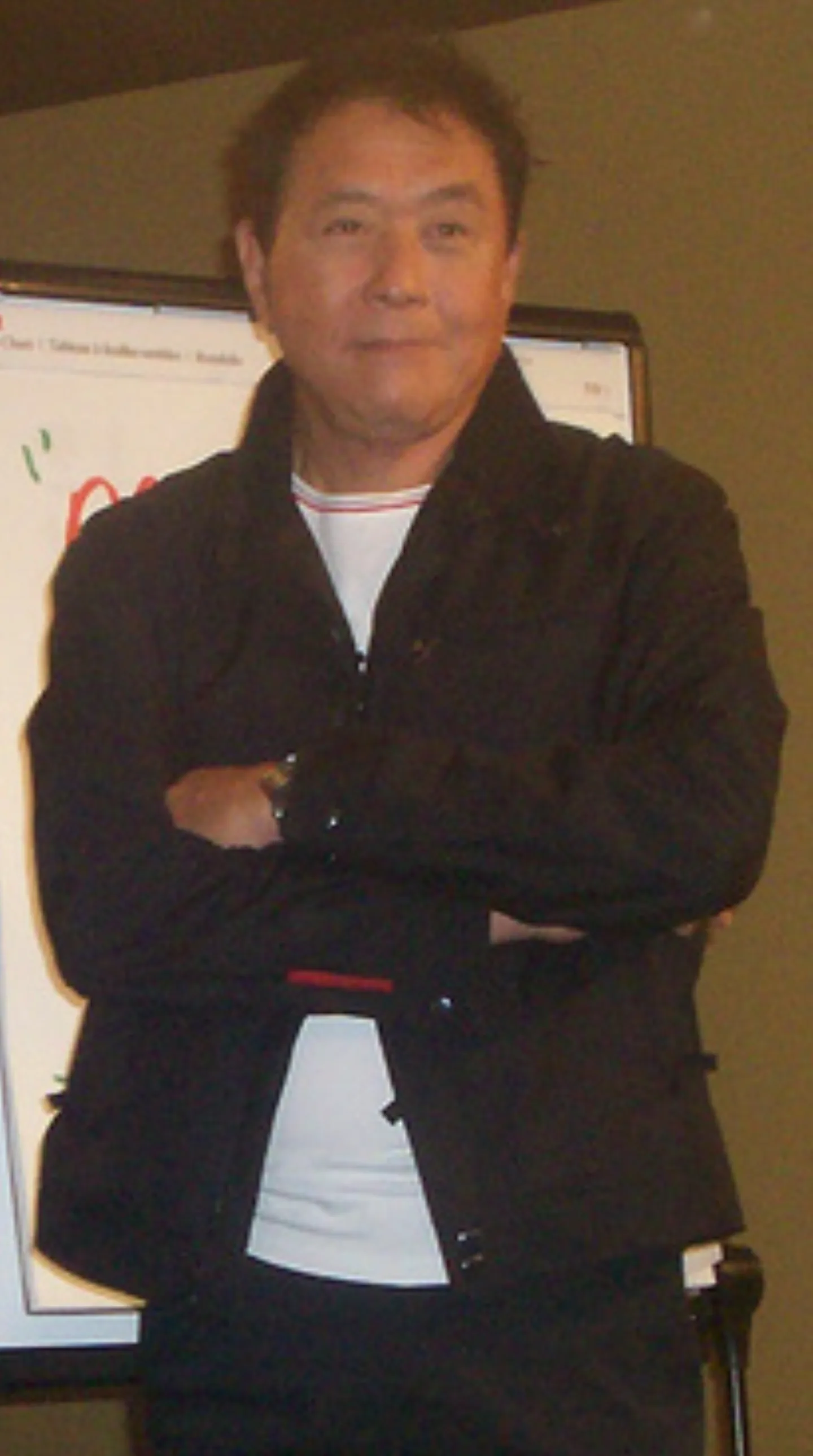
The Two Parental Paradigms
Growing up in Hawaii, Robert Kiyosaki was shaped by two contrasting father figures: an academic biological father (Poor Dad) and an entrepreneurial mentor (Rich Dad).
Money and Morality
Poor Dad's Maxim — Believed that 'the love of money is the root of all evil,' treating pursuit of wealth with moral suspicion.
Rich Dad's Maxim — Believed that 'the lack of money is the root of all evil,' viewing financial deprivation as destructive.
Labor vs. Capital Mechanics
The primary cause of chronic financial struggle is spending a lifetime working for money rather than learning how to have money work for you through assets.
The Lead Toothpaste Venture
At age nine, Robert and Mike melted discarded lead toothpaste tubes in a steel pot over the family's hibachi coals, pouring the liquid lead into plaster-of-Paris molds to cast lead five-cent nickels.
Poor Dad's Referral
Acknowledging his own limitations in commercial business, Poor Dad advised Robert to learn the mechanics of wealth creation directly from Mike's father.
The Mindset Divide
The true division between the wealthy and the middle class begins in cognitive dialogue, habit formation, and willingness to manage calculated risk.
The Ten-Cent Saturday Wage
Rich Dad hired nine-year-old Robert to work at his neighborhood convenience store on Saturday mornings for a nominal wage of ten cents per hour.
The 45-Minute Waiting Crucible
Rich Dad made Robert wait in an uncomfortable anteroom for forty-five minutes before their meeting to demonstrate how life tests patience and resilience.
Life Pushes You Around
Life does not teach through lectures; life pushes people around. Those who succeed learn from the push, while others blame employers or surrender.
The Salary Promotion Trap
A higher income or promotion cannot resolve financial struggle because it fails to address the underlying psychological drivers of fear and unexamined desire.
Discarded Comic Books
While working without pay, Robert noticed the store manager cutting off the top half of unsold comic book covers to return to the distributor for credit, and throwing the discarded comic bodies into the trash.
Matched pairs
Each item on the left goes with the one on the right.
- Poor Dad's Counsel
- Study hard so you can find a good company to work for
- Mike's Younger Sister
- Paid $1.00 per week to manage inventory and collect visitor entry fees
Step by step
The Zero-Wage Unlearning Protocol
- Eliminate the hourly ten-cent wage payment completely.
- Require continued Saturday labor at the convenience store for zero cents per hour.
- Break the emotional expectation and cognitive addiction to a regular weekly paycheck.
- Force the mind to search for unexploited commercial opportunities beyond wage labor.
Comic Distributor Agreement
- Observe the store manager discarding unsold comic book bodies.
- Approach distributor to request permission to keep the discarded inventory.
- Provide formal contractual commitment never to resell the comic books to retail stores.
- Secure zero-cost recurring inventory for an independent lending asset.
Self-test
Answer each question from memory, then check your work against the answer key.
1. Which of these universities did Poor Dad NOT hold an advanced degree from?
- AUniversity of Chicago
- BNorthwestern University
- CStanford University
- DHarvard University
2. Despite leaving school after eighth grade, which father built an empire of convenience stores, construction firms, and real estate in Hawaii?
- ARobert Kiyosaki
- BPoor Dad
- CRich Dad
- DThe store manager
3. What word completed Poor Dad's maxim: 'the ___ of money is the root of all evil'?
- AFear
- BLove
- CLack
- DPursuit
4. What did Rich Dad say reliance on government or corporate pensions ultimately creates?
- AFinancial fragility
- BFinancial literacy
- CFinancial independence
- DFinancial discipline
5. What paradox characterized the professional life of Robert Kiyosaki's biological father (Poor Dad)?
- AHe accumulated substantial secret wealth while feigning modest circumstances
- BHe held advanced university degrees and a high salary but struggled with debt
- CHe dropped out of secondary school early and never maintained steady work
- DHe gambled his household savings on volatile speculative commodity options
6. What hourly wage did Rich Dad first pay Robert to work Saturdays at the convenience store?
- ATen cents per hour
- BOne dollar per hour
- CTwenty-five cents per hour
- DFifty cents per hour
7. To break Robert's addiction to a paycheck, what wage did Rich Dad drop him to in the second phase?
- AOne dollar per hour
- BTen cents per hour
- CFive cents per hour
- DZero cents per hour
8. Rich Dad said struggling workers blame their boss or wages instead of realizing their lack of financial ___ is the real problem.
- AMotivation
- BDiscipline
- CEducation
- DOpportunity
9. Which best describes the cycle Kiyosaki calls the Rat Race?
- ASavings eroded by inflation alone
- BWages frozen despite rising costs
- CDebt forgiven through bankruptcy
- DRaises offset by rising expenses
10. How much passive weekly income did the boys' Comic Book Lending Library generate, escaping the wage trap?
- A$0.10
- B$1.00
- C$9.50
- D$45.00
Go deeper
- ReadRich Dad Poor Dad by Robert T. Kiyosaki · on Amazon ↗
- StudyRich Dad Poor Dad in the FlashFeed app
These are affiliate links: if you buy a book through one, FlashFeed may earn a small commission at no extra cost to you. The commission helps pay for FlashFeed's servers.
As an Amazon Associate we earn from qualifying purchases.
Answer key
- 1. D Harvard UniversityPoor Dad's graduate credentials were from Stanford, the University of Chicago, and Northwestern — not Harvard.
- 2. C Rich DadRich Dad had zero formal college credentials yet built one of Hawaii's largest private commercial empires — the core contrast with credentialed but financially struggling Poor Dad.
- 3. B LovePoor Dad said 'the love of money is the root of all evil'; Rich Dad's countering maxim swapped in 'lack' instead.
- 4. A Financial fragilityRich Dad warned that leaning on pensions breeds psychological dependency and creates financial fragility, not security.
- 5. B He held advanced university degrees and a high salary but struggled with debtPoor Dad was Superintendent of Public Instruction with a Ph.D., yet suffered chronic personal debt.
- 6. A Ten cents per hourRobert worked three hours every Saturday for a nominal ten cents per hour during the first phase of the lesson.
- 7. D Zero cents per hourRich Dad had Robert and Mike work for zero cents per hour, forcing them to look beyond a paycheck to find unexploited value.
- 8. C EducationRich Dad names financial education specifically as the missing piece, not motivation or discipline.
- 9. D Raises offset by rising expensesThe Rat Race is salary increases and promotions being immediately offset by matching increases in consumer debt and living costs.
- 10. C $9.50The library generated an average of $9.50 per week autonomously, showing an asset can earn without trading active labor for wages.
Sources
- Rich Dad Poor Dad — Robert T. Kiyosaki
- Robert T. Kiyosaki, Rich Dad Poor Dad, Chapter 1
- Robert T. Kiyosaki, Rich Dad Poor Dad, Chapter 2
Image credits
- The Two Parental Paradigms: Wikimedia Commons · Casey Konstantín · CC BY 2.0 — commons.wikimedia.org/wiki/File:Robert_Kiyosaki_2006.jpg
- The 45-Minute Waiting Crucible: Wikimedia Commons · Edgar Degas · Public domain — commons.wikimedia.org/wiki/File:Edgar_Degas_-_Waiting_-_Google_Art_Project.jpg

