
Getting to yes study guide · Lesson 6 of 6
Leverage, Jujitsu, & Countering Dirty Tricks
The Power of BATNA & Tripwires · Negotiation Jujitsu, The One-Text Procedure & Taming Dirty Tricks
Unofficial study guide for Getting to Yes: Negotiating Agreement Without Giving In (3rd ed.) by Roger Fisher, William Ury, Bruce Patton. FlashFeed is not affiliated with the author or publisher.
This is the lesson's study guide from the FlashFeed app, plus its key facts and a self-test.
What you'll be able to do
- Define BATNA, develop one in three steps, explain why walk-away options set negotiating power, and contrast a dynamic BATNA with a rigid bottom line.
- Apply negotiation jujitsu and the One-Text Procedure used at Camp David, and sort dirty tricks into deception, psychological warfare, and positional pressure.
The Power of BATNA & Tripwires
Negotiations often occur between parties with significant asymmetries in size, wealth, market power, or legal resources. No negotiation technique can magically eliminate massive power disparities. However, principled negotiation prevents the weaker party from being coerced into an unfavorable agreement and optimizes whatever leverage they do possess.
The true source of negotiating power is not the size of your bank account or the strength of your army; it is your BATNA—your Best Alternative to a Negotiated Agreement. As Roger Fisher, William Ury, and Bruce Patton explain, the reason you negotiate is to produce something better than the results you can obtain without negotiating. What are those results? What is that alternative? What is your BATNA—your Best Alternative to a Negotiated Agreement? That is the standard against which any proposed agreement should be measured.
Negotiators traditionally establish a bottom line (such as "I will not accept anything below $250,000"). While a bottom line prevents accepting a disastrous outcome, it introduces critical strategic vulnerabilities:
- A bottom line is inherently rigid and set before negotiations begin, preventing the negotiator from incorporating new information, creative options, or discovered synergies during discussions.
- It prevents the exploration of multi-issue trade-offs where concessions in one area are compensated by massive gains in another.
- It is frequently established arbitrarily (either too high, causing the negotiator to walk away from a beneficial deal, or too low, failing to protect real interests).
In contrast, your BATNA is dynamic and realistic. Any negotiated outcome that is superior to your BATNA should be accepted; any offer inferior to your BATNA must be rejected.
To act on this in real time, negotiators can set a trip wire: a flexible, noncommittal threshold placed just above the BATNA. Breaching it triggers a pause so you can recess and re-evaluate before committing to a bad deal, rather than relying on a rigid, pre-announced bottom line.
Developing an effective BATNA requires three systematic steps:
- Invent a list of actions you might take if no agreement is reached (e.g., source another supplier, develop the capability in-house, file a lawsuit, or form a joint venture).
- Improve several of the most promising ideas and convert them into practical, fully executable alternatives.
- Select tentatively the single best option from the improved alternatives.
The relative negotiating power of two parties depends primarily on how attractive the option of walking away is to each side. If you have two other lucrative job offers in hand, your BATNA is exceptionally strong, giving you immense confidence and leverage in salary negotiations.
Understanding what alternatives your counterpart has if talks collapse allows you to accurately map the Zone of Possible Agreement (ZOPA). If their alternatives are bleak, they will be far more willing to accept reasonable terms; if they have exceptionally strong alternatives, you must structure an offer that genuinely surpasses those alternatives.
Dynamic Management of Your BATNA Portfolio
A sophisticated negotiator does not treat their BATNA as a static snapshot; they actively cultivate and strengthen it throughout the negotiation lifecycle:
- Parallel Alternative Development: While talks proceed, continue exploring alternative vendors, secondary job offers, or strategic partnerships to raise your walk-away value.
- De-risking Fallback Options: Conduct preliminary due diligence, secure financing, or draft contingency agreements so that your alternatives can be executed immediately if needed.
The Strategic Value of Cultivating Multiple BATNAs
Having a single alternative provides a useful walk-away point, but cultivating a diverse portfolio of multiple viable alternatives creates true negotiating power. When you hold multiple strong options, you are completely liberated from the fear of failure. You can advocate for legitimate principles with calm confidence, propose innovative compromises without anxiety, and walk away gracefully if the terms do not meet your objective standards of value and fairness.
Negotiation Jujitsu, The One-Text Procedure & Taming Dirty Tricks
When a counterpart refuses to negotiate on principle, attacks your proposals, asserts non-negotiable ultimatums, or attacks you personally, do not push back. Pushing back only triggers the predictable escalation of a positional shouting match.
Instead, principled negotiators use Negotiation Jujitsu. Borrowing from martial arts, you do not resist the opponent's force; you redirect it toward constructive problem-solving:
- Don't attack their position; look behind it: When the other side asserts an extreme position, neither accept nor reject it. Treat it as one possible option and probe for the underlying interests that generated it. Ask: "If we were to adopt this approach, how would it address the problem of operational delay?"
- Don't defend your ideas; invite criticism and advice: Instead of defending your proposal against attack, ask the counterpart: "What specific flaws or concerns do you see in this proposal? What would you do if you were in my shoes?"
- Recast an attack on you as an attack on the problem: When attacked personally, reframe the attack around the shared challenge: "You are right that finding a solution is difficult. How can we structure our terms so that both of our operational risks are mitigated?"
- Ask questions and use strategic silence: Statements generate resistance, whereas questions generate answers. When confronted with an unreasonable ultimatum or an unfair demand, ask an open-ended question and pause. Strategic silence forces the counterpart to reflect, elaborate, or retract unsupportable claims.
When multiple parties are deadlocked in bitter positional warfare, the One-Text Procedure provides a powerful mediation mechanism. Developed by Roger Fisher and famously utilized by President Jimmy Carter during the 1978 Camp David Accords between Israeli Prime Minister Menachem Begin and Egyptian President Anwar Sadat, the One-Text Procedure functions through iterative mediation:
- A neutral mediator interviews all parties to understand their underlying interests (rather than their declared positions).
- The mediator drafts a single working text that attempts to reconcile those interests.
- The mediator distributes the draft to both parties, asking for criticisms, corrections, and suggestions for improvement, rather than acceptance or concessions.
- The mediator incorporates the feedback into successive drafts (e.g., 23 drafts over thirteen days at Camp David), refining the text iteratively until no further improvements can be achieved.
- The mediator presents the final, polished single text to the parties for a simple yes-or-no decision.
Because neither party is forced to make unilateral public concessions during the drafting process, face is preserved and historic multi-party treaties can be achieved. A similar procedural escrow mechanism—using Algerian central bank escrow accounts in London—resolved the 1981 Iranian hostage crisis without requiring mutual trust.
When negotiators encounter bad-faith, deceptive, or coercive negotiation tactics ("dirty tricks"), they must negotiate the rules of the game. Tricky tactics fall into three primary categories:
- Deliberate Deception: Phony facts, ambiguous authority, dubious intentions. (Counter: verify facts independently; separate trust from verification).
- Psychological Warfare: Stressful environments, personal attacks, good-guy/bad-guy routines, threats and ultimatums. (Counter: identify the discomfort, call out the routine, and refocus on substantive issues).
- Positional Pressure Tactics: Refusal to negotiate, extreme opening demands, escalating demands, lock-in tactics, hardhearted partners, calculated delays, and "take it or leave it" ultimatums. (Counter: recognize the tactic, make it explicit, and negotiate on the rules using the four principled negotiation pillars).
The 3-step protocol for negotiating the rules of the game:
- Recognize the tactic: Identify the manipulation explicitly in your own mind.
- Raise the issue explicitly: Calmly and neutrally describe what you observe.
- Question the tactic's legitimacy and negotiate on the rules: Apply the four pillars of principled negotiation to the process itself: separate the people from the problem, discuss procedural interests, invent procedural options, and insist on objective standards for how the negotiation will be conducted.
Comprehensive Playbook for Disarming Tricky Tactics
When confronting bad-faith negotiation behavior, apply systematic countermeasures based on the specific category of manipulation:
- For Phony Facts or Ambiguous Authority: Separate trust from verification. Independently verify all factual assertions and obtain written confirmation of negotiating authority before beginning substantive discussions.
- For Psychological Warfare or Hostile Environments: Identify the physical or emotional manipulation explicitly, propose moving to a neutral venue, and maintain unwavering professional calm.
- For Positional Stonewalling or Escalating Demands: Refuse to bargain against shifting demands; call a formal recess and insist on establishing binding procedural ground rules before resuming substantive negotiations.
By making the rules of the negotiation game explicit and anchoring on the four principled pillars, you neutralize bad-faith tactics and establish a fair, productive problem-solving environment.
Key terms
- Bottom Lines Stifle Trade-Offs
- It prevents the exploration of multi-issue trade-offs where concessions in one area are compensated by massive gains in another.
- Recasting Personal Attacks on the Problem
- When attacked personally, don't respond in kind -- redirect the exchange toward the shared challenge instead: "You are right that finding a solution is difficult. How can we structure our terms so that both of our operational risks are mitigated?"
- Psychological Warfare Tactics
- This category of dirty trick relies on stressful environments, personal attacks, good-guy/bad-guy routines, and threats or ultimatums to pressure a negotiator; the counter is to name the discomfort and refocus on substance.
Key facts
Power Disparities Reality
No negotiation technique can magically eliminate massive power disparities. However, principled negotiation prevents the weaker party from being coerced into an unfavorable agreement and optimizes whatever leverage they do possess.
BATNA Is the Real Standard for a Good Deal
The reason you negotiate at all is to produce something better than what you could get without negotiating — that alternative is your BATNA, your Best Alternative to a Negotiated Agreement. Any negotiated outcome superior to your BATNA should be accepted; any offer inferior to it must be rejected.
Why a Fixed Bottom Line Is a Liability
A bottom line — such as "I will not accept less than $250,000" — is rigid and set before talks begin, so it cannot incorporate new information or creative options discovered during discussions, and it blocks multi-issue trade-offs where a concession in one area is compensated by a gain in another. It is also frequently set arbitrarily, either too high (walking away from a good deal) or too low (failing to protect real interests) — unlike a BATNA, which stays dynamic and realistic.
Building a BATNA: Invent, Then Improve
Developing an effective BATNA starts by inventing a list of actions you might take if no agreement is reached — sourcing another supplier, building the capability in-house, filing a lawsuit — and then improving the most promising ideas into practical, fully executable alternatives. Setting a bottom line before negotiating is not one of these three steps; selecting the single best option comes only after inventing and improving.
BATNA Step 3 - Selecting Best Alternative
Select tentatively the single best option from the improved alternatives.
Walk-Away Attractiveness Sets the Zone of Possible Agreement
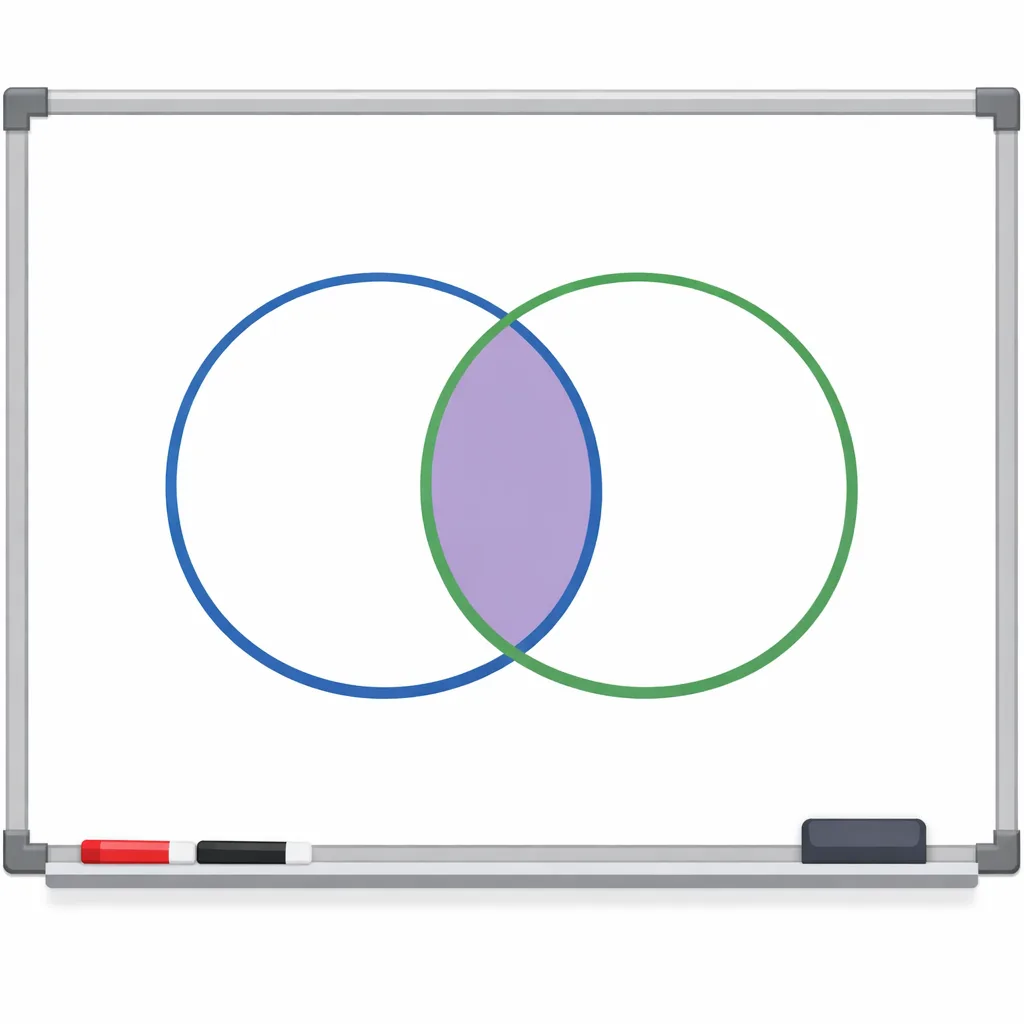
The relative negotiating power of two parties depends primarily on how attractive walking away is to each side. Understanding what alternatives your counterpart has if talks collapse lets you map the Zone of Possible Agreement (ZOPA) accurately: if their alternatives are bleak, they will accept reasonable terms far more readily, and if their alternatives are strong, you must structure an offer that genuinely beats them.
Multiple Alternatives Multiply Your Leverage
Having two other lucrative job offers in hand makes your BATNA exceptionally strong, giving you immense confidence in a salary negotiation because walking away becomes both more attractive and more credible. Cultivating a diverse portfolio of alternatives, rather than relying on just one, liberates a negotiator from the fear of failure.
Redirection Principle of Negotiation Jujitsu
Instead, principled negotiators use Negotiation Jujitsu. Borrowing from martial arts, you do not resist the opponent's force; you redirect it toward constructive problem-solving:
Two More Jujitsu Moves: Look Behind Positions, Then Go Quiet
When the other side asserts an extreme position, don't attack or accept it — treat it as one possible option and probe for the underlying interest that generated it, asking how it would address the real problem. And because statements generate resistance while questions generate answers, an open-ended question followed by strategic silence forces the counterpart to reflect, elaborate, or retract an unsupportable claim.
Invite Criticism Instead of Defending Your Ideas
Rather than defending a proposal against attack, ask the counterpart what specific flaws or concerns they see in it, or what they would do if they were in your shoes. Inviting criticism and advice redirects the other side's energy toward improving the proposal instead of destroying it.

The One-Text Procedure: Camp David and the Iran Hostage Escrow
When multiple parties are deadlocked in bitter positional warfare, the One-Text Procedure has a neutral mediator draft a single working text reconciling everyone's interests. Developed by Roger Fisher and famously used by President Jimmy Carter at the 1978 Camp David Accords, a similar procedural mechanism — Algerian central bank escrow accounts in London — resolved the 1981 Iranian hostage crisis without requiring mutual trust.
Recognize the Tactic, Recast the Attack
When negotiators encounter bad-faith tactics, the first step is simply to recognize the tactic — identifying the manipulation explicitly in your own mind before responding. And when attacked personally, recast the attack as an attack on the shared problem: "You're right that finding a solution is difficult — how can we structure terms so both our risks are mitigated?"
The One-Text Procedure Asks for Critique, Not Concessions
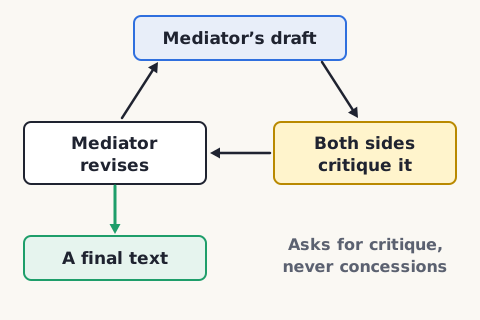
The mediator distributes each successive draft to both parties asking only for criticisms, corrections, and suggestions for improvement — never for acceptance or concessions. Because neither party is forced to make a unilateral public concession during drafting, face is preserved through as many as 23 drafts over thirteen days, until a final text emerges.
Final Single Text Yes/No Presentation
The mediator presents the final, polished single text to the parties for a simple yes-or-no decision.
Deliberate Deception: Phony Facts and Ambiguous Authority
One category of dirty trick is deliberate deception — phony facts, ambiguous negotiating authority, and dubious intentions. The counter is to separate trust from verification: independently verify factual claims and confirm negotiating authority before substantive discussions begin.
Psychological Warfare and Positional Pressure Tactics
Psychological warfare includes stressful environments, personal attacks, good-guy/bad-guy routines, and threats or ultimatums, countered by naming the discomfort and refocusing on substance. Positional pressure tactics include refusal to negotiate, extreme opening demands, escalating demands, and take-it-or-leave-it ultimatums, countered by recognizing the tactic and negotiating explicitly on the rules of the game.
Matched pairs
Each item on the left goes with the one on the right.
- Inherent Rigidity of Bottom Lines
- A pre-set walk-away number that can't adapt to new information.
- Dynamic Benchmark of BATNA
- The standard for judging offers: current, realistic, not fixed.
- Multiple Job Offers Leverage Case
- Two solid alternatives make your BATNA exceptionally strong.
- Mapping ZOPA via Counterpart BATNA
- Their alternatives show how readily they'll accept terms.
- Inviting Criticism of Ideas
- Ask what flaws they see, or what they'd do in your shoes.
- One-Text Procedure Mediation Breakthrough
- Carter had Camp David sides critique one draft to convergence.
- Deliberate Deception Tactics
- Phony facts, fuzzy authority, dubious intent: verify everything.
- Recognizing Deceptive Tactics
- Name the manipulation privately, then raise it calmly.
Step by step
Applying the One-Text Procedure Mediation Breakthrough method in principled negotiation
- A neutral mediator interviews all parties to understand their underlying interests, not their declared positions
- The mediator drafts a single working text that attempts to reconcile those interests
- The mediator distributes the draft asking only for criticisms, corrections, and suggestions for improvement
- The mediator incorporates feedback into successive drafts until no further improvements can be made
- The mediator presents the final, polished text for a simple yes-or-no decision
Applying the Recognizing Deceptive Tactics method in principled negotiation
- Recognize the tactic: identify the manipulation explicitly in your own mind
- Raise the issue explicitly: calmly and neutrally describe what you observe
- Question the tactic's legitimacy and negotiate on the rules using the four pillars of principled negotiation
Self-test
Answer each question from memory, then check your work against the answer key.
1. What does the acronym BATNA stand for in principled negotiation?
- ABest Alternative to a Negotiated Agreement
- BBottom-line Alternative to a Negotiated Agreement
- CBalanced Alternative to a Negotiated Agreement
- DBest Approach to a Negotiated Agreement
2. Which of the following is NOT one of the three steps for developing a BATNA?
- AImprove the most promising ideas
- BSet a bottom line before negotiating
- CInvent a list of possible actions
- DSelect tentatively the single best option
3. Compared to a dynamic BATNA, what strategic vulnerability does a fixed bottom line introduce?
- AIt always exceeds your counterpart's BATNA
- BIt requires developing multiple alternative options
- CIt adjusts automatically as new offers arrive
- DIt can't adapt to new information during talks
4. Why does having two other job offers strengthen your BATNA in a salary negotiation?
- AIt automatically lowers your bottom line
- BIt guarantees the employer matches the highest offer
- CIt makes walking away more attractive and credible
- DIt eliminates the need for a tripwire
5. What primarily determines the relative negotiating power between two parties?
- AThe size of each side's bank account or army
- BThe number of lawyers each side employs
- CHow attractive each side's walk-away option is
- DWhich side speaks first in the meeting
6. What is the core principle behind Negotiation Jujitsu?
- AMatch the opponent's aggressive positional demands
- BRedirect force toward constructive problem-solving
- COverpower the counterpart with superior arguments
- DConcede quickly to de-escalate tension
7. Which Negotiation Jujitsu technique is illustrated by asking a counterpart, 'What would you do if you were in my shoes?'
- ADon't defend your ideas; invite criticism and advice
- BDon't attack their position; look behind it
- CAsk questions and use strategic silence
- DRecast an attack on you as an attack on the problem
8. Who mediated the One-Text Procedure during the 1978 Camp David Accords?
- ARoger Fisher
- BMenachem Begin
- CAnwar Sadat
- DJimmy Carter
9. When distributing a draft in the One-Text Procedure, what does the mediator ask parties for?
- ACriticisms, corrections, and suggestions for improvement
- BA public concession on key issues
- CA fully signed and notarized acceptance of the final terms
- DAn immediate yes-or-no vote
10. Phony facts and ambiguous authority belong to which category of dirty trick?
- APositional Pressure Tactics
- BDeliberate Deception
- CEmotional Manipulation Tactics
- DPsychological Warfare
Go deeper
- ReadGetting to Yes by Roger Fisher, William Ury, Bruce Patton · on Amazon ↗
- StudyGetting to yes in the FlashFeed app
These are affiliate links: if you buy a book through one, FlashFeed may earn a small commission at no extra cost to you. The commission helps pay for FlashFeed's servers.
As an Amazon Associate we earn from qualifying purchases.
Answer key
- 1. A Best Alternative to a Negotiated AgreementBATNA is your Best Alternative to a Negotiated Agreement, the standard against which any proposed deal should be measured.
- 2. B Set a bottom line before negotiatingThe three BATNA steps are invent, improve, and select. Setting a rigid bottom line is the opposite approach, one to avoid.
- 3. D It can't adapt to new information during talksA bottom line is fixed before talks start, so it can't adapt to new information, creative trade-offs, or synergies discovered mid-negotiation, unlike a dynamic BATNA.
- 4. C It makes walking away more attractive and credibleRelative negotiating power depends on how attractive walking away is; multiple offers make that alternative genuinely strong.
- 5. C How attractive each side's walk-away option isNegotiating power depends on how attractive each side's walk-away alternative is—not wealth, army size, or headcount.
- 6. B Redirect force toward constructive problem-solvingLike the martial art, Negotiation Jujitsu redirects rather than resists the other side's force toward solving the problem.
- 7. A Don't defend your ideas; invite criticism and adviceThis technique invites the other side to critique or improve your proposal rather than you defending it outright.
- 8. D Jimmy CarterPresident Jimmy Carter famously used the One-Text Procedure to mediate between Begin and Sadat; Fisher developed the method itself.
- 9. A Criticisms, corrections, and suggestions for improvementThe mediator asks for feedback to improve the draft, not concessions, so no party has to make a unilateral public concession.
- 10. B Deliberate DeceptionDeliberate Deception covers phony facts, ambiguous authority, and dubious intentions; the counter is independent verification.
Sources
- Getting to yes — Roger Fisher, William Ury, and Bruce Patton
- Getting to Yes — Roger Fisher, William Ury, and Bruce Patton
Image credits
- Building a BATNA: Invent, Then Improve: jm3 (Openverse) · by-sa 2.0 — www.flickr.com/photos/37996588780@N01/3614240813
- Walk-Away Attractiveness Sets the Zone of Possible Agreement: AI-generated (gpt-image-1.5)
- The One-Text Procedure: Camp David and the Iran Hostage Escrow: Wikimedia Commons · The White House · Public domain — commons.wikimedia.org/wiki/File:Laurel_Cabin,_Camp_David_2012.jpg
- The One-Text Procedure Asks for Critique, Not Concessions: FlashFeed original diagram · CC-BY-4.0
