
The 7 Habits of Highly Effective People study guide · Lesson 1 of 6
Foundations: Paradigms, Character Ethic, and the P/PC Balance
Paradigms, Character Ethic, and Inside-Out Thinking · The P/PC Balance and the Emotional Bank Account
Unofficial study guide for The 7 Habits of Highly Effective People: 30th Anniversary Edition by Stephen R. Covey. FlashFeed is not affiliated with the author or publisher.
This is the lesson's study guide from the FlashFeed app, plus its key facts and a self-test.
What you'll be able to do
- Distinguish the Character Ethic from the Personality Ethic and apply the Inside-Out Approach to lasting paradigm change.
- Apply the P/PC Balance, build trust with Emotional Bank Account deposits, and trace growth along Covey's Maturity Continuum.
Lesson 1: Foundations: Paradigms, Character Ethic, and the P/PC Balance
Paradigms, Character Ethic, and Inside-Out Thinking
The Inside-Out Approach and the Character Ethic
Stephen R. Covey begins The 7 Habits of Highly Effective People with an exhaustive historical survey of success literature published in the United States over two centuries. In examining more than two hundred years of writing on personal development, self-improvement, and human potential since 1776, Covey identified a profound paradigm shift that occurred in the early decades of the twentieth century.
During the first 150 years—from the founding of the American republic in 1776 through World War I—the success literature focused almost exclusively on what Covey designates as the Character Ethic. The Character Ethic posits that enduring human effectiveness, meaningful achievement, and true personal greatness are rooted in foundational principles of character. These foundational virtues include integrity, humility, fidelity, temperance, courage, justice, patience, industry, simplicity, modesty, and the Golden Rule. In this classical tradition, personal greatness is primary: character comes before social recognition, skills, and technique.
Prominent historical exemplars of the Character Ethic, such as Benjamin Franklin in his autobiography, focused on the systematic cultivation of core moral virtues. Franklin tracked thirteen specific virtues daily—including temperance, silence, order, resolution, frugality, industry, sincerity, justice, moderation, cleanliness, tranquility, chastity, and humility—believing that true personal power and social influence emanate from the internal discipline of the soul. This same idea is often distilled into a popular saying: what you are speaks louder than what you say.
Following World War I, however, the cultural orientation shifted dramatically toward what Covey calls the Personality Ethic. Driven by rapid urbanization, mass industrialization, corporate bureaucracy, and commercial sales culture, the literature turned its focus toward personality, public image, attitudes, behaviors, interpersonal communication techniques, and manipulative quick-fix strategies. The Personality Ethic essentially bifurcated into two main streams:
- Human and Public Relations Techniques: Slogans, charms, packaging, social influence skills, and behavioral management designed to create a favorable outward impression.
- Positive Mental Attitude (PMA): Inspirational psychologies suggesting that success is primarily a function of positive self-talk, affirmative visualization, and psychological self-hypnosis.
While acknowledging that communication skills, social grace, and positive thinking can be useful (secondary greatness), Covey emphasizes that secondary traits without primary character integrity are ultimately hollow, fragile, and manipulative: When someone relies on human-relations technique to influence others while their character is fundamentally flawed, the real motives eventually show.
When a person attempts to rely on interpersonal charm or manipulative techniques without deep underlying character integrity, trust is inevitably eroded. Others perceive the duplicity and become guarded, defensive, and cynical.
The foundational premise of Covey's philosophy is the Inside-Out Approach. Inside-out means to start first with oneself—even more fundamentally, to start with the most inside part of oneself: with one's paradigms, character, and motives. Covey describes it as "a continuing process of renewal" based on the natural laws that govern human growth and progress, a rising spiral of growth toward responsible independence and, beyond that, effective interdependence.
Private victories must precede public victories. Making and keeping promises to oneself must precede making and keeping promises to others. To attempt an outside-in approach—expecting external conditions, organizational structures, spouses, or colleagues to change before we change—is an exercise in futility, blame, and victimhood. Outside-in thinking produces unhappy people who feel paralyzed by external circumstances.
Paradigms, Paradigm Shifts, and Natural Law Principles
The word paradigm originates from the Greek paradeigma, meaning a model, pattern, or frame of reference. In human psychology and perception, a paradigm is the mental map through which an individual interprets reality. Covey uses the analogy of a city map: if one is attempting to navigate Chicago with an inaccurate map of Detroit, no amount of positive attitude, speed, or behavioral diligence will prevent getting lost. The fundamental problem is not attitude or effort; it is having the wrong map.
Human beings rarely see the world as it is; rather, they see the world as they are, or as they have been conditioned to see it. When we open our mouths to describe what we see, we in fact describe our own perceptions, paradigms, and conditioning.
Covey illustrates this perceptual phenomenon using the famous optical illusion of the "Young Woman / Old Woman," which he describes as a single classroom demonstration. Half of the class is shown, for about ten seconds, a picture of a young woman, and the other half a picture of an old woman. A composite picture that combines both images is then projected on the screen, and almost everyone who first saw the young woman sees only a young woman, while those who first saw the old woman see only an old woman. When two students from opposite sides of the room try to explain what they see to each other, communication breaks down. After a period of futile communication, one student goes up to the screen and points to a line on the drawing, the young woman's necklace, and the other answers that it is the old woman's mouth. Gradually the students begin to discuss the specific points of difference calmly and to see the picture from the other frame of reference.
A Paradigm Shift occurs when an individual breaks out of an old frame of reference and sees the world in a fundamentally new way. Paradigm shifts can be gradual or instantaneous, positive or negative. Covey illustrates an instantaneous paradigm shift with a vivid personal experience on a New York City subway on a calm Sunday morning. Passengers were sitting quietly, reading newspapers and resting, when a man and his children entered the subway car. The children were loud, rowdy, and disruptive—throwing things, yelling, and grabbing people's papers—while the father sat with his eyes closed, completely unresponsive.
Feeling irritation at the father's apparent negligence, Covey calmly asked him if he could control his children. The father looked up softly and said, "Oh, you're right. I guess I should do something about it. We just came from the hospital where their mother died about an hour ago. I don't know what to think, and I guess they don't know how to handle it either." Instantly, an emotional and cognitive paradigm shift occurred: irritation and judgment transformed immediately into profound empathy, compassion, and a desire to help.
Covey argues that human effectiveness is governed by Principles that operate as natural laws in the human dimension, just as physical laws like gravity operate in the physical realm. Principles are not subjective values, practices, or cultural norms; they are objective, self-evident, timeless, and universal truths. Examples include fairness, integrity, honesty, human dignity, service, quality, excellence, patience, nurturance, and human potential.
To illustrate the unyielding reality of natural principles, Covey shares the classic story of the battleship and the lighthouse, which he takes from an account by Frank Koch in Proceedings, the magazine of the Naval Institute. A battleship on maneuvers in heavy weather sees a steady light on a collision course and signals the other vessel to change course by twenty degrees. The answer comes back that the battleship should change course instead. The captain pulls rank twice: first as a captain, which a seaman second class answers by repeating the demand, and then as a battleship, which draws the reply that the light is a lighthouse. The battleship changes course.
Lighthouses do not move; battleships must change course to align with the shore. Similarly, natural principles do not bend to human desires, cultural fads, or organizational mandates; human beings must align their paradigms and behaviors with principles to achieve enduring effectiveness.
Values are internal maps of how we believe things should be; principles are the fundamental territory of how reality actually works. Covey observes:
"Principles are the territory. Values are maps. When we value correct principles, we have truth—a knowledge of things as they are."
The P/PC Balance and the Emotional Bank Account
The Principle of P/PC Balance
True effectiveness is defined by Covey through the P/PC Balance principle, illustrated by Aesop's timeless fable of the goose that laid the golden eggs. In this fable, a poor farmer discovers that his goose has laid an egg of pure, solid gold. Amazed and thrilled, the farmer returns each morning to find another golden egg. As his wealth multiplies, however, greed and impatience overtake him. In an effort to obtain all the gold immediately, the farmer slaughters the goose and cuts it open, only to find it completely empty, destroying the very asset that produced his fortune.
In this paradigm:
- P stands for Production of desired results (the golden eggs).
- PC stands for Production Capability, the ability or asset that produces the golden eggs (the goose).
Covey establishes that true effectiveness resides in the balance between two things: the production of desired results (P) and the preservation and enhancement of the asset or capability that produces those results (PC):
"Effectiveness lies in the balance—what I call the P/PC Balance."
The P/PC balance operates across three primary asset categories:
- Physical Assets: Consider a mechanical lawnmower or an automobile. If an owner runs the machine continuously to cut grass or commute without changing the oil, cleaning filters, or performing routine maintenance, they maximize immediate production (P) while destroying the engine (PC). Soon, the machine breaks down, incurring massive repair costs and lost production.
- Financial Assets: In finance, the principal invested represents the production capability (PC), while the interest or dividends represent production (P). If an individual continually invades capital principal to fund a lavish lifestyle, the productive base shrinks until it can no longer generate returns.
- Human and Relational Assets: In human relationships, demanding immediate compliance, output, or efficiency (P) without investing in mutual respect, kindness, and communication (PC) leads to an overdrawn relationship. In parenting, forcing strict obedience without nurturing emotional warmth produces rebellion; in business, squeezing employees for quarterly output while neglecting training and morale destroys organizational culture and customer loyalty.
The Maturity Continuum
Covey organizes the seven habits along a developmental trajectory known as the Maturity Continuum. Human maturity progresses through three distinct sequential stages:
- Dependence: The paradigm of You. Dependent individuals rely on others to get what they want. They believe external forces are responsible for their life, successes, and emotional state ("You take care of me; … you didn't come through; I blame you for the results"). Dependence is the natural state of newborn infants, but when carried into adulthood, it manifests as emotional helplessness, entitlement, and blame.
- Independence: The paradigm of I. Independent individuals are self-reliant, take responsibility, and possess inner agency ("I can do it; I am responsible; I am self-reliant; I can choose"). Independence is an essential achievement in personal maturation, freeing people from external manipulation. However, independence is not the ultimate pinnacle of human effectiveness.
- Interdependence: The paradigm of We. Interdependent individuals recognize that life is inherently cooperative, and that greater achievements are unlocked by combining talents, resources, and perspectives with others ("We can do it; we can cooperate; we can … create something greater together").
Interdependence is a choice that only independent people can make. Dependent people cannot choose to become interdependent because they lack the inner character, self-discipline, and sovereignty required for true collaboration.
The Seven Habits map directly onto this continuum:
- Habits 1, 2, and 3 comprise the Private Victory, moving an individual from Dependence to Independence.
- Habits 4, 5, and 6 comprise the Public Victory, moving an independent individual to effective Interdependence.
- Habit 7 is the habit of continuous, balanced self-renewal that surrounds and enriches all six habits, moving the entire system upward.
The Emotional Bank Account
The Emotional Bank Account (EBA) is a metaphor for the amount of trust that has been built up in a human relationship. Just as a financial bank account grows with deposits and shrinks with withdrawals, an Emotional Bank Account reflects the balance of safety, goodwill, and trust between two people.
When the EBA balance is high, communication is effortless, instantaneous, and forgiving; minor misunderstandings are easily pardoned because trust is deep. When the EBA balance is low or overdrawn, communication becomes defensive, guarded, legalistic, and fraught with tension. Every word is weighed, motives are questioned, and relationships become minefields.
Covey identifies Six Major Deposits that build the Emotional Bank Account:
- Understanding the Individual: Truly listening to what matters to the other person and valuing what they value. What is a minor detail to you may be a major deposit to them. Covey shares the story of a friend whose son developed an avid interest in baseball. The friend was not interested in baseball at all, but one summer he took his son to see every major-league team play one game. The trip took over six weeks and cost a great deal of money, and it became a powerful bonding experience in their relationship. When the friend was asked on his return whether he liked baseball that much, he replied that he did not, "but I like my son that much."
- Attending to the Little Things: Small courtesies, kindnesses, and respectful gestures build immense trust over time; little discourtesies and disrespect create severe withdrawals.
- Keeping Commitments: Keeping a promise is one of the largest deposits possible; breaking a promise is a catastrophic withdrawal that damages credibility.
- Clarifying Expectations: Unclear, ambiguous, or contradictory expectations regarding roles, goals, and standards inevitably lead to misunderstanding, disappointment, and eroded trust. Most relational conflicts stem from conflicting or ambiguous expectations around responsibilities.
- Showing Personal Integrity: Being loyal to those who are not present. Covey notes: "One of the most important ways to manifest integrity is to be loyal to those who are not present." Integrity avoids two-faced gossip and maintains unified moral principles. When you defend those who are absent, you prove to those present that you will not talk behind their backs.
- Apologizing Sincerely When Making a Withdrawal: Genuine, heartfelt apologies, such as "I was wrong" or "That was unkind of me," repair trust, while repeated apologies that come across as insincere make further withdrawals. Covey observes that it takes a great deal of character strength to apologize quickly out of one's heart rather than out of pity, and that people with little internal security cannot do it.
Key facts
Core Principle
The Character Ethic teaches that enduring human effectiveness is grounded in foundational virtues like integrity, humility, fidelity, and justice rather than superficial techniques.
The Personality Ethic
After World War I, Covey argues, American success writing pivoted away from character toward what he calls the Personality Ethic — public image, social technique, and Positive Mental Attitude. It split into two streams: human-relations skills (charm, packaging, influence tactics) and PMA psychologies promising success through affirmation. This replaced 150 years of writing built on the Character Ethic — integrity, humility, fidelity, and courage. Without character beneath them, Covey argues, charm and positivity are hollow and eventually erode trust.
Inside-Out, Not Outside-In
Covey's Inside-Out Approach starts change with the self — one's own paradigms, character, and motives — rather than waiting for other people or circumstances to change first. Private victories, mastering oneself, must precede public victories, working well with others. The mirror image, outside-in thinking, tries to alter circumstances or other people before altering yourself; Covey calls it a flawed quick fix that produces blame and victimhood, because no technique for handling people survives a character that contradicts it.
What Is a Paradigm?
A paradigm is the mental map a person uses to interpret reality — not reality itself. Covey compares it to navigating Chicago with an inaccurate map of Detroit: no amount of positive attitude or effort fixes the real problem, which is the map. Because paradigms are conditioned rather than consciously chosen, two people can look at identical facts and read them in completely different ways. When someone describes "what they see," Covey argues, they are really describing their own perceptions and conditioning.
A Paradigm Shift
A paradigm shift happens when a person breaks out of an old frame of reference and sees a familiar situation in a genuinely new way — not because new facts piled up inside the old frame, but because the frame itself changed. Covey illustrates this with a classroom demonstration: half the room is primed to see a young woman, the other half an old woman, and neither group can see the other's figure until they trace the lines together and the old frame finally breaks.
Lighthouse Principle
The lighthouse story illustrates that natural law principles are immovable realities to which human behavior must adjust.
Principles vs. Values
Covey draws a sharp line between values and principles: values are the internal maps a person chooses for how things should be, but principles are the territory — how reality actually works, regardless of what anyone believes. Fairness, integrity, and human dignity operate whether or not a person values them, the same way gravity operates whether or not anyone believes in it. Values can be revised on a whim; principles can only be discovered and aligned with.
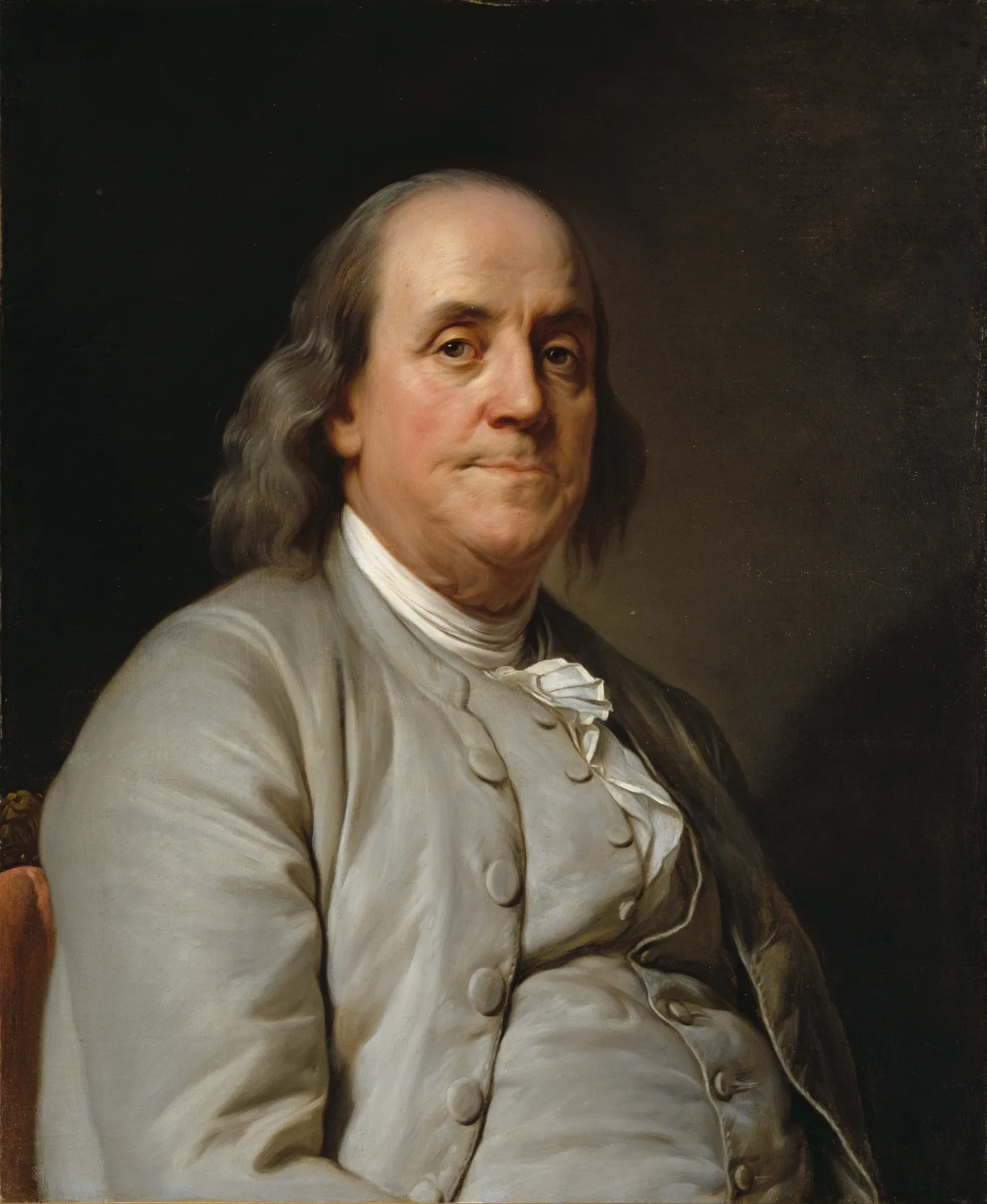
Franklin's Thirteen Virtues
Covey's example of deliberate character-building is Benjamin Franklin, who tracked thirteen virtues daily in his autobiography — among them temperance, silence, order, resolution, frugality, industry, sincerity, justice, moderation, cleanliness, tranquility, chastity, and humility. Franklin believed real influence flows from internal discipline, not outward polish, so he kept a running account of his own conduct against this list rather than simply resolving to "be better." Covey holds the practice up as the Character Ethic in action.
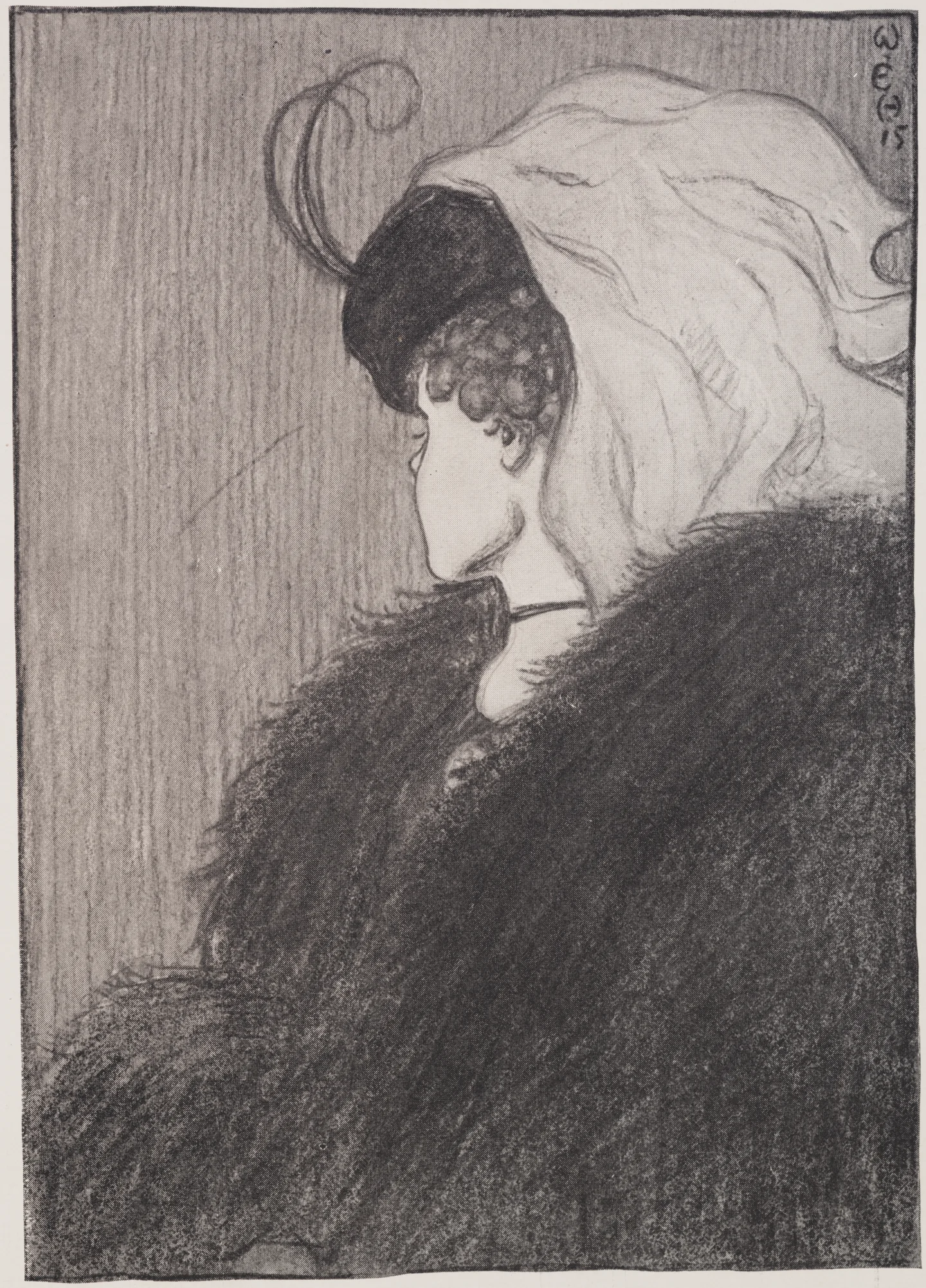
Seeing Your Own Conditioning
In Covey's classroom demonstration, half a room is shown a picture of a young woman, the other half an old woman; when a composite image is then projected, each group insists on seeing only the figure they were primed for, and arguments break out until students trace the lines together. The lesson: perceptual conditioning runs so deep that people mistake their own conditioned interpretation for objective reality. Whenever someone describes "what they see," Covey argues, they are actually describing their own paradigm.

Secondary Greatness
Covey distinguishes primary greatness — character integrity — from secondary greatness: social status, awards, recognition, and technical communication skill. Secondary greatness is not worthless, but on its own it is hollow, because charm and credentials cannot substitute for a trustworthy character. A polished communicator without integrity is eventually found out; the techniques that once impressed people instead read as manipulation. Genuine effectiveness, Covey argues, requires primary greatness first.
The Subway Father
Paradigm shifts can happen instantly, with no exercise of willpower at all. Covey describes riding a quiet New York subway when a man's children began yelling and grabbing at other passengers while their father sat with his eyes closed, doing nothing. Irritated, Covey asked if he could control them. The father looked up: "We just came from the hospital where their mother died about an hour ago." Irritation dissolved into compassion in a single sentence — only the paradigm through which Covey saw the children had changed.
P/PC Balance
True effectiveness is defined by the balance between the production of desired results (P) and the preservation of production capability (PC).
The Goose and the Golden Egg
Covey borrows Aesop's fable to picture the P/PC Balance: a farmer whose goose lays a golden egg every morning grows so greedy for all the gold at once that he kills the goose and cuts it open — finding nothing inside, and losing the very asset that produced his fortune. The same logic applies to a lawnmower run without maintenance or a team squeezed for output with no investment in morale: results won today must never come at the cost of the capability that produces them tomorrow.
The Maturity Continuum
Covey maps human development along a Maturity Continuum with three stages. Dependence is the paradigm of "you" — relying on others and blaming them when things go wrong. Independence is the paradigm of "I" — self-reliant, taking full responsibility. Interdependence is the paradigm of "we" — combining strengths with others to produce more than either could alone. Interdependence is a choice only independent people can make, so skipping straight from dependence to cooperation produces a partnership that can't hold.
Emotional Bank Account
The Emotional Bank Account is a metaphor representing the reserve of trust, goodwill, and emotional safety accumulated in a relationship.

Understanding the Individual
Of the six deposits Covey lists for the Emotional Bank Account, understanding the individual comes first — foundational precisely because what counts as a "deposit" is defined by the other person, not by you. Covey tells of a friend with no interest in baseball who took his baseball-loving son to see every major-league team play one game, a six-week trip that cost a great deal of money. Asked on his return whether he liked baseball that much, he said no, "but I like my son that much." A gesture that costs you little but means nothing to the other person is not a deposit at all.
The Little Things
In the Emotional Bank Account, small courtesies and kindnesses accumulate into deep trust over time — and small discourtesies, Covey warns, are never actually small in a close relationship. A forgotten thank-you or an interrupted sentence gets read as evidence of what the other person really thinks of you, not as a minor lapse. Because closeness raises the stakes of every gesture, attending to small things is one of the cheapest, steadiest ways to build a relationship's reserve of goodwill.

Keeping Commitments
Covey names keeping commitments among the deposits that build credibility in the Emotional Bank Account — and breaking one as a catastrophic withdrawal that damages credibility. A promise kept tells the other person your word is reliable evidence, not just an intention; a promise broken teaches the opposite, and that lesson is hard to unlearn.
Clarifying Expectations
Covey traces most relational conflict back to one cause: expectations about roles, standards, or responsibilities that were never actually made explicit. Two people can walk into the same arrangement each assuming a different definition of "done," and only discover the gap when one of them feels let down. Clarifying expectations up front — defining roles and standards before the work starts, not after a disagreement — is a deposit into the Emotional Bank Account because it prevents a costly withdrawal later.
A Sincere Apology Is a Deposit
A genuine apology — "I was wrong," "That was unkind of me" — is a deposit into the Emotional Bank Account, not a withdrawal, even though it costs the person making it. Covey argues it takes real character strength to apologize quickly out of one's heart rather than out of pity, and people with little internal security cannot do it because it makes them too vulnerable; repeated apologies that come across as insincere, by contrast, make further withdrawals instead of repairing the first. The cost of a real apology is exactly what makes it register as credit.
Squeezing People for Output
Covey extends the P/PC Balance to organizations: production (P) is the quarterly output a business demands; production capability (PC) is the trained, motivated workforce that makes output possible at all. A manager who forces short-term compliance — more hours, tighter deadlines — without investing in training and morale gets a burst of P, but at the cost of the PC that generates every future result, destroying organizational culture the same way an overused machine destroys itself.
Self-test
Answer each question from memory, then check your work against the answer key.
1. What has to happen before someone can see a familiar situation completely differently?
- AA paradigm shift occurs when a person accumulates sufficient new facts to correct errors inside their existing frame of reference.
- BA paradigm shift occurs when a person breaks out of an old frame of reference to perceive reality in a fundamentally new way.
- CA paradigm shift occurs when a person adopts an effective person's behavior, and the outlook changes afterward through habit.
- DA paradigm shift occurs when external pressure becomes severe enough that the old frame of reference is enforced more strictly.
2. What does Covey say recognition and polish amount to on their own?
- ASecondary greatness involves social status, awards, and technical communication skills, which reliably produce character integrity over time.
- BSecondary greatness involves the deep character traits of integrity and humility, which no amount of public recognition can ever substitute for.
- CSecondary greatness involves social status, awards, and technical communication skills, which are hollow without primary character integrity.
- DSecondary greatness involves the private victory over self, which must be won before any public victory can be attempted.
3. What status does Covey claim for the ideas sitting underneath the seven habits?
- APrinciples operate as personal preferences that each individual is free to define, since effectiveness is ultimately a matter of taste.
- BPrinciples operate as practices, so a technique applied successfully anywhere will work identically everywhere else.
- CPrinciples operate as useful social conventions, agreed within a culture and revisable whenever that culture chooses.
- DPrinciples operate as natural laws in human relationships just as physical gravity operates in the physical realm.
4. Which approach starts change with one's own paradigms and character, rather than waiting for others to change first?
- AInside-Out Approach
- BOutside-In Approach
- CPositive Mental Attitude (PMA)
- DPersonality Ethic
5. Benjamin Franklin's daily tracking of thirteen virtues illustrates which concept?
- AThe Character Ethic
- BThe Emotional Bank Account
- CThe Personality Ethic
- DThe Maturity Continuum
6. What does Covey say heads off most friction between two people working together?
- AClarifying expectations prevents relational conflict, though only in formal organizations where roles are already written down.
- BClarifying expectations prevents relational conflict by assigning a single decision-maker whose judgment settles all subsequent disagreement.
- CClarifying expectations prevents relational conflict by explicitly defining roles, standards, and boundaries upfront.
- DClarifying expectations prevents relational conflict by deferring every disputed question until the relationship is strong enough to absorb it.
7. What happens to a business that squeezes output and neglects the people producing it?
- AIn human organizations, forcing short-term compliance is the only reliable way to protect margins while capability is rebuilt later.
- BIn human organizations, forcing short-term compliance without investing in employee capability and morale destroys organizational culture.
- CIn human organizations, employee capability and morale are outputs of profitability, so financial results must always be pursued first.
- DIn human organizations, short-term compliance and long-term capability move together, so pressure on one of them lifts the other.
8. In Covey's P/PC Balance, what does "PC" stand for?
- AProactive Capacity
- BPersonal Character
- CPrinciple-Centered
- DProduction Capability
9. Which of these is NOT one of the deposits Covey names for the Emotional Bank Account?
- AClarifying expectations
- BDemanding respect
- CKeeping commitments
- DSincere apology
10. Running a lawnmower constantly without maintenance until the engine breaks down neglects which part of the P/PC Balance?
- AProduction (P)
- BNeither; wear is unavoidable
- CP and PC equally
- DProduction Capability (PC)
11. Which stage of the maturity continuum sits between dependence and interdependence?
- AIndependence is the paradigm of 'I', where an individual takes full personal responsibility and operates with inner agency.
- BIndependence is the paradigm of 'you', where responsibility for one's outcomes rests with circumstances and with other people.
- CIndependence is the paradigm of 'we', where two or more people combine their strengths to produce what neither could produce alone.
- DIndependence is the terminal stage of maturity, beyond which no further growth in effectiveness is available to an individual.
Go deeper
- WatchThe Wrong Map You're lost in Chicago. You try harder. You stay positive. But your map is of Detroit.
- WatchThe Emotional Bank Account With one friend, small misunderstandings are easily forgiven. With another, every word is weighed. Why?
- ReadThe 7 Habits of Highly Effective People by Stephen R. Covey · on Amazon ↗
- StudyThe 7 Habits of Highly Effective People in the FlashFeed app
These are affiliate links: if you buy a book through one, FlashFeed may earn a small commission at no extra cost to you. The commission helps pay for FlashFeed's servers.
As an Amazon Associate we earn from qualifying purchases.
Answer key
- 1. B A paradigm shift occurs when a person breaks out of an old frame of reference to perceive reality in a fundamentally new way.The correct understanding is that A paradigm shift occurs when a person breaks out of an old frame of reference to perceive reality in a fundamentally new way.
- 2. C Secondary greatness involves social status, awards, and technical communication skills, which are hollow without primary character integrity.The correct understanding is that Secondary greatness involves social status, awards, and technical communication skills, which are hollow without primary character integrity.
- 3. D Principles operate as natural laws in human relationships just as physical gravity operates in the physical realm.The correct understanding is that Principles operate as natural laws in human relationships just as physical gravity operates in the physical realm.
- 4. A Inside-Out ApproachThe Inside-Out Approach begins with self-mastery (private victory) before trying to change others; Outside-In reverses this order, and the Personality Ethic focuses on image over character.
- 5. A The Character EthicFranklin's virtue-tracking exemplifies the Character Ethic's claim that effectiveness rests on integrity and other foundational virtues, not on image or technique.
- 6. C Clarifying expectations prevents relational conflict by explicitly defining roles, standards, and boundaries upfront.The correct understanding is that Clarifying expectations prevents relational conflict by explicitly defining roles, standards, and boundaries upfront.
- 7. B In human organizations, forcing short-term compliance without investing in employee capability and morale destroys organizational culture.The correct understanding is that In human organizations, forcing short-term compliance without investing in employee capability and morale destroys organizational culture.
- 8. D Production CapabilityP/PC Balance weighs production (P), the results wanted, against production capability (PC), the capacity that produces them, like the goose that lays golden eggs.
- 9. B Demanding respectCovey names keeping commitments, clarifying expectations, and sincere apology as deposits; commanding respect through authority is not among the deposits he lists.
- 10. D Production Capability (PC)The lawnmower is a physical asset: running it without upkeep maximizes short-term Production (P) but destroys Production Capability (PC), the engine's ability to keep producing.
- 11. A Independence is the paradigm of 'I', where an individual takes full personal responsibility and operates with inner agency.The correct understanding is that Independence is the paradigm of 'I', where an individual takes full personal responsibility and operates with inner agency.
Sources
- The 7 Habits of Highly Effective People — Stephen R. Covey
Image credits
- Franklin's Thirteen Virtues: Wikimedia Commons · Joseph-Siffred Duplessis · Public domain — commons.wikimedia.org/wiki/File:Joseph_Siffrein_Duplessis_-_Benjamin_Franklin_-_Google_Art_Project.jpg
- Seeing Your Own Conditioning: Wikimedia Commons · W. E. Hill · Public domain — commons.wikimedia.org/wiki/File:My_Wife_and_My_Mother-in-Law.jpg
- Secondary Greatness: David Jones (Openverse) · by 2.0 — www.flickr.com/photos/45457437@N00/20251522109
- Understanding the Individual: Matthew Straubmuller from Bethesda, MD, USA · CC BY 2.0 — commons.wikimedia.org/wiki/File:Father_%26_Son_at_the_Baseball_Game_(7702438750).jpg
- Keeping Commitments: Amtec Photos · CC BY-SA 2.0 — commons.wikimedia.org/wiki/File:Man_and_Woman_Shaking_Hands.jpg


