
The 7 Habits of Highly Effective People study guide · Lesson 2 of 6
Private Victory: Habit 1 (Be Proactive) and Habit 2 (Begin with the End in Mind)
Habit 1: Proactivity and the Circle of Influence · Habit 2: Personal Leadership and Mission Statements
Unofficial study guide for The 7 Habits of Highly Effective People: 30th Anniversary Edition by Stephen R. Covey. FlashFeed is not affiliated with the author or publisher.
This is the lesson's study guide from the FlashFeed app, plus its key facts and a self-test.
What you'll be able to do
- Apply Habit 1 (Be Proactive) by focusing on the Circle of Influence rather than the Circle of Concern.
- Apply Habit 2 (Begin with the End in Mind) by authoring a personal mission statement through principle-centered leadership.
Lesson 2: Private Victory: Habit 1 (Be Proactive) and Habit 2 (Begin with the End in Mind)
Habit 1: Proactivity and the Circle of Influence
The Social Mirror, Stimulus and Response, and Human Endowments
Habit 1, Be Proactive, is the foundational habit of personal vision and personal responsibility. Covey contrasts the proactive paradigm with determinism. Genetic determinism (it is in my DNA), psychic determinism (my parents made me this way), and environmental determinism (my boss, spouse, or the economy is ruining me) all reflect a stimulus-response model derived from Pavlovian animal psychology.
Drawing inspiration from Viktor Frankl, the Austrian psychiatrist and neurologist who survived Nazi concentration camps (including Auschwitz and Dachau), Covey emphasizes the profound realization Frankl discovered in the depths of unimaginable torment: between stimulus and response, human beings possess the freedom to choose. Frankl realized that while his captors could control his physical environment and torture his body, they could not touch his inner sovereignty. He called this the "last of the human freedoms."
Covey summarizes this insight in his own words: between stimulus and response, human beings have the freedom to choose their response.
This freedom of choice is enabled by Four Unique Human Endowments that separate human beings from the animal kingdom:
- Self-Awareness: The ability to stand apart from oneself, observe one's own thought processes, examine habits, and evaluate paradigms.
- Conscience: A deep inner awareness of moral right and wrong, and alignment with timeless natural law principles.
- Creative Imagination: The ability to envision states, futures, and possibilities beyond present sensory experience and past programming.
- Independent Will: The power to act based on self-awareness and core values, free from external influence, pressure, or conditioning.
Proactive vs. Reactive Language and Behavior
Proactivity means more than merely taking initiative; it means recognizing that human behavior is a product of conscious choice, not conditioning or circumstance. Proactive people subordinate feelings, moods, and impulses to deeply held core values.
In contrast, reactive people are driven by feelings, circumstances, conditions, and their social environment. When the physical or social weather is good, reactive people feel good; when it is bad, their performance and attitude sour. Proactive people carry their own weather.
This divergence is reflected in language:
- Reactive Language: "There's nothing I can do," "That's just the way I am," "He makes me so mad," "They won't allow that," "I have to do that," "If only..." Reactive language is a self-fulfilling prophecy that transfers responsibility and reinforces helplessness.
- Proactive Language: "Let's look at our alternatives," "I can choose a different approach," "I control my own feelings," "I can create an effective presentation," "I choose," "I prefer."
The Circle of Influence and the Circle of Concern
To evaluate where individuals direct their energy, Covey introduces two concentric circles:
- The Circle of Concern: Encompasses everything an individual cares about or worries about (the weather, national politics, the economy, other people's faults, global crises). Within this circle, there are things over which the individual has no real control.
- The Circle of Influence: Encompasses the things within the Circle of Concern that an individual can actually do something about (one's own behavior, habits, skills, time management, promises, health).
Reactive people focus their energy on the outer Circle of Concern—complaining about external conditions, finding fault with others, and feeling victimized. This negative energy causes their Circle of Influence to shrink.
Proactive people focus their energy on the inner Circle of Influence—working on things they can control and improve. By working from within, their positive, proactive energy expands their Circle of Influence over time:
"Proactive people focus their efforts in the Circle of Influence. They work on the things they can do something about."
Covey categorizes all problems into three types:
- Direct Control: Problems involving our own behavior (solved by working on our habits).
- Indirect Control: Problems involving other people's behavior (solved by changing our methods of influence, such as practicing empathy and Win/Win).
- No Control: Problems we can do nothing about, such as our past or the weather (solved by genuine acceptance and peaceful adaptation).
At the core of the Circle of Influence lies our ability to make and keep commitments and promises. The commitments we make to ourselves and others, and our integrity to those commitments, are the clearest manifestation of proactivity. Covey recommends a 30-day test of proactivity: work only within your Circle of Influence, make small promises and keep them, be a light not a judge, be a model not a critic, and be part of the solution rather than part of the problem.
Habit 2: Personal Leadership and Mission Statements
Principles of Personal Leadership and the Two Creations
Habit 2, Begin with the End in Mind, is based on the principle that all things are created twice. There is a first, mental creation, followed by a second, physical creation:
- The construction of a house requires a detailed architectural blueprint (mental creation) before a single hammer strikes a nail (physical creation).
- A successful journey requires a destination and navigation plan before traveling.
- An enterprise requires an operational and strategic design before execution.
If individuals do not consciously author their own first creations, they default to living out the scripts, expectations, and agendas handed to them by family, peers, and society. Personal leadership is the ongoing discipline of consciously designing one's first creation.
Covey sharply distinguishes between Leadership and Management. For the short version he quotes Peter Drucker and Warren Bennis: management is doing things right; leadership is doing the right things. In Covey's own words:
- Management is efficiency in climbing the ladder of success; leadership determines whether the ladder is leaning against the right wall.
Covey tells the parable of a team cutting through a dense jungle with machetes. The managers are behind the cutters, sharpening machetes, improving cutting techniques, writing policy manuals, and organizing muscle-development programs. The leader is the person who climbs the tallest tree, surveys the entire landscape, and yells, "Wrong jungle!"
Authoring a Personal Mission Statement
The most effective way to begin with the end in mind is to author a Personal Mission Statement (or personal constitution). A personal mission statement defines:
- What you want to be (character and personal qualities).
- What you want to do (contributions, achievements, and service).
- The principles upon which your being and doing are based.
A mission statement serves as a solid criterion by which an individual evaluates every decision, opportunity, and challenge in life. To access the deep wisdom required for a mission statement, Covey suggests mental exercises such as visualizing one's own funeral. Envisioning what loved ones, colleagues, friends, and community members will say about your character, contributions, and legacy clarifies what truly matters in the ultimate analysis.
Covey frames the writing of a mission statement in terms of the popular left-brain/right-brain model. In his account the right brain is the intuitive, creative, visual side, which supplies the images, feelings, and imagination behind a mission, while the left brain is the analytical, logical, verbal side, which becomes important when those images and feelings have to be captured in the words of a written statement:
- Right-Brain Thinking (as Covey uses the term): Intuitive, creative, and visual—imagination, images, and feelings about what matters most.
- Left-Brain Thinking (as Covey uses the term): Analytical, logical, and verbal—putting those images and feelings into the words of a written statement.
Centers of Life and the Principle Center
Every individual operates from a central core of security, guidance, wisdom, and power:
- Security: Sense of worth, identity, emotional anchorage, and self-esteem.
- Guidance: Source of direction in life, standards, and navigational compass.
- Wisdom: Perspective on life, judgment, comprehension of how things fit together.
- Power: Capacity to act, strength and potency to accomplish goals.
Most people center their lives on fluctuating, vulnerable external anchors:
- Spouse-Centeredness: Emotional security fluctuates wildly with the spouse's moods and behaviors.
- Family-Centeredness: Vulnerable to family crises and generational dependencies.
- Money-Centeredness: Anxiety-driven pursuit of wealth that sacrifices relationships and peace of mind.
- Work-Centeredness: Chronic workaholism where self-worth is tied exclusively to occupational status.
- Possession-Centeredness: Basing identity on tangible assets, prestige, and material status.
- Pleasure-Centeredness: Hedonistic escape that leads to boredom, emptiness, and diminished capacity.
- Friend/Enemy-Centeredness: Being emotionally obsessed with social belonging or reactive conflict.
- Self-Centeredness: Narcissistic focus that breeds alienation and fragility.
Covey establishes that the only stable, unchanging foundation is a Principle Center:
"By centering our lives on timeless, unchanging principles, we create a fundamental paradigm of effective living."
Principles do not change with trends, economies, or moods. A principle-centered person derives security from immutable natural laws, possesses clear guidance, exercises deep wisdom, and unleashes proactive power.
The Comparative Matrix of Life Centers and Support Dimensions
To understand why a Principle Center is the only resilient foundation for human effectiveness, Covey examines how the four life-support factors—Security, Guidance, Wisdom, and Power—manifest across alternative life centers:
- Spouse Center: Security depends on the emotional state and behavior of the spouse; guidance comes from marital expectations; wisdom is distorted by emotional codependence; power is severely limited by interpersonal reactivity.
- Family Center: Security is derived from family acceptance and reputation; guidance comes from ancestral scripts and family traditions; wisdom is insular and clannish; power is constrained by generational patterns.
- Money Center: Security is anchored in net worth and financial market fluctuations; guidance is determined by economic gain and profit motives; wisdom is reduced to financial balance sheets; power is limited to monetary influence.
- Work Center: Security is tied to corporate titles and professional achievements; guidance comes from organizational demands and professional protocols; wisdom is limited to narrow vocational domains; power is dependent on workplace hierarchy.
- Possession Center: Security depends on social status, luxury goods, and visible assets; guidance comes from comparison with peers and fashion trends; wisdom is superficial and consumer-driven; power is fragile and easily lost.
- Pleasure Center: Security is volatile, requiring continuous sensory stimulation; guidance is driven by momentary desires and instant gratification; wisdom is narcissistic; power is self-destructive and enervating.
- Friend/Enemy Center: Security relies on social belonging (friends) or reactive opposition (enemies); guidance comes from peer approval or counter-defensiveness; wisdom is distorted by social paranoia; power is surrendered to the reactions of others.
- Self Center: Security is vulnerable, leading to narcissism and fragility; guidance is purely subjective; wisdom is self-serving and myopic; power is alienated and isolated.
- Principle Center: Security is rooted in unchanging natural laws; guidance is provided by a calibrated moral conscience; wisdom is comprehensive, holistic, and accurate; power is proactive, creative, and boundless.
Key facts
Freedom to Choose
Between stimulus and response, human beings possess the fundamental freedom to choose their reaction based on values.
The Gateway Choice
Of everything in the book, Covey treats one shift as the gateway to all the others: choosing to be proactive rather than reactive. It's the move from seeing yourself as a victim of circumstance to acting as an agent of change — not because circumstances stop mattering, but because the response to them becomes something chosen rather than something that simply happens to you. Every later habit presumes this first shift already happened, which is why Covey opens the seven habits with it.
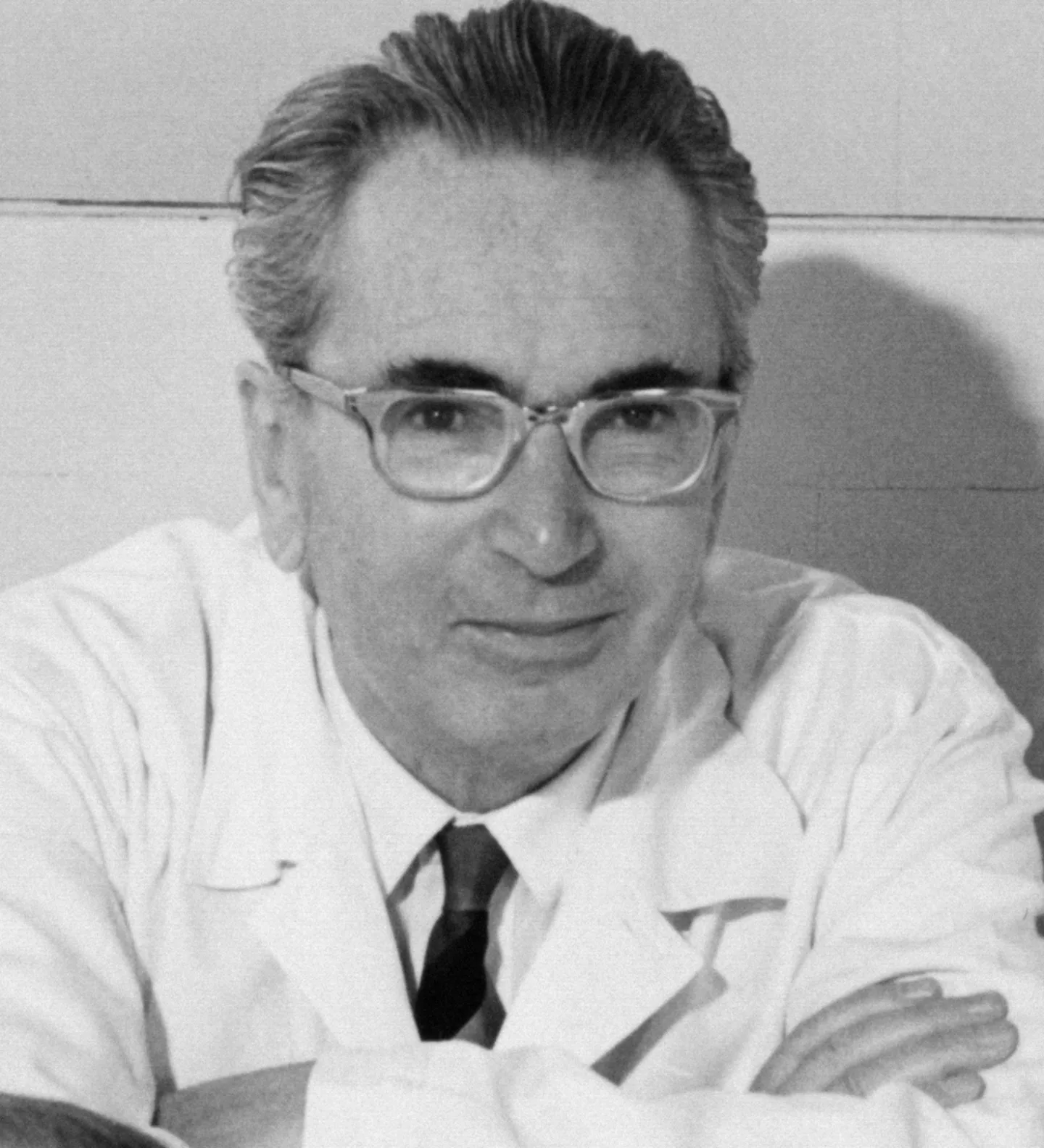
Viktor Frankl's Last Freedom
Covey's account of ultimate human freedom comes from Viktor Frankl, an Austrian psychiatrist who survived Nazi concentration camps including Auschwitz and Dachau. Stripped of his family, his possessions, and control over his own body, Frankl discovered that his captors could not touch one thing: his freedom to choose his own inner response to what was happening to him. He called it "the last of the human freedoms." Covey uses Frankl's discovery to ground his central claim about the space between stimulus and response.
Four Human Endowments
Covey names four unique human endowments that create the space between stimulus and response: self-awareness (standing apart to examine your own thinking), conscience (an inner moral compass sensing alignment with principle), creative imagination (picturing a future beyond present experience), and independent will (the power to act on your values rather than your conditioning). No animal has these; together they make it possible to notice an inherited habit and choose to rewrite it.
Circle of Influence
Covey draws two circles: the Circle of Concern holds everything a person cares about, most of which they cannot control; the Circle of Influence holds the smaller set of things they can actually act on. Reactive people pour their energy into the Circle of Concern — complaining, blaming, worrying — and that only shrinks their influence further. Proactive people focus energy inward, on their own behavior and choices, and Covey observes that this circle visibly grows the more it's used.
Independent Will
Independent will is the capacity to take action based on personal self-awareness and principles, free from external conditioning.
Reactive Language
Phrases like "there's nothing I can do," "that's just how I am," and "he makes me so mad" are what Covey calls reactive language — and he insists it isn't harmless phrasing. The words are a paradigm made audible: each one hands responsibility for your response to somebody or something else, and repeating that story turns it into a self-fulfilling prophecy. Proactive language replaces it with ownership — "I can choose a different approach," "I control my own feelings."
Three Kinds of Problems
Covey sorts every problem into three types, each solved a different way. Direct control problems involve our own behavior, and yield to new personal habits. Indirect control problems involve other people's behavior, and yield to better methods of influence — empathy, Win/Win. No control problems involve fixed realities, like the past or the weather, and yield to nothing but genuine, unresentful acceptance. Misapplying the fix is where most frustration comes from.
The Thirty-Day Test
Covey proposes a thirty-day proactivity test: for one month, work strictly within your Circle of Influence, make small promises and keep every one, stop complaining and stop judging, and try to be part of the solution rather than the problem. The calendar length isn't the point — it's long enough for the effect to accumulate and become visible. Influence, Covey argues, grows the same way a muscle does: through consistent use, not a single decision.
Carry Your Own Weather
Covey says proactive people "carry their own weather" — their sense of purpose and emotional stability doesn't rise and fall with what's happening around them. A reactive person's mood tracks the social or physical climate: good when things go well, sour when they don't. A proactive person still feels things, but their stability comes from values they've chosen, not conditions they can't control — which is why the same hardship can break one person and barely register with another.
Two Creations
Habit 2 is based on the principle that all things are created twice: first through mental creation, then through physical creation.
Leadership vs. Management
Covey tells of a team hacking through a jungle with machetes: the managers are behind them, sharpening blades, refining technique, and writing procedure manuals — efficiency in climbing. The leader is the one who climbs the tallest tree, surveys the whole landscape, and shouts, "Wrong jungle!" Quoting Peter Drucker and Warren Bennis, he sums it up: management is doing things right; leadership is doing the right things. A team can climb a ladder with tremendous efficiency and still discover it was leaning against the wrong wall.
Your Personal Constitution
Covey calls a written Personal Mission Statement a "personal constitution" — a stable document naming what you want to be (character), what you want to do (contributions), and the principles both rest on, stable enough to serve as the fixed standard every decision gets measured against. To find that clarity, he suggests visualizing your own funeral: what would the people who know you best actually say about your character and your life's contribution?
Vision Before Scheduling
Begin with the End in Mind (Habit 2) is about deciding your direction and values — it is not a scheduling exercise. Covey is explicit that detailed weekly planning belongs to Habit 3, and comes after roles, values, and direction have already been decided, not before. Confusing the two habits produces a beautifully organized calendar in service of a destination nobody actually chose. Leadership has to happen before management decides how fast to climb.
Principle Center
Centering life on timeless principles creates an unshakeable foundation for security, guidance, wisdom, and power.
Security, Guidance, Wisdom, Power
Covey names four life-support factors that every "center" of a life supplies in some degree. Security is your sense of self-worth and identity. Guidance is the internal standard you use to judge your own conduct. Wisdom is your perspective — how the parts of life fit together. Power is your capacity to actually act and get things done. What a life is centered on determines how strong, and how stable, each of these four turns out to be.
Security From Principle, Not Approval
Covey locates real social and emotional security not in other people's approval but in living in congruence with your own internal principles — integrity with yourself, regardless of who's watching or agreeing. Approval-based security is fragile because it depends on something you don't control: other people's moods and attention, all of which shift. Principle-based security doesn't need anyone else's regard to hold steady, which is why Covey treats it as the more durable foundation.
Family-Centeredness
A life centered on family can look stable, but it still isn't the most stable base available. When identity and security are tied to a family's ups and downs, a single crisis or generational conflict can shake the foundation, because the center is still something outside the person themselves. Family-centeredness feels safer than most alternatives, but "deep" and "unshakeable" are not the same thing in Covey's framework.
Money-Centeredness
When net worth becomes the center of a life, Covey argues, wisdom narrows to a balance sheet — every decision gets filtered through its financial return, and judgment about relationships, health, or meaning gets crowded out. Security becomes hostage to market fluctuations the person doesn't control, producing chronic anxiety rather than the stability money was supposed to buy. Covey's point isn't that money is bad; it's that money makes an unstable center.
Work-Centeredness
Covey's test for work-centeredness is simple: can you answer "who am I?" without naming a job title? Someone who can't has let their occupational role become their identity's foundation, so every professional setback — a layoff, a bad review, a stalled promotion — becomes a threat to their sense of self, not just to their career. Because a job title is something an employer assigns and can take away, Covey classifies work as a borrowed foundation, not a stable center.
Pleasure-Centeredness
Organizing a life around enjoyment, Covey warns, produces a hedonistic cycle: each pleasure delivers a burst of gratification, then fades, leaving the person chasing the next sensory hit rather than building anything durable. Rather than the lasting security pleasure seems to promise, the pattern ends in inner emptiness, because fleeting gratification was never capable of anchoring an identity in the first place. Covey doesn't condemn enjoyment itself — only making it the center a life is built around.
Self-test
Answer each question from memory, then check your work against the answer key.
1. Which of the four human endowments registers whether an action fits with principle?
- ACreative imagination is the internal faculty that projects a person beyond present reality into what might yet be.
- BConscience is an internal moral compass that senses alignment with timeless natural law principles.
- CIndependent will is the internal capacity to act on a decision once the right course has been identified.
- DSelf-awareness is the internal faculty that lets a person stand apart from their own thoughts and examine them.
2. Which class of problem does Covey say yields to a change in personal habit?
- ADirect control problems involve our own behavior and are resolved by cultivating new personal habits.
- BOur own behavior underlies direct control problems, yet resolution demands outside help because self-observation misleads.
- CDirect control problems involve other people's behavior, resolved by improving our own methods of influence.
- DDirect control problems involve entirely unalterable conditions, resolved only through learning peaceful acceptance.
3. What is claimed about the emotional state of a proactive person?
- AProactive people carry their own weather, which means they suppress feeling entirely so that no circumstance can register.
- BProactive people carry their weather by inhabiting environments mild enough to leave stability untested.
- CProactive people carry their own weather, though only while circumstances remain broadly favorable.
- DProactive people carry their own weather, maintaining emotional stability and purpose regardless of external circumstances.
4. Which human endowment is defined as the power to act on self-awareness and core values, free from outside conditioning?
- AConscience
- BSelf-awareness
- CIndependent will
- DCreative imagination
5. Which of the following is NOT one of Covey's three types of problems, sorted by degree of control?
- AIndirect control
- BNo control
- CDirect control
- DDelayed control
6. Which exercise does Covey open the second habit with, and what is it for?
- AVisualizing one's own funeral clarifies precisely which competitors and colleagues deserve surpassing.
- BDrafting a comprehensive five-year career plan clarifies precisely which character attributes and contributions genuinely matter.
- CVisualizing one's own funeral provides profound clarity on what core character attributes and contributions truly matter.
- DVisualizing one's ideal working day provides profound clarity on the sequence in which daily tasks should be attempted.
7. Which life-support factor names the ability to get things done?
- APower represents the capacity to act, the strength to overcome inertia, and the potency to accomplish goals.
- BGuidance represents the capacity to act, in the sense of directing other people toward an agreed objective.
- CSecurity represents the capacity to act quickly under pressure without waiting for the agreement of other people.
- DWisdom represents the capacity to act, the balance of judgment, and the integrated perspective from which choices are made.
8. What is the end state of organizing a life around enjoyment?
- APleasure-centeredness produces a hedonistic cycle resolving once every conceivable gratification has been sampled.
- BPleasure-centeredness produces a hedonistic cycle of fleeting sensory gratification that leads to inner emptiness.
- CPleasure-centeredness produces a strong sense of security, since enjoyment is one of the few things a person can guarantee.
- DPleasure-centeredness produces lasting contentment, since each enjoyment satisfies more deeply than the one before.
9. In Covey's jungle parable, what does the leader alone do that the managers do not?
- ASharpen the machetes
- BTrain the crew's strength
- CClimb the tree and check direction
- DWrite procedure manuals
10. Which of these is NOT one of Covey's four life-support factors that every life 'center' supplies?
- AWisdom
- BGuidance
- CSecurity
- DVision
Go deeper
- WatchCircle of Influence The weather. The economy. Other people's faults. Covey puts them all in your Circle of Concern.
- WatchCreated Twice Every house gets built twice. First as a blueprint. Then with hammers and nails.
- ReadThe 7 Habits of Highly Effective People by Stephen R. Covey · on Amazon ↗
- StudyThe 7 Habits of Highly Effective People in the FlashFeed app
These are affiliate links: if you buy a book through one, FlashFeed may earn a small commission at no extra cost to you. The commission helps pay for FlashFeed's servers.
As an Amazon Associate we earn from qualifying purchases.
Answer key
- 1. B Conscience is an internal moral compass that senses alignment with timeless natural law principles.The correct understanding is that Conscience is an internal moral compass that senses alignment with timeless natural law principles.
- 2. A Direct control problems involve our own behavior and are resolved by cultivating new personal habits.The correct understanding is that Direct control problems involve our own behavior and are resolved by cultivating new personal habits.
- 3. D Proactive people carry their own weather, maintaining emotional stability and purpose regardless of external circumstances.The correct understanding is that Proactive people carry their own weather, maintaining emotional stability and purpose regardless of external circumstances.
- 4. C Independent willIndependent will is the power to act on self-awareness and values, free of external conditioning — distinct from self-awareness, which is only the capacity to observe one's own thinking.
- 5. D Delayed controlCovey names only three categories: direct control (our own behavior), indirect control (others' behavior), and no control (unchangeable conditions). Delayed control is not one of them.
- 6. C Visualizing one's own funeral provides profound clarity on what core character attributes and contributions truly matter.The correct understanding is that Visualizing one's own funeral provides profound clarity on what core character attributes and contributions truly matter.
- 7. A Power represents the capacity to act, the strength to overcome inertia, and the potency to accomplish goals.The correct understanding is that Power represents the capacity to act, the strength to overcome inertia, and the potency to accomplish goals.
- 8. B Pleasure-centeredness produces a hedonistic cycle of fleeting sensory gratification that leads to inner emptiness.The correct understanding is that Pleasure-centeredness produces a hedonistic cycle of fleeting sensory gratification that leads to inner emptiness.
- 9. C Climb the tree and check directionThe leader climbs the tallest tree, surveys the landscape, and shouts 'Wrong jungle!' while managers only refine cutting technique and procedures — efficiency without checking direction.
- 10. D VisionThe four life-support factors are security, guidance, wisdom, and power. Vision relates to Habit 2's mission-statement work but is not one of the four factors.
Sources
- The 7 Habits of Highly Effective People — Stephen R. Covey
Image credits
- Viktor Frankl's Last Freedom: Prof. Dr. Franz Vesely · CC BY-SA 3.0 de — commons.wikimedia.org/wiki/File:Viktor_Frankl2.jpg
