
American Football Trivia & Gridiron Lore study guide · Lesson 6 of 6
Strategy, Football Anatomy, College Traditions, and Tailgate Culture
Tactical Masterminds, Formations, and Gridiron Evolution · College Traditions, Heisman Lore, and Gridiron Culture
This is the lesson's study guide from the FlashFeed app, plus its key facts and a self-test.
What you'll be able to do
- Recall football's tacticians and schemes: Shaughnessy's T-Formation, Mouse Davis's Run and Shoot, Tampa 2, LeBeau's Zone Blitz, and the 2008 Wildcat.
- Recall Heisman lore (created 1935, 45 pounds of bronze, Archie Griffin twice, Charles Woodson in 1997), The Play's five laterals, and the 12th Man.
Lesson 6: Strategy, Football Anatomy, College Traditions, and Tailgate Culture
Tactical Masterminds, Formations, and Gridiron Evolution
The tactical architecture of American football has continually evolved through a dynamic chess match between offensive innovators creating spatial leverage and defensive masterminds crafting schemes to disguise coverage and collapse protection. In the 1930s and 1940s, Stanford and Bears coach Clark Shaughnessy revitalized the T-Formation by placing the quarterback directly behind the center, utilizing a man in motion, and executing deceptive quick handoffs, helping reshape quarterback play.
In the 1970s and 1980s, Mouse Davis popularized the 'Run and Shoot' four-receiver spread offense at Portland State and in the USFL, pioneering pre-snap and post-snap option route adjustments that forced defenses to defend all 53.3 yards of field width. Defensively, Tony Dungy and Monte Kiffin created the famous 'Tampa 2' scheme with the Tampa Bay Buccaneers in the late 1990s, using a fast middle linebacker (such as Hardy Nickerson or Shelton Quarles) to drop deep into the middle third between two Cover 2 safeties. Meanwhile, Dick LeBeau refined the 'Zone Blitz' (Fire Zone) in Cincinnati and made it famous as Pittsburgh Steelers defensive coordinator, dropping athletic defensive linemen into short passing lanes while blitzing cornerbacks and safeties from unpredictable angles.
Modern tactical explosions include the 2008 Miami Dolphins' 'Wildcat Offense,' where running back Ronnie Brown took direct snaps in an unbalanced line to shock the New England Patriots as Brown accounted for five touchdowns (four rushing, one passing); the Run-Pass Option (RPO) revolution, giving quarterbacks post-snap reads to hand off or throw; the iconic 'Philly Special' trick play on fourth-and-goal in Super Bowl LII, where Philadelphia Eagles quarterback Nick Foles caught a touchdown pass from tight end Trey Burton; and the Eagles' highly successful 'Brotherly Shove' / 'Tush Push' short-yardage quarterback sneak.
Rule evolutions have reshaped the game. In 1978, the NFL enacted the 'Mel Blount Rule,' prohibiting defenders from making contact with receivers beyond five yards from the line of scrimmage, while simultaneously permitting offensive linemen to extend arms and use open hands to pass block. The two-point conversion was introduced to the modern NFL in 1994. Equipment specifications are equally exacting: every official NFL football ('The Duke') is hand-sewn by Wilson Sporting Goods in Ada, Ohio, measuring 11 to 11.25 inches long, 28 to 28.5 inches in long circumference, and weighing 14 to 15 ounces inflated between 12.5 and 13.5 psi. Goalposts sit with the crossbar exactly 10 feet above ground with uprights 18 feet 6 inches wide, moved to the rear of the end zone in 1974.
Key Historical Concepts and Trivia Milestones
Clark Shaughnessy T-Formation
Coach Clark Shaughnessy revitalized the T-Formation in 1940 by placing the quarterback directly under center with a halfback in pre-snap motion, creating the foundational template for modern offensive football.
Mouse Davis Run and Shoot
Coach Mouse Davis popularized and refined the four-wide receiver 'Run and Shoot' offense (conceived earlier by Glenn 'Tiger' Ellison) at Portland State in the late 1970s, which relied on receivers reading defensive coverages on the fly and altering their pass routes mid-play.
Tony Dungy Tampa 2 Defense
Tampa Bay Buccaneers head coach Tony Dungy and defensive coordinator Monte Kiffin created the 'Tampa 2' defensive scheme, featuring a Cover 2 shell where the middle linebacker drops deep downfield between the two deep safeties.
Dick LeBeau Zone Blitz
Dick LeBeau refined the 'Zone Blitz' (Fire Zone) concept as Cincinnati's defensive coordinator and made it famous with the Pittsburgh Steelers, creating mass confusion by having defensive ends drop into pass coverage while safeties and cornerbacks blitzed the quarterback.
Miami Dolphins Wildcat Offense
On September 21, 2008, the Miami Dolphins unleashed the 'Wildcat Offense' with direct snaps to running back Ronnie Brown from an unbalanced line, routing the New England Patriots 38-13 with Brown accounting for five touchdowns (four rushing, one passing).
Run-Pass Option (RPO) Mechanics
The Run-Pass Option (RPO) creates an un-defendable spatial dilemma by marrying run-blocking schemes with quick passing routes, allowing the quarterback to read a single defender post-snap before deciding whether to hand off or pass.
The Philly Special in Super Bowl LII
On fourth-and-goal with 38 seconds remaining in the second quarter of Super Bowl LII, Philadelphia Eagles quarterback Nick Foles caught a 1-yard touchdown pass from tight end Trey Burton on the trick play known as the 'Philly Special.'
The Brotherly Shove / Tush Push
The Philadelphia Eagles popularized the 'Brotherly Shove' (Tush Push) quarterback sneak in 2022-2023, utilizing two trailing players to physically propel quarterback Jalen Hurts behind center Jason Kelce, converting about 93% of attempts in 2022 (25 of 27, per ESPN) and 83% in 2023 (35 of 42), with the rate lower in later seasons.
Bill Arnsparger 3-4 Defense
Miami Dolphins defensive coordinator Bill Arnsparger built the '53' defense, a forerunner of the modern 3-4 with three down linemen and four linebackers, for the early-1970s 'No-Name Defense'; his 1982 unit was known as the 'Killer B's.'
1978 Mel Blount Rule
In 1978, the NFL instituted the 'Mel Blount Rule' (illegal contact beyond five yards from the line of scrimmage) and permitted open-handed blocking for offensive linemen, unlocking a revolutionary modern era of aerial passing.
1978 Open-Hand Blocking Changes
Along with illegal contact restrictions, the 1978 rule revisions allowed offensive linemen to extend their arms and use open hands to block, dramatically reducing holding penalties and bolstering quarterback pass protection.
Two-Point Conversion in Modern NFL
The NFL officially adopted the two-point conversion option in 1994, bringing back a scoring rule that had been a staple of the American Football League throughout its existence from 1960 to 1969.
The Duke Wilson Factory in Ada, Ohio
Every official NFL game football, nicknamed 'The Duke' in honor of longtime Giants owner Wellington Mara (son of the team's founder, Tim Mara), is handcrafted from Horween leather by Wilson Sporting Goods factory workers in Ada, Ohio. Wilson has supplied the NFL's official ball since 1941 and has made its footballs in Ada since 1955.
NFL Football Dimensions and Specs
Official NFL specifications dictate that a game football must measure 11 to 11.25 inches in length, 28 to 28.5 inches in long circumference, weigh 14 to 15 ounces, and be inflated to a pressure of 12.5 to 13.5 pounds per square inch (psi).
Goalpost Height and Position
NFL goalpost crossbars are positioned exactly 10 feet above the field with uprights 18 feet 6 inches apart; they were permanently relocated from the goal line to the rear end line of the end zone in 1974 to enhance player safety.
College Traditions, Heisman Lore, and Gridiron Culture
The cultural heartbeat of American football extends far beyond professional stadiums into college towns, campus rivalry rituals, sacred awards, and tailgating traditions. The sport's most prestigious individual award, the Heisman Memorial Trophy, was created in 1935 by New York's Downtown Athletic Club (initially named the DAC Trophy) and renamed in 1936 to honor legendary collegiate coach John W. Heisman. Sculpted by Frank Eliscu and modeled after NYU running back Ed Smith, the 45-pound cast bronze statuette depicts a football player executing an iconic, fierce stiff-arm.
Heisman lore is filled with unmatched milestones. Ohio State running back Archie Griffin made history by winning the Heisman Trophy twice (in 1974 and 1975), remaining the only two-time recipient in history. In 1997, Michigan cornerback Charles Woodson became the first primarily defensive player to capture the Heisman Trophy; Colorado's two-way cornerback and receiver Travis Hunter followed in 2024.
Collegiate football rivalries have produced immortal moments. On November 20, 1982, in the 85th Big Game between Cal and Stanford, the Golden Bears executed five desperate lateral passes on a final kickoff return, racing through the Stanford marching band that had mistakenly rushed the field; Cal's Kevin Moen scored the walk-off touchdown in the south end zone, running into Stanford trombonist Gary Tyrrell as he did in 'The Play.' The Army-Navy Game, first played in 1890 and held every year since 1930, stands as one of sports' most sacred traditions, traditionally ending the college football regular season with both academies singing their alma maters together on the field.
Other cherished campus rituals include Clemson players rubbing Howard's Rock—a rock from California's Death Valley placed at Memorial Stadium in 1966 (players began rubbing it in 1967)—before sprinting down the hill; Notre Dame painting its iconic gold helmets with real 23.9-karat gold dust to mirror the Golden Dome atop campus; and Texas A&M's '12th Man' tradition, founded in 1922 when student E. King Gill stood ready in uniform on the sideline to play if his team ran out of healthy players.
In professional folklore, the 'Lambeau Leap' was born on December 26, 1993, when Green Bay Packers safety LeRoy Butler scored on a fumble return and leaped into the arms of fans in the south bleachers. The celebratory 'Gatorade Shower' began in 1984, when Giants nose tackle Jim Burt doused Bill Parcells (October 28) and Bears players doused Mike Ditka (November 25). The Green Bay Packers stand as the only non-profit, community-owned franchise in major American professional sports, with over 537,000 shareholders as of the 2021-22 stock sale. Culturally, Super Bowl Sunday ranks as America's second-largest food consumption holiday after Thanksgiving, with the National Chicken Council's recent projections putting Super Bowl weekend wing consumption at roughly 1.4 to 1.5 billion wings.
Key Historical Concepts and Trivia Milestones
Heisman Trophy Creation in 1935
The Downtown Athletic Club established its annual collegiate football award in 1935, renaming it the Heisman Memorial Trophy in 1936 following the death of its athletic director and pioneering football coach John W. Heisman.
Heisman Trophy Bronze Stiff-Arm Model
Sculptor Frank Eliscu designed the 45-pound cast bronze Heisman Trophy in 1935 using New York University running back Ed Smith as his live model to capture a football player delivering a classic stiff-arm.
Archie Griffin Only Two-Time Heisman Winner
Ohio State Buckeyes running back Archie Griffin made history by winning the Heisman Trophy in both 1974 and 1975, remaining the only two-time Heisman winner in the history of college football.
Charles Woodson Defensive Heisman
In 1997, Michigan Wolverines cornerback and return specialist Charles Woodson became the first primarily defensive player to win the Heisman Trophy (Colorado two-way star Travis Hunter followed in 2024), beating out Tennessee quarterback Peyton Manning.
The Play Cal-Stanford 1982
On November 20, 1982, California scored a miraculous walk-off touchdown against Stanford in 'The Play' after completing five desperate laterals through the Stanford marching band, which had prematurely stormed the field.
Kevin Moen Trombone Collision
Cal ballcarrier Kevin Moen crossed the goal line for the winning touchdown in 'The Play' and immediately crashed into Stanford band trombonist Gary Tyrrell, who was standing in the end zone playing his instrument.
Army-Navy Game Tradition
First played on November 29, 1890, the annual Army-Navy Game represents one of the most storied rivalries in sports, concluding with both service academies standing together on the field to sing 'Navy Blue and Gold' and the West Point Alma Mater.
Howard's Rock at Clemson
Clemson Tigers football players rub Howard's Rock, a rock from California's Death Valley mounted atop the Memorial Stadium hill in 1966 (players began rubbing it in 1967), before sprinting down the hill in 'The Most Exciting 25 Seconds in College Football.'
Notre Dame Gold Helmets
Notre Dame's famous gold football helmets were historically painted by student managers using real gold dust; Notre Dame says its helmet paint contains 23.9-karat gold, including flakes collected during regilding of the Golden Dome atop the Main Building.
LeRoy Butler Lambeau Leap 1993
On December 26, 1993, Green Bay Packers safety LeRoy Butler recovered a Reggie White lateral after a fumble and leaped into the south bleachers among fans, originating the beloved NFL celebration known as the 'Lambeau Leap.'
Gatorade Shower Origin
The tradition of dumping an ice-cold cooler of Gatorade over a victorious head coach began in 1984 with the New York Giants on Bill Parcells (Jim Burt, October 28) and the Chicago Bears on Mike Ditka (Dan Hampton, November 25), and was popularized by the Giants' Harry Carson.
Packers Public Ownership Structure
The Green Bay Packers are the only nonprofit, community-owned franchise in major American professional sports, owned by more than 537,000 shareholders (as of 2022) holding over 5.2 million shares across six stock sales.
Texas A&M 12th Man Tradition
The 12th Man tradition began on January 2, 1922, during the Dixie Classic, when Texas A&M student E. King Gill was called from the press box to put on a uniform and stand on the sideline ready to play as injuries mounted.
Super Bowl Food Consumption Records
Super Bowl Sunday ranks as the second-largest food consumption event in the United States after Thanksgiving Day, with the National Chicken Council's recent projections putting Super Bowl weekend wing consumption at roughly 1.4 to 1.5 billion wings.
Hall of Fame Game in Canton, Ohio
The NFL preseason officially begins each summer, in late July or early August, with the annual Pro Football Hall of Fame Game, played at Tom Benson Hall of Fame Stadium in Canton, Ohio, adjacent to the museum during enshrinement week.
Key facts
Regulation Football Field Dimensions and Hash Marks
An NFL field measures 120 yards long (including two 10-yard end zones) by 53⅓ yards wide, with goalposts positioned 18 feet 6 inches apart at the end line.
The 1978 Mel Blount Rule and Pass Interference
In 1978, the NFL restricted defensive contact with receivers beyond five yards from the line of scrimmage, opening up modern aerial passing offenses.
Offensive Scheme Pioneers
In 1940, Clark Shaughnessy modernized the T-formation at Stanford and as a Bears consultant, using a man in motion and a quarterback taking the snap directly from center, helping reshape quarterback play. Decades later, coach Mouse Davis popularized the four-receiver 'Run and Shoot' offense, an idea Glenn 'Tiger' Ellison had conceived, built around receivers reading the defense and adjusting their routes on the fly.
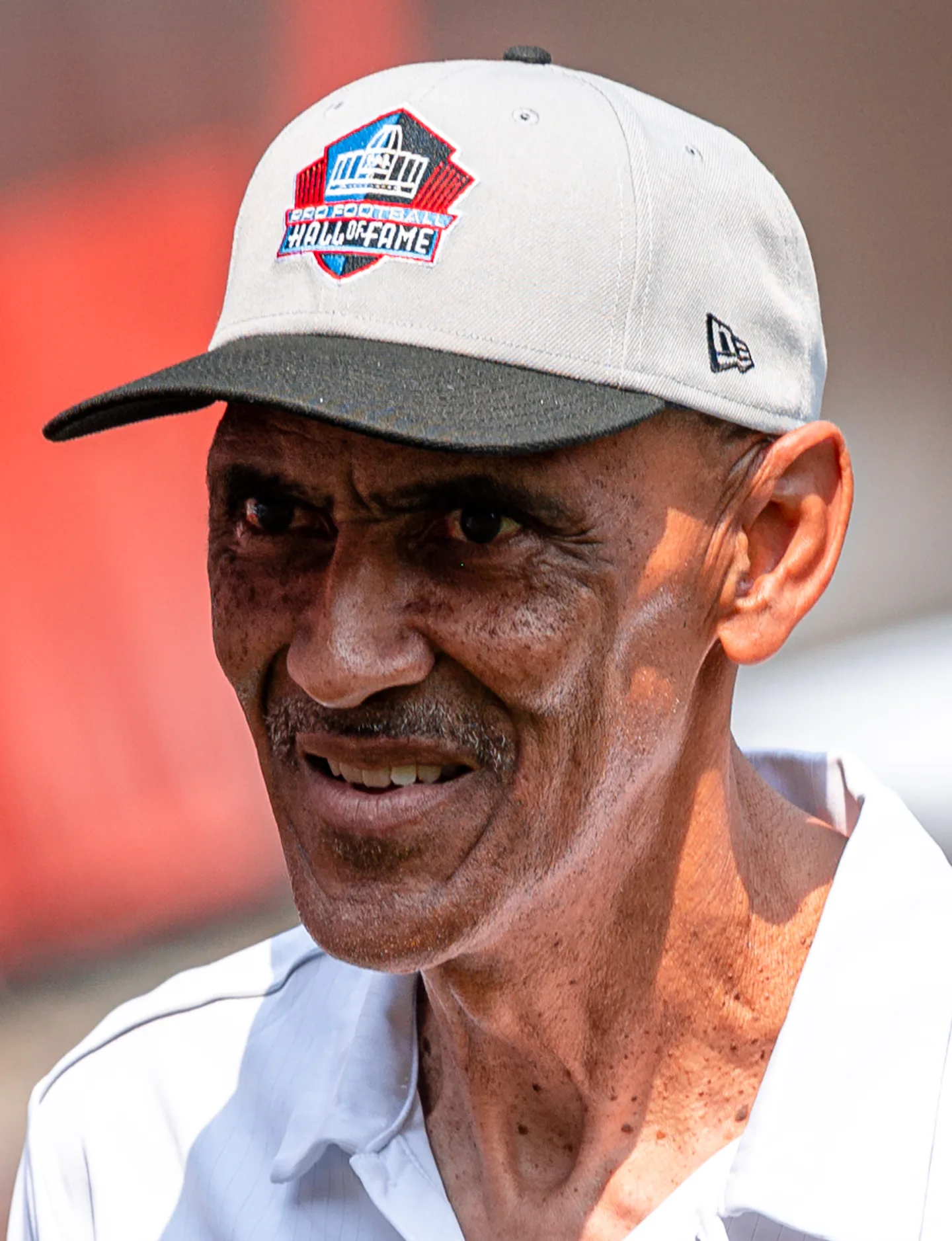
Defensive Scheme Innovators
In Tony Dungy and Monte Kiffin's 'Tampa 2' scheme, the middle linebacker drops deep into pass coverage between the two safeties. Dick LeBeau refined the 'Zone Blitz' with the Bengals, dropping defensive linemen into coverage while blitzing defensive backs, and made it famous as Pittsburgh's defensive coordinator, while Miami's Bill Arnsparger built the '53' defense, a forerunner of the 3-4 (three down linemen, four linebackers), for the Dolphins' 'No-Name Defense.'
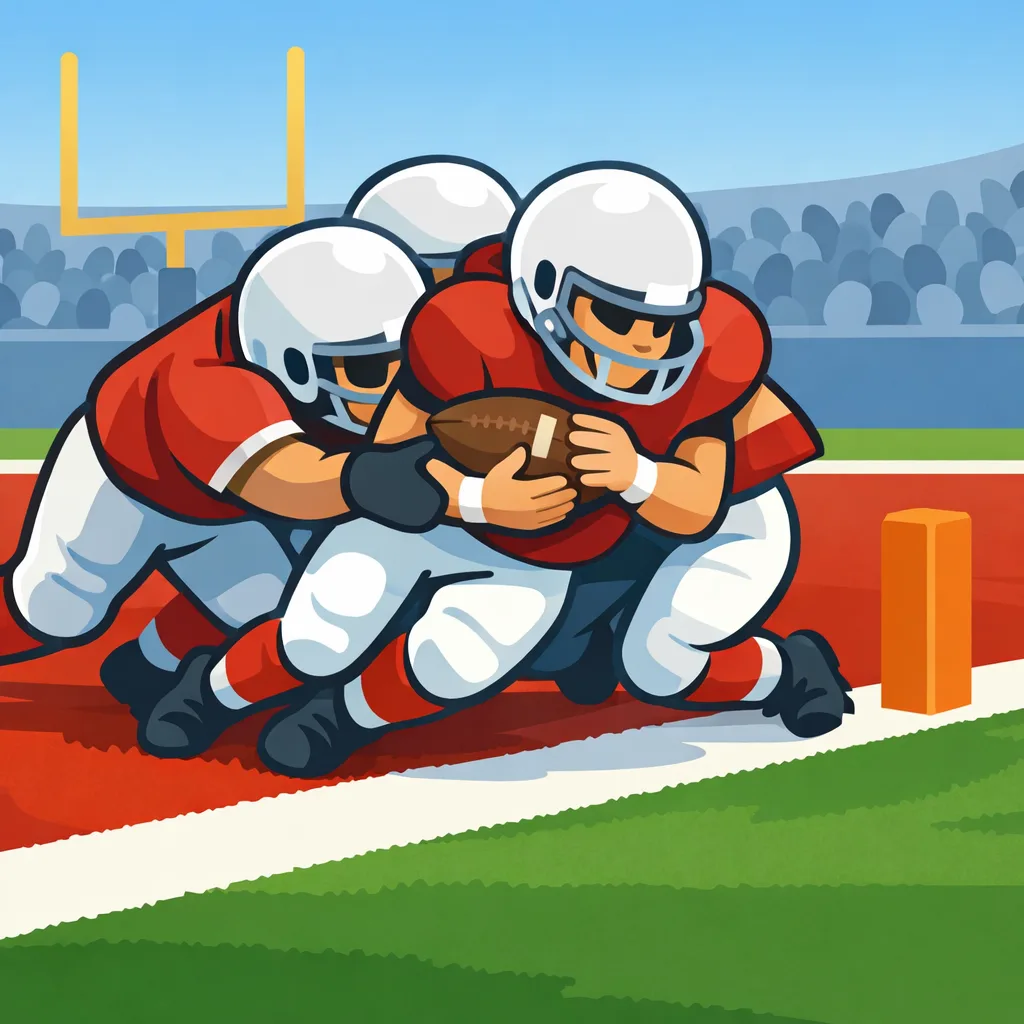
Modern Trick Plays and Short-Yardage Tactics
In 2008, Miami running back Ronnie Brown scored five total touchdowns out of the direct-snap 'Wildcat' formation as the Dolphins upset New England 38-13. Ten years later, Eagles tight end Trey Burton threw a touchdown pass to quarterback Nick Foles on the trick play known as the 'Philly Special' in Super Bowl LII, and in 2022 Philadelphia converted more than 90% of its attempts with the 'Brotherly Shove' quarterback sneak.
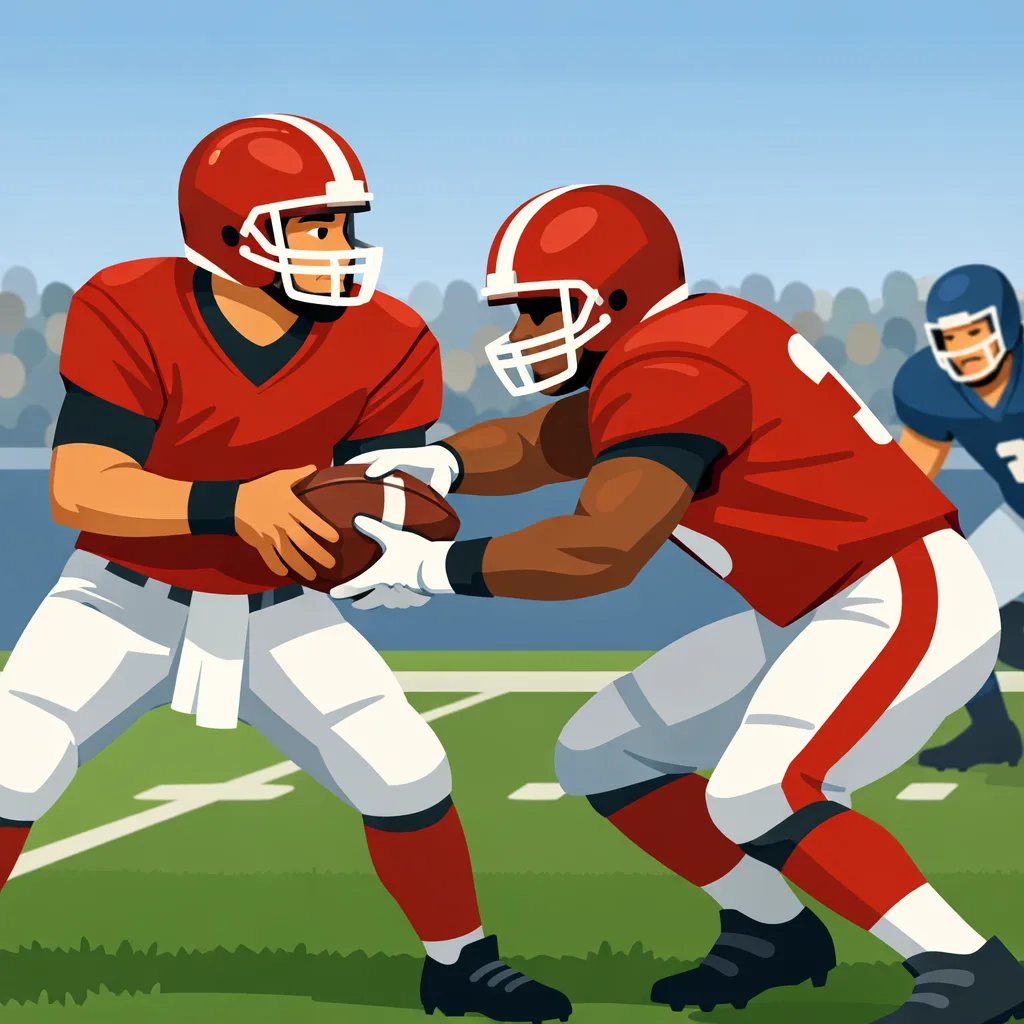
What Makes a True Run-Pass Option
In a true Run-Pass Option, the offensive line blocks as if running the ball while the quarterback reads an unblocked defender in real time after the snap, deciding whether to hand off or throw. That live post-snap read is what separates an RPO from a traditional play-action fake, where the run is only faked from the start.
Rules That Reshaped Scoring and Blocking
Before 1978, NFL offensive linemen had to pass-block with closed fists held tight to their chests; that year's rule change legalized open hands and extended arms, helping fuel the modern passing game. The NFL officially adopted the two-point conversion in 1994, a play that had already been a staple of the American Football League from 1960 to 1969.
NFL Equipment and Field Specifications
Every official NFL game ball, nicknamed 'The Duke,' is handcrafted by Wilson Sporting Goods at its factory in Ada, Ohio, where Wilson has made footballs since 1955 (it has supplied the NFL's ball since 1941), and must weigh between 14 and 15 ounces. An NFL goalpost's crossbar sits exactly 10 feet above the playing surface, with the uprights spaced 18 feet 6 inches apart.
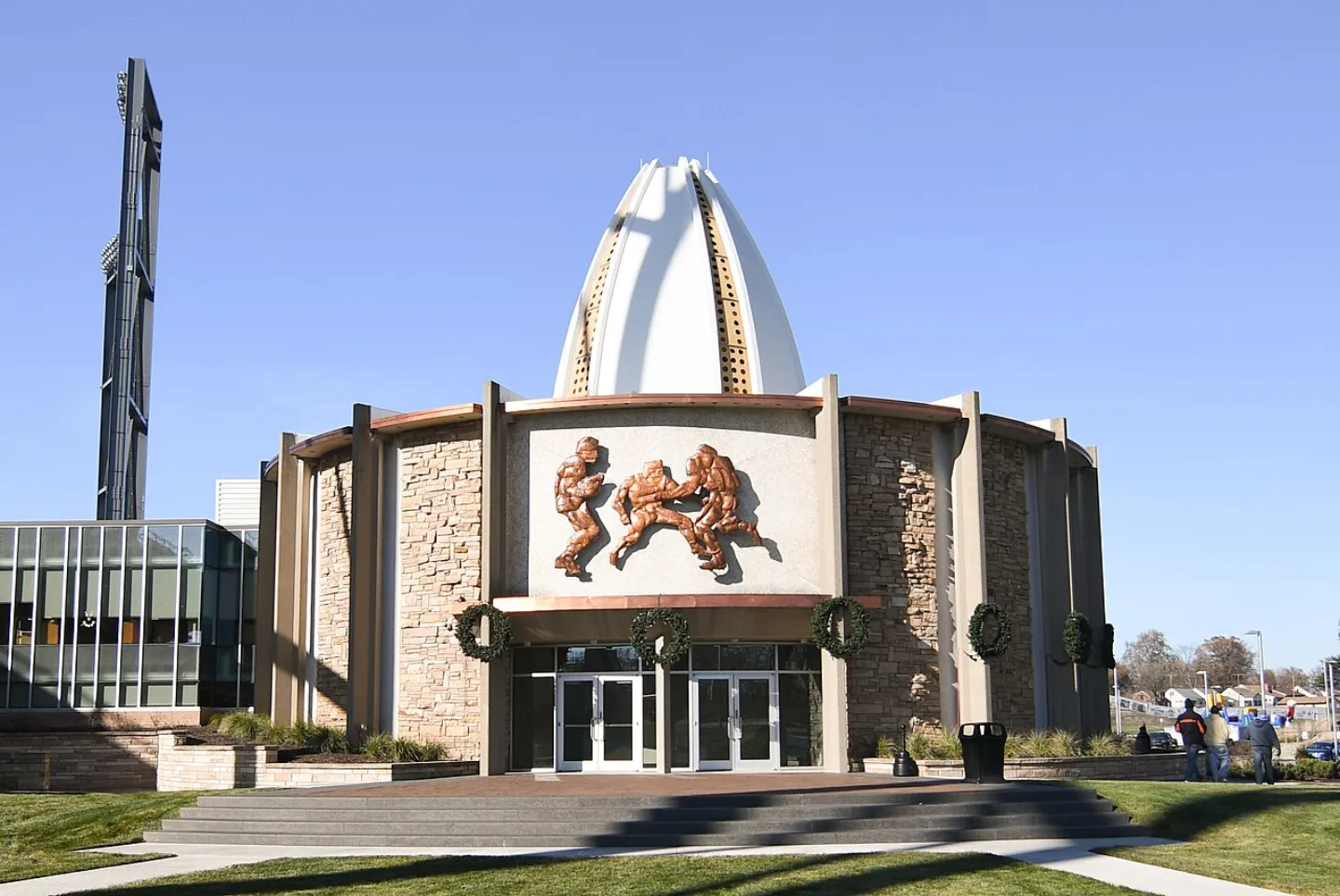
The Pro Football Hall of Fame in Canton, Ohio
Established in 1963 in Canton, Ohio, the Pro Football Hall of Fame enshrines the players, coaches, and contributors who defined the history of professional football.
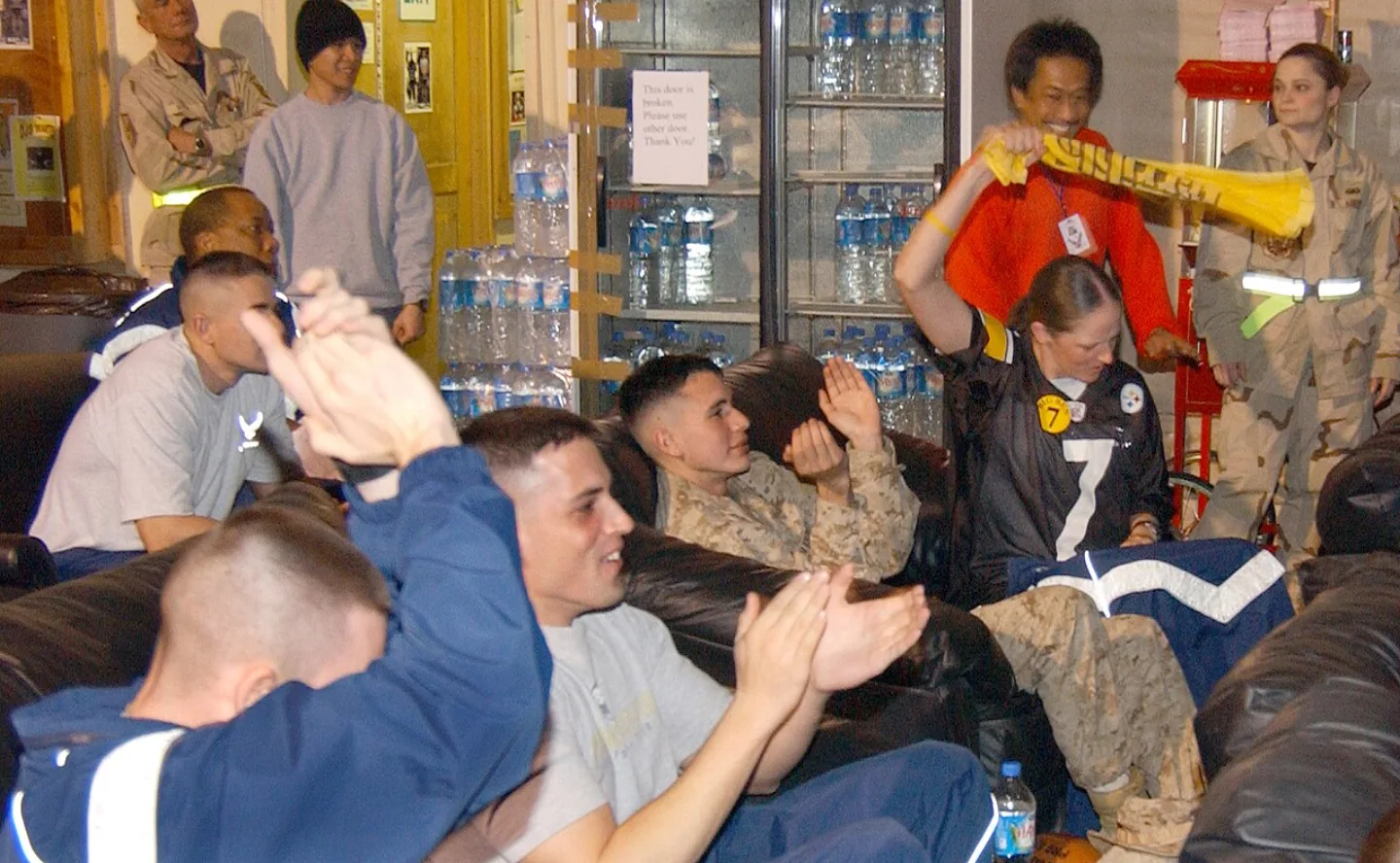
Super Bowl Sunday as an American National Event
The Super Bowl evolved into the most-watched annual broadcast in the United States, celebrated for high-profile halftime concerts and multi-million-dollar commercials.
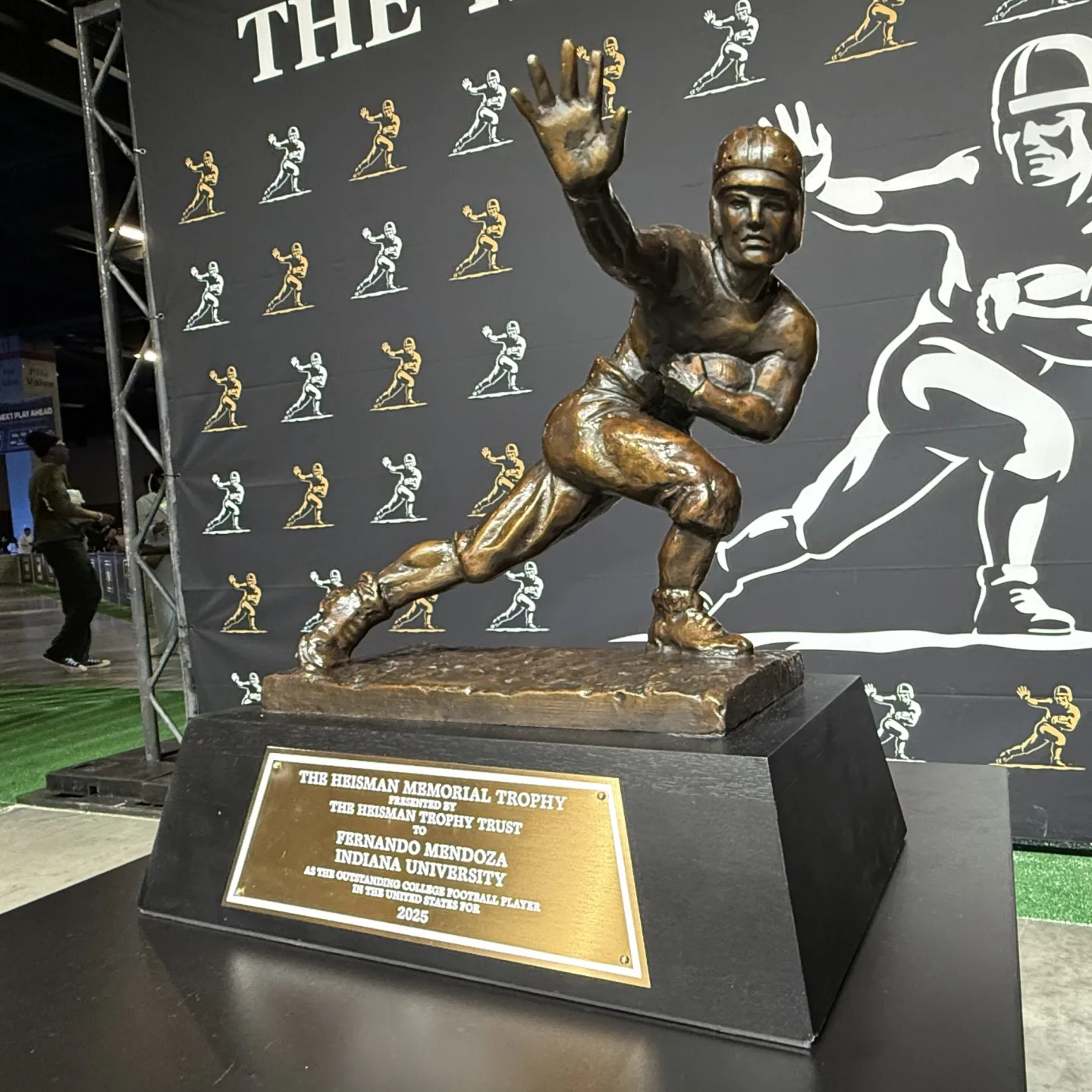
The Heisman Trophy: Origins and Record Winners
The Downtown Athletic Club created college football's top individual award in 1935, renaming it for coach John W. Heisman in 1936; the cast bronze trophy weighs 45 pounds. Ohio State's Archie Griffin remains the only two-time winner, taking the award in both 1974 and 1975, and Michigan cornerback Charles Woodson became the first primarily defensive player to win it, in 1997; Colorado two-way star Travis Hunter followed in 2024.
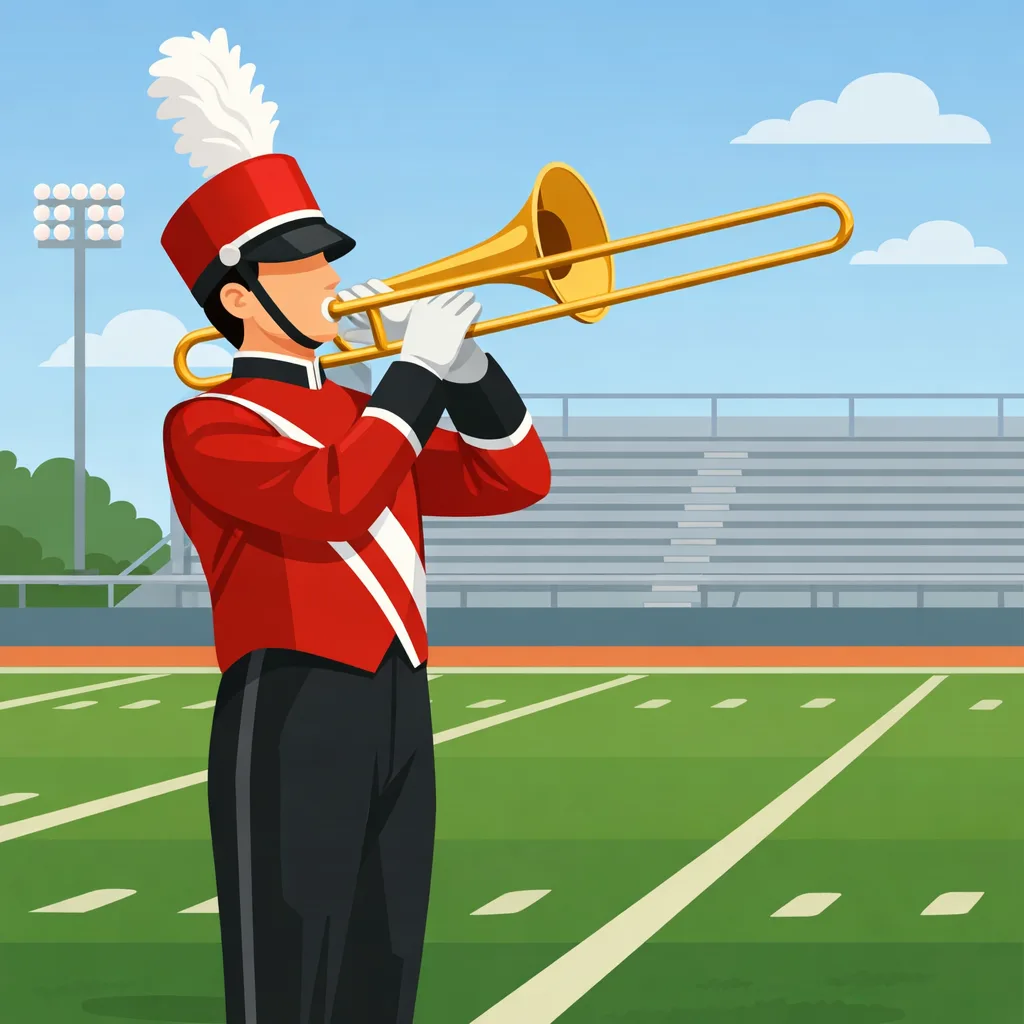
'The Play': Cal's Five-Lateral Kickoff Return
In the final seconds of a 1982 game against Stanford, California completed five backward laterals on the final kickoff return, with Kevin Moen scoring the winning touchdown by crashing through the Stanford band in the end zone. Band member Gary Tyrrell, playing trombone at the time, was famously bowled over by Moen as he scored.
College Football's Enduring Traditions
The Army-Navy Game was first played in 1890 and has been held every year since 1930; it ends with both teams standing together on the field as each school's alma mater is sung, the loser's first. Clemson mounted 'Howard's Rock,' brought from Death Valley, California, on the stadium hill in 1966, and players have rubbed it before running down the hill since 1967. Notre Dame's equipment managers historically mixed 23.9-karat gold dust into the paint for the team's iconic gold helmets.
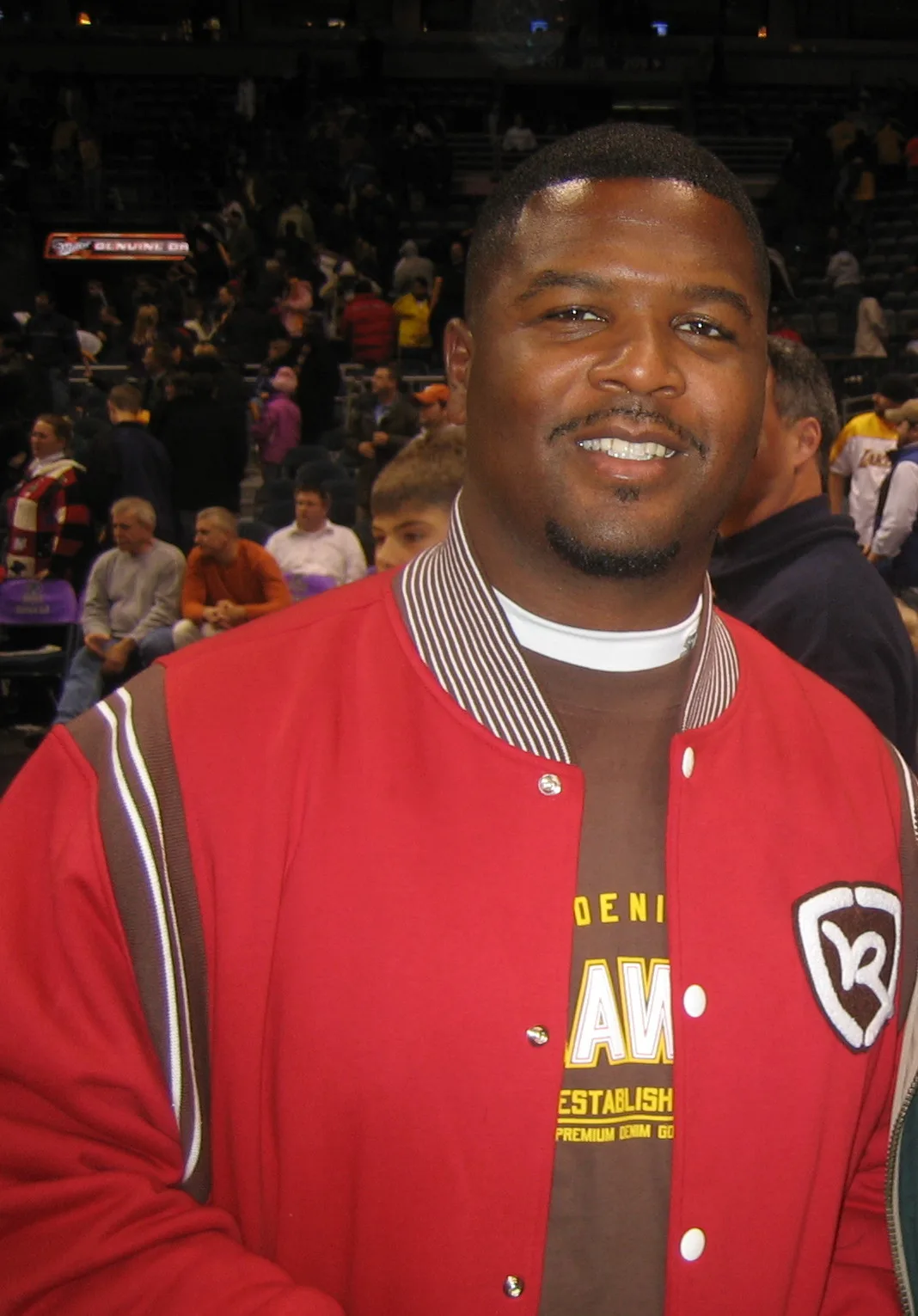
Football's Signature Celebrations
Green Bay safety LeRoy Butler jumped into the Lambeau Field stands after a touchdown on December 26, 1993, creating the celebration known as the 'Lambeau Leap.' The Gatorade shower began in 1984: Giants lineman Jim Burt doused coach Bill Parcells on October 28, and Bears players doused Mike Ditka a month later; Harry Carson helped popularize it with the Giants.
Football's Unique Business and Culture Numbers
The Green Bay Packers are owned by more than 537,000 individual shareholders holding over 5.2 million shares, the only publicly owned major professional sports franchise in the United States. On a very different scale, the National Chicken Council's recent projections put Americans' Super Bowl weekend chicken wing consumption at roughly 1.4 to 1.5 billion wings; Super Bowl Sunday is often ranked second only to Thanksgiving for food consumption.
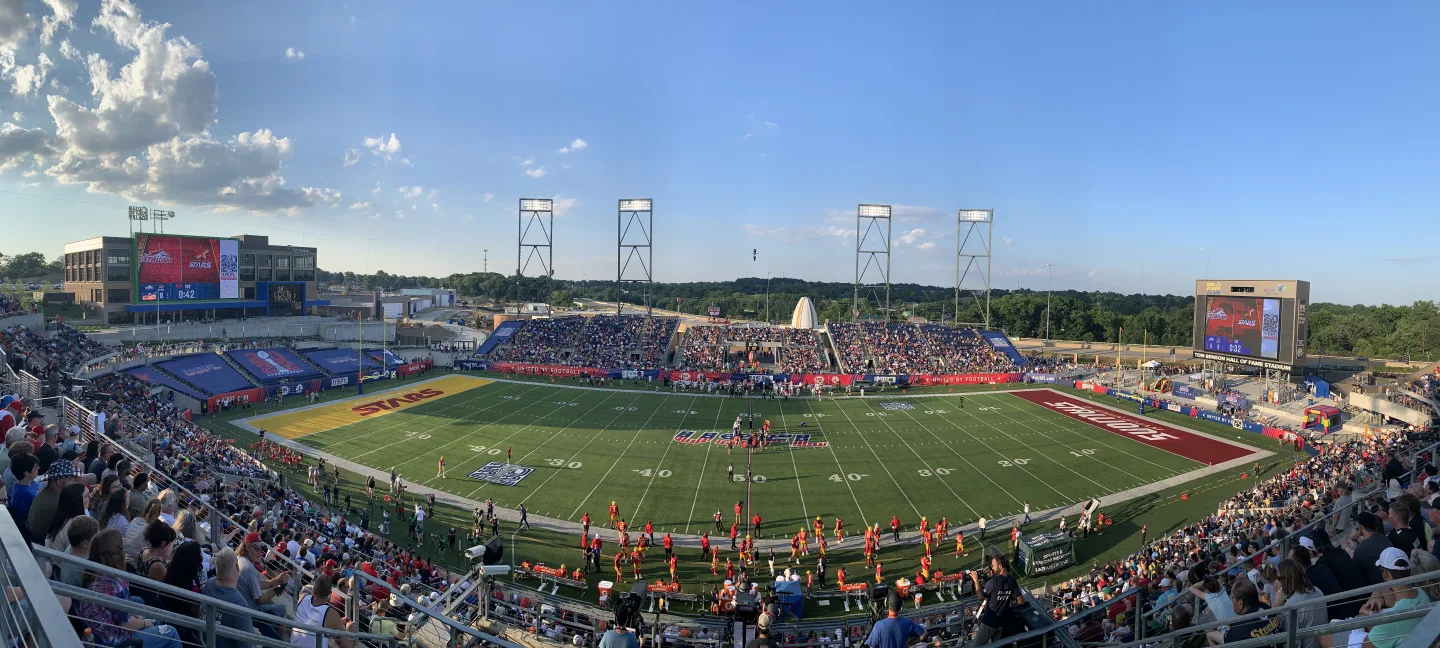
Landmark Traditions: The 12th Man and the Hall of Fame Game
During the 1922 Dixie Classic, Texas A&M student E. King Gill came down from the press box to suit up when the Aggies ran short of healthy players, founding the school's '12th Man' tradition. Each summer, in late July or early August, the NFL kicks off its preseason with the Hall of Fame Game at Tom Benson Hall of Fame Stadium in Canton, Ohio, next to the Pro Football Hall of Fame museum.
By the numbers
- How many total touchdowns (rushing and passing) did Ronnie Brown account for using the Wildcat direct-snap offense against New England in 2008?
- 5 touchdowns
- In 2022, about what percentage of its 'Brotherly Shove' (Tush Push) attempts did the Philadelphia Eagles convert, per ESPN's count?
- 93 percent
- How many yards beyond the line of scrimmage does the 1978 Mel Blount Rule prohibit defensive contact with receivers?
- 5 yards
- In what year did the modern NFL officially adopt the two-point conversion rule?
- 1994 year
- What is the maximum regulation weight in ounces for an official NFL game football?
- 15 ounces
- How many feet above the playing surface is the crossbar on official NFL goalposts?
- 10 feet
- In what year was the Heisman Trophy created by the Downtown Athletic Club (initially named the DAC Trophy)?
- 1935 year
- How many pounds of cast bronze does the official Heisman Memorial Trophy weigh?
- 45 pounds
- How many lateral passes did Cal complete through the Stanford band to score the winning touchdown in 'The Play' in 1982?
- 5 laterals
- How many individual shareholders own the non-profit, community-owned Green Bay Packers?
- 537000 shareholders
- About how many billion chicken wings does the National Chicken Council project Americans eat over Super Bowl weekend in a typical recent year?
- 1.45 billion wings
Matched pairs
Each item on the left goes with the one on the right.
- Clark Shaughnessy
- Modernized the T-Formation with a man in motion and quarterback under center in 1940
- Mouse Davis
- Popularized the four-wide receiver 'Run and Shoot' offense, built on receivers reading coverage and adjusting routes on the fly
- Dick LeBeau
- Refined the 'Zone Blitz' (Fire Zone) and made it famous with the Steelers, dropping defensive linemen into coverage while blitzing defensive backs
- Bill Arnsparger
- Built the '53' defense, a forerunner of the 3-4 (3 down linemen, 4 linebackers), for Miami's 'No-Name' defense
- The Army-Navy Game
- First played in 1890 and held every year since 1930, concluding with both service academies standing together on the field as each school's alma mater is sung
Self-test
Answer each question from memory, then check your work against the answer key.
1. Which coach modernized the T-Formation in 1940 by putting the quarterback under center and adding a man in motion?
- AMouse Davis
- BClark Shaughnessy
- CDick LeBeau
- DTony Dungy
2. Which coach popularized the four-receiver 'Run and Shoot' spread offense at Portland State and in the USFL?
- ABill Arnsparger
- BTony Dungy
- CClark Shaughnessy
- DMouse Davis
3. Which scheme features a fast middle linebacker dropping deep into the middle third between two safeties?
- ARun and Shoot
- B3-4 Defense
- CTampa 2
- DZone Blitz
4. Which defensive coordinator refined the 'Zone Blitz' (Fire Zone) in Cincinnati and made it famous as the Pittsburgh Steelers' coordinator?
- ADick LeBeau
- BMonte Kiffin
- CBill Arnsparger
- DTony Dungy
5. Which running back took direct snaps out of the 2008 Wildcat Offense to help upset the Patriots?
- AFrank Gore
- BAdrian Peterson
- CRonnie Brown
- DJamaal Charles
6. In what year did the Downtown Athletic Club create college football's top individual award (later the Heisman)?
- A1936
- B1935
- C1963
- D1994
7. How many pounds of cast bronze does the official Heisman Memorial Trophy weigh?
- A45 lbs
- B25 lbs
- C55 lbs
- D35 lbs
8. Which college football player is the only two-time winner of the Heisman Trophy?
- ACharles Woodson
- BJohnny Manziel
- CTim Tebow
- DArchie Griffin
9. How many backward laterals did California complete on the winning kickoff return against Stanford in 1982's 'The Play'?
- A6 laterals
- B4 laterals
- C3 laterals
- D5 laterals
10. A student left the press box to suit up when his team ran short of healthy players in the 1922 Dixie Classic, founding which tradition?
- AThe 12th Man
- BHoward's Rock
- CLambeau Leap
- DGatorade Shower
Go deeper
- WatchThe Duke Every official NFL game ball is made by hand in one Ohio town: Ada. They have been made there since 1955.
- WatchThe Play November 20, 1982: the Big Game, Cal against Stanford.
- StudyAmerican Football Trivia & Gridiron Lore in the FlashFeed app
Answer key
- 1. B Clark ShaughnessyClark Shaughnessy modernized the T-Formation with the quarterback taking the snap directly from center and a man in motion, helping reshape quarterback play. The others are a run-and-shoot popularizer and defensive coordinators.
- 2. D Mouse DavisMouse Davis popularized the Run and Shoot at Portland State and in the USFL. Dungy is a Tampa 2 defensive coach, Arnsparger built the Dolphins' '53' defense, and Shaughnessy revived the T-Formation.
- 3. C Tampa 2Tampa 2 uses a fast middle linebacker (such as Shelton Quarles) dropping deep between two Cover 2 safeties. Zone Blitz drops linemen into coverage instead, and 3-4 and Run and Shoot describe personnel/formations, not this coverage shape.
- 4. A Dick LeBeauDick LeBeau refined the Zone Blitz with the Bengals and made it famous with the Steelers. Dungy and Kiffin are credited with the Tampa 2, and Arnsparger built the Dolphins' '53' defense.
- 5. C Ronnie BrownRonnie Brown took direct snaps from the Dolphins' unbalanced Wildcat line and scored five touchdowns against New England in 2008. Charles, Peterson, and Gore are star running backs but were not part of that game.
- 6. B 1935The award was created in 1935 and renamed for John W. Heisman in 1936. 1963 is when the Pro Football Hall of Fame was established, and 1994 is when the NFL adopted the two-point conversion.
- 7. A 45 lbsThe Heisman's cast bronze trophy weighs 45 pounds, per the trophy's official specifications.
- 8. D Archie GriffinOhio State's Archie Griffin won the Heisman in both 1974 and 1975, the award's only repeat winner. Woodson, Tebow, and Manziel are each single-time Heisman winners.
- 9. D 5 lateralsCal completed five backward laterals through the Stanford band before Kevin Moen scored the winning touchdown.
- 10. A The 12th ManTexas A&M's E. King Gill came down from the press box in 1922, founding the '12th Man' tradition. The other options are NFL and Clemson traditions, not this Texas A&M story.
Sources
- American Football Trivia & Gridiron Lore — Antigravity Knowledge Pack Studio
- Pro Football Hall of Fame / NFL Official Historical Archives and 6 more references — www.profootballhof.com
- Portland State Athletics: Mouse Davis — goviks.com/news/2009/6/1/50306.aspx
- Miami Dolphins Historical Archives: Wildcat — www.miamidolphins.com
- Pro Football Hall of Fame: 'Wildcat' immortalized — www.profootballhof.com/news/wildcat-immortalized
- NFL Operations: Modern Offense Tactics and 4 more references — operations.nfl.com
- Philadelphia Eagles History: Super Bowl LII — www.philadelphiaeagles.com
- ESPN: Eagles' Tush Push by the numbers — africa.espn.com/nfl/story/_/id/41234531/philadelphia-eagles-tush-push-jason-kelce
- NFL Communications: Scoring Rules — www.nfl.com
- Wilson Football Heritage: The Duke — www.wilson.com
- Heisman Trophy Trust History and 3 more references — www.heisman.com
- Cal Athletics Archives: The Play — calbears.com
- Stanford Historical Archives: The Play — gostanford.com
- Army-Navy Game Official History — armynavygame.com
- Clemson Athletics: Howard's Rock Tradition — clemsontigers.com/howards-rock/
- Notre Dame Athletics: Helmet Heritage — und.com
- Green Bay Packers Hall of Fame: Lambeau Leap; Green Bay Packers Shareholder Information — www.packers.com
- Texas A&M Athletics: The 12th Man — 12thman.com
- National Chicken Council: Super Bowl Wing Report — www.nationalchickencouncil.org
Image credits
- Defensive Scheme Innovators: Wikimedia Commons · Erik Drost · CC BY 2.0 — commons.wikimedia.org/wiki/File:Tony_Dungy_(2021)_B.jpg
- Modern Trick Plays and Short-Yardage Tactics: AI-generated (gpt-image-1.5)
- What Makes a True Run-Pass Option: AI-generated (gpt-image-1.5)
- The Pro Football Hall of Fame in Canton, Ohio: Erik Drost · CC BY 2.0 — commons.wikimedia.org/wiki/File:Pro_Football_Hall_of_Fame_(23945852607).jpg
- Super Bowl Sunday as an American National Event: Tech. Sgt. Steve Horton, U.S. Air Force · Public domain — commons.wikimedia.org/wiki/File:Super_Bowl_Sunday_Military.jpg
- The Heisman Trophy: Origins and Record Winners: Wikimedia Commons · Bobak Ha'Eri · CC BY 3.0 — commons.wikimedia.org/wiki/File:2026-0116_Fernando_Mendoza_Heisman.jpeg
- 'The Play': Cal's Five-Lateral Kickoff Return: AI-generated (gpt-image-1.5)
- Football's Signature Celebrations: Wikimedia Commons · Compujeramey · CC BY 2.0 — commons.wikimedia.org/wiki/File:LeRoy_Butler.jpg
- Landmark Traditions: The 12th Man and the Hall of Fame Game: Wikimedia Commons · Cards84664 · CC BY-SA 4.0 — commons.wikimedia.org/wiki/File:USFL_Championship_midfield_panorama_2022.png


