
History of Arizona study guide · Lesson 12 of 12
Key Concepts
Key People · Key Places · Key Things · Key Events
This is the lesson's study guide from the FlashFeed app, plus its key facts and a self-test.
What you'll be able to do
- Identify the Native leaders and frontier figures — Geronimo, Cochise, Wyatt Earp, and Ed Schieffelin.
- Identify Arizona statesmen Carl Hayden and Barry Goldwater by their national roles.
- Identify Arizona's key places — Tombstone, Tubac, Grand Canyon, Hoover Dam, Canyon de Chelly, and Bisbee.
- Recognize Arizona's emblems — the Five C's crops and metal plus the saguaro, turquoise, and bolo tie.
- Identify the events that made Arizona American — Mexican rule, Guadalupe Hidalgo, Gadsden, Picacho Pass, Territory, and the O.K. Corral.
Key People
A quick-recognition gallery of the figures who shaped Arizona — from Apache leaders who defended the homeland to the lawmen, prospectors, and statesmen of the territorial and modern eras.
Geronimo
An Apache leader who fought to defend his homeland in the late 1800s. He evaded thousands of U.S. and Mexican troops across the Southwest borderlands for years. His 1886 surrender in Skeleton Canyon ended the major Apache Wars — the last organized Native American armed resistance in the United States.
Cochise
A Chiricahua Apache chief in southeastern Arizona in the mid-1800s. A whole Arizona county and a rugged mountain stronghold are named after him. He made peace with the U.S. in 1872 in a deal brokered by his friend, the scout Tom Jeffords.
Wyatt Earp
A frontier lawman tied to the silver boomtown of Tombstone. He and his brothers feuded with the Clanton–McLaury cowboy faction. He is best known for the 1881 gunfight near the O.K. Corral, the most famous shootout of the Old West.
Ed Schieffelin
A prospector warned that all he'd find in Apache country was his own tombstone. Instead he struck rich silver in 1877 in the southeastern desert. With grim humor he named his claim — and the boomtown that grew up around it — Tombstone.
Carl Hayden
Arizona's very first U.S. Representative, starting at statehood in 1912. He went on to serve more than 50 years in Congress, a record for his era. He championed the Central Arizona Project, the canal system that pipes Colorado River water to Phoenix and Tucson.
Barry Goldwater
An Arizona senator and department-store heir famous for his desert photography. He was the Republican nominee for president in 1964. Nicknamed "Mr. Conservative," he helped reshape the modern Republican Party even in defeat.
Key Places
A tour of the places that made Arizona — Spanish forts and silver boomtowns, the canyon that defines the state, and the dam that made the modern desert cities possible.
Tombstone
A silver boomtown founded in the late 1870s after Ed Schieffelin's strike. Its nickname is "the Town Too Tough to Die," for surviving fires and the silver bust. It is the site of the 1881 O.K. Corral gunfight and remains a working symbol of the Wild West.
Tubac
A small community on the Santa Cruz River south of Tucson. Spain built a presidio (fort) here in 1752 — the first European fort in Arizona. From Tubac, Juan Bautista de Anza launched his 1775 overland expedition that went on to found San Francisco.
The Grand Canyon
A mile-deep gorge carved by the Colorado River over millions of years in northern Arizona. It became a national park in 1919. One of the Seven Natural Wonders of the World, it is Arizona's most famous landmark and draws millions of visitors a year.
Hoover Dam
A massive concrete arch-gravity dam on the Colorado River, built during the Great Depression. It sits on the Arizona–Nevada border in Black Canyon. Finished in 1935, it tamed the river for flood control and power and created Lake Mead, the largest reservoir in the U.S.
Canyon de Chelly
A canyon in northeastern Arizona on Navajo Nation land, where a small number of Navajo families still farm each summer. Ancestral Puebloans built cliff dwellings such as the White House Ruin into its red walls. It was the site of Kit Carson's 1864 campaign that forced the Navajo on the Long Walk.
Bisbee
A historic mining town tucked into the Mule Mountains of Cochise County. Its Copper Queen Mine made it one of the richest copper districts on earth. In recent decades its steep, colorful old town has become a well-known artist colony.
Key Things
The emblems of Arizona — including the famous "Five C's" (Copper, Cotton, Cattle, Citrus, and Climate) that built the territory's economy, plus the state's signature plant, stone, and neckwear.
Copper
One of Arizona's Five C's and the official state metal. Arizona mines more copper than any other U.S. state. This reddish metal sheathes the dome of the state capitol and fills the wiring in your walls — the backbone of the territorial economy.
The Saguaro
A giant cactus found almost nowhere but the Sonoran Desert. It can top 40 feet and live 150–200 years, growing famously slowly. Its white blossom is Arizona's state flower, and its raised arms are the desert's defining icon.
Turquoise
A blue-green gemstone mined in the Southwest for centuries. It is prized in Navajo and Hopi silver jewelry, where stone and silver are worked together. It is Arizona's official state gemstone.
The bolo tie
A piece of neckwear that emerged from the mid-century Southwest — a braided cord with decorative metal tips and a sliding clasp. Arizona named it the official state neckwear in 1971, cementing its place as Western formal wear.
Cotton
One of Arizona's Five C's — a thirsty crop grown in the state's irrigated valleys. Long-staple "Pima" cotton is a prized regional specialty. Demand boomed during World War I, when the fiber was needed for tires and uniforms.
Cattle
One of Arizona's Five C's, bound up with the open range. Spanish missions first brought these animals to the region in colonial times. Ranching them built towns, fortunes, and feuds across the territory's grasslands.
Key Events
The political turning points that made Arizona American — the cascade from Spanish colony to Mexican territory to U.S. land, and the frontier moments that defined the territorial era.
Arizona becomes Mexican
After Mexico won independence from Spain in 1821, the lands now called Arizona passed from Spanish to Mexican control in the early 1820s. For the next quarter-century these northern frontier lands were the far edge of the new Mexican republic, thinly settled and far from Mexico City.
Treaty of Guadalupe Hidalgo
Signed in 1848, this treaty ended the Mexican–American War (which began in 1846) and redrew the map of North America. Mexico ceded roughly 70% of present-day Arizona — everything north of the Gila River — to the United States, along with California and much of the Southwest.
Gadsden Purchase
In 1853 the United States paid Mexico $10 million for what is now southern Arizona and a slice of New Mexico — the land below the Gila River. The goal was a flat southern route for a transcontinental railroad. It completed Arizona's modern boundary.
Battle of Picacho Pass
Fought on April 15, 1862, near Picacho Peak northwest of Tucson, this clash was part of the Civil War. With only a handful of casualties, it is recognized as the westernmost battle of the Civil War with recorded fatalities — a skirmish farther west at Stanwix Station saw no deaths — a reminder that the conflict reached all the way to the desert Southwest.
Arizona Territory created
On February 24, 1863, during the Civil War, Congress split Arizona Territory off from New Mexico Territory, giving the region its own government for the first time. Prescott served as the first territorial capital before the seat eventually moved to Phoenix.
Gunfight at the O.K. Corral
On October 26, 1881, in the boomtown of Tombstone, the Earp brothers and Doc Holliday faced the Clanton–McLaury cowboys in a thirty-second shootout. The confrontation left three men dead and became the most legendary gunfight of the American West.
Key concepts
Geronimo
- An Apache leader who fought to defend his homeland in the late 1800s.
- He evaded thousands of U.S. and Mexican troops across the Southwest for years.
- His 1886 surrender in Skeleton Canyon ended the major Apache Wars.
Cochise
- A Chiricahua Apache chief in southeastern Arizona in the mid-1800s.
- A whole Arizona county and a mountain stronghold are named after him.
- He made peace with the U.S. in 1872 in a deal brokered by Tom Jeffords.
Wyatt Earp
- A frontier lawman tied to a famous silver boomtown.
- He and his brothers feuded with the Clanton–McLaury cowboys.
- He's best known for the 1881 gunfight near the O.K. Corral.
Ed Schieffelin
- A prospector warned he'd only find his own tombstone in Apache country.
- He struck rich silver in 1877 in the southeastern desert.
- He named his claim — and the boomtown that grew up around it — Tombstone.
Carl Hayden
- He was Arizona's very first U.S. Representative, starting at statehood in 1912.
- He served more than 50 years in Congress, a record for his era.
- He championed the Central Arizona Project to pipe Colorado River water to Phoenix and Tucson.
Barry Goldwater
- An Arizona senator and department-store heir famous for his desert photography.
- He was the Republican nominee for president in 1964.
- Nicknamed 'Mr. Conservative,' he helped reshape the modern Republican Party.
Tombstone
- A silver boomtown founded in the late 1870s.
- Its nickname is 'the Town Too Tough to Die.'
- It's the site of the 1881 O.K. Corral gunfight.
Tubac
- A small community on the Santa Cruz River south of Tucson.
- Spain built a presidio here in 1752 — the first European fort in Arizona.
- Juan Bautista de Anza launched his expedition to found San Francisco from here in 1775.
The Grand Canyon
- A mile-deep gorge carved by the Colorado River in northern Arizona.
- It became a national park in 1919.
- One of the Seven Natural Wonders of the World — and Arizona's most famous landmark.
Hoover Dam
- A massive concrete dam on the Colorado River, built during the Depression.
- It sits on the Arizona–Nevada border in Black Canyon.
- Finished in 1935, it created Lake Mead behind it.
Canyon de Chelly
- A canyon in northeastern Arizona on Navajo Nation land.
- Ancestral Puebloans built cliff dwellings like the White House Ruin in its walls.
- It was the site of Kit Carson's 1864 campaign that led to the Navajo Long Walk.
Bisbee
- A historic mining town tucked into the Mule Mountains of Cochise County.
- Its Copper Queen Mine made it one of the richest copper districts on earth.
- In recent decades its steep, colorful old town has become a well-known artist colony.
Copper
- One of Arizona's 'Five C's' and the official state metal.
- Arizona mines more of it than any other U.S. state.
- This reddish metal sheathes the state capitol dome and fills the wiring in your walls.
The Saguaro
- A giant plant found almost nowhere but the Sonoran Desert.
- It can top 40 feet and live 150–200 years.
- Its white blossom is Arizona's state flower, and its raised arms are a desert icon.
Turquoise
- A blue-green gemstone mined in the Southwest for centuries.
- It's prized in Navajo and Hopi silver jewelry.
- It's Arizona's official state gemstone.
The bolo tie
- A piece of neckwear that came out of the mid-century Southwest.
- It's a braided cord with decorative metal tips and a sliding clasp.
- Arizona named it the official state neckwear in 1971.
Cotton
- One of Arizona's 'Five C's' — a thirsty crop grown in irrigated valleys.
- Long-staple 'Pima' varieties are a regional specialty.
- Demand for this fiber boomed in World War I for tires and uniforms.
Cattle
- One of Arizona's 'Five C's,' bound up with the open range.
- Spanish missions first brought these animals to the region.
- Ranching them built towns, fortunes, and feuds across the territory's grasslands.
Arizona becomes Mexican
- This event marked a significant political change in North America after a major conflict.
- It occurred in the early 1820s, following a country's independence from Spain.
- After Mexico won independence from Spain in 1821, the lands now called Arizona became part of Mexico.
Treaty of Guadalupe Hidalgo
- This treaty ended a war between two nations and reshaped territorial boundaries.
- It was signed in 1848, following a conflict that began in 1846.
- The treaty resulted in Mexico ceding 70% of present-day Arizona to the United States.
Gadsden Purchase
- This land acquisition was aimed at facilitating a southern transcontinental railroad.
- It took place in 1853, involving negotiations between the US and Mexico.
- The US paid $10 million for what is now southern Arizona and parts of New Mexico.
Battle of Picacho Pass
- This clash was part of a larger conflict that divided a nation in the 1860s.
- It occurred on April 15, 1862, and was notable for its location in Arizona.
- It is recognized as the westernmost battle of the Civil War with recorded fatalities, though only a small number of casualties occurred there.
Arizona Territory created
- This event marked the establishment of a new political entity in the American West.
- It occurred on February 24, 1863, during the Civil War period.
- The territory was split off from New Mexico Territory, with Prescott as its first capital.
Gunfight at the O.K. Corral
- This famous shootout is a legendary event in the history of the American West.
- It took place on October 26, 1881, in a small Arizona town.
- The confrontation involved lawmen and a group of cowboys, resulting in three deaths.
Key facts
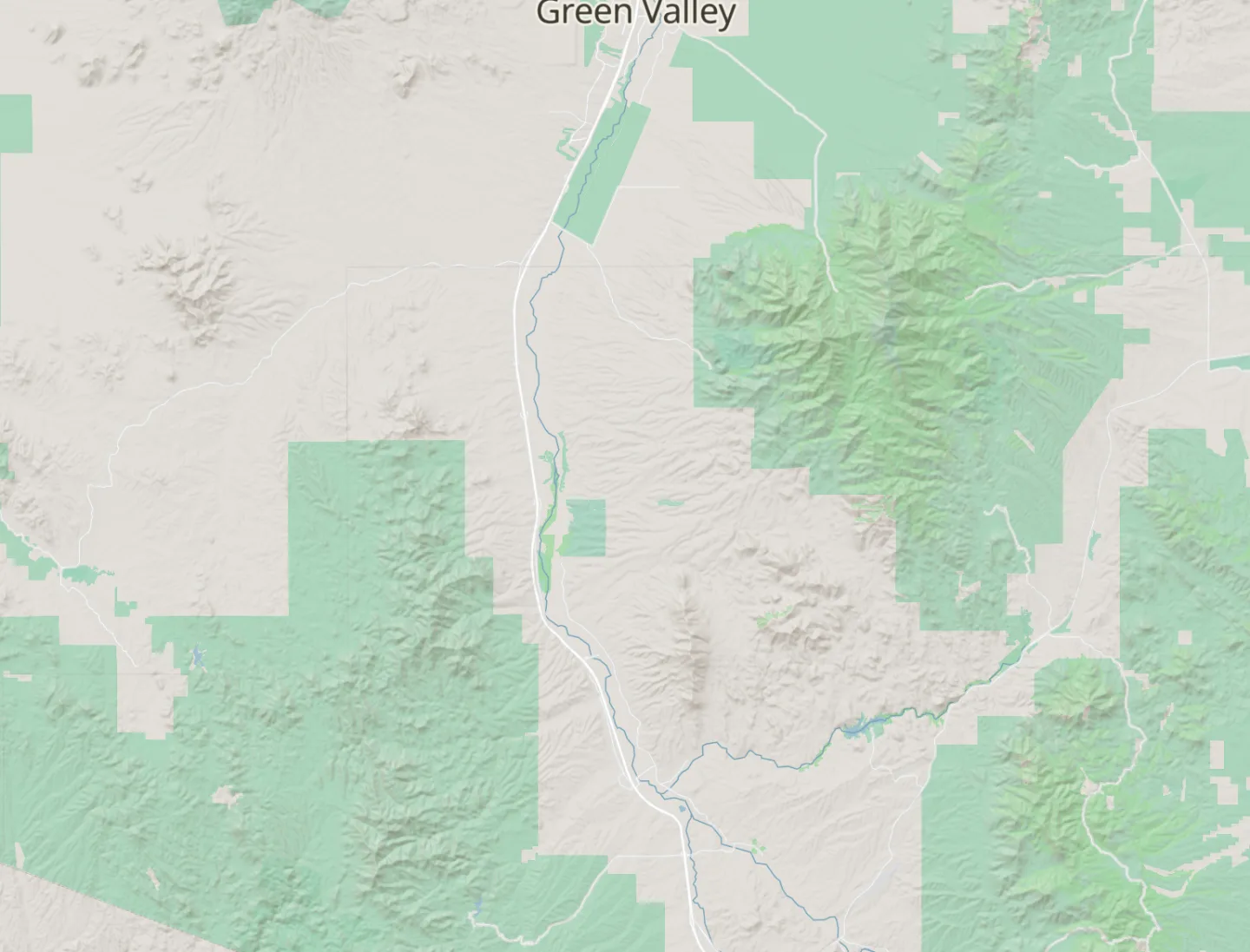
Tubac: Spain's frontier fort
Along the Santa Cruz River south of Tucson, Spain built the Tubac presidio in 1752 — the first European fort in what's now Arizona. In 1775–76 it launched Anza's expedition that went on to found San Francisco.
Self-test
Answer each question from memory, then check your work against the answer key.
1. Whose 1877 silver strike gave the boomtown of Tombstone its name?
- AWyatt Earp
- BEd Schieffelin
- CBarry Goldwater
- DCarl Hayden
2. Geronimo's 1886 surrender in Skeleton Canyon brought an end to which conflict?
- AThe Mexican–American War
- BThe Civil War in the Southwest
- CThe Navajo Long Walk campaign
- DThe Apache Wars
3. Which Chiricahua Apache chief made peace with the U.S. in 1872 in a deal brokered by his friend, the scout Tom Jeffords?
- ACochise
- BGeronimo
- CVictorio
- DMangas Coloradas
4. Which of these is NOT associated with Wyatt Earp?
- AThe silver boomtown of Tombstone
- BThe 1881 gunfight near the O.K. Corral
- CThe 1886 surrender in Skeleton Canyon
- DThe feud with the Clanton–McLaury cowboys
5. Which figure is correctly paired with his role?
- AWyatt Earp — Chiricahua chief who made peace in 1872
- BGeronimo — Apache leader who surrendered in 1886
- CEd Schieffelin — lawman in the O.K. Corral gunfight
- DCochise — prospector who struck silver in 1877
6. How long did Carl Hayden represent Arizona in Congress?
- A38 years
- B62 years
- C56 years
- D44 years
7. Which committee did Hayden chair, and for how long?
- AAppropriations, for 14 years
- BFinance, for 14 years
- CAppropriations, for 56 years
- DArmed Services, for 8 years
8. Goldwater lost the presidency badly. What lasting effect is he nonetheless credited with?
- AServing as Secretary of the Interior under Bill Clinton
- BWriting Arizona's 1980 Groundwater Management Act
- CFounding Sun City as an 'active adult' retirement community
- DReshaping the GOP into the conservative movement that produced Reagan
9. Which statement about Arizona's national statesmen is NOT correct?
- ACarl Hayden served in Congress for 56 years
- BBarry Goldwater is the father of the Central Arizona Project
- CJohn McCain was the 2008 GOP presidential nominee
- DSandra Day O'Connor was raised on an Arizona cattle ranch
10. Which statement correctly distinguishes Carl Hayden from Barry Goldwater?
- AHayden ran for president in 1964; Goldwater served over 50 years
- BBoth entered Congress in 1912 as Arizona's first delegation
- CBoth were Republican presidential nominees
- DHayden served over 50 years in Congress; Goldwater ran for president in 1964
11. Juan Bautista de Anza's 1775 expedition set out from the presidio at Tubac and went on to found which city?
- ASanta Fe
- BLos Angeles
- CSan Francisco
- DSan Diego
12. Finished in 1935 on the Arizona–Nevada border in Black Canyon, which structure created Lake Mead, the largest reservoir in the U.S.?
- AHoover Dam
- BRoosevelt Dam
- CGlen Canyon Dam
- DParker Dam
13. Which canyon on Navajo Nation land holds Ancestral Puebloan cliff dwellings such as the White House Ruin, and saw Kit Carson's 1864 campaign?
- AWalnut Canyon
- BBlack Canyon
- CCanyon de Chelly
- DOak Creek Canyon
14. The Copper Queen Mine made which Mule Mountains town — now a well-known artist colony — one of the richest copper districts on earth?
- AJerome
- BGlobe
- CTombstone
- DBisbee
15. Which Arizona place is matched with the correct description?
- ABisbee — the first European fort in Arizona, built in 1752
- BThe Grand Canyon — mile-deep gorge that became a national park in 1919
- CHoover Dam — the silver boomtown of the 1881 gunfight
- DTombstone — Navajo canyon with Ancestral Puebloan cliff dwellings
16. Copper, Cotton, and Cattle are three of Arizona's famous 'Five C's.' Which of these is another one?
- ACitrus
- BCoal
- CCactus
- DCorn
17. Arizona mines more of which metal than any other U.S. state, and named it the official state metal?
- AZinc
- BCopper
- CGold
- DSilver
18. Which giant cactus, found almost nowhere but the Sonoran Desert, can top 40 feet and live 150–200 years?
- AThe saguaro
- BThe organ pipe cactus
- CThe barrel cactus
- DThe cholla
19. Which item did Arizona name its official state neckwear in 1971?
- AThe squash blossom necklace
- BThe bandana
- CThe silver concho belt
- DThe bolo tie
20. Which Arizona emblem is NOT correctly matched with its official title?
- ACopper — state metal
- BTurquoise — state gemstone
- CThe saguaro blossom — state tree
- DThe bolo tie — state neckwear
21. Under the 1848 Treaty of Guadalupe Hidalgo, how much of present-day Arizona did Mexico cede to the United States?
- AAbout 70% — everything north of the Gila River
- BAbout 30% — the strip south of the Gila River
- CAll of present-day Arizona
- DRoughly half, divided along the Colorado River
22. In 1853 the United States paid Mexico $10 million for what is now southern Arizona. What was the main goal of the purchase?
- AA buffer zone to stop Apache raids
- BControl of the silver deposits near Tombstone
- CAccess to a port on the Gulf of California
- DA flat southern route for a transcontinental railroad
23. The clash fought April 15, 1862 near Picacho Peak northwest of Tucson is recognized as what?
- AThe last battle of the Mexican–American War
- BThe bloodiest fight of territorial Arizona
- CThe westernmost battle of the Civil War
- DThe first battle of the Apache Wars
24. When Congress split Arizona Territory off from New Mexico Territory on February 24, 1863, which city served as the first territorial capital?
- AYuma
- BPrescott
- CPhoenix
- DTucson
25. Which sequence puts these events in the correct chronological order?
- AMexican independence → Guadalupe Hidalgo → Gadsden Purchase → O.K. Corral gunfight
- BMexican independence → Gadsden Purchase → Guadalupe Hidalgo → O.K. Corral gunfight
- CGuadalupe Hidalgo → Mexican independence → Gadsden Purchase → O.K. Corral gunfight
- DGadsden Purchase → Mexican independence → O.K. Corral gunfight → Guadalupe Hidalgo
Go deeper
Answer key
- 1. B Ed SchieffelinProspector Ed Schieffelin, warned he'd find only his own tombstone in Apache country, struck silver in 1877 and named his claim — and the town — Tombstone. Wyatt Earp was the town's later lawman.
- 2. D The Apache WarsGeronimo's 1886 surrender ended the major Apache Wars — the last organized Native American armed resistance in the U.S. The Mexican–American War had ended decades earlier, in 1848.
- 3. A CochiseCochise, a Chiricahua chief in southeastern Arizona, made peace in 1872 through his friend Tom Jeffords. Geronimo kept fighting and did not surrender until 1886.
- 4. C The 1886 surrender in Skeleton CanyonThe 1886 surrender in Skeleton Canyon was Geronimo's, not Earp's. Earp was a Tombstone lawman who feuded with the Clanton–McLaury cowboys and fought the 1881 gunfight near the O.K. Corral.
- 5. B Geronimo — Apache leader who surrendered in 1886Geronimo was the Apache leader whose 1886 surrender ended the Apache Wars. Cochise was a Chiricahua chief, Schieffelin the prospector who struck silver, and Earp the Tombstone lawman.
- 6. C 56 yearsHayden served 56 years — the House from 1912 to 1927 and the Senate from 1927 to 1969. No other Arizonan came close to that span.
- 7. A Appropriations, for 14 yearsHayden chaired the powerful Appropriations Committee for 14 years alongside his seniority record. The 56 years is his whole time in Congress, not a chairmanship.
- 8. D Reshaping the GOP into the conservative movement that produced ReaganDespite the landslide loss to LBJ, Goldwater remade the GOP into the conservative movement that later produced Reagan. Sun City was Del Webb's; the groundwater law and Interior post were Babbitt's.
- 9. B Barry Goldwater is the father of the Central Arizona ProjectCarl Hayden, not Goldwater, shepherded the Central Arizona Project through Congress over decades of advocacy. Goldwater is remembered as the 1964 GOP nominee who reshaped the modern conservative movement.
- 10. D Hayden served over 50 years in Congress; Goldwater ran for president in 1964Hayden's record was longevity — over 50 years in Congress starting in 1912. Goldwater's national moment was the 1964 Republican presidential nomination.
- 11. C San FranciscoFrom the Tubac presidio — Arizona's first European fort, built in 1752 — Anza launched his 1775 overland expedition that founded San Francisco.
- 12. A Hoover DamHoover Dam, an arch-gravity dam built during the Great Depression, had its concrete work completed in 1935 (dedicated that September) and created Lake Mead — the largest reservoir in the United States.
- 13. C Canyon de ChellyCanyon de Chelly, in northeastern Arizona, holds the White House Ruin and was where Kit Carson's 1864 campaign forced the Navajo on the Long Walk. Black Canyon is Hoover Dam's site.
- 14. D BisbeeBisbee, in the Mule Mountains of Cochise County, was home to the Copper Queen Mine and is now an artist colony. Tombstone was a silver town, not a copper one.
- 15. B The Grand Canyon — mile-deep gorge that became a national park in 1919The Grand Canyon, carved by the Colorado River, became a national park in 1919. The cliff dwellings are at Canyon de Chelly, the 1752 presidio is Tubac, and the 1881 gunfight was in Tombstone.
- 16. A CitrusArizona's Five C's are Copper, Cotton, Cattle, Citrus, and Climate — the pillars of the territorial economy. Corn, coal, and cactus aren't on the list.
- 17. B CopperCopper is one of the Five C's and Arizona's state metal; the state mines more of it than any other. Silver built Tombstone but is not the state metal.
- 18. A The saguaroThe saguaro tops 40 feet, lives 150–200 years, and grows almost only in the Sonoran Desert. Its white blossom is Arizona's state flower.
- 19. D The bolo tieThe bolo tie — a braided cord with metal tips and a sliding clasp — became Arizona's official state neckwear in 1971. The squash blossom necklace and concho belt are Southwest jewelry, not the state neckwear.
- 20. C The saguaro blossom — state treeThe saguaro's white blossom is Arizona's state flower, not its state tree. Copper is the state metal, turquoise the state gemstone, and the bolo tie the official state neckwear.
- 21. A About 70% — everything north of the Gila RiverThe treaty ending the Mexican–American War gave the U.S. about 70% of present-day Arizona — all land north of the Gila River. The remaining southern strip came five years later through the 1853 Gadsden Purchase.
- 22. D A flat southern route for a transcontinental railroadThe Gadsden Purchase secured the land below the Gila River for a flat southern transcontinental railroad route, completing Arizona's modern boundary.
- 23. C The westernmost battle of the Civil WarThe Battle of Picacho Pass was a Civil War clash with only a handful of casualties, recognized as the war's westernmost battle with fatalities (a skirmish farther west at Stanwix Station saw no deaths) — hardly its bloodiest.
- 24. B PrescottPrescott was the first territorial capital; the seat later moved to Phoenix. The 1863 split gave the region its own government for the first time.
- 25. A Mexican independence → Guadalupe Hidalgo → Gadsden Purchase → O.K. Corral gunfightMexico won independence in 1821, the Treaty of Guadalupe Hidalgo came in 1848, the Gadsden Purchase in 1853, and the O.K. Corral gunfight in 1881.
Image credits
- Tubac: Spain's frontier fort: FlashFeed original map · © OpenStreetMap contributors (ODbL) via Protomaps · Elevation: AWS Terrain Tiles — www.openstreetmap.org/copyright