
The Hooked Life — Crochet study guide · Lesson 7 of 11
Lesson 7: Blocking
The Finisher's Secret
This is the lesson's study guide from the FlashFeed app, plus its key facts and a self-test.
What you'll be able to do
- Distinguish the three blocking methods and match each to its process.
- Explain what it means to kill acrylic yarn and the safe alternative for it.
- Recognize each blocking method by name and description.
The Finisher's Secret
You've woven in the last end and your project is done — except it's a little wonky, the edges curl, and the lace looks more like a knot than a snowflake. Don't despair. You haven't reached the finish line yet; you've reached blocking, the step that makes everything look intentional.
The Finisher's Secret
Blocking is using moisture — and sometimes heat — to set and shape finished crochet. It's quietly transformative: it evens out uneven stitches, flattens curled edges, opens up lace patterns so the holes actually show, and squares up granny squares that drifted into parallelograms. More than any single stitch, blocking is the difference between work that looks "homemade" and work that looks "handcrafted." It's the professional's secret precisely because it's invisible — nobody sees the pins, they just see the polish. There are three main methods, and which you reach for depends mostly on your fiber.
Wet blocking for natural fibers
Wet blocking is the deepest, most thorough method, and it's the gold standard for natural fibers — wool, cotton, and linen, which all respond beautifully to a soak. The piece gets fully saturated, gently squeezed out, and then pinned to its final dimensions to dry. Because the whole fabric relaxes when wet, it "remembers" the shape you pin it into. The trade-off is time: it's the slowest method, since the piece has to air dry completely before you unpin. The companion methods are quicker. Spray blocking — pin first, then mist until damp — is faster and great for slight adjustments. Steam blocking uses bursts of steam from an iron held an inch or two away (never touching), then lets the piece cool while pinned.
Beware killing the acrylic
Here's the cautionary tale every crocheter should hear once. Standard acrylic yarn can be "killed" — pressed flat with a hot iron until the fibers permanently soften and flatten. Sometimes this is done on purpose, to achieve a deliberately drapey, smooth look. But it is irreversible: there is no un-killing acrylic. For most projects, and especially for beginners, it's rarely the goal and easily an accident. The safe move with acrylic is gentle steam blocking from a distance, not direct contact. And whatever you're attempting, always test on a swatch first — a sacrificial square will tell you the truth before your finished sweater does.
The blocking starter kit
The good news: blocking costs almost nothing to start. You need a foam blocking mat — interlocking children's floor tiles work perfectly and are cheap — a fistful of T-pins or blocking pins to hold edges at your target dimensions, and a spray bottle or a basin for water depending on your method. That's the whole kit. With those three things you can wet block, spray block, and pin out steam-blocked pieces, which covers nearly everything you'll ever make.
Key concepts
Wet Blocking
- One of three moisture-based methods for setting a finished piece into its final shape.
- The deepest and most thorough of the three methods, but also the slowest, since the piece must air-dry completely before you unpin it.
- The gold standard for natural fibers like wool, cotton, and linen: fully soak the piece, gently squeeze it out, then pin it so the relaxed fabric 'remembers' the shape.
Spray Blocking
- A quick moisture method, ideal for making only slight adjustments to a finished piece.
- Unlike the deep-soak approach, you pin the piece to its target dimensions first, then add the moisture afterward.
- You dampen the already-pinned fabric by misting it with a bottle until it is just damp.
Steam Blocking
- The gentlest moisture method, and the one considered safe for acrylic yarn.
- It relies on an iron, but the iron must never touch the fabric; you hold it an inch or two above.
- Short hot bursts from the hovering iron relax the fibers, and you let the piece cool while it is still pinned.
Key facts
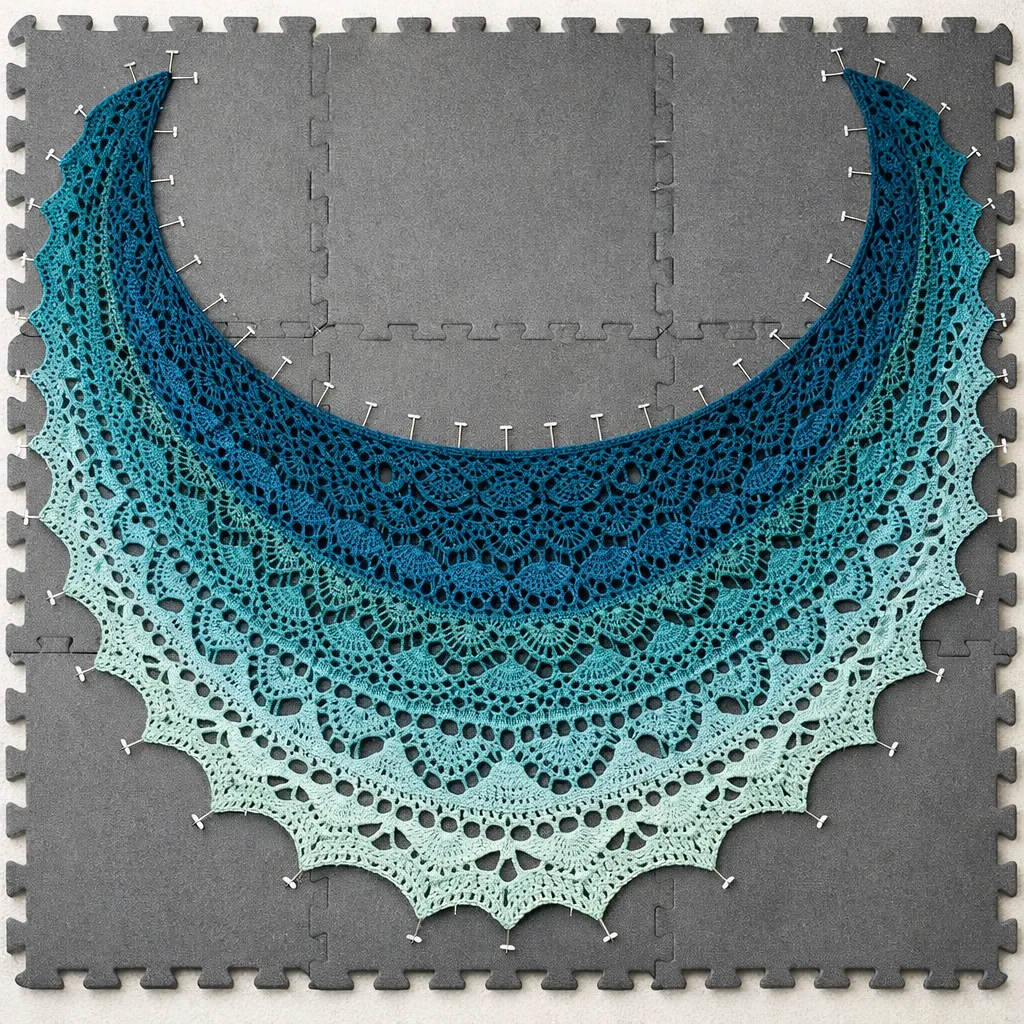
Wet blocking for natural fibers
Wet blocking is the deep soak: submerge the piece, press the water out, then pin it to dimensions and let it dry. It's the gold standard for natural fibers like wool, cotton, and linen, which love a little moisture.
Beware killing the acrylic
Standard acrylic can be 'killed' — pressed flat with a hot iron until it permanently softens and flattens. Sometimes that's the goal, but it's rarely what beginners want, and there's no undo. Always test on a swatch first.
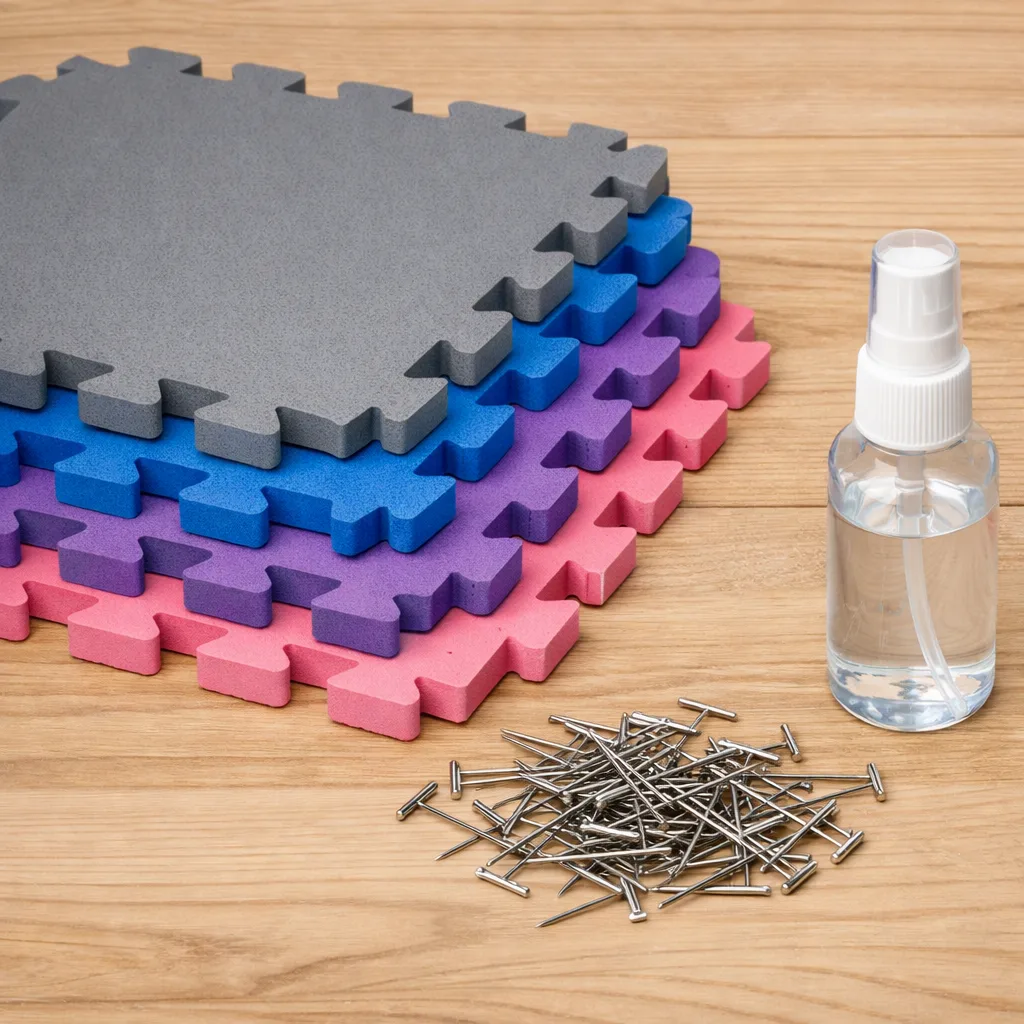
The blocking starter kit
You need surprisingly little: a foam blocking mat (interlocking floor tiles work great), a fistful of T-pins or blocking pins, and a spray bottle or basin for water. That's the whole toolkit.
Spray blocking's correct order
Spray blocking works in a specific order: pin the piece into shape first, then mist it with water until damp. It's quicker than a full soak and good for slight adjustments.
By the numbers
- How long do you soak a piece when wet blocking (lower end of the range)?
- 10 minutes
Matched pairs
Each item on the left goes with the one on the right.
- Wet blocking
- Submerge 10–15 min, press out water, pin to a board, air dry — best for natural fibers
- Spray blocking
- Pin the piece first, then mist with water until damp — faster, good for slight adjustments
- Steam blocking
- Hold a steam iron 1–2 inches away, never touching, then let cool while pinned
Step by step
Wet block a finished crochet piece
- Fully submerge the piece in lukewarm water and let it soak for 10 to 15 minutes.
- Lift it out and gently press the water out — never wring or twist it.
- Lay it on a foam blocking board and pin it out at its final dimensions.
- Leave it pinned and let it air dry completely before unpinning.
Best for natural fibers like wool, cotton, and linen.
Self-test
Answer each question from memory, then check your work against the answer key.
1. Which blocking method is the gold standard for natural fibers like wool, cotton, and linen?
- ASpray blocking
- BKilling
- CWet blocking
- DSteam blocking
2. Which step is NOT part of steam blocking?
- ASubmerge the piece and soak it for 10–15 minutes
- BHold the steam iron 1–2 inches away
- CNever let the iron touch the piece
- DLet the piece cool while pinned
3. In spray blocking, what is the correct order of steps?
- AMist the piece first, then pin it once damp
- BSubmerge, squeeze out, then pin to dry
- CIron flat, then pin while cooling
- DPin the piece first, then mist with water until damp
4. When wet blocking, how long do you soak the piece (lower end of the range)?
- A30 minutes
- B10 minutes
- C2 minutes
- D60 minutes
5. Which blocking method is the slowest because the piece must air dry completely before unpinning?
- ASpray blocking
- BKilling acrylic
- CSteam blocking
- DWet blocking
6. How do you spray block a crocheted piece?
- AHold a steam iron 1–2 inches away and let it cool
- BPin the piece first, then mist it with water until damp
- CSubmerge the piece, then pin it and let it dry
- DPress it flat with a hot iron until it softens
7. Which blocking method is the fastest, best for slight adjustments?
- ASpray blocking
- BKilling the acrylic
- CSteam blocking
- DWet blocking
8. How do you steam block a piece safely?
- ASubmerge it fully in water, then pin
- BPress the iron directly onto the fabric
- CHold a steam iron 1–2 inches away, then let it cool
- DMist it with water until damp before pinning
9. What's the risk of holding a steam iron too close or letting it touch acrylic yarn?
- AYou can accidentally 'kill' the acrylic yarn
- BYou create unwanted cables
- CYou lose your stitch count
- DYou leave a hole in the center
10. In crochet blocking, what does it mean to "kill" acrylic yarn?
- ASoak it in cold water until its color permanently fades
- BFreeze it overnight so the twist relaxes
- CPress it flat with a hot iron until the fibers permanently soften and flatten
- DWash it repeatedly until the stitches loosen and unravel
11. Once acrylic yarn has been 'killed' with a hot iron, how reversible is the change?
- AReversible once the piece is re-blocked with steam
- BReversible with a cold-water soak
- CReversible after washing it a few times
- DIrreversible — there is no un-killing acrylic
12. What is the safe way to block acrylic yarn instead of killing it?
- AA long soak in a hot-water basin
- BGentle steam blocking from a distance
- CFreezing it overnight
- DPressing it flat with a hot iron
13. Why might a crocheter deliberately kill acrylic yarn?
- ATo make the color permanently brighter
- BTo achieve a deliberately drapey, smooth look
- CTo make the stitches puff up and add loft
- DTo make the piece machine-washable
14. Before blocking — especially with acrylic — what should you always do first?
- AIron the whole piece flat
- BWash the finished piece in hot water
- CFreeze the yarn overnight
- DTest on a sacrificial swatch
15. Which method is described as 'pin the piece first, then mist with water until damp'?
- AKilling
- BSteam blocking
- CSpray blocking
- DWet blocking
16. Which method is described as 'submerge, press out the water, pin to a board, then air dry'?
- AWet blocking
- BKilling
- CSpray blocking
- DSteam blocking
17. Which method is described as 'hold a steam iron 1–2 inches away, never touching, then let cool while pinned'?
- AKilling
- BSpray blocking
- CWet blocking
- DSteam blocking
18. 'Spray blocking' is best described by which phrase?
- AMist a pinned piece until damp for slight adjustments
- BPress the piece flat with a hot iron
- CFully submerge and soak the piece before pinning
- DHold a steam iron an inch or two above the fabric
19. Which name does NOT correctly match its description?
- AWet blocking — submerge, press out water, pin, and air dry
- BWet blocking — mist a pinned piece until just damp
- CSpray blocking — pin first, then mist until damp
- DSteam blocking — hold an iron 1–2 inches away, never touching
20. Which blocking method fully submerges the piece before pinning it to dry?
- AKilling the yarn
- BSteam blocking
- CWet blocking
- DSpray blocking
21. Wet blocking is considered the gold standard method for which fibers?
- ANatural fibers such as wool, cotton, and linen
- BSynthetic blends
- CAny fiber, since it's universal
- DAcrylic only
22. Which method pins the piece first, then mists it with water until damp?
- AWet blocking
- BKilling acrylic
- CSteam blocking
- DSpray blocking
23. What advantage does spray blocking offer compared to a full soak?
- AIt permanently softens the fibers
- BIt requires a hot iron held near the fabric
- CIt's quicker and suited to slight adjustments
- DIt takes the longest to dry
Go deeper
Answer key
- 1. C Wet blockingWet blocking is the deepest, most thorough method and the gold standard for natural fibers, which relax and 'remember' their pinned shape after a full soak. Spray and steam are quicker companion methods.
- 2. A Submerge the piece and soak it for 10–15 minutesSubmerging and soaking is wet blocking. Steam blocking uses bursts of steam from an iron held an inch or two away — never touching — then lets the piece cool while pinned.
- 3. D Pin the piece first, then mist with water until dampSpray blocking pins the piece first, then mists it until damp — quick and good for slight adjustments. Soaking-then-pinning describes wet blocking.
- 4. B 10 minutesWet blocking calls for a soak of about 10–15 minutes; the lower end of that range is 10 minutes, long enough for the fabric to fully relax before pinning.
- 5. D Wet blockingWet blocking is the slowest: the fully saturated piece has to air dry completely before you unpin. Spray, steam, and killing are all quicker.
- 6. B Pin the piece first, then mist it with water until dampSpray blocking pins the piece first, then mists it with water until damp — faster than wet blocking, good for slight adjustments.
- 7. A Spray blockingSpray blocking — pin first, then mist until damp — is the quickest method, ideal for slight adjustments.
- 8. C Hold a steam iron 1–2 inches away, then let it coolSteam blocking uses bursts of steam from an iron held 1–2 inches away, never touching, then lets the piece cool while pinned.
- 9. A You can accidentally 'kill' the acrylic yarnDirect heat can 'kill' acrylic — permanently flattening its fibers — which is why steam blocking should stay 1–2 inches away.
- 10. C Press it flat with a hot iron until the fibers permanently soften and flattenTo 'kill' acrylic is to press it flat with a hot iron so the fibers permanently soften and flatten — an irreversible effect. It's sometimes done on purpose for drape, but the safe move is gentle steam from a distance.
- 11. D Irreversible — there is no un-killing acrylicKilling acrylic permanently softens and flattens the fibers — it's irreversible, with no way to undo it. That's why it's risky for beginners.
- 12. B Gentle steam blocking from a distanceThe safe move with acrylic is gentle steam blocking from a distance, not direct contact with a hot iron, which would kill the fibers permanently.
- 13. B To achieve a deliberately drapey, smooth lookKilling is sometimes done on purpose to get a deliberately drapey, smooth, flattened look. It's rarely the goal for beginners and is easily an accident.
- 14. D Test on a sacrificial swatchAlways test on a swatch first — a sacrificial square tells you the truth before your finished project does, which matters most with irreversible acrylic.
- 15. C Spray blockingThat description — pin first, then mist until damp — is spray blocking, the faster method good for slight adjustments.
- 16. A Wet blockingSubmerging, squeezing out water, pinning, and air drying is wet blocking — the deep-soak method best for natural fibers.
- 17. D Steam blockingHolding a steam iron an inch or two away without touching, then letting the piece cool while pinned, is steam blocking.
- 18. A Mist a pinned piece until damp for slight adjustmentsSpray blocking mists an already-pinned piece until damp and is great for slight adjustments. Submerging is wet blocking; the steam-iron descriptions are steam blocking or killing.
- 19. B Wet blocking — mist a pinned piece until just dampWet blocking is the deep soak — submerge, squeeze, pin, air dry — not misting. Misting a pinned piece describes spray blocking, so that pairing is the mismatch.
- 20. C Wet blockingWet blocking is the deep-soak method: submerge the piece, press out the water, then pin it to dimensions and let it dry.
- 21. A Natural fibers such as wool, cotton, and linenWet blocking is the gold standard for natural fibers like wool, cotton, and linen, which respond beautifully to a soak.
- 22. D Spray blockingSpray blocking pins the piece first, then mists it until damp — faster than a full soak and good for slight adjustments.
- 23. C It's quicker and suited to slight adjustmentsBecause it's just a mist rather than a soak, spray blocking is faster and better suited to slight adjustments.
Sources
- The Hooked Life — Blocking: The Professional Finisher's Secret
Image credits
- Wet blocking for natural fibers: AI-generated (gpt-image-1.5)
- The blocking starter kit: AI-generated (gpt-image-1.5)