
The 5 Love Languages: The Secret to Love That Lasts study guide · Lesson 7 of 7
Lesson 7: Discovery, Application & Long-Term Relationship Mastery
7.1 The 3 Diagnostic Discovery Channels & Tank Checks · 7.2 Loving the Unlovely, Parenting & Love as a Choice
Unofficial study guide for The 5 Love Languages: The Secret to Love That Lasts by Gary Chapman. FlashFeed is not affiliated with the author or publisher.
This is the lesson's study guide from the FlashFeed app, plus its key facts and a self-test.
What you'll be able to do
- Discover primary love languages using the three diagnostic questions and execute the daily 10-point Tank Check routine.
- Execute the 'Loving the Unlovely' counseling protocol and apply the 5 love languages across child development.
Monograph Section: Lesson 7 of The 5 Love Languages: The Secret to Love That Lasts by Dr. Gary Chapman.
Executive Overview
Details the three diagnostic methods for discovering your own and your partner's primary love language, introduces the practical daily 'Tank Check' marital feedback routine, examines bilingual partners and secondary dialects, explores the clinical protocol for 'loving the unlovely' difficult spouse based on intentional behavioral experiments, reviews child and adolescent parenting applications, and synthesizes love as an ongoing disciplined act of will.
The 3 Diagnostic Discovery Channels & Tank Checks
Conceptual Foundations: Primary Love Language Discovery, The 3 Diagnostic Questions, The Negative Mirror of Complaints, The Request Channel
Core Insight: Discovering your own and your spouse's primary love language is the essential prerequisite for effective, targeted emotional communication in marriage.
Without identifying the specific primary language, marital energy is wasted broadcasting on mismatched emotional frequencies.
Core Insight: The first diagnostic discovery question examines what your partner does or fails to do that hurts you most deeply, as the opposite of what hurts is your love language.
Emotional pain operates as a photographic negative; if harsh criticism cuts you to the core, Words of Affirmation is almost certainly your primary language.
Core Insight: The second diagnostic discovery question investigates what you have most frequently requested or begged of your spouse across your relationship.
Persistent requests—such as begging for weekend getaways (Time) or help with cleaning (Service)—reveal unmet foundational emotional longings.
Core Insight: The third diagnostic discovery question analyzes how you regularly express love to your spouse, as individuals naturally broadcast their own preferred language.
Human beings intuitively treat others how they want to be treated; constantly buying small surprises signals a desire to receive gifts in return.
Core Insight: Some individuals are 'bilingual,' possessing two primary love languages that speak with equal emotional intensity to their heart.
A bilingual individual feels equally nourished by two channels—such as Quality Time and Physical Touch—and suffers if either is neglected.
Core Insight: The 'Tank Check' is a structured marital communication routine where spouses ask: 'On a scale of 0 to 10, how full is your love tank tonight?'
This quantitative feedback loop creates an objective, non-threatening baseline for monitoring relationship health in real time.
Core Insight: The vital follow-up question to the Tank Check rating is: 'What can I do to help fill it up to a 10?'
This follow-up prompt transforms abstract feelings into immediate, concrete behavioral assignments tailored to the partner's exact current need.
Core Insight: A partner whose love tank has been empty for years may initially struggle to identify their primary language due to emotional numbness.
Prolonged emotional starvation dulls self-awareness; looking back to dating days or early romance helps uncover dormant primary languages.
Core Insight: Taking the formal 5 Love Languages Profile questionnaire provides a structured, forced-choice diagnostic assessment.
The forced-choice methodology forces trade-offs, helping individuals distinguish between general appreciation and their core emotional lifeline.
Core Insight: Primary love languages remain relatively stable over an adult's lifetime, though life stages can shift emphasis across secondary dialects.
While major stress or child-rearing may temporarily heighten the value of Acts of Service, an individual's innate wiring remains consistent.
Core Insight: When a spouse offers constructive feedback during a Tank Check, the listening partner must receive it without defensiveness or debate.
Defensiveness destroys the vulnerability required for honest feedback; accepting the rating with humility builds deep trust.
Core Insight: Misidentifying a secondary language as a primary language leads to frustration, as substantial effort yields only modest emotional fulfillment.
Targeting the exact primary language provides maximum emotional nourishment, whereas secondary languages provide only supplementary warmth.
Core Insight: Observing how your spouse behaves around friends, family, and colleagues often provides external confirmation of their primary love language.
Natural social behaviors and instinctual interpersonal patterns mirror an individual's internal emotional wiring.
Core Insight: A Tank Check score of 10 represents a marriage flourishing in secure intimacy, mutual honor, and vibrant emotional vitality.
A full love tank provides the ultimate reservoir of goodwill and resilience, enabling couples to thrive across all life challenges.
Core Insight: Consistently practicing regular Tank Checks establishes an ongoing rhythm of proactive maintenance that keeps love vibrant for decades.
Proactive monitoring catches emotional leaks early, preventing small distance from hardening into deep marital estrangement.
Loving the Unlovely, Parenting & Love as a Choice
Conceptual Foundations: Loving the Unlovely, The 6-Month Behavioral Experiment, The Ann and Glenn Case, Action Preceding Emotion
Core Insight: Gary Chapman's 'Loving the Unlovely' protocol is an intentional clinical counseling strategy designed to restore marriages where emotional love has completely died.
Based on biblical teachings (Luke 6 and 1 Corinthians 13), Chapman developed an experimental protocol for choosing love when feelings of affection are zero.
Core Insight: The famous clinical case of 'Ann and Glenn' proved that one partner intentionally speaking the other's love language for six months can resurrect a seemingly hopeless marriage.
By persistently filling Glenn's love tank with Words of Affirmation and Physical Touch despite his initial cynicism, Ann eventually inspired him to reciprocate.
Core Insight: Loving a difficult or hostile spouse requires an act of the will that is completely detached from present emotional reciprocity.
Unconditional love chooses to bless and serve the partner unilaterally, breaking negative feedback loops through proactive goodwill.
Core Insight: In the 'Loving the Unlovely' protocol, the initiating partner asks the hostile spouse once a month: 'What is one specific thing I could do this month to be a better partner?'
This monthly humble inquiry demonstrates tangible behavioral change, slowly dismantling the cynical partner's emotional defenses.
Core Insight: When an individual feels genuinely loved and cherished over time, they often begin to soften and respond — though, as Chapman is explicit about in the Ann-and-Glenn account, this is never guaranteed, only the best available probability.
Human psychology is wired to respond to persistent, unselfish love; while not guaranteed, unilateral love represents the highest statistical probability of reconciliation.
Core Insight: Every developing child requires all five love languages to be expressed by parents, though each child eventually develops a distinct primary language.
Parents should shower young children with words, time, gifts, service, and touch, while paying close attention to which channel makes their eyes light up most.
Core Insight: A teenager acting out with severe rebellion, withdrawal, or substance abuse is almost always suffering from an empty emotional love tank.
Rebellion is often a desperate cry for parental connection; filling the teen's love tank in their specific primary language restores influence and communication.
Core Insight: Disciplining a child before filling their emotional love tank is perceived by the child as hostile punishment rather than loving guidance.
A child must feel fundamentally secure in parental love for behavioral correction to foster healthy moral growth rather than resentment.
Core Insight: Single parents, divorced individuals, and unmarried adults equally require their emotional love tanks to be replenished through friendships and community.
The five love languages apply across all human relationships—platonic friendships, workplace teams, and extended families thrive when love is spoken accurately.
Core Insight: Love is not a mystical emotional trance that happens to us, but an intentional, disciplined moral decision made every single morning.
Elevating love from a passive mood to a conscious moral commitment ensures that marital intimacy endures regardless of external circumstances.
Core Insight: Choosing to speak a love language that feels unnatural or difficult is the highest objective proof of authentic, selfless devotion.
Sacrificing personal comfort to learn a partner's foreign language demonstrates that their happiness is genuinely prioritized over personal ease.
Core Insight: Children have love tanks too — a child whose tank is kept full grows up emotionally healthy.
Chapman carries the love tank into parenting: loving each child in their own primary language builds a secure, emotionally healthy adult, while much adolescent misbehaviour traces back to a tank left empty.
Core Insight: The ultimate objective of The 5 Love Languages is to transform marital coexistence into a vibrant, lifelong adventure of mutual flourishing.
Applying Chapman's framework replaces cold indifference with dynamic intimacy, turning marriage into a haven of emotional joy.
Core Insight: Keeping your partner's love tank full is an ongoing, lifelong journey requiring continuous attunement across changing seasons of life.
As careers, health, and family dynamics evolve, couples must continually adapt how they speak love to keep tanks brimming.
Core Insight: Dr. Gary Chapman summarizes the entire message of the book in a single core axiom: Love is a choice that unlocks the secret to love that lasts.
The enduring secret to marital bliss lies not in effortless compatibility, but in the daily, humble choice to speak the specific emotional dialect of the one you cherish.
Key terms
- Primary Love Language Discovery
- The systematic identification of the specific emotional dialect that most powerfully fills an individual's love tank.
- Loving the Unlovely
- An intentional pastoral-counseling experiment for unilaterally choosing to speak a hostile partner's love language to try to revive a dying marriage.
Key facts
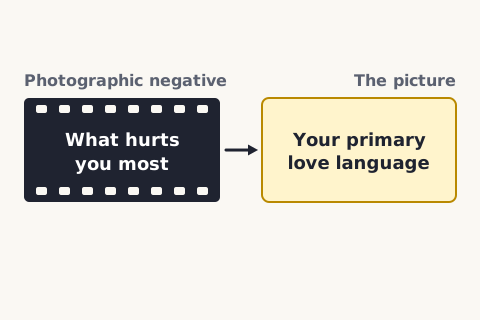
The Negative Mirror of Complaints
The principle that what your partner does or fails to do that hurts you most deeply is the photographic negative of your primary love language.
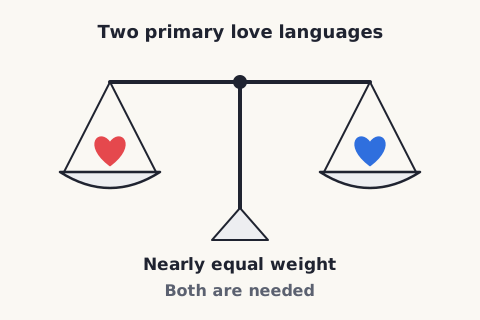
Bilingual Love Languages
Individuals who possess two primary love languages of nearly equal emotional weight, requiring both to feel fully nourished.
Why might a spouse with a long-empty love tank struggle to self-diagnose?
Why might a spouse with a long-empty love tank struggle initially with self-diagnosis?
What marital state is reflected when both love tanks are consistently maintained
What marital state is reflected when both love tanks are consistently maintained at a 10?
The Ann and Glenn Case Study
A clinical breakthrough where a wife's 6-month unilateral investment in her husband's love languages melted his hostility and restored their marriage.
Full Tanks, Healthy Adults
Chapman carries the love tank into parenting: children have one too. A child who is loved in their own primary language, with a tank kept full, grows up emotionally healthy — and Chapman traces much adolescent misbehaviour to a tank left empty.
Why is filling love tanks a continuous lifestyle rather than a one-time project?
Why is filling love tanks a continuous lifestyle rather than a one-time project?
Matched pairs
Each item on the left goes with the one on the right.
- The third diagnostic question
- Analyzing how you naturally and regularly express love to your spouse
- Humble Acceptance and Action
- Builds deep emotional safety and validates your partner's vulnerable reality
- Severe Teenage Rebellion and Hostility
- Almost always rooted in an empty emotional love tank craving validation
- Mastering The 5 Love Languages
- Transforms marriage from an endurance contest into a lifelong adventure of joy
Step by step
How to conduct the daily 'Tank Check' feedback routine
- Ask your spouse: 'On a scale of 0 to 10, how full is your love tank tonight?'
- Listen attentively to their numeric rating without becoming defensive or arguing.
- Ask the crucial follow-up: 'What is one specific thing I could do tonight to help fill it?'
- Execute the requested loving action immediately with a willing, cheerful attitude.
How to make the Tank Check a permanent habit in marriage
- Integrate the question into your evening dinner or bedtime conversation.
- Establish a shared ground rule that all numeric scores are received without anger.
- Take turns asking each other three times per week during initial practice.
- Celebrate tangible increases in mutual warmth as emotional tanks remain full.
How to execute the monthly inquiry step in the Loving the Unlovely protocol
- Approach your hostile spouse once a month with genuine calm and humility.
- Ask: 'What is one specific thing I could do this month to be a better partner to you?'
- Perform their exact requested action faithfully without arguing or making demands.
- Repeat the inquiry monthly to slowly dismantle their cynical defensive walls.
Self-test
Answer each question from memory, then check your work against the answer key.
1. What does the first diagnostic discovery question ask about a partner?
- AWhat you request most often
- BWhat hurts you most when neglected
- CWhat your friends say about you
- DHow you express love naturally
2. Which is NOT one of the three diagnostic discovery questions for finding a primary love language?
- AWhat hurts you most when neglected
- BHow you naturally express love to others
- CWhat you've most often requested from your spouse
- DWhat your spouse's parents preferred
3. A person nourished equally by two love languages, like Quality Time and Physical Touch, is described as what?
- ACross-wired
- BAmbidextrous
- CBilingual
- DMultilingual
4. In the Tank Check routine, spouses ask: 'On a scale of 0 to ___, how full is your love tank tonight?' What is the top number?
- A10
- B20
- C7
- D5
5. What is the goal of the essential Tank Check follow-up question?
- ADebate the future of the marriage
- BRehash the day's mistakes
- CFind what raises the tank to a 10
- DAssign blame for a low score
6. What does the 'Loving the Unlovely' protocol call for a spouse to do?
- AUnilaterally speak their love language
- BUnilaterally schedule more date nights together
- CUnilaterally propose a trial separation
- DUnilaterally apologize for past mistakes first
7. In the Ann and Glenn case study, what restored their marriage?
- AGlenn's own effort to learn Ann's love languages
- BA counselor assigning both of them new love languages
- CA mutual, immediate switch to each other's love languages
- DAnn's six-month unilateral effort in Glenn's love languages
8. In the Ann and Glenn case, Chapman hypothesized that when a hostile spouse's emotional needs are consistently met, their defensive walls tend to do what?
- AMultiply
- BCrumble
- CFreeze
- DStrengthen
9. Severe teenage rebellion and hostility is almost always rooted in what?
- AAn unresolved secondary dialect conflict
- BA temporary life-stage shift in priorities
- CAn empty love tank craving validation
- DA mismatched love language between parent and teen
10. In Chapman's view, what becomes of a child whose love tank is kept full?
- AThey grow up emotionally healthy and secure
- BThey stop needing their parents' affection
- CThey never test limits during adolescence
- DThey learn to speak all five languages equally
Go deeper
- ReadThe 5 Love Languages by Gary Chapman · on Amazon ↗
- StudyThe 5 Love Languages: The Secret to Love That Lasts in the FlashFeed app
These are affiliate links: if you buy a book through one, FlashFeed may earn a small commission at no extra cost to you. The commission helps pay for FlashFeed's servers.
As an Amazon Associate we earn from qualifying purchases.
Answer key
- 1. B What hurts you most when neglectedThe first question is the Negative Mirror of Complaints: what hurts you most deeply is the opposite of your primary love language.
- 2. D What your spouse's parents preferredThe three questions cover what hurts most, what you've most requested, and how you naturally express love, not your spouse's parents' preferences.
- 3. C BilingualSomeone with two equally strong primary love languages is called 'bilingual.'
- 4. A 10The Tank Check uses a 0-to-10 scale for rating how full the love tank feels.
- 5. C Find what raises the tank to a 10The follow-up question turns a rating into a concrete, tailored action by asking what would help fill the tank to a 10 — not blame or rehashing problems.
- 6. A Unilaterally speak their love language'Loving the Unlovely' is an intentional protocol of unilaterally speaking a hostile spouse's primary love language, not generic gestures like date nights, apology, or separation, to resurrect the marriage.
- 7. D Ann's six-month unilateral effort in Glenn's love languagesAnn initiated a six-month, one-sided effort to speak Glenn's love languages despite his hostility, which melted his resistance — not a mutual switch, an outside assignment, or effort from Glenn himself.
- 8. B CrumbleChapman's hypothesis — which he explicitly said he could not guarantee — was that consistently meeting a partner's emotional needs makes their defensive walls likely to crumble.
- 9. C An empty love tank craving validationThe lesson traces severe teen rebellion to an empty love tank craving validation, not a language mismatch, a secondary-dialect conflict, or a life-stage shift.
- 10. A They grow up emotionally healthy and secureChapman applies the love tank to children: kept full in the child's own primary language, it lets them grow up emotionally healthy. A full tank does not end a child's need for affection or adolescent limit-testing, and each child still has one primary language.
Sources
- The 5 Love Languages: The Secret to Love That Lasts — Gary Chapman
- The 5 Love Languages - Chapter 9
- The 5 Love Languages - Profile Section
- The 5 Love Languages - Chapter 12
- The 5 Love Languages (1995 edition) - Chapter 13
- The 5 Love Languages - Chapter 10
- The 5 Love Languages - Chapter 13
- The 5 Love Languages - Chapter 2
Image credits
- The Negative Mirror of Complaints: FlashFeed original diagram · CC-BY-4.0
- Bilingual Love Languages: FlashFeed original diagram · CC-BY-4.0