
I Will Teach You To Be Rich study guide · Lesson 4 of 6
Investment Foundations & Passive Indexing
Active Management Fallacies and The Power of Index Funds · Retirement Account Hierarchy and Tax-Advantaged Vehicles
Unofficial study guide for I Will Teach You To Be Rich, Second Edition: No Guilt. No Excuses. No B.S. Just a 6-Week Program That Works by Ramit Sethi. FlashFeed is not affiliated with the author or publisher.
This is the lesson's study guide from the FlashFeed app, plus its key facts and a self-test.
What you'll be able to do
- Explain why active mutual fund managers underperform passive broad-market index funds due to fees and expense ratios.
- Execute the retirement account funding hierarchy: employer 401(k) match, maxing Roth IRA, remaining 401(k), then taxable brokerage.
Lesson 4: Investment Foundations & Passive Indexing
Welcome to the comprehensive study guide for Lesson 4 of I Will Teach You To Be Rich by Ramit Sethi.
Active Management Fallacies and The Power of Index Funds
Key Concepts and Tactical Frameworks
The Myth of Professional Active Stock Picking
Professional active fund managers consistently fail to outperform simple, unmanaged broad-market index benchmarks after accounting for management fees and trading costs.
SPIVA Scorecard Underperformance Data
According to the S&P Indices Versus Active (SPIVA) scorecard, 85% to 90%+ of actively managed large-cap mutual funds lag the S&P 500 benchmark over 10-to-15-year periods.
Survivorship Bias in Mutual Fund Marketing
Mutual fund companies mask poor performance through survivorship bias, quietly merging or closing underperforming funds so that only lucky surviving funds appear in marketing materials.
Anatomy of the Expense Ratio
An expense ratio is an annual management fee deducted directly from total invested fund assets regardless of whether the fund produces a gain or a loss.
The 1.5% Expense Ratio Destroyer
A seemingly modest 1.5% annual expense ratio silently consumes 30% to 50% of an investor's total potential portfolio wealth over a 35-year compounding horizon due to lost compounding.
Low-Cost Index Fund Benchmark Fees
Leading passive index funds and ETFs from Vanguard, Charles Schwab, and Fidelity charge rock-bottom expense ratios between 0.03% and 0.08% annually.
John Bogle and the Vanguard Index Revolution
Vanguard founder John Bogle revolutionized retail investing in 1976 by introducing the first low-cost index mutual fund, aligning fund management directly with shareholder interests.
Efficient Market Mechanics in Practice
The Efficient Market Hypothesis demonstrates that active stock prices reflect all publicly available information instantly, making consistent speculative outperformance mathematically improbable.
Passive Indexing as Whole-Economy Ownership
Investing in a total stock market index fund grants proportional ownership in hundreds or thousands of profitable companies, capturing broad human innovation and economic expansion.
Index Mutual Funds vs. Index ETFs
Both index mutual funds and index ETFs offer low costs and broad diversification, with ETFs trading intraday and index mutual funds allowing automatic fractional-dollar recurring investment.
Conflicts of Interest in Commission-Based Advisors
Commission-based financial planners face inherent conflicts of interest, incentivizing them to steer clients toward high-fee front-loaded mutual funds and expensive whole life insurance policies.
The Fiduciary Standard vs. Suitability Standard
A fiduciary advisor is legally bound to act solely in the client's best financial interest, whereas brokers operating under the suitability standard only need to recommend 'suitable' products.
Robo-Advisors as Low-Cost Automated Portfolio Managers
Robo-advisors (e.g., Betterment, Wealthfront) provide automated indexing, portfolio rebalancing, and tax-loss harvesting for a low advisory fee around 0.25%.
Hidden Trading Friction and Turnover Costs
Hyperactive mutual funds generate high portfolio turnover, inflicting hidden transaction commissions, bid-ask spreads, and taxable capital gain distributions on shareholders.
The Decisive Simplicity Advantage of Indexing
A simple portfolio of 1 to 3 broad index funds consistently outperforms 99% of complex hedge funds and active day-traders over a multi-decade investing horizon.
Practical Application & Behavioral Exercises
Retirement Account Hierarchy and Tax-Advantaged Vehicles
Key Concepts and Tactical Frameworks
The Next-Dollar Investment Account Hierarchy
The Next-Dollar hierarchy provides a strict 5-step order of operations for deploying investment dollars to maximize tax advantages and employer contributions.
Tier 1: 401(k) Full Employer Match Capture
Funding your employer 401(k) up to the maximum match is the undisputed first priority, delivering an instantaneous, risk-free 100% return on invested capital.
Tier 2: Maxing Out the Roth IRA
After capturing the 401(k) match, maxing out an individual Roth IRA allows post-tax contributions to compound completely tax-free and be withdrawn 100% tax-free in retirement.
Backdoor Roth IRA for High Earners
High-income earners exceeding statutory Roth IRA income phaseouts can execute a Backdoor Roth IRA by contributing to a non-deductible Traditional IRA and immediately converting it to a Roth.
Roth IRA Principal Withdrawal Liquidity
Original direct contributions (principal) to a Roth IRA can be withdrawn at any time, for any reason, with zero taxes and zero early-withdrawal penalties.
Tier 3: Health Savings Account (HSA) Triple-Tax Advantage
A Health Savings Account (HSA) paired with a high-deductible health plan offers a unique triple-tax advantage: tax-deductible contributions, tax-free growth, and tax-free withdrawals for medical costs.
HSA as a Stealth Retirement Investment Vehicle
Paying current medical out-of-pocket expenses with cash allows HSA index fund balances to compound untouched for decades, functioning as a penalty-free Traditional IRA after age 65.
Tier 4: Maxing Out the Remaining 401(k) Elective Deferral
Step four in the cascade involves returning to max out the remaining statutory annual 401(k) elective deferral limit to lower current-year taxable income with pre-tax dollars.
Tier 5: Taxable Brokerage Accounts for Infinite Capacity
Once all tax-advantaged retirement accounts are maxed, remaining investment capital flows into taxable brokerage accounts holding tax-efficient broad-market index ETFs with zero contribution caps.
Traditional vs. Roth Marginal Tax Rate Decision Rule
Choose a Traditional pre-tax vehicle if your current marginal tax bracket is higher than your expected tax bracket in retirement; choose a Roth vehicle if your current tax bracket is lower.
401(k) Investment Menu and Administrative Fee Auditing
Auditing employer 401(k) investment menus allows employees to select the lowest-cost broad-market index funds and avoid high-fee actively managed options.
Rollover IRA Protocol When Changing Employers
When leaving an employer, executing a direct trustee-to-trustee rollover of your 401(k) into a Rollover IRA at Vanguard, Schwab, or Fidelity preserves tax status and unlocks superior low-cost fund options.
Vesting Schedules on Employer Matches
Employer 401(k) matching contributions often adhere to multi-year cliff or graded vesting schedules, requiring employees to stay for specified tenures to retain full ownership of matched dollars.
The Peril of 401(k) Loans and Early Withdrawals
Taking 401(k) loans robs investments of compound growth, triggers penalties if unpaid upon job departure, and requires repayments made with double-taxed after-tax money.
Required Minimum Distributions (RMDs) Mechanics
Pre-tax Traditional 401(k) and IRA accounts mandate Required Minimum Distributions (RMDs) starting at ages 73 to 75, whereas Roth IRAs carry zero lifetime RMD obligations.
Practical Application & Behavioral Exercises
Key terms
- Passive Indexing as Whole-Economy Ownership
- Investing in a total stock market index fund grants proportional ownership in hundreds or thousands of profitable companies, capturing broad human innovation and economic expansion.
- The Decisive Simplicity Advantage of Indexing
- A simple portfolio of 1 to 3 broad index funds has historically outperformed the large majority of complex hedge funds and active day-traders over a multi-decade investing horizon, largely because of fees and trading costs.
- Tier 5: Taxable Brokerage Accounts for Infinite Capacity
- Once all tax-advantaged retirement accounts are maxed, remaining investment capital flows into taxable brokerage accounts holding tax-efficient broad-market index ETFs with zero contribution caps.
- Required Minimum Distributions (RMDs) Mechanics
- Pre-tax Traditional 401(k) and IRA accounts mandate Required Minimum Distributions (RMDs) starting at ages 73 to 75, whereas Roth IRAs carry zero lifetime RMD obligations.
Key concepts
Index Mutual Funds vs. Index ETFs
- Two vehicles can track the exact same market index yet trade and settle in different ways.
- One version of it trades throughout the day like a stock; the other prices only once, after the close.
- The once-a-day version is generally friendlier for setting up automatic recurring dollar amounts.
Traditional vs. Roth Marginal Tax Rate Decision Rule
- Whether to pay tax now or later on retirement money comes down to comparing two numbers.
- You're weighing your tax bracket today against your best guess at your bracket once you retire.
- A lower bracket today than expected in retirement points toward paying tax now instead of later.
Key facts
The Myth of Professional Active Stock Picking
Professional active fund managers consistently fail to outperform simple, unmanaged broad-market index benchmarks after accounting for management fees and trading costs.
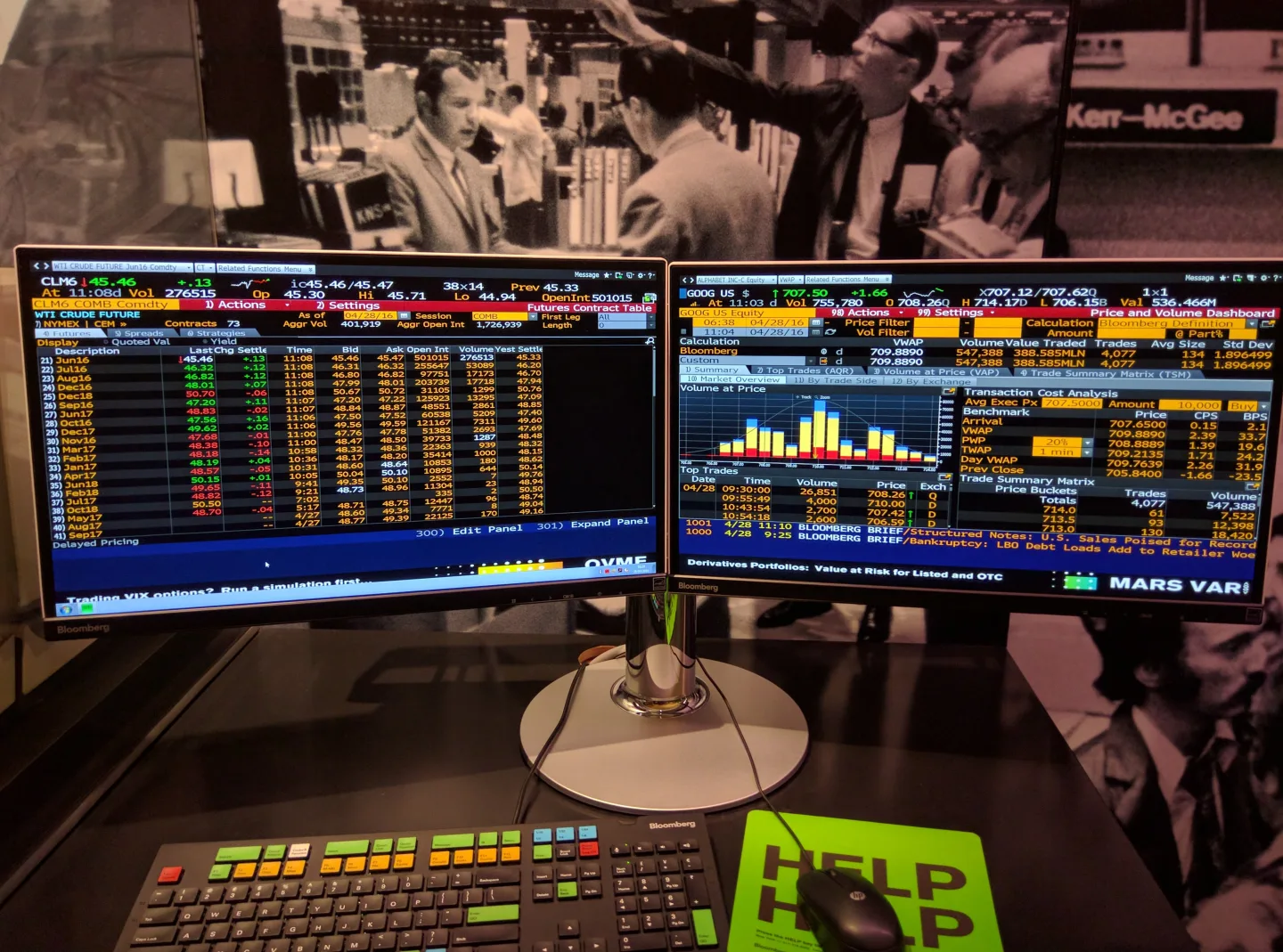
Active Managers Rarely Win
According to the SPIVA scorecard, fewer than 15% of actively managed large-cap funds beat the S&P 500 over a ten-to-fifteen-year stretch — meaning 85%-plus of professional stock pickers fail to outperform a simple index after fees.
Fund Survivorship Bias
Fund companies quietly close or merge their worst-performing funds, so only the winners remain to appear in advertising — a marketing trick called survivorship bias that makes the fund category as a whole look better than it really was.
A 1.5% Fee's Hidden Cost
A 1.5% annual fee looks small on paper, but compounded over a 35-year investing career it can quietly consume up to half of an investor's total potential wealth — the fee compounds against the investor the same way returns compound for them.
Bogle's 1976 Index Fund
Before 1976, ordinary investors couldn't buy a low-cost fund that simply tracked the whole market. John Bogle launched the first retail index fund that year at Vanguard, structured so the fund company is owned by its own funds' investors — removing the incentive to charge high fees, since there's no outside owner to pay. Today's rock-bottom 0.03%-0.08% index fund fees trace directly back to that structure.

Why the Market Is Efficient
Millions of market participants price new information into stocks almost instantly, which is why consistently outguessing the market as a whole through stock picking is so statistically difficult — the news is already reflected in the price by the time anyone acts on it.
Index Mutual Funds vs. ETFs
Index mutual funds and index ETFs can track the identical market index yet trade differently: an ETF trades throughout the day like a stock, while a mutual fund prices only once, after the market closes — generally the friendlier choice for automatic recurring dollar investments.
Why Brokers Push Some Funds
A commission-based broker can earn a kickback for selling an expensive, loaded mutual fund or a whole life insurance policy — an incentive that has nothing to do with what's actually best for the client's portfolio.
The Ladder of Personal Finance
Ramit Sethi's Ladder of Personal Finance gives a strict order of operations for deploying investment dollars: capture the 401(k) match, fund the Roth IRA, max out the 401(k), invest in an HSA, then move to a taxable brokerage account.

Capture the Full 401(k) Match
The very first move in the Next-Dollar investment hierarchy is contributing enough to a 401(k) to capture the full employer match — an immediate, guaranteed 100% return on that money before it even touches the market, which nothing else in the hierarchy can match.
Roth Principal: Withdraw Anytime
Because Roth IRA contributions are made with money already taxed, an investor can withdraw the original principal contributions at any time, for any reason, with zero tax or penalty — only the account's investment growth carries early-withdrawal restrictions.
The HSA's Triple Tax Advantage
Paired with a high-deductible health plan, a Health Savings Account (HSA) is untaxed three separate times: contributions go in tax-deductible, the balance grows tax-free, and withdrawals for medical costs come out completely untaxed — a combination no other retirement account offers.
The HSA Stealth Retirement Play
Contributing the annual max to an HSA alongside a high-deductible health plan, investing that balance in index funds, and paying current minor medical bills out of pocket instead lets the HSA balance compound untouched for decades. After 65, it behaves like a Traditional IRA for non-medical withdrawals, while medical withdrawals stay tax-free for life.

The Hierarchy's Fourth Step
After maxing the Roth IRA, the Next-Dollar hierarchy's fourth step sends an investor back to their 401(k) to max out the remaining annual elective deferral limit — pre-tax dollars that cut this year's taxable income — before moving on to an HSA.

Traditional vs. Roth Tax Rule
Choosing between a Traditional and a Roth account comes down to comparing two tax brackets: an investor's bracket today versus their best guess at their bracket in retirement. A lower bracket today than expected in retirement points toward paying the tax now, with a Roth, instead of later.
Check Your 401(k) Fund Menu
Scanning an employer's 401(k) investment menu for the lowest-fee broad index fund — instead of a flashier active fund charging 1%+ — is a once-and-forget check that keeps far more of every contribution compounding for the investor instead of a fund manager.
Matched pairs
Each item on the left goes with the one on the right.
- Anatomy of the Expense Ratio
- An expense ratio is an annual management fee deducted directly from total invested fund assets regardless of whether the fund produces a gain or a loss.
- Robo-Advisors as Low-Cost Automated Portfolio Managers
- Robo-advisors (e.g., Betterment, Wealthfront) provide automated indexing, portfolio rebalancing, and tax-loss harvesting for a low advisory fee around 0.25%.
- Backdoor Roth IRA for High Earners
- High-income earners exceeding statutory Roth IRA income phaseouts can execute a Backdoor Roth IRA by contributing to a non-deductible Traditional IRA and immediately converting it to a Roth.
- Vesting Schedules on Employer Matches
- Employer 401(k) matching contributions often adhere to multi-year cliff or graded vesting schedules, requiring employees to stay for specified tenures to retain full ownership of matched dollars.
Step by step
Understand why John Bogle's 1976 index fund changed investing
- Note that before 1976, ordinary investors couldn't buy a low-cost fund that just tracked the whole market.
- See how Bogle launched the first retail index fund, structured so Vanguard is owned by its own funds' investors.
- Recognize that this structure removed the incentive to charge high fees, since there's no outside owner to pay.
- Connect this to today's 0.03%-0.08% index fund fees, which trace directly back to that 1976 structure.
Bogle's index fund didn't just add an option, it changed who fund fees actually benefit.
Use an HSA as a hidden retirement account
- Contribute the annual max to your HSA alongside a high-deductible health plan.
- Invest the HSA balance in index funds instead of leaving it as idle cash.
- Pay any current, minor medical bills out of pocket with regular cash, not the HSA.
- Let the HSA balance compound untouched for decades, saving receipts to reimburse yourself later if needed.
After 65, an HSA behaves like a Traditional IRA for non-medical withdrawals, but medical withdrawals stay tax-free for life.
Self-test
Answer each question from memory, then check your work against the answer key.
1. Per the SPIVA scorecard, what share of active large-cap funds fail to beat the S&P 500 over 10-15 years?
- A65% to 75%
- B25% to 35%
- C85% or more
- D50% to 60%
2. An annual fee taken from a fund's total assets regardless of gain or loss is called a(n):
- ARedemption fee
- BSales load
- CAdvisory fee
- DExpense ratio
3. A 1.5% annual expense ratio compounded over a 35-year investing career can consume up to what share of total wealth?
- AUp to 50%
- BUp to 25%
- CUp to 10%
- DUp to 90%
4. Quietly closing or merging failing funds so only winners appear in marketing data is a practice called:
- AConfirmation bias
- BSurvivorship bias
- CSelection bias
- DRecency bias
5. Which expense-ratio range is typical for low-cost index funds from Vanguard, Schwab, or Fidelity?
- A2% to 3%
- B1% to 1.5%
- C0.5% to 1%
- D0.03% to 0.08%
6. What is the very first step in the retirement account funding hierarchy?
- ACapture the full 401(k) match
- BOpen a taxable brokerage account
- CMax out the Roth IRA
- DMax out the 401(k) deferral limit
7. Capturing the full 401(k) match is prioritized first because it delivers an immediate, guaranteed return of about:
- A25%
- B50%
- C100%
- D5%
8. According to the funding hierarchy, what comes right after capturing the 401(k) match?
- AOpening an HSA
- BMaxing the Roth IRA
- CInvesting in a taxable brokerage account
- DMaxing the remaining 401(k)
9. After maxing the Roth IRA, where does the hierarchy send the next investment dollar?
- ABack to the 401(k)
- BAn HSA
- CA Backdoor Roth IRA
- DA taxable brokerage account
10. Once every tax-advantaged retirement account is maxed out, where do remaining investment dollars go?
- AA 529 college savings plan
- BA Backdoor Roth IRA
- CAn HSA
- DA taxable brokerage account
11. Once every tax-advantaged retirement account is maxed out, where should additional investment dollars go next?
- AA Health Savings Account (HSA)
- BA Backdoor Roth IRA
- CA taxable brokerage account
- DA 529 college savings plan
12. What is the final tier of the retirement funding hierarchy once every tax-advantaged account has been maxed?
- AWhole life insurance policies
- BTaxable brokerage accounts
- CMunicipal bond funds
- DTraditional IRA rollovers
Go deeper
- ReadI Will Teach You To Be Rich, Second Edition by Ramit Sethi · on Amazon ↗
- StudyI Will Teach You To Be Rich in the FlashFeed app
These are affiliate links: if you buy a book through one, FlashFeed may earn a small commission at no extra cost to you. The commission helps pay for FlashFeed's servers.
As an Amazon Associate we earn from qualifying purchases.
Answer key
- 1. C 85% or moreSPIVA data shows 85%+ of actively managed large-cap funds underperform the S&P 500 over a 10-to-15-year horizon, after fees.
- 2. D Expense ratioAn expense ratio is the annual management fee deducted from fund assets every year, win or lose, unlike a one-time load, an advisor's separate fee, or a redemption fee.
- 3. A Up to 50%Because fees compound against the investor the way returns compound for them, a 1.5% fee can silently confiscate up to half of lifetime wealth over 35 years.
- 4. B Survivorship biasFund companies exploit survivorship bias by removing failing funds from the record, making the surviving lineup look artificially strong.
- 5. D 0.03% to 0.08%Top-tier passive index funds charge rock-bottom fees of about 0.03% to 0.08% annually, letting investors keep nearly all market gains.
- 6. A Capture the full 401(k) matchCapturing the full employer 401(k) match comes first because it's an immediate, guaranteed return that nothing else in the hierarchy can match.
- 7. C 100%Employer matching dollars amount to a guaranteed 100% return before the money even touches the market.
- 8. B Maxing the Roth IRAAfter the match, the hierarchy's next step is maxing the Roth IRA, letting after-tax dollars grow and come out tax-free in retirement.
- 9. A Back to the 401(k)The hierarchy sends an investor back to their 401(k) to max out the remaining elective deferral limit before moving further down the ladder.
- 10. D A taxable brokerage accountWith tax-advantaged accounts maxed, the hierarchy's final tier is a taxable brokerage account holding tax-efficient index ETFs, with no contribution cap.
- 11. C A taxable brokerage accountWith zero contribution caps, taxable brokerage accounts hold tax-efficient index funds and absorb capital left after tax-advantaged accounts are full.
- 12. B Taxable brokerage accountsThe hierarchy's last tier routes remaining capital into taxable brokerage accounts, which carry no contribution limits.
Sources
- I Will Teach You To Be Rich — Ramit Sethi
- I Will Teach You To Be Rich (2nd Ed), Ch. 3 & 6: The Myth of Expertise & Investing
- I Will Teach You To Be Rich (2nd Ed), Ch. 3 & 6: The Myth of Expertise & Investing — iwillteachyoutoberich.com
Image credits
- Active Managers Rarely Win: Wikimedia Commons · Travis Wise · CC BY 2.0 — commons.wikimedia.org/wiki/File:Bloomberg_Terminal_Museum.jpg
- Why the Market Is Efficient: libraryofcongress (Openverse) · cc0 1.0 — www.rawpixel.com/image/6306767/ny-stock-exchange
- Capture the Full 401(k) Match: sandklef (Openverse) · by-sa 2.0 — www.flickr.com/photos/63114905@N06/18151984640
- The Hierarchy's Fourth Step: Wikimedia Commons · Mike Peel (www.mikepeel.net) · CC BY-SA 4.0 — commons.wikimedia.org/wiki/File:At_Victoria_and_Albert_Museum_2025_018.jpg
- Traditional vs. Roth Tax Rule: Wikimedia Commons · Poussin jean · CC BY-SA 3.0 — commons.wikimedia.org/wiki/File:Balance_%C3%A0_tabac_1850.JPG


