
The Infinity Machine (book) study guide · Lesson 5 of 12
Founding DeepMind
Thiel and the pitch · Google takes the wheel
Unofficial study guide for The Infinity Machine: Demis Hassabis, DeepMind, and the Quest for Superintelligence by Sebastian Mallaby. FlashFeed is not affiliated with the author or publisher.
This is the lesson's study guide from the FlashFeed app, plus its key facts and a self-test.
What you'll be able to do
- Explain the DeepMind name's origin (first named Solaria, after an Asimov novel) and that the lab was founded and registered in 2010
- Recall Google's 2014 acquisition of DeepMind for roughly £400 million / $600 million and Larry Page's role
- Recognise the Silicon Valley backdrop — Peter Thiel's Founders Fund as first backer and the October 2012 Musk–Page dinner where Musk warned of a 'digital god'
- Define Deep Q-Networks and Q-learning, identify Vlad Mnih as the Atari DQN lead, and explain why experience replay made deep RL stable
- Define DeepMind as the London AI lab Hassabis cofounded in 2010 and Google acquired in 2014
Thiel and the pitch
DeepMind's founding moment was equal parts intellectual ambition and tactical fundraising — a London startup pitching Silicon Valley money on the strength of a vision most investors couldn't evaluate.
The name DeepMind
The company's first working name was Solaria, borrowed from an Isaac Asimov novel. Shane Legg pushed for something plainer. The founders settled on two words that doubled as a research manifesto: "Deep" nodded to deep learning — the neural-network approach they were betting on — and "Mind" declared the destination. The name was registered in late 2010, and the London company itself was incorporated that same year, officially launching in November 2010. Choosing the name before they had a product was itself a statement: they were not building another software tool, they were building toward cognition.
Google buys DeepMind, January 2014
Larry Page and Sergey Brin had been watching DeepMind since 2012. In January 2014 Google closed the acquisition for roughly £400 million — then the largest AI acquisition in European history, for a lab with no revenue and fewer than 100 employees. Peter Thiel's Founders Fund had led the earliest outside funding, a notable irony given Thiel's later public skepticism about unchecked AI development. The price signaled that Google understood deep learning was not a research curiosity but infrastructure for everything it built.
Musk vs Page on the lawn
On 8 October 2012, Elon Musk attended a dinner at Larry Page's home in Palo Alto. The evening turned philosophical. Musk argued that a sufficiently advanced AI could become "a digital god" — and that humanity had no plan for what happens next. Page disagreed: the species that built such an intelligence would be its natural heirs. Sebastian Mallaby, whose account this draws from, frames that night as the moment the informal Google-Musk alignment cracked, planting the seed of what would later become OpenAI.
The (largely silent) ethics board
Hassabis made one structural demand before signing the Google deal: an independent Ethics and Safety Review Board, with external members who had to be informed before any AGI-relevant breakthrough was deployed. In practice the board met rarely and was later absorbed into Google's broader governance structures. The gap between the commitment and the reality previewed a recurring pattern across the industry — ethics boards as legitimacy signals rather than operational constraints. The template, flawed as it was, seeded every subsequent attempt at AI governance.
Google takes the wheel
Inside a freshly acquired DeepMind, a small team quietly ran the experiment that would define the company's next decade — teaching a neural network to play video games it had never seen, from nothing but pixels and a score.
The Atari strike team
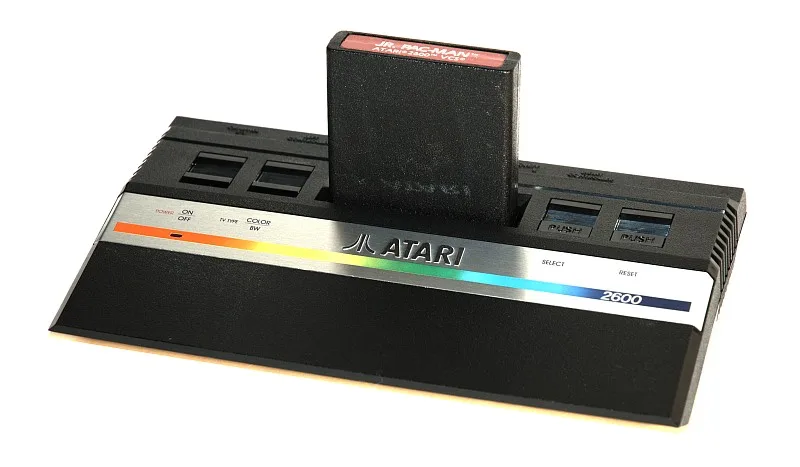
The project that put DeepMind on the map came from a handful of researchers led by Vlad Mnih, trained in reinforcement learning at Toronto and Alberta. The challenge was deliberately blunt: a single neural network, no game-specific code, raw pixels as input, and a score signal as the only feedback — could it learn to play any of the classic Atari 2600 library? The constraint forced a general solution rather than a tailored one, which was the point.
Why experience replay mattered
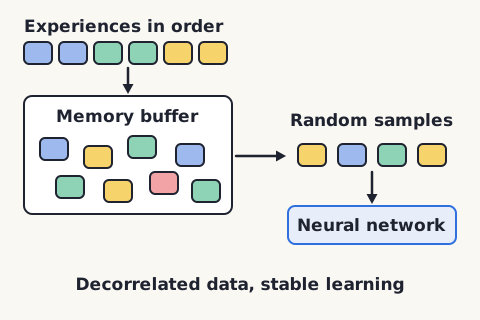
Deep Q-Networks (DQN) combined two existing ideas in a way that finally made deep reinforcement learning stable. The first was Q-learning — a technique in which an agent estimates the long-term expected reward of every possible action from every state, iteratively refining those estimates through play. The second was experience replay: storing past observations in a memory buffer and training the network on randomly sampled batches rather than consecutive moments of gameplay. Neural networks trained on sequential data tend to overfit to recent experience and forget earlier lessons; shuffling the buffer broke that correlation and gave the network something closer to independent, identically distributed training examples. That combination made deep RL reliable enough to be a research tool.
The day Pong clicked
On 7 July 2013 — the day of the Wimbledon men's final — the team watched the DQN agent begin to learn Pong from a blank slate. Hours in, the agent's paddle started tracking the ball. By evening it was defeating the built-in opponent consistently. Several people in the room reportedly wept. The moment was not just a demo; every subsequent DeepMind milestone — AlphaGo, AlphaFold, Gemini — traces its intellectual lineage through the architecture and confidence earned that afternoon.
Key terms
- DQN (Deep Q-Network)
- A reinforcement-learning architecture that pairs Q-learning — predicting the long-term value of each possible action — with a deep convolutional network that reads raw pixels. DQN, with experience replay for stable training, was DeepMind's first headline result and the model for everything that followed.
- Q-learning
- A reinforcement-learning algorithm in which an agent learns the expected long-term reward of taking each action from each state. The Q stands for the quality of an action — and the trick is iteratively updating the estimate as new rewards arrive.
- DeepMind
- DeepMind is the London AI lab Demis Hassabis co-founded in 2010 and Google acquired in 2014. DeepMind's stated mission is to solve intelligence and then use it to solve everything else.
Key concepts
Isaac Asimov
- A science-fiction author whose novel supplied DeepMind's first working name.
- The company was briefly called Solaria, borrowed from one of his books.
- This SF writer's work gave the startup its placeholder name before the founders settled on 'Deep' plus 'Mind.'
Larry Page
- A Google co-founder who had been watching DeepMind since 2012.
- He hosted the October 2012 Palo Alto dinner where the future of AI was argued.
- He countered Musk by insisting the species that built a superintelligence would be its natural heir.
Elon Musk
- A guest at Larry Page's 2012 Palo Alto dinner who clashed with the host over AI.
- He warned that a sufficiently advanced AI could become 'a digital god,' with no plan for the aftermath.
- Mallaby frames his split with Page that night as the seed of what became OpenAI.
Key facts
The name DeepMind
The company's first working name was Solaria, after the Asimov novel. Legg argued for something simpler. "Deep" pointed to deep learning, the technique they would bet on; "Mind" stated the goal. The name was registered in London in late 2010, the same year the company itself was founded.
The (largely silent) ethics board
As a condition of the Google deal, DeepMind insisted on an Ethics and Safety Review Board: external members who would have to be informed before any AGI-relevant breakthrough. In practice, Mallaby reports, the board met rarely and was eventually folded into Google's broader processes. It was a victory of optics over governance — but it set a template the industry has been arguing about ever since.
DeepMind's first investor
Peter Thiel's Founders Fund led DeepMind's earliest outside funding round — a notable irony, given Thiel's later public skepticism about unchecked AI development.
The Atari strike team
DeepMind's first publicly recognised milestone came from a tiny team led by Vlad Mnih, a Toronto-Alberta-trained reinforcement-learning specialist. The challenge: build a single neural network that could learn to play any of the classic Atari 2600 games from raw screen pixels and a score signal — no game-specific code.
Why experience replay mattered
Neural networks hate seeing highly correlated training examples in sequence — they overfit to whatever's in front of them. The DQN insight was to store the agent's experiences in a memory buffer and train the network on random samples from that buffer. This decorrelated the data and made deep RL stable enough to actually learn.
The day Pong clicked
On 7 July 2013 — Wimbledon final day — the team watched the DQN agent learn to play Pong from scratch. After a few hours, the bot started to put the paddle in the right place. By that evening it was beating the built-in opponent. Several engineers wept. The intellectual lineage to AlphaGo, AlphaFold and Gemini all run through that afternoon.
Google's $600M deal
Google's purchase of DeepMind is often quoted as roughly $600 million in US dollars — equivalent to about £400 million.
Atari's one-network rule
The Atari challenge imposed a deliberate constraint: a single network, no game-specific code, learning only from raw pixels and the score — forcing a general solution instead of a tailored one.
By the numbers
- Approximate price (£ million) Google paid for DeepMind in 2014
- 400 £ million
- Year the DeepMind name was registered
- 2010 year
- Year Google acquired DeepMind
- 2014 year
- Year DeepMind was founded
- 2010 year
- How many millions of US dollars Google paid for DeepMind
- 600 million USD
Matched pairs
Each item on the left goes with the one on the right.
- DeepMind's first working name
- Solaria, taken from the Asimov novel
- Where Musk warned AI could become a digital god
- At a dinner at Larry Page's home in October 2012
- Lead researcher on the Atari DQN agent
- Vlad Mnih
Self-test
Answer each question from memory, then check your work against the answer key.
1. What was DeepMind's first working name, before the founders settled on the name they kept?
- AFoundation
- BAurora
- CSolaria
- DTrantor
2. The company's original working name was borrowed from a novel by which author?
- AWilliam Gibson
- BArthur C. Clarke
- CPhilip K. Dick
- DIsaac Asimov
3. In what year was the DeepMind name registered?
- A2010
- B2014
- C2011
- D2012
4. Which founder pushed for a plainer name than the original working title?
- AVlad Mnih
- BShane Legg
- CMustafa Suleyman
- DDemis Hassabis
5. In the final name, what does the word "Deep" refer to?
- ADeep Blue, the chess computer that beat Kasparov
- BThe depth of the company's funding reserves
- CDeep learning, the neural-network approach they were betting on
- DDeep Q-Networks, the architecture they had already built
6. In which month and year did Google close its acquisition of DeepMind?
- AJanuary 2014
- BJuly 2013
- COctober 2012
- DJanuary 2011
7. Roughly how much did Google pay for DeepMind?
- A£4 billion
- B£40 million
- C£1.2 billion
- D£400 million
8. What record did Google's purchase of DeepMind set at the time?
- AThe largest sale of a British company to a US buyer
- BThe largest AI acquisition in European history
- CThe first AI lab ever bought by a technology company
- DThe largest acquisition Google had ever made
9. Which pair of Google leaders had been watching DeepMind since 2012, ahead of the deal?
- AEric Schmidt and Sundar Pichai
- BLarry Page and Eric Schmidt
- CSergey Brin and Sundar Pichai
- DLarry Page and Sergey Brin
10. Which statement about the DeepMind acquisition is NOT true?
- AThe lab had fewer than 100 employees
- BDeepMind was already profitable on strong revenue at the time of the deal
- CHassabis demanded an independent ethics board as a condition
- DIt was then the largest AI acquisition in European history
11. Which investor's fund led DeepMind's earliest outside funding?
- APeter Thiel's Founders Fund
- BMarc Andreessen's Andreessen Horowitz
- CSequoia Capital
- DElon Musk's personal investment
12. Mallaby treats the October 2012 clash between Musk and Page over advanced AI as planting the seed of which later organisation?
- AxAI
- BDeepMind's Ethics and Safety Review Board
- COpenAI
- DAnthropic
13. When Musk clashed with Page over advanced AI in October 2012, what phrase did he use for a sufficiently advanced AI?
- A"A digital god"
- B"A summoned demon"
- C"The last invention"
- D"An electric brain"
14. Where did the Musk–Page argument over advanced AI take place on 8 October 2012?
- AAt DeepMind's London office
- BAt a dinner at Larry Page's home in Palo Alto
- CAt a tech conference keynote in San Francisco
- DAt a Google board meeting in Mountain View
15. How did Page respond to Musk's warning that evening?
- AOnly Google could be trusted to build it safely
- BAdvanced AI was decades away and not worth worrying about
- CThe species that built such an intelligence would be its natural heirs
- DRegulation should be written before any lab went further
16. Why was experience replay key to making Deep Q-Networks learn stably?
- AIt slowed the learning rate so the network never overshot
- BIt let the network memorize game-specific rules for each Atari title
- CIt ran many agents in parallel and averaged their scores
- DIt stored past experiences in a buffer and trained on random samples, breaking the correlation between consecutive frames
17. Who led the small team behind DeepMind's Atari DQN agent?
- AVlad Mnih
- BMustafa Suleyman
- CShane Legg
- DDemis Hassabis
18. In Q-learning, what does an agent estimate?
- AHow closely its behaviour matches a human demonstrator's
- BThe probability that any given pixel changes next frame
- CThe long-term expected reward of each action from each state
- DThe shortest path from the current state to the goal state
19. What two components does a Deep Q-Network combine?
- AQ-learning with a hand-coded rules engine per Atari game
- BA language model with a search tree over future moves
- CSupervised learning on human play logs with a scoring heuristic
- DQ-learning with a deep convolutional network that reads raw pixels
20. What was the deliberate constraint on the Atari challenge?
- AAccess to the games' internal memory state rather than the screen
- BOne network, no game-specific code, learning from raw pixels and the score alone
- CLearning only by watching recordings of expert human players
- DA separate network tuned for each of the Atari 2600 titles
21. Which description best defines DeepMind?
- AA Toronto neural-network research group acquired by Microsoft in 2014
- BGoogle's internal deep-learning team, formed in Mountain View in 2011
- CThe London AI lab Demis Hassabis cofounded in 2010 and Google acquired in 2014
- DA Silicon Valley AI lab founded by Elon Musk as a nonprofit in 2015
22. Which city was DeepMind founded and based in?
- ALondon
- BMountain View
- CPalo Alto
- DToronto
23. How is DeepMind best described?
- AA US nonprofit Elon Musk founded to counter Google's AI lead
- BA Google-run research team formed in Mountain View before Hassabis joined
- CAn independent ethics board formed to review DeepMind's AGI work
- DThe London AI lab Hassabis cofounded in 2010, later bought by Google
24. A profile describes "the London lab behind AlphaGo and AlphaFold, now owned by Google." Which organisation is that?
- AMeta AI (FAIR)
- BDeepMind
- CGoogle Brain
- DOpenAI
25. Which pairing of years correctly matches DeepMind's founding and its acquisition by Google?
- AFounded 2012, acquired 2014
- BFounded 2010, acquired 2014
- CFounded 2011, acquired 2012
- DFounded 2010, acquired 2011
Go deeper
- ReadThe Infinity Machine by Sebastian Mallaby · on Amazon ↗
- StudyThe Infinity Machine (book) in the FlashFeed app
These are affiliate links: if you buy a book through one, FlashFeed may earn a small commission at no extra cost to you. The commission helps pay for FlashFeed's servers.
As an Amazon Associate we earn from qualifying purchases.
Answer key
- 1. C SolariaThe first working name was Solaria, borrowed from an Isaac Asimov novel. Trantor and Foundation also come from Asimov's fiction, which makes them tempting — but Solaria is the name the founders actually used.
- 2. D Isaac AsimovSolaria comes from an Isaac Asimov novel. Clarke, Dick and Gibson are all plausible science-fiction sources, but Asimov is the actual source.
- 3. A 2010The name was registered in late 2010, the same year the London company was founded — there was no separate 2011 filing. 2012 is when Page and Brin began watching the lab, and 2014 is the Google acquisition.
- 4. B Shane LeggShane Legg argued for something simpler than Solaria. Hassabis and Suleyman are cofounders too, but the credit goes to Legg; Mnih was a researcher who later led the Atari DQN work.
- 5. C Deep learning, the neural-network approach they were betting on"Deep" nodded to deep learning; "Mind" declared the destination. DQN is tempting but came years later — the name was registered in 2010, before they had any product.
- 6. A January 2014Google closed the deal in January 2014. October 2012 is the Musk–Page dinner and July 2013 is the day the DQN agent learned Pong — both real dates, but neither is the acquisition.
- 7. D £400 millionThe price was roughly £400 million (about $600 million) — then the largest AI acquisition in European history. The other figures are off by an order of magnitude or more.
- 8. B The largest AI acquisition in European historyAt the time, the purchase was the largest AI acquisition in European history. It is not claimed to be any of the other records: not Google's biggest deal ever, not the largest UK sale to a US buyer, not the first AI lab bought by a technology company.
- 9. D Larry Page and Sergey BrinGoogle's cofounders Larry Page and Sergey Brin were the ones circling DeepMind from 2012. Schmidt and Pichai were Google executives but are not credited with that.
- 10. B DeepMind was already profitable on strong revenue at the time of the dealDeepMind had no revenue at all when Google bought it — that was what made the price striking. The other three statements are all accurate.
- 11. A Peter Thiel's Founders FundPeter Thiel's Founders Fund led DeepMind's earliest outside funding — a notable irony given Thiel's later public skepticism about unchecked AI. Google acquired the lab in January 2014 for roughly £400 million.
- 12. C OpenAIMallaby frames that night as the moment the informal Google–Musk alignment cracked, seeding what became OpenAI. The ethics board came out of the Google deal instead, and Anthropic and xAI came years later.
- 13. A "A digital god"Musk warned that advanced AI could become "a digital god" and that humanity had no plan for what follows. The other phrases are plausible AI-doom rhetoric but not the one he used in that clash.
- 14. B At a dinner at Larry Page's home in Palo AltoThe exchange happened at a dinner at Larry Page's Palo Alto home on 8 October 2012 — the informal setting is part of why Mallaby treats the night as a turning point.
- 15. C The species that built such an intelligence would be its natural heirsPage argued that a machine intelligence built by humanity would be its rightful heir — a succession, not a threat. Mallaby frames this clash as the seed of what became OpenAI.
- 16. D It stored past experiences in a buffer and trained on random samples, breaking the correlation between consecutive framesNetworks trained on sequential frames overfit to recent play and forget earlier lessons. Storing experiences and sampling random batches decorrelated the data — closer to independent, identically distributed examples — making deep reinforcement learning reliable.
- 17. A Vlad MnihVlad Mnih, trained in reinforcement learning at Toronto and Alberta, led the Atari strike team. Legg, Hassabis and Suleyman are cofounders of the lab, not the leads on this project.
- 18. C The long-term expected reward of each action from each stateQ-learning estimates the long-term expected reward (the "quality") of every action from every state, refining those estimates through play. Matching a human demonstrator describes imitation learning instead.
- 19. D Q-learning with a deep convolutional network that reads raw pixelsDQN pairs Q-learning with a deep convolutional network reading raw pixels — and adds experience replay for stability. Game-specific hand-coded rules are exactly what the Atari challenge forbade.
- 20. B One network, no game-specific code, learning from raw pixels and the score aloneThe constraint — one network, raw pixels, score as the only feedback, no game-specific code — forced a general solution rather than a tailored one, which was the whole point.
- 21. C The London AI lab Demis Hassabis cofounded in 2010 and Google acquired in 2014DeepMind is the London lab Hassabis cofounded in 2010 and Google bought in 2014. The Musk nonprofit describes OpenAI — a different organisation that traces back to a 2012 dinner.
- 22. A LondonDeepMind is a London company — the acquisition was the largest AI deal in European history. Palo Alto hosted the Musk–Page dinner, and Toronto is where Vlad Mnih trained.
- 23. D The London AI lab Hassabis cofounded in 2010, later bought by GoogleDeepMind is the London AI lab Hassabis cofounded in 2010 and that Google acquired in January 2014. The nonprofit description matches OpenAI instead, and the ethics board was a separate condition of the Google deal, not the company itself.
- 24. B DeepMindAlphaGo and AlphaFold are DeepMind milestones, and the London base plus Google ownership pins it down. Google Brain was a separate, US-based Google team; OpenAI and Meta AI are neither London-based nor Google-owned.
- 25. B Founded 2010, acquired 2014Founded in 2010 and acquired by Google in January 2014. 2011 and 2012 are both distractor years — 2012 is when Page and Brin started watching the lab — and match neither the founding nor the acquisition.
Image credits
- Why experience replay mattered: FlashFeed original diagram · CC-BY-4.0
- Atari's one-network rule: User Balou on en.wikipedia · CC BY 2.0 — commons.wikimedia.org/wiki/File:Atari2600jr.jpg
