
Investing 201 study guide · Lesson 1 of 17
A Brief History of Markets
Birth of American markets · The Nasdaq and electronic trading · The great crashes
This is the lesson's study guide from the FlashFeed app, plus its key facts and a self-test.
What you'll be able to do
- Identify the founding milestones and firsts of early American stock exchanges.
- Explain what the Nasdaq is and its role as the first electronic stock market.
- Recount the dot-com bubble's peak and the scale of its collapse.
- State how large and how fast the Black Monday 1987 and COVID-19 crashes were.
Birth of American markets
American capital markets didn't emerge fully formed — they grew from a handshake under a tree into the most liquid markets on earth. Understanding that origin helps explain why the rules, names, and addresses still look the way they do.
The Buttonwood Agreement
On May 17, 1792, twenty-four brokers and merchants gathered outside 68 Wall Street and signed the Buttonwood Agreement, named, by tradition, for the sycamore tree under which they regularly traded. The pact was simple: members would deal securities only with each other and charge a fixed commission of 0.25%. That cartel structure gave early markets stability at the cost of competition — a trade-off regulators still debate. The document is considered the formal founding charter of what became the New York Stock Exchange (NYSE).
America's first stock exchange
The Philadelphia Stock Exchange, originally called the Board of Brokers of Philadelphia, was chartered in 1790 — two years before Buttonwood. It was the country's first organized securities market, serving as a conduit for early government bonds and financing the westward expansion of the young republic. Most people assume the NYSE came first; the Philadelphia exchange's priority is one of the more reliable trivia upsets in financial history.
From Buttonwood to the NYSE
The informal Buttonwood coalition formalized in 1817 as the New York Stock & Exchange Board, renting rooms at 40 Wall Street and adopting written rules. The name was shortened to the New York Stock Exchange in 1863. The first listed company was the Bank of New York. By market capitalization the NYSE was long the world's largest stock exchange, though Nasdaq overtook it in 2025 and holds the larger figure as of 2026.
Why it's called Wall Street
The phrase traces to an actual fortification. In 1653, Dutch colonists under Peter Stuyvesant constructed a 12-foot wooden wall across the southern tip of Manhattan to defend New Amsterdam from English and Native American incursion. The wall was demolished by 1699, but the street that ran along it kept the name. Brokers later congregated along that same corridor, and "Wall Street" eventually became a metonym for American finance.
The Nasdaq and electronic trading
Before the Nasdaq, buying a stock meant calling a human intermediary who called another human. The exchange that changed that was not built on a trading floor — it was built on a phone line and a computer screen.
The first electronic stock market
On February 8, 1971, the National Association of Securities Dealers launched the Nasdaq — National Association of Securities Dealers Automated Quotations — the world's first electronic stock market. Its initial function was not to execute trades but to broadcast real-time bid/ask quotes from market makers to dealers across the country, replacing a laborious paper-based system. Over 2,400 securities were quoted at launch. Floor traders dismissed the system as a "black box," but the transparency it created immediately began compressing spreads.
A market for young companies
By 1975 the Nasdaq began listing venture-backed companies that could not meet the New York Stock Exchange's (NYSE) stricter requirements. That decision gave early-stage businesses a route to public capital, even before they were profitable. In 1998 the Nasdaq became the first U.S. exchange to offer online trading. The Nasdaq Composite index — a broad measure of its listed stocks — peaked in March 2000 before the dot-com collapse erased nearly 80% of its value over the following two and a half years.
Home of the tech giants
As of 2026, the Nasdaq is the world's largest exchange by market capitalization, having overtaken the NYSE in 2025 as AI-driven gains concentrated market value in its mega-cap tech listings — a ranking that can shift again as valuations move. Apple, Microsoft, Amazon, Nvidia, and Meta all list primarily on the Nasdaq. Its concentration in technology and growth companies means its performance often diverges sharply from the Dow or S&P 500 during sector rotations — a fact investors in index funds should understand before assuming all benchmarks move together.
The great crashes
Markets have crashed roughly once per generation. Each crash is different in cause; they are similar in consequence — panic, new regulation, and a cohort of investors who never fully return. Knowing the pattern does not make the next one comfortable, but it does make it legible.
The Crash of 1929
On October 28–29, 1929, the Dow Jones lost about 23% in two days. The collapse was preceded by years of speculative excess: brokers extended margin loans covering up to 90% of a stock's price, and industrial overproduction had already weakened the underlying economy. The market ultimately shed ~90% of its value and took 25 years to fully recover. The immediate political response was the Securities Exchange Act of 1934, which created the Securities and Exchange Commission (SEC) to oversee markets and prevent the fraud and manipulation that had run unchecked through the 1920s.
Black Monday, 1987
On October 19, 1987, the Dow fell 22.6% in a single session — still the largest one-day percentage decline in U.S. market history. No single economic trigger was identified; portfolio insurance programs that automatically sold futures as prices fell amplified the decline, creating a self-reinforcing cascade. The episode prompted regulators to introduce circuit breakers: automatic trading halts triggered when indices fall beyond set thresholds intraday, giving humans time to assess before machines make the situation worse.
The Dot-Com Bubble
Investor confidence in internet business models — many of which had no revenue and no credible path to profit — inflated the Nasdaq throughout the late 1990s. The Nasdaq Composite peaked in March 2000 and then lost nearly 80% of its value through late 2002. The crash wiped out hundreds of companies. Those that survived — Amazon, eventually Google — emerged with durable competitive positions and more disciplined capital allocation than the froth of the bubble had required.
The 2008 Financial Crisis
Subprime mortgages were repackaged into complex derivatives and sold globally, spreading risk far beyond where it was understood. When U.S. housing prices fell, the structures collapsed. Lehman Brothers failed in September 2008 — the largest bankruptcy in U.S. history — and the Dow ultimately dropped more than 50% from peak to trough. Congress responded with the Dodd-Frank Act, imposing new capital requirements and oversight on systemically important financial institutions.
The COVID-19 Crash
From February to March 2020, the S&P 500 fell 34% in 33 days — the fastest bear market on record through 2026. The Federal Reserve cut rates to near zero, Congress passed the Coronavirus Aid, Relief, and Economic Security (CARES) Act, and the combination of monetary and fiscal stimulus drove a recovery so swift it confused nearly every forecaster: the S&P 500 hit new all-time highs within five months of the bottom.
Key terms
- NASDAQ
- National Association of Securities Dealers Automated Quotations, the world's first electronic stock market, built to broadcast dealer quotes rather than run a trading floor.
Key concepts
Philadelphia Stock Exchange
- Chartered in 1790, this was the country's first organized securities market.
- Originally called the Board of Brokers, it financed the westward expansion of the young republic through early government bonds.
- Predating the Buttonwood Agreement by two years, it beat the New York institution for the title of the nation's first — a reliable trivia upset.
New York Stock Exchange
- By market capitalization, it has long reigned as the world's largest securities marketplace.
- It grew out of the 1792 Buttonwood Agreement, formalizing in 1817 as a board that rented rooms at 40 Wall Street.
- Formalized indoors and shortened to its familiar name in 1863, it is the older, larger rival of the Nasdaq.
Wall Street
- This lower-Manhattan corridor eventually became a metonym for American finance.
- Its name traces to a 12-foot wooden fortification Dutch colonists erected across southern Manhattan in 1653 to defend New Amsterdam.
- Though that Dutch barrier was demolished by 1699, the roadway beside it kept the name and became shorthand for American finance.
Nasdaq
- Launched in 1971, this was the world's first electronic stock market.
- Its founders were an industry body of broker-dealers; it began by broadcasting real-time bid and ask prices from market makers nationwide instead of executing trades.
- Home to Apple, Microsoft, and Nvidia, this exchange saw its Composite index shed nearly 80% after peaking in March 2000.
Key facts
From Buttonwood to the NYSE
By 1817 the informal Buttonwood group formalized into the New York Stock & Exchange Board, renting rooms at 40 Wall Street. The name was shortened to the New York Stock Exchange (NYSE) in 1863. The first listed company was the Bank of New York. The NYSE was long the world's largest stock exchange by market capitalization, but the Nasdaq overtook it in 2025; as of 2026 the NYSE ranks second.
New York Stock Exchange's (NYSE) first-ever listing
The Bank of New York was the very first company ever listed on the New York Stock Exchange.
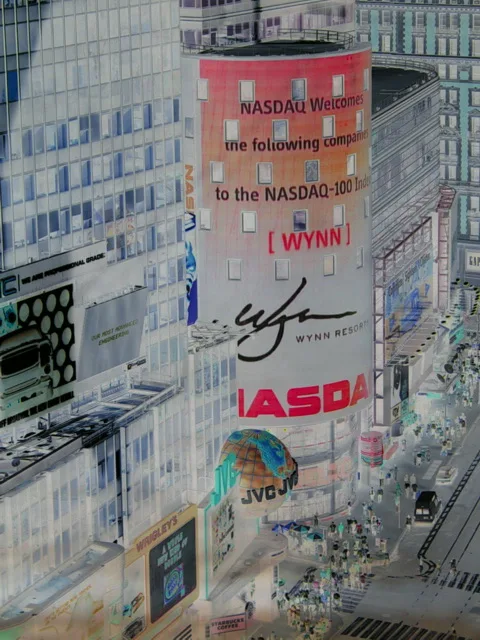
A market for young companies
Skeptical floor traders nicknamed the Nasdaq's system the 'black box,' but its transparency narrowed bid-ask spreads and boosted volume. By 1975 it began listing venture-backed companies, giving early-stage businesses a route to public capital. In 1998 it became the first U.S. exchange to offer online trading.

Nasdaq's dot-com plunge
After peaking in March 2000, the Nasdaq Composite lost nearly 80% of its value over the next two and a half years as the dot-com bubble burst.
What NASDAQ stands for
NASDAQ is an acronym for the National Association of Securities Dealers Automated Quotations — the full name behind the familiar six letters.
The Dot-Com Bubble
Investors poured capital into internet companies with no profits or viable business models. The tech-heavy Nasdaq lost nearly 80% of its value between March 2000 and late 2002. Survivors like Amazon and Google emerged from the wreckage far stronger than before.
The 2008 Financial Crisis
Rooted in risky subprime mortgages packaged and sold globally as complex derivatives, the 2008 crisis erupted when the housing bubble collapsed. Lehman Brothers failed in the largest bankruptcy in U.S. history, and the Dow fell over 50%. The fallout produced the Dodd-Frank Act and sweeping new banking rules.
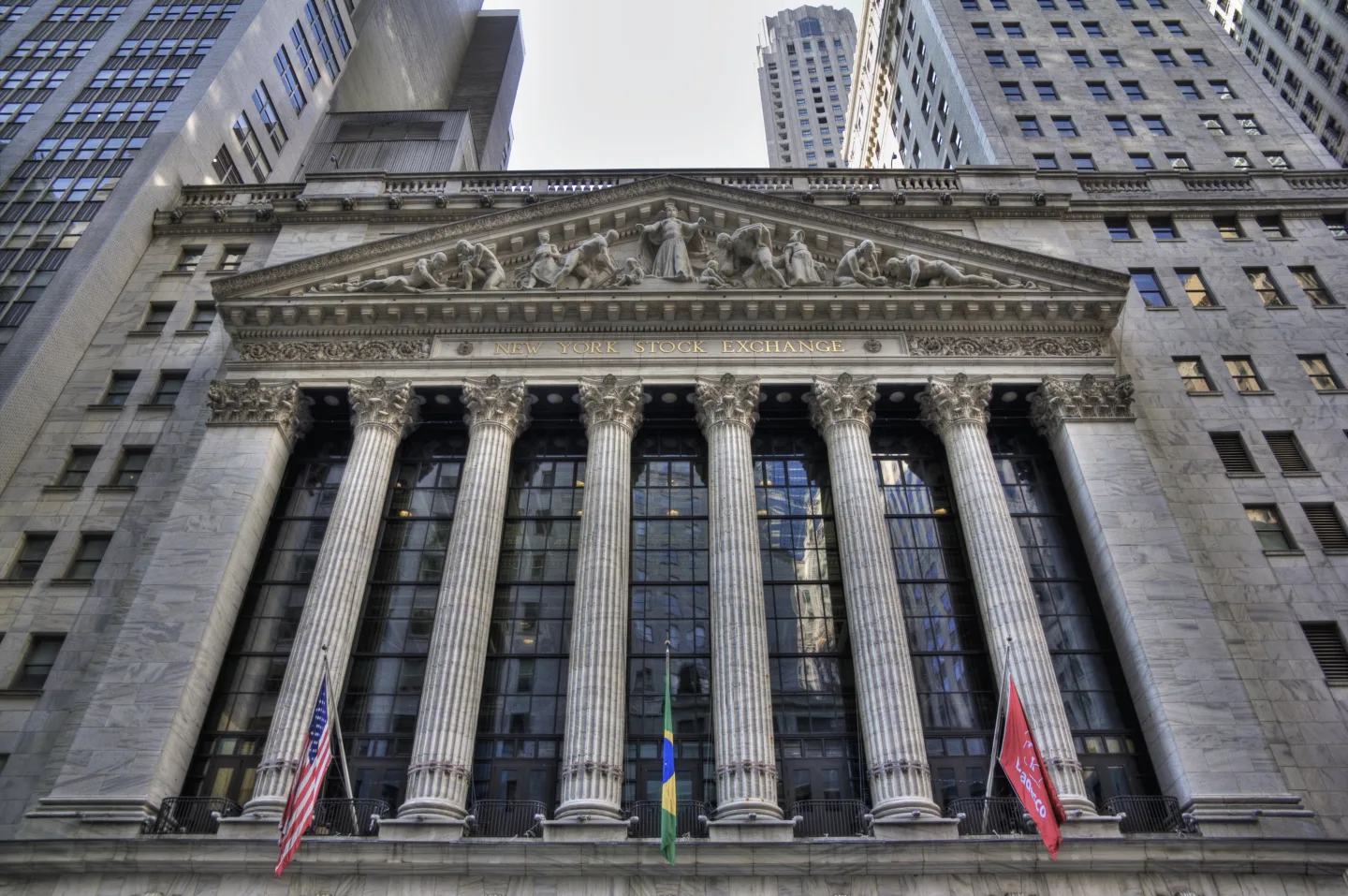
The COVID-19 Crash
The fastest bear market in history: the S&P 500 fell 34% in just 33 days in early 2020. An unprecedented government stimulus response drove a shocking recovery, with the market hitting new highs in just five months.
By the numbers
- In what year was the Buttonwood Agreement signed?
- 1792 year
- In what year was the Philadelphia Stock Exchange founded?
- 1790 year
- In what year was the Nasdaq founded?
- 1971 year
- In what year did the Nasdaq Composite peak before the dot-com bust?
- 2000 year
- How much did the Dow fall in a single day on Black Monday 1987 (percent)?
- 22.6 %
- How many days did it take the S&P 500 to fall 34% in the 2020 COVID crash?
- 33 days
Matched pairs
Each item on the left goes with the one on the right.
- First company listed on the New York Stock Exchange (NYSE)
- The Bank of New York
- Origin of the name Wall Street
- A 12-foot wooden wall Dutch settlers built in 1653
Self-test
Answer each question from memory, then check your work against the answer key.
1. Which was America's first stock exchange?
- ABoston (1834)
- BPhiladelphia (1790)
- CNasdaq (1971)
- DNew York Stock Exchange (NYSE) (1792)
2. In what year did twenty-four brokers sign the Buttonwood Agreement outside 68 Wall Street?
- A1790
- B1817
- C1863
- D1792
3. Which company was the first ever listed on the New York Stock Exchange?
- ABank of America
- BThe First Bank of the United States
- CThe Bank of New York
- DThe Philadelphia National Bank
4. Where does the name 'Wall Street' come from?
- AA 12-foot wooden wall Dutch settlers built in 1653
- BA stone wall marking the NYSE's original property line
- CA wall of stock certificates posted for public viewing
- DThe surname of the exchange's founding broker
5. Which statement about the Buttonwood Agreement is NOT true?
- AThe brokers signed it under an oak tree at 40 Wall Street
- BThe group formalized in 1817 as the New York Stock & Exchange Board
- CThe signers pledged a fixed commission of 0.25%
- DTwenty-four brokers and merchants signed it outside 68 Wall Street
6. What does the acronym NASDAQ stand for?
- ANational Association of Stock Dealers Asset Quotations
- BNational Association of Securities Dealers Automated Quotations
- CNational Automated Securities Dealing and Quotation
- DNew American Stock Dealers Automated Quotations
7. In what year was the Nasdaq launched as the world's first electronic stock market?
- A1975
- B1998
- C1963
- D1971
8. What was the Nasdaq's original function at its 1971 launch?
- AAutomatically match and execute buy and sell orders
- BProvide margin loans to retail investors
- CBroadcast real-time bid/ask quotes from market makers to dealers
- DReplace the SEC as the market's regulator
9. As of 2026, where does the Nasdaq rank among the world's exchanges by market capitalization?
- ASecond-largest, behind the NYSE
- BFifth-largest globally
- CLargest in the world
- DThird-largest, behind the New York Stock Exchange and Tokyo
10. Which statement about the Nasdaq is NOT true?
- AThe NYSE beat it to market by offering online trading first
- BApple, Microsoft, and Nvidia list primarily on it
- CBy 1975 it listed venture-backed companies that could not meet the NYSE's requirements
- DSkeptical floor traders nicknamed its system the 'black box'
11. After peaking in March 2000, roughly how much of its value did the Nasdaq Composite lose during the dot-com collapse over the following two and a half years?
- ARoughly 50%
- BNearly 95%
- CAbout 20%
- DNearly 80%
12. What is the Nasdaq Composite, the index at the center of the dot-com collapse?
- AA benchmark of 500 large-cap U.S. companies across all exchanges
- BA broad measure of the stocks listed on the Nasdaq
- CAn index of the 30 largest U.S. industrial companies
- DA live feed of bid/ask quotes from Nasdaq market makers
13. What fueled the dot-com bubble that inflated the Nasdaq in the late 1990s?
- AThe Nasdaq's heavy concentration in technology and growth stocks
- BSpeculation on margin loans covering most of a stock's price
- CConfidence in internet companies with no revenue or path to profit
- DThe Nasdaq's 1998 introduction of online trading
14. Which companies survived the dot-com crash and emerged far stronger?
- AAmazon and Google
- BEnron and WorldCom
- CLehman Brothers and Bear Stearns
- DPets.com and Webvan
15. Which statement about the dot-com collapse is NOT true?
- AThe collapse dragged on into late 2002
- BThe crash wiped out hundreds of internet companies
- CThe Nasdaq Composite peaked in March 2000
- DThe Nasdaq regained its March 2000 peak within two years
16. How far did the Dow fall in a single session on Black Monday, October 19, 1987?
- A50%
- B22.6%
- C12.8%
- D34%
17. Which crash still holds the record (as of 2026) as the fastest bear market ever recorded?
- AThe 2008 financial crisis
- BBlack Monday of 1987
- CThe Crash of 1929
- DThe COVID-19 crash of 2020
18. How far did the S&P 500 fall in the 2020 COVID-19 crash, and how fast?
- AAbout 23% over two days
- B34% in 33 days
- C22.6% in a single day
- DNearly 80% from 2000 to 2002
19. As of 2026, which U.S. market record does Black Monday (October 19, 1987) still hold?
- ALongest recovery from a crash
- BLargest peak-to-trough drop
- CLargest one-day percentage drop
- DFastest bear market
20. After the 2020 bottom, how quickly did the S&P 500 reach new all-time highs?
- AWithin five months
- BWithin a decade
- CWithin 25 years
- DWithin two years
Go deeper
- WatchA Wall, a Tree, a Rival Wall Street is named for a real wall. In 1653, Dutch colonists built a 12-foot wooden wall across lower Manhattan.
- WatchThe Nasdaq's Firsts In 1971, the Nasdaq opened as the world's first fully electronic stock market.
- WatchCrashes Write the Rules In 1929, the Dow lost nearly 25% in two days. Then came the SEC, in 1934.
- StudyInvesting 201 in the FlashFeed app
Answer key
- 1. B Philadelphia (1790)The Philadelphia Stock Exchange was founded in 1790, two years before the NYSE's Buttonwood Agreement.
- 2. D 1792The Buttonwood Agreement was signed May 17, 1792. 1790 is Philadelphia's founding, 1817 is when the group formalized, and 1863 is when the name New York Stock Exchange (NYSE) was adopted.
- 3. C The Bank of New YorkThe Bank of New York was the first company listed on the New York Stock Exchange (NYSE). The others are plausible early-bank names but not the first listing.
- 4. A A 12-foot wooden wall Dutch settlers built in 1653In 1653 Dutch colonists built a 12-foot wooden wall across lower Manhattan for defense; brokers later gathered along that corridor and the name stuck.
- 5. A The brokers signed it under an oak tree at 40 Wall StreetThe brokers signed outside 68 Wall Street, by tradition under a buttonwood (sycamore) tree, not an oak; 40 Wall Street is where the group rented rooms in 1817. The other three statements are accurate.
- 6. B National Association of Securities Dealers Automated QuotationsNASDAQ stands for National Association of Securities Dealers Automated Quotations. The other options rearrange or invent words not in the real name.
- 7. D 1971The Nasdaq launched February 8, 1971. 1975 is when it began listing venture-backed firms, and 1998 is when it added online trading.
- 8. C Broadcast real-time bid/ask quotes from market makers to dealersThe Nasdaq initially transmitted real-time bid/ask quotes to dealers nationwide rather than executing trades, replacing a paper-based system.
- 9. C Largest in the worldAs of 2026, the Nasdaq is the world's largest exchange by market capitalization, having overtaken the NYSE in 2025; the NYSE is now second.
- 10. A The NYSE beat it to market by offering online trading firstThe Nasdaq itself was the first U.S. exchange to offer online trading, in 1998 — the NYSE did not beat it. The other three statements are accurate.
- 11. D Nearly 80%The Nasdaq Composite peaked in March 2000, then lost nearly 80% of its value over the next two and a half years as the dot-com bubble burst.
- 12. B A broad measure of the stocks listed on the NasdaqThe Nasdaq Composite is a broad measure of Nasdaq-listed stocks. The 30-industrials description is the Dow and the 500 large-caps is the S&P 500.
- 13. C Confidence in internet companies with no revenue or path to profitThe bubble grew from investor confidence in internet business models that had no revenue or credible path to profit. Subprime and portfolio insurance drove other crashes.
- 14. A Amazon and GoogleAmazon and (eventually) Google survived the bust with durable competitive positions. Pets.com and Webvan were casualties; the others failed for unrelated reasons.
- 15. D The Nasdaq regained its March 2000 peak within two yearsThe Nasdaq kept falling into late 2002 and did not reclaim its March 2000 peak for many years. The other three statements match the record.
- 16. B 22.6%The Dow fell 22.6% on Black Monday 1987 — still the largest one-day percentage decline in U.S. history. 34% was COVID's decline and 50%+ was 2008's peak-to-trough drop.
- 17. D The COVID-19 crash of 2020In 2020 the S&P 500 fell 34% in just 33 days, the fastest bear market on record through 2026. Black Monday 1987 holds a different record: the largest one-day percentage drop in U.S. stock market history.
- 18. B 34% in 33 daysThe S&P 500 fell 34% in 33 days in early 2020, the fastest bear market on record through 2026. 22.6% in one day was Black Monday 1987, about 23% over two days was October 1929, and nearly 80% was the Nasdaq's fall after the dot-com peak.
- 19. C Largest one-day percentage dropOn October 19, 1987, the Dow fell 22.6% in a single session, still the largest one-day percentage decline in U.S. market history. The fastest bear market was the 2020 COVID-19 crash (34% in 33 days), and the 1929 market lost about 90% and took 25 years to recover.
- 20. A Within five monthsMonetary and fiscal stimulus drove a recovery so swift the S&P 500 hit new all-time highs within five months of the bottom. The 25-year figure belongs to the 1929 crash.
Sources
- Voronoi — NASDAQ Market Capitalization Overtakes NYSE in 2025 — www.voronoiapp.com/markets/-NASDAQ-Market-Capitalization-Overtakes-NYSE-in-2025-3281
- Wikipedia — Nasdaq — en.wikipedia.org/wiki/Nasdaq
Image credits
- A market for young companies: Wikimedia Commons · Tim Notari · CC BY-SA 2.0 — commons.wikimedia.org/wiki/File:Nasdaq_5.jpg
- Nasdaq's dot-com plunge: Wikimedia Commons · Zef Nikolla · CC BY-SA 4.0 — commons.wikimedia.org/wiki/File:Times_Square_Nasdaq_Closing_Bell_Ceremony_2013_Berenberg.JPG
- The COVID-19 Crash: Wikimedia Commons · TomasEE · CC BY 3.0 — commons.wikimedia.org/wiki/File:New_York_Stock_Exchange_-_panoramio_(2).jpg


