
Mythology: Greek, Norse & Egyptian study guide · Lesson 14 of 15
Death, Judgment, and Renewal
Personhood Across Changing Funerary Corpora · Judgment and Renewed Life
This is the lesson's study guide from the FlashFeed app, plus its key facts and a self-test.
What you'll be able to do
- Distinguish Egyptian models of personhood and compare Pyramid Texts, Coffin Texts, and Book of the Dead by period, medium, reuse, and variation.
- Interpret heart-weighing and justification without importing Christian heaven/hell.
Personhood Across Changing Funerary Corpora
Personhood Across Changing Funerary Corpora
Translating ancient Egyptian ideas about a person with the single word soul hides important distinctions. Mortuary thought could treat the body, name, heart, shadow, ka, and ba as interdependent components. The point is not that a person was a checklist of detachable objects. It is that continued existence depended on relationships among aspects that English vocabulary does not reproduce exactly.
The ka can be introduced cautiously as a life-sustaining force connected with nourishment and offerings. This is a teaching gloss, not a complete equivalent. The ba involves individuality, power, mobility, and movement between realms. Describing the ba as merely “personality” or the ka as simply a ghost removes the functions that make each term distinct.
The akh adds another important category. It can describe a transfigured dead being able to act effectively. It is not the result of a simple formula in which ka plus ba automatically equals akh. Transformation required more than recombining two vocabulary terms.
These concepts should be handled with the same care given to human remains and mortuary objects. They concern hopes for continued personhood, effective transformation, and social connection. A useful English explanation can orient the learner, but it must keep the original terms visible and avoid pretending that one modern category fully contains them.
Egyptian funerary writing survives in several changing corpora, meaning bodies of texts grouped by modern scholars. The names are convenient, but they should not suggest three authorized editions of a single sacred book.
The Pyramid Texts are formulae first surviving on the walls of late Old Kingdom royal pyramids. “Pyramid Texts” is a modern label for that material and its transmission. The Coffin Texts are Middle Kingdom funerary compositions found especially on coffins and burial chambers. They reuse and transmit some earlier material, but they are not merely volume two of the Pyramid Texts.
The Book of the Dead is also a modern label. It refers to a variable repertoire from which selections were made for individual manuscripts. Not every manuscript contains every composition, and variation is expected. The three corpora overlap, reuse material, and differ in period and medium; they are not successive editions of one Egyptian Bible.
This history also warns against a too-simple story of the “democratization of the afterlife.” Changes in where texts appear matter, but the surviving record is shaped by elite burial, preservation, and excavation. Medium and access changed without giving us a complete census of what every social group believed. The safest comparison asks what survives, where, and for whom before drawing a larger social conclusion.
Judgment and Renewed Life
The famous weighing scene belongs within a broader process of postmortem judgment. In familiar examples, the heart—linked with thought, memory, and character—is assessed against maat. Anubis tends the balance, Thoth records, and Osiris presides. Book of the Dead 125 supplies the best-known version of this scene, but it is not the whole Egyptian system of death and renewal.
The aim of judgment is justification and renewed existence. Maat is not simply the literal weight of a feather, and the scene should not be reduced to a modern courtroom diagram. It expresses assessment of the deceased within a mortuary framework that also depends on bodily, social, and ritual transformation.
Failure does not map neatly onto eternal torture in a Christian hell. The approved evidence allows exclusion or a second death as possible formulations. Success enables renewed social, bodily, and ritual existence. The contrast is therefore between effective continuation and failed transformation, not between borrowed modern categories of heaven and hell.
Nor did funerary compositions make conduct irrelevant. Judgment and ritual preparation work together in the surviving evidence; neither cancels the other. Treating the texts as magic passwords or the weighing scene as a complete moral system oversimplifies both. Careful reading keeps the particular corpus, scene, and hoped-for outcome distinct while showing how they participate in a larger concern with renewal.
A useful way to read the familiar scene is as a sequence of questions. What is assessed? The heart, with its links to thought, memory, and character. Against what standard? Maat. Who does what? Anubis tends the balance, Thoth records, and Osiris presides. Which witness makes this arrangement especially familiar? Book of the Dead 125. Naming those functions turns a famous image into an intelligible process rather than a lineup of divine symbols.
The last question is about outcome. Successful judgment leads toward justification and renewed existence; failure may be formulated as exclusion or second death. This is where a heaven-and-hell translation causes the greatest distortion, because it changes both the hoped-for continuation and the form of failure. The scene belongs within the changing mortuary corpora described above, so its modern fame should not promote it into a timeless summary of every Egyptian account of death.
Sources
Key terms
- akh
- A transfigured or efficacious dead being, not a simple formula produced by combining ka and ba.
- Book of the Dead
- A modern label for a variable repertoire of funerary compositions selected for individual manuscripts, not one fixed authorized book.
- justification
- A successful outcome of postmortem judgment that enables renewed existence rather than condemnation to eternal torture.
Key facts
More Than One Soul
Egyptian mortuary thought treats body, name, heart, shadow, ka, and ba as interdependent components; translating them all as soul erases distinctions.
Ka and Ba Are Distinct
Ka is a cautious teaching gloss for a life-sustaining force linked to nourishment and offerings, while ba involves individuality, power, mobility, and movement between realms.
Akh Is Not a Formula
Akh can describe a transfigured or efficacious dead being; it is not simply the result of adding ka and ba together.
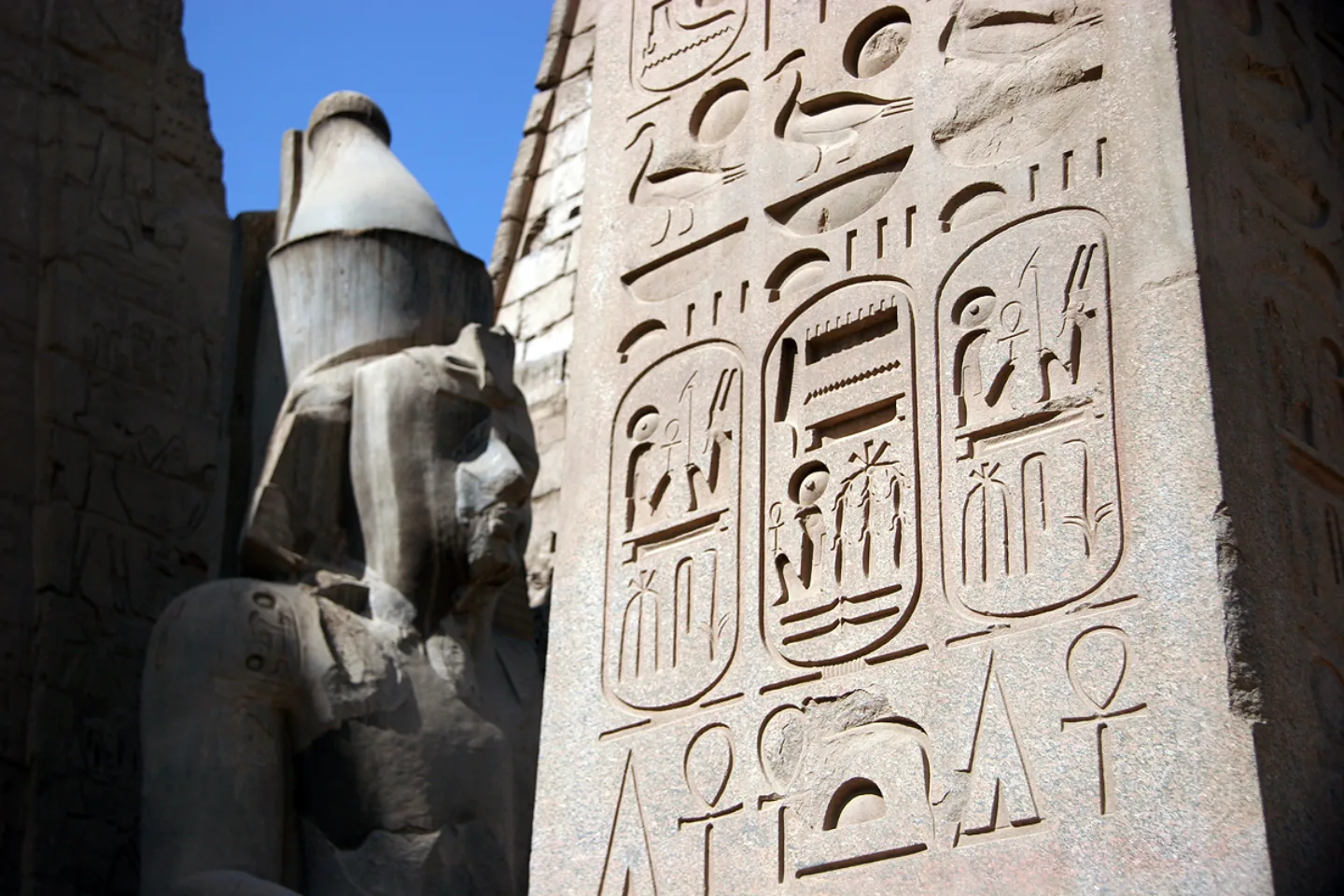
Pyramid Texts
Pyramid Texts is a modern label for formulae first surviving on the walls of late Old Kingdom royal pyramids.
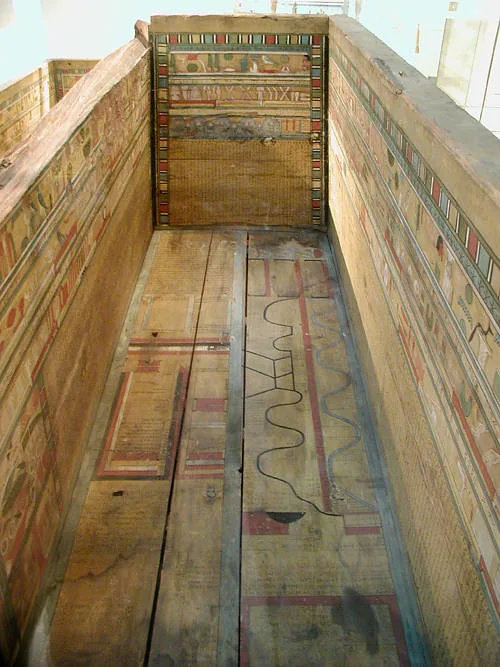
Coffin Texts
Coffin Texts is a modern label for Middle Kingdom funerary compositions found especially on coffins and burial chambers, including reused and transmitted material.
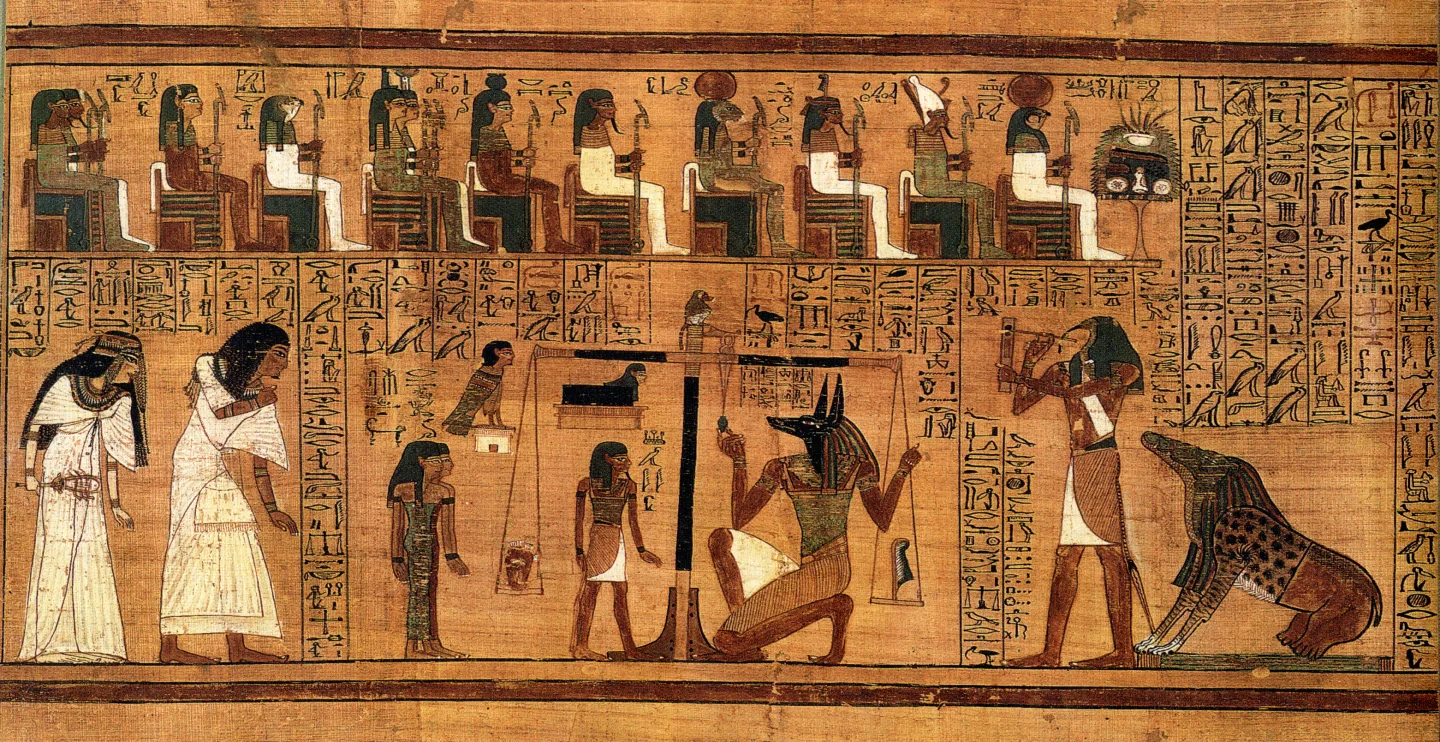
Book of the Dead
Book of the Dead is a modern label for a variable repertoire selected for individual manuscripts; the three corpora overlap but are not successive editions of one book.
Judgment and Justification
Postmortem judgment is a route to justification and renewed existence; Book of the Dead 125 supplies the best-known weighing scene but not the whole system.
The Familiar Weighing Scene
The heart, linked with thought, memory, and character, is assessed against maat; Anubis tends the balance, Thoth records, and Osiris presides in familiar examples.
Renewal, Not Eternal Torture
Failure can mean exclusion or second death rather than eternal torture in a Christian hell, while success enables renewed social, bodily, and ritual existence.
Matched pairs
Each item on the left goes with the one on the right.
- Ka / ba
- Nourishment-linked life force / mobile individuality and power
- Pyramid Texts
- Formulae first surviving on late Old Kingdom royal pyramid walls
- Anubis / Thoth / Osiris
- Tends the balance / records / presides in familiar judgment scenes
Self-test
Answer each question from memory, then check your work against the answer key.
1. Why is soul an inadequate translation for all Egyptian person-components?
- AIt limits every component to a person’s spoken name
- BIt applies only to royal names and shadows
- CIt proves the body had no mortuary role
- DIt erases distinctions among interdependent components
2. Which description of the Book of the Dead is most accurate?
- AA fixed sequel that reproduces every earlier Coffin Text in the same order
- BA single authorized Egyptian Bible copied without meaningful variation
- CA variable repertoire selected for individual manuscripts
- DThe earliest collective title for every spell now called a Pyramid Text
3. In Egyptian mortuary thought, which best describes the ba?
- AA transfigured dead being able to act effectively
- BIndividuality, mobility, and power between realms
- CThe physical shadow that accompanies the body
- DLife-sustaining force linked to nourishment and offerings
4. Which best describes the Coffin Texts?
- AMiddle Kingdom texts found on coffins and chambers
- BOne authorized sacred book copied without variation
- CA variable repertoire selected for individual manuscripts
- DFormulae first surviving on late Old Kingdom pyramid walls
5. Which statement about the three funerary corpora is accurate?
- AThey overlap, reuse material, differ in period and medium
- BThey form one authorized sacred book compiled at one time
- CEach is a successive edition that fully replaces the last
- DThey are unrelated collections sharing no material at all
6. Which corpus is a modern label for formulae first surviving on late Old Kingdom pyramid walls?
- ABook of Gates
- BBook of the Dead
- CPyramid Texts
- DCoffin Texts
7. How are the Pyramid Texts, Coffin Texts, and Book of the Dead best related to one another?
- AThey are unrelated texts from separate cultures
- BThey overlap, reuse material, and differ in period
- CThey are three successive editions of one book
- DThey are identical texts merely renamed by era
8. What does successful postmortem judgment enable in this Egyptian framework?
- APermanent rule over every dead person
- BEscape from every funerary relationship
- CAdmission to a Christian-style eternal heaven
- DRenewed social, bodily, and ritual existence
9. In the familiar weighing scene, what is assessed against maat?
- AThe ka
- BThe heart
- CThe ba
- DThe name
10. In the familiar weighing scene, which role does Thoth perform?
- ARecords the outcome
- BTends the balance
- CPresides over the judgment
- DWeighs the heart directly
11. What could failed Egyptian postmortem judgment result in?
- AEternal punishment in a fiery underworld
- BPublic trial before the living community
- CEndless cycle of reincarnation
- DSecond death
12. A learner says failed Egyptian judgment always means eternal hellfire like Christian damnation. What corrects this?
- AThe scene has no relationship to judgment at all
- BOsiris personally administers eternal punishment
- CExclusion or second death, not eternal torture
- DSuccess and failure are identical outcomes
Go deeper
Answer key
- 1. D It erases distinctions among interdependent componentsBody, name, heart, shadow, ka, and ba have distinct but interdependent roles.
- 2. C A variable repertoire selected for individual manuscriptsBook of the Dead is a modern label for variable selections, not one fixed book or a successive edition.
- 3. B Individuality, mobility, and power between realmsThe ba involves individuality, power, mobility, and movement between realms; ka, akh, and shadow are distinct person-components.
- 4. A Middle Kingdom texts found on coffins and chambersCoffin Texts are Middle Kingdom funerary compositions found especially on coffins and burial chambers, distinct from the Pyramid Texts and Book of the Dead.
- 5. A They overlap, reuse material, differ in period and mediumThe corpora overlap, reuse material, and differ in period and medium; they are not successive editions of one Egyptian Bible.
- 6. C Pyramid TextsPyramid Texts is the modern label for formulae first surviving on late Old Kingdom pyramid walls.
- 7. B They overlap, reuse material, and differ in periodThe three corpora overlap and reuse material but differ in period and medium, not sequential editions of one book.
- 8. D Renewed social, bodily, and ritual existenceSuccessful judgment leads toward justification and renewed existence in Egyptian terms.
- 9. B The heartThe heart, linked with thought, memory, and character, is assessed against maat in the familiar weighing scene.
- 10. A Records the outcomeAnubis tends the balance, Thoth records the outcome, and Osiris presides in the familiar scene.
- 11. D Second deathFailure may be formulated as exclusion or a second death, not eternal torture in a Christian hell.
- 12. C Exclusion or second death, not eternal tortureThe approved evidence allows exclusion or a second death, contrasting effective continuation with failed transformation, not heaven and hell.
Sources
- Transforming the Dead — www.metmuseum.org/-/media/files/about-the-met/curatorial-departments/egyptian/facsimiles/2014_transformingthedead_web.pdf
- Ba — escholarship.org/uc/item/9tf6x6xp
- Akh — escholarship.org/uc/item/7255p86v
- Religious Texts: funerary literature — www.ucl.ac.uk/museums-static/digitalegypt/literature/religious/index.html
- Book of the Dead FAQ — www.ucl.ac.uk/museums-static/digitalegypt/literature/religious/bdquestions.html
- Judgment after Death (Negative Confession) — escholarship.org/uc/item/07s1t6kj
Image credits
- Pyramid Texts: Asta · Public domain — en.wikipedia.org/wiki/Ancient_Egyptian_literature
- Coffin Texts: Jon Bodsworth · copyrighted free use — commons.wikimedia.org/wiki/File:Coffin_of_Gua.jpg
- Book of the Dead: British Museum · public domain — commons.wikimedia.org/wiki/File:BD_Weighing_of_the_Heart.jpg

