
NASCAR Trivia: Stock Car Lore, Champions & Speedways study guide · Lesson 1 of 6
Moonshine, Sand & Founding Titans (1930s–1960s)
The Bootlegger Roots & Daytona Beach Founding · The Birth of Superspeedways & Early Legends
This is the lesson's study guide from the FlashFeed app, plus its key facts and a self-test.
What you'll be able to do
- Recall the bootleg turn, the 4.1-mile Daytona Beach course, the Streamline Hotel meeting and 1948 incorporation, and Glenn Dunaway's 1949 disqualification.
- Recall Darlington's egg shape, Mantz's 1950 win on truck tires, Daytona's 31-degree banking, Buddy Baker's 200 mph, and the Ford-Chrysler Aero Wars.
The Bootlegger Roots and Daytona Beach Founding
Stock car auto racing was forged directly from the Appalachian moonshine trade during Prohibition. In the mountain counties of North Carolina and Georgia, moonshine runners developed high-performance modifications for Ford Flathead V8 engines. To evade federal revenue agents (ATF Agents), mechanics installed dual carburetors, high-lift camshafts, and heavy-duty rear springs. Drivers mastered the tactical Bootleg Turn (or J-Turn), a violent 180-degree reversal executed at speed by locking the rear wheels with the handbrake.
Among the early moonshine runners, Wilkes County native Junior Johnson became a legend, winning 50 Cup Series races and being immortalized by Tom Wolfe as The Last American Hero. Early racing converged on Florida's Daytona Beach and Road Course, a 4.1-mile track spanning asphalt along State Road A1A and hard-packed ocean beach sand.
On December 14, 1947, promoter William 'Big Bill' France convened a historic meeting of 35 drivers, owners, and mechanics on the rooftop of the Streamline Hotel in Daytona Beach, officially incorporating NASCAR on February 21, 1948. The premier Strictly Stock division launched on June 19, 1949, at the 3/4-mile dirt Charlotte Speedway. Glenn Dunaway crossed the line first but was disqualified for illegal bootlegger springs, awarding the historic victory to Jim Roper. Red Byron, a wounded WWII veteran driving with a modified clutch pedal bolted to his leg brace, captured the inaugural 1949 championship. Later, in 1963, Wendell Scott broke racial barriers at Jacksonville, Florida, becoming the first African American driver to win a premier series race.
The Birth of Superspeedways and Early Legends
In 1950, Harold Brasington constructed Darlington Raceway in South Carolina as NASCAR's first paved superspeedway. Because landowner Sherman Ramsey refused to allow his minnow fishing pond to be disturbed, Brasington built an asymmetric Egg-Shaped Oval with Turns 3 and 4 much tighter than Turns 1 and 2. Johnny Mantz won the inaugural 1950 Southern 500 by running hard truck tires that outlasted the blistered car tires of his rivals.
In 1959, Bill France Sr. opened the 2.5-mile Daytona International Speedway, engineering steep 31-Degree Banking to allow cars to exceed 140 mph safely. The inaugural 1959 Daytona 500 ended in a dramatic photo finish between Lee Petty and Johnny Beauchamp, resolved three days later by newsreel footage in Petty's favor.
The era was illuminated by stars such as Fireball Roberts and Ned Jarrett, who set the all-time victory margin record by winning the 1965 Southern 500 by 14 Laps (19.25 miles). The 1960s culminated in the ferocious Aero Wars between Ford and Chrysler. Chrysler's homologated winged wonders, the Dodge Charger Daytona and Plymouth Superbird, featured 18-inch aerodynamic nose cones and 23-inch rear wings, leading to Buddy Baker shattering the closed-course speed barrier at 200.447 MPH at Talladega in 1970.
Key facts
Moonshine Runners and Modified Flathead V8s
During Prohibition, Appalachian moonshiners modified stock Ford Flathead V8s with high-lift cams and heavy-duty springs to outrun federal revenue agents across mountain roads.
The Bootleg Turn
Appalachian moonshine runners perfected the Bootleg Turn (also called the J-Turn) to shake federal revenue agents on narrow mountain roads. A driver locked the rear wheels with the handbrake while snapping the steering wheel, whipping the car through a violent 180-degree reversal without stopping. The maneuver demanded the same heavy-duty springs and modified Flathead V8s moonshiners already ran, and it became a foundational skill of the bootlegging culture that produced NASCAR's earliest stars.
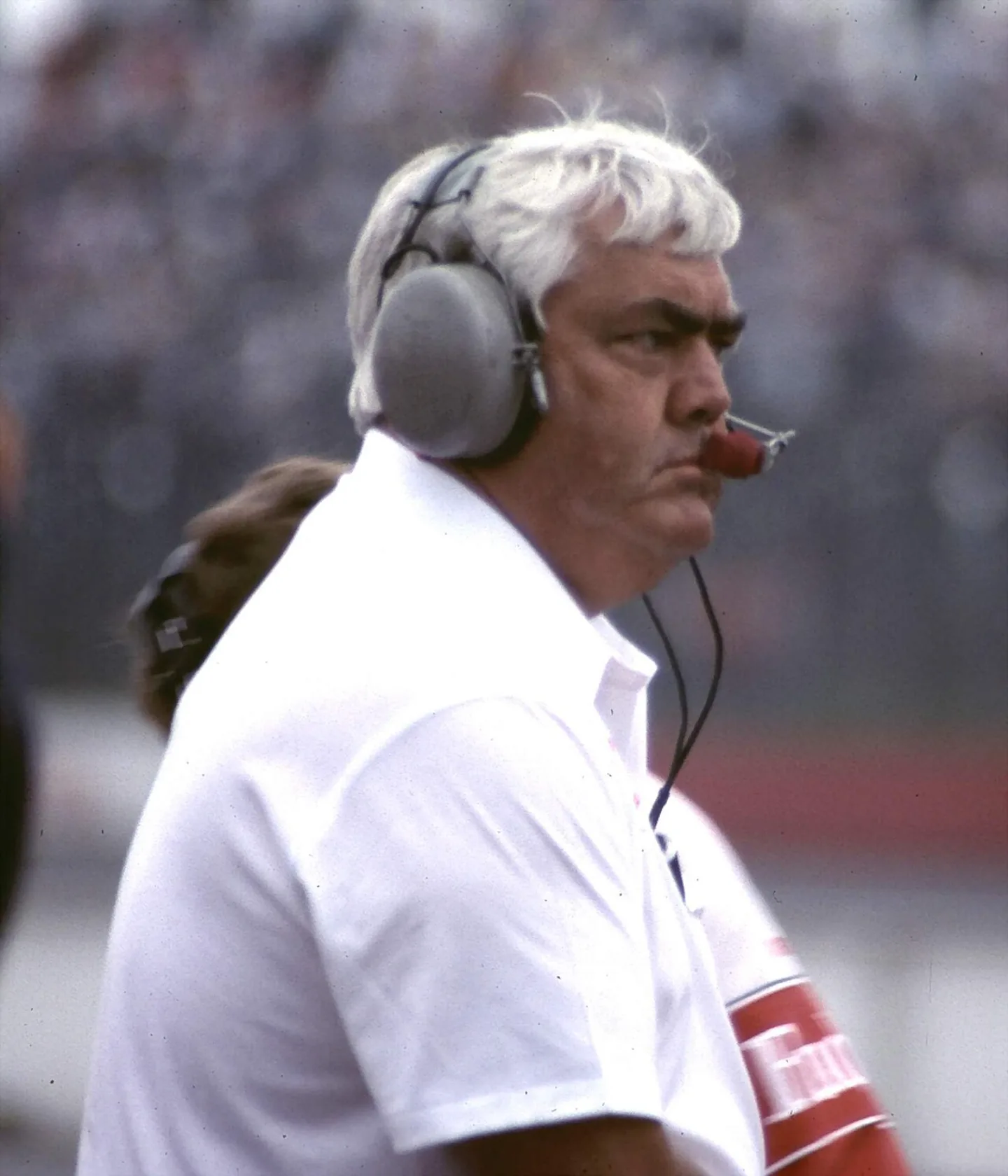
Junior Johnson: The Last American Hero
Wilkes County native Junior Johnson transitioned from hauling illicit moonshine to winning 50 Cup races as a driver and 6 championships as a premier team owner.
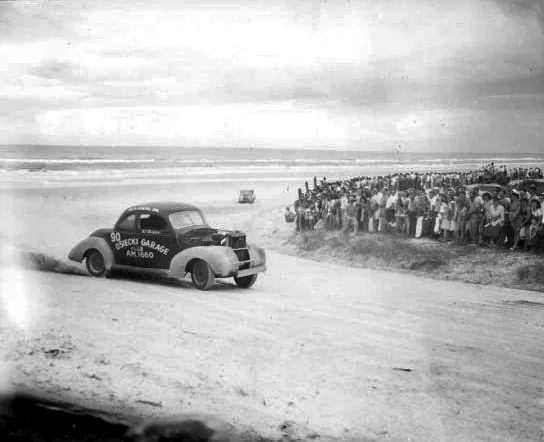
Daytona Beach and Road Course
Before Daytona International Speedway existed, NASCAR's earliest races ran on the Daytona Beach and Road Course, a 4.1-mile layout that stitched together two miles of paved State Road A1A with two miles of hard-packed ocean beach sand. Drivers ran flat-out on the sand straightaway, then threaded tight dirt turns back onto the highway. The unusual surface mix made the beach course as much a test of car preparation as of raw speed.
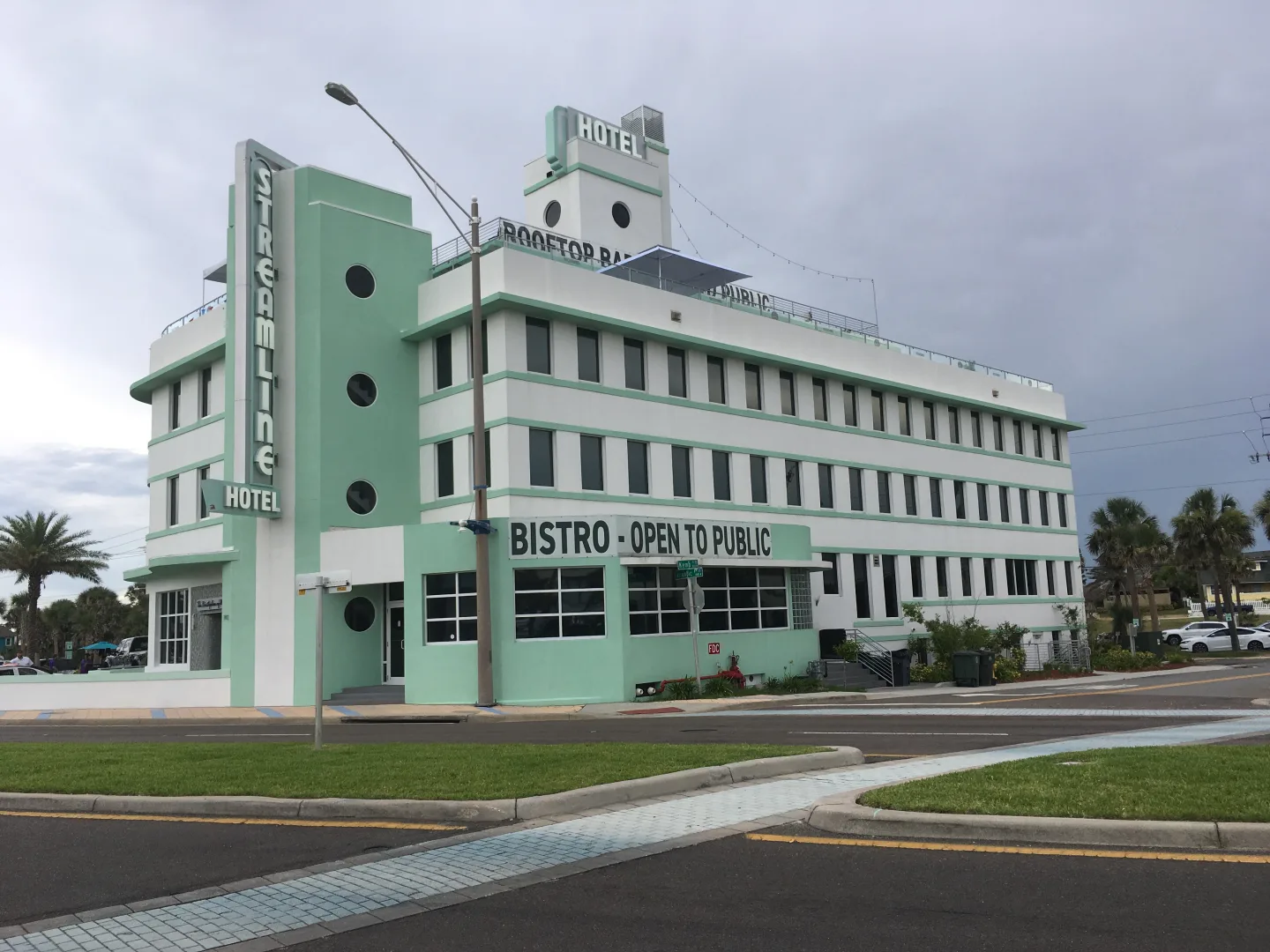
Streamline Hotel 1947 Foundation Meeting
On December 14, 1947, Big Bill France met with 35 mechanics, promoters, and drivers on the rooftop of the Streamline Hotel in Daytona Beach to establish uniform national stock car rules.
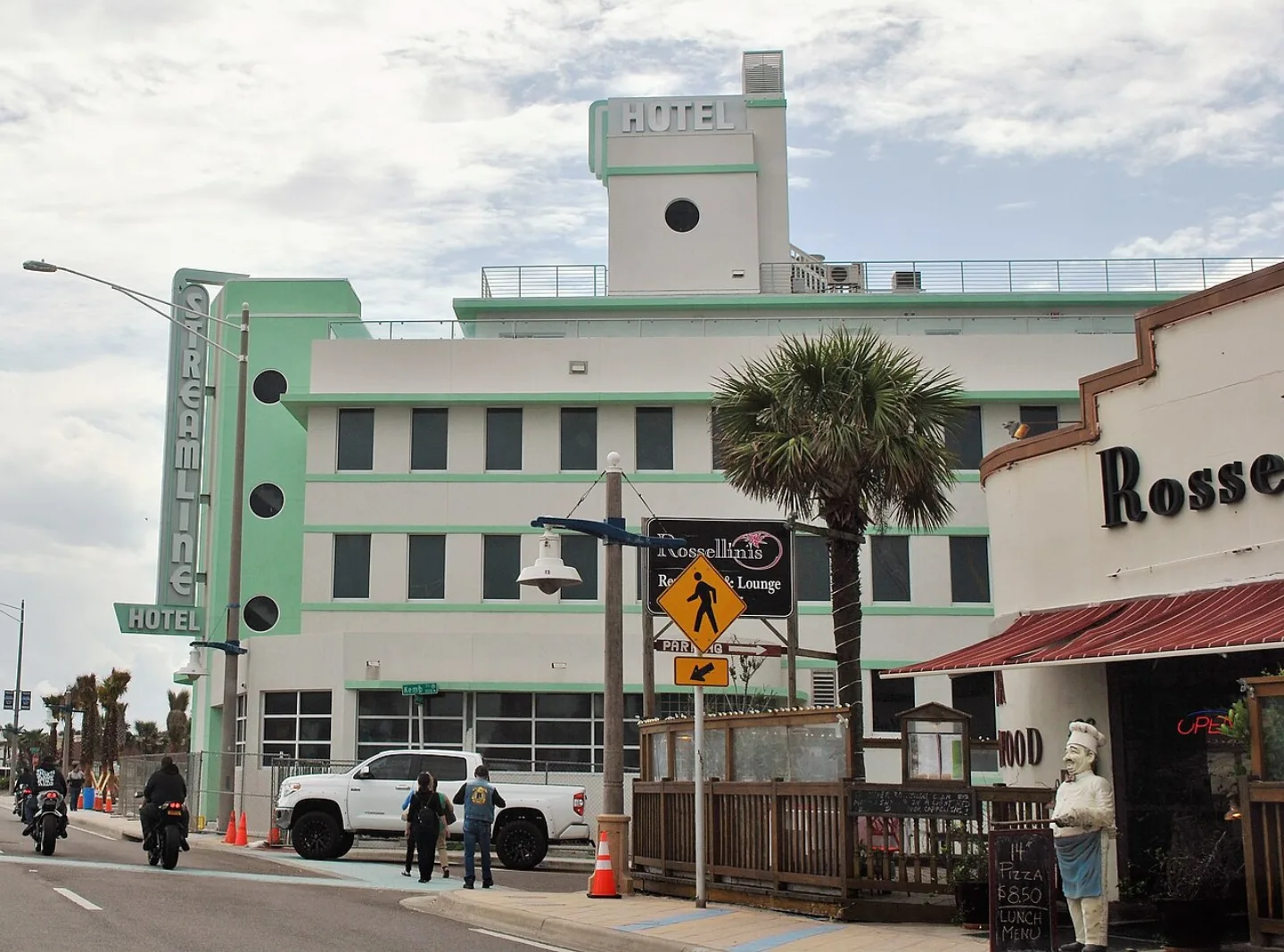
NASCAR's February 1948 Incorporation
The December 1947 Streamline Hotel meeting produced an agreement, but NASCAR did not legally exist until William 'Big Bill' France filed the paperwork: the National Association for Stock Car Auto Racing was officially incorporated in Florida on February 21, 1948. The roughly ten-week gap between the rooftop handshake and the formal incorporation is why NASCAR historians treat the two dates as distinct milestones rather than a single founding moment.
The First Strictly Stock Race
NASCAR's premier Strictly Stock division launched on June 19, 1949, at the 3/4-mile dirt Charlotte Speedway. Glenn Dunaway crossed the line first, but post-race inspection found his car's rear springs had been illegally reinforced — the same bootlegger trick that helped moonshine cars survive rough roads. Officials disqualified Dunaway, handing the historic first victory to Jim Roper.
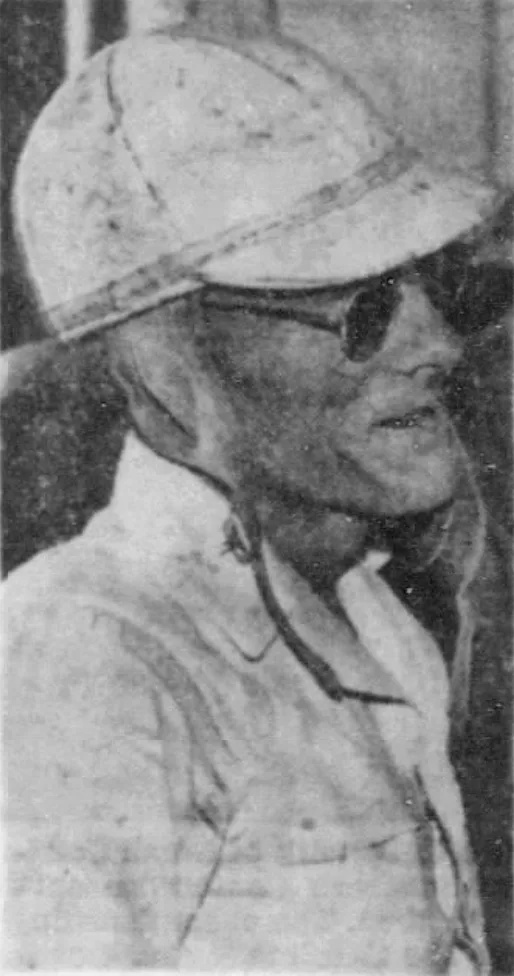
Red Byron: The Inaugural NASCAR Champion
Red Byron, a wounded World War II bomber pilot who drove with his leg brace bolted to the clutch pedal, won the inaugural 1949 Strictly Stock championship in an Oldsmobile 88.
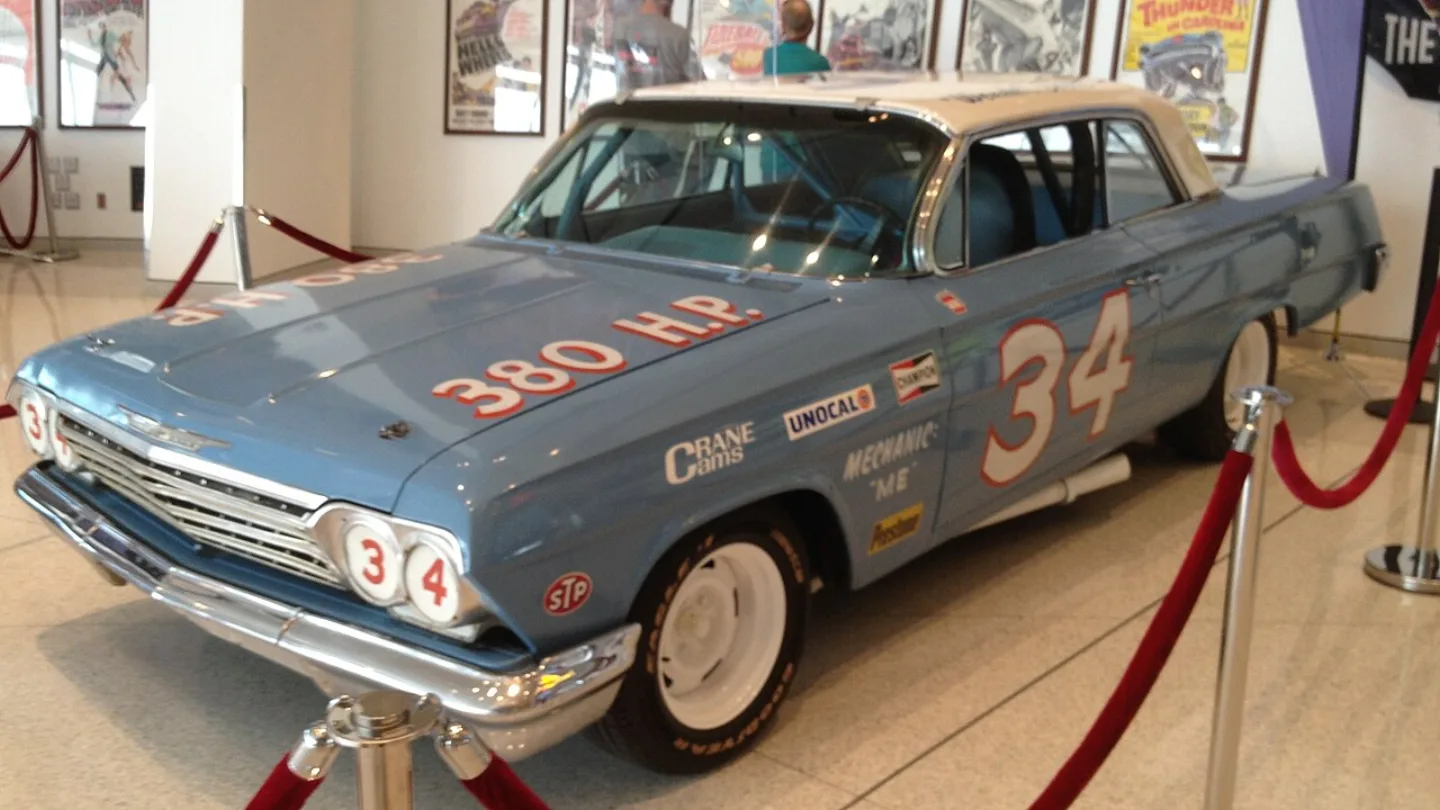
Wendell Scott: Historic 1963 Jacksonville Victory
On December 1, 1963, Wendell Scott broke racial barriers by winning the premier series race at Speedway Park in Jacksonville, Florida, becoming the first Black driver to win in NASCAR Cup history.
Wendell Scott's Delayed Victory
When Wendell Scott crossed the finish line first at Jacksonville's Speedway Park on December 1, 1963, officials did not send him to Victory Lane. Race control initially credited the win to Buck Baker, citing a scoring error, and only awarded Scott the official victory afterward — by which point the crowd had gone home and no ceremony was held. The delay meant Scott, the first Black driver to win a premier NASCAR race, never got the trophy presentation his win deserved that day.
The 1949 Inaugural Season
NASCAR's first Strictly Stock championship season was a short one: just 8 races across the 1949 calendar, all run on dirt. Red Byron, a wounded WWII veteran who drove with a clutch pedal modified for his injured leg, captured the inaugural points title that year. The tiny 8-race schedule stands in sharp contrast to the length of a modern Cup Series season.
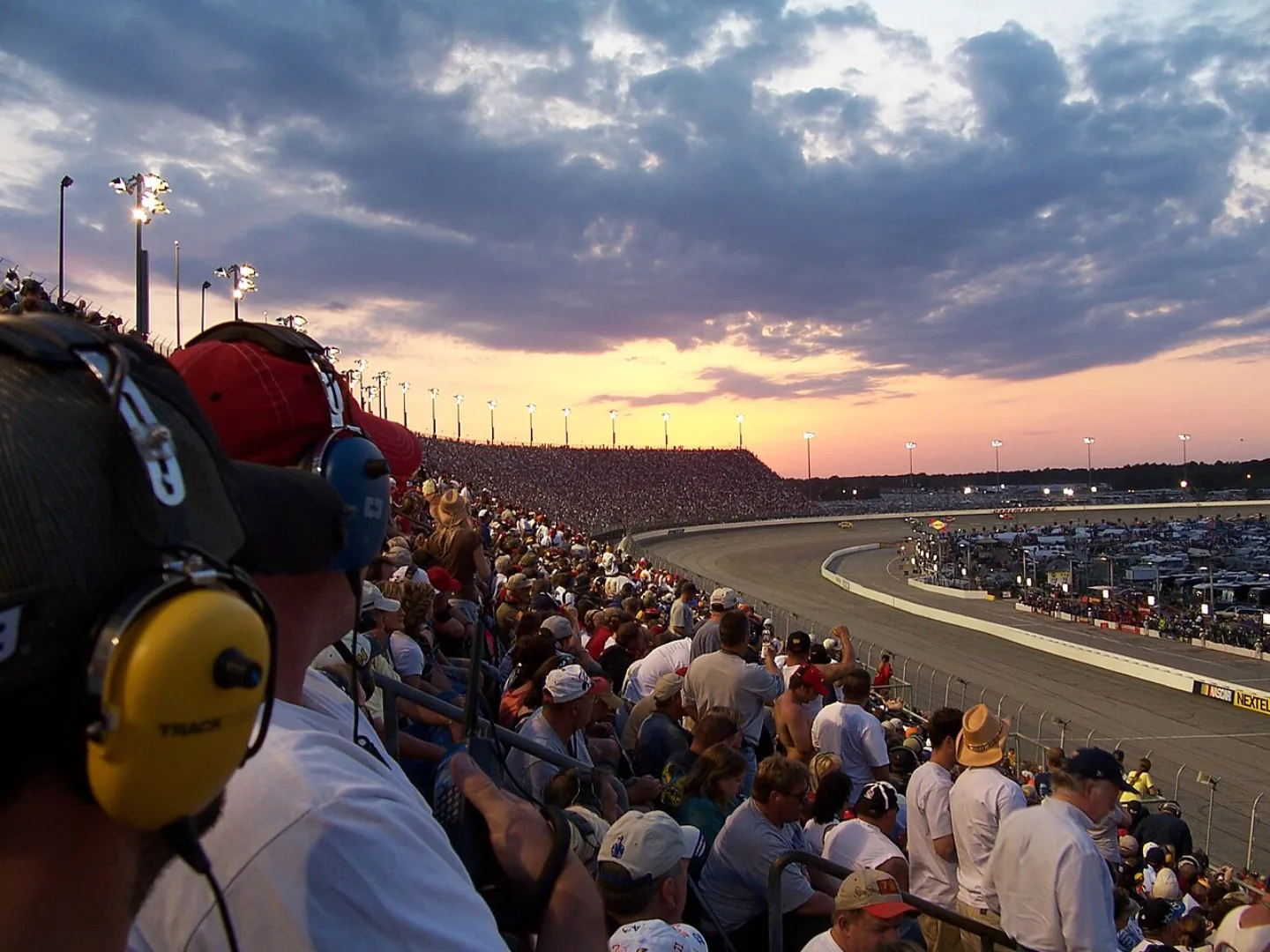
Darlington Raceway: First Paved Superspeedway
Built by Harold Brasington in 1950 in South Carolina, Darlington Raceway was NASCAR's first paved superspeedway, hosting the inaugural 500-mile stock car race.
Why Darlington Is Egg-Shaped
When Harold Brasington built Darlington Raceway in 1950, he wanted a symmetrical oval. Landowner Sherman Ramsey refused to let Brasington disturb his minnow fishing pond next to Turns 3 and 4, forcing the builder to squeeze those corners in tighter than Turns 1 and 2. The result was an asymmetric Egg-Shaped Oval that still defines Darlington today — a track so unforgiving that brushing its outside wall became its own badge of honor.
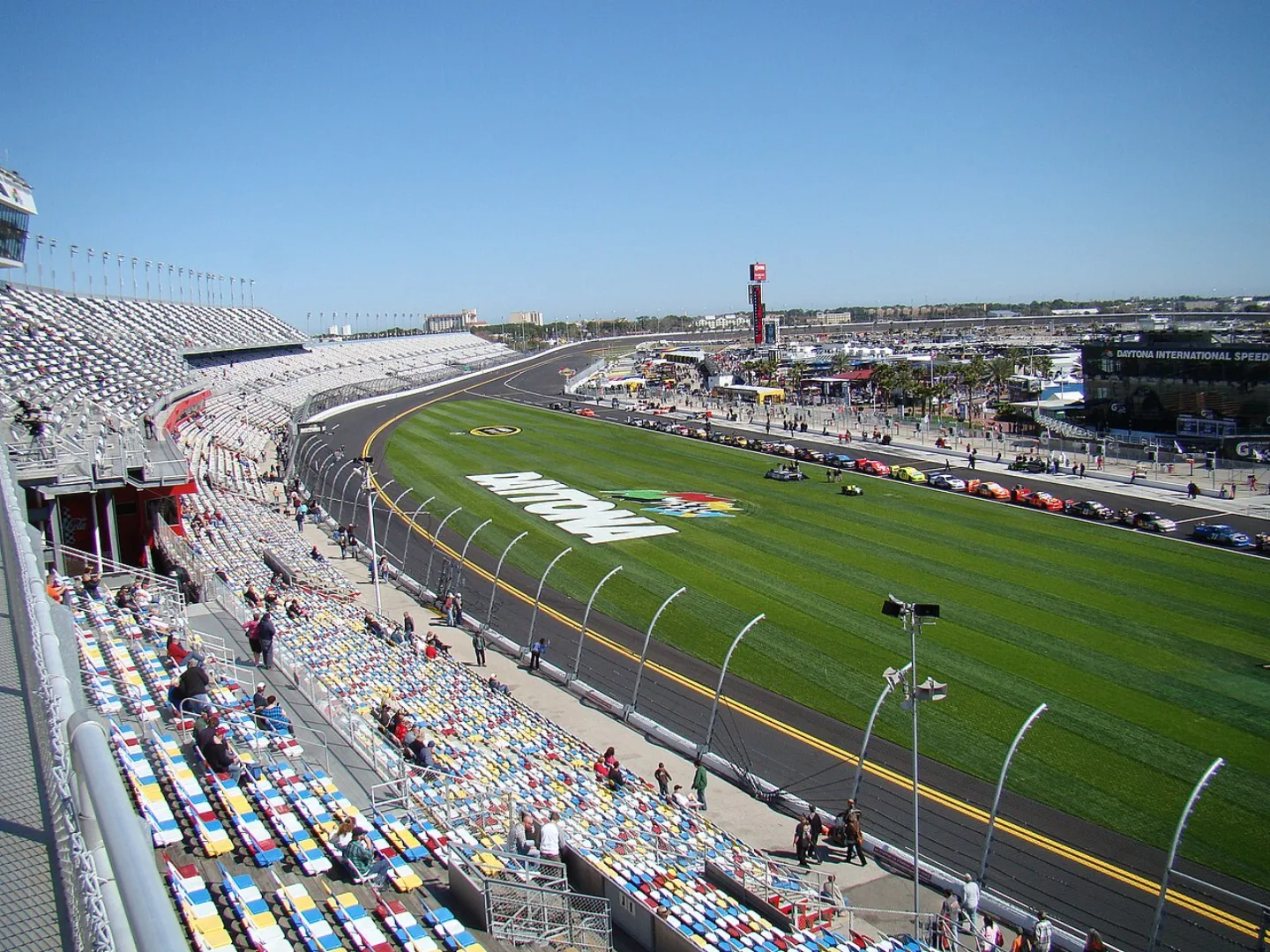
Daytona's 31-Degree Banking
When Bill France Sr. opened the 2.5-mile Daytona International Speedway in 1959, he engineered its four turns with a then-radical 31-degree banking — steep enough to let stock cars carry more than 140 mph through the corners without sliding out of the groove. That banking turned Daytona into NASCAR's flagship superspeedway and remains one of its signature specifications, still cited today alongside Talladega's even steeper 33 degrees.
1959 Inaugural Daytona 500 Photo Finish
In the inaugural 1959 Daytona 500, Lee Petty and Johnny Beauchamp crossed side-by-side; newsreel footage confirmed Lee Petty's victory three days later.
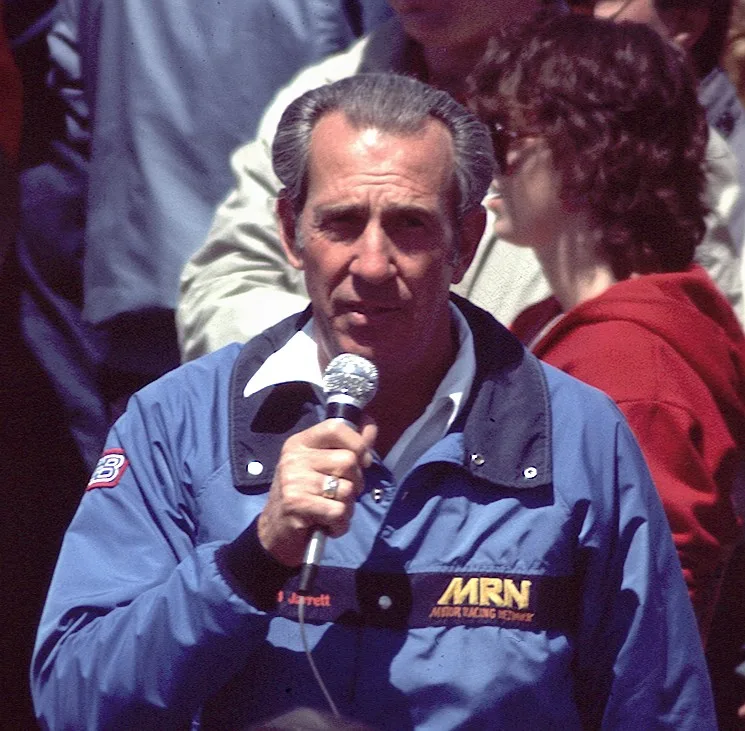
Ned Jarrett's Record Margin
In the 1965 Southern 500 at Darlington, Ned Jarrett didn't just win — he lapped the field into irrelevance, crossing the line 14 laps (19.25 miles) ahead of the second-place car. It remains the largest margin of victory in NASCAR Cup Series history, a record that has stood for six decades as the sport's fields have become far more competitive.
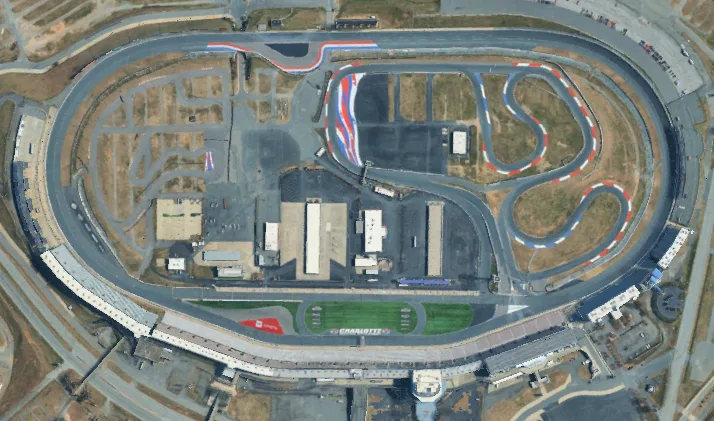
Charlotte Motor Speedway: The World 600 Birth
Built in 1960 as a 1.5-mile quad-oval with 24-degree banking, Charlotte Motor Speedway hosted the inaugural World 600, establishing NASCAR's premier Memorial Day weekend endurance event.
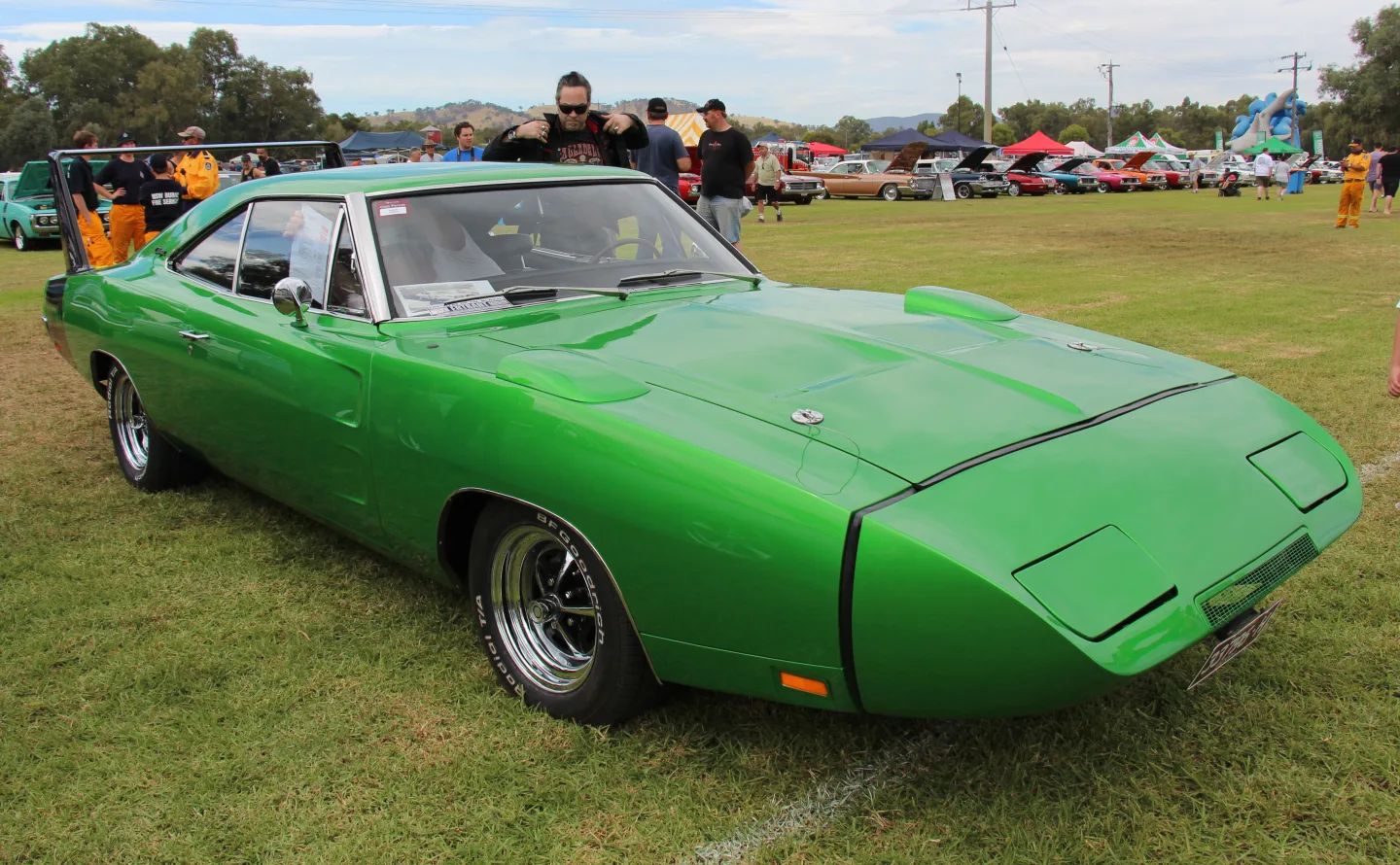
The 1969 Dodge Charger Daytona Winged Warrior
The 1969 Dodge Charger Daytona was engineered with an aerodynamic 18-inch pointed nose cone and a 23-inch-tall rear stabilizer wing, designed for high-speed stability on superspeedways.
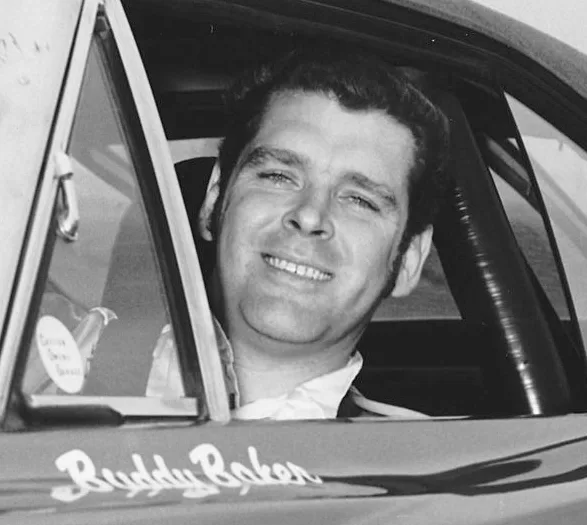
Buddy Baker Breaks 200 MPH
In March 1970, Buddy Baker drove a Chrysler Engineering Dodge Charger Daytona to 200.447 mph at Talladega Superspeedway, becoming the first driver in NASCAR history to officially exceed 200 mph on a closed course. The run came at the peak of the Aero Wars, when Ford and Chrysler's winged, nose-coned homologation specials were pushing straight-line speed further than NASCAR ovals had ever seen.
By the numbers
- What was the total track length in miles of the historic Daytona Beach and Road Course?
- 4.1 miles
- How many total championship races were contested in the inaugural 1949 NASCAR Strictly Stock season?
- 8 races
- How many degrees of banking were engineered into the four turns of Daytona International Speedway in 1959?
- 31 degrees
Matched pairs
Each item on the left goes with the one on the right.
- Dodge aero package
- Charger Daytona winged warrior
Step by step
Aerodynamic homologation workflow for Chrysler's winged warriors in 1969–1970
- Fit aerodynamic pointed steel nose cone to eliminate front-end parachute drag
- Mount 23-inch elevated rear stabilizer wing into clean airflow above the roofline
- Manufacture 500 street-legal production units for public sale to meet NASCAR rules
Self-test
Answer each question from memory, then check your work against the answer key.
1. In what year did Big Bill France officially incorporate NASCAR in Florida?
- A1948
- B1949
- C1947
- D1952
2. What was the total length, in miles, of the Daytona Beach and Road Course used in NASCAR's earliest races?
- A2.5 miles
- B4.1 miles
- C3.5 miles
- D5.2 miles
3. Which evasive maneuver did moonshine runners use to instantly reverse direction and shake revenue agents?
- APower Slide
- BPit Maneuver
- CScandinavian Flick
- DBootleg Turn
4. On the rooftop of which hotel did Bill France hold the December 1947 meeting that led to NASCAR's founding?
- APonce de Leon Hotel
- BPlaza Hotel
- CStreamline Hotel
- DOrmond Hotel
5. Why was Glenn Dunaway disqualified after finishing first in NASCAR's inaugural 1949 Strictly Stock race?
- AUnderweight vehicle chassis
- BUnapproved dual carburetors
- CIllegally reinforced rear springs
- DOversized engine displacement
6. What equipment strategy enabled Johnny Mantz to win the inaugural 1950 Southern 500 at Darlington from 43rd on the grid?
- AUsing dual quick-fill gravity fuel cans
- BInstalling experimental disk brake units
- CRunning high-octane aviation
- DFitting ultra-durable hard truck tires
7. By what unprecedented margin of victory did Ned Jarrett win the 1965 Southern 500 at Darlington Raceway?
- AWon by a margin of 14 laps
- BWon by a margin of 5 laps
- CWon by a margin of 9 laps entry
- DWon by a margin of 20 laps
8. Why does Darlington Raceway's oval have an asymmetric 'egg' shape instead of a symmetric one?
- ABedrock blocked grading the front stretch
- BLandowner's fishing pond blocked the turns
- CA swamp made two turns hard to widen
- DHighway easements limited the boundary
9. How many degrees of banking did Bill France Sr. build into Daytona International Speedway's turns in 1959?
- A18 degrees
- B24 degrees
- C31 degrees
- D12 degrees
10. Which driver first exceeded 200 mph on a closed NASCAR course, hitting 200.447 mph at Talladega in 1970?
- ADavid Pearson
- BBuddy Baker
- CCale Yarborough
- DRichard Petty
11. Which two manufacturers waged NASCAR's fierce 1960s 'Aero Wars' rivalry?
- AFord versus Chevrolet manufacturers
- BChevrolet versus Pontiac manufacturers
- CDodge versus Plymouth manufacturers
- DFord versus Chrysler manufacturers
12. Which manufacturer built the winged Dodge Charger Daytona and Plymouth Superbird during the Aero Wars?
- AChrysler Corporation
- BAmerican Motors Corporation
- CGeneral Motors
- DFord Motor Company
Go deeper
Answer key
- 1. A 1948NASCAR was incorporated on February 21, 1948, about ten weeks after the December 1947 Streamline Hotel meeting and before Strictly Stock racing began in June 1949.
- 2. B 4.1 milesThe course combined two miles of paved State Road A1A with two miles of hard-packed sand for a 4.1-mile lap; 2.5 miles is the later Daytona International Speedway.
- 3. D Bootleg TurnRunners locked the rear wheels and snapped the wheel to whip the car 180 degrees -- the Bootleg (J-Turn) -- unlike a slide or pit maneuver, which don't reverse direction.
- 4. C Streamline HotelBig Bill France convened 35 drivers, owners, and mechanics on the Streamline Hotel's rooftop in Daytona Beach on December 14, 1947, laying the groundwork for NASCAR's incorporation.
- 5. C Illegally reinforced rear springsInspection found Dunaway's rear springs illegally reinforced with the same bootlegger trick used to survive rough roads, so the win went to Jim Roper instead.
- 6. D Fitting ultra-durable hard truck tiresMantz used hard truck tires that survived the abrasive new pavement without blistering while faster cars blew soft car tires.
- 7. A Won by a margin of 14 lapsNed Jarrett won the 1965 Southern 500 by 14 laps (19.25 miles), the largest victory margin in Cup Series history.
- 8. B Landowner's fishing pond blocked the turnsLandowner Sherman Ramsey refused to let builder Harold Brasington disturb his minnow pond near Turns 3 and 4, forcing those corners tighter than Turns 1 and 2.
- 9. C 31 degreesDaytona's turns were banked at a radical 31 degrees, letting stock cars exceed 140 mph; Charlotte's quad-oval was banked at a shallower 24 degrees by comparison.
- 10. B Buddy BakerBuddy Baker drove a Dodge Charger Daytona to 200.447 mph at Talladega in March 1970, becoming the first driver to officially top 200 mph on a closed course.
- 11. D Ford versus Chrysler manufacturersThe 1960s Aero Wars pitted Ford against Chrysler as each built radical winged cars for superspeedway supremacy.
- 12. A Chrysler CorporationChrysler's Aero Wars rivalry with Ford produced the winged Charger Daytona and Superbird homologation specials.
Sources
- NASCAR Hall of Fame: Moonshine Heritage — www.nascarhall.com/blog/nascars-moonshine-roots
- Smithsonian Magazine: The Bootleg Origins of NASCAR — www.smithsonianmag.com/travel/how-moonshine-bootlegging-gave-rise-nascar-180962014/
- Smithsonian Magazine: The Bootleg Origins of NASCAR — www.smithsonianmag.com
- NASCAR Hall of Fame: Junior Johnson Biography — www.nascarhall.com/hall-of-famers/inductees/junior-johnson
- Daytona International Speedway Historic Archives; Daytona International Speedway Engineering Specs — www.daytonainternationalspeedway.com
- NASCAR.com: The Historic Streamline Hotel Meeting — www.nascar.com/news-media/2022/12/13/nascar-founders-75th-anniversary-streamline-hotel-meeting-photo-attendees/
- NASCAR Official History & Corporate Records; NASCAR.com: Why Darlington is Shaped Like an Egg — www.nascar.com
- NASCAR Hall of Fame: First Race Controversies — www.nascarhall.com/blog/the-first-strictly-stock-race
- Racing-Reference: 1949 Strictly Stock Race 1; Racing-Reference: 1949 NASCAR Strictly Stock Season Schedule; Racing-Reference: 1965 Southern 500 Results — www.racing-reference.info
- NASCAR Hall of Fame: First Race Controversies and 4 more references — www.nascarhall.com
- NASCAR Hall of Fame: Red Byron Profile — www.nascarhall.com/hall-of-famers/inductees/red-byron
- Automotive History: The Fabulous Hudson Hornet in NASCAR — www.hemmings.com
- Motorsport Memorial: Marshall Teague — www.motorsportmemorial.org
- NASCAR Hall of Fame: Wendell Scott Biography — www.nascarhall.com/hall-of-famers/inductees/wendell-scott
- NPR: Wendell Scott's Overdue Trophy and Legacy — www.npr.org
- Encyclopedia of World Biography: Bill France Sr. — www.encyclopedia.com
- Racing-Reference: 1949 NASCAR Strictly Stock Season Schedule — www.racing-reference.info/season-stats/1949/W/
- Darlington Raceway Official Track Heritage — www.darlingtonraceway.com/about-us/
- NASCAR.com: Why Darlington is Shaped Like an Egg — www.nascar.com/news-media/2019/08/29/how-darlingtons-distinctive-design-was-made-3/
- NASCAR.com: The 1959 Daytona 500 Photo Finish — www.nascar.com/videos/franchise/nascar75/the-full-story-behind-the-1959-daytona-500-photo-finish/
- Racing-Reference: 1965 Southern 500 Results — www.racing-reference.info/race-results/1965_Southern_500/W
- Charlotte Motor Speedway History & Track Records — www.charlottemotorspeedway.com/fans/track-history/
- Atlanta Motor Speedway History — www.atlantamotorspeedway.com
- Hot Rod Magazine: The 1965 NASCAR Hemi Ban; MotorTrend: The 1969-1970 NASCAR Aero Wars; Mopar Action: The Plymouth Superbird Story — www.motortrend.com
- Allpar: Engineering the 1969 Dodge Charger Daytona — www.allpar.com/threads/the-plymouth-superbird-and-dodge-charger-daytona.228769/
- NASCAR Hall of Fame: Buddy Baker 200 MPH Milestone — www.nascarhall.com/hall-of-famers/inductees/buddy-baker
Image credits
- Junior Johnson: The Last American Hero: Wikimedia Commons · Ted Van Pelt · CC BY 2.0 — commons.wikimedia.org/wiki/File:JuniorJohnson1985.jpg
- Daytona Beach and Road Course: Florida Memory · No restrictions — commons.wikimedia.org/wiki/File:No._99_car_running_on_the_beach_road_-_Daytona_Beach.jpg
- Streamline Hotel 1947 Foundation Meeting: Wikimedia Commons · Dough4872 · CC BY-SA 3.0 — commons.wikimedia.org/wiki/File:Streamline_Hotel_July_2018.jpg
- NASCAR's February 1948 Incorporation: Elisa.rolle · CC BY-SA 4.0 — commons.wikimedia.org/wiki/File:I_Streamline_Hotel,_Daytona_Beach,_FL,_USA.jpg
- Red Byron: The Inaugural NASCAR Champion: Wikimedia Commons · Unknown author · Public domain — commons.wikimedia.org/wiki/File:Red_Byron_1949.png
- Wendell Scott: Historic 1963 Jacksonville Victory: Mike Kalasnik · CC BY-SA 2.0 — commons.wikimedia.org/wiki/File:Wendell_Scott_34_Chevrolet_NASCAR_Hall_of_Fame.jpg
- Darlington Raceway: First Paved Superspeedway: Wikimedia Commons · Berniestew · Public domain — commons.wikimedia.org/wiki/File:DarlingtonRacewayDodgeCharger500.JPG
- Daytona's 31-Degree Banking: Wikimedia Commons · Jeff · CC BY-SA 2.0 — commons.wikimedia.org/wiki/File:Daytona_International_Speedway_2011.jpg
- Ned Jarrett's Record Margin: Ted Van Pelt · CC BY 2.0 — en.wikipedia.org/wiki/Ned_Jarrett
- Charlotte Motor Speedway: The World 600 Birth: Wikimedia Commons · Mblock150 · CC BY-SA 4.0 — commons.wikimedia.org/wiki/File:Charlotte_Motor_Speedway_February_2024.png
- The 1969 Dodge Charger Daytona Winged Warrior: Wikimedia Commons · Sicnag · CC BY 2.0 — commons.wikimedia.org/wiki/File:1969_Dodge_Charger_Daytona_(13419983895)_(cropped).jpg
- Buddy Baker Breaks 200 MPH: Racing One · CC BY-SA 4.0 — en.wikipedia.org/wiki/Buddy_Baker


