
Philosophy: The Big Questions study guide · Lesson 10 of 15
Philosophy of Mind & Applied Ethics
The Mind-Body Problem · Applied Ethics
This is the lesson's study guide from the FlashFeed app, plus its key facts and a self-test.
What you'll be able to do
- Define qualia and intentionality as the two defining features of mind
- Distinguish substance dualism, physicalism, property dualism, and panpsychism
- Explain functionalism as role-defined mind and the basis for AI
- Define bioethics and care ethics and tell the two approaches apart
- Compare applied-ethics domains: environmental, AI, global justice, just war
You can read off every physical fact about a brain — which neurons fire, which chemicals cross which synapse — and still leave one thing untouched: what it feels like to be that brain from the inside. The philosophy of mind circles this gap. It is the one place where the universe seems to look back at itself, and no one has fully explained how.
The Mind-Body Problem
The mind-body problem asks how consciousness arises from matter. We are, as far as physics can tell, arrangements of cells and chemistry. Yet we also experience — we taste coffee, feel grief, see the blue of the sky. The puzzle is that a complete physical story of the brain seems to leave out the experiencing altogether. You could describe my visual cortex perfectly and still not know whether anything is lit up inside. This tension between objective brain-stuff and subjective experience is, for many philosophers, the hardest enduring question in the field.
The Hard Problem of Consciousness
The philosopher David Chalmers (b. 1966) sharpened the puzzle by splitting it in two. The easy problems — how the brain integrates information, controls behavior, reports on its own states — are "easy" only in that we know what a solution would look like: a mechanism. The Hard Problem is different: why is any of that mechanism accompanied by inner experience at all? Why isn't the brain just processing in the dark, like a calculator? The unexplained leap from physical function to felt experience is known as the explanatory gap, a term the philosopher Joseph Levine introduced in 1983 and which Chalmers uses to frame the Hard Problem.
The Philosophical Zombie
Chalmers' most provocative tool is the philosophical zombie: a being physically identical to you down to the last neuron, behaving exactly as you do — flinching at pain, saying "that's beautiful" — but with no inner experience whatsoever. There is "nothing it is like" to be it. His argument runs: if such a zombie is even conceivable, then consciousness is something over and above the physical facts, and physicalism is incomplete. Critics reply that zombies only seem conceivable. The debate is unresolved, but it powerfully frames the stakes.
Qualia
Qualia (singular quale) are the raw felt qualities of experience: the redness of red, the sting of a burn, the particular taste of coffee. They are what the Hard Problem is about — the part of mind that resists capture in any purely physical description. If a theory explains every brain process but says nothing about how things feel, it has left out the qualia.
Intentionality
Intentionality is the mind's "aboutness." Mental states point beyond themselves: a belief is about the weather, a desire is for lunch, a fear is of the dark. Rocks and rivers are not about anything; thoughts are. Explaining how mere matter can reach out and represent the world is a second deep mystery of mind, alongside consciousness itself.
Positions on the Mind
Philosophers map the territory with rival positions. Substance dualism (Descartes) says mind and body are two distinct substances — the "ghost in the machine." Physicalism/materialism says the mind simply is the brain. Property dualism keeps one substance but grants it two irreducible kinds of property, physical and mental. Functionalism defines mental states by their functional role rather than their material — the idea underpinning AI research, since a silicon system playing the same role could, in principle, have the same mind. Panpsychism takes the boldest route: consciousness is a fundamental feature of the universe, present at every level of matter. The inverted spectrum sharpens the stakes — if my "red" were your "green," with no behavioral difference, no test could ever tell.
When philosophy leaves the seminar room, it lands at the bedside, on the battlefield, and on a warming planet. Applied ethics is where the great moral theories are tested against real, urgent decisions — and where a recurring question keeps surfacing: who counts, and how much?
What Is Applied Ethics?
Applied ethics takes the abstract frameworks — utilitarianism (maximize well-being), deontology (follow binding duties), virtue ethics (be the person of good character) — and brings them to bear on concrete dilemmas. Is euthanasia permissible? Do animals have rights? What do wealthy nations owe the global poor? It is widely regarded as philosophy's most practically relevant branch today, and its frontiers keep moving as medicine, technology, and the climate reshape what we are able — and forced — to decide.
Bioethics
Bioethics studies the moral problems raised by medicine and biology: abortion, euthanasia, genetic engineering, and increasingly the personhood of AI. Its central thread is the moral-status question — which beings have moral standing, and how strong is it? The classic case is the fetus: does it have the same rights as an adult, and does the stage of development matter? Bioethics rarely gives clean answers; it clarifies what is really at stake in each choice.
Peter Singer and Animal Suffering
Environmental ethics asks whether non-human animals, species, and ecosystems have intrinsic moral worth — value in themselves, not merely use-value to us. The philosopher Peter Singer (b. 1946) gave the most influential argument for animals: if what matters morally is suffering — not intelligence, language, or species membership — and animals plainly suffer, then their suffering must enter our moral calculations. To discount it simply because they are not human is speciesism — a term coined by the psychologist Richard Ryder and popularized by Singer, who likens the prejudice to racism or sexism.
Care Ethics and Feminist Philosophy
Feminist philosophy examines patriarchy, embodiment, and the assumptions buried in "neutral" moral theory. One of its key contributions is care ethics, which grounds morality in relationships, empathy, and attention to concrete context — the way a parent attends to a child. It is often contrasted with justice ethics, which prizes abstract, impartial rules applied equally to all. The two are not enemies so much as different lenses: one starts from connection, the other from principle.
Ethics of Technology and AI
The newest frontier is the ethics of technology and AI. It wrestles with algorithmic bias (systems that inherit and amplify human prejudice), autonomous weapons (machines that decide whom to kill), and superintelligence. A genuinely new question arrives here: if an AI ever becomes self-aware, would it have moral status? The same hinge — who counts — that runs through debates over fetuses and animals now extends to machines.
Global Justice
Global justice scales ethics up to the whole human family. What do rich nations owe the world's poor? What do we owe future generations as the climate changes on our watch? And do national borders carry genuine moral weight, or are they morally arbitrary lines that should not decide who lives well and who suffers? These questions stretch our moral concern across both distance and time.
Just War Theory
Can a war ever be moral? Just war theory divides the question. Jus ad bellum governs the right to go to war: a just cause, legitimate authority, war as a genuine last resort. Jus in bello governs conduct within war: discriminating between combatants and civilians, and keeping force proportional to the aim. Crucially, the two come apart — a war can be just to begin yet fought unjustly, or be wrongly begun yet fought by the rules.
Key terms
- Qualia
- The subjective, felt quality of experience — the "redness" of red, the sharp sting of pain, the taste of coffee. What it is like, from the inside, to undergo a mental state.
- Intentionality
- The "aboutness" of the mind: mental states point toward objects. A belief is about something, a desire is for something, a perception is of something. Thoughts reach beyond themselves to the world.
- Bioethics
- The study of moral problems raised by medicine and biology — abortion, euthanasia, and genetic engineering among them. Its central thread is the question of moral status: which beings count, and how much?
- Care Ethics
- An approach, central to feminist philosophy, that grounds morality in relationships, empathy, and attention to context — rather than in the abstract, impartial rules of "justice ethics."
Key concepts
Substance dualism
- One of the oldest answers to the mind-body problem, most associated with Descartes.
- It claims mind and body are two utterly distinct kinds of thing — one immaterial, one physical.
- Critics mock it as the 'ghost in the machine': a non-physical mind somehow lodged inside a mechanical body.
Physicalism
- The most scientifically mainstream answer to the mind-body problem.
- It denies any ghostly extra ingredient: mental life is nothing over and above what the brain does.
- On this view the mind simply is the brain — thoughts and feelings just are neurons and chemistry at work.
Functionalism
- This theory of mind is the philosophical backbone of most AI research.
- It says what makes a state a belief or a pain is the role it plays — its causes and effects — not what it is made of.
- So a silicon system playing the very same role could, in principle, have the same mind as a brain of neurons.
Panpsychism
- The boldest and strangest of the positions on the mind.
- Rather than explaining how consciousness emerges from dead matter, it says experience was there all along.
- It holds that consciousness is a fundamental feature of the universe, present at every level of matter, down to the smallest particles.
Property dualism
- A middle-ground answer to the mind-body problem, sitting between physicalism and Descartes' two-substance view.
- It accepts there is only one kind of stuff in the world, but insists that stuff carries two irreducible sorts of feature.
- The brain is wholly physical, yet its mental features — how experiences feel — cannot be reduced to its physical ones.
Key facts
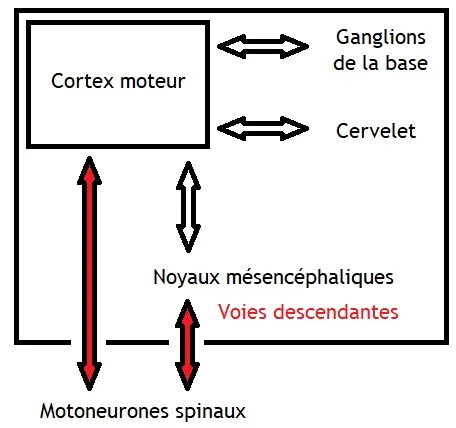
The Mind-Body Problem
How does consciousness arise from mere matter? You can describe the brain in complete physical detail — neurons firing, chemicals crossing synaptic gaps — without ever explaining what it is like to taste coffee or feel grief. The gulf between objective brain-stuff and subjective experience is the mind-body problem, often called philosophy's hardest enduring question.
The Hard Problem of Consciousness
David Chalmers (b. 1966) drew a line between the easy problems of mind — explaining how the brain processes information, controls behavior, reports its states — and the Hard Problem: why is any of that accompanied by inner experience at all? Why isn't it all happening "in the dark"? This explanatory gap between physical processes and felt experience is what no neuroscience has yet bridged.

The Philosophical Zombie
Imagine a being physically identical to you — same neurons firing in the same patterns, behaving exactly as you do — but with no inner experience whatsoever. There is "nothing it is like" to be it. Chalmers calls this a philosophical zombie. His argument: if such a zombie is even conceivable, then consciousness cannot be identical to physical processes. Hotly contested, it remains a central challenge to physicalism.
Minds Defined by Function
Functionalism holds that a mental state is defined by what it does rather than what it's made of, so a silicon system playing the same functional role would count as having that same state — the idea underpinning AI research into minds.
The Mind's Aboutness
Intentionality names the mind's 'aboutness' — the way mental states like beliefs and desires always point beyond themselves toward some object in the world.
Peter Singer and Animal Suffering
Environmental ethics asks whether non-human animals, species, and ecosystems have intrinsic moral worth. Peter Singer (b. 1946) gave the sharpest argument for animals: if suffering is what matters morally — not intelligence, language, or species — and animals demonstrably suffer, then their suffering must count in our moral calculations. To ignore it simply because they are not human, he charges, is "speciesism."
Just War Theory
Can a war ever be moral? Just war theory splits the question in two. Jus ad bellum governs the right to go to war — was the cause just, the authority legitimate, war the last resort? Jus in bello governs conduct within war — discrimination between combatants and civilians, and proportionality of force. A war can be just to start yet fought unjustly, or the reverse.
What Is Bioethics
Bioethics is the study of moral problems raised by medicine and biology — questions like abortion, euthanasia, and genetic engineering.
Matched pairs
Each item on the left goes with the one on the right.
- Substance Dualism (Descartes)
- Mind and body are two entirely distinct substances — the "ghost in the machine"
- Functionalism
- Mental states are defined by their functional role, not their material — the basis of AI research
- Panpsychism
- Consciousness is a fundamental feature of the universe, present at every level of matter
- Environmental Ethics
- Asks whether animals, species, and ecosystems have intrinsic moral worth, not just use-value to humans
- Ethics of AI
- Wrestles with algorithmic bias, autonomous weapons, and whether a self-aware machine could have moral status
- Global Justice
- Asks what rich nations owe the global poor, our duties across generations, and whether borders carry moral weight
Self-test
Answer each question from memory, then check your work against the answer key.
1. In philosophy of mind, what does the term 'qualia' refer to?
- AThe identity of the mind with the brain, like a mood being chemistry
- BThe raw felt qualities of experience, like the redness of red
- CThe functional role a mental state plays, like pain prompting a flinch
- DThe mind's directedness toward objects, like a fear of the dark
2. 'Intentionality' names which defining feature of the mind?
- AIts 'deliberateness' — mental states plan actions before the body performs them
- BIts 'felt quality' — mental states carry a raw feel from the inside
- CIts 'aboutness' — mental states point beyond themselves toward objects
- DIts 'ubiquity' — mental states are present at every level of matter
3. Which of the following is an example of a quale?
- AThe particular taste of coffee as you sip it
- BA fear of the dark
- CA belief that it will rain tomorrow
- DA desire for lunch
4. Which mental state best illustrates intentionality's 'aboutness'?
- AThe taste of fresh coffee
- BThe sharp sting of a burn
- CThe redness of a sunset
- DA belief about the weather
5. Qualia are the raw felt qualities of experience. Which item does the term NOT describe?
- AA sting being felt in a freshly burned hand
- BA belief being directed at an object in the world
- CA redness being seen in the glow of a sunset
- DA taste being savored in the first sip of coffee
6. Which position on the mind is credited to Descartes and nicknamed the 'ghost in the machine'?
- ASubstance dualism
- BProperty dualism
- CPhysicalism
- DPanpsychism
7. According to physicalism (materialism), the mind is:
- AA fundamental feature of the universe — present in all matter
- BOne substance — bearing two irreducible kinds of property
- CA second substance — not the body, nor any part of it
- DSimply the brain — nothing over and above physical matter
8. Which view claims that consciousness is a fundamental feature of the universe, present at every level of matter?
- APhysicalism
- BFunctionalism
- CPanpsychism
- DSubstance dualism
9. How does property dualism differ from substance dualism?
- AIt identifies the mind with the brain and its properties with physical ones
- BIt treats consciousness as fundamental, present at every level of matter
- CIt keeps one substance but grants it two irreducible kinds of property
- DIt posits two distinct substances, a mind and a body, rather than one
10. Physicalism and property dualism agree on which point?
- AConsciousness is present at every level of matter
- BThere is only a single kind of substance
- CMental properties are irreducible to physical ones
- DMind and body are two distinct substances
11. Which position on the mind-body problem holds that the mind simply IS the brain?
- APhysicalism
- BProperty dualism
- CSubstance dualism
- DPanpsychism
12. Physicalism about the mind claims that:
- AMental states have irreducible non-physical properties
- BMind and body are two distinct substances
- CConsciousness pervades all matter
- DOnly physical things exist and mind is brain processes
13. Which position keeps one substance but grants it two irreducible kinds of properties, physical and mental?
- ASubstance dualism
- BPanpsychism
- CFunctionalism
- DProperty dualism
14. Property dualism differs from substance dualism because it:
- AKeeps one substance but grants two kinds of properties
- BClaims consciousness is fundamental everywhere
- CDenies mind exists at all
- DPosits two entirely separate substances
15. Which theory of mind holds that mental states are defined by what they do, not what they are made of — making it the basis of AI research?
- ASubstance dualism
- BPhysicalism
- CFunctionalism
- DPanpsychism
16. Why does functionalism serve as the philosophical basis for AI research?
- AIf a silicon system is built from the right physical material, it could in principle have the same mind
- BIf a silicon system plays the same functional role, it could in principle have the same mind
- CIf a silicon system hosts a substance distinct from its hardware, it could in principle have a mind
- DIf consciousness is present at every level of matter, a silicon system could in principle have a mind
17. Functionalism defines a mental state primarily by:
- AThe felt quality it carries
- BThe substance it inheres in
- CThe functional role it plays
- DThe material it is realized in
18. According to functionalism, which factor is IRRELEVANT to whether something has a given mental state?
- AThe inputs the system receives
- BThe physical material it is made of
- CThe role the state plays in the system
- DThe outputs the system produces
19. A robot processes pain signals and withdraws exactly as a human does. A functionalist would most likely say it:
- ACould in principle feel pain because consciousness pervades all matter
- BCould in principle house a soul distinct from its circuitry
- CCould in principle share the state only if its parts were biological
- DCould in principle be in the same mental state as the human
20. Bioethics is best defined as the study of moral problems raised by:
- AMedicine and biology
- BAnimals and ecosystems
- CAlgorithms and weapons
- DPoverty and borders
21. Care ethics grounds morality in:
- AImpartiality, fairness, and rules that bind everyone equally
- BRelationships, empathy, and attention to concrete context
- CCharacter, virtue, and the kind of person one chooses to be
- DSuffering, sentience, and the equal weighing of every creature's pain
22. What is the central 'thread' running through bioethics?
- AThe moral-status question — which beings count, and how much
- BThe mind-body question — how consciousness arises from physical matter
- CThe just-war question — when war may begin, and how it may be fought
- DThe global-justice question — what rich nations owe the distant poor
23. Care ethics is most often contrasted with 'justice ethics,' which instead prizes:
- AGood character cultivated in the person who acts
- BThe greatest total well-being summed across everyone
- CEmpathy and attention to the particular person at hand
- DAbstract, impartial rules applied equally to all
24. Which question is the classic case in bioethics?
- AWhether future generations can hold claims on the living
- BWhether a national border can change what a person is owed
- CWhether a fetus has the same rights as an adult
- DWhether an animal's suffering counts as much as a person's
25. In just war theory, which of these requirements belongs to jus in bello rather than jus ad bellum?
- AKeeping force proportional to the aim
- BActing under legitimate authority
- CFighting only for a just cause
- DGoing to war only as a last resort
26. Environmental ethics centrally asks whether animals, species, and ecosystems have:
- ALegal citizenship in a nation
- BIntrinsic worth beyond mere human use
- CThe right to declare and go to war
- DFunctional roles within the human mind
27. Which applied-ethics domain asks what rich nations owe the global poor and whether borders carry moral weight?
- AJust war theory
- BEthics of AI
- CGlobal justice
- DBioethics
28. Which concern belongs to the ethics of technology and AI?
- AEuthanasia and the rights of a fetus
- BCombatant status and proportional force
- CSpeciesism and the suffering of animals
- DAlgorithmic bias and autonomous weapons
29. In just war theory, 'jus ad bellum' governs:
- AThe ethics of machines — algorithmic bias, autonomous weapons, superintelligence
- BThe right to go to war — just cause, legitimate authority, last resort
- CThe conduct within war — combatant status, civilian immunity, proportional force
- DThe worth of non-human nature — animal suffering, species, ecosystems
30. Which branch of applied ethics asks whether animals, species, and ecosystems have intrinsic moral worth?
- AEnvironmental ethics
- BGlobal justice
- CCare ethics
- DBioethics
31. The ethics of technology and AI primarily wrestles with which of these issues?
- AWhether a war's cause is just before it starts
- BIntrinsic moral worth of animals and ecosystems
- CAlgorithmic bias and autonomous weapons
- DWhat rich nations owe the global poor
32. Global justice, as a field of applied ethics, asks:
- AWhether an autonomous weapon can choose targets
- BWhether a war's cause is just before it starts
- CIntrinsic moral worth of animals and ecosystems
- DWhat do rich nations owe the global poor?
33. Which principle of just war theory governs the right to go to war, such as having a just cause and legitimate authority?
- AUtilitarian calculus
- BJus ad bellum
- CJus in bello
- DThe categorical imperative
Go deeper
- WatchThe Philosophical Zombie Picture a twin, identical to you down to the last neuron. It flinches at pain. It says, “that's beautiful.”
- WatchWhat Counts Is Suffering Peter Singer argued that what matters morally is suffering. Not intelligence, not language, not species.
- StudyPhilosophy: The Big Questions in the FlashFeed app
Answer key
- 1. B The raw felt qualities of experience, like the redness of redQualia are the subjective, felt qualities of experience, how things seem from the inside. Directedness toward objects is intentionality; the mind simply being the brain is physicalism; a state's functional role is how functionalism defines it.
- 2. C Its 'aboutness' — mental states point beyond themselves toward objectsIntentionality is the mind's aboutness: a belief is about something, a desire for something. A raw feel from the inside is a quale; mind at every level of matter is panpsychism; and the everyday sense of 'intention' as a deliberate plan is a false lure.
- 3. A The particular taste of coffee as you sip itThe taste of coffee is a raw felt quality — a quale. A belief, a desire, and a fear are all intentional states that are 'about' or 'for' something, illustrating intentionality instead.
- 4. D A belief about the weatherA belief about the weather points beyond itself toward an object — the mark of intentionality. The other three are raw felt qualities (qualia), which have no 'aboutness'.
- 5. B A belief being directed at an object in the worldA belief directed at an object is intentionality (aboutness), not a quale. The redness of red, the sting of a burn, and the taste of coffee are all classic examples of qualia.
- 6. A Substance dualismSubstance dualism (Descartes) posits two distinct substances, mind and body, the 'ghost in the machine'. Physicalism says the mind simply is the brain; property dualism keeps one substance with two kinds of property; panpsychism puts consciousness in all matter.
- 7. D Simply the brain — nothing over and above physical matterPhysicalism says the mind just is the brain. One substance with two kinds of property is property dualism, mind in all matter is panpsychism, and a second substance is substance dualism.
- 8. C PanpsychismPanpsychism takes the boldest route: consciousness is fundamental and pervades all matter. The others confine mind to a second substance, to the brain, or to whatever plays the right functional role.
- 9. C It keeps one substance but grants it two irreducible kinds of propertyProperty dualism keeps a single substance while insisting it has two irreducible property types, physical and mental. Two distinct substances is substance dualism itself; identity with the brain is physicalism; consciousness at every level of matter is panpsychism.
- 10. B There is only a single kind of substanceBoth physicalism and property dualism keep a single substance; they part ways over whether it also has irreducible mental properties. Two substances is substance dualism, and consciousness at every level of matter is panpsychism.
- 11. A PhysicalismPhysicalism (materialism) holds the mind is nothing over and above physical brain processes.
- 12. D Only physical things exist and mind is brain processesPhysicalism says only physical things exist, and the mind is ultimately brain processes.
- 13. D Property dualismProperty dualism keeps a single substance while treating physical and mental properties as both irreducible.
- 14. A Keeps one substance but grants two kinds of propertiesUnlike substance dualism's two substances, property dualism keeps one substance with two irreducible property types.
- 15. C FunctionalismFunctionalism defines a mental state by its functional role. If a silicon system plays the same role, it has the same state in principle — which is why it underpins AI research.
- 16. B If a silicon system plays the same functional role, it could in principle have the same mindFunctionalism defines mind by role, not material, so a silicon system playing the same role could in principle have the same mental states — the hope behind AI. Tying mind to the right material, to matter as such, or to a separate substance are rival views, not functionalism.
- 17. C The functional role it playsFor functionalism, what makes a state the state it is, is its role — its causal relations to inputs, outputs, and other states — not what it is made of or how it feels.
- 18. B The physical material it is made ofFunctionalism is defined by role — inputs, outputs, and internal relations — so the underlying material is irrelevant. That material-independence is exactly why it supports the possibility of machine minds.
- 19. D Could in principle be in the same mental state as the humanSince functionalism defines states by role and not material, a system that plays the same functional role could in principle share the mental state. A soul, conscious matter, or a biology requirement each belong to a rival view.
- 20. A Medicine and biologyBioethics addresses moral problems from medicine and biology — abortion, euthanasia, genetic engineering. Animals and ecosystems belong to environmental ethics, poverty and borders to global justice, and algorithms and weapons to the ethics of technology.
- 21. B Relationships, empathy, and attention to concrete contextCare ethics starts from connection — relationships, empathy, and context. Character and virtue describe virtue ethics; weighing suffering equally is Singer's argument for animals; impartial rules for all describe justice ethics.
- 22. A The moral-status question — which beings count, and how muchBioethics keeps returning to moral status — which beings have standing, as with the fetus. How consciousness arises is philosophy of mind; when war may begin and how it is fought is just war theory; what the rich owe the poor is global justice.
- 23. D Abstract, impartial rules applied equally to allJustice ethics prizes abstract, impartial rules applied equally, while care ethics starts from empathy and the particular person. Cultivated character is virtue ethics; summed well-being is utilitarianism.
- 24. C Whether a fetus has the same rights as an adultBioethics' classic case is the fetus — does it have the same rights as an adult, and does the stage of development matter? Animal suffering belongs to Singer's environmental ethics; future generations and borders belong to global justice.
- 25. A Keeping force proportional to the aimJus in bello — "justice in war" — governs conduct once fighting is underway: discriminating between combatants and civilians, and keeping force proportional to the aim. Just cause, legitimate authority and last resort are jus ad bellum conditions, governing whether to go to war at all.
- 26. B Intrinsic worth beyond mere human useEnvironmental ethics asks whether non-human nature has intrinsic worth — value in itself, not just usefulness to us. Peter Singer argues suffering, not species, is what matters morally.
- 27. C Global justiceGlobal justice scales ethics to the whole human family — duties to the poor, to future generations, and the moral weight of borders. Bioethics, just war, and AI ethics address other frontiers.
- 28. D Algorithmic bias and autonomous weaponsAI ethics wrestles with algorithmic bias, autonomous weapons, and machine moral status. Euthanasia and fetal rights are bioethics, speciesism and animal suffering are Singer's environmental ethics, and combatant status with proportional force is jus in bello.
- 29. B The right to go to war — just cause, legitimate authority, last resortJus ad bellum covers the decision to go to war: just cause, legitimate authority, last resort. Conduct during fighting — sparing civilians, proportionality — is jus in bello.
- 30. A Environmental ethicsEnvironmental ethics asks whether non-human life has value in itself, not merely use-value to humans.
- 31. C Algorithmic bias and autonomous weaponsAI ethics addresses algorithmic bias, autonomous weapons, and whether a self-aware machine could have moral status; the other options describe environmental ethics, global justice, and jus ad bellum.
- 32. D What do rich nations owe the global poor?Global justice asks what wealthy nations owe the world's poor; the other options describe environmental ethics, AI ethics, and jus ad bellum.
- 33. B Jus ad bellumJus ad bellum governs the right to go to war in the first place, unlike jus in bello which governs conduct within it.
Image credits
- The Mind-Body Problem: Wikimedia Commons · Mewtow · CC BY-SA 4.0 — commons.wikimedia.org/wiki/File:Aires_c%C3%A9r%C3%A9brales_de_la_motricit%C3%A9_volontaire.jpg
- The Philosophical Zombie: AI-generated (gpt-image-1)
