
Spanish: Food & Shopping study guide · Lesson 1 of 2
Lesson 1: Food & Eating Out
Part 1: At the Restaurant · Part 2: Common Foods · Part 3: Drinks and Sweets
This is the lesson's study guide from the FlashFeed app, plus its key facts and a self-test.
What you'll be able to do
- Order food and manage restaurant interactions (menu, waiter, ordering, bill, tip).
- Recognize paella as a rice-and-olive-oil dish from Valencia.
- Name kitchen staples and identify proteins and fish.
- Identify specific meats and fish (pollo, cerdo, cordero, pescado).
- Order drinks and desserts, including jugo for juice.
Food & Eating Out
Food is where Spanish becomes useful in a hurry. The vocabulary you actually need at a table is small, but it's specific, and getting it wrong is the difference between eating what you wanted and eating whatever the waiter assumed you meant. This lesson covers three slices: ordering at a restaurant, naming staples in a kitchen, and the drinks-and-dessert end of a meal.
At the Restaurant
The menu is el menú; la carta means the same thing. In Spain, el menú usually means something else — the fixed-price set meal, the menú del día, which is one of the better deals at lunch — so there, ask for la carta when you want the full list of dishes (some places do also use menú for that list).
The waiter is el mesero in most of Latin America (el camarero in Spain). To order, quisiera... (I would like...) is polite and unfailingly correct. Para mí, el pollo (for me, the chicken) is the casual version people actually use at the table when going around. Me gustaría also works.
When food arrives, buen provecho is the table-wide enjoy your meal. You say it to people you're eating with, and it's perfectly normal to say it to strangers as you walk past their table in a small restaurant. It's not optional politeness — it's expected.
For the bill: la cuenta, por favor. In Spain, servers don't drop the check on the table; you have to ask. Tipping (la propina) is commonly around 10 percent. In Mexico it is voluntary, and a restaurant may not add it to the bill without your consent. In Spain it is light — round up, leave a euro or two on a normal meal.
One practical note for Spain: bottled water is what usually arrives unless you ask for agua del grifo (tap water). Since April 2022, Spanish law (Ley 7/2022) requires bars and restaurants to offer tap water free of charge.
Common Foods
The Spanish pantry runs on aceite de oliva (olive oil), which appears in almost everything, and sal (salt). Two basic starches are pan (bread) and arroz (rice) — paella is built on the latter, and la paella lleva mucho aceite de oliva. The classic paella valenciana comes from Valencia: saffron rice with rabbit, chicken and beans, with no seafood in the traditional version (seafood paella, paella de marisco, is a separate dish). The oil is heated first to cook the sofrito (the sautéed base) before the rice goes in.
For proteins: pollo is chicken, carne de res is beef (the usual term in Mexico and much of Latin America; ternera is veal in Mexico, the meat of a young calf, while in Spain it is the usual word for beef, specifically young beef, with older cuts sold as vaca or buey), cerdo is pork, cordero is lamb. Pescado is fish as food — once it's caught and on a plate. A fish still swimming is el pez. Spanish makes this distinction; English doesn't.
Verduras covers vegetables broadly, with legumbres for legumes (lentils, chickpeas, beans — central to a lot of Spanish cooking). Fruta is fruit. To compliment a meal afterwards, me encantó (I loved it) lands better than the literal fue bueno.
Drinks and Sweets
Drinks split by region in one important place. Juice in Latin America is jugo; in Spain it's zumo. Ordering zumo de naranja in Mexico will be understood but will mark you as having learned Spanish in Spain. The other way around, jugo in Madrid sounds Latin American.
The reliable rest: agua (water), refresco (soft drink), cerveza (beer), vino (wine) — tinto for red, blanco for white. A caña is a small draft beer in Spain, ordered constantly.
For dessert: el postre. Dulce is sweet both as the flavor and as the noun for a sweet treat. Spanish desserts skew toward custards and creams — flan, natillas, crema catalana — rather than the dense American cake-and-pie tradition. After el postre in Spain, the meal usually ends with un café (an espresso, by default) and the bill, in that order.
Key concepts
pollo
- One of the proteins you name when ordering a main course.
- In the casual order 'para mí, el ___,' this is the poultry option.
- It's chicken.
carne de res
- A Spanish phrase for a type of red meat.
- It comes from a cow or bull; in Mexico it is the everyday term, and 'ternera' means veal instead.
- It's beef.
cerdo
- One of the main proteins in Spanish cooking.
- It comes from a pig.
- It's pork.
cordero
- A meat you might order as a main dish.
- It comes from a young sheep.
- It's lamb.
pescado
- A Spanish food word that draws a distinction English doesn't.
- It names this animal only once it's caught and on a plate; while still swimming it's 'el pez.'
- It's fish, as food.
Key facts
The Meaning of Buen Provecho
It is common courtesy to say Buen provecho (Enjoy your meal) when food is served or when walking past people who are eating. It fosters a communal, social atmosphere.
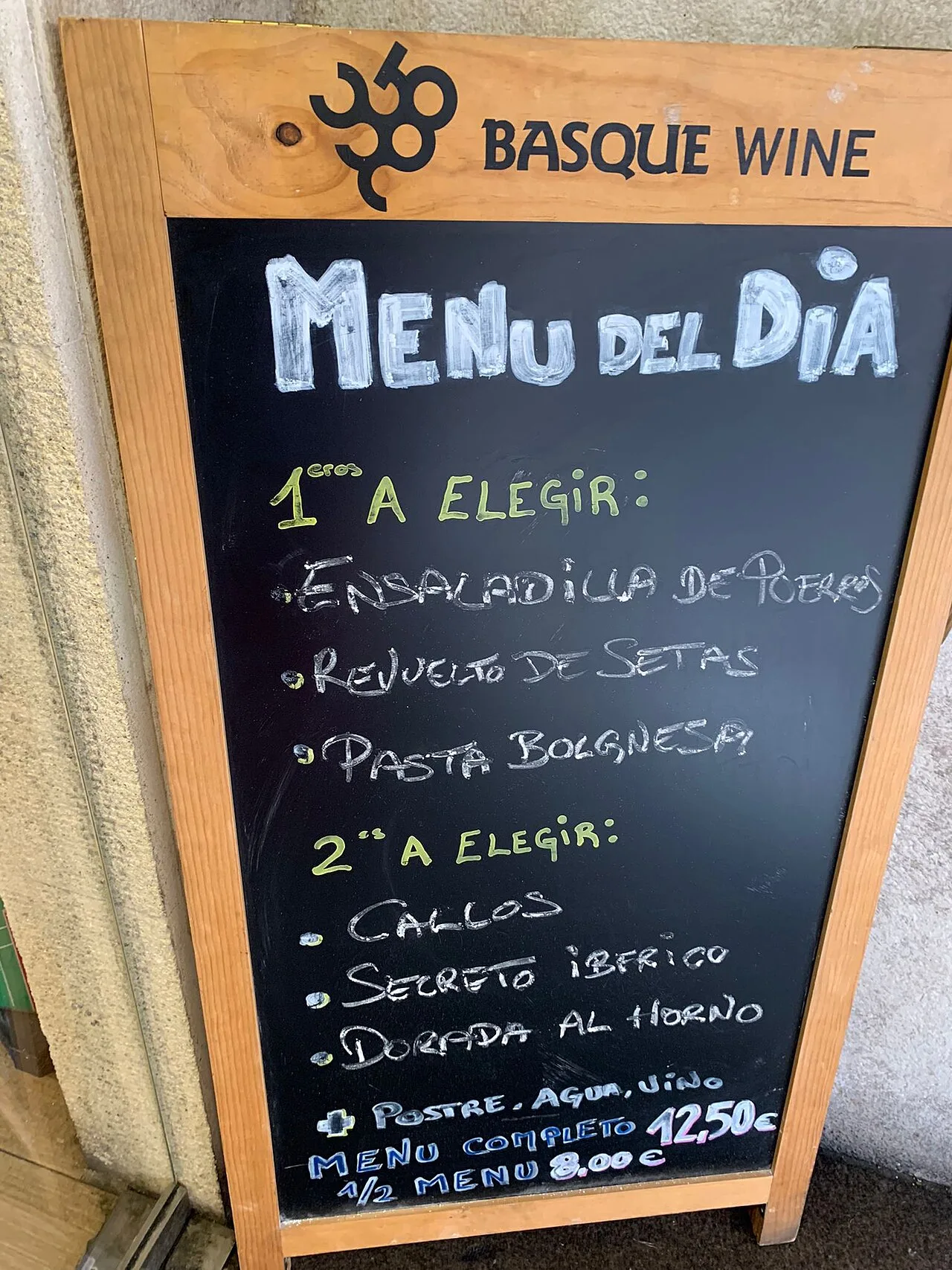
El menú vs la carta
El menú is the list of dishes you order from, and la carta means the same thing. In Spain, el menú usually means something else: the menú del día, a fixed-price set meal and one of the better deals at lunch. Order from the menu with Quisiera..., or — casually, as the waiter works around the table — Para mí, el pollo.
Para mí, el pollo
When a waiter goes around the table, 'Para mí, el pollo' ('For me, the chicken') is the natural, polite way to state your order.
La cuenta, por favor
In Spain, servers don't bring the check automatically, so diners ask for it with 'la cuenta, por favor.'
The four meats
Four common meats on Spanish menus: pollo (chicken), cerdo (pork), cordero (lamb), and carne de res (beef), the usual term in Mexico and much of Latin America. Ternera is veal in Mexico, the meat of a young calf. In Spain it is the usual word for beef, specifically young beef, and meat from an older animal is sold as vaca or buey.
Legumbres
'Legumbres' means legumes — like lentils and chickpeas — a word distinct from the broader 'verduras' (vegetables).
Carne de res
'Carne de res' is the Spanish phrase for beef, one of the meats commonly listed on menus in Mexico and much of Latin America. 'Ternera' is veal in Mexico.
Juice Changes Its Name Mid-Atlantic
Juice is jugo through most of Latin America and zumo in Spain. Order zumo de naranja in Mexico City and you will be understood perfectly — and instantly marked as someone who learned their Spanish in Spain.
In Spain: una caña, un tinto
Cerveza is beer, but in a bar in Spain the order you hear constantly is una caña — a small draft beer. Wine comes tinto (red) or blanco (white); red wine is normally called tinto, not rojo.
El postre
'El postre' means dessert in Spanish — unlike 'refresco' (soft drink), 'cerveza' (beer), and 'vino' (wine), which are all drinks.
Cerveza
'Cerveza' is the Spanish word for beer, distinct from 'vino' (wine), 'jugo' (juice), and 'agua' (water).
Matched pairs
Each item on the left goes with the one on the right.
- La cuenta
- The bill / check
- El mesero
- The waiter
- El menú
- The menu
- La propina
- The tip
- Quisiera...
- I would like...
- Aceite (de oliva)
- Olive oil
- Arroz
- Rice
- Pollo
- Chicken
- Pescado
- Fish (food)
- Verduras
- Vegetables
- Fruta
- Fruit
- Refresco
- Soft drink / Soda
- Jugo
- Juice
- Cerveza
- Beer
- Vino
- Wine
- El postre
- The dessert
- Dulce
- Sweet
Self-test
Answer each question from memory, then check your work against the answer key.
1. The waiter is going around the table taking orders. Which is the natural, casual way to state your order for the chicken?
- ADame el pollo.
- B¿Hay pollo esta noche?
- CYo quiero pollo.
- DPara mí, el pollo.
2. In a restaurant, what does 'el menú' refer to?
- AThe menu you order from
- BThe waiter's tip
- CThe reservation you made
- DThe bill at the end
3. When you're ready to pay, what do you say to ask for the check?
- ABuen provecho
- BEl menú, por favor
- CLa cuenta, por favor
- DLa propina, por favor
4. What does 'la propina' mean?
- AThe waiter
- BThe tip
- CThe bill
- DThe menu
5. What word for 'the waiter' is common in most of Latin America?
- AEl gerente
- BEl dependiente
- CEl mesero
- DEl cocinero
6. Saffron ___ with rabbit, chicken, and beans — a classic dish of Valencia.
- Abread
- Bvegetables
- Colive oil
- Drice
7. Paella is most closely associated with which region of Spain?
- AValencia
- BGalicia
- CCatalonia
- DAndalusia
8. Complete: 'La paella necesita mucho ___ para cocinar el sofrito.'
- Arefresco
- Baceite
- Carroz
- Dpan
9. Paella valenciana combines rabbit, chicken, and beans over what base?
- APotatoes
- BBread
- CSaffron rice
- DFresh egg noodles
10. Which is NOT a traditional ingredient of paella valenciana?
- ARabbit
- BFish
- CChicken
- DBeans
11. Which of these Spanish phrases means beef?
- ACarne de cordero
- BCarne de cerdo
- CCarne de pollo
- DCarne de res
12. What does 'aceite de oliva' mean?
- AOlive oil
- BBread
- CSalt
- DRice
13. Which Spanish word means 'rice'?
- APan
- BArroz
- CSal
- DLegumbres
14. What does 'pollo' mean?
- AChicken
- BLamb
- CPork
- DBeef
15. Which word means 'legumes' (lentils, chickpeas)?
- AFruta
- BCondimentos
- CLegumbres
- DVerduras
16. What does 'cerdo' mean?
- ALamb
- BChicken
- CBeef
- DPork
17. What does 'cordero' mean?
- ALamb
- BPork
- CBeef
- DFish
18. 'Carne de res' refers to which kind of meat?
- AFish
- BBeef
- CLamb
- DPork
19. Spanish distinguishes a swimming fish from fish on a plate. Which word means fish as food?
- APez
- BCerdo
- CPescado
- DPollo
20. Which of these is NOT a meat?
- ACordero
- BCarne de res
- CCerdo
- DFruta
21. What is the standard word for orange juice in Latin America?
- ARefresco de naranja
- BAgua de naranja
- CHelado de naranja
- DJugo de naranja
22. What is the usual word for 'juice' in most of Latin America?
- AJugo
- BRefresco
- CAgua
- DCerveza
23. What does 'cerveza' mean?
- AWater
- BJuice
- CBeer
- DWine
24. When ordering wine, which word means 'red'?
- ADulce
- BTinto
- CBlanco
- DRosado
25. Which of these is NOT a drink?
- APostre
- BVino
- CCerveza
- DRefresco
Go deeper
- WatchPara Mí, el Pollo To order politely, say quisiera: I would like. Going around the table, people often say para mí, el pollo. For me, the chicken.
- WatchPescado Is Caught, Pez Swims Spanish splits one English word in two. A fish still swimming in the water is el pez.
- WatchJugo or Zumo In Latin America, juice is jugo. In Spain, it's zumo. Order zumo in Mexico, and it marks you as having learned Spanish in Spain.
- StudySpanish: Food & Shopping in the FlashFeed app
Answer key
- 1. D Para mí, el pollo.'Para mí...' is the natural, casual way to state your order when the waiter is going around the table.
- 2. A The menu you order from'El menú' is the menu you order from, and 'la carta' means the same thing. In Spain, 'el menú' usually means the fixed-price set meal (menú del día) rather than the full list of dishes.
- 3. C La cuenta, por favor'La cuenta, por favor' asks for the bill. 'El menú' is the menu and 'la propina' is the tip.
- 4. B The tip'La propina' is the tip. In Mexico it is voluntary: a restaurant may not add it to the bill without your consent.
- 5. C El mesero'El mesero' is the usual Latin American word (in Spain: 'camarero'). 'Gerente' is manager, 'cocinero' is cook, 'dependiente' is shop clerk.
- 6. D ricePaella is built on rice (arroz), colored and flavored with saffron.
- 7. A ValenciaPaella is Valencia's signature dish. It originated in the Valencian Community.
- 8. B aceiteSofrito is cooked in oil ('aceite') before the rice goes in. 'Pan' (bread), 'arroz' (rice) and 'refresco' (soft drink) aren't what you cook the sofrito in.
- 9. C Saffron ricePaella is built on rice (arroz), colored and flavored with saffron.
- 10. B FishPaella valenciana uses rabbit, chicken, and beans over saffron rice; fish is not part of the traditional Valencian version.
- 11. D Carne de res'Carne de res' is beef. 'Carne de pollo' is chicken, 'carne de cerdo' is pork and 'carne de cordero' is lamb.
- 12. A Olive oil'Aceite de oliva' is olive oil, the pantry staple in almost everything. 'Sal' is salt, 'arroz' rice, 'pan' bread.
- 13. B Arroz'Arroz' is rice. 'Pan' is bread, 'legumbres' are legumes and 'sal' is salt.
- 14. A Chicken'Pollo' is chicken. 'Cordero' is lamb, 'carne de res' beef, and 'cerdo' pork.
- 15. C Legumbres'Legumbres' are legumes, central to Spanish cooking. 'Verduras' is the broader word for vegetables.
- 16. D Pork'Cerdo' is pork. 'Cordero' is lamb, 'carne de res' beef, 'pollo' chicken.
- 17. A Lamb'Cordero' is lamb. 'Cerdo' is pork, 'carne de res' beef, 'pescado' fish.
- 18. B Beef'Carne de res' is beef, the everyday term in Mexico; 'ternera' there is veal. It is not lamb, pork, or fish.
- 19. C Pescado'Pescado' is fish as food; 'el pez' is a fish still swimming. English makes no such distinction.
- 20. D Fruta'Fruta' is fruit. 'Cerdo' (pork), 'cordero' (lamb), and 'carne de res' (beef) are all meats.
- 21. D Jugo de naranjaIn Latin America, 'jugo' is the word for juice; in Spain, it's 'zumo'.
- 22. A Jugo'Jugo' is juice in Latin America; 'zumo' marks Spain. 'Refresco' is soda, 'agua' water, 'cerveza' beer.
- 23. C Beer'Cerveza' is beer; a small draft in Spain is 'una caña.' 'Vino' is wine, 'jugo' juice, 'agua' water.
- 24. B Tinto'Vino tinto' is red wine; 'blanco' is white. 'Dulce' means sweet and 'rosado' is rosé.
- 25. A Postre'El postre' is dessert. 'Refresco' (soft drink), 'cerveza' (beer), and 'vino' (wine) are all drinks.
Image credits
- El menú vs la carta: Centenoyespelta · CC BY-SA 4.0 — commons.wikimedia.org/wiki/File:Menu_del_dia_Aupa.jpg
