
Spanish Starter study guide · Lesson 1 of 2
Lesson 1: Foundations
Part 1: Greetings and Courtesy · Part 2: Pronouns and Basic Verbs · Part 3: Question Words
This is the lesson's study guide from the FlashFeed app, plus its key facts and a self-test.
What you'll be able to do
- Select the appropriate greeting and courtesy phrase for the time of day, for meeting someone, and for excusing yourself.
- Recognize the meanings of common greetings and the cheek-kiss (saludo) contact custom in Spanish-speaking cultures.
- Distinguish Spanish subject pronouns, including formal vs. informal 'you' and ustedes as the plural 'you'.
- Apply ser vs. estar to separate permanent identity/traits from temporary states.
- Identify the Spanish interrogatives and distinguish '¿por qué?' from 'porque'.
Foundations
You already know hola and gracias. The work at this stage is everything that surrounds them: the registers, the pronouns, the small structural choices that decide whether a sentence sounds like a tourist phrasebook or a person actually talking. This lesson covers three of those layers — courtesy, pronouns and the two verbs for to be, and the words that let you ask questions instead of just answering them.
Greetings and Courtesy
Spanish greetings carry more weight than the English equivalents. Walking into a small shop without saying buenos días is the kind of thing locals notice the way an American notices someone who doesn't tip. Use buenos días until roughly midday, buenas tardes through the afternoon, and buenas noches once it's dark — that last one covers both good evening and good night.
When you're introduced to someone, mucho gusto (nice to meet you) is the safe default. Encantado — or encantada if you're a woman — means delighted, and works the same way. Either one is fine in a business setting; encantado sounds slightly warmer.
Physical contact is where many learners freeze. A saludo between friends in most of Latin America is typically a kiss on one cheek. In Spain it's two light cheek-kisses, one per side. In a professional first meeting, a handshake is correct everywhere. When in doubt, follow the other person's lead.
To interrupt politely or excuse yourself through a crowd, disculpe (formal) or disculpa (informal). Perdone que lo interrumpa (la for a woman) — forgive me for interrupting — is the wordy, polite version, useful when you're cutting into a meeting.
Pronouns and Basic Verbs
Spanish has more yous than English does, and you have to pick one. Tú is informal singular (Argentina, Uruguay, Paraguay and much of Central America use vos instead in everyday speech). Usted is formal singular — for strangers, older people, anyone in a professional context where deference is appropriate. In the plural, ustedes is the one you for everyone, formal or informal. (Spain also uses vosotros for the informal plural.) Nosotros (we) and ellos (they) round out the set.
The other choice that defines Spanish is ser versus estar, both meaning to be. The shortest rule that mostly works: ser for what something is (identity, profession, nationality, permanent traits), estar for how it is right now (location, mood, temporary states). Juan es muy inteligente — that's a trait, so ser. Juan está cansado — he's tired right now, so estar. Get this distinction wrong and the meaning can flip: ser aburrido is to be boring; estar aburrido is to be bored.
Question Words
The interrogatives all carry a written accent and live inside upside-down question marks: ¿quién? who, ¿cuándo? when, ¿dónde? where, ¿cómo? how, ¿cuánto? how much, ¿por qué? why.
That last one is the famous trap. ¿Por qué estás aquí? is why are you here? — two words, accent on qué. The answer, porque (because), is one word with no accent. Same letters, different stress, different jobs. Mix them up in writing and Spanish speakers will read it the way you'd read their used for there.
Key concepts
buenos días
- A time-of-day greeting locals expect the moment you walk into a small shop.
- You use it during the earlier stretch of the day.
- It stays correct up until roughly midday, then you switch to something else.
buenas tardes
- A standard time-of-day greeting in Spanish.
- Its window is the afternoon.
- You reach for it after the morning greeting has expired but before it gets dark.
buenas noches
- A time-of-day greeting you use once it has gotten dark out.
- It does double duty, covering both 'good evening' and 'good night.'
mucho gusto
- A short phrase you say the instant you are introduced to someone.
- It is the safe default when meeting a stranger.
- It conveys the pleasure of the encounter — 'nice to meet you.'
encantado
- An expression used on being introduced, meaning 'delighted.'
- It sounds slightly warmer than the standard meeting phrase and works in business settings.
- A woman speaking it changes its final vowel to '-a.'
Key facts
Two words, two reasons
Encantado becomes encantada because the speaker is a woman — the ending agrees with you, not with the person you are meeting. Disculpe becomes disculpa for an entirely different reason: formality, formal to informal. And when in doubt on an introduction, mucho gusto works for everyone.
Mucho gusto
When meeting a professional colleague for the first time, 'Mucho gusto, un placer' is the polite, standard way to acknowledge the introduction.
Buenos días
Walking into a shop around 9 a.m. calls for 'buenos días' — it's the fitting greeting until roughly midday.

Spanish Makes You Pick a You
English has one you; Spanish makes you choose. Tú is informal singular, usted formal singular, and ustedes the plural you for everybody, formal or informal (Spain also uses vosotros for an informal plural). Nosotros (we) and ellos (they) are the easy ones.
Ser is who, estar how
Spanish splits to be in two. Ser handles identity — nationality, profession, lasting traits: Juan es muy inteligente. Estar handles the moment — location, mood, anything passing: Juan está cansado. Location is the catch: where a person or thing is takes estar even when it never changes (Guadalajara está en México).
Ser Aburrido vs Estar Aburrido
Pick the wrong to be and the sentence turns on you. Ser aburrido means to be boring; estar aburrido means to be bored. Same adjective, one verb apart — telling a host la fiesta es aburrida is a review, not a mood.
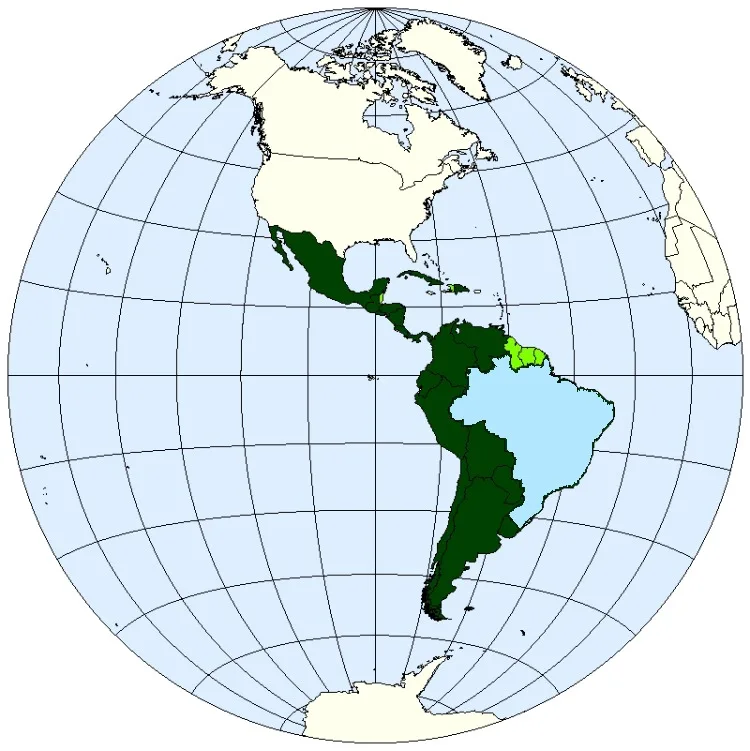
Ustedes
Across Latin America, 'ustedes' covers both formal and informal plural 'you'; Spain also uses 'vosotros' for an informal 'you all.'

Nosotros
'Nosotros' is the Spanish word for 'we,' distinct from 'ellos' (they), 'ustedes' (you all), and 'usted' (formal you).
Question words travel together
Spanish interrogatives come as a group, each one written with an accent and wrapped in a pair of question marks: ¿quién? who, ¿cuándo? when, ¿dónde? where, ¿cómo? how, ¿cuánto? how much. The upside-down ¿ exists so a reader knows a question is coming before reaching the end of it.
¿Por Qué? Asks, Porque Answers
¿Por qué estás aquí? is why are you here? — two words, accent on qué. The reply, porque (because), is one word with no accent. Same letters, different stress, opposite jobs; running them together in writing reads the way their does where there belongs.
Drop the accent, change jobs
That accent is not decoration — it is what separates a question from a statement. ¿Cómo? is how?, but como means like or as. ¿Dónde? asks where?, while plain donde links a clause: la casa donde vivo, the house where I live.

Cuánto
'¿Cuánto?' means 'how much,' different from '¿Cómo?' (how), '¿Cuándo?' (when), and '¿Quién?' (who).
Matched pairs
Each item on the left goes with the one on the right.
- Buenos días
- Good morning
- Buenas noches
- Good night / Good evening
- Mucho gusto
- Nice to meet you
- Encantado
- Delighted / Pleased to meet you
- Disculpe
- Excuse me (formal)
- Nosotros
- We
- Ustedes
- You all (formal and informal)
- Ellos
- They
- Usted
- You (formal)
- Ser
- To be (permanent/essential)
- Estar
- To be (temporary/location)
- ¿Quién?
- Who?
- ¿Cuándo?
- When?
- ¿Dónde?
- Where?
- ¿Por qué?
- Why?
- ¿Cómo?
- How?
- ¿Cuánto?
- How much?
Self-test
Answer each question from memory, then check your work against the answer key.
1. Which greeting is most appropriate when meeting a professional colleague for the first time?
- A¿Qué onda, amigo?
- B¡Hola, hermano!
- CMucho gusto, un placer.
- DBuenas, ¿qué tal?
2. You walk into a shop at 9 a.m. Which greeting fits the time of day?
- ABuenos días
- BMucho gusto
- CBuenas tardes
- DBuenas noches
3. It is 9 p.m. and already dark out. Which greeting is correct?
- ADisculpe
- BBuenas tardes
- CBuenos días
- DBuenas noches
4. How do you formally excuse yourself to get through a crowd?
- ADisculpa
- BDisculpe
- CMucho gusto
- DEncantado
5. A woman being introduced wants to say 'delighted / pleased to meet you.' Which form should she use?
- AEncantada
- BBuenas tardes
- CPerdone
- DEncantado
6. Between friends in most of Latin America, a **saludo** is ___ on the cheek. In business, stick to a firm handshake.
- Atwo kisses
- Bone kiss
- Cfour kisses
- Dthree kisses
7. What does 'Mucho gusto' mean?
- AGood night
- BSee you later
- CExcuse me
- DNice to meet you
8. What does 'Encantado' mean?
- AGood morning
- BHow much?
- CDelighted / pleased to meet you
- DExcuse me, pardon the interruption
9. In most of Latin America, a saludo between friends typically involves what?
- AA brief bow
- BA firm handshake
- CTwo light cheek-kisses, one per side
- DA single cheek-kiss
10. What does 'Buenas noches' mean?
- ANice to meet you
- BGood night / good evening
- CExcuse me (formal)
- DGood morning
11. Which pronoun is used across Latin America for an informal 'you all'?
- AUsted
- BNosotros
- CUstedes
- DEllos
12. Which pronoun is the formal singular 'you,' used with strangers and elders?
- AUsted
- BUstedes
- CNosotros
- DTú
13. What does 'Nosotros' mean?
- AThey
- BWe
- CYou (formal)
- DYou all
14. In Latin America, which pronoun is used for 'you all' with everyone, formal or informal?
- AEllos
- BNosotros
- CTú
- DUstedes
15. Which pronoun is the informal singular 'you'?
- AEllos
- BUsted
- CTú
- DUstedes
16. Which Spanish pronoun means the informal singular 'you', used with friends or peers?
- ATú
- BNosotros
- CUstedes
- DUsted
17. Which pronoun would you use to address a close friend who is the same age as you?
- ATú
- BUstedes
- CEllos
- DUsted
18. Which situation calls for 'ser'?
- ADescribing a current location
- BStating a permanent trait or identity
- CDescribing a passing mood or feeling
- DSaying how something looks or tastes today
19. Which situation calls for 'estar'?
- AStating a profession or job title
- BNaming a permanent trait or a family role
- CStating nationality or origin
- DDescribing location or a temporary state
20. Fill the blank: 'Juan ___ cansado' (he is tired right now).
- Ason
- Bes
- Cestá
- Destoy
21. Fill the blank: 'Juan ___ muy inteligente' (a lasting trait).
- Asoy
- Bestá
- Cson
- Des
22. What does 'estar aburrido' mean?
- ATo be boring
- BTo be bored
- CTo be tired
- DTo be intelligent
23. How do you ask 'Why are you here?' in Spanish?
- A¿Porque estás aquí?
- B¿Dónde estás aquí?
- C¿Por qué estás aquí?
- D¿Cómo estás aquí?
24. Which interrogative means 'Where?'
- A¿Dónde?
- B¿Cómo?
- C¿Quién?
- D¿Cuándo?
25. 'Porque' — one word, no accent — means what?
- ABecause
- BWhen
- CWhy
- DHow
26. Which interrogative means 'How much?'
- A¿Cómo?
- B¿Quién?
- C¿Cuánto?
- D¿Cuándo?
27. Which interrogative-to-meaning pairing is INCORRECT?
- A¿Cuándo? = When?
- B¿Cómo? = Why?
- C¿Quién? = Who?
- D¿Dónde? = Where?
Go deeper
- WatchGreetings by the Clock In Spanish, the greeting changes with the clock. Until about midday, say buenos días.
- WatchTú, Usted and Two Ways to Be Spanish makes you choose your you. Tú is the informal one.
- WatchWhy, or Because? Every Spanish question word carries a written accent. Quién is who. Dónde is where. Cuándo is when.
- StudySpanish Starter in the FlashFeed app
Answer key
- 1. C Mucho gusto, un placer.'Mucho gusto' is the standard, polite way to acknowledge a new introduction in a formal or semi-formal setting.
- 2. A Buenos días'Buenos días' is used until roughly midday. 'Buenas tardes' is for the afternoon and 'buenas noches' for after dark.
- 3. D Buenas noches'Buenas noches' covers both good evening and good night, used once it is dark. 'Buenos días' is for morning, 'buenas tardes' for the afternoon.
- 4. B Disculpe'Disculpe' is the formal way to excuse yourself; 'disculpa' is its informal counterpart. 'Mucho gusto' and 'encantado' are for introductions.
- 5. A EncantadaA woman says 'encantada'; a man says 'encantado.' The ending agrees with the speaker's gender.
- 6. B one kiss
- 7. D Nice to meet you'Mucho gusto' means 'nice to meet you,' the safe default when introduced to someone.
- 8. C Delighted / pleased to meet you'Encantado' means 'delighted' and works like 'mucho gusto' when meeting someone; it sounds slightly warmer.
- 9. D A single cheek-kissBetween friends in most of Latin America, a saludo is a single cheek-kiss. In Spain it is two, one per side.
- 10. B Good night / good evening'Buenas noches' covers both good evening and good night, used once it is dark. 'Buenos días' is morning and 'mucho gusto' is for introductions.
- 11. C Ustedes'Ustedes' is the plural 'you' across Latin America, formal or informal. (Spain also uses 'vosotros' for an informal 'you all.')
- 12. A Usted'Usted' is formal singular 'you.' 'Tú' is informal singular, while 'ustedes' and 'nosotros' are plural.
- 13. B We'Nosotros' means 'we.' 'Ellos' is 'they,' 'ustedes' is 'you all,' and 'usted' is formal 'you.'
- 14. D UstedesAcross Latin America, 'ustedes' is the plural 'you' for everyone, formal or informal. (Spain also uses 'vosotros' for the informal plural.)
- 15. C Tú'Tú' is informal singular 'you.' 'Usted' is its formal counterpart; 'ustedes' and 'ellos' are plural.
- 16. A Tú'Tú' is the informal singular 'you' in Spanish, used with friends, peers, and family; 'usted' is the formal singular.
- 17. A Tú'Tú' is used for informal address with friends and peers, while 'usted' is reserved for formal or deferential contexts.
- 18. B Stating a permanent trait or identity'Ser' is for what something is: identity, profession, nationality, permanent traits. 'Estar' handles location and temporary states.
- 19. D Describing location or a temporary state'Estar' covers how something is right now: location, mood, temporary states. Identity and permanent traits take 'ser.'
- 20. C estáBeing tired is a temporary state, so 'estar' is conjugated as 'está.' 'Es' (from ser) would be for a permanent trait.
- 21. D esIntelligence is a permanent trait, so 'ser' is conjugated as 'es.' 'Está' would wrongly mark it as temporary.
- 22. B To be bored'Estar aburrido' is 'to be bored' (a temporary state). 'Ser aburrido' means 'to be boring' — the verb choice flips the meaning.
- 23. C ¿Por qué estás aquí?The question form '¿Por qué?' is two words with an accent, whereas the answer 'porque' (because) is one word.
- 24. A ¿Dónde?'¿Dónde?' means 'where.' '¿Cuándo?' is 'when,' '¿Quién?' is 'who,' and '¿Cómo?' is 'how.'
- 25. A Because'Porque' (one word, no accent) is the answer 'because.' The question '¿Por qué?' is two words with an accent on qué.
- 26. C ¿Cuánto?'¿Cuánto?' means 'how much.' '¿Cómo?' is 'how,' '¿Cuándo?' is 'when,' and '¿Quién?' is 'who.'
- 27. B ¿Cómo? = Why?'¿Cómo?' means 'how,' not 'why' — 'why' is '¿Por qué?' The other three pairings are correct.
Image credits
- Spanish Makes You Pick a You: BTO - Official (Openverse) · by 2.0 — www.flickr.com/photos/44601004@N04/5042423666
- Ustedes: Wikimedia Commons · Alemigav · CC0 — commons.wikimedia.org/wiki/File:Languages_in_Latin_America.jpg
- Nosotros: marfis75 (Openverse) · by 2.0 — www.flickr.com/photos/45409431@N00/5034988401
- Cuánto: AI-generated (gpt-image-1.5)
