
Fun with Numbers study guide · Lesson 6 of 9
USA by the Numbers
Government and the Constitution · States, symbols and rules
This is the lesson's study guide from the FlashFeed app, plus its key facts and a self-test.
What you'll be able to do
- Recall the fixed sizes of Congress, the electoral votes needed to win the presidency, and the year a law capped the House at 435
- Recall the key figures of the presidency and the US Constitution
- Identify the core institutions of the US government
- Recall the counts on the flag and the number of states and national parks, and what the stripes represent
- Recall the constitutional age thresholds for voting and for becoming president
Every country runs on a set of structural numbers — how many leaders, how many lawmakers, how many rules — and the United States has a particularly memorable set, baked into its founding documents and its flag. This lesson collects the civic figures worth knowing cold: the counts that define how the government is built and how it works. They're the kind of numbers that come up constantly and that surprisingly many people get wrong.
Government and the Constitution
One figure that keeps changing is the count of US presidencies: as of 2026 it stands at 47, though only 45 people have held the office, with Donald Trump holding both the 45th and 47th slots because his terms were non-consecutive (a quirk shared only with Grover Cleveland). The legislature splits into two fixed numbers: 100 senators (two from each state) and 435 voting members of the House of Representatives. That House figure is worth a second look — it has been permanently capped at 435 by the Reapportionment Act of 1929, even though the population has nearly tripled since, so each representative now speaks for far more people than the founders intended. Presidential elections turn on the Electoral College, where a candidate needs 270 electoral votes to win out of 538 total. Each presidential term is 4 years. And the framework behind all of it, the US Constitution, was ratified in 1788 — when New Hampshire became the ninth state to approve it — and took effect in 1789; counting from that 1788 ratification, it is 238 years old in 2026 and the oldest written national constitution still in use. It has been formally changed only 27 times, the count of its amendments, the first ten of which are the Bill of Rights.
States, symbols and rules
The rest of the American numbers live on the flag and in the rulebook. There are 50 states, a number reached in 1959 when Alaska and Hawai'i joined — and the flag records the country's growth in two layers: 50 stars, one per current state, and 13 stripes, one for each of the original colonies that declared independence. Apart from the 15-stripe flag of 1795 to 1818, those thirteen stripes have stayed fixed while the stars have multiplied. The country protects its grandest landscapes through the National Park System, which, as of 2026, includes 64 national parks — the crown jewels like Yellowstone, Yosemite, and the Grand Canyon — among hundreds of other protected sites. A few age thresholds shape civic life: you can vote at 18 (lowered from 21 by the 26th Amendment), but you must be at least 35 to be president, one of just three constitutional qualifications for the office. Together these numbers form a kind of civic vocabulary — 50 states, 100 senators, 435 representatives, 270 to win, 27 amendments — that anchors how the whole system fits together.
Key concepts
US Constitution
- The founding legal framework the entire US federal government is built on.
- At 238 years old in 2026, it is the oldest written national charter still in use.
- Ratified in 1788, it has been formally amended only 27 times.
Electoral College
- The mechanism that actually decides who becomes US president, not a direct popular vote.
- Its 538 votes come from the states, plus 3 for Washington, District of Columbia (DC).
- A candidate must capture 270 of its votes to win the presidency.
Senate
- The smaller of the two chambers of the US Congress.
- Every state sends exactly two members to it, regardless of size.
- It seats 100 lawmakers in all, evenly split across the 50 states.
House of Representatives
- The larger of the two chambers of the US Congress.
- The Reapportionment Act of 1929 permanently capped its size even as the US population nearly tripled.
- It seats 435 voting members, so each now speaks for far more people than the founders intended.
National Park System
- The federal program that safeguards America's grandest landscapes.
- It includes 64 of the country's most celebrated preserves among hundreds of other protected sites.
- Its crown jewels include Yellowstone, Yosemite, and the Grand Canyon.
Key facts
435 seats, fixed since 1929
The US House of Representatives has had 435 voting members since the Reapportionment Act of 1929 permanently capped the number — even though the country's population has nearly tripled since then, so each member now represents far more people.
47 Presidencies, But Only 45 People
Count the US presidents through 2026 and the answer is 47 — but only 45 men have held the job. Donald Trump fills both the 45th and 47th slots because his terms were not consecutive, a quirk shared with exactly one predecessor: Grover Cleveland, the 22nd and 24th president. Each term, then as now, runs 4 years.
Where 538 votes come from
A candidate needs 270 electoral votes to win the presidency — a bare majority of 538. That total is not arbitrary: it is the 435 members of the House, plus the 100 senators, plus 3 votes granted to Washington, District of Columbia (DC) by the 23rd Amendment — one of only 27 changes made to the Constitution since it was ratified in 1788.
The magic number to win
Winning the US presidency requires 270 electoral votes — a simple majority of the Electoral College's 538 total votes.
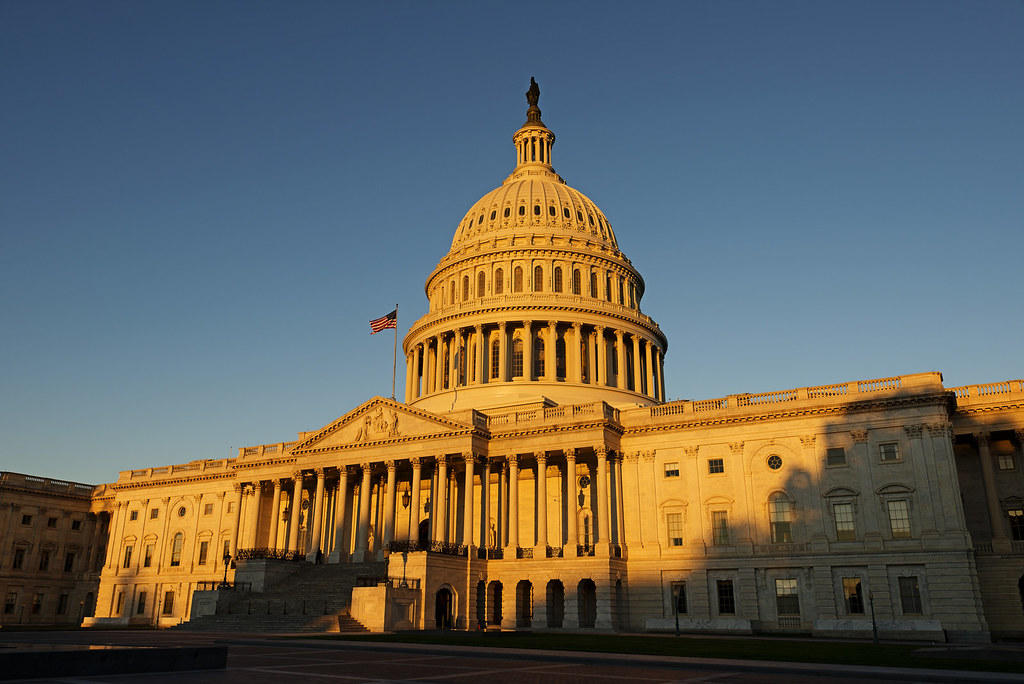
Different jobs, different terms
Each US presidential term runs 4 years, compared with 2 years for a House term and 6 years for a Senate term; the 22nd Amendment limits a president to being elected twice.
18 to Vote, 35 to Run
The voting age was 21 until the 26th Amendment lowered it to 18 in 1971, leaving a 17-year gap to the age the Constitution requires of a president: 35. That minimum is one of only three qualifications for the office, alongside being a natural-born citizen and having lived in the United States for 14 years.
The last two states
The US grew to its current 50 states in 1959, when Alaska and Hawai'i both joined the union.
When voting age dropped
The US voting age used to be 21 until the 26th Amendment brought it down to 18, the threshold still in place today.
By the numbers
- Number of US presidents through 2026
- 47 count
- Number of US senators
- 100 count
- Number of voting members in the US House
- 435 count
- Electoral votes needed to win the presidency
- 270 count
- Years in a single US presidential term
- 4 years
- Age of the US Constitution in 2026 (ratified 1788)
- 238 years
- Number of amendments to the US Constitution
- 27 count
- Number of US states
- 50 count
- Number of US national parks (as of 2026)
- 64 count
- Number of stars on the US flag
- 50 count
- Number of stripes on the US flag
- 13 count
- Voting age in the United States
- 18 years
- Minimum age to be US president
- 35 years
Self-test
Answer each question from memory, then check your work against the answer key.
1. The US House of Representatives has had 435 voting members since a ___ law permanently capped the number — even though the country's population has nearly tripled since then, so each member now represents far more people.
- A1920
- B1941
- C1929
- D1911
2. How many senators serve in the US Senate?
- A538
- B100
- C50
- D435
3. Which US governing body has 435 voting members?
- AThe Electoral College
- BThe Senate
- CThe Supreme Court
- DThe House of Representatives
4. How many electoral votes does a candidate need to win the US presidency?
- A270
- B218
- C538
- D435
5. The 270 votes needed to win come out of how many total electoral votes?
- A538
- B545
- C500
- D435
6. Through 2026, how many numbered US presidencies have there been, counting non-consecutive terms separately?
- A44
- B46
- C47
- D45
7. How many years is a single US presidential term?
- A8
- B4
- C6
- D2
8. In what year was the US Constitution ratified?
- A1776
- B1789
- C1787
- D1788
9. How many times has the US Constitution been formally amended?
- A10
- B12
- C25
- D27
10. As of 2026, which president holds both the 45th and 47th slots because his terms were non-consecutive?
- ABarack Obama
- BGrover Cleveland
- CDonald Trump
- DJoe Biden
11. Which US institution decides presidential elections through a total of 538 votes?
- AThe Senate
- BThe Electoral College
- CThe Supreme Court
- DThe House of Representatives
12. Which body of Congress gives two members to each state regardless of population?
- AThe Senate
- BThe Electoral College
- CThe House of Representatives
- DThe Cabinet
13. What is the oldest written national constitution still in use, forming the framework of US government?
- AThe Bill of Rights
- BThe Declaration of Independence
- CThe Articles of Confederation
- DThe US Constitution
14. Which chamber of Congress has 435 voting members apportioned by population?
- AThe House of Lords
- BThe House of Representatives
- CThe Electoral College
- DThe Senate
15. Which of these is NOT a governing institution of the US federal government?
- AThe Senate
- BThe House of Representatives
- CThe National Park System
- DThe Supreme Court
16. What do the 13 stripes on the US flag represent?
- AThe original thirteen colonies
- BThe thirteen westernmost states
- CThe thirteen signers of the Declaration of Independence
- DThe thirteen amendments of the Bill of Rights
17. How many states make up the United States?
- A52
- B48
- C13
- D50
18. How many stars appear on the US flag?
- A64
- B48
- C50
- D13
19. How many stripes are on the US flag?
- A13
- B10
- C12
- D16
20. How many national parks does the US National Park System include as of 2026?
- A433
- B64
- C50
- D58
21. How many states make up the United States?
- A48
- B52
- C13
- D50
22. Which event brought the US to its current count of 50 states?
- AThe Louisiana Purchase
- BAlaska and Hawai'i joining in 1959
- CThe original colonies uniting
- DTexas annexation
23. What does each of the 13 stripes on the US flag represent?
- AOne of the original thirteen colonies
- BA branch of the US armed forces
- COne of the amendments in the Bill of Rights
- DA member of the Continental Congress
24. On the US flag, what do the stripes track that differs from what the stars track?
- ASigners of the Declaration, while stars track current states
- BThe current states, while stars track the founding colonies
- CThe founding colonies, while stars track current states
- DBill of Rights amendments, while stars track current states
25. What is the voting age in the United States?
- A18
- B21
- C25
- D16
26. What is the minimum age to become US president?
- A30
- B25
- C40
- D35
27. Which amendment lowered the US voting age to 18?
- AThe 27th Amendment
- BThe 19th Amendment
- CThe 26th Amendment
- DThe 24th Amendment
28. Before the 26th Amendment, what was the US voting age?
- A18
- B21
- C25
- D19
29. How many years older must a person be to run for president than to be eligible to vote?
- A17
- B14
- C20
- D23
Go deeper
- ListenLesson 6 episode
- WatchThe Civic Numbers The US flag carries 50 stars, one for each state, and 13 stripes, one for each of the original colonies.
- WatchVote at 18 The U.S. voting age was 21 until the 26th Amendment. The amendment lowered it to 18.
- StudyFun with Numbers in the FlashFeed app
Answer key
- 1. C 1929
- 2. B 100The Senate has 100 members — two from each of the 50 states. 435 is the House, and 538 is the total Electoral College.
- 3. D The House of RepresentativesThe House of Representatives has 435 voting members, permanently capped by the Reapportionment Act of 1929. The Senate has 100, and the Electoral College has 538.
- 4. A 270A candidate needs 270 electoral votes — a majority of the 538 total. 538 is the total, not the threshold to win.
- 5. A 538There are 538 total electoral votes, so 270 is a bare majority. 435 is the size of the House, not the Electoral College.
- 6. C 47As of 2026 the count of numbered presidencies is 47, though only 45 people have held the office, because Grover Cleveland and Donald Trump each served non-consecutive terms.
- 7. B 4A presidential term is 4 years. 2 is a House term, 6 is a Senate term, and 8 is two full terms, the most a president can be elected to.
- 8. D 1788The Constitution was ratified in 1788, when New Hampshire became the ninth state to ratify it (June 21, 1788), meeting Article VII's nine-state threshold. Government under it began in 1789; 1787 is when it was drafted and signed; 1776 is the Declaration of Independence.
- 9. D 27There are 27 amendments; the first ten are the Bill of Rights. 10 counts only the Bill of Rights, not the total.
- 10. C Donald TrumpDonald Trump holds the 45th and 47th slots — a quirk of non-consecutive terms shared only with Grover Cleveland, who did it earlier.
- 11. B The Electoral CollegeThe Electoral College casts 538 votes, with 270 needed to win. The Senate and House are legislative bodies, not the election-deciding institution.
- 12. A The SenateThe Senate seats two per state (100 total). The House is apportioned by population, not equally by state.
- 13. D The US ConstitutionThe US Constitution, ratified 1788, is the oldest written national constitution still in use. The Bill of Rights is its first ten amendments, not the whole document.
- 14. B The House of RepresentativesThe House of Representatives has 435 population-apportioned seats. The Senate has 100 seated equally by state; the House of Lords is British.
- 15. C The National Park SystemThe House and Senate make federal laws and the Supreme Court heads the judicial branch, so all three govern. The National Park System is the collection of protected sites managed by the National Park Service, not a governing body.
- 16. A The original thirteen coloniesThe flag records the nation's growth in two layers: 50 stars for the current states, and 13 stripes, one for each original colony that declared independence. Apart from the 15-stripe flag of 1795 to 1818, the stripes stayed fixed while the stars multiplied.
- 17. D 50There are 50 states, reached in 1959 when Alaska and Hawai'i joined. 13 is the number of original colonies, shown by the stripes.
- 18. C 50There are 50 stars, one per current state. The 13 stripes represent the original colonies, and 64 is the number of national parks.
- 19. A 13There are 13 stripes, one per original colony. Apart from the 15-stripe flag of 1795 to 1818, they have stayed fixed while the stars grew to 50, one per state.
- 20. B 64There are 64 national parks — crown jewels like Yellowstone and Yosemite — among hundreds of other protected sites. 433 counts all National Park Service (NPS) units, not just parks.
- 21. D 50The US has 50 states, a number reached in 1959 when Alaska and Hawai'i joined.
- 22. B Alaska and Hawai'i joining in 1959Alaska and Hawai'i became states in 1959, bringing the total to the current 50.
- 23. A One of the original thirteen coloniesEach of the 13 stripes stands for one of the original colonies that declared independence.
- 24. C The founding colonies, while stars track current statesApart from the 15-stripe flag of 1795 to 1818, the 13 stripes have stayed fixed for the original colonies, while the stars have grown with each new state to 50.
- 25. A 18You can vote at 18, lowered from 21 by the 26th Amendment. 21 was the old threshold before that amendment.
- 26. D 35You must be at least 35 to be president — one of just three constitutional qualifications for the office.
- 27. C The 26th AmendmentThe 26th Amendment lowered the voting age from 21 to 18. The 19th Amendment gave women the vote — a different reform.
- 28. B 21The voting age was 21 before the 26th Amendment lowered it to 18. 18 is the current age, not the former one.
- 29. A 17The presidential minimum age is 35 and the voting age is 18, a gap of 17 years. Both are constitutional age thresholds.
Image credits
- Different jobs, different terms: Openverse · Dusty J · CC BY 2.0 — www.flickr.com/photos/55608722@N06/7997921501