
AI for Everyone study guide · Lesson 3 of 14
Roles, Reasons, and Control
Roles Are Lenses · Ask for Visible Reasons · Break Work into Stages · Surface Assumptions and Uncertainty
This is the lesson's study guide from the FlashFeed app, plus its key facts and a self-test.
What you'll be able to do
- Use roles, decomposition, assumptions, and visible checks without mistaking performance cues for expertise.
Roles Are Lenses
A role prompt can establish audience, vocabulary, priorities, or a review lens: “Act as a skeptical copy editor” is a compact way to request attention to ambiguity and unsupported claims. It is a direction for behavior, not a credential check.
Research on factual question answering found that personas do not reliably improve objective knowledge and their effects vary across models and questions. Put the task, evidence, and rubric first. Use a role only when it changes observable behavior you actually want.
Three ideas to retain:
- A Role Sets a Lens: Roles can cue tone, audience, priorities, or review standards. They are most useful when the desired perspective can be described and evaluated.
- A Persona Is Not a Credential: “Act as a doctor” does not confer medical training, accountability, or access to a patient's record. The output still needs appropriate evidence and review.
- Task Details Usually Matter More: A clear assignment, source packet, and rubric provide stronger control than an impressive job title alone.
Key term: Role prompt means “an instruction to adopt a perspective or standard.”
Ask for Visible Reasons
For important work, ask for inspectable support: cite the supplied passage, show the formula, list assumptions, compare alternatives, or provide a concise rationale. Those artifacts help a reviewer locate the step that needs checking.
A long explanation is not automatically faithful to how a model produced its answer, and verbosity can make a weak answer look rigorous. Prefer short, task-relevant evidence over theatrical internal monologues. Verify the underlying claim or calculation independently when the stakes require it.
Three ideas to retain:
- Request Inspectable Artifacts: Citations, formulas, assumptions, intermediate tables, and test results give a reviewer concrete objects to check.
- Length Is Not Proof: A detailed explanation can still be unsupported, post-hoc, or wrong. Fluency and confidence do not substitute for evidence.
- Match the Reason to the Task: A calculation needs shown inputs and arithmetic; a source-based summary needs claim-to-passage links; a recommendation needs criteria and tradeoffs.
Key term: Concise rationale means “a short justification tied to evidence.”
Break Work into Stages
Complex requests often improve when separated into stages. First inventory the inputs and unknowns, then propose a plan, produce a draft, and finally inspect it against criteria. Staging keeps early misunderstandings from contaminating every downstream step.
Do not decompose forever. Every added step costs time and can create new failure points. Use stages when they expose a decision, produce a checkable artifact, or create a useful approval point. For a trivial task, a direct prompt is usually better.
Three ideas to retain:
- Stages Expose Decisions: Planning, drafting, and checking as separate phases makes assumptions and intermediate choices easier to inspect.
- Approval Can Sit Between Stages: A human can approve the outline before prose is produced or approve a query before it touches a database.
- Complexity Has a Cost: Extra steps add latency and opportunities for drift. Decompose only where a stage creates control or useful evidence.
Key term: Planning stage means “chooses an approach before production.”
Surface Assumptions and Uncertainty
A model often completes an underspecified request by selecting plausible assumptions. That can be helpful in brainstorming and dangerous in decisions. Ask it to separate supplied facts, inferences, assumptions, and unknowns. Require clarifying questions when a missing answer would materially change the result.
Uncertainty language is not perfectly calibrated, so “I am 80% confident” is not a measurement unless the system has been evaluated for that task. Use uncertainty as a routing signal: which claim needs a source, which choice needs a human, and which missing input blocks progress.
Three ideas to retain:
- Assumptions Fill Gaps: When a request leaves key details open, a model may choose plausible values rather than stop. Making assumptions explicit keeps them reviewable.
- Unknown Is a Valid Output: A responsible response can identify missing information, state what evidence would resolve it, or decline to make a high-stakes guess.
- Confidence Needs Calibration: A numeric confidence claim is useful only when its relationship to actual accuracy has been tested for the task and setting.
Key term: Assumption means “a premise used without confirmation.”
Sources
Key terms
- Persona prompting
- Directing a model to respond from a named role or perspective.
- Rationale
- A stated justification for a conclusion or choice.
- Task decomposition
- Dividing a complex job into smaller, inspectable stages.
- Calibration
- How closely stated confidence corresponds to observed accuracy.
Key facts
A Persona Is Not a Credential
“Act as a doctor” does not confer medical training, accountability, or access to a patient's record. The output still needs appropriate evidence and review.
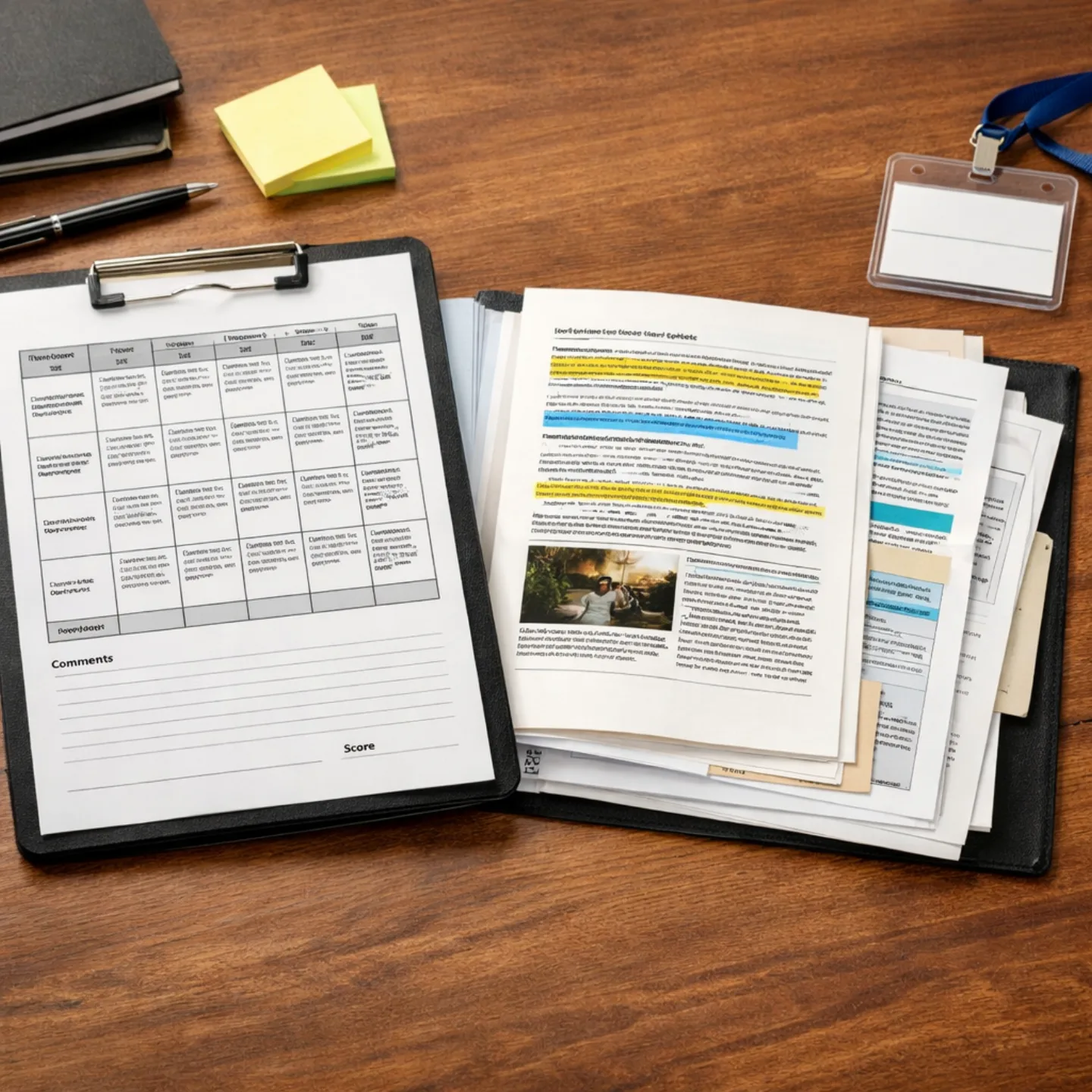
Task Details Usually Matter More
A clear assignment, source packet, and rubric provide stronger control than an impressive job title alone.
Length Is Not Proof
A detailed explanation can still be unsupported, post-hoc, or wrong. Fluency and confidence do not substitute for evidence.

Match the Reason to the Task
A calculation needs shown inputs and arithmetic; a source-based summary needs claim-to-passage links; a recommendation needs criteria and tradeoffs.

Approval Can Sit Between Stages
A human can approve the outline before prose is produced or approve a query before it touches a database.
Complexity Has a Cost
Extra steps add latency and opportunities for drift. Decompose only where a stage creates control or useful evidence.

Unknown Is a Valid Output
A responsible response can identify missing information, state what evidence would resolve it, or decline to make a high-stakes guess.

Confidence Needs Calibration
A numeric confidence claim is useful only when its relationship to actual accuracy has been tested for the task and setting.
Matched pairs
Each item on the left goes with the one on the right.
- Role prompt
- An instruction to adopt a perspective or standard
- Expertise claim
- A statement of actual competence or qualification
- Concise rationale
- A short justification tied to evidence
- Verifiable trace
- An artifact a reviewer can independently check
- Planning stage
- Chooses an approach before production
- Review stage
- Checks output against requirements and evidence
- Assumption
- A premise used without confirmation
- Clarifying question
- A request for missing information that changes the task
Step by step
Decompose a complex AI-assisted task
- List the available inputs and unknowns
- Ask for a plan with decision points
- Approve or revise the plan
- Generate one stage at a time
- Check each deliverable before continuing
Keep a stage only when it reveals a choice, artifact, or approval boundary.
Create an assumption check
- List facts explicitly supplied by the user
- List inferences drawn from those facts
- Mark every unconfirmed premise as an assumption
- Ask about assumptions that would change the result
- Route unresolved uncertainty to verification or human review
Do not turn a model's confidence wording into a probability without calibration evidence.
Self-test
Answer each question from memory, then check your work against the answer key.
1. What can a role prompt reliably provide?
- AGuaranteed factual accuracy
- BPrivate case knowledge
- CA requested perspective
- DA professional license
2. Which role instruction is most testable?
- AKnow every hidden fact
- BReview this as a copy editor
- CNever make an error
- DBe the world's best genius
3. Which request is easiest to verify?
- AShow inputs and formula
- BBe completely certain
- CWrite a longer answer
- DThink more deeply
4. What does a long explanation prove?
- AThat sources were checked
- BThat risk is eliminated
- CThat every step is true
- DOnly that text was produced
5. Why approve an outline first?
- AGuarantee every fact
- BCatch direction errors early
- CRetrain the model
- DRemove all later review
Go deeper
- WatchThe Doctor Prompt Ask an artificial intelligence model to act as a doctor. Does it become one?
- StudyAI for Everyone in the FlashFeed app
Answer key
- 1. C A requested perspectiveA role is a behavioral cue, not verified expertise.
- 2. B Review this as a copy editorCopy editing names a concrete review lens.
- 3. A Show inputs and formulaInputs and a formula can be recalculated.
- 4. D Only that text was producedLength alone does not validate reasoning or evidence.
- 5. B Catch direction errors earlyAn early checkpoint prevents expensive drafting on the wrong plan.
Sources
- Zheng et al. — Role-Playing Does Not Improve Factual Accuracy; Zheng et al. — Personas in System Prompts Do Not Improve Performances of Large Language Models (Findings of EMNLP 2024) — aclanthology.org/2024.findings-emnlp.888/
- Google Cloud — Prompt design strategies — cloud.google.com/vertex-ai/generative-ai/docs/learn/prompts/prompt-design-strategies
- NIST — Generative AI Profile — www.nist.gov/publications/artificial-intelligence-risk-management-framework-generative-artificial-intelligence
Image credits
- Task Details Usually Matter More: AI-generated (gpt-image-1.5)
- Match the Reason to the Task: AI-generated (gpt-image-1.5)
- Approval Can Sit Between Stages: Wikimedia Commons · Supersonicman13 · CC BY-SA 4.0 — commons.wikimedia.org/wiki/File:Gepr%C3%BCfte_Servicequalit%C3%A4t.jpg
- Unknown Is a Valid Output: Wikimedia Commons · Kwameghana(Bright Kwame Ayisi) · CC BY-SA 4.0 — commons.wikimedia.org/wiki/File:Foggy_landscape.jpg
- Confidence Needs Calibration: AI-generated (gpt-image-1.5)

