
American Football Trivia & Gridiron Lore study guide · Lesson 1 of 6
Origins, Gridiron Pioneers, and Legendary Firsts
The Birth of the Gridiron: From Rutgers-Princeton to Canton · Pioneering Giants and Breakthrough Milestones
This is the lesson's study guide from the FlashFeed app, plus its key facts and a self-test.
What you'll be able to do
- Recall the 1869 Rutgers-Princeton game, Walter Camp's rules, Heffelfinger's $500 pro payment, the 1906 forward pass, and Jim Thorpe's 1920 presidency.
- Recall football's pioneers: Fritz Pollard, Red Grange, Kenny Washington and Woody Strode's 1946 return, the Bears' 73-0 rout, and Paul Brown's film study.
Lesson 1: Origins, Gridiron Pioneers, and Legendary Firsts
The Birth of the Gridiron: From Rutgers-Princeton to Canton
The genesis of American football traces back to the late nineteenth century, when collegiate athletes modified English rugby and soccer into an entirely new, violent, and tactical sport. On November 6, 1869, Rutgers College and the College of New Jersey (later Princeton University) met in New Brunswick, New Jersey, for what is universally recognized as the first intercollegiate football game. Played with a round ball and twenty-five players per side, Rutgers won 6-4 under rules resembling Association football.
The true transformation from chaotic scrum to structured gridiron tactical chess occurred under Walter Camp, a Yale undergraduate and medical student known as the Father of American Football. At Intercollegiate Football Association rules conventions between 1880 and 1883, Camp introduced foundational innovations: establishing the line of scrimmage, the snap from center to quarterback, an eleven-player per side limit, and the system of downs requiring teams to gain five yards (later ten in 1906) in three downs to maintain possession.
As the collegiate game surged in popularity across the Ivy League, professional athletics emerged in industrial Western Pennsylvania. In November 1892, former Yale All-American William 'Pudge' Heffelfinger accepted an unprecedented cash payment of $500 from the Allegheny Athletic Association to play against the rival Pittsburgh Athletic Club, becoming the first openly paid professional football player in history.
By 1905, football faced an existential crisis due to rampant brutality and mass-momentum plays descended from Lorin Deland's Harvard flying wedge (itself banned in 1894), which contributed to a string of player deaths (roughly 19 in 1905). President Theodore Roosevelt summoned collegiate leaders to the White House demanding immediate safety reforms, which catalyzed the legalization of the forward pass in 1906 and the founding of the NCAA. Saint Louis University halfback Bradbury Robinson completed the first legal forward pass in September 1906.
Professional football reached institutional maturity on September 17, 1920, when representatives from ten teams gathered in Canton, Ohio, at Ralph Hay's Hupmobile auto showroom. There they formed the American Professional Football Association (APFA), electing Olympic icon Jim Thorpe as its first president. The Akron Pros became the first league champion, and in 1922 the organization renamed itself the National Football League (NFL).
Key Historical Concepts and Trivia Milestones
First Intercollegiate Game
On November 6, 1869, Rutgers College defeated Princeton 6-4 in New Brunswick, New Jersey, in the first intercollegiate football contest, played under modified soccer-style rules with 25 players on each side.
Walter Camp Innovations
Known as the Father of American Football, Walter Camp authored the fundamental rules between 1880 and 1883 that separated football from rugby: creating the line of scrimmage, the center snap, 11-man teams, and the system of downs.
First Professional Player
Former Yale guard William 'Pudge' Heffelfinger was paid $500 by the Allegheny Athletic Association on November 12, 1892, to play against the Pittsburgh Athletic Club, making him the first recorded professional football player.
Forward Pass Legalization
In 1906, collegiate rules committees legalized the forward pass to open up the field, reduce lethal mass momentum collisions, and eliminate dangerous interior scrums.
First Legal Forward Pass
In September 1906, Saint Louis University halfback Bradbury Robinson was credited with throwing the first legal forward pass in history, in a game against Carroll College; that first attempt fell incomplete, and a later throw to teammate Jack Schneider went for a touchdown.
Founding of the APFA/NFL
Representatives from ten football teams met on September 17, 1920, inside Ralph Hay's Hupmobile auto showroom in Canton, Ohio, to organize the American Professional Football Association (APFA), later renamed the NFL in 1922.
Jim Thorpe First President
Olympic gold medalist and Canton Bulldogs star Jim Thorpe was named the first president of the APFA in 1920 to lend instant national prestige and athletic credibility to the new league.
First APFA Champion
The Akron Pros posted an undefeated 8-0-3 record during the inaugural 1920 season and were awarded the Brunswick-Balke-Collender Cup as the league's first official champions.
First Official APFA Game
On October 3, 1920, the Dayton Triangles defeated the Columbus Panhandles 14-0 at Triangle Park in Dayton, Ohio, in the first game between two APFA member franchises, with Lou Partlow scoring the league's first touchdown.
NFL Official Name Change
On June 24, 1922, the American Professional Football Association officially adopted the name National Football League (NFL) to reflect its expanding nationwide footprint.
Packers Indian Packing Sponsorship
Curly Lambeau and George Whitney Calhoun founded the Green Bay Packers on August 11, 1919, reportedly securing about $500 from Lambeau's employer, the Indian Packing Company, to purchase uniforms and equipment.
Bears Origins as Decatur Staleys
The Chicago Bears began in 1920 as the Decatur Staleys, a company team founded by starch manufacturer A.E. Staley, who hired player-coach George Halas before transferring the franchise to Chicago in 1921.
1912 Field and Scoring Rules
In 1912, football rules committees shortened the playing field from 110 to 100 yards, added 10-yard end zones for forward passes, added a fourth down (four downs to gain 10 yards, instead of three), and increased the touchdown value to six points.
The Flying Wedge
Harvard chess enthusiast Lorin F. Deland devised the momentum-driven flying wedge formation in 1892, where locked blockers charged ahead of the ballcarrier; it was banned in 1894 after causing numerous catastrophic injuries.
Teddy Roosevelt Safety Summit
In October 1905, President Theodore Roosevelt summoned football representatives from Harvard, Yale, and Princeton to the White House, urging them to eliminate brutal violence in the game; the reform effort that followed produced the 1906 rule changes and the body that became the NCAA.
Pioneering Giants and Breakthrough Milestones
The 1920s and 1930s witnessed professional football evolving from a regional Midwestern attraction into a legitimate national enterprise, spearheaded by transcendental superstars, tactical revolutions, and historic integration milestones. In late 1925, University of Illinois All-American halfback Harold 'Red' Grange, known as 'The Galloping Ghost,' signed with George Halas's Chicago Bears immediately after his final collegiate game. Grange's barnstorming tour drew an estimated 65,000 to 73,000 fans to New York's Polo Grounds, single-handedly legitimizing professional football in major metropolitan media markets.
Pioneering African-American trailblazers made foundational marks during this era. Fritz Pollard, an All-American halfback from Brown University, played for the Akron Pros in 1920 and was named head coach in 1921, becoming the first Black head coach in NFL history. Although an unwritten color barrier excluded Black players from 1933 to 1945, dynamic halfback Kenny Washington and end Woody Strode re-integrated the NFL in 1946 with the Los Angeles Rams after the team leased the publicly owned Los Angeles Memorial Coliseum. Simultaneously, Marion Motley and Bill Willis integrated Paul Brown's Cleveland Browns in the All-America Football Conference (AAFC).
Strategic and operational milestones redefined the league. In December 1932, a tie atop the standings forced the first impromptu playoff game, moved indoors to the Chicago Stadium on a dirt circus floor due to a blizzard. The success of this indoor clash inspired the NFL to establish official annual championship games, split into two geographic divisions in 1933, and write its own rulebook allowing forward passes from anywhere behind the line of scrimmage.
In 1936, Philadelphia Eagles co-owner Bert Bell instituted the first collegiate draft at Philadelphia's Ritz-Carlton Hotel to create competitive parity, selecting Heisman winner Jay Berwanger #1 overall. On December 8, 1940, George Halas's Bears humiliated the Washington Redskins 73-0 in the NFL Championship using Clark Shaughnessy's modernized T-formation, sparking a nationwide tactical revolution. The era culminated in the legendary 1958 NFL Championship Game, known as 'The Greatest Game Ever Played,' where Johnny Unitas led the Baltimore Colts past the New York Giants 23-17 in the first NFL championship game to go to sudden-death overtime, watched by an estimated 45 million television viewers.
Key Historical Concepts and Trivia Milestones
Red Grange Barnstorming Tour
College sensation Harold 'Red' Grange signed with the Chicago Bears in 1925 and embarked on a grueling 19-game barnstorming tour, drawing an estimated 65,000 to 73,000 spectators to New York's Polo Grounds and establishing the NFL's commercial viability.
Fritz Pollard First Black Head Coach
Brown University All-American Fritz Pollard was named co-head coach of the Akron Pros in 1921, making him the first African-American head coach in NFL history.
Kenny Washington Re-integration
In 1946, the Los Angeles Rams signed former UCLA standouts Kenny Washington and Woody Strode, ending a 13-year unwritten league-wide color barrier that had excluded Black athletes since 1933.
1932 Indoor Playoff Game
Due to blizzard conditions in December 1932, the Chicago Bears and Portsmouth Spartans played the NFL's first tiebreaker playoff game indoors at Chicago Stadium on an 80-yard dirt field modified from a circus arena.
1933 NFL Rule Separation
In 1933, the NFL established its own distinct rulebook, moving goalposts to the goal line, adopting hash marks, and legalizing forward passes from anywhere behind the line of scrimmage rather than five yards back.
First NFL Draft in 1936
Organized by Philadelphia Eagles owner Bert Bell to promote competitive balance among franchises, the first NFL Draft of collegiate players took place on February 8, 1936, at the Ritz-Carlton Hotel in Philadelphia.
Jay Berwanger First Draft Pick
University of Chicago halfback Jay Berwanger, winner of the first Heisman Trophy in 1935, was selected first overall by the Philadelphia Eagles in the inaugural 1936 NFL Draft, though he chose not to play professional football.
1940 Bears 73-0 Championship Rout
On December 8, 1940, George Halas's Chicago Bears unleashed the modernized T-formation to demolish the Washington Redskins 73-0 in the 1940 NFL Championship Game, the most lopsided victory in league history.
1943 Steagles Merger
Severe military enlistments during World War II forced the Pittsburgh Steelers and Philadelphia Eagles to temporarily merge their rosters for the 1943 season, competing as the combined 'Phil-Pitt Steagles.'
First Helmet Horns Logo
In 1948, Los Angeles Rams halfback and commercial artist Fred Gehrke hand-painted yellow ram horns onto the team's leather helmets, introducing the first decorative logo on football headgear.
Mandatory Helmets in 1943
Beginning with the 1943 season, the NFL officially mandated that all players on the field must wear protective leather helmets during regulation play.
Paul Brown Coaching Innovations
Legendary head coach Paul Brown revolutionized football operations in the 1940s and 1950s by pioneering systematic film study, classroom playbooks and player intelligence tests, adopting the 40-yard dash as a speed measure, and in 1956 trying a helmet radio built by two Ohio inventors (which the league promptly banned).
Browns AAFC Integration
Fullback Marion Motley and middle guard Bill Willis broke pro football's racial barrier in 1946 with Paul Brown's Cleveland Browns in the AAFC, both earning Hall of Fame induction for their dominant physical play.
1958 Sudden Death Championship
Played on December 28, 1958, at Yankee Stadium, the NFL Championship Game between the Baltimore Colts and New York Giants became known as 'The Greatest Game Ever Played,' the first NFL championship game (and first playoff game) decided in sudden-death overtime.
Unitas Overtime Drive & Ameche Score
Colts quarterback Johnny Unitas engineered a flawless 80-yard drive in sudden-death overtime, culminating in fullback Alan Ameche's 1-yard touchdown plunge to seal a 23-17 Baltimore victory over the Giants.
Key facts
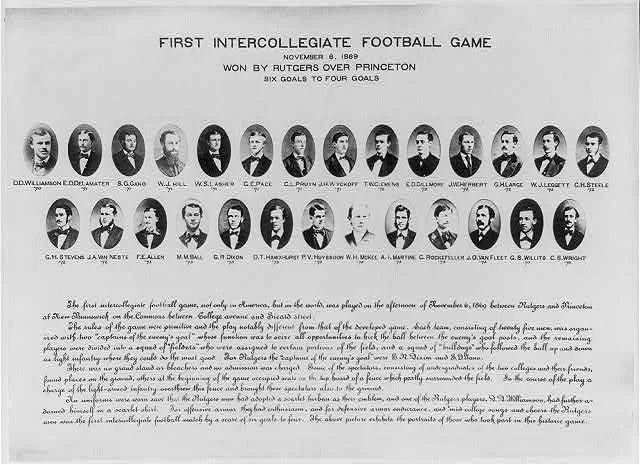
The First College Football Game in 1869
On November 6, 1869, Rutgers defeated Princeton 6-4 in New Brunswick, New Jersey, in the first intercollegiate football game in American history.
The 1920 Formation of the APFA in Canton
The National Football League originated on September 17, 1920, as the American Professional Football Association during a meeting at Ralph Hay's Canton auto dealership.
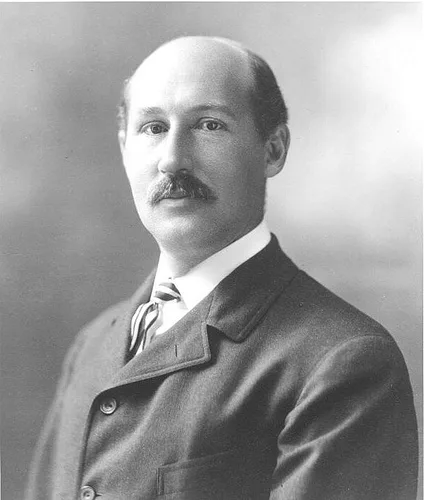
Walter Camp, the Father of American Football
Yale's Walter Camp authored the rules that separated American football from rugby, introducing the line of scrimmage, the center snap, and the system of downs. His innovations in the 1880s gave the sport its own identity and earned him lasting recognition as the 'Father of American Football.'
Two $500 Payments That Shaped Football
In 1892, former Yale guard William 'Pudge' Heffelfinger accepted 500 from the Allegheny Athletic Association, becoming the first known professional football player. Nearly three decades later, in 1919, Curly Lambeau reportedly got about 500 from his employer, the Indian Packing Company, to buy uniforms for his new hometown team, the Green Bay Packers.
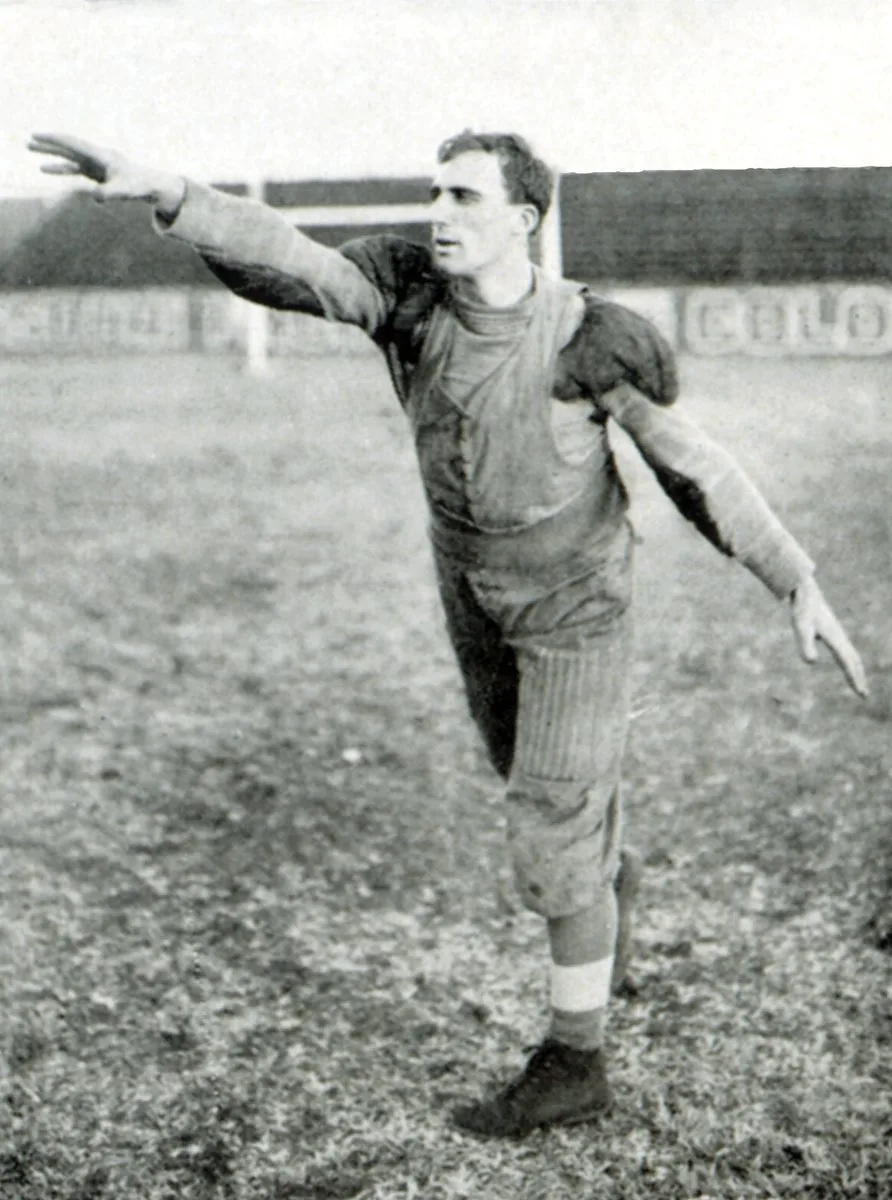
The Forward Pass Is Legalized in 1906
After the deadly 1905 season (about 19 player deaths by one count) and a White House summit, rules committees legalized the forward pass in 1906 to spread out offensive formations and reduce dangerous mass collisions. Saint Louis University's Bradbury Robinson is long credited with throwing the first legal forward pass in American football history that September; his first attempt fell incomplete, and a later throw to Jack Schneider went for a touchdown.
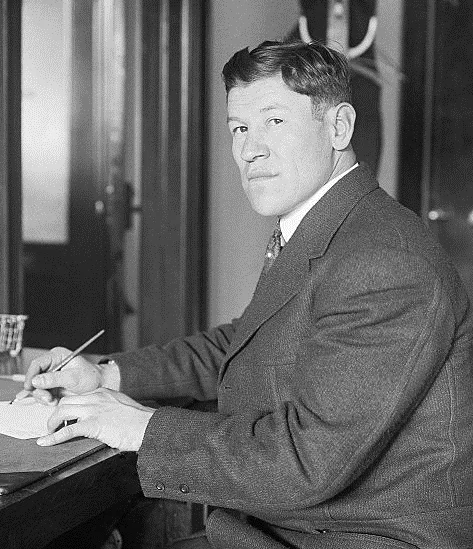
The APFA's First Two Seasons
Olympic legend Jim Thorpe was elected the American Professional Football Association's first president in 1920. The Akron Pros went undefeated at 8-0-3 to win that inaugural season's title, and on October 3, 1920, the Dayton Triangles beat the Columbus Panhandles 14-0 in the league's first official game, with Lou Partlow scoring its first touchdown. In 1922, the league reorganized and adopted a new name: the National Football League.
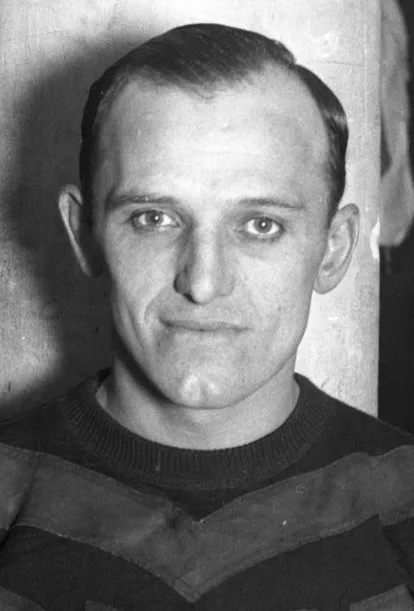
The Chicago Bears Begin as the Decatur Staleys
Before relocating to Chicago in 1921, the franchise now known as the Bears was founded in Decatur, Illinois, in 1920 as the Decatur Staleys, sponsored by starch manufacturer A.E. Staley. Staley hired player-coach George Halas to run the team.
Early Rules Reforms Made the Game Safer and Faster
Harvard's momentum-driven 'Flying Wedge' formation, devised in 1892, caused such severe injuries that rules-makers banned it just two years later, in 1894. In 1912, the rules committee shortened the field from 110 to 100 yards, added 10-yard end zones for forward passing, and raised the value of a touchdown to six points.
The 1958 'Greatest Game Ever Played'
The 1958 NFL Championship Game between Baltimore and the New York Giants was the first NFL championship game (and first playoff game) decided in sudden-death overtime, and its national television audience helped boost football's popularity.
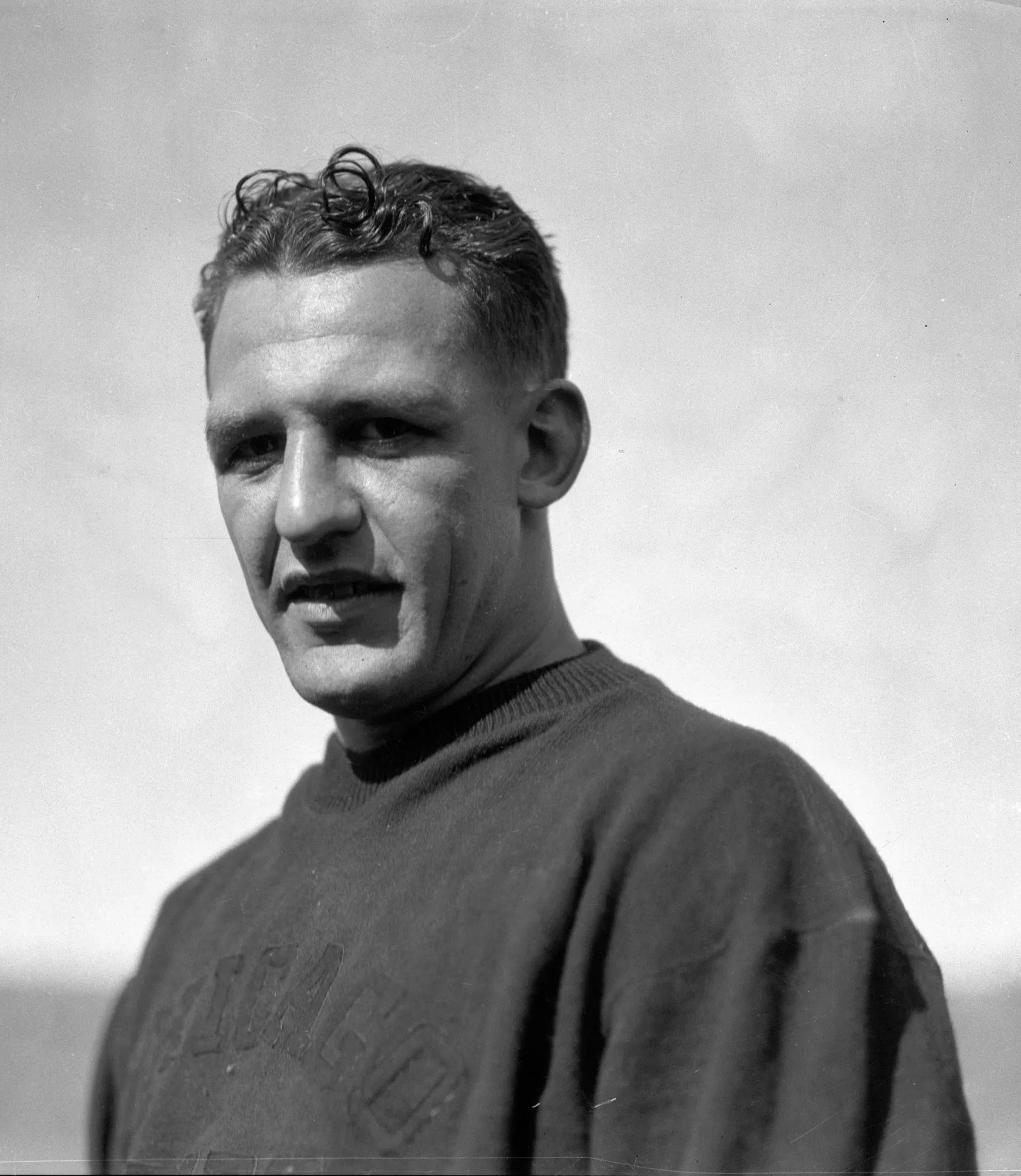
1920s Trailblazers: Grange and Pollard
Harold 'Red' Grange, the college and Chicago Bears halfback, earned the nickname 'The Galloping Ghost' after a four-touchdown outburst against Michigan in 1924, and his star power helped legitimize pro football when he joined the Bears in 1925. A few years earlier, in 1921, Fritz Pollard had become the NFL's first African-American head coach with the Akron Pros.
Pro Football Reintegrates in 1946
In 1946, the Los Angeles Rams signed former UCLA stars Kenny Washington and Woody Strode, breaking the NFL's 13-year unwritten color barrier. That same year, fullback Marion Motley and lineman Bill Willis integrated the rival All-America Football Conference with Paul Brown's Cleveland Browns.
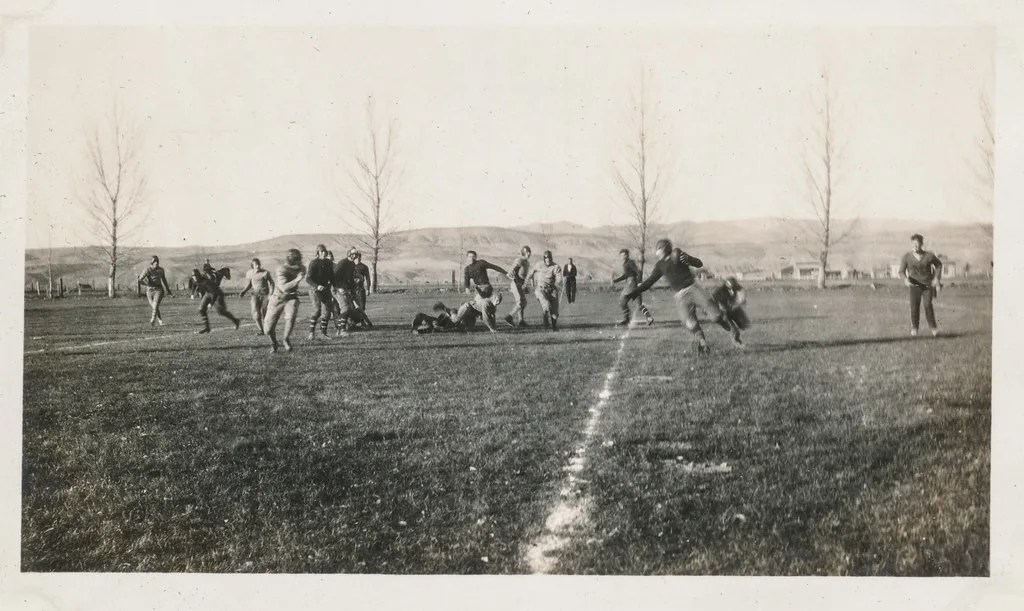
Breakthrough NFL Games of the 1930s and 1940s
A 1932 blizzard forced the Bears and Portsmouth Spartans to play the NFL's first tiebreaker playoff game indoors, on a dirt surface inside Chicago Stadium, a success that led the league to formalize an annual championship game. In 1940, George Halas's Bears routed the Washington Redskins 73-0 in the NFL Championship, still the most lopsided title-game result in league history.
The First NFL Draft (1936)
Eagles co-owner Bert Bell organized the NFL's inaugural collegiate player draft at Philadelphia's Ritz-Carlton Hotel on February 8, 1936. University of Chicago halfback Jay Berwanger, winner of the first Heisman Trophy, was selected first overall, though he ultimately chose a manufacturing career over pro football.
Milestones of the Wartime and Postwar NFL
Wartime enlistments left the Pittsburgh Steelers and Philadelphia Eagles short of players, so the two Pennsylvania franchises temporarily merged for the 1943 season as the 'Steagles.' Cleveland coach Paul Brown pioneered systematic game film study and printed playbooks that reshaped how teams prepared, and in 1958, Colts fullback Alan Ameche capped 'The Greatest Game Ever Played' with a one-yard overtime touchdown plunge to beat the Giants 23-17.
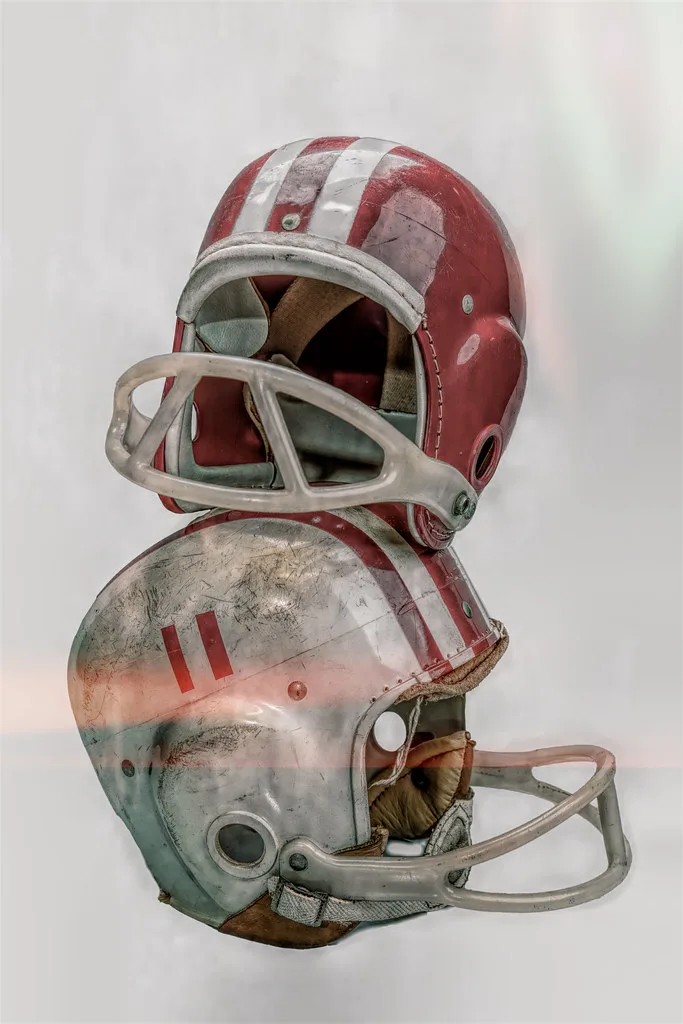
NFL Helmets: Mandatory in 1943, First Logo in 1948
The NFL required all active players to wear protective helmets starting in the 1943 season. Five years later, Los Angeles Rams halfback and commercial artist Fred Gehrke painted yellow ram horns onto the team's blue leather helmets, creating the first decorative helmet logo in league history.
By the numbers
- How many dollars was Pudge Heffelfinger paid in 1892 to become the first professional football player?
- 500 dollars
- How many points did the Chicago Bears score in their historic 73-0 NFL Championship blowout in 1940?
- 73 points
Matched pairs
Each item on the left goes with the one on the right.
- Bradbury Robinson
- Threw the first legal forward pass in American football history in September 1906
- Fritz Pollard
- First African-American head coach in NFL history with the Akron Pros in 1921
- Paul Brown
- Pioneered systematic game film study, playbooks, and intelligence tests for players
Self-test
Answer each question from memory, then check your work against the answer key.
1. Which two colleges played in the first intercollegiate football game in 1869?
- AHarvard and Yale
- BArmy and Navy
- CRutgers and Princeton
- DPenn and Cornell
2. Who is known as the 'Father of American Football' for introducing the line of scrimmage and system of downs?
- APop Warner
- BAmos Alonzo Stagg
- CFielding Yost
- DWalter Camp
3. How much was William 'Pudge' Heffelfinger paid in 1892 to become football's first professional player?
- A$500
- B$750
- C$250
- D$1,000
4. What was the main reason rules committees legalized the forward pass in 1906?
- AStandardize the size of the field
- BReduce fatal mass-momentum collisions
- CShorten the length of games
- DIncrease overall scoring
5. Who was elected the first president of the American Professional Football Association in 1920?
- AWalter Camp
- BCurly Lambeau
- CGeorge Halas
- DJim Thorpe
6. What historic first did Fritz Pollard achieve with the Akron Pros in 1921?
- AFirst African-American team owner in NFL history
- BFirst African-American head coach in NFL history
- CFirst African-American NFL commissioner
- DFirst African-American quarterback in NFL history
7. Which nickname did Red Grange earn after his four-touchdown game against Michigan in 1924?
- AThe Golden Boy
- BThe Iron Horse
- CThe Galloping Ghost
- DThe Four Horsemen
8. Which two players signed by the Los Angeles Rams in 1946 broke the NFL's unwritten color barrier?
- AKenny Washington and Woody Strode
- BJim Brown and Bobby Mitchell
- CFritz Pollard and Paul Robeson
- DMarion Motley and Bill Willis
9. By what score did the Chicago Bears rout the Washington Redskins in the 1940 NFL Championship?
- A59-0
- B45-0
- C28-7
- D73-0
10. What strategic and preparation innovations is Cleveland coach Paul Brown credited with pioneering?
- AThe Flying Wedge mass-momentum play
- BThe single-wing formation and drop-kick
- CGame film study and printed playbooks
- DThe Power Sweep and pulling guards
Go deeper
- WatchThe First Football Game The first college football game was played on November 6, 1869.
- WatchThe Circus Floor Playoff In December 1932, two NFL teams finished tied at the top: the Chicago Bears and the Portsmouth Spartans.
- StudyAmerican Football Trivia & Gridiron Lore in the FlashFeed app
Answer key
- 1. C Rutgers and PrincetonRutgers defeated Princeton 6-4 on November 6, 1869, in New Brunswick, in the first intercollegiate football game.
- 2. D Walter CampWalter Camp, a Yale undergraduate, authored these rules between 1880 and 1883, earning him this nickname.
- 3. A $500Heffelfinger accepted $500 from the Allegheny Athletic Association, the first documented pro football payment.
- 4. B Reduce fatal mass-momentum collisionsA wave of deaths from mass-momentum plays (about 19 in 1905 by one count) pushed committees to open the field with the forward pass.
- 5. D Jim ThorpeOlympic star Jim Thorpe was elected the APFA's first president at the 1920 Canton meeting.
- 6. B First African-American head coach in NFL historyFritz Pollard became the NFL's first African-American head coach with the Akron Pros in 1921.
- 7. C The Galloping GhostGrange became 'The Galloping Ghost' after his four-touchdown performance against Michigan in 1924.
- 8. A Kenny Washington and Woody StrodeThe Rams signed Kenny Washington and Woody Strode in 1946, ending the NFL's 13-year color barrier.
- 9. D 73-0The Bears' 73-0 win remains the most lopsided championship game in NFL history.
- 10. C Game film study and printed playbooksPaul Brown pioneered systematic game film study and printed playbooks that reshaped team preparation.
Sources
- American Football Trivia & Gridiron Lore — Antigravity Knowledge Pack Studio
- Pro Football Hall of Fame / NFL Official Historical Archives and 10 more references — www.profootballhof.com
- NCAA History: Walter Camp — www.ncaa.com
- Library of Congress: Football History — www.loc.gov
- History.com: How Teddy Roosevelt Saved Football — www.history.com/news/how-teddy-roosevelt-saved-football
- Saint Louis University Athletics Archives — slubillikens.com
- NFL Communications: NFL Founding — www.nfl.com/news/remembering-the-nfl-s-humble-origins-on-its-100th-birthday
- Pro Football Reference: 1920 Akron Pros and 3 more references — www.pro-football-reference.com
- NFL History: 1921-1930; NFL Historical Archives: 1946 Integration; NFL Communications: Draft History — www.nfl.com
- Green Bay Packers Historical Archives — www.packers.com
- Chicago Bears History — www.chicagobears.com
- Pro Football Hall of Fame: Chicago Bears Team History — profootballhof.com/teams/chicago-bears/team-history
- NCAA Football Rule Evolution — www.ncaa.org
- Harvard Crimson Historical Athletics — www.thecrimson.com
- Wikipedia: 1936 NFL draft — en.wikipedia.org/wiki/1936_NFL_draft
- Heisman Trophy Trust: Jay Berwanger — www.heisman.com
- NFL Operations: Evolution of Football Equipment — operations.nfl.com
- Los Angeles Rams Historical Archives — www.therams.com
- Pro Football Hall of Fame: 1958 Championship — profootballhof.com/news/greatest-game-ever-played
Image credits
- The First College Football Game in 1869: Library of Congress · First intercollegiate football game, November 6, 1869, won b · No known restrictions (verify at source) — www.loc.gov/item/2002698466/
- Walter Camp, the Father of American Football: Wikimedia Commons · Unknown author · Public domain — commons.wikimedia.org/wiki/File:Walter_Chauncey_Camp_portrait.jpg
- The Forward Pass Is Legalized in 1906: Unknown author · Public domain — commons.wikimedia.org/wiki/File:Bradbury_Robinson_forward_pass.jpg
- The APFA's First Two Seasons: Wikimedia Commons · Underwood · Public domain — commons.wikimedia.org/wiki/File:Jim_Thorpe_1913b-cr.jpg
- The Chicago Bears Begin as the Decatur Staleys: Unknown author · Public domain — commons.wikimedia.org/wiki/File:1922_George_Halas_(cropped).jpg
- 1920s Trailblazers: Grange and Pollard: Wikimedia Commons · William Earl Snyder, Los Angeles Times · CC BY 4.0 — commons.wikimedia.org/wiki/File:Red_Grange,_1926.jpg
- Breakthrough NFL Games of the 1930s and 1940s: simpleinsomnia (Openverse) · by 2.0 — www.flickr.com/photos/95329455@N02/25936179785
- NFL Helmets: Mandatory in 1943, First Logo in 1948: ShebleyCL (Openverse) · by 2.0 — www.flickr.com/photos/25636851@N03/51331668499


