
Ancient Civilizations: First Cities to Late Antiquity study guide · Lesson 2 of 12
Ancient Egypt: The Nile, Divine Monarchy & Bureaucracy (c. 3100–30 BCE)
Inundation, State Unification & Monumental Mortuary Power · Scribal Statecraft, International Diplomacy & Imperial Temples
This is the lesson's study guide from the FlashFeed app, plus its key facts and a self-test.
What you'll be able to do
- Explain Nile inundation hydrology, Old Kingdom monumental pyramid engineering, and divine kingship.
- Examine New Kingdom imperial diplomacy and the Amarna religious reform.
The Nile Flood Regime and Agricultural Taxation
Ancient Egyptian civilization was shaped by the unique ecological rhythm of the Nile River. Flowing north through a hyper-arid desert canyon, the river produced an exceptionally predictable annual flood regime governed by monsoon rains in the Ethiopian highlands:
- Akhet (Inundation, July–October): Floodwaters submerged the floodplain, depositing millions of tons of mineral-rich black silt (kemet).
- Peret (Growth/Emergence, November–February): Farmers planted wheat, barley, flax, and legumes in the damp, fertile soil using simple wooden plows.
- Shemu (Harvest/Drought, March–June): Crops were harvested, threshed, and stored in state granaries before low water levels returned.
To manage and tax this agricultural engine, royal officials engineered Nilometers—stepped stone wells cut into the riverbank at strategic points like Elephantine and Memphis. By measuring the flood's exact height in cubits (1 cubit ≈ 52.4 cm), scribes calculated the expected crop yield months in advance and assessed agricultural taxes accordingly. A flood of 16 cubits meant abundance; 12 cubits meant impending famine; 18 cubits threatened destruction of dykes and villages.
The Narmer Palette and Unification of Upper and Lower Egypt
Around 3100 BCE, Egyptian political consolidation culminated under King Narmer, who unified the narrow river valley of Upper Egypt with the marshy delta of Lower Egypt.
The monumental siltstone Narmer Palette (c. 3100 BCE) records this unification through canonical royal iconography:
- On the obverse, Narmer wears the tall, conical White Crown (Hedjet) of Upper Egypt as he smites a marshland captive with a mace.
- On the reverse, Narmer wears the flat, coiled Red Crown (Deshret) of Lower Egypt as he inspects decapitated enemy corpses, flanked by serpopards with intertwined necks symbolizing unified political control.
This dual monarchy was anchored in the religious concept of Ma'at—the divine cosmic order of truth, harmony, and cosmic equilibrium. The Pharaoh served as the living incarnation of the falcon god Horus on earth and the son of the sun god Ra. His primary sacred responsibility was upholding Ma'at to repel Isfet (chaos and drought). The diorite statue of Khafre Enthroned (c. 2570 BCE) depicts Horus perched behind the pharaoh's headdress, visually merging divine authority with the sovereign state.
Old Kingdom Pyramid Engineering and State Mobilization
During the Old Kingdom (c. 2686–2181 BCE), Egypt's administrative mastery manifested in monumental stone mortuary architecture. The transition began at Saqqara around 2670 BCE, where royal polymath and vizier Imhotep engineered the Step Pyramid of Djoser by stacking six limestone mastaba platforms into a 62-meter monumental stairway to the heavens.
A century later, Fourth Dynasty Pharaoh Khufu mobilized the resources of the unified state to construct the Great Pyramid of Giza (c. 2560 BCE). Composed of approximately 2.3 million limestone blocks averaging 2.5 tons each, the pyramid rose 146.6 meters with astonishing architectural precision: its base edges align with the four cardinal directions to within 0.05 degrees.
Crucially, archaeological excavations at the Giza workers' village confirm that the pyramids were built by organized teams of conscripted Egyptian peasants (corvée labor) and skilled full-time craftsmen during the flood season (Akhet) when farm fields were submerged, rather than by enslaved masses. Workers were organized into phyles and paid with high-protein rations of beef, beer, bread, and linen garments.
Scribal Bureaucracy, Hieroglyphs, and the Vizierate
The day-to-day governance of Egypt was coordinated by a highly literate scribal bureaucracy headed by the Vizier (Tjaty), the pharaoh's prime minister. The vizier oversaw the treasury, national granaries, justice system, census, and public works.
Egypt developed two parallel writing systems:
- Hieroglyphic Script: A formal, sacred logosyllabic script composed of over 700 pictorial characters carved on stone temple walls, royal stelae, and tombs ("words of the gods").
- Hieratic Script: A cursive, flowing script written with reed brush and ink on papyrus sheets and ceramic ostraca, used by scribes for tax registries, legal contracts, medical treatises, and administrative correspondence.
The decipherment of Egyptian script was unlocked by the discovery of the Rosetta Stone in 1799. Carved in 196 BCE during the reign of Ptolemy V, the stele contains a trilingual royal decree inscribed in Hieroglyphic (for temple priests), Demotic (daily administrative script), and Ancient Greek (court language), enabling French linguist Jean-François Champollion to crack the phonetic values of hieroglyphs in 1822.
New Kingdom Imperialism, Diplomacy, and the Amarna Interlude
Following the expulsion of the foreign Hyksos rulers, the New Kingdom (c. 1550–1069 BCE) expanded Egypt into an international empire. Female Pharaoh Hatshepsut (reigned c. 1479–1458 BCE) re-established commercial prosperity by dispatching a famous naval trading expedition to the land of Punt (modern Somalia/Eritrea), documented on her mortuary temple at Deir el-Bahari, returning with living myrrh trees, gold, ivory, and exotic woods.
Around 1353 BCE, Pharaoh Amenhotep IV launched the Amarna Revolution, renaming himself Akhenaten, closing the traditional temples of Amun-Ra, and establishing state monolatry centered exclusively on the light of the sun disk Aten. He relocated the capital to Akhetaten (Amarna) and fostered a radical, naturalistic art style seen in the renowned Bust of Nefertiti. After his death, his son Tutankhamun restored the traditional polytheistic pantheon; the intact 1922 discovery of Tutankhamun's gold-filled tomb (KV62) revealed the astronomical material wealth marshaled for royal funerary rituals.
Under Rameses II (reigned 1279–1213 BCE), Egypt engaged in grand geopolitical rivalry against the Hittites, culminating in the chariot battle of Kadesh (1274 BCE). The subsequent Treaty of Kadesh between Rameses II and Hittite King Hattusili III is history's earliest surviving formal international peace treaty, establishing mutual non-aggression, extradition of political refugees, and defensive military alliance.
Key terms
- Isfet
- The Egyptian cosmological concept of chaos, injustice, disorder, and cosmic entropy opposing Ma'at.
- Land of Punt
- An ancient coastal trading partner of Egypt located along the Red Sea and Horn of Africa, rich in myrrh and gold.
Key concepts
Narmer Palette
- Monumental ceremonial siltstone palette excavated at Hierakonpolis dating to c. 3100 BCE
- Depicts King Narmer subduing delta rebels while wearing the crowns of Upper and Lower Egypt
- Serves as the foundational visual document marking the unification of the First Dynasty
Ma'at
- Ancient Egyptian cosmological concept encompassing truth, balance, order, and justice
- Personified as a winged goddess wearing an ostrich feather used to weigh deceased human hearts
- Formed the core moral obligation of the pharaoh to preserve cosmic harmony against chaos
Imhotep
- Chancellor, royal architect, and high priest to Third Dynasty Pharaoh Djoser
- Engineered the Step Pyramid at Saqqara by superimposing six stone mastaba platforms
- Deified in later Egyptian history as the patron demigod of medicine, writing, and architecture
Nilometer
- Engineered stone well or marked staircase constructed along the riverbanks of the Nile
- Calibrated in royal cubits to measure the precise depth of the annual summer inundation
- Provided scribes with quantitative predictive data to establish annual agricultural tax rates
The Vizier (Tjaty)
- Highest-ranking royal official and prime minister of ancient Egyptian state administration
- Supervised the national treasury, grain silos, judicial courts, census records, and public works
- Reported directly to the pharaoh daily regarding state security and regional provincial governors
Pharaoh Hatshepsut
- Female New Kingdom pharaoh who reigned as co-regent and king from c. 1479 to 1458 BCE
- Depicted in formal royal regalia wearing the ceremonial male pharaonic beard and kilt
- Engineered the terraced mortuary temple at Deir el-Bahari and dispatched the expedition to Punt
Akhenaten
- Eighteenth Dynasty pharaoh who abolished orthodox polytheism in favor of the sun disk Aten
- Founded the new royal capital city of Akhetaten (Amarna) in middle Egypt c. 1346 BCE
- Fostered an expressive, naturalistic art style celebrating domestic affection and radiant sunlight
Rosetta Stone
- Granodiorite stele inscribed in 196 BCE with a trilingual priestly decree honoring Ptolemy V
- Carries parallel texts in formal Hieroglyphic, administrative Demotic, and Ancient Greek
- Discovered in 1799, providing the linguistic bridge that unlocked Egyptian hieroglyphic translation
Key facts
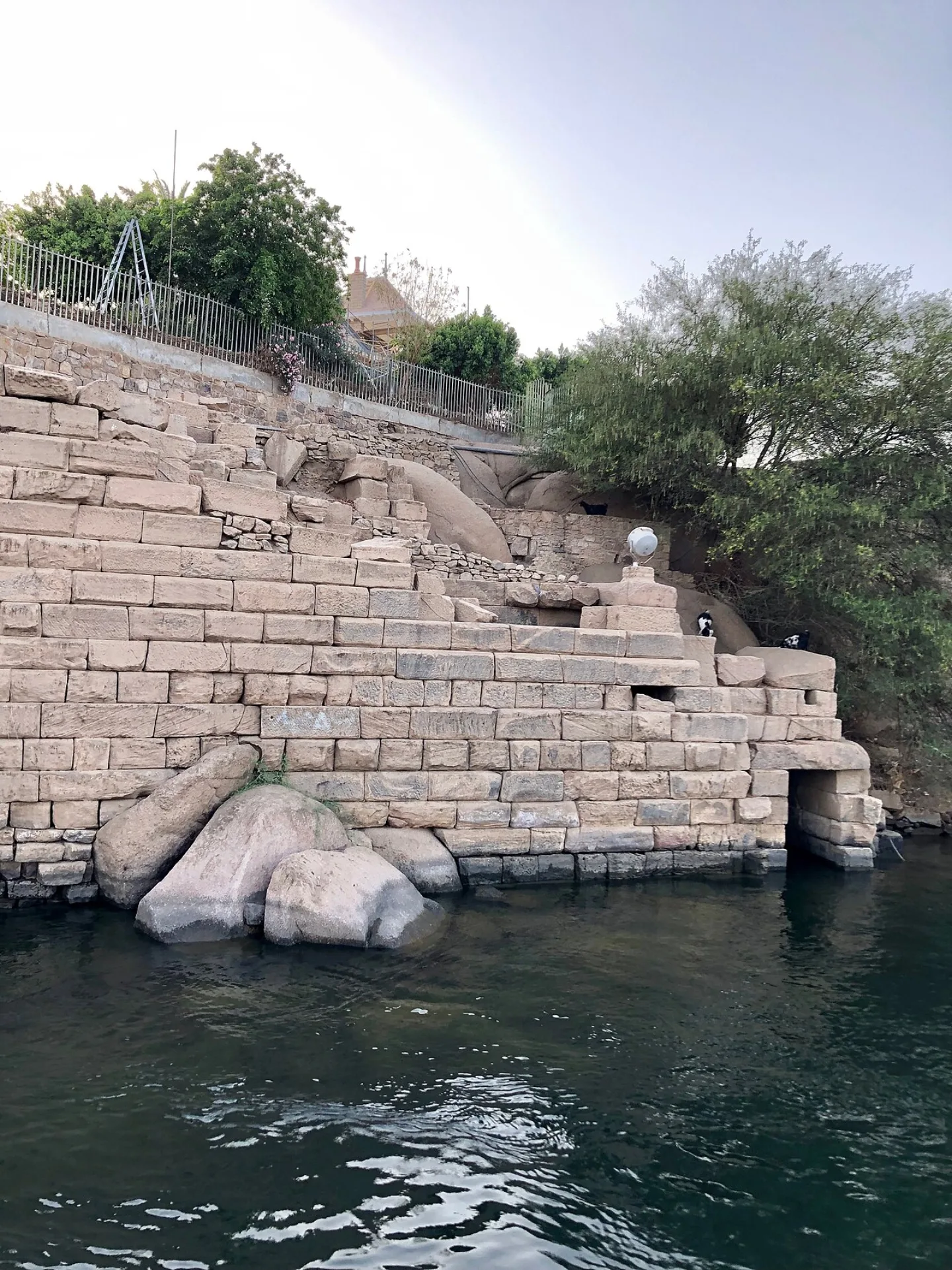
The Nile Flood Regime and the Nilometer
Egyptian agriculture depended on the predictable annual inundation (Akhet) of the Nile, with scribes using stone Nilometers to calibrate agricultural taxation to flood levels.
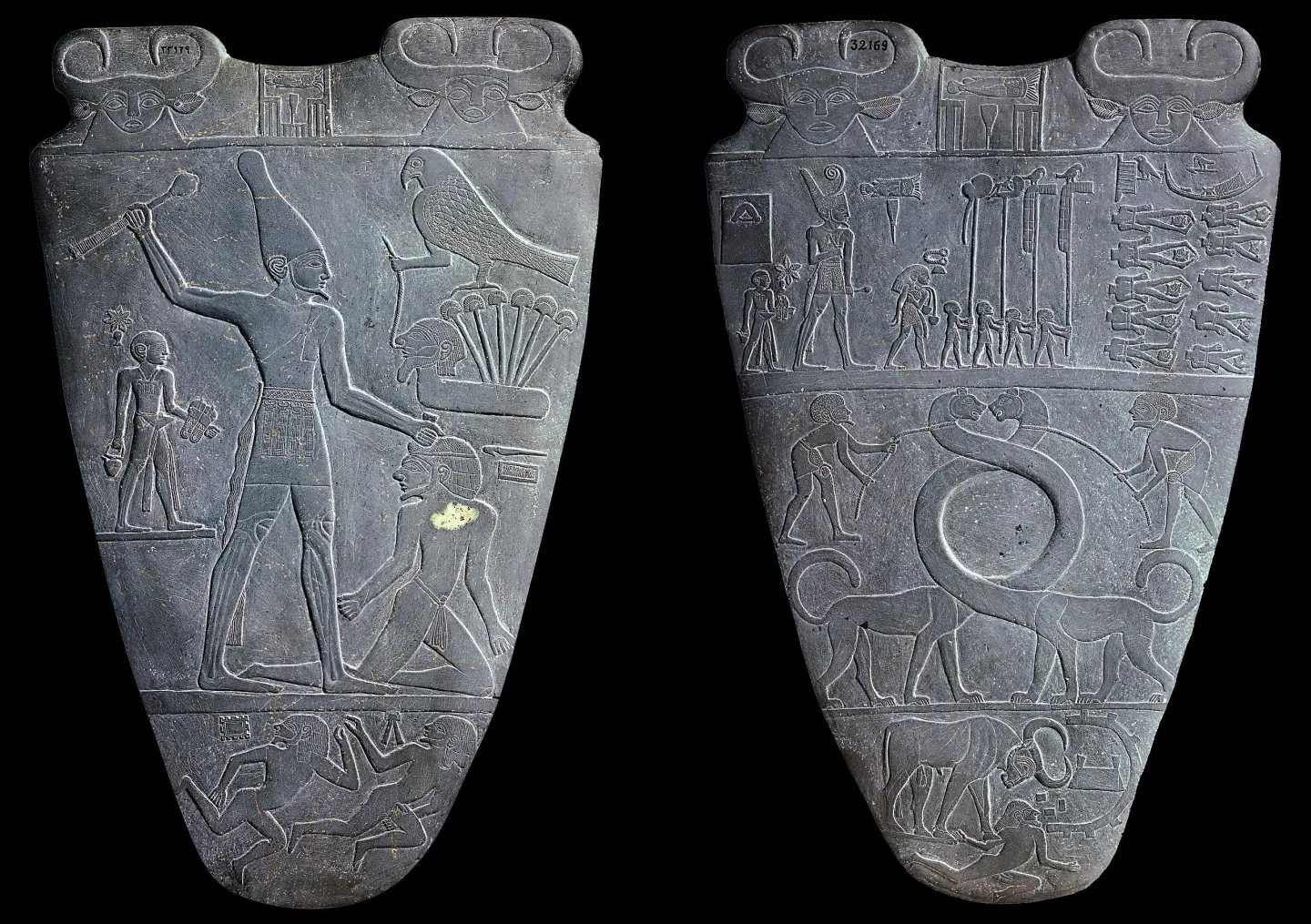
The Narmer Palette and State Unification
The Narmer Palette (c. 3100 BCE) commemorates the political unification of Upper and Lower Egypt, showing King Narmer wearing both the White Crown and the Red Crown.
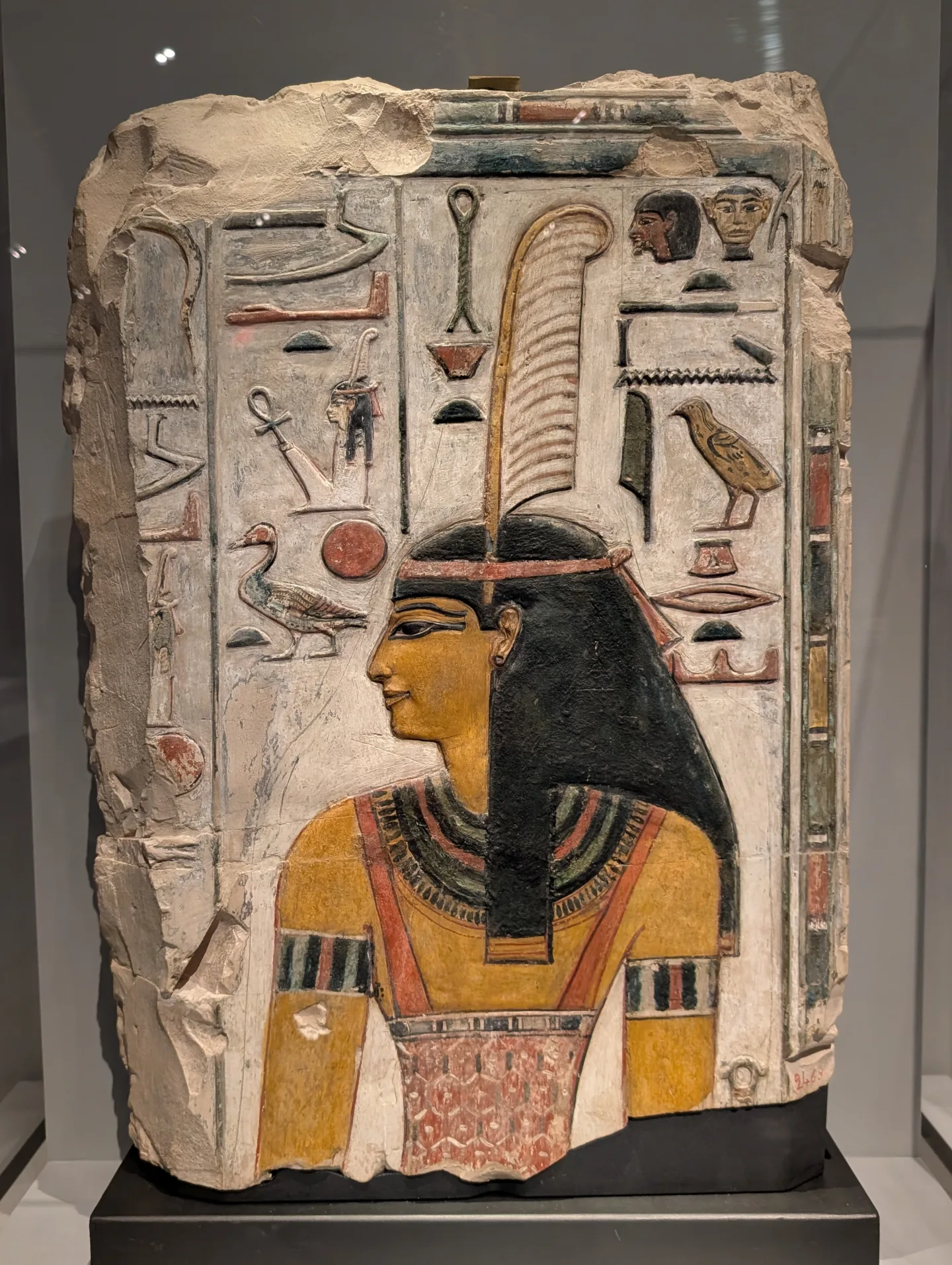
The Principle of Ma'at and Cosmic Order
Egyptian state ideology required the Pharaoh to maintain Ma'at—the cosmic balance of truth, justice, and universal order—against the entropic threat of Isfet (chaos).
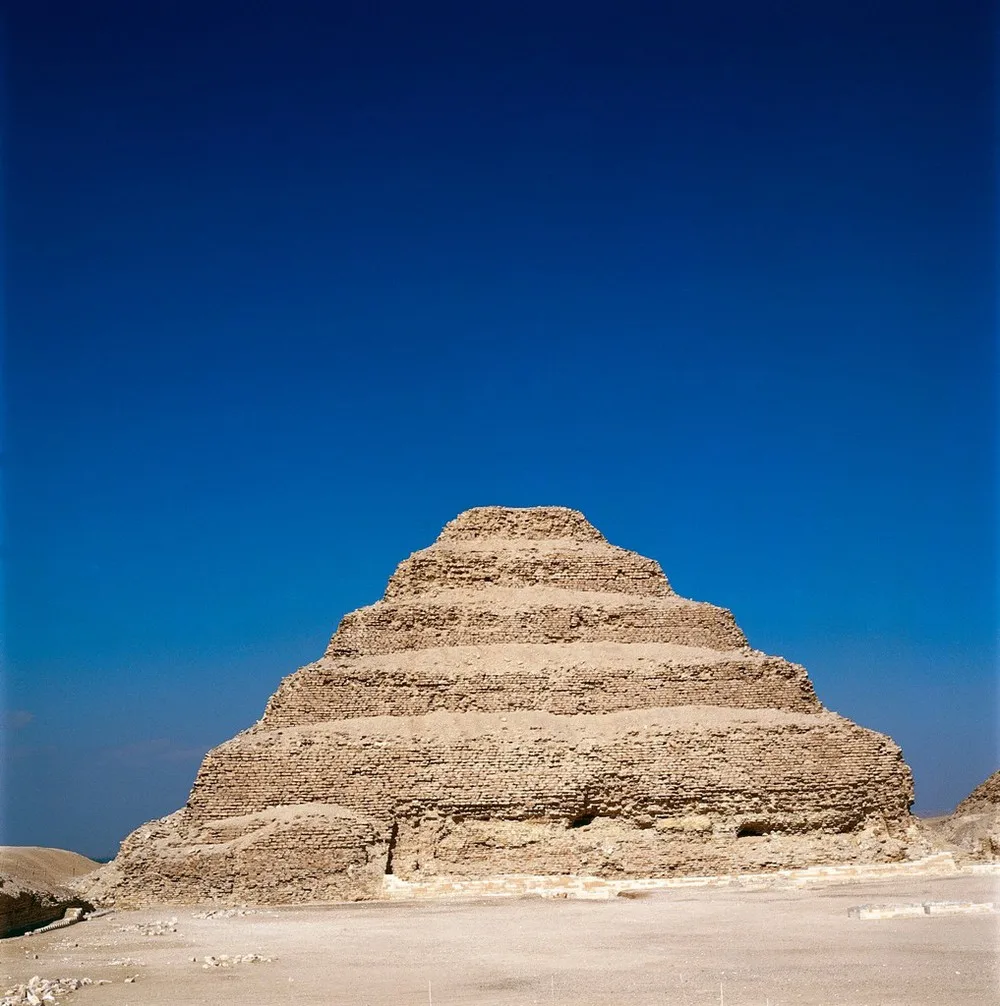
Imhotep and the Step Pyramid of Djoser
Around 2670 BCE, royal architect Imhotep engineered the Step Pyramid at Saqqara for Pharaoh Djoser, stacking six mastaba terraces to invent monumental stone mortuary architecture.
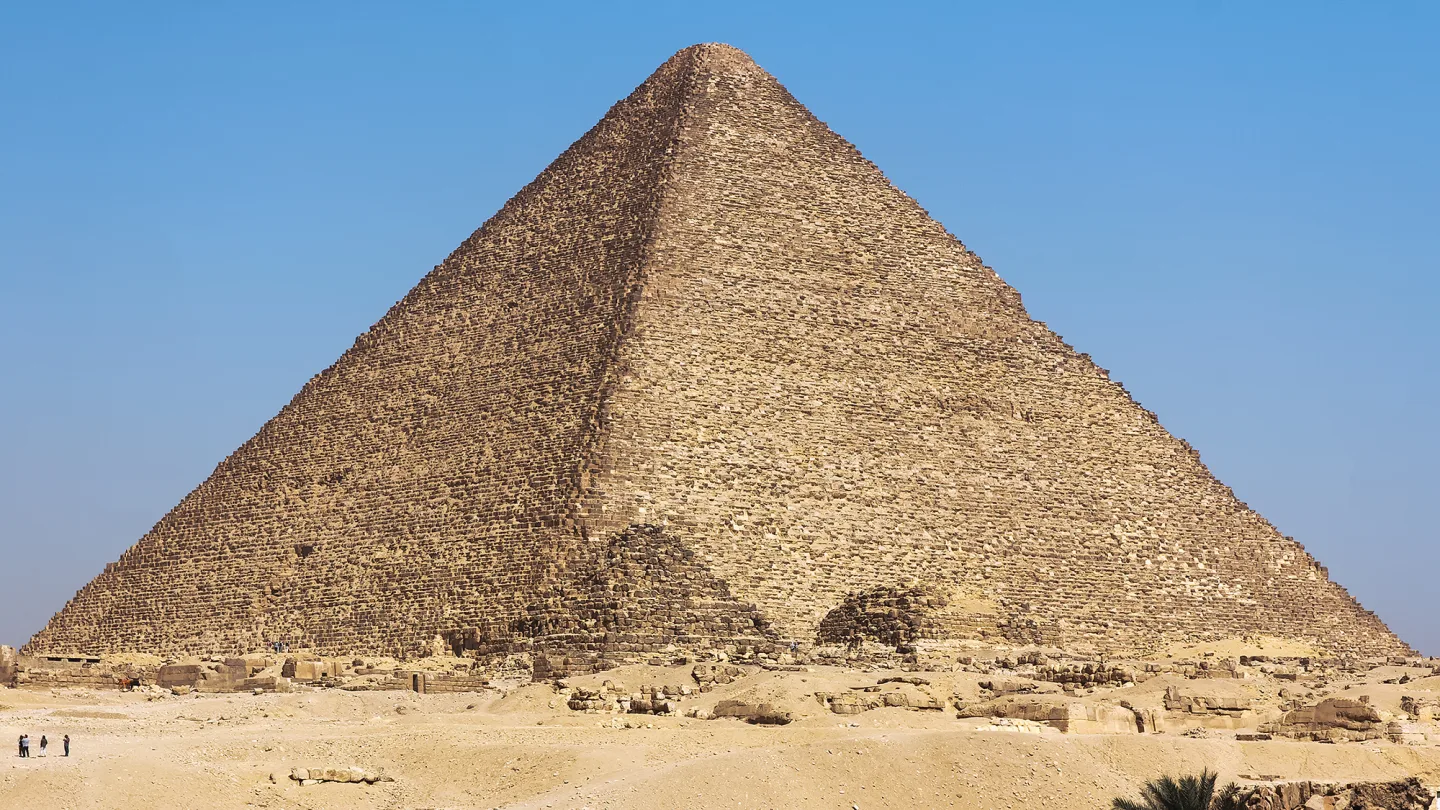
The Great Pyramid of Giza and Labor Mobilization
Built around 2560 BCE for Pharaoh Khufu using roughly 2.3 million limestone blocks, the Great Pyramid of Giza was constructed by seasonal conscripted peasant labor rather than slave armies.
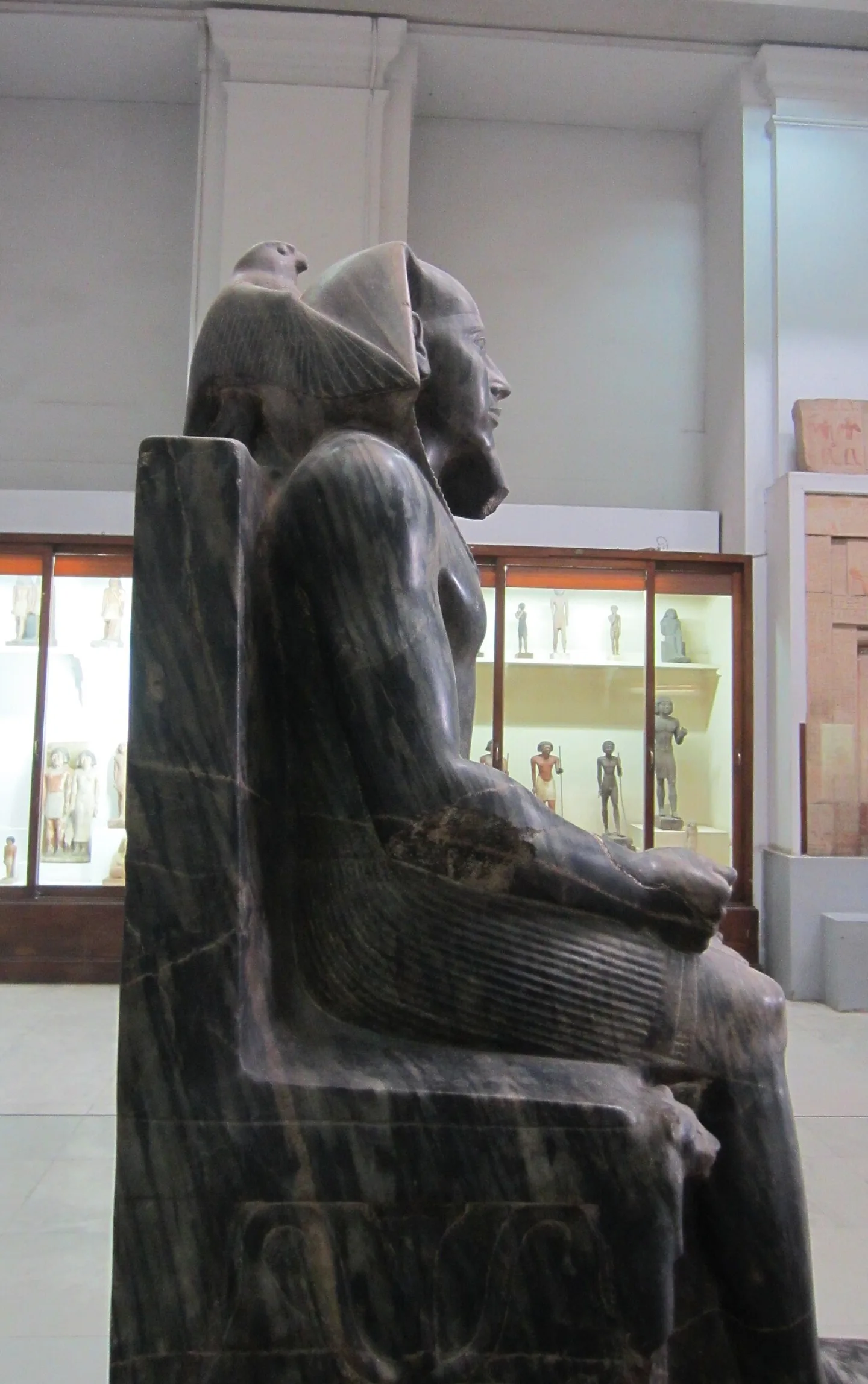
Statue of Khafre Enthroned and Divine Kingship
The diorite statue of Khafre Enthroned (c. 2570 BCE) depicts the falcon god Horus embracing the pharaoh's head, visually embodying the doctrine of the king as Horus on Earth.
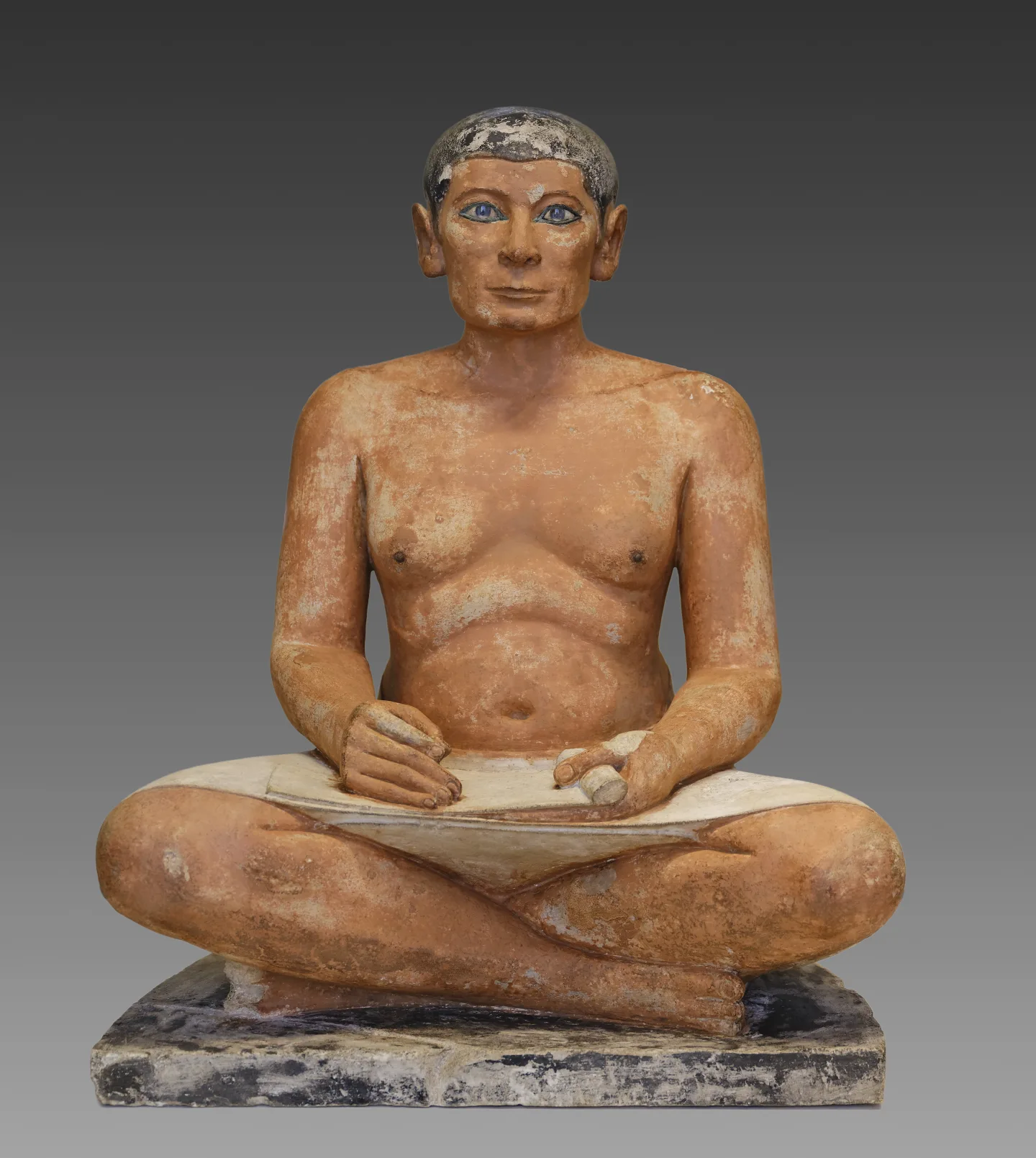
Hieroglyphic vs Hieratic Script in Administration
While formal Hieroglyphic script was carved on monumental stone temples, Egyptian administrators used the cursive Hieratic script on papyrus for daily accounting and legal deeds.
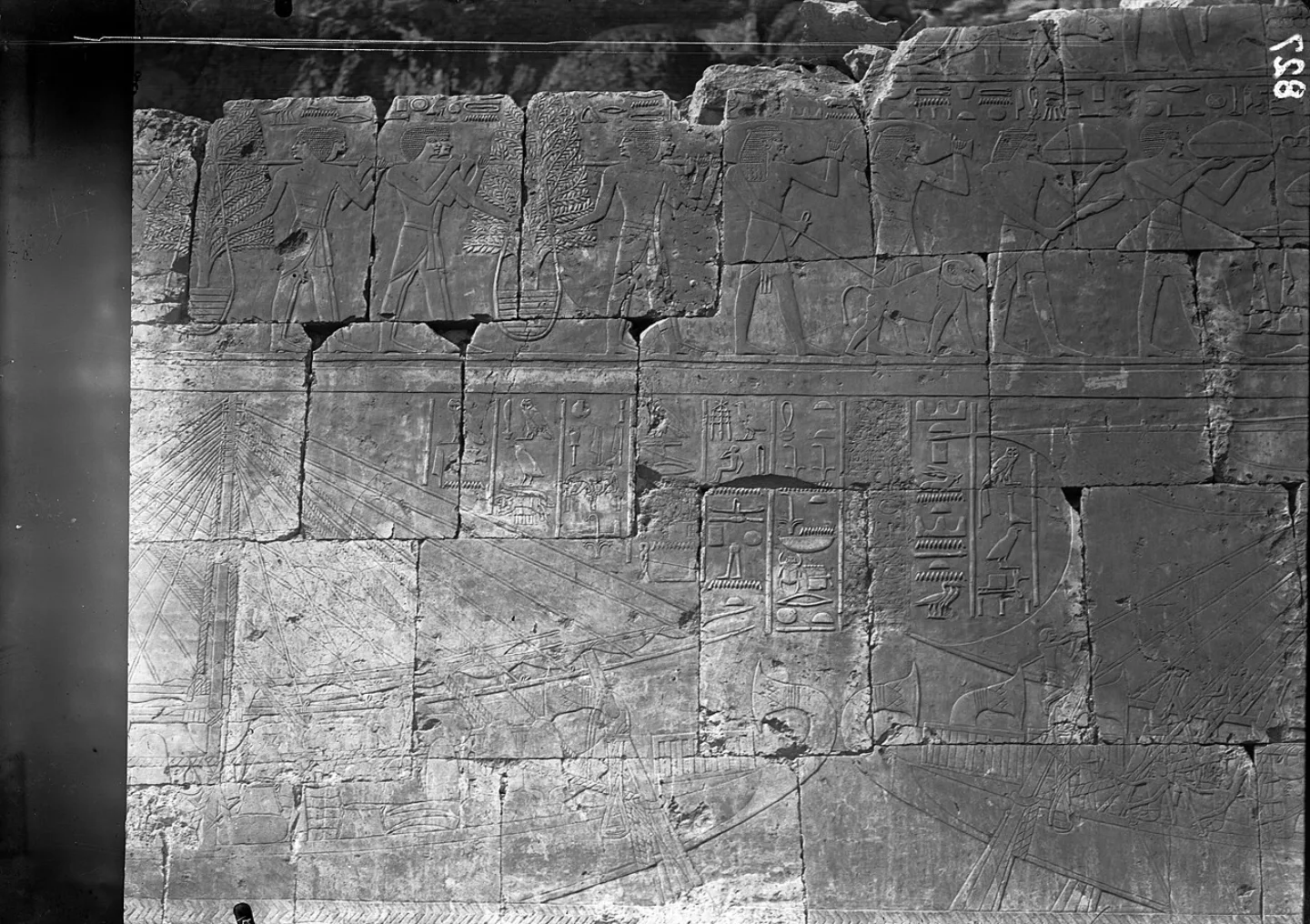
Hatshepsut and the Maritime Trade Expedition to Punt
Pharaoh Hatshepsut (reigned c. 1479–1458 BCE) commemorated a maritime trading expedition to the Land of Punt on her Deir el-Bahari temple reliefs, bringing back living myrrh trees, ebony, and gold.
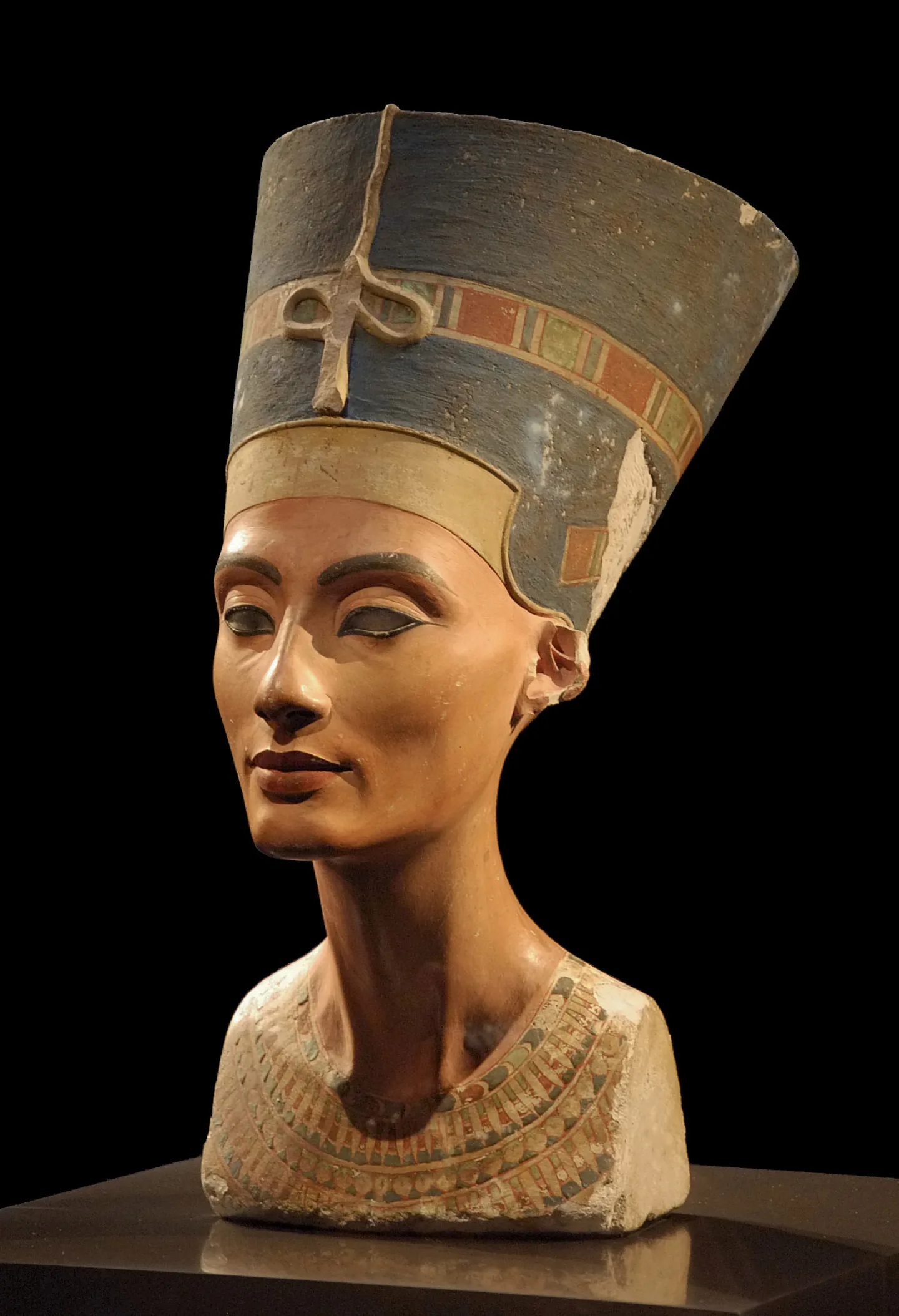
The Amarna Revolution and the Aten Sun Disk
Pharaoh Akhenaten (c. 1353–1336 BCE) relocated Egypt's capital to Akhetaten (Amarna) and suppressed the traditional Amun priesthood to mandate state devotion to the sun disk Aten.
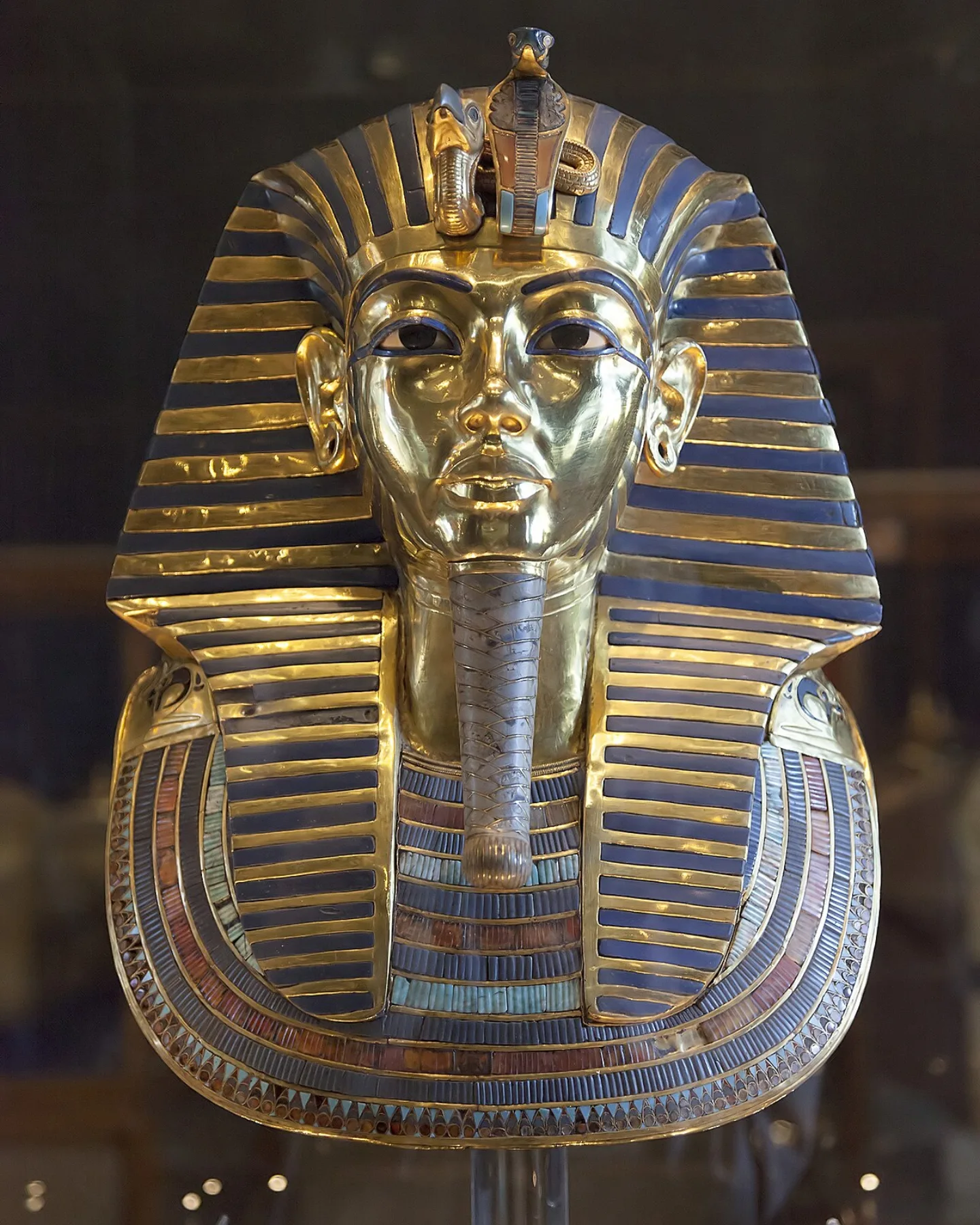
The Mask of Tutankhamun and Mortuary Wealth
Discovered intact in 1922 in KV62, the solid gold funerary mask of Tutankhamun (c. 1323 BCE) reflects the immense material wealth mobilized for New Kingdom royal burials.
The Treaty of Kadesh: Earliest International Peace Treaty
Following the Battle of Kadesh in 1274 BCE, Pharaoh Rameses II and Hittite King Hattusili III concluded the Treaty of Kadesh, establishing mutual non-aggression and defensive alliance.
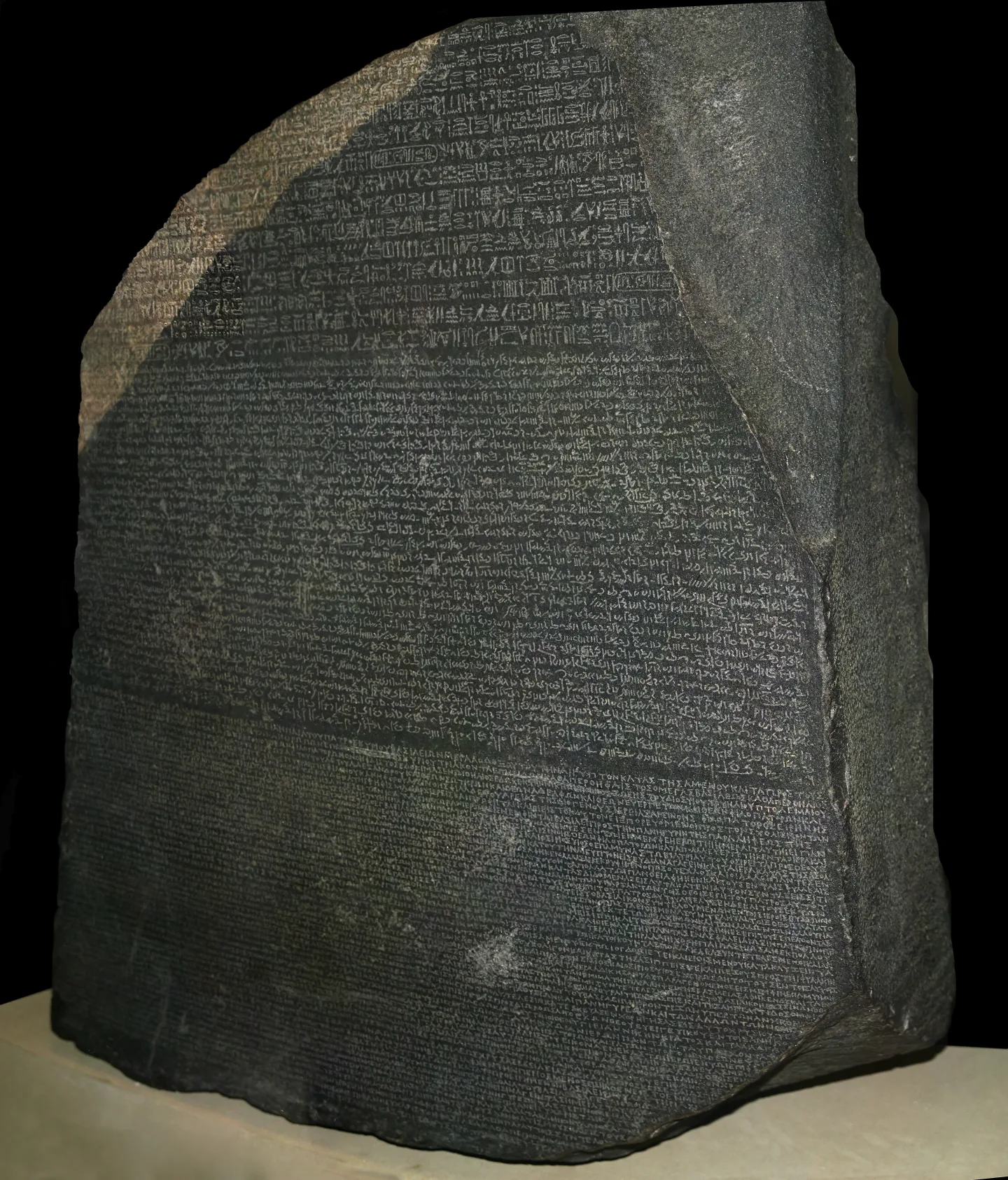
The Rosetta Stone and Decipherment of Hieroglyphs
Created in 196 BCE under Ptolemy V, the Rosetta Stone features the same royal decree in Hieroglyphic, Demotic, and Ancient Greek, enabling Jean-François Champollion to decipher Egyptian script in 1822.
By the numbers
- Roughly how many millions of limestone blocks were quarried and transported to construct the Great Pyramid of Giza?
- 2.3 million blocks
- In what year BCE was the Battle of Kadesh fought between Pharaoh Rameses II and the Hittites?
- 1274 year BCE
- In what year CE did Jean-François Champollion publish his breakthrough decipherment of Egyptian hieroglyphs?
- 1822 year CE
Matched pairs
Each item on the left goes with the one on the right.
- Akhet (Inundation)
- Flooding of farmland with nutrient-rich mineral silt
- Shemu (Harvest)
- Reaping, threshing, and storing grain in state granaries
- Hieroglyphic
- Carved and painted monumental stone inscriptions on temple and tomb walls
- Hieratic
- Cursive ink writing on papyrus rolls for daily accounts and legal deeds
Self-test
Answer each question from memory, then check your work against the answer key.
1. Per Nilometer readings, what flood height indicated an impending famine?
- A12 cubits
- B16 cubits
- C18 cubits
- D20 cubits
2. What major political milestone is commemorated on the carved siltstone Narmer Palette?
- AThe initial excavation of the Suez maritime canal linking the Nile to the Red Sea
- BThe political unification of Upper and Lower Egypt under the First Dynasty
- CThe military expulsion of the Hyksos chariot rulers from the eastern delta
- DThe signing of a maritime trade treaty with the Minoan kingdom of Crete
3. In Egyptian state theology, what was the primary sacred responsibility of the reigning Pharaoh?
- ATo personally collect agricultural taxes from every farming household along the Nile
- BTo issue a single written law code inscribed in stone for all Egyptian subjects to obey
- CTo maintain Ma'at (cosmic balance and justice) to prevent Isfet (chaotic disorder)
- DTo personally measure the height of the annual flood at each Nilometer
4. How did architect Imhotep structurally innovate in the design of Pharaoh Djoser's tomb at Saqqara?
- ABy building a hollow timber pyramid covered in polished copper and gold leaf
- BBy digging a circular sunken stone amphitheater aligned with winter solstice sunrise
- CBy carving an underground labyrinth into desert sandstone cliffs without surface markers
- DBy stacking six progressively smaller stone mastabas into a monumental step pyramid
5. What does modern archaeological excavation at Giza reveal regarding the labor force that built the Great Pyramids?
- AThey were nomadic desert pastoralists who worked without central state compensation
- BThey were enslaved foreign prisoners of war chained in subterranean quarries
- CThey were seasonal conscripted Egyptian peasants and skilled artisans fed high-protein diets
- DThey were mercenary Roman legionaries contracted by pharaonic trading syndicates
6. What valuable botanical cargo did Pharaoh Hatshepsut's expedition famously bring back from the Land of Punt?
- ASilk cocoons and cultivated tea saplings imported from Central Asian caravans
- BLiving myrrh trees with root balls transplanted to the gardens of Deir el-Bahari
- CDomesticated olive trees and grapevines imported from Iberian coastal colonies
- DPorous volcanic pumice stones used for grinding monumental limestone blocks
7. What religious transformation did Pharaoh Akhenaten enforce during the Amarna Period (c. 1353–1336 BCE)?
- AThe formal adoption of Zoroastrian dualism from the neighboring Achaemenid court
- BThe complete destruction of all temples to establish secular rational governance
- CThe deification of the river Nile as Egypt's supreme creator god, above all other deities
- DThe exclusive royal devotion to the sun disk Aten and suppression of Amun-Ra priesthoods
8. What historical milestone was established by the Treaty of Kadesh between Rameses II and Hattusili III in 1259 BCE?
- AThe earliest recorded formal international peace treaty featuring mutual defense clauses
- BThe creation of a unified bimetallic gold and silver currency across the Near East
- CThe first unilateral unconditional surrender treaty recorded in Mediterranean warfare
- DThe establishment of the first international Olympic athletic games between empires
9. During the Amarna Revolution, to which new capital did Akhenaten relocate the royal court?
- AMemphis
- BHeliopolis
- CAkhetaten
- DThebes
10. Which provision did the Treaty of Kadesh between Rameses II and Hattusili III include?
- AJoint garrisons along the Levantine coast
- BAnnual tribute of myrrh and ivory
- CA shared line of royal succession
- DExtradition of political refugees
Go deeper
Answer key
- 1. A 12 cubitsA flood of only 12 cubits signaled a weak inundation and impending famine, while 16 cubits meant abundance and 18 threatened flood damage.
- 2. B The political unification of Upper and Lower Egypt under the First DynastyThe Narmer Palette (c. 3100 BCE) depicts King Narmer wearing both the White Crown of Upper Egypt and the Red Crown of Lower Egypt, marking unification.
- 3. C To maintain Ma'at (cosmic balance and justice) to prevent Isfet (chaotic disorder)The pharaoh's fundamental role was preserving Ma'at (universal balance, truth, and order) against the cosmic forces of chaos (Isfet).
- 4. D By stacking six progressively smaller stone mastabas into a monumental step pyramidImhotep revolutionized funerary architecture around 2670 BCE by stacking six stone mastabas atop one another to create the Step Pyramid.
- 5. C They were seasonal conscripted Egyptian peasants and skilled artisans fed high-protein dietsWorkers' villages at Giza demonstrate that pyramids were built by organized peasant work brigades (corvée labor) and skilled craftsmen during the flood season.
- 6. B Living myrrh trees with root balls transplanted to the gardens of Deir el-BahariReliefs at Deir el-Bahari document 31 living myrrh trees in baskets being transported by ship from Punt to be planted at the temple.
- 7. D The exclusive royal devotion to the sun disk Aten and suppression of Amun-Ra priesthoodsAkhenaten closed traditional temples of Amun-Ra, moved the capital to Amarna, and promoted state monolatric worship of the Aten.
- 8. A The earliest recorded formal international peace treaty featuring mutual defense clausesThe Treaty of Kadesh is history's earliest surviving formal international peace treaty, containing mutual defense, extradition, and non-aggression clauses.
- 9. C AkhetatenAkhenaten moved the capital to Akhetaten (modern Amarna), the city built for the exclusive worship of the sun disk Aten, closing the traditional temples of Amun-Ra.
- 10. D Extradition of political refugeesThe Treaty of Kadesh, the earliest surviving formal international peace treaty, established mutual non-aggression, extradition of political refugees, and a defensive military alliance.
Sources
- Barry J. Kemp, Ancient Egypt: Anatomy of a Civilization
- Egyptian Museum Cairo: Collection — egymonuments.gov.eg/en/museums/egyptian-museum
- Egyptian Museum Cairo: Collection — egymonuments.gov.eg
- Barry J. Kemp, Ancient Egypt: Anatomy of a Civilization — www.routledge.com
- World History Encyclopedia: Maat — www.worldhistory.org/Maat/
- Louvre Museum: Department of Egyptian Antiquities — www.louvre.fr/recherche-et-conservation/departement-des-antiquites-egyptiennes
- British Museum: Ancient Egypt Collection — www.britishmuseum.org/collection/egypt
- British Museum: Ancient Egypt Collection — www.britishmuseum.org
- Louvre Museum: Department of Egyptian Antiquities — www.louvre.fr
- World History Encyclopedia: Tutankhamun — www.worldhistory.org/Tutankhamun/
Image credits
- The Nile Flood Regime and the Nilometer: Warren LeMay from Cullowhee, NC, United States · CC0 — commons.wikimedia.org/wiki/File:Nilometer_Ruins,_Elephantine_Island,_Aswan,_AG,_EGY_(48025334816).jpg
- The Narmer Palette and State Unification: Wikimedia Commons · anonymous · Public domain — commons.wikimedia.org/wiki/File:Narmer_Palette.jpg
- The Principle of Ma'at and Cosmic Order: Wikimedia Commons · NeverBeGameOver · CC BY 4.0 — commons.wikimedia.org/wiki/File:Relief_of_Maat,_KV17,_Tomb_of_Seti_I,_Museo_Archeologico_Nazionale_Florence,_MET_Divine_Egypt_Dec_2025.jpg
- Imhotep and the Step Pyramid of Djoser: Wellcome Collection · Attribution 4.0 International (CC BY 4.0) · cc-by — wellcomecollection.org/works/ynkxzg4h
- The Great Pyramid of Giza and Labor Mobilization: Wikimedia Commons · Douwe C. van der Zee · CC BY-SA 4.0 — commons.wikimedia.org/wiki/File:Great_Pyramid_of_Giza_-_Pyramid_of_Khufu.jpg
- Statue of Khafre Enthroned and Divine Kingship: A. Parrot · CC0 — commons.wikimedia.org/wiki/File:Khafre_Enthroned,_side_view.JPG
- Hieroglyphic vs Hieratic Script in Administration: Wikimedia Commons · Shonagon · CC0 — commons.wikimedia.org/wiki/File:Le_Scribe_accroupi_-_Mus%C3%A9e_du_Louvre_Antiquit%C3%A9s_%C3%A9gyptiennes_E_3023.jpg
- Hatshepsut and the Maritime Trade Expedition to Punt: Wikimedia Commons · Museo Egizio, Turin · CC0 — commons.wikimedia.org/wiki/File:Theban_region,_Deir_el-Bahari,_Temple_of_Hatshepsut,_photo_13_of_25_-_Archivio_fotografico_Museo_Egizio,_Turin_C00827.jpg
- The Amarna Revolution and the Aten Sun Disk: Wikimedia Commons · Philip Pikart · CC BY-SA 3.0 — commons.wikimedia.org/wiki/File:Nofretete_Neues_Museum.jpg
- The Mask of Tutankhamun and Mortuary Wealth: Roland Unger · Public domain — en.wikipedia.org/wiki/Mask_of_Tutankhamun
- The Rosetta Stone and Decipherment of Hieroglyphs: Wikimedia Commons · Hans Hillewaert · CC BY-SA 4.0 — commons.wikimedia.org/wiki/File:Rosetta_Stone.JPG


