
Ancient Civilizations: First Cities to Late Antiquity study guide · Lesson 1 of 12
Mesopotamia: First Cities, Cuneiform & Law (c. 4000–539 BCE)
The Alluvial Engine & Cuneiform Administration · Imperial Consolidation & Legal Codification
This is the lesson's study guide from the FlashFeed app, plus its key facts and a self-test.
What you'll be able to do
- Analyze Mesopotamian hydraulic agriculture, cuneiform administration, and urban ziggurat temple economy.
- Evaluate imperial consolidation and legal codification under Hammurabi and the Neo-Assyrian empire.
The Alluvial Engine and Temple Redistribution
The emergence of human civilization in the arid plains of Southern Mesopotamia between the Tigris and Euphrates rivers was fundamentally an engineering achievement. Lacking reliable rainfall, mineral ores, and construction timber, early Sumerian settlers transformed their alluvial environment through artificial canal irrigation. By diverting river water during spring floods to irrigate barley fields and date palm orchards, Sumerian farmers generated an unprecedented agricultural grain surplus. This surplus broke the egalitarian subsistence pattern of Neolithic farming villages, enabling the world's first division of labor and rapid urbanization.
At the heart of the first true city, Uruk (flourishing c. 4000–3100 BCE), stood the Eanna Temple Precinct, dedicated to the goddess Inanna. The early Sumerian city operated as a temple redistributive economy presided over by the En (priest-king). The temple served as a spiritual sanctuary, central granary, and administrative headquarters. Peasant farmers surrendered their grain harvest to temple storage; in return, the temple redistributed rations to specialized craftspeople, canal laborers, soldiers, and administrators using mass-produced ceramic bevelled-rim bowls designed to hold standardized portions of grain and beer.
This economic hierarchy is visualized on the monumental Warka Vase (c. 3000 BCE), a carved alabaster vessel from Uruk. Its three registers depict water and plants at the base, domesticated animals in the middle, naked laborers bearing baskets of agricultural tribute above, and the En presenting offerings to Inanna at the apex—embodying the sacred economic engine of the Sumerian state. Similarly, the Standard of Ur (c. 2600 BCE) depicts this social stratification through inlaid shell and lapis lazuli mosaics, contrasting an elite banqueting aristocracy on its 'Peace' side with chariot-borne military power on its 'War' side.
The Evolution of Cuneiform and Scribal Bureaucracy
To manage the distribution of thousands of daily grain rations, livestock herds, and labor obligations, Sumerian temple administrators invented cuneiform script around 3400 BCE. Writing did not begin as literature or poetry; it originated as an accounting technology.
The system evolved over several distinct technological phases:
- Clay Tokens: Spherical, conical, and tetrahedral clay tokens representing discrete commodities (e.g., one sheep, one measure of oil).
- Clay Bullae: Hollow clay envelopes storing tokens, stamped with the owner's cylinder seal on the exterior.
- Impressed Tablets: Flattened clay tablets stamped with token impressions directly on the surface, eliminating the need to enclose tokens inside.
- Proto-Cuneiform Pictographs: Stylized pictographic line drawings incised on wet clay using sharpened reed styluses.
- Abstract Cuneiform: Wedge-shaped impressions made with triangular-tipped reed styluses, evolving into a logosyllabic script capable of recording the Sumerian and Akkadian languages.
To calculate yields and commercial exchanges, scribes developed a sexagesimal (base-60) positional numeral system. Base-60 offered unique mathematical advantages: 60 is divisible by 1, 2, 3, 4, 5, 6, 10, 12, 15, 20, and 30, making fraction calculations without decimals remarkably simple. This Mesopotamian system endures in modern geometry and timekeeping: the 60-second minute, 60-minute hour, and 360-degree circle.
Sargon, Akkadian Imperial Unification and Royal Ideology
By 2334 BCE, independent Sumerian city-states like Ur, Uruk, and Lagash were politically unified under Sargon of Akkad, founder of the world's first territorial empire. Sargon dismantled municipal isolation by establishing a permanent royal standing garrison of 5,400 elite soldiers and appointing his daughter Enheduanna as high priestess of Nanna at Ur—making her history's first named author.
Akkadian royal ideology transformed Mesopotamian kingship from civic stewardship to divine sovereignty. On the Victory Stele of Naram-Sin (c. 2250 BCE), Sargon's grandson is depicted ascending a forested mountain, wearing the horned helmet previously reserved exclusively for deities—marking the first historical instance of a Mesopotamian monarch claiming living divinity.
Codified Law: Ur-Nammu to the Stele of Hammurabi
As urban populations expanded and commerce crossed regional boundaries, customary oral law gave way to codified statutory law. The earliest surviving written legal code is the Code of Ur-Nammu (c. 2100 BCE), promulgated during the Third Dynasty of Ur. Written in Sumerian on clay tablets, it introduced compensatory monetary restitution, assigning silver fines (in shekels and minas) rather than bodily mutilation for personal injury.
Six centuries later, King Hammurabi of Babylon (reigned c. 1792–1750 BCE) promulgated his famous legal code, engraved upon a 2.25-meter black diorite stele discovered at Susa. The Stele of Hammurabi features a carved relief depicting Hammurabi receiving the sceptre and ring of justice directly from Shamash, the sun god of law. The 282 legal clauses operate on the principle of lex talionis ("an eye for an eye"), but penalties were strictly stratified by class:
- If an awilu (free noble) blinded another noble, his own eye was gouged out.
- If a noble blinded a mushkenu (commoner), he paid a monetary fine of one mina of silver.
- If a noble blinded a wardu (enslaved person), he paid half the slave's purchase value to the slave's master.
Imperial Mechanisms: Assyrian Force and Neo-Babylonian Monumentalism
In the first millennium BCE, the Neo-Assyrian Empire (911–609 BCE) developed the ancient world's most formidable military machine, combining iron weaponry, horse cavalry, battering rams, and systematic psychological terror. To prevent regional rebellions, Assyrian kings like Tiglath-Pileser III enacted mass deportation policies, forcibly relocating an estimated four million or more conquered subjects across the empire (scholarly tallies carry wide margins of error) to sever local ties and provide labor for imperial capitals like Nineveh.
Following Assyria's collapse, King Nebuchadnezzar II restored Babylonian imperial preeminence through architectural monumentalism. The Ishtar Gate (575 BCE), constructed from cobalt-blue glazed mudbrick and adorned with vibrant relief sculptures of dragons (mushkhushshu) and bulls, served as the fortified ceremonial portal to Babylon's Sacred Way, demonstrating how ancient empires mobilized surplus wealth to project ideological legitimacy.
Key terms
- Cuneiform
- A logosyllabic script composed of wedge-shaped impressions pressed into wet clay tablets with a reed stylus.
- Lex Talionis
- The legal doctrine of reciprocal retribution mandating that a punishment correspond in degree to the offense committed.
Key concepts
The En (Sumerian Priest-King)
- Supreme civic and religious leader of an early Sumerian city-state like Uruk
- Presided over temple redistribution and led sacred marriage rituals to ensure fertility
- Depicted at the apex of the Warka Vase presenting agricultural offerings to Inanna
Cuneiform Script
- Wedge-shaped writing system developed in southern Mesopotamia around 3400 BCE
- Incised on wet alluvial clay tablets using sharpened triangular reed styluses
- Began as pictographic accounting tallies before evolving into logosyllabic literature
Bevelled-Rim Bowl
- Coarse, mass-produced ceramic vessel ubiquitous in 4th millennium BCE Uruk sites
- Formed in standardized earth molds to hold uniform volumes of grain or barley beer
- Served as the primary administrative tool for distributing daily rations to temple laborers
Sexagesimal System
- Base-60 mathematical notation invented by ancient Sumerian and Babylonian scribes
- Selected for high divisibility by twelve factors, facilitating fraction calculations
- Forms the structural basis for modern 60-second minutes and 360-degree circular geometry
Sargon of Akkad
- Semitic conqueror who founded the Akkadian Empire around 2334 BCE
- Subdued independent Sumerian city-states to forge history's first multi-ethnic empire
- Appointed his daughter Enheduanna as high priestess at Ur to unify religious authority
Stele of Hammurabi
- Monolithic 2.25-meter black diorite pillar inscribed with 282 cuneiform legal judgments
- Carved with a summit relief showing the king receiving royal insignia from sun god Shamash
- Codified proportional class-stratified retribution across Babylonia around 1750 BCE
Victory Stele of Naram-Sin
- Pink sandstone triumphal monument commemorating an Akkadian victory over the Lullubi mountain tribe
- Breaks traditional horizontal register composition by depicting a dynamic diagonal ascent up a mountain
- Features the king wearing the horned crown of godhood beneath astral solar disks
Ishtar Gate
- Fortified northern portal to the inner city of Babylon constructed in 575 BCE
- Faced with vibrant cobalt-blue glazed bricks and molded relief figures of dragons and bulls
- Served as the monumental entrance for religious processions dedicated to the goddess of war and love
Key facts
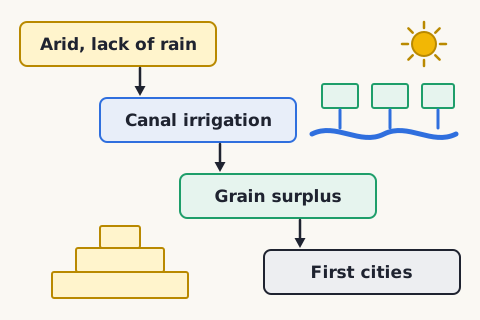
Canal Irrigation and Agricultural Surplus in Sumer
In Southern Mesopotamia, arid climate and lack of rain required artificial canal irrigation from the Tigris and Euphrates, generating the grain surplus that sustained the first cities.
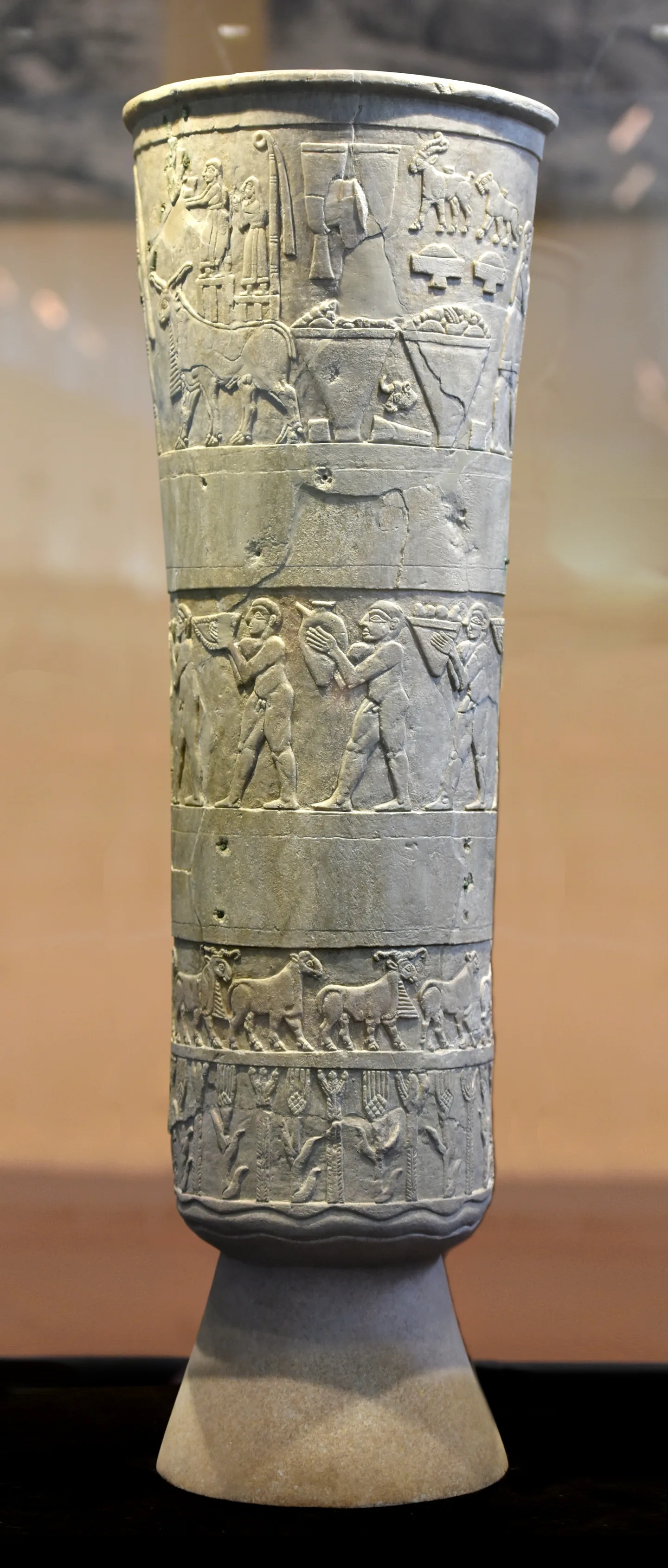
The Warka Vase and Temple Redistribution
The carved alabaster Warka Vase (c. 3000 BCE) depicts the Sumerian economic hierarchy, showing agricultural produce flowing upward to the goddess Inanna and the city's ruler-priest.
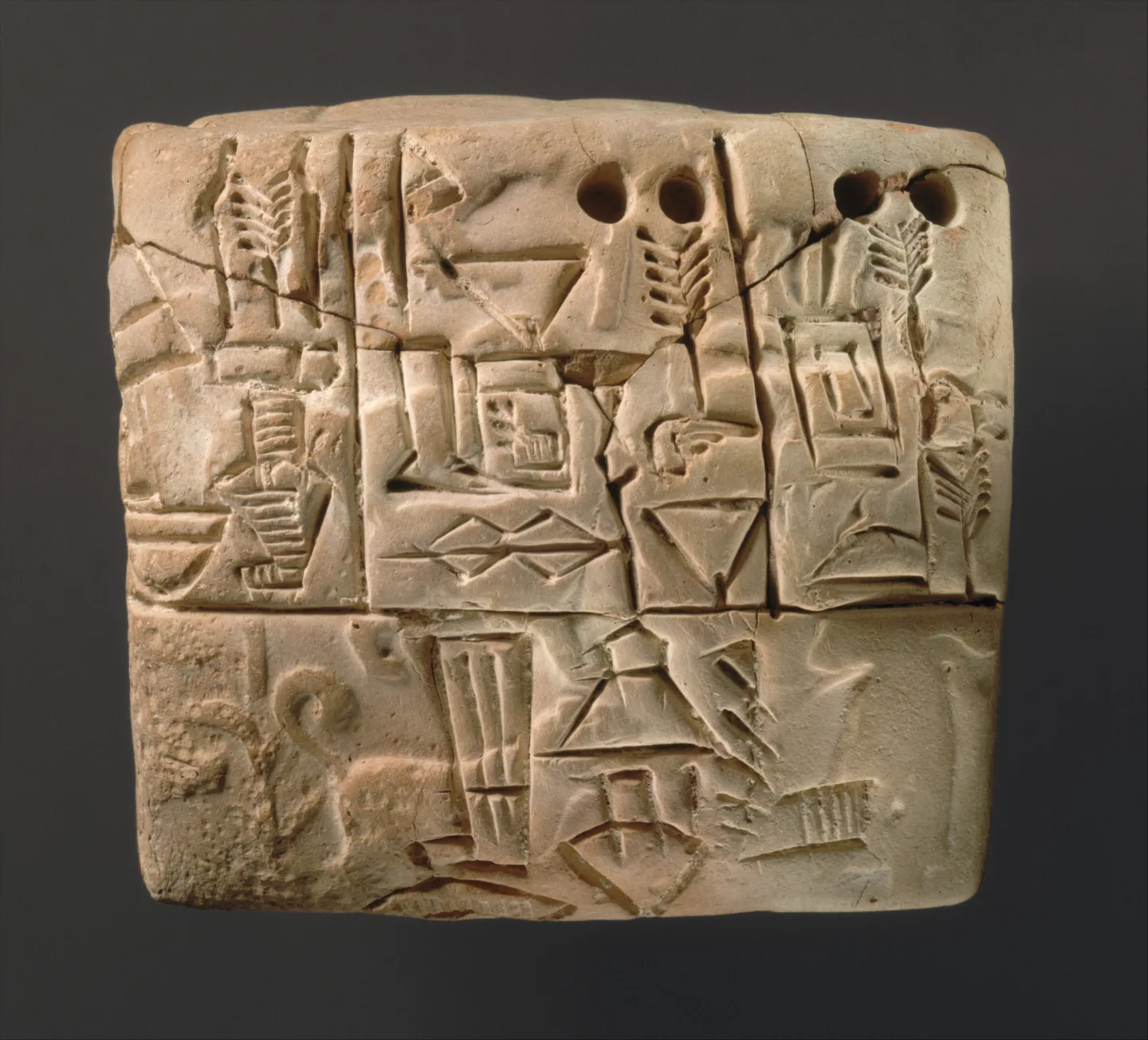
From Clay Tokens to Cuneiform Script
Writing originated in Uruk around 3400 BCE as an administrative accounting tool, evolving from clay tokens encased in bullae into wedge-shaped cuneiform incisions on clay tablets.
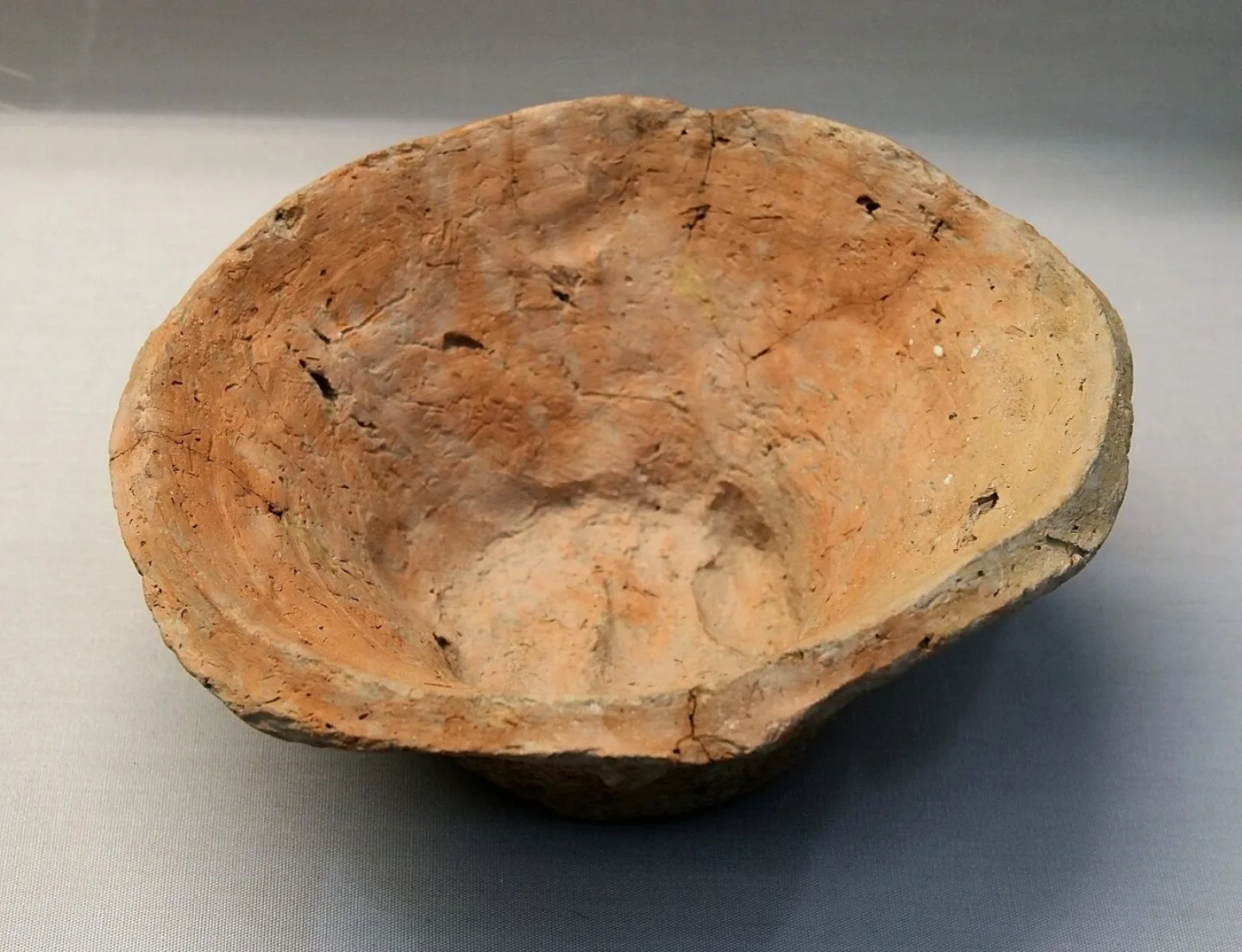
Standardized Bevelled-Rim Bowls for Labor Rations
Standardized, mass-produced ceramic bevelled-rim bowls were used across Uruk period settlements to distribute fixed rations of grain and beer to state laborers.
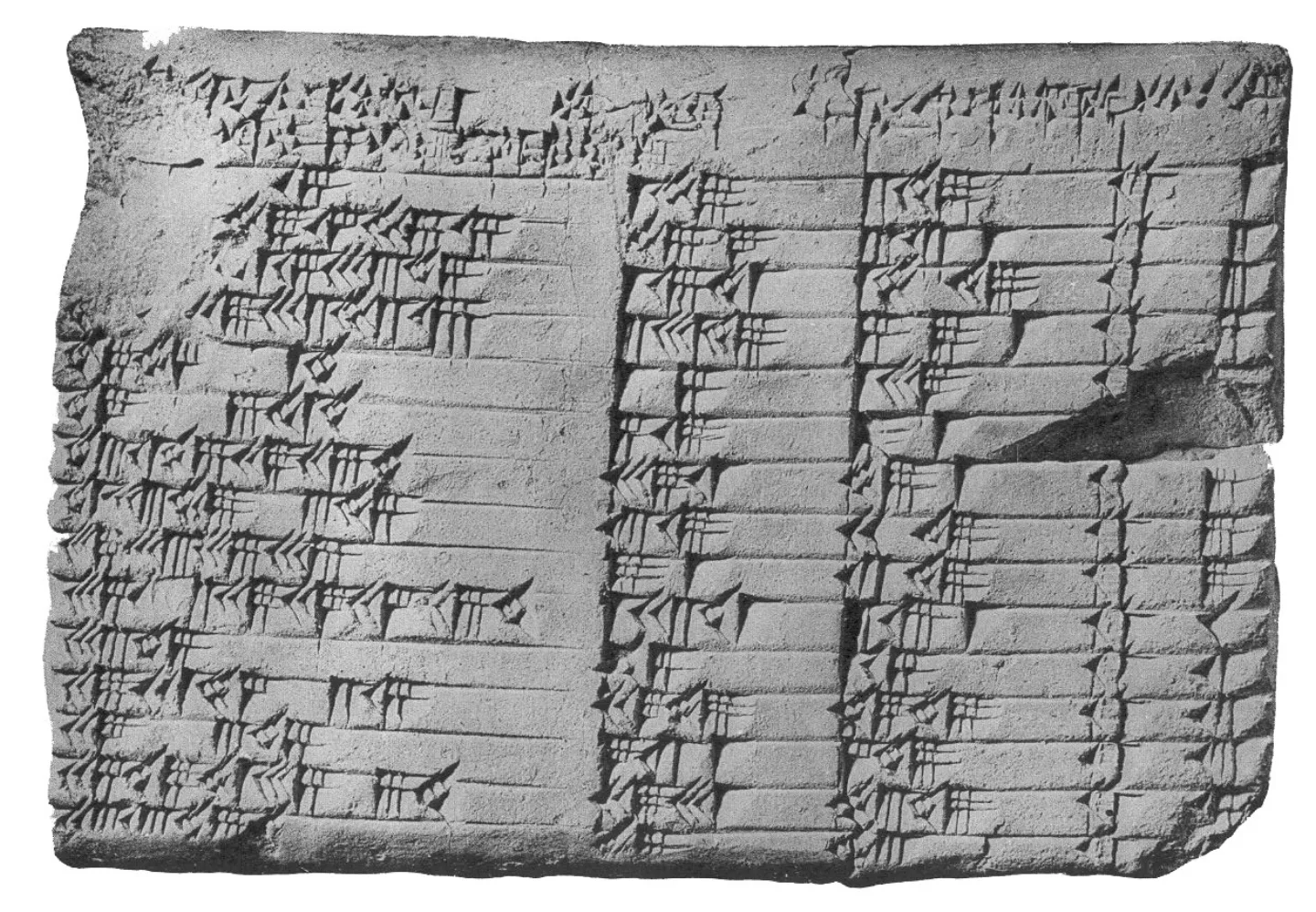
The Sexagesimal Number System in Mesopotamian Mathematics
Sumerian scribes developed a sexagesimal (base-60) positional numeral system, which survives today in the 60-minute hour, 60-second minute, and 360-degree circle.
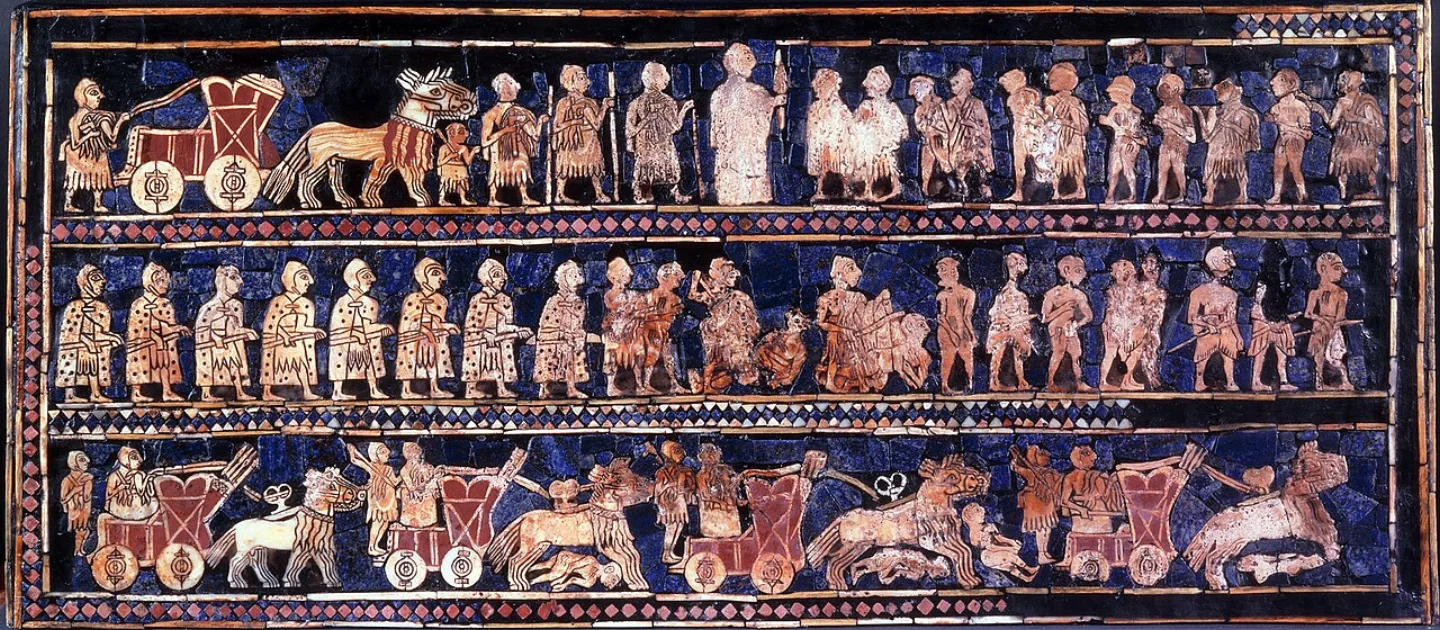
The Standard of Ur and Early Dynastic Social Stratification
The Standard of Ur (c. 2600 BCE) visualizes early Mesopotamian civic organization through two contrasting mosaic panels depicting a peaceful banquet and a military campaign with war wagons.
Sargon of Akkad and the First Territorial Empire
Around 2334 BCE, Sargon of Akkad unified the Sumerian city-states into the world's first territorial empire, supported by a professional standing military garrison.
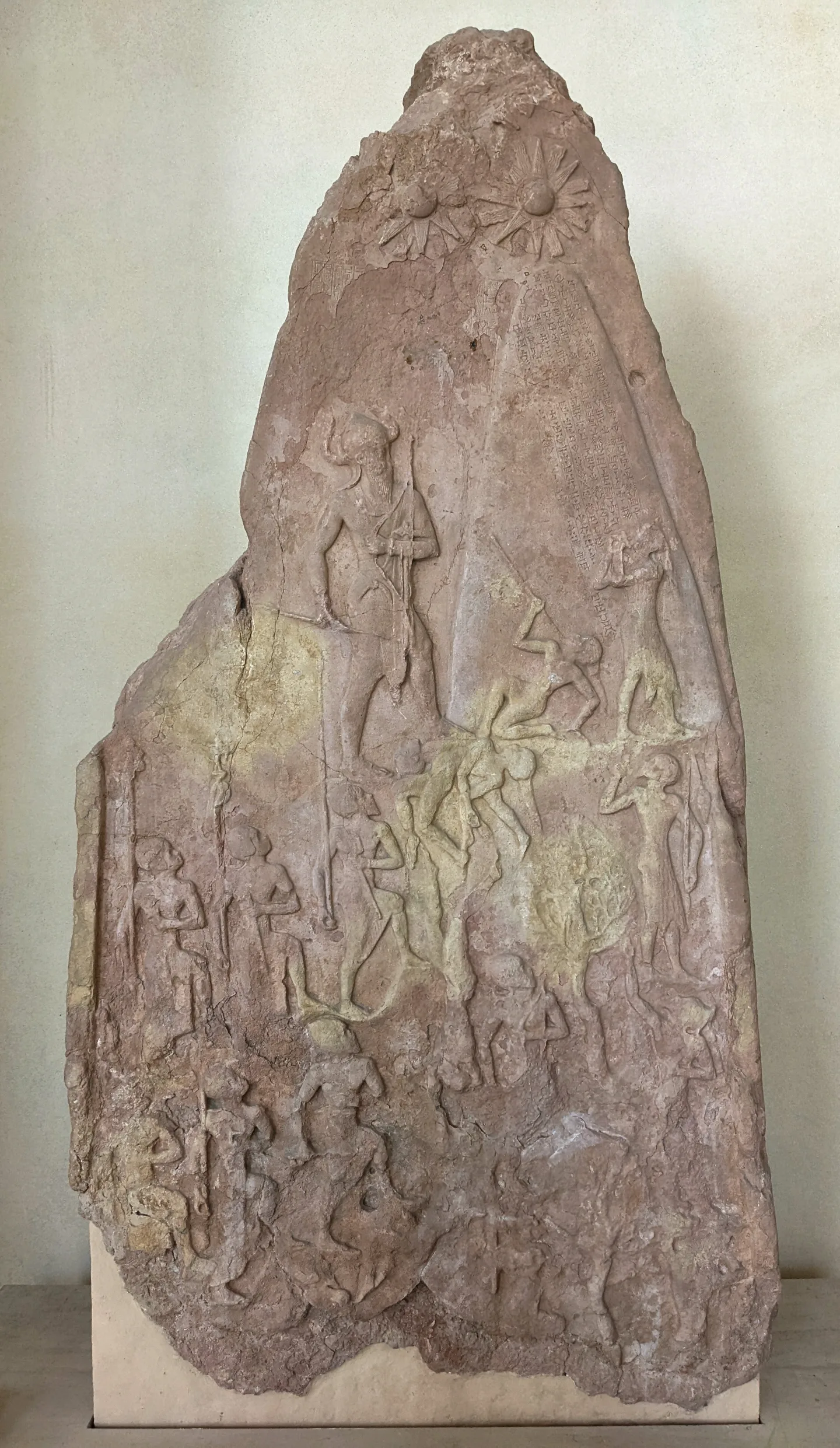
The Victory Stele of Naram-Sin and Royal Deification
The Victory Stele of Naram-Sin (c. 2250 BCE) depicts the Akkadian king wearing the horned helmet of divinity, marking the earliest historical instance of a Mesopotamian ruler claiming living godhood.
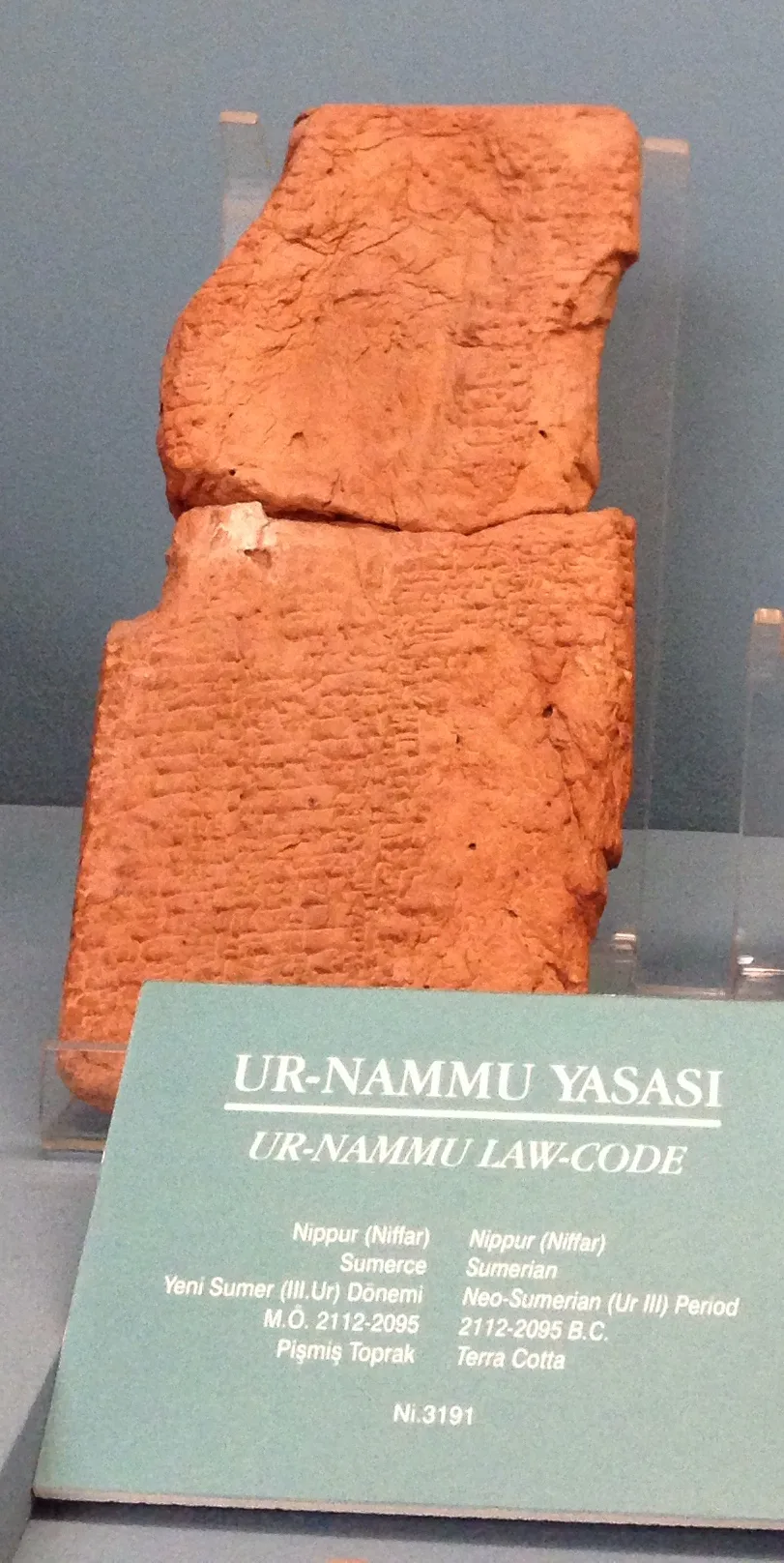
The Code of Ur-Nammu: Earliest Codified Law
Promulgated around 2100 BCE during the Third Dynasty of Ur, the Code of Ur-Nammu is the oldest surviving legal code, establishing monetary fines rather than physical mutilation for most bodily injuries.
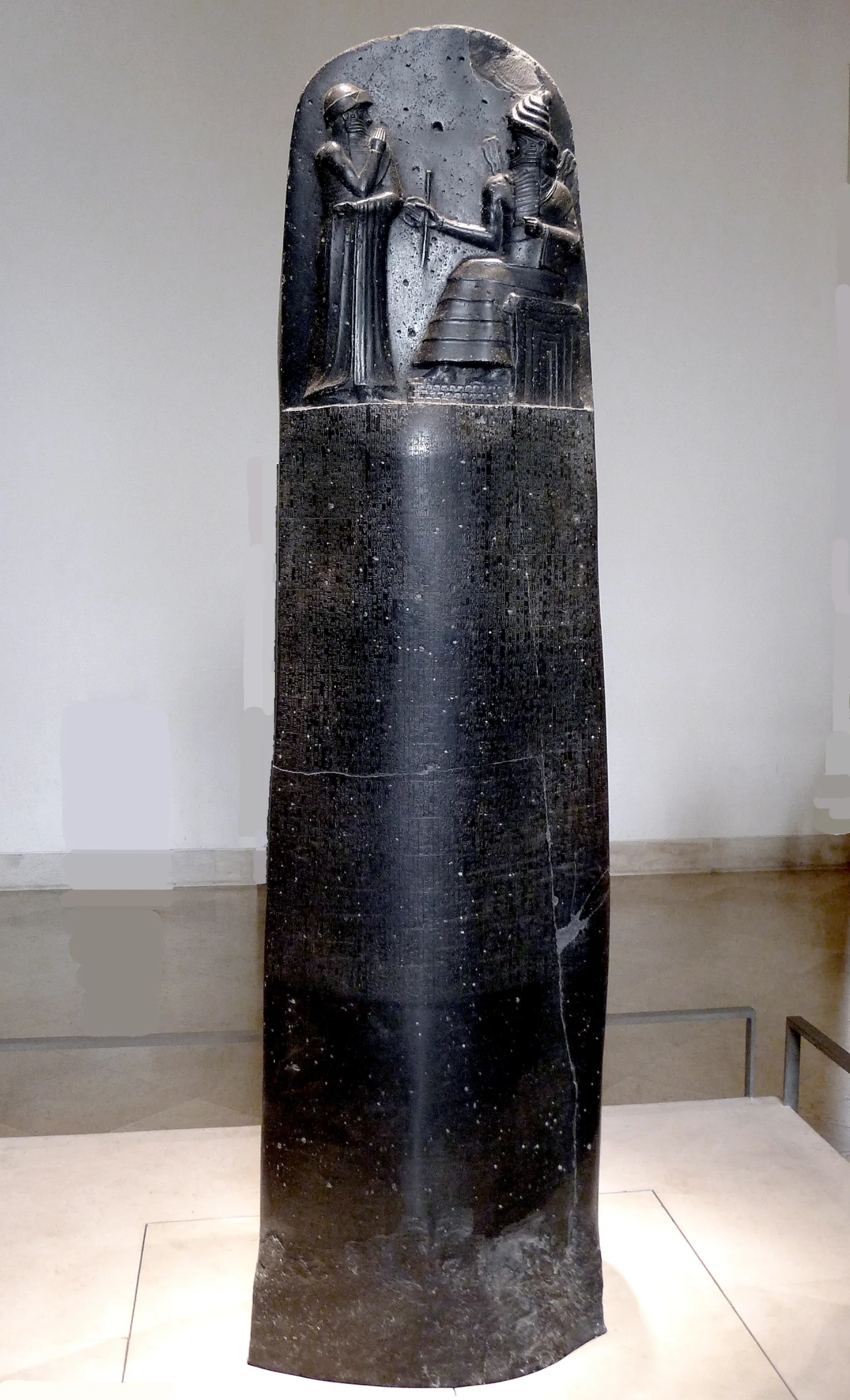
The Stele of Hammurabi and Lex Talionis
The diorite Stele of Hammurabi (c. 1750 BCE) codifies 282 legal rulings under the principle of lex talionis, with penalties rigorously differentiated by the victim's social class.
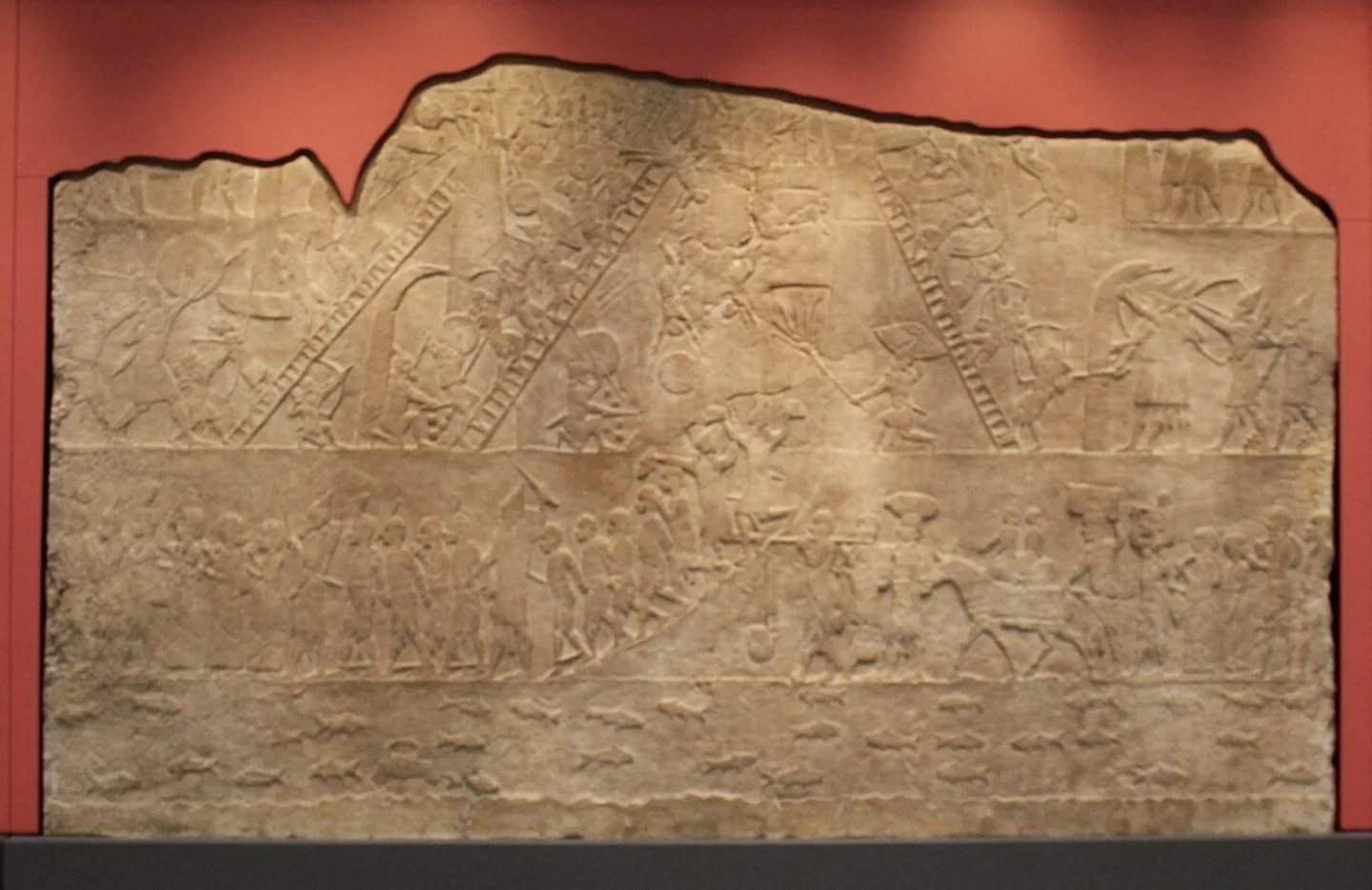
Assyrian Siege Warfare and Strategic Deportation
The Neo-Assyrian Empire maintained administrative control across the Near East through iron-equipped standing armies, combined-arms siege machinery, and the systematic forced resettlement of conquered populations.
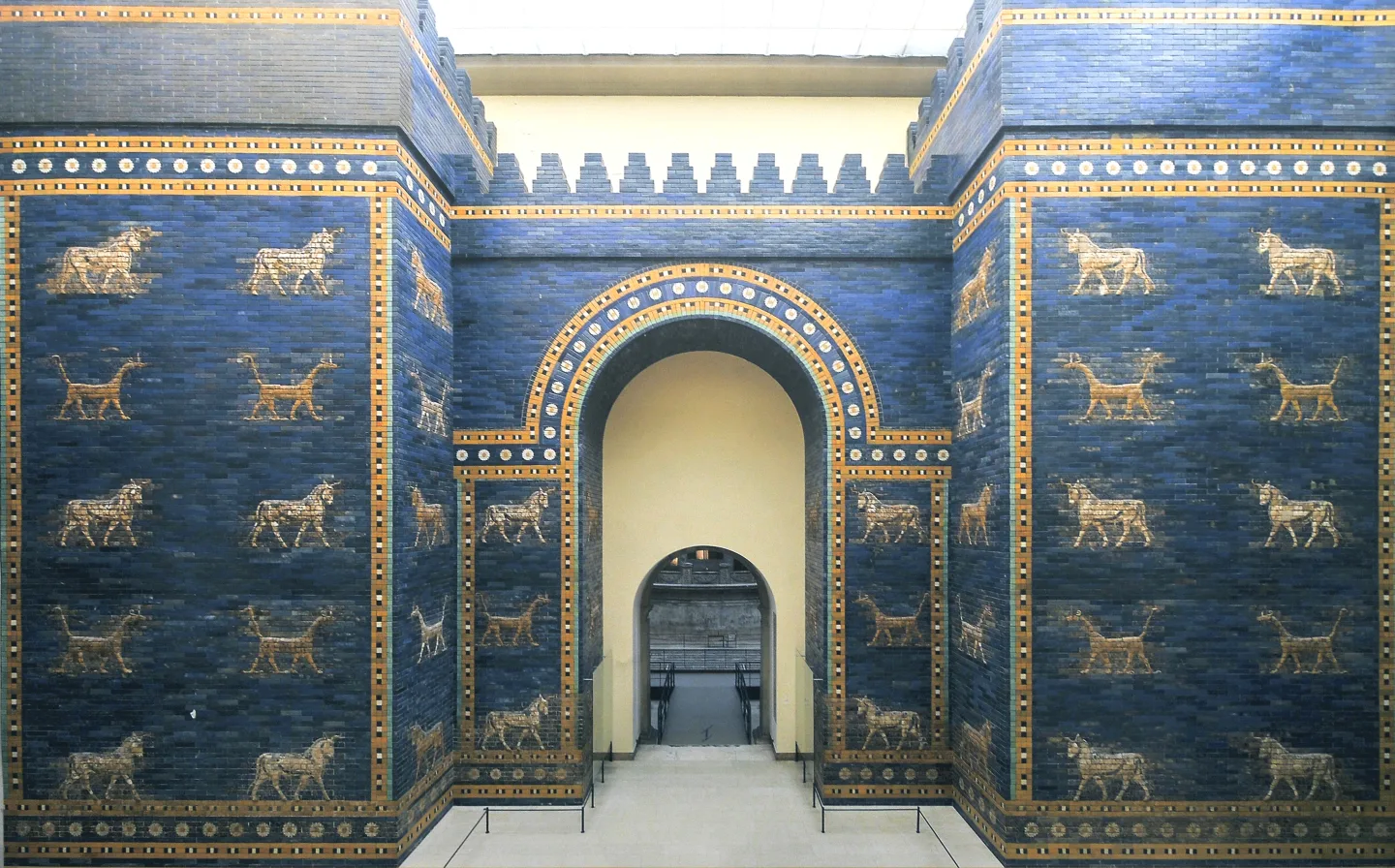
The Ishtar Gate and Neo-Babylonian Monumentalism
Constructed in 575 BCE under King Nebuchadnezzar II, the Ishtar Gate used blue-glazed mudbrick and molded reliefs of dragons and bulls to project imperial piety along Babylon's Processional Way.
By the numbers
- What mathematical numerical base served as the foundation for the ancient Sumerian positional counting system?
- 60 base
- How many specific legal clauses are inscribed upon the diorite Stele of Hammurabi?
- 282 clauses
- In what approximate century BCE did Sargon of Akkad conquer the Sumerian city-states to forge the Akkadian Empire?
- 24 century BCE
Matched pairs
Each item on the left goes with the one on the right.
- En (Priest-King)
- Supreme temple administrator and sacred ritual leader
- Bevelled-Rim Bowl
- Standardized mold-made vessel for distributing cereal rations
- Code of Ur-Nammu
- Oldest surviving statutory legal text, favoring monetary compensation over mutilation
- Stele of Hammurabi
- Comprehensive 282-clause code applying class-stratified proportional retribution
Self-test
Answer each question from memory, then check your work against the answer key.
1. Why did early Sumerian farmers dig artificial canals from the Tigris and Euphrates?
- ATo transport quarried basalt for temple construction
- BTo create defensive moats around the Eanna Temple Precinct
- CTo divert floodwater onto fields amid unreliable rainfall
- DTo drain marshland for grazing livestock herds
2. What outcome resulted from canal irrigation of Sumerian barley fields and date orchards?
- AA grain surplus that broke subsistence farming patterns
- BA shortage of fresh water requiring desalination
- CA decline in population from waterborne disease
- DThe abandonment of farming for full-time herding
3. What economic principle is illustrated by the registers of the alabaster Warka Vase from Uruk?
- APrivate maritime trade agreements between autonomous foreign merchant syndicates
- BEgalitarian sharing of wild gathered resources among unstratified hunter bands
- CFree-market commercial auctioning of luxury craft goods in municipal squares
- DHierarchical redistributive pooling of agrarian surplus through the city temple
4. What administrative need drove Sumerian temple officials to invent cuneiform script around 3400 BCE?
- ARecording epic poetry and mythology
- BTracking grain, livestock, and labor rations
- CDrafting treaties with neighboring states
- DCataloging astronomical omens for priests
5. Which modern convention descends directly from the Sumerian sexagesimal (base-60) number system?
- ASeven-day week of planetary gods
- B100-centimeter metric meter
- CBase-10 decimal currency
- D60-minute hour, 360-degree circle
6. What combination of military technologies made the Neo-Assyrian Empire so formidable?
- AIron weapons, horse cavalry, battering rams, terror tactics
- BWheeled siege towers powered by black-powder rockets
- CComposite bows fired exclusively from war chariots
- DBronze spears, war elephants, and Greek hoplite mercenaries
7. Which king forcibly deported millions of conquered subjects to sever local loyalties?
- ASargon of Akkad
- BAshurbanipal
- CTiglath-Pileser III
- DNebuchadnezzar II
8. What policy did the Neo-Assyrian Empire systematically utilize to prevent rebellions in conquered territories?
- AEstablishing democratic plebeian voting assemblies in every provincial capital
- BMass forced deportation and population resettlement across distant provinces
- CGranting tax exemptions and local political independence to conquered client kings
- DConverting entire conquered populations to nomadic horseback pastoralism
9. Under Hammurabi's lex talionis, what determined how severely an offender was punished for an injury?
- AThe victim's age and lineage
- BThe victim's social class
- CWhere the injury occurred
- DThe offender's criminal record
10. How did Sargon of Akkad structurally enforce control over the Sumerian city-states he conquered?
- AExiling conquered rulers to vassal courts
- BDismantling local irrigation canals
- CGranting each city full self-rule
- DA permanent standing garrison
Go deeper
Answer key
- 1. C To divert floodwater onto fields amid unreliable rainfallSouthern Mesopotamia's arid climate and unreliable rain forced farmers to divert river floodwater through artificial canals.
- 2. A A grain surplus that broke subsistence farming patternsCanal irrigation generated a grain surplus that broke the egalitarian subsistence pattern, enabling urbanization.
- 3. D Hierarchical redistributive pooling of agrarian surplus through the city templeThe Warka Vase depicts agricultural produce flowing from fields up through laborers to the temple priest-king, demonstrating temple redistribution.
- 4. B Tracking grain, livestock, and labor rationsCuneiform began as an accounting tool to track grain rations, livestock, and labor obligations across expanding temple storehouses, not as literature.
- 5. D 60-minute hour, 360-degree circleSumerian base-60 math endures in the 60-second minute, 60-minute hour, and 360-degree circle used today.
- 6. A Iron weapons, horse cavalry, battering rams, terror tacticsThe Neo-Assyrian Empire combined iron weapons, cavalry, battering rams, and psychological terror into a formidable war machine.
- 7. C Tiglath-Pileser IIITiglath-Pileser III enacted mass deportation, relocating millions of conquered people to imperial capitals like Nineveh.
- 8. B Mass forced deportation and population resettlement across distant provincesThe Assyrians forcibly deported millions of conquered people to sever their local roots, prevent coordinated rebellions, and staff imperial building projects.
- 9. B The victim's social classHammurabi's code applied an eye for an eye, but penalties were strictly stratified by whether the victim was a noble, commoner, or enslaved person.
- 10. D A permanent standing garrisonSargon maintained a permanent royal standing garrison of 5,400 elite soldiers to hold conquered Sumerian cities under Akkadian control.
Sources
- Marc Van De Mieroop, A History of the Ancient Near East, Chapter 2
- British Museum: Ancient Mesopotamia Collection — www.britishmuseum.org/collection/galleries/mesopotamia
- Marc Van De Mieroop, A History of the Ancient Near East, Chapter 2; Marc Van De Mieroop, A History of the Ancient Near East, Chapter 4 — www.wiley.com
- British Museum: Ancient Mesopotamia Collection — www.britishmuseum.org
- Marc Van De Mieroop, A History of the Ancient Near East, Chapter 4
- Louvre Museum: Department of Near Eastern Antiquities — www.louvre.fr/recherche-et-conservation/departement-des-antiquites-orientales
- Louvre Museum: Department of Near Eastern Antiquities — www.louvre.fr
Image credits
- Canal Irrigation and Agricultural Surplus in Sumer: FlashFeed original diagram · CC-BY-4.0
- The Warka Vase and Temple Redistribution: Wikimedia Commons · Osama Shukir Muhammed Amin FRCP(Glasg) · CC BY-SA 4.0 — commons.wikimedia.org/wiki/File:Warka_vase_(background_retouched).jpg
- From Clay Tokens to Cuneiform Script: Openverse · cc0 1.0 — commons.wikimedia.org/w/index.php?curid=57854047
- Standardized Bevelled-Rim Bowls for Labor Rations: Vassil · CC0 — commons.wikimedia.org/wiki/File:British_Museum_Middle_east_14022019_Beveled_rim_bowl_Nineveh_Late_Uruk_Period_3672.jpg
- The Sexagesimal Number System in Mesopotamian Mathematics: Wikimedia Commons · Unknown author · Public domain — commons.wikimedia.org/wiki/File:Plimpton_322.jpg
- The Standard of Ur and Early Dynastic Social Stratification: Unknown author · Public domain — commons.wikimedia.org/wiki/File:Standard_of_Ur_-_War.jpg
- The Victory Stele of Naram-Sin and Royal Deification: Wikimedia Commons · Shonagon · CC0 — commons.wikimedia.org/wiki/File:St%C3%A8le_de_Naram-Sin_-_Mus%C3%A9e_du_Louvre_Antiquit%C3%A9s_orientales_SB_4_;_AS_6065.jpg
- The Code of Ur-Nammu: Earliest Codified Law: Wikimedia Commons · Istanbul Archaeology Museums · CC0 — commons.wikimedia.org/wiki/File:Ur_Nammu_code_Istanbul.jpg
- The Stele of Hammurabi and Lex Talionis: Wikimedia Commons · Mbzt · CC BY 3.0 — commons.wikimedia.org/wiki/File:P1050763_Louvre_code_Hammurabi_face_rwk.JPG
- Assyrian Siege Warfare and Strategic Deportation: Gary Todd · CC0 — commons.wikimedia.org/wiki/File:Assyrian_siege_of_an_Egyptian_fort,_probably_a_scene_from_the_war_in_667_BCE._Sculpted_in_645_%E2%80%93_635_BCE,_time_of_Ashurbanipal.jpg
- The Ishtar Gate and Neo-Babylonian Monumentalism: Wikimedia Commons · LBM1948 · CC BY-SA 4.0 — commons.wikimedia.org/wiki/File:Berl%C3%ADn,_Museo_de_P%C3%A9rgamo_05.jpg


