
Ancient Civilizations: First Cities to Late Antiquity study guide · Lesson 12 of 12
Trans-Eurasian Networks & The Late Antique Transition (c. 100 BCE–500 CE)
The Silk Road, Monsoon Maritime Trade & Nomadic Dynamics · Demographic Shocks, Imperial Reorganization & Late Antiquity
This is the lesson's study guide from the FlashFeed app, plus its key facts and a self-test.
What you'll be able to do
- Analyze the Silk Road relay trade, Indian Ocean monsoon navigation, and Kushan Greco-Buddhist synthesis.
- Evaluate demographic shocks, Diocletian's Tetrarchy, Constantine's Solidus, and the 476 CE transition.
The Overland Silk Road and Han Western Expansion
In the 2nd century BCE, the eastern and western ends of the Eurasian continent became formally interconnected through the establishment of the Silk Road. In 138 BCE, Emperor Wu of the Han Dynasty dispatched royal envoy Zhang Qian on a diplomatic mission across Central Asia to forge alliances against the nomadic Xiongnu.
Although captured and held for a decade, Zhang Qian returned to Chang'an with invaluable intelligence regarding advanced western civilizations and the swift, muscular "Heavenly Horses" of the Ferghana Valley (Dayuan). To secure these horses for Han cavalry, Emperor Wu launched military campaigns into Central Asia, establishing the Protectorate of the Western Regions in 60 BCE and extending the Great Wall with beacon watchtowers along the Hexi Corridor.
The Silk Road functioned not as a single paved highway, but as an overland relay network spanning 7,000 kilometers from Chang'an to Rome through oasis cities like Dunhuang, Kashgar, Samarkand, and Palmyra:
- Commodity Flow: Chinese merchants exported high-value, low-weight luxury goods—raw silk, embroidered damask, cast iron, and lacquerware. Western merchants traded Roman blown glassware, Baltic amber, Mediterranean coral, Persian cobalt, and Central Asian jade.
- Relay Trade: Few merchants traveled the entire route; trade was conducted through regional intermediaries, especially Sogdian merchants, who operated caravanserais and maintained financial credit networks across Central Asia.
Indian Ocean Monsoon Trade and the Periplus
Parallel to the overland route ran the maritime trade network across the Indian Ocean. Maritime commerce was unlocked by understanding the seasonal Monsoon Wind Regime:
- Southwest Monsoon (Summer, May–September): Blew ships rapidly eastward from the Red Sea and Arabian coast across the open ocean to India.
- Northeast Monsoon (Winter, November–March): Blew ships westward back toward Egypt and the Arabian Peninsula.
The operational reality of this maritime network is preserved in the Periplus of the Erythraean Sea (c. 50 CE), a Greek navigational handbook written by an Egyptian merchant. The Periplus details trading ports from Roman Egypt (Myos Hormos, Berenike) down the African coast to Rhapta (Tanzania) and east to Indian ports like Muziris and Arikamedu. Roman ships imported black pepper, cinnamon, pearls, and diamonds, paying with vast shipments of silver and gold Roman coins—prompting Roman author Pliny the Elder to complain that Indian luxury imports drained Rome of over 50 million sesterces annually.
Pastoral Nomads and the Kushan Crossroads
The Eurasian steppe was dominated by mobile pastoral nomad confederations—including the Scythians, Sarmatians, and Xiongnu. Pastoral nomads developed key military technologies:
- The Composite Recurve Bow: Constructed from layers of horn, wood, and animal sinew glued together, firing armor-piercing arrows with tremendous velocity from horseback.
- Equestrian Innovations: The development of solid wooden-frame saddles and leather stirrup loops provided mounted horse archers with unprecedented stability.
In Central Asia and Northern India, the Kushan Empire (c. 30–375 CE), founded by the pastoral Yuezhi, functioned as the multicultural crossroad of Afro-Eurasia. Under King Kanishka I (c. 127–150 CE), the Kushans patronized Greco-Buddhist Gandharan Art, producing the first anthropomorphic representations of the Buddha carved in Classical Greek aesthetic styles, depicting the enlightened master with Apollo-like facial features and naturalistic Roman toga drapery.
On the Roman-Persian frontier, the border garrison of Dura-Europos on the Euphrates illustrated this late antique cosmopolitan synthesis, preserving within its fortified mudbrick walls the world's earliest known Christian house church and a vibrant Synagogue decorated with biblical narrative wall frescoes.
Demographic Crises: The Antonine Plague and the Third-Century Crisis
In the late 2nd century CE, Eurasian trade networks facilitated the rapid transmission of epidemic diseases:
- The Antonine Plague (165–180 CE): Roman legions returning from Mesopotamia brought back what modern epidemiologists identify as smallpox. The epidemic swept the Roman Empire, killing an estimated 10% to 20% of the population, including co-emperor Lucius Verus. The demographic shock gutted the agricultural tax base, decimated legionary recruitment, and triggered economic inflation.
- The Plague of Cyprian (249–262 CE) and simultaneous epidemic outbreaks in Han China further undermined imperial stability.
In Rome, demographic loss and frontier invasions precipitated the Crisis of the Third Century (235–284 CE). In 50 years, over twenty soldier-emperors seized and lost the imperial throne through military assassinations, while the empire temporarily fractured into three rival regimes: the Gallic Empire in the west, the Palmyrene Empire under Queen Zenobia in the east, and the central Roman state, before being militarily reunited by Emperor Aurelian (Restitutor Orbis).
Diocletian's Tetrarchy and Constantine's New Rome
To restore administrative control over an unmanageable empire, Emperor Diocletian (reigned 284–305 CE) dismantled the Principate and established the Dominate, instituting the Tetrarchy ("Rule of Four"):
- Divided the empire into Western and Eastern halves.
- Each half was governed by a senior emperor (Augustus) and an appointed junior successor (Caesar).
- Doubled the number of provinces to weaken provincial governors, fixed maximum prices and wages, and tied peasant farmers (coloni) permanently to their land, anticipating medieval serfdom.
In 324 CE, Emperor Constantine I (the Great) reunited the empire and executed two historic decisions:
- Christianization: Following his conversion and the 313 CE Edict of Milan granting religious toleration, Constantine patronized the Christian Church and convened the Council of Nicaea (325 CE).
- Foundation of Constantinople: In 330 CE, Constantine dedicated the new imperial capital of Constantinople (modern Istanbul) at the strategic crossroads of the Bosporus. Building on the pure gold Solidus coin (4.5 grams) he had introduced around 312 CE to stabilize imperial finance, this coin remained the benchmark currency of the Mediterranean for 700 years.
The Fall of the Western Empire and the Byzantine Endurance
Following the death of Emperor Theodosius I in 395 CE, the Roman Empire was permanently partitioned between his two sons into the Western Roman Empire (capital at Ravenna) and the Eastern Roman (Byzantine) Empire (capital at Constantinople).
In the 5th century CE, westward migrations by the Huns pushed Germanic tribes (Visigoths, Vandals, Franks, Ostrogoths) across the frozen Rhine and Danube frontiers. Impoverished and unable to pay legions, Western emperors settled barbarian tribes within Roman borders as federate troops (foederati):
- 410 CE: The Visigoths under Alaric sacked Rome.
- 455 CE: The Vandals under Gaiseric sacked Rome from the sea.
- 476 CE: Germanic mercenary chieftain Odoacer deposed the last Western Roman Emperor, 16-year-old Romulus Augustulus, sending the imperial crown regalia to Constantinople.
While the Western Roman Empire dissolved into fragmented Germanic successor kingdoms (inaugurating the early Middle Ages in Western Europe), the urbanized, wealthy Eastern Roman (Byzantine) Empire survived for another thousand years, preserving Roman law under Emperor Justinian's Corpus Juris Civilis and classical learning until 1453 CE.
Key terms
- Composite Bow
- A traditional recurve bow engineered from laminated layers of horn, wood, and sinew to deliver exceptional power and range.
- Foederati
- Allied barbarian nations or tribes bound by treaty to provide military service within Roman imperial territory.
Key concepts
Zhang Qian
- Han Dynasty royal diplomat dispatched by Emperor Wu in 138 BCE to seek military alliances in Central Asia
- Captured and held by the Xiongnu for over a decade before escaping to explore Bactria and the Ferghana Valley
- Returned to the Han court with strategic reports that initiated formal Chinese expansion along the Silk Road
The Periplus of the Erythraean Sea
- First-century CE Greek navigational handbook and commercial maritime guide written by an Egyptian merchant
- Described practical sailing routes, harbor depths, and import-export commodities from the Red Sea to India
- Detailed how merchants exploited summer and winter monsoon wind shifts to cross the open Arabian Sea
Greco-Buddhist Gandharan Art
- Syncretic artistic school flourishing in the Kushan Empire (modern Pakistan and Afghanistan) c. 1st–4th century CE
- Synthesized Hellenistic Greek realistic sculpture with Buddhist iconographic teachings
- Pioneered the first human representations of the Buddha depicted with Apollo-like features and flowing drapes
Dura-Europos
- Hellenistic, Parthian, and Roman fortress city on the Euphrates River in eastern Syria, abandoned c. 256 CE
- Preserved beneath desert sand the world's earliest known Christian house church and a frescoed Jewish synagogue
- Exemplified the rich multi-ethnic, multi-confessional cultural synthesis of the late antique Roman-Persian frontier
The Antonine Plague
- Devastating global epidemic (likely smallpox) sweeping the Roman Empire from Mesopotamia between 165 and 180 CE
- Killed an estimated 10 to 20 percent of the empire's population, including co-emperor Lucius Verus
- Triggered long-term labor shortages, collapsing tax revenues, and weakening frontier legionary recruitment
The Tetrarchy
- Imperial administrative system established by Emperor Diocletian in 293 CE dividing power among four rulers
- Divided the empire into Western and Eastern halves, each ruled by an *Augustus* (senior emperor) and a *Caesar* (junior)
- Decentralized imperial administration away from Rome to strategic frontier capitals: Trier, Milan, Sirmium, Nicomedia
The Solidus
- Standard pure gold coin weighing approximately 4.5 grams introduced by Emperor Constantine I in 312 CE
- Replaced debased silver currency, serving as the trusted monetary benchmark of the Mediterranean for over 700 years
- Formed the financial bedrock of the Byzantine Empire and supplied the linguistic root for the word 'soldier'
The Fall of the Western Roman Empire (476 CE)
- Historical benchmark marking the formal end of the Western Roman imperial line in Italy
- Culminated when Germanic mercenary commander Odoacer deposed the teenage emperor Romulus Augustulus
- Marked the transition from classical antiquity to early medieval Europe, while the Eastern Byzantine Empire survived
Key facts
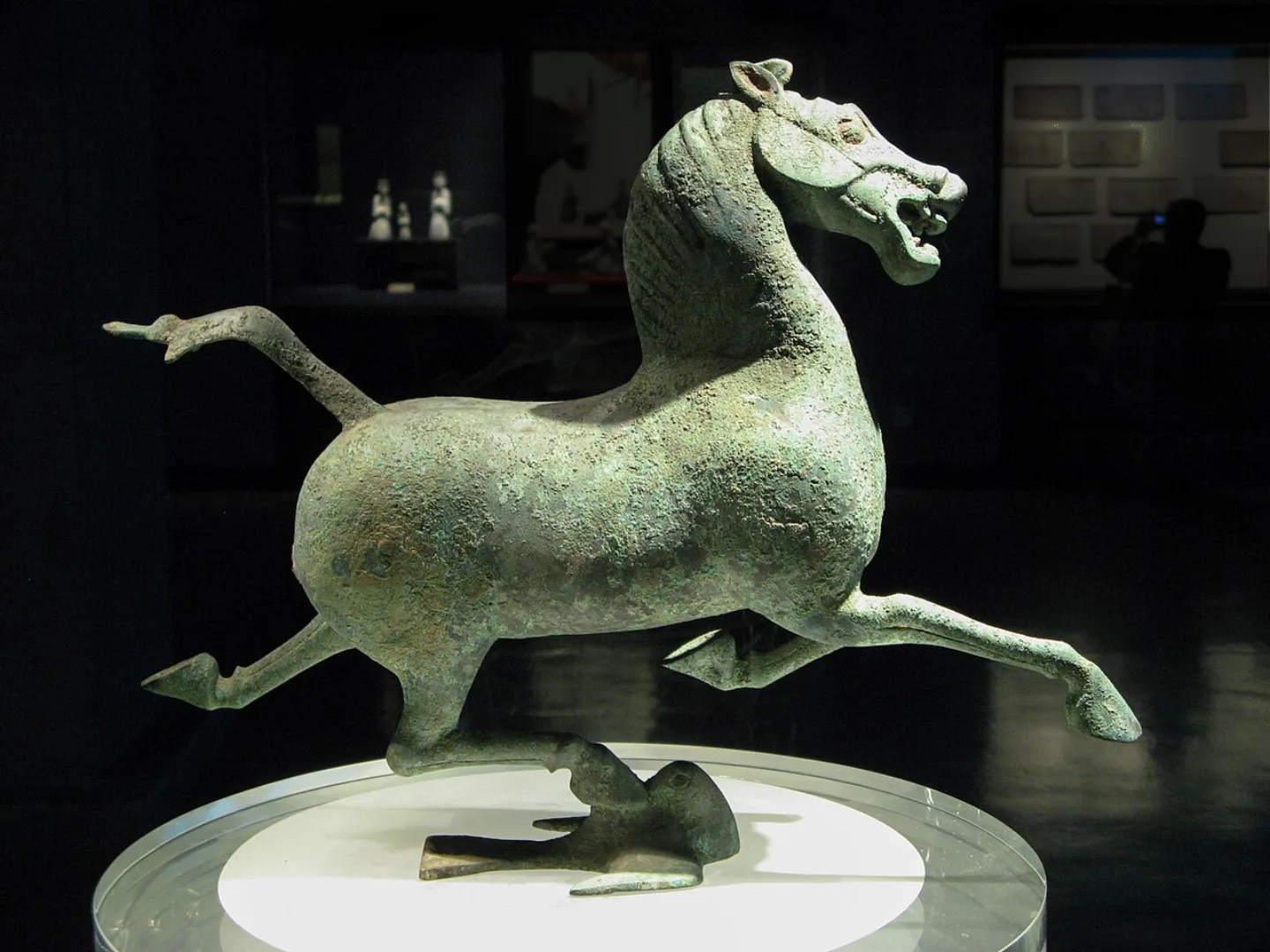
Zhang Qian's Western Mission and the Silk Road Opening
In 138 BCE, Emperor Wu of Han dispatched diplomat Zhang Qian across Central Asia to form alliances, returning with intelligence on Ferghana 'Heavenly Horses' that catalyzed the formal opening of the Silk Road.
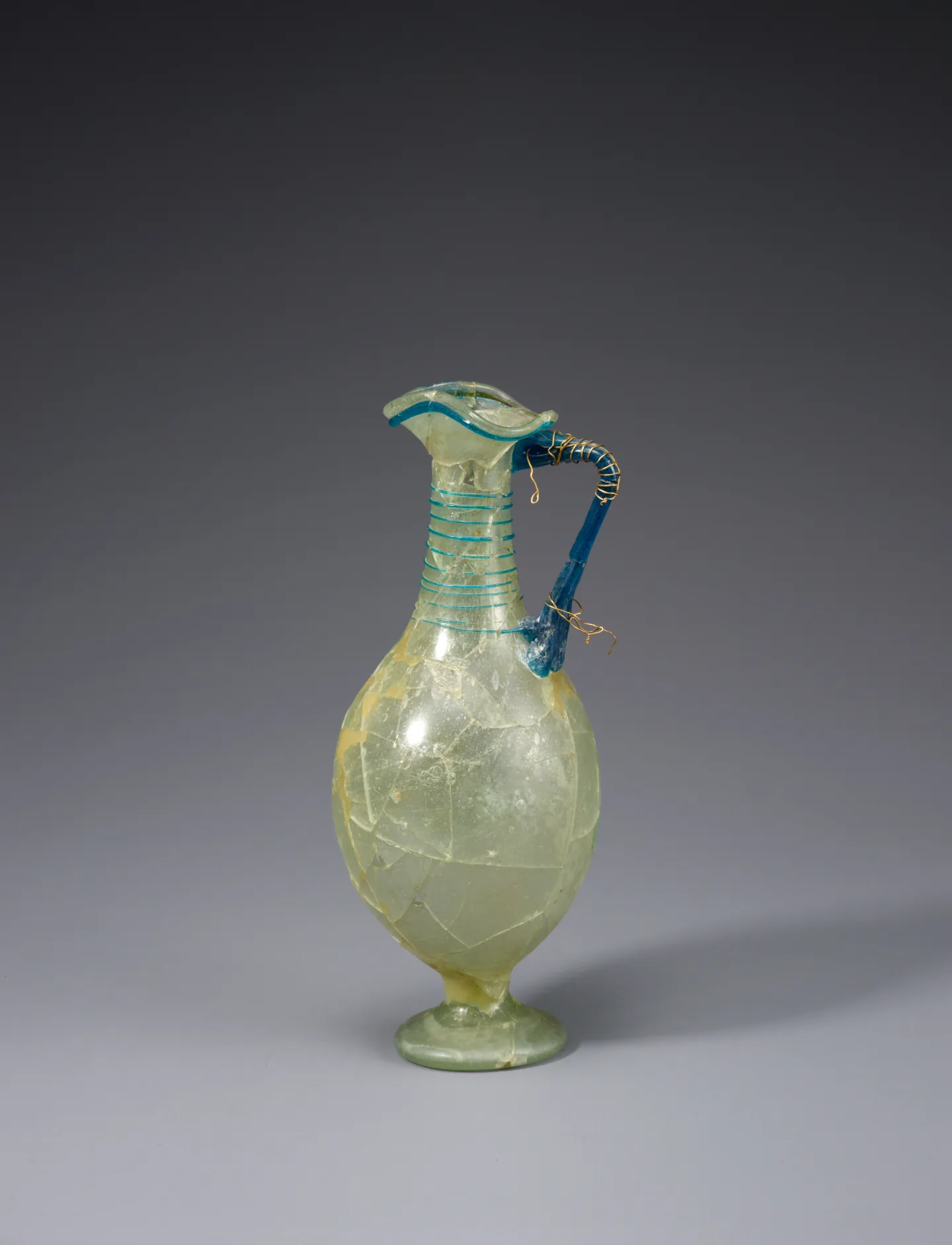
Trans-Eurasian Commodity Flow: Silk for Glassware and Silver
The Silk Road operated as a relay trade network, moving lightweight, high-value prestige goods—Chinese silk, Roman blown glassware, Persian cobalt, and Central Asian jade—across oasis caravanserais.
The Periplus of the Erythraean Sea and Monsoon Navigation
The 1st-century CE Greek navigational guide Periplus of the Erythraean Sea documented how Roman and Indian merchants utilized seasonal southwest and northeast monsoon winds to cross the open Indian Ocean.
Steppe Nomad Horse Archery and Equestrian Technologies
Pastoral nomad confederations (Scythians, Xiongnu, Sarmatians) dominated Eurasian frontiers through horseback archery using composite recurve bows, iron-tipped arrows, and advanced cavalry gear.
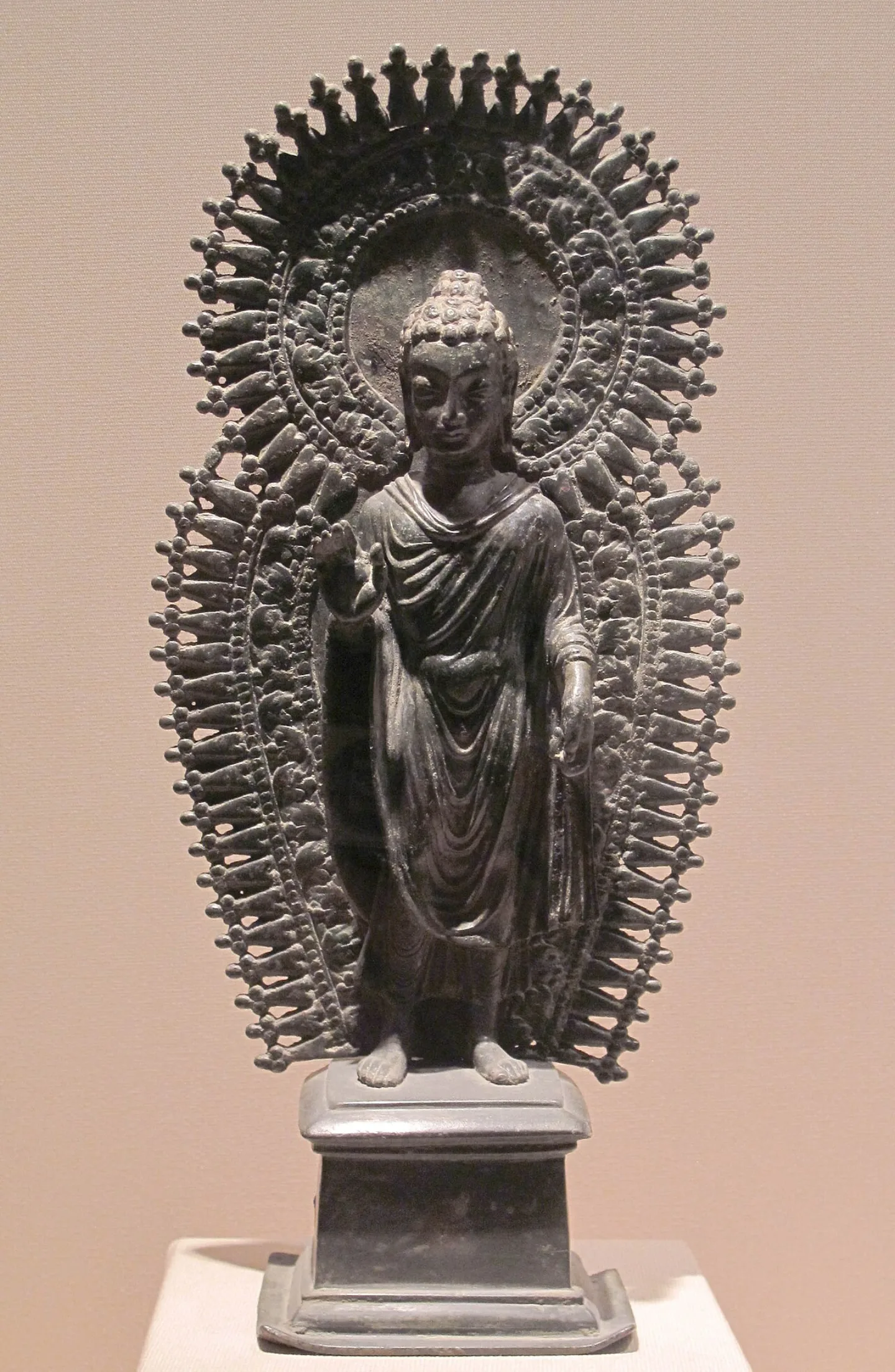
The Kushan Empire and Greco-Buddhist Gandharan Art
Bridging India, Central Asia, and the Roman sphere, the Kushan Empire under King Kanishka (c. 127–150 CE) fostered Greco-Buddhist Gandharan art, depicting the Buddha with Classical Greek Apollo-like drapery.
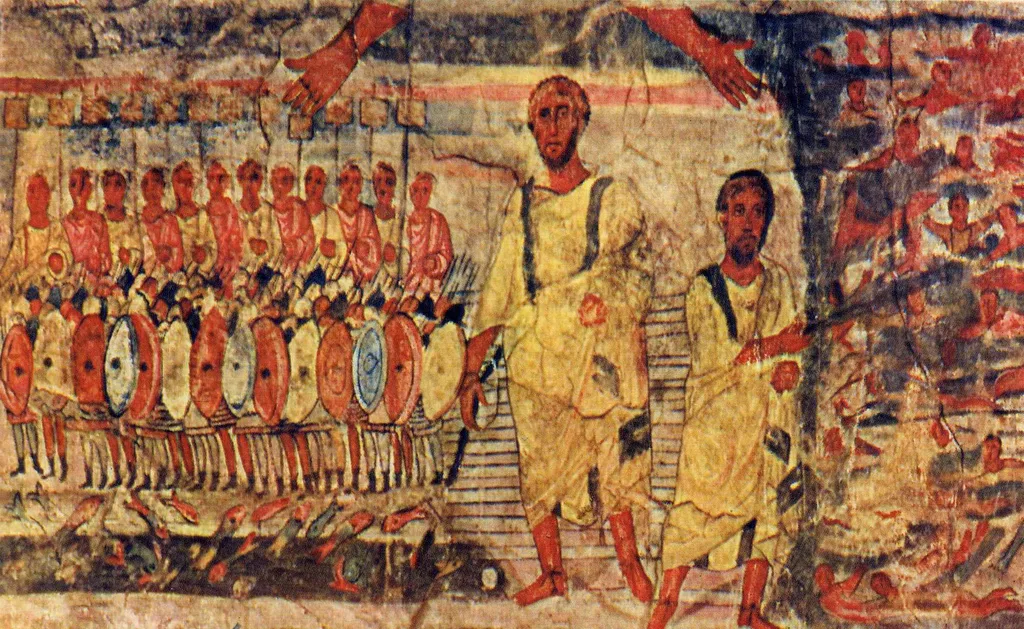
Dura-Europos: The Cosmopolitan Border Fortress
Excavations at Dura-Europos on the Euphrates revealed a multi-confessional frontier garrison containing the world's earliest identified Christian house church and a synagogue decorated with biblical wall frescoes.
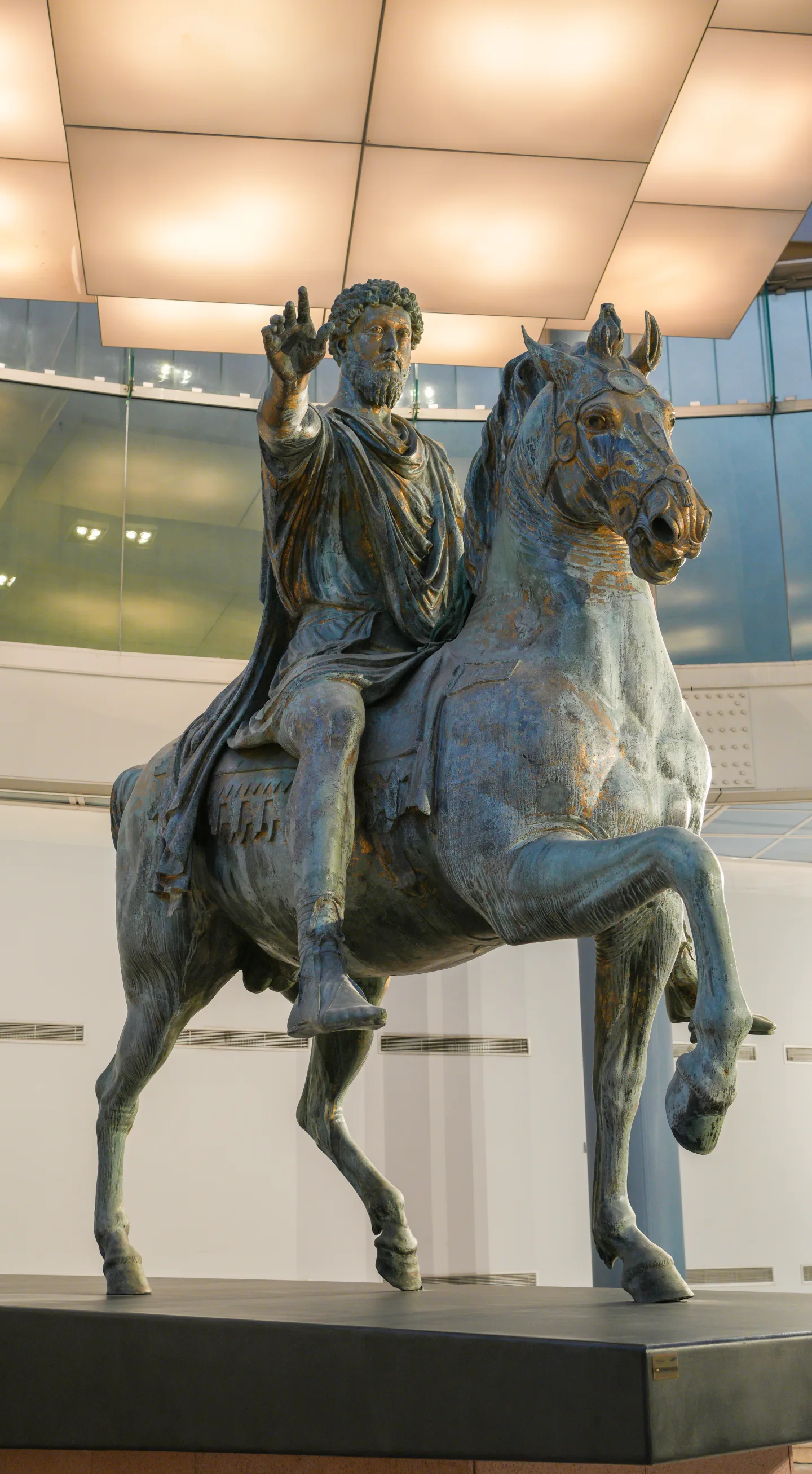
The Antonine Plague and Imperial Demographic Shocks
Brought back by Roman legions from Mesopotamia in 165 CE, the Antonine Plague (likely smallpox) killed an estimated 10–20% of the Roman Empire's population, undermining military recruitment and agricultural tax revenue.
The Crisis of the Third Century (235–284 CE)
During the 50-year Crisis of the Third Century, over twenty soldier-emperors seized power amid barbarian invasions, hyperinflation, debasement of silver coinage, and the temporary secession of the Gallic and Palmyrene empires.
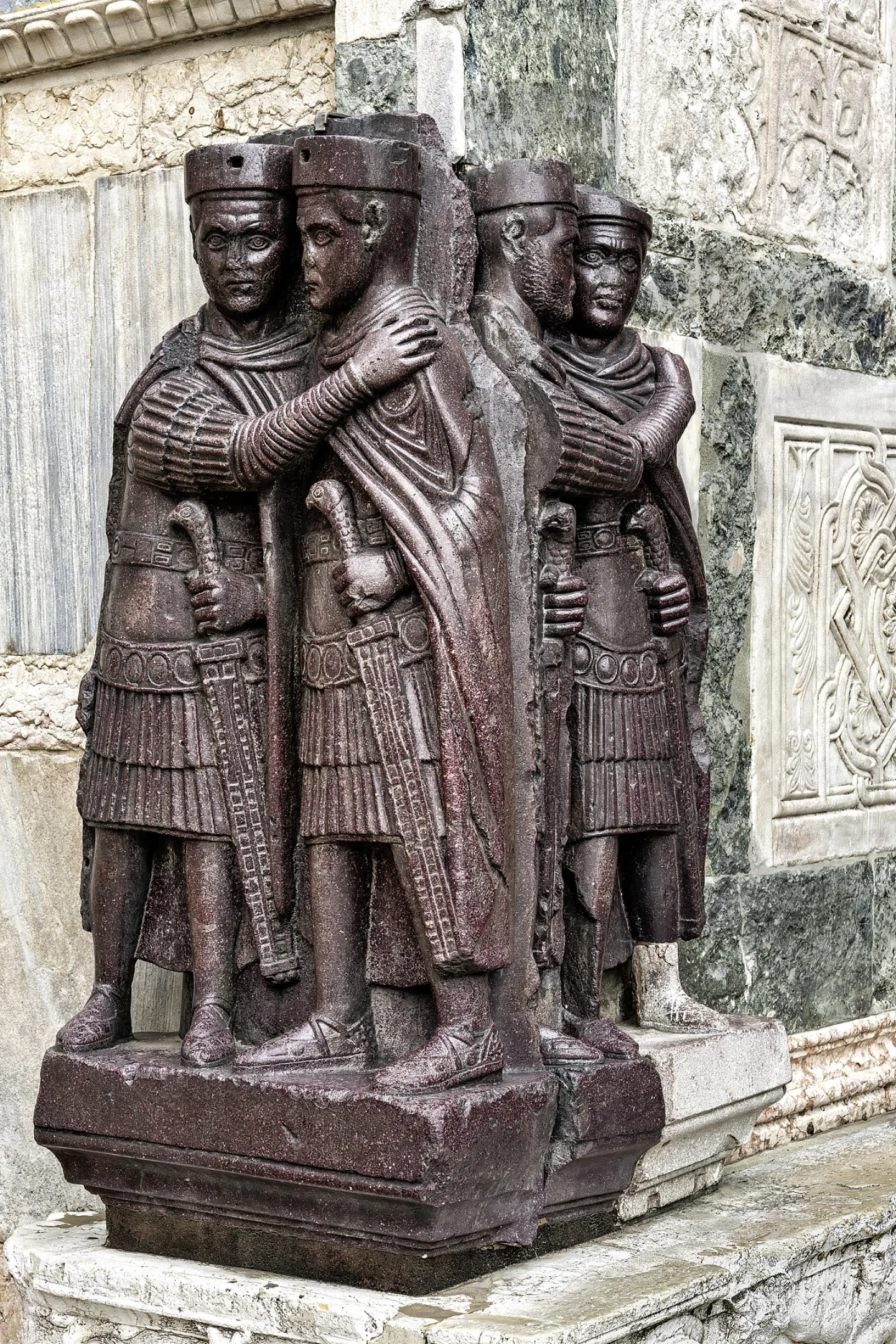
Diocletian's Tetrarchy and Administrative Division
To restore administrative order, Emperor Diocletian instituted the Tetrarchy ('Rule of Four') in 293 CE, dividing the Roman Empire into Eastern and Western halves, each governed by an Augustus and a junior Caesar.
Constantine, the Foundation of Constantinople, and the Solidus
In 330 CE, Emperor Constantine I dedicated Constantinople as the empire's new eastern capital, building on the pure gold Solidus standard he had introduced around 312 CE to stabilize the Mediterranean monetary economy.
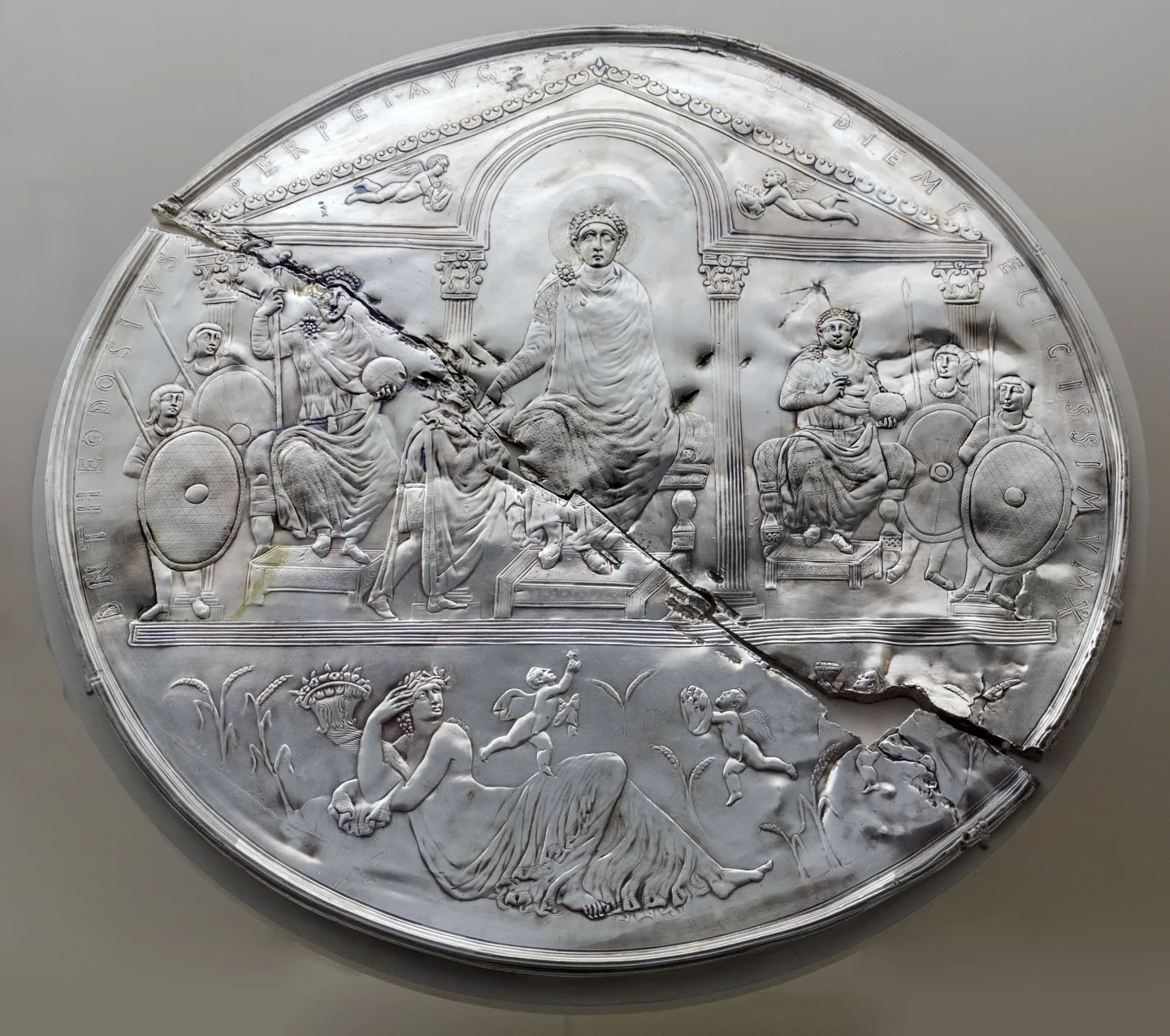
The Division of 395 CE and Barbarian Federate Settlements
Following the death of Theodosius I in 395 CE, the Roman Empire was permanently partitioned into Eastern and Western halves, with Western emperors increasingly settling Germanic tribes (foederati) within Roman borders.
476 CE: The Deposition of Romulus Augustulus and the Fall of the West
In 476 CE, Germanic chieftain Odoacer deposed the last Western Roman Emperor, Romulus Augustulus, sending the imperial regalia to Constantinople while the Eastern Byzantine Empire endured for another millennium.
By the numbers
- In what year BCE was diplomat Zhang Qian dispatched by Emperor Wu on his historic mission to Central Asia?
- 138 year BCE
- In what year CE was the new imperial capital of Constantinople officially dedicated by Emperor Constantine I?
- 330 year CE
- In what benchmark year CE did Odoacer depose Romulus Augustulus, marking the fall of the Western Roman Empire?
- 476 year CE
Matched pairs
Each item on the left goes with the one on the right.
- Han China
- High-value raw silk, embroidered damask, and fine lacquerware
- Roman Empire
- High-clarity blown glassware, gold and silver bullion, and purple dyed textiles
- Emperor Diocletian (284–305 CE)
- Instituted the Tetrarchy ('Rule of Four') and divided the empire into administrative halves
- Emperor Constantine I (306–337 CE)
- Founded Constantinople as the new eastern capital and introduced the gold Solidus standard
Self-test
Answer each question from memory, then check your work against the answer key.
1. What military asset did diplomat Zhang Qian urge Han Emperor Wu to acquire from Central Asia in the 2nd century BCE?
- ACast-bronze Roman naval waterline rams for fighting river battles
- BTrained Indian war elephants armed with iron tusks for jungle combat
- CHeavy Macedonian bronze battering rams for breaching walled mountain citadels
- DMuscular, swift 'Heavenly Horses' from the Ferghana Valley to counter nomadic Xiongnu cavalry
2. How did trans-Eurasian trade operate across the overland Silk Road during antiquity?
- ASingle individual merchants personally traveled the entire 7,000 km distance on foot
- BGoods were dropped by long-range hot-air balloons launched from the Great Wall
- CIt operated as a relay trade where goods passed through regional intermediaries, especially Sogdian merchants
- DAll trade was conducted by imperial Roman government naval convoys operating in the Caspian Sea
3. How did Roman and Indian merchants navigate open waters in the Indian Ocean, as described in the Periplus?
- ABy relying entirely on steam-driven paddle wheels fired by dried mangrove wood
- BBy timing departures to seasonal southwest and northeast monsoon wind reversals
- CBy following underwater acoustic sound waves emitted by migrating blue whales
- DBy towing heavy stone anchors along shallow coastal mudbanks without sails
4. What cultural synthesis was pioneered in the Gandharan art of the Kushan Empire under King Kanishka?
- ABlending Classical Greek realistic drapery and Apollo-like facial beauty with Buddhist spirituality
- BFusing Roman gladiatorial combat armor with Chinese Legalist tiger tallies
- CCombining Olmec were-jaguar iconography with Egyptian hieroglyphic inscriptions
- DMerging Persian qanat hydraulic engineering with Minoan bull-leaping rituals
5. What remarkable religious artifacts were preserved within the Roman frontier fortress of Dura-Europos?
- AThe world's earliest identified Christian house church and a vibrant frescoed synagogue
- BThe complete gold-plated Ark of the Covenant inside an intact Persian ziggurat
- CA giant statue of the Buddha carved into a subterranean salt mine chamber
- DA monumental Mayan Long Count stela recording an alliance with Emperor Augustus
6. What long-term economic and military impact did the Antonine Plague (165–180 CE) inflict upon the Roman Empire?
- AIt led to a complete cessation of all trade with Egypt and North Africa for two centuries
- BIt decimated 10–20% of the population, triggering severe agricultural labor shortages and shrinking legion recruitment
- CIt caused the immediate abandonment of the city of Rome and relocation to Britannia
- DIt forced the Roman Senate to replace all silver currency with Chinese bronze coins
7. What major economic stabilization measure was enacted by Emperor Constantine I in the early 4th century CE?
- AHe mandated the use of unstamped cattle hides as universal legal tender across Europe
- BHe banned all private commercial trade between the eastern and western Mediterranean
- CHe introduced the pure gold Solidus, restoring confidence in Mediterranean coinage for centuries to come
- DHe closed all state mints and prohibited the ownership of gold by private citizens
8. What military practice did Western Roman emperors increasingly rely upon during the 5th century CE to defend frontiers?
- AEmploying massed squadrons of long-range Chinese wooden crossbow siege engines
- BRequiring every Roman citizen to serve forty consecutive years in the cavalry
- CConstructing a continuous stone wall across the entire length of the Sahara desert
- DSettling entire Germanic tribes within Roman borders as federated troops (foederati) under their own chieftains
9. What historical event in 476 CE is conventionally marked by historians as the end of the Western Roman Empire?
- AThe total volcanic destruction of Rome by a catastrophic eruption of Mount Vesuvius
- BGermanic chieftain Odoacer deposing Romulus Augustulus and sending imperial regalia to Constantinople
- CThe signing of the Treaty of Kadesh between Roman Consuls and the Hittite Empire
- DThe formal conversion of the entire Roman Senate to the Aztec solar religion
10. Which of these was NOT part of Diocletian's Tetrarchy reforms (293 CE)?
- AAbolished the Augustus title and ruled alone
- BTied peasant coloni permanently to their land
- CDoubled the provinces to weaken governors
- DDivided the empire into Augustus-and-Caesar-led halves
Go deeper
Answer key
- 1. D Muscular, swift 'Heavenly Horses' from the Ferghana Valley to counter nomadic Xiongnu cavalryZhang Qian reported on the superior 'Heavenly Horses' of Ferghana (Dayuan), prompting Han campaigns to secure breeding stock for anti-Xiongnu cavalry.
- 2. C It operated as a relay trade where goods passed through regional intermediaries, especially Sogdian merchantsSilk Road commerce was a relay system: Sogdian merchants and oasis caravanserais moved goods between regional markets rather than through single transcontinental travelers.
- 3. B By timing departures to seasonal southwest and northeast monsoon wind reversalsThe Periplus explains that ships caught the summer southwest monsoon to sail east to India, and returned on the winter northeast monsoon winds.
- 4. A Blending Classical Greek realistic drapery and Apollo-like facial beauty with Buddhist spiritualityGandharan art blended Hellenistic Greek sculpting techniques (realistic facial anatomy, wavy hair, and toga drapery) with Buddhist iconography.
- 5. A The world's earliest identified Christian house church and a vibrant frescoed synagogueDura-Europos on the Euphrates preserved an early Christian house church with a baptistery (c. 240 CE) and a synagogue with narrative biblical frescoes.
- 6. B It decimated 10–20% of the population, triggering severe agricultural labor shortages and shrinking legion recruitmentThe Antonine Plague devastated manpower, reducing agricultural tax revenues and forcing emperors to enlist Germanic mercenaries to fill depleted legions.
- 7. C He introduced the pure gold Solidus, restoring confidence in Mediterranean coinage for centuries to comeConstantine issued the gold Solidus (4.5 grams of pure gold), which restored monetary confidence and anchored Mediterranean trade throughout the Byzantine era.
- 8. D Settling entire Germanic tribes within Roman borders as federated troops (foederati) under their own chieftainsUnable to recruit native citizens or fund legions, Western emperors settled barbarian tribes (Visigoths, Franks, Vandals) as federate allies (*foederati*) inside Roman territory.
- 9. B Germanic chieftain Odoacer deposing Romulus Augustulus and sending imperial regalia to ConstantinopleIn 476 CE, Odoacer deposed 16-year-old Romulus Augustulus, ruling Italy as king and sending the imperial regalia to Eastern Emperor Zeno in Constantinople.
- 10. A Abolished the Augustus title and ruled aloneThe Tetrarchy created four co-rulers, not one: Diocletian split the empire into halves each led by an Augustus and Caesar, doubled provinces, and bound coloni to their land.
Sources
- British Museum: Silk Roads — www.britishmuseum.org/exhibitions/silk-roads
- Lionel Casson, The Periplus Maris Erythraei
- Peter Brown, The World of Late Antiquity: AD 150-750
- British Museum: Late Antiquity and Silk Road Gallery — www.britishmuseum.org
- Lionel Casson, The Periplus Maris Erythraei; Kyle Harper, The Fate of Rome: Climate, Disease, and the End of an Empire — press.princeton.edu
- Peter Brown, The World of Late Antiquity: AD 150-750 — thamesandhudson.com
- Kyle Harper, The Fate of Rome: Climate, Disease, and the End of an Empire
Image credits
- Zhang Qian's Western Mission and the Silk Road Opening: G41rn8 · CC BY-SA 4.0 — commons.wikimedia.org/wiki/File:Gansu_Museum_2007_257.jpg
- Trans-Eurasian Commodity Flow: Silk for Glassware and Silver: Wikimedia Commons · National Museum of Korea · KOGL Type 1 — commons.wikimedia.org/wiki/File:%EA%B2%BD%EC%A3%BC_98%ED%98%B8_%EB%82%A8%EB%B6%84_%EC%9C%A0%EB%A6%AC%EB%B3%91_%EB%B0%8F_%EC%9E%94.jpg
- The Kushan Empire and Greco-Buddhist Gandharan Art: Ismoon (talk) · CC BY-SA 4.0 — commons.wikimedia.org/wiki/File:Buddha_with_radiate_halo_and_mandorla.Gandhara.Met.jpg
- Dura-Europos: The Cosmopolitan Border Fortress: made by photographer Becklectic · Public domain — commons.wikimedia.org/wiki/File:Dura_Europos_fresco_Jews_cross_Red_Sea.jpg
- The Antonine Plague and Imperial Demographic Shocks: Wikimedia Commons · Merulana · CC BY-SA 4.0 — commons.wikimedia.org/wiki/File:Equestrian_statue_of_Marcus_Aurelius_(Rome).jpg
- Diocletian's Tetrarchy and Administrative Division: Archaeodontosaurus · CC BY-SA 4.0 — commons.wikimedia.org/wiki/File:(Venice)_Statue_of_the_four_tetrarchs_St._Mark%27s_Basilica.jpg
- The Division of 395 CE and Barbarian Federate Settlements: Wikimedia Commons · Ángel M. Felicísimo · CC BY 3.0 — commons.wikimedia.org/wiki/File:Disco_de_Teodosio.jpg


