
Ancient Civilizations: First Cities to Late Antiquity study guide · Lesson 11 of 12
The Overlooked Kingdoms: Nubia/Kush, Aksum & Early Andes (c. 2500 BCE–600 CE)
Kushite Iron Smelting & The Aksumite Trade Hub · The First Andean Cities & Desert Hydraulics
This is the lesson's study guide from the FlashFeed app, plus its key facts and a self-test.
What you'll be able to do
- Analyze Kushite iron smelting at Meroe, the 25th Dynasty pharaohs, steep pyramids, and Aksumite Red Sea trade.
- Evaluate Caral-Supe Pre-Ceramic urbanism, archaic quipus, Moche adobe pyramids, and Nazca hydraulics.
The Kingdom of Kush: Napata, Meroe, and the 25th Dynasty
Flourishing along the Middle Nile south of the First Cataract (modern Sudan), the Kingdom of Kush (Nubia) developed a powerful, distinct civilization that rivaled and repeatedly conquered Egypt.
Kushite civilization evolved through three major historical capitals:
- Kerma (c. 2500–1500 BCE): Built colossal mudbrick religious temples known as Deffufas and developed superb eggshell-thin burnished ceramics.
- Napata (c. 900–590 BCE): Centered near the holy mountain of Jebel Barkal, Napata unified Nubia. Around 747 BCE, Kushite King Piye invaded Egypt, establishing the 25th Dynasty of Egypt (the "Black Pharaohs"). Rulers like Taharqa reunited Egypt, renovated Karnak temple, and revived royal pyramid burials.
- Meroe (c. 590 BCE–350 CE): Kush relocated its capital south to Meroe to escape Egyptian incursions and exploit rich regional iron ore deposits and abundant acacia timber.
Meroe became a major iron-smelting center of ancient Africa (the old label 'the Birmingham of Africa' overstates a scale that scholars still debate). Archaeological excavations have uncovered large heaps of iron slag around smelting furnaces. Meroitic metalsmiths manufactured iron spears, swords, axes, and agricultural hoes, exporting iron tools across central and eastern Africa.
Meroe developed a distinct artistic and political culture:
- Nubian Pyramids: Kushites built over 250 steep-angled (70-degree) limestone and sandstone royal pyramids at Meroe and El-Kurru—more than double the total number of pyramids in Egypt.
- Kandake Queens: Kush was frequently governed by powerful reigning warrior-queens known as Kandake (Candace), such as Queen Amanirenas, who led armies with a blinded eye to resist Roman legions under Augustus, negotiating a favorable peace treaty in 22 BCE.
- Meroitic Script: Abandoning Egyptian hieroglyphs, Kushites invented a 23-letter alphabetic script in the 2nd century BCE, which remains partially undeciphered.
The Kingdom of Aksum: Red Sea Commerce and Christianization
In the northern Ethiopian highlands and modern Eritrea, the Kingdom of Aksum (flourishing c. 100–700 CE) emerged as one of the great commercial powers of late antiquity, ranked by the Persian prophet Mani alongside Rome, Persia, and China as one of the four great empires of the world.
Aksum controlled the strategic maritime trade bottleneck between the Mediterranean and the Indian Ocean through its Red Sea port of Adulis. Aksumite merchants exported African commodities—ivory, frankincense, myrrh, emeralds, gold, and live animals—in exchange for Roman glassware, olive oil, Indian textiles, and swords.
Under King Endubis (c. 270 CE), Aksum became the first sub-Saharan African state to mint its own gold, silver, and bronze coinage, inscribed in Greek (for international trade) and Ge'ez (the indigenous South Semitic script).
Key Aksumite achievements included:
- Monolithic Granite Stelae: Aksumite kings carved colossal monolithic granite obelisks to mark underground royal tombs. The largest, the Great Stele of Aksum (33 meters, 520 tons), represents the largest single monolith ancient humans ever attempted to quarry and erect.
- Christianization under King Ezana (c. 330 CE): Converted by Frumentius — a Phoenician Christian from Tyre, not himself a philosopher (that was his uncle Meropius) — King Ezana adopted Christianity as the state religion, replacing pagan crescent-and-disk motifs on royal coinage with the Christian cross—predating the official Christianization of the Roman Empire under Theodosius.
Norte Chico and Caral-Supe: Pre-Ceramic Monumentality
Along the desert Pacific coast of central Peru, the Norte Chico civilization (centered at the Sacred City of Caral-Supe, c. 2600–1800 BCE) constructed the oldest known monumental urban centers in the Americas—flourishing contemporaneously with the Egyptian pyramids.
Caral developed under radical socio-technological conditions:
- Pre-Ceramic Culture: Built monumental platform mounds and sunken amphitheaters before the invention of pottery. Food was roasted or boiled using hot stones dropped in gourds.
- Marine-Agricultural Symbiosis: Coastal fishing villages harvested vast surpluses of anchovies and sardines using cotton nets, trading protein to inland river valleys like Caral in exchange for industrial cotton, squash, and beans grown via canal irrigation.
- Absence of Warfare: Excavations have revealed no weapons, defensive walls, or decapitated war victims; instead, archaeologists uncovered 32 flutes carved from condor and pelican bones and 37 cornet horn instruments.
- Archaic Quipu: Caral yielded a knotted cotton cord bundle dated to roughly 2500 BCE that excavator Ruth Shady identifies as an early quipu, a claim still debated by scholars — the first unambiguous quipus in the archaeological record date from thousands of years later (c. 600–1000 CE), still centuries before the Inka Empire, so this find is best treated as a contested candidate for the earliest Andean record-keeping, not settled proof.
Moche Hydraulic Control and Ceramic Realism
On Peru's hyper-arid northern coastal desert (c. 100–700 CE), the Moche civilization mastered desert hydraulics by engineering long river-diversion canals that channeled Andean snowmelt across valleys, cultivating maize, sweet potatoes, and cotton.
Moche society was dominated by elite warrior-priests centered at monumental adobe mudbrick pyramids, notably the Huaca del Sol (built from over 140 million sun-dried adobe bricks marked with guild maker's stamps) and the Huaca de la Luna, decorated with polychrome murals of the fanged Decapitator deity (Aia Paec).
The Moche achieved world-renowned mastery in realistic portrait ceramics. Moche potters crafted mold-made ceramic stirrup-spout vessels that captured individualized human facial expressions, emotional states (rage, contemplation), social status, and medical pathologies (blindness, cleft palate) with unmatched anatomical naturalism.
In 1987, archaeologist Walter Alva excavated the intact royal tomb of the Lord of Sipán (c. 300 CE). The tomb revealed astonishing gilded copper, silver, and gold royal regalia manufactured using advanced depletion gilding, soldering, and electro-chemical casting techniques that rivaled European Renaissance metallurgy.
Further south, the contemporaneous Nazca culture (c. 100 BCE–600 CE) constructed underground spiral aqueducts (Puquios) and cleared dark iron-oxide gravel to create massive desert Nazca Lines geoglyphs (monkeys, hummingbirds, spiders) serving as sacred walking paths for water rituals.
Key terms
- Kandake
- The Meroitic title for the queen mother or sovereign reigning female monarch of the Kingdom of Kush.
- Quipu
- An Andean information recording system composed of knotted cotton cords used for numerical and administrative data storage.
Key concepts
Meroe
- Ancient royal capital of the Kingdom of Kush located between the 5th and 6th cataracts of the Nile
- Renowned in antiquity as the primary iron-smelting industrial center of sub-Saharan Africa
- Surrounded by over two hundred steep-angled royal sandstone pyramids and iron slag mounds
The Kandake (Queen of Kush)
- Hereditary title of powerful reigning queen mothers and sovereign warrior-monarchs of Meroitic Kush
- Celebrated for leading armies into battle, as when one-eyed Queen Amanirenas repelled Roman legions in 22 BCE
- Depicted on temple reliefs at Naqa as formidable rulers trampling foreign enemies underfoot
Aksumite Monolithic Stelae
- Colossal multi-story granite obelisks carved from single stone blocks marking royal burial chambers in Aksum
- Carved with false architectural doors, beam ends, and window lattices simulating multi-story wooden palaces
- The Great Stele of Aksum (33 meters, 520 tons) represents the largest single monolith ever quarried in antiquity
King Ezana of Aksum
- Fourth-century CE ruler of Aksum who expanded the empire across the Red Sea into South Arabia (Yemen)
- Converted to Christianity around 330 CE under the guidance of Frumentius, a Phoenician Christian from Tyre who became Aksum's first bishop
- Inscribed trilingual royal victory stelae in Ge'ez, Sabaean, and Ancient Greek
Sacred City of Caral-Supe
- Oldest known urban center in the Americas, flourishing along the Supe Valley of Peru c. 2600 BCE
- Constructed six monumental stone platform mounds and sunken circular plazas during the Pre-Ceramic era
- Sustained by maritime fishing and cotton trade, yielding no weapons or evidence of warfare
The Quipu (Khipu)
- Andean information storage device composed of a main primary cord and knotted pendant cotton strings
- Recorded decimal numerical data and categorical registries using knot types (single, figure-eight, long)
- A disputed early specimen reported at Caral dates to c. 2500 BCE; if confirmed, it would precede the Inka by roughly four millennia, though most confirmed quipus are far more recent
Moche Stirrup-Spout Portrait Vessels
- Realistic ceramic vessels featuring a hollow arched handle with a central vertical pouring spout
- Modeled by Moche artisans to depict detailed individual human facial portraits and emotional states
- Depicted distinct social classes, warriors, rulers, prisoners, and specific medical pathologies
Nazca Puquios
- Underground hydraulic aqueduct system engineered with spiral stone-lined funnel access holes (*ojos*)
- Tapped subterranean water tables in the hyper-arid southern coastal desert of Peru
- Allowed Nazca communities to irrigate maize, cotton, and fruit trees in rainless desert valleys
Key facts
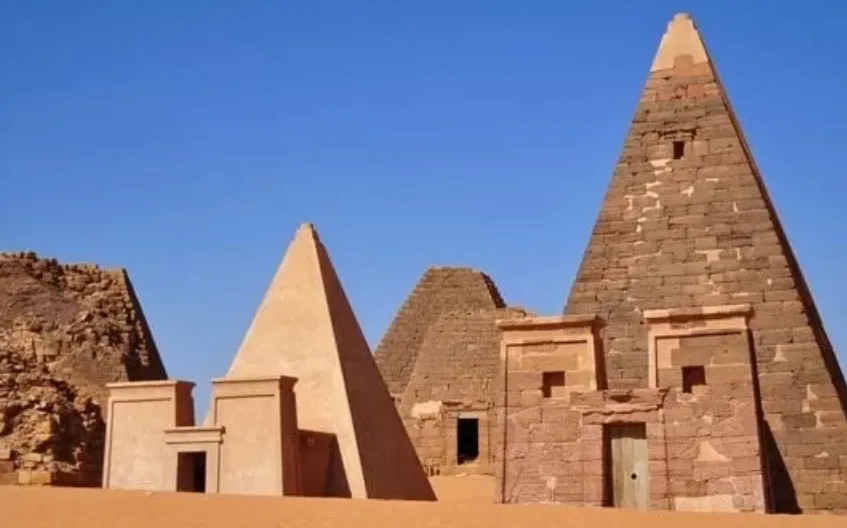
Meroe: The Iron Smelting Capital of the Nile
The Kingdom of Kush relocated its capital south to Meroe around 590 BCE, utilizing rich local iron ore and acacia woodlands to build an industrial iron smelting center marked by massive slag heaps.
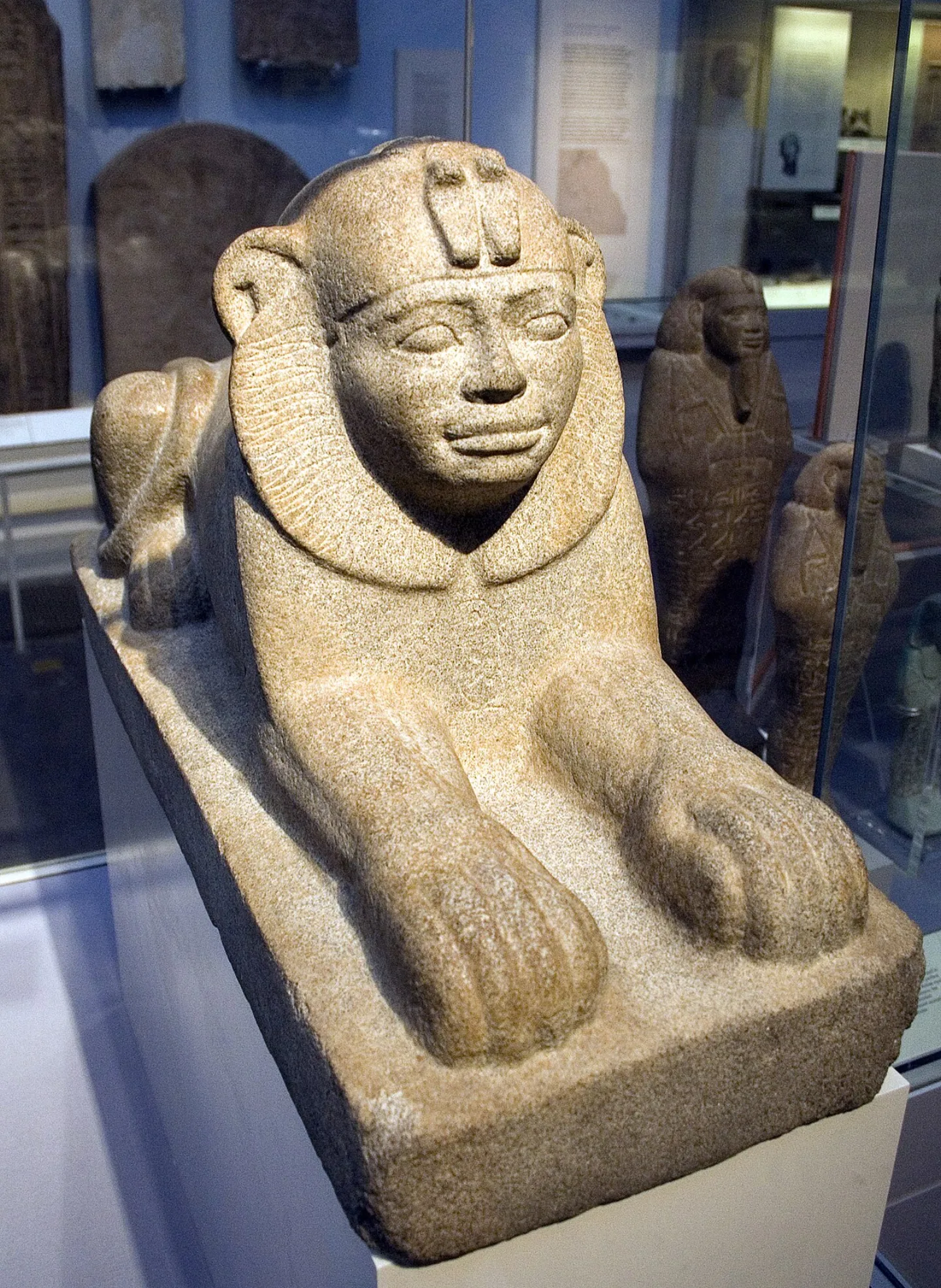
The Kushite 25th Dynasty 'Black Pharaohs' of Egypt
Under King Piye and Taharqa (c. 747–656 BCE), Nubian rulers of Kush conquered Egypt, establishing the 25th Dynasty and reviving monumental pyramid construction along the Middle Nile.
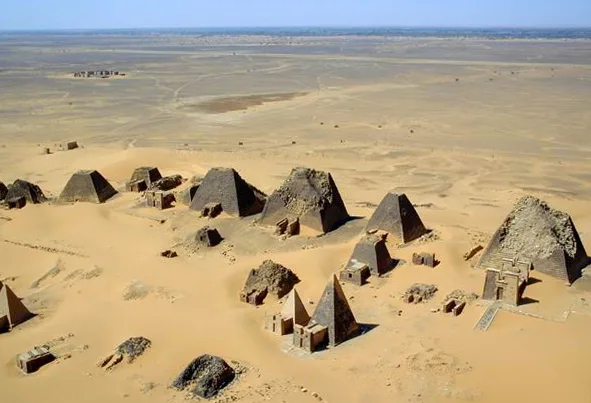
The Steep-Angled Nubian Royal Pyramids
Unlike Egyptian pyramids, the royal pyramids of Kush at Meroe and Jebel Barkal were built with steep 70-degree inclinations, narrow bases, and attached eastern offering chapels.
The Meroitic Alphabetic Script and Kandake Queens
From the 2nd century BCE, Kushites replaced Egyptian hieroglyphs with their own 23-letter alphabetic Meroitic script, frequently ruling under powerful warrior-queens known by the title Kandake.
The Kingdom of Aksum and Red Sea Trade Hegemony
Operating from the Red Sea port of Adulis, the Ethiopian Kingdom of Aksum controlled maritime commerce between the Roman Empire, Southern Arabia, and India, exporting ivory, gold, and frankincense.
King Ezana of Aksum: Coinage and Christianization
Under King Ezana in c. 330 CE, Aksum became one of the first major empires to adopt Christianity, replacing crescent-and-disk symbols on its gold coinage with the Christian cross.
Caral-Supe: The Oldest Urban Civilization in the Americas
Flourishing c. 2600 BCE along the Peruvian coast, the Sacred City of Caral-Supe built massive platform mounds and sunken circular plazas during the Pre-Ceramic period, sustained by marine fishing and irrigated cotton.
The Archaic Quipu Knotted String Accounting System
Archaeologists at Caral found a knotted cotton cord bundle dated to roughly 2500 BCE that excavator Ruth Shady identifies as an early Quipu; the identification is debated, since the first unambiguous Andean quipus in the archaeological record date from roughly 600-1000 CE -- thousands of years later, though still centuries before the Inka Empire.
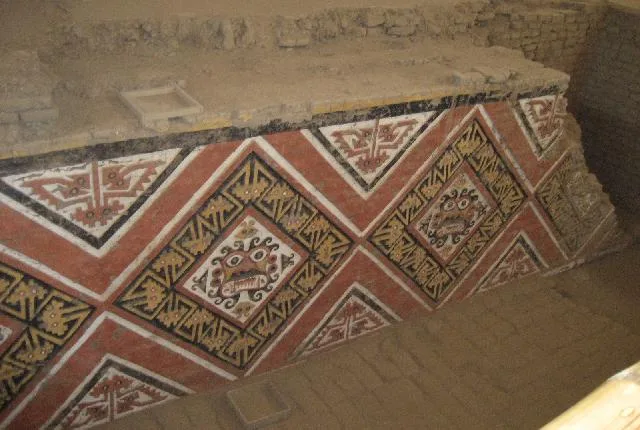
Moche Desert Irrigation and Adobe Huacas
On Peru's hyper-arid north coast (c. 100–700 CE), the Moche engineered river diversion canals to sustain intensive desert agriculture around colossal adobe mudbrick pyramids like the Huaca del Sol.
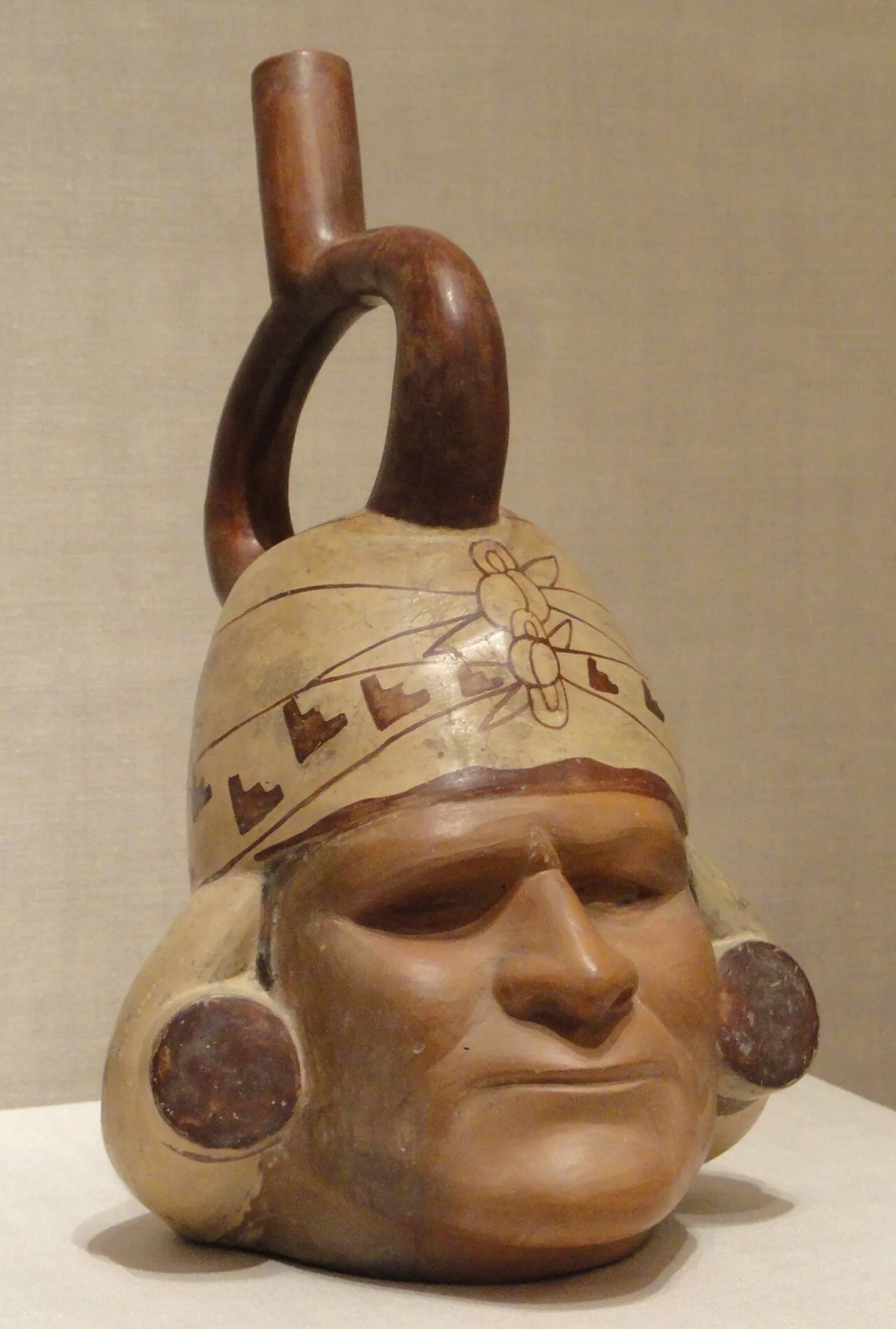
Moche Ceramic Realism and Portrait Stirrup-Spout Vessels
Moche potters crafted hyper-realistic ceramic portrait vessels capturing individualized human facial expressions, social status, medical pathologies, and anatomical details with exceptional naturalism.
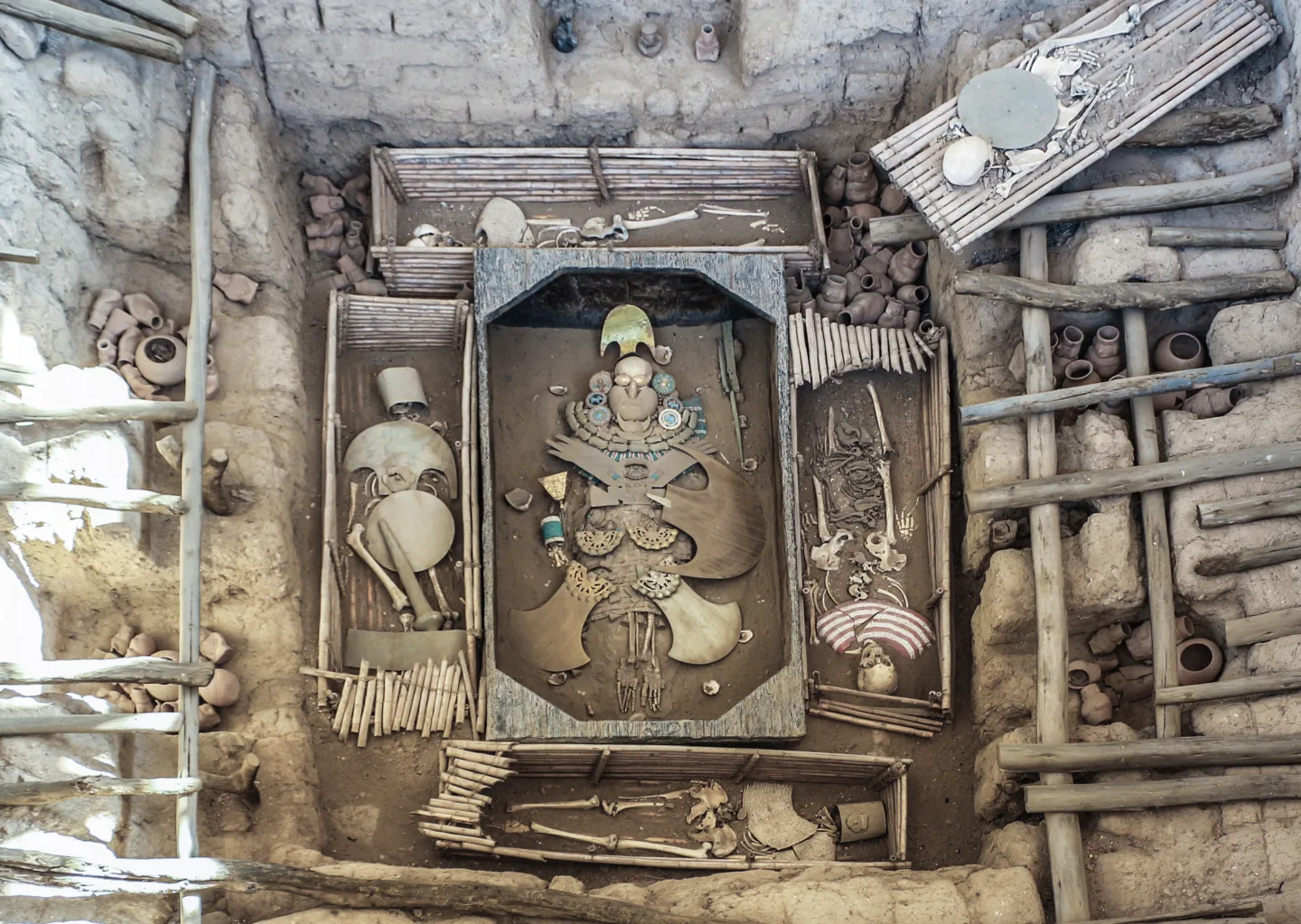
The Lord of Sipán Royal Tomb and Metallurgical Mastery
Discovered intact in 1987, the Moche royal tomb of the Lord of Sipán revealed astonishing gilded copper, silver, and gold jewelry, demonstrating advanced depletion gilding and soldering techniques.
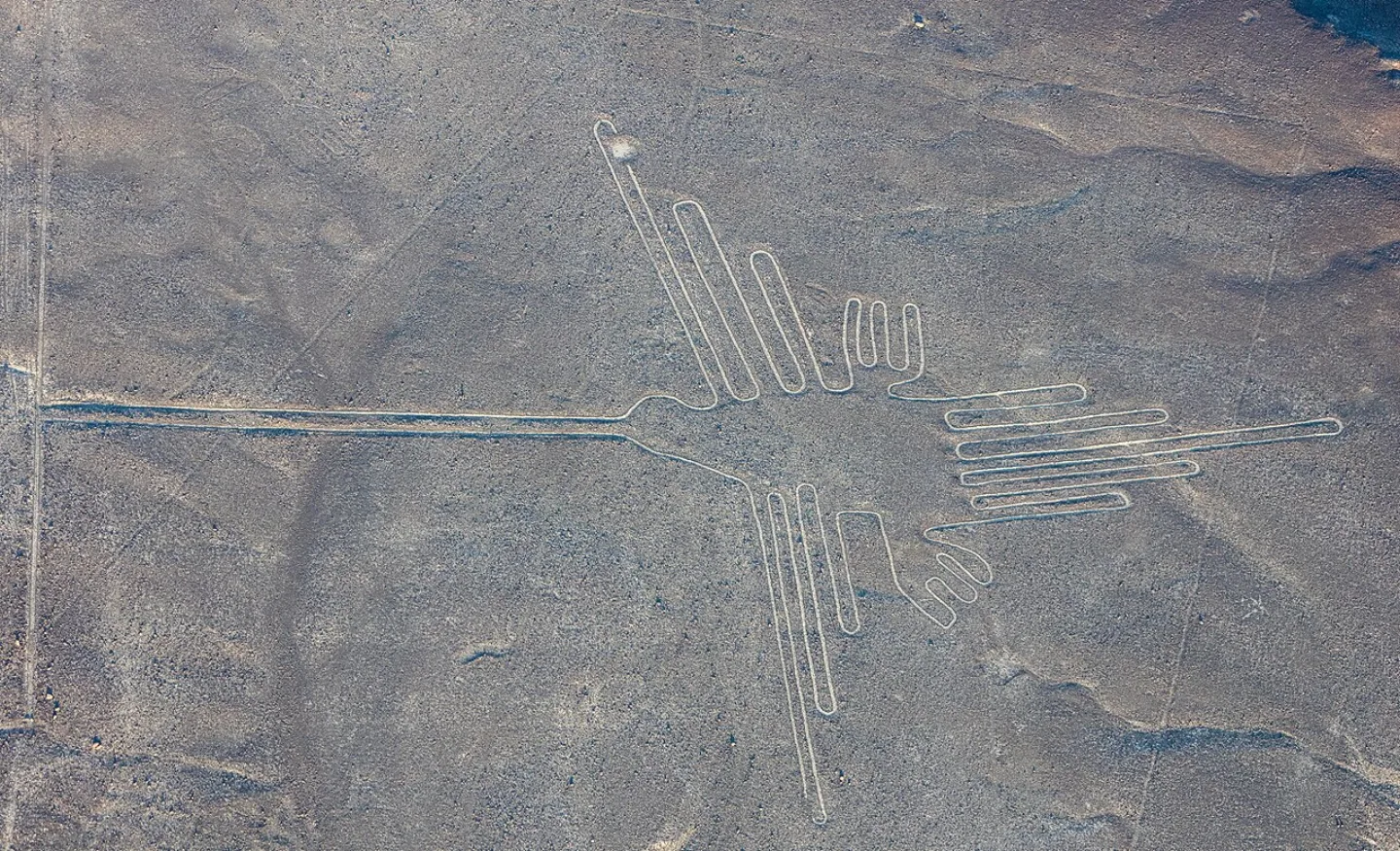
The Nazca Lines Geoglyphs and Desert Aqueducts (Puquios)
The Nazca culture (c. 100 BCE–600 CE) constructed underground spiral aqueducts (Puquios) and cleared iron-oxide desert gravel to create giant animal geoglyphs visible from surrounding plateaus.
By the numbers
- Approximately how many royal sandstone pyramids were constructed across the necropolises of the Kingdom of Kush in Sudan?
- 250 pyramids
- In what approximate century BCE did the Sacred City of Caral-Supe begin constructing monumental platform mounds?
- 26 century BCE
- Approximately how many millions of sun-dried adobe mudbricks were used to build the Moche pyramid Huaca del Sol?
- 140 million bricks
Matched pairs
Each item on the left goes with the one on the right.
- Kingdom of Kush (Meroe)
- Extensive industrial iron-smelting blast furnaces and steep-angled royal pyramids
- Kingdom of Aksum
- Colossal multi-story monolithic granite stelae and early Christian gold coinage
- Caral-Supe (Norte Chico)
- Pre-Ceramic urban center with monumental sunken circular plazas and cotton trade
- Moche Culture
- Hyper-realistic ceramic portrait vessels and gilded metalwork from royal tombs
Self-test
Answer each question from memory, then check your work against the answer key.
1. What natural resource combination made Meroe a major iron-smelting center of ancient Africa?
- AAbundant copper mines located along the Atlantic coast of West Africa
- BImported tin ingots brought by Mediterranean trading galleys from the British Isles
- CRich local gold deposits combined with imported Phoenician glass-working techniques
- DRich local iron ore outcroppings and dense acacia woodlands providing abundant charcoal fuel
2. What historical milestone was achieved by the Kushite 25th Dynasty under kings Piye and Taharqa?
- AThe construction of the Great Wall of China along the southern Nubian desert
- BThe conquest and political reunification of all Egypt, reviving royal pyramid burials
- CThe universal forced adoption of the Latin alphabet across the Horn of Africa
- DThe complete destruction of the Roman fleet during the Battle of Actium
3. How did Nubian pyramids at Meroe and Jebel Barkal differ architecturally from classical Egyptian pyramids at Giza?
- ANubian pyramids had much steeper 70-degree inclinations, narrower bases, and attached offering chapels
- BNubian pyramids were constructed upside-down inside subterranean cavern chambers
- CNubian pyramids featured a circular Roman concrete dome topped by an open sky oculus
- DNubian pyramids were built entirely from timber logs and painted with blue indigo dye
4. What strategic commercial position made the Kingdom of Aksum one of the wealthiest empires of late antiquity?
- AMonopolizing the trans-Atlantic maritime timber trade to pre-Columbian Mesoamerica
- BOperating the exclusive gold mines of the Rhine and Danube river frontiers in Europe
- CControlling the Red Sea port of Adulis, connecting maritime trade between Rome, Arabia, and India
- DExtracting heavy road tolls from Silk Road caravans traveling between Chang'an and Dunhuang
5. What numismatic change did King Ezana of Aksum introduce upon converting to Christianity around 330 CE?
- AHe replaced pagan crescent-and-disk symbols on gold coinage with the Christian cross
- BHe stamped the portrait bust of Roman Emperor Constantine on all silver denominations
- CHe inscribed the complete text of the Nicene Creed in Greek around coin perimeters
- DHe eliminated all metal currency in favor of standardized woven cotton squares
6. What economic relationship sustained the monumental Pre-Ceramic civilization at Caral-Supe around 2600 BCE?
- AMonopolistic manufacturing of iron-tipped weapons sold to neighboring Amazonian tribes
- BMassive herds of domesticated horses grazing on natural alpine mountain grasslands
- CThe exclusive mining and export of gold bullion across the Pacific Ocean to Asia
- DA symbiosis where inland irrigated cotton was traded for coastal marine anchovies and sardines
7. What claim, still debated among archaeologists, has been made about a knotted cord object discovered at Caral-Supe?
- AIt was adopted from Mesoamerican Maya glyph writing
- BIt may predate the Inka by millennia (disputed)
- CIt was invented by the Inka shortly before European contact
- DIt began with Spanish colonial administrators
8. What construction material was used to build colossal Moche pyramids like the Huaca del Sol in Peru?
- AMonolithic carved blocks of white volcanic marble joined with lead dowels
- BSolid blocks of volcanic obsidian cut with diamond-tipped saws
- COver 140 million sun-dried adobe mudbricks stamped with makers' clan marks
- DHollow wooden frameworks covered with sheets of beaten native copper
9. What purpose did Nazca puquios serve within the arid desert environment?
- ATapping underground water tables for irrigation and drinking
- BDraining floodwater away from monumental adobe pyramids
- CChanneling volcanic steam to heat communal bathing pools
- DStoring surplus grain harvested during the wet season
10. Which technology had NOT yet been invented when Caral-Supe built its monumental platform mounds?
- AMarine net fishing
- BCotton textile production
- CPottery
- DCanal irrigation
Go deeper
Answer key
- 1. D Rich local iron ore outcroppings and dense acacia woodlands providing abundant charcoal fuelMeroe was rich in iron ore and hardwood: local iron-bearing hills supplied the ore and extensive acacia woodland supplied charcoal fuel for smelting, leaving large slag heaps. How large Meroitic iron production really was ('the Birmingham of Africa') is debated in modern scholarship.
- 2. B The conquest and political reunification of all Egypt, reviving royal pyramid burialsNubian pharaohs of Kush (the 25th Dynasty) ruled Egypt from c. 747 to 656 BCE, reunifying the Nile Valley and reviving pyramid building.
- 3. A Nubian pyramids had much steeper 70-degree inclinations, narrower bases, and attached offering chapelsNubian pyramids were steeper (approx. 70 degrees), smaller in footprint, and featured distinctive attached eastern offering chapels.
- 4. C Controlling the Red Sea port of Adulis, connecting maritime trade between Rome, Arabia, and IndiaFrom its port at Adulis on the Red Sea, Aksum commanded trade routes funneling African ivory, gold, and aromatics to Roman Egypt and India.
- 5. A He replaced pagan crescent-and-disk symbols on gold coinage with the Christian crossEzana replaced the pre-Christian pagan astral symbols (crescent and disc) on Aksumite gold coins with the Christian cross, reflecting state conversion.
- 6. D A symbiosis where inland irrigated cotton was traded for coastal marine anchovies and sardinesCaral operated on a maritime-agricultural symbiosis: inland farmers grew cotton for fishing nets and traded it to coastal fishermen for protein-rich anchovies and sardines.
- 7. B It may predate the Inka by millennia (disputed)Excavator Ruth Shady identifies a knotted cord bundle from Caral (c. 2500 BCE) as an early Quipu; this claim is debated, since the first unambiguous quipus in the archaeological record date from many centuries later.
- 8. C Over 140 million sun-dried adobe mudbricks stamped with makers' clan marksThe Huaca del Sol was constructed from an estimated 140 million sun-dried adobe bricks, many bearing maker's marks identifying different labor communities.
- 9. A Tapping underground water tables for irrigation and drinkingPuquios were underground spiral aqueducts accessing subterranean water to sustain life in the arid Nazca desert.
- 10. C PotteryCaral is called 'Pre-Ceramic' because its monumental mounds predate pottery, even though cotton, canal irrigation, and fishing nets were already in use.
Sources
- David N. Edwards, The Nubian Past: An Archaeology of the Sudan
- British Museum: Sudan, Egypt and Nubia — www.britishmuseum.org/collection/galleries/sudan-egypt-and-nubia
- Stuart Munro-Hay, Aksum: An African Civilisation of Late Antiquity
- David N. Edwards, The Nubian Past: An Archaeology of the Sudan — routledge.com
- Stuart Munro-Hay, Aksum: An African Civilisation of Late Antiquity — edinburghuniversitypress.com
- "Meroë," Wikipedia — en.wikipedia.org/wiki/Meroe
- British Museum: Africa and Americas Galleries — www.britishmuseum.org
- Ruth Shady Solís, Caral: The Oldest Civilization in the Americas
- Joanne Pillsbury (ed.), Moche Art and Archaeology in Ancient Peru
- Ruth Shady Solís, Caral: The Oldest Civilization in the Americas — zonacaral.gob.pe
- Christopher B. Donnan, Moche Art and Archaeology in Ancient Peru — yalebooks.yale.edu
Image credits
- Meroe: The Iron Smelting Capital of the Nile: Ola.m tbe · CC BY-SA 4.0 — commons.wikimedia.org/wiki/File:A_wonderful_picture_of_the_pyramids_of_Meroe_in_Sudan.png
- The Kushite 25th Dynasty 'Black Pharaohs' of Egypt: Prioryman · CC BY-SA 4.0 — commons.wikimedia.org/wiki/File:Sphinx_of_Taharqo.jpg
- The Steep-Angled Nubian Royal Pyramids: Wikimedia Commons · B N Chagny · CC BY-SA 1.0 — commons.wikimedia.org/wiki/File:Sudan_Meroe_Pyramids_2001.JPG
- Moche Desert Irrigation and Adobe Huacas: Wikimedia Commons · Joel Takv · CC BY-SA 2.5 — commons.wikimedia.org/wiki/File:Huaca_de_la_Luna_jt02.jpg
- Moche Ceramic Realism and Portrait Stirrup-Spout Vessels: Daderot · CC0 — commons.wikimedia.org/wiki/File:Portrait_Vessel_of_a_Ruler,_100_BC_-_500_AD,_Moche,_north_coast_of_Peru,_ceramic_and_pigment_-_Art_Institute_of_Chicago_-_DSC00321.JPG
- The Lord of Sipán Royal Tomb and Metallurgical Mastery: Wikimedia Commons · Bernard Gagnon · CC BY-SA 3.0 — commons.wikimedia.org/wiki/File:Tomb_of_Lord_of_Sip%C3%A1n_01.jpg
- The Nazca Lines Geoglyphs and Desert Aqueducts (Puquios): Diego Delso · CC BY-SA 4.0 — commons.wikimedia.org/wiki/File:L%C3%ADneas_de_Nazca,_Nazca,_Per%C3%BA,_2015-07-29,_DD_52.JPG


