
Ancient Civilizations: First Cities to Late Antiquity study guide · Lesson 10 of 12
Mesoamerica: Olmec Origins, Teotihuacan & Classic Maya (c. 1500 BCE–900 CE)
The Maize Complex, Jade Trade & The Olmec Foundation · Urban Orthogonal Alignment, Vigesimal Math & Maya Astronomy
This is the lesson's study guide from the FlashFeed app, plus its key facts and a self-test.
What you'll be able to do
- Analyze the Mesoamerican Milpa agricultural triad, Olmec basalt monuments, and ritual rubber ballgame.
- Evaluate Teotihuacan orthogonal urbanism, Maya vigesimal mathematics with zero, and the Long Count calendar.
The Milpa Agricultural Triad and Environmental Adaptation
Mesoamerican civilization developed under unique technological and environmental conditions that diverged fundamentally from the Old World:
- Absence of Large Draft Animals: Mesoamericans had no horses, oxen, or cattle for plowing or heavy transport.
- Absence of the Mechanical Wheel for Transport: Although miniature wheels were used on ceramic toys, terrain and lack of draft animals precluded wheeled carts.
- Lithic and Obsidian Technology: Mesoamericans did not smelt iron or bronze for functional weapons, instead mastering the pressure-flaking of volcanic obsidian to produce prismatic blades with cutting edges only a few nanometers thick.
Despite these constraints, Mesoamerican societies sustained dense urban populations through the Milpa polyculture system:
- Maize (Zea mays): Domesticated from wild teosinte grass, maize provided rich carbohydrates and a sturdy stalk.
- Beans (Phaseolus): Grew up the corn stalk, fixing atmospheric nitrogen into the soil to replenish fertility, while providing the essential amino acid lysine.
- Squash (Cucurbita): Spread broad leaves across the ground, acting as a living mulch that suppressed weeds, retained soil moisture, and provided dietary fats.
Mesoamericans processed maize through Nixtamalization—soaking kernels in an alkaline lime solution (calcium hydroxide), which chemically liberated bioavailable vitamin B3 (niacin) and essential proteins, preventing the malnutrition disease pellagra.
The Olmec: Basalt Monuments and the 'Mother Culture' Concept
Flourishing along the tropical Gulf Coast river basins of Veracruz and Tabasco (c. 1500–400 BCE), the Olmec are celebrated as Mesoamerica's "Mother Culture" (Cultura Madre), pioneering institutions that defined subsequent civilizations:
- Monumental Architecture: At San Lorenzo and La Venta, the Olmec constructed colossal earthen platform mounds and a 34-meter earthen pyramid (now eroded into a fluted, conical shape).
- Colossal Basalt Heads: Olmec sculptors carved seventeen massive portrait heads of rulers (weighing up to 40 tons, standing up to about 3.4 meters high) from volcanic basalt boulders quarried in the Tuxtla Mountains and transported many tens of kilometers (estimates for the quarry-to-site route range from roughly 60 km up to 150 km) across swamps and rivers; the exact method is unknown, but scholars propose rafts and overland hauling on rollers or ramps.
- Prestige Jadeite Trade: Olmec elites established trade networks reaching the Motagua Valley in Guatemala to obtain blue-green jadeite, carving ceremonial axes (Kunz Axe) depicting snarling were-jaguar supernaturals combining human infants with jaguar fangs.
- The Mesoamerican Ballgame: Excavations at the Olmec wetland shrine of El Manatí uncovered the oldest known rubber balls, dating to roughly 1700–1600 BCE and found among ritual offerings, suggesting the deep antiquity of the ritual ballgame — known today by its modern name, ulama, a Nahuatl-derived term for the game's surviving descendant — and interpreted by many scholars as a religious reenactment of solar and agricultural cycles, though that meaning is inferred.
Teotihuacan: Urban Orthogonality and Pan-Mesoamerican Power
Located in the Basin of Mexico, Teotihuacan (flourishing c. 100 BCE–650 CE) grew into the ancient Americas' largest metropolis, housing over 100,000 residents across 20 square kilometers in standardized multi-family stone apartment compounds.
Teotihuacan was built on an astonishing astronomical orthogonal grid:
- The city was bisected by the 4-kilometer, 40-meter-wide Avenue of the Dead (Miccaotli), oriented about 15.5 degrees east of true north, an orientation researchers have linked to astronomical events such as the setting of the Pleiades (the intended target is debated).
- The Pyramid of the Sun (rising 65 meters on a 220-meter base) was constructed above a subterranean tunnel and cave system whose natural or artificial origin is debated.
- The Pyramid of the Moon and the Temple of the Feathered Serpent (Quetzalcoatl) are classic examples of the Talud-Tablero architectural style—alternating inward-sloping stone plinths (talud) and projecting rectangular framed panels (tablero)—though the style's earliest known examples are in the Tlaxcala-Puebla region.
Teotihuacan dominated Mesoamerican trade by monopolizing the rich green obsidian mines of Pachuca. In 378 CE, Teotihuacan warlord Siyaj K'ak' ("Fire Is Born") marched into the Maya lowlands, overthrowing the ruler of Tikal and installing a Teotihuacano prince, which some scholars read as imperial military projection over 1,000 km away, though others see the action of a group of Teotihuacanos rather than a state campaign.
Maya Vigesimal Mathematics and the Interlocking Calendars
During the Classic Period (c. 250–900 CE), the Maya civilization in the rainforest lowlands of Guatemala, southern Mexico, and Honduras developed the New World's most sophisticated mathematical, astronomical, and writing systems.
Maya mathematics was a positional vigesimal (base-20) system written using only three signs:
- A Dot for 1.
- A Bar for 5.
- A stylized Shell for Zero (0). Positional values ascended vertically in powers of 20 (1s, 20s, 400s, 8000s), enabling Maya astronomers to record calculations extending into millions of years.
The Maya coordinated two primary cyclic calendars into the Calendar Round:
- Tzolk'in: A 260-day sacred ritual almanac combining 13 numerical coefficients with 20 day names (a length often linked, as a hypothesis, to human gestation and the agricultural cycle).
- Haab': A 365-day solar civil year composed of 18 months of 20 days each, plus 5 unlucky transitional days (Wayeb'). The Tzolk'in and Haab' synchronized like interlocking gears, repeating an identical date combination only once every 52 years (18,980 days).
For historical chronology, the Maya utilized the linear Long Count calendar, counting the elapsed days since the mythological creation date of the current cosmic era on August 11, 3114 BCE (0.0.0.0.0 4 Ajaw 8 Kumk'u). Long Count dates were incised on stone stelae and portable objects—such as the jade Leiden Plaque (320 CE)—using hierarchical time periods: K'in (1 day), Winal (20 days), Tun (360 days), K'atun (7,200 days), and Bak'tun (144,000 days).
Maya Hieroglyphic Script and Dynastic Monuments
The Maya developed the Americas' only fully phonetically expressive writing system. The Maya Hieroglyphic Script comprised over 800 logosyllabic glyphs combining word-signs (logograms) and phonetic syllable-signs (syllabograms). Deciphered in the late 20th century by scholars like Yuri Knorozov, Tatiana Proskouriakoff, and Linda Schele, the inscriptions revealed dynamic political histories of dynastic rivalries, royal marriages, ritual bloodletting ceremonies, and wars between competing city-states like Tikal, Calakmul, Palenque, and Copán.
Classic Maya kings (K'uhul Ajaw—"Divine Lord") served as cosmic shamans who performed autosacrifice (piercing tongues and genitals with stingray spines) to nourish the gods. To feed dense populations in tropical rainforests, Maya engineers cleared swamps, built terrace walls on hillsides, and dug canal networks to construct fertile raised wetland fields from mud taken from swampy lowlands (bajos), dispelling the older myth that the Maya practiced only primitive slash-and-burn agriculture.
Key terms
- Milpa
- An indigenous Mesoamerican agricultural field system combining the complementary polyculture of maize, beans, and squash.
- Talud-Tablero
- An architectural style alternating a sloping basal stone apron (talud) with an overhanging rectangular framed panel (tablero).
Key concepts
The Milpa Triad
- Mesoamerican polyculture farming system intercropping maize (*Zea mays*), climbing beans, and sprawling squash
- Beans fix soil nitrogen while climbing corn stalks; broad squash leaves retain moisture and suppress weeds
- Delivered complete dietary proteins (lysine and tryptophan) without relying on domesticated herd animals
Olmec Colossal Heads
- Seventeen monumental portrait sculptures carved from volcanic basalt boulders dating to c. 1200–900 BCE
- Depict individualized portraits of Olmec rulers wearing distinctive protective ballgame helmets
- Transported over 60 km across Gulf Coast swamp terrain without the use of wheels or draft animals
Were-Jaguar Motif
- Sacred religious iconographic motif prevalent in Olmec jade carvings, ceramic vessels, and stone stelae
- Depicts a supernatural entity with cleft forehead, almond eyes, downturned mouth, and jaguar fangs
- Symbolized the spiritual transformation of Olmec shaman-rulers communicating with rain and earth spirits
The Mesoamerican Ballgame
- Sacred ritual athletic contest played with solid rubber balls in masonry stone ballcourts across Mesoamerica
- Represented a cosmic reenactment of the sun, moon, and planet Venus navigating the underworld (*Xibalba*)
- Reliefs at El Tajin and Chichen Itza suggest some games ended in ritual sacrifice, sometimes decapitation, of a losing captain, believed to ensure rainfall
Teotihuacan
- Pre-Columbian metropolis in the Valley of Mexico housing over 100,000 inhabitants c. 450 CE
- Constructed on a strict orthogonal grid bisected by the 4-km Avenue of the Dead (*Miccaotli*)
- Dominated pan-Mesoamerican trade through its monopoly over green Pachuca volcanic obsidian mines
Talud-Tablero Architecture
- Mesoamerican architectural facade style pioneered at Teotihuacan
- Combines an inward-sloping basal stone plinth (*talud*) supporting an overhanging rectangular framed panel (*tablero*)
- Employed on pyramids across the Valley of Mexico, Oaxaca, and exported to Maya capitals like Tikal
The Calendar Round
- 52-year Mesoamerican chronological cycle synchronizing two distinct cyclic time counts
- Interlocks the 260-day sacred ritual almanac (*Tzolk'in*) with the 365-day solar civil calendar (*Haab'*)
- An identical combination of day name, number, and solar month recurred only once every 18,980 days
Maya Long Count
- Linear, non-repeating calendar system used by Classic Maya scribes to fix precise historical dates
- Counts total elapsed days from the mythological creation zero date of August 11, 3114 BCE
- Expressed as five hierarchical vigesimal place-values: *Bak'tun*, *K'atun*, *Tun*, *Winal*, and *K'in*
Key facts
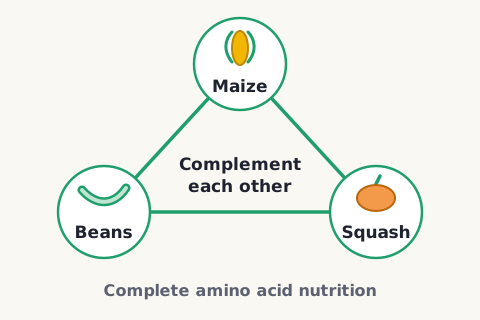
The Milpa Triad Agricultural Foundation
Mesoamerican civilization rested on the Milpa polyculture of maize, beans, and squash—crops that ecologically complement each other and provide complete amino acid nutrition without domestic draft animals.
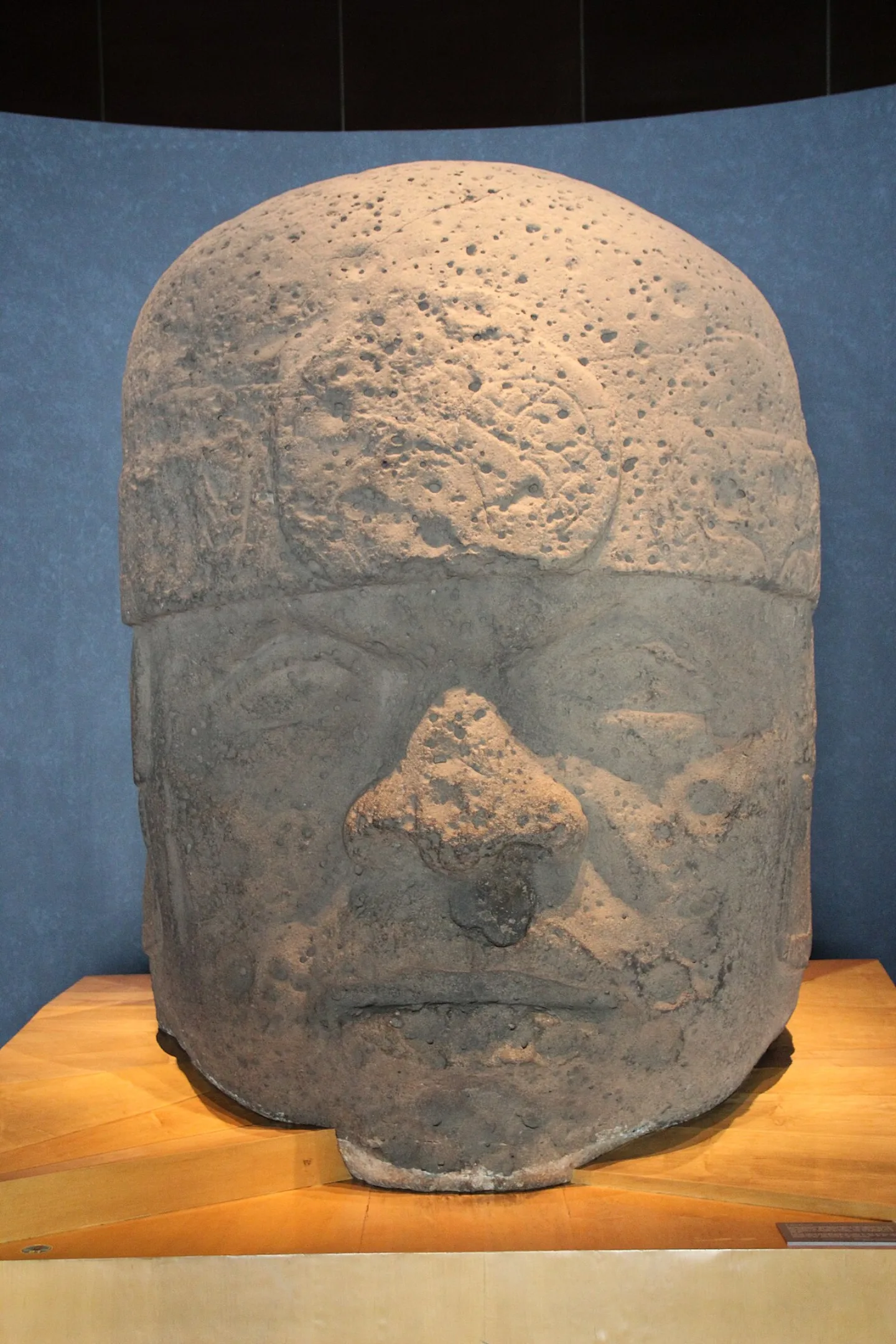
Olmec Colossal Basalt Heads and Labor Mobilization
Between 1200 and 900 BCE, the Olmec carved seventeen monumental basalt colossal heads (weighing up to 40 tons), primarily at San Lorenzo and La Venta with further examples at Tres Zapotes and La Cobata, transporting the boulders over 60 km across wetlands without wheeled vehicles.
Olmec Jadeite Prestige Trade and Were-Jaguar Motifs
The Olmec established long-distance prestige trade routes to obtain blue-green jadeite from the Motagua Valley of Guatemala, carving votive axes and figurines featuring snarling 'were-jaguar' facial characteristics.
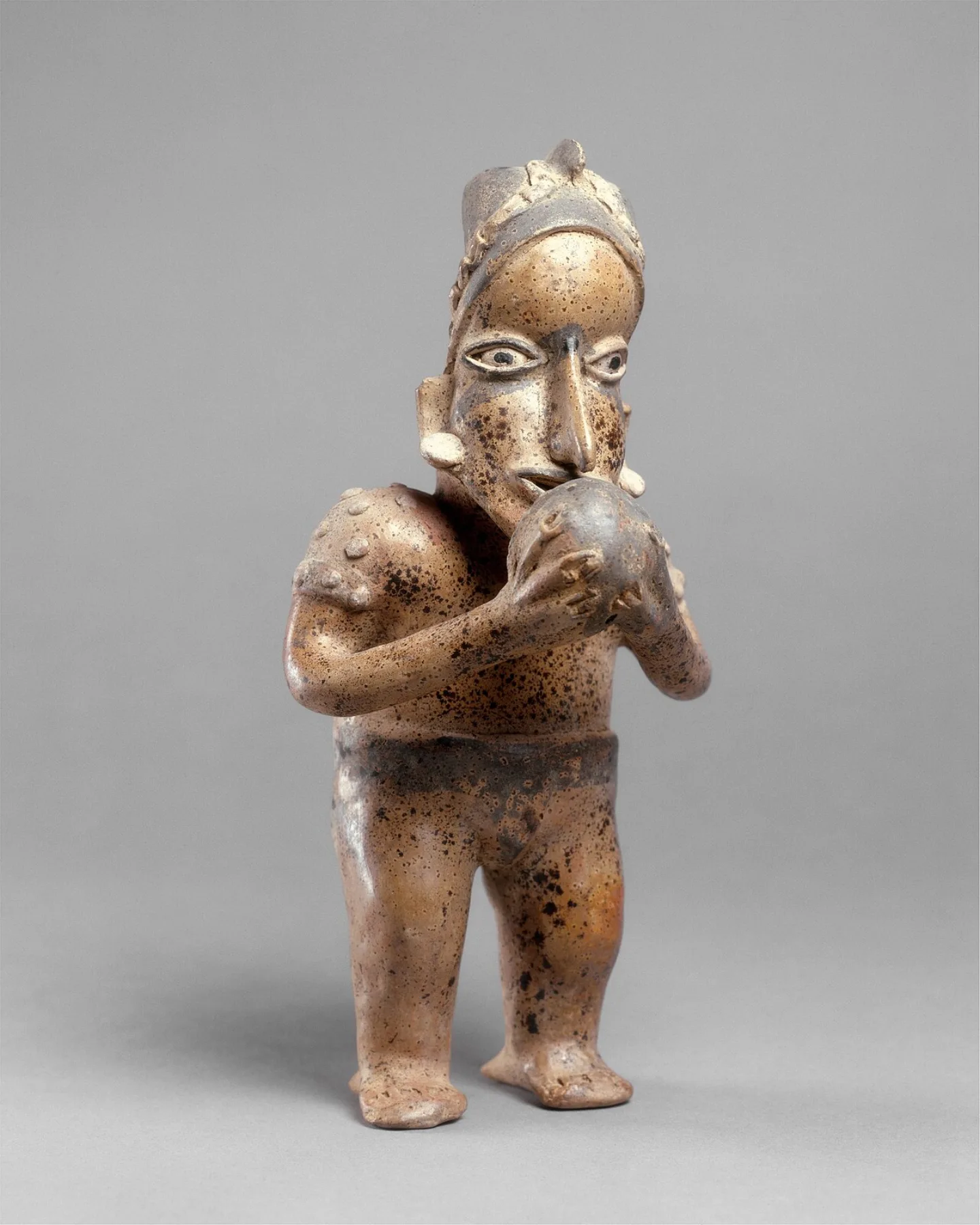
The Mesoamerican Ritual Ballgame Origins
Excavations at the Olmec wetland shrine of El Manatí uncovered rubber balls dating to 1600 BCE, proving the antiquity of the Mesoamerican ritual ballgame as a religious reenactment of celestial cycles.
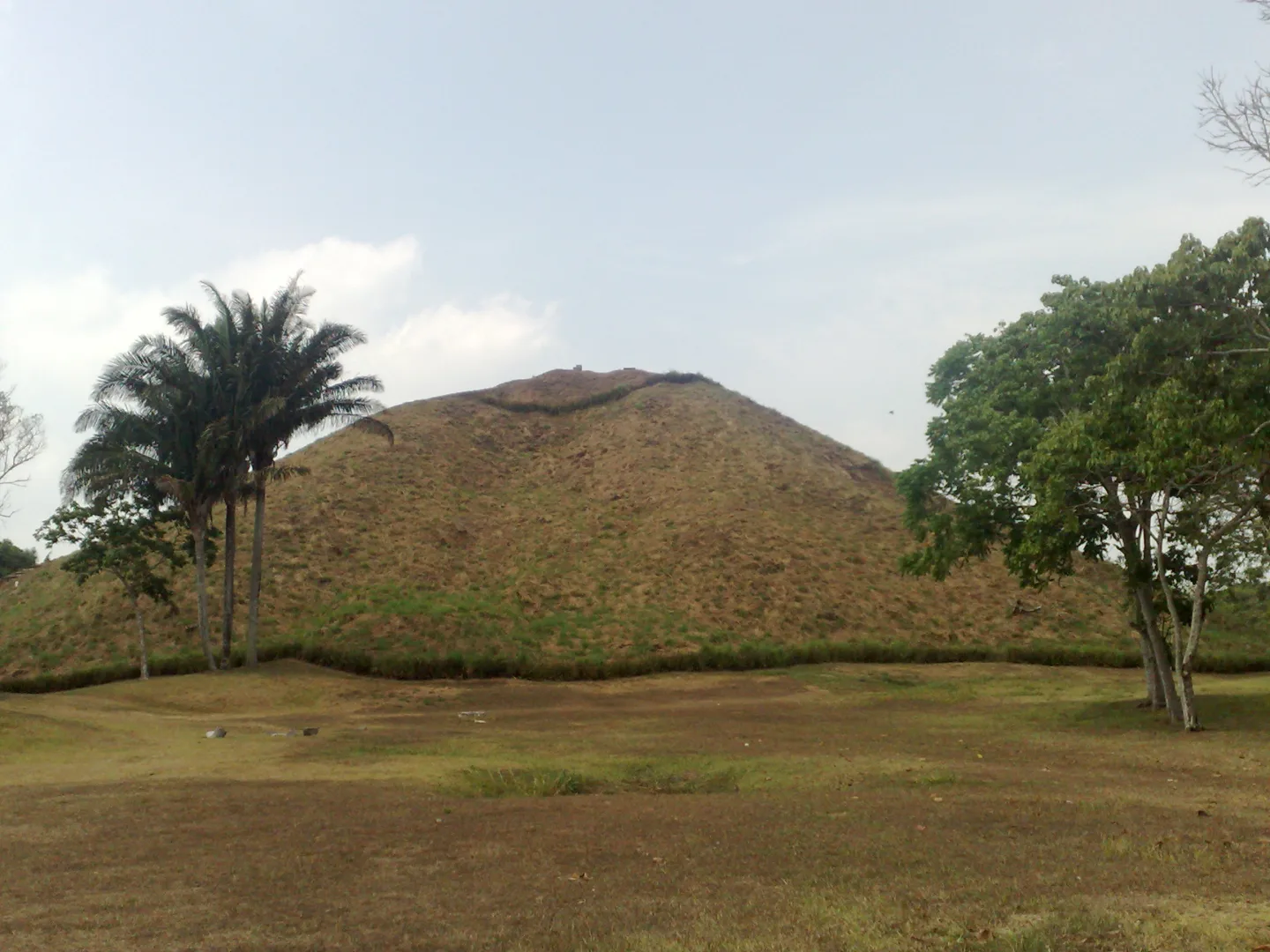
La Venta Earthen Pyramid and Caches of Serpentine Celts
The Olmec center of La Venta featured a 34-meter earthen fluted cone pyramid and buried massive mosaic pavements composed of hundreds of green serpentine blocks dedicated to the underworld.
Obsidian Blade Prismatic Core Technology
Lacking smelting technology for bronze or iron, Mesoamericans perfected pressure flaking of volcanic obsidian to produce prismatic blades with cutting edges sharper than modern surgical steel.
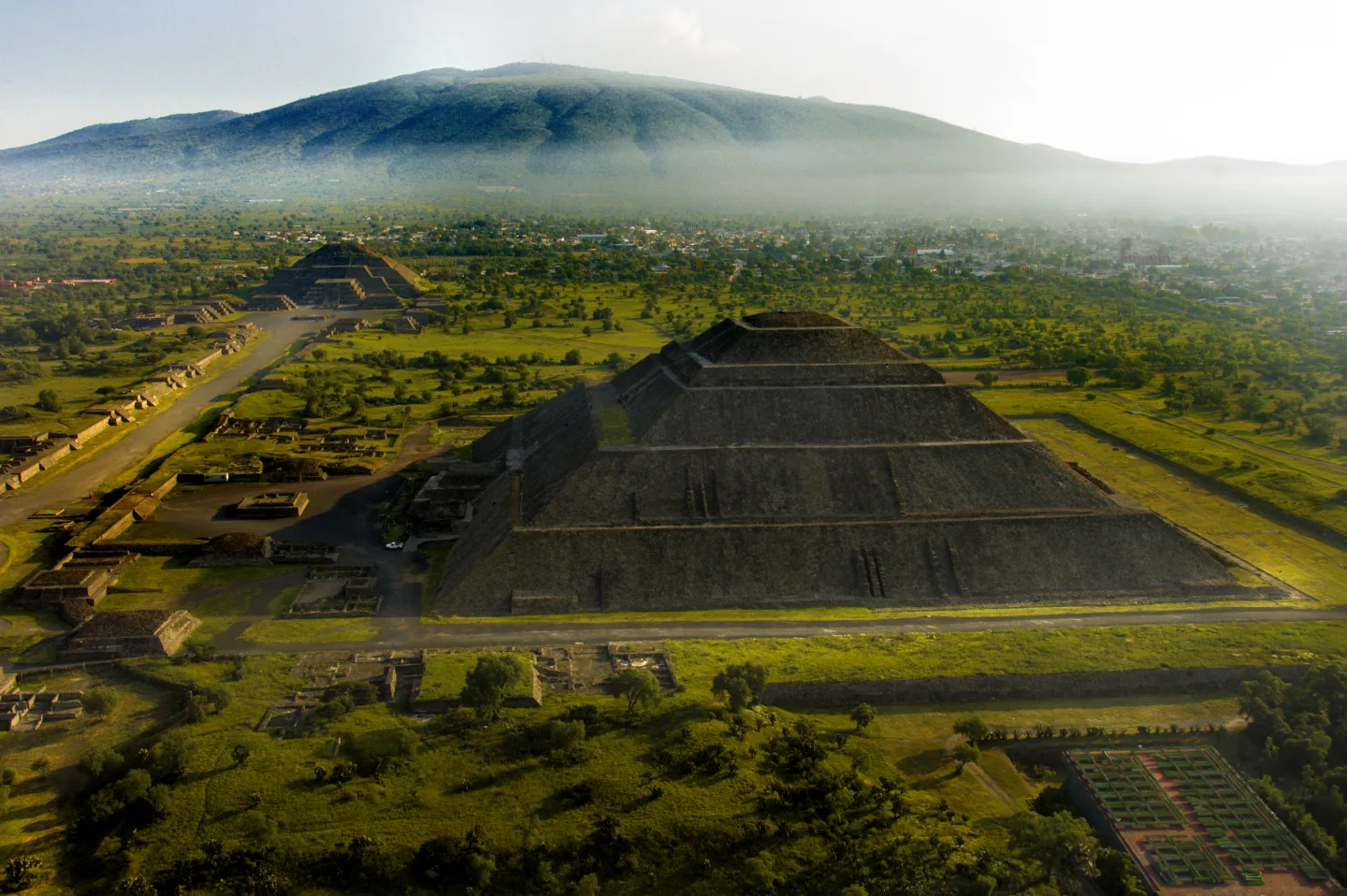
Teotihuacan's Astronomical Grid Urban Planning
Housing over 100,000 inhabitants at its peak c. 450 CE, Teotihuacan was built on an orthogonal grid oriented 15.5 degrees east of true north along the central 4-km Avenue of the Dead.
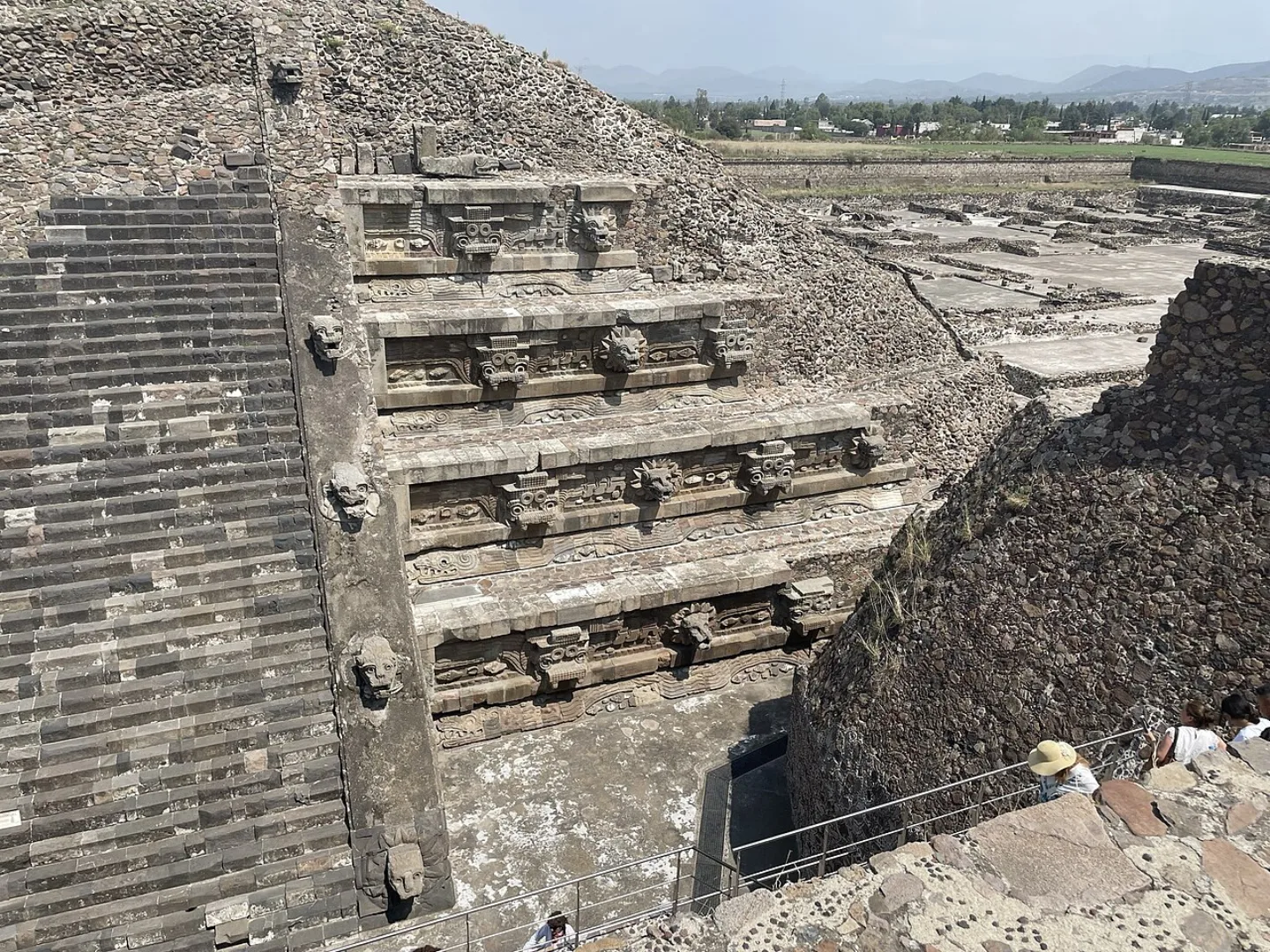
Teotihuacan Talud-Tablero Architecture and Imperial Reach
Teotihuacan's signature Talud-Tablero architectural style (alternating sloping plinths and rectangular framed panels) was exported across Mesoamerica, reaching Maya cities like Tikal and Kaminaljuyu.
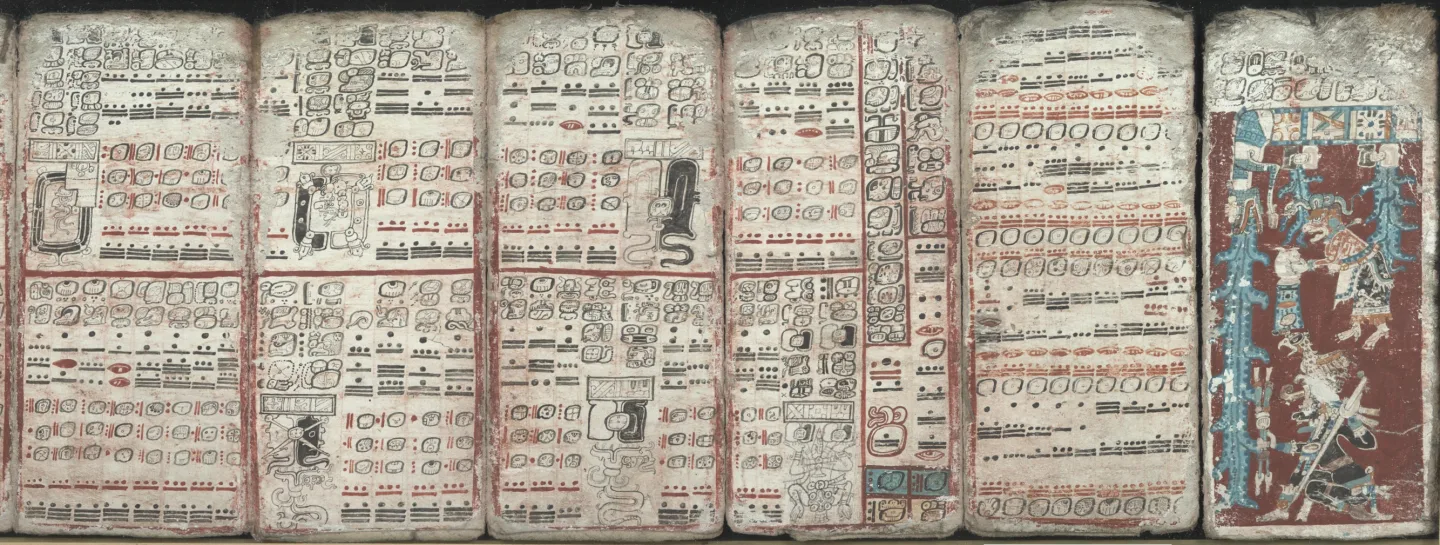
The Maya Vigesimal Mathematics System and Shell Zero
The Maya utilized a positional base-20 (vigesimal) numerical system using three symbols—a dot for 1, a bar for 5, and a stylized shell for 0—enabling complex astronomical calculations across millions of days.
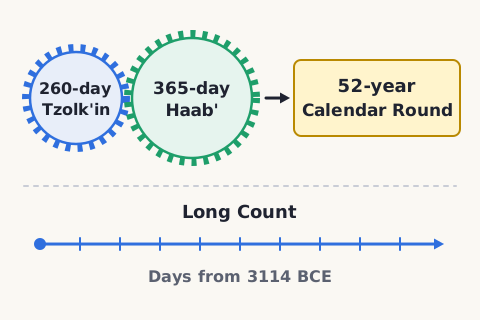
The Interlocking Calendar Round and Long Count System
Mesoamericans synchronized a 260-day sacred almanac (Tzolk'in) with a 365-day solar year (Haab'), creating a 52-year Calendar Round, supplemented by the linear Long Count counting days from 3114 BCE.
Maya Hieroglyphic Writing and Royal Stelae Commemoration
The Classic Maya developed a full logosyllabic writing system with over 800 glyphs carved on limestone stelae and painted on polychrome ceramic vases to record royal dynastic accessions and warfare.
Maya Wetland Raised Fields and Rainforest Agriculture
To feed dense urban populations in tropical rainforests, Classic Maya engineers constructed extensive canal networks and raised agricultural fields (Bajos), supplemented by forest terracing.
By the numbers
- How many monumental Olmec colossal basalt portrait heads have been discovered across Gulf Coast archaeological sites?
- 17 heads
- How many years are required for the Tzolk'in and Haab' calendars to complete one full Calendar Round cycle?
- 52 years
- What mathematical numerical base served as the foundation for Classic Maya positional arithmetic?
- 20 base
Matched pairs
Each item on the left goes with the one on the right.
- Maize (Corn)
- Tall structural stalk providing carbohydrate energy and physical trellis support
- Beans (Phaseolus)
- Nitrogen-fixing root nodules replenishing soil fertility and supplying lysine protein
- Tzolk'in Calendar
- 260-day sacred ritual almanac combining 13 numbers with 20 day names
- Haab' Calendar
- 365-day solar civil year composed of 18 months of 20 days plus 5 Wayeb' days
Self-test
Answer each question from memory, then check your work against the answer key.
1. What nutritional process did ancient Mesoamericans apply to maize to release essential vitamin B3 (niacin)?
- ANixtamalization: soaking dried corn kernels in an alkaline lime (calcium hydroxide) solution
- BFermenting raw corn cobs in sealed underground clay pots filled with seawater
- CDrying kernels over smoking charcoal fires fueled by pine resin for thirty days
- DBoiling crushed maize in imported Roman olive oil within copper cauldrons
2. Which method do archaeologists most commonly propose for how the Olmec moved basalt boulders (up to 40 tons) many tens of kilometers from the Tuxtlas to San Lorenzo?
- AUsing wheeled wooden carts hauled by teams of domesticated horses
- BBy constructing a paved highway network similar to later Andean road systems
- CHauling them with large human teams on wooden rollers and floating them on rafts along rivers and swamps
- DBy carrying each boulder whole on long wooden poles borne by teams of porters over mountain trails
3. Why was translucent blue-green jadeite prized by the Olmec and subsequent Mesoamerican elites?
- AIt was used exclusively to construct waterproof roofs on common peasant huts
- BIt was a precious prestige material that marked the rank of ruling elites
- CIt functioned as a portable currency traded for salt, cacao, and cloth
- DIt was prized mainly because its extreme hardness made it superior to obsidian for cutting tools
4. What did archaeological discoveries at the Olmec wetland site of El Manatí reveal regarding rubber balls?
- AThe balls were carved from polished jadeite stone rather than tapped tree latex
- BThe balls were woven from cotton fiber padded with dried maize husks
- CRubber was used only for waterproofing royal war galleys on the Gulf of Mexico
- DSolid rubber balls, found among ritual offerings, were made as early as roughly 1600 BCE
5. Why were volcanic obsidian prismatic blades favored over metal tools for surgical and ceremonial cutting in Mesoamerica?
- ABecause pressure-flaked obsidian, an amorphous volcanic glass, fractures to an edge only a few nanometers thick
- BBecause obsidian was harder and more resistant to shattering than bronze or iron blades
- CBecause the smooth glass-like obsidian surface was believed to repel bacteria and prevent wound infection
- DBecause heating obsidian blades in a fire naturally restored their sharp edge
6. How is the city grid of Teotihuacan oriented?
- AOriented to track the annual heliacal rising of the planet Venus as the morning star
- BOriented exactly along cardinal north-south lines with no astronomical offset
- COriented to align with the pre-dawn rising of the star Sirius
- DOriented about 15.5 degrees east of true north, a skew researchers link to astronomical events such as the setting of the Pleiades
7. What architectural signature characterizes the Talud-Tablero style developed at Teotihuacan?
- AA rounded stepped pyramid with sloping corners and a single central stairway
- BAn inward-sloping basal apron topped by a projecting rectangular framed panel
- CA tiered pyramid platform lined with carved stone serpent-head balustrades along its staircase
- DA tall corbeled vault chamber formed by overlapping stone slabs without a keystone
8. Which three symbols did Maya scribes combine to write every number in their vigesimal system?
- AOxhide ingot for 1, cuneiform wedge for 10, stylus for 0
- BTriangle for 1, circle for 10, crescent moon for 100
- CDot for 1, bar for 5, shell for 0
- DFeather for 1, jaguar claw for 5, serpent coil for 0
9. What did the Maya Long Count calendar track, as inscribed on stelae like the Leiden Plaque?
- AThe cyclical 52-year repeat of the Tzolk'in and Haab'
- BElapsed days since a mythological creation date in 3114 BCE
- CThe lunar phases scheduling the Mesoamerican ballgame
- DThe orbital period of Venus tracked by Teotihuacano priests
10. Which hierarchical time units did Maya scribes use to record Long Count dates?
- AK'in, Winal, Tun, K'atun, and Bak'tun
- BDot, Bar, and Shell
- CMilpa, Nixtamal, and Teosinte
- DTzolk'in, Haab', and Wayeb'
Go deeper
Answer key
- 1. A Nixtamalization: soaking dried corn kernels in an alkaline lime (calcium hydroxide) solutionNixtamalization (soaking maize in alkaline lime water) frees bound niacin (vitamin B3) and balances amino acids, preventing malnutrition pellagra.
- 2. C Hauling them with large human teams on wooden rollers and floating them on rafts along rivers and swampsThe exact method is unknown. Without wheeled carts or draft animals, scholars propose that the Olmec moved the stone with large human teams, hauling it overland on rollers and floating it on rafts along rivers and swamps where possible.
- 3. B It was a precious prestige material that marked the rank of ruling elitesJadeite was a particularly precious material that marked elite rank. Olmec rulers obtained it through long-distance trade with the Motagua Valley and had it carved into prestige objects such as the Kunz Axe.
- 4. D Solid rubber balls, found among ritual offerings, were made as early as roughly 1600 BCEExcavations at the Olmec wetland shrine of El Manatí recovered the oldest known rubber balls, dated to roughly 1700-1600 BCE, with ritual offerings. They suggest a very old ritual ballgame, though the link to the game and its meaning (often read as solar and agricultural cycles) are inferred.
- 5. A Because pressure-flaked obsidian, an amorphous volcanic glass, fractures to an edge only a few nanometers thickPressure-flaked volcanic obsidian is an amorphous glass that fractures to a cutting edge only a few nanometers thick, sharper than a steel scalpel, which made it the premier cutting tool of Mesoamerica despite its brittleness.
- 6. D Oriented about 15.5 degrees east of true north, a skew researchers link to astronomical events such as the setting of the PleiadesTeotihuacan's grid, including the Avenue of the Dead, is oriented about 15.5 degrees east of true north. Researchers have linked this skew to astronomical events such as the setting of the Pleiades, but the intended target is debated.
- 7. B An inward-sloping basal apron topped by a projecting rectangular framed panelTalud-Tablero combines a sloping base (talud) with a framed rectangular panel (tablero) set on the slope, a style closely associated with Teotihuacan.
- 8. C Dot for 1, bar for 5, shell for 0Maya vigesimal math used only a dot (1), a bar (5), and a stylized shell (0), combined positionally in ascending powers of 20.
- 9. B Elapsed days since a mythological creation date in 3114 BCEThe Long Count tracked elapsed days since the creation date of 3114 BCE, unlike the cyclical Calendar Round.
- 10. A K'in, Winal, Tun, K'atun, and Bak'tunLong Count dates used hierarchical units, K'in through Bak'tun, unlike the cyclical Tzolk'in and Haab'.
Sources
- Michael D. Coe and Rex Koontz, Mexico: From the Olmecs to the Aztecs
- Michael D. Coe and Rex Koontz, Mexico: From the Olmecs to the Aztecs; Simon Martin and Nikolai Grube, Chronicle of the Maya Kings and Queens — thamesandhudson.com
- National Museum of Anthropology Mexico: Collection — www.mna.inah.gob.mx
- Wikipedia: Olmec colossal heads — en.wikipedia.org/wiki/Olmec_colossal_heads
- Wikipedia: Olmec — en.wikipedia.org/wiki/Olmec
- Wikipedia: Mesoamerican ballgame — en.wikipedia.org/wiki/Mesoamerican_ballgame
- Wikipedia: La Venta — en.wikipedia.org/wiki/La_Venta
- Wikipedia: Obsidian — en.wikipedia.org/wiki/Obsidian
- Saxon State and University Library Dresden: Dresden Codex — www.slub-dresden.de/en/explore/manuscripts/the-dresden-maya-codex
- Simon Martin and Nikolai Grube, Chronicle of the Maya Kings and Queens
- World History Encyclopedia: Teotihuacan — www.worldhistory.org/Teotihuacan/
- Saxon State and University Library Dresden: Dresden Codex — www.slub-dresden.de
- Diane Davies, Maya Archaeologist: Maya Farming & Maize — www.mayaarchaeologist.co.uk/school-resources/maya-world/maya-maize-and-farming/
Image credits
- The Milpa Triad Agricultural Foundation: FlashFeed original diagram · CC-BY-4.0
- Olmec Colossal Basalt Heads and Labor Mobilization: Gary Todd · CC0 — commons.wikimedia.org/wiki/File:Olmec_Colossal_Head,_San_Lorenzo,_Veracruz,_1200-600_BC.jpg
- The Mesoamerican Ritual Ballgame Origins: Wikimedia Commons · The Metropolitan Museum of Art · CC0 — commons.wikimedia.org/wiki/File:Standing_Ballplayer_MET_DT210537.jpg
- La Venta Earthen Pyramid and Caches of Serpentine Celts: Wikimedia Commons · Alfonsobouchot · Public domain — commons.wikimedia.org/wiki/File:La_Venta_Pir%C3%A1mide_cara_norte.jpg
- Teotihuacan's Astronomical Grid Urban Planning: Wikimedia Commons · Hdlrosa · CC BY-SA 4.0 — commons.wikimedia.org/wiki/File:ZA77_Teotihuac%C3%A1n_edo_de_mex_Herberto_de_la_rosa.jpg
- Teotihuacan Talud-Tablero Architecture and Imperial Reach: Peachseltzer · CC BY-SA 4.0 — commons.wikimedia.org/wiki/File:Temple_of_Feathered_Serpent_view_from_top_of_Adosada_platform_Teotihuacan.jpg
- The Maya Vigesimal Mathematics System and Shell Zero: Wikimedia Commons · Unknown author · Public domain — commons.wikimedia.org/wiki/File:Dresden_Codex_pp.58-62_78.jpg
- The Interlocking Calendar Round and Long Count System: FlashFeed original diagram · CC-BY-4.0


