
History of Arizona study guide · Lesson 1 of 12
Lesson 1: Before Europeans
Part 1: First Arizonans · Part 2: Ancestral Puebloans & Hohokam · Part 3: Mogollon, Sinagua & the Mystery
This is the lesson's study guide from the FlashFeed app, plus its key facts and a self-test.
What you'll be able to do
- Identify when Paleo-Indians reached Arizona, their small mobile bands, the megafauna they hunted, and their atlatls and Clovis points.
- Recognize the saguaro as the Sonoran Desert's emblem and the Three Sisters that anchored Southwest farming.
- Identify the Ancestral Puebloans, their Four Corners homeland, and the kiva ceremonial chamber.
- Describe the Hohokam canal builders and their four-story earthen tower Casa Grande.
- Identify the Mogollon by Mimbres pottery and Kinishba, the Sinagua by their name and Montezuma Castle, and the cultures' later dispersal.
Part 1: First Arizonans
Long before statehood, Arizona was home to big-game hunters who arrived at the end of the last Ice Age and, over thousands of years, became farmers. This part traces that arc — and two desert landmarks that frame the deep-time backdrop.
Arizona, briefly
Arizona is the 48th state — the last of the contiguous United States to join the Union, admitted on Valentine's Day, 1912. The long delay came from disputes over its mining wealth and a proposed merger with New Mexico that Arizonans rejected. Its recorded story runs from Ice Age mammoth hunters and the cliff-dwelling Ancestral Puebloans through Spanish missions, territorial copper booms, and today's fast-growing Sunbelt cities.
The first Arizonans
Humans first reached what is now Arizona roughly 10,000 to 12,000 years ago, at the close of the Pleistocene. These Paleo-Indians traveled in small, mobile bands of about 20–50 people, following the herds. They left behind finely worked stone spear points — the Clovis and Folsom styles — that are among the oldest human artifacts in the Southwest.
Hunting megafauna
The Paleo-Indians hunted Pleistocene giants — mammoths, mastodons, and an ancient long-horned bison — driving stone-tipped spears into animals many times their own size. When that megafauna went extinct around 10,000 years ago, the hunters adapted to smaller game: mule deer, antelope, waterfowl, and fish, taken with atlatls (spear-throwers that multiply a throw's force) and woven nets.
The Archaic shift
Beginning around 10,000 years ago, Arizonans shifted from chasing big game to a seasonal round built around wild plants — the long Archaic period, marked by the earliest grinding slabs (manos and metates), used to mill wild seeds into flour for gruels and breads. It was a slower, steadier way of life that set the stage for farming.
Corn comes north
Corn arrived from central Mexico late in the Archaic period — it did not grow wild here — and was planted near permanent water. Beans and squash followed, completing the three sisters: corn gives the stalk, beans climb it and fix nitrogen, squash shades the soil. Together they anchored Southwest agriculture for thousands of years and made permanent villages possible.
The saguaro
The saguaro cactus grows only in the Sonoran Desert, which covers southern Arizona — making it the region's living emblem. It grows famously slowly, sprouting its first arm only after about 70 years and sometimes living 150–200 years. Its spring flowers and summer fruit were a vital food and calendar marker for the desert peoples who came after the first hunters.
Meteor Crater
Meteor Crater, on the high plateau near Winslow, was punched into the rock about 50,000 years ago by an iron-nickel meteorite — and is nearly a mile across. Arizona's dry climate has preserved it so well that it became the first proven impact crater on Earth and a training ground for Apollo astronauts.
Part 2: Ancestral Puebloans & Hohokam
Once farming took hold, distinct cultures rose across Arizona and built in stone and earth on a scale that still stands today. Two of the greatest were the cliff-dwelling Ancestral Puebloans of the north and the canal-building Hohokam of the south.
Ancestral Puebloans
Sometimes called the Anasazi, the Ancestral Puebloans flourished from about 200 to 1450 CE across the Four Corners — the only place in the US where Arizona, Utah, Colorado, and New Mexico meet. They progressed from simple pit houses to multi-story stone pueblos and the famous cliff dwellings tucked into sandstone alcoves, defensible homes reached by ladders and hand-and-toe holds. Their descendants are today's Hopi and other Pueblo peoples — they did not vanish.
The kiva
A kiva is a round, often partially underground room the Ancestral Puebloans used for ceremonies, councils, and gatherings. You entered not by a door but down a ladder through a hole in the roof, which doubled as the smoke vent. Many kivas held a small floor-niche called a sipapu — a symbolic portal representing the place where the people first emerged into this world. The kiva remains central to Pueblo religious life.
The Hohokam canal builders
The Hohokam thrived from roughly 300 to 1450 CE in the southern deserts where Phoenix now stands. Their signature achievement was an enormous system of irrigation canals — hundreds of miles of them — dug across the Salt and Gila river valleys to water corn, beans, cotton, and agave. Remarkably, they engineered this network without metal tools or pack animals, using stone, wood, and human labor; modern Phoenix canals follow some of the same lines.
Casa Grande
Casa Grande ("Great House") is a four-story earthen tower the Hohokam raised around 1350 CE near modern Coolidge, Arizona — built from caliche mud, not stone. Its purpose is still debated: an astronomical observatory, a ceremonial center, or an administrative landmark? Openings in its upper walls align with the sun and moon at key dates, hinting at a calendar function. It is one of the largest prehistoric structures in North America.
Part 3: Mogollon, Sinagua & the Mystery
Beyond the Puebloans and Hohokam, two more cultures shaped prehistoric Arizona — the artistic Mogollon and the adaptive Sinagua — before all of the great Southwest cultures dispersed in one of archaeology's enduring puzzles.
Mogollon
The Mogollon culture (about 200 to 1450 CE) occupied the rugged, forested border country of present-day Arizona, New Mexico, and Sonora — named for the mountains that still bear the name. In popular imagination they are most famous for Mimbres pottery: striking black-on-white bowls painted with people, animals, and geometric designs. Many were ritually "killed" with a punched hole and buried with the dead, and their bold imagery makes them some of the most prized prehistoric art in North America.
Sinagua
The Sinagua — Spanish for "without water," a nod to their dry country — lived in central Arizona from about 500 to 1425 CE. Their territory ran from the volcanic highlands around Flagstaff down through the Verde Valley near Sedona. They left elegant cliff dwellings, most famously Montezuma Castle (a name that is doubly wrong — it was neither Aztec nor a castle), and they prospered after the eruption of nearby Sunset Crater enriched the soil.
Kinishba Ruins
Kinishba is a massive Mogollon great house of over 600 rooms, abandoned around 1400 CE, whose sandstone walls still stand near Whiteriver, Arizona. A village that size — larger than most medieval European castles — is a reminder that "ruins" in the Southwest were once busy stone towns. It was partially reconstructed in the 1930s and is now a National Historic Landmark on the Fort Apache Reservation.
The 15th-century mystery
Around the 15th and 16th centuries, the great cultures — Ancestral Puebloan, Hohokam, Mogollon, and Sinagua — all dispersed, leaving their great houses empty. Prolonged drought, soil exhaustion, salinized fields, conflict, and migration toward more reliable water are the leading explanations, probably acting together. Crucially, the people did not disappear: they moved and regrouped into the Hopi, Zuni, O'odham, and Pueblo nations. So when Spanish conquistadors arrived in the 1500s, the great houses were already abandoned — they conquered no one here.
Key concepts
Corn
- A crop that arrived from central Mexico late in the Archaic period, since it did not grow wild in Arizona.
- Planted near permanent water, it helped make permanent farming villages possible across the Southwest.
- In the three sisters, it provides the tall stalk that beans climb and squash shelters.
Beans
- One of the three sisters, a trio of crops that anchored Southwest farming for thousands of years.
- This crop was planted to climb the cornstalk, using it for support.
- It fixes nitrogen in the soil, enriching the ground for corn and squash.
Squash
- The third of the three sisters of Southwest agriculture, grown near permanent water.
- This low-growing crop was planted among the taller corn and climbing beans.
- It shades the soil to keep it cool and moist, while corn gives the stalk and beans fix nitrogen.
Key facts
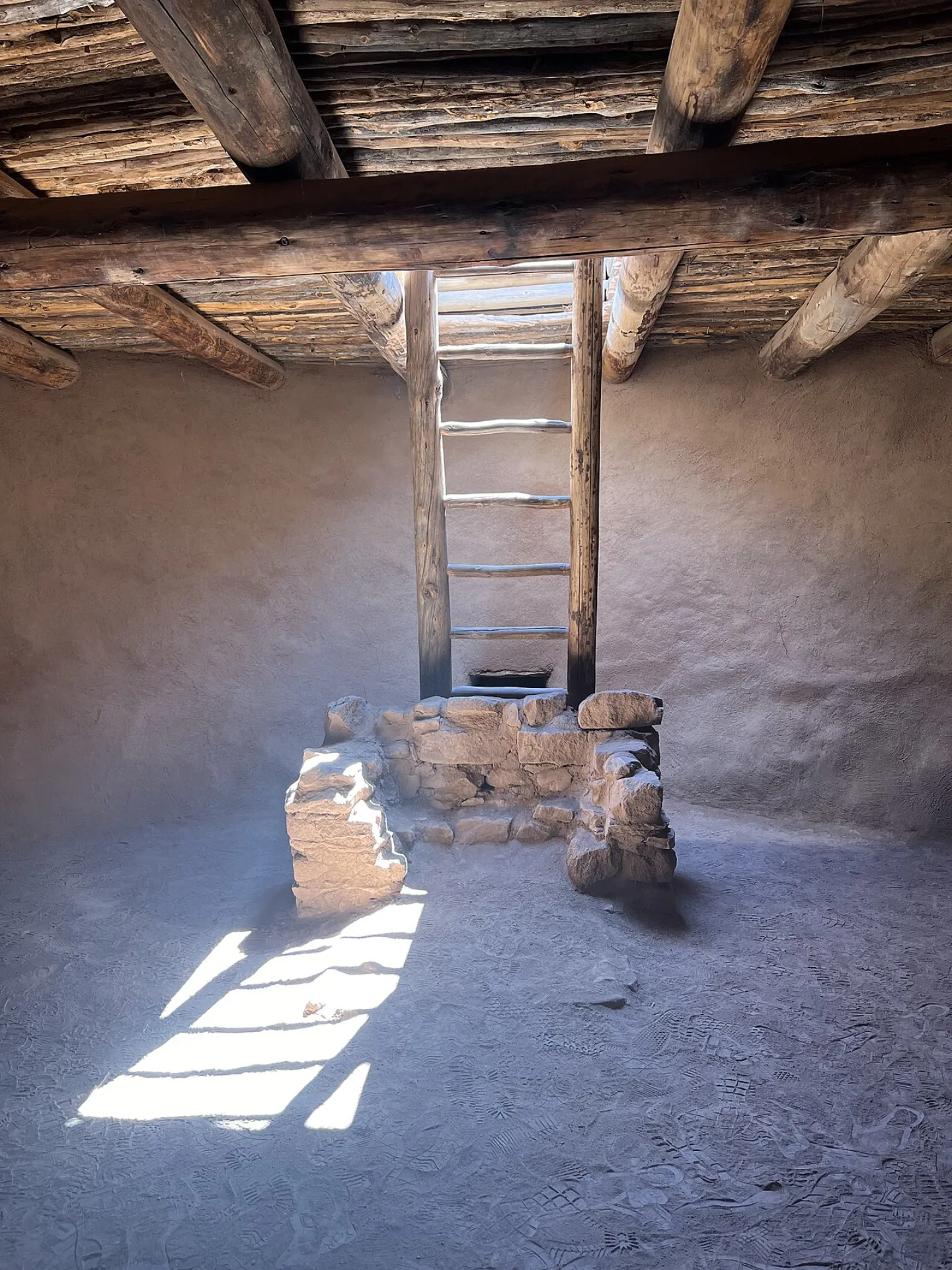
The kiva
A kiva is a round, often partially underground room used by Ancestral Puebloans for ceremonies and gatherings. Their entrances were typically a ladder through a hole in the roof — and many had a small floor-niche called a sipapu representing the place of emergence.
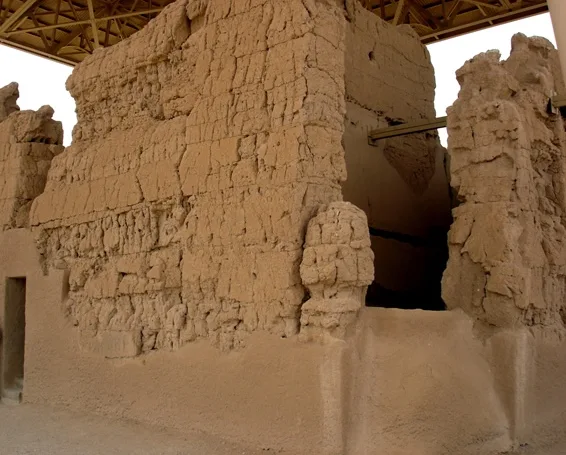
The Hohokam canal builders
The Hohokam thrived from roughly 300 to 1450 CE in southern Arizona, where Phoenix now stands. They are best known for an enormous system of irrigation canals — hundreds of miles of them — that watered crops across the Salt and Gila valleys.
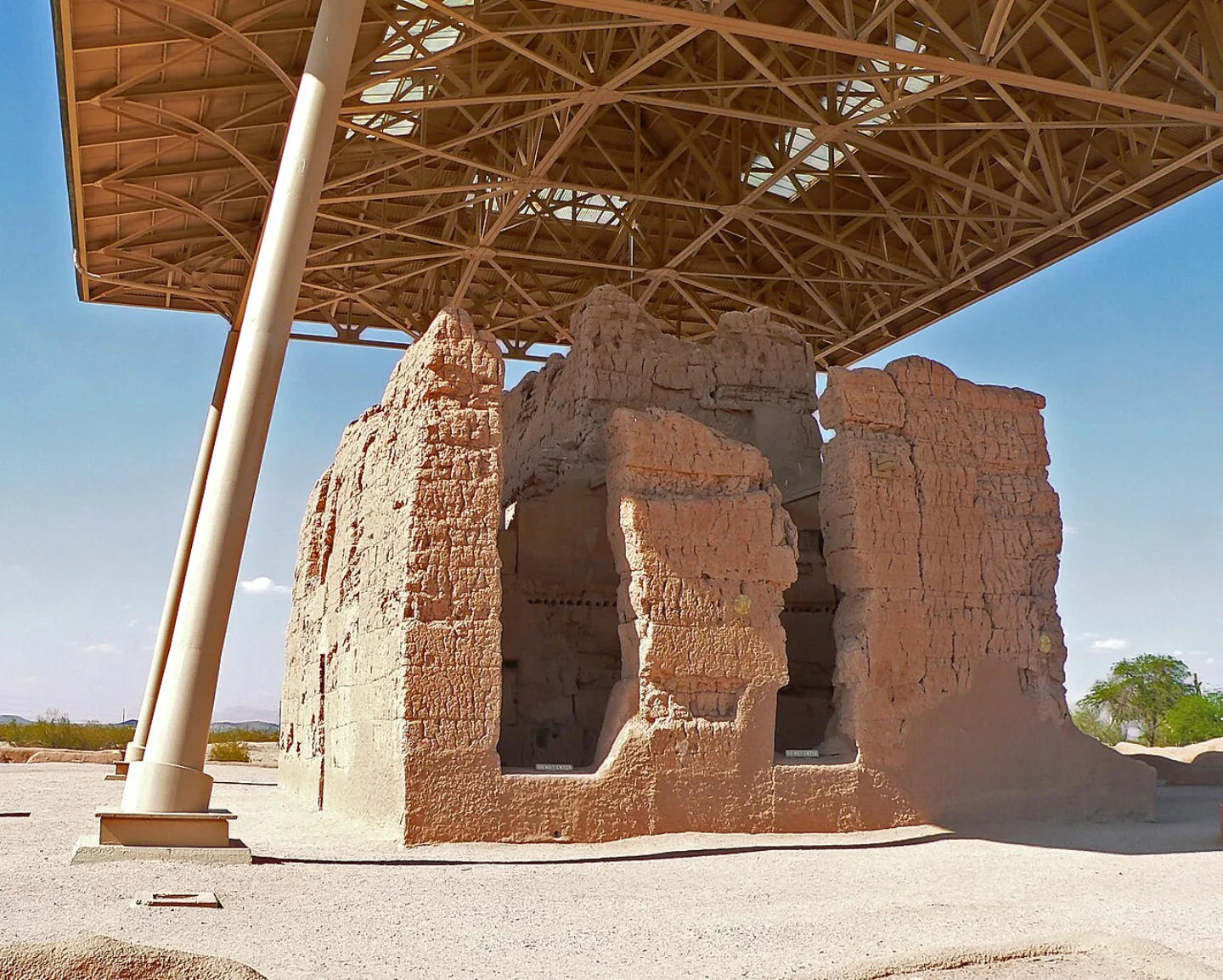
Casa Grande
Casa Grande ('Great House') is a four-story earthen tower the Hohokam built around 1350 CE near modern Coolidge, Arizona. Its purpose is still debated — astronomical observatory? Ceremonial center? — but it was tall enough to dominate the desert flats.
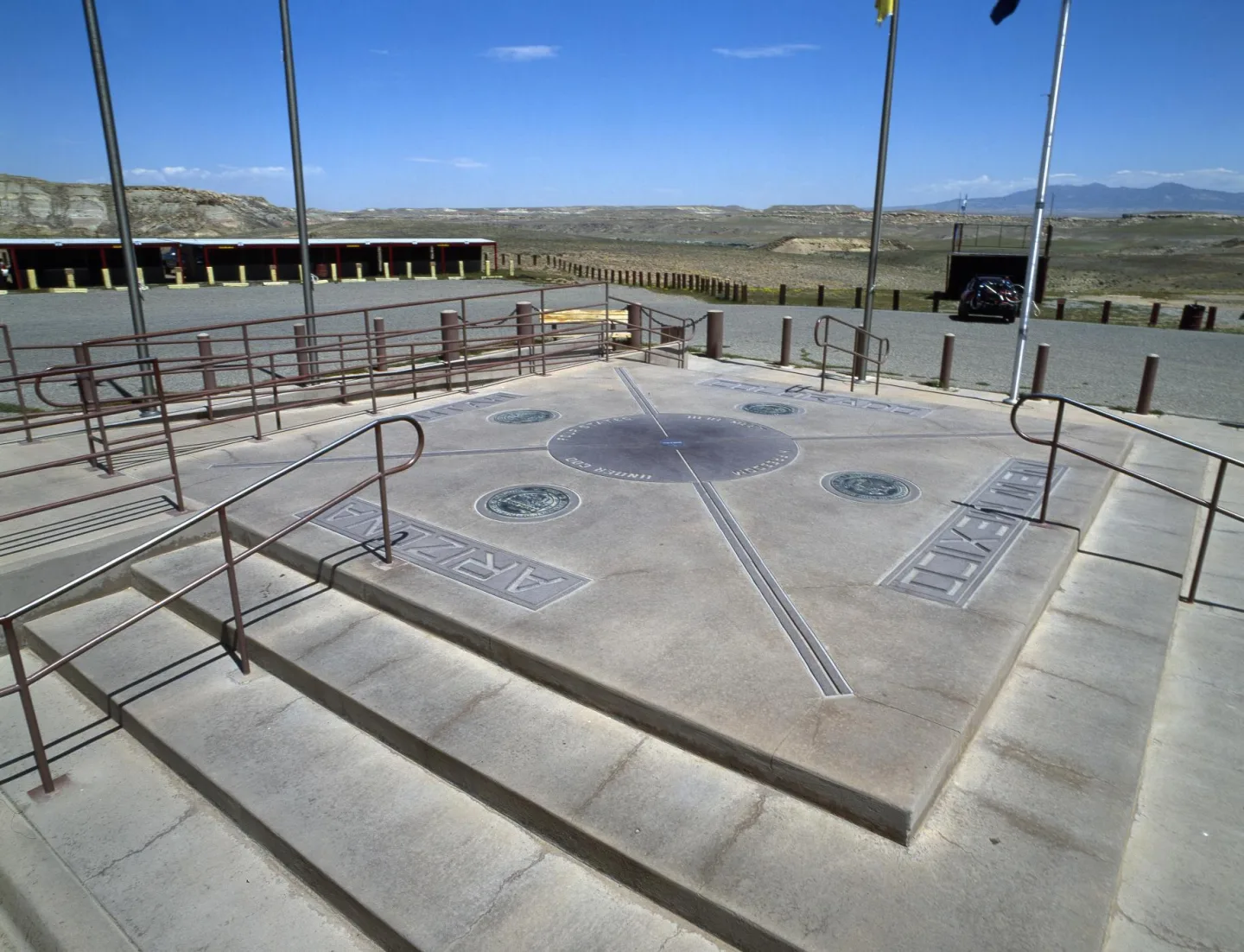
The Four Corners homeland
The Ancestral Puebloans made their home in the Four Corners region, where the borders of Arizona, Utah, Colorado, and New Mexico all meet.
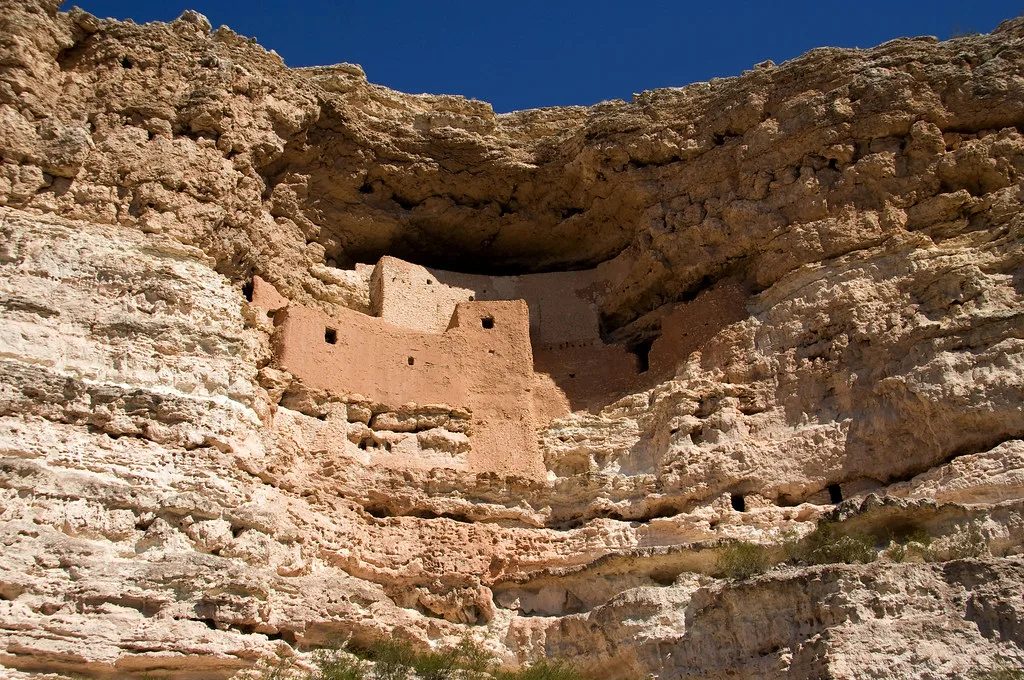
Sinagua
The Sinagua (Spanish for 'without water', a nod to their arid country) lived in central Arizona from about 500 to 1425 CE. Their territory ran from Flagstaff down through the Verde Valley near Sedona — including the cliff dwelling at Montezuma Castle.
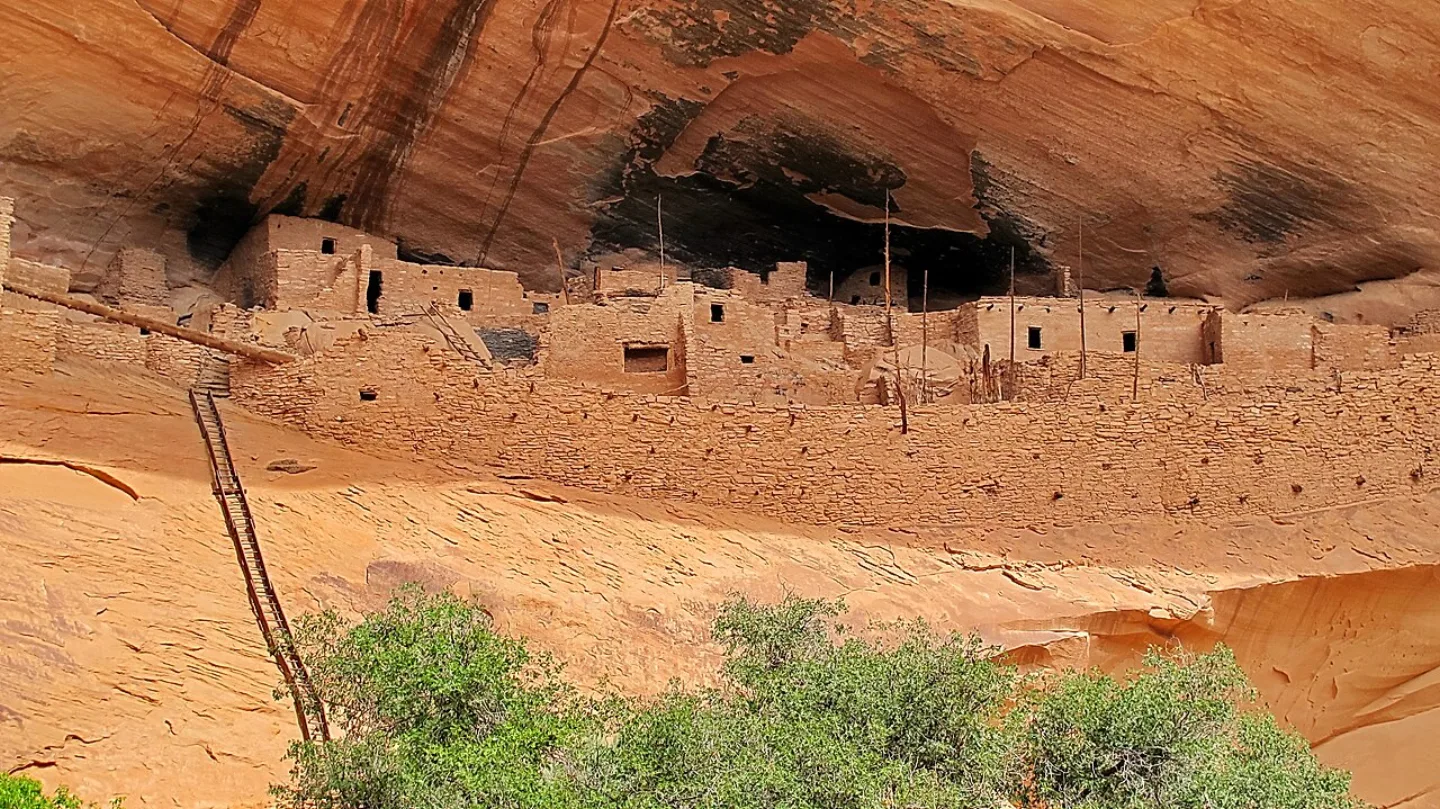
The 15th-century mystery
Around the 15th and 16th centuries, the great cultures — Ancestral Puebloan, Hohokam, Mogollon, Sinagua — all dispersed. Drought, soil exhaustion, conflict, and migration are the leading theories. By the time Spanish conquistadors arrived, the great houses were already empty.
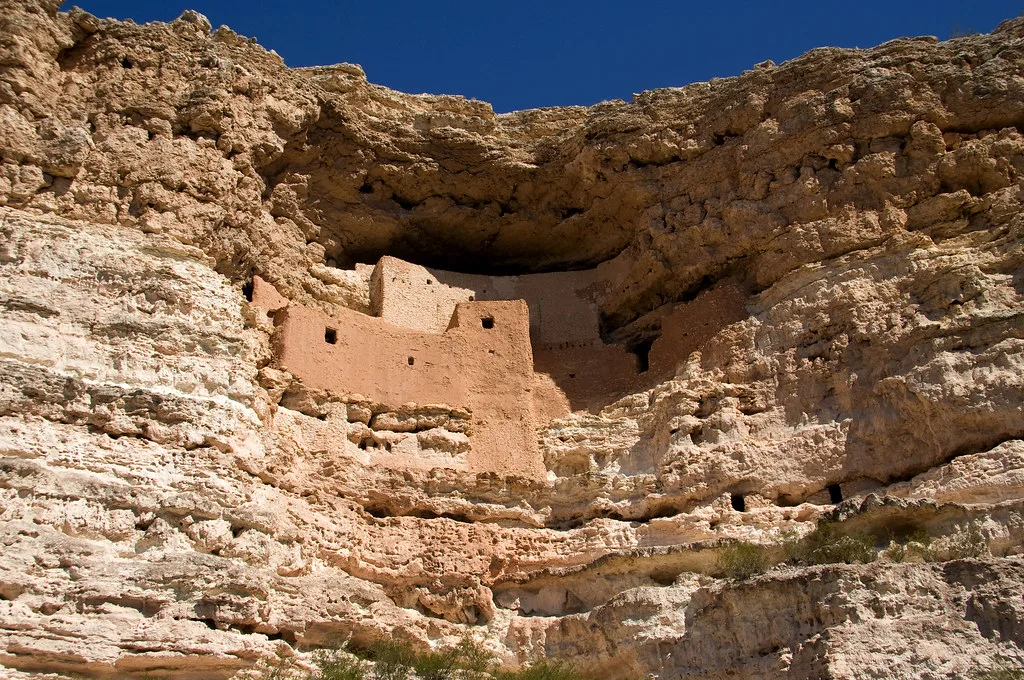
Not Aztec, not a castle
Montezuma Castle isn't Aztec and isn't a castle — it's a Sinagua cliff dwelling in central Arizona.
Self-test
Answer each question from memory, then check your work against the answer key.
1. About how long ago did humans first reach what is now Arizona?
- A10,000 to 12,000 years ago
- B2,000 to 3,000 years ago
- C500 years ago
- D50,000 years ago
2. After the megafauna died out, Arizona's hunters took smaller game using nets and a spear-thrower that multiplies a throw's force. What is that device called?
- AMetate
- BClovis point
- CBola
- DAtlatl
3. The Paleo-Indians who first reached Arizona traveled in mobile bands of roughly what size?
- A200–500 people
- B1,000–2,000 people
- C20–50 people
- D2–5 people
4. Which Pleistocene giant did Arizona's Paleo-Indians hunt with stone-tipped spears?
- AGiant moa
- BMammoth
- CTyrannosaurus
- DWoolly rhinoceros
5. Which stone spear-point styles did Arizona's first Paleo-Indians leave behind?
- AManos and metates
- BClovis and Folsom
- CAcheulean and Mousterian
- DObsidian and flint
6. Only grows in the ___ — and only sprouts its first arm after about 70 years.
- ASonoran Desert
- BGreat Basin Desert
- CMojave Desert
- DChihuahuan Desert
7. Which trio makes up the 'three sisters' that anchored Southwest agriculture?
- AWheat, beans, and chiles
- BCorn, cotton, and agave
- CSquash, sunflowers, and potatoes
- DCorn, beans, and squash
8. In the three sisters, which plant-and-role pairing is NOT correct?
- ABeans — fix nitrogen in the soil
- BSquash — shades the soil
- CSquash — climbs the corn stalk
- DCorn — provides the stalk
9. Beyond food, what did the saguaro's spring flowers and summer fruit provide for the desert peoples?
- AA marker of the season, like a calendar
- BTimber for pit-house roof beams
- CA dye for black-on-white pottery
- DFiber for weaving hunting nets
10. Where did the corn grown by late Archaic Arizonans come from?
- AIt was introduced by Spanish missions
- BIt grew wild in the Sonoran Desert
- CIt was traded east from California
- DIt was brought north from central Mexico
11. Which region did the Ancestral Puebloans inhabit?
- AThe Great Lakes basin
- BThe Four Corners — where Arizona, Utah, Colorado, and New Mexico meet
- CThe Gulf Coast of Texas
- DThe Pacific Northwest
12. Sometimes called the *Anasazi*, the **___** flourished from about 200 to 1450 CE across the Four Corners region. They built pit houses, grand pueblos, and the famous **cliff dwellings** carved into sandstone alcoves.
- AMogollon
- BHohokam
- CAncestral Puebloans
- DSinagua
13. Which best describes the Ancestral Puebloan structure used for ceremonies, councils, and gatherings?
- AAn open rectangular plaza ringed by walls
- BA four-story earthen tower
- CA round, often partially underground room
- DA ladder-reached granary in a cliff face
14. How did Ancestral Puebloans typically enter a kiva?
- AThrough a low doorway in the side wall
- BDown a ladder through a hole in the roof
- CThrough a tunnel from a neighboring pueblo
- DBy hand-and-toe holds cut into the outer wall
15. Many kivas held a small floor-niche called a sipapu. What did it symbolize?
- AThe place where the people first emerged into this world
- BThe direction of the summer solstice sunrise
- CThe burial place of a clan ancestor
- DThe four corners of the Puebloan homeland
16. What is Casa Grande?
- AA modern shopping mall in Phoenix
- BA 19th-century mining town
- CA Spanish mission near Tucson
- DA four-story Hohokam earthen tower built around 1350 CE
17. What was the signature achievement of the Hohokam?
- ATerraced hillside farms in the Mogollon Rim country
- BHundreds of miles of irrigation canals across the Salt and Gila valleys
- CSandstone cliff dwellings in the Four Corners
- DBlack-on-white painted burial bowls
18. What makes the Hohokam canal network especially remarkable to engineers?
- AIt was dug by hand with stone and wooden tools
- BIt used cast-bronze sluice gates
- CIt relied on windmills to lift water uphill
- DIt was built in under a single decade
19. Casa Grande was built from which material?
- AVolcanic basalt
- BFired clay brick
- CCaliche mud
- DQuarried sandstone blocks
20. The Hohokam thrived from roughly 300 to 1450 CE in which part of Arizona?
- AThe volcanic highlands around Flagstaff
- BThe forested Mogollon border country
- CThe Four Corners plateau country
- DThe southern deserts where Phoenix now stands
21. What was the Hohokam's signature engineering achievement in the Salt and Gila river valleys?
- AA system of paved roads linking desert villages
- BA chain of fortified hilltop watchtowers
- CA network of cliff dwellings tucked into sandstone alcoves
- DAn extensive irrigation canal system watering their crops
22. How did the Hohokam build their vast canal network across the desert?
- AWith iron tools and ox-drawn plows
- BWith stone and wood tools, no metal or pack animals
- CWith enslaved labor and iron machinery
- DBy trading labor with the Ancestral Puebloans to the north
23. What is the Mogollon culture most famous for in popular imagination?
- ABlack-on-white Mimbres pottery depicting people and animals
- BBronze metalwork
- CStone obelisks
- DSalt mining
24. Approximately how many rooms did the Mogollon great house at Kinishba have?
- AExactly 12
- BAbout 250
- COver 600
- DAbout 40
25. The central Arizona culture known as the Sinagua took its name from Spanish. What does the name mean?
- AWithout stone
- BPeople of the pines
- CSunless canyon
- DWithout water
26. Montezuma Castle is best described as which of the following?
- AA Mogollon pottery workshop in Sonora
- BA Sinagua cliff dwelling in central Arizona
- CAn Aztec fortress built by Montezuma's army
- DA Hohokam canal headgate near Phoenix
27. What did Spanish conquistadors find when they arrived in the 1500s?
- AKinishba still occupied by 600 households
- BThriving Hohokam cities along the canals
- CThe great houses were already abandoned
- DMogollon potters selling Mimbres bowls
Go deeper
Answer key
- 1. A 10,000 to 12,000 years ago
- 2. D AtlatlThe atlatl is the spear-thrower that multiplies a throw's force. A metate is a grinding slab, and a Clovis point is the stone spear tip — not the launcher.
- 3. C 20–50 peopleThey moved in small bands of about 20–50 people, following the herds. Larger permanent settlements only became possible once farming arrived much later.
- 4. B MammothPaleo-Indians hunted mammoths, mastodons, and an ancient long-horned bison. Tyrannosaurus died out tens of millions of years earlier, and the woolly rhinoceros and giant moa never lived in the Americas.
- 5. B Clovis and FolsomPaleo-Indians left Clovis and Folsom spear points. Manos and metates are later Archaic grinding slabs, Acheulean and Mousterian are Old World tool traditions, and obsidian and flint are raw stones.
- 6. A Sonoran Desert
- 7. D Corn, beans, and squashThe three sisters are corn, beans, and squash. Cotton and agave were later Hohokam canal crops, not part of the trio.
- 8. C Squash — climbs the corn stalkBeans are what climb the corn stalk; squash spreads low across the ground to shade the soil. Corn provides the stalk, and beans also fix nitrogen.
- 9. A A marker of the season, like a calendarThe saguaro's flowers and fruit were both a vital food and a calendar marker for the desert peoples. Black-on-white pottery was Mimbres work by the Mogollon, unrelated to the saguaro.
- 10. D It was brought north from central MexicoCorn did not grow wild in Arizona — it arrived from central Mexico late in the Archaic period, long before any Spanish contact.
- 11. B The Four Corners — where Arizona, Utah, Colorado, and New Mexico meet
- 12. C Ancestral Puebloans
- 13. C A round, often partially underground roomThe kiva is a round, often partially underground ceremonial room. The four-story earthen tower is Casa Grande — a Hohokam structure, not Puebloan.
- 14. B Down a ladder through a hole in the roofEntry was down a ladder through a roof hole, which doubled as the smoke vent. Hand-and-toe holds were used to reach cliff dwellings, not to enter kivas.
- 15. A The place where the people first emerged into this worldThe sipapu is a symbolic portal representing the place of emergence into this world. Solar alignments are associated with Casa Grande's wall openings instead.
- 16. D A four-story Hohokam earthen tower built around 1350 CE
- 17. B Hundreds of miles of irrigation canals across the Salt and Gila valleysThe Hohokam dug an enormous canal network across the Salt and Gila river valleys; modern Phoenix canals follow some of the same lines. Cliff dwellings were Puebloan and Sinagua work.
- 18. A It was dug by hand with stone and wooden toolsThe Hohokam engineered hundreds of miles of canals using only stone, wood, and human labor — no metal tools and no pack animals.
- 19. C Caliche mudCasa Grande was raised from caliche mud, not stone. Sandstone is associated with Puebloan pueblos and the walls at Kinishba.
- 20. D The southern deserts where Phoenix now standsThe Hohokam occupied the southern deserts around present-day Phoenix. The Four Corners was Puebloan, and the Flagstaff highlands were Sinagua territory.
- 21. D An extensive irrigation canal system watering their cropsThe Hohokam dug hundreds of miles of irrigation canals across the Salt and Gila valleys to water crops like corn, beans, cotton, and agave.
- 22. B With stone and wood tools, no metal or pack animalsThe Hohokam engineered their canals using only stone, wood, and human labor, without metal tools or pack animals.
- 23. A Black-on-white Mimbres pottery depicting people and animals
- 24. C Over 600
- 25. D Without waterSinagua means 'without water' in Spanish, referring to their arid central Arizona homeland running from Flagstaff through the Verde Valley.
- 26. B A Sinagua cliff dwelling in central ArizonaMontezuma Castle is a Sinagua cliff dwelling — the name is doubly wrong, since it was neither Aztec nor a castle.
- 27. C The great houses were already abandonedThe great cultures dispersed in the 15th and 16th centuries, so the great houses stood empty by the time the Spanish arrived. The people had regrouped into the Hopi, Zuni, O'odham, and Pueblo nations.
Image credits
- The kiva: Wikimedia Commons · Amarie0x · CC0 — commons.wikimedia.org/wiki/File:Pecos_Kiva_Ladder.jpg
- The Hohokam canal builders: Sirrobin33 at English Wikipedia · CC BY-SA 3.0 — en.wikipedia.org/wiki/Hohokam
- Casa Grande: Wikipedia · Greg Hume · CC BY-SA 3.0 — en.wikipedia.org/wiki/Casa_Grande_Ruins_National_Monument
- The Four Corners homeland: Library of Congress · Four Corners Monument, marking the only spot in the United S · No known restrictions (verify at source) — www.loc.gov/item/2011633953/
- Sinagua: ksblack99 (Openverse) · pdm 1.0 — www.flickr.com/photos/91064752@N03/24698419258
- The 15th-century mystery: Al_HikesAZ · CC BY-SA 2.0 — commons.wikimedia.org/wiki/File:Final_approach,Keet_Seel_-_Kawestima_Navajo_National_Monument.jpg
- Not Aztec, not a castle: ksblack99 (Openverse) · pdm 1.0 — www.flickr.com/photos/91064752@N03/24698419258

