
History of Arizona study guide · Lesson 9 of 12
Lesson 9: Modern Arizona
Part 1: Border & Immigration · Part 2: Tragedies & Crises
This is the lesson's study guide from the FlashFeed app, plus its key facts and a self-test.
What you'll be able to do
- Explain SB 1070 (2010), signed by Governor Jan Brewer, and Arizona's border-immigration politics.
- Recognize the modern tragedies — the 2011 Giffords shooting and the 2013 Yarnell Hill Fire.
- Identify COVID-19's disproportionate impact on the Navajo Nation in 2020.
Modern Arizona
The 21st century brought Arizona to the center of two national arguments — over the southern border and over how the West handles fire, virus, and drought. Both are still going.
Border and Immigration
Arizona shares 372 miles of border with Mexico, and through the 2010s and 2020s it has been one of the country's busiest crossing corridors. Cycles of migrant surges, deaths in the desert, fence construction, and asylum fights have been the steady political weather.
In April 2010, Governor Jan Brewer signed Senate Bill 1070 — at the time the toughest state-level immigration law in the country. It required police to check immigration status during stops. Most of it was struck down by the Supreme Court in 2012 (Arizona v. United States) as preempted by federal authority over immigration; only a narrow "show me your papers" provision survived. Brewer had become governor in 2009 when Janet Napolitano left to head Homeland Security, and her tenure was defined nationally by SB 1070 and a famous airport-tarmac finger-wag at President Obama in 2012.
Tragedies and Crises
Three modern events keep coming up in Arizona's recent history. On January 8, 2011, Congresswoman Gabrielle Giffords was shot in the head at a constituent meet-and-greet outside a Tucson supermarket. Six people died, including a federal judge and a nine-year-old girl. Giffords survived; she resigned from Congress to focus on recovery and later founded a gun-control advocacy group.
On June 30, 2013, a wind shift in central Arizona overran the Granite Mountain Hotshots, an elite Prescott Fire Department crew, while they fought a wildfire near Yarnell. Nineteen firefighters died — the deadliest wildfire for U.S. firefighters since the 1933 Griffith Park Fire. Only one Hotshot survived, having been posted elsewhere.
The COVID-19 pandemic hit Arizona unevenly and hard. In June and July 2020, after Governor Doug Ducey ended the statewide lockdown, daily cases jumped from a seven-day average of 377 to 3,249 in two months. On July 8 the state reported as many new cases as the entire European Union, despite having one-sixtieth the population. Ducey refused a statewide mask mandate but let individual cities and counties issue their own. The Navajo Nation had among the highest per-capita infection rates in the United States — a consequence of limited running water, crowded multigenerational housing, and few hospitals — and imposed some of the country's strictest curfews in response.
Key concepts
Jan Brewer
- She became Arizona's governor in 2009 after her predecessor left for a federal post.
- In 2010 she signed the toughest state-level immigration law in the country.
- She was known nationally for a tarmac finger-wag at President Obama in 2012.
Janet Napolitano
- She was serving as Arizona's governor in the late 2000s.
- In 2009 she left the governor's office for a post in President Obama's cabinet.
- She departed to head the Department of Homeland Security.
Gabrielle Giffords
- An Arizona congresswoman severely wounded in a 2011 attack.
- She was shot in the head at a constituent event outside a Tucson supermarket.
- She survived, resigned from Congress, and founded a gun-control advocacy group.
Doug Ducey
- He was Arizona's governor during the COVID-19 pandemic.
- In mid-2020 he ended the statewide lockdown, and daily case counts soared afterward.
- He refused a statewide mask mandate, letting cities and counties decide for themselves.
Key facts
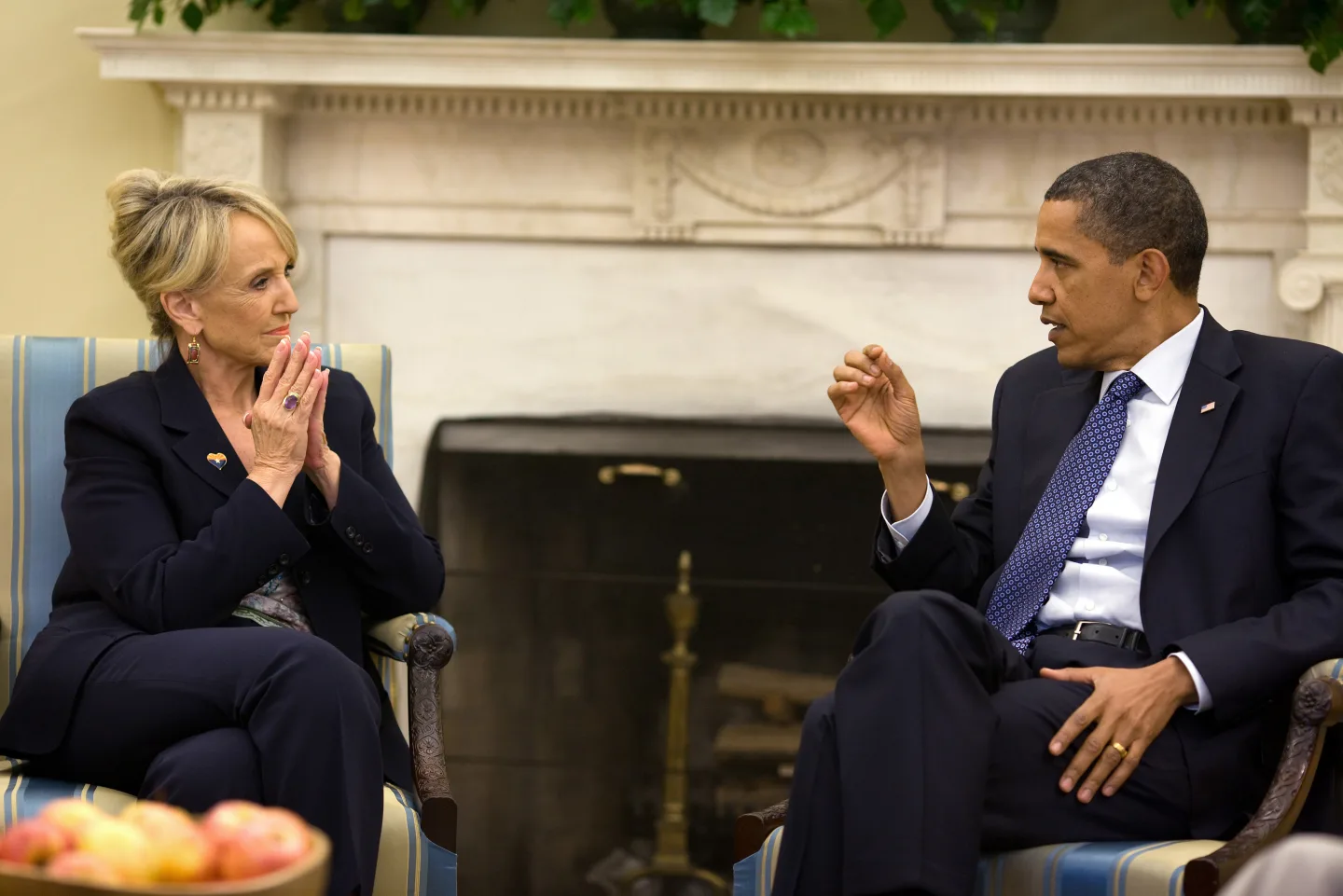
SB 1070
In April 2010, Governor Jan Brewer signed Senate Bill 1070 — at the time the toughest state-level immigration law in the country, requiring police to check immigration status during stops. Most of it was struck down by the Supreme Court in 2012.
The southern border
Arizona shares 372 miles of border with Mexico. Through the 2010s and 2020s it has been one of the country's busiest crossing corridors, with cycles of migrant surges, deaths in the desert, fence construction, and political fights over enforcement and asylum.
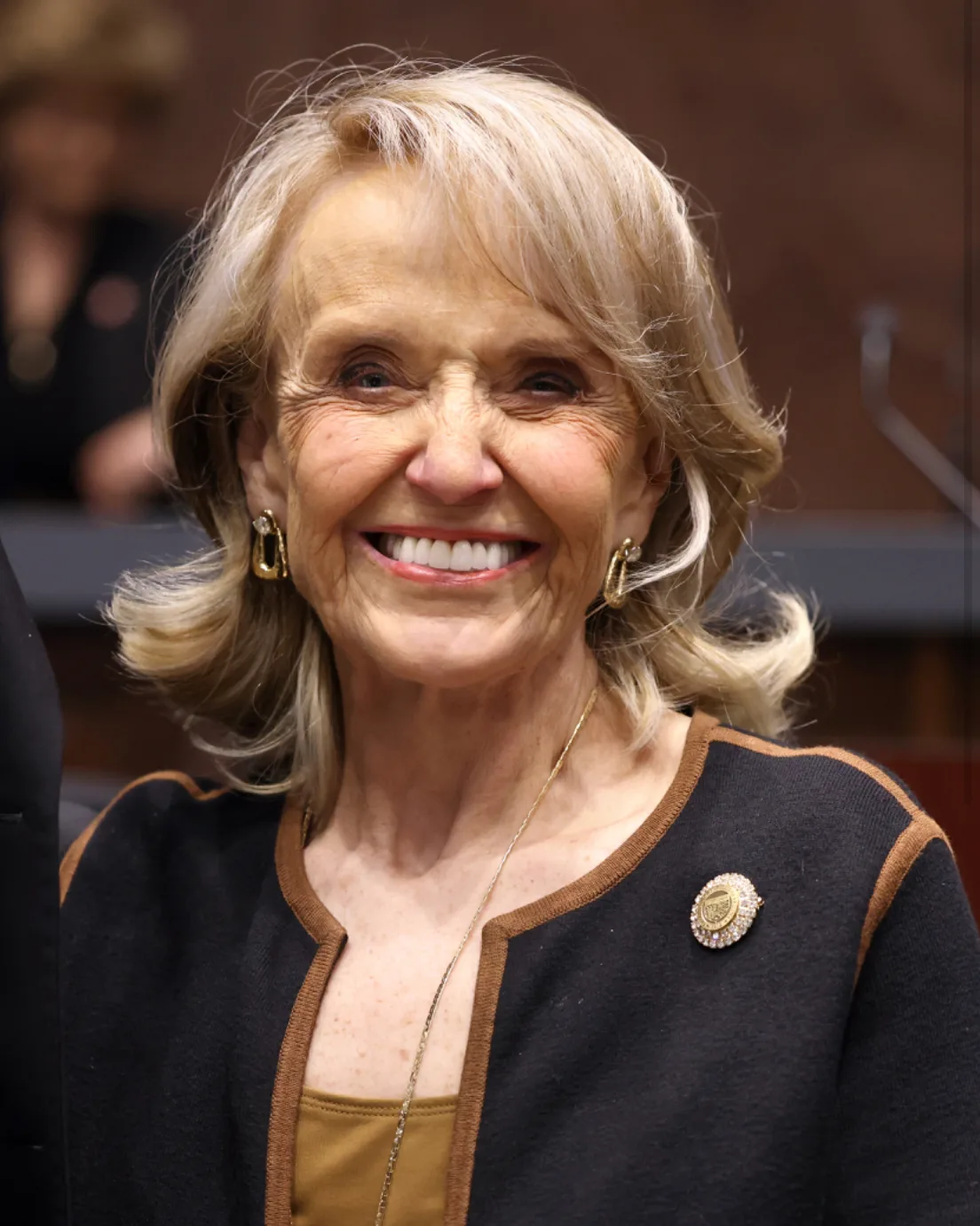
Jan Brewer
Jan Brewer became Arizona's governor in 2009 after Janet Napolitano left to head Homeland Security. She served until 2015 — defined nationally by SB 1070 and her famous airport-tarmac finger-wag at President Obama in 2012.
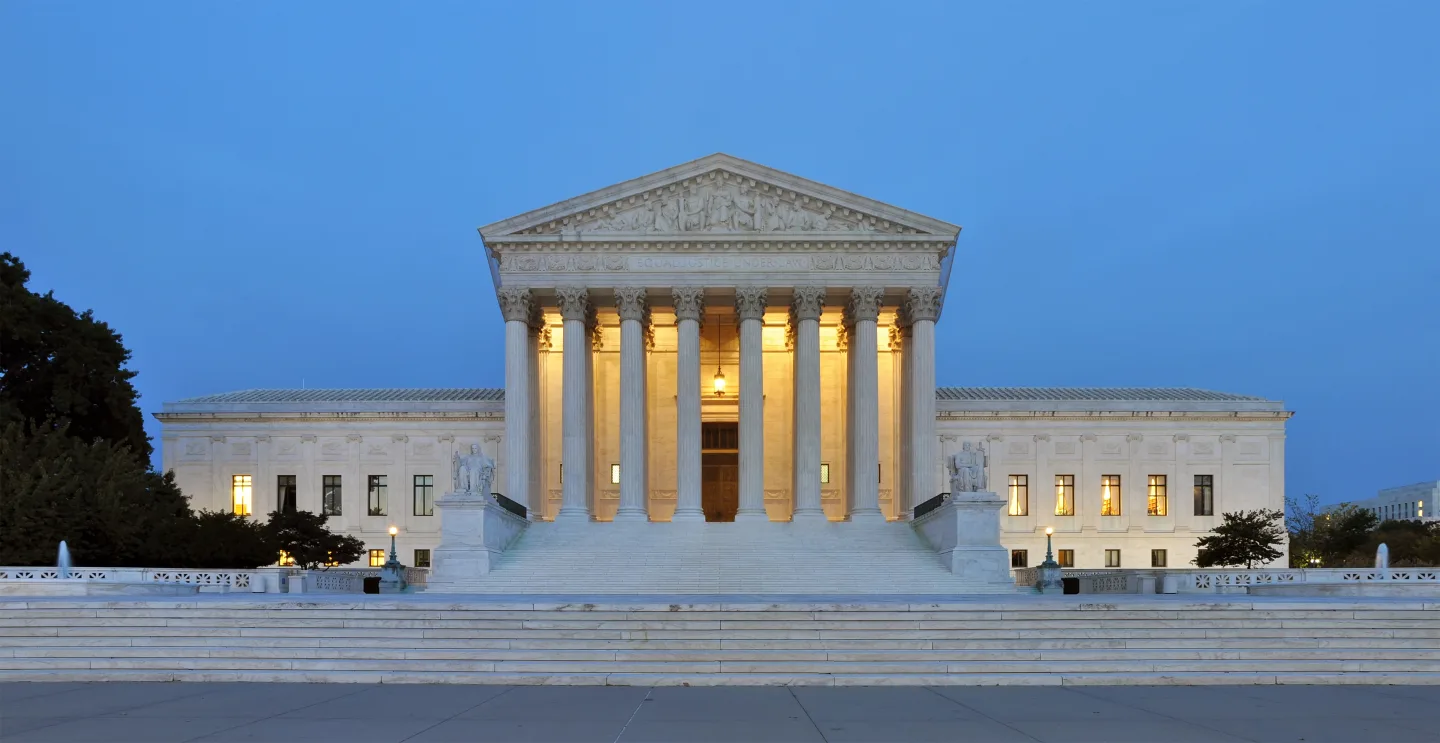
SB 1070 in court
In the 2012 case Arizona v. United States, the Supreme Court struck down most of SB 1070 as preempted by federal immigration authority — only the 'show me your papers' provision survived.
What SB 1070 couldn't do
SB 1070 let Arizona police check immigration status during stops, but it did not give them power to deport anyone — deportation remained a federal responsibility.

The Giffords shooting
On January 8, 2011, Congresswoman Gabrielle Giffords was shot in the head at a constituent meet-and-greet outside a Tucson supermarket. Six people died, including a federal judge and a nine-year-old girl. Giffords survived; she resigned from Congress to focus on recovery and later founded a gun-control advocacy group.
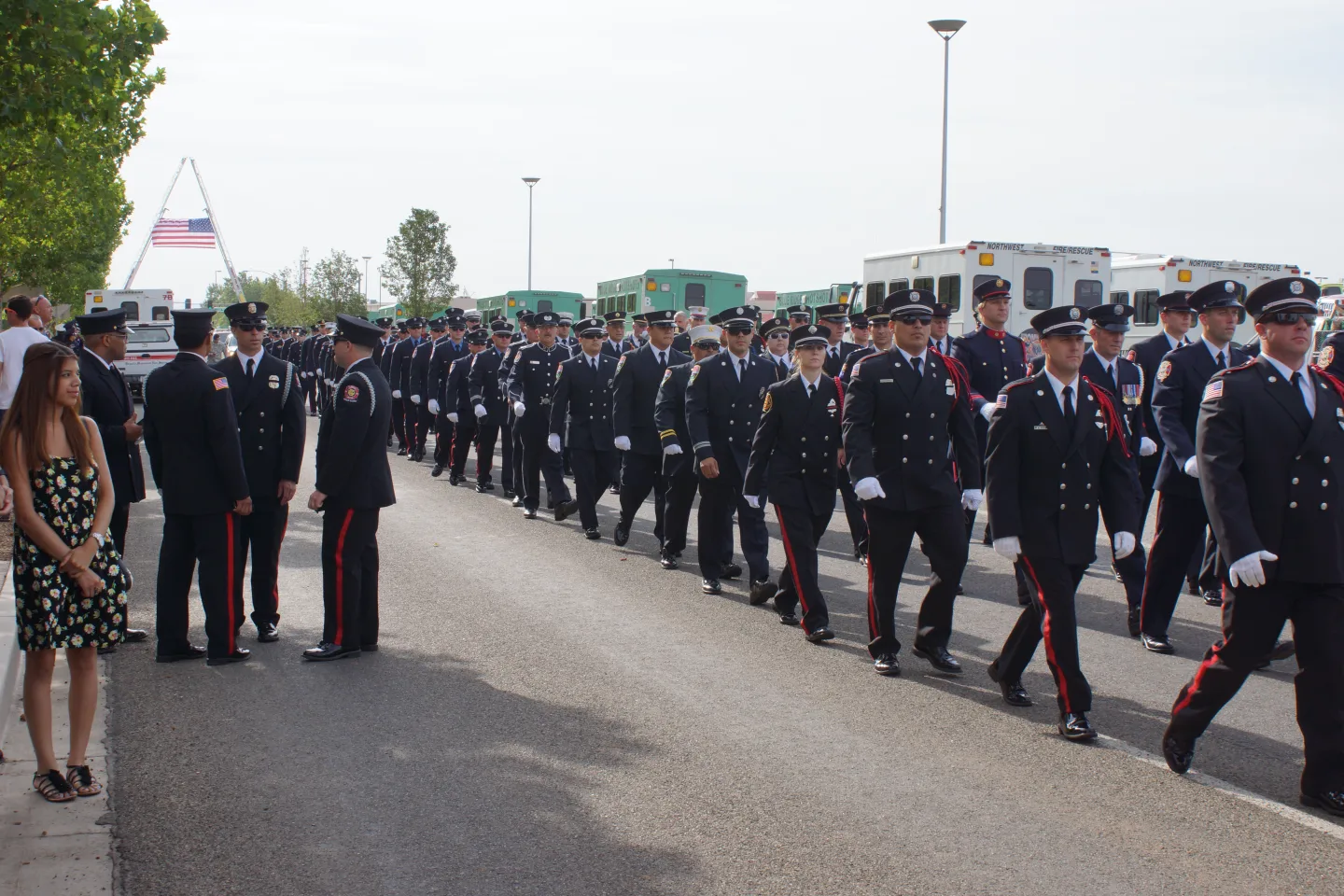
Yarnell Hill Fire
On June 30, 2013, a wind shift in central Arizona overran the Granite Mountain Hotshots, an elite Prescott Fire Department crew, while they fought a wildfire near Yarnell. 19 firefighters died — the deadliest wildfire for U.S. firefighters since the 1933 Griffith Park Fire. Only one Hotshot survived, having been posted elsewhere.
Arizona's COVID surge
In June–July 2020, after Governor Doug Ducey ended the statewide lockdown, Arizona's daily COVID cases jumped from a 7-day average of 377 to 3,249 in two months. On July 8, the state reported as many new cases as the entire European Union — despite having 1/60th the population.
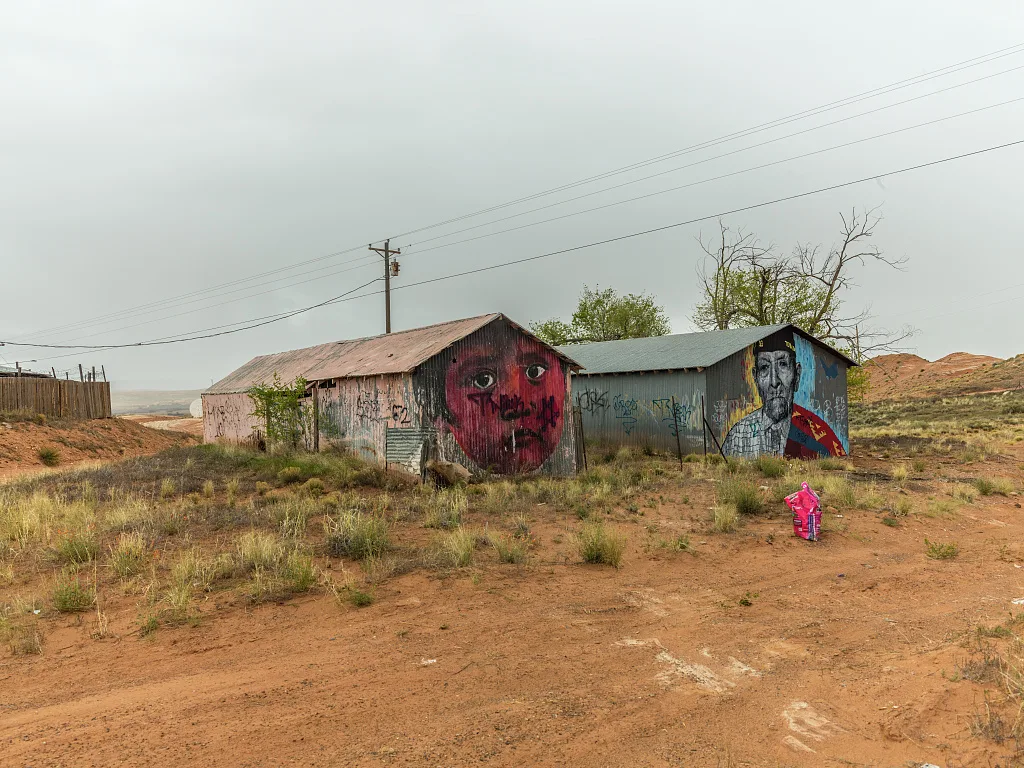
Hardest hit: the Navajo Nation
The Navajo Nation had among the highest per-capita COVID infection rates in the United States in 2020 — a consequence of limited running water, crowded multigenerational housing, and few hospitals. The Nation imposed some of the country's strictest curfews in response.
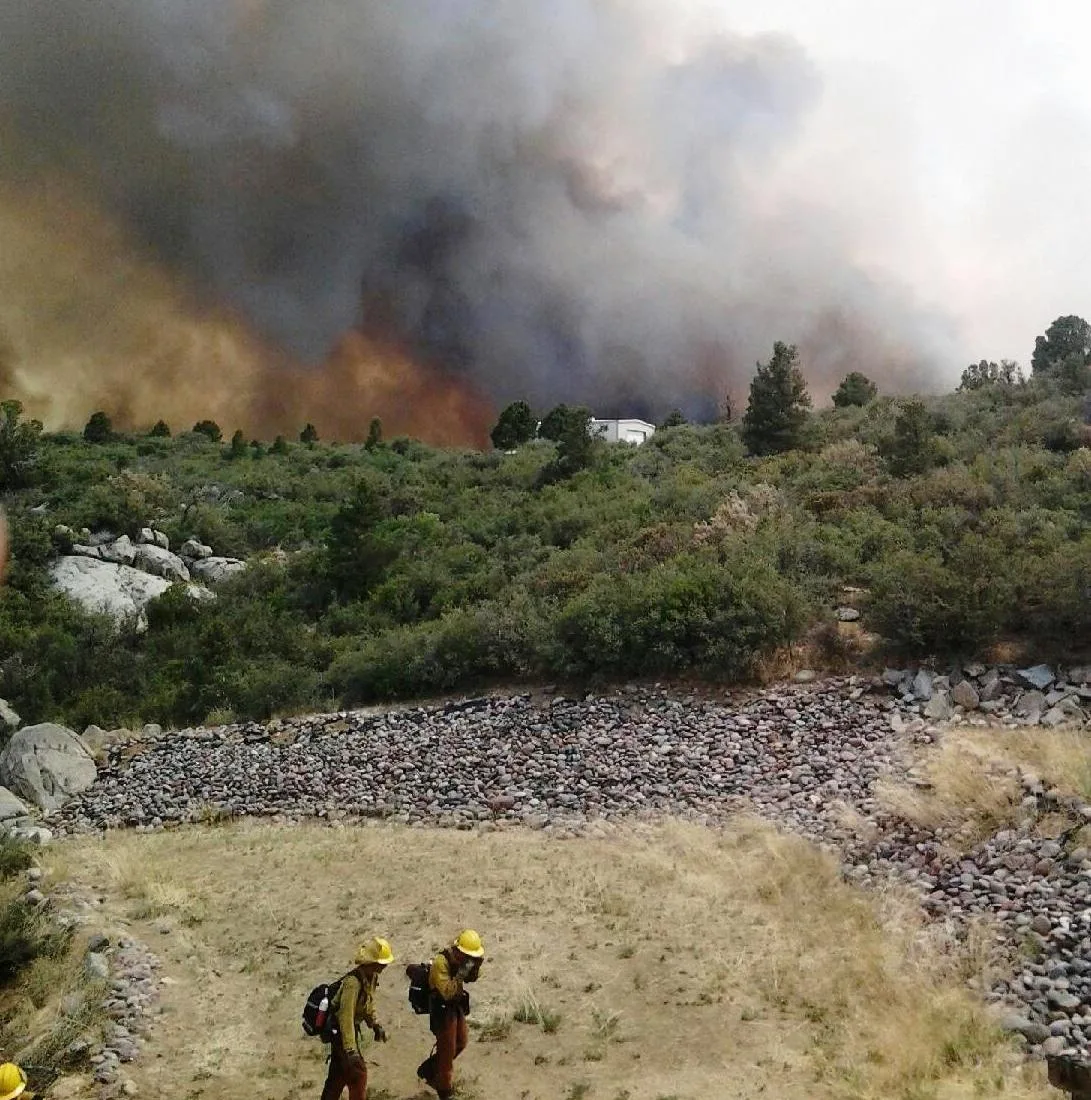
The lone survivor
At the Yarnell Hill Fire in 2013, an elite crew called the Granite Mountain Hotshots was overrun when the wind suddenly shifted. Only one Hotshot survived, having been posted elsewhere that day.
Self-test
Answer each question from memory, then check your work against the answer key.
1. When did Arizona pass SB 1070?
- AApril 2010
- BJanuary 2000
- CNovember 2016
- DMarch 1996
2. What did SB 1070 require Arizona police to do?
- ADeport anyone arrested without an ID
- BStaff checkpoints along the Mexican border
- CCheck immigration status during stops
- DReport all traffic stops to Homeland Security
3. What happened to most of SB 1070 in 2012?
- AThe legislature let it expire unrenewed
- BThe Supreme Court struck it down as preempted by federal authority
- CArizona voters repealed it by ballot measure
- DGovernor Brewer suspended it by executive order
4. How did Jan Brewer become governor of Arizona in 2009?
- AShe defeated Doug Ducey in the 2008 general election
- BShe was appointed by the state legislature
- CShe won a special election called after a recall
- DShe succeeded Janet Napolitano, who left to head Homeland Security
5. Which statement about SB 1070 is NOT true?
- AIt was the toughest state-level immigration law in the country when signed
- BGovernor Jan Brewer signed it in April 2010
- CMost of it was struck down by the Supreme Court in 2012
- DIt funded construction of a state-built fence along the border
6. How many firefighters died at the Yarnell Hill Fire in 2013?
- A3
- B100
- C19
- D6
7. Where was Congresswoman Gabrielle Giffords shot on January 8, 2011?
- AAt a campaign rally in downtown Phoenix
- BOutside a Tucson supermarket at a constituent meet-and-greet
- CIn her congressional office in Washington, DC
- DAt a fundraising dinner in Prescott
8. How many people were killed in the January 2011 Tucson shooting?
- ASix
- BNineteen
- CThirteen
- DOne
9. Which crew was overrun by a wind shift near Yarnell on June 30, 2013?
- AThe Granite Mountain Hotshots
- BThe Coconino Rim Crew
- CThe Prescott Smokejumpers
- DThe Superstition Hotshots
10. Which statement about the Yarnell Hill Fire is NOT true?
- AIt was the deadliest wildfire for U.S. firefighters since the 1933 Griffith Park Fire
- BEvery member of the Granite Mountain Hotshots died in the fire
- CIt happened on June 30, 2013
- DThe crew belonged to the Prescott Fire Department
11. What distinguished the Navajo Nation's COVID-19 experience in 2020?
- AThe first confirmed US case of the virus
- BThe nation's earliest full vaccination rollout
- CThe lowest infection rate of any tribal nation
- DAmong the highest per-capita infection rates in the US
12. Which condition did NOT contribute to the Navajo Nation's high COVID infection rate?
- ALimited access to running water
- BFew hospitals across the territory
- CA dense population concentrated in large cities
- DCrowded multigenerational housing
13. How did the Navajo Nation respond to its 2020 outbreak?
- AIt imposed some of the country's strictest curfews
- BIt closed its borders to all federal aid
- CIt declined to issue any public health orders
- DIt relied entirely on Arizona's statewide mandates
14. What was Governor Doug Ducey's stance on masks during Arizona's 2020 surge?
- AHe banned local governments from requiring masks
- BHe imposed a statewide mandate in June 2020
- CHe required masks only on the Navajo Nation
- DHe left mask rules to individual cities and counties
15. Given the conditions on the Navajo Nation, which public health measure would many households have found hardest to follow?
- AWearing a mask in public
- BFrequent handwashing at home
- CAvoiding travel to other communities
- DStaying home after a nightly curfew
Go deeper
Answer key
- 1. A April 2010
- 2. C Check immigration status during stopsSB 1070 required police to check immigration status during stops — the 'show me your papers' provision. It did not give state police deportation power; removal remains a federal function.
- 3. B The Supreme Court struck it down as preempted by federal authorityIn Arizona v. United States (2012) the Supreme Court struck down most of SB 1070 as preempted by federal authority over immigration; only the narrow 'show me your papers' provision survived.
- 4. D She succeeded Janet Napolitano, who left to head Homeland SecurityBrewer, then secretary of state, succeeded to the governorship in 2009 when Janet Napolitano left to lead Homeland Security. Ducey was a later governor, not her 2008 opponent.
- 5. D It funded construction of a state-built fence along the borderSB 1070 was a policing law — status checks during stops — not a fence-funding bill; fence construction belongs to the wider border story. The other three statements are true.
- 6. C 19
- 7. B Outside a Tucson supermarket at a constituent meet-and-greetGiffords was shot in the head at a constituent meet-and-greet outside a Tucson supermarket. Six people died; she survived, resigned from Congress, and later founded a gun-control group.
- 8. A SixSix people died, including a federal judge and a nine-year-old girl. Nineteen is the Yarnell Hill Fire death toll, not the Tucson shooting's.
- 9. A The Granite Mountain HotshotsThe Granite Mountain Hotshots, an elite Prescott Fire Department crew, were overrun by a wind shift near Yarnell. Only one Hotshot survived, having been posted elsewhere.
- 10. B Every member of the Granite Mountain Hotshots died in the fireOne Hotshot survived, having been posted elsewhere, so the crew was not lost entirely. The 1933 benchmark, the June 30, 2013 date, and the Prescott Fire Department crew are all accurate.
- 11. D Among the highest per-capita infection rates in the USThe Navajo Nation had among the highest per-capita COVID infection rates in the United States in 2020 — the opposite of the lowest-rate distractor.
- 12. C A dense population concentrated in large citiesContributing factors included limited running water, crowded multigenerational housing, and few hospitals. Dense big-city population was not a factor — the Nation's territory is largely rural.
- 13. A It imposed some of the country's strictest curfewsThe Nation imposed some of the country's strictest curfews. It could not rely on Arizona's statewide rules — Governor Ducey refused a statewide mask mandate.
- 14. D He left mask rules to individual cities and countiesDucey refused a statewide mask mandate but permitted individual cities and counties to issue their own — neither a statewide requirement nor a ban on local rules.
- 15. B Frequent handwashing at homeWith limited running water, handwashing at home was often not possible. Curfews, masking, and limiting travel did not depend on plumbing — and the Nation enforced some of the strictest curfews in the country.
Image credits
- SB 1070: Wikimedia Commons · The White House from Washington, DC · Public domain — commons.wikimedia.org/wiki/File:JanBrewer_PresObama.jpg
- Jan Brewer: Wikimedia Commons · Gage Skidmore from Surprise, AZ, United States of America · CC BY-SA 2.0 — commons.wikimedia.org/wiki/File:Jan_Brewer_(54269630502)_(cropped).jpg
- SB 1070 in court: Wikimedia Commons · Joe Ravi · CC BY-SA 3.0 — commons.wikimedia.org/wiki/File:Panorama_of_United_States_Supreme_Court_Building_at_Dusk.jpg
- The Giffords shooting: bill85704 (Openverse) · by 2.0 — www.flickr.com/photos/48804373@N07/5452203816
- Yarnell Hill Fire: Chris English (Openverse) · by-sa 3.0 — commons.wikimedia.org/w/index.php?curid=56733094
- Hardest hit: the Navajo Nation: Library of Congress · One of several art installations on the lands of the Navajo · No known restrictions (verify at source) — www.loc.gov/item/2018663493/
- The lone survivor: Wikimedia Commons · U.S. Department of Agriculture · Public domain — commons.wikimedia.org/wiki/File:Yarnell_Hill_Fire_with_firefighters.jpg


