
AZT: Rincons & Catalinas study guide · Lesson 4 of 19
The Santa Catalina Mountains
Over the range · Mount Lemmon & lore
This is the lesson's study guide from the FlashFeed app, plus its key facts and a self-test.
What you'll be able to do
- Describe Passage 11's 18.7-mile crossing through the Wilderness of Rocks granite country.
- Identify Romero Pass as the steep saddle reached by a vertical-mile climb, and note the equestrian bypass warning.
- Recognize Mount Lemmon (9,157 ft) as the Catalina high point the AZT stays below, named for Sara Plummer Lemmon, in the range called Babad Do'ag.
- Describe Hutch's Pool and the Pusch Ridge bighorn sheep population the passage skirts.
Passage 11 is the second great climb — up the Santa Catalinas through surreal granite country to the high forest near Mount Lemmon and the village of Summerhaven. This lesson covers the crossing and the lore of Tucson's most prominent range.
Over the range
Passage 11 spans 18.7 miles from the Gordon Hirabayashi Campground to the Marshall Gulch Trailhead, climbing from the Catalina front country to the high forest. Near the top the trail threads the Wilderness of Rocks — a high area of weathered, Eocene-aged granite eroded into bizarre hoodoos, balanced boulders, and broad flat sheets of stone, one of the most distinctive landscapes on the entire Arizona Trail.
The hardest single effort is the climb to Romero Pass, a steep saddle reached by gaining roughly a vertical mile from the Sabino Canyon / Hutch's Pool area. It's the gateway to the upper pine forests, and the pivot point from a brutal ascent into the cool high country. Be warned that the northern end of the passage is steep, narrow, and rocky — equestrians are strongly advised to use the Pusch Ridge Wilderness Bypass, and hikers should expect slow, careful footing on loose rock.
There's deep human history here too. Near the southern end, by the Gordon Hirabayashi Campground, lies the site of the old Mount Lemmon Prison Camp — a federal honor camp that once held conscientious objectors, including Gordon Hirabayashi, who resisted the WWII incarceration of Japanese Americans and for whom the campground is now named. And a fine bit of trivia to retire a common error: Mount Lemmon was not named after the citrus fruit. It honors botanist Sara Plummer Lemmon, who summited it with her husband in the early 1880s on a botanical expedition.
Mount Lemmon and lore
Mount Lemmon, at 9,157 feet, is the high point of the Santa Catalinas — but the AZT does not tag the summit. The trail stays in the forest below it; reaching the actual high point requires a side trip of roughly 6.8 miles round-trip, so the passage's on-trail high point is well under the summit elevation. The range carries a longer name, too: the Tohono O'odham call the Catalinas "Babad Do'ag," meaning "Frog Mountain," a name that predates the Spanish "Santa Catalina."
The passage skirts the Pusch Ridge Wilderness, home to a small remnant population of desert bighorn sheep whose fragile foothold is why parts of the range carry seasonal access restrictions. High on the mountain sits Summerhaven, a small resort village right on the trail at around 7,800 feet — the mid-mountain resupply with a post office, restaurants, lodging, and reliable potable water, a rare chance for a hot meal without leaving the route. And lower down, at the base of the big climb, lies Hutch's Pool: a deep, perennial pool fed by Sabino Creek (around 3,800 ft), a beloved swimming hole and the last sure water before the vertical-mile ascent to Romero Pass.
Key terms
- Wilderness of Rocks
- A high area of weathered, Eocene-aged granite that has eroded into bizarre hoodoos, balanced boulders, and broad flat sheets of stone. The AZT threads through this surreal granite landscape near the top of the Catalina climb.
- Romero Pass
- A steep saddle in the Santa Catalinas that the AZT crosses after climbing roughly a vertical mile up from the Sabino Canyon / Hutch's Pool area. Reaching it is the hardest single climb of the Catalina passage, the gateway to the upper pine forests.
- Hutch's Pool
- A deep, perennial natural pool fed by Sabino Creek (around 3,800 ft), a beloved swimming hole and reliable water source in the lower Catalinas. It marks the base of the long vertical-mile climb to Romero Pass, and tends to draw mosquitoes and moths.
Key facts
Rough going at the north end
The northern end of the Catalina passage is steep, narrow, and rocky. Equestrians are strongly advised to take the Pusch Ridge Wilderness Bypass instead, and hikers should expect slow, careful footing on loose rock — especially when descending tired.
The Mount Lemmon Prison Camp
The site of the old Mount Lemmon Prison Camp lies near the Gordon Hirabayashi Campground at the passage's southern end. The federal honor camp once held conscientious objectors — including Gordon Hirabayashi, who resisted WWII Japanese-American internment, and for whom the campground is now named.
Carved from ancient granite
The Wilderness of Rocks is eroded from Eocene-aged granite, weathered into hoodoos and balanced boulders — not a sedimentary or volcanic landscape.
Hoodoos and balanced boulders
Granite in the Wilderness of Rocks has eroded into bizarre hoodoos, balanced boulders, and broad, flat sheets of stone.
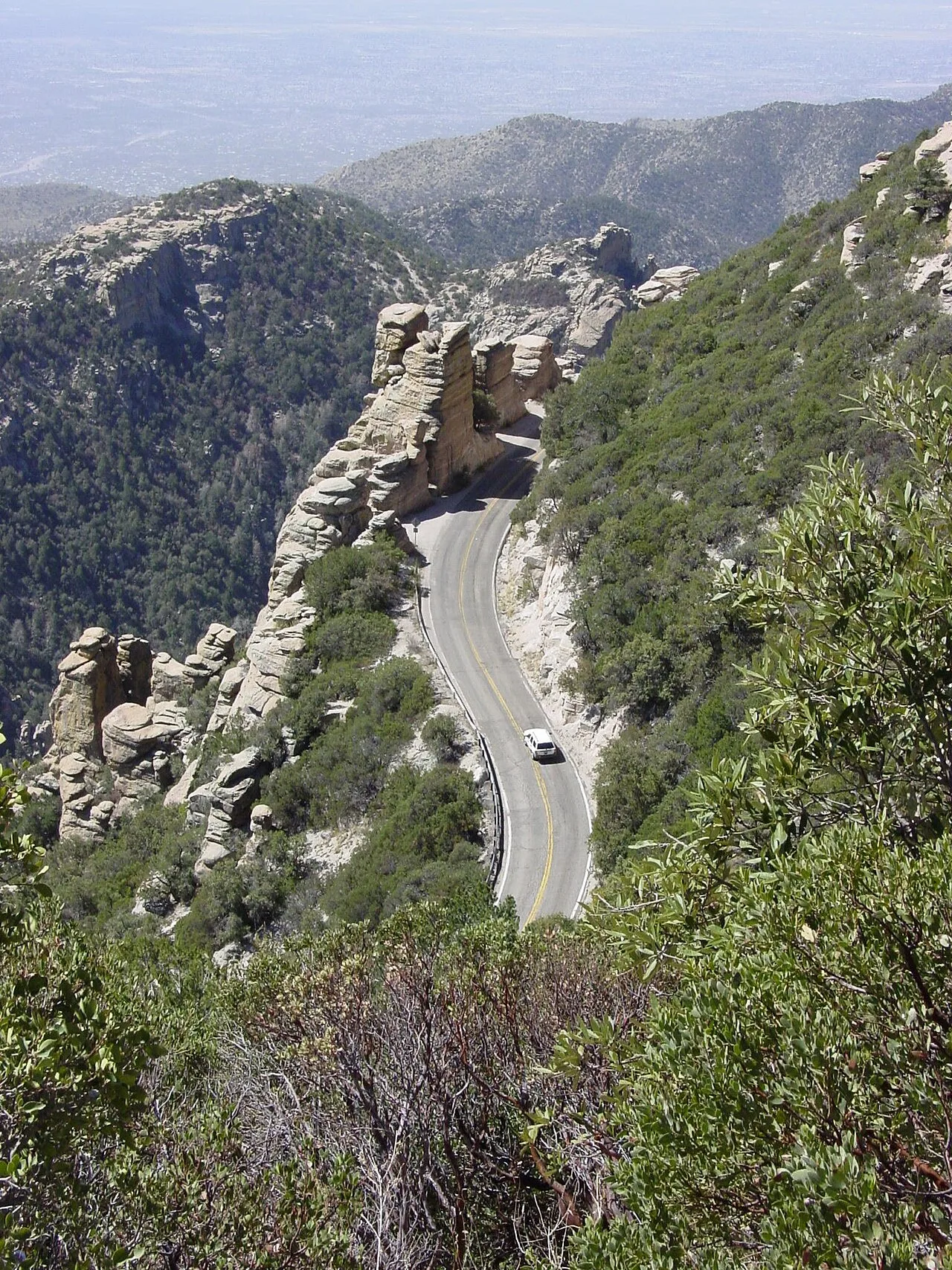
The trail doesn't summit Lemmon
The AZT does not reach the 9,157-foot summit of Mount Lemmon in Passage 11 — the trail stays in the forest below it. Tagging the actual high point requires a side trip of roughly 6.8 miles round-trip, so the passage's on-trail high point is well below the summit elevation.
Summerhaven on the trail
Summerhaven, the small resort village high on Mount Lemmon, sits right on the AZT and serves as the mid-mountain resupply: a post office, restaurants, and lodging at around 7,800 feet. It's the rare chance to get a hot meal and potable water without leaving the trail.
By the numbers
- Elevation of Mount Lemmon, the Catalina high point (ft)
- 9157 ft
Self-test
Answer each question from memory, then check your work against the answer key.
1. Passage 11 spans 18.7 miles from the ___ to the Marshall Gulch Trailhead, climbing from the Catalina front country up through the Wilderness of Rocks to the high forest near Summerhaven and Mount Lemmon.
- AGabe Zimmerman Trailhead
- BGordon Hirabayashi Campground
- CAmerican Flag Ranch Trailhead
- DMolino Basin Campground
2. The Wilderness of Rocks is eroded from what kind of rock?
- AEocene-aged granite
- BVolcanic basalt
- CLayered sandstone
- DMarine limestone
3. Which landforms characterize the Wilderness of Rocks?
- ASand dunes and dry playas
- BSlot canyons and natural arches
- CCinder cones and lava tubes
- DHoodoos, balanced boulders, and flat stone sheets
4. How does the Wilderness of Rocks rank among Arizona Trail scenery?
- AThe only slot-canyon section of the Arizona Trail
- BThe single highest point on the Arizona Trail
- COne of the most distinctive landscapes on the entire Arizona Trail
- DThe largest ponderosa forest on the Arizona Trail
5. Which is NOT true of Passage 11, the Santa Catalina crossing?
- AIt threads the Wilderness of Rocks near the top
- BIt climbs from the front country to the high forest
- CIt passes eroded granite hoodoos and balanced boulders
- DIt descends to cross the San Pedro River
6. What is Romero Pass on the Catalina passage?
- AA steep saddle and the hardest single climb
- BA granite field of hoodoos
- CA perennial swimming hole
- DA resort village with a post office
7. Roughly how much elevation is gained on the climb to Romero Pass?
- AAbout 800 feet
- BAbout 300 feet
- CAbout a vertical mile
- DAbout two vertical miles
8. At the steep northern end, which route are equestrians strongly advised to take?
- ARomero Canyon Trail
- BPusch Ridge Wilderness Bypass
- CMarshall Gulch Trailhead
- DSabino Canyon Road
9. The vertical-mile climb to Romero Pass rises from which area?
- AThe Sabino Canyon / Hutch's Pool area
- BGordon Hirabayashi Campground
- CMarshall Gulch
- DSummerhaven village
10. Which statement is NOT true of the passage's northern end?
- AIt is narrow
- BIt is rocky
- CIt is wide and gently graded
- DIt is steep
11. The ___ call the Santa Catalinas 'Babad Do'ag,' which translates to 'Frog Mountain.' The name long predates the Spanish 'Santa Catalina,' rooting the range in the deep Indigenous history of the Sonoran Desert.
- AYaqui
- BTohono O'odham
- CHohokam
- DChiricahua Apache
12. What is the elevation of Mount Lemmon, the Catalina high point?
- A6,400 ft
- B7,800 ft
- C8,240 ft
- D9,157 ft
13. Does the AZT tag the actual summit of Mount Lemmon?
- ANo, because the summit is permanently closed
- BYes, it crosses right over the summit
- CNo, the trail stays in the forest below it
- DYes, by way of Romero Pass
14. Mount Lemmon is named after whom?
- AThe lemon citrus fruit
- BMissionary Eusebio Kino
- CRancher E. O. Stratton
- DBotanist Sara Plummer Lemmon
15. Reaching the true summit of Mount Lemmon requires roughly how long a side trip off the AZT?
- AAbout 11 miles round-trip
- BAbout 6.8 miles round-trip
- CAbout 1.2 miles round-trip
- DAbout 19 miles round-trip
16. What is Hutch's Pool?
- AA deep perennial pool fed by Sabino Creek
- BA mid-mountain resort village
- CA former federal prison camp
- DA high granite saddle
17. At roughly what elevation does Hutch's Pool sit?
- AAbout 5,200 ft
- BAbout 3,800 ft
- CAbout 9,157 ft
- DAbout 7,800 ft
18. What role does Hutch's Pool play for hikers on the climb?
- AThe last sure water before the Romero Pass climb
- BThe passage's on-trail high point
- CThe mid-mountain resupply village
- DThe northern trailhead of the passage
19. The Pusch Ridge Wilderness holds a small remnant population of which animal?
- AMexican gray wolves
- BSonoran pronghorn
- CCoues white-tailed deer
- DDesert bighorn sheep
20. Why do parts of the Pusch Ridge range carry seasonal access restrictions?
- ATo protect nesting bald eagles
- BTo limit trail erosion after rain
- CTo protect fragile desert bighorn sheep habitat
- DTo reduce wildfire risk in summer
Go deeper
Answer key
- 1. B Gordon Hirabayashi CampgroundCompare: Molino Basin Campground — A Forest Service campground on the Catalina Highway, but not Passage 11's own start. Gabe Zimmerman Trailhead — The southern gateway onto this whole segment, at the start of Passage 8.
- 2. A Eocene-aged graniteThe Wilderness of Rocks is weathered, Eocene-aged granite carved into hoodoos and balanced boulders — not a sedimentary or volcanic landscape.
- 3. D Hoodoos, balanced boulders, and flat stone sheetsThe Wilderness of Rocks is granite eroded into bizarre hoodoos, balanced boulders, and broad flat sheets of stone — one of the AZT's most distinctive landscapes.
- 4. C One of the most distinctive landscapes on the entire Arizona TrailThe Wilderness of Rocks ranks as one of the most distinctive landscapes on the entire Arizona Trail. It is a granite hoodoo field, not the trail's high point or a slot canyon.
- 5. D It descends to cross the San Pedro RiverPassage 11 climbs from the Catalina front country through the Wilderness of Rocks to the high forest; it does not descend to the San Pedro River, which lies well east of this range.
- 6. A A steep saddle and the hardest single climbRomero Pass is a steep saddle reached by the hardest single climb of the passage — the gateway to the upper pine forests. The other options describe Summerhaven, Hutch's Pool, and the Wilderness of Rocks.
- 7. C About a vertical mileReaching Romero Pass means gaining roughly a vertical mile up from the Sabino Canyon / Hutch's Pool area — the hardest single effort of the crossing.
- 8. B Pusch Ridge Wilderness BypassBecause the northern end is steep, narrow, and rocky, equestrians are strongly advised to use the Pusch Ridge Wilderness Bypass.
- 9. A The Sabino Canyon / Hutch's Pool areaThe climb gains roughly a vertical mile up from the Sabino Canyon / Hutch's Pool area, the base of the big ascent.
- 10. C It is wide and gently gradedThe northern end is described as steep, narrow, and rocky with loose footing — the opposite of wide and gently graded.
- 11. B Tohono O'odham
- 12. D 9,157 ftMount Lemmon tops out at 9,157 feet. Summerhaven sits near 7,800 ft; the others are distractors.
- 13. C No, the trail stays in the forest below itThe AZT stays in the forest below the 9,157-ft summit; reaching the true high point needs a side trip of about 6.8 miles round-trip.
- 14. D Botanist Sara Plummer LemmonDespite the common error, the peak honors botanist Sara Plummer Lemmon, who summited it in the early 1880s — not the citrus fruit.
- 15. B About 6.8 miles round-tripThe AZT stays in the forest below the 9,157-ft summit; tagging the true high point takes a side trip of roughly 6.8 miles round-trip.
- 16. A A deep perennial pool fed by Sabino CreekHutch's Pool is a deep, perennial swimming hole fed by Sabino Creek. The other options describe Romero Pass, Summerhaven, and the Mount Lemmon Prison Camp.
- 17. B About 3,800 ftHutch's Pool lies around 3,800 ft, at the base of the vertical-mile climb to Romero Pass.
- 18. A The last sure water before the Romero Pass climbHutch's Pool is the last sure water before the vertical-mile ascent to Romero Pass. Resupply is at Summerhaven, not here.
- 19. D Desert bighorn sheepPusch Ridge Wilderness holds a fragile remnant population of desert bighorn sheep, which the passage skirts.
- 20. C To protect fragile desert bighorn sheep habitatThe restrictions protect the fragile foothold of the desert bighorn sheep — a reminder that this front country is sensitive habitat.
Image credits
- The trail doesn't summit Lemmon: Wikimedia Commons · Debby Kriegel · Public domain — commons.wikimedia.org/wiki/File:SkyIslandPkwy.JPG
