
Tips for Living Your Best Life study guide · Lesson 10 of 12
The Master Principles
The 18 master principles · The 18 books & their authors · Where to start
This is the lesson's study guide from the FlashFeed app, plus its key facts and a self-test.
What you'll be able to do
- Recognize the recurring cross-book principles: small actions compound, be interested, assets over liabilities, find your why, protect focus.
- Attribute signature principles to their source books (Find your Why to Frankl; empathy over logic to Voss).
- Match the curriculum's landmark books to their authors.
- Recall the publication years of the core books in the curriculum.
- Explain the recommended reading sequence: Atomic Habits first, Power of Now as the ongoing practice.
The 18 master principles
Across ten books and decades of research, the same core lessons keep surfacing. This part distills them into a single reference — the shared architecture of effective living.
Small actions beat big efforts
James Clear's central argument in Atomic Habits: systems, not goals, produce results. A 1% daily improvement compounds to roughly 37× improvement over a year. Charles Duhigg's The Power of Habit reaches the same conclusion through neuroscience — habits wire into the brain's basal ganglia, making them nearly automatic.
Identity drives behavior
Atomic Habits calls this identity-based habit formation: vote for the person you want to be with every small action. Carol Dweck's Mindset reinforces it — your self-narrative either opens or closes possibility. Change the label, change the behavior.
Design your environment
Willpower is a depleting resource, not a character trait, as Kahneman's Thinking, Fast and Slow demonstrates. Clear and Duhigg both prescribe environment design: alter the cue landscape so good defaults require no effort. Architecture beats intention.
Be interested, not interesting
Dale Carnegie (How to Win Friends and Influence People) distilled this from studying hundreds of successful relationships. Stephen Covey's Habit 5 in 7 Habits — "Seek first to understand, then to be understood" — independently confirms it. Genuine curiosity is a social superpower.
Assets in, liabilities out
Robert Kiyosaki's key distinction in Rich Dad, Poor Dad: assets generate cash flow; liabilities drain it. Napoleon Hill's Think and Grow Rich frames the same principle as disciplined wealth consciousness — accumulate income-producing things before lifestyle.
Choose your suffering
Mark Manson (The Subtle Art of Not Giving a F*ck) argues that values determine which pain is worth it. Don Miguel Ruiz (The Four Agreements) adds a layer: others' behavior reflects their inner world, not a verdict on yours — so you need not absorb every conflict personally.
Growth mindset
Carol Dweck coined growth mindset in decades of Stanford research — the belief that ability develops through effort and strategy. The practical corollary: praise effort, not talent. Praising innate ability trains children (and adults) toward fixed-mindset fragility.
Find your Why
Viktor Frankl paraphrased Nietzsche — "He who has a why to live can bear almost any how" — as the thesis of Man's Search for Meaning. Covey's Habit 7 ("Sharpen the Saw") extends it: renew body, mind, and spirit continuously so purpose remains sustainable.
Protect your focus
Cal Newport (Deep Work) and Greg McKeown (Essentialism) converge on less but better. David Allen (Getting Things Done) frames the same idea as capturing commitments to free cognitive bandwidth. Attention is finite; protect it deliberately.
You're only at 40%
David Goggins' central claim in Can't Hurt Me, grounded in his Navy SEAL and ultramarathon experience: when your mind signals quitting, you have used roughly 40% of your actual capacity. The remaining reserve requires conscious effort to access.
Let Them
Mel Robbins (The Let Them Theory) argues that attempting to control others' reactions wastes enormous energy. Let them be who they are. When you must influence someone, Chris Voss (Never Split the Difference) prescribes empathy over logic — negotiating with emotional intelligence, not argument.
Where to start
Ten books in a single lesson raises an obvious question: where do you actually begin? The recommended sequence is designed so each book reinforces the next rather than overlapping it.
Where to start: Atomic Habits
Atomic Habits by James Clear is the near-universal first recommendation because it is the most immediately actionable. It gives you a repeatable method — cue, craving, response, reward — for building any behavior the other books describe. Without a system for implementation, every other insight stays theoretical. Clear published the book in 2018 based on his newsletter research into habit science and behavioral psychology.
The recommended arc
The suggested progression builds on logical dependency. Atomic Habits installs your systems engine. The 7 Habits of Highly Effective People (Covey) then provides a full life-management framework. Mindset (Dweck) reframes how you interpret every setback those habits surface. Man's Search for Meaning (Frankl) grounds the entire project in purpose — the deepest motivational substrate. Each book presupposes the vocabulary of the one before it, so reading out of order leaves concepts hanging without their roots.
The ongoing practice: Power of Now
Eckhart Tolle's The Power of Now (1997) is placed last in the sequence not because it matters least but because present-moment awareness is the condition that makes all the other practices possible. You cannot build atomic habits, negotiate with empathy, or find meaning if you are perpetually trapped in rumination or anxiety. Tolle's contribution is the ongoing practice — not a one-time insight but a daily discipline that underpins every other skill in the curriculum.
Key concepts
Atomic Habits
- The book this pack suggests reading first, because it's the most immediately actionable.
- James Clear published it in 2018, arguing that systems, not goals, produce results.
- It gives a repeatable cue-craving-response-reward method — the 'systems engine' every other book assumes.
The 7 Habits of Highly Effective People
- The book placed second in the recommended arc, offering a full life-management framework.
- Stephen Covey's numbered system for a well-run life.
- It's the source of both 'Seek first to understand, then to be understood' and 'Sharpen the Saw.'
Mindset
- The book, third in the recommended arc, that reframes how you interpret every setback.
- Carol Dweck's decades of Stanford research are its foundation.
- Its core prescription — praise effort, not talent — steers people away from fixed-ability fragility.
Man's Search for Meaning
- The book, fourth in the arc, that grounds the whole project in purpose.
- Viktor Frankl's thesis, paraphrasing Nietzsche: 'He who has a why to live can bear almost any how.'
- Built on Frankl surviving the camps, it names purpose as the deepest motivational substrate — finding your Why.
The Power of Now
- The book placed last in the sequence — an ongoing practice, not a one-time insight.
- Eckhart Tolle's 1997 work: present-moment awareness is the condition that makes all other practices possible.
- A daily discipline against rumination and anxiety — you can't build good habits or find meaning while trapped in either.
Key facts
Small actions beat big efforts
The most repeated lesson across these books: small consistent actions compound into remarkable results, while occasional heroic pushes fizzle. You don't rise to your goals — you fall to your systems. — Atomic Habits, The Power of Habit
Identity drives behavior
Don't just chase the goal — become the person who does the thing. A runner runs; a writer writes. When behavior flows from identity, you don't need to negotiate with yourself. — Atomic Habits, Mindset
Design your environment
Willpower is unreliable. Rather than white-knuckling temptation, shape your surroundings so the right choice is the easy one. Make good cues obvious and bad cues invisible. — Atomic Habits, Thinking, Fast and Slow
Be interested, not interesting
You make more friends by being genuinely interested in others than by trying to make them interested in you. Curiosity beats charisma — and it pairs with seeking first to understand before being understood. — How to Win Friends, How to Talk to Anyone, 7 Habits
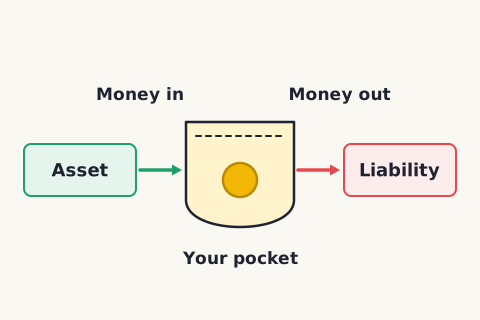
Assets in, liabilities out
The wealthy think in cash flow: assets put money in your pocket; liabilities take it out. Buy assets first; let them pay for the liabilities you want. — Rich Dad, Poor Dad, Think and Grow Rich
Choose your suffering
Every worthwhile thing has a cost. The question isn't whether you'll struggle — it's which struggle you'll choose. Your values decide what pain is worth enduring, and you needn't take others' behavior personally along the way. — The Subtle Art of Not Giving a F*ck, The Four Agreements
Growth mindset
Ability isn't fixed at birth. A growth mindset treats effort and strategy as the real engine — so praise effort and improvement, not innate ability. Talent is a starting point, not a ceiling. — Mindset, How to Win Friends
Find your Why
A person who has a why to live can bear almost any how. Purpose isn't a luxury that comes after success — it's the thing that makes the hard work survivable. Renew yourself across body, mind, and spirit to sustain it. — Man's Search for Meaning, 7 Habits

Protect your focus
Attention is your scarcest asset. Deep, focused work beats shallow busyness — and less but better beats doing everything. Guard your concentration the way you'd guard money. — Deep Work, Essentialism, Getting Things Done

You're only at 40%
When your mind says you're done, you're really at about 40% of your capacity. Most limits are self-imposed — there's a reserve tank you rarely touch. — Can't Hurt Me
Let Them
You waste enormous energy trying to control how others act and think. Let Them. Release what was never yours to control — and negotiate with empathy, not logic when you do need to move someone. — The Let Them Theory, Never Split the Difference
Where to start: Atomic Habits
If you read only one first, make it Atomic Habits — the most immediately actionable foundation. It teaches the systems that let every other book's ideas actually stick. — Atomic Habits, James Clear
The recommended arc
The suggested order builds on dependency: Atomic Habits for systems, then 7 Habits for a full framework, Mindset to reframe every challenge, and Man's Search for Meaning to ground it all in purpose. Each book sets up the next.
The ongoing practice: Power of Now
The Power of Now comes last in the sequence — not because it's least, but because it's the ongoing practice that underpins all the others. Present-moment awareness is the soil the rest grows in. — The Power of Now, Eckhart Tolle
Grounded in purpose
The recommended reading order places Man's Search for Meaning early, deliberately grounding the productivity advice that follows — the focus and finance books — in a foundation of purpose.
Next up: The 7 Habits
In the recommended reading arc, The 7 Habits of Highly Effective People comes right after Atomic Habits — once habit-systems are installed, it supplies a full framework for managing the rest of life.
By the numbers
- Year How to Win Friends & Influence People (Dale Carnegie) was published
- 1936 year
- Year Think and Grow Rich (Napoleon Hill) was published
- 1937 year
- Year Man's Search for Meaning (Viktor Frankl) was published
- 1946 year
- Year The 7 Habits of Highly Effective People (Stephen Covey) was published
- 1989 year
- Year The Power of Now (Eckhart Tolle) was published
- 1997 year
- Year Thinking, Fast and Slow (Daniel Kahneman) was published
- 2011 year
- Year Atomic Habits (James Clear) was published
- 2018 year
Matched pairs
Each item on the left goes with the one on the right.
- Find your Why
- Man's Search for Meaning
- Negotiate with empathy, not logic
- Never Split the Difference
- Atomic Habits
- James Clear
- The Power of Habit
- Charles Duhigg
- Mindset
- Carol S. Dweck
- The 7 Habits of Highly Effective People
- Stephen R. Covey
- The Subtle Art of Not Giving a F*ck
- Mark Manson
- The Four Agreements
- Don Miguel Ruiz
- Thinking, Fast and Slow
- Daniel Kahneman
- Rich Dad, Poor Dad
- Robert T. Kiyosaki
- How to Win Friends & Influence People
- Dale Carnegie
- Man's Search for Meaning
- Viktor Frankl
- Deep Work
- Cal Newport
- The Power of Now
- Present-moment awareness and peace
- Most actionable starting foundation
- Atomic Habits
- The ongoing practice underpinning all the rest
- The Power of Now
Self-test
Answer each question from memory, then check your work against the answer key.
1. Per Atomic Habits, a 1% daily improvement compounds to roughly how much over a single year?
- A365x improvement
- B10x improvement
- C3.7x improvement
- D37x improvement
2. The 'be interested, not interesting' principle says you make more friends by doing what?
- ABeing genuinely interested in others
- BWinning more arguments convincingly
- COffering frequent, generous compliments
- DMaking yourself more impressive to others
3. Which pair of ideas together define the 'protect your focus' principle?
- AAssets and liabilities
- BDeep work and 'less but better'
- CSystems and identity
- DEmpathy and logic
4. According to the 'assets in, liabilities out' principle, an asset is best defined as something that:
- AYou purchased with financing
- BYou own outright with no debt
- CPuts money in your pocket
- DReliably rises in value over time
5. "You are only at 40% — your limits are mostly self-imposed" is the signature principle of which book?
- AThe Power of Now
- BCan't Hurt Me
- CAtomic Habits
- DDeep Work
6. 'He who has a why to live can bear almost any how' — the 'find your Why' principle — is the thesis of which book?
- ADeep Work
- BThe Four Agreements
- CMan's Search for Meaning
- DAtomic Habits
7. Which book prescribes 'empathy over logic' — negotiating with emotional intelligence rather than argument?
- AGetting Things Done
- BThe 7 Habits of Highly Effective People
- CMindset
- DNever Split the Difference
8. The claim that ability develops through effort and strategy — so you should praise effort, not innate talent — is the central thesis of which book?
- AMindset
- BAtomic Habits
- CCan't Hurt Me
- DThe Power of Habit
9. 'Your values determine which pain is worth enduring — choose your suffering' is the argument of which book?
- AThe Subtle Art of Not Giving a F*ck
- BThink and Grow Rich
- CRich Dad, Poor Dad
- DCan't Hurt Me
10. When your mind says you're done, you're really at about **40% of your capacity.** Most limits are self-imposed — there's a reserve tank you rarely touch. — *___*
- AMan's Search for Meaning
- BRich Dad Poor Dad
- CThe Four Agreements
- DCan't Hurt Me
11. Who wrote Atomic Habits?
- ADavid Allen
- BJames Clear
- CCharles Duhigg
- DCal Newport
12. Thinking, Fast and Slow was written by which author?
- ACarol S. Dweck
- BStephen R. Covey
- CDaniel Kahneman
- DNapoleon Hill
13. Which book-and-author pairing is INCORRECT?
- AMark Manson — The Four Agreements
- BViktor Frankl — Man's Search for Meaning
- CCal Newport — Deep Work
- DRobert Kiyosaki — Rich Dad, Poor Dad
14. The Power of Habit was written by which author?
- ADale Carnegie
- BJames Clear
- CCharles Duhigg
- DEckhart Tolle
15. Mindset, which coined the term 'growth mindset,' was written by whom?
- AChris Voss
- BCarol S. Dweck
- CMark Manson
- DMel Robbins
16. In what year was Atomic Habits published?
- A2011
- B2024
- C2006
- D2018
17. How to Win Friends & Influence People (Dale Carnegie) was published in which year?
- A1946
- B1937
- C1989
- D1936
18. Which of these books was published EARLIEST?
- AMan's Search for Meaning
- BThink and Grow Rich
- CMindset
- DThinking, Fast and Slow
19. The 7 Habits of Highly Effective People (Stephen Covey) was published in which year?
- A1989
- B2006
- C1979
- D1997
20. In what year was Eckhart Tolle's The Power of Now published?
- A2018
- B2011
- C1997
- D1989
21. Which book does the recommended reading order put FIRST, as the most actionable foundation?
- ACan't Hurt Me
- BThe Power of Now
- CThinking, Fast and Slow
- DAtomic Habits
22. Which book is placed in the reading order to "ground all productivity in purpose"?
- AGetting Things Done
- BThe 5 Love Languages
- CMan's Search for Meaning
- DNever Split the Difference
23. Which book is placed LAST in the sequence as the 'ongoing practice' that underpins all the others?
- AThe Power of Now
- BMan's Search for Meaning
- CAtomic Habits
- DMindset
24. Why is The Power of Now placed last in the recommended sequence?
- AIt was published most recently
- BPresent-moment awareness makes all other practices possible
- CIt is the least important book in the set
- DIt is the most difficult book to read
25. In the recommended arc, which book immediately follows Atomic Habits to provide a full life-management framework?
- AThe Power of Now
- BMindset
- CThe 7 Habits of Highly Effective People
- DMan's Search for Meaning
Go deeper
Answer key
- 1. D 37x improvementClear's math: improving 1% every day compounds to about 37x over a year, showing why small consistent actions beat occasional heroic pushes. The other figures overstate or understate the compounding.
- 2. A Being genuinely interested in othersCarnegie and Covey's Habit 5 converge: genuine curiosity about others (seek first to understand) beats trying to be impressive. The distractors describe self-focused behavior the principle rejects.
- 3. B Deep work and 'less but better'Newport's deep work and McKeown's 'less but better' converge on guarding finite attention. Systems/identity is the habits principle; assets/liabilities is the wealth principle; empathy/logic is negotiation.
- 4. C Puts money in your pocketKiyosaki's test is cash-flow direction: assets put money in your pocket, liabilities take it out. Ownership, appreciation, and financing are not his defining criteria.
- 5. B Can't Hurt MeDavid Goggins's 40% Rule says that when your mind tells you you're finished, you've only tapped about 40% of your capacity.
- 6. C Man's Search for MeaningViktor Frankl paraphrased Nietzsche's line as the thesis of Man's Search for Meaning. Deep Work is about focus, Atomic Habits about systems, and The Four Agreements about not taking things personally.
- 7. D Never Split the DifferenceChris Voss's Never Split the Difference argues you move people with empathy, not logic. Getting Things Done is about task capture, 7 Habits a life framework, and Mindset about ability beliefs.
- 8. A MindsetCarol Dweck's Mindset introduced the growth-mindset idea: ability grows through effort and strategy, so praise effort over talent. Atomic Habits is about systems, Can't Hurt Me about mental toughness, and The Power of Habit about habit loops.
- 9. A The Subtle Art of Not Giving a F*ckMark Manson argues values decide which struggle is worth it. Can't Hurt Me is the 40% rule; Rich Dad, Poor Dad and Think and Grow Rich are about wealth, not chosen suffering.
- 10. D Can't Hurt MeCompare: The Four Agreements — Four principles for personal freedom: be impeccable with your word, don't take anything personally, don't make assumptions, and always do your best. — The Four Agreements, Don Miguel Ruiz. Man's Search for Meaning — Find your Why.
- 11. B James ClearJames Clear wrote Atomic Habits (2018). Duhigg wrote The Power of Habit, Newport wrote Deep Work, and Allen wrote Getting Things Done — all habit/focus authors, hence tempting.
- 12. C Daniel KahnemanDaniel Kahneman wrote Thinking, Fast and Slow. Dweck wrote Mindset, Covey wrote The 7 Habits, and Hill wrote Think and Grow Rich.
- 13. A Mark Manson — The Four AgreementsThe Four Agreements was written by Don Miguel Ruiz, not Mark Manson (who wrote The Subtle Art of Not Giving a F*ck). The other three pairings are correct.
- 14. C Charles DuhiggCharles Duhigg wrote The Power of Habit, reaching habit conclusions via neuroscience. Clear wrote Atomic Habits (the confusable one), Carnegie wrote How to Win Friends, and Tolle wrote The Power of Now.
- 15. B Carol S. DweckCarol S. Dweck coined 'growth mindset' in decades of Stanford research and wrote Mindset. Robbins, Voss, and Manson wrote other curriculum books but not Mindset.
- 16. D 2018James Clear published Atomic Habits in 2018 from his habit-science newsletter research. 2011 is Thinking Fast and Slow, 2006 is Mindset, and 2024 is The Let Them Theory.
- 17. D 1936Carnegie's How to Win Friends was published in 1936 — the oldest book in the set. 1937 is Think and Grow Rich, 1946 is Man's Search for Meaning, and 1989 is The 7 Habits.
- 18. B Think and Grow RichThink and Grow Rich (1937) predates Man's Search for Meaning (1946), Mindset (2006), and Thinking, Fast and Slow (2011).
- 19. A 1989Covey published The 7 Habits in 1989. 1997 is The Power of Now, 2006 is Mindset, and 1979 predates it.
- 20. C 1997Eckhart Tolle published The Power of Now in 1997.
- 21. D Atomic HabitsAtomic Habits leads the sequence because it's the most immediately actionable — it builds the systems that make every later book stick.
- 22. C Man's Search for MeaningMan's Search for Meaning is slotted early so that the focus and finance books that follow rest on a foundation of purpose.
- 23. A The Power of NowTolle's The Power of Now is last not because it matters least but because present-moment awareness is the daily practice underpinning every other skill. Atomic Habits is first; Man's Search and Mindset sit mid-arc.
- 24. B Present-moment awareness makes all other practices possibleIt is placed last because present-moment awareness is the condition enabling every other practice — you cannot build habits or find meaning while trapped in rumination. It is not ranked least, hardest, or by date.
- 25. C The 7 Habits of Highly Effective PeopleAfter Atomic Habits installs the systems engine, The 7 Habits provides a full life-management framework. Mindset then reframes setbacks and Man's Search grounds it in purpose; The Power of Now comes last.
Image credits
- Assets in, liabilities out: FlashFeed original diagram · CC-BY-4.0
- Protect your focus: Wikimedia Commons · Krishnavelip · CC BY 4.0 — commons.wikimedia.org/wiki/File:Giving_Light_To_World.jpg
- You're only at 40%: AI-generated (gpt-image-1.5)
