
Broken Money: Why Our Financial System Is Failing Us & How We Can Make It Better study guide · Lesson 1 of 7
Lesson 1: The Ledger Theory and Genesis of Money
1.1 Money as a Social Ledger · 1.2 The Triumph of Monetary Gold
Unofficial study guide for Broken Money: Why Our Financial System is Failing Us and How We Can Make it Better by Lyn Alden. FlashFeed is not affiliated with the author or publisher.
This is the lesson's study guide from the FlashFeed app, plus its key facts and a self-test.
What you'll be able to do
- Explain how money functions as a social ledger, from clay tablets and glass-bead trade to bearer assets, saleability, and custodial risk.
- Explain why gold's scarcity, durability, and stable classical standard made it the dominant form of money over silver.
Monograph Section: Lesson 1 of Broken Money: Why Our Financial System Is Failing Us and How We Can Make It Better by Lyn Alden.
Executive Overview
Explores the fundamental definition of money as a social ledger, dismantles the traditional barter myth, examines historical commodity monies from Yapese Rai stones to cowrie shells, and analyzes why gold's high stock-to-flow ratio and physical properties established it as humanity's premier monetary base.
Money as a Social Ledger
Conceptual Foundations: Ledger Theory of Money, Double Coincidence of Wants, Credit-First Historical Origin, Yapese Rai Stones
Core Insight: Money is fundamentally a technology for maintaining a social ledger that tracks who has provided value to others and who is owed value in return.
Lyn Alden frames money not as an arbitrary physical object, but as an informational record-keeping system. Every monetary medium—from ancient clay tablets to physical coins and digital tokens—serves as an accounting tool to coordinate social cooperation across time and space.
Core Insight: The classical economic myth of a pure barter economy precedes historical reality, as anthropological evidence demonstrates that early human communities relied primarily on informal credit and reciprocal social ledgers.
Adam Smith's traditional textbook narrative that barter naturally gave rise to money is historically inaccurate. Early societies operated through informal debt accounting and reciprocal trust within communities, resorting to spot barter only when trading with unfamiliar or hostile external tribes.
Core Insight: Direct barter fails to scale in complex societies due to the double coincidence of wants, where two transacting parties must simultaneously desire each other's specific commodities.
Without a common medium of exchange, trade is crippled by search costs. If a baker needs shoes and a cobbler needs wheat, a transaction cannot occur unless intermediate trades are executed, severely limiting specialization and division of labor.
Core Insight: The giant limestone Rai stones of Yap island prove that physical transfer is unnecessary for money to function as long as communal consensus over the ledger is maintained.
The people of Yap used massive, immobile stone discs quarried hundreds of miles away. Ownership was tracked orally through social consensus. When one stone sank during maritime transport, the community agreed the wealth still existed and continued trading title to it, illustrating the pure ledger nature of money.
Core Insight: Mesopotamian clay cuneiform tablets represent some of humanity's earliest preserved monetary records, functioning as centralized temple ledgers to track grain obligations and labor credits.
In ancient Sumer and Babylon, temples and palaces maintained balance sheets on clay tablets. Silver was used as a conceptual unit of account to measure debts, while actual day-to-day transactions and wages were cleared in barley recorded on the centralized temple ledger.
Core Insight: Nick Szabo defined unforgeable costliness as the essential property requiring significant expenditure of scarce resources to produce a monetary asset, preventing arbitrary supply debasement.
If a monetary item can be created effortlessly, early producers will hyper-inflate the supply to extract purchasing power from holders. Throughout history, items like rare shells, glass beads, and precious metals succeeded because their production could not be faked or easily expanded.
Core Insight: When European traders introduced cheap industrially manufactured glass beads to West Africa, they collapsed local bead-based currencies and extracted massive real wealth from indigenous populations.
Aggry beads had served as hard money in West Africa for centuries due to difficult local artisanal production. European merchants manufactured identical glass beads cheaply in Venice and Amsterdam, flooded African markets, and bought up land, resources, and enslaved people, destroying the local monetary ledger.
Core Insight: Money serves three classical functions: a medium of exchange, a store of value across time, and a common unit of account for pricing goods.
An asset typically monetizes in stages: first emerging as a collectible or store of value, evolving into a widely accepted medium of exchange as liquidity deepens, and finally becoming the numeraire or unit of account in which debt contracts and goods are priced.
Core Insight: Bearer assets are unique financial instruments because possession of the physical asset itself constitutes final settlement without requiring trust in a third-party ledger keeper.
Unlike debt-based ledger entries (such as modern bank deposits), physical gold, silver, or physical cash in hand do not represent an IOU or liability of another institution. Final settlement occurs immediately upon physical transfer.
Core Insight: The primary weakness of centralized ledger systems is custodial abuse, where the entity controlling the ledger alters balances, issues unbacked claims, or excludes participants.
Whenever a society delegates ledger keeping to a centralized authority—whether a monarch, temple, or modern commercial banking system—the custodian inevitably faces incentives to inflate the ledger to fund deficits or enrich insiders at the expense of general participants.
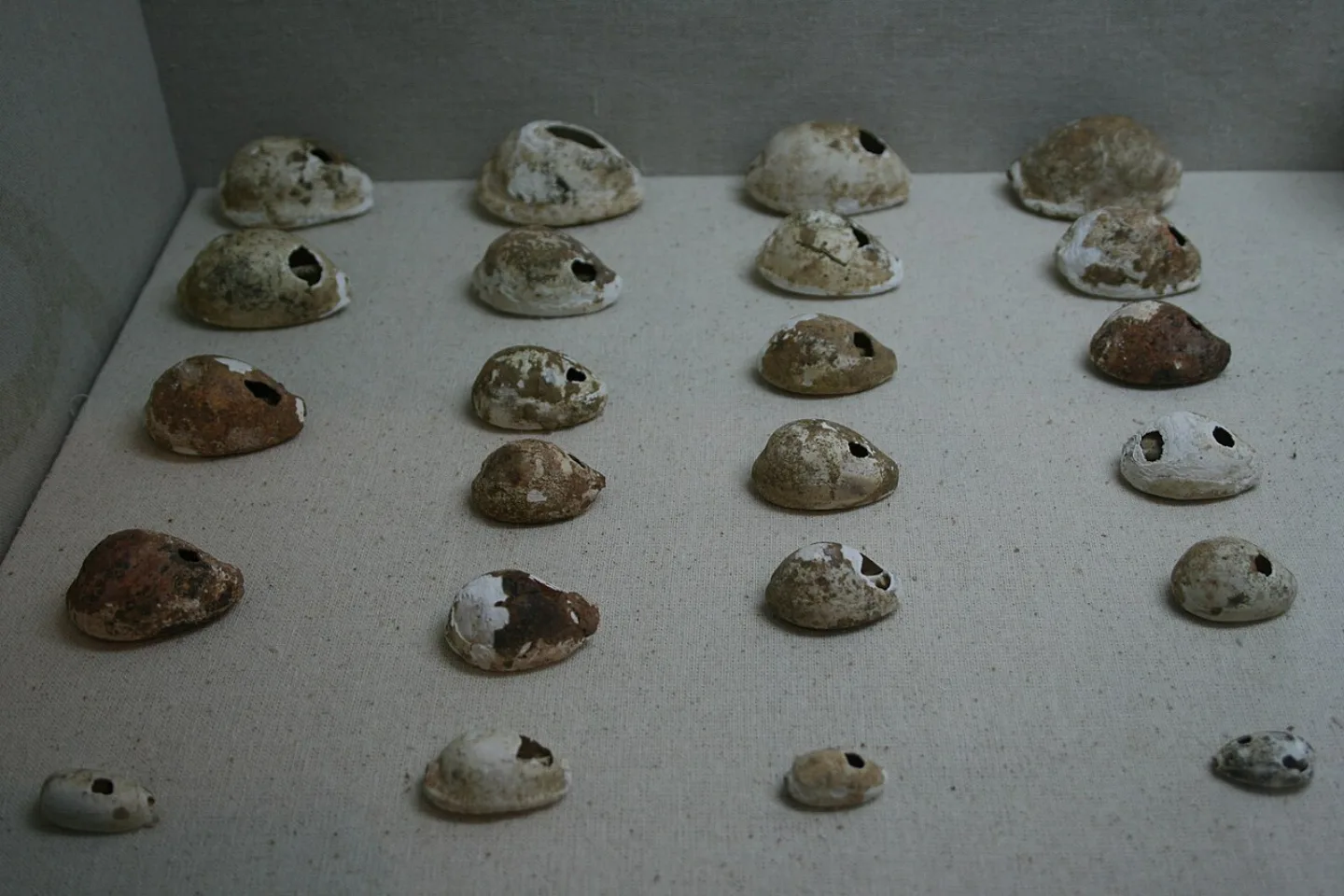
Core Insight: Cowrie shells served as one of the most widely circulated primitive commodity currencies across Asia and Africa due to their natural durability, uniform size, and geographic scarcity.
Cowrie shells possessed superior monetary properties compared to perishable goods. However, their monetary status collapsed once modern transportation allowed mass harvesting and importation from regions where they were plentiful (such as the Maldives) to regions where they were scarce.
Core Insight: The saleability of an asset across scale, space, and time determines its competitiveness and likelihood of emerging as money in a free market.
Menger's market theory of money shows that individuals naturally hoard and trade for goods with the highest liquidity and lowest transaction friction, creating a positive feedback loop that converges on one or two dominant monetary assets.
Core Insight: Fungibility is the monetary property whereby each individual unit of a good is completely interchangeable with any other unit of equal denomination.
Commodities like pure gold or silver are highly fungible because melting and refining restores uniform purity. In contrast, commodities like livestock, diamonds, or art lack perfect fungibility due to variations in quality, limiting their ability to serve as broad media of exchange.
Core Insight: Divisibility enables a monetary asset to be partitioned into smaller fractions without destroying its aggregate value, facilitating both micro-purchases and large-scale capital accumulation.
Precious metals can be cut, minted into small coins, or melted back together without losing their intrinsic material worth. Conversely, dividing an animal or gem drastically reduces or destroys its utility.
Core Insight: The fundamental tension in monetary history is the trade-off between the hardness of a bearer asset and the velocity and convenience of a ledger system.
Physical gold provided unforgeable scarcity and sovereign settlement, but transferring tons of gold across oceans was slow and dangerous. Ledger credit moved swiftly but required trusting intermediaries, setting the stage for monetary centralization.
The Triumph of Monetary Gold
Conceptual Foundations: Stock-to-Flow Ratio, Chemical Inertness and Durability, Hardness vs Softness of Money, Lydian Coinage Invention
Core Insight: Gold triumphed as humanity's primary monetary metal because its high stock-to-flow ratio makes its existing supply virtually immune to dramatic annual production dilution.
Because virtually all gold mined across thousands of years remains intact due to its non-corrosive nature, annual new production adds only 1% to 2% to the global stock. This prevents miners from significantly diluting the purchasing power of existing holders, making gold exceptionally 'hard' money.
Core Insight: The stock-to-flow ratio is calculated by dividing total accumulated existing inventory (stock) by the annual new production (flow), measuring an asset's resistance to supply inflation.
Consumer commodities (like wheat, oil, or copper) have low stock-to-flow ratios (often less than 1) because they are consumed quickly. Precious metals, particularly gold (with a ratio often exceeding 50 to 60), maintain persistent high ratios because they accumulate without decomposing.
Core Insight: Chemically, gold is the most noble and unreactive metal on the periodic table, preventing corrosion, rust, oxidation, or degradation across millennia.
If iron or copper is buried, it degrades into rust and verdigris. Gold extracted from ancient Roman shipwrecks or Egyptian tombs emerges in pristine, unblemished condition, satisfying the ultimate requirement for temporal store of value.
Core Insight: The invention of standardized stamped coinage in 7th-century BCE Lydia revolutionized commerce by eliminating the need to weigh and assay precious metals for every individual transaction.
Before coinage, trading gold or silver required scales and chemical testing for purity. By stamping standardized designs and weight marks onto coins, King Alyattes and King Croesus created a frictionless unit of exchange that spread across the Mediterranean.
Core Insight: Gresham's Law states that bad money drives out good money from circulation whenever the state legally fixes their exchange rate below market reality.
If a government decrees that debased coins with less gold content must be accepted at par with pure gold coins, rational individuals will hoard or melt down the pure coins and spend the debased coins, causing good money to vanish from active commerce.
Core Insight: Silver served as the practical daily transactional money for ordinary commerce, while gold functioned as the high-value reserve asset for large wholesale settlements.
Because gold was too dense in value—a tiny grain of gold was worth a week's supply of food—it was impractical for buying bread or tools. Silver bridged this gap by providing an intermediate density suited for retail commerce.
Core Insight: Bimetallic monetary systems suffered chronic instability due to fluctuating market supply ratios between gold and silver that conflicted with legally mandated fixed mint ratios.
Whenever new silver strikes occurred (such as the Comstock Lode in Nevada), market silver prices dropped below the legal ratio, causing gold to be exported and silver to flood the domestic economy, creating monetary instability.
Core Insight: The British Empire's de facto adoption of the single gold standard in 1717, initiated by Sir Isaac Newton's overvaluation of the gold guinea relative to silver, catalyzed global gold standardization.
Newton's miscalculation caused silver to leave Britain for continental Europe where it commanded higher value. Britain adapted to operating solely on gold, and as the British Empire became the preeminent 19th-century trade power, the rest of the world followed onto gold.
Core Insight: The Industrial Revolution dramatically expanded silver extraction through steam-powered mining and chemical refining, collapsing silver's stock-to-flow ratio and causing its global demonetization.
As industrialized mining caused massive silver inflation, major nations including Germany (1871), the United States (1873 Coinage Act), and the Latin Monetary Union (which limited and then suspended silver coinage in the 1870s) moved toward a de facto gold standard.
Core Insight: Gold possesses exceptionally high value density, enabling substantial wealth to be stored and transported in compact physical volumes.
A single standard 400-ounce gold bar weighs approximately 27 pounds but holds on the order of a million dollars or more at recent gold prices, making physical storage in secure vaults feasible for sovereign states and private institutions.
Core Insight: Gold mining exhibits severe diminishing marginal returns, ensuring that sudden surges in gold prices do not lead to massive proportional increases in total global supply.
Unlike manufactured goods where higher prices trigger immediate factory expansion, gold's crustal rarity and difficult extraction guarantee supply inelasticity, protecting holders against sudden hyper-inflationary supply shocks.
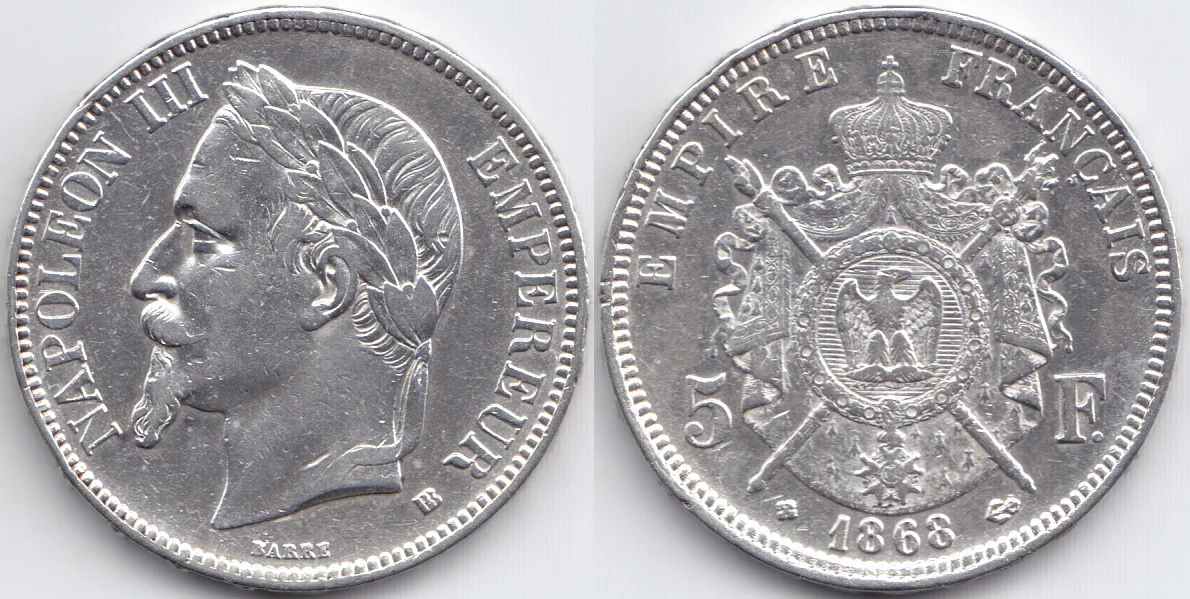
Core Insight: The Latin Monetary Union, founded in 1865 by France, Belgium, Italy, and Switzerland, represented an early multinational attempt to standardize bimetallic coin weights across European borders.
While successful initially in harmonizing currency specifications, member states printed excessive paper bank notes that were ostensibly redeemable in coins, and fluctuating silver prices ultimately dissolved the monetary union.
Core Insight: The primary physical limitation of gold as a monetary medium is its slow velocity and high physical transport friction across long geographic distances.
Settling international gold debts required shipping heavy crates of bullion on armed vessels, paying steep insurance premiums, and enduring weeks of transit time, creating a spatial bottleneck in an increasingly globalized economy.
Core Insight: Monetary hardness refers to the difficulty of producing new units of an asset relative to its existing supply, whereas softness indicates ease of production dilution.
When an asset is easy to create (soft), human society naturally produces excess quantities until its marginal production cost equals its exchange value, destroying its monetary premium. Gold retained its premium because physical chemistry made it permanently hard.
Core Insight: By the late 19th century, the global classical gold standard created an integrated international monetary network characterized by stable exchange rates, fiscal discipline, and low inflation.
With major currencies (Pounds, Dollars, Francs, Marks) directly pegged to fixed weights of gold, exchange rate risk was minimized, governments faced hard budget constraints, and global price levels remained remarkably stable across decades.
Key terms
- Unforgeable Costliness
- The requirement that a monetary asset must require significant, unavoidable expenditure of scarce physical resources to create, preventing arbitrary supply inflation.
- Fungibility
- The property of a monetary good where every individual unit is completely equivalent and interchangeable with any other unit of equal denomination.
- Stock-to-Flow Ratio
- The mathematical ratio of accumulated existing inventory (stock) divided by annual new production (flow), measuring an asset's resistance to supply inflation.
Key facts
Barter Myth vs. Anthropological Reality
Classical Barter Myth — Textbooks claim economies began with spot barter of goods.
Anthropological Reality — Historical evidence shows communities operated through informal credit and reciprocal social ledgers.

Yapese Rai Stones
Massive limestone discs whose ownership is maintained via communal oral consensus, proving physical possession is secondary to social ledger agreement.
Cowrie Shell Monies
Ancient commodity money across Africa and Asia whose monetary status collapsed when modern transport enabled mass importation from abundant coastal regions.

Gresham's Law
Economic principle stating that undervalued sound money is hoarded and driven out of circulation when legal tender laws fix parity with overvalued debased money.
Silver vs. Gold: Transactional Roles
Silver Coinage — Served as the everyday medium for retail purchases due to its practical value density.
Gold Bullion — Served as high-value institutional reserve money for large-scale settlements.
Latin Monetary Union (1865)
Multinational European monetary treaty that standardized gold and silver coin weights across member states, but ultimately collapsed under unbacked paper issuance.
Matched pairs
Each item on the left goes with the one on the right.
- Unit of Account
- Common baseline numeraire for pricing goods, calculating profits, and denominating debts.
- Divisibility
- Enables partitioning into precise fractional units without destroying aggregate value.
- Sir Isaac Newton (1717)
- Inadvertently undervalued silver at the Royal Mint, causing silver flight and a de facto gold standard.
Step by step
Identify the sequential economic steps that prevent sudden surges in gold prices from triggering hyper-inflationary supply spikes.
- Market demand surges and drives the spot price of gold significantly higher.
- Mining corporations allocate capital to explore and permit low-grade geological deposits.
- Years of capital-intensive excavation and chemical ore refining yield only marginal new ounces.
- Total annual new production expands global stockpiles by merely 1.5% to 2%, preserving hardness.
Self-test
Answer each question from memory, then check your work against the answer key.
1. A baker needs shoes and a cobbler needs wheat but not from each other. What trade barrier does this illustrate?
- ATragedy of the commons
- BDouble coincidence of wants
- CAsymmetric information problem
- DPrincipal-agent problem
2. What term describes a centralized ledger's administrator unilaterally debasing, freezing, or confiscating balances?
- ABank run
- BGresham's Law
- CCustodial abuse
- DDouble spending
3. A Yapese Rai stone sank during transport at sea. What did the community do about its ownership?
- AKept recognizing ownership by oral consensus
- BSplit ownership among all villagers
- CDeclared the stone's value void
- DRequired a replacement stone be quarried
4. Who defined 'unforgeable costliness' as the property requiring real resource expenditure to create a monetary asset?
- ACarl Menger
- BAdam Smith
- CMilton Friedman
- DNick Szabo
5. Which of these is NOT one of the three classical functions of money?
- AUnit of account
- BMedium of exchange
- CStandard of deferred payment
- DStore of value
6. What does an asset's stock-to-flow ratio measure?
- ATotal supply divided by circulating supply
- BPrice divided by annual earnings
- CMarket cap divided by trading volume
- DExisting stock divided by annual new production
7. Which metal served as the everyday medium for retail purchases while gold served as institutional reserve money?
- APalladium
- BSilver
- CPlatinum
- DCopper
8. Which property of gold explains why coins recovered from ancient shipwrecks remain uncorroded after centuries underwater?
- AChemical inertness (nobility)
- BHigh melting point
- CHigh density
- DHigh electrical conductivity
9. Under Gresham's Law, when legal tender laws fix an overvalued debased coin at par with sound money, what happens?
- ASound money becomes the only currency used
- BBoth coins circulate equally forever
- CSound money is hoarded and leaves circulation
- DDebased money is hoarded instead
10. What did Sir Isaac Newton do as Master of the Royal Mint in 1717 that led to a de facto gold standard in England?
- ABanned silver coinage entirely
- BFixed gold below its market value
- CIntroduced a bimetallic ratio favoring silver
- DInadvertently undervalued silver at the Mint
Go deeper
- ReadBroken Money by Lyn Alden · on Amazon ↗
- StudyBroken Money: Why Our Financial System Is Failing Us & How We Can Make It Better in the FlashFeed app
These are affiliate links: if you buy a book through one, FlashFeed may earn a small commission at no extra cost to you. The commission helps pay for FlashFeed's servers.
As an Amazon Associate we earn from qualifying purchases.
Answer key
- 1. B Double coincidence of wantsBarter requires each party to want exactly what the other offers; without a common medium, search costs block the trade.
- 2. C Custodial abuseCustodial abuse is the architectural risk of centralized ledgers: whoever keeps the ledger can alter or restrict balances at will.
- 3. A Kept recognizing ownership by oral consensusYap islanders tracked title orally; since the ledger, not physical possession, defined ownership, the sunken stone's wealth still counted.
- 4. D Nick SzaboNick Szabo coined unforgeable costliness: money must be costly enough to produce that its supply can't be casually inflated.
- 5. C Standard of deferred paymentMoney's three classical functions are medium of exchange, store of value, and unit of account; deferred payment isn't one of them.
- 6. D Existing stock divided by annual new productionStock-to-flow divides accumulated inventory by yearly new production, measuring resistance to supply inflation.
- 7. B SilverSilver coinage handled everyday retail transactions due to practical value density, while gold reserved large-scale settlements.
- 8. A Chemical inertness (nobility)Gold is the most noble and unreactive metal on the periodic table, so it resists corrosion even after centuries submerged.
- 9. C Sound money is hoarded and leaves circulationGresham's Law: undervalued sound money gets hoarded while overvalued debased money remains in circulation.
- 10. D Inadvertently undervalued silver at the MintNewton's 1717 mint ratio undervalued silver, causing silver to flee circulation and leaving gold as England's de facto standard.
Sources
- Broken Money: Why Our Financial System Is Failing Us & How We Can Make It Better — Lyn Alden
Image credits
- Yapese Rai Stones: Eric Guinther · CC BY-SA 3.0 — commons.wikimedia.org/wiki/File:Yap_Stone_Money.jpg
- Cowrie Shell Monies: Gary Todd from Xinzheng, China · CC0 — commons.wikimedia.org/wiki/File:Shang_Cowrie_Money_(10197686463).jpg
- Gresham's Law: Wikimedia Commons · anonymous · Public domain — commons.wikimedia.org/wiki/File:Sir_Thomas_Gresham_from_NPG.jpg
- Latin Monetary Union (1865): Петров Эдуард · CC0 — commons.wikimedia.org/wiki/File:France,_5_franc,_1868_-_Napoleon_III.jpg


