
Broken Money: Why Our Financial System Is Failing Us & How We Can Make It Better study guide · Lesson 2 of 7
Lesson 2: The Speed Gap and Banking Centralization
2.1 The Telegraph and the Speed Gap · 2.2 Fractional Reserve and Custodial Power
Unofficial study guide for Broken Money: Why Our Financial System is Failing Us and How We Can Make it Better by Lyn Alden. FlashFeed is not affiliated with the author or publisher.
This is the lesson's study guide from the FlashFeed app, plus its key facts and a self-test.
What you'll be able to do
- Explain how the telegraph's speed gap between information and physical gold drove vault centralization and bank runs.
- Explain how the Bank of England, the Fed, and FDIC insurance grew from fractional-reserve banking to backstop it and create moral hazard.
Monograph Section: Lesson 2 of Broken Money: Why Our Financial System Is Failing Us and How We Can Make It Better by Lyn Alden.
Executive Overview
Analyzes how the invention of the electric telegraph in the 1840s decoupled the speed of financial information from the physical movement of gold, creating the systemic 'speed gap'. Explores how paper claims, custodial gold concentration in bank vaults, fractional reserve banking, and central bank lender-of-last-resort mechanisms centralized monetary power.
The Telegraph and the Speed Gap
Conceptual Foundations: The Speed Gap Thesis, Decoupling Information from Matter, Telegraphic Wire Transfers, Transatlantic Cable 1866
Core Insight: The invention of the electric telegraph in the 1840s decoupled the transmission speed of financial information from the physical transport speed of matter for the first time in human history.
Prior to telecommunications, sending a payment instruction across the Atlantic took weeks by ship—the exact same duration required to physically transport gold bullion. The telegraph shattered this parity, allowing ledger updates to occur in seconds across continents.
Core Insight: The 'speed gap' is the fundamental divergence between instantaneous digital communication of financial claims and the sluggish physical settlement of underlying bearer commodities.
As global trade accelerated, merchants demanded instant cross-border settlement. Because physical gold could not travel through copper wires, commerce increasingly relied on electronic messages adjusting balances on centralized bank ledgers.
Core Insight: The completion of the permanent transatlantic telegraph cable in 1866 permanently synchronized London and New York financial markets into a single high-velocity network.
Instant communications eliminated price discrepancies between European and American exchanges, cementing London as the world's clearinghouse and vastly accelerating the volume of paper claims circulating against physical reserves.
Core Insight: To resolve the speed gap, human commerce increasingly substituted secondary paper claims and bank ledger entries in place of physical gold coin circulation.
Carrying heavy gold coins to settle international trades became commercially obsolete. Instead, banks issued paper banknotes and deposit receipts that could be traded rapidly, while gold stayed locked in secure subterranean vaults.
Core Insight: Western Union initiated commercial telegraphic money transfers in 1871, establishing the prototype for modern electronic funds transfer and wire clearing systems.
Western Union proved that customers cared far more about transaction speed and geographic reach than holding physical bearer assets, shifting consumer behavior toward centralized ledger networks.
Core Insight: The speed gap incentivized the physical centralization of gold into large commercial and central bank vaults to facilitate local internal ledger reconciliation.
When two counterparties used the same bank or clearinghouse, settling a multi-million-dollar transaction required only debiting one ledger column and crediting another, eliminating the need to physically shift gold bars.
Core Insight: As physical gold became abstracted behind layers of paper receipts and wire transfers, consumers increasingly mistook the paper claim for the money itself.
When generations grew up using paper banknotes daily without ever redeeming them for physical gold coin, the cultural understanding of money shifted from an unforgeable physical commodity to a government-sanctioned paper ledger.
Core Insight: Centralized clearinghouses like the London Bankers' Clearing House and New York Clearing House emerged to net out interbank liabilities without physical bullion movement.
Netting reduced the physical movement of money by over 95%. Banks transferred small quantities of gold or clearinghouse certificates at the end of each business day to reconcile aggregate liabilities, cementing institutional interdependence.
Core Insight: The speed gap created a profound structural asymmetry: while transactions occurred at the speed of light, dispute resolution and bank run redemptions remained limited to the speed of physical transport.
A bank could receive telegraphic withdrawal demands that completely overwhelmed its local vault reserves, even if the bank held ample physical gold assets located in a distant branch or sovereign vault.
Core Insight: Telecommunications transformed local banking networks into deeply interconnected national and international webs subject to rapid contagion during financial panics.
A failure of an agricultural bank in Chicago or a cotton merchant in New Orleans could trigger an instantaneous liquidity contraction in New York and London within hours via telegraphic margin calls.
Core Insight: The divergence of transaction velocity from settlement velocity laid the technical foundation for the eventual abandonment of the gold standard.
Once the global economy adapted to operating entirely on paper and electronic claims, governments realized that the physical gold backing was an administrative constraint that could be suspended during crises without halting daily retail commerce.
Core Insight: Under a physical gold regime, final settlement is achieved when physical metal changes hands, leaving no residual counterparty liability or credit obligation.
Unlike modern payment cards or bank transfers—which can be reversed, frozen, or default within clearing windows—physical bearer settlement is atomic, final, and free from custodial solvency risk.
Core Insight: The Bank Charter Act of 1844 in the United Kingdom attempted to restrict paper banknote issuance to exact gold backing, but failed to regulate commercial bank deposit creation.
While Parliament successfully regulated physical paper notes, banks simply shifted to granting customers checkable deposit accounts and ledger credits, allowing fractional reserve credit expansion to continue unhindered.
Core Insight: Telecommunications enabled the emergence of multinational banking conglomerates that could manage balance sheets across dozens of sovereign jurisdictions simultaneously.
Institutions like the House of Rothschild, Barings Bank, and J.P. Morgan used private telegraphic codes to coordinate sovereign lending, gold arbitrage, and commodity financing across the British Empire and the Americas.
Core Insight: The ultimate consequence of the 19th-century telecommunications revolution was shifting the locus of monetary power from individual asset holders to centralized ledger gatekeepers.
When commerce was physical, individuals possessed sovereign bearer money. When commerce became telegraphic, individuals became dependent on bank permissions, wire operators, and government-chartered clearinghouses to conduct economic life.
Fractional Reserve and Custodial Power
Conceptual Foundations: Fractional Reserve Banking, Maturity Mismatch, Bank Run Mechanics, Lender of Last Resort
Core Insight: Fractional reserve banking occurs when a financial institution holds only a fraction of its total customer deposit liabilities as physical reserves in vault, lending out the remainder.
If a bank receives 100 gold coins on deposit and lends out 90 coins to a borrower, both the original depositor and the borrower's counterparty hold claims to spend money, expanding the broad money supply through ledger credit.
Core Insight: Maturity mismatch is the structural banking vulnerability of financing long-term illiquid loans (like mortgages and business credit) using short-term, instant-demand customer deposits.
Depositors expect to withdraw their money on any given morning. However, the bank's assets are tied up in five-year commercial loans or thirty-year mortgages, making it mathematically impossible to satisfy simultaneous mass redemption requests.
Core Insight: A bank run is a self-fulfilling panic where depositors rush to withdraw their funds simultaneously before the institution's fractional cash reserves are completely exhausted.
Because a fractional bank cannot liquidate its long-term loan book instantly without catastrophic fire-sale losses, even a solvent bank with solid long-term loans will collapse into immediate bankruptcy if depositors lose confidence.
Core Insight: Walter Bagehot formulated Bagehot's Dictum in 1873, advising central banks during panics to lend freely, at a high penalty interest rate, against good collateral.
Bagehot argued that withholding liquidity during a panic causes widespread solvency cascades. By lending freely against sound collateral, the central bank quells panic while the high penalty rate prevents banks from abusing emergency facilities.
Core Insight: The establishment of central banks created a government-backed cartel that socialized the liquidity risk of private commercial fractional reserve banks.
Without a central bank, reckless fractional reserve banks went bankrupt and were eliminated by market discipline. Central banks provided emergency rediscount windows, ensuring that member banks could always obtain paper cash reserves during runs.
Core Insight: Moral hazard arises in banking when institutions take excessive, high-yield risks because they know profits are privatized to shareholders while catastrophic losses are backstopped by the public.
When bank executives and shareholders know that the central bank or taxpayers will rescue the institution during a crisis, they have strong financial incentives to minimize capital reserves and maximize leverage to boost quarterly returns.
Core Insight: The Federal Reserve Act of 1913 was enacted primarily to provide an 'elastic currency' capable of expanding during panics and crop harvest seasons to prevent banking liquidity panics.
Prior to 1913, the US money supply was restricted by the availability of gold and government bonds, leading to seasonal cash crunches during autumn harvest when farmers demanded physical currency. The Fed was granted the legal power to discount commercial paper into newly issued Federal Reserve Notes.
Core Insight: Pyramiding of reserves occurred under the National Banking System when regional banks deposited their legal reserves in larger New York reserve city banks, concentrating systemic risk on Wall Street.
When rural banks faced seasonal crop demands, they recalled their deposits from New York banks. New York banks, which had lent those funds into volatile stock market call-loan markets, were forced to liquidate margin loans, triggering stock crashes and banking panics.
Core Insight: The money multiplier model describes the theoretical process where an initial deposit of base money expands into a larger total money supply through successive rounds of bank lending.
With a 10% reserve requirement, an initial 100 gold or central bank deposit can theoretically support up to 1,000 in total bank deposits across the financial system as funds are repeatedly deposited, partially lent, and redeposited.
Core Insight: Deposit insurance schemes, such as the Federal Deposit Insurance Corporation (FDIC) created in 1933, permanently eliminated depositor discipline by making retail customers indifferent to a bank's risk profile.
Before the FDIC, consumers actively researched bank solvency and avoided risky lenders. Government guarantees shifted the regulatory burden entirely onto state agencies while encouraging banks to compete on interest rates rather than safety.
Core Insight: Under fractional reserve banking, bank deposits are legally unsecured creditor claims against the bank, not bailment assets held in safe custody.
When an individual deposits funds, the money legally becomes the bank's property on its asset ledger, while the depositor receives an IOU. If the bank fails, the depositor is legally an unsecured creditor subject to bankruptcy hair-cuts.
Core Insight: The Bank of England, established in 1694 as a private corporation to fund King William III's naval war against France, established the prototype for the modern central banking alliance.
In exchange for loaning £1.2 million in gold to the British Crown, the Bank of England received the exclusive legal privilege of issuing legal tender banknotes and managing government debt, formalizing the symbiotic state-central bank nexus.
Core Insight: Clearinghouse loan certificates were emergency private scrip issued by banking associations during 19th-century panics to settle interbank claims when physical gold was hoarded.
Clearinghouse certificates represented an early, private-market precursor to central bank emergency lending facilities, allowing banks to settle mutual accounts without exhausting their precious vault cash.
Core Insight: The creation of central banking and deposit insurance permanently separated the risk of monetary expansion from individual commercial bank failure, institutionalizing structural inflation.
In a hard money system without central backstops, over-expansion resulted in swift deflationary cleansing of bad debt. The central bank framework ensured that debt crises were consistently resolved by creating more base money, institutionalizing long-term currency debasement.
Core Insight: By centralizing ledger authority, the modern fractional reserve system replaced decentralized, market-determined hard money with a politically managed credit hierarchy.
What began as individual gold coins held in sovereign custody transformed into a multi-tiered financial pyramid: central bank reserves at the base, commercial bank deposits in the middle, and derivative financial claims at the apex.
Key terms
- The Speed Gap
- The vast temporal divergence between instantaneous electronic communication of financial claims and the slow physical delivery of underlying bearer money.
- Settlement Finality
- The precise condition where a payment is irrevocable, unconditional, and completely extinguishes all counterparty claims and liabilities.
- Fractional Reserve Banking
- The banking practice of holding only a fraction of customer demand deposit liabilities as liquid reserves, lending out the remainder to expand credit.
- Moral Hazard in Banking
- The distortion where banks take excessive leverage and risks because profits accrue to private shareholders while catastrophic downside losses are backstopped by the state.
Key facts
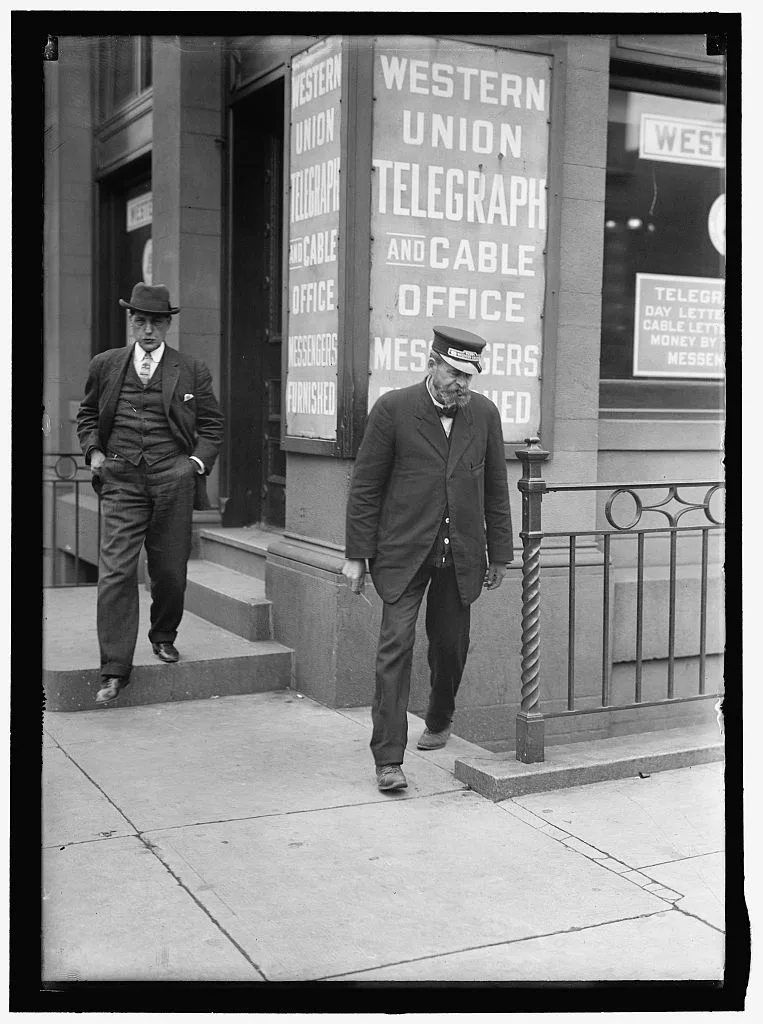
Western Union Wire Transfers (1871)
The first commercial electronic money transfer service, proving that consumer commerce prioritized speed and convenience over holding physical bearer assets.

Compare Regional Banking Before and After the Telegraph
Isolated regional banks once contained local panics on their own. Telegraphic integration linked those banks into a single high-speed network, so a panic in one hub could spread as synchronized, systemic contagion across the whole financial system almost instantly.
Monetary Gatekeeping Shift
The structural migration of monetary sovereignty from individual citizens holding physical gold coins to institutional custodians controlling electronic ledger networks.
Reserve Pyramiding
19th-century US banking mechanism where rural banks deposited reserves in Wall Street banks, concentrating systemic liquidity risks in stock market call loans.
Contrast the legal reality of a commercial bank deposit with a property bailment
A property bailment leaves legal title with the owner even while a bank holds it in safe custody. A commercial bank deposit is different: the money legally becomes the bank's property, and the depositor becomes only an unsecured creditor with a claim against the bank.
Clearinghouse Loan Certificates
Private emergency scrip issued by banking associations during 19th-century panics to settle interbank claims when physical gold cash was drained.
Matched pairs
Each item on the left goes with the one on the right.
- Paper Banknote
- A circulating debt claim or IOU redeemable for underlying bearer money.
- Money Multiplier
- The ratio representing how base reserves expand into broader deposit money through credit.
Step by step
Outline the dynamic progression of a self-fulfilling bank run under fractional reserve banking.
- Depositors perceive or fear that a bank's illiquid assets or solvency are impaired.
- Rational depositors rush to withdraw their cash on demand before fractional reserves deplete.
- The bank runs out of vault cash and is forced to fire-sale illiquid loans at massive losses.
- Insolvency is realized and the bank closes its doors, leaving late depositors with total losses.
Self-test
Answer each question from memory, then check your work against the answer key.
1. In what decade was the electric telegraph invented, decoupling financial information speed from physical gold transport?
- A1880s
- B1860s
- C1840s
- D1820s
2. What year was the permanent transatlantic telegraph cable completed, syncing London and New York markets?
- A1858
- B1866
- C1884
- D1871
3. A bank holds ample gold in a distant vault, but telegraphic withdrawal demands overwhelm the local branch's reserves. This best illustrates:
- AThe money multiplier effect
- BMoral hazard in banking
- CFractional reserve banking
- DThe speed gap's transaction-settlement asymmetry
4. Which of these is NOT a function of 19th-century centralized clearinghouses like the London Bankers' Clearing House?
- AProviding deposit insurance to account holders
- BNetting interbank liabilities without moving bullion
- CReducing physical gold transfers by over 95%
- DReconciling liabilities via loan certificates
5. Which company pioneered commercial telegraphic money transfers in 1871?
- AWestern Union
- BNew York Clearing House
- CHouse of Rothschild
- DBank of England
6. What is fractional reserve banking?
- AIssuing loans only against government bonds
- BHolding all deposits as reserves at all times
- CBacking all currency with physical gold coin
- DHolding a fraction of deposits, lending the rest
7. What year was the Bank of England chartered as a private corporation to finance a war against France?
- A1913
- B1971
- C1694
- D1844
8. Legally, what is a depositor's claim on money placed in a commercial bank account?
- ACo-ownership shared with other depositors
- BUnsecured creditor claim against the bank
- CFull ownership title, as in a bailment
- DA secured claim backed by collateral
9. What term describes banks taking excessive risk because profits are private but losses are backstopped by the state?
- AReserve pyramiding
- BCredit pyramid apex
- CMoney multiplier
- DMoral hazard
10. Which of these is NOT one of the risk-concentrating mechanisms tied to fractional reserve and custodial banking?
- AMultilateral netting
- BReserve pyramiding
- CMoral hazard from state backstops
- DMoney multiplier expansion
Go deeper
- ReadBroken Money by Lyn Alden · on Amazon ↗
- StudyBroken Money: Why Our Financial System Is Failing Us & How We Can Make It Better in the FlashFeed app
These are affiliate links: if you buy a book through one, FlashFeed may earn a small commission at no extra cost to you. The commission helps pay for FlashFeed's servers.
As an Amazon Associate we earn from qualifying purchases.
Answer key
- 1. C 1840sThe telegraph was invented in the 1840s, the first technology to decouple financial information speed from the physical transport speed of gold.
- 2. B 1866The permanent transatlantic cable was completed in 1866, syncing London and New York into one market; 1871 was when Western Union began wire transfers, a different milestone.
- 3. D The speed gap's transaction-settlement asymmetryA bank with ample gold in a distant vault but overwhelmed local reserves shows the speed gap: transactions move at wire speed, but physical redemption still moves at transport speed.
- 4. A Providing deposit insurance to account holdersClearinghouses netted claims, cut gold transfers by over 95%, and used loan certificates to reconcile balances. Deposit insurance is a 20th-century innovation (like the FDIC), not a 19th-century clearinghouse function.
- 5. A Western UnionWestern Union launched commercial telegraphic money transfers in 1871, proving customers valued speed and reach over holding physical bearer assets.
- 6. D Holding a fraction of deposits, lending the restFractional reserve banking means holding only a fraction of deposit liabilities as reserves and lending out the rest to expand credit.
- 7. C 1694The Bank of England was chartered in 1694 as a private corporation to finance King William III's naval war against France.
- 8. B Unsecured creditor claim against the bankLegally, bank deposits become the bank's property; the depositor is only an unsecured creditor, unlike a bailment where title stays with the owner.
- 9. D Moral hazardMoral hazard describes banks taking excessive risk because profits are private while the state backstops catastrophic losses.
- 10. A Multilateral nettingMultilateral netting was the clearinghouse mechanism from the speed-gap era (2.1); reserve pyramiding, the money multiplier, and moral hazard concentrate risk within fractional reserve banking (2.2).
Sources
- Broken Money: Why Our Financial System Is Failing Us & How We Can Make It Better — Lyn Alden
Image credits
- Western Union Wire Transfers (1871): Library of Congress · WESTERN UNION OFFICE · No known restrictions (verify at source) — www.loc.gov/item/2016853146/
- Compare Regional Banking Before and After the Telegraph: Trogain · CC BY-SA 4.0 — commons.wikimedia.org/wiki/File:Piece_of_first_transatlantic_telegraph_cable_at_the_Rupriikki_Media_Museum.jpg
