
Christianity: A Complete History study guide · Lesson 6 of 15
The Reformation
Luther · Reformed and Radical · The Counter-Reformation
This is the lesson's study guide from the FlashFeed app, plus its key facts and a self-test.
What you'll be able to do
- Describe Luther's protest — the indulgence trade, the Ninety-Five Theses, and his stand at Worms.
- Explain Luther's solas — Scripture alone and faith alone.
- Contrast Luther's and Zwingli's views of the Lord's Supper.
- Define the Reformed and Anabaptist distinctives — predestination, total depravity, and believer's baptism.
- Explain the Catholic Counter-Reformation and the rulings of the Council of Trent.
Luther
The Protestant Reformation began not as a plan to split the church but as an academic argument about penance — one that the printing press turned into a continental crisis within months.
The Ninety-Five Theses
On October 31, 1517, the Augustinian monk Martin Luther circulated his Ninety-Five Theses — whether by nailing them to the door of the Castle Church in Wittenberg or by post is genuinely debated. The theses were written in Latin for scholarly dispute, not mass agitation, yet within weeks they were translated into German and circulating across Europe. Luther was not the first church critic, but he arrived at the perfect moment — right when print could amplify dissent at a speed Rome could not match.
When the Coin in the Coffer Rings
Luther's immediate provocation was the indulgence campaign run near Wittenberg by the Dominican friar Johann Tetzel. An indulgence was a church certificate claiming to remit time owed in purgatory — their sale was the abuse that triggered Luther's protest. Tetzel's marketing jingle — "When the coin in the coffer rings, the soul from purgatory springs" — made salvation sound transactional. Luther's counter-argument was pastoral and theological: genuine repentance, not a purchased certificate, was what Scripture required.
The Press Did the Rest
The printing press, developed by Gutenberg around 1450, transformed a theological dispute into a mass movement. Luther's pamphlets and theses reproduced across Europe in weeks, outrunning any papal suppression effort. The Reformation was arguably the first political and religious crisis shaped by print media — cheap, fast, vernacular, and nearly impossible to control. Without the press, Luther's protest would likely have joined the long list of suppressed medieval reform efforts.
The Solas
Luther's doctrinal core is summarized in three Latin phrases. Sola Scriptura ("Scripture alone") holds that the Bible, not papal tradition, is the supreme authority for Christian doctrine. Sola Fide ("faith alone") teaches that salvation is received through faith, not earned through works or sacraments. Sola Gratia ("grace alone") insists that God's grace is the sole cause of salvation. He paired these with the priesthood of all believers: no ordained mediator stands between the Christian and God. These principles became the defining marks of Protestantism.
Excommunicated, Then Worms
Pope Leo X excommunicated Luther in 1521 after he refused to recant. Summoned to the Diet of Worms before Emperor Charles V, Luther again refused and reportedly declared "Here I stand. I can do no other." German princes loyal to Luther sheltered him at Wartburg Castle, where he translated the New Testament into German in roughly eleven weeks — putting Scripture in the hands of ordinary readers and bypassing clerical Latin.
Reformed and Radical
Luther's break from Rome quickly produced further breaks within Protestantism itself — between reformers who differed on worship, sacraments, and the church's relationship to the state.
Zwingli in Zurich
Ulrich Zwingli (1484–1531) ran a parallel Reformation in Zurich, Switzerland, more radical than Luther's on visible worship: he stripped churches of art, statues, and instrumental music. The key break between the two came over the Lord's Supper. Luther insisted Christ is really, physically present in the bread and wine. Zwingli read the same words as purely symbolic — the elements are a memorial, not a vehicle of presence. At the Marburg Colloquy of 1529 the two men met, agreed on fourteen points, and split permanently on this fifteenth.
Calvin in Geneva
John Calvin (1509–1564) arrived in Geneva in 1536 largely by accident and was persuaded by the reformer William Farel to remain. His Institutes of the Christian Religion (first edition 1536, definitive 1559) became the theological textbook of the Reformed tradition. Two doctrines Calvin systematized were predestination — God eternally elects some to salvation by divine choice, not by foreseen merit — and total depravity — human nature is wholly corrupted by sin, with no natural inclination toward God. Geneva became a model Protestant city under his influence.
How Calvinism Spread
Calvin's theology proved remarkably portable. John Knox carried it to Scotland, where it became Presbyterianism. It took root in the Netherlands as the Dutch Reformed church, in France among the Huguenots, in England among the Puritans, and through the Puritans on to New England. The Reformed tradition ultimately shaped law, politics, and social organization across the Atlantic world — a legacy far exceeding Luther's geographic reach.
The Radical Reformation
The Anabaptists ("re-baptizers") emerged in Zurich in 1525 when Conrad Grebel, Felix Manz, and others concluded that infant baptism had no scriptural basis and re-baptized one another as adults on a personal profession of faith — believer's baptism. This was the Anabaptist hallmark. They demanded complete separation of church and state, refused military service and oaths, and envisioned a voluntary gathered church — not a Christendom fused with government.
Persecution and Descendants
Catholics and Protestants alike hunted Anabaptists. Felix Manz was drowned in Zurich's Limmat River in 1527 by order of the city council — executed by the method that mimicked a third baptism. Survivors scattered. The Mennonites, following Menno Simons, and later the Amish descend directly from this tradition. Their insistence on a state-free church planted seeds of religious liberty that later bore fruit in colonial America.
The Counter-Reformation
Rome's response to Protestantism was neither purely defensive nor merely reactionary — it combined genuine internal reform with a sharp doctrinal restatement against Protestant positions.
The Jesuits
The most energetic instrument of Catholic renewal was the Society of Jesus (the Jesuits), founded by the Spanish ex-soldier Ignatius of Loyola in 1540. Ignatius designed the order for mobility and discipline: Jesuits took a special vow of obedience to the pope and were deployed wherever the church needed them. Their emphasis on education produced a network of universities and schools across Europe. As overseas missionaries they reached Japan, China, India, and the Americas, producing both remarkable cultural engagement and significant controversy over how far to accommodate local practice.
The Council of Trent
The Council of Trent (1545–1563) was Rome's systematic doctrinal response to Protestantism — eighteen years of deliberation across 25 sessions in three phases. Against Sola Scriptura, Trent affirmed that both Scripture and church tradition are binding authorities. It reaffirmed seven sacraments (not Luther's two), the real presence of Christ in the Eucharist (called transubstantiation), purgatory, and the Latin Vulgate as the authoritative biblical text. The council also launched internal reforms: it tightened discipline on clergy, prohibited the sale of offices, and mandated seminaries in every diocese to ensure trained, resident priests. The Counter-Reformation — the Catholic Church's reforming and defensive response to Protestantism — is defined by these two engines: the Jesuits and Trent.
Key terms
- Indulgence
- A church certificate claiming to remit time owed in purgatory; their sale was the abuse that triggered Luther's protest.
- Sola Scriptura
- "Scripture alone" — the Protestant principle that the Bible, not church tradition or the pope, is the supreme authority for doctrine.
- Sola Fide
- "Faith alone" — the principle that salvation is received through faith, not earned through works or sacraments.
- Predestination
- Calvin's teaching that God eternally elects some to salvation and passes over others, entirely by divine choice and not by foreseen merit.
- Total depravity
- The Calvinist view that human nature is wholly corrupted by sin, with no natural inclination toward God.
- Believer's baptism
- Baptism given only to those old enough to profess faith for themselves, rather than to infants — the Anabaptist hallmark.
- Counter-Reformation
- The Roman Catholic Church's reforming and defensive response to the Protestant Reformation, driven chiefly by the Jesuits and the Council of Trent.
Key concepts
Johann Tetzel
- A Dominican friar whose indulgence campaign near Wittenberg provoked a famous 1517 protest.
- He sold church certificates that claimed to remit time a soul owed in purgatory.
- His jingle boasted, "When the coin in the coffer rings, the soul from purgatory springs."
Ulrich Zwingli
- A Swiss reformer who ran a Reformation parallel to Luther's, but more radical on visible worship.
- Based in Zurich, he stripped churches of art, statues, and instrumental music.
- He read the Lord's Supper as purely symbolic and split from Luther over it at the 1529 Marburg Colloquy.
Felix Manz
- An early Anabaptist leader in Zurich who rejected infant baptism as unscriptural.
- In 1525 he and others re-baptized one another as adults on a personal profession of faith.
- By order of the city council he was drowned in the Limmat River in 1527, a death mimicking a third baptism.
John Knox
- A reformer who carried Calvin's theology out of Geneva to a new nation.
- He planted the Reformed tradition in Scotland.
- The church he founded there became known as Presbyterianism.
Key facts
When the Coin in the Coffer Rings
Luther's immediate target was the sale of indulgences, marketed by the Dominican friar Johann Tetzel with the jingle: "When the coin in the coffer rings, the soul from purgatory springs." To Luther this reduced salvation to a cash transaction. He argued that genuine repentance — not a mechanical purchase — was what God required.
The Press Did the Rest
What began as an academic dispute became a revolution because of the printing press, invented by Gutenberg around 1450. Luther's ideas spread across Europe within weeks — pamphlets reproduced faster than the church could suppress them. The Reformation was arguably the first mass movement powered by print media.
The Solas
Luther's core rediscoveries are captured in the Latin solas: Sola Scriptura ("Scripture alone" — the Bible, not papal tradition, is supreme authority), Sola Fide ("faith alone" — salvation is received by faith, not earned by works), and Sola Gratia ("grace alone" — God's grace is the sole cause of salvation). He added the priesthood of all believers: every Christian has direct access to God, no priestly mediator required.
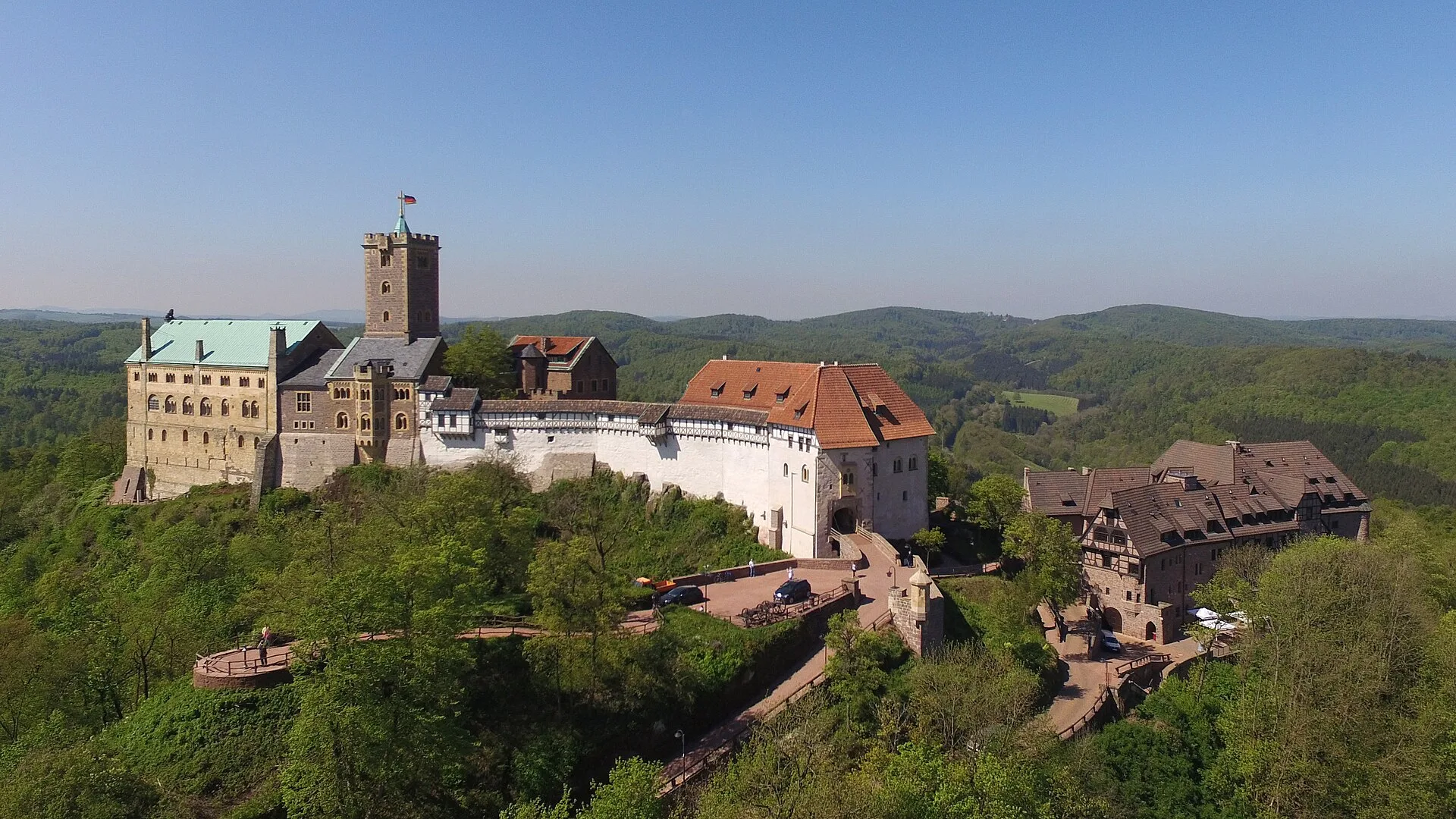
Excommunicated, Then Worms
When Pope Leo X demanded Luther recant, he refused and was excommunicated in 1521. Summoned before the Diet of Worms to answer to Emperor Charles V, he again refused — "Here I stand. I can do no other." German princes spirited him away to Wartburg Castle, where he translated the entire New Testament into German in about eleven weeks.
Zwingli in Zurich
Ulrich Zwingli (1484–1531) led a parallel but distinct Reformation in Zurich, Switzerland. More radical than Luther on worship — stripping churches of art and music — he split with Luther over the Lord's Supper: where Luther held to Christ's real physical presence in the bread and wine, Zwingli read it as purely symbolic, a memorial. The two movements never unified.
Calvin in Geneva
John Calvin (1509–1564) became the second great Reformation theologian. He arrived in Geneva in 1536 almost by accident and was pressed by the reformer William Farel to stay. His Institutes of the Christian Religion (1536, revised 1559) became the systematic textbook of the Reformed tradition — turning Geneva into a model Protestant city.
How Calvinism Spread
Calvin's theology fanned out across Europe through reformers and refugees: John Knox carried it to Scotland (Presbyterianism), it took root in the Netherlands (the Dutch Reformed), in France (the Huguenots), in England (the Puritans), and on to New England. Few thinkers shaped the map of Protestantism as widely as Calvin did.
The Radical Reformation
The Anabaptists ("re-baptizers") emerged in Zurich in 1525 when Conrad Grebel, Felix Manz, and others judged infant baptism unbiblical and re-baptized one another as adults on profession of faith. They demanded a complete separation of church and state, refused military service and oaths, and envisioned a wholly voluntary church of committed disciples.
Persecution and Descendants
Anabaptists were hunted by Catholics and Protestants alike — Felix Manz was drowned in Zurich's Limmat River in 1527. Survivors scattered across Europe. The Mennonites (following Menno Simons) and later the Amish descend from this tradition, and their vision of a gathered, state-free church deeply shaped later ideas of religious freedom in America.
The Jesuits
Rome's response was both defensive and genuinely reforming. One major instrument was the Society of Jesus (the Jesuits), founded by Ignatius of Loyola in 1540 — a disciplined, highly educated order devoted to scholarship, education, and overseas mission. Jesuits founded universities across Europe and became the leading Catholic missionaries in Asia, Africa, and the Americas.
The Council of Trent
The Council of Trent (1545–1563) — eighteen years of deliberation across 25 sessions — defined Catholic doctrine point by point against Protestant challenges. Trent affirmed both Scripture and tradition as authority (against Sola Scriptura), seven sacraments, the real presence of Christ in the Eucharist, purgatory, and the Latin Vulgate as the authoritative Bible. It also reformed clerical discipline and founded seminaries to train priests.
Scripture Plus Tradition
Against Luther's doctrine of Sola Scriptura, the Council of Trent deliberately affirmed both Scripture and church tradition as sources of religious authority.
Seven, Not Two
The Council of Trent reaffirmed all seven sacraments, deliberately rejecting the reduction to two that Martin Luther and other reformers had adopted.
Naming the Real Presence
The Council of Trent used the term transubstantiation for Christ's real presence in the Eucharist, a position distinct from the views reformers like Luther and Zwingli held.
By the numbers
- How many theses did Luther post against indulgences?
- 95 theses
- Year Luther posted the Ninety-Five Theses
- 1517 CE
- How many sacraments did the Council of Trent affirm?
- 7 sacraments
- Year Ignatius of Loyola founded the Jesuits
- 1540 CE
Matched pairs
Each item on the left goes with the one on the right.
- Zwingli on the Lord's Supper
- A symbolic memorial — the bread and wine represent Christ, not his physical body
- Luther on the Lord's Supper
- Christ is really, physically present in the bread and wine
Self-test
Answer each question from memory, then check your work against the answer key.
1. What was an indulgence, the abuse that triggered Luther's protest?
- AA monastic vow of poverty taken by an Augustinian monk
- BA formal decree excommunicating a heretic from the church
- CA papal license permitting a priest to marry
- DA church certificate claiming to remit time owed in purgatory
2. Which friar ran the indulgence sales campaign near Wittenberg that provoked Luther?
- AJohann Tetzel
- BMenno Simons
- CIgnatius of Loyola
- DJohann Gutenberg
3. In what year did Luther circulate his Ninety-Five Theses?
- A1521
- B1517
- C1540
- D1563
4. Refusing to recant at the Diet of Worms, Luther reportedly declared: 'Here I ___. I can do no other.'
- Arepent
- Bbelieve
- Cstand
- Dkneel
5. Who excommunicated Luther in 1521 after he refused to recant?
- AJohann Tetzel
- BPope Leo X
- CUlrich Zwingli
- DEmperor Charles V
6. Sola Gratia, the third of Luther's three solas, teaches that ___.
- AGod's grace is the sole cause of salvation
- Bsalvation is received through faith alone
- CScripture alone is the supreme authority for doctrine
- Dthe church alone may rightly interpret the Bible
7. What does Sola Scriptura affirm about religious authority?
- AGod's grace is the sole cause of a person's salvation
- BEvery believer shares equally in a common priesthood
- CThe Bible, not church tradition, is the supreme authority for doctrine
- DSalvation is received through faith rather than works
8. According to Sola Fide, how is salvation received?
- ABy purchasing an indulgence to shorten purgatory
- BThrough obedience to the pope and church tradition
- CBy performing the seven sacraments faithfully
- DThrough faith alone in Christ, as a free gift of grace
9. What does Luther's 'priesthood of all believers' assert?
- AThe pope alone holds supreme spiritual authority
- BSalvation requires the mediation of the sacraments
- COnly ordained priests may interpret Scripture correctly
- DNo ordained mediator stands between the Christian and God
10. Which of Luther's principles teaches that salvation is received by faith, not earned by works?
- ASola Gratia
- BSola Fide
- CPriesthood of all believers
- DSola Scriptura
11. How did Luther understand Christ's presence in the Lord's Supper?
- AChrist is really, physically present in the bread and wine
- BThe elements are transformed into a wholly new substance
- CThe bread and wine are only a symbolic memorial
- DThe supper is unnecessary and should be abolished
12. How did Zwingli interpret the bread and wine of the Lord's Supper?
- AAs a sacrifice repeated at every Mass
- BAs transformed into a new substance by the priest
- CAs a purely symbolic memorial of Christ
- DAs the literal physical body and blood of Christ
13. At which 1529 meeting did Luther and Zwingli fail to reconcile on the Lord's Supper?
- AThe Diet of Worms
- BThe Marburg Colloquy
- CThe Council of Nicaea
- DThe Council of Trent
14. The key doctrinal break between Luther and Zwingli centered on which issue?
- AThe nature of the Lord's Supper
- BThe authority of the Latin Vulgate
- CThe doctrine of predestination
- DThe practice of believer's baptism
15. Which statement about Zwingli's Reformation is NOT true?
- AHe ran a parallel Reformation in Zurich, Switzerland
- BHe stripped churches of art, statues, and instrumental music
- CHe read the Lord's Supper as a symbolic memorial
- DHe held that Christ is physically present in the bread and wine
16. What does Calvin's doctrine of predestination teach?
- AHuman nature is wholly corrupted by sin with no inclination toward God
- BBaptism is given only to those old enough to profess faith
- CGod eternally elects some to salvation by his own sovereign choice
- DSalvation can be earned through faithful good works
17. According to total depravity, what is the condition of human nature?
- AWholly corrupted by sin, with no natural inclination toward God
- BBasically good but in need of moral guidance
- CCorrupted only in part, with the will still free to seek God
- DPerfectible through the sacraments of the church
18. What is believer's baptism, the Anabaptist hallmark?
- ABaptism of infants shortly after birth into a state church
- BBaptism performed only by an ordained bishop
- CA second baptism required before ordination to ministry
- DBaptism given only to those old enough to profess faith for themselves
19. Which group emerged in Zurich in 1525 and practiced believer's baptism?
- AThe Jesuits
- BThe Anabaptists
- CThe Puritans
- DThe Huguenots
20. The Anabaptists practiced believer's baptism because they rejected which established practice?
- AThe sale of indulgences
- BCatholic Transubstantiation
- CInfant baptism
- DCalvinist Predestination
21. On the question of religious authority, the Council of Trent affirmed which position?
- AScripture alone (Sola Scriptura)
- BTradition alone, with no scriptural authority
- CThe personal conscience of each believer
- DBoth Scripture and church tradition
22. Which Bible text did the Council of Trent declare authoritative?
- ALuther's German translation
- BThe Latin Vulgate
- CThe original Greek New Testament
23. How many sacraments did the Council of Trent reaffirm against Protestant reformers?
- ATwelve sacraments
- BThree sacraments
- CSeven sacraments
- DTwo sacraments
24. What term did Trent use for the real presence of Christ in the Eucharist?
- ATransubstantiation
- BSymbolic memorial
- CPredestination
- DConsubstantiation
25. Who founded the Society of Jesus (the Jesuits) in 1540?
- AJohann Tetzel
- BIgnatius of Loyola
- CJohn Calvin
- DJohn Knox
Go deeper
Answer key
- 1. D A church certificate claiming to remit time owed in purgatoryAn indulgence was a certificate claiming to remit time owed in purgatory. Their sale by figures like Tetzel made salvation sound transactional, which sparked Luther's protest.
- 2. A Johann TetzelThe Dominican friar Johann Tetzel ran the indulgence campaign, marketing it with the jingle about the coin in the coffer. Loyola founded the Jesuits and Gutenberg built the press.
- 3. B 1517Luther circulated the Ninety-Five Theses on October 31, 1517. He was excommunicated in 1521, the Jesuits were founded in 1540, and Trent closed in 1563.
- 4. C standLuther's famous defiance at the Diet of Worms was 'Here I stand. I can do no other.' — a refusal to recant before Emperor Charles V.
- 5. B Pope Leo XPope Leo X excommunicated Luther in 1521. Charles V was the emperor who summoned him to the Diet of Worms but did not excommunicate him; that was the pope's act.
- 6. A God's grace is the sole cause of salvationSola Gratia ('grace alone') insists God's grace is the only cause of salvation. It completes the trio alongside Sola Scriptura (Scripture alone) and Sola Fide (faith alone) that defined Protestant doctrine.
- 7. C The Bible, not church tradition, is the supreme authority for doctrineSola Scriptura ('Scripture alone') holds the Bible, not papal tradition, is the supreme doctrinal authority. The other options describe Sola Fide, Sola Gratia, and the priesthood of all believers.
- 8. D Through faith alone in Christ, as a free gift of graceSola Fide ('faith alone') teaches salvation is received through faith, not earned by works or sacraments — the very transactional view Luther rejected in the indulgence trade.
- 9. D No ordained mediator stands between the Christian and GodThe priesthood of all believers holds that no ordained mediator stands between the Christian and God, pairing with the solas to reject clerical monopoly on grace and interpretation.
- 10. B Sola FideSola Fide ('faith alone') names the faith-not-works principle. Sola Scriptura concerns authority and Sola Gratia stresses grace as the cause of salvation.
- 11. A Christ is really, physically present in the bread and wineLuther insisted Christ is really, physically present in the bread and wine. Zwingli read the elements as symbolic; the wholesale change of substance is the Catholic view.
- 12. C As a purely symbolic memorial of ChristZwingli read the elements as a purely symbolic memorial — bread and wine that represent Christ but do not carry his physical presence, the opposite of Luther's real-presence view.
- 13. B The Marburg ColloquyAt the Marburg Colloquy of 1529 the two men agreed on fourteen points but split permanently on the fifteenth — Christ's presence in the Supper.
- 14. A The nature of the Lord's SupperTheir decisive split was over the Lord's Supper — real presence versus symbolic memorial. Predestination and baptism were Calvinist and Anabaptist concerns, not the Luther-Zwingli break.
- 15. D He held that Christ is physically present in the bread and wineThe false statement is physical presence — that was Luther's view. Zwingli led the Zurich Reformation, stripped churches of art and music, and read the Supper as symbolic.
- 16. C God eternally elects some to salvation by his own sovereign choicePredestination holds that God eternally elects some to salvation by divine choice, not by foreseen merit. The corruption of nature is total depravity, a separate Calvinist doctrine.
- 17. A Wholly corrupted by sin, with no natural inclination toward GodTotal depravity, systematized by Calvin, teaches human nature is wholly corrupted by sin with no natural inclination toward God — hence salvation depends entirely on divine election.
- 18. D Baptism given only to those old enough to profess faith for themselvesBeliever's baptism restricts baptism to those old enough to profess faith personally, rejecting infant baptism. The Anabaptists re-baptized adults on a personal profession of faith.
- 19. B The AnabaptistsThe Anabaptists ('re-baptizers') emerged in Zurich in 1525 under Grebel and Manz. The Huguenots and Puritans were Reformed/Calvinist, and the Jesuits were a Catholic order.
- 20. C Infant baptismAnabaptists judged infant baptism unscriptural and baptized only adults who could profess faith — believer's baptism. Predestination and transubstantiation were doctrinal disputes, not the practice they rejected.
- 21. D Both Scripture and church traditionTrent deliberately rejected Luther's Sola Scriptura, affirming both Scripture AND tradition as sources of authority.
- 22. B The Latin VulgateTrent named Jerome's Latin Vulgate the official text of the Catholic Church.
- 23. C Seven sacramentsTrent reaffirmed seven sacraments, deliberately rejecting the two that Luther retained. This was part of its point-by-point doctrinal reply to Protestantism.
- 24. A TransubstantiationTrent affirmed the real presence under the term transubstantiation. Consubstantiation is associated with Lutheran thought, and the symbolic memorial was Zwingli's view.
- 25. B Ignatius of LoyolaThe Spanish ex-soldier Ignatius of Loyola founded the Jesuits in 1540. They became a chief engine of the Counter-Reformation through education and overseas mission.
Sources
- Musée protestant — The Lutheran Reformation — museeprotestant.org/en/notice/the-lutheran-reformation/
- GotQuestions — The Counter-Reformation — www.gotquestions.org/Counter-Reformation.html
Image credits
- Excommunicated, Then Worms: Wikimedia Commons · Moritz Grenke · CC BY-SA 3.0 — commons.wikimedia.org/wiki/File:WartburgBeiEisenach.jpg
