
The Hooked Life — Crochet study guide · Lesson 10 of 11
Lesson 10: Where to Grow
Where to Plug In
This is the lesson's study guide from the FlashFeed app, plus its key facts and a self-test.
What you'll be able to do
- Distinguish the major crochet pattern platforms, Ravelry and Ribblr.
- Match the social and video channels to their crochet role.
- Explain what a Local Yarn Shop offers that online resources cannot.
Where to Plug In
You can absolutely teach yourself the mechanics of crochet alone on the couch. But the staying power — the encouragement, the troubleshooting, the "oh THAT'S how you do the magic ring" moment — almost always comes from other people. The crochet community is famously warm, and it lives in a handful of very findable places. Here's your map.
Most learning happens in community
Crochet has a reputation, and it's a good one: the community is genuinely welcoming, across every age and skill level. Beginners are not condescended to; advanced makers love showing off a clever trick. Wherever you go, you'll find people who remember being exactly as confused as you are right now. The only real skill here is plugging in — so let's look at where the outlets are.
There are six big ones, and they split roughly into a database, pattern apps, video, the socials, group forums, and real-world shops.
Ravelry (ravelry.com) is the anchor. Think of it as the Wikipedia-meets-social-network of fiber arts: free to join, with millions of patterns (a huge share of them free), plus tools to track your projects, organize your yarn stash, and lurk forums for every imaginable subtopic. If a pattern exists, it's probably catalogued on Ravelry.
Ribblr is the newer kid — a pattern platform built around interactive digital patterns that let you tick off each row as you work it, so you never lose your place. It's growing fast, especially among younger crocheters.
For socials, Instagram and TikTok are where new patterns go viral and techniques trend overnight; chase the hashtags #crochet, #crochettok, and #wip (Work In Progress) for a firehose of inspiration. Facebook Groups are the quieter, deeper cousins — niche communities organized around a specific technique, a yarn brand, or a project type, where you can ask a very particular question and get a very particular answer.
YouTube is a free crochet university
When you're stuck mid-stitch, nothing beats watching someone's hands do it slowly. YouTube is arguably the single best free crochet education that exists: search any stitch or technique plus the word "tutorial" and you'll surface multiple video walkthroughs, filmed in close-up, that you can pause, rewind, and replay until it clicks. No enrollment, no fee, infinite patience. It's how a great many self-taught crocheters actually learned every stitch they know.
Your LYS does what a screen cannot
A screen can't let you squeeze a skein to feel its softness, or look over your shoulder at the stitch you keep dropping. Your LYS — Local Yarn Shop — can. Beyond the tactile joy of choosing yarn in person, your LYS is where you get gauge-swatching advice, hands-on help with pattern problems, and often a regular stitch-and-chat: a standing session where you bring your WIP, sit with other makers, and discover that "my crochet people" is a real and lovely thing to have. The internet is vast; your local shop is yours.
Key terms
- Ravelry
- The free Wikipedia-meets-social-network hub of fiber arts — millions of patterns (many free), project tracking, stash organization, and forums for every imaginable subtopic.
- Ribblr
- A newer pattern platform with interactive digital patterns that let you check off each row as you work it — growing fast among younger crocheters.
- LYS (Local Yarn Shop)
- Your nearby brick-and-mortar fiber store — for squishing yarn in person, getting gauge advice and pattern help, and joining regular stitch-and-chat sessions.
Key concepts
Ravelry
- The single biggest online hub for fiber arts, often called the anchor of the whole community.
- Free to join, it has been described as the Wikipedia-meets-social-network of yarn crafts.
- It catalogs millions of patterns, many of them free, and lets you track your projects and organize your yarn stash.
Ribblr
- A newer pattern platform that is growing fast, especially with younger crocheters.
- Its patterns are interactive and digital, built so you never lose your place mid-project.
- As you work, you tick off each row on screen, a row-by-row checklist built right into the pattern.
YouTube
- Arguably the best free crochet education anywhere, with no enrollment and no fee.
- When you are stuck mid-stitch, you go here to watch someone's hands do the move slowly in close-up.
- Search any stitch plus the word 'tutorial' and you surface video walkthroughs you can pause, rewind, and replay.
Facebook Groups
- For plugging into the community online, these are the quieter, deeper cousins of the fast-moving social feeds.
- Each is a niche community organized around one specific technique, one yarn brand, or one project type.
- They live as topic communities on the world's largest social network, the place to ask a very particular question and get a very particular answer.
Key facts
YouTube is a free crochet university
Stuck on a stitch? Type its name plus "tutorial" into YouTube and you'll get a dozen patient instructors filming their own hands in close-up. It's arguably the best free crochet education that exists — no enrollment, no fee, infinite rewinds.
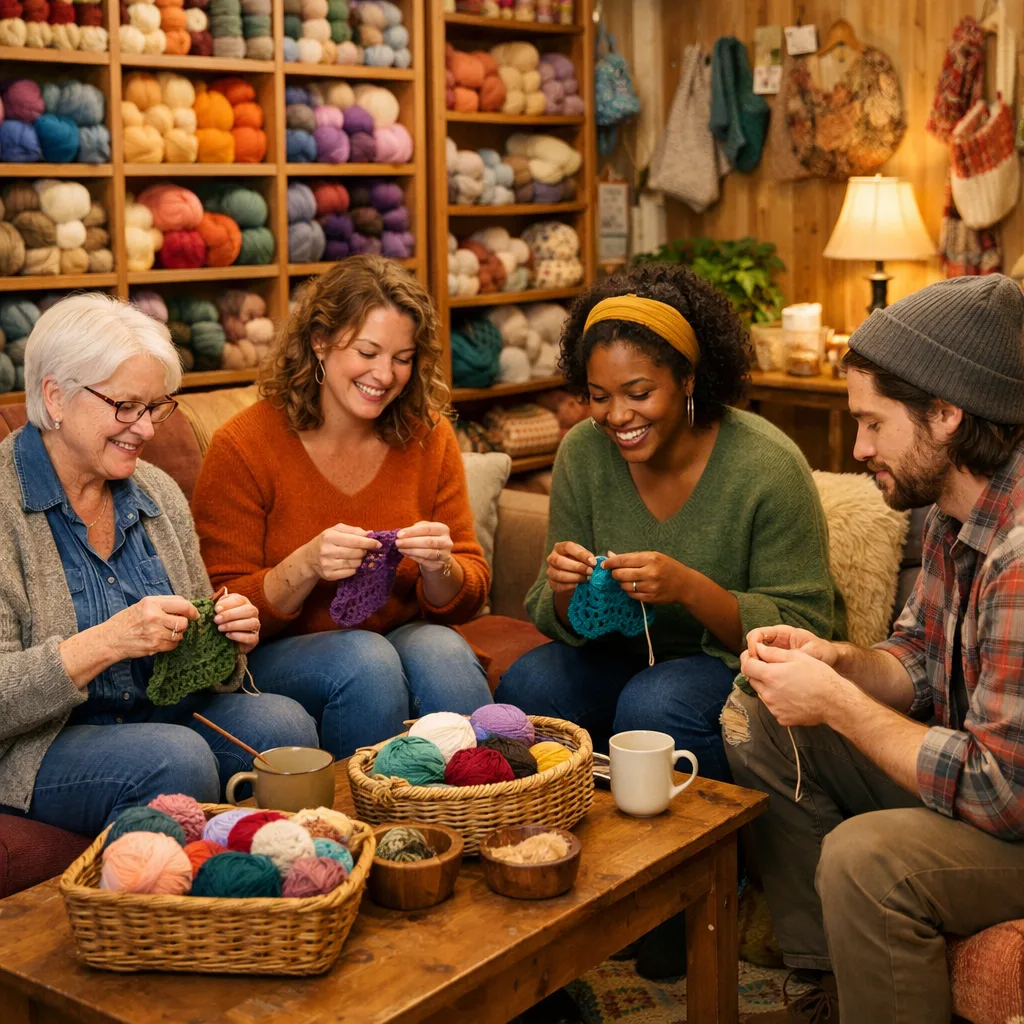
Your LYS does what a screen cannot
The internet can't let you squish a skein or fix the dropped stitch on your lap. Your local yarn shop can — plus gauge advice, pattern rescue, and a regular stitch-and-chat where strangers become your crochet people.
Ravelry: free pattern hub
Ravelry is the free, Wikipedia-meets-social-network hub of fiber arts, with millions of patterns — many of them free — plus tools for tracking projects, organizing your stash, and joining forums.
Ribblr's row tracking
Ribblr's interactive digital patterns let you check off each row as you work it, so you never lose your place mid-pattern.
Matched pairs
Each item on the left goes with the one on the right.
- Ravelry
- World's largest fiber-arts pattern database + forums
- YouTube
- Best free stitch tutorials — search any stitch + "tutorial"
- Instagram / TikTok
- Where patterns go viral — #crochet, #crochettok, #wip
- Facebook Groups
- Niche communities by technique, yarn brand, or project type
Self-test
Answer each question from memory, then check your work against the answer key.
1. Which crochet platform is described as the free 'Wikipedia-meets-social-network' hub of fiber arts with millions of patterns?
- AYouTube
- BRavelry
- CRibblr
- DInstagram
2. What distinctive feature defines Ribblr's interactive digital patterns?
- AThey are the world's largest free pattern database
- BThey let you squish yarn in person
- CThey surface trending viral hashtags
- DThey let you check off each row as you work it
3. Which statement about Ravelry is NOT true?
- AIt catalogs millions of patterns
- BIt is free to join
- CIts patterns let you tick off each row as you crochet
- DIt offers project tracking and stash organization
4. Compared with Ravelry, what makes Ribblr distinctive?
- AIt is the newer platform, growing among younger crocheters, built on row-tracking patterns
- BIt is a brick-and-mortar yarn shop
- CIt is the largest fiber-arts pattern database
- DIt is a free video tutorial site
5. You keep losing your place mid-row and want a pattern that checks off each row as you finish it. Which platform fits best?
- AYouTube
- BFacebook Groups
- CRavelry
- DRibblr
6. Which resource is the single best free source for watching close-up stitch tutorials you can pause and rewind?
- AYouTube
- BRibblr
- CRavelry
- DFacebook Groups
7. On which channels do new crochet patterns 'go viral,' chased through hashtags like #crochettok and #wip?
- ALocal Yarn Shops
- BYouTube
- CInstagram / TikTok
- DRavelry
8. What best describes the role of Facebook Groups in the crochet community?
- AInteractive patterns that tick off each row
- BNiche communities organized around a technique, yarn brand, or project type
- CThe world's largest fiber-arts pattern database
- DThe best free close-up stitch tutorials
9. Which channel-to-role match is WRONG?
- AInstagram / TikTok → where patterns go viral via hashtags
- BRavelry → close-up stitch video tutorials you pause and rewind
- CYouTube → the best free close-up stitch tutorials
- DFacebook Groups → niche communities by technique or yarn brand
10. You have a very specific question about one particular yarn brand and want a deep, niche community to ask. Which fits best?
- AFacebook Groups
- BYouTube
- CRibblr
- DInstagram / TikTok
11. What can a Local Yarn Shop (LYS) offer that an online resource cannot?
- AMillions of free downloadable patterns
- BInteractive row-by-row digital patterns
- CTrending viral hashtags to chase
- DSqueezing a skein to feel its softness, plus in-person, over-the-shoulder help
12. What does the abbreviation 'LYS' stand for?
- ALocal Yarn Society
- BLoose Yarn System
- CLocal Yarn Shop
- DLarge Yarn Store
13. What is a 'stitch-and-chat' that many local yarn shops host?
- AA viral social-media hashtag challenge
- BA digital pattern that tracks each row
- CA standing in-person session where you bring your WIP and sit with other makers
- DAn online forum thread for pattern questions
14. Which of these is NOT something a Local Yarn Shop uniquely offers?
- AMillions of free downloadable patterns
- BSqueezing a skein to feel its softness in person
- COver-the-shoulder help with a stitch you keep dropping
- DIn-person gauge-swatching advice
15. Your gauge swatch keeps coming out the wrong size and you want expert eyes on your tension in person. Which resource is designed for that?
- AYouTube tutorials
- BYour Local Yarn Shop
- CRibblr's row tracker
- DRavelry's pattern database
Go deeper
Answer key
- 1. B RavelryRavelry is the anchor: free to join, with millions of patterns (many free), plus project tracking, stash organization, and forums. Ribblr is the newer row-tracking platform, not the big database.
- 2. D They let you check off each row as you work itRibblr is built around interactive digital patterns that let you tick off each row so you never lose your place. The 'largest database' describes Ravelry.
- 3. C Its patterns let you tick off each row as you crochetRow-by-row tick-off is Ribblr's signature interactive feature, not Ravelry's. Ravelry is free and offers a huge pattern database plus project and stash tools.
- 4. A It is the newer platform, growing among younger crocheters, built on row-tracking patternsRibblr is the newer kid, popular with younger crocheters, centered on interactive row-tracking patterns. The largest database is Ravelry; video is YouTube; a physical shop is your LYS.
- 5. D RibblrRibblr's interactive digital patterns let you tick off each row so you never lose your place. Ravelry catalogs patterns but doesn't center on row-tracking.
- 6. A YouTubeYouTube is a free crochet university — search a stitch plus 'tutorial' for close-up videos you can pause, rewind, and replay. Ravelry and Ribblr are pattern platforms, not video.
- 7. C Instagram / TikTokInstagram and TikTok are where patterns go viral and techniques trend overnight, via hashtags #crochet, #crochettok, and #wip. YouTube is for tutorials; Ravelry is a database.
- 8. B Niche communities organized around a technique, yarn brand, or project typeFacebook Groups are the quieter, deeper cousins — niche communities where a very particular question gets a very particular answer. Tutorials are YouTube; the big database is Ravelry.
- 9. B Ravelry → close-up stitch video tutorials you pause and rewindRavelry is a pattern database and forum, not a video-tutorial site — that role belongs to YouTube. The other three matches are all accurate.
- 10. A Facebook GroupsFacebook Groups are niche communities organized around a specific technique, yarn brand, or project — the place for a very particular question. TikTok is for viral trends, not deep Q&A.
- 11. D Squeezing a skein to feel its softness, plus in-person, over-the-shoulder helpYour LYS does what a screen cannot: let you feel a yarn's softness in person and get hands-on gauge and pattern help — plus a regular stitch-and-chat where you meet 'your crochet people.'
- 12. C Local Yarn ShopLYS means Local Yarn Shop — your nearby brick-and-mortar fiber store for feeling yarn in person and getting hands-on help.
- 13. C A standing in-person session where you bring your WIP and sit with other makersA stitch-and-chat is a regular in-person session at your LYS where you bring your work-in-progress, sit with other makers, and find 'your crochet people.'
- 14. A Millions of free downloadable patternsMillions of free downloadable patterns come from an online database like Ravelry, not the LYS. The LYS's edge is the tactile, in-person, hands-on help a screen can't give.
- 15. B Your Local Yarn ShopIn-person gauge-swatching advice and hands-on pattern help are the LYS's edge — someone can check your actual tension. A database, video, or row tracker can't.
Sources
- The Hooked Life — The Community: Where to Grow
Image credits
- Your LYS does what a screen cannot: AI-generated (gpt-image-1.5)